


Martin Benjamin – An Xperience Interview – by Sketchy Hubris.
Ansel Adams, in 1930, had been training to become a concert pianist while considering a career as a photographer. He decided, after seeing the photographs by Paul Strand, that “the camera, not the piano, would shape [his] destiny.” His mother and aunt both pleaded, “Do not give up the piano! The camera cannot express the human soul!” To which Adams replied, “The camera cannot, but the photographer can.”
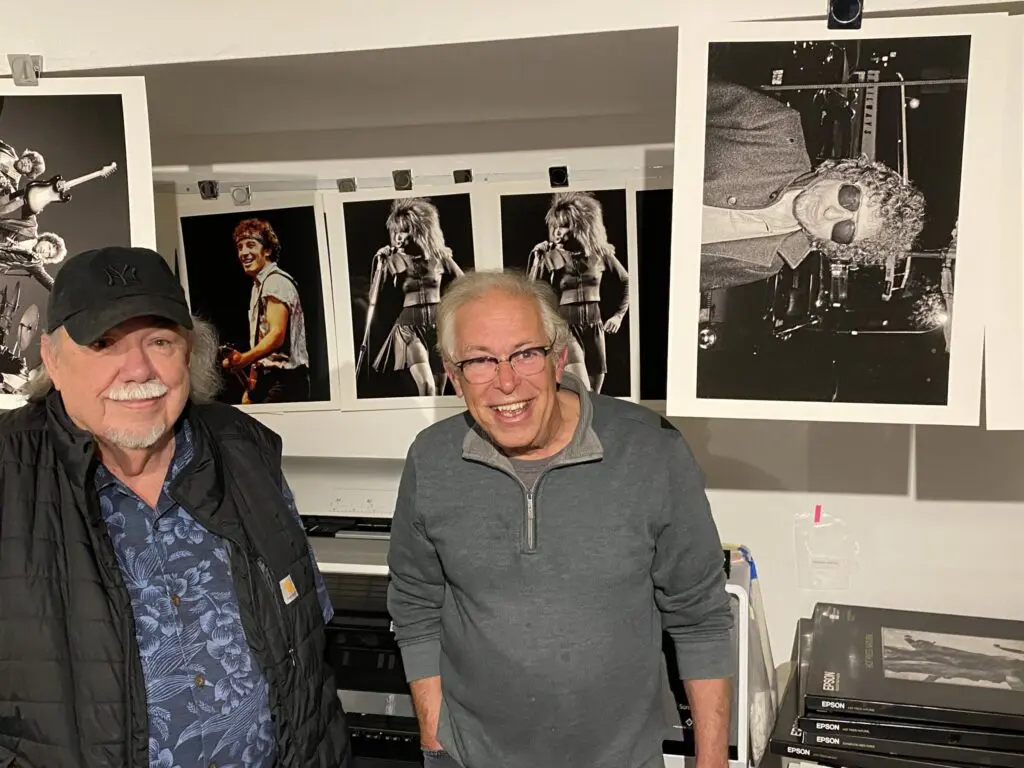
Photographer Martin Benjamin will have a show and book release at J.Gernon Picture Framing & Fine Art, LLC
SH: I’m here with Marty Benjamin. You’ve had this career as a Union College photography professor, exhibiting artist, and a photographer for many international, national, and local publications. How did this all start?
MB: I was always interested in live music. But when I was in college at Albany State, I started working for the Albany Student Press. I took my first faculty course in summer, 1968 because I needed to make up two credits from my abysmal freshman year start. So somebody said, take photography, it’s easy, and the guy’s an easy grader. So, not knowing, I just took photography. And that class was amazing, because Gary Gold was in it, as well as five other people that went on and had careers in photography. So, it was a special sort of moment, but I took the courses at SUNY and signed up to work for the student newspaper. When Gary Gold became editor of the yearbook, I worked for him. Then I became editor my senior year. I had pretty good access. I started with a show by Pete Seeger at Albany State in a classroom. I just got there early, sat in the front row, had a camera, took pictures, and they ran them, and I thought that was pretty cool. I then started working for the student newspaper all the time, and the yearbook.
Then, when I graduated, I didn’t keep on with the music so much because I had no access or affiliation. I won a photo contest sponsored by Nikon, and three of the judges were distinguished: Fred McDarrah, Village Voice photo editor, and Howard Chapnick, legendary in stock photography and his nurturing of young photographers. I don’t remember who the third person was, but after I won the prize ($2,500 from Nikon), I called up the Village Voice cold and made an appointment with McDarrah and also with Chapnick at Black Star. Both of them basically told me they loved my work, and they would hire me in an instant if I lived in New York. But … Albany, we’re never going to have any use for you up there … but love seeing your work. Thanks.
I started just doing it on my own: buying tickets and going to concerts, taking my camera in, or sneaking my camera in. I did that for Bruce Springsteen at the Palace in 1978; I tried to get a photo pass, but there were no PHOTOS ALLOWED on the tour, so I snuck a camera in, got a really good shot, and then I noticed he’s playing in New York the next night. I called up McDarrah at the Voice and reintroduced myself, and I said, “You know, I did this great picture of Springsteen live last night, and I know he’s playing in New York tomorrow; you’re not going to be able to get a photographer in.” He said, “Oh, we will get a photographer, we always get a photographer in.” I said, “Okay, well, I have a picture. I’ll just send it down anyway.” And we sent pictures back then on Greyhound, next bus out. So, you had to, like, make the prints, get to the bus station, have it addressed there. They had to have someone on the other end picking them up.
So, Greyhound it down to New York, and he had the picture, and they didn’t get a photographer the next night, and they ran my picture. That was my first internationally published picture, because Village Voice went around the world back then. Because of that, I made an appointment at Rolling Stone and went in and showed them my work. I’m standing there with photo editor, Laurie Kratochvil, and she’s looking through, and she’s going, “Oh, these are great. We want to hire you. We want to do some stuff, this is great.” Rolling Stone Editor Jann Wenner walks into her office, and she turns around, and she goes, “God, this photographer is great. We got to hire him.” And he just, like, looked at me. He said, “Well, hire him.” And walked out.
I got a couple of assignments over the years from them, but it never really, you know, got moving. But because of that photo contest, I went to New York and started showing my work around. And then I started shooting rock and roll.
SH: How did your long relationship with the original Metroland begin?
MB: There was a photographer that Metroland wasn’t paying who went in and, on deadline, he had pictures of some show and said, here’s my pictures,but I got to get paid first for everything you owe me. And they just like, laughed at him or something, and he ripped up his pictures in the office, I’m told, and walked out. I took my pictures over of the same band and they ran them. About that time, JB Scott’s opened, and they had house photographers. They were, like, not into having outside photographers, necessarily, but somehow, I got to the first or second show with Tim Curry, got some great shots, and went over to Metroland with them, and they put it on the cover. And after that, I was always welcome at JB Scott’s.
SH: So, there are so many amazing photos and stories in your book. I want to ask about a few. First, the double exposure of the Kinks, Ray and Dave Davies. I still don’t know why the brothers had a falling out.
MB: Yeah, I don’t know why either. The double exposure, I did it because I wanted them together in the picture, and they were like on opposite sides of the stage. So years later, when they played at the Starlite, or whatever the place was called at the time, I went to the show, and I had a big printed Ray on stage, which is really a cool print. He’s got his arms out. I was hanging out afterwards because I had some prints. I wanted to have him sign them or give him some. And he came out the backstage door. He’s like … looking at me and hiding behind the door, looking at me, and then finally, he sent somebody over to get me. He loved “My Father’s Hand,” a non-band photo of mine. He was doing a new album with Dave, the Kinks album called “To the Bone,” and … he asked me to come to Cape Cod two days later, and photograph the band and do backstage group shots and live shots and then try to do something with their hands on the guitar. And I didn’t do a very good job with it. The hands were actually the opposite way or something, I don’t know. But they were hard to work with because they were bickering the whole time. But I did those pictures. They paid me backstage at the Starlite in advance. He had a paper bag under their table while they were eating, and pulled it out, paid me in $100 bills to come and photograph them in Cape Cod in advance.
We met in Cape Cod, and I did that shot with the guitar back near the motel where they were staying. Then I shot the live show, and I sent him a whole bunch of stuff, and then never heard back from him. He had the shot redone … by another photographer with him, and it’s better, it’s in the studio, and it’s totally different. So, they used “My Father’s Hands” as the idea for their cover, and I got paid, so wow.
You know, it was great. And then I struck up a relationship after that with Dave. Dave was the friendlier of the two. Dave was whacked out. I think he’s probably less whacked out now, but he would call me at midnight often enough, and it was always like the phone would ring. And I think I got to the point where, like, the third or fourth time he called me, I said to Donna (we’re in bed, she was reading, and I said), “Oh, it’s probably Dave Davies. Pick up the phone.” “Hi, Martin. This is Dave, Dave Davies.” … Because he was using my pictures for his solo album covers and stuff like that. And I never charged him. So, he loved me. And Donna was reading his autobiography one night, I think, when he called, and she was right at the point where: “Oh, my God, you’re not going to believe this.” And I said, “What?” “I’m on the chapter where he’s picked up by aliens and beamed into space, onto their spaceship.” And it was, on his part, factual, but obviously not. So Dave – I got to know him, and then he came and played the Van Dyck a couple of times, and I always hooked up with him and just said hi and did some more pictures.
Ray, he’s pretty standoffish, pretty weird guy. But I like them.
SH: To me, they were like, as some people attribute Neil Young as the father of grunge, I consider the Kinks the fathers of punk. They don’t, in general, get the respect that the Beatles, Stones, or the Who get.
MB: They’re great. When Dave played the Van Dyck once in the 90s, Lee Harvey (Paul Rapp), he was there, and I remember walking out and Paul going, “Oh my god, that was like the Clash.” That’s how he played that night with whatever band he brought along to play the Van Dyck. So, yeah, they’re a pretty intense group that don’t quite get the credit in the history of all their influence.
SH: Is there any photo experience or photo that you really want to talk about?
MB: Stalking Bob Dylan and meeting him.
SH: That’s what people want to hear, that one. So let’s go.
MB: It’s intense.
He was playing the Palace Theatre in 1980. He was on the Gospel Tour. No cameras allowed, and they played for two nights. Dylan’s show was not selling at all, so they went around and gave them out to all different religious organizations to come, and they ran these obnoxious ads for the Palace Theatre that said, “Don’t come to see Bob Dylan. If you want to hear his old stuff, he’s not going to play it. Don’t come.” … You know, kind of dissuading people from coming, because everybody was booing him at all his shows. And they gave tickets to Kite, front rows, second or third row seats for both nights. So first night, I went with a nun who was a guest artist at Union, very hip. I said, “Hey, Carlotta, you want to go see Bob Dylan tonight in Albany?” So, she went with me, and she smuggled the 135mm lens in her clothing, and I put the camera body in the back of my pocket. I took that picture of where he’s pointing to Jesus that night, first night. I went home the next day … developed the pictures, made some 11 by 14.
I had tickets for the second night, so I went with Carla the second night. Afterwards, I thought, I’m going to track the guy down in Albany, why not? And I found out … that the band was staying at the Best Western … So I went down there, pouring rain, went into the bar. Nobody was there. Now, all of a sudden, I saw Spooner Oldham, the keyboard player, walk in and sit at the bar. I went, okay, I’m in the right place. I went over and bought him a beer. I started asking about Dylan, and then he clammed up. He wouldn’t talk to me. Then the band came down. They sat at a booth in the bar, and I went over to them … I think I identified myself as a photographer, but I said I saw the shows the last two nights, and I know Bob’s not staying here. Do you know where he’s staying? They wouldn’t say a word, and they wouldn’t even talk to me. I was like, okay, and then they came to get the band to get on the bus …
Tim Drummond, great guy; he was Neil Young’s bass player, also. They started walking out, and then Tim came over to me and said, “You didn’t hear from me, but he’s staying at the Wellington Hotel.” I said, “Oh, okay, thanks.” Drove up, parked in front of the Wellington, pouring rain. Three in the morning, nothing; he led me on a wild goose chase. But I just sat there for like an hour, and then a Trailways bus pulls up, parks out front. So, then I go, well, this is not to pick up. Passengers. I got out with my Leica and my 35 millimeter, flash on the top, put it on me, went and stood in the doorway. The bodyguard came down, checked me out, went back up. Singers came out, got on the bus, I just stood there. And then it was so great. I see Bob coming down from the lobby to the front door, and he’s coming towards me. I read the week before, Dylan punched a photographer in LA for taking his picture. I thought, how cool would that be? And I just stood there.
Then he approached; the bodyguard was next to him. I said, “Hi Bob. Do you mind if I take a picture? Do you?” And I picked up the camera and just took the picture. And he turned his head, so I had just the side of his head, and as he walked by me, he said, “What do you want a picture of me for anyway?” I said, as I walked behind him, “I saw the shows the last two nights, and they were so great.” And he stopped and right at the door, and he said, “You liked them?” And I said, “Yeah, f***ing great musicians. Great songs.” We talked about the show, but then I said, “Oh, you know, Bob, I grew up in West Saugerties.” He went, “Oh, how’s everybody doing in West Saugerties?” I said, “Everybody’s good and I live up here now.” We chatted a bit more and then he said, “I got to go now.” I said, “Okay, well, thank you. Oh, can I take your picture? Can I do a portrait, one portrait?” And he goes, “Sure.” … And we’re like, under the awning outside, and I pick up my camera, and he goes, “Let me turn around so we can get the bus in the background.” I said, “Great.” I took one snapshot. Stupid, straight on snapshot. And thanked him, and watched him go get on the bus and drive away. It was like a close encounter with Bob, Bob Dylan.
Oh, that picture where he’s pointing to Jesus. I always thought that’s like the perfect picture of him. It’s never been picked up by anybody except the cover of Kite Magazine, and I would have it maybe in a show or something. I got a call because people from Eric Clapton’s archive tracked me down because there was a picture of Eric Clapton from 1970 I did when I was a student in the Alumni Gym. He toured with Derek and Domino’s, and I had, you know, like, 15 frames or something. They called me up and they said, “Are you Benjamin from Albany?” And I said, “Yeah.” He goes, “Well, we have this little clip from Albany Student Press.” This is, like, 30 years later, and it’s got Eric’s picture, and it’s got under “- benjamin”. I said, “Yeah, I did that.” So, they wanted those pictures because they didn’t have any. They were making a book of comprehensive pictures of the life of Eric Clapton, never seen before. And this guy from London tracked me down and said, “Well, we want to see those pictures. So, I sent them to them, and they loved them, and they ran in the book. Then months later, I get a call from somebody, they say “Hi, this is so-and-so from the Bob Dylan Archive,” and I said, “Yeah.” “We got your name from Eric Clapton’s people, and we’d like to acquire the rights to that picture of Bob Dylan.” They used it for the promotion of the box set for the email that went out about the release of the album. Sony Music bought it, and it was in a movie that was included in the box set, and then they needed it for something else, too. They bought rights for like, four or five different uses from me, 40 years later. It was great.
SH: Are you actively photographing now?
MB: Not too much.
SH: What current music are you listening to?
MB: I love the Felice Brothers. I went down and saw the Hold Steady at Levon Helm’s place. I really like the Hold Steady – one of the last bands I photographed, probably before the pandemic at Valentine’s, and I really got into them. Craig Finn, the lead singer, who we’re going to see down in Bearsville in August. He’s playing the Bearsville Theater. I went to see him up in Maine, in a little theater out in the woods, an old barn they converted; really cool place. So I like those guys.
SH: There’s no best or favorite. There’s a current rotation of a lot of quality things in the world. But could you name a couple of albums or artists that are a go-to for you?
MB: Oh, anything by Neil Young, Tom Petty, Bob Dylan. I play the Hold Steady a lot. I love the Felice Brothers. I play them a lot, and I’ve seen them five or six times. Seen the Hold Steady four or five times, and Craig Finn two or three times, those guys. But you know, I stacked the front of the book with my favorites: the one where Dylan is pointing to Jesus. The little hazy spot is my friend Carlo, the writer, because I had to kneel and hide, and that’s his elbow. That’s great. I just missed clipping his hand. Thank God.
SH: So if you could, I’m going to keep going with this stuff. You could have a Super Show. You get five bands. They play in their prime, but it’s today. We’re all going to go to this festival. Would they be those bands you were talking about?
MB: Oh, at that show: The Band, Bob Dylan, Neil Young, Tom Petty, and Bruce Springsteen.