Theater Review: The Revolution is Quiet- But It’s Fully Charged at Schenectady Civic Players
by Joanna Palladino.
Schenectady Civic Players isn’t tiptoeing around the subject with its new production of In the Next Room (or The Vibrator Play). This production plugs straight into what Sarah Ruhl’s play is really about: women discovering pleasure, agency, and power in a world determined to medicalize, minimize, or outright ignore all three. Set in the late Victorian era, the play captures the moment electricity enters the home — and quietly ignites a revolution no one, especially the men, sees coming.
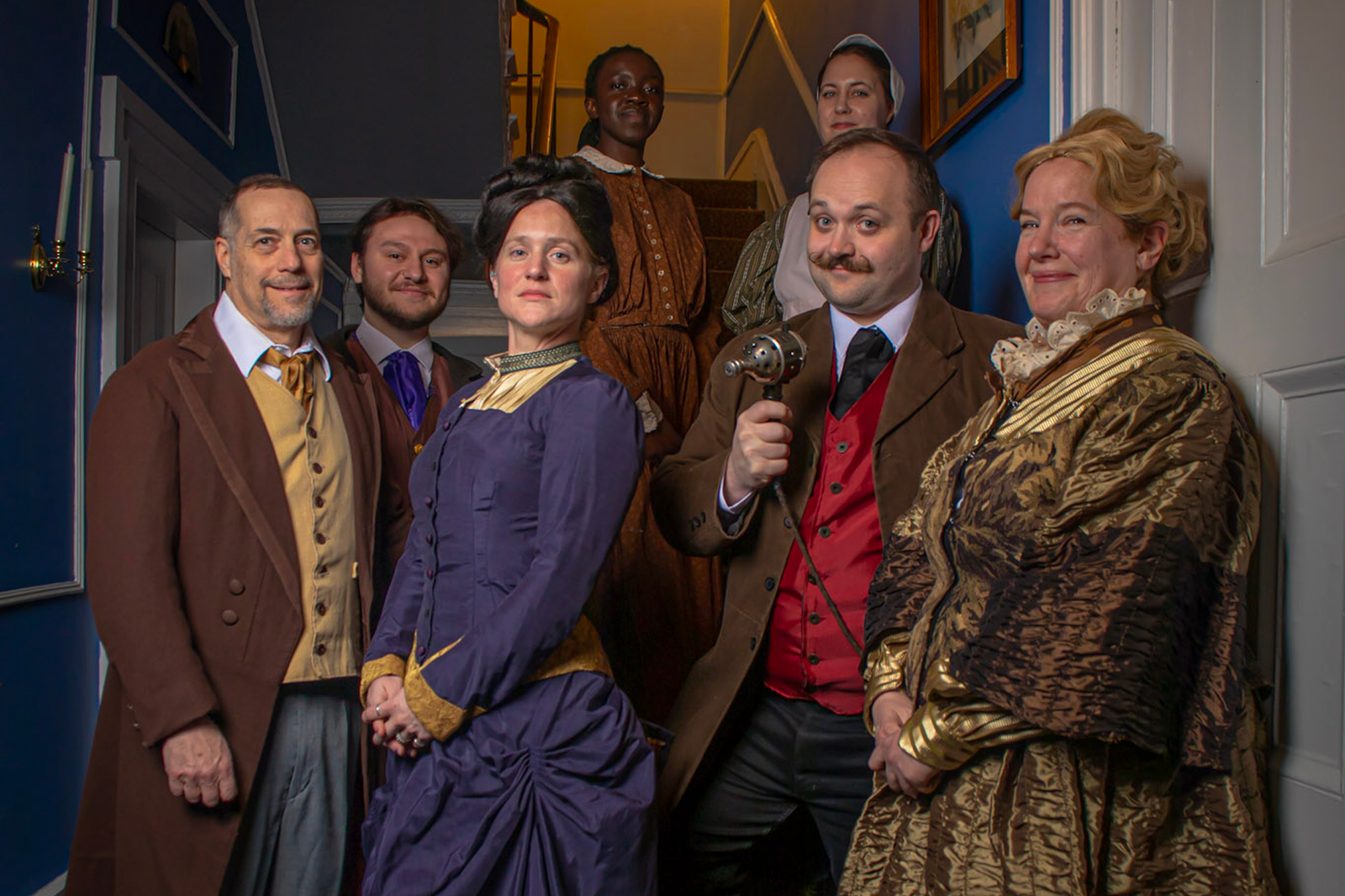
At the center of the story is Dr. Givings (Evan Jones), a confident, well-meaning physician who treats female “hysteria” with an electrically powered device, utterly unaware that he’s inducing orgasms while remaining emotionally unavailable to his own wife. Jones plays the doctor with crisp authority and blind certainty, embodying a man who believes knowledge and control are the same thing.
Opposite him, Amy Hausknecht’s Catherine Givings is the beating heart of the production. Hausknecht charts Catherine’s journey from polite observer to emotionally awakened woman with humanity, allowing curiosity — not rebellion — to fuel her transformation. Her performance makes Catherine’s final emotional clarity feel earned, not symbolic.
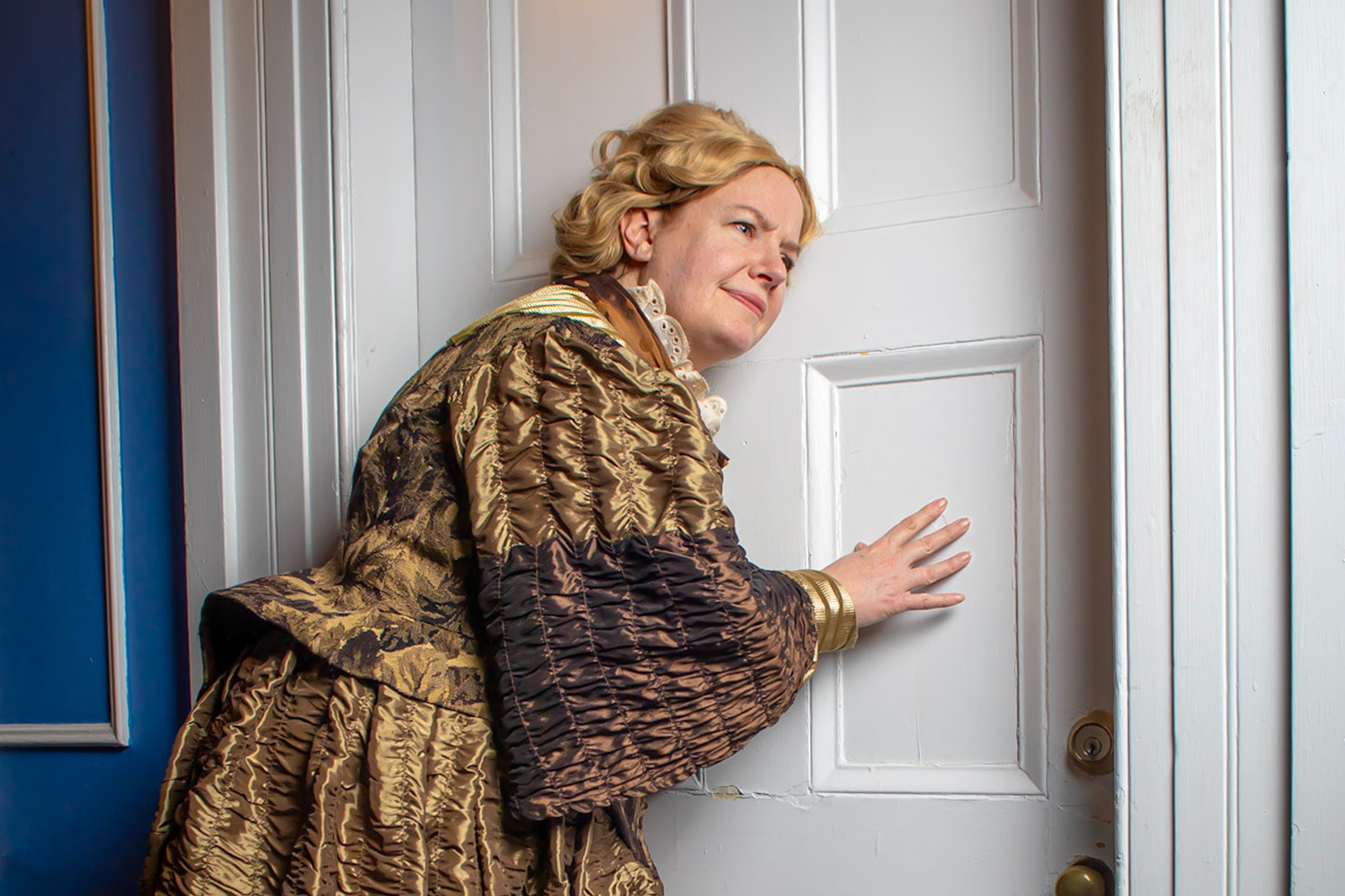
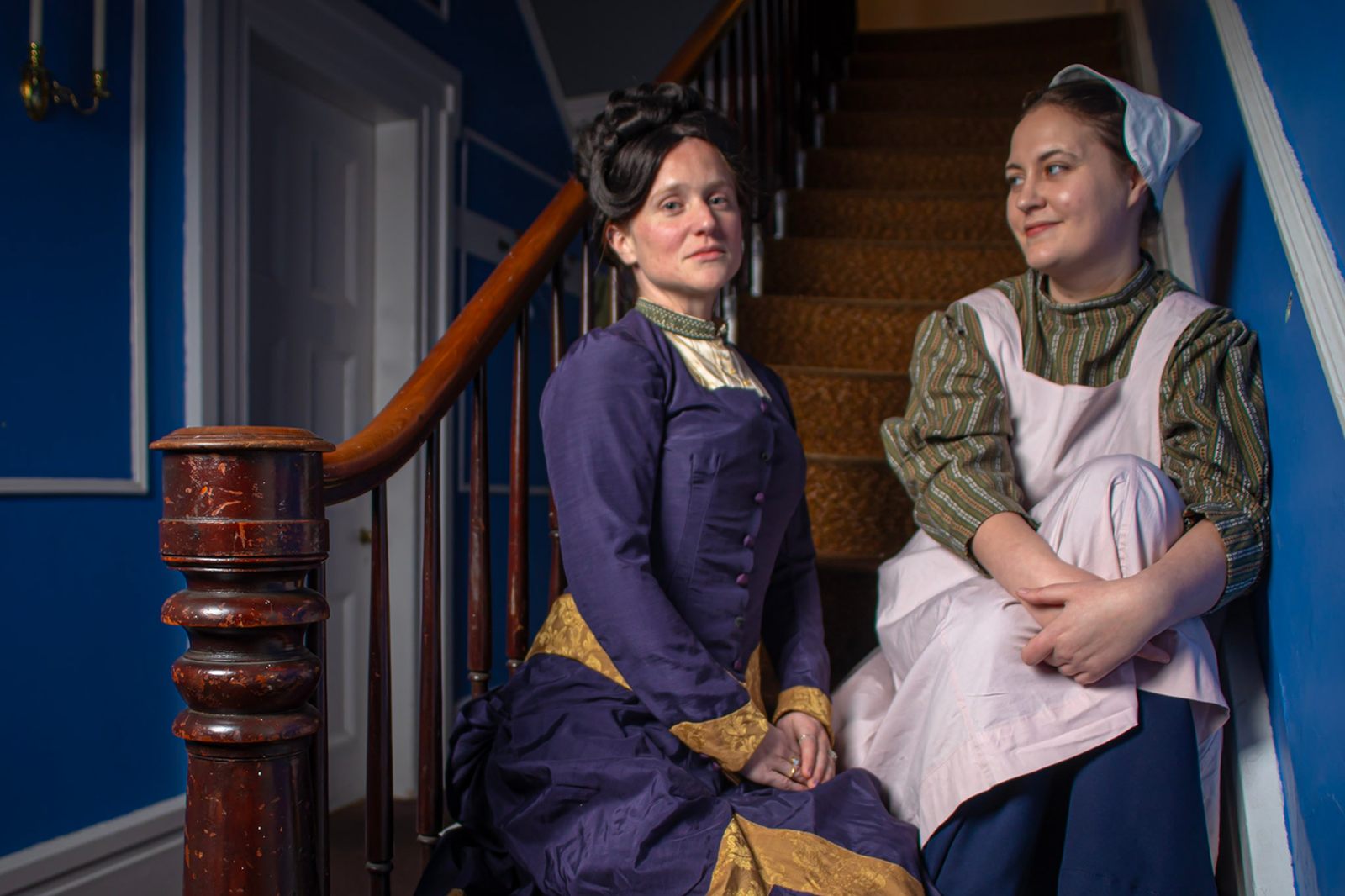
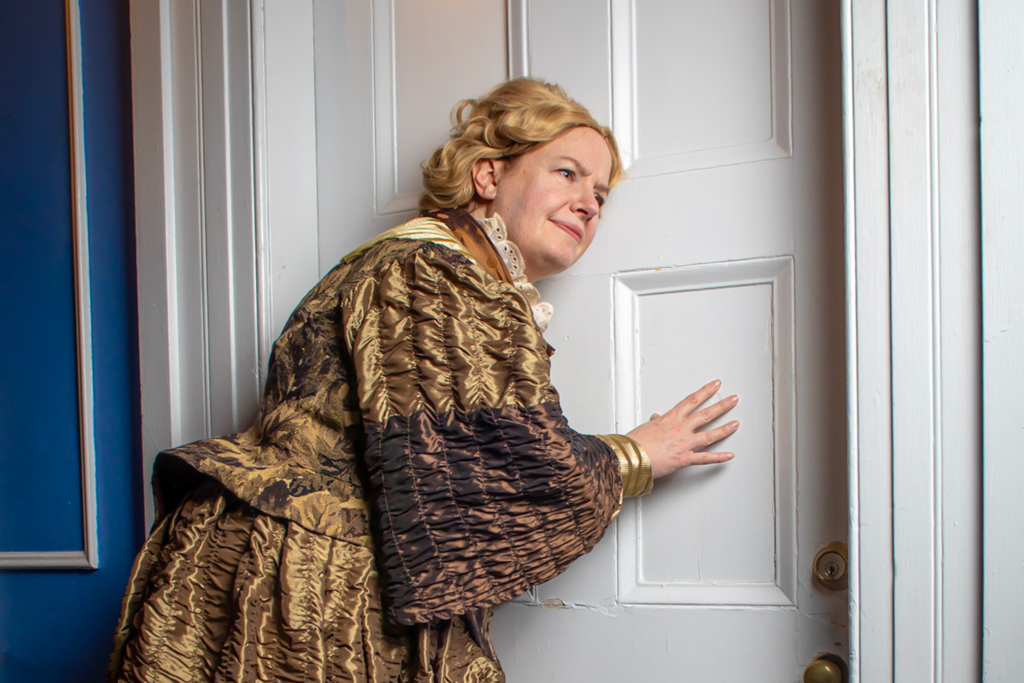
The ensemble around them is uniformly strong. Sarah Gesior’s Annie, the nurse, brings warmth and a serene ease to the stage, quietly disrupting the rigid social hierarchy simply by being present and emotionally open. Paul Stein’s Mr. Daldry balances awkwardness and rigidity with surprising vulnerability, while Meaghan Rogers as Mrs. Daldry provides humor and warmth that never undercut the character’s intelligence. Rogers approaches the character’s repeated “treatments” with remarkable bravery, grounding moments of intense vulnerability in honesty.
Tobias Martin’s Leo, the artist, offers a gentle counterpoint to the doctor’s detachment. His attentiveness and emotional availability feel radical, embodying the play’s argument that intimacy requires listening, not authority.
One of the most devastating moments in the play belongs to Zilpa Oduor as Elizabeth, whose monologue about the death of her child lands as the emotional gut punch of the evening. Oduor delivers the scene with stunning stillness and clarity, stripping the play of irony and reminding the audience what emotional neglect truly costs. It’s the moment where laughter gives way to something deeper — and it lingers.
Under the assured direction of David E. Rook, the production maintains a confident balance between humor and gravity. Rook allows the comedy to land without ever letting it eclipse the play’s deeper questions about autonomy, touch, and self-knowledge.
Kudos to the entire production staff! The design work across the board reinforces the production’s themes with clarity and intention. Peter Kantor’s set design creates a space that is both domestic and clinical, emphasizing how easily intimacy is overshadowed by control. Stephen Wilson’s lighting design subtly shifts the emotional temperature of scenes, while Beth Ruman’s costume design visually encodes Victorian restraint through corseted silhouettes and layered garments that mirror the containment imposed on women’s bodies. John Fowler’s hair design completes the period illusion, reinforcing social status and decorum at a glance.
Props, overseen by K. Lindsay Schoen, are used with intelligence rather than novelty. The vibrator itself is never treated as a joke — it is a symbol of progress without permission, pleasure without agency. A silent moment where multiple characters fixate on the device becomes one of the most charged scenes in the show. No dialogue needed. Everyone understands exactly what’s at stake. The dildo used in the play (yes, there is a dildo) does provide a few comic and shocking moments, and reminds the audience that men are also not equipped to confront their need for physical desire.
The sound design by Brian Starnes deserves special mention. Pre-show selections by Saint-Saëns, Fauré, Brahms, and Schubert establish a world of elegance and repression simmering with unspoken desire. These romantic-era works echo the characters themselves: refined on the surface, restless underneath.
Act I notably avoids traditional underscoring, relying on live sound from the actors — a choice that heightens the clinical chill and emotional distance of the first half. Intermission music shifts the energy deliberately, with selections from Bizet’s Carmen injecting sensuality and urgency, Brahms’ Hungarian Dance No. 5 offering release, and Schubert maintaining emotional continuity.
By Act II, the sound design leans into playful boldness: Beethoven’s Für Elise lands with ironic familiarity. Starnes mentioned using Ennio Morricone’s The Ecstasy of Gold and a final reprise of Fauré’s Sicilienne, but I didn’t recall hearing these selections while watching the play. Starnes entire playlist is a treat for the classical music aficionado:
Pre-show Selections:
- Piano Concerto No. 2 in G Minor, Op. 22: II: Allegro Scherzando by Camille Saint-Saenz
- Danse Macabre in G Minor Op. 40 by Camille Saint-Saenz
- Sicilienne, Op. 78 (piano and cello) by Gabriel Fauré
- Cello Sonata No. 1 in E Minor, Op. 38: II. Allegretto quasi menuetto by Johannes Brahms
- Cello Concerto No. 2 in D Minor, Op. 119: II. Allegro non troppo – Cadenza – Tempo I – Molto Allegro by Camille Saint-Saen
Intermission Selections:
- Carmen, WD 31: Prelude by Georges Bizet
- Carmen, Act III: Entr’acte by Georges Bizet
- Hungarian Dance No. 5 by Johannes Brahms
- Selected Franz Schubert symphony pieces
Act II Selections:
- Für Elise by Ludwig van Beethoven
- The Ecstasy of Gold – L’Estasi dell’Oro by Ennio Morricone (a reference to the climactic scene in the Spaghetti Western “The Good, The Bad, and The Ugly”
- A reprise of Sicilienne, Op. 78 by Gabriel Fauré, but more delicate with flute and strings.
Bow Music:
- Violin Concerto in D Major, Op. 77: III. Allegro giocoso, ma non troppo vivace
The sound design focused on romantic-era selections – leaving me to wonder what modern or contemporary songs an audience member would select to create their own vibrator playlist. Would you select any of these gems:
- “Love Myself” by Hailee Steinfeld (2015)
- “Body of My Own” by Charli XCX (2014)
- “Party for One” by Carly Rae Jepsen (2018)
- “Free Yourself” by Jessie Ware (2023)
- “Dancin’ in Circles” by Lady Gaga (2016)
- “Kicks” by FKA twigs (2014)
- “BOB” by Macy Gray (2015)
- “I, Vibrator” by Say Anything (2014)
- “Solo” by Clean Bandit ft. Demi Lovato (2018)
- “I Don’t Need a Man” by The Pussycat Dolls (2005)
- “Icicle” by Tori Amos (1994)
- “I Touch Myself” by the Divinyls (1990)
- “She Bop” by Cyndi Lauper (1984)
The rest of the production crew deserves a mention. Supported by producer John Sutton, stage manager Beth Swallow, assistant stage manager Abigail Decker, board operator Barry Streifert, set construction by EJ Gilbert and SCP volunteers, and intimacy coordinator Siobhan Shea, the production feels cohesive, intentional, and confidently unashamed of its subject.
This is not a coy play, and Schenectady Civic Players doesn’t treat it like one. In the Next Room becomes exactly what it should be here: a funny, unsettling, deeply human story about women taking power — electrically, emotionally, and unapologetically — into their own hands.
Performance dates are Friday–Sunday (January 30–February 1) and Wednesday–Sunday (February 4–8). Friday and Saturday curtains are at 8:00 PM, Wednesday and Thursday at 7:30 PM, and Sunday matinees at 2:30 PM. All tickets are $25.
Tickets are available online through the SCP website, by phone, or at the door for any performance. Call 518-382-2081 or visit civicplayers.org for more information.
Schenectady Civic Players is located at:
12 South Church Street
Schenectady, NY 12305