Home Blog Page 272

When Not to Call 911 – The Weird Side of the Internet

0
When Not to Call 911

When Not to Call 911 – The Weird Side of the Internet – by Liam Sweeny.

There are a number of things you should do when you go out to steal a car. Now these are uneducated guesses, as I’ve never actually tried to steal a car. I’m thinking do it at night, dress all in black, maybe go fancy with a balaclava, be sure to bring black spray paint for the cameras (the ones you can see – figure the balaclava’s got you for the ones you can’t see.) You definitely want to bring rope in case you have to scale walls (or tie someone up, but remember, that’s kidnapping) and last but not least, bring some steak or peanut butter for any guard dogs that may be around.

What you don’t want to do is call the cops on yourself.

37 year-old Black Ops player, and master car thief Christy Turman broke into a dealership – or maybe just walked in – and tried to steal a car, as some bizarre, method acting version of the game Black Ops. And of course, to make the whole thing legal, she called 911, and through them Lee County Sheriff’s Department in Florida (of course) to report the crime that she was attempting to commit. Because if you call 911 while you’re committing a crime, that makes it legal.

Of course, she got charged with trespassing, and not with attempted grand theft auto, which, if she had been playing that game, she might have called 911 to report driving over a prostitute.

So if you report a crime in mid-crime, that makes it legal? Do you have to call the cops before you smoke the crack, or can you call them mid gasp (you crackheads know what I’m talking about, that little micro-breath to keep all the crack in.) So when is it illegal? If I ask a prostitute (not run over by a Grand Theft Auto cosplayer) how much, and I don’t like how much, I should just call the cops right there and ‘fess up, and then pony up because good lovin’ ain’t cheap?

Christy Turman, here’s to you, and the car that should be legally yours.

Original article here


More from Liam Sweeny…


DIY Underground – An Xperience Article

0
DIY Underground

DIY Underground – An Xperience Article – by Liam Sweeny.

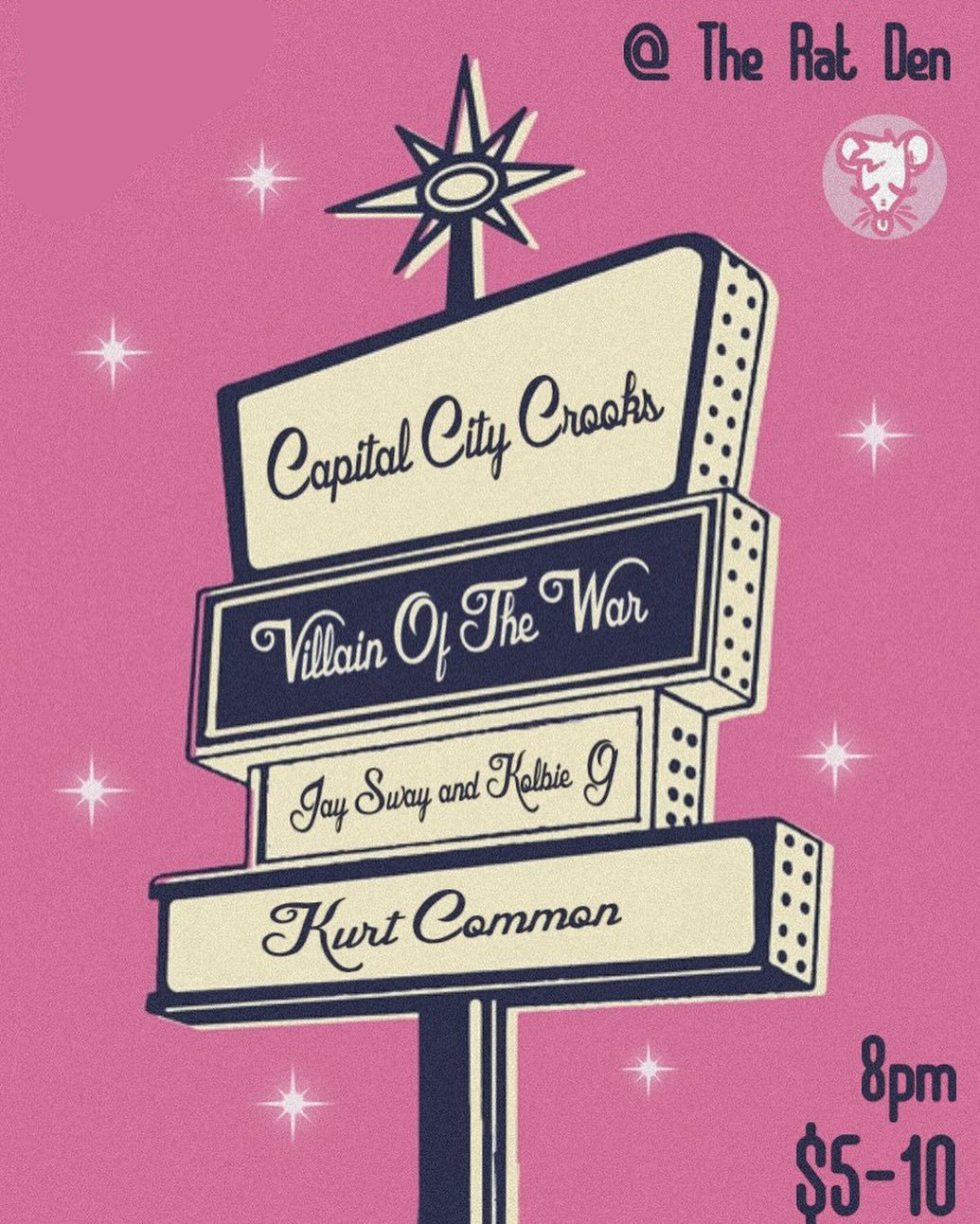
Zeke Motzer was in the courtroom when I first called, and in the seconds we spoke, I had no way of knowing that she was there to see a 21-year-old man get convicted of the murder of a 25-year-old man named Ben Rowe, whose senseless death spoke little of the life he brought to the underground music scene in Albany. He and his apartment-turned-DIY-venue, The Rat Den, were instrumental among U Albany and Saint Rose students, as well as others, in giving independent musicians a stage in some cases, and a chance in all cases.

“[Ben Rowe’s] passing has been tragic for the music community, especially the DIY community,” Zeke said when we were able to talk. “He was very largely at the center of it, especially on the hardcore side of things. He and I grew really close when we started booking together. … I’d been at it for six to eight months, but we sort of built our communities together and he was very much a leader and very much like a life in the community. One of his biggest talents was making people feel safe and comfortable coming out to shows and getting out of their comfort zone, and being in new spaces and in new situations.”

Zeke, like Ben, operated a house venue called Caesar’s Palace, and she continues with the music, but not the venue. Being a DIY concert space has its challenges, most of all not getting caught. When would-be presidential assassin John Hinckley was scheduled to play Caesar’s Palace, he canceled, and in the back and forth on social media, a local reporter was able to find Zeke’s name and address, which was published, and it led to the city taking action against the venue. It also “doxxed” six college students.

Zeke recounted the result. “It was unfortunate. A few weeks later they came out and inspected the whole place, and I had to go down to the City Clerk’s office and sign some papers, but nothing really came of it,” she said. “And then we just decided to start throwing shows basically everywhere else in Albany. But at that point, there were five or six house venues within a mile of my house. It was like this whole community was there; there was a house show to go to every night of the weekend if you wanted to.”

Another member of the DIY scene is Aidan Hennessey with his venue The Dojo, a multilevel space with entertainment on every floor, including the attic. Especially the attic.

“Our basement would be sort of like an art show with a couple of different vendors and stuff like that,” Aidan said. “And then upstairs in the attic, there would be music and sometimes we sort of sprinkle in a comedy show. We had a couple of different sort of faces to it. So we had an attic that was just a fully kitted-out stage, and then we had a balcony patio where we could do lighter acoustic stuff. So there were different looks to it. One thing I like to say about the Dojo was you never knew exactly what you were gonna see when you went to a Dojo show.”

The Dojo, The Rat Den, Caesar’s Palace, and the many other houses that make up the DIY scene have to be underground for fear of the city shutting them down. But the relationship between the city and the scene is one filled with more subtle barriers that can’t be solved with a license or permit.

Aiden gives an example. “One thing that sort of comes to mind is those DJ nights under Jennings Landing,” he said. “They were doing these shows that weren’t permitted. And they were kind of getting the go-ahead from the city, this sort of like tacit encouragement. Meanwhile, we had punk shows going on at the skate park and those were getting shut down left and right. So there is a certain level of that type of bureaucracy that keeps stuff underground while encouraging a different demo. I’m happy that those folks can do those DJ nights. It’s just that because we are young punks, we don’t get to play our music outside in municipal spaces, and other people do. So that’s sort of one example of that type of institutional barrier.”

There aren’t as many DIY spaces in the Pine Hills neighborhood currently, perhaps only one, where before there were six in walking distance of each other. But the loss of these venues has come hand in hand with the growth of the scene into more mainstream play. When Caesar’s Palace was shut down, Zeke created CZR Entertainment and put on shows in other houses, and eventually elsewhere.

“What really sort of got me involved in the next phase of the music community was us getting shut down and looking for new places to throw shows,” she said. “So when Caesar’s Palace got shut down, we had, I think, eight shows that we had to move to different places. And we moved some of those shows to other house venues. We also moved some of those shows to Pauly’s and then we started throwing shows at No Fun on occasion. Getting shut down as a house venue sort of opened the doors to those other avenues for at least what we were doing at the time. It didn’t really feel like we were competing with those venues at all because we were doing something different. We were bringing a whole different crowd than what those places were bringing.”

Mike Valente is a talent buyer. He brings top acts to one of the largest independent venues in the Capital Region. He’s also been in the underground music scene his whole life, and he shares a perspective on DIY that highlights the divide between past and present.

“House shows are not new,” he said. “It’s not a new thing. As a kid, I played everybody’s garage, everybody’s living room, everybody’s VFW, any place I could go just to get the word out, have some fun, party with some friends. But yeah, the house shows, that scene, I’ll give you a prime example: I used to do one yearly party, like in the early ‘90s. And you can’t even touch this with a 10-foot pole these days. But I used to do 10 kegs and do $5 a cup, and I would have a band play, and there’d be hundreds and hundreds of people there. I mean, it’s a little bit more extreme than some stuff, but it’s been going on forever. If there was a community of kids that like a certain genre of music then you’re gonna find some sort of house party somewhere.

He noted a slight difference between then and now, a detail which may have allowed the recent house shows to thrive. “I think it was more dangerous back then,” he said. “The cops would break it up a little bit faster than they do these days.”

The underground DIY music scene in Albany has a young crowd, and is very different from the mainstream. But Zeke has a broader hope.

“We should highlight the divide between the younger DIY-centric crowd and the mainstay, only-going-to-Bruce-Springsteen-type crowd,” she said. “I think that there’s a huge divide that really can be swallowed up and erased by building community. I want kids to bring their parents to shows. I want people of all ages at shows. And I love seeing people you never expect to see in a basement. You know what I mean? Like, I think that that’s one of the most important parts of community building. Making people feel welcome, making people feel comfortable. That’s something that Ben was the best at too. It’s like, go up to people, introduce yourself, especially when you’re the one hosting the show.”


More from Liam Sweeny…

Big Shrimp / Lunar Ticks @ Ophelia’s, 11/14/2024

0
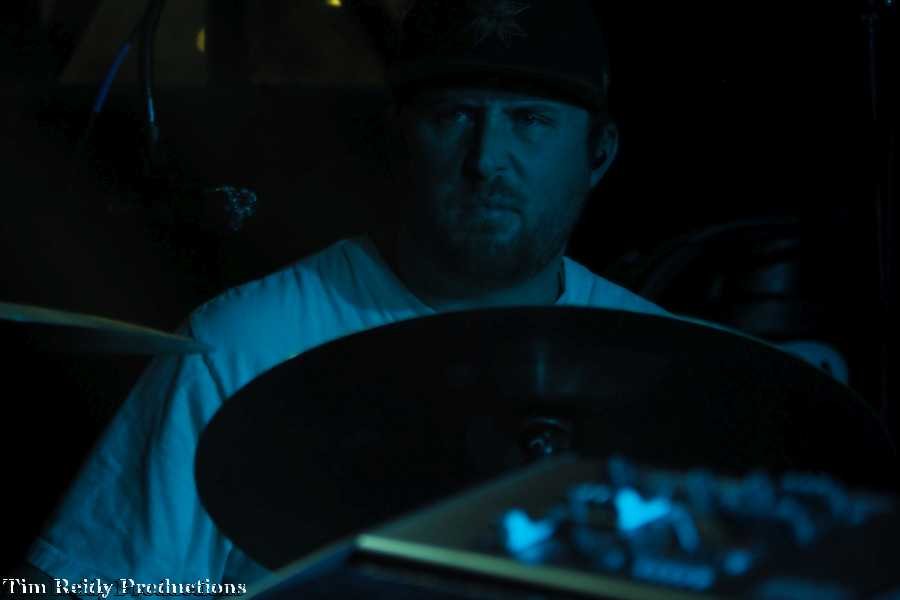
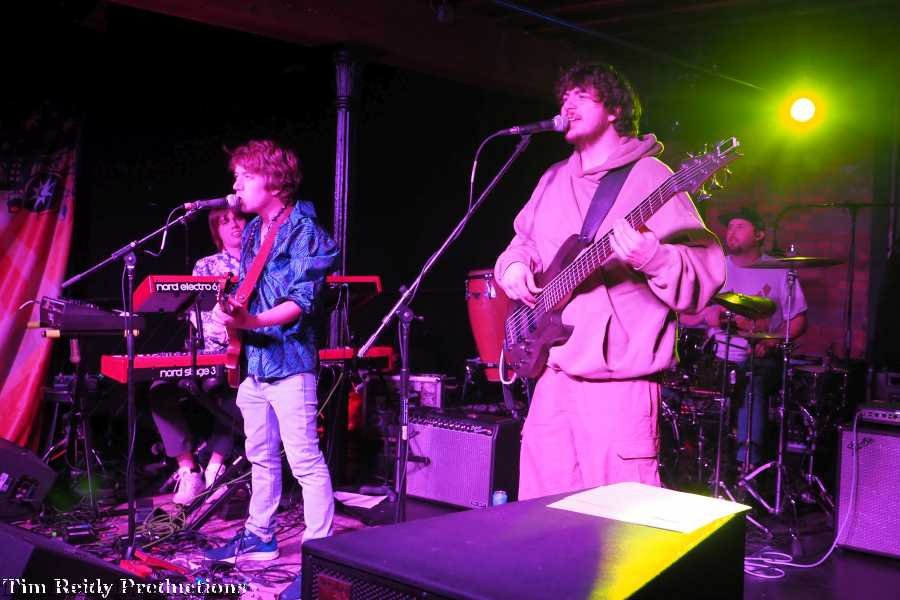
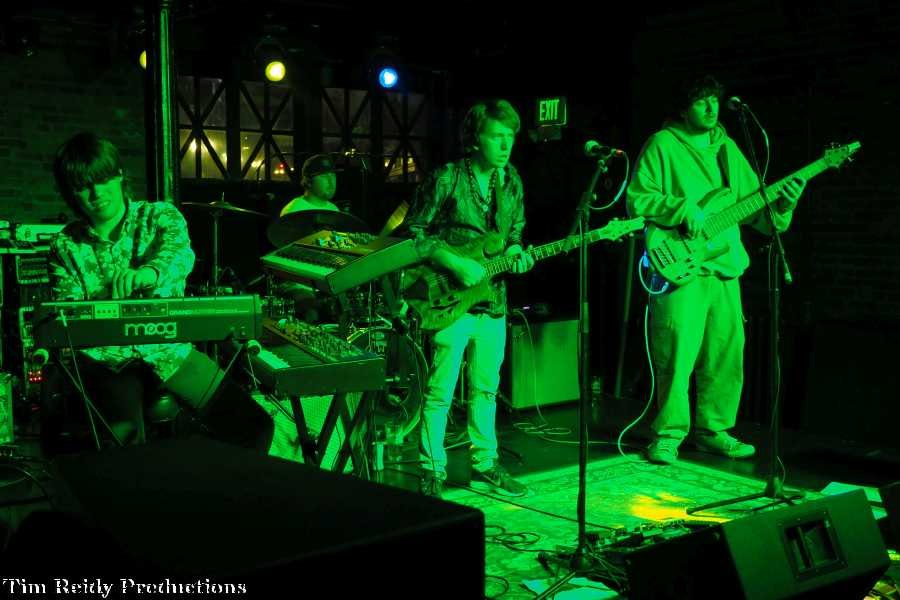
OLYMPUS DIGITAL CAMERA

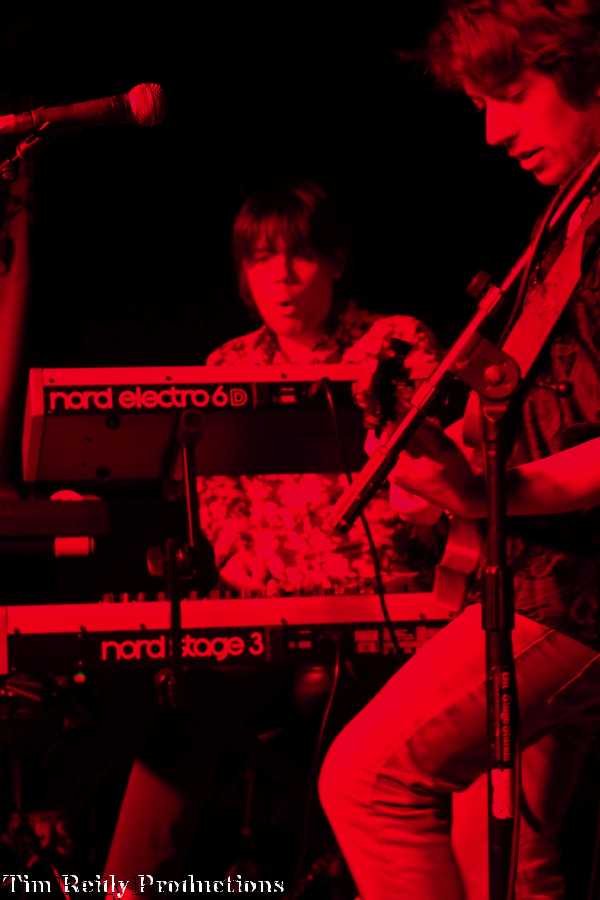
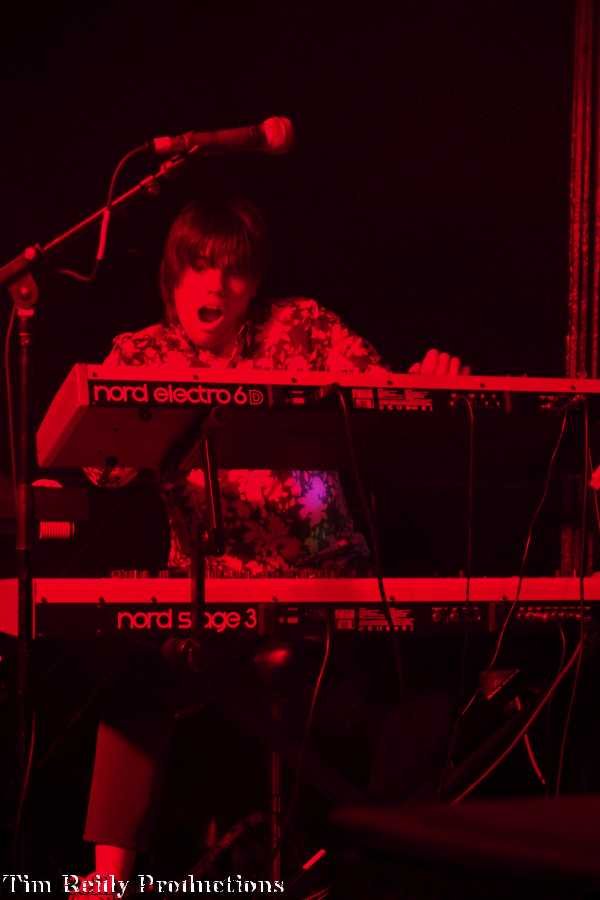
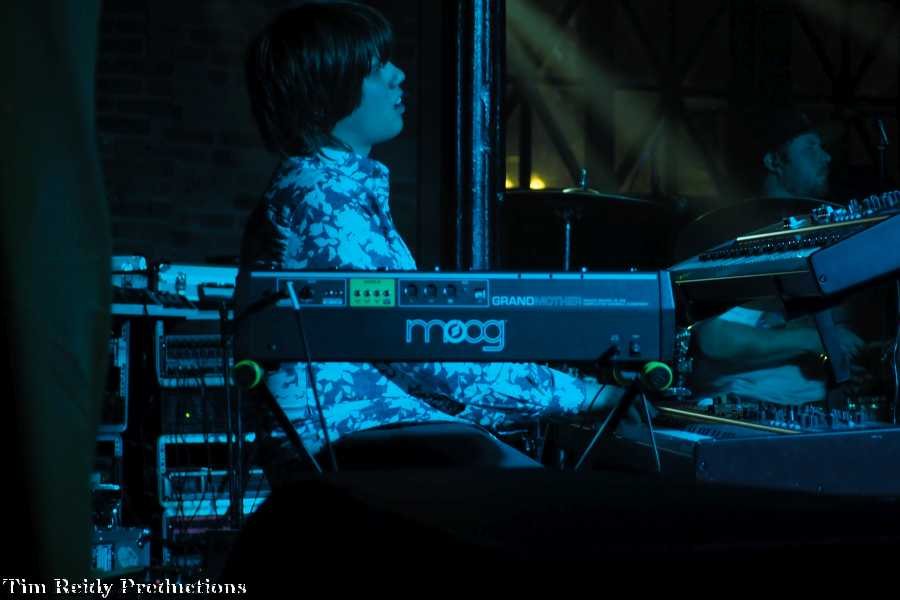
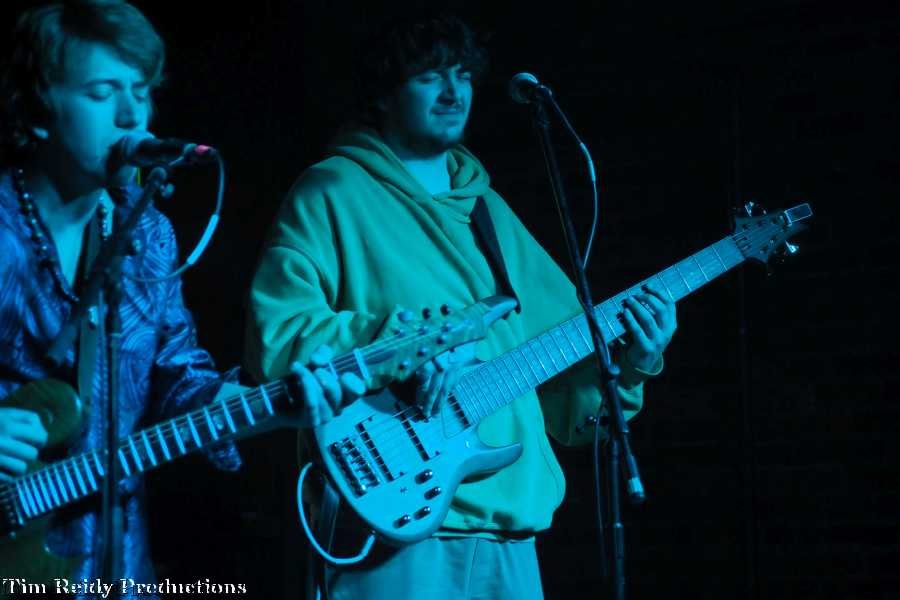
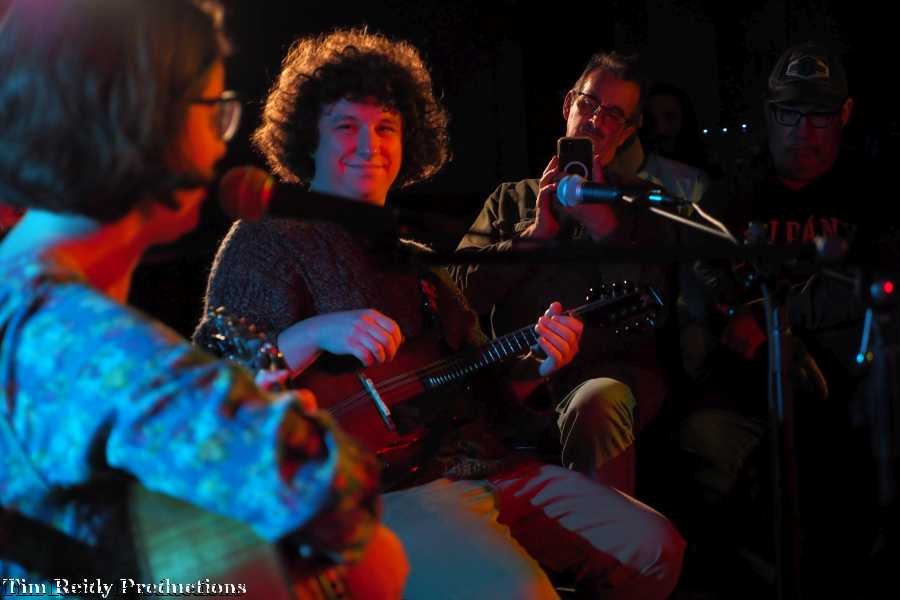
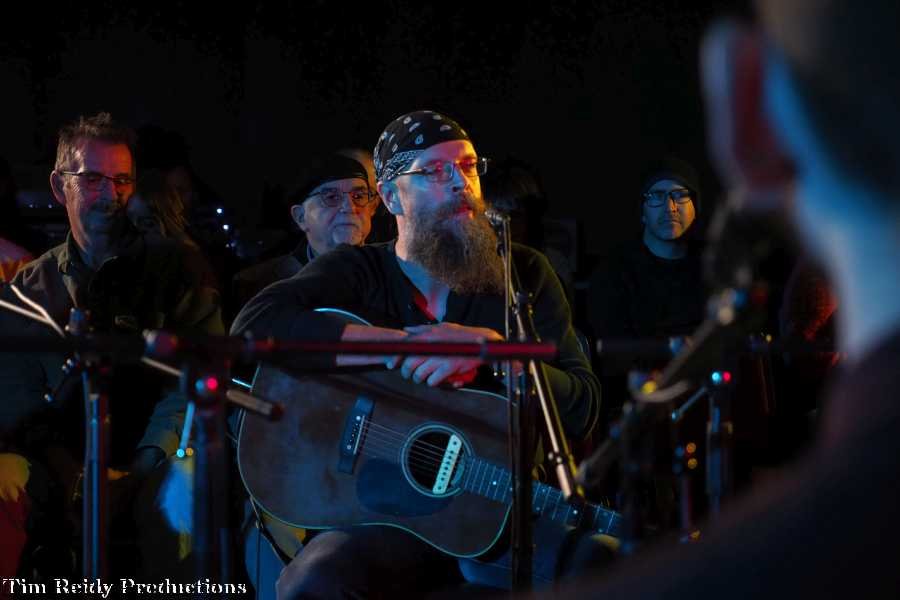
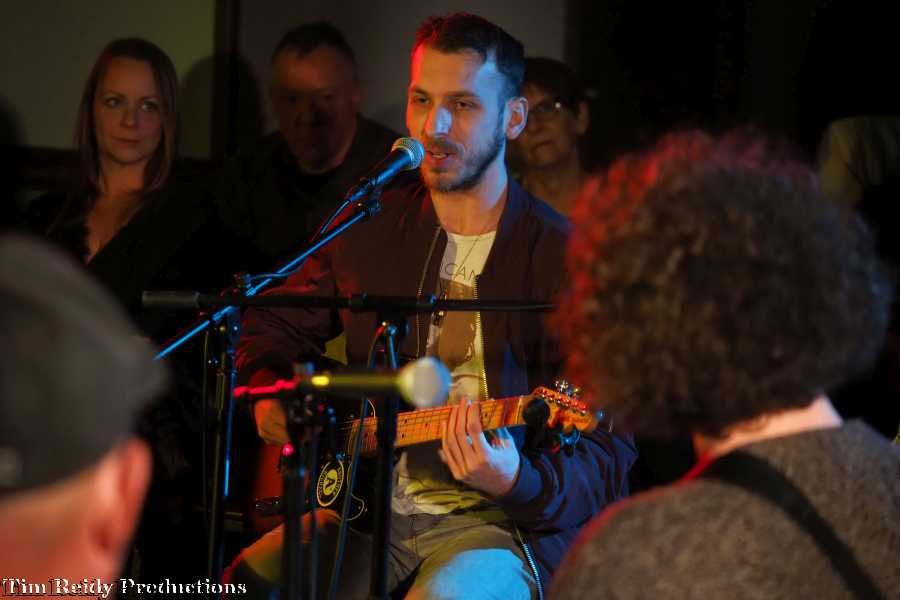
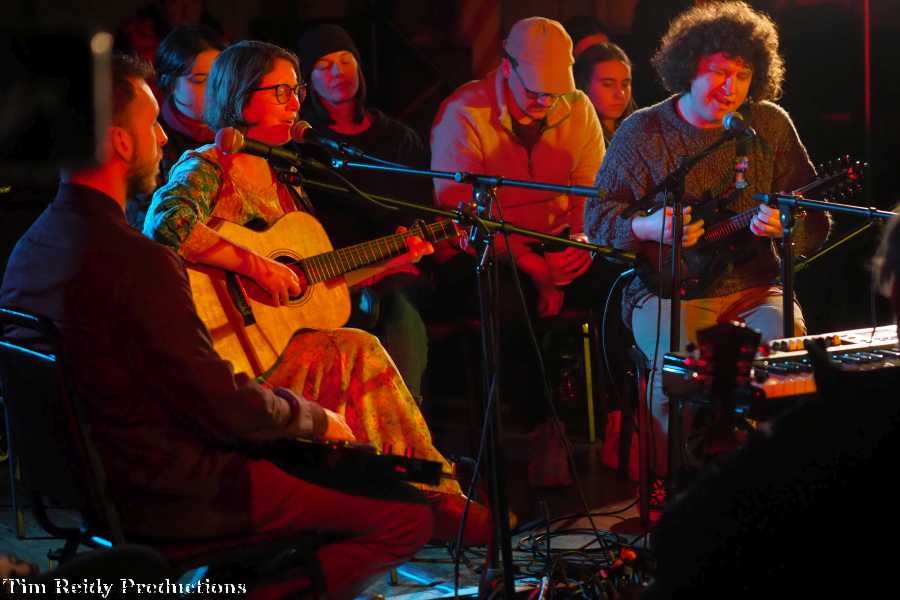
Big Shrimp finished up their residency at Ophelia’s, and Lunar Ticks came in from Chicago to open for them.

Photography by Timothy Reidy.

More from Timothy Reidy …

Jair-Rohm Parker Wells – An Xperience Interview

0
Jair-Rohm Parker Wells
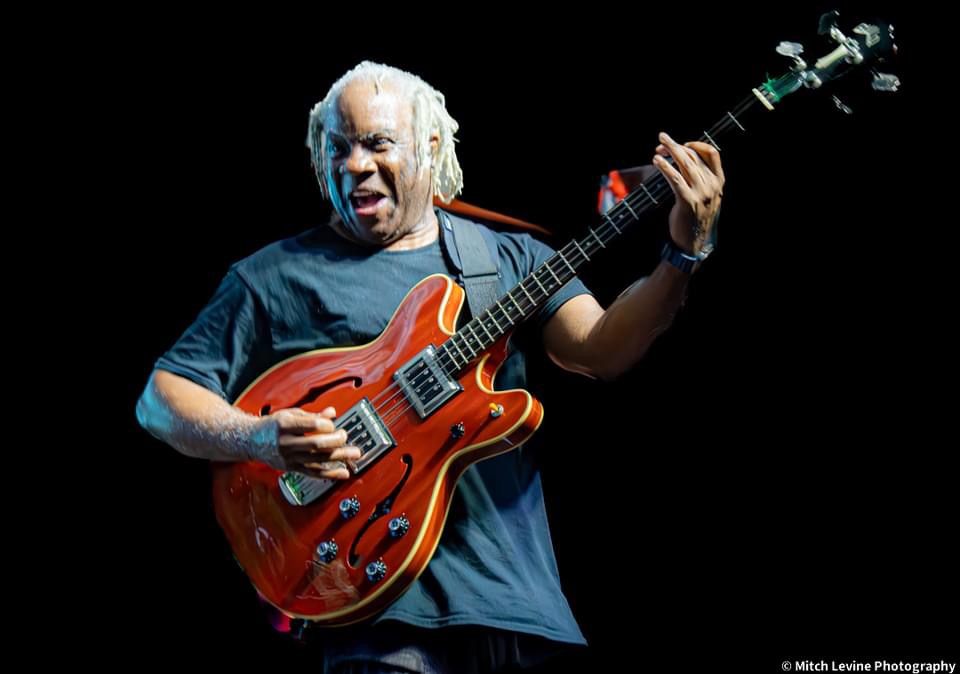
Photo by Mitch Levine

Jair-Rohm Parker Wells – An Xperience Interview – by Rob Smittix.

Photo By: Mitch Levine

RRX: I am very excited about the Doom Dogs, and I know you guys are coming to town, to our neck of the woods, on January 8 to The Troy Savings Bank Music Hall. So, if you don’t mind, just a brief history of how Doom Dogs came to be.

JP: Well, thank you for asking. It’s a fun story. It basically started at the end of the 1980s, when both Reeves and I, who were unknown to each other, were endorsing Steinberger guitars. And as endorsers, we were invited to demonstrate at the Frankfurt Musik Fair on behalf of Steinberger. We were both doing our separate demos. At one point during a break, we happened to meet in the Steinberger booth and started chatting. Reeves had been demoing with a DAT tape; he was playing along to it, and he was getting pretty bored with that. So, he asked me if I would be up for joining him on his next demo set. I said, well, sure, why not? What will we play? He was with (David) Bowie at the time, and I didn’t really know any of that material except for the older Bowie material. I didn’t know the new Tin Machine stuff. So what will we play?

He said, “I don’t know, we’ll see when we start.” So we just went up there and improvised, and it clicked. It was happening! Fast forward to some weeks or months after that; we stayed in touch after the fair and figured it’d be a good idea to get together and do more of that in front of more people. A proper audience, like, make a band of it. At the time, I was living in Sweden, and I had my band there, that included the drummer Bill Bryant, who I had worked with in Machine Gun.

RRX: Right.

JP: I suggested to Reeves that we do a trio with Bill, and that would alleviate the need to have to bring over two guys from the US because Bill was there in Sweden as well. And that’s how it started. We started playing in Europe, pretty much any and everywhere we could – whenever David (Bowie) was working in Europe, he would have Reeves over with him. That gave us the opportunity to be able to play more. Then it turned out that I started coming over to the US more to do shows, mostly in the New York area, like at the Knitting Factory and whatnot. In that context, I became acquainted with the drummer Lance Carter. So Reeves and I started playing with Lance because, in the US, it was easier to just work with Lance and not have to go through all the trouble to get Bill over there. Back then and to this day, Bill had a very successful business in Sweden. So it wasn’t easy for him to get away. So, yeah, we carried on, on both continents.

Between Bowie tours, essentially. Lance was with Cassandra Wilson at the time. We were really fortunate that Cassandra and Bowie were in Europe at the same time once. That gave us an opportunity to do a bigger thing and spend more time together.

RRX: It started way back then, but if I’m not mistaken there was a hiatus in there. Right?

JP: Oh yeah, a few things happened. First, Lance passed. I don’t know if this is actually chronological. It’s just that was one thing that led to the slowdown. Reeves moved from LA to Nashville and also stopped playing with Bowie. Things became kind of complicated for him because getting him over to Europe wasn’t as convenient anymore, and for me, coming over to the US. I was touring with a Swedish act that was really huge at the time, an act called Dr. Alban. So that took up, like, all of my time. And, like I said, Reeves was in Nashville working really hard to establish himself. So, we didn’t really do a whole lot for a few years. We kept in touch and looked for ways to get together, and then he started doing the thing with the Cure. He ended his relationship with Steinberger essentially, when he started his relationship with Reverend Guitars. He was doing a whole other thing with Reverend; he was basically designing guitars. It was a much deeper commitment than just being an endorser like I was and still am with Steinberger. That kind of put us in separate worlds entirely; that was basically the 12-year hiatus.

RRX: That makes sense. I mean, I have a hard enough time getting my band together, and we all live around here. So I get that. I’m really into the whole “no shows are really gonna be the same,” improv things Doom Dogs does, I love that!

JP: Oh yeah, that’s the way it’s been from the beginning. It goes all the way back to that first conversation with Reeves, and that’s been the process ever since for, like, 30-plus years now. We don’t talk about the music; we play the music.

RRX: Right, you let the music do the talking for you.

JP: Exactly. the recent incarnation started … if I’m not mistaken. It was July of last year. What happened was Reeves and I discovered that we were both living on the East Coast again, and it was like, dude, let’s get together, let’s do Doom Dogs. We were looking for drummers. I had done a record with Grant Calvin Weston around that time, and he was the first choice for both of us. Unfortunately, he wasn’t available. We kind of sat around thinking, there are a lot of great drummers out there, and then I was like, there is a drummer I’ve been a fan of for many years, I’d like to call him and see if he’d be up for it. So, I called Jonathan Kane.

He said, “Yeah, great, sure, I’d love to!” He made the gig … that first show was at ShapeShifter Lab, Matthew Garrison’s place in Brooklyn. Beautiful place. And the story is … up until this point, we’re at the venue, we’re setting up. I noticed Jonathan, whom I’m just meeting for the first time at the show, because, like I said, I’ve been a fan. I’ve never met him. He looks nervous. I figured, well, he doesn’t know us, so maybe formal introductions are in order.

So, minutes before we go on, he comes over to me and says, “Listen, what do you want me to do?” There is a Doom Dogs album from the ‘90s. It’s the only album; we’re actually getting ready to release a second album with Jonathan on it. He’s still like, ”What should I play? What do you guys do?” He’s asking all these questions …

RRX: Sure.

JP: I realized, oh, he thinks that this is some kind of worked-out thing, where there’s a formula and whatnot. And I told him, I said, “Listen, Jonathan, you’re here because I’m a fan. You’re just here to do what you do. We got on stage and he totally went above and beyond the call of duty. I mean, he was fabulous. So that’s the way it is, the way it’s been and that’s the way it’s going to be.”

The Lift Series at Troy Savings Bank Music Hall

Featuring Doom Dogs January 8, 2025 – 6pm

Check out the band’s website HERE!


More from Rob Smittix…

Steve Hewitt (Kent, UK) – Interview – Thanks for Asking!

0
Steve Hewitt

Steve Hewitt (Kent, UK) – Interview – Thanks for Asking! – by Liam Sweeny.

RRX: Music genres are difficult for some artists. Some strictly adhere; others not so much. What is your perspective on the genre you play, or the genres you hover around?

SH: I always struggled with knowing what my genre was for years, because I write folk to Americana, country, to pop, then soulful etc so it was hard to categorise my sound. A reviewer once coined the genre in saying I was ‘Americana with English roots’, which I think was put perfectly.

I’m from the generation that started off the sub genres, so that’s where I’m at.

RRX: What would you like fans to know before they come to see you play? (No basic stuff; get specific.)

SH: Well, I don’t pretend to be anyone else, I am who I am, I’m a working class family man, married with kids and have a full time job. Authenticity is key. I write from the heart and about everyday life, which means I have a few stories to tell in my live shows. I love to have a laugh and banter with the audience, but the performance of the songs are key and connecting with people through the songs by painting a picture through stories that relate.

RRX: Every artist’s first song is a milestone. But so is the latest song. Describe the first song/album you recorded, and also the latest song/album you recorded; what are the differences?

SH: My first song was called The One You Need (there you go again) taken from my first EP called ‘Life Stories’ and at that point I was in my late twenties and full of beans so to speak. I had ideas invading my head space and melodies pouring out of me everyday and because this was my first attempt, I had a few years of experiences and things happening in my life, so I had so much content to write about. Songs came a lot easier back then because I wrote straight from the source and I think it shows.

The last song I wrote on the new album (never two days the same) is called The Weight Of The World, which is a quieter number on the album. Now, from the first to the last song I wrote, a lot has happened in the world and in myself, so I tend to wait until the dust settles, then gather my thoughts before I approach a subject – as to get the best out of it. Being older and hopefully wiser, the songs I write become more relatable. But now I write when the inspiration comes, rather than writing for the sake of it.

RRX: It’s a lot of fun living in the present, but we all collect memories and give birth to dreams. We’re talking dreams here. Where you see yourself next year? In the next five years?

SH: I suppose this all depends on me, the writing, my energy, my pursuit etc. Being a father, husband and a working class man, things can happen that stop everything in it’s tracks and none of us are promised a tomorrow. If things keep going the way they are now, then in 5 years time I would like to have written a few more albums, be in a band that feels like a brotherhood/family or friends, and also touring, supporting bigger more established acts and hopefully earning a good living from it.

RRX: We have to play somewhere, and sometimes those places have more going for them than a stage and a power outlet. What is a memorable place you played, and bonus points if it’s not a well-known place.

SH: A few years ago I played at an event with many other artists, at a venue called the Two Wood Barn in Pulborough.

Bands were coming and going and around the 7th band, the organiser said: ‘your up next’. So I got my pedal board, and guitar, plugged in, line checked quickly, then played. I sang around 6 originals, then they wanted a cover song, so I sang Babylon by David Gray. On the last strum, they started to clap, which went on from a minute to two minutes and then they stood up one by one and then a majority of the room stood and applauded, which got louder and louder. I stood not knowing what to do and tears started to fill my eyes, so I just savoured the moment. It was wonderful for me and a moment I will never forget.

RRX: Our style comes from the extension of our influences. It’s like an evolution. We’re influenced, and it inspires us to influence. What can you say about your influences, and what you feel you’ve done with their influence as a musician or band? Have you extended their work?

SH: Well, nothing is new under the sun, but I live in the time of the Sub-genre, nothing is as it was. With that being said, my biggest influences started with Buddy Holly, Hank Williams, David Gray, Bob Dylan, Fink, The Beegees, Elton john, John Legend, Blaze Foley etc etc…. so with these being my influences I can only say thank you to them for doing something that they never set out to do, which was inspire me and the sound I have today. I never try to sound like anyone, but sometimes, the biggest inspirations shine through and I guess that is the extension of their work in some way. I’ve never thought of it like that before.


More from Liam Sweeny…

Serpent and the Sun, Chptr 2 – Xperience Fiction

0
Serpent and the Sun

Serpent and the Sun, Chptr 2 – Xperience Fiction – by Liam Sweeny.

Jameson scanned the street nervously as they drove. Blake had his knee pressed up against the steering-wheel, rolling another cigarette. He was close to half-way finished with the one-pound bag he picked up on the way to New Rochester. There were only three places on the North American continent that he knew to have tobacco, and two were in the protected areas. Jameson periodically glanced over at his driving method.

“Don’t worry,” he said, “I’m an old pro at this…”

“You’ll be a dead pro, you keep smoking those things.” Ever the wet blanket.

“They don’t have enough tobacco on the continent to kill any one person, trust me.”

They were going down the main road of the New Rochester Technical College. That’s what was etched into the granite sign they passed by. Blake couldn’t tell what it was by just looking at it; mostly rubble with an aura of dust.

“Damn.” He said as he flicked a match off the dashboard. It came to life with an umbilical cord of sulphurous smoke. Blake grunted, and drew it to his twisty creation.

“They did that a long time ago,” said Jameson, “with the first UEC consolidation. They considered it a high priority threat.”

“That’s weird,” Blake said, “why a school?”

“Before the devolution, they did nanotech,” replied Jameson, “The equipment was still intact afterwards.”

“They didn’t want the competition, huh?”

“Yeah, something like that…” Jameson turned on the fan, blowing the smoky air to the back of the skiff.

“Fuck them anyways,” he said, “We got most of it underground before-hand.”

They drove on in silence. They were headed to the greenhouse, the main center of food production for the city. Like most things of value, it was underground.

“Ya’ know, we could’ve just taken the underground,” said Jameson, “We have everything connected…”

“What, and miss such a beautiful day?” Blake looked over to see Jameson rubbing the side of his arm nervously.

“Look, J’,” he said, “This ride’s invisible to PEALE. If it wasn’t, I’d be dead right now.”

“It’s not that, I trust ya’ Blake,” he replied, “It’s just, I don’t know…”

They turned off the college street onto a maintenance road. Silence pervaded.

“His twenty-first birthday would’ve been Monday.”

“Man, I’m sorry about that. What actually happened?” Blake knew that question would either be a knife opening an old wound or a scalpel draining an infected one. He had to hope for the latter.

Jameson gazed out the window, pointing to the side road, little more than a dirt path. Blake pulled off on it, and the forest crept up along the sides of the skiff. He could hear the branches scratching along each side.

“He was out fixing a relay to the solar panels.” Jameson said, still gazing. “The Library’s the only thing we can afford to cloak. Everything else is wide open. It blew; it just needed some new wiring. But someone had to go out to do it.”

“Why Matthew, though?” Blake interrupted, “I mean, you got plenty of guys in there…”

“Oh, Blake, I don’t know,” Jameson groaned, “He was just fuckin’ cagey or something… I said the same damn thing to him. Pleaded with him, believe me.”

“Yeah, he was marked.” Blake said. “Just like us. What the hell was he thinking?”

“He wasn’t.” Jameson looked over to Blake. “It’s rough, man, being underground and all. Everyone gets cagey.” He said. “We got the patio cloaked, but there’s no view there. It’s surrounded by concrete. Matt couldn’t handle it.”

“I even stuck him on security detail, so he’d have a view of the front,” he added, “but he couldn’t leave his post; that just made it worse.”

“I feel bad for you, J’,” Blake put a hand on Jameson’s shoulder, “I hope I didn’t, ya’ know…”

“Nah, Blake,” he said, “Nobody in there’ll even talk to me about it, like it’ll go away if no one mentions his name. It actually feels good to get a little off my chest.”

They reached the end of the dirt road. There was a small building; didn’t look like anything more than a tool-shed, but Jameson pointed to it. Blake stopped the car, told Jameson not to get out until he had the cloak turned on, which he proceeded to do. When they got to the building, Jameson placed his thumb on a rusty No Trespassing sign hanging on the door. Blake was surprised to hear the sound of the lock release.

Jameson smiled as he pointed to the sign. “Not bad, eh?”

“Biometric?” Blake asked. Jameson nodded.

“Stealth,” Blake responded, “I likey…”

The room was a front, of course. Blake was surprised, however, by the scanning equipment that lined the side-walls. Straight-green laser light crisscrossed the small room, setting off LEDs as the lines passed over them. He made mention of it to Jameson before they went down the stairs.

“It can tell the difference between human and,” he paused, “humanesque presences.”

Blake chuckled. “What’s it consider me?”

“Blake Chaplin.” Jameson said. “You’re programmed in.”

“Good ole’ northeastern hospitality…”

“It would kill you otherwise,” Jameson noted as they reached the lower landing.

“No offense,” he added, “We’re happy to see you and all…”

“Yeah, I’ll bet…” Blake looked around the landing, wondering where that death would’ve come from. The room looked pretty plain.

The landing opened up into a huge underground cavern; the greenhouse. Arranged in a grid along the ceiling were evenly-spaced, high powered LEDs. They were red, green, blue and white, angled to cross paths at plant-level. A slight mist sprayed from the ground beneath, creating a fine haze. The plants themselves were lush, their growth far more pronounced than anything grown on the surface.

“How long did it take you to clone these?” Blake asked.

“They’re not cloned,” he replied, grabbing an apple from one of the trees, “First generation.”

“How the hell did you guys manage this?”

Jameson motioned Blake to a smaller cavern; he wouldn’t even have seen it had Jameson not pointed to it. They went in, and Blake noticed that the side walls were lined with overstuffed canvas sacks. Seeds.

Blake walked over to touch one of he sacks. “Are these UEC?”

“No,” Jameson said, “UEC’s have terminator genes. We couldn’t feed New Rochester with those.”

Blake scratched his chin. “I thought UEC had a monopoly on seeds…”

“These started out as UEC stock,” Jameson explained, “But remember how I told you we got all the important shit outta’ the college before they wiped it out?”

Blake nodded. Jameson dug his hands into a sack of soybean seed.

“It was a bitch getting the terminator gene out of the first batch, but once we did…”

Blake was impressed. “Not bad…”

As they went back into the main cavern, Jameson tossed Blake a small bale.

“It’s cured,” he said, “You just gotta grind it up. I don’t know what you’re gonna’ do for rolling papers…”

Blake smelled the bale. “I’ll figure something out,” he said, “You can always find shit in the barrens. Thanks, J’.”

De nada’.”

Jameson started to head for the stairwell. Blake stopped him.

“J’, I’m here for two reasons.” He said.

“Okay,” Jameson replied, “I’m assuming the first was Adam,

“Yeah, that was the first reason. The second was to tell you something.”

“Okay, shoot.”

“You might wanna’ sit down…”

Jameson smirked. “I’m not sitting down on guano, Blake. Tell me; if it’s that bad, I’ll just drop…”

“Mike’s dying, J’.”

Jameson looked at Blake like he was crazy.

“That’s impossible, Blake; he’s just like…”

“…me. I know.” Blake responded. “But he’s sick. They got to him somehow.”

“How do you know?” asked Jameson, “What are his symptoms?”

“His vitals are weakening,” Jameson replied, “It’s a small effect, but it’s consistent.”

“Can’t he just correct it? Re-program the nanos or something?”

“We’ve tried.” Blake said. “The nanos don’t work. It’s almost like whatever it is, it’s infecting the nanos.

Blake and Jameson were silent for a moment. Jameson squatted by a pear tree, scratching at the bark listlessly as he spun his gears.

“You think UEC’s behind it?” He asked.

“Who else?”

“Well, couldn’t it be something natural?”

Blake let out a laugh. “Nanos aren’t natural; you know that.” He said. “They have a programming, and they stick to it unless the programming’s changed.”

Jameson got up and stared at the ground, arms folded. Blake knew this would be hard for him; the three of them had decades of history. Mike and Blake were partially responsible for New Rochester.

“How long?” He asked.

“How long does he have?” asked Blake. Jameson nodded.

“It’s hard to say for sure, J,” he answered, “But it’s looking like a month, maybe less. And that’s just extrapolating. There’s no real answer.”

“Was he planning on stopping here at some point and telling me himself?” Blake could tell Jameson was angry to hear it second-hand.

“I’m sure he’ll get here, Jameson,” Blake said, hoping that he wasn’t lying, “You know how he is…”

Jameson laughed. “Yeah,” he said, “and no offense to you, Blake. I appreciate you coming, I do.”

Blake held up the bale of tobacco Jameson gave him.

“Offend me all you want, J’,” he said, “We’re even.”


***


Elle looked out across the typhoon from her father’s office. It never ceased to bring on the nostalgic feelings of her youth, when she’d sit on daddy’s lap as he told her stories about the phenomena. She could remember him correcting her when she came home from school;

“They’re called typhoons, dear,” he said, “In the Pacific they’re called typhoons.”

“But daddy, Billy said,”

“Billy’s family is a lower tier, honey,” he said, “They don’t know any better…”

That was long before Elle met Gerhardt. She was in University, studying politics. She didn’t like politics, but the political history of her family actually preceded the UEC. On Terrestria, before it was contaminated, her grandfather was a Senator in the United States of America. He was among the last group of senators in the USA before it dissolved.

Gerhardt was studying music. They met at one of the many social functions the University held during the year, a Golden Age theme. Gerhardt was in charge of the music for the evening. He was merely orchestrating, directing the machines that actually played the instruments, but he was phenomenal. Every time he raised his arms to bring the composition to a crescendo, Elle could just feel the energy wrought from his spindly fingertips.

Gerhardt was as much a firebrand as his stage movements would indicate. Unlike Elle, Gerhardt was interested in politics. Elle learned that very quickly, after hearing him comment on that year’s hurricane. She corrected him, only to hear a damn-near dissertation on the social stratification of the Sanctuaries. Elle found his venom to be a delicious poison.

They had what friends on both sides called a whirlwind romance. Elle was ever the picture of refinement and naivety; Gerhardt the raw, practical counterpoint. They were perfect for each other in every way except for one. Their addresses were different. Gerhardt’s was on the Second Tier, and Elle’s was on the Third. She was upper-class, and the gate-keeper to that class, her father, was due back in his office momentarily. A creak at the mahogany door told Elle the moment had arrived.

“I don’t care how many of them you have to kill,” he said to his staff-member as he walked through the door, “I’m not going to have a supply line hijacked during an election season!”

“Hi, father…”

Elle’s father blushed a bit, and motioned his staffer off. After he shut the door, he glared at Elle, who was sitting in his seat.

“Oops,” she said with a smirk, “Sorry…” She got up and slid over to the guest armchair.

I’ll bet.” Her father unloaded his large frame onto the chair, dumping his attaché on the desk like a grain sack.

“You know, it’s not right to kill people, father…”

“It’s also not nice to listen in to people’s private conversations.”

“It wasn’t my fault,” she replied, “I didn’t know your office was an honesty zone.

“I imagine you’re here to ask me something?”

“Can’t a girl just visit her dad?”

“Elle,” he said, “You’re style of flattery is just like your mother’s. And since you haven’t bothered to come up to our Tier in the last month, I’m assuming you want something.”

Elle stared silently out the window. “You know what I want.”

“And you know my answer.” He said.

“I can do it anyways, you know…”

Her father looked her straight in the eye. “Does he mean that much to you?” He said. “That you’d be willing to risk everything to live down there?”

“I love him, father.” She replied. “I’d die for him.”

“You’ll die with him,” he said, “I take it you heard the conversation he recorded of me.”

Elle broke eye-contact. “No; he told me about it, but I didn’t listen to it?”

“Oh? And why not?”

“Because…” She said. “It just; it just wasn’t right.”

Elle’s father got up from his desk and moved over toward her.

“What we consider right and what they consider right are two different things, Elle.” He said, putting his hand on her shoulder. “You must understand that.”

Elle shrank back.

“He only did it because he told me you’d never accept him, father,” she said, “And I told him he was wrong.” She paused, her thoughts again caught in the typhoon outside. “I guess he was right after all…

The board would never accept him,” he said, “even if I did. They see everything in terms of business, Elle.”

“You’re the Vice-President, father!” Elle said, “They’ll make exceptions for you!”

“No, Elle,” he replied, “they won’t. They’d sooner see the loss of you than the gain of someone like Gerhardt.

Elle looked at him with raw intensity. Throughout her life, he was always an icon of decency that she placed upon the highest pedestal. The wrinkled man she saw now wasn’t deserving of even a soap-box.

“They’re trying to remove me, Elle…”

“Why, because of Gerhardt and I?”

“Honestly, that’s a part,” he replied, “but there’s more to it than that.”

He sat down next to her, in the second guest chair.

“Elle, I love you more than anything; you have to know that” he said, “And were it up to me, you’d have my blessing, no matter what I thought of Gerhardt.”

“But you don’t understand the consequences of your marrying him.”

Elle sulked, folding her arms. “I think I understand, father,” she said, “If I marry a plebian, you lose political points, is that it?” Her father was silent.

“Well!?!”

“If you marry him, you lose your life, Elle!” He yelled.

Her father was a large man, and many times she heard him yell. As a young girl, she likened it to what a grizzly bear must’ve sounded like. But she’d never him yell like this. From a man who could barely define the word, she heard fear in his voice.

“They’ll never allow Gerhardt to pass up,” he said, “he’ll never be allowed to be like us.”

“It’s not fair!” Tears bubbled up in the pools of Elle’s eyes.

“Elle, they’ll strip you of your birthright.”

“I don’t care!” She screamed. “I love him, father, and if I have to die for him, I will!”

“Elle, be reasonable!”

Elle turned to him. “Be reasonable? You mean marry Frederick Fitch, don’t you?”

“He’s a gentleman, Elle.” He said, “He’ll treat you right.”

“He’ll treat me as his property.

“Now, you don’t know that…” He said. “He comes from good stock.”

“I’ll never love him, father.”

“It’s not always about love.” He said. “Sometimes you do what is prudent.”

Elle couldn’t speak. She came into his office expecting a showdown with father, and as she looked in his eyes, she saw something she’d never seen before. A broken man. Perhaps it was there all along; she’d just chosen not to see it. But she could no longer avoid it. She understood. It truly was out of his power.

She got up to leave, but her father tugged at her sleeve.

“Please Elle,” he said, and again she saw desperation, “Think about this. For God’s sake, think about this!”

She might have said something mean, or told him she was going to marry Gerhardt anyway. But the look in his eyes drew only pity.

“I will, father.” She said before she walked out of his office.


***


They went north on highway 89 in silence. Mike didn’t expect Sarah to be in a talkative mood, but she sat there, arms folded, staring every direction except his, so quiet that the only thing puncturing the silence was Mike’s periodic coughing.

“Where are you taking me?” She asked blankly, not looking at Mike as she said it.

“We have to pick up your son.”

“How do you know about him? About me?” she asked, “Have you been stalking me?”

“Yes.”Mike replied. He pushed a button on the steering wheel, and a holographic display appeared at the bottom-left corner of his windshield.

“You could’ve just lied to me, ya’ know…”

“All in good time…” Mike smiled. Sarah rubbed her shoulders as if she were cold. Just nerves; the vehicle had climate control set on biofeedback.

“Asshole.”

“Look, Sarah,” Mike flicked the burnt matchstick into the ashtray to join the pile, “Whether you realize it or not, I just saved your life back there. Now, once the guard in your protectorate hits the club, they’ll check the records against the body count, and guess who won’t be accounted for?” Sarah didn’t acknowledge his question, but she knew the answer.

“As soon as they determine you to be MIA, where’s the first place they’re gonna go?”

Sarah sighed. “Why me?” she asked. “There were at least thirty fucking people in there! If you knew about it ahead of time, why didn’t you warn anyone?”

“You were the only one worth saving.”

Without warning Sarah slapped Mike across the face. He could’ve stopped it; he was far faster than she was, even sick. But he knew she needed to do it.

“Some of those people not worth saving were my friends, you bastard!” She cried.

“I’m sorry.” Mike replied. “That came out wrong, I know. I didn’t mean it like that.”

“Well exactly how did you mean it?”

“Sarah,” Mike said, grabbing another match from the tattered cardboard box, “I had kids myself; four of them. A wife too.” He flicked the match over the edge of the steering wheel, blowing it out as it came to life. “I said had; they’re all dead now.” He put the clean end of the matchstick in his mouth, spinning it around.

“I’m sorry,”

“Don’t be,” Mike said, “That’s not why I’m telling you. Just listen.” He twirled the matchstick, bringing the faint smell of burnt wood into his nostrils, bringing him back.

“We lived in Alaska,” he continued, “The name of the place was,” Palmer, “…unimportant.”

They reached the end of Highway 89 and took a right. Sarah lived a few miles from there, off 191.

“Ten years ago, the place was sanctioned,” he said, “Our sanction was drought. We were able to survive the first year on what my city had on its store shelves, but even then it was chaos.”

Mike was silent. Sarah looked over to him, the first time since they’d started driving.

“We fought back, a few of us,” he went on, “The reputation I have in the protected areas was forged then.” Mike again went silent.

“What happened?” asked Sarah.

“Food got scarce,” Mike responded, “real scarce. By the time the drought was in its third year, it wasn’t chaos; it was hell. People left, many of them went to seek protection. Some died of starvation, others went to desperate lengths; eating pets; hell, cannibalism wasn’t unheard of…” Sarah stared at him wide-eyed.

I never did that, if that’s what you’re thinking…” He said.

Sarah nodded. The road ahead was dark, Mike’s vehicle illuminating in phased UV to avoid detection.

“They were trying to smoke us out; those of us who fought.” He said. “One day my daughter Carlie brought home food she found just outside the camp we had set up.”

Mike paused for a moment. He rarely spoke about it, and even then never a full recounting. He felt himself reliving it. He took a deep breath.

“Adelaide knew it was poisoned,” he said, “Kids probably knew it to.”

“They ate it?” Sarah asked. “Why would they if they knew it was poison?”

“We were starving, Sarah,” Mike said, “You’d have done the same God-damn thing, believe me.”

“I’m sorry, I didn’t mean to-,” she said. Michael waved it off.

“So what did you do? Did you eat any of it?”

“Yeah, I ate some of it.” Mike replied, “Just not as much as they did.”

Heavy silence separated them for a few minutes; Mike stuck in the past, Sarah stuck in confusion.

“Do you still wonder how I can be so cold about your friends in that club?” He asked.

He could see a chill prickle up the flesh of Sarah’s arms.

“Look, I’m sorry your family was killed,” she said, turning to him, “but it doesn’t give you the right to be a callous asshole.”

“No, it doesn’t give me the right.” he countered, “Just plenty of reasons.”

They finished the drive to Sarah’s apartment exactly how they started it. In silence.


***


Kenny walked quietly down Taft Street. He wasn’t wearing his uniform, nor would he dare do so to the place he was going. He had a small directed energy device tucked in his pocket, a necessity in that neighborhood. Overhead he could hear the hum of transport skiffs. He looked up, and could see the ultraviolet haze coming from two strips along the bottom. He knew the color was an additive; the skiffs, like the floats and other vehicles ran on ultra-fine magnetic fields. The fields, though only protruding a few inches from the strips, were very powerful, hence the ultraviolet additive.

Kenny grew up in Anchorage. His father drove one of those transport skiffs throughout the diamond of Anchorage, Fairbanks, the Denali Sanctuary and the HAARP complex. The whole area within the diamond was supposed to be protected, but the center of the diamond was slowly losing its status. The Denali Mountain was a Sanctuary, and HAARP was a critical area, one of only four in the world.  Anchorage and Fairbanks were protected due to their proximity to the former two. Fairbanks more so; Anchorage had better general geography, thus serving actual purposes. However, as Kenny grew up, he saw the level of effort dwindle.

He turned left on West 48th Avenue. He passed by the ruins of the Anchorage Tabernacle, though all he could see was its jagged silhouette in the night sky. He didn’t need to see it; he could remember the day it was destroyed; the day he and his friends were no longer allowed to ride their bikes in the parking lot. That was seventeen years ago.

With a current population of just over one million within the security perimeter, land in Anchorage was at a premium. Yet the land that the Tabernacle stood upon was not developed. No one was allowed to. The congregation of the Tabernacle resisted the UEC when religious affiliation was banned. The Tabernacle was destroyed on Christmas Day, with a full congregation worshiping inside.

Kenny cleared his throat as he passed the Tabernacle. The place always gave him the creeps. He could never figure out why they had to meet a hundred yards from there. He wasn’t the only one of the group freaked out by it. But Jim owned a small building underneath the old Minnesota Drive overpass. Oddly enough it used to be a house of worship, abandoned long before the UEC solidified.

He was late. He could see the floats in the parking lot. Jim recently had the parking area converted for UFM vehicles. Before that everyone walked there; no one wanted to scuff the hulls of their floats on the cracked pavement. He and Dalton had gotten wasted at the Apep the night before. He woke up only a few hours ago, and it was nearly four a.m. The lights were on in the front, the pale red light peeking through the drawn blinds of the front windows. The front wall was the only wall. The sides and back were built into the earth. Kenny scanned the street, slinking over to the front door. Hopefully he could get in without interrupting the service.

Kenny opened the door silently, and as he stepped into the front-room he abruptly stopped. Something wasn’t right. It was quiet, too quiet, and the smell of blood was in the air. Kenny knew it well enough. He grabbed the directed energy unit from his pocket, thumbing the trigger hook open, trying to hold it like his regular side-arm. He hung to the edge of each wall, using his tip-toes as he closed the distance between himself and the thick synth-velvet curtain separating the front room from the chapel. He took a deep breath and threw open the curtain, prepared to blast if he had to. What he saw grabbed the breath from his chest.

Jim was slumped over the make-shift altar, his figure casting a shadow of blood seeped into the white linen. The congregation, all eight of them, were in various forms of contortion, buckled over or hung back, and the blood was everywhere. Kenny walked back and forth, checking his friends for any glimpse of life. It was pointless and he knew it. He could smell something else, too. It was faint; the smell of acid rain and oil mixed. Kenny had smelled it before; Dalton had a weapon that left people in this condition, and they’d used it once. It was UEC issue.

Kenny sat down on one of the pews, light-headed in disbelief. They were so careful. They never met for long, never spoke publicly of the service, and not once did they ever meet together outside of that chapel. Kenny couldn’t understand it, but a buzzing sound behind the altar took away his time to think.

Kenny hopped up quickly, again gripping his weapon as he walked over to investigate. He didn’t see anything the first time, but when he turned the corner, he saw a video-film. It was the size of a playing-card, and just a hair thicker. This is UEC issue, Kenny thought to himself, too thin to be homegrown… The screen was bright blue, and Kenny covered his fingers with his shirt before picking it up. Some of them had networked biometrics, and he didn’t want to take chances on leaving a print.

When he picked it up, the blue screen changed into a familiar scene. It was a head-on shot of Kenny and Dalton in Apep. It kept repeating something over and over again, something that put a queasy feeling in his gut.

“They don’t have to starve,” Kenny said, “if the UEC gave a God-damn…”

Kenny dropped the screen like it was hot. He knew what it was. It wasn’t about the church service, or worship. The murders were calling cards; the video-film was Kenny’s death warrant.


More from Liam Sweeny…

“Song City” @ The Waiting Room, 11/12/2024

0
OLYMPUS DIGITAL CAMERA

This month featured Honeysuckle, Sofia Corts, Dom Romano, and Michael Francis McCarthy.

Photography by Timothy Reidy.

More from Timothy Reidy …

Slap Fights – The Weird Side of the Internet

0
Slap fights

Slap Fights – The Weird Side of the Internet – by Liam Sweeny.

MMA and Mixed Martial Arts is hot, and organizations like the UFC have taken off to tremendous success and visibility, not just the brand, but the sport itself. But some think that the fighting style is too dangerous, resulting in medical trauma that follow fighters the rest of their lives. But meet the new trend, complete with it’s own hype and it’s own concerns.

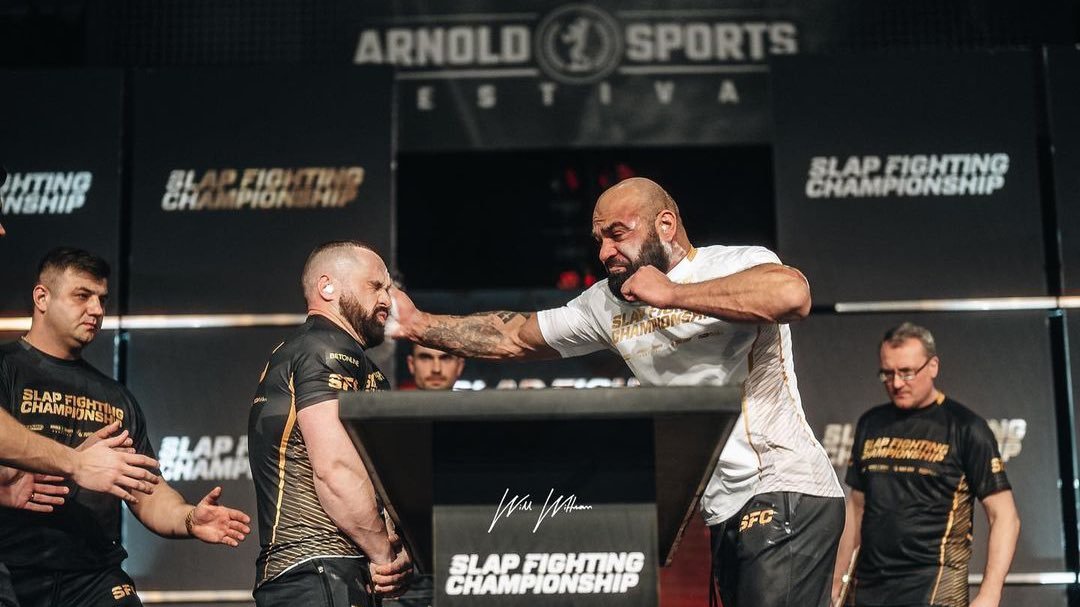
Slap fighting. It’s simple. Two people slap the sh*t out of each other. We’re talking power slaps here. Nuclear-tipped, depleted Uranium, tactical slaps. If you went down to Arkansas, and came from there, and let your hand ride the stratosphere and land on a face in Albany, that’s what we’re talking about here.

One of the cool, or maybe not-so-cool, things about slap fights is how much they’re just made for viral. I know for fact I could slack off work just being on my phone watching two guys slap the hell out of each other. To me, boxing is boring. Too much dancing, blocking shots; I mean they get in what, three good shots a round? A guy slaps a guy, and that guy just takes the slap, and then he gives one. At least that’s how I think it works. Yeah theoretically they could block. But then it’s boxing with fewer steps.

So yes, the doctors are concerned. They say it can cause CTE (Chronic Traumatic Encephalopathy), which is neurodegenerative, what you get from repeated blows to the head. This is also boxing, football, and anything where something hits your dome.

The people that host slap fights say that there are medical staff around. But is it enough?

I think that this is going to be huge because it’s spectacle. Also because literally anyone could do it on the street corner and someone pulls out a phone. No one needs production values when you got slaps.


More from Liam Sweeny…

Extra! Extra! The Xperience Thanksgiving Insert is Out! Get it Here!

0
Xperience Thanksgiving Insert

It is a time for food and a time for family, so come join our family and let us feed your head with the Thanksgiving Insert Edition. Featuring Jason Bonham, Jason Bittner, and Jair-Rohm Parker Wells.

Jason Bittner – An Xperience Interview

0
Jason Bittner
Photo by Rachael Skinner.

Jason Bittner – An Xperience Interview – by Jason Skinner.

December 8th, 2004 is a day that will live in infamy amongst the metal community. On that fateful day, an iconic guitarist by the name of Dimebag Darrell Abbott was murdered on stage in front of his fans and bandmates. A few days before, his band Damageplan visited the Capital Region to perform a show of epic proportions.

Pantera officially broke up in 2003, leading guitarist Dimebag Darrell Abbott and his brother and bandmate Vinnie Paul to start another band named Damageplan. Once established, Damageplan released an album titled “New Found Power” and vigorously toured. In the fall of 2004, they were scheduled to tour with Shadows Fall and the Haunted.

Jason Bittner, drummer of Shadows Fall, stated, “One of probably the top five tours I’ve done in my entire touring existence, which is now going on 30 years.” He said, “The whole tour was great. Obviously, Dallas was insanity because it was the home of Pantera. It was epic!”

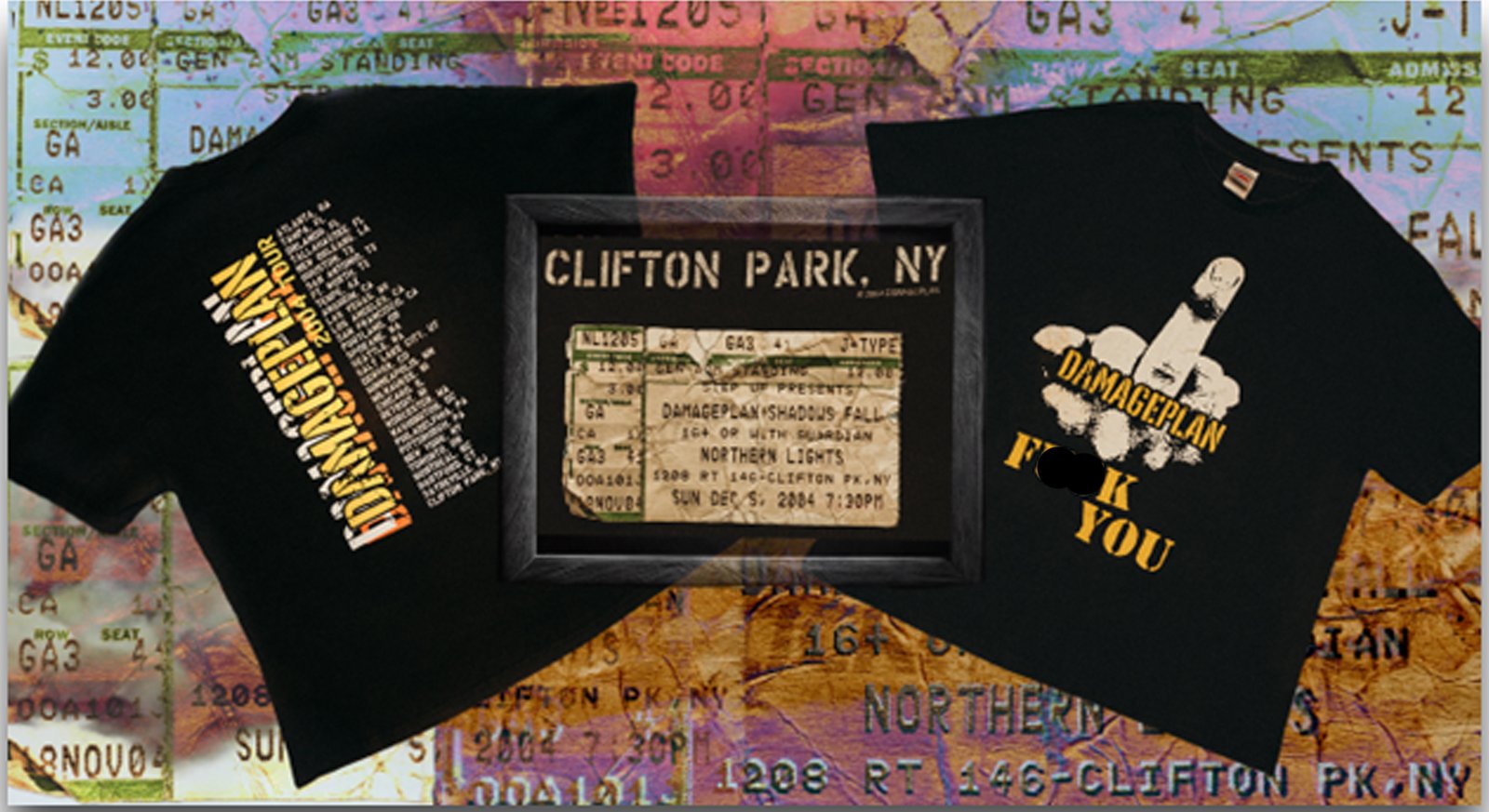
A local radio station announced a Christmas show at Northern Lights in Clifton Park, NY, with Damageplan and Shadows Fall – a date that wasn’t on the original touring schedule but was added on along with a few other shows leading to the holidays.

Bittner stated, “The only reason the Haunted wasn’t at Northern Lights is because the actual official tour ended the day before, in New Jersey.” And that, “We came back up to Northern Lights because we’re going back to Massachusetts.” He also said, “Damageplan was coming back this way because they’re going to Texas, they’re going to play some shows on the way back home. So we did this Northern Lights show together.”

Once the night of December 5th, 2004 commenced, the onslaught of stage antics began, with Dimebag at the forefront. Equipped with what would be goods from a Spencer Gift store, Dimebag hazed Jason and Shadows Fall during their performance, shooting silly string and baby powder out of an air gun at the band mid-performance.

“So first of all, he sneaks up behind a monitor, and he’s just hanging out watching us play,” Bittner recalled. “Just something about the way he was; like, I don’t trust him right now. So then I felt this gust of air over my shoulder. So now I can’t see him because he strategically placed himself behind the monitor. Then, over my head, over the monitor, comes the gust of wind, followed by this shower of baby powder that has now encompassed me and my drum set. He’s behind there, laughing his ass off, and when I realized what’s going on, the silly string comes out. Then the rest of them are on the side of the stage, and they’re just dousing the shit out of us with silly string. I still have a cymbal that I have up on my memorabilia wall from my kit off that tour, and I left the silly string on it.”

Once Shadows Fall was finished with their performance, the stage crew started to set the stage up, and Damageplan began their set. Performing most of their new album in the first half of their set, they started playing Pantera classics, getting the crowd in an uproar. At one point, they invited Jason onto the stage to play drums. Unbeknownst to Vinnie Paul, Jason was backstage preparing for this moment.

A few days leading up to the event, Bittner stated, “I said to Dime, I got this idea. I don’t know if your brother is going to get upset. I was going to dress up like your brother in Albany and come up and play ‘Walk’.”

“Dime just starts cracking up, he looks at me. He said ‘you absolutely have to fucking do that. He’s not going to get mad.’”

Backstage, preparing for the ordeal, Jason and his bandmates found it hard to compose themselves for the occasion.

“I was standing in the dressing room at Northern Lights. I was trying so hard to put the electrical tape on my face, I was laughing so hard; every time I’d look up in the mirror and see the rest of Shadows Fall, Jon’s crying behind me. We’re just like, this is ridiculous, it was so good,” said Bittner

Bittner was welcomed to the stage dressed like Vinnie Paul with a bandana tied over his head, Damageplan work shirt on, and (of course) the black electrical tape on his face to portray the iconic Vinnie Paul beard.

“When you see the Mini Paul footage, when they flash over, and he looks over and sees me there, there’s a quick moment where he just rolls his eyes real quick and was just like, ‘Oh you motherfucker’,” said Bittner. “Pat (Lachman) dubbing me ‘Mini Paul’ was what made it magical. We had no idea that was even going to come out of his mouth.”

After the guitar solo in the song “Walk,” Jason handed the sticks back to Vinnie Paul. Vinnie then finished up the song and, eventually, the set. An absolute banger of a show. By the end of the show, it was more of an actual party than a rock concert. Being front row, it seemed like you were living within one of the 3 Pantera Home Videos, but nothing lasts forever.

Jason said that the show was “bittersweet.” He stated, “We said our goodbyes during the day. [Dime] had been asking me for a pair of sticks for like 10 days, before the tour ended. He’s like, ‘Hey! Make sure you give me a pair of your sticks before the tour is over.’” Jason then told Dime, I have something better than that!” Then he proceeded to give him an 8” Splash cymbal before the end of the tour.  Due to prior engagements Jason was unable to hang around after the show at Northern Lights was over.

“I was pissed off I had to go to jury duty the next day.” And he stated, “I can’t believe I can’t stay here and hang out and party,” Bittner said. “This is bullshit!”

Jason got all his equipment packed up and was rushing out of the venue. Everybody had plans to see each other at the Guitar NAMM show in January, only a month away. Jason located Darrell at the bar and went to say farewell.

“I remember vividly, I walked up to the bar, and he was holding court with people. I walked up to him, and he was like, ‘What are you doing?’ I’m like, I got to go. I got jury duty, dude. He gave me hugs and he’s like, ‘I’ll see you at NAMM.’ Kissed me on the cheek, and that’s it. That’s the last thing he said to me, so I remember it well.”

A couple of days later, on December 8th, 2004, at the Alrosa nightclub in Columbus, Ohio, a gunman stormed the stage during the intro to Damageplan’s set and opened fire on Dimebag Darrell, killing him instantly. A total of four people were killed and multiple injured. The gunman was killed by an off-duty police officer. The metal community mourned the loss of Dimebag for years to come.

Bittner exclaimed, “I’m not trying to maximize this or make it bigger than it was, but for me, and for the metal community, this is like saying, ‘Yeah I remember where I was when Kennedy was shot.’”

On the day of Darrell’s memorial service, emotions were high. It it well-known that Eddie Van Halen famously placed his original Van Halen II guitar in the KISS casket with Darrell. But what was not known, under the blessings of Rita and Vince, is that they chose to place the 8’’ Splash cymbal in the casket, that same one Jason had previously gifted to Dime.
Bittner disclosed, “I walked up to it [the casket] and I literally collapsed to my knees sobbing. And then Vinnie Paul picked me up off the ground and brought me over to the pew and I said, ‘I can’t believe that’s in there (referring to the cymbal next to Dime),’ and Vinnie said ‘I told you man, he loved you.’” Jason said he was “like, totally, blown away.”

Bittner said, “We didn’t know those guys for long. Like we had met them in passing before. They could have been the biggest rock star pricks, but they weren’t, they were just these awesome guys from day one.”

This year marks the 20th anniversary of the Damageplan and Shadows Fall show at Northern Lights. A show that will go down in history as one of the last performances from Dimebag Darrell. This show was extra special for myself, because I was in the front row and in front of Dimebag for the shows entirety.

If you would like to see footage of this show, Shadows Fall’s “The Art of Touring” DVD has a dedication to Dimebag, and the video of Jason playing “Walk” dressed up as Mini Paul.

When asked, “Did you receive any real advice from Dime and Vinnie before they passed?” Jason replied, “Yeah, keep doing what you’re doing, and make sure you have fun while doing it.”


More from Jesse Skinner…