At this point, I think we have accepted the fact that things aren’t the same as they were last year at this time. I also am not even sure what the “new normal” is. I am not going to get into all kinds of studies and politics. I am a writer. I write about the glamour industry. I write about makeup, skincare, fashion and occasionally things OTBP (off the beaten path). I inform my readers about things like lipstick colors, good moisturizers, seasonal pedicure colors and shoes. Occasionally I will write about my love of coffee and my appreciation of nature. And to be honest with you, that is what I am going to continue to do.
I do, however, want to talk to you about something I have noticed over the past four months. Something that I learned about MANY years ago and never had the chance to see it in action until now. I was told that if I wanted to work in an industry that was recession-proof, I should get into the makeup industry. Why do women (and yes, some men) feel the need to shop extensively for beauty/self-care items when times are tough? Since the end of March–when the world had gone into a “pause” because of this pandemic–I have seen people all over the world not just talking about makeup but also buying it. A LOT of it! Money is tight for some, many people are out of work, others haven’t left their homes in months. Yet I continuously get questions about what is the best foundation, lipstick, nail polish, skin care and so many others in my inbox. If I am not going out for anything other than medicines, groceries and the occasional walk, would any others want to know what my favorite eyeliner is right now? The answer is simple… it’s called “The Lipstick Effect.”
Taken from shmoop.com, the definition of “The Lipstick Effect” is explained as follows:
The economy is slowing down, and as a result, we are tightening our financial belt. For instance, we were going to buy season tickets to see our local football team, but now we’re just going to upgrade our cable package instead and watch the games at home. It gets its name from the phenomenon that the chairman of Estée Lauder noticed after 9/11: the company’s lipstick sales were going through the roof even while the economy was tanking. The theory here is that people can’t necessarily afford the luxury items they would’ve bought before—like, say, a diamond necklace—so they compensate by buying a smaller, cheaper luxury item. Like a designer lipstick.
I am going to take that and put my own Sassy spin on it. A huge number of us may have lost our jobs due to closings or have had hours and/or pay reduced. Any money we have is being put aside for necessities: housing, food, medications, utilities and other bills. Essentials. Things like the plans for a new couch, repairing the deck or getting a new stove are all put on hold. It is not a priority right now. But by nature, we thrive when we can give ourselves a bit of luxury now and then. An example might be that you would be going to your local pharmacy to get your blood pressure medication and grabbing a glitter eyeliner & a face mask while waiting at the checkout. That’s why it’s there. It is a quick, inexpensive impulse buy that makes you feel good. And, of course, some are more expensive than others. After being shut down for three plus months, some people need a “fix”—something that isn’t really needed, but isn’t too expensive to feel guilty about buying. The thought of getting it home and putting it on will make us feel lavish and somewhat alive again. You can’t justify or even afford a pair of Louboutin heels but you CAN find a way/make a way to get that Chanel Lipstick in shade 92-AMOUR or the new Jeffree Star 420 hand mirror. You may not even have to go anyplace special, but when you use it you will feel special. And that is important for some people’s sanity during this time.
So is there anything wrong with that? It’s on you. Everyone’s situation is different. No matter how you justify it, excuse it or deny it, the fact remains that since the Great Depression, The Lipstick Effect still happens during rough times. Especially right now. Makeup and skin care industries aren’t flourishing with profits at this moment, but they are seeing that definite trend. Because of the expansion of the glamour market, this phenomenon now includes many more things like fake lashes, shadows, and even perfumes. Things that don’t get hidden with a mask! Prices of these items vary, but for a good shopper you can find that most will not set you back much. Do you really need these little splurges? That’s your call. Do what you think is right for you, for your wallet, your budget and your sanity. But know this: you aren’t alone. At all.
Now, if you’ll excuse me I have to head to my office and try out my new waterproof mascara with my goth eye palette and lip gloss. Then I have to fix my toilet seat cover with my new wrench. Hey, a girl’s gotta do…*smile*
Welcome back, hope you’ve well, hope everyone is safe.
The theme this month is still topical BUT ALSO music intensive, with a touch of history.
As I write this (June 14, 2020), the George Floyd Murder and aftermath continues, and overall (again as of this writing), as opposed to the past, the cause of peace is prevailing.
Can we FINALLY all live together as one?
From what I have seen after well over sixty years on this earth, I hope so.
That said, let’s move to entertainment, and the love of music.
Question, what is soul?
Is it an attitude, a feeling, a way of being?
It’s everything and a lot more.
It is NOT a black thing.
It is NOT a white thing.
It just IS.
That is the purpose of “RADIOSOULX,” presented by the same people who brought you “RADIORADIOX.”
“RADIOSOULX” is, as explained earlier, a new experience to the Capital Region, a new attitude, a new feeling, a new way of being.
This station takes the greatest, for lack of a better word, soul flavored music over the decades, and brings them all together to give you the most diversified, and may I say, funky, blend of music you can’t go a day without.
You’ll hear funk, jazz, dance, roots, original versions (more on that in a minute), interesting cover versions, and even blue-eyed soul.
To paraphrase the King of Rock & Roll, Little Richard, the music you will hear on “RADIOSOULX” is for the black, the white, the brown, the red, and the yellow.
So why aren’t you listening now?
Next topic, and it’s related, is music history.
One of the very cool things you can hear on “RADIOSOULX”, are songs that were made hits by (mostly) white acts, infused with a new interpretation and a little bit of soul.
Example, everyone knows the landmark “I Want to Hold Your Hand” by The Beatles, right?
So, in 2020, we all can agree when you listen to “normal” radio, on many occasions you can’t tell if you are listening to an oldies station, a Top 40 station, an adult contemporary station, or even a country station.
Seems they ALL play the SAME song by the SAME artist.
Sadly, and unfortunately, in the early days of R & B and Top 40 music, that NEVER happened.
A good number of the greatest hits of all time used to be considered “race music,” meaning they were only produced for and bought by black people, and played on “black” radio stations.
If it was a good song that “white” record people thought the “white” audience would like, it became “sanitized,” and recorded by traditional “white” audiences.
Unheard of today, but true.
A couple of examples.
Back to Little Richard and “Tutti Frutti” from 1956
So, there you go, a look at the news, a little music history, and a personal endorsement for a great new radio station.
But trust me, I’m just some schmuck with a newspaper column, so start listening to “RADIOSOULX” right away, along with “RADIORADIOX” like you usually do.
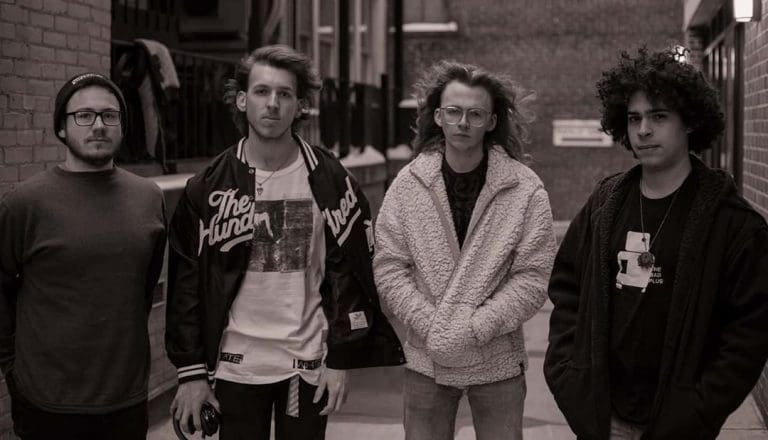
Positivity within the local music scene is an absolute necessity given recent circumstances, and in spite of current challenges local band Scotchka moves ahead and plans to release a new album in the coming months. A charming blend of emo, math-rock and indie rock, Scotchka is made up of lead singer and guitarist Dom Murdoc, bassist Jacob Hite, drummer Brian Fahey and lead guitarist Mitchell Campbell. I sat down recently to talk with Scotchka via video chat about the humorous origins of their band name, their upcoming project and the current state of the local scene.
RRX: So, this is my second online interview due to all that is happening in the world, I’d like to start by just asking how you guys are all doing.
(L-R: Mitchell Campbell, Dom Murdoc, Jacob Hite, Brian Fahey)
DM: Probably the same as most people, just bored all the time. Trying to stay productive at home and I’m still going to work – but I’m probably not doing much more than that, which is what most people are doing right now.
JH: So I’m a junior in college, or I’m finishing my junior year now and I’m a studio production major; so the transition back to home was difficult because very suddenly I didn’t have any of the equipment I really needed to work on the majority of my education. So the last couple of weeks have been crazy busy, but after that I’m probably just gonna be bored.
RRX: Are at Saint Rose?
JH: No actually I go to SUNY Purchase.
RRX: Oh interesting! I’m used to so many of the people I interview going to Saint Rose (laughs).
JH: Yeah I sort of wanted to avoid that (laughs) and they’re all great people and it’s a great program but just because I grew up around here so I knew that I didn’t want to spend any more time locally.
RRX: Also I see Brian has joined now, so I was just asking the other guys how they’re holding up currently.
BF: I’ve been doing ok. It’s definitely hard as a musician and doubly hard as someone who has a job at a music venue, I’m just completely out of work right now.
RRX: Oh, which venue is that?
BF: I work at Skyloft at Crossgates. We’re completely shut down.
MC: For me, obviously with graduation this year there are just no jobs on the market right now, none in my field anyway. So I’ve just been working, and I had to switch jobs recently, and I’ve been dealing with the same shit everyone has been but I’ve also moved into a new place recently with a higher rent. I haven’t been able to set anything up really yet and do stuff musically recently.
RRX: I had heard that you guys were working on new stuff, are you still rehearsing and working on a new project?
MC: So we’re actually rehearsing even less than we had been, Its usually only once every two weeks or once a month. But we’re working on a 13 song – I think it’s a 13 song project. We’re working on this as a full-length and it’s been delayed but we’ve already gone through so many versions of songs already. We’re definitely having the single we released last year on the record plus I think we have about nine fully completed at this point. We’re definitely making progress. It’s tough sending demos back and forth but that’s where we’re at.
RRX: It’s great that you guys are making so much progress. Do you guys do all your mixing and production yourselves or do you send stuff to someone else?
MC: I’ll take this one again if everyone’s cool with that. We used to work with this guy named Mike Dwyer but ever since we got Jake in the band, who is a music producer, we’ve been trying to do things more DIY because it’s been more cost effective.
BF: There’s also no time constraint, you’re just working with your bandmates and you don’t have to explain anything to a middle man.
RRX: Also: remind me what Scotchka means again? I knew it at one point but I forgot recently.
DM: It’s from the movie The Room, Its like, a B movie. It’s that guy Tommy Wiseau.
RRX: Oh! Yes, that’s what it is! It’s the weird drink he makes in that one scene, right?
DM: Yeah, there’s that scene where he gets drunk and he never actually says “scotchka” but you just see scotch and vodka that he poured together in a glass.
BF: It’s disgusting. It’s absolutely horrendous, never try it.
MC: Dom got to see Greg Sestero (of The Room) in person.
RRX: So I also wanted to ask, Dom, you’re heavily involved with the local venue Makeout Reef, correct?
DM: Yeah, I basically am Makeout Reef. I just threw some lights up and got a PA system and it’s worked pretty well so far. So obviously we had to cancel a few shows, and there was one I was really looking forward to; we were going to have Posture & the Grizzly who tour a lot with Prince Daddy & the Hyena. We were also going to have Michael Cera Palin.
MC: We were supposed to play with them and it got canceled.
DM: But yeah it kind of sucks. We don’t really have a timeline for going back, just trying to see what other houses are doing to kind of feel it out.
BF: We’ve been back and forth with Cuomo trying to see what we can do (laughs).
RRX: Do you guys have any favorite shows or memories from around Albany?
DM: Byrdhouse shows are always crazy.
BF: We’ve had a lot of really funny ones. So we did a Halloween show in a house, and we were pretty drunk at the time and we thought the whole staging convention was stale (drummer in the back, singer up front, guitarists to the sides) so what if we did something stupid? So Dom was in the corner, singing into the corner, I was placed precariously between the coffee table and the TV, and Drew (our old bassist) was in his boxers on the balcony playing bass.
JH: I’ve been able to play one show with the band so far (laughs) so that is my favorite show by default.
RRX: Who have you guys toured with, or are there any local bands you want to shout out?
BF: One of my favorite bands to play with is definitely the Northway, they’re a little more niche.
DM: That’s a tough question because ever since starting the venue I’ve met so many great bands so it’s hard to pick. I think Lemon of Choice I really enjoy, they’ve gotta be one of my favorites.
RRX: What do you guys think about virtual shows via Instagram or something similar?
BF: It’s tough because I was part of one with my other bands and the levels were just completely off so two hours in we realized you could only hear the keyboardist. I like the idea but it’s tough. Jake’s a talented audio engineer so I’m sure he could do it if he tried.
RRX: So I guess to close things off, with our connection on Zoom being horrible, I just wanna ask what you guys think of the scene personally and where do you think it’s going currently?
BF: I think it’s in a phase of figuring itself out. And we’ve been doing this for a while, Scotchka’s been around for about four years so we’ve seen people drop out of the music career or new people enter. We’ve seen some passages of the torch. The scene isn’t really flourishing, and I don’t know how long it will be until it does, but it has a really interesting character and it’ll be very interesting to see how it changes. Senior Living also just started a collective, called Season 3 Collective that looks very cool.
DM: Yeah as Brian said I always feel like it’s had the same number of houses, I knew some of the old ones. Season 3 Collective is cool, Zach Geddies of Senior Living came up with it, I don’t know if it was a thing when he spoke with you. It’s pretty recent, it’s just a conglomerate of artists locally – just a bunch of photographers, engineers, and musicians just working together to try and put on a good show. We have plans for when the virus passes to have a show here that also has an art gallery that also has poetry reading; just a lot of art mediums coming together.
JH: Ah yes, the scene. No, it’s been very cool being in this band so far. My experience in the scene so far has been very interesting because the first band I was in was Good Fiction and that was after they had been at it for a couple of years so by that point they were playing some pretty big shows, so that was my introduction. And then (Good Fiction) ended and Dom hit me up and was like, “Sorry about your band, do you want to join mine?” And it’s been really cool, it’s unfortunate that we haven’t gotten to play any more shows than just the one. I also go to school two and a half hours away so that can be tough and these guys had to make some considerations for my sake and I’ve really appreciated it so it’s been great.
MC: I grew up in Troy, around Cohoes so I grew around before Prince Daddy & the Hyena got really big and there was the Ice House; I saw the Ice House in its infancy. I’ve seen bands that are bigger now start out. For me it’s really great to be part of a music group and a space where I can see people really pour their hearts out. Before it was kind of competitive, and there was a toxicity to that competition, and it’s still kind of a thing for older bands but I really appreciate that everyone is supporting each other’s art even if they don’t understand that art. There’s still respect for the artform. The DIY spaces are great, hopefully we can get something legitimized, my hope is one of these places can be treated as very credible someday. There’s always a stigma with basement shows and I hope we can transcend that. That’s how I feel about the Albany scene, also: live lit and someone please listen to the Brave Little Abacus, they’re so good.
There are two ways to look at music. One way is the way we see it when we go to a show, dance, hang out, and boy, is the band putting on a show! But the other way is to understand that every song starts as a seed of feeling, sometimes a complex feeling, one that we wrestle with, and we wrap it in treble and bass, fertilize it in harmonies and melodies and only then can we marvel at the bloom.
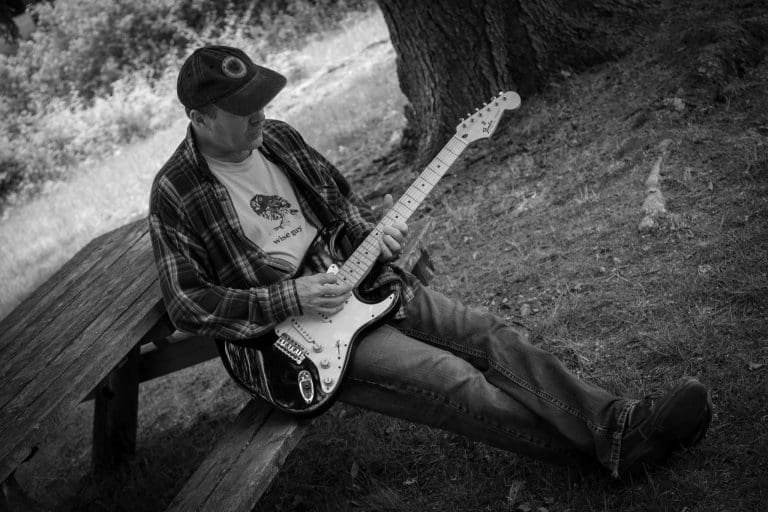
The William Deuel Band, consisting of William Deuel (vocals, rhythm and lead guitar), Michael Norris (lead guitar), Chris Reed (drums), and Ethan Henderson (bass) have planted two gardens (Reset and Whaddaya Say.) We sit down with William Deuel and talk horticulture.
RRX: Music is first aid for so many people, not just in listening, but in creating. A lot of great albums came from someone needing an outlet for a tough time in their lives. Have you had a period like this? And if you have, can you compare it to a more deliberative songwriting process?
WD: Actually, that exact scenario is what brought me to write my first LP, Reset. I had lost a number of people very close to me in a very short period of time, including my mother to cancer and one of my best friends unexpectedly, which in turn had put me in a rather dark period of time. To cope with these circumstances, I would play my acoustic guitar for hours on end, not with any intent of songwriting. Music just poured out of me and I started to take note, which in turn led me to my first song, “Gravel Road”, about an experience with my friend while traveling the backroads of Nebraska. Before I knew it I had written over a dozen songs in less than a month and whittled them down to eight for the LP. By the time I got to my second record, a five song EP, Whaddaya Say, less than a year later, I had developed my own style of songwriting, some with a central idea and others from my subconscious and just letting the song work itself out on its own. I generally prefer to write in the latter style as it sometimes even surprises me with what I come up with. I also try to write in a way that people can relate the song to their own lives and take their own meaning, rather than from my own experiences.
RRX: When you were putting your first album out, you reached out to your guitar player, Mike Norris, because he has a pretty signature sound. Which is interesting that any musician evolves to the point that their sound is unique enough to be considered ‘signature’. Can you explain this a little bit?
WD: Mike and I grew up together and were in a band while in high school, where he was the lead guitar player while I was the drummer. Once I started writing all the songs for the Reset LP, I was taken back to those long ago days and the sound of Mike’s guitar was stuck in my head. I knew his style and sound were perfect for a few of those songs. We had fallen out of touch, with Mike moving to Boston and starting a family while I went my own way, training and riding racehorses throughout the country. It had been over 20 years since we had any contact but I had never lost that sound he can create while playing guitar. The notes spring from his telecaster, very decisive and very bluesy, and I invited him to play on a few of the songs. He played on “Gravel Road”, and as soon as I heard the original playback, I was transported back in time and knew I had made a great decision to reunite with an old friend and bandmate. Our styles are different, with my sound a little more on the grungy side, but work well when put together. He makes me a better player and we play off what the other is doing, while taking some pressure off of me, especially when playing live, so I can concentrate on vocals and rhythm guitar. Mike is a wonderful person and I feel blessed to have him back in my life as well as a bandmate when time allows it.
RRX: You started out as a drummer before fronting your own band. And drums have such a foundational role in music, but it also, in even a physical way, is the background position. Does what you knew from drums, or even just that core rhythm mindset help you bring the whole sound together?
WD: Being a former drummer has helped me immensely, especially while playing live. We are so fortunate to have a really awesome drummer in Chris Reed, who makes life for me up front a whole lot easier. Sitting behind the band and taking in and seeing everything unfold is the unique position of the drummer. Chris can cue me and the band to make a change within a song with a simple roll, and being a former drummer I tend to look and feel these cues from him as he is sitting in the catbird seat. I also tend to play off the drummer rather than the bass. This allows the other guys to play what and how they want – as maybe Ethan (Henderson) is playing something that just doesn’t mimic what I am doing, and Mike can be playing a lead during a verse – and I can stay grounded in the song while listening to what Chris is paying on the drums. I generally play off the bass drum.
RRX: You’ve had an amazing life experience in training professional racehorses. This has taken you all over the country, maybe even the world. But, as with all things, it gives you skills that you can bring to the music. Is there anything, the discipline of your experiences, the knowledge of the race, that you can take into studio, or on the stage?
WD: First off, you are as good as the people you surround yourself with! You are as good as your team. Training a racehorse is a total team effort just to get a horse to the races. You need your groom, exercise rider, and owner to all be on the same page and you need to actually listen to what they have to say rather than just give them lip service. I take that same mentality into the band construct. I want and need everyone’s opinion, from sound, chord changes, tempo changes, and how well lyrics work for any particular song. With everyone on the same page you have a fighting chance and that will show in the final product. It’s not easy being in a band with many personalities and opinions, but once you get through the little things, the bigger picture comes right together.
RRX: There’s always a split between the dream and the reality. We have a vision, or in this case an audio that we think we’ll achieve, and then we lay down that song and it’s different. How do you feel your sound comes out when you step out of the studio from what you thought it would be when you walk in?
WD: I usually have a pretty good idea of what a song is all about by the time I bring it to the band, in a very general sense. In the case of the first two records, I had the songs pretty much where I wanted them when we went in to record them. Certainly that was the case with the first LP, as the songs were so personal to me and were a direct response to how I was feeling at that time. The second time around was a bit different, with a little more input from the guys in the band. Everyone gets to play their part in a song as they see fit so long as it works. For example, I played most of the bass parts on the first two records, as Ethan was not yet on board. Now that he is in the band he plays those parts, as well as anything new, as he sees fit. He is much more talented than I am on that instrument, it would be foolish for me to interfere in any way. All the guys in the band are really talented musicians and are free to do their own thing. Chris is also our recording engineer so he gets more say on certain things and I usually defer to him, as he is the one with all this training and experience. He advised me on some background vocals on a song called “Always” that totally transformed the song, so in circumstances like that the song takes a different turn from what I had originally heard in my head. How did I feel about that? Awsome! Sometimes the unexpected can just be wonderful.
RRX: Musically, you’re a pro-local band. You record in the Capital Region and have the mastering done here too. Keeping the recording process in the Capital District gives everything a true ‘Capital District’ sound. Has anyone outside of the area noticed this, or do they just notice the music? And would you buy instruments made and sourced here?
WD: It has always been my intent to keep any money spent with businesses here in the Capital District. I also wanted the feel of a privately owned business where you can have a one-on-one relationship with the people you are working with. I really wanted to support as many people in my own community as possible and knew many of them through various connections. For example, I knew of Jason Brown, who owns Starling Studios here in Saratoga and does our mastering work, through my occasional background singer and wife, Michelle Paquette-Deuel. Michelle works at Skidmore College and is friends with Joel Brown, who is a Distinguished Artist-in-Residence there and is Jason’s father. Jason seemed like a no-brainer with his own impressive credentials, and that has proven to be right on point. Jason is very intuitive, knows what I’m looking for in the mastering process, and could not be a better fit. I picked up on the Glens Falls Music Academy through an article I read in the Post-Star. I loved Chris Reed’s story and looked him up. It proved to be a wonderful choice, and after meeting with Chris I have been recording with him ever since and our relationship has progressed to the point where he is not only the sound engineer, he is also the drummer for the band. I have done some interviews during which our support of the local scene has been noticed, such as with Tatiana Tenreyro at 103.5 FM (formerly 105.7 FM), as well as Andrea Flanagan on her podcast, Where Music Takes You. Tatiana and Andrea both picked up on that point, which was very pleasing. I have bought my guitars locally, at Saratoga Guitar as well as Guitar Center in Albany. These guitars were not made here but I would certainly consider buying locally-made if it fit my or the band’s needs.
RRX: Here is where you answer the question I didn’t ask. Shout outs, missed connections, directions to a good deli… Educate, enlighten, emote – the floor is yours.
WD: We are now in the process of getting ready for our third album, which has obviously been put on hold during the Covid-19 pandemic. I try to evolve my songwriting with each album to make them somewhat different from the one before. With the band we have now, the new songs are more complex, more varied in their tempo, as well as a more varied sound. Because Mike does not live locally, and both Ethan and Chris are professionals with their own businesses to run, our priority is in the studio and getting airplay rather than every Friday night playing out. We have received tremendous support and lots of air time from a number of local stations, including Art Fredette’s RadioradioX, which was one of the first to give our band a shot. Andy Gregory and WEXT were also right there for us, we also did the interview and played in studio at 103.5 FM, so the local support has been awesome! In addition, we had one of our songs, “Gravel Road”, go to number one on Cliff Broyhill’s Bandwagon Network Radio, located in Ashgrove, Missouri, and many other stations throughout the country play our music. We have also gone worldwide, with songs in the rotation on South Africa’s Zone Radio, many songs in the Top 25 on Banks Radio and 89.5 FM Sweet Sunday Sounds in Australia, and songs being picked up in the UK, Canada, Czech Republic, Germany and Spain. My initial goal was to have a song played on the radio; not only have we far exceeded that expectation, but here we are being interviewed by you, Liam Sweeny at The Xperience Monthly. We can’t thank you enough for this wonderful opportunity!
We have a strange relationship with all things digital. We long for the analog, the feel the touch, while we rail against the touch screen. But fifty years will make everything we rail against ‘vintage’ and ‘cherished.’ And in our music, over the decades, we have begrudgingly accepted electricity to show up in guitars, basses, keyboards, and this brings us to an age where we see the computer as the instrument that controls the instruments. And here we are.
Jennifer Maher Coleman and Paul Coleman of the band Architrave combine traditional and electronic music and challenge you to find it a shelf on your music history cabinet.
We talk with Jennifer and Paul about like this side of the diode.
RRX: The hidden truth of music is that it’s math, because beneath the feeling and passion, we’re dealing with ratios and relationships. With electronic music, do you feel that you’re much closer to the math, or does feeling play the same role that it does bending a string on a guitar or sliding up a bass note?
(l – r) Jennifer Maher Coleman, Paul Coleman
JMC: I guess that when you’re building beats with a machine or within a computer program rather than playing actual drums, you’re looking at grids, there are actual numbers in front of you…but really, music has always been grids and graphs and math when written out as long as people have been writing music. So it’s just using a different tool. Arpeggiated synths and electronic beats are just another medium to make music and it’s only different in as much as it creates a different feeling…for me, the range of sounds available seem to access a whole other kind of emotion.
PC: Jen put it well. I tend to get inspired differently by different instruments, and working with electronic instruments doesn’t really feel all that different to me than say, switching between guitar and drums. In all of those paradigms, I’m working to express a feeling with the instrument. I’m generally not thinking about the math. I have been in bands where we did play with changing time signatures and those were straight up rock bands.
RRX: We haven’t interviewed a band that was in the electronic realm so much, so apologies for asking such emblematic questions. Do you feel that music harnessing the processing power, and maybe even just the bandwidth of an electronic interface gives Architrave a larger canvas, or can there be a “limit of the human ear”?
JMC: I actually have no idea about this very specific question. But I’ll say that working with a broad palette of electronic soundscapes has given me the capacity to make things sound like I hear them in my head and intend for them to sound. When I was young I would frustratedly attempt to make my songwriting happen via voice and very poorly played acoustic guitar, and my stuff sounded nothing like the epic, atmospheric landscape I heard in my mind. The broad palette available via electronic and synthesized music is extremely important to my aesthetic.
PC: I think you nailed it with “larger canvas”. I have less of a preconceived sense of what I want things to sound like than Jen does, but I still feel like having more sounds to work with lets me explore in an unconstrained way.
RRX: Okay, so onto the band. Jennifer, you and Paul share some duties, like putting together beats and keyboard arrangements, and you fork out with singing and guitar. When you record, or when you play out, is everything composed tightly, or do you two switch off and improv at points?
JCM: In this project everything is pretty tightly composed. There are only two of us and we’re trying to recreate the multilayered experience of the recorded compositions as much as possible, so we definitely orchestrate things in order to achieve that.
PC: Jen’s definitely the mastermind/principal songwriter for these songs. These songs are pretty tight compositionally, but we do have some leeway live as it’s not so tightly scripted that we have to come in on a certain measure. As for solos and improv, this isn’t the project for that. I do that in other projects, but it really wouldn’t serve these songs well.
RRX: It’s hard not to mention the lockdown, but I figure in this case, it’s actually worth pursuing. A lot of musicians have been down and out because they can’t practice like they used to, can’t play out unless they want to sit there and live stream. Do you all think you have an easier or harder time keeping the ship running right now?
JCM: As a married couple working together at home during quarantine, things have actually been extremely conducive to making tons of music. Since the lockdown we’ve released and promoted our album and written, recorded, and performed many new songs. It’s easy for us to slip from doing the dinner dishes into working in our little studio for a bit while the kids ignore us. Unfortunately, our other band Haley Moley has had to suspend things for the most part, but we’re getting together for a socially-distanced rehearsal for the first time since March later this week!
PC: All I have to add, is that musicians are stepping up and recording a bunch of stuff right now. Our friend Keith put together the https://518covidquarantinecompilation.bandcamp.com/ to benefit front line medical workers. All the tracks on it were recorded during the quarantine. Despite the fact that people can’t play live right now in the traditional way, people are finding ways to express themselves and that’s great.
RRX: Some have compared you to The Cure and Depeche Mode, Cocteau Twins, The XX, among others, and it’s no bother. We all have in our minds the musician that goes ape over being compared to anybody, because they think they’re being accused of copying. But you’re comparisons are all over. Why do you think comparison is a good thing?
JCM: Comparisons are just helpful as a point of reference for people who are looking for new music and would like things that fall within the range of their tastes. I’m always thrilled to hear that people who enjoy certain bands that I admire also like us and hear something of that music in ours. I want to evoke the same rush of emotion and excitement with my own music that I craved from those bands.
PCM: It cracks me up when people get hurt about being compared to famous musicians. All that it means is that someone related to you in a way that put you in the same light as some artist that they probably love. You probably don’t sound exactly like them, but you’re doing something that connects with fans of those artists. How could that be bad?
RRX: My first question was about math, so one good turn…music is math. I can’t help but think of how insane some musicians sound when they know music theory. But electronic music introduces an entirely new element, that of electronics. If math knowledge helps you with music, how does knowing electronics plus knowing math help?
JCM: I will admit that even though I’ve been an electronic dance music dj for 25 years, I don’t really feel like I “know” electronics and I definitely don’t “know” math beyond a rudimentary level. My work is intuitive and I make sure I’m capable of using the tools that I need for my particular vision, but it’s probably not any different than anyone knowing how to play any sort of instrument that speaks to them.
PC: I’m actually very analytical in my day job and look to playing music as an escape from some of that. So, yeah, it’s funny that I like as much electronic music as I do. I guess that having an analytical bent (i.e. math/electronics) helps me get over the learning curve of electronic instruments. Honestly, every instrument has a language of its own whether it’s guitar or synth or whatever. Being a kid that could easily program my parents VCR probably gives me a leg up in programming a drum machine. I’m always trying to become adept at that language, so I can get to the expressive part of an instrument. As an aside…I think the math/electronics thing isn’t always what it seems. There was a duo from the late 60’s called the Silver Apples. On their first record, the drummer composed all of his drum parts with mathematical formulas. The other band member played a cobbled together instrument made from army surplus oscillators and sang. The beats were explicitly the math part, but the electronics were played incredibly expressively. They flipped the script before there was one for electronic music.
RRX: This is where you answer the question I didn’t ask. And albums to declare? Any futuristic tech you’re stashing? Educate, enlighten, emote – the floor is yours.
PC: Well. We have a new record that came out in April called This Perfect Dayhttps://architrave.bandcamp.com. As for tech, you’d be surprised at how little I actually have. I do have a drum machine that looks like a pocket calculator (called a pocket operator) that I’ll probably use for something soon. And here’s my inspirational quote: If you want to make music…just pick up anything that makes noise and mess with it. Don’t worry about whether it “sounds good” or even like you intend. Find something interesting in whatever comes out and run with it. You can’t break music.
Billy Cole is a veteran to the music scene even when it’s behind the scenes. Now he has taken his experiences and combined them together for all of us to enjoy. The music shop owner has taken some time out to speak to us about his new release.
RRX: Billy Cole, thank you so much for taking the time to discuss your new book with us. The book is entitled With the Band, Memoir of a Music Store Owner (Cole’s Woodwind Shop). In your own words tell us a little bit about this book.
Billy Cole and Mary Alice. Photo By Alice LaMarche
BC: The book is just that, my memoir. It’s a pretty concise account of my experiences as a woodwind and brass instrument technician. Starting out, I recall the days before applying for the Music Instrument Technology program at SUNY Morrisville as a 17 year old. Then I share many of my stories and experiences throughout my 40 plus year career, including my son working as my apprentice and ends with my work in Haiti.
RRX: In your acknowledgements you thank your high school music teacher (Margaret Coker) for helping you realize your potential and for helping set your musical journey. I am a musician as well but I couldn’t tell you the name of any of my school music teachers. What was it about her influence that made her so memorable? Any other influences worth notating?
BC: It’s worth mentioning that Margaret was not much older than me at the time. She had just landed her first teaching job and must have been in her early 20’s. To me, she was worldly and I respected her as a teacher. I had this sense that she genuinely cared that I did well, not only in my lessons, but as a person in general. A month before graduation, we were having a lesson and she found out I wasn’t going to college for music, in fact I wasn’t going to college at all. Her reaction was to pace back and forth saying, “But you love music, you’ve got to do something with music!” and stormed out of my lesson to retrieve some college brochures. The rest is history as they say.
Another influence in the early years was my college professor Jim Gebler. Jim passed away this spring just as I was publishing the book. I so wanted for him to read my book. I wanted him to see how much he influenced me and changed my life. He not only taught me how to repair woodwind instruments, he taught me how to do it with kindness and a sense of gentle purpose that I will never forget.
Throughout my life I’ve had many others who have inspired me, and I really think that it was an ingredient to my success. To have recognized something greater than myself, adopt it and make it part of my own personal direction.
RRX: This book clearly was decades in the making. Are you still making memoirs today?
BC: The book ends around my 40 year anniversary as a music shop owner. Soon after I decided that enough was enough, Peter Yarrow of Peter, Paul and Mary came in the shop when he was playing at Lena’s to buy a flute for a friend. My daughter Jennifer was working with me at the shop that day and got to share the experience. Later that summer, the great trumpet player, Doc Severinsen paid a visit to the shop and it goes on and on. So yes, I love to write and I feel that God continues to bless me and the stories keep coming. How can I not write another book… if for nothing else, just to document it for family generations to come. I actually started writing my second book as the first one was being edited.
RRX: Cole’s Woodwind Shop in Saratoga Springs has been a staple in the community for over 40 years. How has the changing times effected your line of work (technology/corporate chains etc.)?
BC: Sure, computers, online mega stores, smart phones and their apps have changed the way we all do business over the years. But at the end of the day, that personal connection that I’ve had with my customers remains exactly the same. There is nothing bigger or better than that.
RRX: I didn’t get into great detail as you see about your memoirs because I’d like to see people buy the book but anything else you care to share?
“With the Band” is available at local and online retailers.
BC: The cover design of the book incorporates some of the backstage passes I’ve collected over the years. So it may imply that is just an account of my backstage experiences but it is so much more than that. It’s an account all of the wonderful day to day stories I loved to tell my friends and family over the years. It’s about finding extraordinary in the ordinary. It’s about the pure joy one receives from helping another with a God given talent. I can’t even begin to tell you a story now. I won’t stop and the interview will run way too long! hahaha
RRX: Please let our audience know where they can find you, your shop and your book online.
BC: Other than Sunday or Monday when I’m closed, you can find me at my music shop at 47 Phila Street, Saratoga Springs, right under the legendary Caffe Lena. Stop by, point out a photo of an artist on the wall and I’ll tell you a story about he or she. If you’d like to buy a book I’ll have some at the shop. Or you can purchase With The Band,Memoir of a Music Store Owner at Northshire Books website. The direct link is www.northshire.com/book/9781605715155. Or at one of their store’s in Saratoga Springs NY or Manchester VT.
RRX: We’re speaking with Steve Marshall, actor, writer, director and comedian. I know you’ve got a 917 area code. I’m always interested in where you grew up, whether it was your childhood, or your schoolmates, or your first foray out after having graduated high school, what’s the thing that drove you to end up where you are? What do you remember as being really important?
SM: Well, what drove me to be a comedian was I went to public school in Brooklyn. I grew up in Flatbush. I was not a good athlete. My father never taught me to defend myself. I was made fun of because young boys, they tend to gravitate to the boys that are athletes. Some of these young boys were aggressive with me.
My mother dressed me very formally when I went –
RRX: Oh.
Steve Marshall
SM: Right, “oh.” I was going to Brooklyn public school, and I was wearing gray slacks and a 100% cotton pebble grain from Brooks Brothers button-down shirt. My mother might as well have just put a kill me sign on my back and sent me out the door.
I found my sense of humor by accident. The kids that picked on me started laughing. It was really very, very simple. My sister and I grew up in a neighborhood in Flatbush in a six-story apartment house that didn’t have, believe it or not, any other children in it. Think about it. There must have been about 50 apartments, no other children to play with.
I was raised, you have to have an education. I was raised that you don’t talk things out with your hands, with violence. You discuss things. I was raised, I was gonna get an education. I watched Green Acres and I saw Eddie Albert’s charcter, Oliver, was an attorney and they moved to the country. All of a sudden, he’s the most educated person there. The script is flipped and he’s the idiot.
I think watching TV shows like Green Acres or Beverly Hillbillies, where the world was turned upside down…Think about it. They were the hillbillies that were supposed to know nothing. Now is the reverse. They go to Beverly Hills and the Beverly Hills people are so snobby, and they turn the world upside down.
RRX: It fits. Think of The Lords of Flatbush, and Stiletto, and all that other stuff, which is its own little piece of the world.
SM: And Saturday Night Fever.
I have a degree in accounting from the State University of New York at Buffalo.
RRX: [laughing]
SM: Yes!
RRX: So, accounting? You did this, why?
SM: Well, that’s a great question. I did it because I wasn’t just having trouble matriculating with the other students in Brooklyn. I was also having trouble at home. My parents were not demonstrative with affection. My father was getting very sick since I was about 11 years old, and he was having a problem with depression. Everybody said he was manic-depressive, but I would always say I never saw him as manic. I described my father as a depressive-depressive. He went from lows to even lower lows.
Why did I become an accountant, then? Everybody said to me, when I told people I’m gonna go to school to get a degree in accounting, all of my friends – ’cause I did have friends. Please, it wasn’t like West Side Story when I left the house.
So, I started coaching comedians because I got divorced and I went broke. Somebody came up to me, Don Jamieson –
RRX: Divorce will do that to you.
SM: Divorce will do that to you. I used to say to people seriously, it was the saddest month of my life. Everybody just laughed ’cause they thought it was funny that it only lasted a month. So, I was so scared, and Don Jamieson, he’s the host on VH1 of ThatMetal Show, said, “Marshall, I’ll give you $400 if you promise to show up and coach me.” This is in 1994, when there weren’t really any comedy coaches. Then, after that, Lisa Lampanelli came to me, and Carmen Lynch, who’s been on the Letterman Show and others shows, came to me.
RRX: They’re such fun people.
SM: So, what I learned from Vince Lombardi is execution. It’s the Green Bay sweep. They know we’re gonna run the sweep, we know we’re gonna run the sweep, but we’re gonna execute it. Remember the documentary where Vince Lombardi is going, “We’re gonna steal here, we’re gonna steal here, we’re gonna steal here.” The same with comedy. You write your jokes or your texts, then you believe in them, then I say you assume the sale. You don’t ask, am I funny? You assume that it’s gonna work. But you have to execute. And that’s how accounting helped me be a better comedian ’cause in accounting, it’s black and white, and you have to execute. Believe it or not, I’m the Vince Lombardi of accounting.
RRX: I first came across you in a Food Network show with Bobby Flay – how did that happen.
SM: I was dating a girl, and we went to a restaurant in the East Village, and a person came up to us, chitchatting. Said he was an agent. He liked my girlfriend, and he sent my girlfriend on auditions and never even, knowing I was a comedian, tried to book me. I was like, very generous and I said all right, let her. I’m not gonna interrupt it. Two and a half years later, to get a call from him, and he says, I have something for a comedian. I was lucky I never bothered him.
I go to audition for Hot Off the Grill with Bobby Flay and I am told at the audition, “You are perfect for this. But, I just want to make sure, you’re a comedian, that you realize it’s not your show, it’s the Bobby Flay show. I don’t want your ego and Bobby Flay’s ego, you both have big personalities, to clash.” I said, “I don’t think that’s gonna happen.” I had to audition for it. So did other comedians. Todd Barry did it. Eddie Brill did it.
So, I get this show. Bobby, first of all, is fantastic. There are no cue cards. We did two or three shows a day. He cooked everything perfect the first time and then the cast and crew, we would eat the food in between setting up for the next show every day. I think I did about nine shows.
The famous thing that’s on, you can see online, is Bobby was, I believe, Irish from Manhattan, I’m Jewish from Brooklyn.
RRX: He’s Irish, all right.
SM: Yeah. We had a rapport. The initial thing was, he had me dipping chicken, raw chicken, into some sort of sauce. When I pulled my hands out, my face was looking so disgusted they yelled, “Cut! Cut! Cut! Cut!” They go, “It’s a cooking show. People are watching. You want to make cooking look good. You can’t dump the chicken in the sauce and then make faces of disgust.” That was the last time they let me cook anything.
So, I would just stand next to Bobby while he cooked. He gave me a chore one time, just move the chicken around on the barbeque grill. He gave me an idiot job. But then, Bobby was great. He turns to me once and he goes, “We use kosher salt.” I know he did this on purpose, we didn’t plan this. He goes, “Steve, do you know why we use kosher salt?” He took a pause and I ad libbed, “Because it’s cheaper?” They left it in the show! We didn’t get censored. They left it in the show.
RRX: I’m gonna cut to the writing piece of what you do. I want to go there because you have written things. You’ve written a one-man show, you’ve done all this stuff. You got movies you’ve rewritten. You have all of these things. You did a project that had some pretty amazing people in it. The rewrite, I’ve read through. How did that happen? How did you end up there? The folks in that film were just, okay, Louise Lasser, who is…
SM: Right. I’ve got stories on every one of them. How I got the film was, I wrote and directed a short film called Get the Script to Woody Allen. It won the Long Island Film Festival. Then, they set it up at some foreign film kiosk; I keep blocking out the name. We have to look it up, the name of it. Put a kiosk for it at some film festival famous for…
All right, so the producer comes back to me and says, “I wrote a feature film. Would you take a look at it? The same producer from Get the Script to Woody Allen. I said, “all right, I’ll take a look at it.” I took a look at the script and I said, “Listen, what’s your budget? You will never make this movie for that amount of money.” Because this was a movie that had so many different locations, they’re driving in a car cross country. He doesn’t listen to me, but I rewrite the script. I rewrite the script.
That’s the answer. The answer is that he produced the movie I wrote and directed called Get the Script to Woody Allen, won the Long Island Film Festival. All right. So now, he asked me to rewrite the script, which I do. Then, he says to me, “Look, I really want you to direct this movie.” I said, “Listen, I will direct this movie, but I don’t think you can make this movie based on the budget.” So, he hires the director. I think he says, “Oh, I’m gonna direct it. I’m gonna direct it.”
Then, a day before, he’s been talking to me over the phone because whatever. I’m giving him tips, not even advice. He goes, “I’m nervous. Can you direct it?” With no notice, I step into directing this feature film. I’ll tell you, he had a knack, this producer, for getting famous people.
We go to Brooklyn, New York, Bay Ridge and Mickey Rooney, a lifetime Academy Award winner for a scene at an Avenue U or King’s Highway something pharmacy, which he has purchased for the day. Mickey Rooney walked in – I had never met him – he goes, “Who’s the director?” Shouts.
They go Steve, Steve. He goes, “Steve,” and he has the script in his hand, “Do I have to say these words,” he’s practically screaming, very aggressive, but friendly, “Do I have to say this exactly the way it’s written?” Now, I’ve never met Mickey Rooney, I am an unknown director, but I’m very comfortable.
I go, “Mickey, I don’t care if you say the words exactly,” now I’ve never spoken to him before, “just as long as the meaning behind the words comes out when you speak.” He goes, “Fantastic. I like you, Steve.” He gives me a pat and he walks away. I never had another problem with Mickey Rooney.
RRX: The most recent bit that you have done, the thing that I found truly fascinating is Comedy for Peace. I read the review from Portland – let’s face it, the world got stupid. I get the concept because people are people and, let’s face it, how is it that I normally put it? I can tell a complete ass from a billion miles away, but not everybody’s a complete ass.
You’re doing this show, where I believe it is five people, yes?
SM:Yes, there were five comedians. One of them was a black Muslim, I believe. One of them was Indian. One of them was Jewish, in addition to myself being Jewish. The host and producer comedian was from Israel.
RRX: That has to be, first, from a comedic standpoint, a hard run. But secondarily, the audience you were playing to, it’s not like a comedy club.
SM: I’ll tell you what happened. This guy, Eric Angel from Israel, came into the Broadway Comedy Club one night. The last two and a half years, I do my show from the crowd. I don’t use a microphone. I want to repeat that. I don’t behave. I’m trying to deconstruct comedy and do something different because when I first started out in comedy, I would go through the audience. Many years of being afraid maybe, or not afraid, but many years of trying to become a Dangerfield, Rodney Dangerfield, part of the regulation comedians, I tried to do it their way.
This guy saw this and he said, “I’ve never seen anything like this in my life.” He was telling me this the other day. He said, “I’ve never seen anybody.” This is so different, not using a microphone, doing everything in the audience. But also, my message was, as it has been for the last ten years, love versus hate. He came up with an idea. He had me do a synagogue show, and the theme of the show was comedy for peace. We did very well. We took it to colleges and universities.
RRX: The final question. What is it that is in your head, they are words about who you are, what you want people to think, and the message that you would like to send forward? Because, you know, we’re all locked up in our own shit. But if you’ve got a minute to say here’s what I’d like you all to think about and what I’d like you to send forward, what would it be?
SM: I’d like to take a phrase from the African American people, one love. I’d like to be remembered as a comedian who dared to show love and affection because when you think of comedians, you very often don’t think of them as being people, not that they’re not nice people, but people don’t often think that love and affection can go together with comedy. I want to be remembered for putting love and affection together with comedy, and using my comedy and my life to bring love and respect to people.
I want people to remember me for don’t behave because if black people had behaved, they would still be on the back of the bus. Maybe if we had behaved, we wouldn’t have sent people into space. I think it’s such an important thing to remember, don’t behave like anyone but yourself. Don’t behave, don’t be afraid to be yourself. Don’t behave, don’t be afraid to have integrity to who you are. What that means is when you make a decision, we all have times of should I do this? Should I do this? Ask your heart is it the right thing to do?
I want to be remembered as someone who believed in love and affection. It takes me a while to get to it. Never doubt yourself.
Rockabilly is fun. Admit it. And imagine a guy in flash, singing about juke joints and dancing with a big, shiny stand-up bass – meet Jaybird Gorleski. Former bass player for Rocky Velvet, the Cobras and Slick Fitty, Jay Bird is a commanding stage presence.
We sit down with Jaybird and talked shop and the sock-hop.
RRX: We’ve interviewed rockabilly artists before, in particular Johnny Rabb. Rockabilly is a genre that’s perhaps more open to interpret than maybe something like jazz or classical. If you had to pick out the essence of rockabilly, what would you say it is? What makes rockabilly distinctive from rock and roll?
Jaybird Gorleski. Photo by Amy Modesti.
JBG: Well, rockabilly is a way of life. For me, it has changed my life from all the way back to when I first heard Elvis, Little Richard, Jerry Lee Lewis, and many more – every style of rockabilly. Rockabilly is distinctive from rock-and-roll because it is the beginning of the best era. 1950s music is, in my book, the best there is. I can thank John Tichy from Commander Cody for the inspiration to help me on my journey to rockabilly rock-and-roll.
RRX: You’ve been playing stand-up bass for over 30 years. Did you start out with a stand-up bass? And assuming that you have played a “regular bass” at some point, what are some of the most important differences in terms of playing that a different bass player might want to know if they were to pick it up?
JBG: Playing an electric and a stand-up is comparable to driving a car (electric) and a Mack Truck (stand-up.) They are two different animals. I started out in my sophomore year of high school playing electric bass. I basically taught myself by listening to tapes on my boombox. After high school, I joined Rocky Velvet and started listening and learning rockabilly. During this time, I bought an upright and was told, “if you’re in a rock-and-roll band, you need to play the upright.” So I learned and studied my ass off. The rest is history.
RRX: We’re in a very eclectic time, in terms of music these days. I mean this not just in mashups of genre, but also the use of what we’ll call “non-standard” instruments, which we could call a stand-up bass, at least these days. Do you think the stand-up has grown in popularity from when you first started playing it?
JBG: The stand-up bass has always been a rockabilly standard from listening to many new and old rockabilly bands; it’s the most popular instrument in the band. Such a difference between playing an electric bass, then an upright bass in any rockabilly band. And yes, it’s a little difficult at times to do a three hour show, but it is worth the sound, and playing it.
RRX: Half of our readership is probably aware that in the early history of bass, there was only the stand-up, and the other half may think that it was always a specialized piece. How well are you able to tap into the deep history of the instrument when you’re giving your all to the crowd?
JBG: All I got to say is, when I bring that bass into a gig, people go nuts and I show them that this is a real bass… not a cello. Once they hear a little slap, they are blown away.
RRX: Rockabilly is a very high energy music. There’s not only the energy of the music, but there’s the energy of the stage show. If you had to describe rockabilly to someone that was going to make a one-scene movie, what kind of a scene would you most want them to create for rockabilly?
JBG: Mmmm… Well, I would say any scene with pinups, hotrods, slick-back hair, swing dancing, a rocking rockabilly band, and tattoos. Viva Las Vegas is probably the one festival that says it all. There are many other festivals, like New England Shake Up, Nashville Boogie, Viva East, and any classic car show. Youtube can bring rockabilly to life. I did get a chance to plat Viva East two times.
RRX: I usually don’t ask about influences. But I feel like your influences might open people’s eyes to a side of music they might not have visibility on. Who are your biggest influences on a stand-up bass? Or bass in general? And in rockabilly; who have you found inspiration in watching and listening?
Rockabilly’s more than just a sound. Photo by Amy Modesti.
JBG: Definitely Kevin Smith from the band High Noon. I studied him for twenty-six years. That band is an amazing three-piece rockabilly, juke joint, swing influence. Wayne “The Train” Hancock was a huge influence as well. I got to be onstage with him in Troy at the Ale House. I must say that my man Chops La Conte from the Lustre Kings has also got me on my toes, playing as best I can to keep up with a legend of slap bass. I’m proud to know him and watch him play. One other man that inspired me was Billy Bratcher from The Starline Rhythm Boys. He is a monster on bass, and I’m proud and honored to know him.
RRX: Here’s where you answer the question I didn’t ask. What’s the proper way to spin the bass? True rockabilly attire? Educate, enlighten, emote – the floor is yours.
JBG: I personally don’t swing the bass around, but I do love to stand on it for show. The rockabilly attire is: Converse shoes, slicked back hair (which I don’t have), jeans or black slacks, chain wallet, tattoos, a nice bowling shirt or a cool rockabilly shirt. Oh… and a hot pin-up girl by your side.
You can find Jaybird Gorleski on the following Facebook pages: Upstate Rockabilly and Swing Club, Rockstar Rockabilly, and Jaybird Gorleski Fans.
We stayed one night in Yellow Springs, Ohio where Debbie and Steve, our traveling companions, would stay for a visit with their friend. Getting to Kansas City from Ohio should have been pretty easy. It was only about 9 hours away, though we knew it would take longer because of having to stop more often with a small child. We left bright and early, anxious to visit our dear friend but just as glad to leave our annoying traveling companions behind. The plan was to stay with Brian for a week then travel on to our final destination. We didn’t realize that there is a Kansas City in two states. The Missouri River separates the two states and Kansas City straddles Missouri and Kansas. We stopped off briefly in St. Louis to see the big archway to the west because we weren’t going to miss any of the sights along the way. We had a car this time and could go wherever we wanted. The Arch is “the nation’s tallest monument, soaring 630 feet above the Mississippi River, 886 tons of stainless steel welded into a seamless curve, assembled with such precision that if either leg had veered off by just one-sixty-fourth of an inch the two couldn’t have been joined in the middle. Completed 50 years ago this month, the Gateway Arch, the Midwest’s best-known monument, was hailed as linking ‘the rich heritage of yesterday with the richer future of tomorrow.” – Smithsonian Magazine October 2015
We had decided to take our time but were thrilled when we finally hit Kansas City, Missouri. Our thrill soon faded when we started asking for directions to Brian’s apartment. He was still working and wouldn’t answer his phone for a while. We figured we would find his place then explore the area on our own. Everyone we asked for directions told us the same thing, “Well … you can’t there from here.” We thought it was a joke played on tourists until a kind hippie told us that it was true. It was not easy to get from one part of the city to the other because they were actually two different cities. I think that’s changed now with both Kansas Cities being part of one big metropolitan area, but at that time, they were very separate.
We headed out of Missouri and into Kansas. We had plenty of time on our hands, so we found a park. It was a busy park, so Paul pulled out his guitar and opened up the case. We may as well try to make some money while we were waiting. Another hippie came rushing up and told us that we’d better close the case because the mayor didn’t allow busking in his city and arrested all homeless people. He was very adamant about it and surmised that we might both end up in jail and have our daughter taken from us. It didn’t take any persuasion for us to pack it up. We certainly didn’t want to take that risk. Apparently, we could have gotten away with it in Missouri, but we weren’t going to make that confusing drive back and forth again, so we stayed put enjoying the park and nice weather and playing with our daughter. When it was finally time to connect with Brian, we couldn’t seem to find his place. We started asking for directions again only to hear the same old story we’d heard in Missouri. “Well, you can’t get there from here.” I think we drove around in circles more in both Kansas Cities than ever in my life. I swore I would never go back there.
We finally made it Brian’s apartment which was tiny. We slept on pads on the living room floor for a week. It was fine except for the roaches. It was the first time I had ever seen cockroaches. I was horrified! Brian assured us that they were harmless and only came out in force in the dark. They were quite common in Kansas City. They weren’t common to me, and I’m not sure I slept through the night for that entire week. I was sure they were going to drop down on us from the ceiling. You could hear them skittering around all night. When the light was turned on, it was like a wave moving. I didn’t want to stay the whole week, but we had planned for Debbie and Steve to meet us there, so we were stuck. It was wonderful hanging out with Brian and his girlfriend, but the roaches were disgusting. Instead of the relaxing break we had planned on to recharge, we left there more exhausted than when we’d arrived. We spent a lot of time outdoors enjoying the spectacular scenery of the Great Plains and napping in the great outdoors. Brian had been one of our closest friends in Santa Cruz, and it was wonderful reconnecting with him and catching up. The week actually flew by, and we felt a mix of regret at leaving our friend and relief to be back on the road. We packed up the car the day before, planning to leave early the next morning. Our friends hadn’t shown up, so we planned our route, looking forward to making the rest of the trip by ourselves. That morning, who came running down the street just as we were saying our goodbyes? That’s right. Debbie and Steve had made it to Kansas at the last minute. Damn! They had left Ohio a couple of days earlier figuring that they’d spend a few days with us at Brian’s but had trouble getting the rides and were getting worried that we would leave without them. We would have, too. In the long run, looking back on it, I’m glad they made it even though the trip itself was a nightmare. They became some of our closest friends while living out west.
Of course, Steve didn’t like our planned route and wanted to know why we had planned without them. We explained that we thought they wouldn’t make it. Paul also reminded him that this was originally our trip, and he was just a passenger. I thought they were finally going to come to blows, but Debbie and I soothed the ruffled feathers and we headed down the road in a thick, heavy silence. It was a tense ride that day when the car suddenly broke down. Ugh! We didn’t have a lot of money, hadn’t been able to make any along the way with our music and were starting to worry. We still had a long way to go. Steve was loaded and offered to pay the lion’s share of the repair if we took his proposed route and went up through Wyoming. He and Debbie had always wanted to see The Grand Tetons. Paul and I had already seen this majestic mountain range and knew that there was still a big chance of snow in that region. We wanted to stay on I-70 and head north later on, avoiding any potential storms but, against our better judgement, we agreed to head for I-80.
After making that decision, a lot of the tension from Steve dissipated. There were no sardines stinking up the car and very little bickering. It seemed as though Debbie and Steve were too tired to fight anymore, Steve only sat in the front seat away from our 2-year old, and we all started to relax and enjoy each other’s company more. We saw some beautiful and interesting places along the way. However, we were stopping more often now because we were all worn out. Paul and I had a sleepless, uncomfortable week at Brian’s and Debbie and Steve had spent days trying make the 9-hour drive from Ohio to Kansas. For Paul and I hitchhiking seemed easier since we didn’t have to do the driving and could mostly sleep whenever we wanted, as long as we got the rides that is. However, we certainly weren’t going to hitchhike with our child. In spite of all of the trials and tribulations, we were starting to feel relieved to have extra drivers helping out with the burdens. We’d headed north out of Kansas City and picked up I-80 west. After a long, boring trip through Nebraska, we finally made it into Wyoming. So far, so good.
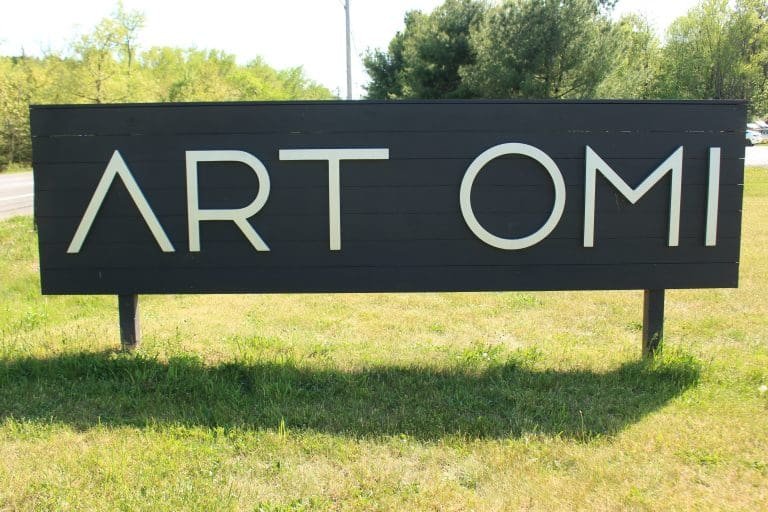
There is something about the combination of outdoor art and nature that is calming and peaceful to one’s soul. To spend your day walking through high field grass and tiptoeing through the forest to take in the beauty of outdoor art is a beautiful adventure. Art, in times of stress, turmoil, and chaos in a challenging and changing world, is powerful in its ability to connect and make a powerful statement with its viewer through text, symbolism, overall message, and physical appearance. My time visiting Art Omi in late May was amazing, inspiring, and very much needed for my body, soul, and art fix.
My first time at Art Omi was in Fall 2009. I was completing my final semester at H.V.C.C. as a Fine Arts major. My class assignment for my Intro to Gallery Management class was to go to Art Omi to view sculptures and write an assessment about an outdoor sculpture that captured my interest. My dad and I spent our day walking around Art Omi in the rain, viewing these sculptures as I took notes about a Vincent Mazeau sculpture made out of stone, cement, a small frosted table, and a chandelier hanging from stone walls. Who knew at the time that eleven years later, I would return to Art Omi, and this time, under a global pandemic?
I deeply miss being around art and being involved in anything that is musical and creative since mid-March. The corona virus has put a halt to viewing art in museums, art galleries, historical buildings, and other cultural attractions. Live music and the arts are slated to return to the “new normal” in phase four. I also miss traveling. I miss travelling to new places I never visited or have not been to in forever. It is not the same. Not having these cultural things in my life, at this moment, leaves me feeling depressed. When my friend asked me to meet with them on Memorial Day to celebrate their birthday at Art Omi, I accepted their offer. I am glad I did that. It had re-awakened me out of the slump that I have been in these past few months. It got me out of the house, and I became re-inspired by art.
Atelier Van Lieshout’s “Blast Furnace” (2013, Steel & Wood) on view at Art Omi, Ghent, NY, Monday, May 25, 2020. Photo Credit: Amy Modesti
Art Omi, located in Ghent, NY (Columbia County), is a contemporary non-for-profit sculpture and architecture park spread over 120 acres of land. Art Omi hosted more than 2,000 artists from over 100 countries, ranging from artists, writers, musicians, and dancers. Over sixty works of art and architecture are currently on view in The Fields Sculpture Park, the Newmark Gallery, the Charles B. Benenson Visitors Center, and galleries, and through The Art Omi: Architecture Residency program. The park is open daily from dawn to dusk and is free and open to the public.
Art Omi was founded by Francis Greenberger, a real estate investor, entrepreneur, literary agent, and art enthusiast. Greenberger wanted to be connected to the artists and the art that he enjoyed experiencing. Through his love of art and owning his father’s literary agency, Greenberger founded the Ledig House residency for writers and translators, and later on through the encouragement of his wife, Judy Willows, founded Music Omi, a residency for music and dance. Soon enough, The Fields Sculpture and Architecture Park came into fruition.
Besides its residency programs, Art Omi features a series of educational programs for children and adults. Due to COVID-19, the summer camps offered to young children are held online and the children can work on art projects at home. The exception to those programs is the Plein Air Painting Society, an outdoor painting activity slated to take place at The Fields Sculpture and Architecture Park from July 13-24,2020. Painters and instructors taking part in the class must wear a mask and adhere to staying 6ft apart from one another. More info about their educational programs, residencies, and events can be found on Art Omi’s website.
Charles B. Benenson Visitor’s Center at Art Omi, Ghent, NY. The visitor’s center is closed to the public due to COVID-19. Photo Credit: Amy Modesti, Monday, May 25,2020.
Although the Charles B. Benenson Visitor’s Center and its galleries are closed to the public, Art Omi is open. Please be advised that to view the sculptures, you must stay at least 6’ or more from other visitors, wear a face mask in the parking lot and when you pass other visitors on a trail, avoid touching signage and sculptures, don’t share other outdoor items with other visitors, and all groups must be limited to a household. General parking is also limited on site. Visitors can park alongside the traffic circle and a small fenced in area for additional parking. If the parking lot is full, then visitors can return to Art Omi another time.
My second visit to Art Omi was fantastic! It was a beautiful, but muggy, Memorial Day to spend some quality time with my friend while viewing amazing sculptures. I spent my day walking through the sculpture fields, the forest, the Sculpture Court, and the swamp. Since my last visit, a few sculptures I recognized were present. The remaining sculptures were unfamiliar, yet, captivating.
The sculptures were captivating. A few pieces caught my eye and brought about a sense of peace and calmness that I genuinely needed. I became friends with a giant deer outside the Charles B. Benenson Visitor’s Center. I took a tour through Rob Fischer’s “Omi Pond House” (2006, steel and glass) near the swamp. It was a cool experience to explore this unique glass house. Inside the structure was a wired chair, a thin glass table, and a bed that a visitor can sleep on. Visitors who enter the structure can view the swamp at all angles through colorful glass windows. “Omi Pond House” is colorful and vibrant and its creative structure is unique and cool to view in person.
“Omi Pond House” by Rob Fischer (2006, Steel and Glass) on view at Art Omi, Ghent, NY, Monday, May 25, 2020. Photo Credit: Amy Modesti
Matthew Geller’s “Babble, Pummel & Pride, II” (2019, Glass, Corten & Stainless Steel, Wood, Water, Pump, and Aircraft Cable) made me feel at peace and calm. To have one moment to sit on a wooden swing, hear the water from the swamp flow to the top of the glass roof like falling rain, and feel the soft mist hit against my face made me feel at peace, like time had frozen still. It took me back to the Quackenkill Creek, hearing the water flow down the stream as I take in nature’s full beauty. Sitting on Geller’s installation and being at Art Omi was refreshing & relaxing. It felt good to travel to Columbia County to get away from the business of things and be away from the stress and anxiety that has been plaguing me and many others out there in the world for just one moment. Having that time at “Babble, Pummel & Pride II” to myself was just what I need. Being surrounded by great art and going back out on an adventure helped get me begin to get out of the funk that I have been in since this pandemic began.
Art has a way of diving into our souls and helping us heal during the most tragic & stressful moments. It allows us to escape to another world, another place where we can feel at ease and peace with ourselves within our surroundings. My time at Art Omi was uplifting. Just being immersed in nature and being around art again brightened my day and brought a spark back into my life that needed to be re-generated.
Thank you, Art Omi, for keeping your doors open during this global pandemic and for helping to keep the local, national, and international arts alive in the Capital Region. Thank you, Art Omi, for helping me rejuvenate my love for the arts, and for sculpture art once again. To show your support for Art Omi or plan your next visit, head over to https://artomi.org/ for more information.
Matthew Geller’s “Babble, Pummel & Pride II” (2019), on view at Art Omi, Ghent, NY, Monday, May 25, 2020. Photo Credit: Amy Modesti




 WD: Actually, that exact scenario is what brought me to write my first LP, Reset. I had lost a number of people very close to me in a very short period of time, including my mother to cancer and one of my best friends unexpectedly, which in turn had put me in a rather dark period of time. To cope with these circumstances, I would play my acoustic guitar for hours on end, not with any intent of songwriting. Music just poured out of me and I started to take note, which in turn led me to my first song, “Gravel Road”, about an experience with my friend while traveling the backroads of Nebraska. Before I knew it I had written over a dozen songs in less than a month and whittled them down to eight for the LP. By the time I got to my second record, a five song EP, Whaddaya Say, less than a year later, I had developed my own style of songwriting, some with a central idea and others from my subconscious and just letting the song work itself out on its own. I generally prefer to write in the latter style as it sometimes even surprises me with what I come up with. I also try to write in a way that people can relate the song to their own lives and take their own meaning, rather than from my own experiences.
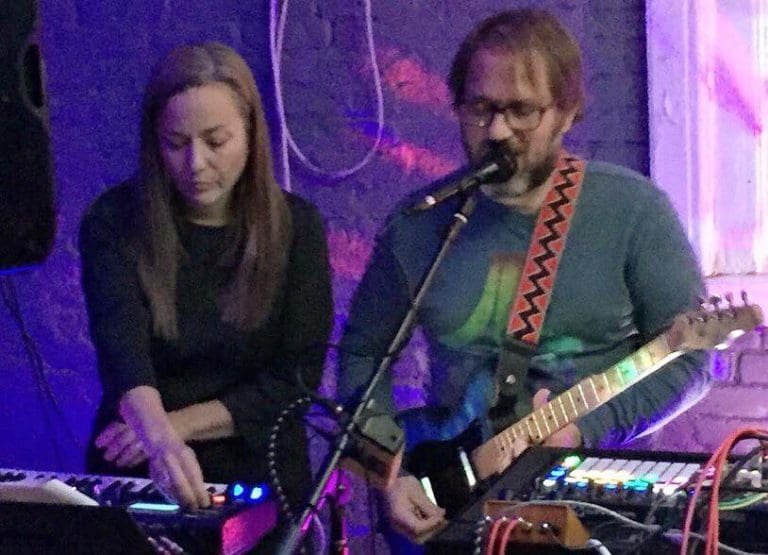


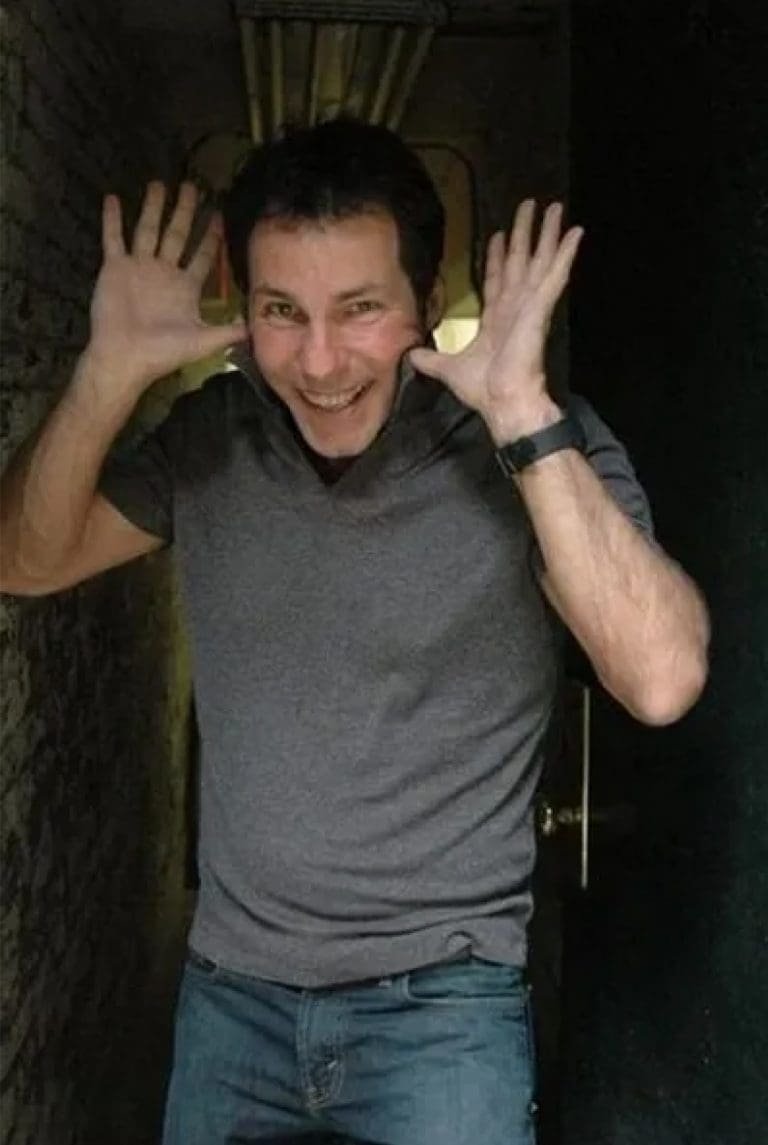

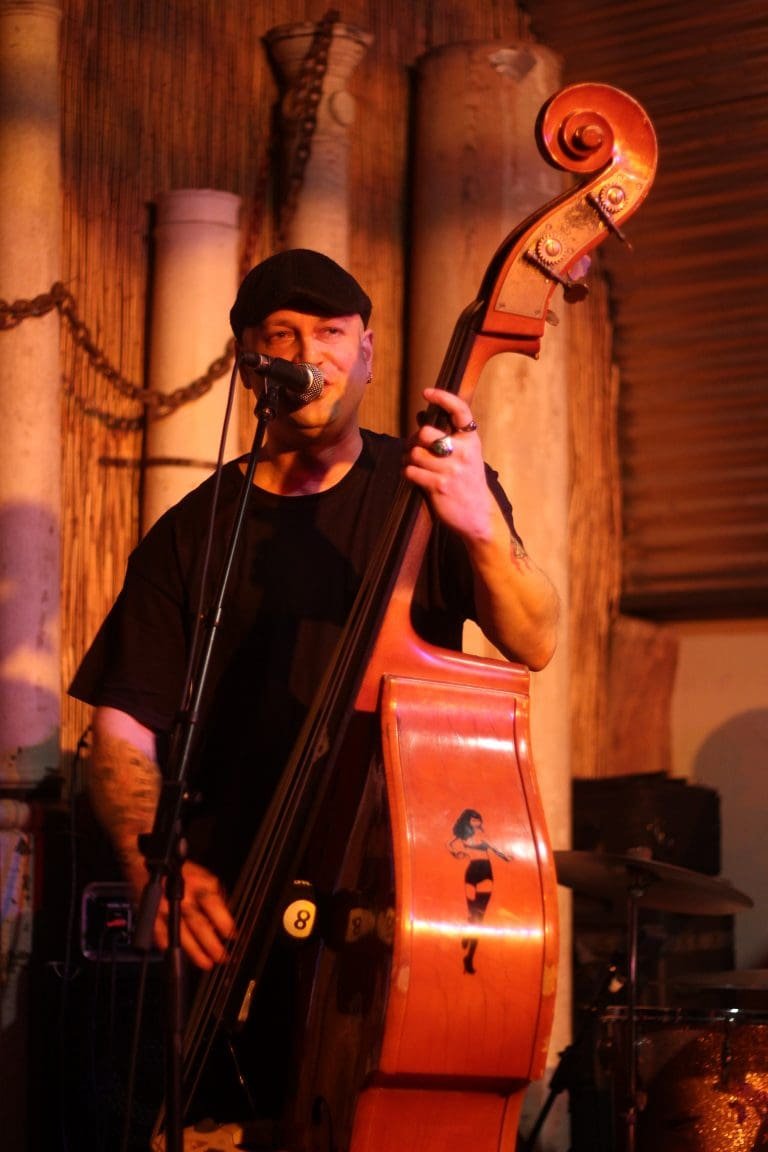


 We headed out of Missouri and into Kansas. We had plenty of time on our hands, so we found a park. It was a busy park, so Paul pulled out his guitar and opened up the case. We may as well try to make some money while we were waiting. Another hippie came rushing up and told us that we’d better close the case because the mayor didn’t allow busking in his city and arrested all homeless people. He was very adamant about it and surmised that we might both end up in jail and have our daughter taken from us. It didn’t take any persuasion for us to pack it up. We certainly didn’t want to take that risk. Apparently, we could have gotten away with it in Missouri, but we weren’t going to make that confusing drive back and forth again, so we stayed put enjoying the park and nice weather and playing with our daughter. When it was finally time to connect with Brian, we couldn’t seem to find his place. We started asking for directions again only to hear the same old story we’d heard in Missouri. “Well, you can’t get there from here.” I think we drove around in circles more in both Kansas Cities than ever in my life. I swore I would never go back there.
 After making that decision, a lot of the tension from Steve dissipated. There were no sardines stinking up the car and very little bickering. It seemed as though Debbie and Steve were too tired to fight anymore, Steve only sat in the front seat away from our 2-year old, and we all started to relax and enjoy each other’s company more. We saw some beautiful and interesting places along the way. However, we were stopping more often now because we were all worn out. Paul and I had a sleepless, uncomfortable week at Brian’s and Debbie and Steve had spent days trying make the 9-hour drive from Ohio to Kansas. For Paul and I hitchhiking seemed easier since we didn’t have to do the driving and could mostly sleep whenever we wanted, as long as we got the rides that is. However, we certainly weren’t going to hitchhike with our child. In spite of all of the trials and tribulations, we were starting to feel relieved to have extra drivers helping out with the burdens. We’d headed north out of Kansas City and picked up I-80 west. After a long, boring trip through Nebraska, we finally made it into Wyoming. So far, so good.