Home Blog Page 294

This Week at Caffe Lena

0
This Week at Caffe Lena

Greetings – Tom Paxton’s first weekend at Caffe Lena was in September, 1960. The Caffe was only four months old. Eisenhower was soon to turn over the Oval Office to Kennedy. It was a long time ago. Generations of music lovers know Tom Paxton’s lyric, “Are you going away with no word of farewell / Will there be not a trace left behind.” After six decades as one of the music world’s most influential and prolific songwriters–a clear voice for sanity and compassion–Paxton is bidding farewell to life on the road. He will be coming to Caffe Lena one last time this Friday, and he’ll be at the Eighth Step in Schenectady on Saturday. The in-person show at Lena’s is currently full, but you can stream it live from home HERE.

Please enjoy sampling the rest of the weekend’s music below. Take special note of our 3rd Annual Health Clinic for inadequately insured artists of all sorts. This is a completely free opportunity to get new glasses, get some basic screenings, and sit down with an insurance navigator. If the screenings turn up a problem, Saratoga Hospital, via their Community Health Center, will provide free follow-up treatment and medications and help you get insured. Readers, please share this info on your Facebook page, with your email list, or print and hang this flyer where an artist might see it (your local Stewarts or library, for example). We want to be sure everyone who needs these services knows about this great opportunity.

Known for art rock and piano balladry, this Fort Worth songwriter has turned in the direction of Texas legends such as Townes Van Zandt. NPR hails his “musical daring and impeccable songcraft,” while Rolling Stone praises his “sharp eye for storytelling,” and The New York Times calls his writing an emotional “gut punch.”
Paxton is a Grammy Lifetime Achievement Award winner, folk icon, and Caffè Lena performer since 1960. He’ll be backed by Grammy-winning singer-songwriter duo, The DonJuans – Don Henry and Jon Vezner. On the cusp of his 88th birthday, Paxton is churning out new songs and making magic every time he takes the stage.
Hest’s warm, raspy voice draws listeners into his original folk-pop songs. After years of touring with Martin Sexton, Suzanne Vega, and Ani Difranco, Hest became none of other than Judy Collins’ first ever duo partner. Introducing his songs with witty stories, Hest is a natural charmer with songs that are easy to love.

More Information and Registration

PLEASE PASS THIS INFO ALONG! Doctors and nurses from Saratoga Hospital convene at Caffe Lena to provide free services to workers in the creative economy who lack adequate insurance. If you haven’t been to a doctor for a while, this is a chance to get some basic screenings done while surrounded by your fellow artists in a familiar setting. You can meet with an insurance navigator, and have medical professionals check out your blood pressure, do a cancer screening, evaluate your hearing, and test your eyesight. Free glasses are available! You can get some great advice from a nutritionist on how to eat healthy on the road. Or pick up some Narcan and learn how to save a life.

This completely free clinic is made possible by Saratoga Hospital, The Rotary Club of Saratoga Springs, Sight & Sound Vision Care, and Caffe Lena.

Singer/songwriter/fiddler Milonovich supplies Daisycutter with original songs that spring from the soil and hardscrabble towns of upstate NY. With atmospheric melodies and poignant lyrics, the band’s “indie roots-rock with an edge” earned them Americana Artist of the Year at the Capital District Thomas Edison Music Awards.

Caffe Lena recommends this extraordinary performance by the Australian Chamber Orchestra at Troy Savings Bank Music Hall on October 22. As one of our newsletter readers, you can use code VIVALDI to get an extra 20% off at checkout.
Click photo for sample. / DIRECT LINK TO TICKETS
– JUST ANNOUNCED –
Little Folks Series: Jenna Nicholls
Saturday, November 2, 3 PM

Frank Solivan & Jillian Lea
Friday, November 29, 8 PM

Bright Series: Jenna Nicholls (adult concert)
Saturday, January 18, 8 PM

YOUTH CLASSES  |  ADULT CLASSES & ACTIVITIES

Miss a show from last weekend? Watch HERE.
Explore regular and discounted SUBSCRIPTION options.

OCTOBER | NOVEMBER (New!)

CONTACT OUR STAFF
Administrative Office:
Leave a message anytime
518-583-0022

Executive Director, Programming & Development
SARAH CRAIG
sarah@caffelena.org

Director of Operations
MATEO VOSGANIAN
mateo@caffelena.org

School of Music Director
VIVIAN NESBITT
musicschool@caffelena.org

House Manager & Production Coordinator
HANNAH STIRZAKER
hannah@caffelena.org

Marketing & Communications Manager
JOANNE BROWN
joanne@caffelena.org

Caffe Lena TV Program Manager
REESE FULMER
reese@caffelena.org

Volunteer Coordinator
LUCY NELLIGAN
volunteer@caffelena.org

Kitchen & Facilities Manager
MATT GRIFFIN
kitchen@caffelena.org

Baker
LIZZIE MEHRTENS

Broadcast Sound
JOEL MOSS

House Sound
JOE DEUEL

Our mailing address is:
Caffe Lena, PO Box 245, Saratoga Springs, NY 12866

Caffe Lena is a 501(c)(3) non-profit organization.
Lend your support as a member or volunteer.
The Amish Outlaws – An Xperience Interview

0
Amish Outlaws

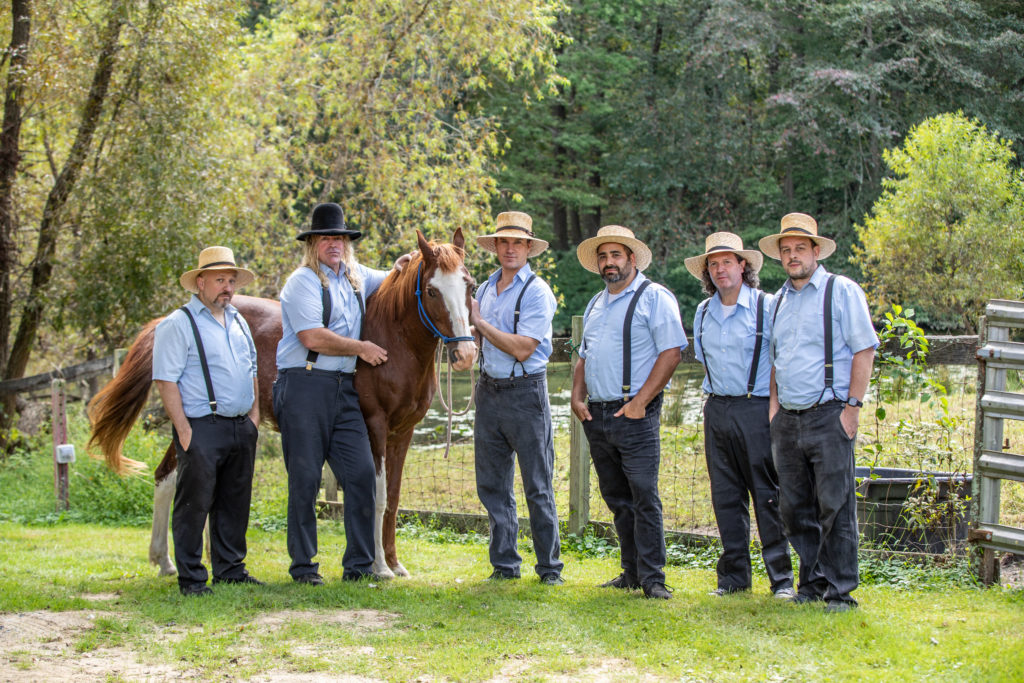
The Amish Outlaws – An Xperience Interview – by Liam Sweeny.

In contemporary America, it may seem that the chief export of the Amish is furniture or apple cider, but it’s probably a misconception. When the members of the Amish Outlaws celebrated their coming of age, Rumspringa, they decided to stay in our world.

And when they put the band together and started playing, they decided to stay in our hearts.

We had a chance to talk to band member Ezekiel.

RRX: When I first heard of the Amish Outlaws being a band, I thought it would be folk or country; it had to be. Then I see the video for your funktastic cover of Bell Biv Devoe’s “Poison.” And then other hip-hop covers. And then Black Sabbath. So two questions: why did you decide to do covers, and why did you decide to cover so wide a range of genres?

Ezekiel: When the band first started, we were playing some originals and covers, but covers did win out and the answers to both questions go hand in hand. Speaking for myself, having been raised Amish, I hadn’t really heard much music until my teenage years and then when I left on Rumspringa. I became obsessed pretty quickly and dove into everything – rock, classical, jazz, old country, bluegrass, hip hop, you name it. So when we started to play music, I wanted to do it all. The first two covers we played were “Insane in the Brain” by Cypress Hill and “Coming to America” by Neil Diamond. That is how all over our tastes were. Of course, the non-Amish guys in the band thought we were nuts at first and were probably right. Just playing those songs was and still is as much of an expression of what I love as playing original music has ever been, and I have done both over the years. The joy for me has always been live performances and seeing the reactions of people, especially when we are throwing so many curve balls at them.

RRX: You are former Amish, four of you, born and raised. And when you went through the Amish “coming of age” of Rumspringa, you decided, upon spending time in the world of technology, not to return. And you decided on music with your transition. Were you all always interested in music, even before Rumspringa, or did it come about after?

Ezekiel: It very much came after. I had heard bits here and there and was always intrigued but it wasn’t until my first real English (non-Amish) friend played “The Wall” and “Sgt. Pepper’s Lonely Hearts Club Band” for me on his father’s vinyl copies, and I was able to look through the layouts and lyrics that it hit me how much of a deeper meaning music had than just a distraction or just for entertainment. It sounds pretentious, but it was suddenly “art” and as much as we take music and performance seriously, we always keep in mind that you can’t spell “fart” without “art,” and as such never take ourselves too seriously.
RRX: In the Amish community, you are not allowed to own musical instruments. Does that mean music itself isn’t allowed? Or is it contained, say to a church choir? Is music something you can live without, or is it a human need that transcends the notion of frivolity?

Ezekiel: The only music among the Amish is singing from the Ausbund,  a book of hymns that doesn’t contain notes or melodies. Just the words. How to sing it is passed down from generation to generation and, like the “we don’t have a telephone” game, changes often. Music is something I love more than anything besides people. Not to be lazy and use an answer I gave elsewhere, but an interviewer recently asked me what music means to me, and I think I nailed it – “Everything. Besides my family, it is the most important thing to me. I guess air, water, shelter, and food have to also be on that list but I’d die without music too.”

RRX: I read that your parents, if they don’t approve, at least are glad you’re happy. There is a misconception about the Amish and shunning. Can you speak on that a little?

Ezekiel: Most people that I have met assume that if you break the rules or leave the Amish lifestyle you are automatically shunned, but the way it works, or at least worked for me, is the Amish don’t believe in baptism as a child and until you’re baptized you aren’t bound by the church’s laws. When you turn 16 you go on Rumspringa and then make the choice whether or not to join church. If I had joined church and then left, I would be shunned. As mean as it may sound, though, the shunning is tantamount to an act of love, it is done to hopefully bring the person back to the Amish faith and back in the graces of God.

RRX: You guys leave it all on the stage. I was amped after watching you guys play. I definitely hear funkiness. When you were putting your sound together, did that level of bounce and energy just come out? Or was it a slog to put it together?

Ezekiel: It just came out. We love doing this. People often say our job must be the best and I can say it is. It isn’t easy, but it is fun. We travel so much; there are times we’ve done seven shows in a row, with the last three in one 24-hour period after driving three or four hours from show to show with just 40 minutes or so at a hotel or a Wawa bathroom to get cleaned up and changed. So it isn’t always easy to get on stage and be excited and full of energy, but the way we see it is a person at our show probably worked a job all week, drove back and forth to work, took out the garbage, took care of their kids and dogs and fish, and are spending a few bucks and one of their nights off to come see us. So we don’t have the right to not give 100% every time we step on a stage, no matter how small, hot, or close to a stinky dumpster it may be.

RRX: Since you weren’t allowed to have musical instruments in Amish life, what was it like picking out your instruments? Did you luck out and just find good stuff? Did you find any old thing and adjust? Any friends help?

Ezekiel: I always loved the low end for some reason. I wanted to play upright bass at first, but it was too big and expensive. I got a $50 bass from Sears as a teenager that our drummer’s son, Sammy, now has that I played in my first band. I didn’t touch the bass for many years until this band started and it’s now been over 21 years and I haven’t put it down for more than a week or two of vacation once a year.

RRX: This is where you answer the question I didn’t ask. Comments? Remarks? Enlighten, educate, emote – the floor is yours.

Ezekiel: My favorite pizza topping is all of them. I once ate a triple-decker sandwich for lunch and then an entire family-style size serving of spaghetti and meatballs for dinner three hours later, went to the bathroom to throw up because I was so stuffed, then came back, finished my spaghetti and meatballs and had tiramisu for dessert. I also eat a lot of salads and run a lot to try and make up for all the eating. The guys I am in this band with and the guys in our crew are the greatest people I have ever had the joy to work with and they make almost every moment a true joy. And I can speak for all of the Amish Outlaws and our crew that we owe everything to our loved ones and families for their patience while we chase this crazy dream. And we owe the fulfillment of that dream to every person that loves and supports this ridiculous band we are in, including people like you, Liam.


More from Liam Sweeny…

Nicole Signore – Xperience History

0
Nicole Signore

Nicole Signore – Xperience History – by Liam Sweeny.

Everyday we live and breathe free air, eat gluten free hot dogs and get triple-pump sugary abandon at our local coffee shop. And we’re able to do this with nary a thought because of the unsung work of thousands of dedicated folk. And when we sit down to watch our favorite movie, we might be blissfully unaware that a different kind of unsung hero, buried in the credits, made it so.

One such hero is the 518’s very own actress, photo and stunt double Nicole Signore. Here credit list is a mile long; I checked. With a ruler. She has supported some of your favorite actresses, and has graced the screen with some pretty heavy hitters on her own.

I sit with Nicole and we discuss tai chi, judo, and other cool words.

RRX: You have done a lot of stand-in work. I’m not sure my readers fully understand the nature of stand-in work. Correction: I don’t understand it, and I do read my articles, so I guess that counts. So what exactly is “stand-in” work? Is it the same as stunt work, or are is it something broader?

NS: I’ve worked in many ladders of the TV and Film Business most my life and really got serious about it since I’d say 2007 when I joined the unions.

Stand-in is something I’ve done a lot in addition to acting and modeling. To answer your question yes A stand-in is broader then a stunt double, however, a stand-in position can sometimes lead to a photo doubling or stunt doubling position on a set. There were a couple times I started off as a stand -in and was promoted to a stunt double contract.

In comparison a stand-in to a stunt double; a stunt double will take the risk of doing more dangerous actions for an actor like high falls, car chases, combat scenes and other special abilities where a stand-in is someone who may look like the actor or actress and is responsible for helping set up lighting and blocking the scenes. A stand-in is used as a type of model for the main actor so the main actor doesn’t need to be present on the set and can get ready and save production cost while the crew sets up and lights the scene with the stand in. Stand-ins, aka “second teamers,” are also used a lot more these days in video games and in the new reface AI software applications and to rehearse lines with the main actors, or in table reads as a replacement when the main actor are not available.

Sometimes, working as a stand-in, you are also asked to photo double an actor or actress and production will use parts of your body, hair or image from a distance, example: like driving a car from far away for an actor or using the back of your head, hair or any body parts.

The perfect example of a stand in or photo double would be in the movie ‘the Crow,‘ where a lot of the shots of the late Brandon Lee were picked up by his stand-in/photo double after the actor passed away.

RRX: Your passion is historical productions and period pieces. As you know, we just had “The Gilded Age” filmed here, and we’ve had “Age of Innocence” filmed here. This area welcomes that kind of project. Did the history and architecture drive you to this passion, or was there something else?

NS: I think over all I’m just a time travel, sci-fi, and history nerd, but I would say yes – the 518 history and historic architecture has contributed to my interest growing up in the 518. This area is rich in history – I do not think people even realize home much history is here. I’ve often thought about starting my own YouTube channel where I travel around New York talking about history and places to go and things to do to better educate people on that history “Nikki from NY” has a ring to it; what do you think??

But yes I love historic homes and architecture as well In fact, I just bought an 125 year-old Victorian multifamily in the Mohawk Valley and I love it! I love the attention to detail in the wood work and the shaker cabinetry, the wrap around porches and multiple balconies, the hard wood floors, tall ceilings and large windows. Real-estate investing is also another one of my aspirations. I have always loved the building style and quality of building materials of that time period. People really took pride in their work and the attention to detail and it’s very beautiful to photograph.

I think Over all, though, my love for history came from my late grandfather. He used to do a lot of research for the late historian Larry Hart when he was alive, and we would go to the library in Schenectady together and do research on microfiche and old newspaper articles we do that as grandfather and daughter bonding time. My grandfather owned a Tydol gas station over on Nott Terrence in Schenectady, and ironically, where his gas station used to be is now a museum.

My grandfather was very much in love with old cars too. I recently started a collection of old vintage Ford Mustangs to honor him and to use as picture cars in period films. So far, my little red 1983 fox body Mustang has been in about five films and my Shelby Mustang has been in a couple. In fact, I received my Screen Actors Guild card working as a team captain and precision car driver under Bill Young’s stunt driving team in the movie SALT filming here in Albany with Angelina Jolie on 787.

RRX: So two movies to illustrate many more. “Kill Your Darlings,” with Daniel Radcliffe, you played Page. And “Benedict Arnold: Hero Betrayed” with Martin Sheen, you played Jamima Warner. When you’re on set with actor with that kind of name recognition, is there more gravitas to what you are doing, or is it “a show like any other?”

NS : When I first met Daniel Radcliffe we were in the hair and makeup trailer together sitting next to each other he came up to me and was like “Hi, I’m Daniel” I was like “I know!” and he laughed. At first, it’s a little hard to not be star struck, but after a while you get used to it. They like it if you just treat them like anyone else and not fuss over them. I spoke to Daniel about a play I was doing at the time while being a theater student at Schenectady County Community College called ‘Loves Fire.’ I was performing in that show and also driving into NYC to shoot ‘ Kill your darlings.’ Daniel said “Oh, I’d love to go to the show where is it?” I said Schenectady, upstate NY and he was like “Oh I’d try to make it upstate, but I may not have time.” He was really cool. I know if he had time and he was closer he would have totally come to the show, that’s how cool of a guy he is.

There is a lot more security on set for you as an actress when you are working on a scene with celebrities. You feel a since of  importance, or if you are wearing a wardrobe, you always have a production assistant, hair and makeup,  or wardrobe person following you a round and spraying your close with cans of air making sure you are picture perfect. And then you wrap, you take the period clothes off and get sent on your way in your modern clothes and it’s a brain rush like “Oh I just leaped back to the future it’s 2022. Now you go back to your everyday life. It’s modern music and modern cars, modern phone, modern everything. I’d much rather spend my Sundays cruising around in vintage clothes and in my vintage cars pretending it’s 1989.

It is really cool when you are on a first name or nick name bases with actors though, or you can stay in touch with them on social media, grab a slice of pizza, grab a drink, do a yoga class, go roller skating with your down time on sets with them. They are people, just like us. As a stand-in you have lunch with them 21-30 days during production, then you go home and you see them at the academy awards on TV; it’s mind blowing, really. It really is. You see them out at a film festival or event and they remember you like oh “hey Nicole.” It’s a really cool feeling

RRX: To top everything else off, you’ve done a lot of stunt work, photo doubling, fight directing. You’ve “been” Juno Temple, Elizabeth Olsen, Mena Suvari, Chloe Sevigney, and countless others to the mid double digits. Can you run me through how you prep? Do you take into account their personal mannerisms, or is it all action?

NS: Yes, I do study their body language. Not so much for stand-in work, but for photo doubling and stunt work. For example, when I was stunt doubling Mena Suvari in the fish tank scene for ‘What Lies Below,’ which was shot in Lake George, I had to watch the monitor and rehearsals closely, in specific detail, how she would move her body and her legs and replicate my body exactly how she moved and get the timing of the movement of my body with hers. It’s like playing the drums or dancing; she screams in the scene and it’s ‘move my leg twice to this word or scream and move leg twice to that.’

I’ve had to have my hair cut or colored like them too to help make hair and makeup’s job easier. If I know I will be doubling one actress more then another I will prep by working out to similar work outs as them, maybe gain or lose a few pounds as well. I will watch interviews of them, because interviews are the best where they are naturally themselves, and not acting as another character in a movie, to see how naturally animated they are. I think I am naturally a chameleon anyway though, so if I hang out with anyone long enough I will start speaking like them and moving like them and acting like them naturally; it’s a strange quirk I have. Sometimes an actress will have an inch or two on me in height so I will stuff my sneakers with Dr. Scholl’s pads to give me the extra inch I needed to book the part during the aesthetic test audition, because they don’t like you to wear heels.

Really it all comes down to the actress and who she likes if she chooses you. If you double them a lot and they feel comfy around you and know you then you are in. It’s the professional bond you have from previous shoots. You are there to make their work and lives easier.


More from Liam Sweeny…

Zakir Hussain – An Xperience Interview

0
Zakir Hussain

Zakir Hussain – An Xperience Interview – by Rob Smittix.

ZH: Rob, thanks again for calling.

RRX: I’m excited to be talking to you. You’re coming to our area on October 18 to the Troy Savings Bank Music Hall.

ZH: It’s a great place to play by the way!

RRX: Oh, you’ve been there before?

ZH: I’ve been there with Béla Fleck and Edgar Meyer not too long ago, I think, maybe a year or so.

RRX: Oh, no kidding. Yeah, it’s a really cool, nice historical building.

ZH: Yeah, it’s a great-sounding room. I’m looking forward to coming back there.

RRX: It was interesting. I just watched a little documentary piece on it, and apparently the chairs have built-in holders for your top hats but nobody’s wearing top hats these days.

ZH: (Laughs) Yeah. The way they built this hall, it’s amazing. There’s a whole passageway behind the stage. I guess that was used by people who had to go from one end of the stage to the other for one act, and then turn around and go back to the other side. And then the underneath-the-stage thing, it’s really cool. That’s amazing that they’ve preserved this heritage building so well.

RRX: They really have and glad you’re gonna be there again. This will be my first time seeing you there. Tell us about the tour that you have going on and what it’s all about.

ZH: Well, I guess in some ways it’s about reliving or … how should I say … resolving a relationship that has existed for almost 50 years. I’m not talking about Rahul Sharma who I’m playing with, but I’m talking about his dad, Shivkumar, who I grew up playing with in my formative years. We spent quite a lot of time with him, traveling all over India, playing lots of concerts with him, and then eventually expanding the touring to Europe and then to America. I must have played over 500 concerts with him. He was responsible in many ways to help shape the way I have finally turned out as a musician. There are four people that I call my mentors, who have helped me in various ways apart from my teacher who was my father. One of them is John McLaughlin, the jazz guitar maestro. The other one is Mickey Hart, drummer of the Grateful Dead. Another is Shivkumar, Rahul’s father. And finally, Ali Akbar Khan, the great Instrumentalist musician of India; who gave me a job here in California to teach at his music school and sort of mentored me to the point where I was able to figure out how to perform my music, my interpretation of what I’ve learned from my father, in these parts of the world. It is very important for me to tie this relationship as a send-off to Rahul’s father because his father just recently passed away. It was a big blow to Indian classical music as well as to me. It was a heart-wrenching event that took place.

Rahul is of course a worthy successor to his father. So to bring him here, and then with the audiences who saw Shivkumar and I play many concerts all over America. There is a big following that existed for him and me playing concerts. So to relive those moments with not just his son, who’s an incredible player himself, but also with the audiences to have a big send-off to Shivkumar. So that basically was the idea behind putting this together. But having said that, it’s also important that Shivkumar’s legacy carries on with his son who’s such an incredible musician. He deserves to be seen and heard on the world stage … everywhere. I guess, I’m just repaying Shivkumar for taking me along with him and showing me off to the world in India and other places and just doing the same for his son, Rahul.

RRX: Well, that’s a tremendous way to honor him. That’s fantastic. So it’s not just a remembrance tour, this is a tour to honor someone who has been so impactful in your music and life in general.

ZH: Yeah, absolutely, and it includes not just me and Rahul but the fans all across the USA who have seen Shivkumar and I perform over the past 25 years. I know that they’re gonna show up and they’re gonna give a nod and say goodbye. When we play the music that was brought to us by him, the audience as well will recognize a lot of the stuff. We’ll see how his son has blossomed into being almost equally as great as his father.

RRX: I love that. That’s a really nice way to put it. Now, you mentioned that you went out to California to do a little teaching.

ZH: I used to teach. I started off my American stay way back in 1971. Well, actually I started when I was called to America to replace my father as the accompanist to the great Ravi Shankar. My father was not feeling well, he was in India while I was in Europe playing some concerts. Ravi Shankar called me and said your father is not feeling well, so you have to get on a flight and get to New York and play these five concerts with me. That’s how I ended up in America and I played my first few concerts in America with Ravi Shankar. Then Ravi Shankar arranged for me to go to University of Washington in Seattle and teach in their music department; Indian percussion. That’s how I ended up on the West Coast. And having heard that I was on the West Coast, the Great Ali Akbar Khan (who was actually the brother-in-law of Ravi Shankar and teacher’s son) called me and said, “Why don’t you come down to San Francisco and teach at my school?” That’s how I ended up here. And within a year of having arrived here, I met my wife and here we are, 50 years down the road, living in the same town and having an incredible life. Two daughters, I’m a grandfather now and it goes on.

RRX: Congratulations. And you know what? You mentioned earlier about your mentors in music, but it comes full circle and you actually got to mentor some as well.

ZH: Yeah, I do and I did and what’s great about having these mentors, these great musicians who helped me along is that I’m still connected to them. I’m. working with John McLaughlin 50 years down the road. We just finished a tour last year and our album “This Moment” won the Grammy this year for the best global music album. And Mickey Hart and I released the “Planet Drum” album 32 years ago. So we’re still working together. And then this year, Béla Fleck, Edgar Meyer, and I also received a Grammy for the best contemporary global album of the year. And that was the group that came and performed in Troy a year ago.

RRX: Oh, no. way.

ZH: So, it’s great that all of years later, the connections haven’t been broken. In fact, they’ve strengthened.

Tour in Remembrance of Pandit Shivkumar Sharma

Zakir Hussain and Rahul Sharma at Troy Savings Bank Music Hall

Friday, October 18, 7:30pm

For Tickets Visit: troymusichall.org


More from Rob Smittix…

She’s Having a Meltdown – Interview – Thanks for Asking!

0
She's Having a Meltdown

She’s Having a Meltdown – Interview – Thanks for Asking! – by Liam Sweeny.

We caught up with Natalie DiCocco from “She’s Having a Meltdown.”

RRX: Like songs, every artist has a unique feeling about their first show. What was your first show like? Was it your best show? If not, what was your best show like?

ND: My first show was at the Rat Den in March 2023. I had the idea of my act and was so desperate to give it a try. At the time the majority of my roommates and friends were in the band Anthill Annihilator, so I pitched them the idea of letting me “cheese their set” and Taran (leader extraordinaire) agreed to let me on stage with them. It was a hoot. I had a completely different griddle set up at the time. It was just a hot plate, a skillet, and a child’s fold up table, which was wildly dangerous! Ben Rowe was running that venue at the time, so after the show I remember talking to him and thanking him for the opportunity. He was just grateful for the grilled cheese sandwich.

RRX: It’s a lot of fun living in the present, but we all collect memories and give birth to dreams. We’re talking dreams here. Where do you see yourself next year? In the next five years?

ND: My goal is to become more self-sufficient. Right now when I’m booked I put a whole band together and orchestrate an improv jam. My dream is to mic up my whole setup and run it through loop pedals. I want to create music out of the sounds my griddle naturally makes. It’s a real work in progress because I don’t have the money to buy the equipment I need. If anyone has anything I could borrow, hit me up on Instagram!! I really want to record some of these sounds and make a noise album. Another goal of mine is to create a full pasta dinner from scratch on stage and have it live scored by my band.

RRX: What was the very first reaction to your music, from the first person to ever hear so much as a practice jam or the demo of your first song?

ND: I think the first reaction was, “What the f*ck was that??” (In a good way). A lot of people come up to me after I perform and are flabbergasted. It’s always been a positive response. I mean think about it, have you ever seen someone just make grilled cheese at a gig before? Most likely not. I love to feed people. I’m just an Italian from Schenectady, so feeding others is part of my DNA. I just want to make people happy with food.

RRX: We have to play somewhere, and sometimes those places have more going for them than a stage and a power outlet. What is a memorable place you played, and bonus points if it’s not a well-known place.

ND: My favorite venue of all time is the Troy Speakeasy. Dan Shapiro (LSDaniel) booked me a lot in my early days. He really gave me the space to be creative and do whatever I want. That open heart helped me get to where I am today. Also one of my favorite shows I’ve ever played was there. It was the first time I performed as a solo artist and everyone cheered and clapped each time I flipped the sandwiches. I couldn’t stop smiling the whole set. It was so wholesome.

RRX: What do you think is the most poorly understood thing about music, or the music you play?

ND: A lot of people will give me “helpful” criticism. Like that I should make different food, or talk to the crowd more, or sing/tell jokes, or use different bread and cheeses. I don’t want that. The act is that I could do anything, but I don’t. I choose to do something so mundane and easy that it’s the joke itself. It’s just the most simplistic thing you can do and yet I see no one but me doing it. If you’ve ever seen a Jackson Pollock painting, you think to yourself, “Well I could do that! It’s just paint splatters!” So then why aren’t you? You didn’t think about pouring paint willy nilly on a canvas and selling it, but I did. My cheese is meant to be so simple, and that simplicity brings joy and curiosity.

RRX: With the exception of singing, everyone has an instrument, an inanimate object that has the distinction of being a lifelong friend. Smooth or temperamental, these objects have a character. So pick someone to answer, can you tell us something special about what you play, your technique, your instrument?

ND: I have never been a musician. I’ve always wanted to be because I love to perform, but I have no rhythm. In fact when people are clapping to a band, when I try to clap along I get out of beat. I look at my partner Gabe Stallman and when he performs in Ampevene I am in total awe. I can’t even imagine how he does odd time signatures and Robert Fripp like shredding. That will never come to me. But what I am talented at is culinary. I grew up in a very Italian home and food was at the center of our day, everyday. I’ve also been working in restaurants since I was 15 years old and I turn 30 this year, so to think that half my life has been in the food industry is wild to me. The culinary arts are my medium. I also teach cooking classes at Sur La Table! That’s my paint brush or my clay. Unfortunately, you never get to see chefs perform their art live. They’re always tucked away in a kitchen behind closed doors. Best you can get is Food Network or YouTube, but still that’s on a screen and never at your local venue. My goal is to bridge that gap. I want you to have a full sensory experience at my shows.

RRX: We do this for the fans. For the blisters also, but mostly for the fans. Who’s one your best fans? Without necessarily giving their name, what are they like?

ND: My biggest fans are Larry and Rachelle Stallman, my partner’s parents. They have never missed a show of mine. I don’t have a family that’s alive or nearby, so to see them in the audience reminds me of my elementary school performances when I’d look out into the crowd and see my own parents. Larry films and records all of my shows and Rachelle dances to them. That’s my family and it heals my inner child when I see them support me. They are truly MY biggest fans.


More from Liam Sweeny…

Prog Digest – An Xperience Column

0
Prog Digest

Prog Digest – An Xperience Column – by Klyde Kadiddlehumper.

Once Upon a Time – in a Galaxy Far, Far Away …

Well, OK – it was Downtown Troy at the Troy Savings Bank Music Hall and it was 2007.

Klyde does travel down memory lane from time to time, and will wax poetic about artists, or shows, or whatever.

Rarely does this author find himself in a position where the topic strikes so closely to home and to a stage near you. Let’s start at the very beginning and hop into the old Way Back Machine.

The Hall saw many great acts during the 2007-2008 season. Leo Kottke, Ricky Skaggs and Bruce Hornsby, Ladysmith Black Mambazo, the Pat Metheny Trio, and Queen Latifah to name a few.

And then, there was The Voice.

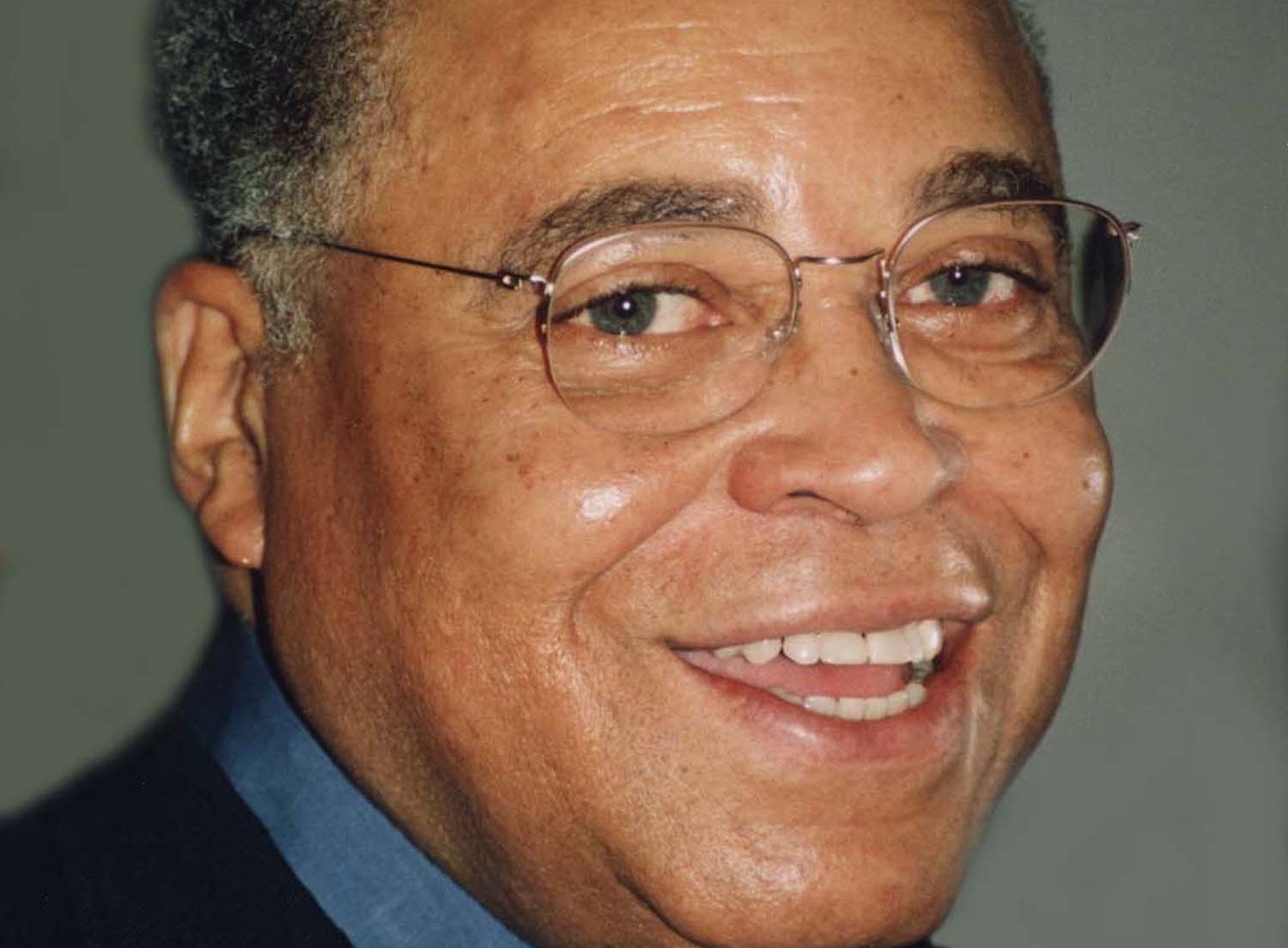
James Earl Jones in “Poetry I Love To Read” – a tour undertaken to support the school where he was encouraged and ultimately learned how to overcome his profound stutter.

This was not to be an award-winning performance.  Not “The Great White Hope,” for which he received a Tony award for Lead Actor in a Play in 1969 and an Oscar nomination in 1970.  Not “Star Wars.” Not being the first guest star on “Sesame Street.”  Not a turn on “The Big Bang Theory.” Just a little poetry reading and question and answer. And a very nice, rather shy, lovely, yet physically intimidating gentleman.

As Constant Companion would say – these were the days of woo. You know, that period where the relationship is new and shiny and all that jazz. I wanted to go. CC wanted to go. Mother wanted to go (writing on wall much?)  Well, we get three tickets. Then, as a board member at the time, my director Laura calls: “We need a moderator for the Q and A, as Mr. Jones is quite hard of hearing and needs someone who can enunciate.”  So …

We go to the show. I miss the bulk of the reading to sort through audience-submitted questions with his manager (yes – I still have them). No phone book reading – Verizon restriction. No Darth Vader questions.  No, he is not going to say “This is CNN.”

So, all is going well. I read questions, always facing Mr. Jones so he can hear what he can and read my lips some. All is going swimmingly.

Then, one of the questions prompts Mr. Jones to tell a story about filming “Coming to America” in Africa. He was joined by his wife. Well, at the time she was not his wife. You know, she was more than just his girlfriend, but they weren’t married … and he looks at me. We both blank.

Ultimately, an audience member yells out the word – fiancée.

Mr. Jones looks at me – I repeat the word.  And still looking at me – there is a pause.  You know, that little beat where it is expected someone is going to deliver the next line.

And from my mouth comes the following: “A subject about which I know nothing.”

The audience laughs.

Mr. Jones laughs.

CC laughs.

Mother – not so much.

James Earl Jones passed at his home of 50-plus years in Pawling, NY on September 9, 2024.

We all have the times when we remember our brushes with greatness. Or where we were when someone died. Or our first kiss. Or whatever the important things in life are which are indelibly tattooed on our souls.

Among mine is the day I got to share the stage with a man who overcame. A man who was actually larger than life. With a voice so thunderous that one might imagine it was granted him by Odin himself. Whose laugh was not simply infectious, but made your senses tingle.

I will mix my metaphors here.

Godspeed, James Earl Jones. Live long and prosper.

Until next time.

Klyde


More from Klyde Kadiddlehumper…

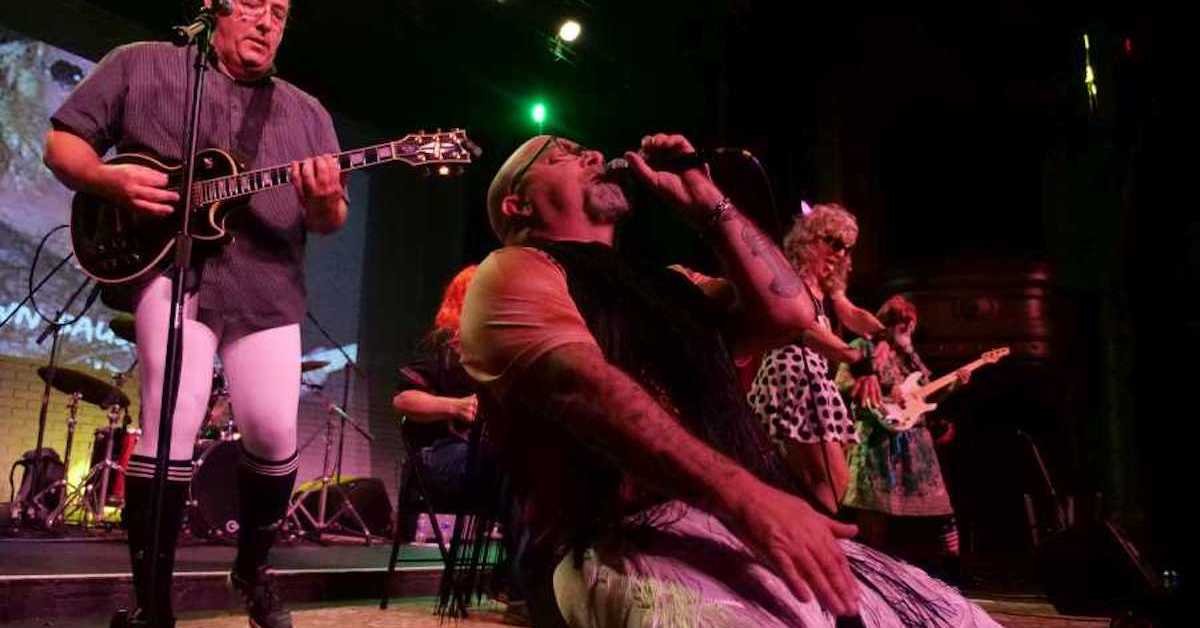
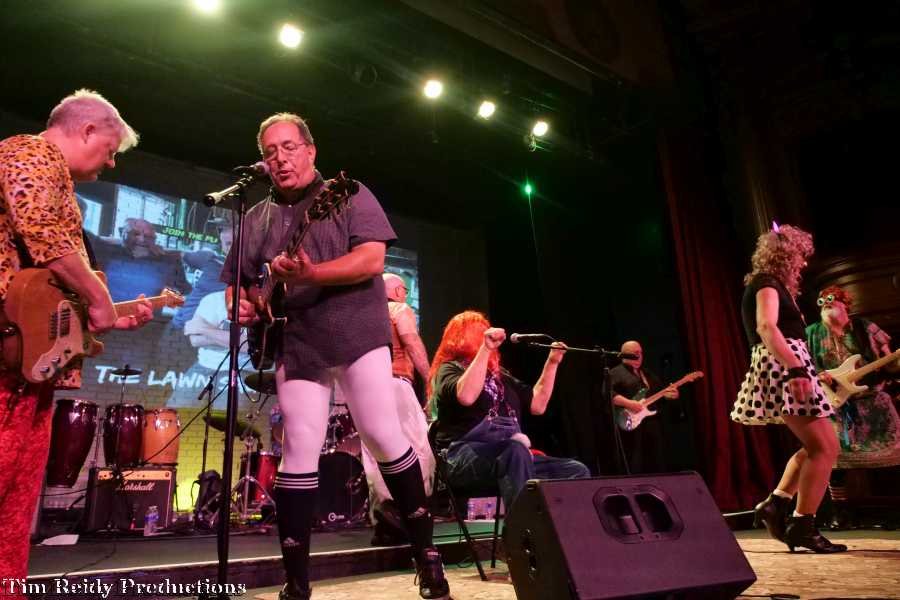
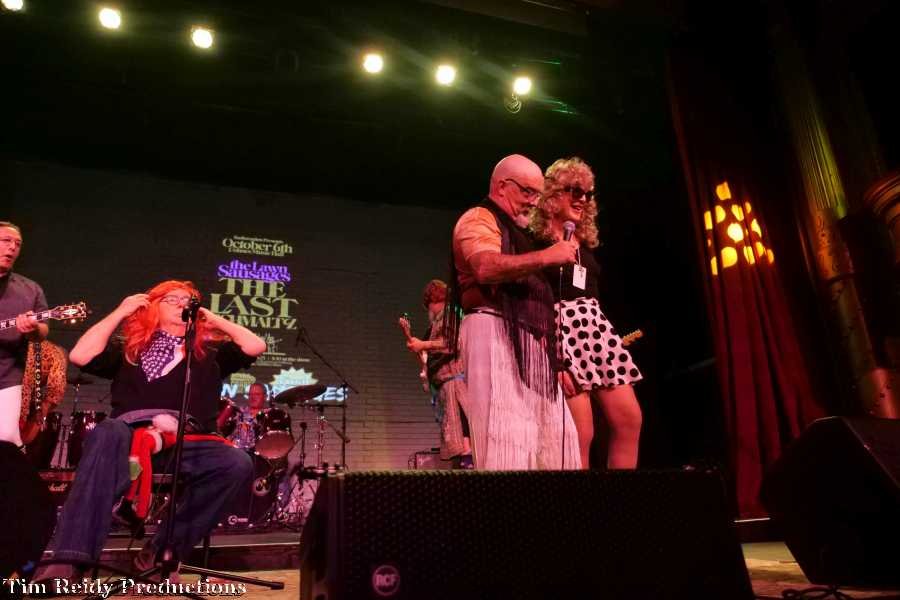
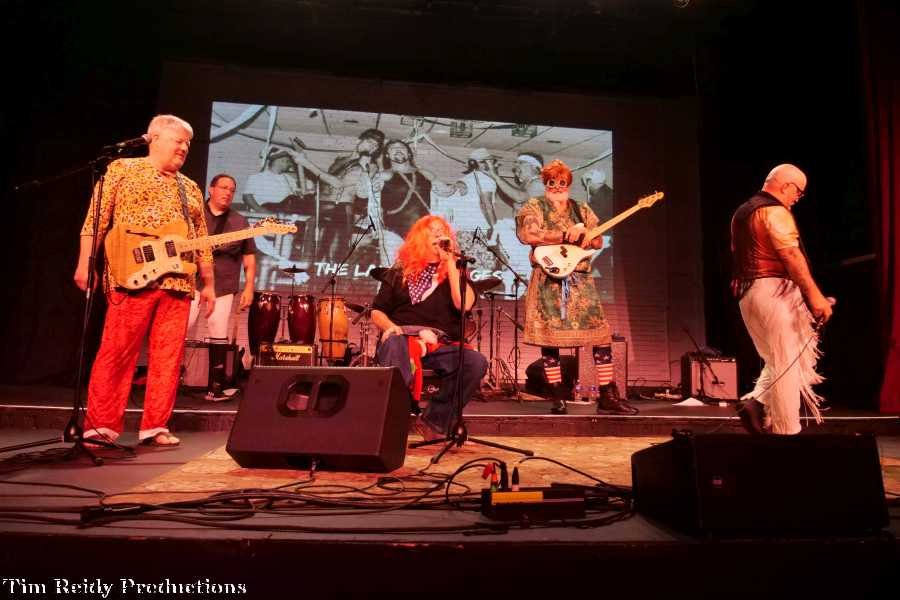
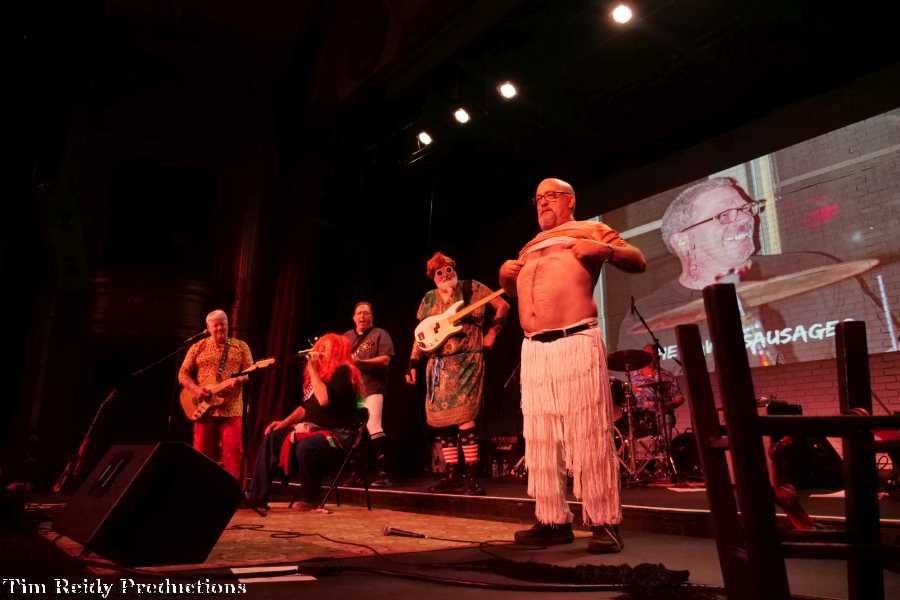
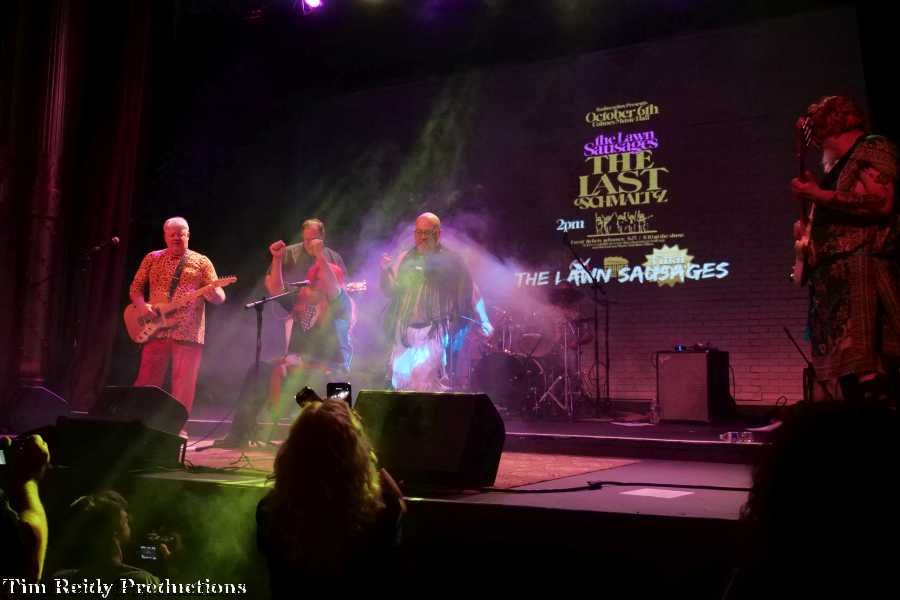
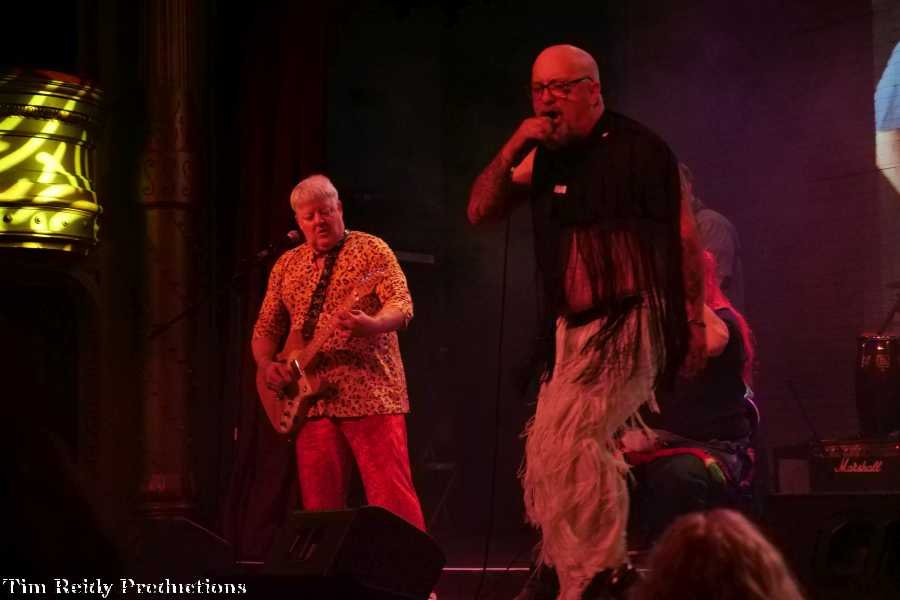
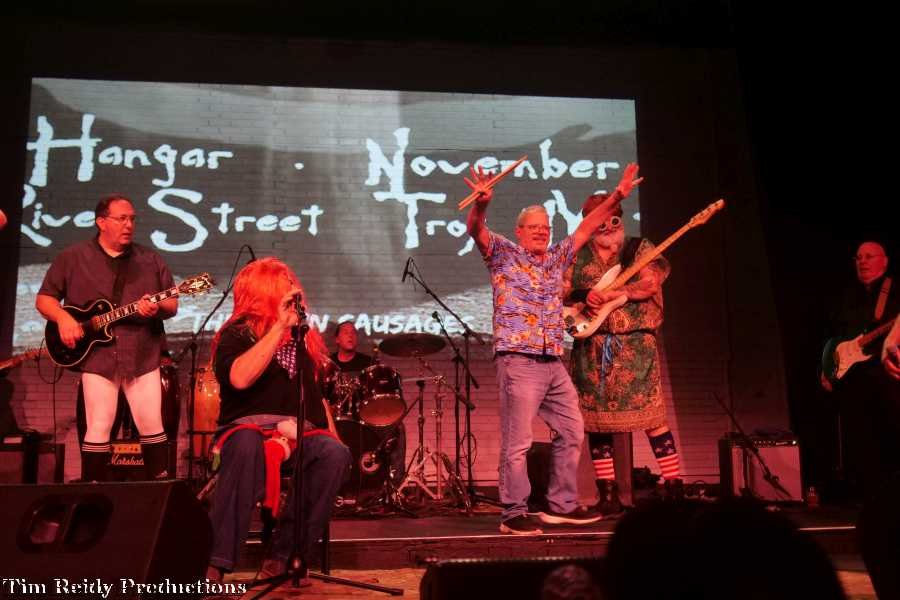
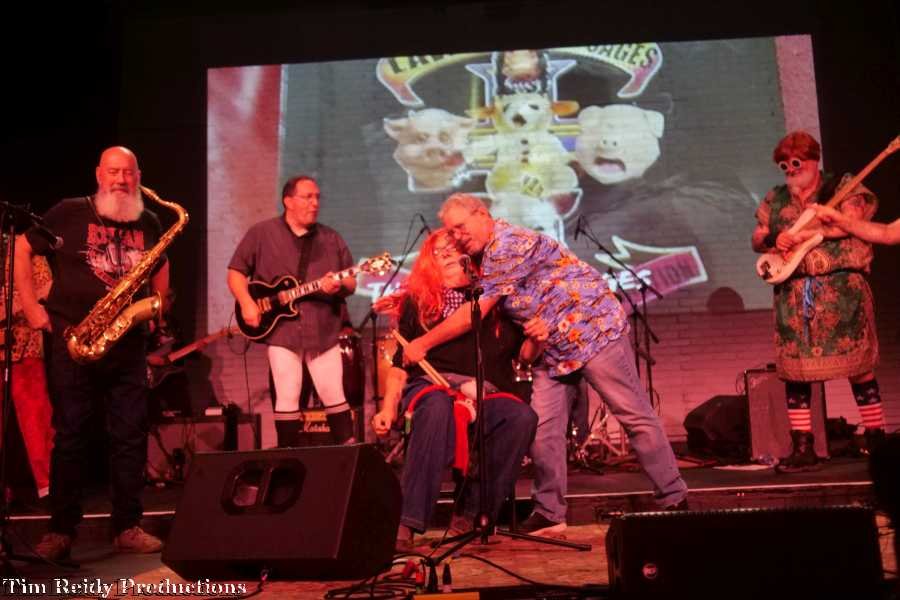
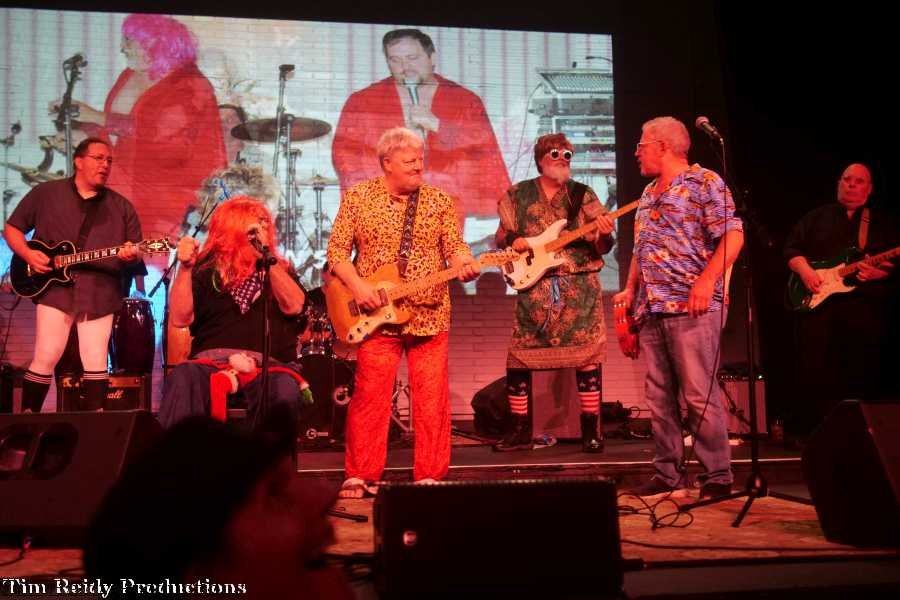
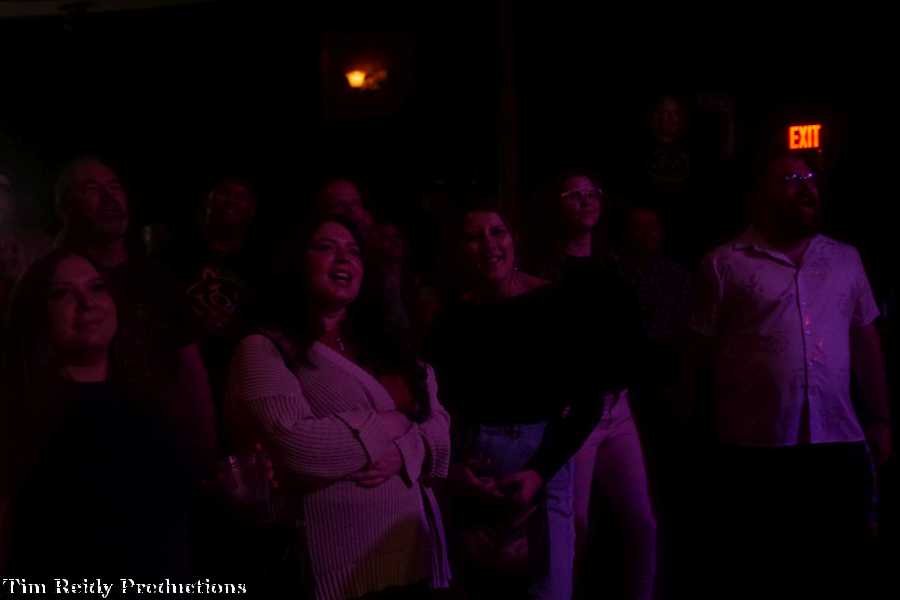
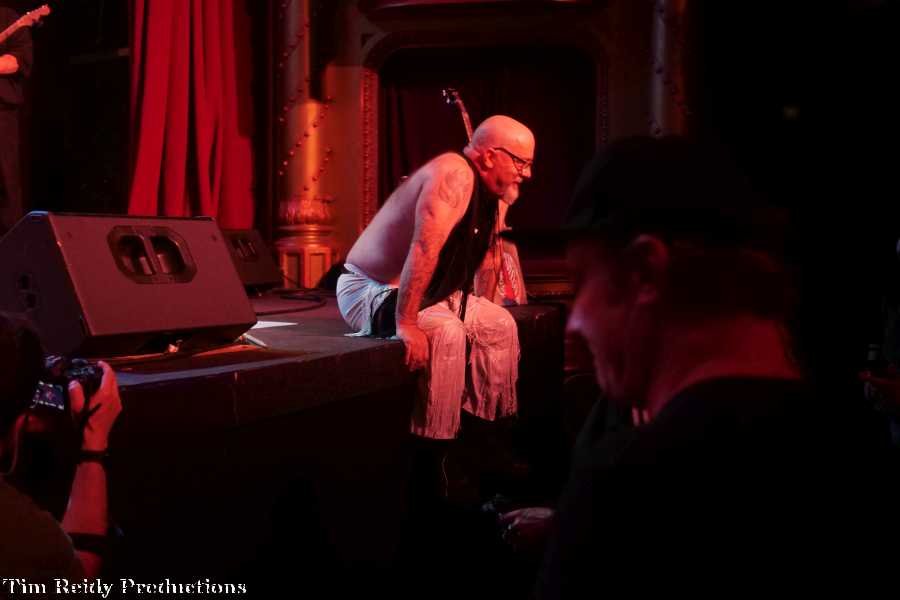
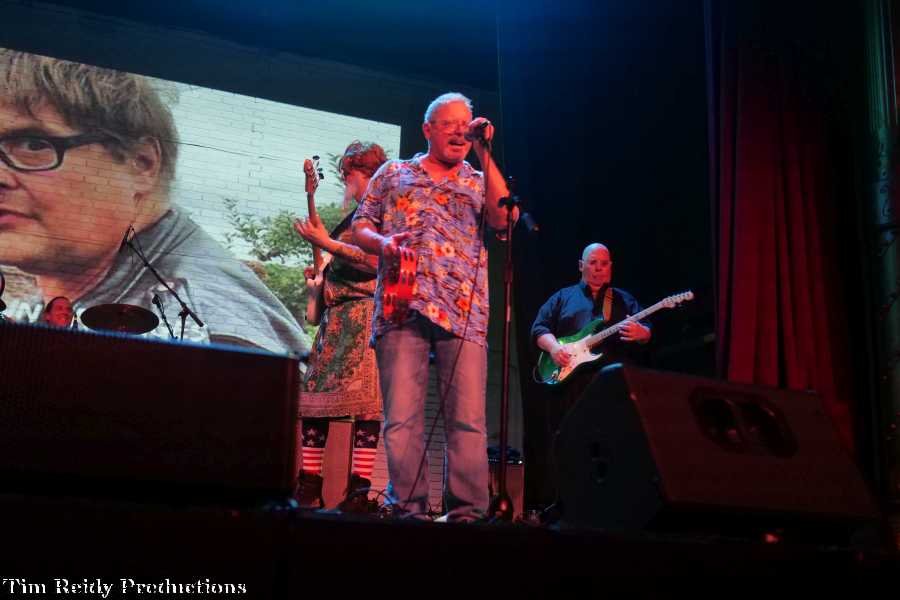
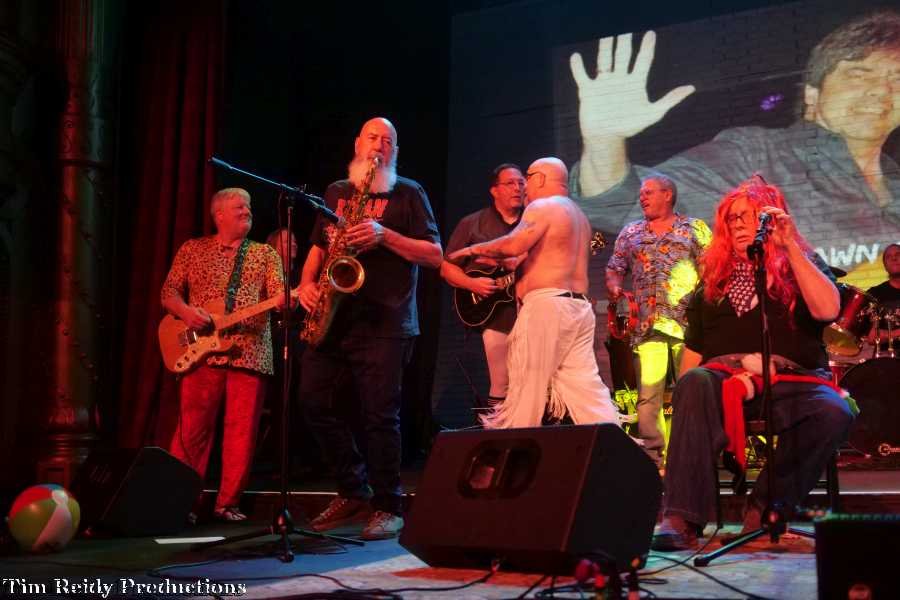
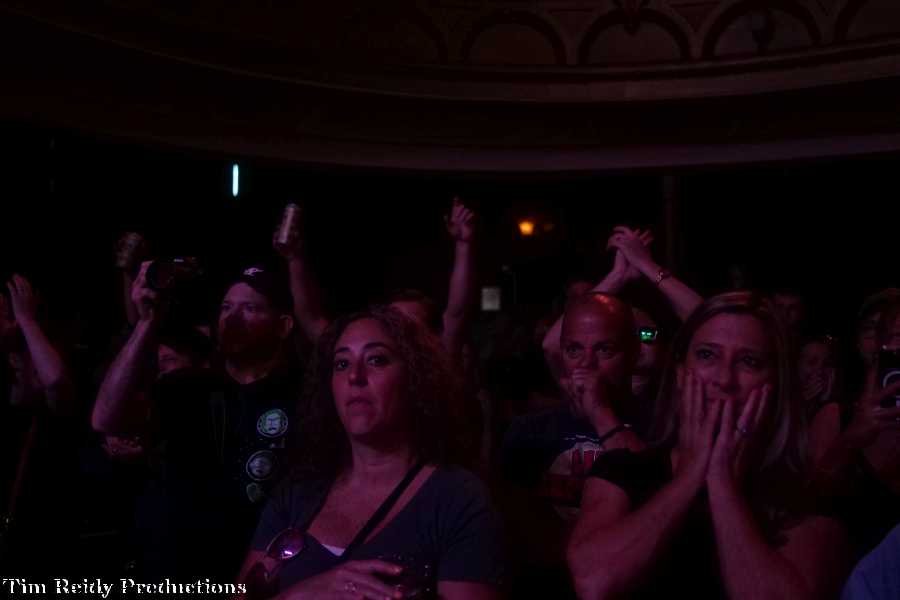
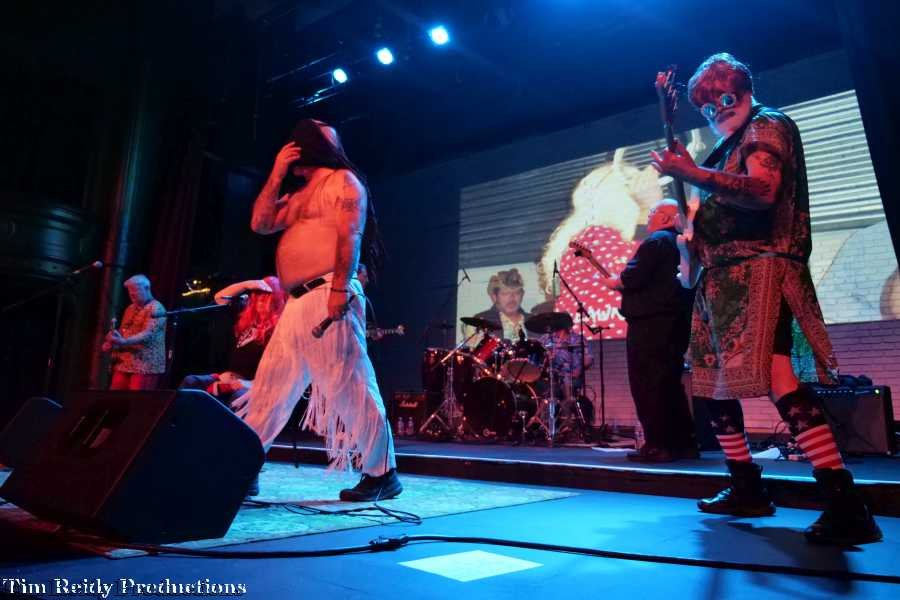
The Lawn Sausages “The Last Schmaltz” @ Cohoes Music Hall, 10/6/2024

0

A second helping of the Lawn Sausages’ farewell performance.


Photography by Timothy Reidy.


More from Timothy Reidy …

Bathroom Pass – The Weird Side of the Internet

0
Bathroom Pass

Bathroom Pass – The Weird Side of the Internet – by Liam Sweeny.

Were you a smoker in the boy’s room? Or girl’s room, for that matter? I sure was. But in high school, not in grade school. If I was in the bathroom in grade school, I had deliveries to make. Now were kids in there socializing? Sometimes, but not much was made of it, especially not as much as one California math teacher made of it.

An unnamed educator set up a policy, or pee-licy – students get one bathroom pass a week, and if they don’t use it, they get extra credit,

Parents are torn about this. Some are saying it’s barbaric, and unfair to kids who have urinary problems. Some support it, saying that it’s extra credit, and doesn’t affect the students’ actual grades. And supporters say that bathroom passes are misused.

I don’t know if this is one of those “get off my lawn” things. I don’t remember the bathroom being as popular as the playground. Yeah, kids talked amongst the stalls, but it wasn’t a jamboree. Most socializing occurred while you were getting blasted in the face with a red ball the texture of which the old timers among us will never forget.

And you know there’s going to be that one kid with superachiever parents that are going to include a catheter with the PB&J and test the literal interpretation of the rule.

So if a kid pees in his desk, is he free and clear? What exactly constitutes a bathroom here? I know this is a stupid (and gross) question – they don’t have desks you can put things in anymore.

But they still have Gatorade bottles. I guess the moral of the story is don’t drink a whole thing of Gatorade. Or don’t screw up so bad in school that you need extra credit to pass


More from Liam Sweeny…

Leon Feingold – An Xperience Interview

0
Leon Feingold

Leon Feingold – An Xperience Interview – by Liam Sweeny.

Leon Feingold is the former president of MENSA, a social organization whose members are in the 98% percentile of IQ.

RRX: Mensa is an international organization composed of people with IQs in the top 2% of the population – the smartest people in the world. But Mensa exists in a world of the other 98%. And they’re not always eager to engage with Mensa. A lot of people think that Mensa is a way for very smart people to feel superior. Can you tell me the truth of this, and the lie?

LF: It’s been my experience that Mensa members join for different reasons. Some to challenge themselves, some to find compatible minds and personalities, some to work towards the betterment of the world, some because they enjoy some niche aspect of the organization such as game playing or attending gatherings, and others took the test simply to see whether or not they could get in. Mensa offers many different avenues of experience, and most have nothing to do with comparing ourselves to non-Mensans.

I imagine most smart people recognize they are smarter than nearly everyone else in any non-Mensa grouping, but very few use that as an excuse to lord themselves over or look down upon others. Being exemplary in one category, after all, doesn’t translate into being exemplary in others – and I know plenty of people who are brilliant but absolutely suck at life in other ways. Besides, these days in particular, anything that helps people feel good about themselves can be useful for self-confidence purposes. People who treat other people poorly for any reason are assholes, and they’d likely do that regardless of relative intelligence level.

RRX: I first failed the admissions test when I took it, only to find out I qualified from a test I took in grade school. I was having a shitty day when I took the Mensa test. Which brings an interesting question: can a good day or a bad day affect your IQ? Is there any fluidity to IQ, or does the environment you’re in just affect your ability to take a test?

LF: It depends who you ask. (You asked me, so you get my response.) 🙂

I think tests that fluctuate with mood and exterior influence are perfectly valid. After all, we are effectively different people when we are cranky, hangry, self-confident, or insecure. It makes sense an accurate test of our abilities in each of those situations might vary somewhat. One obvious example is the Myers-Briggs Type Indicator test, which directly translates the test subject’s responses across four different axes to describe personality types – and as an ENTP I found my results extremely accurate. Many professionals discount MBTI, as they’ve noticed some people’s results can fluctuate – but that is exactly why I think it’s extremely accurate. Some days some people are more extroverted, while other days they may be more introverted. It makes sense an accurate test would reflect these results.

Testing IQ isn’t an exact science. A numerical value resulting from a test is highly correlated with intelligence, but somebody who scored a 168 isn’t necessarily “smarter” than somebody who scored a 158. It begs the question, what is intelligence? What types of questions can accurately determine and rank intelligence? Expecting to be able to reduce all the factors of all the types of intelligence down to a single number is a fool’s errand. At best you’ll have groupings which are generally useful, but it’s very likely that people within a standard deviation of each other might very well be equally intelligent regardless of what their numerical results say. Besides, it doesn’t matter how fast your computer’s processor works, if you don’t install good programs and know how to use them.

RRX: One thing I get as a common response when people find out that I’m in Mensa is that IQ is only one measure of intelligence. I believe this, but in a way, it weakens the role of IQ in intelligence. Why is IQ different than other measures of intelligence? And are the other measurements really about intelligence or is it personality?

LF: It’s a good follow-up conversation to have. There are some people who are extremely good with numerical equations, some are savants with physical manipulation (think Rubik’s Cube), some have amazing powers of recall, and others have a knack for wordplay. These are each held up as evidence of intelligence, and someone who masters them all would probably ace an IQ exam. But reducing brain power to a simple number doesn’t clearly indicate what specific skills or abilities a person might have or be able to develop. Most IQ testing happens at the age of 10 in the United States and is usually delivered along with verbal and math percentiles in order to give parents and teachers an idea as to where the kid stands in relation to their peers, allowing them to recognize whether different schooling, training, assistance, or activities would help maximize the child’s development. A number like IQ is only as useful as it provides useful information, and as I said earlier – while even a loose grouping is helpful in determining whether (and to what extent) somebody is likely highly intelligent, it doesn’t describe where their strengths lie and how that intelligence could best be tapped. That’s where some of these other tests are useful.

RRX: Mensa works with gifted children. But this can’t be easy. Classrooms are bulging out of the walls and teachers are so overburdened that a gifted child may not hit your radar. How do you deal with this? And what can the parents of gifted children do to reach out and get not only tested but guided?

LF: As a gifted child growing up in suburban Long Island, New York, I really appreciated the fact that my school had a program, called Project Extra, which allowed me to interact with other highly intelligent kids and solve puzzles and engage in creative activities that weren’t available in regular school. These programs helped refine my thinking processes and gave me skills that I was able to eventually translate into other areas of my life in which I hadn’t shown much aptitude, including sociability and self-confidence.

I would encourage any parents who believe their child is highly intelligent (and have some evidence to back it up) to enroll their kid in such a program if one exists. If one doesn’t exist, advocate for it. Intelligence doesn’t go away if it’s not appreciated and trained, but like any superpower, it’s a responsibility that could eventually be used for evil instead of good. If nothing else, it would be a missed opportunity and a shame for ability and talent to be wasted simply because nobody took an interest in the child.

RRX: I know that I’m smarter than some people. I say this even though, by the numbers, I’m one of the world’s smartest people. It’s bad to talk about being smart in our society. So you hide it, or you become the embodiment of a flaw so that people will see you as balanced enough that the “smart” isn’t a problem. How do other Mensans cope with that difficulty?

LF: There’s a difference between being proud of your intelligence, and rubbing it in people’s faces. Sure, people will naturally compare themselves to you, and if they’re the kind of people who would be intimidated by a person far more intelligent than they are, they may try to bring you down in other ways – especially if you’re the kind of person who is obnoxious about it. But that is more often a sign of their insecurity, rather than an indication you should hide your glow.

I’ve learned that I value my authenticity, including my intelligence. So rather than try to make everybody happy with me, I seek out and surround myself with people who appreciate me for who I am: strengths, flaws, and all, without having to protect them from my authentic self. This simple calculus has made my life immeasurably happier.

RRX: Mensa has the mental firepower to probably save the world. But with very smart people, it’s like herding cats, and Mensans are as diverse in belief and opinion as anyone else. How can Mensa swoop in and bust out some power move to save the world? Is this ever talked about?

LF: Officially, the mission of Mensa is three-fold. It brings together highly intelligent people for three purposes: exploring the nature of intelligence; using our powers to help the world; and socializing among peers.


More from Liam Sweeny…

The Jagaloons – An Xperience Interview

0
The Jagaloons

The Jagaloons – An Xperience Interview – by Rob Smittix.

RRX: All right, so we got the Jagaloons on the line, very excited about this. If you can just let us know who you are and what you do in the band.

KS: Sure, this is Kurt (Stegemann), guitars.

GK: Geoff (Kelley), drums.

JW: Josh (Welf), bass.

RRX: Josh Bass (imitating Josh’s deep voice), he’s even got the bass voice going. I love it! So you guys got a lot of things going on – a new album release, a release show coming up at the Hangar on November 9. So it sounds like things have been pretty busy.

KS: Yeah, we got a little slow start to this part of the year. Josh was in a pretty nasty motorcycle accident, so we kinda eased off on some shows for a bit. Josh is back at probably 95% and playing with us again. So kind of ramping back up. The album we recorded last spring at White Lake Studios.

JW: In Albany.

KS: Brett Portzer recorded that for us. Some delays in getting it out there, but we’re with a different label now. It kind of got fast-tracked and we should have the records in a week or so.

JW: Full steam ahead.

RRX: Yeah. So Josh, sorry to hear about the motorcycle accident. Almost every friend or family member that I have who has a motorcycle has gotten into a bad motorcycle accident. They’re dangerous.

KS: The car is a dangerous thing.

JW: Motorcycles aren’t dangerous. I like to say I’m dangerous, danger is my middle name. What can you do? I’d like to thank Justin Birk for filling in a couple shows for me.

JW: Thanks Justin. He’s a good friend, sax player for Blase DeBris also plays bass. Who knew? Anybody can play bass really.

RRX: I don’t know about that. Brett Portzer … I’ve worked with Brett in the past. After you get the recording done with Brett … he’s really adamant about going out into the car and listening to it. The car test!

KS: Yup!

GK: Yeah.

RRX: That’s always been a thing with Brett. Although a lot of cars don’t have CD players anymore.

GK: It was interesting when we sent the mixes to the guy to master it. A big-name guy out in Los Angeles to master it, and he looked at the waves and he couldn’t figure out, why it was already so perfect. He’s like, “This can’t be right.” So, we had to tell Brett …

JW: Stop being so good!

GK: Give this guy something to do.

RRX: Right. Exactly. Tell us about the new album, what are we to expect?

GK: It’s 14 songs. We wrote 11 of them. There are three covers on there. Two of them are more surf songs to start, and then we did a Go-Go’s cover. So we’re doing “Vacation” on this.

RRX: Nice.

GK: The way the album came together was, we were playing some shows out of town and we ran into a guy. He liked us and said, you know, “I wanna work with you.” He was gonna put out our record and that gave us a jump start to write songs and have everything going. So we worked hard to get into the studio. It was April of last year with the expectation that the record would come out last year. That just didn’t work out. So now it’s coming out in about two weeks; we’re really pumped.

KS: It’s gonna be out on Tabu Recordings, out of Indiana.

JW: T-A-B-U

RRX: Well, that’s cool. You guys are on a label, and I know that’s kind of a weird phenomenon these days because a lot of people are doing it on their own. But at the same time, it’s good to have some support and as long as they’re treating you right.

JW: We’ve had a different label experience. We’ve had different releases on different labels. And they’re all different.

KS: I mean, these labels are small independent labels. So it’s not like we’re getting signed to like Arista or something.

GK: Is that still a thing?

RRX: I don’t know. I think so.

JW: We’re on the island in Arista.

KS: But it’s nice because you’re dealing with the people that run the label, for better or worse. The label that we’re with now – really solid guy, he’s good to work with. So we’re really excited about it.

JW: We’re just glad somebody likes us.

GK: Oh, and that’s the thing too. We’re a niche sound. It’s good to be on a label with somebody who knows what you’re trying to accomplish and can hook you up with other bands or other related things that can help you just get a little bit more exposure.

JW: Open doors.

RRX: How old are you guys now? You don’t have to tell me a specific age but are you in your forties?

KS: Yeah, still in our forties for now.

JW: In our mid-twenties. It’s all that partying we do, every day. We look like old men. Probably 45 is the oldest.

GK: I mean, we’ve known each other … I’ve known Kurt since the early ‘90s.

KS: Yeah. So we’ve all been in the music scene since that period and we’ve all been in bands with each other before.

RRX: From when we started in my band we were around for like 17 years or whatever. I know that it only took about two years maybe for the stars to come out of our eyes and to realize we’re just doing this because we love it. Do you guys still have those stars in your eyes? Do you have those kind of expectations?

JW: We just talked about labels! We’re obviously very big rock stars! Award-winning musicians here. I mean, we’re famous. I think that’s probably a good way of putting it.

KS: I mean, like I said, we’ve all been in a ton of bands for years. Probably combined over 20 different bands, I would say.

JW: Coming from the punk and hardcore scene, there’s not really stars in your eyes to begin with. I think you get beaten down pretty early to be like, well, this is just dumb fun. So I think I’ve continued that attitude my whole life, even with my real job, which is not dumb or fun but I have to make it dumb or fun.

KS: What’s interesting, probably out of all the bands we’ve been in, strangely, this is probably the most quote-unquote successful band we’ve been in.

GK: I think a lot of it is the past experiences and all the frustrations of having the stars in our eyes, and thinking this is gonna be our next big break. At this point, we’re all realistic about where we’re at and it’s when we have little bits of success … it’s surprising and probably more enjoyable.

JW: Geoff’s just really laid back with the whole thing because he’s independently wealthy.

(All Laugh)

KS: It also gets back to what Geoff was saying – it’s a smaller niche genre of music. So it’s a smaller pond to play in. When we’re playing punk and hardcore, there’s a bazillion bands, you know? It’s a little easier to stand out in a smaller scene.

RRX: And with the age thing, I always remind myself that Samuel L. Jackson didn’t start his acting career until his mid-forties. So anything could happen.

JW: Yeah, I like that.

GK: That’s great.

JW: That’s like Danny Trejo too, right? Because he was in jail and s**t!

RRX: Exactly. Yeah. he was definitely in jail and he’s got that famous tattoo on his chest.

JW: Yup, Salma Hayek. Put that in there. I’ll give you my number. Tell her to look me up!

(All Laugh)

JW: Tell her I’ll get a tattoo ASAP.

“Forbidden Words” Release Party at Hangar on the Hudson, Saturday, November 9. 6 pm doors, 7 pm music. With the Jagaloons, the Sound Minds, the Sci-Flies, and ShortWave RadioBand.


More from Rob Smittix…