Home Blog Page 641

Deb’s Saturday Psychedelica – On Becoming a Hippie – Chapter 14

For me, one of the hardest things about making these big moves was leaving behind the people I had come to know and love. I’ve had to say goodbye to many friends over the years, and I think it’s hardened my heart a bit. On the other hand, it’s also enabled me to open up to people more quickly. I’ve learned that there’s no time like the present.  Why waste time when I’m not sure where I’ll be next year?  As a result, I have many sisters and brothers around the country who shared formative times in a variety of places. Some of us remained connected while others drifted apart.  The bond is still there, and it’s strong whether or not we ever see each other again. There were also times when those bonds unraveled to different degrees, but we stuck it out to the end. So far, anyway.

Paul and I knew it was time to move on. We had unthinkingly come back to many of the same things we’d left in the first place. It was a very conservative area politically and socially. My family was also very conservative. They were uncomfortable with even the idea that I would breastfeed my child. So, I was asked to “go to the bathroom to do that,” which I refused, of course. Out west, where she was born, everyone fed their young ones that way. I’d been hanging out with hippies. I’d learned about herbal healing and organic gardening. I was growing and learning and thriving in this new world. A lot of those ideas hadn’t really reached my hometown, yet. We were also just barely getting by, even with both of us working and Paul taking on an extra job. Although we were drowning, we’d made some close friends, had reconnected with old friends who’d survived those early initiation days and were able to let our daughter bond with her grandparents. All of that made it harder to say goodbye.  But it was time to move on.  So once again, we started to plan.

Remember Amber? She had moved up north to the Cascade Mountains as we had hoped to do and was having a baby. She invited us to come help and be companions. Her boyfriend was there, but the relationship was not the best. She could use the support. We had bought my dad’s old 1966 Plymouth Valiant, the car I learned to drive in. It was a reliable car and could take us across the country again. We’d gotten a tax return to pay for the trip and should be all set.  One of the new friends I had was another Debbie.  Having been born in 1953, I often ran into “Debbies”. This Debbie was and still is a photographer.  She’s one of those people who is born to be artistic. You just can’t seem to help it. She and I spent a lot of time together during that year and a half. I still have some of the photos she took of Jessie and another of my first two children, she took a few years later. Now, as we were getting ready to leave, her boyfriend suddenly left her for another woman. She wanted to leave with us and make a new start. Of course, we said yes.  She and Jessie got along well.  Debbie would help out with her, the driving and the expenses, plus we’d all know another person when we got there. It did mean three adults and a child in a four-door sedan packed with everything we could fit to start up a new household but … we could do it!

Everything was lining up according to plan. In my experience, before every journey, there’s that time when you’re over-thinking everything and going over all the details, driving yourself crazy.  What could possibly go wrong? In my life, things often go wrong. And, I have to admit, if you’re moving across the country like a gypsy, there’s plenty that could go wrong. On the other hand, if you’re a true hippie, you must have faith that things will work out if you keep those positive vibes. We were all about the vibes.

Two weeks before we were set to leave, Debbie’s boyfriend returned. He’d gone to some Caribbean Island to be with another woman, and it didn’t work out. He wanted to reconcile. Debbie was all set on leaving with us, but the pressure was getting to her. She loved him. We totally let her off the hook, so she could be free to do whatever she wanted.  We could manage the trip on our own.  Just keep those positive vibes going. It turned out that what she wanted was for her beau to travel with us. I didn’t think much of the guy, and we hadn’t even met him yet. There was no way I wanted to add another person into our cramped car anyway. Jessie wasn’t a baby anymore. She was two and a half and needed space to play or create while we drove. As it was, we would have to make frequent stops to let her run around. When I added in the space he would need for his belongings, it was an easy, “NO!”

Between Debbie crying and being indecisive then crying more, and Paul’s frugality reminding me that we would spend less money, less time driving with more people sharing the burdens and they didn’t have a car which made a caravan out of the question, I reluctantly relented. We quickly met Steve. He seemed like a nice guy and eventually became a close friend. He was also over six feet tall. I guess we figured that we would just cram everybody and everything in as best we could and hope for the best. So, we scheduled some meetings to strategize our route and set some kind of schedule.

We wanted to visit friends and family along the way, so the first stop was the Pittsburgh, PA area. We stayed with Denis and Nigel who had a punk band. Denis was also an artist who did a comic.  He was a childhood friend of Paul’s. We eventually lost track of them over the years.  Last we’d heard they were in Los Angeles. I don’t think they ever heard of Paul’s death, though I did try to find them. We also had a friend in Kansas City, Debbie and Steve had one in Yellow Springs, Ohio. They were also really set on visiting the Grand Tetons in Wyoming. We knew that there was a good possibility of snow at that time, so we nixed that idea, but they never really dropped it. The plan so far was to stay south of the Rockies to avoid any bad weather.

Two days before we were ready to leave, I decided to go say goodbye to Amber’s mother. It was a beautiful morning as I put Jessie in the car and drove to North Stamford along the winding, hilly roads.  We had a wonderful but tearful visit then started home. Along one of those particularly winding stretches of road, my car made a horrible THUNK and just stopped. I sat there stunned for a few minutes then got out to look. I had no idea what the problem was, but I wasn’t going to figure it out standing there, so I scooped up Jessie and stuck out my thumb. I made it home and called my mom who called a towing company to come get the car.  Then, she called her multitude of friends and found us another car that day. Mom was always amazing that way. She had friends everywhere and knew how to get things done. The new car was registered that day, so we packed it up and were ready to go. Mom wasn’t pleased that we dropped off the spare tire to make room for the very last bit. Paul assured her that we’d be fine and wouldn’t even need the tire, which we didn’t.

The morning before we were scheduled to leave, we heard the doorbell ring.  Paul went downstairs to check and came back up with a stricken look on his face. He said, “The police are downstairs wanting to talk to you.” “What?!” I was already stressed out about the trip ahead, trying to fit everyone and everything in, all the negotiations then having to replace the car at the last minute. I didn’t think I could handle another drama, but I walked down quickly to get it over with.  “Yes, I was Deborah Cavanaugh. Yes, I did own a 1966 Plymouth Valiant. What? No, I didn’t drive it over the edge of a ravine and leave it nose down in a creek!” That’s when I started to cry. I admit that I’m a crier when things get to be too much. It enables me to regroup. So, I just cried for a few minutes. When I was done, they called the towing company that was supposed to have taken the car. They hadn’t gotten to it, yet. Apparently, overnight some kids found it along the road and pushed it over the side, where it landed headfirst into the creek. When they pulled it out, they remarked that the headlights still worked. I was very sorry to lose that car.

It was a trick to fit everything into the new car which was, thankfully, a little larger. Paul and I were moving a small family. Although we were small, there were still three of us, and it was originally our move. We were just bringing them along. Everyone had their own personal belongs that we packed into the trunk and the floor of the backseats.  This meant that the back was just a large platform. Steve insisted on bringing his comic book collection, which was an investment that he didn’t trust being away from him, but they couldn’t get packed away. They had to be accessible to him. He did end up financing something big with that collection later in his life. They were amazing comics with Donald Duck, Mickey Mouse and many more. We didn’t mind him reading them in the back seat, except that my 2 ½ year old daughter was always in the back and wasn’t even allowed to look over his shoulder. They would argue over those comics incessantly. He and Debbie were trying to work out their stormy relationship during this trip, and it was making everything very tense. Before too long, Steve bought sardines at one of our stops and started eating them as we drove. Paul pulled over, got out of the car and lost it. He threatened to leave him there. Between the fights over the comics, the bickering between him and Debbie and now the sardines, I was good with that. Let’s leave him here! Leaving him meant leaving Debbie, and we couldn’t really do that, so we finally decided not to just leave him there on the side of the road with his comics and sardines, but there were rules. No more sardines, no more arguing between him and Debbie inside the car and he would always have a front seat, with his comics. I wondered later if maybe it was manipulated to get him a front seat.  We hadn’t really thought about the height issue in the back, and he really did need a front seat, being so tall.

The next stop was Yellow Springs, Ohio. Debbie’s friend was there. Betsy had a small child that they hadn’t met yet. She looked like a very cool person, but we needed a break from the two of them, so we proposed dropping them off there and moving on to Kansas City to visit our friend there. If they could get to Kansas City in eight days, we would bring them the rest of the way. We gave them Brian’s phone number hoping that they would call and say they decided to do something else, then we drove on our way, our load quite a bit lighter.
Observations and Ramblings of a Cranky Old Guy

0

Welcome back, hope you’ve well, hope everyone is safe.

As I write this (May 13), New York State is nearing the end of New York State On PAUSE, and the initial steps of attempting to get the state back to normal, or rather the new normal, approaches.

Don’t freak, this is not another COVID thing, BUT, the pandemic is the basis of this article.

Throughout America, especially in the 20th Century and onward, tragic events, or momentous events, have created some of the most memorable, if not personal works of art, that represents feelings and emotions deep in the soul.

The pandemic will be no different.

You just KNOW there will be a TV mini-series on this.

WHO will play Governor Cuomo? Dr. Fauci? President Trump?

Rather than looking at the wide range of media to tell the coronavirus story, I want to focus on music, we ARE a music publication remember?

I made a list of “tragic events” from the start of the last century, and searched for a list of songs that reflected said event, interesting what I found.

Not ALL of these songs were hits, but they all had an impact.

Let’s review, shall we?

The Great Depression (1929-1933)

“Brother Can You Spare a Dime”-Bing Crosby

(https://www.youtube.com/watch?v=0I8-CbJYGMA)

Unfortunately, this song hits TOO close when you compare it to the 2020 situation. The words, the tone, the mood, desperation oozes from this recording.

World War II (1939-1945)

“Der Fuehrer’s Face”-Spike Jones & His City Slickers

(https://www.youtube.com/watch?v=lWF8iRCan7I)

This is a wonderful example of how comedy and satire can be used as a cure for unthinkable moments in our lives.

There is always one douchebag among your friends who make fun of unspeakable acts. That douchebag, for example, makes inappropriate jokes about certain celebrities who pass.

For me, when I think of that person, I feel like having a Sausage Sandwich…

To my friends, that person is me.

You may not admit it, but inside you’re peeing your pants when you hear their poor taste joke.

The Vietnam War (1955-1975)

“Give Peace a Chance”-The Plastic Ono Band

(https://www.youtube.com/watch?v=C3_0GqPvr4U)

In this case, the song is a FEELING against the war as opposed to the words, those four words are so simple but also so powerful. The video of this performance actually brings out the emotion against the violence of Vietnam.

And in truth, there are SO many songs about this war, it’s hard to pick one, but this I feel is the true anti ‘Nam tune.

The Kennedy Assassination (1963)

“Abraham, Martin & John”-Dion

(https://www.youtube.com/watch?v=a5hFMy4pTrs)

Who would think a street wise doo wop singing heroin addicted Italian could become so contemporary and soul burning?

It took five years after Dallas, but the Wanderer did it.

Watergate (1972-1974)

“Watergate Blues”-Tom T. Hall

(https://www.youtube.com/watch?v=leD_OM9W4OU)

I am a big fan of “The Old Storyteller,” and this is no exception. This song came out before the resignation but sets up events to that time perfectly.

September 11 (2001)

Two songs taken from both sides of the horrible events of that Tuesday, one of shock and sadness, one of shock and anger, and both are from Country artists.

“Where Were You When the World Stopped Turning?”-Alan Jackson (2001)

(https://www.youtube.com/watch?v=jAQ-M65Hjag)

While the studio version is just as powerful, this, done live on television shortly after the attacks, takes your breath away, tears come to me today when I hear it.

“America Will Survive”-Hank Williams Jr. (2001)

(https://www.youtube.com/watch?v=LcbgjB3ZJmI)

Bocephus wisely took a signature song and added the anger America and the world were feeling back then.

There are endless other events in history you have lived through that we may not have brought up.

You may have tragic personal moments in your life we know nothing about that are just as powerful and painful.

Some of them may revolve around what we are dealing with right now.

But music, movies, films, books, they can be used to heal, to strengthen, to bond.

Your feelings are our feelings.

Your emotions are our emotions.

Rather than keeping them hidden, use them to create, to sooth yourself, family and friends.

For me, I write, I perform, I act as an asshole.

It’s a buffer but it helps.

Let’s hope next issue, we can move past all this a little bit more.

Keep the faith my friends.

Be hearing you

Reminiscing and Forecasting with Al Kash

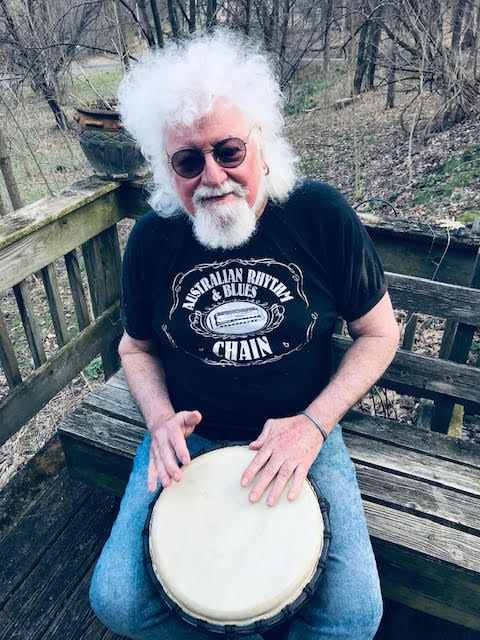
Al Kash is one of the Capital Region’s iconic musicians but as you may know, he didn’t get his start here. Today Al was kind enough to take time out of his quarantine to chat with us about his career path and what he’s got cooking on the burners.

RRX: So how you been?

AK: Well, starting to lose it a bit

RRX: That was me almost this entire time. Now each day I try to accomplish at last one thing.

AK: I’ve been doing one or two drum practices in my room every day, which has been really great. I’m going back to stuff… You know, you practice music and there’s a lot of stuff you just ignore because you don’t use it. So I’ve been practicing African stuff and working on different techniques I’ve ignored over the last few decades.

RRX: So definitely keeping yourself busy with the music. It’s driving me insane and I’m sure it is you too, that you just can’t jam with anyone.

AK: Oh my god yeah.

RRX: Now I’m familiar with much of what you have done musically but nobody knows it like you do. For the folks that don’t know who you are can you give us a little summary of your music career?

Photo by Janet Kash

AK: Where do you want me to start? (laughs). We left NY when I was 14 by ship to Australia that was in 64′ and I turned 15 on the boat. One of my first friends over there was playing guitar in the apartment next to where we just moved and he said why don’t you play bass? I said, yeah okay, and I went to the music store. I don’t know why but I understood it. We both went to audition for a band; the singer’s girlfriend was the drummer but they had split up. So there was already a drum set sitting around. I sat down and just started playing and I thought, oh I like this better than bass. So I ended up taking over the monthly payments on what this guy bought the drums for. That’s how I started drumming.

RRX: And so glad you did. My brother and drummer Jay received lessons from you many years ago and we even had a couple of chances to share the stage with you, certainly a highlight in Smittix’s career. But besides us (laughs), you have had many amazing years as a professional musician, any wow moments you could share?

AK: In my early career in Australia, you could do three gigs in a 24 hour period. They had these rules, the bars and pubs had sessions.  The clubs would be open at night time, like 10pm-3am or something like that. So you could end up doing an early, early session at a bar, a dinner session at another bar and a nightclub spot all within that day. So I grew up in that sort of climate.

There was a band called Tully, part of the house band in Sydney for Hair and the drummer was from Perth. I had sort of a mini-conversation/lesson with him. He was one of these phenomenal people that I admire. Tully was inspiration plus ya know? Another Australian band I was a part of in 1970 was Black Feather and we had Bon Scott on timbales and recorder.

RRX: That’s nuts just to have a name like Bon Scott work with you.

AK: Bon would come out to some of the gigs and he was a drummer also. I would say “play a few songs if you feel like it”. He would drum. It was original music, it was tough to invite people on stage.

RRX: Right.

AK: Then it was 73′, I was back on the West Coast in Perth and the band I was in, we opened up for The Stones, out in the Cricket Ground, which was great. There’s a live tape of that on YouTube but without sound.

RRX: Awww. So my brother told me a rumor I’ve heard for years. He told me that you broke some kind of record for playing drums for like 3 days straight or something?

AK: Oh, yeah. That 67′ or 68′. The band I was in The Down Home Group. In Perth at the time another band had held the Guinness Book of World Records for non-stop playing  by Guinness rules; which allows you 5 minutes per hour break or you can accumulate your breaks and play 6 hours and have a half hour off. So anyway it was a friend’s band that played at this club we used to play and they just did it as a mark and played for 52 hours. Then I don’t know, it was three to six months later the band that I was in said let’s see if we can break their record. So we set it all up and we started Friday night and ended sometime Sunday but we played for 60 and 1/2 hours.

RRX: I couldn’t even imagine, I like to take a break after three songs at band practice.

AK: At one point when I was up there after God knows how many hours, I looked out and I thought I was looking at glass enclosing my part of the stage. Just my brain hallucinating on me.

RRX: Understandably so.

AK: So that’s been documented, I don’t think anyone was silly enough to try and beat that.

RRX: No way! So when this whole thing is over, what’s the first thing you want to do?

AK: Whelp, I’m involved in one, two, three CD’s we’re trying to wrap up at this moment. Some of the performance stuff needs to be done but mostly mixing and getting together and saying yeah that sounds great let’s do it. All that’s on hold.

RRX: It’s like your hands are tied.

AK: Yeah and this would be an answer to just sitting home on your ass. This would be great if Playing with Fire’s CD came out or… Nite Train’s CD is almost ready to be released. Leopard Society that whole CD is mixed in the art department. All that stuff would be my preference right now but it would be just incredible walk onto a stage with anyone at this point and say what song do you want to play?

RRX: I know. You know, a lot of people are doing these live streams, where they are performing from their houses.

AK: I actually have a different take on that. I’m not really that interested in seeing someone gather around with an acoustic guitar standing in their living room and singing; with all do respect. I wanna hear electric guitar with distortion and see people bouncing around.

RRX: Anything else been on your mind?

AK: I visited Australia this past August, I got to play with a lot of friends. One of them is a book publisher/musician guy. Numerous bands I played in are featured in a new book coming out called Way Out West. It’s Perth’s music scene from the 60’s and 70’s. That should be out any week.

My calendar was booked until September now everything is cancelled. Some places said we’re shifting those dates till 2021. I am hoping in the next few weeks we have some openings and something positive will transpire.

Discovering the Blues Expression (Jazz at Lincoln Center)

RRX: Within our readership, there’s a real fondness for rock, and most of us are fully aware of the blues roots, figures like Robert Johnson and Howling Wolf being rediscovered and reinterpreted time and again. How is jazz history like this, and how is it different? Where do we see jazz today, outside of its natural genre?

Jazz at Lincoln Center

SH: So what you’re speaking about here is a deep interconnection of something we would call blues expression. It’s the outcome and the product of styles of music that came to the new world from Africa, notably northwest Africa, and created this unique tonality we would call blues expression. So, relating it to what you just said on rock and blues, what I think jazz’s role there is a cousin, a lot of these styles are emerging out of these unique sounds that developed in the New World in the nineteenth century; jazz is one of them. So within that, you can understand jazz’s history and developments the way you would a genre like rock or blues. The idea of earlier styles getting rediscovered, that’s happened in jazz many times. Wonderful examples of that are the early New Orleans and early Chicagoan styles that got a revival in the 1940s, and again in the 1970s tacked on to the ragtime revival that happened as a result of movies like The Sting. We see the music of Louis Armstrong being rediscovered by generations after generations, something Wynton (Marsalis) has also spoken about, of reassessing and relearning what Louis had been doing. And when Wynton himself was coming up. So with that in mind, what jazz at Lincoln Center has said is that all jazz is modern. And this idea, I think, reflects the notion that the genres you hear throughout any decade are making choices about what to emphasize and what to de-emphasize, and it makes this unique sound and strains that are ties to this grand lineage. And so I feel that the music is constantly having this rebirth cycle – new musicians coming in, encountering classics and coming up with their own unique interpretations at all times.

RRX: Music comes with its preconceptions. Jazz comes with the preconception that somehow it’s an “elite” or “sophisticate” music. But looking at the history of jazz, it seems like an odd preconception. Do you think that notions of the class of a listenership have anything to do with the actual listenership?

SH: No, I think you will find incredible listeners, people with incredible ears, and tastes, and souls in any genre you check out. What I think jazz has to offer is a beautiful balance of things. Jazz’s roots, particularly during the Jazz Age and the Swing era, points to music that valued dancing. Other styles of jazz de-emphasized that, but at all times, I think the rhythmic revolution that accompanied jazz is something anybody can be enjoying, and I also think the notion of improvisation, the notion of spontaneous creation that accompanies jazz is something where you can enjoy it on a purely visceral level – you can sit and think about the melodic and harmonic constructs, and it will meet you where you’re at, which is something I’ve always loved about it. But I don’t think at any point we would ever have to think of it as an ‘elite’ music; I think it’s something anybody can enjoy, and I think that’s true with a wide range of popular music. You can dance to it, you can nod your head to it, or you can dive into where it’s coming from. And any of those paths can reward you.

RRX: Jazz has a power over the emotional landscape. In my opinion, it can be more satisfying than other forms of music, but more nuanced. It makes you feel by first making you think, whereas other genres may be more “what-you-see-is-what-you-get.” Can you think of an artist or jazz subgenre that this might apply to?

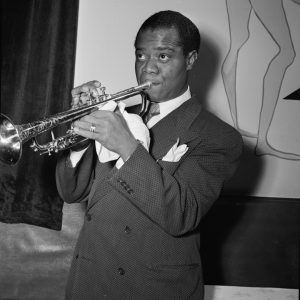
SH: I think the pinnacle of that would be a figure like Louis Armstrong. So you listen to Louis, in honestly any era of his career, 20s, 30s, 40s, 50s, 60s… you’re going to immediately hear something that is engaging, and fun, and enjoyable. And then if you listen deeper, new elements will emerge in your listening – the way he’ll shade a note, the way he’ll phrase a particular melodic line. The way he might take an original melody and reconstruct it as he’s singing it, or as he’s playing it on his trumpet. Moments like his recording of “Stardust,” for instance. The way he performs it is immediately engaging, but there’s this depth of emotional resonance that he’s building and generating in the way he’s singing the melody and the way he’s phrasing it rhythmically as well. It’s something where you’ll never be able to listen to it enough times. So I think that’s a great example of where you can listen on a surface level, and get something out of it, but with each sort of return to it, you go deeper and deeper and deeper. And I mention Louis Armstrong, but a whole bevy of the pantheon of artists do that. The way Billie Holiday will reconstruct a melody, and rephrase a melody, is something you could devote your life to listening to, and still be learning new things from what it is she comes up with. I think there’s a whole range of artists like that.

RRX: I bought a CD from Wynton Marsalis, Black Codes, and just the first song was so beautifully chaotic that it instantly invigorated me. And it’s not just Wynton; John Coltrane, Miles Davis, Louis Armstrong, Duke Ellington – all powerful people with something to say. If rock says to rebel, what does jazz say? And how does it say it?

Louis Armstrong

SH: Jazz says a bunch of things. One of the things that jazz says is that, to understand where you are in the present day, you have to understand how the past led to this moment – what the lineage says about the present. Jazz is saying that you learn that, and you learn those conventions, learn those rules, so that you will understand where you will go next. Now, if that’s breaking the rules, great. If that’s remolding the rules, that’s great too. If it’s working within them, but finding a new avenue or path within them, that great as well. But jazz looks at the past not as something that you mimic it or imitate it, but that you learn from it and that you expound upon it. Jazz is built under the ideas of things like blues expression, this melding of major and minor, happy and sad. It’s built off of a rhythmic foundation of swing, a very flexible and inclusive group dynamic, and it’s built off of improvisation, the celebration of the individual voice. I think that’s a crucial thing to understand, because to balance improvisation, the celebration of the individual, your own voice of your own self, against swing, which is a group-focused dynamic, is a very difficult thing, and the best jazz artists master it. And it teaches us a lot about how you can function in a family, a community, a society. Understanding this vast complicated network we’re in – work within that, but also assert who you are as an individual.

RRX: Wynton Marsalis is the Managing and Artistic Director of Jazz at Lincoln Center in New York. I’ve seen him perform up here at Troy Music Hall, but I’ve never gotten down there. Can you give us a walk-through? The layout of the Center, or just the groove of the overall program? What’s one thing regular attendees might not know about it?

SH: So jazz at Lincoln Center was the first sort of large institution built with the idea of promoting and advocating for jazz specifically. So if people come to visit us in New York City, the facility that they would come to was completed in 2004. In it, there’s two concert halls. One’s called Rose Theater, modeled after La Scala in Milan, and the other one called the Appel Room, modeled after a Greek-styled amphitheater. We also have our jazz club, Dizzy’s Club, a beautiful venue. And then we have the Irene Diamond Education Center, which is where we do classes for everyone ranging from infants with their caregivers all the way through life learners. And the idea behind that is to create a vibrant ecosystem for this music, where we can be training up new audiences, new listeners – we could be training up new musicians. We can be offering professional opportunities to young professional jazz musicians who are looking to establish their work. And our concert season is built around that notion of establishing a sort of multilayered celebration of the art form. One thing people might not know is that our club, Dizzy’s, has done a really wonderful job over the years between its main evening sets at 7:30 and 9:30, celebrating national and international artists, against a late set where artists are brought in for an almost week-long residency to build a theme or concept, and that piece is so crucial for bands to gel and form identities. It’s something I really love. And then the other thing, when the season gets underway again, is that we tend to webcast a wide range of our shows to try to highlight what we’re doing to a global audience.

RRX: You lecture on jazz at a program in Delmar called Humanities in Lifelong Learning (HILL) which is under the direction of Jazz at Lincoln Center. Can you tell us a bit about the program? Does this program look to expand elsewhere in the Capital District, or has online learning made physical expansion moot?

SH: The group that we work with (Humanities Institute for Life Learners); that program is really remarkable. So yes, that’s a group that operates in Delmar through the Bethlehem school district. What they do are multiple terms of classes for their members, who are predominately retirees or people with flexible work schedules during the week. And it’s a wide range of classes that they offer. So we work with them each year to make sure that one of them is a jazz class. At this point, we’ve completed three years of classes with them. So the very first one, we did an overview class, a “Jazz 101” class, which is basically a survey-style class. The second year, we focused on Duke Ellington, and the third year, which we completed this past fall, was on Louis Armstrong. We’re working right now on a game-plan for the fourth year, which will be on Billie Holiday. And right now, the discussion is on how the logistics of that might work, depending on what the safest options are in terms of public health. We’ve been really happy and fortunate to partner with them; in fact, they’re the first group we’ve been able to do a partnership like that. We’re looking to do more work in that vein, because it’s really been an incredible thing to see. How that expands right now, it’s tough to say. Depending on how the next year shapes out will obviously inform what choices we make. But in terms of HILL, we love working with them. So anytime they want us up in Delmar teaching, we’re there.

By Chamber, by Orchestra (Duo Parnas)

0

Classical performance is unlike any other. Many of the music we showcase here surfs waves of watts and the angst that scratches at the bonds of polite society, classical is often depicted as the pinnacle of said society. But you need only scratch the veneer of its movements and measures to see that classical composition is a tsunami that dredges the depths of human experience.

Madalyn Parnas Möller and Cicely Parnas make up Duo Parnas, and with their violin and cello, respectively, they’ve been a tidal force all their own, traveling the world, performing in some of the most stunning places imaginable. And yes, they know how to get to Carnegie Hall.

I sit down with the Duo, and we talk through instruments.

Photo by Michael Polito Photography.

RRX: One thing that I’ve noticed about classical composition, and it was something that I saw in particular in a video of a performance, is that you aren’t just playing a piece by a composer; you’re opening a window into that composer’s era. Very different than, say, the history of a rock song. Can the music survive apart from its history in your opinion? If so, what changes?

MPM: Yes, it can!  This music has the power to move and inspire you whether you’re a professional or you’ve never heard a violin before.  Plus, as cliché as it sounds, it’s important to remember that Mozart and Beethoven used to be the pop music of a different time.  The classical composers who we view as remote, artistic demigods were, in reality, imperfect human beings just like us who struggled to navigate their time in history, their cultural context, and their personal circumstances.  As a result, if you believe in the timelessness of the human experience, their music is honest to their reality and, therefore, very relevant to our own.  As long as we are willing to listen, their voices will still speak.

RRX: You play on a 1715 Alessandro Gagliano violin and 1712 Giovanni Grancino cello. I know that this transcends the value of the pieces; these instruments have a genealogy, of owners, the songs they’ve played, why they played those songs and the world that they were living in. Do you ever feel their “weight” in that regard?

MPM: Such an interesting question!  While I often daydream about who might have played my violin in past centuries, no, I don’t experience much “weight” when it comes to considering its genealogy.  However, this is most likely because I don’t know its full history and because, if I did, it might be too much to bear; if you told me that my violin had been used in the orchestra that premiered Beethoven’s 5th Symphony or was held in the hands of Paganini, then I might never have the guts to hold it again myself!  

RRX: Your grandfather is legendary cellist Leslie Parnas. We’ve interviewed a few people who’ve had very well-known parents, like Dweezil Zappa and Murali Coryell. Inevitably the question is asked about filling big shoes. With classical, there’s such a volume of work to learn, I can imagine. Is it a lot to live up to?

MPM: Yes, it can be a crushing weight to live under, especially when you are young and don’t have full agency over your own life yet.  In many ways, real or imagined, it seems unclear whether the merit of your achievements belong to “the person” or yourself.  On the other hand, fifteen years of experience and soul-searching later, I can say it is one of the greatest gifts that I’ve been given – to have this family member whose passion for excellence and singular devotion to the craft has inspired and elevated my senses in ways that are truly powerful.

RRX: Madalyn, you play the violin, and Cicely, you play the cello. Something I’d always admired about instruments like those, and I would include drums in this, is that you are really playing two instruments, the instrument, and what you use to play the instrument. Do you view the violin/cello and their bows as two instruments joining forces?

CP: I had never thought of it like that! I think I tend to think of the bow and the instrument as one, as my goal is to make them both just a physical extension of myself. And when we play together, my goal is to make the two voices sound like one.

RRX: You are soloists; you perform recitals, and in world-renown orchestras. It would seem to me like the mindset that goes into each would be different, but music is so transcendent, that maybe it’s a singular passion that drives all performance. But are there differences that you “prep” your minds for when it’s just you before a big crowd?

CP: Definitely. There’s a lot of psychology that goes into performing, much like in sports. You have one shot to do the best job you’ve ever done, and I’ve found that the best way to prepare is to have a calm, centered mind. I use a lot of breathing, meditation, and visualization techniques before going on stage. I tend to be a lot calmer when I’m performing with other people, though!

RRX: Being a part of, say, a 60-piece orchestra boggles my mind, the sheer organization that has to happen. And, really, a testament to the power of collective effort, playing maybe one small melodic line to perfect time as a whole universe of music is exploding around you. What is a life lesson that you’ve learned from an orchestra?

MPM: I have learned the lesson of humility by playing in orchestras.  When you perform as a soloist and a chamber musician, you strive to play well because you are invested in yourself; when you play in orchestra, you strive to play well because you are invested in everyone else.  It can be difficult to relinquish your individual artistic freedom when you take your seat in the orchestra, especially when you expend so much daily effort on developing your own musical voice.  But the truth is, when else are you going to flex your musical teamwork muscles?  I don’t think there is anything more unifying than hearing the low rumble of a whole orchestra tapping their feet in collective encouragement and applause of the guy who played a great clarinet solo during rehearsal.

RRX: Composition is something I love, though utter novice I am. But the reality of composition, from me on my multi-track to you, is the difference between a good idea and a finished novel. Can you take us through an average night of composition? What are the standard beverages, what are the tools of the trade? Any rituals or superstitions?

CP: Right now I’m learning how to compose even when I’m not in my ideal mental state. I used to write only if inspiration struck, but I think a true skill is learning how to pull inspiration from everywhere at any time. But I never do it on an empty stomach, that’s for sure! I just end up making melodies to the words, “I’m so hungry.”

Things Aren’t So Bad for Bad Mothers

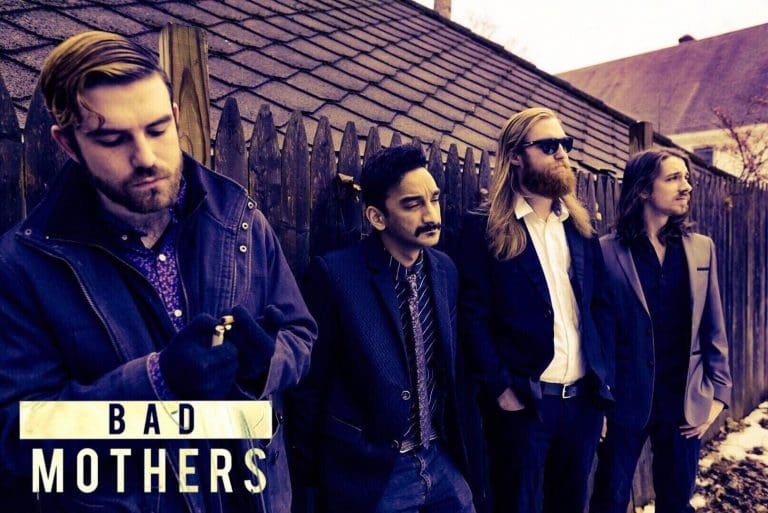
It wasn’t until February 11th 2017 that I came to know your band. My band Smittix, Sly Fox and the Hustlers, Mark Slavin and Bad Mothers did a show at The Hangar on the Hudson in Troy. I was hearing a lot of good things about you guys from people on the local scene and with the exception of the little bit I heard online I didn’t know much about Bad Mothers. Then you took the stage and I’ll always remember Matt Dalton (vocals/guitar) commanding the audience to come here, I’ve got something to tell ya; I’m paraphrasing, but it was very close to that and the crowd just instantly swarmed the stage. I was impressed and I’ve been a fan ever since. Today I am speaking with Bad Mothers front-man Matt Dalton about the good ol’ days (a few months ago when we had shows) and about the now and later.

RRX: How do you feel the band as a whole has evolved since our first encounter in 2017?

MD: We’re always continuing to refine our sound. It’s more like we’re continuing to explore the energy that we all feel for the band. In some ways we’ve stayed the same. We’re the same group of friends with the same drive and same energy. There’s a certain mood that we all sink into when we’re working on or playing Bad Mothers tunes and we’ve been continuing to explore what can come out of that space. Not to say nothing has changed. We’ve been writing new music and focusing on our plan for the rest of this year/next year.

RRX: So I am aware that some or all of you have attended St. Rose.

Photo By Bryan David Lasky

MD: Yeah that’s true, we all attended St. Rose for Music Industry. That’s actually where we all met, but the last of us graduated in 2017. I guess I can say we were lucky enough to graduate before all these closings due to the coronavirus happened. On that note I do want to take the opportunity to wish a very genuin congratulations to all of the 2020 graduates regardless of where you went or what you studied. My brother graduated this year so I’ve heard through him some of the woes experienced due to the less than traditional senior year. Nonetheless it is still a very real and very significant achievement and you all should be proud of yourselves so congratulations again, and good luck on the next chapter of your lives.

RRX: I have been a fan as I stated before and I have been spinning your music on my radio show often. Now obviously that is not the highlight of your musical career but what have been some of your biggest milestones thus far?

MD: You’re being too modest, but if I had to think of other highlights, I’d probably have to say opening for Quiet Riot at Alive at 5. We also have gone down to Summer NAMM in Nashville the last couple years for our partnership with Eventide which has led to some cool opportunities. Some of the showcases we got to play down there had us playing with people like Doug Wimbish, and Larry Mitchell which was really special for us. But honestly I feel like our biggest achievements are around the corner.

RRX: With the quarantine happening and all of our shows being cancelled what have you been doing to keep active in the virtual music scene?

MD: Yeah the quarantine hit us in a particularly frustrating way. We’ve been planning the recording of our next record for quite some time and finally had time booked in the studio for the end of March. As you can imagine that had to be cancelled which was a huge bummer, but I’m happy to say we’ve rescheduled and new tracks will be in production shortly. Outside of that we were lucky enough to have an entire unreleased live performance in our backlog that we’ve been gradually releasing over the course of the lock-down. And on top of that we filmed and tracked an additional full live performance during the lock-down, while following quarantine guidelines.

RRX: What was the last show you played and did you have to cancel many shows?

MD: The last show we played was the Almost Never Dead label launch party, which was awesome. It really was. To give a brief overview of Almost Never Dead; it’s a collective of talented local creatives who are using their knowledge of the industry and collaborative efforts and resources to lift up other artists who they believe in. We all have various skill sets and we’re all working together to help people who we believe in to grow and accomplish new things. The cool thing is it isn’t genre specific and neither was that show. We had rappers, hardcore punk, and indie rock bands all on the same bill and the crowd showed up for all of it. It really was a full venue of people there just to support the notion of supporting each other.

In regards to cancelled shows I guess we were lucky. We didn’t have too many shows booked because we’ve been prepping for the new record. Which again had to be cancelled and rescheduled. So although a pretty heavy cancellation, that was really our only one.

RRX: Recently I interviewed Brian Chiappinelli (B-Chaps) founder of Almost Never Dead (record label), he spoke highly of Bad Mothers. What have you done with the label so far and are there any future plans or is everything just trying to wait out the stay-at-home order?

Photo by William Fredette

MD: Yeah Brian Chiappinelli is the man. He’s the head honcho of Almost Never Dead and that dude works hard. We’re very lucky to have him as our drummer so naturally there’s some overlap there other than that fact that Almost Never Dead’s sole purpose is to help out other artists. In a way everything we do goes through Almost Never Dead. Our releases, our promotion, our behind the scenes work – it’s all Almost Never Dead. We’re always working in tandem with a variety of people on just about everything we do. And boy oh boy are there future plans. Yes, unfortunately they had to be put on an unforeseeable hold, but we’ve been planning for this release and what we’ll be doing with it and the band for quite a while now. The new record is coming and once it’s here we’ll finally be making some moves that we’ve been working towards for some time.

RRX: Lastly, what’s in the future for Bad Mothers?

MD: New music is on the horizon. A new music video is coming. A new full live performance video is on its way and will be available for your listening pleasure on May 30th so check out the Facebook, Spotify, etc.. Most importantly we can’t wait to see you all again in person when this is all over. Till then stay safe, and stay tuned.

The Yamaguchie Splash

0

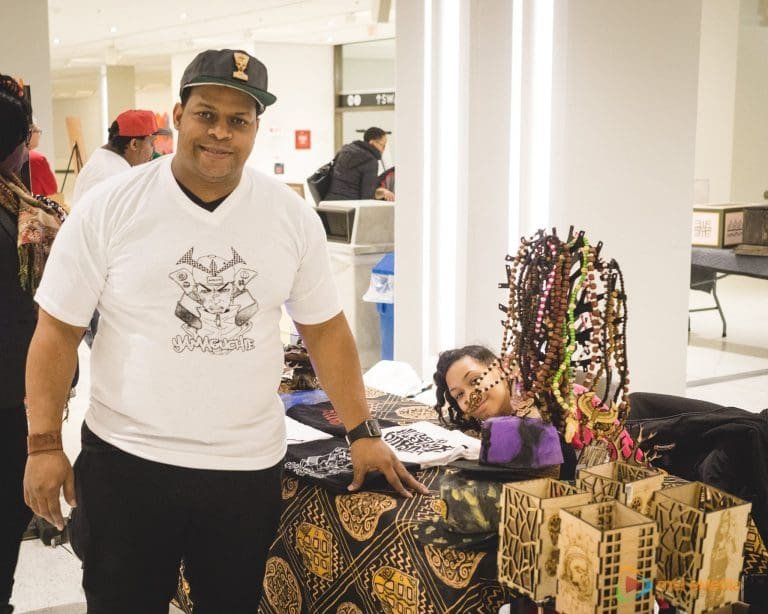
It can be said that we will never renew the beauty of the world until we can recognize the beauty and purpose of even what we throw away. And it’s the creative innovators among us who, day in and day out, determine that one man’s trash is their treasure. Is this the one who fixes everyone’s lawnmower so they don’t have to buy a new one? Sure is. But some people can take the discarded and, through an expression of raw talent, give it value it never had. This is Yamar Carter, or as many have come to know him, Yamaguchie.

I sit with Yamar, socially distanced, and we discuss all the hidden levels of Super Mario Brothers.

RRX: If I’m not doing it, I might say that woodworking isn’t really different than drawing, it’s just a hot pen burning wood. But I imagine you see it much differently. Because I’ve seen your drawings too, so you have that comparison in your head. What can you pull out of wood that you can’t with other media?

YC: The beauty of wood is it has a characteristic of an elegant, timeless feel. It has a heft to it and a durability that can be passed on from generation to generation. Also, one of the coolest thing about that material is that, as it ages, it looks even better. That’s why we enjoy using it at Yamaguchie.
RRX: When I look at wood burning or carving, it’s amazing what people can do with variations of depth. But I’m a color person – love colors. Does it have to be a trade-off when you’re wood – that you get depth at the expense of color? And if so, how do you compensate for it in your work?

YC: Well wood naturally does not have color, but if you oil up your finger joints and apply some know-how, it can be painted, and you can use tons of techniques to pull whatever you need from the material if you’re willing to spend the time. So I would say the trade off, or limits, depends on the artist working with it.

Compensation just requires time and know-how. I prefer to do color highlights where it’s needed. I call it the Yamaguchie Splash, so it retains the wood look, but you also get that pop of color…

RRX: You find things that the world has tossed aside, and you make them into the future prizes of someone’s collection. That’s an amazing power. When you’re out there on the hunt for medium, are you looking to find a piece that fills the creative need at the time, or are you looking for the piece that inspires the creative need? Or is it both?

YC: Honestly I would say both. Sometimes I find just what I was looking for, or find something I can truly bring life to in a later project.

RRX: You find the old and discarded and bring new life into it. And if it seems random to me or anyone else, I’m sure it’s not. You’re going to give a dresser character; so does that scuff on the bottom. Do you ever incorporate the imperfections, human caused ones, into your creative process? Or do you smooth that all out?

YC: It depends. If the imperfection looks really dope, or if it takes away from the functionality of the dresser. Also, I kind of randomly decide as I go along if, and what I will restore, or leave to the wind unless a customer has specific designs in mind.

RRX: A lot of your work is inspired by cartoons, video games – a lot of fun stuff, but also a little bit “digital age.” And given the materials you use, there must be some interesting contrasts and juxtapositions. Is it just you combining two of your passions, or are you saying something more with your choice of subjects on the media you choose?

YC: What I am always saying in my mind is ‘think outside the box.’ Do not put a limit on your ideas. Try different things, learn different things. That’s how Yamaguchie keeps growing, cause we never stop learning, applying new equipment and techniques.

RRX: I found out about Yamaguchie because you’re making masks. And of course, everyone is making them, but no one’s making the ones you are. They’re amazing. And I see a lot of people trying to be creative with their masks, but yours are works of art, and they’re functional. I’ll just shut up and let you talk about this. What do you say?

YC: Since we are transformative and always trying to push the envelope, me and my business partner Rashad, a.k.a. my lil’ brother, kept testing different style of masks. At first, I was just doing 3d printed masks. Then my lil bro seen the demand coming when masks became a requirement in New York state, and Governor Cuomo came to the store and donated for two masks, which attracted Spectrum news. The 3D printing took six hours to complete one mask, so I started experimenting. My partner ripped apart a foam mask and 3d printed mask that I created and married them together, and this is how we have the model we have now. But we continue to make changes, so who knows what the masks will look like later.

RRX: This is where you answer the question I didn’t ask. Any choice monologues, shout outs, household tips and helpful hints are welcome. Educate, enlighten, emote – the floor is yours.

YC: Big shout out to friends, family, and Yamaguchie supporters – we literally would not be here without your constant love. We have no advertisement normally, so it was everyone’s word of mouth that unlocked doors. So yes, we love all of you as well. Search us on Facebook. Website coming soon, look out for www.yamaguchie.com

Last thing, if you have dreams and anyone says it’s impossible, do the research, take the time, and go for it. Find out for yourself be in control of your own destiny!!!

The Trojan Bookshelf (CLASH is Here.)

Writing is the evil twin of music. Well, maybe not evil, but there isn’t a word that readily comes to this writer’s mind for the relationship. Maybe Yin-Yang? Lovers? Each borrows from the other, and each feeds into the other. But the world of musicians, bands, and venues is much different than that of writers, publishers, and retailers.

Clash Books has all the rebellion of any punk band I’ve heard yet demands shelf space in the posh studies of high society. And in the spirit of the scene we cover for you, they went DIY and “give ‘em hell!” and they made it work. And now we welcome Clash Books publisher Leza Cantoral to her new digs in Troy, and we talk to Clash author Kim Vodicka, who has a new, tasty offering.

RRX: You just moved to Troy, and with your husband, Christoph, your publishing company CLASH Books has a new home. So now you’ve come to a new environment, with its own history, its own scene; what do you think CLASH can do for the area, and what do you think the area can do for it?

LC: We looked for a long time to find the right fit for us. We wanted a place with some sort of an art scene & a youthful presence. A place with new life but not with exorbitant rent prices. We found that perfect sweet spot in Troy. I truly believe that in about 5 years this place is gonna be one of the places to be in upstate New York, as more & more artists cannot afford to live in Brooklyn or Manhattan, or simply are sick of the crowdedness & the gentrification that is destroying so many local neighborhood businesses. Troy is still raw & rough around the edges, but you can see when you walk through the center of town that it is growing. I like that it is small. I love that small town feel. But it is not too small that you feel claustrophobic, & if you do, Albany is right there for anything you could possibly need.

I really wanted to find a place with plenty of venues to chose from for readings & events. Troy has that. I wanted a place that was somewhat NYC adjacent, & it is close enough for us to be able to do events in the city as well. We also want to do a CLASH Con here in 2022. We want to show off this beautiful town & bring people to it. We want to be involved with the colleges, bringing literature to them. We have already done a reading event at The College of Saint Rose in Albany, which was great fun & mutually inspiring.

RRX: CLASH Books might be considered by some to be a “niche” publisher, but that’s hard to define that given all of the writers you’ve put in print. Not to mention that the larger CLASH team is global. If CLASH does fill a niche, who’s that niche buyer? Who would seek out CLASH Books if they only knew?

LC: We publish books that are high quality but perhaps too transgressive or experimental or genre hybrid for a larger press to feel justified in taking a financial risk for. The books we publish live on the genre borders & often blur them & flip them on their heads. I think what sets us apart from a lot of indie lit small & mid-sized presses is that we are not averse to genre fiction. We do not think something has to be either or. That meme—why not both? That’s us. We look for exciting voices in any genre. If the voice excites us & the story is good, if there is a sense of rhythm, a sense of urgency that we must read it & share it, that’s when we publish it. We are both passionate readers who read in all genres. It makes us curious & jaded at the same time. So if something gets us excited, you know it’s gonna be good. It’ not gonna be something you can find with a big 5 press or even with another indie literary press.

RRX: The music scene here is, of course, our source of pride. It’s not the biggest, but it’s tight-knit, and very local. Publishers and authors gather via emails and social media with a revolution of conventions, and there’s this great, dispersed camaraderie. Do you feel you can tap into the local energy the same way as the global energy?

LC: It has been a weird time to move. We were so excited to finally be able to interact with a community & then Covid hit. So when the world returns to its normal patterns, then yes, I think we can definitely connect locally. I think the search for exciting art is a global obsession, no matter where you are.

RRX: I love Matthew Revert as a cover designer. I bought his art book Try Not to Think Bad Thoughts, which you published. I feel like it typifies the vibe that CLASH puts out, and not just because of the cover art he does. But we can’t ignore the power of covers in general. What kind of marriage should exist between art and verse?

LC: Matthew Revert is an international treasure. I love his aesthetic. We have built a great relationship. His covers vary depending on who he is working for. With Tragedy Queens: Stories Inspired by Lana Del Rey & Sylvia Plath, that is when the real CLASH aesthetic was born. I wanted a pop art vibe & that has kinda been the vibe ever since.

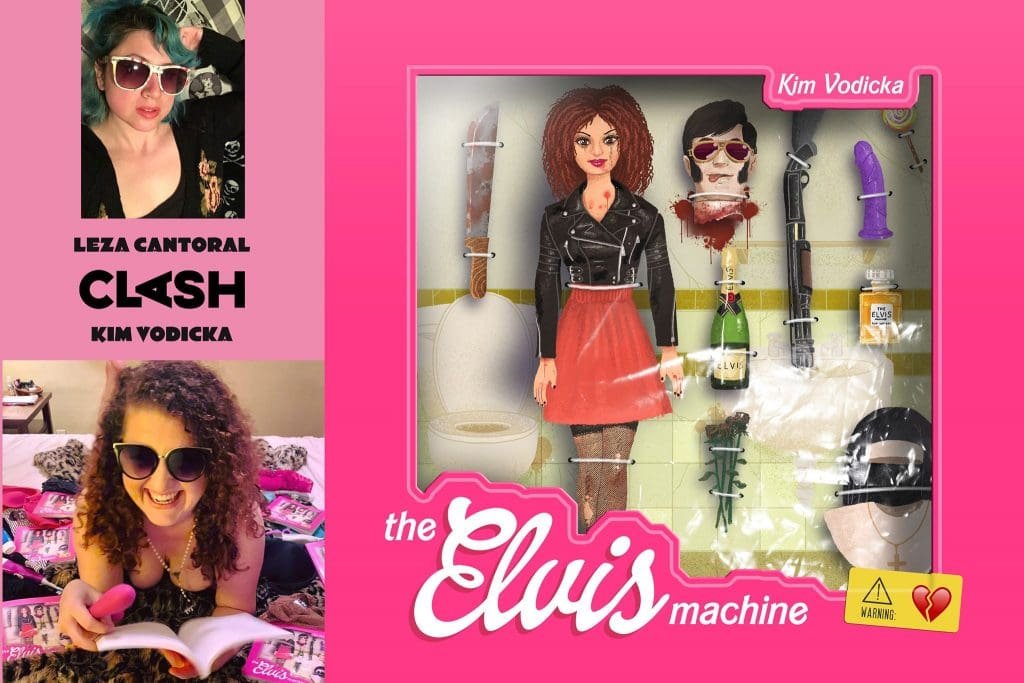
The cover art process varies from book to book & artist to artist. Sometimes the artist will read the book. For example, for Lindsay Lerman’s I’m From Nowhere, Matthew actually read the whole book & became a huge fan of Lindsay. At other times, we can just tell him the title & the aesthetic we are going for & he will use that. We work with some other cover artists as well, such as Joel Amat Güell. He’s based in Spain, near Barcelona. He is the artist who actually designed the CLASH Books logo. I trust his vision & try not to mess with it for the most part. He has a powerful aesthetic instinct. He did an incredible job designing Kim Vodicka’s cover. I relayed the themes & aesthetics she wanted to him & he came up with this incredible design of a twisted doll box set.

We like to work with cover artists who are real artists. Who have their own intuition about a cover design. We work together to arrive at something we can all be happy with.

What we want from a CLASH cover is something that will draw the eye so that readers give the actual meat of the product— the book— a chance. The cover is an ad for the book. At conventions, people constantly gush over the covers. I tell them that the cover is not nearly as great as what is inside. But you need a bright bait to lure the fish. Once they start reading, if we did our job, they will be hooked & come back for more.

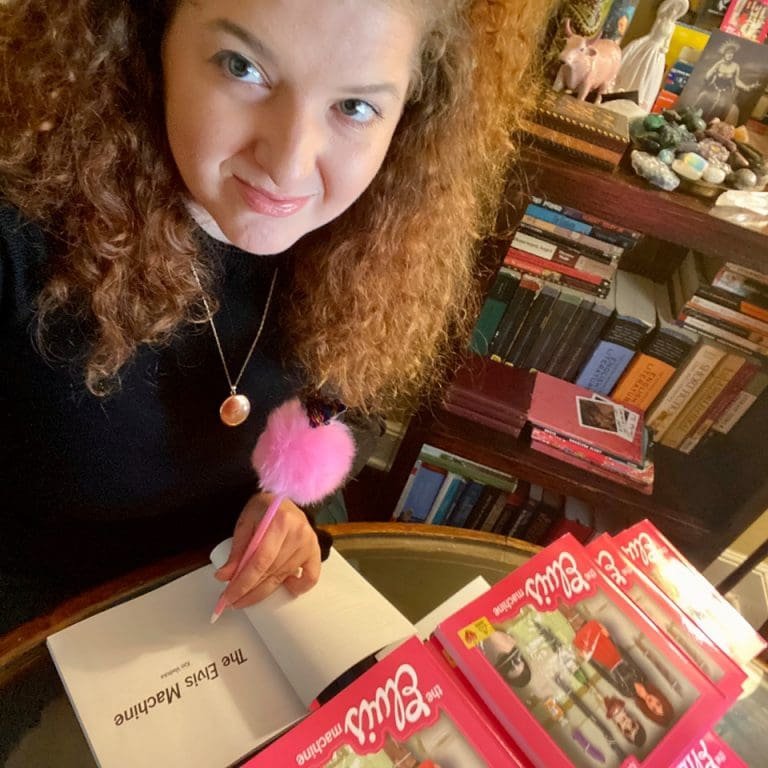
RRX: Now of course, this interview is really a publisher/author combo, so maybe I should call on Kim Vodicka, whose latest offering, The Elvis Machine, recently landed on my doorstep. Kim, can you give us a tour through the Machine, and what your vision was when you were putting it together?

KV: The Elvis Machine started with a handful of pieces and developed slowly over the course of about four years (2015-18), which were my first living in Memphis. The poems appear, for the most part, in the order in which they were written. Admittedly, I didn’t know where the project was going when I started it. Once I saw where it seemed to want to go—about five or so poems in—I had a better idea of what the next piece should look/feel like, and I allowed one to lead to the next. I’m a writer who doesn’t necessarily start with a vision or concept or anything like that. I like to let things decide what they want to be and trust I’ll get to know them and follow their flow. The whole process of writing this book was very intuitive and evolved naturally with my life throughout that time. It often felt like the poems knew more than me, and I had to catch up to them. In some ways, I’m still catching up to them.

That said, it became clear to me early on that I was writing mostly lachrymose diatribes—broken, angsty, girly sounds—about being a woman in the Bible Belt south. The material is deeply personal and in large part based on real-life interactions/experiences I’ve had here in Memphis. I started to recognize the book as potentially resonating with people, women in particular, especially with regards to romance and the pursuit of finding a partner—the seemingly omnipresent pressure to find “the one” and the obsessive/self-loathing/addictive patterns that can occur as a result. My retrospective vision for the book is that it’s a book for women/femmes. It’s not a self-help book so much as a mutual exorcism that hopefully will feel cleansing and empowering, despite its confrontations with deep and powerful darknesses. For men, anything sexual in the book is a bait-and-switch—hopefully they’ll learn their lesson. My muses have mostly been demons, and that’s at the heart of every poem here. At the same time, I needed the book to end with hope, which is why the last piece is a love poem I wrote for a woman—my best friend, actually. If there’s one thing that has made me feel hopeful in this sea of toxic Elvises and systemic misogyny, it’s the power of girl-on-girl intimacy, especially platonic intimacy.

RRX: It’s been a rough draw on writers this year. We’ve seen conventions fold, and right before that, people had to make tough decisions about whether to go to the ones that stayed open. All the talk of essential and non-essential jobs; is writing essential? If so, how does the self-promotion model change in the era of COVID-19?

KV: We’re living in a time when “essential” seems to mean “necessary for survival.” Writing is art, and art is necessary for survival, which makes it even more ironic that artists are rarely ever paid for their work, or at least not amounts that would support basic survival. Money is bullshit, and I think that’s more apparent than ever now. The system is collapsing, which is a beautiful thing but also frightening because we’re all so indoctrinated into it and put so much of our self-worth into our careers/income. So now is the perfect time to really own and step into your role as an artist and assert yourself as essential, because you are. Again, money is bullshit, but for now, we still need it to survive, so what I’ve been trying to encourage in myself and other artists is an attitude of feeling unashamed to ask for and expect compensation. Now is the time to shoot for the moon—apply for the grants, submit to the high-paying contests, hustle for the good contracts. Promoting yourself, in a DIY sense, means using the internet as a tool, asserting yourself without shame, making as many valuable connections as possible, and giving the finger to the haters. Self-promotion is straight-up hustle, always has been, but is even more so now during a time when there is virtually no other way to get the work out there except virtually. Put yourself out there—you have a captive, quarantined audience. Yes, it feels awkward and uncomfortable to push your own book/project, especially when so many people are struggling right now, self-included, but the fact remains that you, as an artist, put hundreds of unpaid hours into creating the thing you’ve created, and you deserve as much compensation as possible for that work. Even with the backing of an outstanding indie publisher like Clash Books, self-promotion is crucial because there’s only so much visibility and distribution available for small presses. In these virus times, indie authors should self-promote the house down and feel no guilt doing so. We’re providing an essential service, and that essential service could range from making people feel less alone/isolated to preventing people from committing suicide. So, yeah—art is important and essential, always and forever, and self-promotion via social media is what’s keeping it alive.

RRX: The Elvis Machine is a poetry book. A great poetry book. And I think, though I’m maybe biased here, that if anyone picks it up, they’re going to groove to it. But it is really a tale of visibility. Bands are always trying to get out there, but they can grab a stage and rock a crowd (well, they could, and will again.) Writers have always had a higher hill. So what’s your game plan been for climbing that hill?

KV: I’ve always taken a musician’s approach to my writing career. I go on tour every year, set poetry to music that I perform live, and have released spoken word/music EP companions to books (including one for The Elvis Machine, linked below). Combining poetry with music has always felt natural but also feels like making that upward climb potentially less steep, because there’s an immediacy to music that you don’t necessarily get with text or taking the podium and reading off a page. Poetry, for me, is always performance. There’s a built-in musicality to the words, even without music added, and I think that speaks to people, especially on emotional and even subliminal levels. More poets should fancy themselves as rock stars and project that image/persona. Like, why not? You’re creating something that is ostensibly supposed to move people, right? Why not milk the shit out of it? Be a ham. Make it fun, even when the work concerns the opposite of fun. Carry yourself with confidence. Be That Bitch. The hill is still high, but that’s what we signed up for, and if you don’t realize that’s what you signed up for, you’re in the wrong business. It’s a long, hard road to getting any kind of real success and recognition as a writer, so you might as well see yourself as a rock star, even if no one else sees it or may ever see it.


https://kimvodicka.bandcamp.com/album/the-elvis-machine

Deb’s Saturday Psychedelica – On Becoming a Hippie – Chapter 13


So now here we were back in my hometown, close to my family and Paul’s mother, back with our old friends.  Luckily, our time out west had narrowed our circle of friends, enabling us to choose who to hang out with more wisely.  At least, that’s what we thought.  It was true to a certain degree.  We had a family now and needed to be much more responsible than we had been in the past.  We did do a few packed gigs, but as soon as the novelty wore off, the crowds dwindled.  We were still only a duo with no plans to expand into a full band, so we eventually just jammed with friends and each other.  We continued to expand our minds since we had stopped expanding our horizons, at least for now, but always made sure that our daughter, Jessie, was cared for by someone else at those times.

We lived in a three-story apartment building with six units.  There was a teenaged girl on the first floor who became our regular babysitter, until we discovered her stealing our pot.  There was also a wonderful Irish woman next door with a small child.  It was a great place for Jessie to grow up.  We could walk everywhere.  There was a firehouse nearby that would keep her fascinated for hours.  There was a playground and a library which were a long walk but doable.  Of course, the cost of living was higher at that time, so I went looking for a job.  We knew that childcare costs would be ridiculous and, although my parents lived only a few blocks away, my mom was not willing to help out.  She wanted to take Jessie on her own terms at her convenience.  My dad wanted to see her much more than that, but he wasn’t the one doing the work, so Mom always won out.

I understood why she was reluctant.  She’d become a mother when she was twenty-two.  I did the same.  My brother came almost four years later.  Life for my parents was very stressful.  We lived in poverty because, although my dad had a very prestigious job and had to look the part, he got a low salary for the work he did.  His job involved hobnobbing with politicos, lawyers and judges, so he needed a good suit and a good-looking car.  My mom had to have new dresses for events they attended while my brother and I wore hand-me-downs.  Mom also worked.  In the beginning, she worked nights, leaving Dad to care for us in the evenings. Once we were in school, she worked during the day always getting out in time to meet us at home when school was over.  They did manage to eventually buy a house because Dad’s parents helped them.  The house they bought was in shambles and needed lots of rehab, which Dad did mostly himself.  This meant that I grew up in a construction zone for a large part of my childhood.  When Dad finally started making a livable salary, Mom got pregnant again.  I was sixteen.  When Jessie was born, my sister was only six.  Mom was not really in grandmother mode yet, but she did her best, sometimes taking Jessie during the day while my sister was in school.  She didn’t like the idea of being a grandmother.  She thought she was much too young and insisted that Jessie refer to her as “aunt.”  So, Jessie started calling her Aunt Grandma.

Paul and I had always smoked openly in front of Jessie.  We didn’t believe in hiding it because we didn’t think it was wrong and shouldn’t be illegal.  We were young and naïve and didn’t realize that she might inadvertently make trouble for us.  The first incident was as we were leaving our apartment one afternoon and she suddenly blurted out, “Oh wait, I forgot my dope!”  She said this just as our Irish neighbor was also leaving.  Thinking quickly on my feet I said, “Oh yes, Dopey Dolly!  Let’s go back in and get her.”  The next uncomfortable moment was with my mom.  While living in Santa Cruz, we had found an old bamboo bong with an inscription on it in Chinese characters.  We quickly found someone to translate it for us.  It was a legend about the power of three, so we decided that, from that point on, we would only do three bong hits at a time.  Jessie was enthralled with the bubbling of the bong, so we let her make bubbles when there was no smoke in it.  One day she went grocery shopping with my mom at the local small market.  When Mom dropped her off, she seemed terribly upset.  She confronted me almost immediately saying, “I can’t believe you’re letting your baby smoke pot!”  What!? I guess that, while they were standing in the checkout line, Jessie suddenly said, “Hey, Aunt Grandma, do you smoke pot? I do three bongs all the time.”  I had a lot of explaining to do but did manage to talk my way out of it.  Jessie even insisted on demonstrating.

Compared to the heavy drug scene we had left, the one we came back to was very tame but still fun, nonetheless.  There was a new dealer in town who was a hippie with older kids.  His girlfriend was not much older than his boys.  To us, he seemed like an old man, but he was probably in his mid to late thirties.  He had an old beat up sedan that he let his kids paint.  There were slogans like “listen to your mother” and others and lots of crazy psychedelic designs.  His house was on a dead-end road and was constantly filled with partying people.  I didn’t feel comfortable bringing Jessie there, so Paul and I always went without her.  We had our babysitter living right in the same building, so we had the freedom to go out any evenings we wanted, and we could afford the cost because we were both working.  One time, we even got a ride from the cops to his block.

It was a massive snowstorm, but there was a party scheduled, and we’d already arranged our childcare.  The sitter’s mom was fine with her daughter sleeping over.  It wasn’t like anyone was going out anyway.  There was no way to drive, so we set out on foot.  It was an exceptionally long haul, but we were determined.  However, by the time we got halfway there, we were frozen and exhausted from battling the wind and driving snow.  We heard a car coming and decided to stick out our thumbs.  When the car stopped, we realized that they were local police.  They asked us why we were out in the storm and where we were going.  Paul told them that we were on our way to a “snowed-in” party and certainly didn’t want to risk taking our car out.  They shook their heads saying, “Crazy kids!” and gave us a ride.  We had them drop us off at a house a couple of blocks away, so we didn’t bring attention to our real destination.  They were genuinely nice and cautioned us to be careful making our way back home.  We made it home before dawn and tired waking our sitter to send her home.  She wouldn’t wake up fully enough to go downstairs, and that’s when we realized that most of our pot was missing.  It was the last time she worked for us.

Because I didn’t have childcare during the day, my employment options were limited.  I needed a job where I could bring my child.  My first job was as a school crossing guard.  That didn’t last very long.  I was assigned to a busy intersection near the downtown area.  It was hellish trying to cross the kids during rush hour with angry drivers honking their horns, screaming at me to get out of the way and even sometimes trying to run me down.  It didn’t feel like a safe environment to have my child in.  The next job I had was driving a school bus.  I loved the training in the big buses, but they ended up giving me a short bus.  The drive to work was nerve-wracking.  My little white Vega had brake problems.  Actually, the brakes were so bad, I didn’t really have brakes at all and no money to fix them.  The walk to work at 6 am was too far with a small child, so every morning I drove the car to the top of the hill leading to the buses and waited until the train went past then slowly rolled down the hill over the tracks and coasted to a stop in the parking lot, often stopping by gently hitting a pole.  Occasionally the train would run late and, although I was tempted to risk it, I never did.  I always waited for the train.

I enjoyed driving the bus and mostly enjoyed the kids until I got assigned to drive the most disturbed kids … with no aide on the bus.  One little girl tried to dart off the bus every time I stopped to pick up some else.  The few times she got away, I had to flag down a stranger to chase her and bring her back.  I couldn’t leave my bus full of kids unattended to go running after one child.  Another little boy took off every item of clothing one at a time, throwing them out the window until we arrived at school with him completely naked.  For a short time, I had a boy with a broken leg who came with an aide.  That made all the difference in the world.  When he went back to his regular bus and I was left without any help, I complained – again.  They assured me that they would work something out.  A week later, I got my new assignment.  I was being given a big bus! (hooray!)  the woman who had been doing that route, to and from the projects, had been attacked by the high school students on the bus and was hospitalized.  They needed a replacement.  When I balked, they assured me that they had put a radio in the bus so I could call for help, if I needed it.  Needless to say, I quit.

I was naïve in many ways.  I had always been brutally shy, probably because of the threat of violence in our home every day.  I think I was more terrified than shy.  As a result, I never really had friends until Junior High School.  Then, I started hanging out with a fast crowd.  We all smoked our first cigarettes in the fall of seventh grade and started showing an interest in boys.  My Junior High School went through ninth grade but after eighth grade, my parents decided to take me out of public school and enter me in a private Catholic high school.  Ugh!  I didn’t know anyone and had just been diagnosed with scoliosis and encased in a leather a steel back brace that stretched from just under my chin to just past my hips.  What a way to start a new school.  I was bullied and ostracized and had no experience with the opposite sex until college.  I had no idea how to flirt.  I didn’t even recognize when someone was flirting with me because, who would do that anyway?  I believed I was unattractive and was eternally thankful to have found anyone who could tolerate me.  Paul, on the other hand, was a big flirt.  Because he was so into flirting and interested in other women, he assumed that I felt the same.  I got in so much trouble with him for hanging out with my male friends while he was at work.  It never even occurred to me that he would be jealous because who would want me?  We were just friends.  We started fighting incessantly, mostly over one man in particular.  I guess I should have realized something was askew when this guy asked me to slow dance with him one night at a party.

We had always argued, but this was different.  Paul was working two jobs, and I had just quit mine.  The only time we had off together was late nights and Sundays, and he slept most of Sunday trying to catch up.  He hated his day job as a cook for a school cafeteria.  There were too many unreasonable rules and regulations for him.  His other job was late afternoons, evenings and Saturdays.  We had managed to buy a car but were just barely surviving in spite of all our work.  Our relationship was starting to fall apart, and we knew we needed to do something.


Xperience, June 2020 Issue – the Digital Edition!

Well, here it is: the one-and-only, no phony-baloney, sure-fire way to keep you glued to the pixels of your favorite media consumption device – it’s the June 2020 issue of Xperience, Digital Edition.

Xperience June 2020 – Digital Edition