Home Blog Page 566

Lil’ Baby Suplex -Interview By: Liam Sweeny

0

Music soothes us, and when we’re having a lousy day, it can be our sole source of healing. But it can also be a steam vent. It is always an outlet for the performer, and sometimes it’s the only way we have of understanding the pain of someone we can’t see eye-to-eye with. And we get what we seek from music.

Lil’ Baby Suplex speaks his truth with flow and meter. He doesn’t make his sound to order, and he may not be out purely to entertain the masses. He has something to say and his voice adds to the choir of people that make up the grand orchestra that is Albany.

RRX: When I start interviews, I do as much research as I can. Cool part of that is it mostly just means rocking out to people’s jams. I’m rocking out to ‘Drinking,’ right now. You don’t hold back, I mean not at all. Okay, so yeah, you hold back just enough to keep it creative. It’s good to let it all out. But is it a double-edged sword, do you think?

LBS: I always try to be as authentic as I can in my music, I feel like people can tell when you’re trying to bullshit them. It’s definitely tricky because you want your music to be real as possible but at the same time you don’t wanna expose too much ya know you wanna leave certain things for your fans to find out as they keep f***g with you and growing with you

RRX: I love ‘Lil’ Baby Suplex.’That’s a cool-ass name for a rapper, because you never expect a wrestling reference. It’s like the RZA being hooked on old school kung fu movies, and suddenly you got Wu-Tang. So, was it from a love of wrestling? What made you decide on ‘Little Baby Suplex?’

LBS: It definitely came from wrestling. I’m not sure what it was but I’ve always had a love for wrestling as long as I can remember and I try to keep that in my music whether it’s references or just the persona I put on when I’m outside. I’m pretty sure one of the homies called me Suplex randomly and it just fit too well not to use it. 

RRX: As I listen, there’s talk about drugs, especially things like Percocet, opioids. And you’re not taking any stance on it; it’s just in the music. In some cases, you’re talking about the burden of it, and sometimes it’s just a reference to our general culture. So, I’ll ask what you think about the role drugs have in music, and in life?

LBS: Drugs are a tough topic because I feel like they’ve had a big part in music as a whole but they’ve also been a lot of musicians’ downfall so it’s a very fine line. I feel like it’s the same in life. You could do drugs and have a sick time or you can do them and they’ll ruin your life. You gotta be smart and know what’s best for you. I don’t try to pick a side on it and I’m not trying to teach anyone a lesson. All I can do is be honest about how they’ve affected me and my life, good or bad. People just need to be smart about what they put into their bodies.

RRX: I have always had a general rule in my writing; don’t write about my life but come as close to it as possible. I say that because as much good as there is to doing it, there’s the potential for it to blow up in your face. It’s like people know you until they know you too well. With your music, how much of your real life do you allow in?

LBS: That’s back to the authenticity I try to bring to my music. I really don’t hold anything back when it comes to subject matter. I’ll talk about anything and if people wanna judge it or get offended so be it. I feel like when you’re your true self in your music then people will get that and when they meet you in person it’ll make even more sense you can’t create a real connection with the listener if you’re not talking about stuff they been through or they deal with day to day or even just what they wanna hear that’s how you create real fans you gotta be real and appeal to your market

RRX: You have a following, a good scene in Albany. I heard, and correct me if I’m wrong, that you have a lot of friends in the skater scene around Empire State Plaza. And it’s cool for me to ask people about the scenes they’re in, because I’m always finding overlaps. What would you say about the people in your scene that sets them apart?

LBS: Well, I like to be around people who can blend with any group so I would say my homies are a part of a whole bunch of different scenes and we can really make any scene our own. That’s what we’re bringing to the game and that’s what we’re doing everywhere we go and people reciprocate that energy every time.

RRX: As I said in one of the previous questions, you don’t hold back. You rap about drugs, you rap about guns, and it’s a part of life, it is what it is. But there are a lot of people who hear rap and hip hop and think it’s a bad influence on people. Never mind that metal lyrics can be just as bad in different ways. What’s good about the bad?

People say that because they don’t have to deal with it in their everyday life and they’re scared of it cause they don’t want it to effect their little bubble where I’m from we face that stuff head on and j feel like rap music in particular was always kind of similar to the news you hear what’s going on it different cities around the world you hear the new slang and you’re seeing the latest clothes in the videos so I feel like talking about the reality of what’s going on outside is the least I can do. Otherwise, people who know me in real life would know it’s fake. I feel like when you’re doing anything artistic your environment plays a big part in how it comes out so you gotta let people know.

RRX: This is where you answer the question I didn’t ask. Remarks? Comments? Educate, enlighten, emote – the floor is yours.

LBS: Final Remarks: I really appreciate you guys for giving me this opportunity and showing me love on your platform. The questions you asked were sick. I can tell you really care about what you do that made me more excited than I already was. I just want everyone seeing this to know I’m in a great space and I’m ready to make everyone who believed in me the last few years to know it’s our time but I’ll keep it short and sweet. BLOOD ON THE DANCE FLOOR coming soon. The most handsome rapper is back. Be ready or be quiet.


“Elvis” Reminds Us of An American Icon -Film Review By: Eric Gustafson

0

At the peak of his fame, Elvis Presley was perhaps the most recognizable individual on the planet. Just as you may conjure Charlie Chaplin in your mind’s eye using only a bowler hat, a toothbrush mustache, and a cane, it is easy to picture Presley with no more than a quiff, a curled lip, and a high collar. He remains sufficiently alive in the cultural memory to be a mononym. Nobody ever asks, “Elvis, who?” Yet Presley has faded from the forefront of the world’s collective consciousness. Reminders of his existence are no longer constant and inescapable.

Perhaps that is inevitable given he died almost 45 years ago, in August 1977, while his contemporaries of a similar stature have continued performing. More than 50 years after their split, the Beatles have retained much of their eminence. Consider, for example, that Paul McCartney is headlining Glastonbury festival this year. Bob Dylan, a Nobel laureate in 2016, is earning plaudits for his latest work. The Rolling Stones are in the midst of a stadium tour. All those acts, or their principal members, have had the advantage of living on long after Presley died. John Lennon is an exception: he died only three years after Presley, yet is frequently invoked and commemorated.

Presley may be the best selling solo artist of all time, but that feat leans heavily on the physical-format era. He ranks only 24th on Spotify’s streaming chart of legacy artists, behind other departed acts including Nirvana, 2Pac, and Led Zeppelin. What is more telling is how relatively little he is seen. In the 1990s he was, in that overused and misapplied word, iconic – an object of what amounted to religious worship. He was also a go-to reference for cartoons, film, television scripts, and comedy punchlines. Elvis impersonators were an industry. A film of 1992, “Honeymoon in Vegas”, featured an entire planeload of them dropping from the sky on parachutes in a symbolic display of both the singer’s godlike ubiquity and his descent into caricature.

A new film not only seeks to place Presley front and center once again but also, if inadvertently, offers clues as to why he lost that spotlight in the first place. “Elvis” is directed with typical over-the-top brio by Baz Luhrmann. The Australian filmmaker has a noted flair for lavish yet sincere camp, and it chimes perfectly with Presley’s own sensibility, which could be gaudy and overblown, but was never less than heartfelt. It is this last quality that Luhrmann has sought to restore to a superstar who became widely perceived as a self-parodic joke in his later years and even more so in his cultural afterlife.

“Elvis” is three different films brought together into a whole that, while unwieldy, is spectacular to look at and not for a moment boring (again, much like Presley himself.) One part is an exploration of the relationship between Presley and his manager, Colonel Tom Parker. Parker was a former carnival worker who used every bit of that job’s manipulative tradecraft to promote and exploit Presley. In a delicious turn by Tom Hanks, Parker is a melodrama villain and an unreliable narrator.

In the film’s second strand, the story takes the form of a conventional showbiz biopic. Happily, Austin Butler’s portrayal of Presley – as a shy youngster gifted with otherworldly beauty and a talent like bottled lightning – is strong enough to withstand the clichés of the script. “Elvis” acknowledges Presley’s deep debt to black music with tableau-like scenes showing the performer meeting a host of African-American proto-rock ‘n’ roll pioneers, including Arthur Crudup, B.B. King, Sister Rosetta Tharpe, Little Richard, and Big Mama Thornton. However, Elvis’s relationship to black music is more complicated than either this hagiographic account or the opposing view of Presley as no more than a musical thief, guilty of cultural appropriation and, in the words of Chuck D of Public Enemy, a “straight-up racist”.

But it is here, with the music, that “Elvis” finds its triumphant third aspect: as a hyper-real concert movie. Luhrmann has long excelled at extravagant performance set pieces, and in “Elvis” the viewer truly feels the jolt of electricity that Presley sent through audiences – and through society, culture, and the world – when he stood up to sing, play, and gyrate. He never lost this preternatural charisma, this ability to enrapture a crowd, even in his final days, bloated and betrayed, with death visibly approaching.

Why, then, has Presley become somewhat marginalized? The answer lies in the self-same music. Though he is heralded by cultural historians as the originator of pop modernity, to the ears of younger listeners there is something antiquated about him. “Elvis” correctly depicts Presley as a roots musician in essence. The character at one point remarks that rock ‘n’ roll is really “just gospel and rhythm & blues”. For all their thrilling energy, his songs do indeed feel closer to the traditional modes they drew on – folk and country as well as blues and gospel – than to the genuinely modernist revisions that succeeded them. Contemporary musicians working outside of roots forms today imitate and repurpose sounds from across the decades, but seldom do they reach back further than the Beatles. The only Presley track you’re likely to hear in a broadly retro nightclub set will be a remix of “A Little Less Conversation” from 2002 by Junkie XL.

This gap affords Luhrmann’s film an opportunity to define Presley for generations to whom he has never been a pivotal figure. For some older music fans, familiarity with Presley once bred a certain degree of contempt. “Elvis” offers a chance to marvel at him all over again.

The Prog Digest (July 2022) By: Klyde Kadiddlehumper

0

Well now. When someone says the word Prog (more formally Progressive Music/Rock) – what comes to mind?  A bunch of crazy people noodling around in some incomprehensible musical space?

Perhaps Rush. Perhaps ELP. But where did this all come from?

Let’s take a step back.

Mozart was considered progressive and, as it was once said, there were too many notes.

Drumming – we can settle on drumming, right?  The first progressive drummer I heard was Gene Krupa.  Oh, wait, that was the 40’s and 50’s.

Well…. screaming guitars – oh no, hang on – Robert Johnson.  All this time later, we remember him not only for his playing, but for the fact that he sold his soul for the talent.  Would you?

Progressive is a state of mind and a state of time.  

We live in the age of the autotune – the single most evil invention ever.  Yup, beats the daylights out of the atomic bomb or, maybe, My Pillow.

Progressive music is not new…Miles, Monk, Mingus, ‘Trains were all progressive.  Hell, ”Bitches Brew” is still the gold standard.

Make no mistake, there are plenty of hacks – as opposed to Steve Hackett, who is a bloody genius.

Being progressive means taking risks and pushing the boundaries. A couple examples come to mind that you may not realize are pretty darned progressive.

There is a story about the late, great Chick Corea. As it was told to me, while Chick was in music school, his mentor/professor went on sabbatical and Chick had the keys to his office. Of course, the professor had a grand piano in said office. Chick would often practice on that piano.  Well, the professor comes back, goes to his office and starts to play. The cacophonies sound that the piano made rattled the man. Turns out Chick had retuned the piano in quarter tones and didn’t tune it back. Amongst the most gangster progressive acts EVER.

Let’s take another example. Movie themes are not, usually, what you consider progressive. Think back to the original Michael Myers film – “Halloween”, starring Donald Pleasence and Jamie Lee Curtis (best horror film screamer ever). The theme is so progressive – and fittingly – written in 13 time. Put the tune in your head and then count to it like this: 1-2-3, 1-2-3, 1-2-3, 1-2, 1-2.  Add it up – 13.  Now that you have that earworm – you are welcome.

There are many people and bands who we can call progressive.  The category is interesting.  Heck, one of the most prog bands out there won the first ever metal category at the Grammys…if you don’t know, look it up.  Let’s just say that the winner in that category was not Metallica.

Look forward to discussions about bands, various types and the people who have cross- pollinated.  The interesting names and styles.

In the meantime – be well and don’t let the mainstream get you down.  There is more out there than you might imagine (unless, of course you are already a prog fan).

Till then…

COLLAR CITY CRAWL -By: Jordan Lanegan

0

Odds are, if you aren’t a New York native, you’ve probably never heard of Troy. Even if you are, there’s a chance you may not have. But, if you’re anything like me (who’d never been to the East Coast at all until three years ago), when you first thought of New York, what you imagined was N.Y.C. — the razzle, the dazzle, the glitz and the glamour. You imagined those cheesy rom-com moments that we all hate to admit that we kinda, sorta, really (really) love. 

You know — the dancing in the pouring rain with some random heartthrob in the middle of Times Square (who, come morning time, will not be the 10/10 you remembered) as a cat-sized rat scurries between your feet diving headfirst into an overflowing, godforsaken, downright dirty pile of sidewalk trash and a pissed off, overworked, underpaid taxi driver lays heavy on his horn screaming at you, the rat, and the 4/10 to get the hell out of his way —  type of moment. 

A wholesome moment. A romantic moment. A moment you surely won’t forget, despite your best efforts.

I digress.

Needless to say, New York is all that (unfortunately), but it’s also so much more. 

When I moved here three years ago, I was floored (and so, so, so) pleasantly surprised to discover that New York was way more than what you see in the movies. Don’t get me wrong, N.Y.C. is great and all, but Upstate is a whole different vibe, in the very best way possible. 

At this point, I suppose I should introduce myself. For those of you who don’t recognize the by-line, hiya! I’m Jordan. If you’re a frequenter of Troy’s bar scene, or an industry worker yourself, you may know me as the bartender from Footsy Magoo’s, but for those of you who don’t, here’s a little about me:

I’m 25 and I’ve been all over the United States (48/50). I’ve been to Japan (and dove with whale sharks). I’ve backpacked alone through Europe (London, Paris, Amsterdam, Frankfurt, Munich, Venice, Croatia, Rome). I’m, as they say, a military brat (both parents — Army). And, as a brat (proudly), the urge to pick up and move after two or three years in one place is practically ingrained in my DNA. 

But for the first time in perhaps ever, that innate urge has yet to rear its head. Something about the little ol’, blip-on-the-radar, quirky city of Troy has somehow managed to capture my heart and hold my interest. And that is for many reasons. 

For starters, it has good food (like… really good food). It has history (like… a lot.) It has brownstones (with vines and moss crawling all over.) It has stoops for days (stoop-kid for life.) It has picturesque parks (and hidden gems you’d never believe.) 

But, above all else, it has the best (and weirdest) people around. 

Whether it’s the fourth street sidewalk-swindlers relentlessly asking for a cent or a cig every other second, or the newest bunch of small business owners opening seemingly every other day, or the industry workers and regulars servin’, boppin’, and supportin’ all around town — the Collar City characters are what make Collar City what it is. 

Of perhaps all the places I have lived, Troy just may be one of my favorites. Call me crazy (because I probably am), but there’s a certain energy and magic to this little ol’, blip-on-the-radar, quirky city of Troy that is uniquely special.

And the raddest part about it? The best has yet to come. 

Stay tuned.


Xx, 

Jordan

Wanna Hear Some Strange? -By: Johnny Mystery

0

Time to geek out with some songs you’ve probably never heard. Most obscure, some were hits, all included for reasons which will be explained as we go along. Every one of them can be found easily online. You should give them a spin at least once because life is too short to listen to music that sucks.

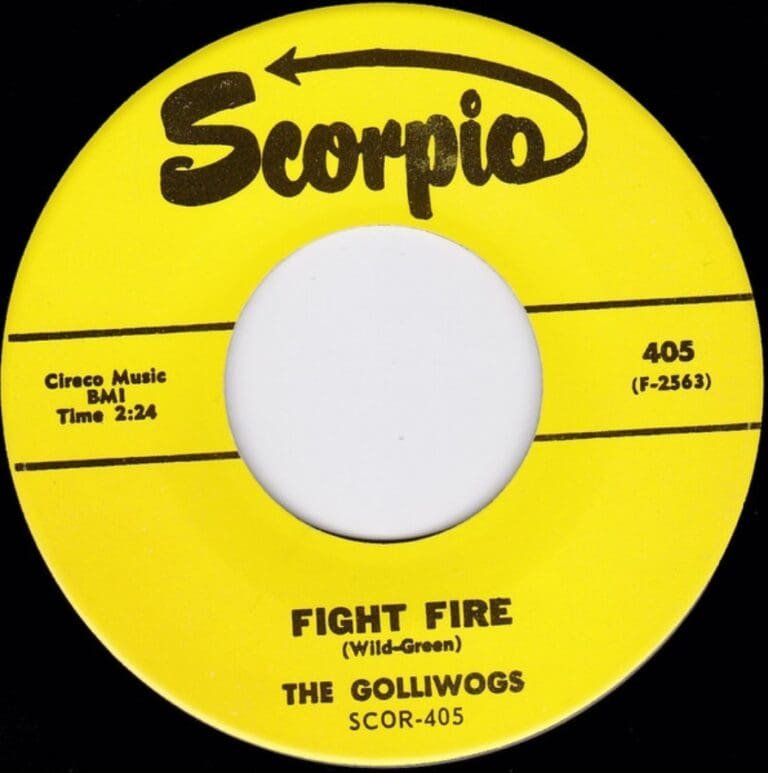
“Fight Fire” by The Golliwogs: Before they were Creedence Clearwater Revival they were The Golliwogs. So what’s in a name? Duh…they had hits as CCR. John Fogarty and the boys released several 45s on Fantasy Records before becoming CCR and this one is the best. It has the Creedence feel to it and Fogarty’s vocal is in top form. This is included on the Pebbles box set, which is a must for all garage fans.

“White Lies and Blue Eyes” by Bullet: Hey, it’s a hit! Went top 20 in the Fall of 1971. Often cited as one of the first power pop records. Probably the first power pop U.S. hit as the great Badfinger from England was also kicking out power pop around that time. Dig that horn arrangement! Songs like this were getting fewer and fewer as the charts were being overrun by the likes of The Carpenters, Bread and Olivia Newton John. No wonder we went from AM to FM….

“Captain Groovy and his Bubblegum Army” by Captain Groovy: This is the fully produced theme song to a cartoon that never happened, and I so wish it did. Who knows what it would have been about? Not me but I’ll bet it would have been trippy. Released on the ill-fated Super K label about 1969-ish, it is one of the heaviest bubblegum records ever. Full of fuzzy guitars, massive organ and swirling riffs. Captain Groovy’s gonna take you away. Yeah right, I wish….

“Hey Joe/Midnight Hour” by The Haywood’s  It’s a double sider by The Haywoods….yes, those Haywood’s…as in Bo Donaldson and the…as in “Billy Don’t Be A Hero” AM gold. Not a great record by any stretch but still better than anything they made after they sold their soul to the company. Besides, you gotta respect a band that puts out a record of two of the most played tunes of the 60’s. The band showed some respect to The Leaves by doing an arrangement of “Hey Joe” just like theirs. I never even knew about this record till I learned that Bo himself found a few copies kicking around his attic and he was selling them for 500 clams each. Hey Bo, what’s the deal? Have the Billy royalties dried up already?

“Midnight Hour” by The Wanted: Now here’s a version of “Midnight Hour” that’s pretty damn cool. This Detroit band came up with their own intro and bridge that truly makes it their own. I’ve got quite a few versions of this classic, first done by Wilson Picket and it’s become one of my favorites. I first found a nice scratchy copy, (I like scratchy, builds character), on A&M Records during one of my marathon crate digs down at Jimmy’s shop on River Street. Big smiles came up when we slapped it on the turntable as this was a find! Looking it up, I found it was first released on Detroit Sound Records and even that copy was selling for Chicklets. In other words, it’s a bonafide rare obscurity from 1966 that won’t break the bank.

“In The Pines” by Tiny Tim: You wanna talk strange? This is the one. I have no doubt you’ve heard Nirvana’s version, which is commonly known as “Where Did You Sleep Last Night.” Blues folks have also heard the magic 12-stringer fingers of Leadbelly belt out his haunting standard. But I guarantee you’ve never heard anything like Tim’s version. A single acoustic guitar and Tiny’s unmistakable vocal, kicks things off as it quickly swells into a “House of the Rising Sun” feel. The creepy organ solo is outstanding as Tim belts out the final lyrics then goes on to have a nervous breakdown as the organ drones. This song straddles the genres of blues and Southern Gothic. You come on board thinking it’s going to be a novelty song, but you’ll come away with a whole different perspective. It’s quite the feat from a cat who spent his life covering music from the Vaudeville era. Ironically, it’s a serious song made by an artist nobody took seriously. Found this on a two CD compilation from Red Bird records. As if things couldn’t get weirder.  Now get out and hit the bins!