Home Blog Page 266

Joshua Gruft – Paper Moon Books

0

Joshua Gruft – Paper Moon Books by Katie Hull.

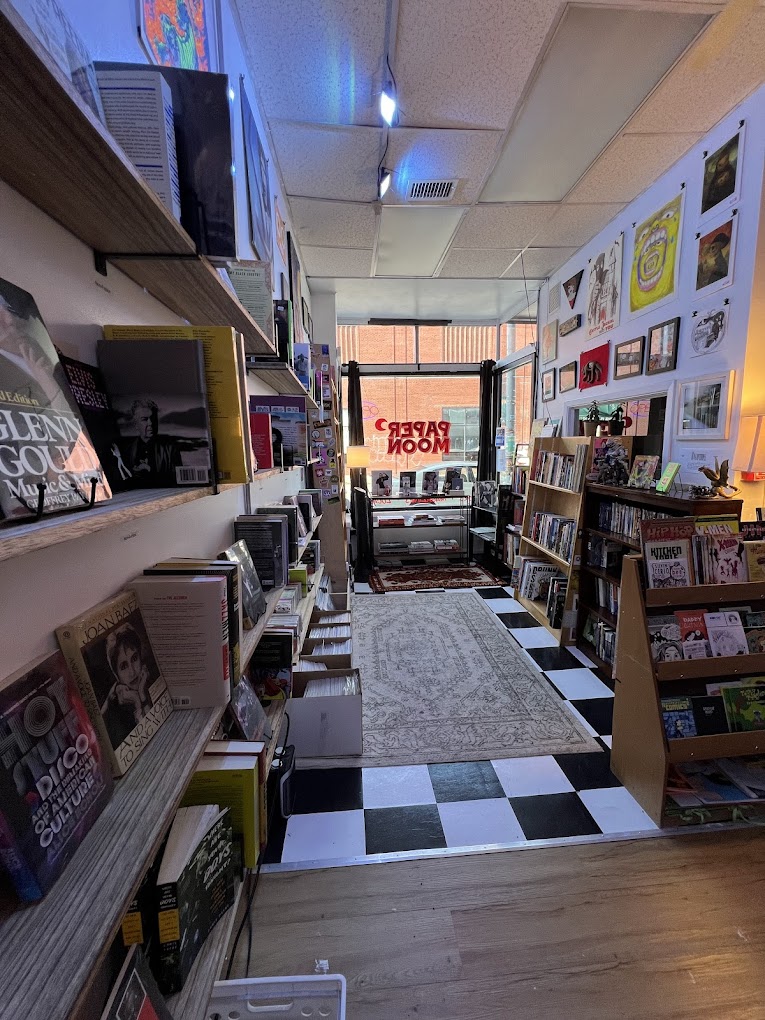
As a third generation Troylet, I have witnessed numerous small businesses come and go in this scrappy town. When I was a teen one of my favorite things to do was to ride the CDTA from my home in North Troy to the small shops downtown.  It is always difficult to see a place you really enjoyed, end up failing. Word of mouth works wonders in a town this size. I discovered this gem of a store and decided I would do whatever I could to make sure it was not another story of a business that came and went as fast as it appeared. It is a privilege to recommend a business you believe in. In March 2024, Joshua Gruft opened Paper Moon and it quickly became a place I believed in.

Paper Moon is a blink-and-you’ll-miss-it indie bookshop located on 4th Street in Historic Downtown Troy. Showcasing a variety of local, national and world talent amongst numerous mediums, Paper Moon is a vibe, not just a destination.

Tapping into a new scene, the evening crowd, with all shows ending around 10pm. This convenient and brilliant scheduling adds to the normal happy hour only offerings by hosting intimate and experimental events of all kinds. These events are offered for little or no cover charge, removing a common barrier in the current economy.

Paper Moon reminds me of not knowing how much you were missing out on something, until you get to experience it. When I was still in High School, I would occasionally purchase Vogue UK at the Russell Sage College bookstore. Prior to March that was really my only experience with foreign and unique literature.

If I have kept you this long. You might be thinking, “Troy already has a bookstore.” We do have businesses that offer great selections of classic literature and New York Times

Bestsellers, but that was what I was tired of reading. Troy desperately needed a place that shakes things up a bit. A place where creativity thrives and is encouraged.

On an eerily warm fall day, I recorded and conducted a semi-spontaneous interview with the owner, curator and all-around creative genius behind Paper Moon, Joshua Gruft.  Gruft requires no introduction as he is widely known in the Capital District music scene. Joshua is a multi-talented musician who has been performing and organizing shows since 2001. In addition to his impressive instrumental abilities, he has a large following DJing under the name, DJ Mercy.

Wrapping up a short synopsis on an impressive creative and professional resume. It is important to note Gruft’s work in independent magazine publishing. His first ‘zine endeavor, Hyper Saturation, was cranked out on a bi-monthly basis, self-funded, for an impressive two year run. His newest printing project, Paper Moon Magazine, has been equally well received. Three issues have been printed, all three selling out. The first printing of the latest issue sold out in just one week.

As the sun slipped behind the slowly decaying atrium, we dove into a conversation on the little things that set this small business apart, in a big way. Josh got candid on inspiration, trusting your intuition and The Golden Rule.

During the interview Josh managed to sell books and hang art for the tiny art show he is collaborating with other local businesses on, while perched atop a 6-foot ladder. Proving that he is learning how to master this whole, multi-tasking thing.

RRX:What is the first piece of literature you remember seeing?

JG: My first encounter with print, media, books, magazines- was at Colson’s in downtown Albany. A corner store where they had a ton of magazines. They used to have comic book spinner racks, so, yeah I used to get comic books and magazines from that place for as long as I can remember.… just like Spiderman, Superman, X-Men, I was like 6 years old in the early 90s, so that was like 92, Spiderman was pretty bad ass. So I was definitely inspired by that. It was just a great era to grow up in, because there was pretty much comic books everywhere. In the corner store, at the drug store – there was just comic books everywhere you looked. I never really followed one series, I kind of just picked up random covers, like whatever I thought looked cool. And then I would just have stacks of them in my closet, I would just be able to go in there at night and just fall into comic book world.

RRX: So then would you say that your first experience with literature was also linked to art as well? Viewing the comics at eye level as a child, did the art grab your attention? I mean at some point you would have been unable to read. Do you think that art and literature, the arts in general, do you think they all kind of are connected on a certain level?

JG: No, definitely, you are right, I was attracted to these comic books not for the stories really, just for the art. There was just, yeah, that is what brought me into the world of literature. I was just inspired by these amazing artists.

RRX: Do you enjoy working for yourself?

JG: Yeah, I definitely like being my own boss (laughs).

RRX:Who is someone that you look up to, as far as work ethic? Where does yours come from? It is hard to be your own boss, because of the amount of discipline it takes. Where do you think you get that from, yourself, or have you had some good influences?

JG: It comes from years of doing a lot of different creative projects and just kind of developing over time, a work style that works for me.

RRX:As in you don’t over commit? Would you say you can make choices based on years of trial and error?

JG: Right, yeah exactly. Then, some inspirations are Max Wolff over there at Mallo’s. His work ethic is some of the most impressive that I’ve ever seen and his determination to just stick with quality and if it’s not quality – then don’t touch it mentality is what I brought into this bookstore. Josh over at Nighthawks, the way that he keeps the quality of his food, top notch.

Louise over at Braveheart Books, how she curates her place and how she uses her bookstore.

There is going to be a book or something on every inch, every surface. I took my design inspiration from Braveheart Books definitely.

RRX: Glass half empty/half full vibes, do you think it is easier or harder to be your own boss?

JG: I kind of anticipated how much work it would take to keep this bookstore going, again, just from working on other projects. How much time it would even take to just set up for a weekend market, prepared me to open this shop. Also, I’ve been organizing events for a long time, so it’s actually been a relief to just focus on the creative side of things. Yeah, working by myself has been a unique blessing. There is nobody around to be like, “that is not a good idea”, no scapegoat. Just to be able to rely on the first or second thought that comes into my head about things like what kind of books I want in the shop or sometimes ill see a magazine so cool that ill just have to go find the information to get it in the shop ASAP. That is all stuff I really like doing. So far it’s been pretty fun.

RRX: Trusting your gut has been important in this endeavor?

JG: Oh definitely. That comes from years of throwing parties and putting out albums. You kind of cant worry about if anyone is going to like it. Throughout my music career, I kind of adapted to that style of thinking. If I like what I am doing, that is kind of all that matters.

RRX: Are you proud?

JG: Of?

RRX: Your shop.

JG: Oh yeah, I love my shop, so much.

RRX: Fiction vs. Non-Fiction? Choose your fighter.

JG: Non-fiction, all the way. That is what kind of got me into reading, like really reading and finishing books – quickly. I remember having to do a book report on someone and I did it on Jim Morrison. And I just read Jim Morrison’s book, the most quickly I’ve ever read a book before in my life. In college that kind of solidified that because I had access to so much other stuff in the library. Non-fiction, all the way. And then my fiction I get from comics pretty much. They don’t really write non-fiction comics unfortunately, but yeah.

RRX: Where do you research the goods you offer at your store?

JG: Oh, everywhere. Literally, everywhere. My favorite thing is finding bookstores from other countries or magazine shops from other countries and seeing what they carry. Because funny enough that has led me to find some American magazines I didn’t know existed. Like how I found, my store’s most popular magazine “Catnip” was from a magazine shop that offered Catnip in the UK. So, I did some research on where Catnip was published and they are based in the US. They were pretty easy to find. Also, Instagram. Sometimes books just find their way into the shop, which I really love and encourage. I have gotten some really cool, funky stuff right off the street. That is a fun part of this job I wasn’t really anticipating. Because I focus mostly on new books, but it is something I have learned to love. Getting old books.

RRX: Do you think the shift to digital art forms has made people nostalgic for tangible goods, and that’s where the appeal for your store comes from? Do you think being able to have a digital platform, like Instagram, aids in selling? Do you believe word of mouth and flyers would create the same type of buzz? Do you think the shift to digital has aided you?

JG: It has aided me a little bit. But in all honesty, it’s just being open and being consistent – in real life, that contributes more to the business side of things. With Instagram it is easy to get caught up in the numbers of it, but I have had to learn that is not what it is all about. Yes, it can be a double-edged sword, and yes there are a few people that see me on IG and come in because of that. It is the random person off the street, that is just here for the day on a business trip, that will come in. That is a big part of my customer base I have learned to count on.

RRX: How do you cultivate a safe space for artists of all mediums and backgrounds to be seen and heard?

JG: I have just been leading by example. Making sure I make a space for diverse voices. It is weird to say, but I am not targeting any one certain demographic. I guess being an alternative bookstore kind of lends itself already as a safe space for those who live an

“alternative” lifestyle. I’ve had probably the most Transgender performers here out of anywhere, and not because I reach out to them.

RRX: So, it’s like they reach out to you because they already know it’s a safe space?

JG: Yeah. I guess just leading by example. People see what I am doing and know what I am about.

RRX: We love the Golden Rule.

JG: Yeah, treat people how you would want to be treated.

RRX: What has the response from the community been in reaction to your business?

JG: It has been warm. It has been great having people of all walks of life coming here. The best part of being open is meeting your neighbors. It has been pretty positive. I invite artists here that are pretty experimental and, in the summer, I have the doors open and some pretty loud music and no one has told me anything. Then again, I don’t stay open too late. People have been liking it.

RRX: How do you balance your own creativity with being able to run a profitable business? You are a DJ, a musician, a person – how do you make time for your own artistic efforts and still run a business?

JG: It is tough. It is getting easier the more hours I kind of put into being a bookstore owner. There is less to do on the bookstore side of things than there was back in March. So now, it is getting a lot easier. The first few months were spent pouring all my creative efforts into the shop.

RRX: Lots of trial and error?

JG: Yeah, not too much thankfully.

RRX: This might be a challenge; I am looking for just one word to describe Paper Moon.

JG: (minimal thought) Funky.

This holiday season, and moving forward, I urge you to leave your home to shop. Buy local, support businesses that give back and add something to our town. Convenience will never amount to community.  They say, “you can go anywhere in a book”, so imagine the places you can go in a room packed full of them!


McKinley James at Hangar on the Hudson December 14th

0
McKinley James

McKinley James

Saturday, December 14th

McKinley James is equal parts old soul and modern man.

It’s a sound powered by groove and guitar. A sound that’s been sharpened by countless shows — from dive bar residences in Nashville to headlining gigs across Europe — and rooted in the shared bloodline of McKinley and his longtime bandmate: father Jason Smay. Together, they rewrite the rulebook for blues-inspired rock duos, creating a lean, honest version of American roots music that makes room for everything from Motown hooks to roadhouse boogie-woogie.

“We’re not trying to sound old-school,” says McKinley, who grew up watching his father play drums for acts like Los Straitjackets and JD McPherson. “We love traditional blues and soul, but this isn’t a retro act. The topics, themes, and songs are always fresh.”

Re:O (London) – Interview – Thanks for Asking!
0
Re:O

RRX: Every artist’s first song is a milestone. But so is the latest song. Describe the first song/album you recorded, and also the latest song/album you recorded; what are the differences?

Rio – Quality and Power. When I recorded the song  Hide and Seek and released it as my solo project, there are no real drums nor bass. I made the song with drum samples, synth including bass and guitars. I recorded vocals in my tiny bedroom. I wasn’t able to mix and master so I found a producer online. It was not that I worked with them, but I just asked them to mix and master it. In contrast,  In March this year I had a brand new line up with Jon Roberts (Guitar), James Stevens (Drums) and James Wright (Bass). We recorded 4 songs with a professional producer Simon Jackman in a professional studio. That was my first experience of working with a producer to really bring out the best in my music and refining what I wanted out of the songs. Overall the polish, the sound quality, structure and overall experience I have gained has made our new singles sound more refined and in line with what I wanted to create.

RRX: Like songs, every artist has a unique feeling about their first show. What was your first show like? Was it your best show? If not, what was your best show like?

Rio – Our return to live shows was in August this year. We Played at the Spice of Life, Soho, London. We were planning to arrive at the venue 2 hours before the show so we can prepare our first show as we were not sure if everything is going well as planned. On the way, our car had an engine issue and wouldn’t start again. We tried to work it out for 2 hours. Nothing happened. We managed to get to the venue 10 mins before our show started and had to unpack our gear, set up the stage, I changed my outfits in a hurry and we weren’t able to even do a line check to see if we could hear the backing tracks and click tracks or if our instruments were even working properly. I was not able to sing as well as I usually so since I hardly heard my singing. Totally, it was a disaster but it was a good fun and luckily we had a great sound engineer that night and all the gear worked!

RRX: Music genres are difficult for some artists. Some strictly adhere; others not so much. What is your perspective on the genre you play, or the genres you hover around?

Rio- We don’t know. We find it really hard to categorize our genre as it’s a mix of so much! Someone mentioned to us at one of our shows that our music is ‘Japancore’ as mixture of Industrial Rock/Metal, Metalcore, Techno, Dark Pop and J-Pop/J-Rock. Ultimately we write what we love and what we would put on our own playlists and turn the volume up when those songs are played.

RRX: Stereotypes are a bitch. I mean, aside from the really bad ones, you have cultural stereotypes about everything, including music.  Would do you think is the stereotype for the music you play, and how far are you away from it?

Rio – I’ve found when I mention we play a weird hybrid of J-Pop / Dark Pop and Metal people just assume we either scream every vocal group or that because we have a huge electronic part of the music then it’s not ‘metal’. We’re so far away from any box you could put us in with any genre. We don’t even know what to call it, so if anyone knows please let us know! All we know is that the refusal of us to add in harsh vocals, screams and to continuously intertwine heavy guitars and various synth styles to our music creates something that constantly surprises people and ourselves. Plus we love what we make and that’s what matters at the end of the day.

RRX: What would you like fans to know before they come to see you play? (No basic stuff; get specific.)

Rio- We bring and use lots of equipments such as drums kits, electric kits, bass, guitars, guitar/bass pedalboard, Mac etc. If you think I am just a Japanese alien, you would be surprised because I move a lot, like I made a circle pit and broke my elbow the other day. So you might find it difficult to take picture of me. Our show’s are chaotic and extremely high energy. We love interacting with the crowd, their involvement is as much a part of the show as the rest of the band are. If you’re coming expect to be jumping, crouching, head banging and having me jump around with you, in your face and next to you. There’s no sitting our show’s out, you’re involved, you’re part of the band. Forget life for our set and just have fun! Come say Hi after too! We love hanging out with you all!

RRX: What instrument would you add to the band if you could? Is there anything you are trying to do musically that would be helped with one or more additional players?

Rio- Violin. I know some bands add it to their music like Yellowcard and Imminence.  I’ve seen some bands collaborate with orchestras when they play live.  The beauty of intertwining Violin and Heavy rock is extremely stunning. It might be because I used to be surrounded by classic music as I used to do a ballet when I was a kid.

…2..3..4, an Xperience Article

0
...2..3..4

…2..3..4, an Xperience Article – by Chris Busone.

In the grand scheme of things, the life of a local artist isn’t flush with rewards, be they monetary or otherwise. Nights can be long, attendance can at times be spotty at best, and gigs harder to find than a hairy ape-man in the Himalayas.

So why do we do it? It’s a valid question. Let’s talk about it.

To be fair, I don’t think anyone starts out to be a “local” artist. I know I didn’t. No one exclaims from the back seat of the family Pontiac at seven years old, “Dad, someday I’m gonna rock the house over at Ginger’s Ten-Ten Lounge!!” I have to believe we all began our artistic sojourns with loftier goals. And even though the percentages are against us, and in the face of sometimes surly club owners, cramped stages erected on milk crates, and “ONLY DOMESTIC DRAFT BEERS ARE FREE FOR THE BAND” … we soldier on.

I personally have been at this since the early ‘80s, straight outta high school, and set out for parts unknown with a band comprised of my best friends in the world. We went to places like Portland, Potsdam, Presque Isle, and Walla Walla, Washington. We located these entertainment meccas like savages, without the aid of GPS and smartphones. Just Rand McNally maps lit by cigarette lighters, in a dark, unregistered van, on those unfamiliar highways and byways.

But just as Roderick Thorp tells us (and John McClane’s dirty T-shirt serves up a reminder), “Nothing Lasts Forever.” By the end of the ‘90s, the gigs became fewer and further between, the money less, and the crowds easier to circumnavigate when heading to the bar between sets. Fate, it seemed, was writing on the barroom walls with its indelible Marky Sharper that the end of this version of our existence was nigh.

Which brings us back to our original question: why, oh why, do we do it?

As with anyone, I can only speak for myself. But I have a sense that this may ring true for some of you as well.

I continue to do it because it’s who I am. It’s so much a part of me I’m not quite sure who I’d be without it, and I have zero interest in finding out. Moreover, it’s the only thing anyone ever told me I was good at. And when I’m doing it, I feel like I’m good at it, like I’m good at everything. And that feeling sustains and revitalizes me. It’s lifted me to heights I never thought I could reach and always leaves me hungering for more.

So, I don’t want to come off as maudlin and lamenting my tragic existence as a misunderstood, underappreciated artist here. The fact is … I love it. I love everything about it. There are still great clubs and their owners who are still plugging away and hanging in there because they love it, too. I love the incredible collaborations with other musicians and bands. And ya, maybe the crowds are a bit smaller these days, but those people out there are the ones who actually came out tonight, so goddamn it, they get every single ounce of what I have to give every single time I go up on a stage – even if it IS propped up on milk crates.

So, in the spirit of “sometimes the answer is right in front of you,” I guess the answer to our query is a simple one. Why do we do it? Because we love it. And we’ll take it any way we can get it.

So, count it off …2…3…4…

Interview: Tony Trischka (God)father of Modern Bluegrass By: Rob Smittix

0

RRX: Once I saw that you were coming to Albany, this Friday, which is Friday the 13th to the Linda. I thought it would probably be a good idea to touch base with you. I love the Linda and I love bluegrass. So with the show being on Friday the 13th… are you super superstitious at all?

TT: Yeah, I think we’re gonna cancel this. No, just kidding. Despite everything, as long as a black cat doesn’t run in front of us and we don’t go under a ladder, I think we’ll be ok.

RRX: I think so.

TT: Yeah, and I love The Linda too. I did a solo show there a while back and I had such a good time. The folks are great. It’s a great space too, so I’m looking forward to it big time.

RRX: Absolutely. Now you’ve been doing this for quite some time. How did you really get started into bluegrass being a Syracuse native? I can’t imagine that there was a big bluegrass scene up there.

TT: Well, at the time there actually was to a certain extent. I grew up in the folk boom of the late fifties, early sixties, mostly for me… early sixties. And there was a lot of folk music around. There was a coffee house in Syracuse and they would get some bluegrass in there. But I heard a group called the Kingston Trio. The very first album I ever bought, there was a song in there called MTA. The banjo player, Dave Guard did a banjo solo and I was already playing folk guitar. I was doing some finger picking and doing some Doc Watson things with flat picking. But I heard that and said I wanna play the banjo.

RRX: Yeah!

TT: I got hooked and I’ve been hooked ever since to this very day.

RRX: I play guitar pretty poorly but I know how to work it a little bit. I’ve been around a few banjos and when I picked them up and I didn’t know what I was doing. Is there like a whole different tuning system going on with a banjo?

TT: It’s a whole different tuning system but it’s actually an easier tuning system because it’s tuned to an open G chord. If you just strum it without fretting with the left hand or right hand (If you’re left handed), you get a really nice chord. So, in a way it’s almost easier than the guitar. Plus there are fewer strings. I play five string banjo and it has the short string at the side. So lots of times you’re only dealing with four strings. It takes a little getting used to but it’s almost easier than the guitar in terms of fingering chords and things like that.

RRX: I’ll have to try it again.

TT: Come back to the banjo.

RRX: Recently, you put out an album entitled ‘Earl Jam,’ tells us a little bit about it.

TT: The album came out this past June. I got a hold of these recordings of Earl Scruggs and John Hartford who wrote “Gentle on My Mind.” The two of them jamming at Earl Scruggs’ house in Nashville. I received a recording of about 200 tunes of them just jamming out, tunes that we’ve never heard them play before; in some cases and other cases tunes they played before but doing in a totally different arrangements. Being a banjo nerd as I am, I started transcribing some of these really cool Earl Scruggs’ solos and just fell in love all over again with Earl Scruggs’ music. I mean, I always been in love with it but just deeper, he was doing deeper things that we’ve never heard him do before. I decided that these recordings probably will never see the light of day. In fact, I think they never will see the light of day because Earl didn’t want them to be released. But I figured I can at least record these tunes and every note I’m playing on the album is note for note of what Earl played on the jam sessions, so through me people can hear what Earl did and these new things that he was doing. So that was the concept.

RRX: That’s a really great way to pay homage too. I love that.

TT: Yeah, it was really an exciting thing to be able to do it. The record company is called Down The Road and it was put together and started by the original Rounder Records folks. The folks that started Rounder Records started this new company. They’re all old friends of mine, so it’s nice to reconnect with them. The album is up for a Grammy actually.

RRX: Wow!

TT: Which will be announced in February and it won a collaboration of the year for one of the songs on the album, which Billy Strings is on; a mighty factor in the bluegrass world these days. So, it’s, doing well.

RRX: That’s really awesome. Billy Strings is really making a name for himself, right now. So to have him on your project, I think that’s really cool. Now they call you “The Father of Modern Bluegrass” or maybe it’s the Godfather? But wouldn’t that make Billy Strings your Godson?
(Both Laugh)

TT: I’m not sure about all these monikers and names that get thrown around. But anyway, yeah he’s the real deal. I’m friendly with him and his fiddle player particularly and I was talking to his fiddle player recently and asked is Billy still building, is his reputation still building? He says, yeah, we just played in Denver in front of 18,000 people!

RRX: Holy sh**!

TT: He’s doing bluegrass. People don’t seem to get that. It’s not supposed to be that popular, but he’s doing it.

RRX: He really is. That also shows that there’s a future still for bluegrass and it looks like with people like Billy Strings and others, this is gonna be around for a, while.

TT: Oh, forever. There’s a woman named Molly Tuttle who’s also on my album, She’s not quite as big as Billy yet but she’s building up to that and she’s just doing bluegrass. Bluegrass is in good hands.

RRX: Definitely! Well, I just wanted to make sure that we touch base, really looking forward to Friday the 13th.

TT: Yes. We’re doing a holiday show but we dig a little deeper and go into some more obscure tunes. Tunes that in some cases that I’ve written or that our guitar player Hannah Read has done. My son Sean Trischka plays drums with us and that’s great. Our bass player is Jared Engel who lives in Brooklyn and is a great stand up bass player. Tim Eriksen is our other guitar player and singer. Anyway, that’s the band. There will be some bluegrass and there’s a bunch of singing and that’s it. We also do an Italian song called “Dominick the Donkey” that the audience can sing along with. So what could be that?

RRX: That’s a classic right there. Well, thank you so much Tony. I appreciate your time. Definitely looking forward to seeing you on Friday.

TT: Wonderful and much appreciated.

RRX: My pleasure.

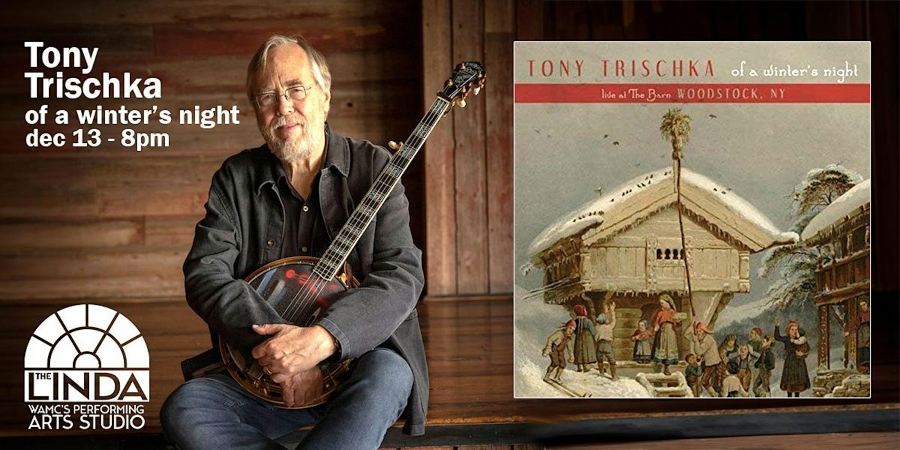
Tony Trischka’s “Of a Winter’s Night”

The Linda WAMC’s Performing Arts Studio
Friday December 13th -8pm

For Tickets Visit: thelinda.org

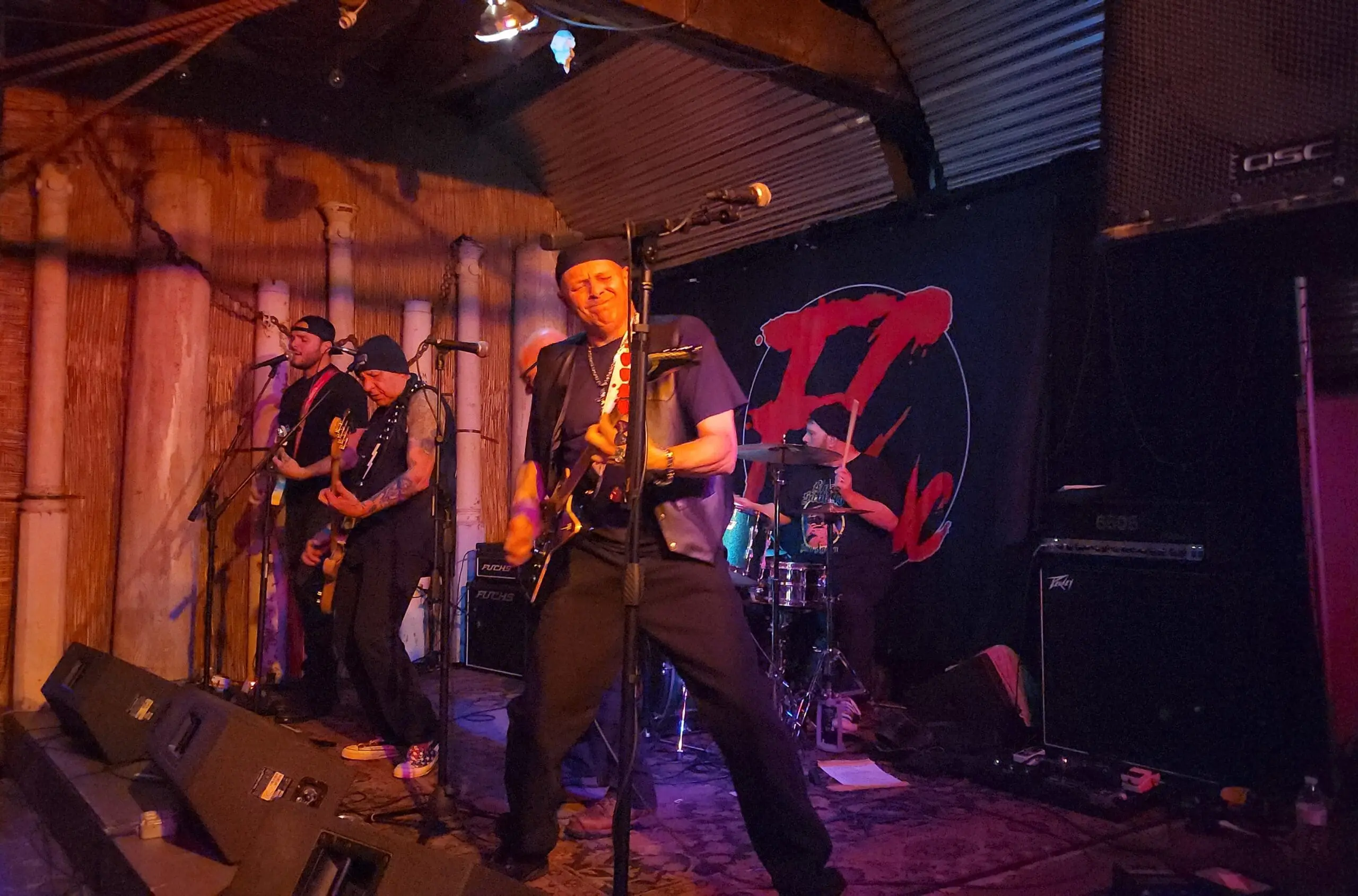
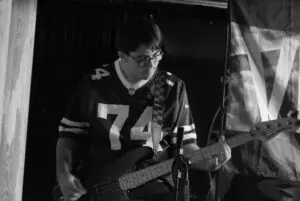
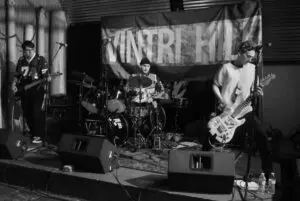
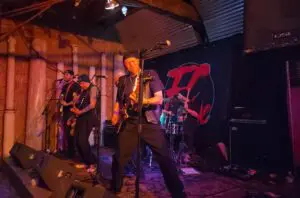
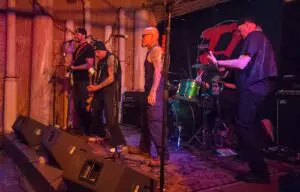
Photos: FC Inc with Vintri Hill at The Hangar on The Hudson 12/7/2024

0

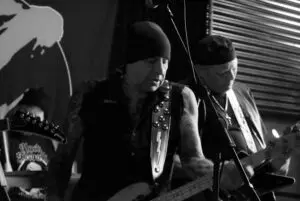
FC INC Featuring: Franché Coma, original guitarist of Misfits

with Vintri Hill at The Hangar on The Hudson 12/7/2024

Photography By: Christopher Ebbs                               


Jail Baby – The Weird Side of the Interview

0
Jail Baby

Jail Baby – The Weird Side of the Interview – by Liam Sweeny.

Love finds a way. The geeky kid with an expansive Star Wars collectible armada does find his Princess Leia, or can if he’s not rating on scales of ten, which no self-respecting Jedi would do. Love finds a way. We stride confidently into the club and make them grovel and swoon, or we share half a Reuben on a coffee date we’ll remember fifty years later. But truly and indeed, love will find a way. Even in jail.

The intersection of love, and a little magic, found its way in Turner Guilford Knight Correctional Center in West Miami-Dade, where two inmates, both locked up for murder, had a baby… without ever hanging out.

Immaculate conception is a violation of the rules in Turner Guilford Knight and is punishable by a freezing of one’s commissary, but for Joan Depaz and Daisy Link, it was a thing worth doing.

Okay, so it wasn’t immaculate conception, but it was magic, depending on how you define that. I won’t say it was sleight of hand, because our minds go where they go, but it was pulled off under the watchful gaze of a skeptical audience. They “met” in the vents, where people from different parts of the prison can hear each other ands talk. They got to know each other, know turned to love and Depaz told Link he always wanted a baby.

So how? How did his wish come true? How did Daisy Link suddenly become pregnant? It wasn’t exactly Ocean’s Eleven. Depaz wrapped his, um, seed, in Saran Wrap and sent in through the vent on a piece of string. Daisy got a yeast infection applicator and loaded it up, and after a few tries, life!

Of all the cool tricks you hear about, convicts smuggling contraband, how crazy is it that a baby will now be classified as “prohibited items.”

But really, love will find a way.

Find the original article here.


More from Liam Sweeny…

Eric Beetner – an Xperience Interview

0
Eric Beetner

Eric Beetner – an Xperience Interview – by Liam Sweeny.

RRX: Today, I saw a Facebook post you wrote where you spoke about being terrified to go looking for a job in your field now, and you’re an eight-time Emmy-nominated film editor, writer, and producer, with 30 years under your belt. How can you be afraid to try to find work now?

EB: It’s a complicated answer, but I’ll try to summarize it like this: I’ve worked freelance my whole career, going from show to show working for a few months at a time, hoping a show will get picked up for another season. That lifestyle is fraught with anxiety and uncertainty in the best years, but I’ve managed to work consistently for over two decades because I have a good track record, have been on some hit shows that went multiple seasons, and generally made good contacts by being good at my job. And it’s my choice, so I need to suffer the repercussions.

Since the takeover of the entertainment industry by streaming services (which are owned by tech companies, not traditional studios), there has been a seismic shift in how the business is run. Silicon Valley is all about “disrupting” business models (see what ride shares did to the taxi industry) so they bring a different mentality to TV and home entertainment.

With so much programming out there, all available at your fingertips, the pressure to create new shows isn’t as high. They also aren’t beholden to advertisers wanting to get their products in front of people, so the traditional Fall TV season is a relic of the past. But with that, went the certainty of when the work would be there. I’ve cut shows that have sat on the shelf at a streamer for more than a year. There’s little incentive to release them in a timely fashion.

They also only focus on the bottom line, so shows aren’t given a chance to grow an audience. They typically kill anything, even successful shows, after three seasons because it’s cheaper to develop something new, rather than pay people higher rates for a hit show.

Couple that with the strikes that slowed or shut everything down, plus the fact that streamers have been around long enough now that they can no longer function in the red (like so many tech companies do at the start), and they are all in a conservative spending mode.

For some reason, a big victim of that has been unscripted programming, which is where I mostly work.

After the strike of 2008, reality shows picked up because they didn’t have to pay writers and actors. That didn’t happen this time. The drop-off in production has been over 50%, which is unprecedented. You’ll have a bad year where there are 15-20% fewer jobs, but never anything like this.

Plus, everyone has noticed that episode orders are getting shorter. A TV season used to be 22 or 24 episodes long. Now if you get eight, you’re lucky. It means jobs are shorter and we’re out of work much quicker, on the hunt for the next gig.

Also, with eyes only on the bottom line, many productions are moving overseas. I know several game shows with American contestants and an American host that shoot in Ireland or Australia. It’s cheaper for them to fly people over than to shoot in L.A. We’ve lost a lot of production to Canada over the years, but most of those came back to L.A. to edit. No longer. The shows that shoot in other countries are also editing there.

2025 has a new slate of tax incentives to keep production stateside, but it might be too little too late. And it will take at least a year to ramp up productions to take advantage of those new incentives. A time frame most of us can’t wait out.

I know that’s a lot, but it all combines to a perfect storm of the simple fact that there are almost no jobs to be had out there. I compared it to Detroit in the 1970s when the auto industry packed up and left town. That city has never recovered.

RRX: A lot has happened in the past decade, let’s say. The dominance of streaming services, COVID, the SAG-AFTRA strike, and the rise of AI. What kind of looking glass has Hollywood gone through?

EB: I think Hollywood’s talent for putting on a good show hides these growing pains from the audience. They still get new shows and movies all the time so nobody outside the industry sees the struggles going on. And with streaming, everything you missed the first time is still sitting there so nobody is crying out for more content. We have far more than we could ever watch. So, it won’t be solved by consumer demand.

I think the thing the streamers have realized is that the business model they disrupted is one that worked for a myriad of reasons. It’s why we’re seeing the slow creep back to an ad-based model. That worked for 75 years. It won’t work to pay under $20 a month for a service anymore. They can’t sustain it. They have been slowly adding short ads, but soon we will be back to ad breaks in the middle of shows, and everything the streamers came to destroy and the reason we all loved it, will revert to the old model because that’s what makes this business run.

In the name of saving money, they will keep pushing AI, and the unions will keep fighting for protections against it. I’m sure we will end up with some hybrid in the end because that is a freight train coming down the track that you can’t avoid. There is too much Silicon Valley money behind AI for everyone to stop and say “Well, okay, we tried but nobody wants this.”

RRX: Editors, writers, and producers are the unsung heroes in Hollywood. And like most unsung heroes, people might not think it would matter if a machine replaced them. If you, and everyone in the guts of Hollywood, were downgraded or outright replaced by AI, how would people eventually notice? How would it downgrade their experience?

EB: All your favorite movies or shows or music or novels all have a certain intangible quality that makes them connect with an audience. Sometimes it is a niche audience, sometimes it goes wide, but there is a human connection or a shared experience behind it. AI lacks that, and it always will.

Now, much of what is produced by humans is also derivative, unoriginal, and trite. Making something fresh and new and unique is incredibly hard and most times it’s a chance combination of alchemy between cast, writers, and directors that can only happen once. It’s why every band isn’t the Beatles. You only get that combo by total chance and it only happens one time.

So, for the content that sits in the middle and isn’t great, but might still satisfy a nostalgic itch or just be simple comfort food to put on in the background, AI might go unnoticed by most consumers. Writing, anyway. I don’t think we’ll get to a point of AI-generated actors on any large scale. There will be stuff out there, but it won’t be the mainstream.

Once the promise of home-generated AI comes to fruition, I can see that taking off. If you can plug in your own wish list of what movie you want to see and it can spit out an AI-generated version of that for your eyes only, I can see that being popular. The trouble is, if you want to see your favorite actor in that part and they haven’t given permission for their likeness to be used, then you’re out of luck and it all falls apart. That’s a big fight happening now.

I’ll go on record saying that I’m no fan of AI and I think the “learning” process by scraping writing from real humans without giving them credit or compensation is evil and wrong and will end up in courts for the next 50 years if they keep pushing it.

But then you get Al Michaels who greenlit his voice being AI-generated for the last Olympics and it went barely noticed, so who knows? Some people might grab the payday and contribute to the slow acceptance of it all.

With the way music has been devalued by streaming it is likely that most consumers will opt for the cheaper option, regardless of how much of the art is removed from it. It’ll be good enough. That’s what depresses me. I worry there won’t be enough consumer backlash against it and they will invite the vampires inside the house because it’s cheaper and easier.

RRX: Is the struggle to keep art “human” more than just AI? Aren’t we also giving the presentation of our art and entertainment to algorithms? Can we ever get away from this kind of automation?

EB: Most people don’t know how much is being fed to them via algorithms. All recommendations for what to watch next on Netflix or any other streamer, let alone Instagram feeds and the like, is all a computer choosing for you.

The pernicious side of this is that you miss out on great discoveries if all you take is what you are given. I’ve always been a music nerd and never liked radio telling me what to listen to. I go find it. I hunt around. Same for TV. I’ll dig deep beyond the algorithm into any streamer and find the hidden stuff they didn’t suggest for me. But I’m not the norm. And it takes time and effort most people don’t have.

And it’s not invaluable. They very often get it right. Spotify can do a good job showing me a new artist, but I also have to take a lot of time to train that algorithm on what I might like. And more often than not they play it safe or get it wrong. I’d say the success rate is 15-20%. It’s a lot of weeding out on any entertainment platform.

But, sadly, gone are the days of that record store employee who you vibe with and always has something new for you to check out.

Word of mouth is still a highly effective tool, maybe the most effective, with any entertainment. Someone you know and trust – a real human – saying “Check this out” is always going to have more influence than a computer.

RRX: People always benefit from putting a face on things. Can you put a face on, or describe a moment of this issue that would drive home to people the real stakes of all this?

EB: Well, I am far from alone, but I know my experience best. Being freelance, I don’t have benefits like a 401k or paid vacation. When I work a union show, which not all of them are, I get those protections and if I keep up hours, I get health insurance. I’d say I’ve spent under half my career under union health coverage though. So I’ve spent a nearly 30-year career mostly buying my own insurance for a family of four, trying to save on my own, having two college accounts for my daughters, living in one of the most expensive cities in America, and living in uncertainty about when the next job is coming as just my day-to-day world.

Because of all that, I have very little safety net to be able to wait out being out of work for months at a time. After the strikes and the pandemic crushed the business, any safety net I have is gone, and the same is true for most of my contemporaries. So as I face down unemployment in two weeks as my current show ends, I am looking at a bleak landscape of no work and no prospects likely for several months. (Even in a good year, no productions start up near the end of the year around the holidays. It just never happens.)

So after building a career and providing thousands of hours of entertainment, I have nothing to show for it. If I go three to four months without work, I’ll have to sell the house and maybe leave L.A., which I don’t want to do with one daughter still in high school. I’ll try like hell to make sure I can still afford to keep the one in college that we have and still send the younger one wherever she wants to go, but choices will have to be made.

I’m not unique by any stretch. I don’t need any more sympathy than someone who lost their job at the factory, or the corporation. It’s incredibly frustrating though, that this industry has been taken over by people who broke it, willingly, with no thought to what comes next. All the top execs are still getting millions a year, even when their companies are all bleeding money. L.A. is a company town, too, and when entertainment industry workers are hurting, this whole city hurts. It could lead to a housing crash; restaurants and retail will suffer because people don’t have disposable income anymore. All the things that happen when an industry abandons its workers by sending jobs overseas, cutting the bottom line workers to make up for reckless spending on the top 1%, and all the cliche bad business practices we’ve seen in other industries.

RRX: You are also a crime writer. Do you see similar threads in the literary world that are wrapping you up in the film world? To you, what’s the highest concept of dysfunction in modern entertainment?

EB: I lament the loss of developing artists. There are a number of writers who I’m sure would have a really hard time these days due to changing tastes and also the lack of patience with publishers. You could develop a writer over a few books, or a filmmaker over a few projects. These days it seems that if something isn’t an instant hit, the business moves on.

Chasing the big hit is always a dangerous business if you ignore the smaller projects that chug along and keep the lights on. One thing the tech takeover of the entertainment industry has failed to realize so far is that the big splashy hits aren’t what has kept NBC, CBS, and ABC alive for so long. It’s The Price Is Right, the Today Show, 60 Minutes, soap operas. The cheaper, reliable, mid-rated but consistent programming that doesn’t get attention, but has viewers.

If a new show comes out now and gets the same numbers as Jeopardy, it would be considered a failure and canceled. But Jeopardy has generated literally billions over its lifespan. And employed thousands of people. That’s how you build and keep an industry.

RRX: This is where you answer the question I didn’t ask. Remarks? Comments? Educate, enlighten, emote – the floor is yours.

EB: I hope none of this comes off as “woe-is-me.” Other people have it harder than I do. When I work, I make a good living. I do want viewers at home to know that only the top 1% of Hollywood is getting rich. Most of us are just barely getting by. The changes might mean more ads, higher monthly prices for streaming services, and fewer new shows and movies. But there is a huge industry filled with passionate artists who just want to entertain and tell stories that serve an audience. If the new way continues as it has, all you’ll get are homogenous and derivative shows delivered to you and after a while, when nothing is inspiring anymore, you’ll miss what was.

I hope all my peers can look forward to a turnaround and the change to create again.


More from Liam Sweeny…

NEQ – Xperience History

0
NEQ

NEQ – Xperience History – by Liam Sweeny.

Originally published in May of 2022.

We’re very opinionated when it comes to music. That stands to reason, since music is so much a guiding force in our lives. So, we listen to songs, and when we find one we love, we want to hear every song like it. That’s how we ended up with genres. And it is not easy for a band that crosses genres to gain traction, because, essentially, they are creating their own, new genre.

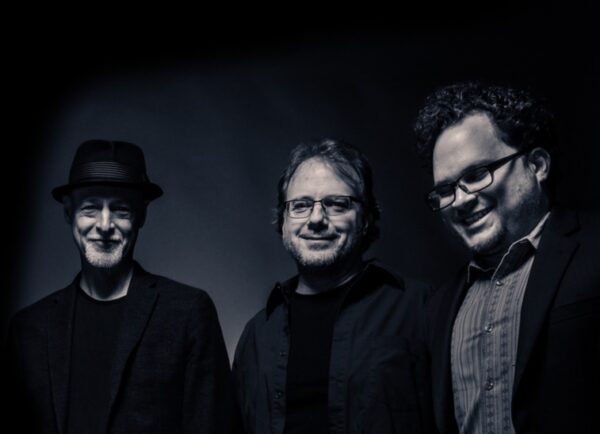
NEQ, a.k.a. Nelson Esposito Quintana, is just such a band, and their new album, “Nevertheless” is a fine example of how to cross musical boundaries. The band is comprised of Todd Nelson, Kyle Esposito, Manuel Quintana, Mike Kelly and Carlos Valdez.

RRX: Okay, so not to bury the lede, you have a new album out, “Nevertheless.” It’s amazing. Tell us a little bit about it, if you will. How long did it take to put it together? And what was your concept for it going in, or was it more a collection that precipitated from some jam sessions?

TN: All told, it took a couple of years, although we weren’t working steady on it. We did a couple of tracks in 2018, and then the band kind of took a hiatus for a little while from live gigs, and we can talk about the reasons for that, but then we reconvened when COVID was getting kind of hard and realized we could keep working on this if we did it in such a way that the recording was done remotely. Rather than having such a large ensemble all playing together, we’d have maybe two or three people in the studio at a time. It was all put together in Manuel’s studio, although some of the recordings are done here at my house, and Manuel very expertly integrated all of those things.

KE: I think the concept sort of snowballed as it went along, as far as our approach, I mean, it became evident to us what it was like, what the strength of it was, which it became almost more of a cinematic approach where we weren’t really thinking about can the trio play this live? But more, what does the individual song call for? And we just went with it completely. So, in a way, that’s different from our previous recordings, where we kept it closer to a trio format. No holding back there as far as overdubs, adding what it seemed to need.

RRX: NEQ is so-called because of Todd Nelson, guitarist Kyle Esposito, and Manuel Quintana. And the great thing about the band is that, by listening, none of you are clearly ‘leading.’ It seems very much an equal contribution to the music. Now you usually think in a band like this, one person puts everyone together. Was that true with NEQ?

MQ: I think it was a team effort, but I think Todd led the way, as far as bringing in both full compositions and sections that were completed to some extent. But it was a big collaboration, I think we all put our stamp on it and what not.

TN: I have to say that you were the person that was the impetus behind the recording. If you didn’t have this great studio and the motivation to work on this stuff, because you did a lot of the work on your own. And as far as the composition of the stuff, it kind of just worked out that I’d written all of the composition of this particular album. We’d written together in the past, and I’m sure we will in the future. But usually, the way we would do that is through jam sessions, we would get an idea, and take it home and develop it, decide what needs another section. So, we would work that way. But we couldn’t really work that way with the COVID thing going on.

RRX: When I hear NEQ, I think fusion. I think Mahavishnu Orchestra, Weather Report, with a feel of a Friday Night in San Francisco – McLaughlin, Dimeola, DeLucia. A lot of references, but it’s a feel of musical exploration. But fusion is something more than simple experimentation. How does NEQ transcend ‘noodling around?’

Kyle: I’m a strong proponent for noodling around, but I think this is the least we’ve ever left to chance as far as putting the songs together. Solos are still solos, but even the sections that are their places are composes, not the solos but sections set aside for someone to improvise on, as opposed to just playing the song over and over again, different people soloing over the same form, that kind of thing, that’s what I’m getting at. There’s a lot more through-composed material, a lot more specific events set out to conquer in this batch of tunes, for the most part. That’s my impression.

Todd: That’s basically what I was going to say. I think that people want to hear soloing, I think they want to hear that kind of thing, but I also get tired of it. I think what we’re trying to do is tread the line between that jam-band thing and a totally composed approach, and not fall too heavily to either side. That might keep people’s interest, hopefully.

Kyle: And I think that the solos are interspersed with other sections which, to go back to my cinematic comment, there are a lot of scene changes going on in the songs that are pretty much designated. We’ll go from a keyboard solo to another section that’s composed for everybody to play their part and move on into another section where there’s space for a guitar solo, that kind of thing. It is kind of Weather Report-ish in that way.

Todd: Yeah, they were not head-solo-solo-head. A lot of that arrangement comes from jazz musicians – it’s their language, and that’s how they get together and play together even if they’ve never met each other, never played together before, makes it easy to gig.

RRX: One thing I would definitely say about NEQ is that it’s a very expansive sound. I had a very worldly signature. I imagine that having such an expansive sound is difficult, not just a matter of skill, but also a matter of vision. I mean, we’re talking about musical sources that evolved and intermingled globally. Are there any guiding principles to this?

Manuel: I don’t think we had any guiding principles, no. However the song came to be what we went with.

Kyle: It’s a bit of a mystery. I think it comes down to tastes and sounds and grooves that we all like as individuals, what overlaps, and really the essence of what Todd’s idea was to begin with. Things didn’t change that drastically; now that I think of it, wasn’t Camoplaid a jam?

Manuel: Yeah, that was a rehearsal from a long time ago. Rehearsal jam; Todd may have had it. Recorded piece for a while too. We definitely sat on that, and I do think it came from a jam.

Kyle: The beginning bassline thing I remember being out of the blue. Maybe I was working on a different song too; maybe it was that song.

Todd: Yeah, I remember writing the melody for it, but I don’t remember jamming on it.

Kyle: Getting back, that’s all to say that it’s stuff we’ve been influenced by that just comes out without too much intention.

Todd: One intentional thing for me is to not censor myself so much, you know? And as a band, we refrain from censoring ourselves, saying ‘oh that’s too Latin sounding,’ or too something else. We embraced it all, we didn’t look at something and say ‘that style doesn’t belong.’ We just let it happen.


More from Liam Sweeny…

Singin’ Guru – an Xperience Column

0
Singin' Guru

Singin’ Guru – an Xperience Column – by Jeff and Crystal Moore.

Dear Singin’ Guru,

I’ve just finished an album and want to release it, but I’m confused by the legal mumbo jumbo. How do I protect my music and get paid royalties?

Sincerely,

So Happy My Album is Done

Congratulations, So Happy! You’ve poured your heart, soul, and probably your caffeine levels into writing songs. Now you’re thinking, “How do I protect this masterpiece from being stolen?” Good question. Here’s my answer: focus on the fundamentals of copyright and royalty collections, but don’t stress so much about theft that it stops you from sharing your music. This is an important topic that stumps many artists, so this month, we’re devoting the entire column to it.

How Do I Copyright My Music and Collect Royalties?

Step 1: Copyright – The “Mine!” Stamp on Your Song

As soon as you write your song, it’s automatically copyrighted to you—like an invisible stamp saying, “This song is MINE!” To solidify this claim, register it with the U.S. Copyright Office at copyright.gov. This makes it much easier to take legal action if someone tries to steal your music. Trust me, your lawyer will thank you.

Step 2: Join a PRO and Get Paid When Your Song is Played

Next, sign up with a Performing Rights Organization (PRO). These organizations collect royalties whenever your song is performed publicly—on the radio, at live shows, or streamed online. If others are performing your song, a PRO ensures you’re getting paid. Think of them as watchdogs for your wallet.

Main options in the U.S.:

  • ASCAP: Costs $50 to join, one-year contract.
  • BMI: Free to join, two-year contract.
  • SESAC: Free to join (by invitation), three-year contract.

Which one is better? If you’re just starting out, BMI’s free membership is a nice perk. ASCAP is also solid with a one-year contract for a small fee. SESAC is by invitation only, so it’s generally for more established songwriters. All of them split royalties 50/50 between you (the songwriter) and your publisher (if you have one).

You can only pick one PRO as a songwriter, so choose carefully—it’s a pain to switch! If you want to switch later, you’ll need to formally end your current contract and sign up with a new one.

Step 3: Do You Need a Publisher?

Publishers manage your song’s copyright, handle distribution, and collect royalties—but they’ll take a 50% cut. As a new songwriter, you likely don’t need a publisher unless you’re making serious money from your songs. Publishers are usually interested in established artists, so focus on building an audience and a solid catalog before worrying about publishers. In the early days, your time is better spent writing more songs.

Step 4: Join a Mechanical Rights Organization for Reproductions

Mechanical rights organizations, like The Mechanical Licensing Collective (MLC) or Harry Fox Agency (HFA), collect royalties when your song is reproduced—on CDs, vinyl, digital downloads, and streaming. They ensure you’re getting paid when someone buys or streams your song.

To simplify things, you can join a publishing administration service like CD Baby or Songtrust. These companies handle both mechanical and performance royalties, helping you collect more of what’s yours from around the world. They do collect a percentage (around 15%), but they don’t have any rights to your song like a publisher does.

Step 5: Don’t Sweat It – Focus on Writing!

Yes, collecting royalties is essential, and these organizations are there to make sure you get paid fairly. But remember, when you’re starting out, the most important thing is getting your music out there. Obsessing over protection won’t help if no one hears your song. If you’re earning real money from your music, then go all-in on PROs, publishing administration, and mechanical rights organizations. Until then, let your creativity lead the way.

So get writing, keep creating, and remember—if people don’t hear it, they can’t steal it. Who knows? Your next song might be the one that has people knocking on your door.

What If Someone Tries to Steal My Music?

Alright, let’s get real. You’re worried about someone swiping your song—but here’s a truth that might surprise you. From what I’ve seen, no one is lining up to steal your music. In fact, one of the biggest challenges for musicians isn’t theft; it’s getting people to listen. Unless you’ve already got an audience buzzing about your songs, the chances of your music being stolen are slim.

Now, I’m not saying it’s impossible, and yes, there are horror stories of music being ripped off. But almost every high-profile copyright case involves established artists, not unknown ones. Legal battles usually happen over songs that are already hits, not those waiting to be discovered. If you’re just starting out, focus less on stopping theft and more on getting people excited to hear what you’ve made. Once you have an audience, then you can worry about people “borrowing” your tunes.

Here are six strategies to help you build an audience—and get people to actually listen to your music:

Strategy 1: Start Performing Locally

Go old-school and play for live audiences. Whether it’s an open mic or a local gig, getting out there helps you find fans and fine-tune your sound. Plus, nothing beats live feedback.

Strategy 2: Develop and Cultivate an Online Presence

Social media, streaming platforms, and music forums are your new best friends. Start a YouTube channel, put your music on Spotify, share behind-the-scenes stories, or talk about your process. The more people know you, the more they’ll want to hear what you’ve got.

Strategy 3: Listen to the Feedback, Even the Tough Stuff

When people give feedback—especially constructive criticism—take note. If listeners consistently say, “The mix makes it hard to hear,” or “Your guitar playing could use some work,” consider it. Don’t brush it off with, “They don’t get it.” Instead, think, “Maybe I need a pro to mix my tracks,” or “Time for some extra guitar lessons.”

Strategy 4: Be Patient—Hits Don’t Happen Overnight

Your first song might not be a chart-topper, and that’s okay. If you’re serious about songwriting, you’re in it for the long haul. Taylor Swift herself has said that out of every 100 songs she writes, maybe one is a hit. So keep writing; the magic usually happens along the way.

Strategy 5: Write Music You Love

If you’re not passionate about what you’re writing, no one else will be either. Write the songs you want to hear, and you’ll find others who connect with your vision. Plus, you’ll enjoy the process a lot more.

Strategy 6: Appreciate Your Fans—Even If There Are Only Two of Them

Fans are gold. If someone loves your music enough to listen and stick around, show them some love right back. No fan is “too small”—and if you treat them well, they’ll bring friends to your next show or share your next track.

The Bottom Line

Keep creating, put yourself out there, and build your audience. As your following grows, that’s when you’ll really need to think about protecting your music.


More from Jeff and Crystal Moore…