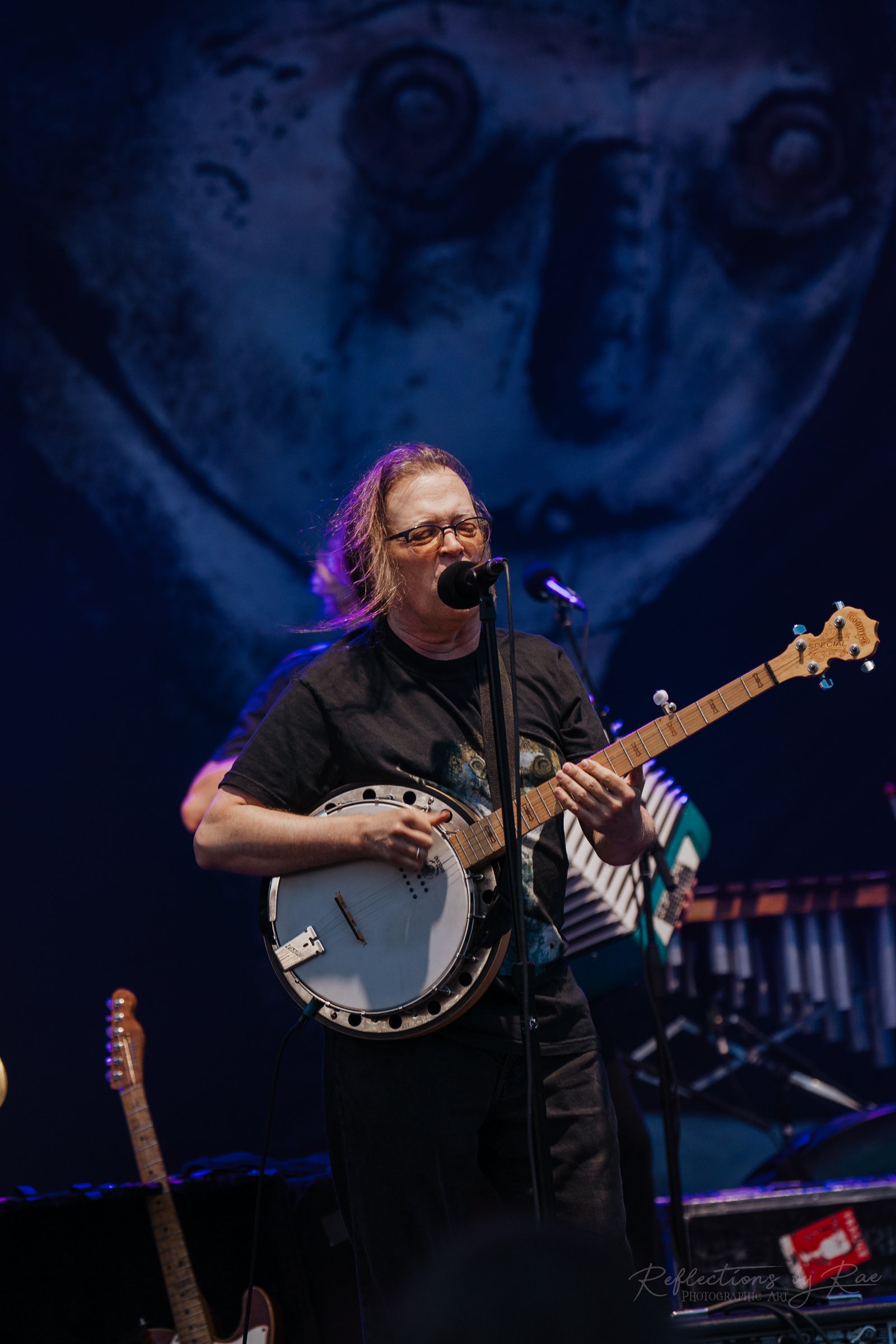
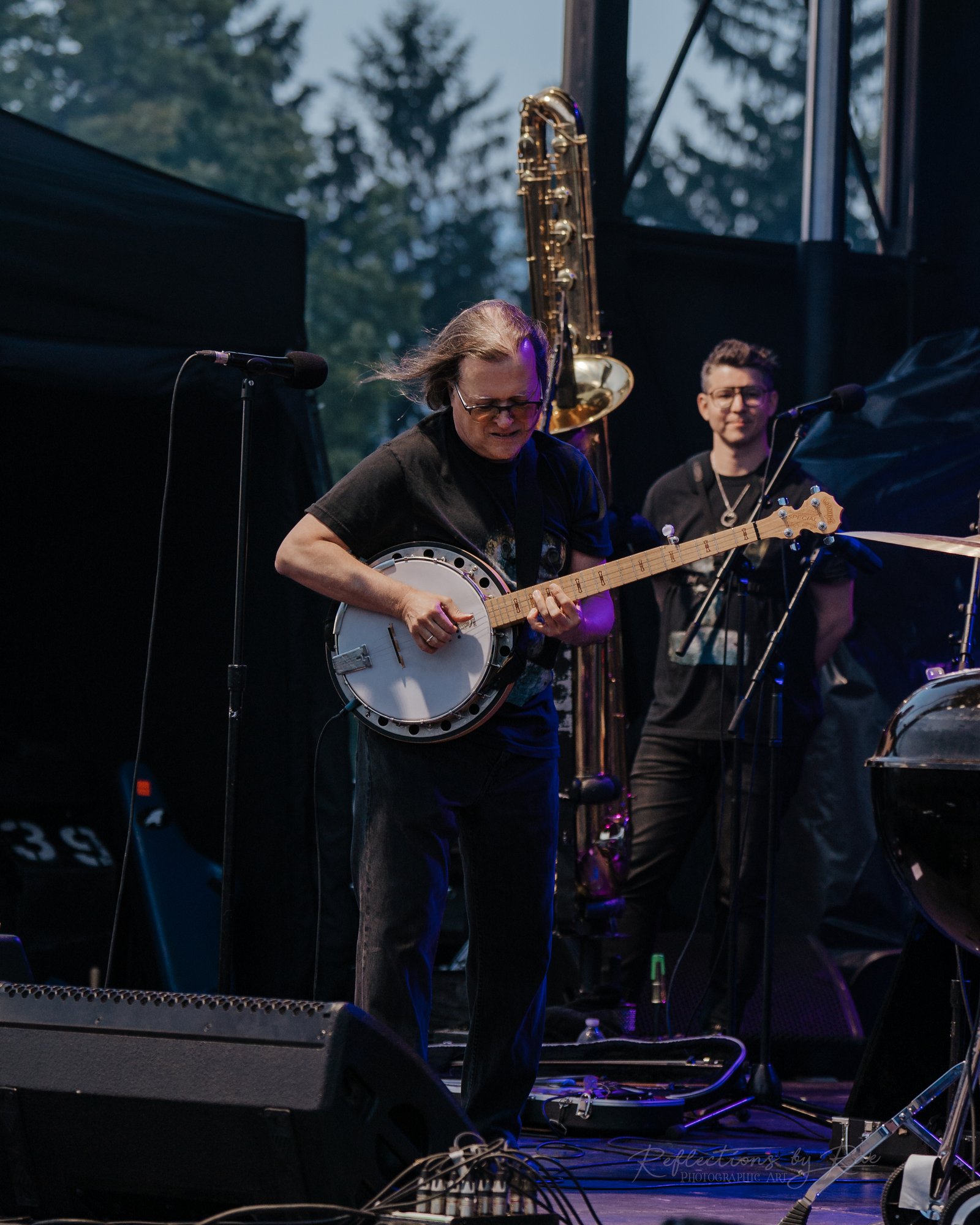
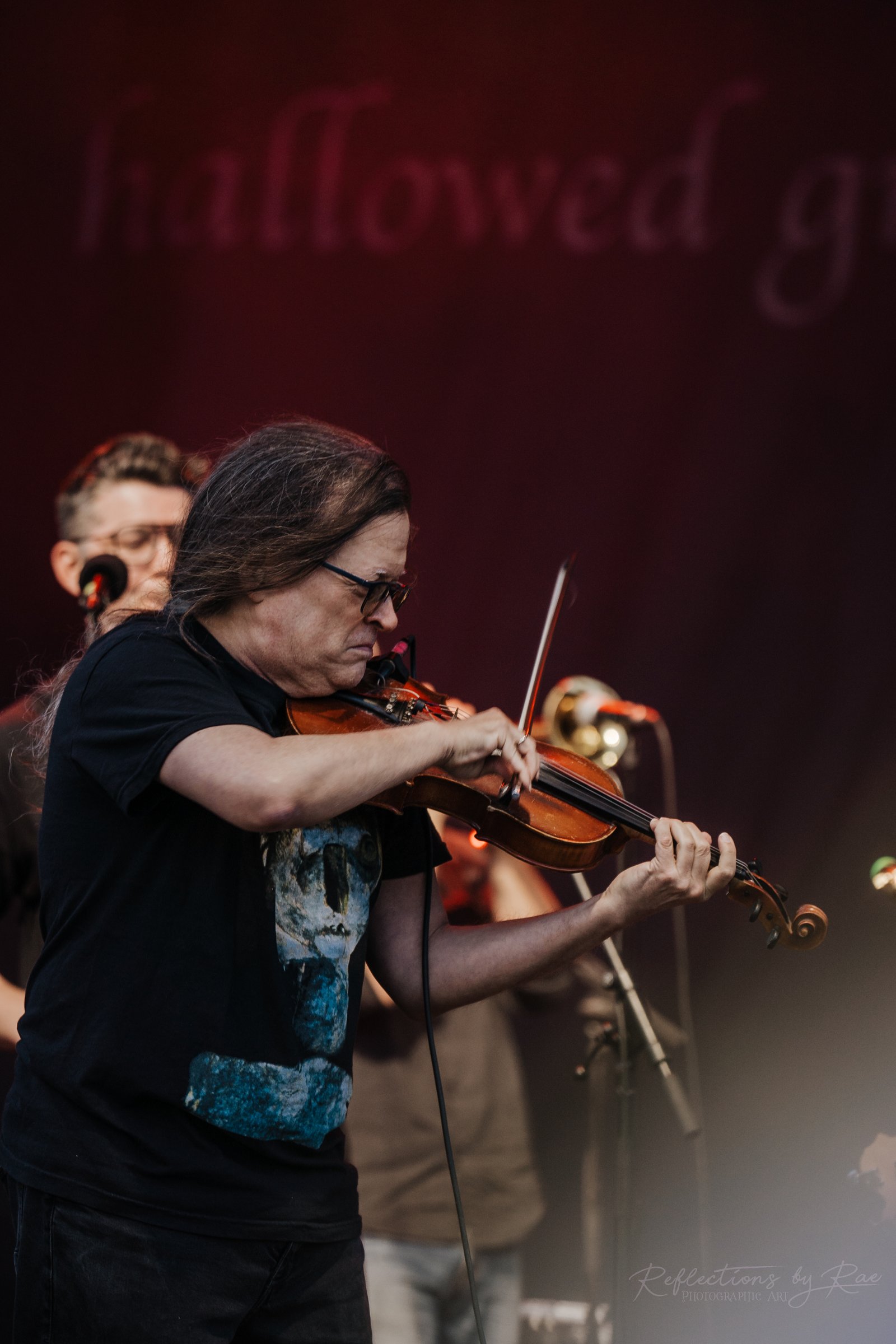
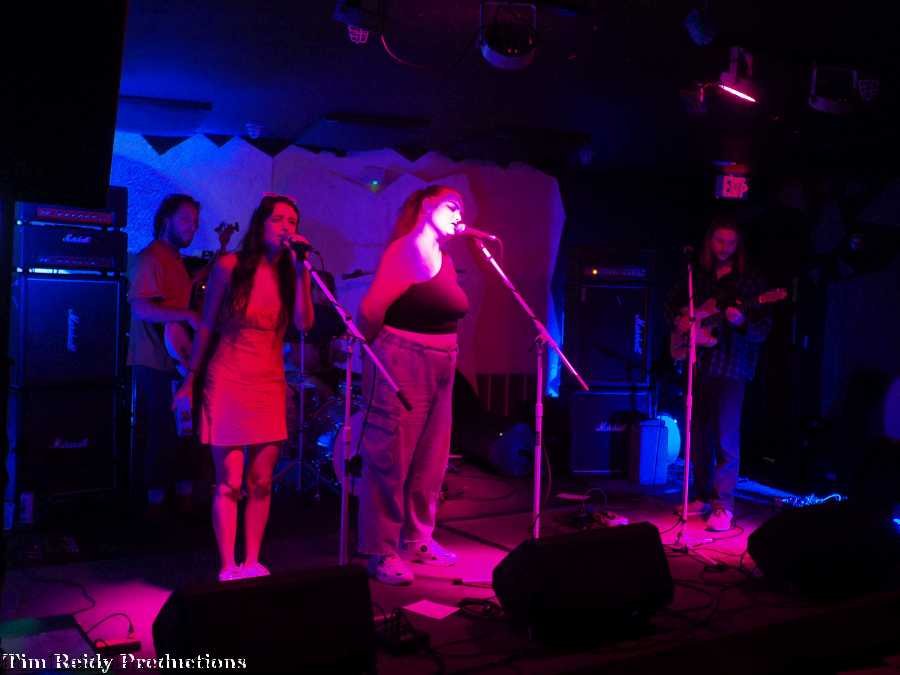
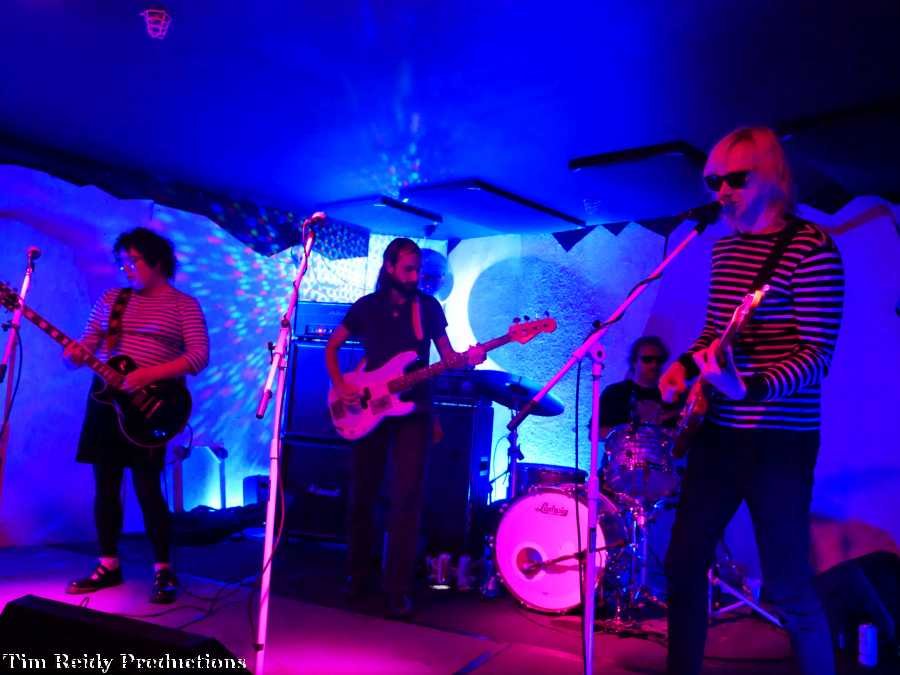
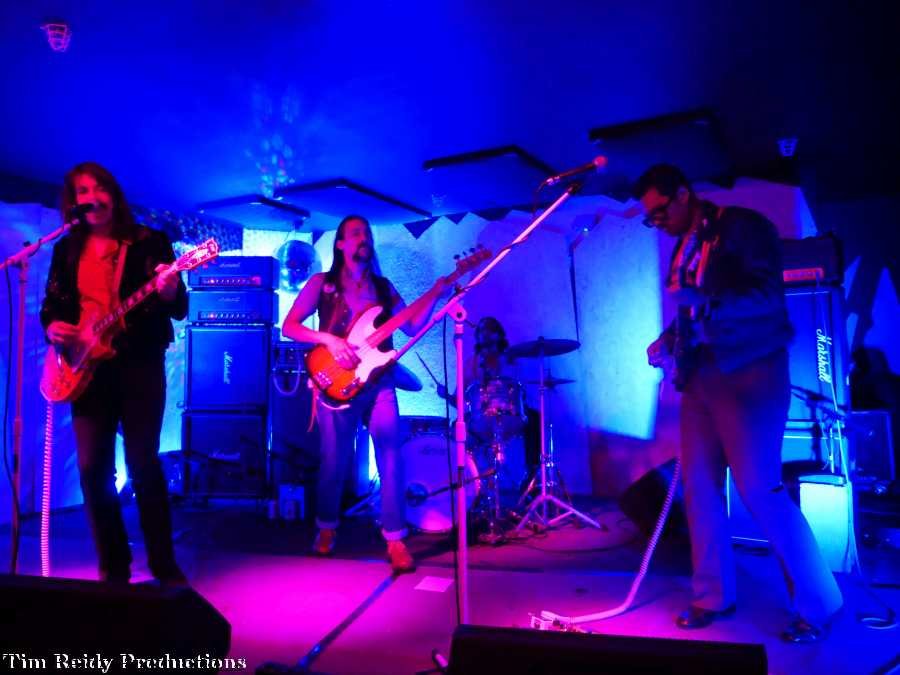
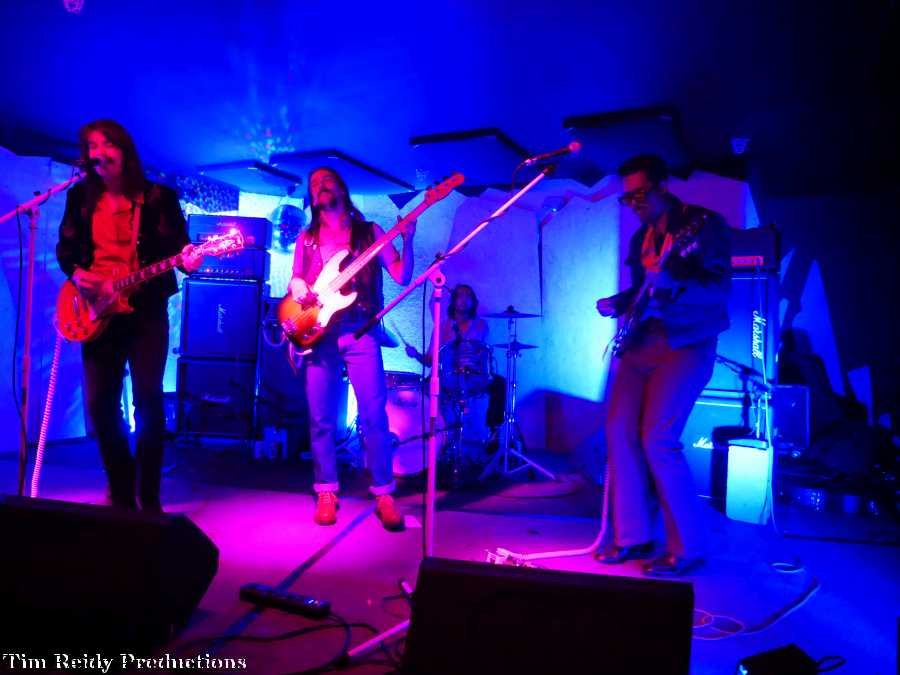
Flavour’s Tour Kickoff Party.
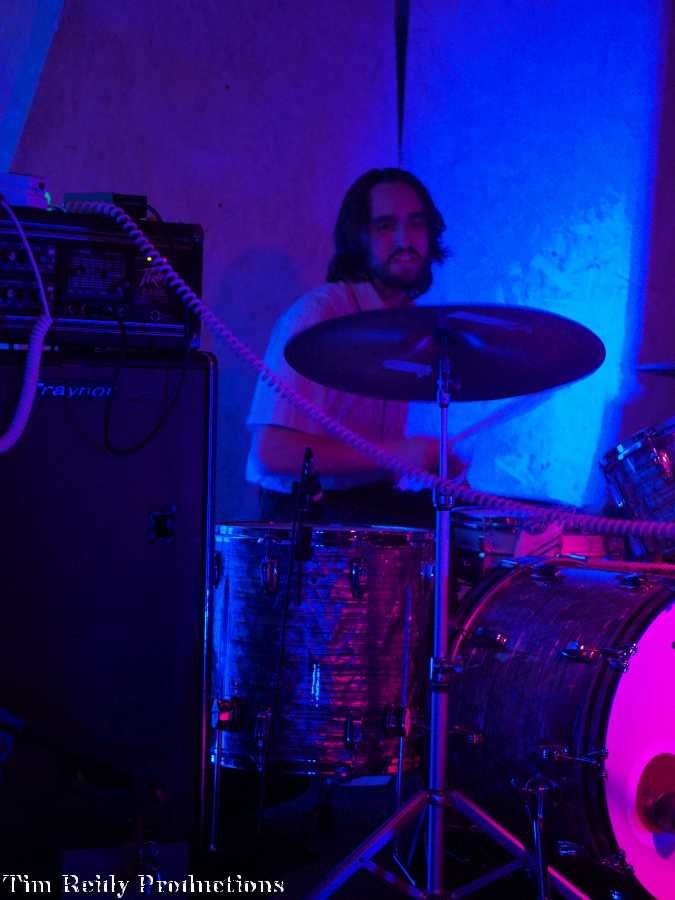
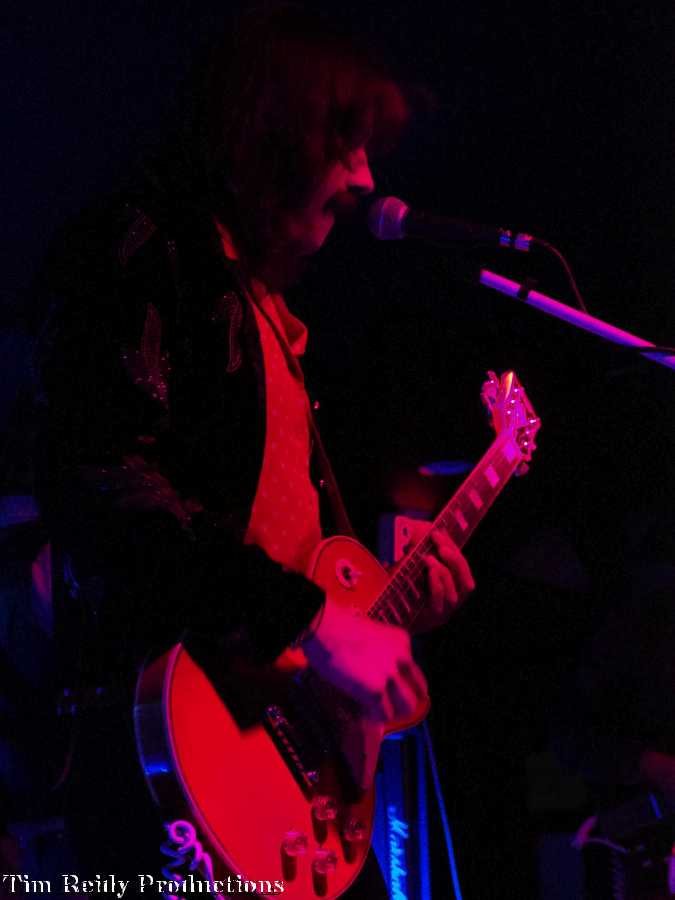
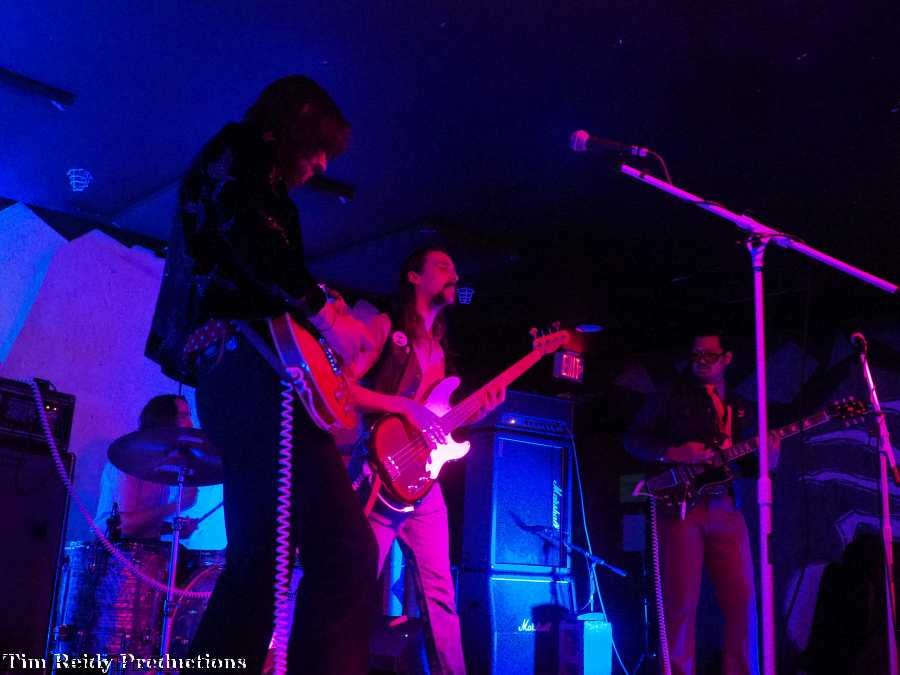
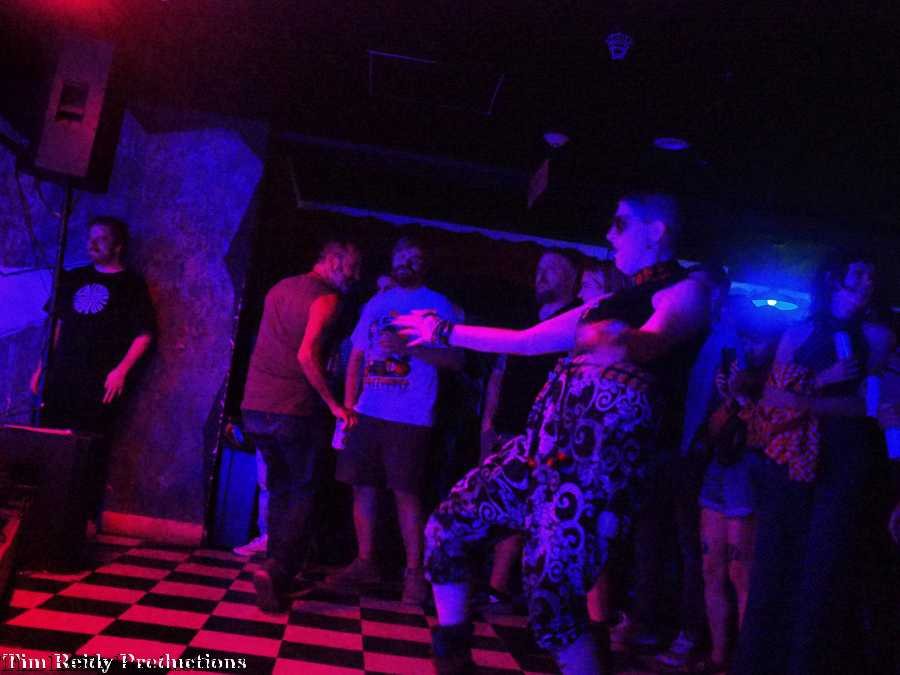
Photography by Timothy Reidy.






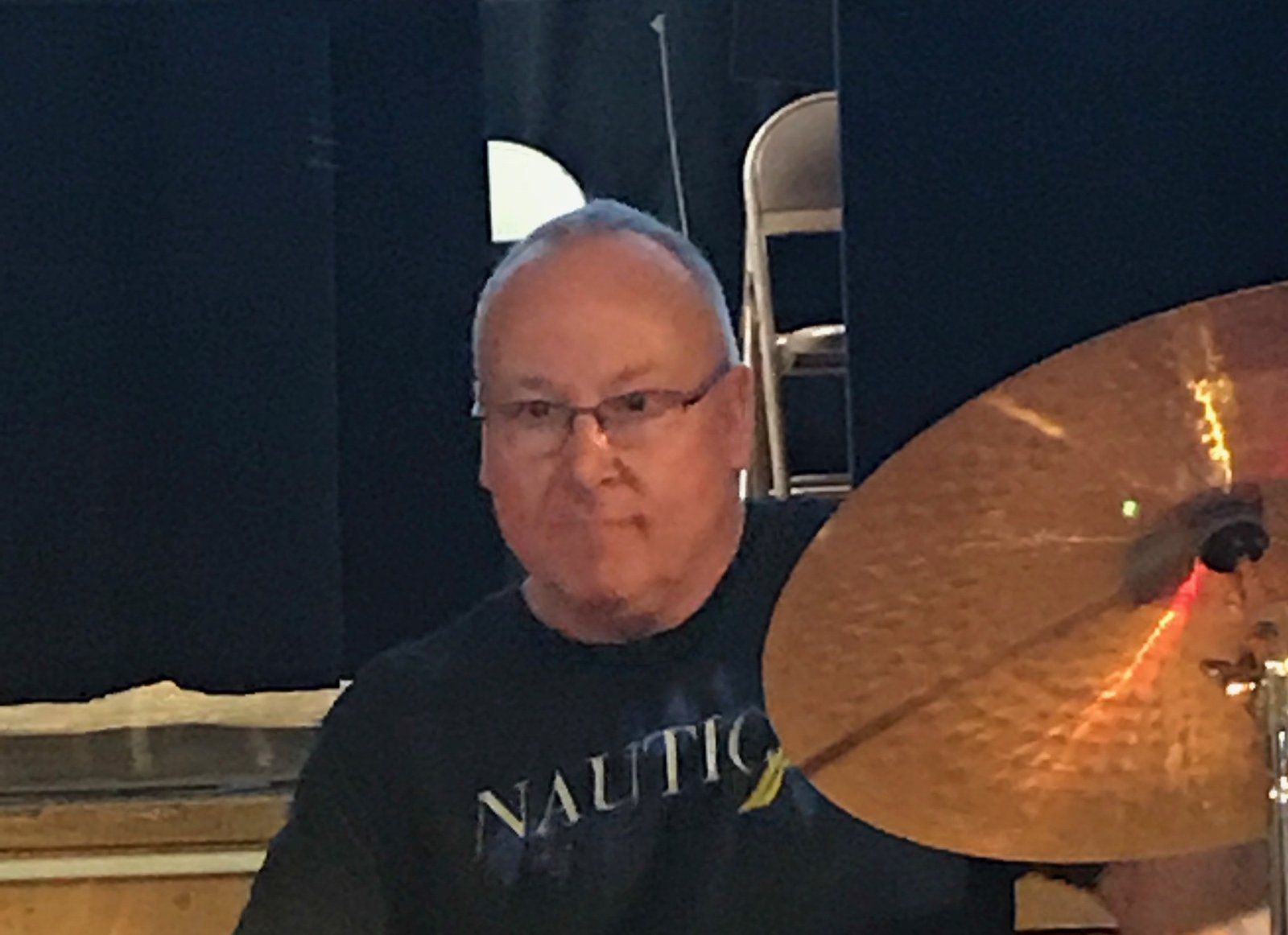
Greg Cortelyou – Capital Region Timekeepers – by OP Callaghan.
Greg Cortelyou is a 50-plus-year veteran musician, educator, performer, collector, and all-around great guy. I had the good fortune to meet him recently and talk about his extensive career as a drummer in the Capital Region. Greg has a ton of experience, great stories, and some treasured gear. He’s a wonderful guy, and I really am glad to have met and talked with him. So please welcome to Capital Region Time Keepers: Mr. Greg Courtelyou!
RRX: How did you get started with drumming?
GC: It was after seeing the Beatles on the Ed Sullivan Show – I’m not 100% sure. I remember sitting on the living room floor watching the show with my brother when we lived in Princeton, N.J. Playing in a band seemed like simple chemistry to us after seeing that I guess. Something that we could do. Everyone had a part! Later that year, my brother and I formed a band without instruments. We used moving boxes, tape, wire, rubber bands, etc. We set up in a patch of woods behind our house in Glenville, NY. We played along with records that were played on a small 45 rpm record player. Later that year, we began playing musical instruments. We saved our allowances to buy records at the Apex Record Store located on State Street in Schenectady. We would go there after hearing songs on the radio, and check out the songs we wanted to buy by listening to them again at the store on old black plastic headphones. If it sounded good to both of us, we bought the record and then went home and learned it. I still have some of those records in the collection. Our first garage band was called the Survivors. We played for whoever showed up! The band eventually moved down to the basement, and through the years morphed into the Shades of Darkness, Furnace, and then Amherst Scaffold. These bands were made up of mostly neighborhood guys. We rehearsed in the cellar until my mom blinked the lights: “Smoking Lamp is OUT!” she would say around 11:00. This went on for years at 108 Acorn Drive.
Foxfire and Foxfire II came a bit later during the early ‘70s. Foxfire was a great rock band that had a big local following, roadies, and even a devoted business manager named Len Mark Block.
Then a few years after that came Titan Strong, a local tri-city dance band that worked five to six nights a week in local clubs for many years. The group was so “tight” there was even a fine system that penalized you if you did not learn the material for weekly practice, were late, or even had the wrong-colored ruffled tuxedo shirt on for the gig! The fines were divided up and dispersed to the ones who kept it together.
The pop cover band Direct Drive was formed in the late ‘70s and played together for over 20 years doing nightclubs, weddings, parties, and corporate events in upstate New York and New England. It was like family with weekly rehearsals in our living room.
RRX: Did you take lessons or are you self-taught?
GC: I started by taking lessons when I was about 12 years old. My mom took my older brother Geoff and I up to Burnt Hills for weekly music lessons with Mr. Patrick. We both started on guitar. My brother was a natural on guitar but for me it was painful! I eventually switched to drums. That year at Christmas, I got a Remco drum set. The set had blue tinfoil sparkles, plastic rims, and a plastic foot pedal. Months later, after practicing basic sight-reading lessons and playing basic rudiments on a little wooden practice pad, I ended up buying the brand-new gold sparkle set of Stewart drums Mr. Patrick had set up in the corner of the studio. Very sweet.
I started at Berklee College of Music in the fall of 1975. I graduated in 1983 with a Bachelor of Music Degree. At Berklee, I studied privately with Bob Wagner, Bill Norine, Tony Noterfonzo, Pablo Landrum, Tommy Campbell, and many more excellent teachers. After Berklee, I went on to attend graduate school at the College of St. Rose. In 1990, I graduated with a Master of Science in Education. While at St. Rose doing graduate studies, I also worked as a graduate assistant with Paul Evoskevich directing small sectional ensembles. I also recorded and performed with the St. Rose Jazz Ensemble Big Band. I studied drum set privately with David Calarco and orchestral percussion with Mark Foster. The research paper I wrote and submitted to the College of St. Rose was titled “An Investigation of the Relationship Between Rhythm and Selected Jazz Time-Feels”.
RRX: Mark Foster is great! Do you come from a musical family?
GC: My grandmother played the piano for silent movies in the Chicago area. My father played the violin in the school orchestra. My mother and her twin sister Julie performed as professional dancers called the Watkins Sisters during their childhood years. As young adults, they joined the USO to entertain injured soldiers around the world. My older brother Geoff played guitar and was an exceptionally talented virtuoso.
RRX: Do you play any other instruments?
GC: Bass, guitar, piano, vibes, ukelele, recorder and various hand percussion instruments.
RRX: Tell us about your first kit?
GC: After the gold Stewart set, it was a set of pink champagne sparkle Ludwigs. The kit consisted of two 20” double bass drums, one 8 x 12 tom, one 10 x 13 tom, and one 16 x 20 floor tom. A 5 x 14-inch chrome Ludwig supra-phonic snare. I had a variety of Paiste, Zildjian, and no-name cymbals. No bottom heads. Very punchy!
RRX: That’s awesome. Who were your early influences?
GC: Ringo Starr, Ginger Baker, Charlie Watts, Carmine Appice, John Bonham, Mitch Mitchell, Butch Trucks, Jaimoe, Bill Bruford, Louie Bellson and Buddy Miles to name just a few.
RRX: You have an extensive musical history! Tell me some more about some of your experiences.
GC: My early experiences began as a dance band drummer. My brother Geoff and I played together in bands all through middle and high school. After high school, we continued to play as the band called Foxfire and did gigs in nightclubs across upstate New York and New England. The band broke up in 1974 and we all went off to attend college. It was at Berklee College of Music in the fall of ‘75 that I met my roommate Tommy Campbell. That was an incredibly beautiful and humbling experience. We shed and studied together for an entire year at the Berklee dorm. We remain friends and connect with each other frequently. Tommy is a professional drummer who has performed with John McLaughlin, Sonny Rollins, Dizzy Gillespie, Manhattan Transfer, Richie Cole, the Ray Anderson Alligatory Big Band, as well as his own original group Vocal Eyes, and remains active today internationally.
RRX: Wow! Who else have you played with?
GC: After Berklee, I returned to the Capital District area and worked with many bands in the upstate New York area in both the rock, pop, and jazz genres including: the St. Rose Big Band, Titan Strong, Direct Drive, Body & Soul, the New York Players, Jill Hughes Band, Ray Alexander Trio, Carl Landa Quartet, Cole Broderick Trio, Joey Thomas Big Band, Colleen Pratt and Friends, Destry Rides Again, Electric City, Capri, Marlowe & Company, Marcus Benoit Quartet, John Leroy, Sonny and Perley Daye, Karen Lawrence Band, Peg Delaney Trio, Mike Purcell and Company, Don Nikolski Band, Pangea, Paul Supple & Jazz Factor, Rob Lindquist Trio, The Tony Vacca Project, Josh Greenburg & the Mother Goose Jazz Band. The gigs consisted of a mix of studio sessions, club dates, weddings, parties, and other corporate functions.
RRX: Are you a career drummer?
GC: Yes. I performed professionally after graduating high school. Playing weekly gigs was not only a way of providing income for my family but an opportunity to perform with so many different and talented musicians in so many different musical settings.
RRX: Are you a drum collector?
GC: I have always collected cymbals and drums. I currently only own a few drum sets now.
Sadly, a few years ago, my drummer friend Joseph Merli passed away. He left me some exceedingly rare 1940-50’s Slingerland drum sets, Zildjian cymbals, and a collection of original vintage hardware. It was an honor to be given the drums and also to keep Joe’s memory alive. It has also been interesting and fun restoring many of them. I also was given some vintage 1920’s Ludwig drums from one of my wife’s aunt’s neighbors whose husband passed away. He was a professional drummer living and working in the Schenectady area. The most interesting thing is that it came with a little date book with his gig earnings from 1924 through 1930. The gigs he had listed were places such as the Edison Club, Woolfert’s Roost, Mohawk Golf Club, etc. He made between $4.50 and $12 a gig! It is amazing that those are some of the same gigs I played over the years in various wedding and party bands. Also included was an original receipt for the set from Baker Music House in Albany. In 1924 he paid $25 for the set.
RRX: What are you playing now?
GC: I play a 1980/1881 USA 5-Piece Gretsch Drum Kit that I bought from the Drummers Workshop store in the early 1980s. Mike Gerardi owned and operated The Drummer’s Workshop store in Rotterdam, NY. A cool place for musicians to hang, study, and pick up the latest gear. The drums are red maple finish. Drum sizes are 2-20 x 14 bass drums, 5 X 14 snare, 8 X 12 tom, 9 X 13 tom, and a 16 X 16 floor tom. Stop Sign Badge w/maple shells. The kit is in awesome shape for its age and what it’s been through. I also play DW pedals and use DW hardware. I play both “K” and “A” Zildjian cymbals but occasionally will add others for color. Sizes are 22” ride, 16” dark crash, 14” dark crash, and 14” hats.
RRX: Beautiful! Who influences you now?
GC: My sons Jacques (piano/B3 Hammond/synth) and Graig (drums/guitar). They are always creating new and interesting original music that I love listening to. Both have been playing and performing since they were young and have performed together and on their own throughout the years. Jacques was a student at Berklee College of Music for Contemporary Writing and Production, and Graig was drummer for Intelligent Television which performed throughout the Capital District. They are both very talented musicians that I am immensely proud of.
Since I retired as a public-school music teacher in 2017, I have had a lot more time to listen closely to and study a lot of different drummers. My favorite drummers currently are Tommy Campbell, Billy Cobham, Tony Williams, Art Blakey, Elvin Jones, Steve Gadd, Dave Weckl, Steve Smith, and Bernard Purdie to name a few.
RRX: Are you still actively playing?
GC: I am currently not gigging with any regular band. Something different now. I have, however, been recruited in recent years to perform with the Schenectady City District Faculty for various presentations and concerts. I have taught private lessons and performed with various ensembles on a casual basis.
RRX: Any drumming horror stories?
GC: Of course. I have forgotten most of them. There was one gig where I forgot my drumsticks and had to make a pair of sticks out of two cut sumac tree branches before anyone noticed! Thankfully, I had a sharp pocket knife in the glove compartment. I also remember an outdoor tent corporate gig where they somehow did not have any utensils when it was time to feed the band. The worst gig I can remember was at a restaurant in Lake George. I got the call through a referral to play for what sounded like a typical dinner dance function. It was a duo consisting of myself and a keyboard player/singer who was up from Florida. Great money. I made $1,000 for three hours of work. The keyboardist could not turn off the drum accompaniment volume in his sequenced Yamaha. Ughhh! So, I played along with him and of course the tracks. No one really noticed the corny grooves! I took the bread and went home. Chalk it up to experience!
RRX: That sounds awful! Tell us about a favorite gig.
GC: My favorite gig was the “JAZZ INFORMANCE” Concert Series. This gig was a collaboration of Schenectady City School District Music Faculty including myself on drums and percussion, Mike Lawrence (bass), Dave Gleason (piano), Rob Aronstein (organ), and Keith Pray (saxophones). Together we created and planned different interactive presentations that highlighted the many distinct aspects of jazz music including improvisation, song form, harmony, scale types, common jazz rhythms, and the major jazz styles. This was a chance for us as musicians/teachers to explain and demonstrate to our students our various talents and personal approaches to music in an educational concert setting. We continued the “JAZZ INFORMANCE” concert series each year and visited a different school and age group each time we performed.
RRX: Put together your dream band, with you on drums.
GC: My son Jacques on keyboards, my son Graig on guitar, my good friend Mike Lawrence on both acoustic and electric bass. My wife Rochelle (mother of both of my sons) would be our cover art designer, business manager, and quality control manager! Beyond that band, who knows!
RRX: Anything else?
GC: Music is so beautiful. I feel fortunate to have had the opportunity to play it with so many of my friends throughout the past 50+ years!
I owe such a great deal to my wife Rochelle for her understanding and continued support! I would never have been able to succeed without her!
Sadly, some of my closest friends and brother Geoff are not here to “play the last set,” but their influences and memories will never be forgotten.
Thank you for asking me to do the interview OP! I appreciate the awesome work you do. Thank you also for providing “us,” the community, with such great and timely information!
RRX: It’s my pleasure, Greg. Thank you!

Headshot by Chad Cochran
I’m sure every sentence after a nomination for the rest of forever will begin with Grammy-nominated singer/songwriter… that’s certainly what Mary Gauthier has experienced ever since her 2018 album Rifles & Rosary Beads. Mary actually has many accolades under her belt but as you know here at RadioRadioX and Xperience Monthly awards are not important to us in the least (That’s why we started The Listen Up Awards, lol). however, what we do care about is the music and Mary Gauthier certainly delivers in that department.
Here at RadioRadioX, we have been spinning Mary Gauthier’s music since we began in 2018 and that’s because we are fans. Of course “Drag Queens in Limousines” has been a favorite of ours and if you didn’t know; to celebrate the 25th anniversary of the original release Drag Queens in Limousines will be re-released via Nashville’s label Kill Rock Stars on October 18th but this will be the first time ever on vinyl! Pre-Order HERE!
On Sunday September 15th Mary Gauthier will be playing at Caffe Lena along with Robbie Fulks for a night of Bluegrass, Folk and all-around great music. Oh yeah, Robbie Fulks also wears the badge of being Grammy-nominated. So you are in for a treat with this performance. Details and Ticket information below!

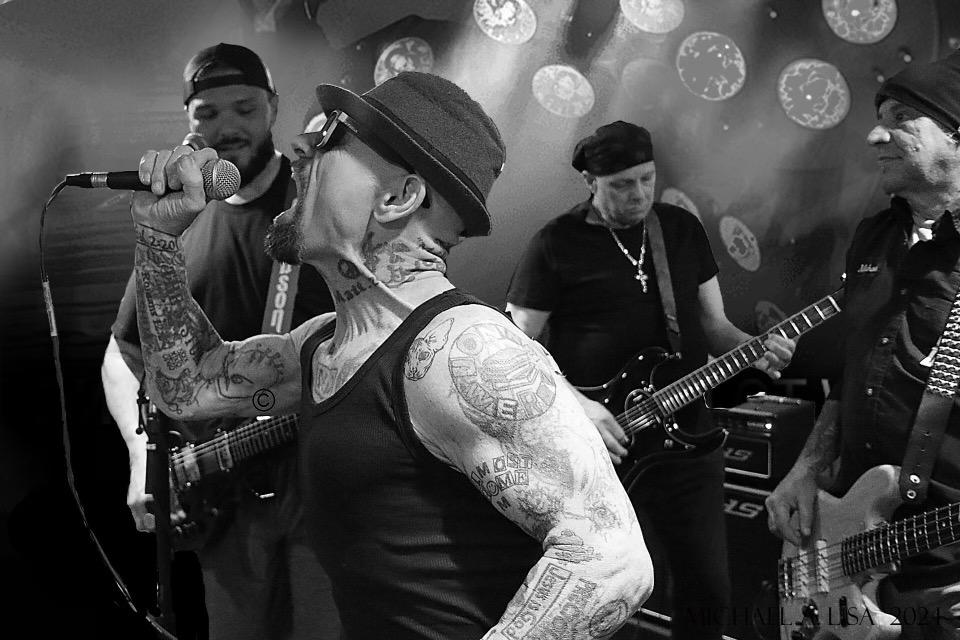
Franché Coma- An Xperience Interview – by Rob Smittix.
RRX: Thanks for talking to me.
FC: No problem. You’re welcome anytime.
RRX: My boss here, Art Fredette, sent me some of your new tunes and I’m really liking what I’m hearing so far. Looks like you just released “Science Craze” on August 2. We’ve got that in rotation here at RadioRadioX. We’re all loving that one!
FC: Yeah, “Science Craze,” like you said, came out already. “Monsters and the Mob” will come out on August 30. “Never Enough” will come out on October 4. Then after that, hopefully, you’ll see an EP or an LP. We’ll see.
RRX: Yeah, I was gonna ask. I’m really loving the sound. It really stays true to punk rock. I don’t know what you call it but it stays true to that sound that I love. I’m glad it still exists and that you’re still doing it.
FC: Oh, that’s great. Good to hear.
RRX: Obviously, you played guitar many moons ago with the Misfits and now you got your band FC Inc. I was curious, what did you do in between all that time?
FC: Raise four kids.
You know? I have four kids, three of them a year apart. My wife and I … our parents are older, put it that way. So I didn’t have the luxury of people watching my kids. I worked days and when I got home, she went to work at night and I watched the kids. So that’s what took place, until the kids who were at that age … I guess middle school or high school, and then I had my daughter. Was it the right thing to do? I don’t know, but it was the right thing to raise my kids. Was it the right thing to put the guitar down? Probably not. But there was only so much time in the day, you know what I mean? And here I am. What could I do? I now can do what I should have done.
RRX: Yeah, I hear that, man. I’m actually a grandfather myself now, I’m a young grandfather. I’m only 46 years old. So, unlike you, our parents were around to help babysit and now that’s us.
FC: I have five grandkids now. In fact, one of them is having a birthday and will turn seven today. It’s all good now, I can do whatever I want because it’s just my wife and I here. When the guys ask about practice, I have a studio here in the house and that’s where we rehearse. I’m available seven days a week, 24 hours a day whenever the guys can do it. I’m here.
RRX: Well, happy birthday to your grandkid.
FC: Thank you.
RRX: With your band FC Inc. are you going on tour to support the music when it’s all out and ready?
FC: Here’s the deal. We were ready to start playing roughly around June, give or take. Pretty much everyone I’m speaking to is giving me carte blanche if you will … the people in New York, the people in New Jersey, everybody I’ve been speaking with they said, “You put the lineup together.” That was the hard part. So I’m going out and seeing bands because I don’t wanna put a band on, just to put a band there. Some of the stuff I’ve seen didn’t exactly fit with us. It was a little bit tough, but I think we’re working that out now. To answer your question, yes. I didn’t wanna have to reach out right away to a booking agent but that’s gonna take a lot of the burden off my back if I do.
RRX: Absolutely.
FC: How much can you do in the course of the day? I’m not tooting my own horn because everybody plays their part. But it’s just another world … booking agents, that’s what they do. They’re in contact with the right people and they know who to put you with.
It’s probably gonna get to that point because we need to be out there and our goal was to be out there in June. So it looks like by the end of September, we gotta start being out there. That’s 110%. No two ways about it.
RRX: Well, when you do get out there, definitely consider the Capital Region.
FC: People like yourself that I’ve ran into that are willing to help and recommend the best places for us to play … after this interview, if we could chat a minute …
RRX: That would be cool for sure. So just getting back to the new music, what’s driving you to do the project that you’re doing now?
FC: The biggest problem was finding the right musicians. Just in the past couple of years I finally got together with the right bunch of guys. There’s five of us in the band and we all click. It all works together and that’s half the battle. We’re not ones to argue.
If there’s something we think can be different, okay, let’s try it that way. Instead of making a big debate and getting into arguments. That’s the biggest thing. The stuff that happens when you were in high school or as I call it elementary school, still goes on with grown men in bands, believe me. It’s unbelievable. So right now, everything’s good. We’re all on the same page and if there’s any disagreements, it’s not a big deal. We just figure it out and work through it.
RRX: I do. It sounds like you got yourself a good band. Tell us about the guys that you got.
FC: The other guitar player, Patrick, happens to be one of my sons. We tease him and call him Mitch Miller because he’s like the band leader. He’s a very talented musician and has played a lot of different instruments throughout his life. We don’t wanna let his head get too big, but we run everything by him because he’s good with it, and not that we’re not. But … sometimes the younger generation has better ideas.
RRX: Sometimes they do.
FC: The bassist’s name is Mike, we call him Moni. He’s been around a long time, a real good bass player. I gotta hit him on the back of the head and make sure everybody hears me saying that he’s a real good bass player because he said one time I just said he was OK, which I deny saying. I don’t remember saying that. And then the singer Tony … the lyrics right now have all been his, he’s like a real good poet. He’s real good with it. Our drummer right now is John Steele, he was playing with Voice of Doom. He’s a really good drummer, real good drummer.
RRX: So the name FC Inc. says it all, your AKA initials Franché Coma.
FC: But you know what happened? I didn’t even think of the name. I told everybody it’s a joint decision. I really don’t wanna go out there as Franché or whatever because you already got Danzig and Doyle. I’m friends with these people. I’ve been friends with Doyle our whole lives. I said now I’m gonna be the third Misfit. I don’t know if that’s a good thing. I’m like, “Why don’t you guys just pick a name?” I didn’t even come up with the name, they did. I said, “I don’t really care. I care about the music.” If it works, it works. If the music is good people are coming!

Art Along the Aether, Chapter Three – Xperience Fiction – by Liam Sweeny.
The Guru surrounded the four in a wispy dance, her curves confirming contours of fabric and fancy, her delicate fingers posed in measurement; Deke’s hair, Sarah’s cheekbone to her chin, the front of Ollie’s jeans, all of which Sarah found to be burdensome to her thirty-day pledge not to slap someone. The Guru even stood her foot against Ollie’s which was half a foot compared to his. Then she backed up and, from absolutely nowhere, produced a flip notebook and a pencil, which she proceeded to use to write notes in what was practically darkness. Her sight was confirmed by her tsk, tsk, tsk, and the erasure of a mistake she had to have seen. Her hand went to the top of her head, to the top of a mound of hair let loose by the release of a pair of chopsticks.
She faced front and center and conducted her words with the eraser tip of her pencil. “You look adorable, all of you, and I mean that in my truth,” she said. “I think that with a few touches, you might just fit in here. Might just.”
She walked over to Deke and with a graceful arc, spun him around. “Your plaid, you see, it stands out, but not in a good way. It’s not the kind of shirt that you would eat a hot dog in, for example.” She aimed the pencil at a stain on Deke’s shirt, not visible to anybody but the Guru. Ollie had seen him mash the hotdog against his chest in a hot stop for a pedestrian earlier.
“You need a darker shirt to hide your… culinary predilections. And might I recommend you avoid certain sauces? You know most sauces are filled with sodium, and I would guess you’re what, 10 points over your BMI?”
“I don’t believe you,” Sarah said. “I don’t know what kind of guru you are but leave Deke alone.”
The Guru slid over to Sarah, bended knee, her posture supplicant.
“I only mean to help. Deke can be better. You all can be better.” She pulled a folded piece of semi-gloss paper from her flipbook and unfolded it.
“See here, I can get you rock-hard abs in ten weeks if you just follow ten simple steps. And if you avoid butter and sugar, just butter and sugar, I can get you a beach body that’ll turn heads.”
“We don’t want that stuff,” Sarah said. “We’re good.”
The Guru got off her knee and flowed in front of Sarah as she tried to go deeper into the main area. “But you want something,” she said. “You came here for something. Everybody does. I can help you get it. Only a couple of steps. I help everybody here become a better version of themselves. All I need is your ears and an open mind.”
Deke and Harry looked at Ollie, who looked at Sarah, who looked exasperated, but she nodded that they follow Guru, if for no other purpose than that she probably knew where the weak spots in the building were. If her behavior just then was any clue, she’d given all the crumbling concrete and rusted rebar a pep talk and a recipe for papier machete.
“So upon what adventurous paths do you all place your feet?”
“Huh?” Harry said. “This is concrete, right?”
The Guru sighed. “Why have you come? What are you here to accomplish? How do you hope to grow from this?”
Deke shrugged. Harry stared at the ground, picking each foot up and returning it. Sarah threw her eyes to the ducts that lined the ceiling and Ollie pulled the length of his hair from his back down over his shoulder.
“We’re just here,” Ollie said. “You know, just hanging out. Thought it’d be cool to come.” He didn’t even glance at Sarah for fear he’d see a true reason in her eyes and feel like shit that he’d missed it.
“Well, is this one and all?” The Guru said, and the rustle of uncomfortable postures shifting spoke for all.
“Well! What of the Hero’s Journey, then? What of your second acts! There is time, oh, but there is time. You must come. We must get you to God.”
None of them liked the thought of going to God, when uttered in a warehouse filled with homeless drifters and vein-strained junkies. But they followed the Guru in large part because she had a plan, and they could just as easily find God there without one.
“You must have an inciting incident,” she said. She knelt down before a man with no shirt on, trying without success to get a pawn-shop fire sale guitar in playing shape. She tweaked a tuning peg and murmured to the man as she pointed to frets down the neck.
“Inciting incident… oh, yes! You drove here, you must have. You were going about your business when all of the sudden an angel crossed the road. Surely you would be moved. Surely you would chase an angel that was leading an incursion against Hell and God Himself. Your journey begins.”
“Angel what?” Harry said. “Yo, this lady is baked bread, man. Let’s bounce.” He turned, but Deke held him there with a stiff arm.
“We just came in here looking for a place to hang,” Ollie said. “Miss, um, Guru.”
“No one does that,” she said. “No one but tourists, and even they have a hero’s journey. Even they come away changed. How can you not want better?”
Sarah looked around. “This is better?”
“Depending on how you look at it,” the Guru said. “Depending on what you want.”
At that moment they went to take their leave of the Guru and with the rustle of paper she was upon them, in front of them, a bundle of magazines in her hands.
“You can get a better night’s sleep with three new habits. Wouldn’t that be better? Or a workout routine that only takes five minutes a day; you can take it sitting down! And you,” she turned to Sarah. “Those circles around your eyes… did you ever hear about a banana peel mask? We could have you fresh overnight.”
They kept walking.
“I came here to sell weed,” Deke whispered. “Don’t tell her.”
Ollie whispered back, “she might tell you who to sell it to.”
The Guru tried to keep up, but her dress was in her way.
“I get these magazines,” she said. “please listen. People bring them to God, but he doesn’t read them. Because he can get no better, but we all can. Let me make you better!”
“She ain’t no one to lissen to,” came a gruff voice from off to the left of a sparsely attended burn barrel. “She won’t even give cloth.”
“Hey,” Deke said. “You know if anyone needs weed?”
The gruff woman’s face contorted to match her voice, her hair in tufts and her clothes rags barely covering her stringy limbs. The only component of her attire that was whole was a velvet red sash tied around her waist, an ammo belt holding dull steel pairs of scissors of every caliber.
“Lemme see that jacket.” She moved over to Deke, her small frame a wedge to split the group. She placed her hand on the left breast like a heart massage.
“This is fake suede,” she said. “China, probably. Sized extra-large. I bet this’ll take a marker in the fibers; might need to write double on it.”
“I’m glad you like it.” Deke said. “I guess so. So do you know anyone that needs weed?”
“Hemp is weed,” she said. “Got any hemp?” Deke scoffed and backed up and the woman whirled around to face Sarah.
“Your sweatshirt. That’s the stuff. I just need a little snip.”
Ollie put himself between the woman and Sarah.
“Look, whatever you’re doing, we ain’t got no cloth for you. We’re using it.”
The woman shrunk back, pulled the largest pair of scissors from her sash and aimed them at the group.
“Everybody gives cloth,” she said. “We need it. You give it.”
A booming, familiar voice flew between Ollie and Sarah, Deke and Harry.
“Scrounge, you don’t force it,” Shitheels said. “You know the rules.”
“Those jackets are wasted,” a chastised Scrounge wagged her finger.
“You’re the boss down here,” she said. “But they can’t see God ‘cept through me. I’m Jesus Christ in a rayon dress. What’s left of it.” She ran her hands down herself, fingers feeling rayon and bare flesh in a pattern that said her scissors had tasted first blood on her.
Shitheels, a canister of petroleum jelly in his hand, scooped out a gob and rubbed it into his perfect, bald head. He faked a kick, and the Scrounge backed off, hands up like his boot had a rite of exorcism stamped on the sole. She ran off to a man sitting on a pile of tires, fist under chin, looked to be wondering exactly what rock the warehouse occupied in his personal rock bottom. In time cut into quarters she had a quarter of the man’s dingy cotton work shirt in her grasp.
“She’s not wrong,” Shitheels said. “Accosting y’all ain’t anything she’s s’posed to do, but if you all are heading up to see that thing they’re calling ‘God,’ you might wanna catch up with her and give her a little of your cloth.”
“So what is this place?” Harry said. “We came here for some fun but it seems like a freakshow. What’s the deal here?”
Shitheels stretched his arms straight back and clasped his hands, vascular in the glow of the nearest trashcan fire.
“It’s purgatory,” he said. “Maybe hell in some spots. Upstairs they think it’s heaven, but you’d figure if that was so, they wouldn’t be down here begging cloth and wood, gasoline.”
“I think I was on the third floor about a month ago.” Ollie said. Sarah clutched his arm and nodded. “I wasn’t good.” He looked Sarah in the eye searching for a witness to his memory that wouldn’t find the revelation a confidence betrayed.
“I was with him too,” Sarah said. “But I don’t remember where we were.”
Shitheels walked them over to the nearby trash can. He grabbed a cracked piece of palette, torn from a mountain of them in the back lot, and dropped it in and watched the flames feast on the new arrival.
“You weren’t up there,” Shitheels said. “Probably down here.” He pointed to the northeast corner, which looked like a pile of clothes from afar. “That’s where all the junkies do the big think. I have to go over there every couple hours and kick ‘em. Once in a while, one don’t flinch, and we have a problem. Ain’t easy, trust me.”
Ollie’s side shot pain in a last-ditch effort to declare its bruising the fruit of injustice. He would never have figured that Shitheels was simply on dead junkie patrol.
“The upper floors, it’s all the loonies and the artists. Nothing but junkies and drifters down here, opting for a roof and the idea of catching some heat. Upstairs is the somebodies, I guess.”
“Do you think they’ll want weed upstairs?”
“Probably. But like I said, you won’t just get up there. I won’t let you, and I got a couple of people under me that won’t let you. You gotta do the things. Give up the cloth. And find the other one; she calls herself the Poet. She’s really the one. There aren’t keys to the floors, but if there were, she’d have them all. She could bring Hitler upstairs with her, I’d let her pass.”
Ollie rubbed his hands over the trash can. “How do we find her?”
Shitheels’s eyes caught distance as he thought about it. “Best way is to just be friendly. Talk to who you can. She’s more likely to find you. But really, go find Scrounge and give up some cloth, if you really want to get upstairs. Don’t really know what they need it for, but they need it.”
Shitheels left without a word or a wave or an irreverent salute, leaving the group to surround a burning trashcan and have words about their current afterlife.
“I’m not sure if I want to see heaven,” Deke said. “I really just came to sell a quick couple bags. It ain’t worth wreckin’ my jacket for a couple bucks’ profit. I’ll have to buy a new coat.”
“This place is weird,” Harry said. “What possessed you two to come here?”
“Heroin,” Ollie said. “Being high and not being able to go back to my parents’ house.”
“I need to go up there,” Sarah said. “I need to go see heaven. I can’t explain it. It’s just… I need to.”
“So I’m going,” Ollie said. “She’s going, I’m going. Do I have to pull the fact that we’re a band and bands do crazy shit together because it builds character?”
“Asshole,” Deke said.
Ollie pointed toward the center of the first floor. “People playing pans and shit over there. Let’s find some purgatory groove, maybe join up.”
They shifted and shuffled their way from trash can to trash can, to the stories of elders with walking sticks of broom handles and the crowns of trucker’s caps advertising cigarette brands and lottery drawings. Hands over licks of flame, rubbed hard to ignite frigid, rarefied blood mixed with narcotic propellant. Deke wandered, offers of satchels like breath mints, like he was a waiter at the fancy restaurant downtown, which, by years end, might legally be offering what he was just then. Ollie nudged Sarah and she nudged him back.
“You okay in here?”
“Yeah,” Sarah said. “Keep it green. My sponsor would probably pull me out of here pretty fast though. But I gotta be here.”
“I get you won’t say why in front of Dumb and Dumber, but I don’t even know why you’re here. Can you even tell me? You even know?”
Sarah bit her lower lip, which Ollie caught in the pulse of the fire.
“I gotta find Juli,” she said. “She was here when I woke up, when I left. She got me out, and I remembered her saying something about heaven. I thought she was talking death, like she was going to OD or something, but in my group, I heard that one of the floors was called heaven.”
“So you were going to come here whether it was Deke’s idea or not.”
“I don’t know,” Sarah said. “I wouldn’t have come alone, I guess.”
Ollie folded his arms and kicked at the dirt with his boot. “Should’ve told me. This place ain’t good for sobriety.”
Sarah laughed. “Your sobriety lasts as long as mine does. Maybe less. You don’t even want to be sober.”
“Not true. I mean it’s hard, but I’m starting to enjoy it.”
“Why don’t you go to meetings, then?” Sarah held out her hand to collect Ollie’s coming excuses. “Why don’t you do the steps?”
“Step one: don’t do drugs,” Ollie said. “Step two: repeat step one.”
“It’s more than that, Ollie. You’re just going to be an addict on a break.”
“Fucking long break,” Ollie said. “Years. Decades. I’ll last longer than you, dry as fuck.”
“It’s your support I love the most.”
“I’m starving my veins. Pretty supportive.”
They found their way to the dead center of the first floor, where a man sat on milk crates, guitar slung but un-played, dark curly hair spilling out of a fisherman’s hat with astronaut patches glued on, round face, thick stubble slicked with sweat.
“Gather round for my story,” he said. “Direct from the Big Book of Q&A, or maybe T&A, I forget.”
He gave the guitar a hard strum. “The first time I ever had a beat was in fifth grade, in my father’s tool shed. See he used beats too, and he left a drumstick out on the table. And it was innocent, just tapping time on the edge of the bench, but it was a feeling, you know? Yeah, you know, that first beat gets your heart racing, but it’s scary at first, you know what I’m saying?”
Ollie and Sarah exchanged peculiar glances.
“By the time I got in high school, I was a heavy musician. But I managed it. I only played in the band, and my father even let me practice on his kit. Managed. Perfect balance, life and beats.”
Another hard strum.
“Then college came,” he said. “And it was just so easy to get my hands on a drum kit. And beyond that, I was “the drummer.” I could walk around with my sticks and practice paradiddle and it was my escape from having to talk to people I didn’t want to talk to.” He waved the nickel he was using for a pick around at the growing crowd.
“I didn’t have a girlfriend; I had a kit in a garage off-campus. There every day, playing, not even trying to get better, though I did get better. At first, I wanted to be in a band, be famous, play rock and roll at all the local places, but it got worse than that. Rock and roll was out, then it was metal. Super-fast beats, double bass, heart racing, adrenaline drip. But even that wasn’t good enough; I went to jazz and weird time signatures just to chase that original thrill, but I never could.”
He strummed and muted the sound.
“They found me in an alleyway, drumming on the side of a dumpster with chopsticks. Now look here, I can handle this guitar. Guitar was never my instrument of choice. But if I so much as drum my fingers, I might as well go back to that dumpster; it’s over for me.”
Sarah tugged at the lapel of Ollie’s coat and he followed her, figuring she knew where she was going.
“That was disrespectful,” she said. “Some people are dealing with real addictions, and he’s talking about music.”
“Well, he’s here. I figure if he was just trying to spoof on addicts, he’d do it on social media from his living room.”
“You think someone could get addicted to music?”
Ollie shrugged. “People can get addicted to anything,” he said. “Fat people to food, my father to work, you to that smokey eye thing.”
“You love that smokey eye thing.”
“I’m an enabler.”
Sarah sighed. “I still think it’s disrespectful. Especially here.”
“I don’t think most the people here who’d agree with you are conscious.”
“You’re right. Let’s find heaven and go look for Juli.”
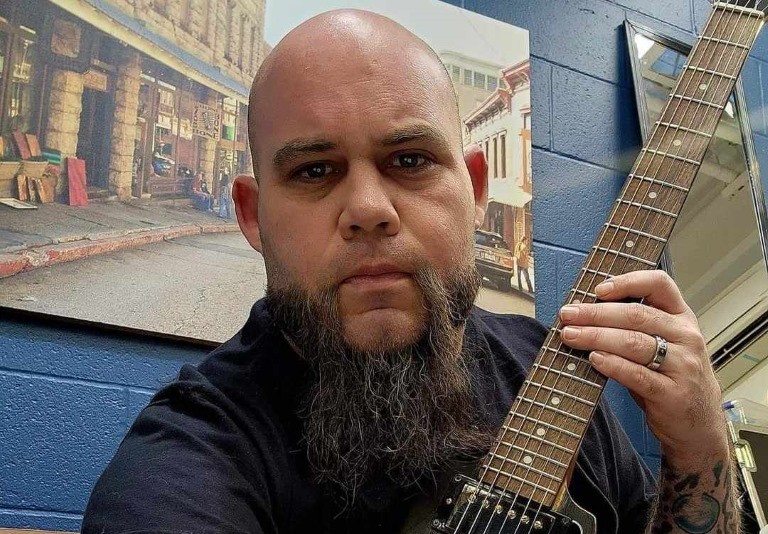
Marcus Rafferty – Mudvayne – Interview – by Jesse Skinner.
On September 10th, 2024, the legendary thrash metal band Megadeth is hitting Albany’s MVP Arena as part of their Destroy All Enemies Tour. They’ll be joined by the progressive metal group Mudvayne and heavy metal favorites All That Remains kicking things off. With Dave Mustaine at the helm, it’s like having General Patton leading the charge in WWII. This tour is definitely one of the biggest events of the year, making a serious splash across the country.
I had the opportunity to engage in a conversation with Marcus Rafferty, the newly appointed guitarist of Mudvayne. Originating from Peoria, Illinois, Mudvayne is initially recognized as a four-member ensemble known for their intricate musical compositions that blend elements of nu-metal, progressive rock, and hard rock, complemented by jazzy bass lines and uniquely chaotic vocals. The Grammy-nominated band took a brief hiatus to enable its members to pursue various other projects, one of which included the band Hellyeah, featuring the legendary drummer Vinnie Paul Abbott.
In 2021, when Mudvayne made their comeback, they brought on a second guitarist to enhance the richness of their live performances. This new addition is none other than Marcus Rafferty, hailing from the Syracuse area. Marcus boasts an impressive background in the touring music scene. Before his role with Mudvayne, he served as the stage manager and guitar technician for Hellyeah. His experience also includes working as a guitar technician for notable bands such as Hatebreed, Saxon, Lamb of God, and Fozzy. When he’s not on the road, Marcus excels as a car salesman at a local dealership.
Marcus Rafferty carved out some time from his hectic agenda to provide us with an exclusive glimpse into the life and experiences of the newly added guitarist, allowing us to learn more about the person behind the face paint.
RRX: Who or what was your biggest Influence on your musical career path?
MR: My mom was my earliest influence. She taught me the basic chords. I always looked up to my brother , because he was the musician in the family.
Later on in life. My Uncle Don would sit with me and show me more advanced playing techniques, Uncle D is phenomenal!
But as far as known players go, I was a big Dime fan, Zakk as well. Those two , I fed off the most!
RRX: What strengths do you believe make you a great musician? What weaknesses do you have that you are working to improve?
MR: The strengths are the same thing that are the weaknesses. Hyperfocusing on every little thing. It’s a blessing and a curse!
RRX: What guitar gear do you use while touring with Mudvayne?
MR: My main guitar is my Gibson 80’s V I love that thing! I also bought an Epiphone V for a back up! But I always play the Gibson. It’s a part of me!
RRX: On May 18th 2024 at the Foxwoods Resort and Casino in Mashantucket CT, Mudvayne Guitarist Greg Tribbett was absent due to a family emergency. Leaving you as the sole axe man/guitarist. Did you feel any extra added pressure performing the show without Greg Tribbett? Any highlights from that show you would like to share?
MR: I mean, anytime that something that is normally 2 people is solely put on you, there is always added pressure. The highlight for me was learning all of the parts that I never played before, sitting with Ryan for 15 hours straight , just learning. That is an experience that money cannot buy, and knowledge that will last me a lifetime!
RRX: What inspires the different face paint for the Mudvayne Performances every night?
MR: Honestly, if I could figure that part out, I’d be set! I start around my eyes, with the black makeup. Look around the room, look at the colors, look up landmarks of the city I’m in , or sports team, or famous musicians. And sometimes I just start with a single line and figure it out!
A few shows ago, I had a whole design done, “I looked like a Panda” and said… “This is not gonna work” so I mixed all the white and black together with some green, covered my face , threw some white lines down under my eyes and walked to the stage.
RRX: Referring to your time with Hellyeah, how was it working next to the Legendary Vinnie Paul Abbott from Texas based band Pantera? And did he share any type of sacred knowledge or any stories about his former band or Brother Dimebag Darrell Abbott with you?
MR: Vince was one of a kind. I spent a lot of time with him . That camp was really like a family. He never really got mad about much. When he did, you knew it. But generally he was a very happy “Big Kid” most generous, kind person I’ve ever met. I watched several people take advantage of him, all the time. He knew it, and just kinda went with it. I think it was more of a “ehh whatever” kinda thing for him. He would talk about his brother often. But more like “that’s something Dime would do” or he would bring up a story about him . I think Vinny was just kinda living with his brother by his side, which is what he needed most.
RRX: What’s the craziest story you can share spanning your entire career in the music business?
MR: My Crazy stories are all from my early tech days. And more about work than anything else.
Hellyeah had a curse. The bus would always break down usually at Mile Marker 1 on the Florida Panhandle picking “Vinnie’s drum tech, Luke “Hellyeah Merch” and I would have to drive a U-Haul for like a week or so, every tour. Chad even rode with us , sometimes. And would help cross load the gear.
Welp , heading to Austin or San Antonio one day, bus broke down “Shocker… I know” but we got to the gig eventually, backed the truck up to the stage with something like 43 minutes until show time, hustled our asses off, got the whole gig set up, and Hellyeah Crushed it!!!! Hard work was always #1 , Party comes after the truck is locked!
RRX: Do you have any music or material your working on outside of Mudvayne?
MR: I have my band with my brother Mikey, Jimmy and Joe called Fall Of Humanity , we are talking about new music. In due time!
RRX: Any recommendations on local talent or bands from your area?
MR: The whole scene is great in Syracuse ! Get up to the Lost Horizon or The Jugg and see some bands!
Marcus Rafferty will be in Albany NY at the MVP arena performing with Mudvayne on September 10th. Be sure to check out this outstanding local musician touring with a national act.
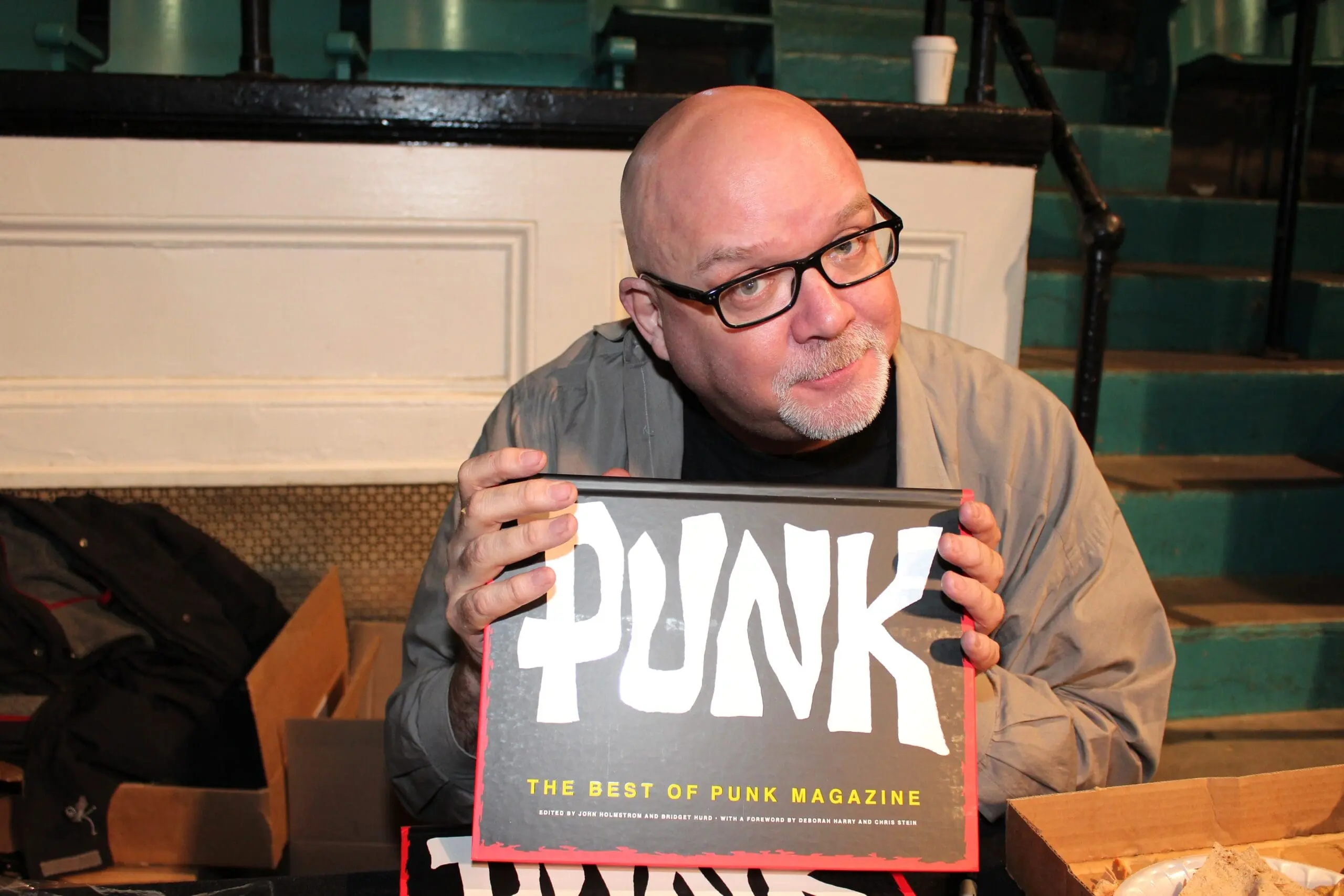
John Holmstrom – An Xperience Interview – by Liam Sweeny.
RRX: Punk. You were the founding editor, and it ran for three years, not counting specials and relaunches. It was influential beyond its time. So I’m thinking there was a degree of the experience maybe aging you a little. Did you come off the mountain in ’79 with white hair and tablets? Did it change you, or was it three racy miles on life’s cross-country highway?
JH: Oh yeah, did it ever! Lou Reed said on “Metal Machine Music”: “My week beats your year.” Back then? My week beat almost anyone’s year. Those three to four years were packed with action, comedy, tragedy, and insanity. You know, I went from being homeless in January 1976 to running the most important music publication in the world one year later. It was a constant roller coaster. By the time the magazine went under for the last time in 1979, I was beaten down. It was like “The Old Man and the Sea,” where the guy makes the catch of a lifetime, but by the time he sails home, the sharks devoured it.
RRX: The New York scene in the ‘70s is celebrated to this day. We definitely find a spiritual center with what Punk was doing. But we have our own scene here, and I wonder how one lucky twist could make the Albany scene celebrated fifty years from now. Did you feel the pressure of a looming posterity back then, or just the love of a local scene?
JH: There was always this weird feeling around the CBGB scene back in the day that we were involved in a scene that would become important someday, and that it would be like early 1960s Swinging London or the San Francisco psychedelic scene. Bands we liked in 1975 and 1976 suddenly started getting signed to recording deals and attracted larger and larger audiences. And the media was swarming the club in 1976: TV crews were shooting bands, the music press and even a few mainstream outlets sent reporters to cover this “new punk rock scene.” Reporters were constantly asking me: “What is punk rock?”
A lot of media people who came of age during the hippie counterculture were bored with the cultural stagnation taking place in the mid-1970s and loved the idea that we were troublemaking, having fun, and starting a new scene! But although we generated a lot of press in 1976, it paled in comparison to the London punk rock scene a year later. That became a mainstream phenomenon! Which is why so many people back then thought “the punk rock movement” was created in England.
Since there hasn’t been a significant rock music scene since the grunge thing in Seattle in the 1990s, I doubt that Albany (or any city) can develop another important scene. But you never know, right? You gotta keep trying. It’s like Albert Camus’ “The Myth of Sisyphus”: The glory is in the struggle, and the attempt to put that boulder over the mountain, not the outcome.
RRX: You’re a cartoonist. A great cartoonist. Your work is all over, and in my case, on my coffee table when I was a kid (High Times). I always liked the fact that cartoonists can pretty much get away with whatever they want. Is that really true, though? Are there bounds? If so, how do you draw your way around them?
JH: Thanks so much for the compliment! Being a lowbrow art form that many people look down on, cartooning is definitely something that gets away with a lot of stuff. Like, that kid who noticed that the Emperor wasn’t wearing any clothes and said it out loud was probably a cartoonist. A good cartoonist doesn’t give a shit if you don’t like their artwork and will draw the ugliest caricature of you that anyone ever saw… And if you can’t take a joke? Fuck off.
But good humor always draws from the truth, so a good cartoonist is always trying to read between the lines and figure out what’s really going on. Which can get us in a lot of trouble, since you don’t get censored when you lie—you end up in prison for telling the truth.
Back in the 1970s, we had publications like National Lampoon, Screw, Hustler, underground comic books, and so many publications all pushing boundaries and trying to be more outrageous and provocative, which was another key to our popularity. The scene back then wasn’t at all like today, where people try so hard to NOT be offensive that it becomes offensive with cancel culture and the stifling of free expression. Political correctness is the death of true art, as anyone who studies history can tell you.
It’s a shame that comedy and humor are dying at this time, since everyone needs a good laugh. A hundred years ago comedy was king: movie stars like the Marx Brothers, Buster Keaton, Harold Lloyd, Charlie Chaplin, etc.; wonderful newspaper comic strips and movie cartoons like Felix the Cat and Koko the Clown… America’s ability to laugh during hard times was a huge part of our national character.
RRX: So punk has evolved to have a much wider acceptance and a bit of gatekeeping. There’s a meme that Avril Lavigne started punk in 2000 with “Sk8r Boi.” Obviously funny, but there are kids that think punk started with Green Day. I will ask you this: throughout the years, decades, of every shade of what is called punk, what’s the current that runs through it all?
JH: Well, I have a theory on all this. Punk was an essential part of rock ’n’ roll. In the 1950s, rock and rollers like Elvis, Little Richard, Jerry Lee Lewis, Link Wray, etc. inspired rebellious teenagers. It was dangerous and unpredictable. By the time the late 1960s were changing rock ’n’ roll into “progressive” or “classic” rock, it lost the rebellious edge that the British Invasion and US garage rock bands revived. Simon and Garfunkel, Carole King, Madonna, and so many others are not rock ’n’ roll in my opinion, and do not belong in the Rock and Roll Hall of Fame—they should just change the name to the Pop Music Hall of Fame. Words need to have a meaning or else our language becomes gibberish.
So, I (and many others) in the early 1970s picked up on the concept that bands like the Stooges, MC5, Alice Cooper, and the New York Dolls were punk! These bands were also labeled “shock rock,” but they had that “punk attitude.” And sadly, a lot of the West Coast “pop punk” bands like Green Day and Avril Lavigne don’t have a lot of that attitude. They play it safe, which is probably why they’ve become successful. Real punks are screw-ups and losers. We’re self-destructive and do crazy stuff! We take irrational risks in the name of our chosen art form and pay the price for making mistakes. We do not play it safe!
Anyhow, my theory is that whatever the rock critics tag as “proto-punk” should be renamed “punk rock ’n’ roll.” After all, punk is just an essential element to rock ’n’ roll culture: the need to feel free, to be independent, to have fun and celebrate life! Punk rock ’n’ roll unites 1950s rock and roll music, 1960s garage rock, 1970s punk rock, 1970s hair metal (and a lot of heavy metal), 1990s grunge, and on and on into eternity. “PUNK IS FOREVER!”
RRX: Right now, we are in a new age of platforms. It is weird to think that one of our biggest draws is that we actually put something out on paper. Everybody is media now. Everybody is a journalist covering their own lives. How do we survive in “formal” media? How do we offer what an influencer on Instagram or a TikTok challenge can’t?
JH: I’ve seen an amazing increase in the appeal and popularity of print media lately, and I discuss this with young kids all the time. They get it. The limits of digital technology are becoming apparent: digital decay, the short lives of many websites, and all the scams on the internet are encouraging people to use other forms of expression. Yeah, social media is necessary for promoting your work (and that’s hitting a saturation point—too many people pushing stuff and not enough people who respond or react.)
When I look back and think how I produced PUNK magazine almost 50 years ago, and the content is still available for viewing and enjoying, and if I take good care of it—it still looks like new? Hey, this gives print media an edge over content posted on the Internet. You know how Instagram hosts these “reels” on their platform that only last 24 hours? WTF? Meanwhile, stuff I did 50 years ago is still a thing. And how many websites last for 50 years? And how much would it cost to host that content over a 50-year period? (Unless you use a website like Facebook or Instagram that claims copyright on the material!) The permanence of print is becoming an attractive element for creative people beginning their careers…
The print medium has been around for over 500 years. Clay tablets? Thousands of years. If you want to preserve your work for future generations, what platform or medium will you want to use? A lot of people are turning to print since the Internet is failing on many levels. Who knows, maybe we will return to clay tablets at this rate?
RRX: Another modern kink in the armor of all that is good and holy is artificial intelligence. I’m talking about generative AI like ChatGPT-4, Midjourney, and Stable Diffusion. Also music AI. Pretend you’re the one tasked to speak for humanity. How would that go? Are you more John Connor or more T-1000?
JH: John Connor, for sure. Looking back, and rereading my “Death to Discoshit” editorial in PUNK #1 (which was just one more thing in that issue that touched a lot of nerves), I realized that my objections to that music mostly had to do with hating the lack of soul in that music. There was a growing use of synthesizers in music in the early 1970s, and disco was this new music where the producers used computers instead of humans to make the “music.”
The band Chic would be a great example. I like a lot of their music, like “Good Times,” which became the music track that put hip-hop on the map after the Sugar Hill Gang used that song for rap music’s first hit record. Even though it sounds like guitar, bass, and drums I believe they used a lot of synthesizers on the record, and on most disco music. And that was why so many rock ’n’ roll fans hated disco. We weren’t racists, homophobes, or anti-human—we were, in fact, pro-human and against computerized robots taking over our culture!
So the fight to keep our culture human (music, art, and performance) is essential. We have to fight the robot revolution. I keep telling people: do not buy from Amazon! Support your local small businesses. Support people and not huge, global corporations! Don’t go to EDM raves, where they play mindless, anti-human zombie music! Support your local band scene. Hang out with human musicians—do not pay money to hang out in a club where they play digital crap!
RRX: This is where you answer the questions I didn’t ask. Remarks? Comments? Educate, enlighten, emote – the floor is yours.
JH: I just want to promote the fact that PUNK Magazine is celebrating our 50th Anniversary in late 2025/early 2026. To me, when we went to CBGB and interviewed the Ramones, and then Danny Fields said that Lou Reed was there and would I like to interview him? That was the moment the punk rock movement began. Yeah, a bunch of bands were making the music, but when the first issue of PUNK came out? We defined it. I always say that Lou Reed’s “Metal Machine Music” album kicked off the movement. It was a double album of guitar feedback and tape hisses, unlistenable for most people. Brilliantly, Lou had Side Four loop, so the track time was Infinity! This was such a “Fuck You!” statement! He put out the album to get out of his contract with his managers, who sued Lou, and I am proud to say that our coverage of the album helped Lou win the lawsuit.
Getting Lou Reed on the cover of our first issue, at the exact time that he was being called a “washed-up has-been” after MMM bombed big time, definitely put PUNK magazine on the map. And our heralding of the Ramones as the New York City punk rock band that mattered, the “Death to Disco” editorial, and the article calling Marlon Brando “The Original Punk” for his role in “The Wild One” all contributed to our initial success. We defined punk rock in a way no one else had: visually and literally. Our later issues featuring Patti Smith, Iggy Pop, Richard Hell, the Sex Pistols, Blondie, and the Talking Heads created the blueprint for later punk fanzines to follow.
PUNK magazine wasn’t perfect. We made a lot of mistakes. We screwed up big time. But the whole world hated us back then, and it wasn’t easy to succeed when the world loved disco music. Like H. L. Mencken wrote: “No one ever went broke under-estimating the intelligence of the American people”… So yeah, I went broke. And I’m back for more!
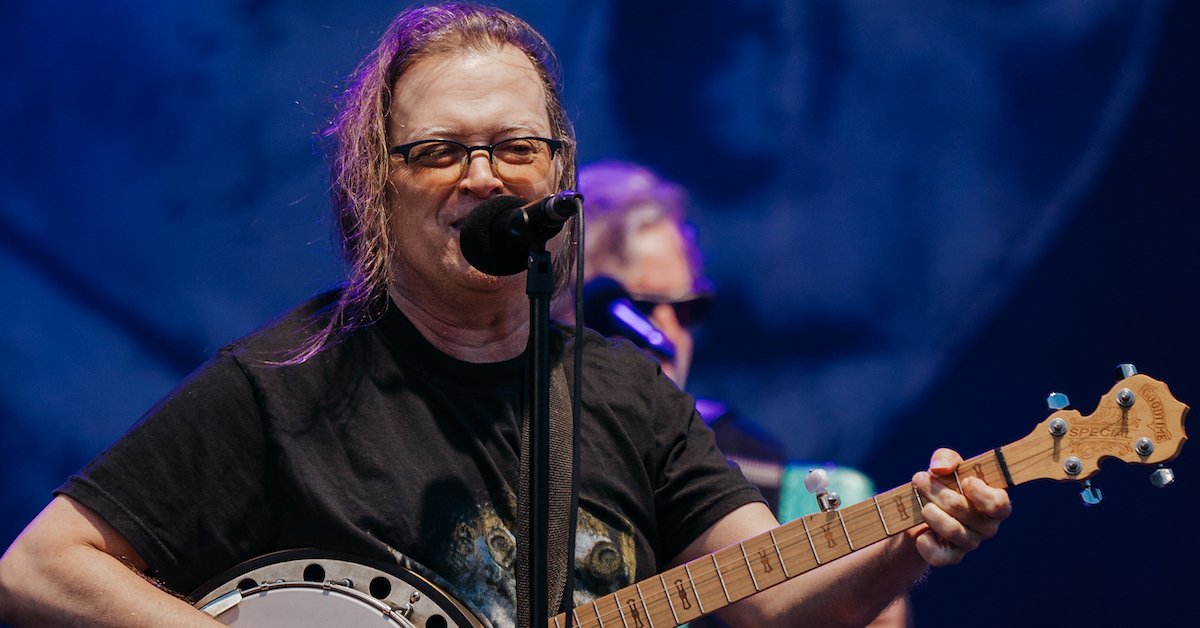
On August 17, 2024, the legendary punk/folk band from Milwaukee, Wisconsin, The Violent Femmes, took the stage at Beak and Skiff Apple Orchard in LaFayette, New York, for an unforgettable night featuring two full sets showcasing their remarkable albums. They kicked off the evening with their iconic 1984 release, Hallowed Ground, before diving into their self-titled debut album from 1983, performing both of these albums in all their glorious entirety from beginning to end. This concert marked the celebration of 40 years of the extraordinary talent, creativity, and passion that The Violent Femmes have shared with their fans over the decades. The Violent Femmes are an extremely passionate and dedicated group of musicians that work perfectly together to create an amazing live performance.
(Rachael Skinner review and photography)
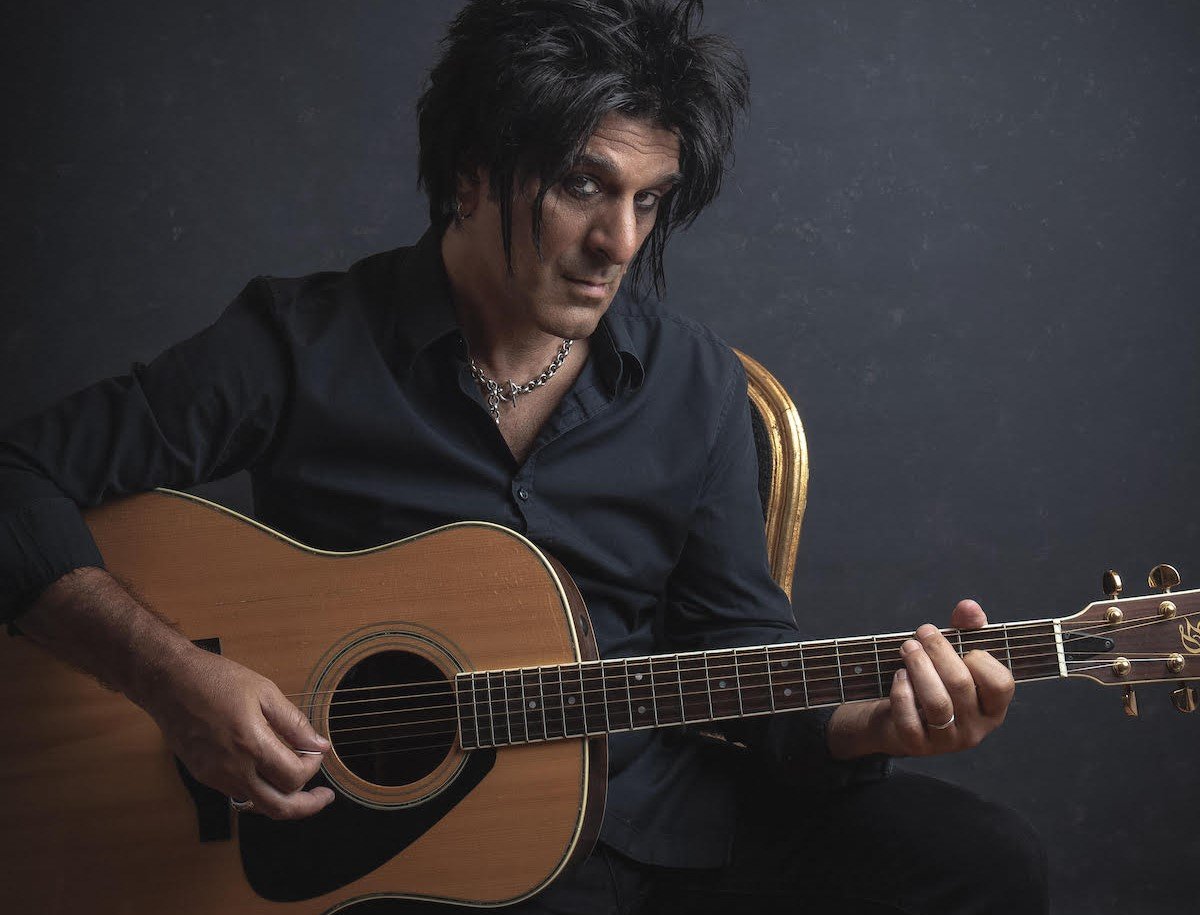
Steve Conte – Xperience History – by Dick Beach.
Steve Conte is known for different things to different audiences. Cowboy Bebop to some, a player with Blood, Sweat and Tears to others, and as a member of the iconic New York Dolls. One hard hitting question and a bunch of other, interesting, conversations.
RRX: We’re speaking with Steve Conte today, who has played with just about
everybody on the planet has a new record called “Bronx Cheer”. Thank you very much for joining us.
SC: My pleasure. Hi Richard, hi everybody out there. What’s happening? Where are we located right now? I know we’re on the web, but where’s home for you guys?
RRX: The home base for our organization is in Waterford, which is a little suburb on the river. And I just want to start, because this is a very important question, and our readers just want to know. You grew up in Utica. You were born in Utica; I imagine you spent a few years there. You
now live in The Bronx. Pizza or tomato pie?
SC: You’re asking a really tough question, man.
RRX: I thought I’d hit you with a hard-hitting journalistic question to start.
SC: You know I love my pizza, especially Sicilian, but the tomato pie I grew up with. Every time I come upstate I go to a place where I can get some. But it just doesn’t
happen down here, they don’t have it. So, I love both, how’s that for an answer?
RRX: Hedging your bets.
SC: Yeah, I was born in New Hartford. I don’t know if I ever lived in Utica proper,
I spent most of my early schooling years, kindergarten through fourth grade, just outside of Buffalo,
so, we even moved further upstate, and yeah, we had some brutal winters up there. Then
we moved to New Jersey, and down this way ever since.
RRX: I was surprised to see that your first touring gig was with Blood, Sweat, and Tears? Tell
me a little about that. Because I think people will go, ‘wait a minute, that dude did
what?’
SC: There are different segments of the population that know me for different
things. There’s one segment of the population that only knows me through my work
with Japanese anime. But those people had no idea that I was a singer and a songwriter on my own, that I ever recorded with my own bands, or other bands – they just know me as the voice of
Cowboy Bebop, whatever, the anime. And there’s those people who know me from my
time in New York City, playing with all these different people: Paul Simon, Peter Wolf,
Billy Squier, you know, the Dolls and Monroe. Then there’s the Dolls and Monroe
people, like the sort of glam-punk, sort of garage people who would have no idea that I
did anything, like, ultra-musical before that, like study jazz guitar, and play with Blood,
Sweat, and Tears.
RRX: Bronx Cheer has some straight ahead rock n roll, there’s some other stuff that has a very… I won’t call it swing but I’ll call it a mellow jazz feel with respect to chord changes and where the lyrics go. Did that just happen because of what you write or was that purposeful?
SC: Well without knowing the specific songs and parts you’re talking about I thought you were going to say with regard to the rhythm, the swing that would be coming from Charley Drayton, (the drummer). Charley Drayton who plays with Keith Richards, X Pensive Winos, B52’s and The Divinyls, he’s played on so many hit records and I got him! We did a lot of live things together with Bernard Fowler who sings with The Stones. I knew I wanted to make this straight ahead rock n roll record but I wanted swing and a little bit of a different quirkiness to it and Charley always brings that to anything that he plays on, so I knew Charley was the guy for it.
RRX: Everyone’s going to know the rock n roll stuff, tell me how did Cowboy Bebop start up?
SC: Well, it’s a huge phenomena when I got the call. I call it when you hang around this crazy town long enough and shit happens, you know? I got to New York in 84 or 85. I moved in, in 86 and started hanging out a little earlier and building my reputation. This woman Yoko Kanno came to New York from Japan and she was asking for a male rock singer and her translator (for lack of a better word) reached out to some New York heavy musicians and asked can you give me the name of male rock singer? My name got tossed in the hat, so I sent a demo tape, she loved it. A couple of months I’m coming back to start a soundtrack for this new Japanese animation series called Cowboy Bebop, it’s 1998. So I did it and she kept calling me for more of those and before I know it, it’s like… time goes on we’re doing more and different animes Ghost in The Shell, Wolf’s Reign, Brain Powerd and I eventually did some for Sonic, you know the video game not with Yoko but someone else. But you know everything sort of builds and they start associating my name with that, which is completely different from the rock n roll world.
RRX: You were in The Dolls and as I understand it there’s supposed to be a new recording being done with Michael Monroe from Hanoi Rocks, you played with Peter Wolf. How much of that is very different but very the same?
SC: Whelp, some of that stuff is ages ago now, like the Squier, the Wolf, the Paul Simon, the Maceo Parker. These things happened in the late 90’s to early to mid 2000’s. I joined The Dolls in 2004 and that was really the first time I played punk rock or garage rock or whatever you want to call it. Proto-punk or glam, I don’t know. Once I got into The Dolls, I really dug into the music to get to its essence. You can’t stand up there on the stage and not believe what you’re doing and not love it.
RRX: In an interview I saw, you actually start with two inch tape, which is not the cheap way to go anymore. How do you think that affects what you do? Because this record sounds awesome.
SC: I agree the early digital stuff would sound cold and brash and on the high end brittle. On one of my albums, I started recording on digital and it was irking me so much with the brash high end, when we mixed it, we actually mixed it to tape. This time we started out with two inch analog tape, it’s just got that warm tape saturation. We use one reel of tape and we get a take of a song and then we just record over it. We dump it into the computer and we say okay there’s that one’s done. Okay let’s roll over the tape now and each reel of tape lasts like fifteen minutes so you can get like three songs on it. Then you just wipe it and do the next track. We did that for all ten songs.
RRX: When you were touring and you were on a bill with Bo Diddley, did you ever meet one of his guitar players, Frank Daley?
SC: Oh. I know Frank from Albany.
RRX: You know Frank?
SC: I know the whole family. I know Joe, I know Jack. I played with all of them.
RRX: Frank used to be my two doors down neighbor.
SC: Wow. Frank Daley man, yeah
RRX: That whole Daley family, I’d look and go, how did that much talent get into three brothers? They’re extraordinary.
SC: Yup, Joe was great too. A great drummer. Yeah, they’re like me and my brothers, me and my family. I have another brother Jeff who’s a great drummer and my brother John of course is a phenomenal bass player. He played with everybody from Ian Hunter to Roseanne Cash, Southside Johnny and the Asbury Jukes for the past decade. But yeah, we have a similar thing going on, it’s that brotherly Upstate thing man.
RRX: I always ask people. The thing that I do when I end an interview. If there is a single statement you would like to make to the world, to everyone, anything you’d like… what would you say and why would you want to be remembered for it?
SC: That’s a heavy responsibility.
RRX: I believe everyone has a message that can resonate. That’s a personal thing with me. I never wanted to have an interview where we go through all of this other stuff and not give you the opportunity to express something that you’d like people to know.
SC: Well, there’s probably a couple of different ones. In life my motto is just be a righteous dude, you know? Be a good guy. There’s so many people in this world where people just use other people for as much as they can and just kick them to the curb when they’re done. I’m not one of those kinds of people, and I really detest people who are. I’ve met them throughout my life and career. I just write those people off, they don’t figure into my list of true friends anyway. So, I’d say, you know? Do the right thing. You know when you’re doing something sleazy and not cool. I try to lay everything out even if I’m asking for a favor from somebody. I’m not going to hide behind some fake thing and spring it out at the last minute, hey, how about this favor? I’ll come right out and say hey, look you know, this is what I’m thinking. How do you feel about this? Honest communication. Be a good dude and please buy music again!
RRX: Thus endeth the interview.
Slab City – An Xperience Article – by Liam Sweeny.
The Southern California desert. Sixty miles south of Joshua Tree National Park, there’s a city sandwiched in between a bombing range and the south end of the Salton Sea, a body of water so toxic that if the law meant anything, no one would bask on its beaches or walk through its surf. There’s no zip code, no city council to vote on one and no mayor to give a rousing speech persuading the residents that they need one. And no cops will arrest you for stealing someone’s mail.
Welcome to Slab City, with a population of a couple hundred or a couple thousand, depending upon the season and who you ask. A place where you can be free and so can everyone else, and you realize that freedom is a fire that can warm your heart or it can burn your bones. It’s on Youtube, a Gen Z bucket list, a haunted house challenge, but the truth is very much alive.
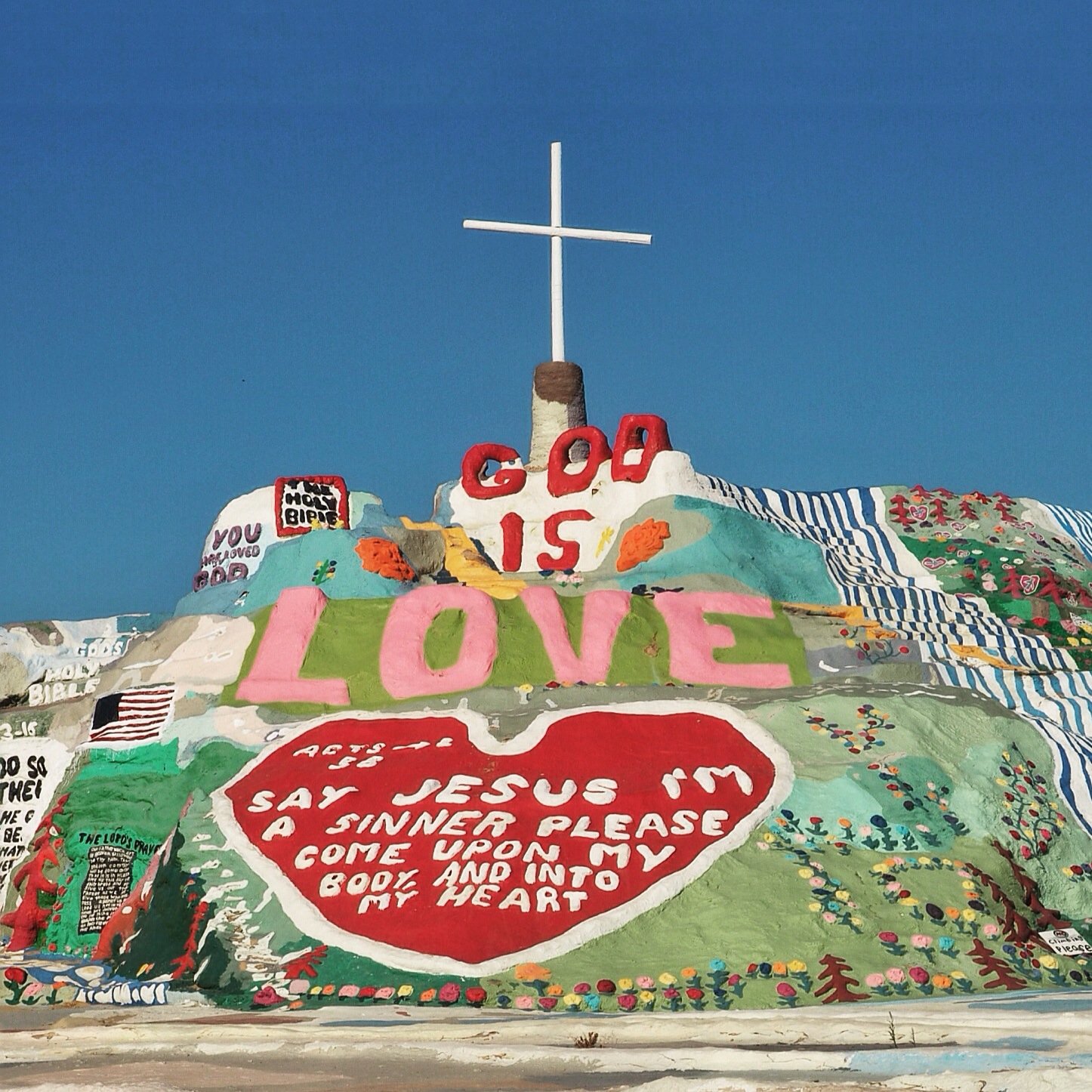
Sira is a dancer. She’s self-taught and she moves like no one with a little touch of everyone. She is a docent at Salvation Mountain, a city landmark, a giant labor of God’s love built entirely from the vision of one man, Leonard Knight.
“He came out here and his original intent was to inflate a hot air balloon,” Sira said. “Like a 200-foot-long hot air balloon out here that said ‘God is Love’ on it. And he unfortunately didn’t get to do that because the environment that the hot air balloon was in didn’t really lend itself to that too much. So he made the mountain instead.”
“Everything you see on the mountain he did basically by himself. And he only got really donations for it, but he made that whole mountain basically on his own with his initial intent to show you that he loved God, that was his big thing. He loved God. But as the times rolled by and people evolved, he evolved as well and he started to make the mountain for everybody, long as you have love in your heart, you know, you, nothing can go wrong. Keep that sense.”
Sira is at home in Slab City. It is summer, a time that tests the mettle of slabbers, and some might say signifies the truest of them. It was 124 degrees when we spoke. She understands the true draw of such a fierce place.
“I don’t care how they are in Babylon,” she says. “but when you come out here you have this energy, you know, you feel like you can be yourself and it’s so natural and that creates a lot of uniqueness with the people who come out here. Even big artists when they come out here, you get to see them be themselves instead of following the rules if that makes sense. And it’s really refreshing to see, especially nowadays because people have such a hard time being real. So you don’t have that problem here.”
Her name is Simcha. It means “to find the blessing.” Her search, and the weather, has found her on the holy mountain of Shasta, her van parked near a drum circle that had been going on for hours, drummers hopping in and out, threading the beat. Her dog is treated to scraps of bone and meat by the drummers and fellow nomads. She lives her life riding the waves of providence, and the current had once taken her to Slab City.
It is in Simcha’s nature to help, to serve, and in the slabs she was quick to find like-minded souls.
“And, um, my campmate Chuck and I both kind of fight death for people who would come to us and nearly die, and then we would bring them back to life. Once I did a drum circle for that because my friend had had a heart attack; it happened five or six times with different people and they would come to us and be like ‘I came to the desert thinking I was just gonna come kill myself. And then I found you guys.’ And we called ourselves the Pillow Patch, like a safe place to rest. And then we would just play music. We were a sober camp except we would smoke a lot of pot and I would experiment with my journey. But there was no alcohol and there was no meth, none of that harder stuff.”
A blended truth is that the slabs are dangerous, and they can be. The desert is rough. And some who come there are escaping Babylon, what they call the outside world. And some come to do meth and hide out from Johnny Law. Simcha found out one night that she was “bad for business.”
“They lit my place on fire in the middle of the night, and I heard a voice saying, ‘Get up, you’re in trouble,’ she said. “And I got up when my ceiling was in flames and I grabbed my dog, and I ran out, and I tried running back in there, which I shouldn’t have. Thank God I woke up and like screamed for my campmates.”
He is called Water Boy. It’s a tattoo that spans his back, reining in the darker prison ink that would have him unacceptable in Babylon. He is an outlaw and a vigilante, and a father and the driving force behind Slab City’s soup kitchen. If the slabbers have a sheriff, it’s Water Boy.
Law and justice exist in Slab City, but it’s stripped down. With two girls, Water Boy makes sure that no one on any sex offender registry is welcome. And not being welcome is known to the State of California to cause ill health outcomes.
Water Boy is tough and human, two necessities of living in an inhospitable autonomous zone. But things get to him. When a 67-year-old drunk was burned alive and the murderer came into coffee hour to brag about it, Water Boy rallied the community to encourage the murderer to turn himself in. How that happened was not within the purview of our conversation.
But one of Water Boy’s biggest battles is misconceptions about the city on social media.
He explains. “We have a really bad reputation online and I’ll tell you why. I’ve been here for about 17 years, right? Give or take. I might be a year or two off because time starts to fluctuate out here a little bit, a little different. But so for years and years and years, like when I first came here, it wasn’t on Youtube. Youtube wasn’t even a thing.
“So now Youtube started to blow up, the internet started to blow up in Babylon. We didn’t have reception out here. You guys have cell phones. We did not, we still have shit reception here. So you would come here and be like, ‘Oh, one night in the lawless town of Slab City, come live in the lawless town. Or, you know, I spent a night in a lawless town.’ It’s not lawless dude. We live in California.”
The real story is far more nuanced, and in some ways, Slab City follows more ancient laws that the “civilized” world has tossed by the wayside.
”I guarantee you right now if my car breaks down or my minibike, whatever I’m riding breaks down, and I need a tire, I can go to my neighbor and be like, ‘Hey, we got an extra tire laying around, we’re gonna find a tire inside Slab City,” he said. “Even if you’re not from here. Slap it on your car and get you back on the road because we don’t want you stranded here. You’re gonna die if you’re stranded here. If you come here and you tell me, ‘Hey homie, I’m hungry,’ I’m gonna go. You can’t do that in your neighborhood. Probably very rarely. I can go to my neighbor and be like, ‘Hey, homeboy, I’m hungry as fuck. I don’t have nothing in my house.’ My homie’s gonna give me something to eat and it’s not even my home. I can walk at any random house, but I mean random, any random house and ask for help and then we’re gonna help each other because we’re desert dwellers and we’re a small community and we know we’re the only thing we got.”
Slab City is built on liberty and survival. Doing what you want, being your true self; maybe it can’t truly be done from the cubicles in skyscrapers or the chem-lawns in suburbia. But in Slab City, you only have to survive a desert that wants to desiccate you. And for the 200 to 2,000 residents (Water Boy puts it at about 450 steady) it’s a welcome crucible.

RadioRadioX & The Xperience Monthly
© 2018 - 2026 Imperial Broadcasting. Most Rights Reserved.