


 Art
The Wizard that’s Goz- By: Liam Sweeny
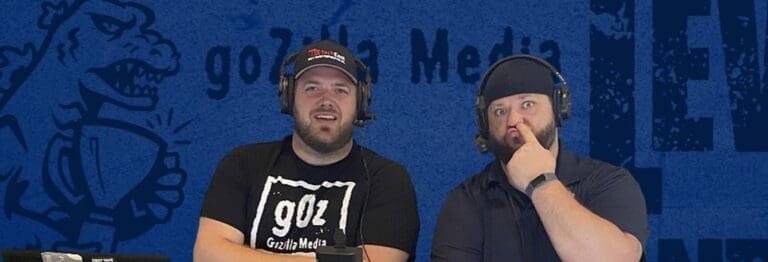
 We don’t cover sports. This is not a declarative statement. We should cover sports in some way, maybe not the box scores, but sports and art are interlinked, and you can’t really say ‘culture’ without a nod to some healthy competition. So, we have to recognizes sports as the product of kinematic art that it is, and welcome some figures in our own way.
Tom “Goz” Goslowski is a true sportsman. Baseball, basketball, football, and now, media empires. He’s recently created a business media platform called Gozilla media, and it is competing on a field with few equals.
We sit down with Goz and talk about triple-doubles.
RRX: You cover sports because you love sports. And it isn’t just a set of rules and a miles-long list of rankings and standings; it’s about the feeling you get when you see your team’s colors and the personal loss you feel at an injury. You must be objective and at the same time subjective to tap the love. Can you think of times they’ve conflicted?
TG: Yes, and it is the connections you build with coaches, athletes, parents and more. You get to know these people not just as the competitors that they are, but as the passionate people that are driven by success. The times I am the most conflicted are when I am no longer rooting for the teams I grew up cheering for but instead rooting for the people I have built relationships with to win. That is tough. Putting your personal relationships aside and still doing your job.
RRX: You’ve been Albany’s vote for the Heisman, as well as a bunch of other awards in sports. And again, you have to decide if you’re voting for the best athlete or your favorite, and that’s gotta be tough. When you have to pick from a group of competitors, is there something hidden you look for that might be in someone you favor?
TG: That’s the great part of 2022. You can find information to help build your case for voting for certain athletes for end of season accolades. Many media members go with “the eye test”, a player just “is really good”. That was almost the old school way of voting and those hidden things media members looked for in the past. Luckily, the laziness of those takes is disappearing, and I know the end of season awards winners of the past decade have been the most deserving of them yearly in sports history (I’m sure some fans would disagree).
RRX: You’ve covered some of the biggest events in sports, like the NCAA Tournament, the NBA and NFL Drafts, and the Travers Stakes. When you have to cover any sporting event, I can only guess at the things you have to have on your back burner that the average listener wouldn’t think about. What are some secrets from behind the mic?
TG: Sharing those stories is my favorite part of my job! Some television anchors or local writers may never get a platform to share those stories. I am fortunate enough that on my podcasts, videos, social media platforms I can share those unique experiences and moments. Anyone can read a box score. Being able to share the moments behind the mic has been the most rewarding part of my career. But because I like you, I’ll share a sports media member secret…. shhh!!! Here it is: The broadcasters do not hate your team. Almost every media member has the same goal covering live events. The game goes fast. The game is exciting. You get your work done and you get home safe. That’s the dirty secret.
RRX: You played football in offense and defense in college football before suffering an injury. When you cover sports, injuries on the field or the court have to hit you in your heart as something more than just a happening in the game. Have you ever followed any one particular injury because it hit close to home?
TG: I truly try to avoid it. I suffered a torn labrum in college and that type of injury eventually ended the careers of NFL players like Andrew Luck, Mark Sanchez and almost Drew Brees. The issue with using too much of my personal experience is I don’t know the medical terms/diagnosis behind each athlete’s injury. Each athlete’s body is going to respond differently to surgery, physical therapy, and eventually physical contact. Sadly, the injuries to athletes are not like a video game and they just go away the next season you play on PlayStation. The injury is a part of you for the rest of your life. That is tough for especially young athletes to understand.
RRX: Let’s talk Gozilla Media. It’s a multimedia business platform out of Albany. Sports is big, but it’s not every part of Gozilla. You partner with other businesses and other organizations, using the platform you’ve developed to help them meet their goals and get their messages out there. So, can you tell us a little bit about the platform?
TG: I like to say Gozilla Media is Your Message. Your story. Your way. The biggest frustration I had with traditional media is the change that has happened since the mid-2000s. If you ask anyone I have worked with that had more experience than me in the field, I would constantly ask them about the past. Why did you want to do this as a job? Why did this segment work? Why did listeners respond to musicians/artists in that way? Those conversations became the inspiration for launching one of the podcasts I host called Getting There with Goz, where we discuss those stories (Art Fredette appeared on a recent episode to discuss the history of RadioRadioX).
The best way to summarize much of their feedback I would hear from them is that fifteen years ago your bosses in traditional media (radio, television, newspaper) wanted you to “be you.” They hired you for that reason. Be entertaining and the audience will respond to you. What traditional media bosses want in 2022 now is, “We would prefer this version of you better”. In other words, do not be completely honest, transparent, opinionated, or controversial. Anytime anyone ever gets offended about anything you will hear something from your bosses even if you were right about it. Sadly, that’s the future of traditional media. I cannot believe I am about to use a Kid Rock quote, but it really sums up why people are embracing Gozilla Media/nontraditional media companies and leaving the old ones behind: “If it looks good, you’ll see it. If it sounds good, you’ll hear it. If it’s marketed right, you’ll buy it. But… if it’s real… you’ll feel it.”
RRX: And maybe saving the best for last: the shows. We’re talking about Levack and Goz, Getting There with Goz, Goz and close to 20 other shows aside from your own. Looking at this, the platform you spoke about does start to take form. If someone, say, me, wanted to start a show, what could we expect, in terms of know-how and equipment?
TG: Just like a sports coach I’m recruiting some new shows/personalities to join Gozilla Media in 2022. Those coaches cannot just give out the playbook to anyone! Just kidding but if you are interested in launching your own show and joining the Gozilla Media network, email me Goz@GozillaMedia.com. I’ll be more than happy to share more details.
RRX: This is where you answer the question I didn’t ask. Speak of anything. Educate, enlighten, emote – the floor is yours.
TG: Lickety Split’s verse was better than B-Rabbit’s in 8 Mile. Bill Murray should have won an Oscar for playing himself in Space Jam. Terrible coaching job by Coach Boone for not replacing Alan Bosley earlier in the season in Remember the Titans. Season 3 of Floribama Shore is art.
Also search Gozilla Media on YouTube and subscribe to our channel. Our podcasts are available on Apple/Spotify and wherever you listen to podcasts so please feel free to leave a review, it really helps.

 Howling


Corey Aldrich-Capital Region Creative Economy-By: Liam Sweeny
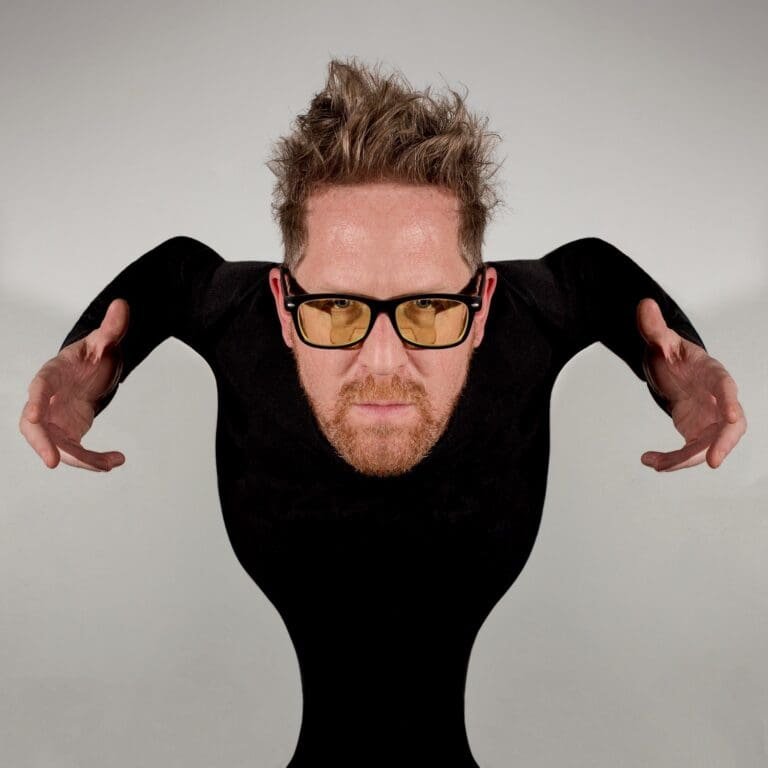
 So you’re at the show. She’s on stage singing her head-off, and the band backing her is liquid fire, as is the drink you just ordered from the bar during the summer festival the city puts on, why the girl singing her head off is onstage in the first place, a delicious little interplay between the left and right public life called the creative economy. The creative economy is often mysterious and nebulous, and if you’re not careful it might steal your cornflakes, but designer and event marketer Corey Aldrich is here to take us through the ins and the outs of this new landscape (and he might sell you back your cornflakes.) I sit with Corey and we discuss sidewalk chalk murals.
RRX: You work with Upstate Alliance for the Creative Economy, or ACE. This is an amazing group of people from different backgrounds who explore the impact of creativity on the local economy, though I’m perhaps oversimplifying it a bit. How did ACE start? Was this a concept that developed over a conversation, or did it have a long history?
CA: My company is 2440 Design Studio. I work on individual and series based events, branding, doing commissioned work and project management including contractor oversight, creative and interior design work and photography. I also run a bar program for the Arts Center of the Capital Region called Arts Bar.
ACE is one of my gigs. I have been with ACE since it was a group of institutional level creative leaders from not and for profit’s meeting around a table to figure out ways to get the larger story out about the economic power of the Creative Economy. I was brought on to represent freelance creatives. ACE has gone through many iterations, always with the commitment to drive awareness about the Creative Economy of the Capital Region.
RRX: When I think of a creative economy, two sorts of visuals come to mind. One is the murals the City of Troy got someone to paint on the pillars of the Collar City Bridge underpass, the other is my friend playing at a pizza joint for fifty bucks and a slice of pepperoni. I imagine the creative economy to transcend my view. How so?
CA: Both are correct! The project called The Uniting Line includes the City of Troy, The Arts Center of the Capital Region, TAP Inc and Collar Works. The design is by artist Jade Warrick. This is actually a great example of the creative economy as an economic jobs generator and a quality of life project.
About 10 years ago I had a standing gig playing guitar at the original Lark Tavern with producer PJ Katz and regional hip hop performer Shyste Chronkyte. The gig was $50 and several pints of beer. It was the best thing ever! I love Tess, she is a great supporter of live music and entertainment and continues that story at McGeary’s.
RRX: There is a creative scene in the Capital Region much bigger than people may believe. We interview artists and advertise venues, and so we’re sensitive to what affects each; it affects us too. How does talk of the creative economy find better synergy between the business of entertainment and the art and music that entertains?
CA: All parties need to understand that we each have our supportive roles. The venue needs to promote the shows, the artist also needs to work with that. If I book an artist, there is a list of things that I need to help promo the event. Professional photos, up to date online representation, well written bios, quality video or music links. All these things can help the producer to get a professional package out to the media and marketing channels.
Our venues need to make sure they are doing what they can to be hospitable to artists as well. Have the check or cash ready when it was promised. Make sure they feel taken care of. Give your artists a proper space to prepare before the show. If it’s music, be responsive to the sound needs to help ensure a good experience for all. I have witnessed many venues that barely post more than once on their social media with no real campaign. We can do better than that.
RRX: Latching on to the last question, when we talk about the economy in any form, it can have a ‘wing-clipping’ effect to some artists, who, few of them started their craft from a business space. More are the people who just wanted to get rich. How can artists take advantage of the creative economy aside from just being the labor, so-to-speak?
CA: We want our art to be unencumbered by ‘market’ expectations or directives. Also, we need to be able to afford a place to live and things like health insurance, car payments and other normal expectations. Get your business professionally set up so that you can do things like claim legal tax write offs or protect yourself from losses by having proper insurance on tools, gear and space. Trademark and copyright. If you’re doing creative work (Writing, Performance, Fine Arts Painting, Music, Interior Design, Game Programming, Architectural Design) and you’re a freelancer, you are also a business person, your expenses should be properly accounted for.
Know your value. Do your research. Creative work is work and deserves proper compensation.
RRX: You are a designer, and you look at event design, and according to the website, you “design events that support story-based narratives.” For the layman, I think that may need a “for example.” What I do get is the importance of how a thing is presented. How do you design, present, and “frame” an event beyond just advertising?
CA: Anything I do needs to feel like it has a contribution to the greater world around us. When I am putting together an event or series, I try and understand what that purpose is for it so that I can then program accordingly. We learn best with story based narratives. If we want to make an impact with what we are doing, we need to understand what we are trying to say.
RRX: You own a design company that works with other design-area and artistic professionals. This has got to be a coin flip between very rewarding and very frustrating. I say the frustrating part because you’re getting paid to impart your vision on someone else’s vision. Do you have any philosophies you take to work with you every day?
CA: I have worked with a large percentage of the creative arts and cultural institutions in the area. Most people that come to me are word of mouth. They want me there to help create the vision, that is what I am known for. I don’t need to have the final say on everything in a project. I do need to drive the collaboration into a cohesive sense of the there there. If that is there, I am less dictatorial about every detail.
RRX: This is where you get to answer the question I didn’t ask. Educate, enlighten, emote. The floor is yours.
CA: As creatives we need to understand our value and have expectations that the larger business environment and governmental authorities take us more seriously (STEAM not STEM). ACE commissioned a study on the impact of creative industry on our region. At the time of the report, the Creative Economy employed 47,282 people and was generating $1.4 billion in earnings in the Capital Region. From a financial perspective, we were larger than the insurance and construction industries. Make no mistake, our region is amazing to live in because of us.
Have a project you’re not sure what to do with? Hit me up, we can talk.
IG / FB: @coreyaldrich | Linked In: Corey Aldrich
EMAIL: corey@2440designstudio.com


Bruise Bros. Reunion to Kick Off the Three-Day Hooligan Holiday at EMPIRE UNDERGROUND -By Rob Smittix
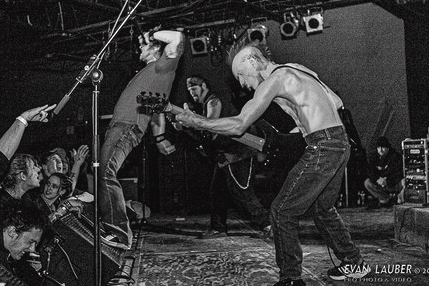
 Music fans mark your calendars. On January 28th, 29th and 30th at Empire Underground at 93 North Pearl Street in Albany an event is being held called Hooligan Holiday. Over the course of the weekend, you will have the opportunity to see Murphy’s Law, Mad Ball, Sheer Terror, Power House, Murder’s Row, The Take and many more but one of the most anticipated shows to see is Bruise Bros. Today I’m talking with Vegas Nacy of the band about what we can expect and why they chose to do a reunion now.
RRX: So, this show that you’re doing with the Bruise Bros., it’s a reunion, right?
VN: It is a reunion, it’s also the 21st year since the first release. We thought it was a good time to re-release the two CD’s that we did in the beginning together with some nice artwork with the guy that does all the bigger hardcore bands, Sick of it All, Agnostic Front, that kind of artwork. We were trying to do a 20-year reunion which would have been during COVID, we couldn’t make that happen. So, we figured 21 on the card, we do that whole kind of gangster, 50’s, rockabilly thing.
RRX: This is all part of Hooligan Holiday, right?
VN: It is part of the Hooligan Holiday, yes. We’re playing on January 28th with Sheer Terror and a bunch of local bands too.
RRX: This event is January 28th, 29th and 30th. Three days for Hooligan Holiday. That’s going to be amazing!
VN: At first, I was like well it’s right after Christmas but as soon as the holidays are over everyone kind of comes down from that high and it’s good to have a little pick me up there. New venue, it’s going to be great.
RRX: Empire Underground where you are playing is the secondary performance area below Empire Live. I haven’t been to Empire Underground yet. I’m just excited that these venues exist in downtown Albany. I always wanted this.
VN: Yeah, it’s amazing. Empire Underground is really cool. I was nervous at first when I first saw what it was and what it turned into is this kind of… it really looks like this Fight Club-esque… really like an underground… when you get there the vibe is really cool. We’re thinking of having everybody there with markers out and they can tag the walls. Graffiti up the walls. Have fun with it. You know?
RRX: I could break out my old tag from my hood days.
VN: Exactly, yeah you got to be on there for sure.
RRX: I know the first release was 21 years ago, how long has Bruise Bros. been together?
VN: I think the end of 1998 was when we started.
RRX: That’s when music was good.
VN: I had a band, Bone Box, back in the 90’s and we split up and I decided I was going to move to Florida because the guitar player moved there and said he had a band started and it was going to be great. It was winter here, so I said I’ve had enough of this s**t. Sold the little bit of what I had, went down and nothing worked out musically. It was hard to find a job where I was. Mike Valente and I had always kept in touch, and we always wanted to do a side project. We had some crazy names and we’d probably be banned for life if we had them now. We stayed in touch and actually before Valente, Nick from Murder’s Row was calling me and saying he really wanted to be in and do a new project but Nick was busy and Valente stayed on me so as soon as I moved back we got in the room. Rekes (he’s an amazing bass player from Attica) was there. I found this drummer who was a jazz kid, he didn’t know any of the bands that were current at the time with the heavier stuff. We loved that. He was great but he’s also a DJ and he writes for people, and he didn’t have any time so I called my old drummer from Bone Box, Matt, and he’s a beast, so the line-up is strong.
RRX: This is going to be a great reunion.
VN: Yeah, we decided not to headline this, Sheer Terror is headlining, so we’re going to do like a 40 minute set, we decided we’ll keep it short and sweet and if something comes along in the future, we’ve been kicking around some ideas. So, who knows?
RRX: Anything you’d like to see come out of this reunion show?
VN: I don’t know. There’s a weird niche with the band, the way we wrote those songs, so people are always begging for more. Honestly, I wouldn’t mind writing another tune and maybe donating the money to a charity that we’re all into. Something like that.