Home Blog Page 601

It All Started Over A Free Beer -Ian Carlton Interview By: Liam Sweeny

0

Music is an alter ego. Even when you use your own name and wear your own face, when you go up on that stage, you become somebody else. You become a performer. No matter how absolutely zen you are, you shift your mindset into that of the best musician you can be. And that persona belongs to the crowd.

Ian Carlton has an actual alter ego, Ritz Carlton. As the singer and guitar player for Rocky Velvet, among other bands, he’s had the pleasure of assuming that persona for decades. I sit with Ian and we discuss ergonomic phone booths.

RRX: Your name is Ian Carlton. But your name is also Ritz Carlton. Secret identity, perhaps? Witness protection? On the run from a rogue guitar maker that wants to string you up? In seriousness, how did Ritz Carlton come about, and what are the key differences between Ritz and Ian?

Ian: Ritz Carlton?  Never met him, but he sounds like a real wanker.  He comes off like one of those guys who brags about eating paella in Valencia, Spain,  having red silk panties thrown at him on stage in Atlanta, GA, or wearing custom tailored tuxedos from the now out of business Rodino’s in Troy, NY.  Best of luck to him, but that stuff is not my cup of tea.  You should probably ask him for his own separate interview.  

RRX: You’re in Rocky Velvet, which you’ve described as “Cropseyville’s Rock ‘n’ Roll Degenerates.” But that name had a ton of respect and staying power in this area. What do you think is a point where a band of “degenerates” actually gets the respect of its peers, and does the descriptor change at all at that point?

Ian: The original goal of the band was to get free beer for playing the Ale House in Troy, the QE2 in Albany, or any place in between.  When we started it was being in the right place at the right time with a moderate amount of musicianship, at least for my part.  Our connection to Johnny Rabb through Graham and his dad, the “Rockin’ Professor” John Tichy, opened the door and away we went.  We played and played and played until we actually became fairly competent, and really hit our stride around 2008.  Playing consistently across the midwest and east coast, we had a good album recorded and actually functioned as a respected band!  Naturally we broke up.  I still appreciate a free beer or two at a gig, and I sure as hell want to play at the Ale House again.  It’s cliche, but as much as things change they stay the same.  

RRX: You’re in Rocky Velvet and the Swinging Palms, and probably a few projects I’m missing. And if Ritz Carlton is more a project than an alter ego, there’s that. How do you keep your hand in as much stuff as you do? Are you doing these projects with some of the same people, or do you just not sleep? What’s the trick?

Ian: This area is flush with talent, and I feel truly fortunate to be surrounded by it.  Most of the projects I am involved with do utilize the same rotating cast of characters, but the goal is to keep each one unique and exciting.  Every band, and every gig, has its own purpose and goals.  I definitely do not say yes to everything that comes my way, but I like having multiple projects and personalities in the mix.  

RRX: I’ve seen you play guitar, and I’ve seen you play stand-up bass. And I love stand up bass. I think it should be in every band that has bass in it’s sound. I know I’ll never see that, but one can dream. When you play guitar or stand-up bass, you gotta move. How do you dance with either instrument without losing focus?

Ian: Ask anyone that knows me and they will affirm that I am easily the worst dancer in the room, no matter what room I am in.  I think my playing is at its best when I am not concentrating, not focused, and totally checked out, thinking about something else, like what I’m going to eat later.  That said, I do like to get people in the crowd excited.    With or without an instrument I enjoy taking my “Elaine Benes” style moves to the people.    

RRX: We’re getting things back in full swing now that the restrictions are being lifted. We hated to ask people how they were adjusting, say, this time last year, but we love asking it now. How has it been, gearing up, going out, playing, after such a long hiatus?

Ian: It feels great to get out and play again in front of live audiences!  The trickiest part so far has been finding and reorganizing all of the gear.  My basement is a mess with chords, amps, and guitars etc.  It seems like all of the sudden, gigs are back and everyone is crazy busy.  Having everything shut down has obviously been a huge drag professionally and financially, but it also gave me the opportunity to spend a ton of time with my wife and kids.  Despite how hard it has been, part of me will always cherish it.   

RRX: You play with Graham Tichy a lot. Or enough. In Rocky Velvet, elsewhere. We covered Graham in a previous issue, and it’s always a good time to let two musicians connect over pages (and in this case years.) What is the secret of your jibing, as musicians, and as friends? And if you have any stories, do share.

Ian: Honestly, I feel so lucky to have met Graham when I was in 7th grade.  He is constantly learning and improving, and he can’t help pushing and teaching the people around him.  It was never, “Do you want to learn to play the Beatles, or would you like to learn some Hawaiian music?”  It’s always been a kind of trial by fire, “Play this and if you don’t know it, put in some time and learn it.”  His focus and determination has been a clear motivator for me as a musician.  Aside from that he is a great guy and we have always had fun together.  You should see what he’s done with his lawn!  So lush and green! 

RRX: This is where you answer the question I didn’t ask. Favorite degenerate pool hall? Surf or turf? Educate, enlighten, emote – the floor is yours.

Ian: Go see Battleaxxxe, and have your face melted.  Go see the Lustre Kings and dance with a stranger.  Go to the Hanger and tell Brian and Troy I said hi.  Go to Indian Ladder Farms and visit Simon.  Rewatch anything featuring Danny Devito.  Vote Dolly Parton for President.  Stop checking Facebook.  Have another cup of coffee.  Call your mother.  Eat your vegetables.  Take a deep breath and a nap when you can. 
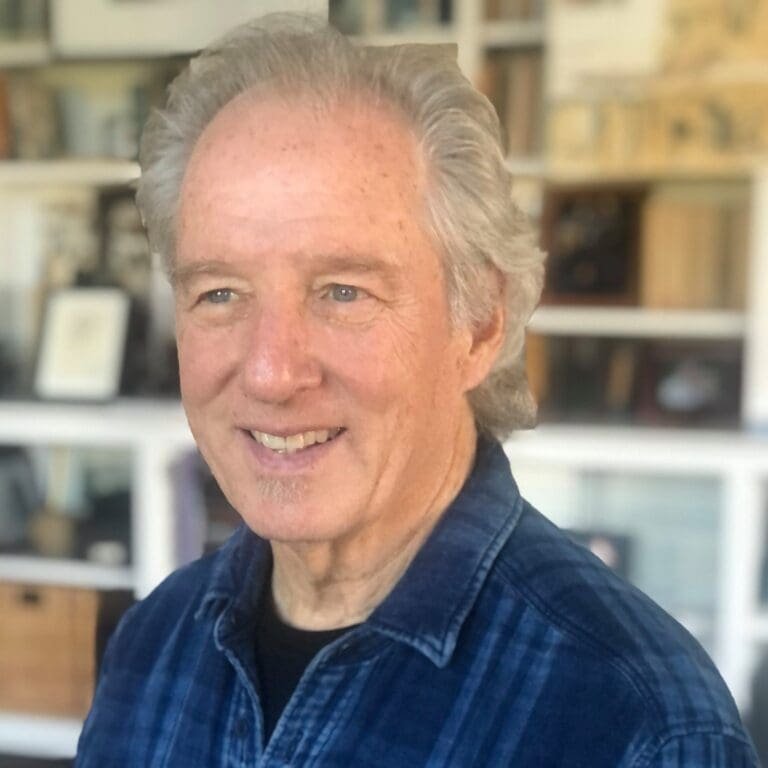
East Coast Country Royalty -Chuck McDermott Interview By: Liam Sweeny

0

There is something in music that’s greater than three chords and 4/4 time. Okay, so even within music there’s something better than that. But what I mean is that, what comes from voices and instruments really summons a thing, a spirit, if you will, and those who take up their voices and those instruments conjure up a magical space we collectively refer to as a scene.

Chuck McDermott, a country and Americana performer, known notably for his influential country group Chuck McDermott and Wheatstraw and his time with legendary singer/songwriter John Stewart.

We sit down with Chuck to wade through the creative ephemera.

RRX: Your most recent album, correct me if I’m wrong, is 38 Degrees and Raining. It’s got such a full sound. It speaks of forty years in music, truly. The fiction writer in me just put the album in my soundtrack setlist, and the interview writer in me has to ask how long this actually took you to put together? Take us inside this album.

CD: We went into the studio in the very early days of January 2020. Leading up to that, for the three months prior, drummer and producer Marco Giovino and I collaborated about what songs to select for recording, and then above and beyond that, getting down into changing keys, changing tempos, changing chord structures, changing lyrics in some cases. But we gathered in the studio with Marco on drums, a wonderful Boston-area guitarist, a bass player and myself, and over the course of two days, we cut nine basic tracks. Then we began the process of doing selective overdubs of background vocals and other instrumentation.

That came to a screeching halt by about March 8th, when the Covid crisis was obvious and the lockdown had begun. And that fundamentally altered the course of the record. So over the next couple of months, we found ways to collaborate at a distance from each other. I started doing some guitar work and some vocal work from home, Marco farmed out track to other musicians to get their contributions. Down in Nashville and the case of the piano player we worked with from London. Then the more completed tracks began to come together. Some were going to require a sufficient amount of work that we just set them aside. So that refocused us on a shorter list of songs that would actually end up on the record. During this period of time, I also wrote a new song, called “Here’s the Thing About America” that we assembled, again, at a distance from each other. In a way, it’s created an emotional centerpiece for the album itself.

RRX: You started out, maybe not completely, not in a more noteworthy sense, with Chuck McDermott and Wheatstraw out of the Boston area. Critical praise from on high; you all were big, for a long time, about ten years. Being a country band in Boston, did you have any challenges breaking out at first? What was it like?

CD: There was good news and bad news associated with being a country band from Boston. And we weren’t just a country band from Boston; we were a bunch of long-haired rock-and-roller college dropouts as a country band. The good news was, the Boston area, and the neighborhood itself, was very fertile ground for performing bands. There were many, many nightclubs in the Boston area, live music five- or even seven nights a week. There is a huge college-aged crowd in the greater Boston area, and again, one throughout New England. All of those schools and related venues had an appetite for live music. So we could work a lot. That was the good news. And that led to some significant regional popularity. At the heart of it all, we were touring from Toronto to New Orleans, playing better and better venues, and being an opening act for many of the national country acts coming through the region, and things like that.

And that let us get a foothold into an emerging country scene in New York City, in Manhattan, which centered around a now-legendary bar called the Lone Star Café. And we were able to get the A&R people, the record company people in New York in to see our band and the enthusiasm that we could generate, and the crowd, and they would be excited by that, and promised to bring their Nashville counterparts, and to see us the next time we were in town, and nothing came through on that promise. But inevitably, the Nashville reps just couldn’t get their heads around signing a band like ours. Again, we were Yankees, we looked like hippies, and Charlie Daniels wasn’t even welcome in Nashville at this time because he had a raggedy long haired band with him. And Willie Nelson and Waylon Jennings left town, and went back to Texas. And there was a real cultural dividing line in Nashville, and we could never get through that.

RRX: You spent another ten years playing with legendary singer and songwriter John Stewart. John, and you yourself, made major contributions to folk and Americana music during that time, and when you had first encountered John, he had already made significant contributions. What was John like as a musician? As a friend?

CD: One of the most rewarding experiences I’ve had in my life is the friendship I shared with John and his mentorship, that I enjoyed from the time we met until the time he died. On the music side, John was a prolific, inspired songwriter. He was a living example of the fact that, if you want to write your best work, get whatever the best that’s within you, you have to remain intensely focused on songs, songwriting, themes, all that goes into creating a song. John was one of those “true artists,” meaning that he might write a couple songs in a given day. And then he’d never find his car keys. His brain worked in its own unique way, but it produced a body of songwriting that stands up against anybody’s. 

On the personal side, where John could be incredibly funny, onstage, for instance, and have wonderful interactions with the audience as a performer, he was, in fact, an introvert. He was more comfortable in a very small group, or one-on-one with somebody, or in fact being alone. And that would, at times, create a challenge for him as a touring musician because your fans want to spend time with you and things like that, but it was just more exhausting for him than it might be for someone else. And he’s not alone amongst the famous musicians that I’ve been around. They can be really excellent at their craft, but at the same time, they might be quite private people.

But he and I, for some reason, developed a very trusting friendship, and I miss him so deeply because he was a fascinating person to talk to. He became a godfather to my daughter, and we just shared a lot of time together.

RRX: I listened to an interview you did with our own champ Rob Smittix, and you mentioned the Lone Star Café in New York, where you performed for people like Andy Warhol, Kurt Vonnegut, and, one one occasion, Johnny Cash and June Carter. Can you describe that atmosphere, and, of course, meeting Johnny and June?

CD: The Lone Star was a magical place. Before it became a music venue, it had been a Schrafft’s restaurant, and it was laid out in a very long, rectangular footprint. And there was an upper balcony that- you never would’ve designed a music club and put it in that footprint. But that’s what this became. And, like often happens with music venues, everything that was wrong about it ended up being what was right about it, in that there would be a row of people. The band was about four feet from the bar. So people entering had to walk in front of the little bandstand and down into the seating area, or have a seat at the bar, if there was one, which there usually wasn’t come showtime, but despite all of that, it just became, for a number of years, kind of the place to go in New York.

There was always a great crowd. We often played Thursday through Sunday, we’d stay through Saturday, something like that; you’d get down there and set up, and be there for several nights. And the club drew its own crowd, and we started growing our own crowd on top of that, which was nice. And then New York being New York, you never knew who was going to wander in. And people did wander in. We’d be setting up in the afternoon and it’d be Doc Pomus, singer-songwriter. Sitting there alone, kind of holding court. You could sit down and talk to the man. By showtime there would be Dennis Hopper. I remember getting into a very animated conversation with Robert Duvall, as to who is the greatest living American male country singer, Merle Haggard or Waylon Jennings. He was voting Haggard, I was voting Jennings. We declared it a toss up. 

The Saturday Night Live crew, the original cast; Gilda Radner, Belushi, Ackroyd, Chevy Chase, they’d come down after their show on Saturday night and be ready to have fun. Literary figures; Kurt Vonnegut was not an infrequent guest. Andy Warhol was there a couple of times when we played the venue.

Meeting Johnny Cash, that was a special thing. It’s like meeting Abe Lincoln or something. He’s a big man, he carries a highly dignified gravitas. He and June and Carlene Carter Cash were seated at a table on the upper balcony, right at the edge of the balcony, right down on us. And I didn’t really notice them at first. When we finished our set, my manager came over and said, “Johnny and June Cash are here. Come upstairs and meet them.” I followed him up, and we approached their table, and Cash stands up and turns around and literally it was like meeting somebody from Mount Rushmore. 

I told him what a pleasure it was to meet him, and then to his wife and daughter, and then he said, “You all sound really wonderful tonight, son.” I thanked him for expressing that, and for coming, and after that, I didn’t know what to do. I still get goosebumps when I relive that moment. And they stuck around for the rest of the second set, about two more hours, which I decided to take as a compliment, and that was that.


Peshy Kruger Rap Battle Warrior: Rap Battles and Hip Hop Have Evolved Over the Years. So Has Peshy Kruger. By: Rob Smittix

0

On Friday November 12th at The Madison Theatre in Albany #25toLIFEEE and Peshy Kruger present #LIFEEE Behind Bars 2. For those that aren’t fluent in Rap music lingo, bars means musical bars. The event is a rap battle that will entertain the masses and there will be times the punchlines will make you spit your drink out all over the floor. Today I am speaking with the man himself. Ladies and gentlemen, I bring you Mr. Peshy Kruger. 

RRX: I’ve been a fan for quite a while. I’m from the South End (Albany), I believe you are too.

PK: Yeah definitely. We’re from the same hood bro. 

RRX: I enjoyed my time growing up there. It’s a character-building neighborhood. 

PK: Definitely. 

RRX: You have a rap battle coming up “LIFEEE Behind Bars 2.”

PK: This event that’s taking place I tried to get my birthday but I couldn’t, so I got the night going into my birthday. The event takes place November 12th and we’re going to be there at midnight so…

RRX: It will be your birthday, nice! I brought up being from the same hood, from the same area because I really find I love listening to local rap music more than any other rap music out there.

PK: There’s not too many of you guys though. I’m starting to garnish the attention but what I had to do to get the attention man. I’ve been rapping probably since I was eight. 

RRX: You and me both. 

PK: I started taking it really seriously when I was in high school. At Albany High we had the courtyard and that’s where all the rappers would come together. You know what a cypher is? 

RRX: I do. 

PK: And that eventually comes to, we’ve got a lot of nice dudes on this cypher, let’s have a battle. And battling back then was different from what the culture is now. Spitting some rhyme that you have rehearsed, not on a track but you had them down and had a couple of punchlines. Now it’s a whole art. People are crafting and getting real good with it. Definitely has evolved. 

RRX: Hip Hop has always been a competitive sport. Like you said you were rapping since you were young. Me too. I was the kid with the turntables in the neighborhood. 

PK: A turntable in the hood was like gold.

RRX: Oh yeah those were the days man, we used to hit Music Shack on Central Ave for the records and if you wanted a great mix you had to purchase two of the same record every time. 

PK: How about the tissue on top of the tape?

RRX: Oh, my God yeah to re-record over it. Now me being an older cat a lot of the newer stuff that the kids are putting out, just doesn’t do it for me. 

PK: I’m not gonna lie, I pride myself with adapting to mad different flows, it almost hurts my brain to dumb it down. I enjoy being lyrical and have somebody else spin it back like oh damn, I hear something different every time. You know what I mean? 

RRX: I feel like a lot of what’s coming out now is from a generation that never knew the world without an internet or social media. They all sound alike to me; they’re all talking about the same thing. It’s an oversaturated market. That’s what I like about what you’re doing man because you do have some of the newer beat style and choruses, but your flow is very similar to us old cats. 

PK: Yeah, I do that on purpose too. It’s almost like a breath of fresh air when you’re rapping how I am rapping. Before it was almost the opposite. Everybody feels like they’ve got to adapt to the new sound and I’m doing my own thing pretty much and it’s cutting through. 

RRX: There’s so much talent here. I mean your brother (Eighty Gee) is one of them. 

PK: That’s my older brother by the way. We started at the same time. When I said I started at eight, he was nine. He’s one of the few that can adapt that new flow but actually can sing something too. That’s why he cuts through, it’s actually lyrical, you feel me? 

RRX: It is, he pulls it off very well. Now this is the second Life Behind Bars battle and the first one I believe was also at the Madison Theater. Correct?

PK: We made it hot now. I see everybody at the Madison Theater but I ain’t mad at it.

RRX: It’s good to see a venue that supports it. As you know it’s tough to get Hip Hop into venues. 

PK: I had to win their trust to be perfectly honest with you. I’d be lying if I said there isn’t a dark cloud around Hip Hop because so many shows were shut down with violence. We make sure none of that happens. We have metal detectors and I’ve got my own security. Battle Rap is so diverse for fans, we have moms coming out, you know what I mean? 

RRX: Well, I’m not taking no sides, but I see my guy Rich Millz is there.

PK: Yeah, Millz man, I definitely had to put Millz on. He was battling when I was battling.

RRX: I had a friend that got pretty far in Battle Rap and it got ugly sometimes, I mean you could tell they were stalking each other’s Facebook pages. I’m like oh man leave his little sister out of it.

PK: The gloves are off. The more you show it’s hurting you… you gotta act like none of it fazes you bro. 

RRX: I call it boxing with microphones.

PK: It’s not even boxing, it’s UFC, because with boxing the ref is going to come in the middle when he hits the floor. In the UFC when you hit the floor, they’re still punching you bro. 

RRX: Well, I know at the end of a match it’s nice to hit the gloves together or shake hands or something like that. 

PK: That’s the awesome thing about it. There’s respect. Back in the day when we were rapping at each other in the courtyard and you say somebody’s mom’s name, it’s liable to be a riot (laughs). With the growth of the sport and the growth of sportsmanship, it’s more of a salute, like, “yeah you’re nice”. They understand why you have to go after that battling. That’s the beauty of it.

RRX: So, I know this is just the beginning.

PK: The sky’s the limit. That’s why we have to make sure we’ve got a good reputation and remain incident free. Nothing is unattainable, just gotta stay positive, stick to the plan and not try to take any shortcuts. Put the work in and I feel like we’re doing that. We’re doing what we’re supposed to and I’m doing it at the right time where my music is in order, it’s lined up, I’ve got a lot of eyes on me. I’ve got a lot of content building because of my music. Busta Rhymes even hit me up, you know what I mean? 

RRX: And he didn’t have to do that. That’s amazing.

FLAVORS FROM A ONE-HORSE TOWN -Written By: Vegas Nacy

0

I grew up in a one-horse town. While just about everyone in that town was busy farming in some capacity, I was submerging myself in music. Now, there were no music stores or anything music related in this town, just the radio stations that came in. I would stay up so late to record shows that premiered new bands to cassette and bring my device into school to play for my sixth-grade lunch class. Everyone would always look forward to it because they could never stay up late to hear the latest and greatest.

When I was eight I had a bigger record collection than most adults. Music was my life and I loved just about every genre out there. AC/DC, Frank Sinatra, Meatloaf, ELO, Johnny Cash, you get the idea. On the very first night MTV aired, me and a friend stayed up just over 24 hours to take it all in, and several thousand hours after that. Before this I had no visions of all these bands, and the videos just pushed me overboard! I had to do this for a living! I had to get out of the one-horse town for that to happen, which I did. Now, I’ve always loved heavy music and I really love playing it live because it’s about the only genre that you can act like a total nut and look great on stage doing it. I guess the point of my story here is that people always just assume I’m a heavy singer and only listen to heavy music and that couldn’t be farther from the truth. I just needed to get that off my chest as I sit here reflecting on how much good music I grew up on and how many other different projects I’d like to do. Anyway, thanks for listening!


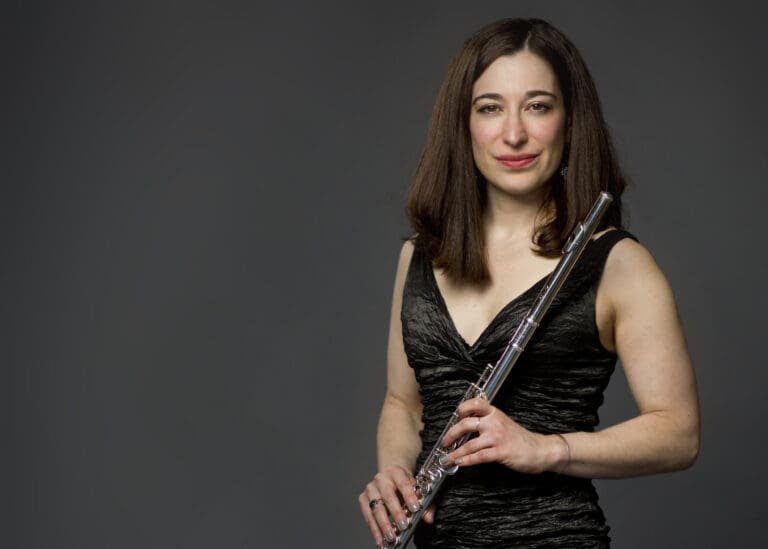
The Sound of Life in the Air- Classical Flutist Melanie Chirignan Speaks of the Vibrancy and Variation Hidden in the Classical World. By: Liam Sweeny

0

RRX: Many people take classical instrument lessons when they grow up, few pursue it, and you have. And not only have you beat the odds, you’re pretty much one of the people boosting the odds for others. How do you think you were able to beat the odds and wind up with a classical career?
MC: Wow, thank you for the huge compliment. Well, everyone that sticks with music at all has some talent, so that’s not it. I treat it like a job because it is, and I persevered and practiced a lot for many, many years. Also, I really love chamber music. Concerts are the highlight of the month, so I make sure to keep scheduling things. When I find a piece I want to play, I find the players, and create an event. I keep finding pieces I must play, and so it goes on.

RRX: You are a flautist, which for the uninitiated, means you play the flute. You also play piccolo and alto flute. I think many people, including our readers, might be hard-pressed to tell the difference between these based on sound alone. How would you describe the differences in these three instruments?
MC: The piccolo is smaller and requires much more precision than the flute. It’s like it has a smaller bullseye, and the tiniest lip movement or change in air speed will be heard. It is an octave higher and can really sing out over an entire orchestra. It’s small but mighty. The alto flute is much bigger than the flute. It has a more hollow, mellow sound than the flute. Many people like the alto flute best because they find the more diffuse tone pleasant. I like the flute best because of the bigger dynamic range (it can play louder and softer than alto flute) and I like its richness, how it has more harmonics in the sound.

RRX: You’ve played in so many places, including, but certainly not limited to the Smithsonian Museum of Natural History, Albany Pro Musica, Glens Falls Symphony Orchestra, Troy Savings Bank Music Hall, and Proctors. If all the places you’ve played were in a lifeboat, it would sink. Describe one that has a special meaning to you.
MC: The Troy Savings Bank Music Hall is so acoustically perfect; it is literally awe-inspiring. The sensation is that the hall supports your sound and helps you play your best. This is why the hall has such an internationally known reputation. For me, I’m so thrilled to have a residency there with my wind quintet Quintocracy, and Jon Elbaum and the staff are so great to work with-those things help make it stand out as outstanding to me too.

RRX: We are used to covering the more rock ‘n’ roll side of things. And we do so because it’s not just a music, it’s a story. Insane tours, bar fights, Egos left and right. But classical is different. It seems closed off, hermetically sealed from drama. Is it? Are there adventures that go beyond the movements? Is the community just organized differently?
MC: I think for me, I try to take life’s drama and use it to play as musically as possible. I remember after my first heartbreak, my teacher told me to use those feelings to play, and we came back to Debussy’s Syrinx. Unlike pop music, classical musicians strive to never play the same phrase exactly the same. We come up with variations constantly, and so I think being attuned to the nuances that are your human emotions helps your musical expression. That being said, there is of course drama. Look at Mozart in the Jungle! Luckily, I got to be an extra in, and never experienced anything like that. Although we as classical musicians may look like we have it all together, my duo partner once forgot his pants-well his concert pants, he had jeans on.

RRX: The flute and the piccolo are woodwinds. Their drivers are breath. And unlike singing, which is basically simple to do but impossible to master, some feel that woodwinds are just impossible to do. And you’re performing for an hour or more sometimes, which makes it harder. Is there a breathing technique that makes it easier?
MC: You’re correct that the flute is a tough instrument for air usage. It wastes the most air out of all the winds because there isn’t a mouthpiece to blow into that is sealed. Air gets blown across and there is wasted air, unlike the clarinet, oboe, bassoon, or any brass instrument. However, you learn to be efficient with your embouchure (the shape of your mouth), and with your air. I think if you’re used to practicing for a couple of hours a day, then you just get used to the breathing, you’re trained for it and have that endurance built up. I think practicing yoga has helped me with body awareness and breathing. Since I’m small, I make sure my cardio game is strong, which also helps my flute playing. I remember my undergrad teacher telling me she started running a few months before having to play the Neilson concerto to build up her lung capacity.

RRX: You teach as an adjunct professor at Saint Rose, and privately. And you teach all levels, from elementary school to conservatory level students. When I hear “conservatory” I think, are there named levels of learning? What does a conservatory student learn that’s different from a student just below that level? Is it just gradual?
MC: A conservatory is different from a liberal arts education in that you’re only learning music. My extraordinary high school flute teacher, Michelle LaPorte, convinced me that I should go for a liberal arts education so that I would be a more well-rounded person. The idea is that being well-rounded would be reflected in your artistry as a more engaged, fulfilled listening experience. I think she was right, but I did go to a conservatory for my master’s degree to fine-tune my playing.

RRX: This is where you answer the question I didn’t ask. Longest breath? Pied piper’s type of flute? Educate, enlighten, emote – the floor is yours.
MC: We keep hearing that classical music is dying, but it’s not. It’s just being re-birthed in different, more creative ways. Groupmuse for instance, is an organization that facilitates people to have BYOB chamber music house concerts. It has launched and is thriving in many cities as well as internationally. Also, I think with more awareness, women composers and black composers that weren’t previously published or brought into the classical canon are beginning to. I think there’s some great changes ahead.
If you want to catch some of my performances, find me at MelanieChirignan.org and subscribe to my mailing list.

OBSERVATIONS AND RAMBLINGS FROM A CRANKY OLD GUY By: Jeff Spaulding

0

This is a completely true story.

I call it a tale of redemption.

It is not meant to teach, preach or reach.

It is simply a story of a long-time friend of mine.

It began in 1974.

I’m a freshman in college in Ohio studying Broadcasting.

Among my new friends is a skinny, wise-ass punk from Jersey named Gary.

Gary was perfect for being in radio, he had what we called a “ten-pound nut” voice.

Gary was also a major music fan, with a wide variety of interests.

Gary introduced me to Springsteen.

(And this was before he was BRUCE!)

Gary introduced me to The Ramones.

Gary introduced me to Punk.

Gary, however, was not the first to introduce me to drugs, but he was a close second to my friends, the Damn Theater People.

College was my first experiment, by and large pot, although one night at a theater dorm party, we all did a bong laced with angel dust.

That night when I went to my room, I remember my black and white television became color and in 3-D, I also got major chills and became super paranoid.

To my knowledge, that was my only taste of something “harder.”

Back to Gary.

Gary was among the first of us to actually get a paying job in radio, the local AM/FM combo in town.

In 1977, Gary told me of a part time opening there, and with his help, I actually got myself a paying job in radio.

That summer, we roomed together in an apartment complex.

And hello drugs.

For me it was mostly harmless, just bongs (angel dust free), but a LOT of them.

On occasion our school chum Ernie stopped by with some REALLY good hash, and not the corned beef variety either.

I think it was 1978 or 1979 when Gary moved to another radio station in the area.

In 1980, there was an opening at THAT station, and with Gary’s help, I’m now at radio station number two.

I don’t know for sure, but sometime between then and 1982, Gary got a big job in a major market in Ohio. 

We kept in touch on occasion, but like everything else we went our separate ways.

Gary was red hot in some big Buckeye radio towns, and in time I made it back home to the Capital District.

Through the college grapevine, I knew of his success, but I knew there was a major monkey on his back that was slowly killing him.

Flashback to those first radio station days.

Every day on his way to work, Gary got a coffee from McDonald’s, this is when their stirry things were little, tiny spoons.

Gary used the stirry thing for coffee, then found another use for the little, tiny spoon. 

Somewhere in the last 20 odd years, I reconnected to Gary through social media.

Recently, I asked him some questions, in anticipation of writing this, like (1) How long have you been clean, (2) How bad did it get (3) What was your drug of choice (4) What made you stop and (5) Why did you change careers.

The following is in Gary’s exact words.

“I’ve been clean and sober for 34 years. 

Still go to a few AA meetings a week. 

I bottomed out pretty bad. 

Caught forging prescriptions for narcotics. 

The felony was reduced to a misdemeanor because I completed a treatment program and aftercare. 

I had no idea that I would wind up counseling. 

I got out of radio after being sober for a year and took a job as an activity advisor for a rehab program. 

One thing led to another, and I wound up back in college to get my master’s degree. Except for the first few months I haven’t had a desire to drink or use. 

I give all the credit to God and the AA program. 

It also helps that I’ve been married for 24 years with a wonderful family.”

Recently, Gary partially retired and is now living the life he probably has always wanted to live.

Again, there is no finger pointing to this story.

But as I write this, I can think of a few people in my inner circle who should use him as an example.

Out of all the people responsible for my broadcasting career, without Gary’s help in the early years, I would have made a hell of a Walmart greeter.

Thank you so much my friend.

Be hearing you.

Inside the Mind of a College Newspaper Editor By Nolan Cleary

0

Nolan Cleary is the Editor-in-Chief for The Hudsonian at Hudson Valley Community College. He is interning at The Xperience.


There’s a decent amount of pressure when it comes to running a newspaper. That pressure is extremely high when that newspaper has existed for 60 years.

Part of the responsibility for me as an Editor-in-Chief is to expand upon what made The Hudsonian work to begin with, while introducing new things to expand the legacy of the paper beyond the next 60 years.

One of the biggest challenges we face as an organization is change to status. Before COVID-19, The Hudsonian ran on campus. Our staff worked in our office, and everyone showed up to our meetings in person.

That all changed after the COVID-19 pandemic began. New challenges to how we work meant we were blindsided. Our meetings turned into Zoom calls. Interest in our club dropped. For the beginning of the pandemic, we were severely understaffed.

Just because the world stops however, doesn’t mean the news does, so we were forced to resort to new ways of working. Articles became available only on our website for a time. For over a year, print copies of our paper were completely suspended.

As a vaccine for the virus became available, and as life started to go back to normal, print papers returned, and production started to return to normal. We’re working in person again. Our staff is almost completely full, and there’s now more interest in our paper once again.

For many however, the experience of being in person still isn’t as it used to be before the pandemic. Many students are still working remotely. Mask requirements remain in place for our college even despite a requirement that all students get vaccinated to be on campus for classes.

The newsroom is not as busy as it once was. The implication is clear; while this pandemic may be going away, it won’t erase many of the changes to our everyday lives that it brought.

To counter this, we still must adapt to a more digital environment which seems to have become more popular since COVID-19 began. One popular outlet among listeners and readers of all ages is the podcast.

It seems today like everyone has one. For The Hudsonian, the idea of the podcast always seemed like a no brainer. For years, previous students and staff developed the idea of a podcast, an outlet inspired by popular hosts like Joe Rogan. The question was never if, but when. For years, the idea was continually kicked to the curb. Always entertained, but never brought to fruition.

In the Summer of 2020, when the pandemic continued to keep our everyday readers indoors, the time seemed right for a podcast to finally lift off the ground.

Finally, the decision was made, and a podcast was green lit. The Hud. is the official podcast for The Hudsonian. The podcast’s goal is to more intimately capture the news and ideas of students on and off campus.

I started The Hud. last year, finally pulling the long drawn out idea off the ground. Since then, more students have handled the series, like Samantha Simmons, a student whose interest in podcasts sparked from her hosting The Hud. for a semester.

Sean Tedeschi, a marine who returned for college, also co-hosted the podcast for a time. Throughout that time, a number of prominent guests, like former HUD Secretary Mike Espy, have guest starred on the podcast. Today, Lomie Blum hosts the podcast. Lomie came to Hudson Valley Community College through a special program that allowed students

“I definitely really enjoy working for the podcast. It kind of gives me some more freedom in some ways to talk to who I want to because, and I’m coming up with ideas for interviews and stuff like that. It’s also a really cool way to explore different staff and students, and stuff going on on-campus,” Lomie said.

For many students, their experience at the paper varies. Lomie told me her experience at The Hudsonian has been a positive one. “It’s definitely given me the road map on how to write articles and interview people and format. Especially being the News Editor last semester. I felt really immersed in the process. It was very educational,” Lomie said.

Lomie previously went to school in New York City but moved to the Capital Region after COVID began. Lomie long had an interest in journalism. In high school she took a magazine class. When she was in high school, her great-grandmother was a reporter for the Indianapolis Star.

“I was definitely exposed to journalism growing up and being a punk kid growing up writing articles about the music scene growing for myself, but I only started working for an organized, traditional newspaper when I joined The Hudsonian,” Lomie said.

Lomie said she joined The Hudsonian to gain more experiences and connections at Hudson Valley Community College.

“I joined The Hudsonian really to meet people and because I wanted to become a better writer, and I think it’s definitely done both of those things. I’ve met some great people on the team, and my writing skills have definitely sharpened, my interviewing skills have definitely sharpened,”

Samee Mahmud copy edits every article for The Hudsonian. Her job involves proofreading grammar and spelling for the paper. Samee told me this is one of the first employment opportunities she had.

“It’s been really good, really eye opening. I think this was my first job experience before working retail. It’s been really good because it’s given me some experience on how to talk to strangers, and it’s good. When you apply for a position you can tell people ‘oh, I know how to interview people’,” Samee said.

Samee said that The Hudsonian requires a system of students working together in order for the paper to be successful. “For school projects, like projects you have in class, you might have a partner, but it might be like one person does one thing. There might be some imbalance there whereas there’s a whole system. So, there are the Editors, and then there’s the Copy Editor, then Layout, then Web. We really have to work with each other, and it’s a lot easier, because there’s a big staff,” Samee said.

Our staff includes members of all ages, from younger students in high school, to older students who are returning from past semesters. Rachel Bornn, the advisor from The Hudsonian, has served in the position for well over 15 years.

The Hudsonian has also received a number of awards, placing third in a category of two-year college papers as recently as 2020. Hundreds of papers competed in the contest.

Throughout our many years of publication, many different guests have been featured in our paper. Congressman Lee Zeldin and Congresswoman Tulsi Gabbard were interviewed for our paper, as was President Barack Obama, future First Lady Jill Biden and Senate Majority Leader Chuck Schumer among others.

Our paper also has a prominent list of alumnus. ABC news reporter John Gray is one of them, having previously served as Editor-in-Chief in the 1980s. Randy Hammond was another. Having handled the sports section during his time as a college student, Hammond now works as a correspondent for Spectrum News.

As The Hudsonian now celebrates its 60th anniversary in 2021, not only do I look back upon the accomplishments the paper previously added, but I look to the future as well, pondering the next ways to expand the publication past print.

Black Label Society Bucket List 11/5/2021 at Empire Live in Albany, NY -By: Melody Lemony

0

BLS Bucket List ✔

Seeing Black Label Society, more so Zakk Wylde, has been on my bucket list for decades.  On 11/5/2021 I checked that box when I saw them at Empire Live in Albany NY.  I have to admit, I had the realization I had seen him play with Ozzy Osborne at Ozzfest in England in the early 2000’s.  But I was so out of my mind I have one brief image of that show in my memory bank, so it doesn’t count.  At Friday night’s show, I had moments of crying tears of bliss and joy.   I was surprised that the audience wasn’t more head-bangy cuz I sure as hell was!  It wasn’t until the last few songs that the mosh pit got going.  But I could be wrong, as I’m short and have a hard time seeing most of anything at shows.  Speaking of which,  if you’re on the taller side at a show and there’s room to not stand directly in front of a short person we all would be very appreciative.  I’m overjoyed that I had the opportunity to see BLS, and will strive to see all shows going forward.  ~Melody Lemony~

New York Talks To Southern Crime- NY Times Bestselling Author S.A. Cosby Brings A Fresh Perspective to a Time Honored Genre. By Liam Sweeny

0

Crime fiction can be misunderstood. It can be seen as just a lowly wordsmith letting his most depraved fantasies loose on the pages. This is rarely the case. Crime fiction is a mirror that crime fiction writers hold in front of the world. “Crime” is simply defined as the breaking of law, stealing is stealing. But a loaf of bread in an inner-city convenience store and a bottle of perfume in a high-end boutique tell two different stories.

Shawn Cosby is a Southern crime fiction writer from Virginia. His books tell a story of a South that is trying, or not trying, to bury its past. And sometimes it has to use a wood chipper. Shawn is also a friend of the paper. Let’s welcome him.

I sit down with Shawn and we talk about the perfect crime.

RRX: Your latest book is called Razorblade Tears. It deals with two fathers whose sons were gay, married, and murdered. It takes place in Virginia, so it would fall under the descriptor of Southern Crime/Mystery. If you’re so inclined, tell us a little bit about the story and the main characters, Ike Randolph and Buddy Lee Jenkins?

SA: Sure. Ike and Buddy Lee are both men of a certain age who have both been incarcerated and who both are distant from their gay sons who happen to be married.  When those sons are killed these two men of violence embark on a path of vengeance.

RRX: Crime is as old as time, to the extent that the first wristwatch was probably stolen from the inventor’s workbench. But crime has flavors, or at least the telling of it does, and especially how we see it. Southern Crime feels different to me than crime up here in the northeast. Do you think there’s anything to that other than just “regional pride?”

SA: Well, I definitely think the geographic and  cultural differences in the South help to differentiate crime down here from crime in the northeast. For instance, the proximity of victims to perpetrators is something unique to small towns…there is an interconnectedness that makes crime in the South unique.

RRX: It’s hard to talk about the genre of mystery or especially crime fiction without talking about what is loosely called “noir.” Whereas crime fiction, anyone can understand, noir has as many definitions as there are people who write and read it. How do you define noir, and how do you see it as it relates to your work?

SA: I think noir is bad people doing bad things for what they think are the right reasons.  

RRX: Some congratulations are in order. Razorblade Tears recently hit the New York Times Bestseller’s list for fiction hardcover. And this is even more amazing because you started out on the independent fiction circuit. These aren’t always two worlds that intersect. When you got the news, can you paint us the scene? How did you celebrate?

SA: I was sitting in my recliner writing on my lap desk when my editor told me we had hit the NYT’s bestseller list. I was dumbfounded.  When you come from where I come from things like that seem so far out of reach….so to celebrate I cracked open a jar of my grandfather’s moonshine I keep for special occasions. It seemed quite apropos.

RRX: Before hitting the NYT List with Razorblade Tears, your second book, Blacktop Wasteland, was tearing it up. You had Stephen King singing your praises. That’s basically like Jimi Hendrix saying, “me and Stevie Ray just watched your set.” How do you write the next book knowing Stephen King’s got you on his To-Be-Read pile?

SA:  You take a deep breath and say  “Time to get back to work “ ….because as my mama said.. the shine comes off of new pennies quick

RRX: You’ve had a public fondness for the crime/mystery convention Bouchercon. And a lot of people, yourself included, chose to cancel this year, because of concerns over Delta. In the end it was canceled. Bouchercon is a huge part of the writing community, can you tell people why? And where do you see cons going in the age of pandemics?

SA: For me  Bouchercon was the place where I was welcomed  into the writing community.  It was the place where I met my heroes and they didn’t disappoint.  I think for new writers, cons are the best places to sell yourself.  Because this is hard to hear but talent is cheap, connecting with an agent or a publisher often comes down to personal experience. I think you will see cons adjust to the new normal. Holding cons in states with high vaccination rates and requirements like masking and proof of vaccination, all these things can help cons survive.

 RRX: Black voices are starting to come up in American crime fiction, yours being one, but there are others. I know that anyone can Google “Black writers” and find a few big-name writers, but we’re sort of indie here, and since you have indie roots, can you give us three Black indie writers we need to read, and why?

SA: I would love to ….

Kellyee Garrett is one of the best true mystery writers in the business.  Her plots are so ingenious, her characters are so complex and compelling and she has such a unique sense of humor even when her books get incredibly dark.  If you consider yourself a true fan of mystery you need to be reading her. 

Nikki Dolson is one of the Masters of what I call “suburban noir.” Her characters are desperate, downtrodden and determined.  No one can deconstruct the interior lives of working class Black people like Nikki. Read her work if you like Megan Abbot but want something a little bit grittier 

Chris Chambers is a brilliant author who uses crime fiction to dismantle the infrastructure of systemic racism,  class warfare and political chicanery. He is unafraid to take chances both with his narrative and his characters. 


Spreading Wings to Fly-Artist Nicole Alkurabi Brings the World Inside the Beauty of Moments Easy to Miss. By: Liam Sweeny

0

Looking at art, there may be two camps. There may be more, but we’ll look at two. One is using a visual medium to relay some grand idea. This can be so varied as to really dodge a specific classification. This is the statement “art is what you want it to be.” The other kind of art looks at the reality of the world and brings it to a fixed medium. This is still life, or the Dutch Masters. This is about the technique and the mastery of light and shadow.

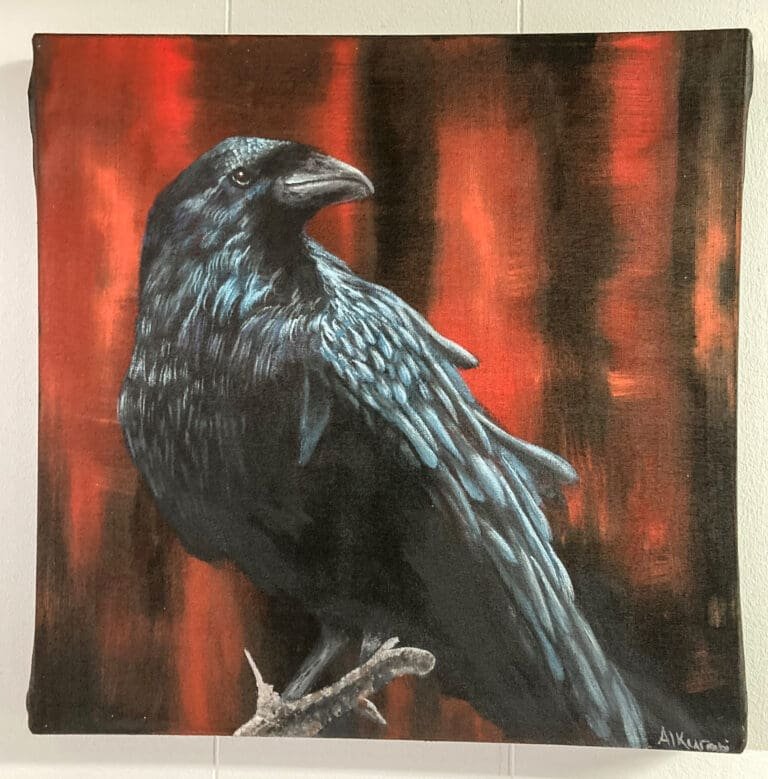
Nicole Alkurabi is in the second camp of art. Her work with animal life is transformative, and it would be impossible, from any distance, to believe her to be a painter and not a wildlife photographer. And she’s agreed to sit down with us and answer a few questions.

RRX: Your artistic talent is incredible. What I’ve seen of your work, just the level of living detail captures animal life in pretty much three dimensions. When you started painting, was it animals and “still life,” or was it something more abstract? Also, was painting your first love, or was it a sketch, or something else?

NA: Paint has always been my preference. When I first began painting I had a strong interest in realism which met my love of animals, but it was never a straight line. I did paint animals, but I painted everything that caught my attention just trying to solve the difficult question of “what interests me?” I bounced through many different techniques just trying to find something that felt like home. It took more than a decade, but I’ve finally found it. 

RRX: When you start to paint, I imagine you’re not calling a raven up from scratch. There are models, maybe images that you use to bring them to a canvas. My guess is that with your ability, you could bring just about any image to life, but is there anything in particular you look for in an image that you end up using?

NA: When I first start brewing something up it actually begins with a color pallet in my head. Sometimes, I’ll see flashes of color combinations in my head and I’ll think about the color pallet until I can visualize a painting coming to life. From there, I start to see an animal and a moment, a fleeting moment to be exact, where you are either connecting with the animal or it is about to leave you. With this version in my head I search the internet for reference photos to work off of. I typically use 3-5 images of an animal in a similar pose to what I have in mind. It can be maddening if the painting doesn’t align with my vision perfectly, but I keep working until it feels right. 

RRX: When I think of painting, I personally think of abstract work. Very heavy on being interpreted, very subjective. Abstract is more focused on relaying an idea than getting details right. But all art is abstract, all art is subjective. What, if you’ve thought about it; what “idea” do you try to impart into your work? Is there a greater concept?

NA: I have a great love of abstract expressionism and the freedom it gives you. In agreement, all artwork is subjective and should make you feel something. Maybe stare a little longer than you usually would, think about a feeling that perhaps never crossed your worried mind. To me, my work showcases the beauty of a moment that has nothing of note. A raccoon catching the weight of your gaze or a raven about to take flight. Think of how many of these unnoteworthy moments you miss in a single day. Those thoughts inspire me. 

RRX: So your work isn’t just lightning, even if you were painting lightning; it is a process. And I’m sure many people have asked you what your process is. And far be it from us to follow the crowd, but it is a worthy question. So let me put a wrinkle on that. At what point during your process do you realize that there’s no going back?

NA: My work weighs heavily on discipline, understanding, and problem solving. There is this undefined stage where the painting is not exactly good, but not quite bad either. During those moments I struggle with every mark, wondering if that was the one mark that has brought it down to being poorly executed. It’s probably at that point I realize there is no going back, we’re going to work it out no matter how long it takes. 

RRX: We like to take a peek under the engine here when it comes to the mechanics of the art. We realize that most people never get a look under the wonder of what they see in the finished product. So, if I were a young dabbler in paint, what particular art supply should I absolutely not go cheap on?

NA: Don’t buy cheap canvases. Rage against this shortcut. Buy the wood, saws, unprimed canvas, gesso, and staple gun and build a real stretcher. Your canvas makes a difference and frankly there is a certain amount of dignity in it. 

RRX: One of the things about producing such great work is that people want it hanging from their mantles. So selling your work is at times an artist’s bane and at other times, an artist’s bread. How does that happen? Is it primarily through social media? Do you have work in a gallery? How do people reach you?

NA: I do exhibit a couple of times a year and I am lucky enough to have people reach out to me on social media for commissions. I’ve always referred to my work as a passion that pays for itself and for that I am eternally grateful. It’s on the to-list to launch an official website and one day I’ll convince myself to take the leap. 

RRX: This is where you answer the question that I did not ask. Any favorite subjects? Funny questions people have asked (aside from me)? Educate, enlighten, emote – the floor is yours.

NA: My favorite question would be for my advice to people just beginning to paint. My response is to stay curious and be okay with nonconformity. Study other artists and watch tutorials, even if you don’t follow them. Don’t let the imposter syndrome keep you from starting your next piece, there is always more to learn but the joy is the journey.