Home Blog Page 77

Music Notes: The Art and Science of Music

0

Music Notes: The Art & Science of Music
Peak Music Studios

Let me say something that might sound counterintuitive at first. Most musicians do not struggle with speed because they lack talent. They struggle because they chase speed before they build musical capability.

Somewhere along the way, we absorbed the idea that the fastest player must be the best musician. That if you can shred, you have somehow arrived. History and science tell a very different story.

According to the Guinness Book of World Records, the fastest guitarist ever recorded is John Taylor. There are dozens of others who claim they have beaten that record. And yet almost no one knows who they are or cares. Why? Because listeners are not waiting for speed. They are waiting for music.

That is why Eddie Van Halen would not come close to the world’s top ten fastest players, and neither would Yngwie Malmsteen. Both changed music permanently, not because they were the fastest, but because they brought phrasing, tone, and musical identity. Eddie Van Halen once said, “I’m not a speed freak. I play what I feel.” Yngwie Malmsteen put it this way, “Technique is there to serve expression, not the other way around.”

That does not mean speed does not matter. Speed is critical, just not for ego reasons.

It does not matter how many chords you know if you cannot change between them fast enough to play the song. It does not matter how many scales you have memorized if you cannot execute them at a reasonable tempo. And it does not matter how many licks you can almost play at performance speed. What matters is what you can actually play. Here is where science helps clarify things, and this applies to guitar, piano, violin, voice, brass, woodwinds, percussion, all of it.

Speed is not strength. It is not effort. It is not forcing your hands to move faster. Speed is a nervous system skill. It is about how efficiently your brain sends signals down nerve fibers to activate and release muscles with precise timing. Whether you are picking strings, striking keys, bowing a violin, or coordinating breath and tongue, the limiter is the same: neural efficiency.

Motor learning research shows that sustainable speed gains are gradual, typically two to five percent per month for experienced musicians, and only occur when precision stays high and tension stays low. This is why speed plateaus feel universal across instruments. The bottleneck is not your fingers. It is the nervous system deciding whether it trusts the signal.

This is also why boredom turns out to be a secret weapon. When students tell me they are bored playing scales, pentatonic, diatonic, harmonic minor, modal patterns, I usually smile. Boredom strips away distraction. When nothing is entertaining you, your attention shifts to finger release, key depth, bow pressure, timing, and relaxation. That is where speed actually lives.

Short, precise blocked practice, two to three minutes on a single meaningful pattern, allows the nervous system to remove inefficiencies. Done consistently, this produces verifiable speed increases over time. Not dramatic or flashy, but real. And it works whether you are practicing Hanon on piano, Kreutzer on violin, articulation patterns on trumpet, or alternate picking on guitar.

So if you want speed that actually shows up in music, focus on the right metrics.

  • Precision instead of effort
  • Short, focused speed sessions
  • A proper warmup to set the nervous system
  • A cooldown to lock in what matters

Speed is not something you chase. Speed is something that appears when your nervous system trusts the signal. Do not focus on speed alone. Focus on musical capability across your range, and let speed rise to support it. That is how technique becomes useful, music stays joyful, and how speed finally feels effortless.

This Month in Music History, February

February 3, 1959. A plane crash kills Buddy Holly, Ritchie Valens, and The Big Bopper. A moment sometimes marked as The Day the Music Died.

February 4, 1977. Fleetwood Mac releases “Rumours,” one of the best-selling albums of all time.

February 9, 1964. The Beatles appear on The Ed Sullivan Show, a milestone that any rock fan can appreciate.

February 11, 1963. The Beatles record their debut album, “Please Please Me,” in a single marathon studio session.

February 14, 1970. Black Sabbath releases “Black Sabbath,” a nod towards dark themes in music, and a solidification of heavy metal in American music.

February 22, 1811. Composer and virtuoso pianist Franz Liszt is born, later redefining solo performance, technical virtuosity, and the concept of the modern concert pianist. Yes, you can shred a piano.

February 25, 1969. Jimi Hendrix records material with the Band of Gypsys lineup, a milestone in music fusion from the rock scene.

Weird Music Fact, February

February 7, 1964 – When the Beatles arrived at JFK Airport for their first U.S. visit, the screaming from fans was so loud that reporters noted the band could barely hear questions or each other. The noise level was estimated to rival jet engines on the tarmac, forcing the group to rely on lip reading and body language during interviews. This problem would follow them onto the stage. The Beatles were not drowned out by bad sound systems. They were being drowned out by their own fans. A problem for sure, but a problem that many in the music performance industry would like to have.


More from Peak Music Studios…


Week Five: Jesse Sample’s Freak of the Week “Façade”

0

Jesse Sample’s Freak of the Week airs EVERY WEDNESDAY at 6pm EASTERN Only on RadioRadioX.com

This is Jesse Sample. I don’t really know where to start. I had a song prepared for this week…Well…sort of. I started something earlier this week and I really liked where the idea was going. I wanted a very special friend of mine to play bass on it. By the very nature of this weekly project, things come down to the wire often. He’s a music professor downstate and his schedule was wild, and he couldn’t lay down tracks before tonight’s deadline. I was prepared to do my best and then an idea struck me.

I had an 8 pm studio appointment with my writing partner Rosa Grimaldi, from the Secret Fashions. We had a few things to do with existing tracks but on the way to the studio, I called her up and said, “Hey, I’m trying to buy myself a week for a song. Would you be open to working on something for this week?” She agreed. And for the next 6 hours we straight up grinded. She started with drums. I came through with a progression on guitar and she started in on a verse. I heard part of her verse and responded with a verse. I went off to track guitars for a B-Section and she started in on the chorus. She started going deep into vocals and I mapped out a bass part and then she found the perfect synthesizer texture and played the low end for the chorus. I don’t really remember most of it. It was something like a fugue.

We finally got the tracking done and she started diligently mixing while I cheered out loud and did a fair share of dancing around the room. I went in and removed noise from my guitar tracks. We were overjoyed with this gem that we excavated out the universe. I got home around 2:30am.

Tonight reaffirmed a principle that has been becoming clearer in my life. We don’t know if we’re gonna catch a fish but if we go fishing enough, we really improve our chances.

Thanks to all of you tuned into RadioRadioX. This is the Freak of the Week, “Façade.”

Coin Flip Coach – Weird Side of the Internet

0

Coin Flip Coach – Weird Side of the Internet – by Liam Sweeny.

Suppose if you wouldst, getting a job. Now we’re talking a good job. No cubicles, no canary yellow polyester shirt, no nametag, no ant marches to the oasis of the watercooler. Because you don’t drink that water; you’re an executive. You make orders, you don’t take them. In fact, you could flip a coin and give a Christmas bonus or make people work that day.

You could do a lot of things with coin flip.

Spanish football manager Robert Moreno did categorically not use ChatGPT to make major decisions for the Russian Sochi Club from where he was let go. He definitely didn’t do these things that he left the club for.

Isn’t that what ChatGPT is? A coin flip? A guessing machine? If you didn’t know, the program is supposed to compare what question you ask to the million other times someone asked that same question, even if they asked it in Great Gatsby. Then it sees all the answers given, and it copies that and blends the grammar to give you what looks like a well thought out answer, but really that answer could be identical to the one a Tibetan bus driver gave their passenger.

So imagine everybody askin questions, askin at the time, popping the questions into GPT, and it’s just an echo changer of bland mediocrity, and that’s making decisions that could blink out some local country fair.

I head that frequent use of the guessing machine makes you dumber. You kidding me, right? Seriously, if I let a machine do my hard thinking for me, I might end up dumb as sh*t, with a brain small enough to make my brain a maraca? No way.

This is soccer, where this AI “scandal” took place. What I can’t imagine is a couple thousand Sochi fans being chill with this, No way, not soccer. Those soccer hooligans are nutter butters.


More from Liam Sweeny…
Lacey Allen – Thanks for Asking!

0

Lacey Allen – Thanks for Asking! – by Liam Sweeny.

RRX: What would you like fans to know before they come to see you play? (No basic stuff; get specific.)

LA: Well… if I’m being honest, if you’re coming to see me perform, chances are YOU are also performing! As an entertainer, it’s my job to keep the audience engaged and comfortable. I do my best not only to communicate with the audience, but also to give them a chance to sing and dance along with me. Whether that means joining them on the dance floor, handing them the mic, or simply asking if they’re having a good time, I’ll find a way to keep them involved. Happy audience, happy life!

RRX: Stereotypes are a bitch. I mean, aside from the really bad ones, you have cultural stereotypes about everything, including music.  Would do you think is the stereotype for the music you play, and how far are you away from it?

LA: As we all know, the rock and roll community is often associated with partying, heavy drinking, and dabbling in drugs. For me, that couldn’t be further from reality. In fact, I am straight edge. For those who may not be familiar with this lifestyle, I completely avoid drugs and alcohol. I’ve actually never even tasted a sip of alcohol or done drugs in my life, and I take great pride in that. When I’m on stage, I’m fully present, clear-minded, and intentional with every note I sing and every emotion I share. One of the things I am most proud of is that I never need to be under the influence to have fun, let loose, or keep an audience engaged. Instead, I let the music take full control and “get high” off the love of the art.

RRX: We have to play somewhere, and sometimes those places have more going for them than a stage and a power outlet. What is a memorable place you played, and bonus points if it’s not a well-known place.

LA: A very important place comes to mind and that would be Proctor’s Theater in Schenectady. This is where “CASA” hosts their annual “Raise Your Voice” Singing Competition Fundraiser. I was sent the advertisement in the newspaper back in 2022 and was very tempted to participate due to the amazing cause and my eagerness to perform. After I had auditioned and made it to the final round, I wound up winning the entire competition. It changed my life. The exposure had opened so many doors for me musically and also gave me the opportunity to meet long lasting connections and friendships.

If you do not know about this nonprofit organization, CASA’s volunteers are specially trained advocates who work in the best interests of children who have experienced abuse and neglect. These volunteers spend countless hours providing support, necessities, and hope for children who are or are at risk of being removed from their homes.

When these innocent children are removed from their homes, they often have absolutely nothing: no clothes, shoes, personal hygiene items, blankets, money, etc. Basic things that we all have and take for granted.

All the funds raised go directly to these children to provide the care, support, and love they deserve. That is why Proctors Theater is so important to me and will always have a special place in my heart. If you want to learn more about CASA, please visit theccj.org

RRX: What do you think is the most dangerous song to cover from the perspective of criticism? Who do you think is too hard to cover, and why?

LA: Whitney Houston!!! Hands down, the hardest songs EVER to sing live. I couldn’t choose just one if I tried. Each of her tunes are so iconic that it’s incredibly difficult to even come close to doing her justice. She will go down in history as a music legend, and rightfully so. For that reason, my heart skips a beat whenever someone requests “I Have Nothing”.

RRX: Is there a favorite time of year? What time of year does the band have the most shows? Is there a recurring thing in the year that’s particularly memorable?

LA: My favorite time of year is obviously summer! I think everyone in Upstate New York can agree. However, the best time of year for gigging is the Spring. This is when the Lake George Steamboat Company season starts up. I’m the lead singer on the Lac du Saint Sacrement cruise. My first opportunity to sing professionally was on the Lac with Danny Lombardo on keys. Danny pushed my singing skills and taught me everything I needed to know about the industry. This upcoming season will be my fourth year on the boat. I’ve loved every second since I first started, and I can’t wait to be back!

RRX: Let’s talk about your next project, your next few. Just not the ones you’re working on now. The ones you have your eyes on for the future. What’s coming to us?

LA: I love being asked this question because it seems to change every time I answer it! I spent many years trying to convince myself to take the safest option in life, which, in my mind, was not music. I was so afraid of failing, but now my mind is completely open to following my dreams and my heart.

So, with that being said, you can expect to hear some original music soon! I’ve been allowing the creative process to take over, and I’m really proud of the progress so far. As for other projects, I’m always searching for new acting, modeling, and, of course, singing opportunities. In this phase of my life, I barely say “no,” and I’m finding it incredibly rewarding!


More from Liam Sweeny…

Bill Ketzer – An Xperience Interview

0

Bill Ketzer – An Xperience Interview – by OP Callaghan,

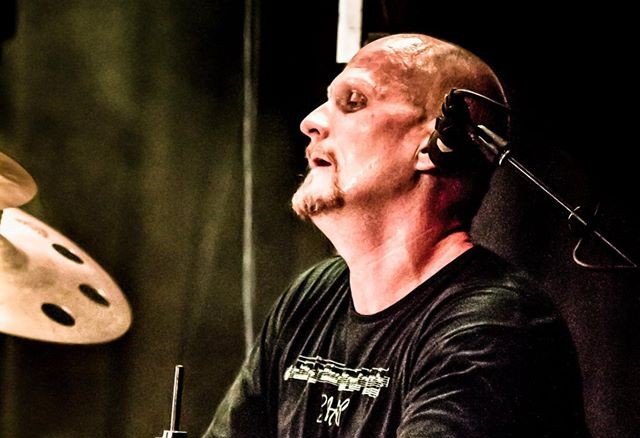
This month, we’re focusing on a veteran of the local music scene, Mr. Bill Ketzer!  He’s a drummer, singer, guitar player, historian, and has the absolute best “You didn’t get the gig” story that I have ever heard.  So let’s give it up for Bill Ketzer!

RRX:  How did you get started as a drummer?

BK: My first real “WOW” moment came when my father bought me Kiss’ “Alive!” at the old Record Town in Colonie.  I was in 3rd grade, and my mother was appalled.  Peter Criss’ drum solo on “100,000 Years,” those flanged triplets, and his jazz-inspired feel for dynamics, those highs and lows, just hypnotized me.  Years later, I interviewed Slayer’s Dave Lombardo for Metroland Magazine, and he said the exact same thing!  From there, my other early favorites were Bill Ward, John Bonham, Andy Parker, Neal Smith, and metal guys like early Priest drummer Les Binks, Maiden’s Clive Burr, Saxon’s Nigel Glockler, and Accept’s Stefan Kaufmann.

I didn’t get an actual drum kit until I was 12 years old.  A schoolmate from our neighborhood sold me his brother’s old Ludwig knock-offs for 10 bucks – while he was away at college!  When he came home that summer, it must have been a bad scene because one day the phone rang and he was like, “Man, you gotta give me that kit back!”  But by then I was like, “No way, a deal’s a deal!”  I was hooked.  In that era, you still had to learn songs in headphones with a quarter-inch jack, and keep dropping the needle on the record to the lick you were trying to learn!

RRX:  Do you play any other instruments?  Did you take lessons?

BK: I can get by on guitar and bass, but I’m really an imposter.  Same thing with golf, ha!  If you give me a specific set of tunes to learn, I’ll nail them down through repetition, but I can’t improvise at all.  I don’t know scales or any theory.  I “sang” in cover bands for a long time, too.

I’m basically self-taught.  When I was at Colonie High in the ‘80s, I was too cool for lessons, which I regret to this day.  I showed up once, maybe twice. The band guy was Gene Falcone, and the first thing he wanted was to teach me traditional grip, which was hard and weird, so I never went back.  Huge mistake.  20 years later, when I was looking for regular work and needed to know basic Latin and Jazz concepts – as well as the ability to sight read – I had to pay a ton of money for someone to teach me all of that, when I could have gotten it for free, and built on that foundation with every gig.  I mean, there are benefits to teaching yourself in terms of style, how you interact with a piece and other musicians, but in the end, I didn’t do myself any favors.  Lots of missed opportunities there.

RRX:  Do you come from a musical family?

BK: Not in the sense that they played instruments or were performers.  Both of my parents liked music and encouraged me to play, so it was always in the house.  My mom was just sort of the church choir sort, but had a great ear for harmony. One of her favorites was the Andrews Sisters, but she exposed me to Harry Belafonte, Johnny Horton, John Denver, and, of course, Al Hirt’s “Whipped Cream & Other Delights” (is there any garage sale where it can’t be found to this day?)  My father died young, but I have very vivid memories of his big tenor voice and performances at the Masonic Temple in Latham.  Mostly hymns.  Stuff like “In the Garden,” or “How Great Thou Art.”  He was the one who’d sing me to sleep, a tradition I carried on in my own family for a long time.

RRX: Tell me about your first kit.

BK: My first really gig-worthy drum set was a blue, 5-piece LaSalle, which was just one of the 100 Japanese budget brands made by Pearl.  The shells were composite, but you could actually tune them!  My mom bought them for my 14th birthday at the old Hermie’s Music in Schenectady.  A few years later, I got a set of ludicrously oversized Tama Imperial Stars – massive oversized cannons.  Like, far more obnoxious than anything Herman Rarebell ever owned.  It was like a rack full of floor toms.  Much later, I found out that when I traded them in at Drome Sound, Jay Bittner grabbed them for a brief second.  Apparently, he had the same realization I did: they were completely unwieldy, untunable, and better off for storing corn silage.  But they did the job.

I didn’t really have a steady job in that era, but I just couldn’t bear to play the Camber “kitchen grade” cymbals.  I scraped together enough rubles to get a few Paiste 404 and 505 crashes.  Best. Budget. Cymbals. Ever.  Collectors actually seek them out now.

RRX:  Tell me about your first gig.

BK: I think I was 14, in my first real band. Me and Joe Pallone were sort of the freshmen in the group, and we did a few backyard parties, graduations, and stuff like that.  But I think my first legit gig in front of total strangers was a St. Clare’s Church bazaar in Colonie, and then a short time later, we did some sort of block party at the Colonie Village Fire Department.  We set up on a huge flatbed trailer with wooden slats for flooring, and the kit bounced all over the damn place; the mics were smacking us in the teeth.  But it felt like metal to me, Biff Byford spandex and all.

RRX:  You’ve had quite a history!  I’ve seen you play with at least four bands.  For those who don’t know,  talk about your playing history.

BK: Wow, hard to list them all, but the first gigging/recording band I joined was Vigilance in the late 1980s.  I still see Jeff Nusbaum from that outfit here and there. It was the first band that really gave me chops, because we rehearsed for like four hours and had a million songs.

Then I hooked up with Duane Beer when he was forming Plaid, and we took off for a while.  It was the dawn of alternative music, and punk was a resurgent part of that.  Still a guy I look up to.  So prolific, never boring, and one of the only people I know who never really has a bad word to say about anyone.  All energy.  It was incredible to play with him again in Blasé Debris – 25 years later!

I did Can’t Say for about five years behind the kit, which started out as a fill-in gig, but you know how that goes.  They were a signed band, so they toured a lot.  That gave me a real education in what works and what doesn’t, and how management, promoters, studio, A & R departments, and the industry generally functioned at the time.

In that era, we also had Thee Heinous Brothers, which boasted a combined total weight of like 1,800 lbs.  Big Al was in the mix there, and we made a pretty hilarious LP called “Thugs and Kisses,” which Chrome Peeler Records still has available for free on their website.  It was a full costume, full mayonnaise affair.  It was a bad idea to get too close to the stage. If you leap on stage in NYC, with a crowd full of jaded Manhattanites, with overwhelming volume, dressed up like Cookie Monster, and the whole place takes five giant steps backward … that’s real power.

After that, I went back to school and got a four-year degree, started working full-time.  That became the era of the weekend warrior cover bands, which made way more money than any of the bands I just mentioned combined!  Second Hand Smoke, the Lab Rats, tons of fill-ins with wedding bands … I even got to do stints in North Again and Howe Glassman’s Coal Palace Kings, which also included Mike Eck at the time.  It was awesome, but I couldn’t travel.  I regret not sticking that gig out.

I played in Ten Year Vamp, an absolutely killer heavy pop band, for about three years.  I did fill-ins when their full-time drummer (Greg Nash) was unavailable, but they kept me on as a utility guy.  Keys, percussion, backing vocals, that sort of thing.  I learned so much from them, including how to play to a live click track for the first time in my life.  Best sideman gig ever.  They treated me so well, and they were amazing songwriters. I wish they were still around!

Then it was Blasé Debris until I just couldn’t make it work anymore.  Today, I do the SOCOL Coalition with a bunch of my old high school buds, mainly for fun and a positive way, I think, to remember all of the bandmates we’ve lost over the past decade.

RRX:  What is your proudest moment behind the kit?

BK: I think it will always be playing for 17,000 people at the New York State Fair in Syracuse, at the old grandstand.  I was lucky enough to do that with Ten Year Vamp in 2010, opening for Aerosmith.  That was just a sort of a knock-off summer for them, no new album that year.  We were lucky because they weren’t touring as part of a package. They were just booking headline dates at festivals and big outdoor venues (like state fairs) across the country.  I think they called it the Cocked, Locked and Ready to Rock Tour, ha!  That type of arrangement can allow venues to showcase local acts, but the band had veto power over openers. Not management, the band.  They approved us, and we just killed it that night.  We were a heavy pop act, and the band looked and sounded great, the songs were very strong, the crowd felt it, and the weather was amazing.

Plus, it was the whole experience of meeting Aerosmith.  They gave us full access to their catering, the stage, everything but the buses.  We ate with them. Brad Whitford gave us a personal tour of his Les Paul collection.  Steven Tyler comes out during our soundcheck, in flip-flops and socks, to check the side fills and monitors.  After 40 years in the business (at the time), he still cares enough about the sound to give the front-of-house guy crap for improper positioning of the line arrays!  And the setlist. Unreal.  They played straight-up chestnuts too, stuff like “No More, No More.”  I’ll never forget it.

RRX:  What are you playing now?  Tell us about your drum collection!

BK: I mostly play other people’s kits now! LOL.  But I still have a pretty decent vintage snare collection.  Like Jay Bittner, I have a thing for Slingerland Artist snares – to me, they sound way better than Radio Kings – but I try to grab timeless classics from other companies too. I have a few Ludwig Supraphonics, a Leedy Broadway Duall, a Gretsch 4157, and a Rogers Dynasonic.  For most rock gigs, I still use my first real touring kit, a Pearl DLX from the late 1980s with punishing 24” kicks. They are pre-Masters Series drums and have a real flexible tuning range. They sound amazing live or in the studio.  You can hear them on Blasé Debris’ “The Gauze” album. Playing again with Duane Beer after all that time was such a great experience.  For funk or jazz, I still bust out the Slingerlands, and my son really likes those too.

RRX:  Tell us a gig horror story.

BK: It’s 1994, and I’m in rough shape. Living a real destructive and pretty much transient lifestyle. By that time, I’ve been in Can’t Say for a few years, we’re signed to Moon Ska, and they’re sending us on little guerrilla-style tours throughout New England that summer.  I get out of work that day, and my roommates, who were night shifters, are passing around an old bottle of White Horse scotch.  Suddenly, it’s two hours later, the U-Haul pulls up, and I load my gear, feeling like Alexander the Great about to conquer Asia Minor.  We drive two hours to the first gig on the tour in Hartford, and to my horror, I discover that my entire hardware case is still at home, drinking with my roommates.  So for the entire stretch I had to beg other drummers for their hardware – all of it – to mount hi-hats, cymbals, my snare … I didn’t even have a throne.  As you can guess, results varied.  Some nights I sat on a folding chair, or a few anvil cases.  It was a truly miserable summer.

RRX:  We’ve lost quite a few local musicians,  many of whom you’ve shared the stage with, or nearly shared, lol.  Tell us the Henry McFerran story!  And a Big Al story!

BK: Well, my favorite McFerran story has to be my ill-fated audition for China White sometime in 1984. In my mind, I was the obvious choice for the drum throne because all the other obvious choices were already working, and I handled the audition pretty well, even though I missed a few downbeats here and there.  But I couldn’t really tell you whether that was the truth, or whether I was actually on a slow train to Siberia and was just having a pleasant, if awkward, fever dream.

What I DO remember, however, was Henry telling me that I didn’t get the gig.  I went down to Adirondack Strings at the agreed-upon time, and he just smiled at me warmly, almost sympathetically, put his hand on my shoulder, and said, “Listen man, we can’t have you as our drummer.  You’re a good drummer, but you don’t really live anywhere, you don’t have a phone number, you don’t have a job, and you don’t have a car!  I mean, how the hell is THAT going to work?”  And then, as if he didn’t expect it to be as funny as it sounded when he put it out there, his eyes got wide as if pleasantly surprised, and he laughed: “HAHAHAHAHAHAAAA!”  And sure, he was totally laughing straight at me – looked me right in the eyes and howled – but the way he did it … it made me laugh too.  I recognized it as empathy, as compassion.  And it was a wakeup call.  I learned how to make and keep commitments (sometimes).  I got a job and a car.  I even got a phone number!

When it comes to Albie … man.  Just in general, he forced me so far outside my comfort zone musically that I sometimes wanted to jump out of my skin.  We manly-men don’t like to talk about making music in these terms, but you do it with certain people for 35 years, and it is a very intimate thing.  It’s telepathy, it’s symbiotic, but it’s also physical.  You know them at a level that transcends thinking, beyond friendship.  You don’t have to look at them even once on stage, and it’s tight as a tick, even if you haven’t seen each other in a few years.  You’re the same tributary carrying that creation to the open water.

Honestly, my favorite experiences with Al came after Can’t Say, when I somehow found myself “singing” in the Lab Rats, a metal cover band with Greg Nash on drums and my lifelong friend Joe Pallone on bass.  We were like the four chambers of Frankenstein’s heart.  We never rehearsed, just relied on our collective musical canon.  One night, we’d decide to play sides 1 and 2 of “Kiss Alive!” all the way through, because we could.  We believed we could, and we did.  I could play that entire LP in my sleep by the time I was 14, and couldn’t do it wrong if I was in a coma.  Same for them.  And everyone just got it.  It packed the clubs for a long time.

Then, in the blink of an eye, all three of them were gone.  In the course of a little more than one year.  I still haven’t figured out what I’m supposed to do with all this silence now.

RRX: Every one of them is missed.   What do you do for fun when you’re not drumming?

BK: I’m a big history nerd, so I spend a lot of time researching and writing about local history topics.  I’m on the board of trustees at Bethlehem Historical Association, and I am lucky to also serve as Bethlehem’s official town historian.  We launched an oral history program in 2024, and it’s been such an honor to preserve the memories and experiences of our oldest generations, to see the world through their eyes.  Being a parent to teenagers also takes up a lot of my time, but I love it even though it’s the hardest job I’ve ever had!

Thanks to Bill Ketzter, a wonderful guy and tremendous player.


More from OP Callaghan…


Year of Storms, Chptr 2 – Xperience Fiction

0

Year of Storms, Chptr 2 – Xperience Fiction – by Liam Sweeny.

The steady hum of electricity through the walls floated up to the light panels and the sound washed over itself. They were trying to rob her of the sounds of degenerate humanity, but she had to wonder if near-perfect silence was worse. She stood in her doorway staring down the hallway toward the common area. Maybe she could get into a fight and salvage some of the weekend. Too bad she didn’t know one lick about giving lickings.

The pads of the feet on her jumpsuit were oddly comfortable as she walked down the hall on the balls of her feet. It really was the lukewarm porridge of a facility.

She opened a pneumatic door to the shrill sound of a girl yelling.

“So you all are going to sit there all day? Huh?”

She was animated, flipping her shoulder-length pink hair around her head and tipping her glasses. Cellie hadn’t seen glasses on a person except the Farmers when she went on her discovery outside the EastNode. They seemed to gravitate to the old crap.

Along the wall were seven women with glossed-over gazes, seeming to ponder what the woman was yelling at them.

“They’re noners,” Chellie said.

“I know that.” The woman sighed. “Fucking noners.”

“Why bother yelling at them?”

The girl walked over to the head of the row, took a sip of her drink and flicked her wrist, sending the liquid into the faces of three of them. They wiped off with their hands, appearing to ponder that too.

“One time I was in a transport stop, and it just just noners sitting on the benches.” She took broad steps over to the Go dispenser. “I was pissy that day, and I just let one have it. I mean, full vent, ‘cause who are they gonna tell, right? And out of nowhere, and God to fuckin’ Christ nowhere, this one starts screaming. Full blast; thought she was gonna break the glass, that loud. Full animated too.”

“A noner? Sure it wasn’t just a normal person with a blah day? Maybe they were medicated and they just looked… noner-ish.”

“You don’t know me, but believe I can pick a noner from a norm.” She said.

“So what was it, then?”

The girl took a sip of her Go and walked over to empty it in one of the noner’s laps.

“I think they don’t sell everything,” she said. “They want to. They think they do, but there’s something buried that even a flashback stim doesn’t find. Repressed shit. Total burial. Cause when it comes out, it’s scary shit.”

Chellie picked a cup out of the cupboard and filled it. She wondered how many cups of Go her de facto companion had emptied on the noners. She didn’t look forward to running out of Go in such a boring place.

“So you’re trying to get them to freak out,” Chellie said.

“Yup.”

“How long have you been trying?”

“What time is it?” She asked.

“Fuck if I know.”

“Same answer, then. I know it was light when I woke up, and they were in here then.”

Chellie tried to feel bad for the noners, but she knew you could light one on fire and throw it a birthday party and it would feel the same about both.

“I’m Cellie.”

“Alandra.”

“That’s a weird name. What’s it mean?”

“How would I know? Your name mean something?”

“My dad’s favorite dog.”

Alandra let out a belly laugh.

“That sucks. Sorry I asked.

“I actually liked Cellie… the dog. She died when I was six.”

“So you ain’t from EastNode, ‘cause I know dogs are frowned upon in the snoot snoot.”

“Frowned upon,” Cellie said. “Not forbidden though. And I’m from CenterLock, so we could’ve kept sewer monsters as long as we licensed them.”

Cellie sat down on a long polymer table with recesses for cups. A faux-wooden basket of nutrition bars occupied the center, and she grabbed two. They couldn’t have been more generic, but in the absence of choice they were the top shelf. Alandra walked along the wall of noners, pretending to go on the attack in the hopes of releasing a dragon. Eventually, she made her way to the table.

“How’d they get in here, anyway?”

Alandra aimed her thumb to point. “Them?”

“Yeah. What crimes do noners commit?”

Alandra adjusted her glasses. “Good question.” Sh craned her neck. “First one of you tells me why you’re in here gets…” She felt the space where her pockets would be. “Got nothing to give them.”

Cellie grabbed a controller of the bench and turned the wall panel on. It was a craft show on the main feed. It reminded her of her own channel, but the host was at least twenty years older and her base rate was 35 points up on Cellie’s base rate.

“You watch this crap?” Alandra said.

“I am this crap. Chanel Local 432.”

Alandra grabbed her own nutrition bar and opened the wrapper with one hand before dipping the bar in the remains of her Go.

“I don’t even have a wall panel,” she said.

“Are you a Farmer?”

Alandra adjusted her glasses. “These, right?”

“Well, yeah.” Chellie ran her index finger along her brow to scratch at her nervousness.

“I was,” Alandra said. “I escaped to EastNode three years ago.”

“Escaped? I didn’t know you had to escape being a Farmer.”

Alandra cleared her throat. “You do when you kill someone.”

Cellie didn’t ask Alandra anything else in the common room. She didn’t stay in there much after that. It was one thing to pass the time with another day tripper and have fun with noners. It was another thing to risk even associating with a killer.

As she sat in her room, she realized that associating with killers was going to happen if they’d thrown her in the real jail. Something about spending even a few minutes with Alandra was odious if she couldn’t use it to up her base rate.

She didn’t know what time it was, only that it was dark, and it was the second set of meals. She’d be let out tomorrow. She’d be back to her life, back to her show, and she’d have been well-advised to paint her graffiti enterprise as a success by some imaginative storytelling.

She went to sleep wondering what the noners did to get arrested.


More from Liam Sweeny…
Little Feat – The Last Farewell Tour – Troy Savings Bank Music

0

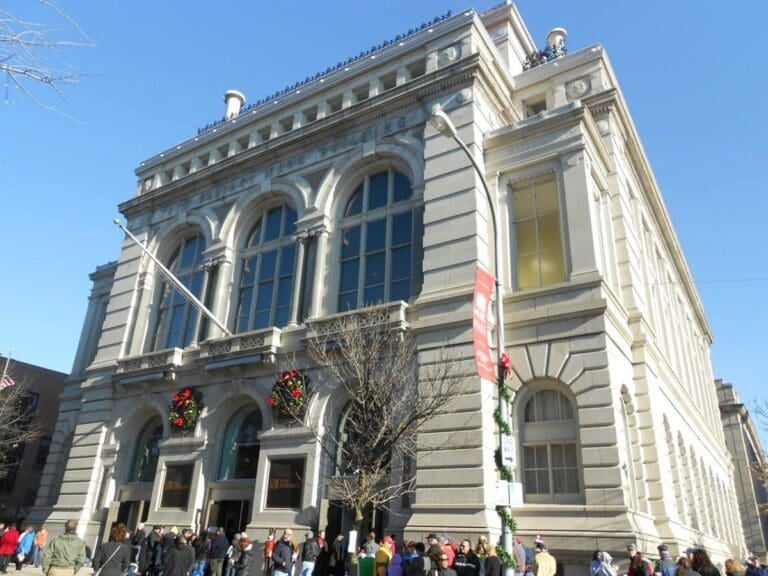
TROY, NEW YORK:     The Troy Savings Bank Music Hall welcomes back Little Feat May 31st! Pre-sale starts Thursday, February 5th at 10am and tickets go on-sale to the public on Friday, February 6th at 10am.  Learn more below about the indomitable Little Feat!

Little Feat: The Last Farewell Tour:

Playing is the joy and satisfaction of touring, but it comes with the hard part — travel, the endless miles on a bus.  There’s no dodging the wear and tear, and Little Feat has been playing for quite a while. With tongue stuck somewhat in cheek, Little Feat announces “The Last Farewell Tour,” which will begin in April 2026.  It’s definitely not an absolute, never-gonna-play again statement.  This wind-down will take several years to accomplish, and while it does, Feat will continue to perform and record as long as they are able.  It’s a retirement from the travel of touring.

Little Feat began in 1969 when Frank Zappa told Lowell George he should start his own band.  As Lowell happened to have a pretty small shoe size, the name became obvious.  He found a partner/keyboard player in Bill Payne and a drummer in Richie Hayward.   After a few transitions, they added Kenny Gradney (bass), Sam Clayton (percussion), Paul Barrere (guitar) and eventually Fred Tackett (guitar), and began a now 56-year journey that has produced dozens of songs – “Dixie Chicken,” “Oh, Atlanta,” “Willin’,” “Fat Man in the Bathtub” – and a thousand memories. One result was one of the best live albums in the history of rock ‘n’ roll, Waiting for Columbus.   The road (see above!) is hard, and it cost them first Lowell George in 1979, Richie Hayward in 2010, and Paul Barrere in 2019.  The everlasting Little Feat groove demanded playing, and they added Scott Sharrard (guitar) and Tony Leone (drums), and may well be playing at the very height of their powers, recently releasing a well-received album of original material, Strike Up the Band.  Their inimitable blend of rock, New Orleans swamp boogie, jazz, and blues is not only unique but an ongoing source of delight.

Feat has an incredible legacy of music and the celebration that comes with it, and the near future will see them honoring their own past with more playing. But it’s time to give the trusty tour bus, however comfy, a rest.

Tickets are on sale at 10am Thursday, February 5th to Music Hall Members.  Anyone can become a member and gain access to the pre-sale.  Single tickets go on sale to the general public Friday, February 6th, at 10am via phone, (518) 273-0038, in person, or online at  TroyMusicHall.org.  More information on the Troy Savings Bank Music Hall and upcoming programs is also available on the website at www.troymusichall.org.


###

Sara B Presents Live From The 518 S1 E6 Nothing Fell

0

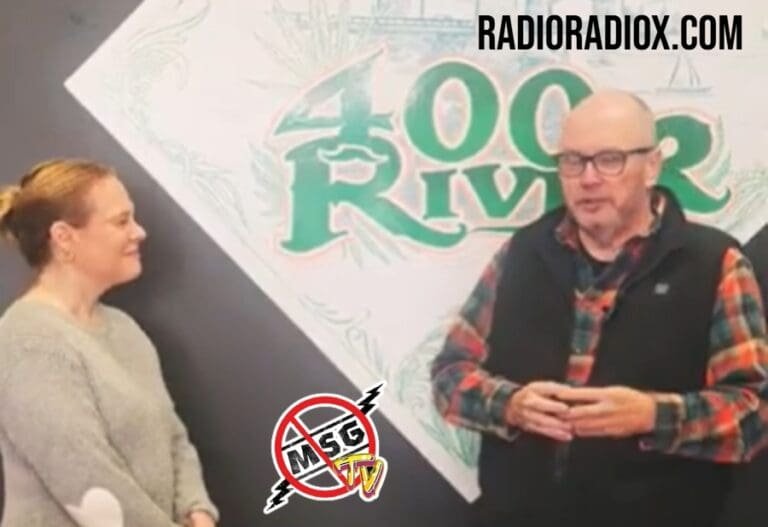
Sara B is about and about in the 518, see who she ran into!!! Christopher Ebbs, Chris Busone, 400 River & More!


Subscribe to our YouTube Channel HERE!

Julia Alsarraf @ Caffe Lena, 1/27/2026

0

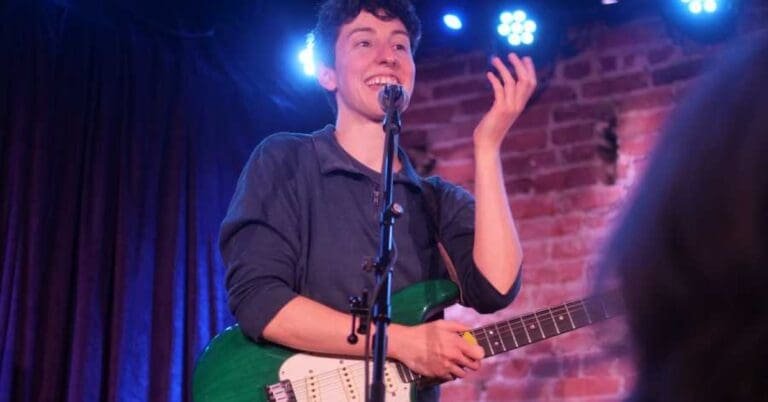
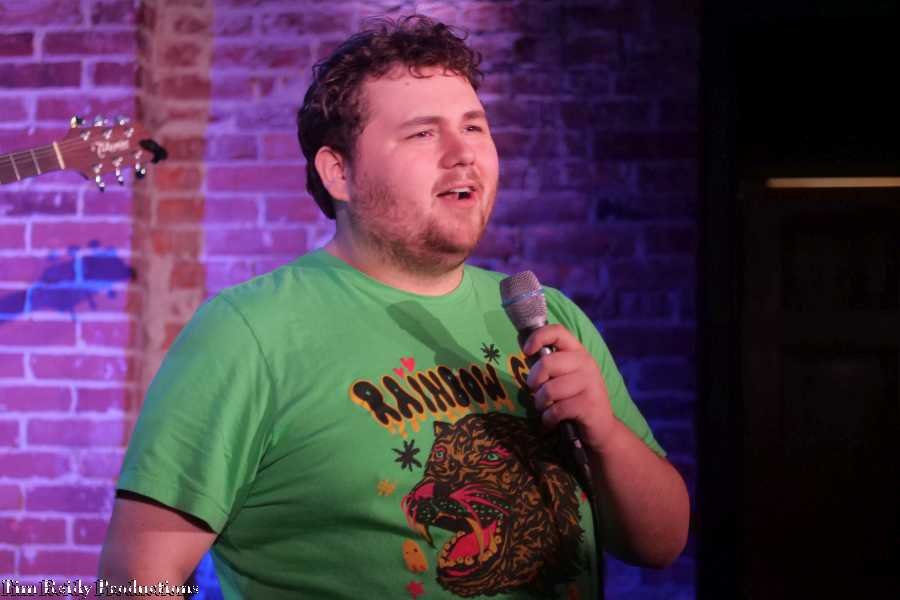
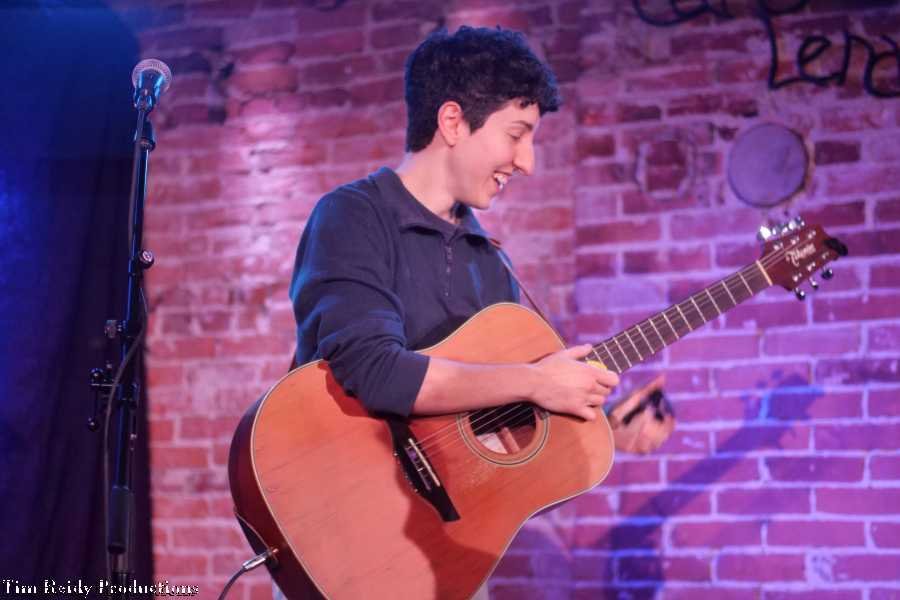
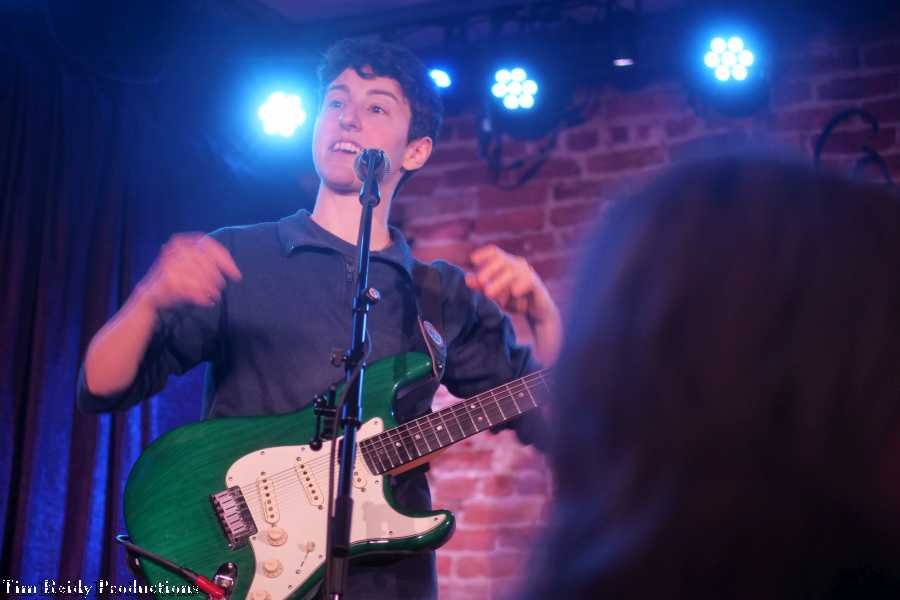
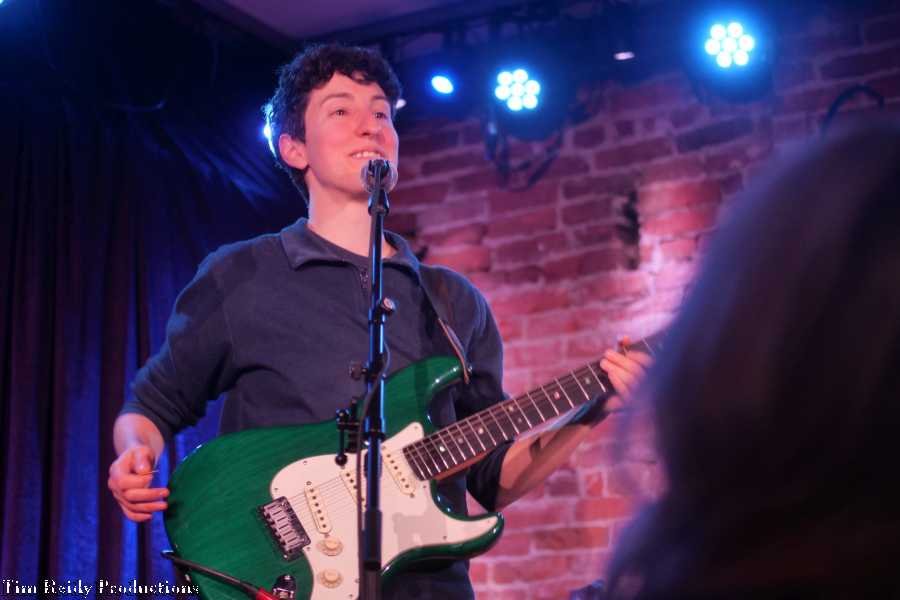
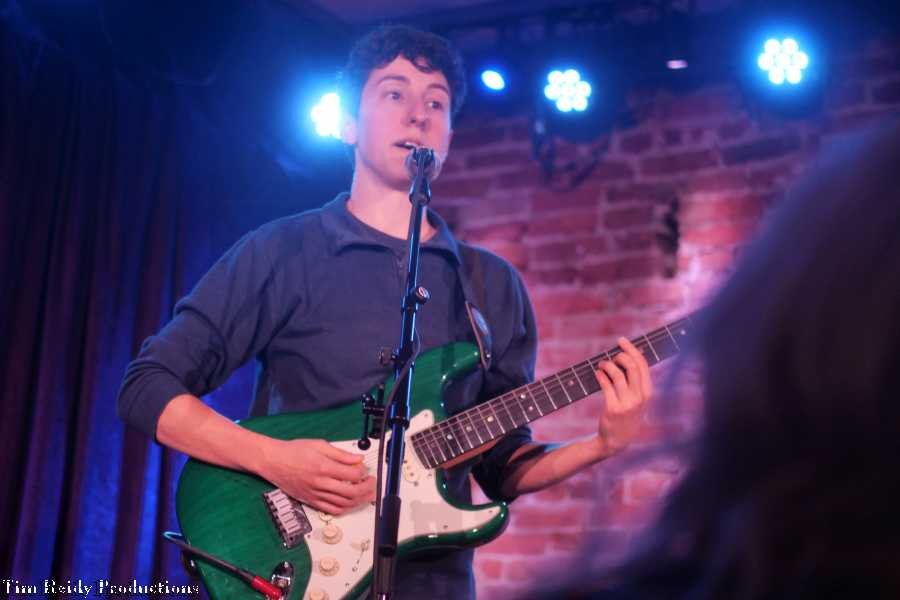
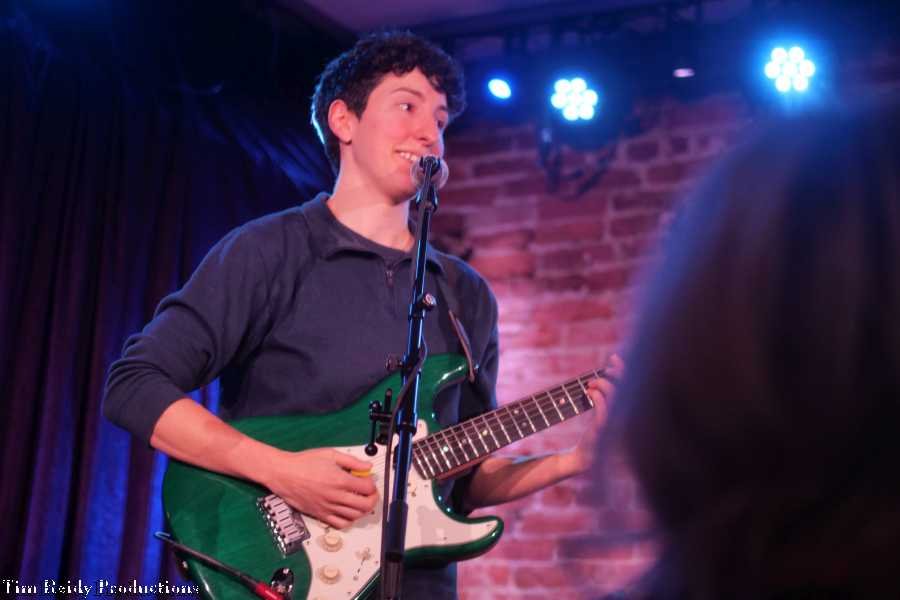
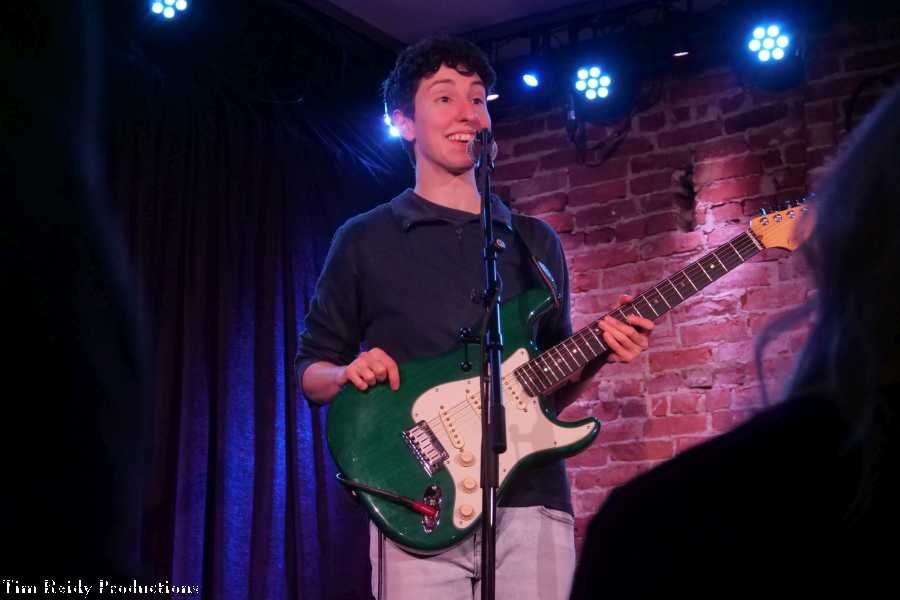
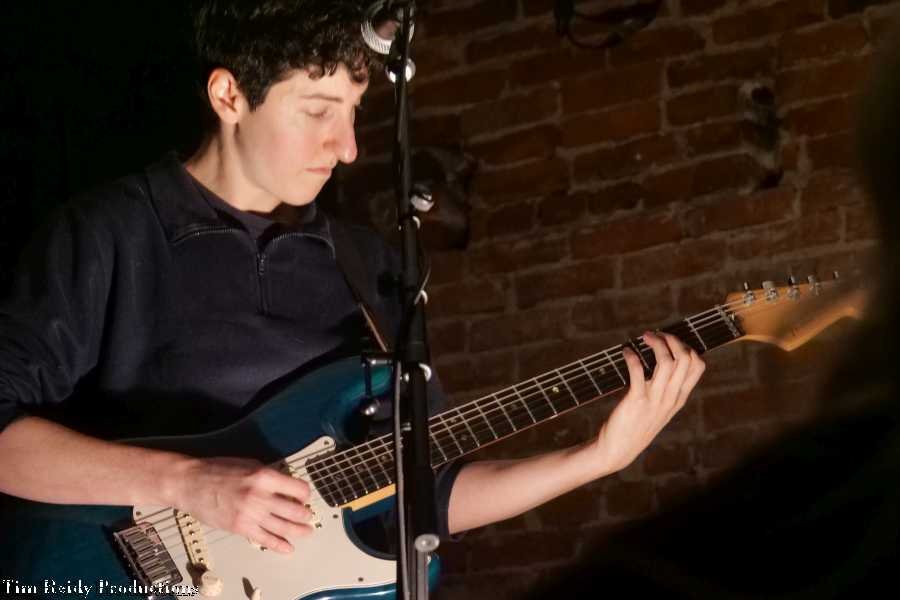
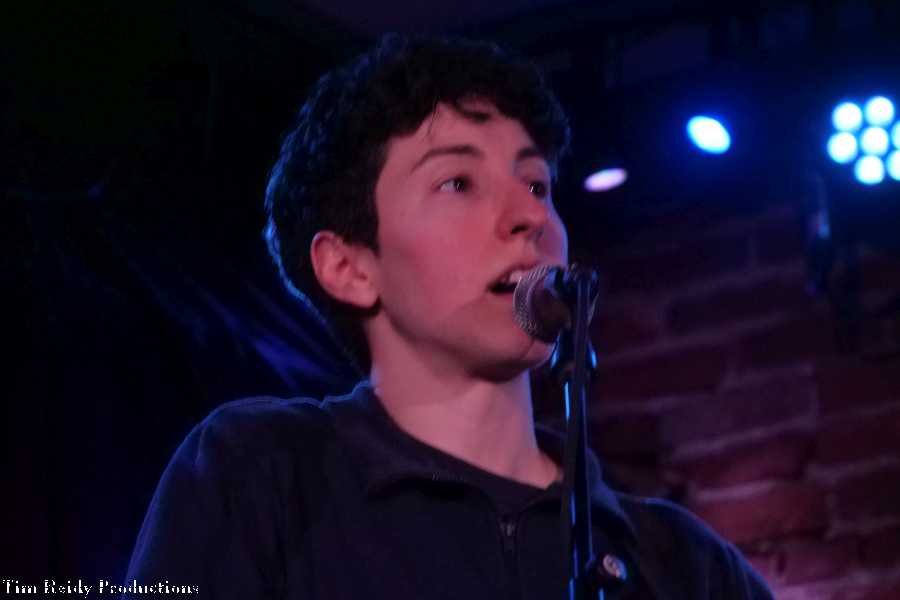
Caffe Lena celebrated the release of Julia Alsarraf‘s album, In Fidelity, on January 27.

Photography by Timothy Reidy.

More from Caffe Lena here …

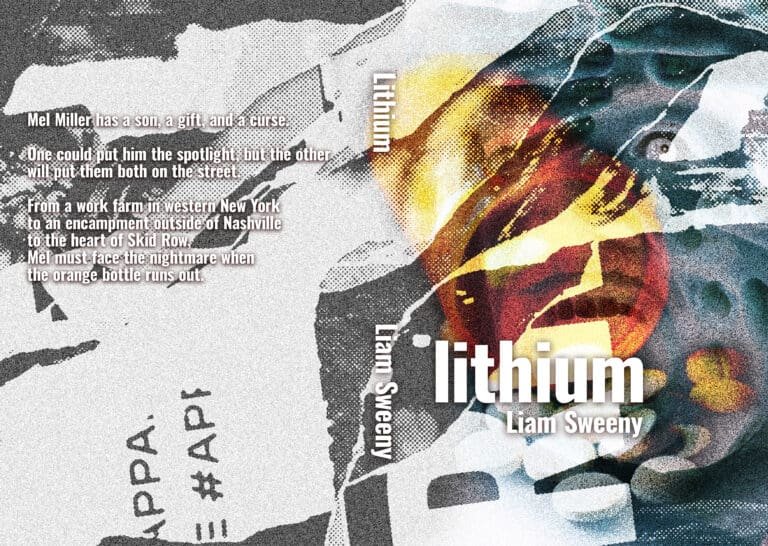
Lithium, Chptr. 25 – Xperience Fiction

0

Lithium, Chptr. 25 – Xperience Fiction – by Liam Sweeny.

Mel watched the sunrise through the windows of the day room as the nurses wound down from the third shift, hanging off the nurse’s station counter that was holding them up. They took in three new people the night before, and they weren’t well off. Mel wished he could say they were worse off than he was, babbling incoherently, restless to the point of needing shot of sedatives; at least one of them did. But Amanda told him that’s what he looked like. He barely remembered coming in.

He wanted to run. He didn’t want to leave the ward; he just wanted to take a foot cruise around the hospital grounds. Maybe he would when they discharged him. Assuming he had anywhere to go. His social worker had told him she could probably get him help, but if that help was a shelter, he’d never go. And he would never go back to Skid Row, even if that meant hitchhiking back to Albany. Since Debra probably had Andy, he had no reason not to go back, except for heartache.

He dreamt of Hope the night before. It wasn’t wild or symbolic; just a walk down the path of the camp, talking, though he couldn’t remember a word of it. She’d probably never forgive him for the way he’d acted. He missed her, but apparently, she was temporary, like Max. There for a time, and he should get used to that if he was homeless.

He had breakfast with Critter and Ramon. Pancakes times two, because why mess with a good thing?

“So when are you getting out?” Critter said.

“I don’t know yet. They were telling me three days, but that was… three days ago.”

“You know, in jail, you mind your business, and you get out when your sentence is up. They can’t just keep you like they can here.”

“Well, it’s not like I got something to go home to,” Mel said. “Shit, I’ll probably be back when I run out of meds.”

“Whatever you do, get here. Don’t let them take you to the state joint. As crazy as it is here, it’s like jail there. Violent people get warehoused there.”

“I was violent here.”

“Nah, not like that,” Critter side. “Chew on your face violent.”

Mel cut eyeholes and a smile into one of his pancakes and held it up to Critter with a fork. Then he ate it.

“Gross,” Magda said.

Critter chuckled. “Nice.”

They went to the first group in the morning. Dealing with Grief was scrawled in black, erasable marker on the small whiteboard eye-level on the wall. It was sparsely attended. Then again, so was breakfast. The new arrivals made for a hard night’s sleep.

Tom was leading the group. Mel had to admit he was trying desperately to stay awake for the preamble. Somewhere in the meat of the meeting, the pancakes and syrup kicked in.

“Can you grieve for someone you didn’t like?” Tom said. “Maybe even someone you hated? Has anybody ever done that?”

Mel couldn’t say he had. He went out for drinks when he found out his father died.

“Was anybody relieved when someone in your lives died?”

Mel raised his hand. Ted pointed at him.

“Mel, would you mind telling us about who died that you were relieved about, and why that was?”

It was personal, and the Mel of even a few days ago wouldn’t have thought it was anyone’s business, but he was getting something out of the groups. Time to give something back. He spoke up.

“My dad. He was… wasn’t a great guy. And when he died, I felt relieved. I guess I was relieved; really I just celebrated, because I hadn’t talked to him in decades.”

“Okay,” Tom said. “And after that, no changes in your life? No depressions, downturns, anything?”

“I went into a really bad depression, quit work… ended up getting evicted. But that was from my ex-wife. I don’t think that was my dad.”

“It could’ve been your ex-wife, and it could’ve been your dad. Do you think it’s possible that you did feel grief over your dad, and it wore you down so that, by the time you were having problems with your ex-wife, your resistance was down?”

Mel ran it through his head until it banged against a box of memories he didn’t have the key for.

“Let’s get off me for now,” Mel said. He’d given enough.


Laura called him to the nurse’s station just before lunch, after the group Understanding Limitations. He walked over, but before he could say a word to Linda, he could see why she’d called him. On the floor, set against a shelf was a large bag. Sticking out of the bag was a canvas.

“I was able to find some stuff lying around,” she said. “I hope they work for you, and you have to do your work in the day room. And you have to avoid the cloth-covered seats. And clean up your own mess.”

“I will,” Mel said. “I know you bought that stuff. Thank you.”

“You owe us that painting for the ones you ripped up. And you’ll probably be discharged in a few days, so you best hurry up.”


Mel set up a makeshift easel out of a highbacked chair covered in a newspaper from the day before. The acrylics weren’t the ones he used at home, but they were the same brand as the ones he got at the camp. She could have cheaped out, and if he was an overworked nurse, he likely would have. He sat there for five minutes and conjured up a visual of nurses, a historical montage in paint of nurses past and present.

As he started painting, he thought of the burnt-out garage and his attempt to repaint “The Son.” It seemed so foggy except that anxiety creeped up in his gut at the attempt to bring it up. His painting technique right then was smooth, even, and it followed the flow of his brushstrokes and the passion of creating colors and tints.

He needed a red for the cross, but he wanted a darker, deeper red. Something more like the blood they’d been surrounded by in the world wars. He looked up to hopefully find the color in the room. And he did, in the woman standing in front of him.

It was Hope.


***


Hope sat across from him, at an angle between Mel and the painting, as if she were the subject. Mel thought of the painting he did of her at the camp. Did she ever even see it? Or did it get buried in a scrap pile when he had his withdrawals? The camp seemed a lifetime ago.

Hope shifted in her seat. Mel couldn’t stop looking her in the eyes.

“I didn’t want to come today,” she said.

“I don’t know how to feel about that,” Mel said. “I’m not saying that in a bad way; I’m just at a loss for words.”

“That’s a lot of words to say that.”

Mel chuckled. “Yeah, it is.” He set down his brush. “So how have you been holding up?”

“I’m a little bit better,” Hope said. “I have a place, sort of. It’s an SRO. That’s like a room, just a room, and I share kitchens and bathrooms.”

“Oh wow, that actually sounds good. How is it living there?”

“It’s loud; I mean, it’s not a four-star hotel but the locks work. I don’t have anything, but when you’re a woman, you need a lock that works.”

“I get that.” Mel fidgeted. He had so much to say to Hope, and he was nearing his meeting with the social worker.

“Look, Hope, I was a huge ass-,”

“You were manic,” she said. “I know what it’s all about. You were not the worst manic episode I ever saw.”

Mel could feel the chill melting in his heart. He saw Hope as responsible for getting them to L.A., despite the fact that he made the decision to go. He blamed her for his mistakes, and he thought about what Tom said in the group about grieving someone you hated. Mel’s dad used to blame Mel for his own mistakes. And Mel was following suit. Maybe he had a streak of his dad in him. Or maybe he was just a human who acted on an irrational impulse. All he knew is that he hurt Hope and he loved her, and those two things couldn’t reconcile.

“I should’ve never blamed you for Andy. That was all me, and I couldn’t accept it.”

“I do understand,” Hope said. “But what you said really hurt me. And I would hate you right now, except that I used it to get myself off the street. So maybe I should thank you.”

“I love you, Hope, I still do. After this is over-,”

“You need to take care of yourself before we’ll ever have a shot at anything,” Hope said. “I came to give you my new address, and to tell you that. When, or if, you have a place, and you can get on your meds, I want you to come by.”

She slid a slip of paper on the chair that was his acting easel, and she got up. She leaned over him and kissed his cheek.

“Bye Mel,” she said. She pointed at the painting. “I like this,” she said. “So far.”


Mel paced the corridors, east then north, his thoughts consumed with Hope. She was okay. She had a place, even an SRO. And she didn’t hate him. Mel thought about the fact that she was the one that brought him to the hospital, and it sure as shit wasn’t Andy that found him in a burned-out garage. Hope did everything and more for him, and she wouldn’t let him, in madness, throw her away.

Andy was still in danger. Mel needed something to grab onto there. He had to get him back from Debra. Which meant he had to get back on his feet. A single room situation wouldn’t do because they’d never let Andy live there. He needed at least a two-bedroom apartment, or even a one-bedroom studio if it was big enough, because he could always give Andy the bedroom and sleep on the couch. Andy would have his own room. But a two bedroom could also get Hope in there.

Mel was in the day room with time to spare when Maggie came to get him. She was joyous, which seemed odd for her. Mel asked her what happened, and she just said, “You’ll see.”

They walked into the second group room, and Mel saw a woman, with shoulder-length straight auburn hair, tortoiseshell-frame glasses, and a thin tweed jacket. Beside her was a large package in paper, wrapped in twine.

“Mel, I’d like to introduce you to Meredith Aciendo. Meredith is from the Getty Center.”

Mel bounded over to shake her hand, which he did furiously, only stopping when he realized he was being awkward. Then he sat down.

“I’ll just let her talk,” Maggie said.

“Thanks.” Meredith unwrapped the package, carefully untying the twine. Mel recognized it. Intimately.

“Look familiar?” She said.

“Of course. How did you? I mean, where?”

Meredith slid it forward. “The Getty Center isn’t in the habit of throwing away art, even when it’s left there by someone who runs through the galleries with it.”

“Wow,” Mel said. “Incredible.”

“So I have some questions,” Meredith said. “Namely, why we have a Roy Miller and you’re Mel Miller and they’re obviously painted by the same person?”

Mel explained his father, and what he did to Mel all his life. He also explained what “The Son” meant to him.

“That is… an incredible story.” Meredith said. “I came here to give you this, but also, I would encourage you to apply for an Artist-in-residency at the Getty Center. I can’t absolutely guarantee you’ll get it, but with a story like yours – and the fact that we’re already hanging your work – no one stands a better chance than you. It means money, it means a place to stay. All you have to do is apply and be interviewed.”

Mel was in shock. Artist-in-residency? We didn’t dream anything like this when he was fully delusional. Just one thing.

“I need to get my son,” Mel said. “He’s back with his mother, and that’s an extremely neglectful and abusive situation. I can’t just live somewhere he can’t go.”

“I looked up that too,” Maggie said. “Andy never went to New York. They tried to contact his mother, but she’s in jail. Drugs, I think they said. He’s here in L.A. county with a Resource Family.” Mel’s brow furrowed.

“Foster family, same thing,” she said. “If there’s a deal here, Mel, take it. It could be months before you get a chance to get Andy back, and you have a much better shot being on the board than off.”

“We can help you find a place while your application goes through. We’ll work with Social Services on your behalf,” Meredith said. “We take care of our own here.”

Mel thought he was going to have trouble catching his breath. Instead, adrenaline, and lots of it.

“I’m fully game, but could you all give me like three minutes? I need to do a quick run through the halls.”


More from Liam Sweeny…