
No Refunds for Burnout
by Faith Schlesinger
I’m greeted by an elevator attendant who asks if I’m going to the “treadmill show.” The sentiment is mirrored in the lobby, where ticket holders and staff members muse about what they think the show might be. There’s a sense of anticipation, and perhaps a little intentional confusion.
“Burnout Paradise,” presented by Pony Cam Collective, an Australia-based experimental theater company, is an exercise in pushing limits — physical, creative, and communal. The five-member collective creates work without a conventional hierarchy of authorship. Rather than relying on a fixed writer, director, and cast, Pony Cam develops its performances collaboratively, negotiating ideas and responsibilities as an ensemble. The result is theater that feels unpredictable by design: playful and chaotic. “Burnout Paradise” encapsulates their process beautifully. The show doesn’t just break the mold of conventional creative development; it shatters the fourth wall and challenges the audience to participate in creating the narrative of the fifth.
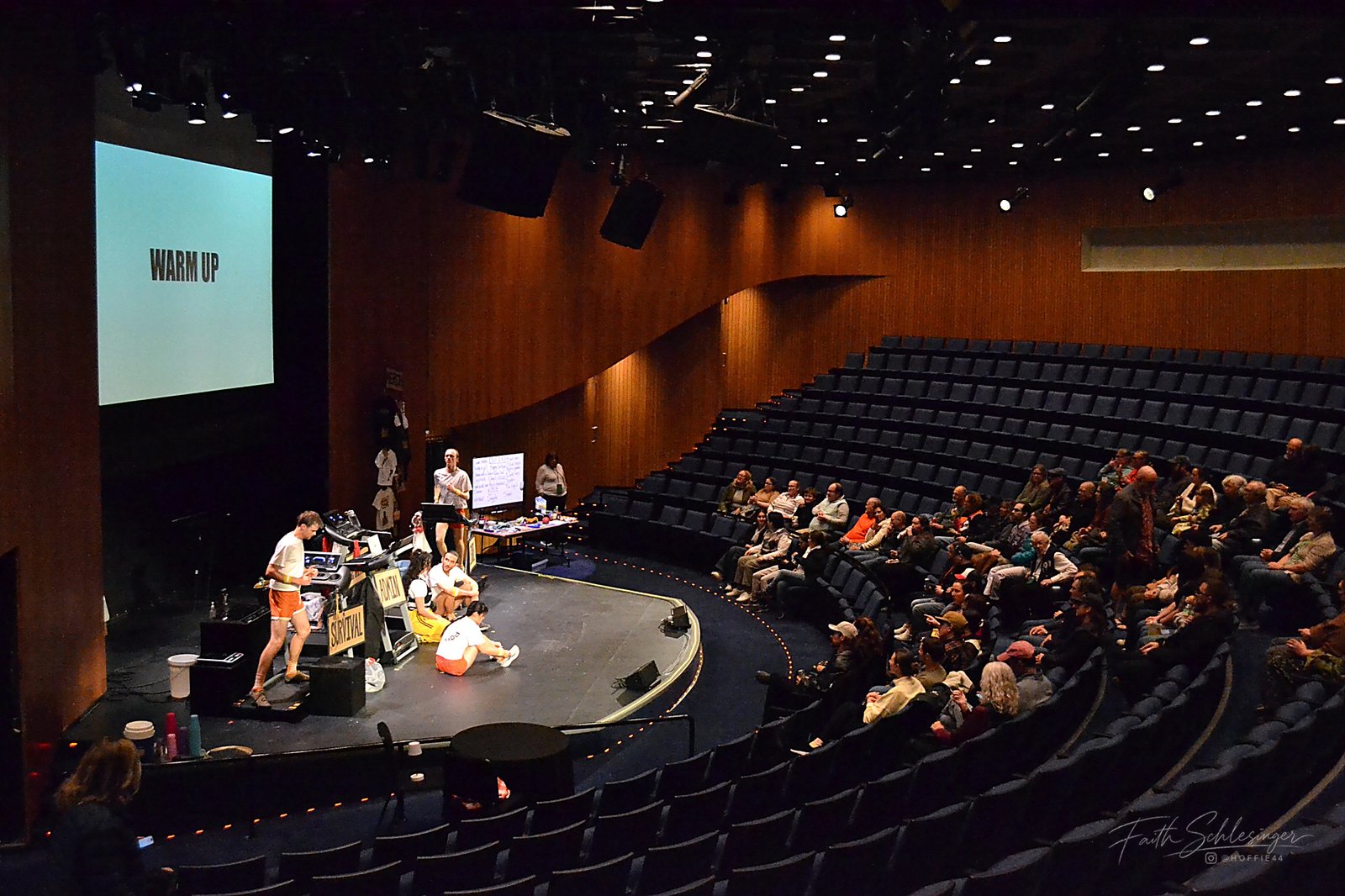
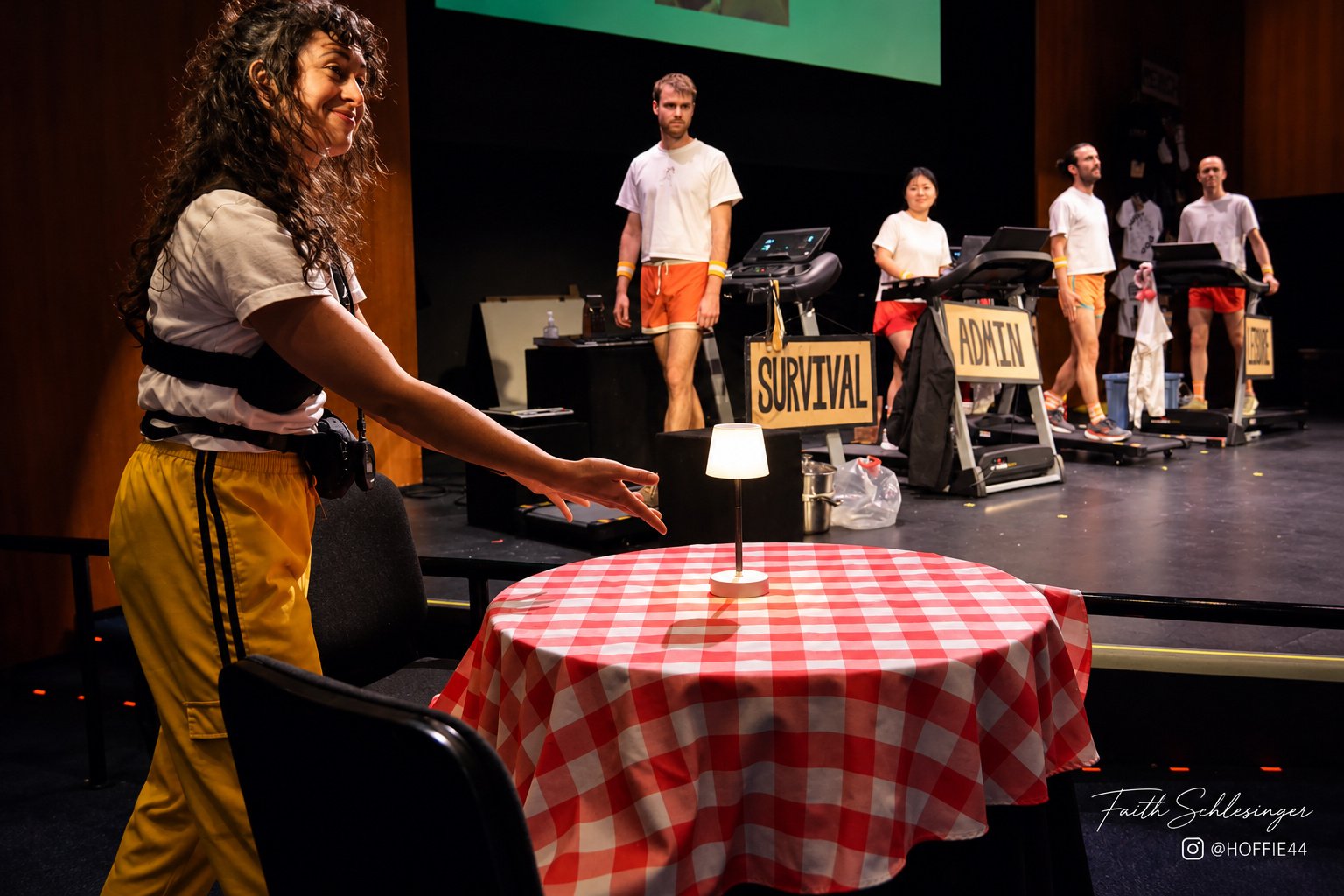
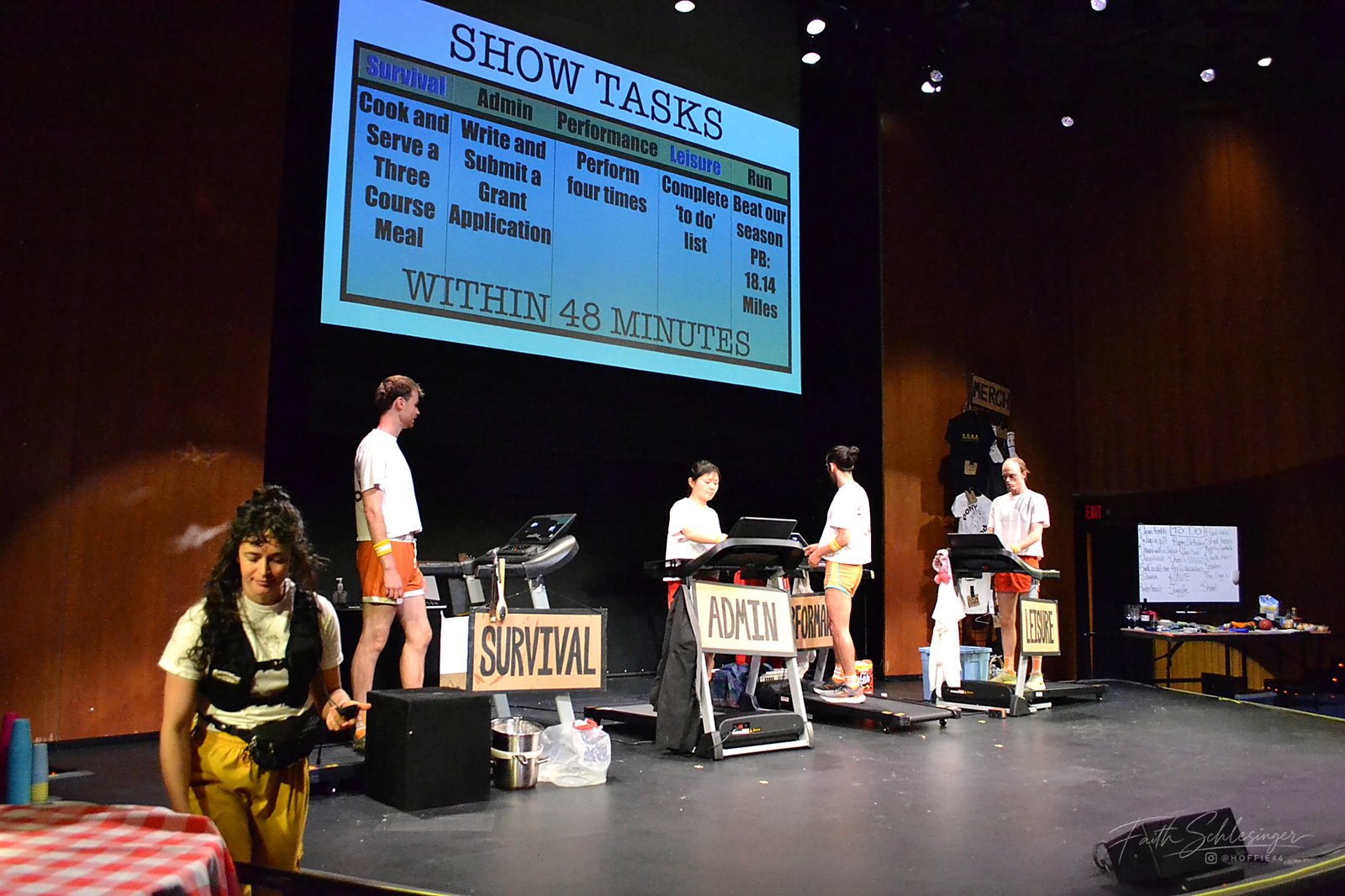
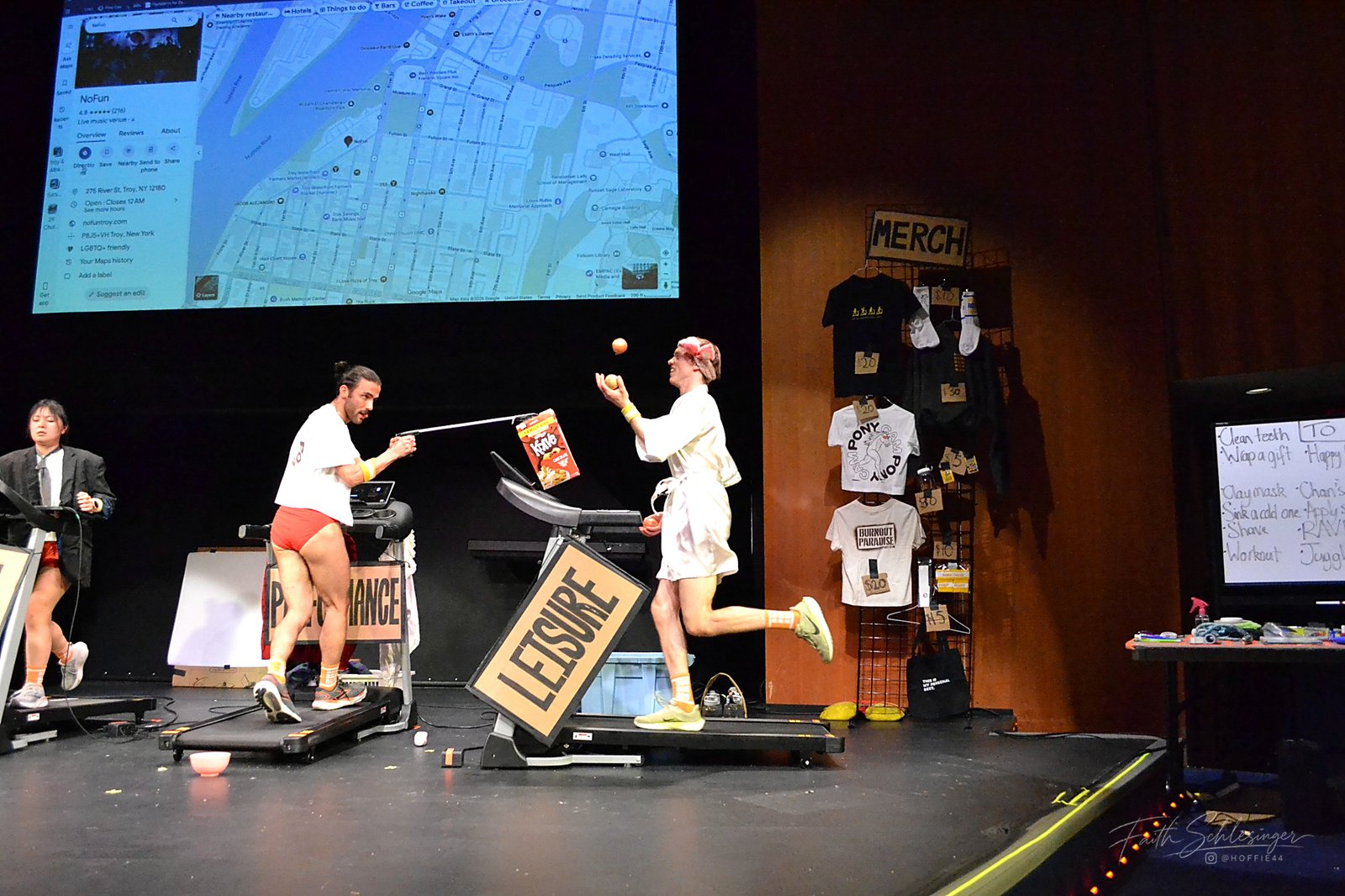
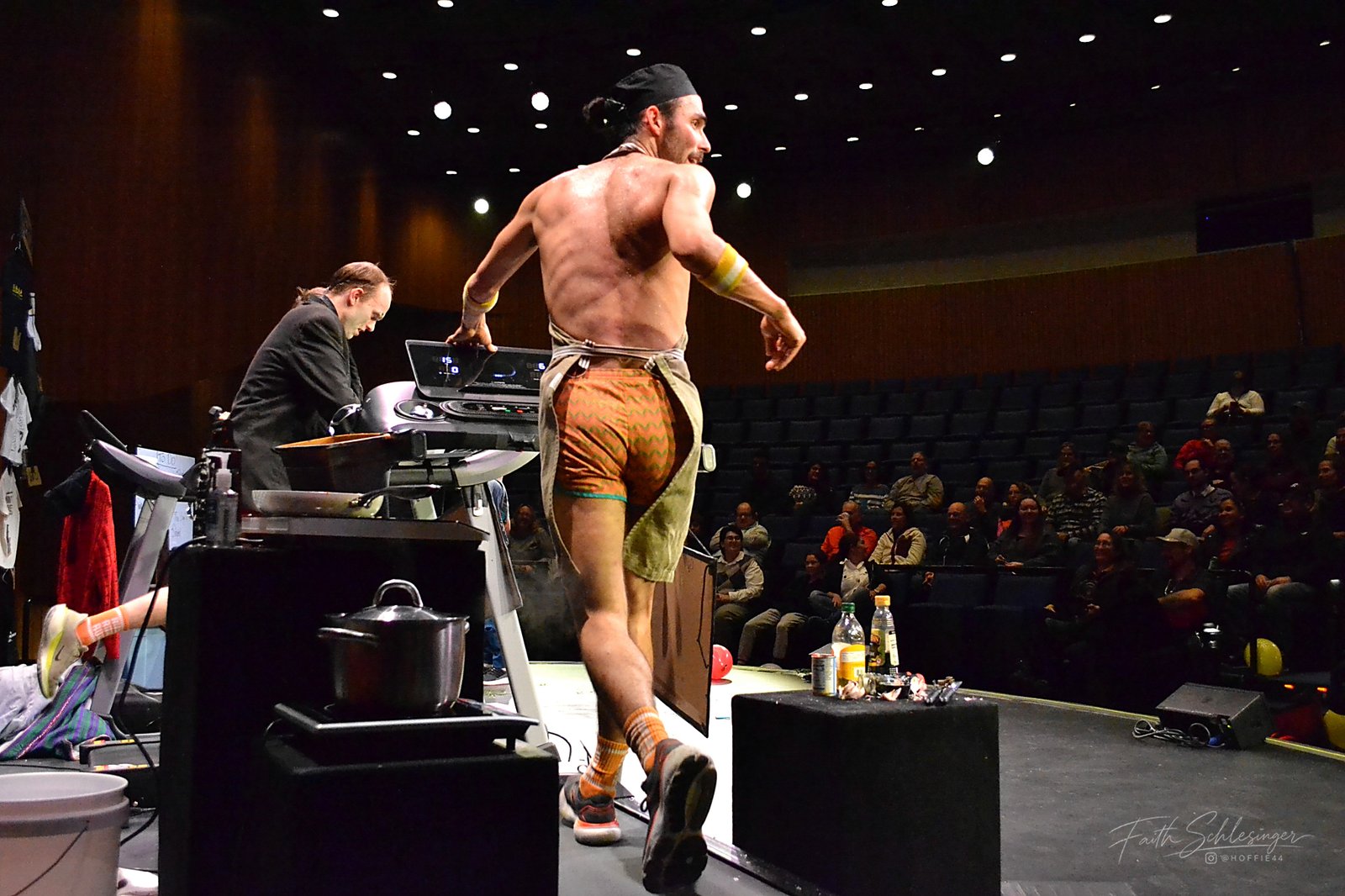
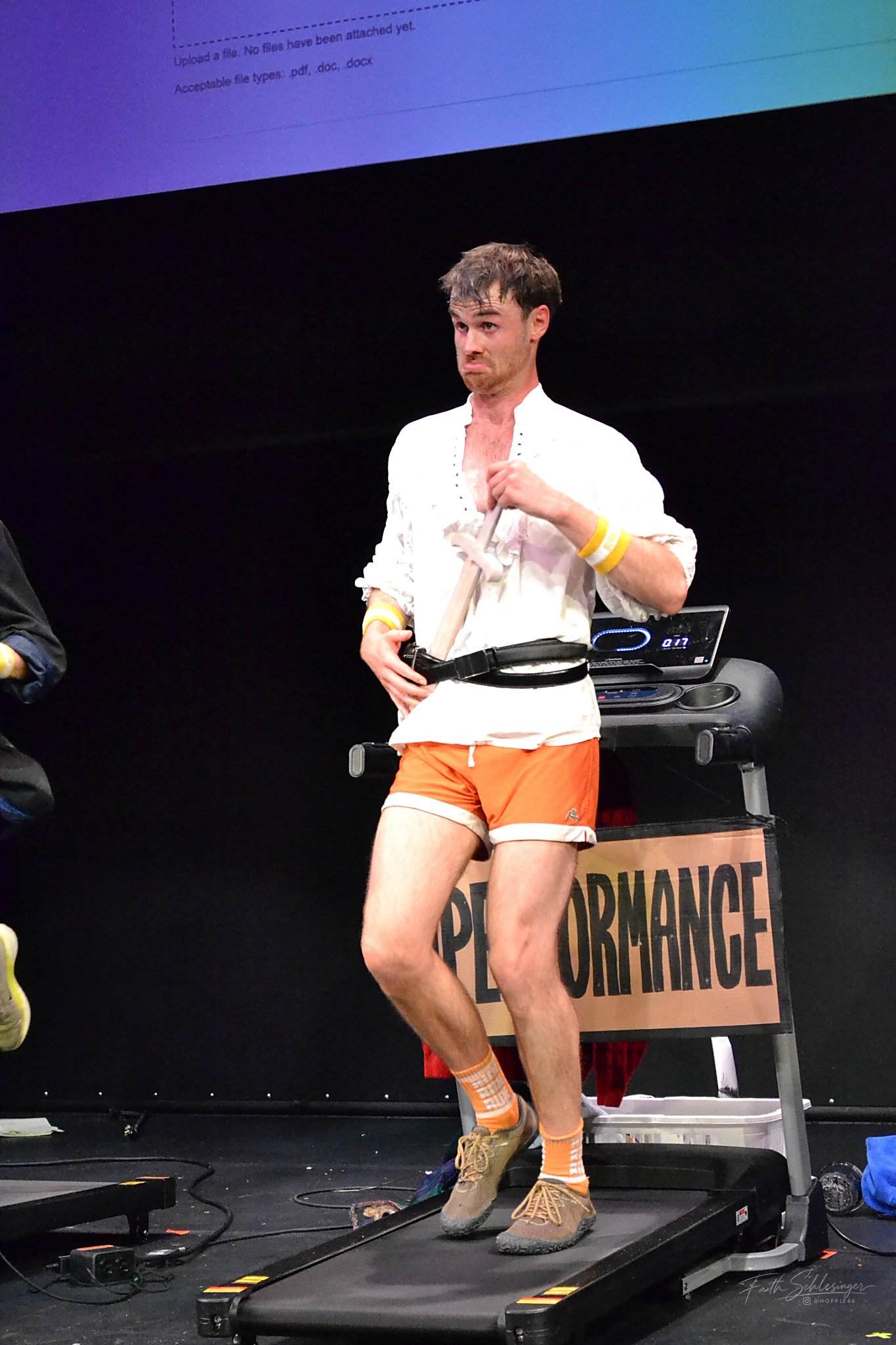
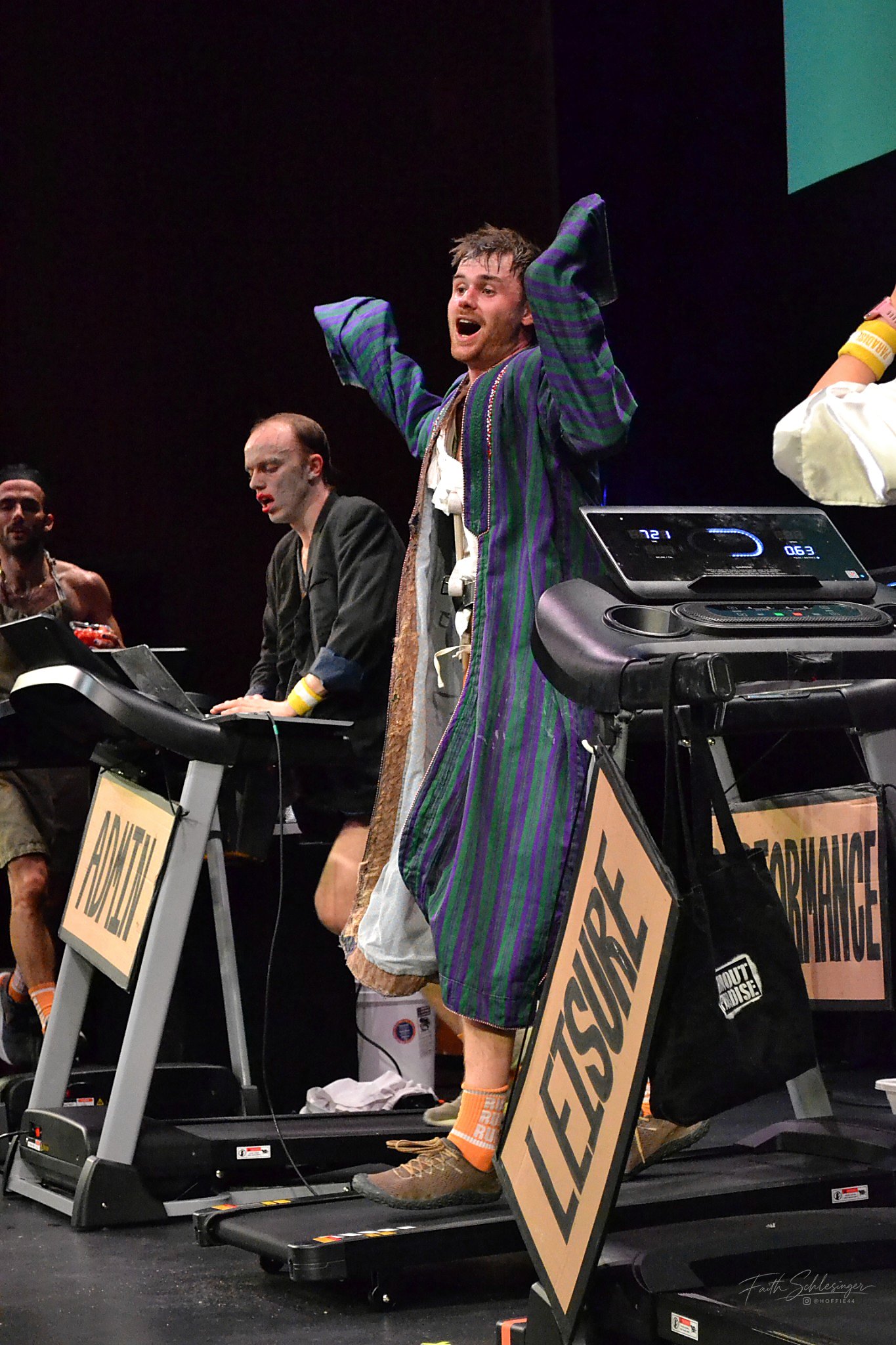
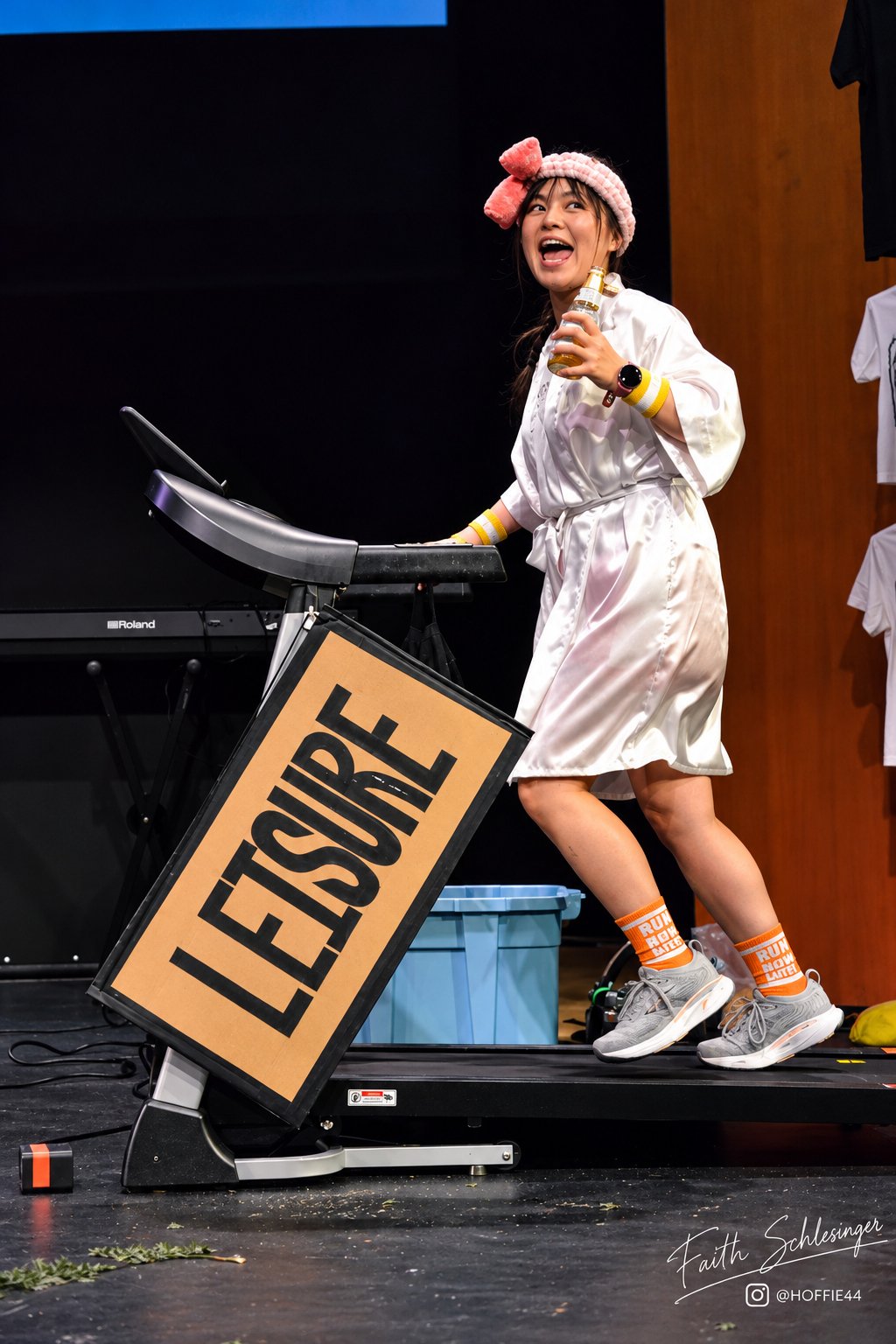
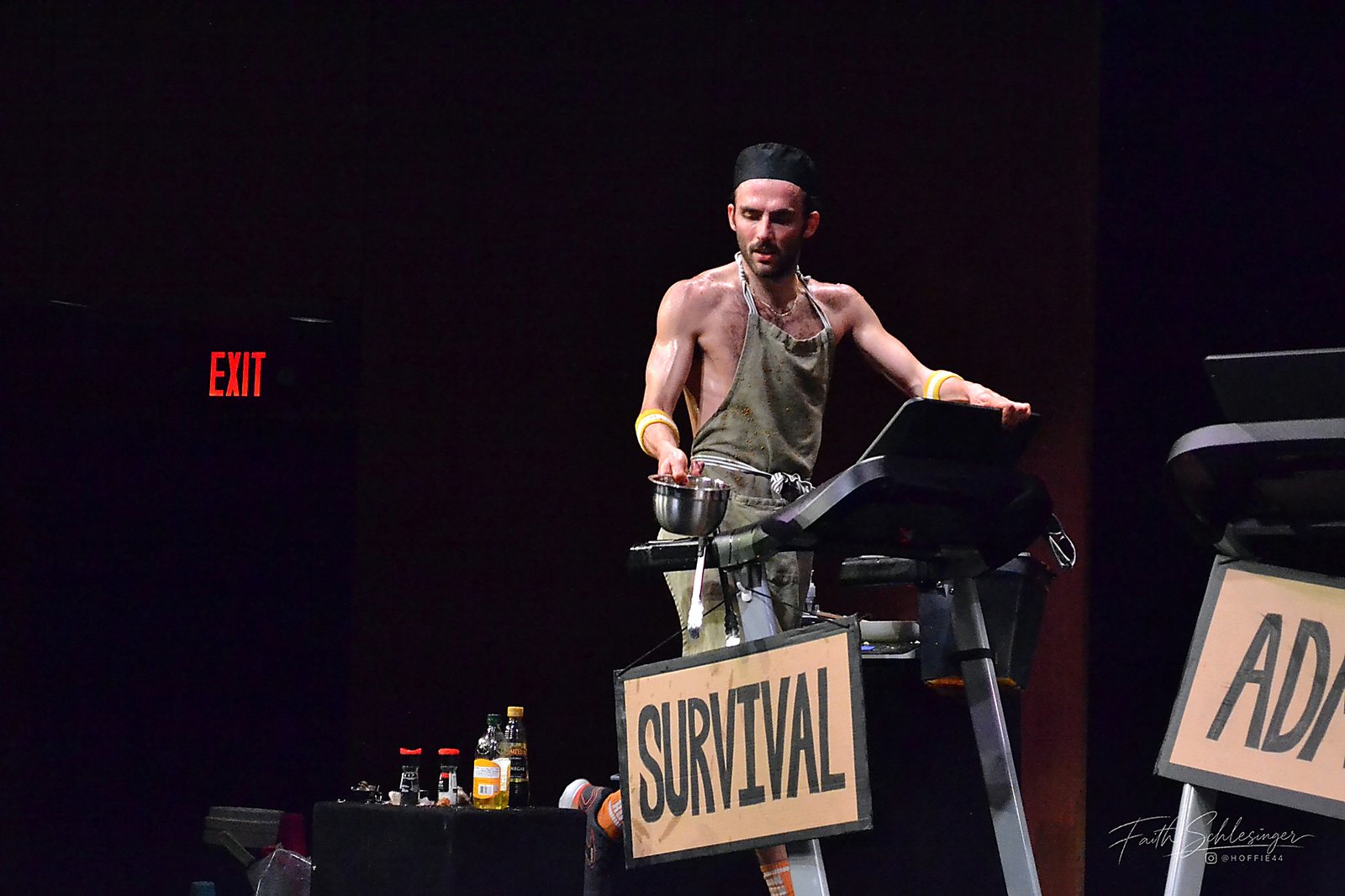
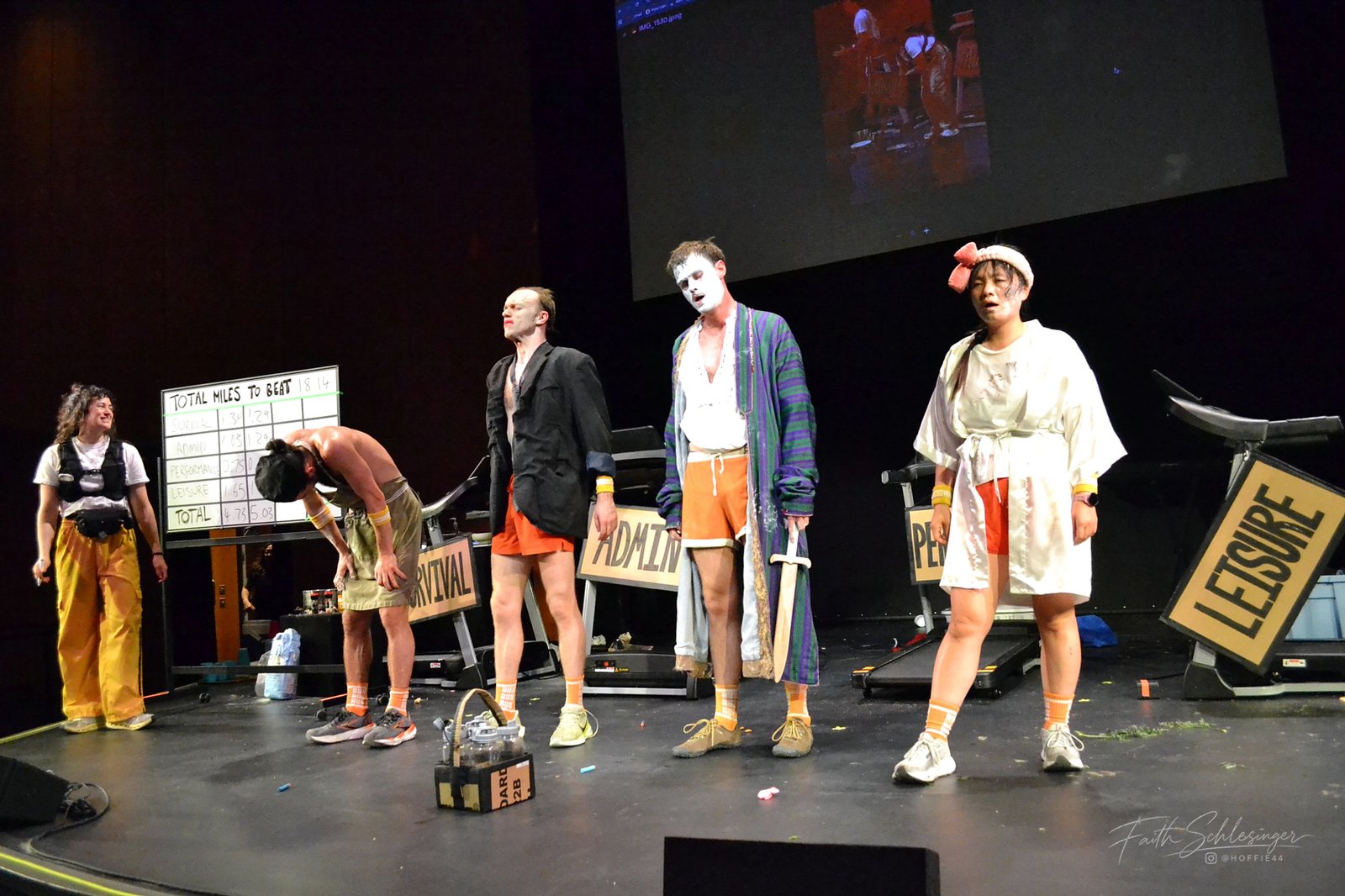
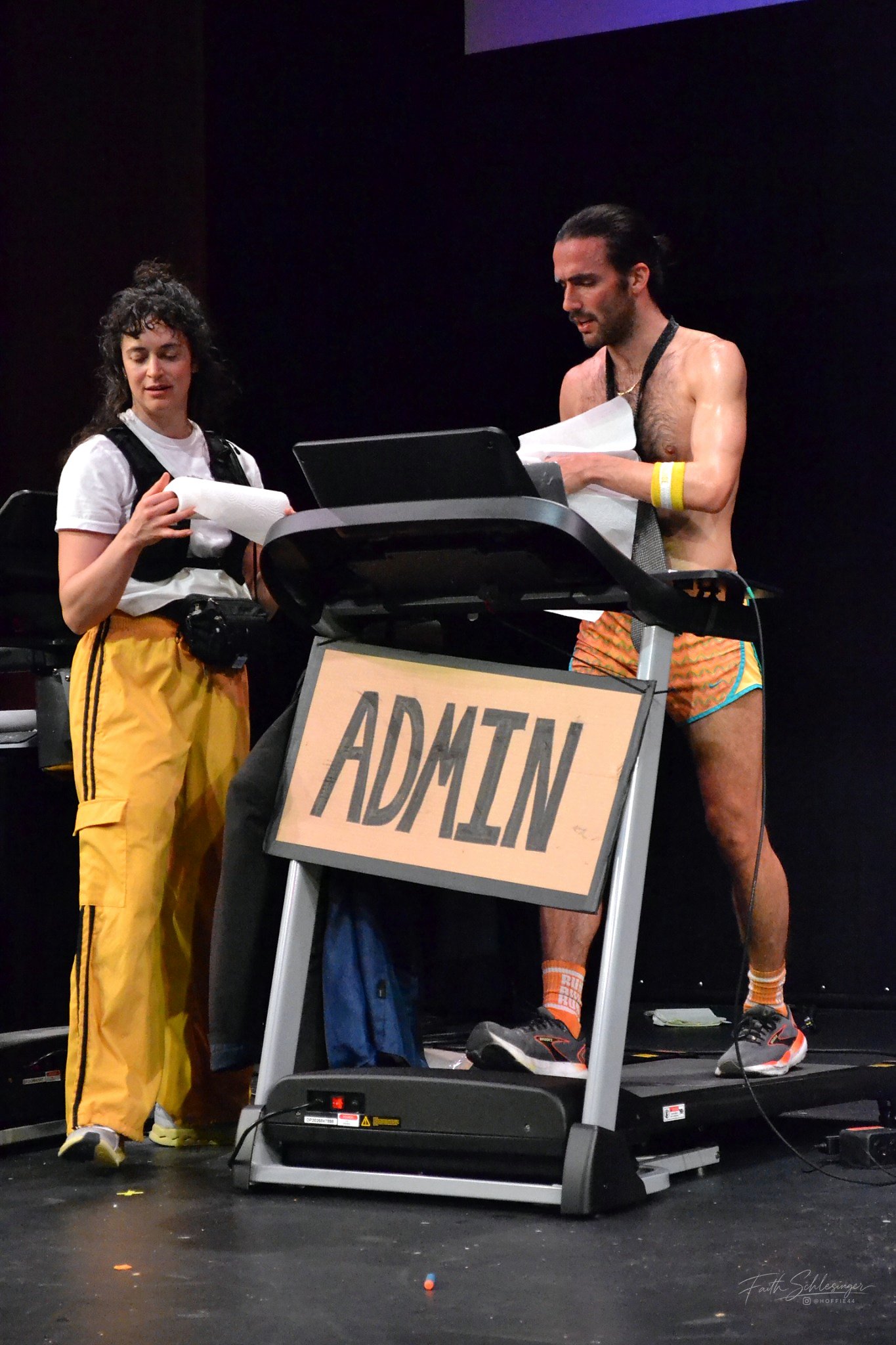
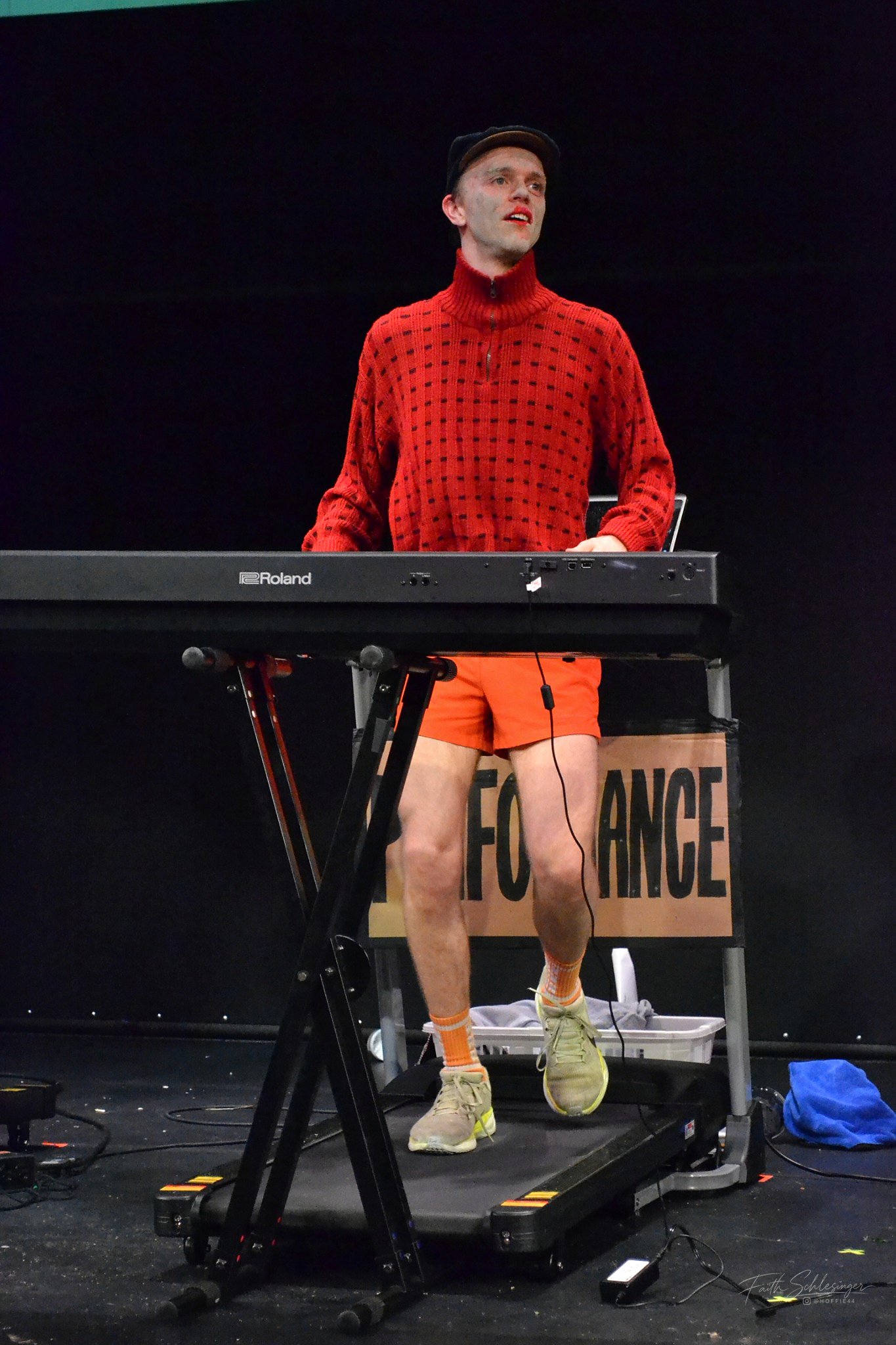
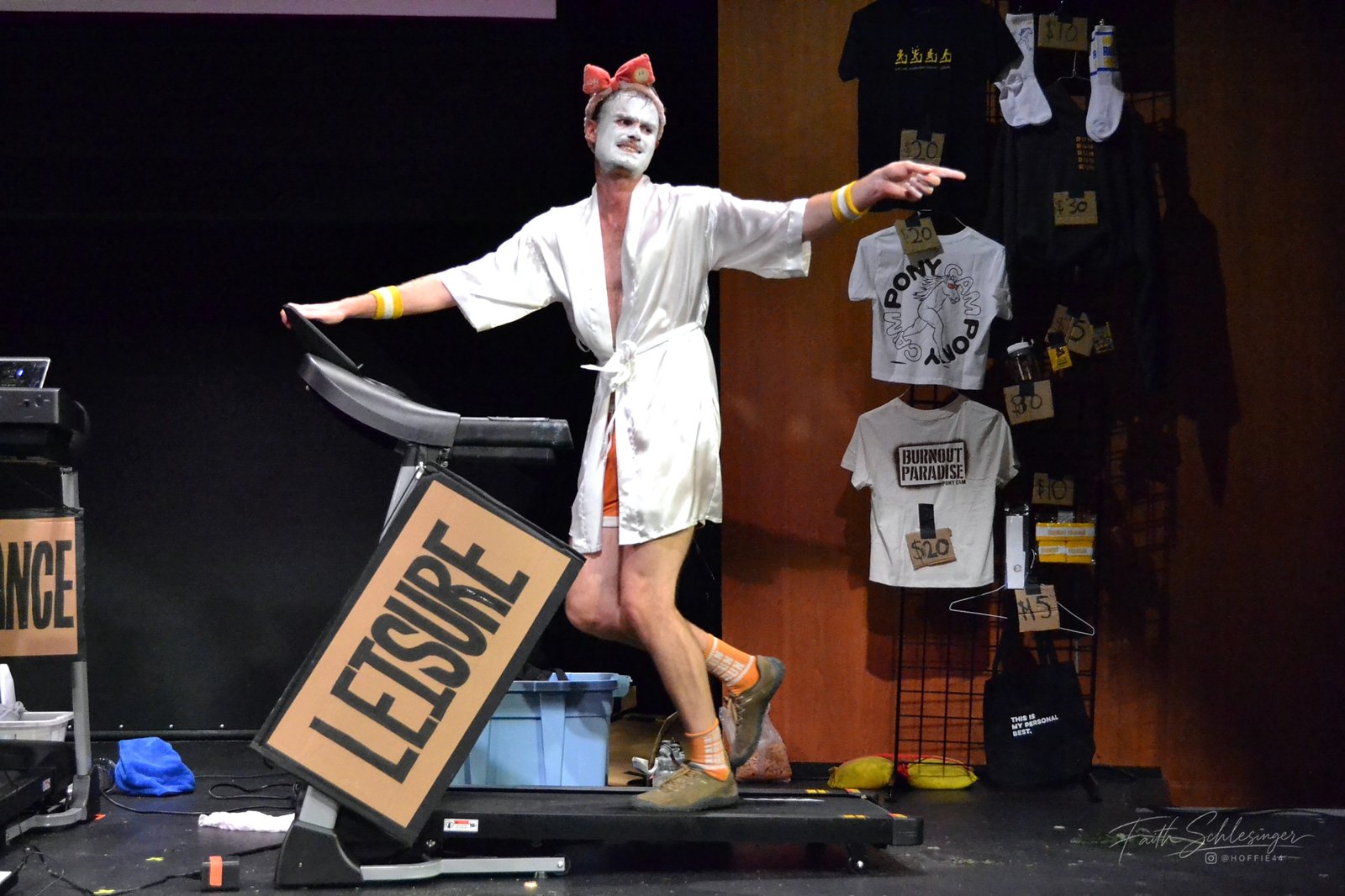
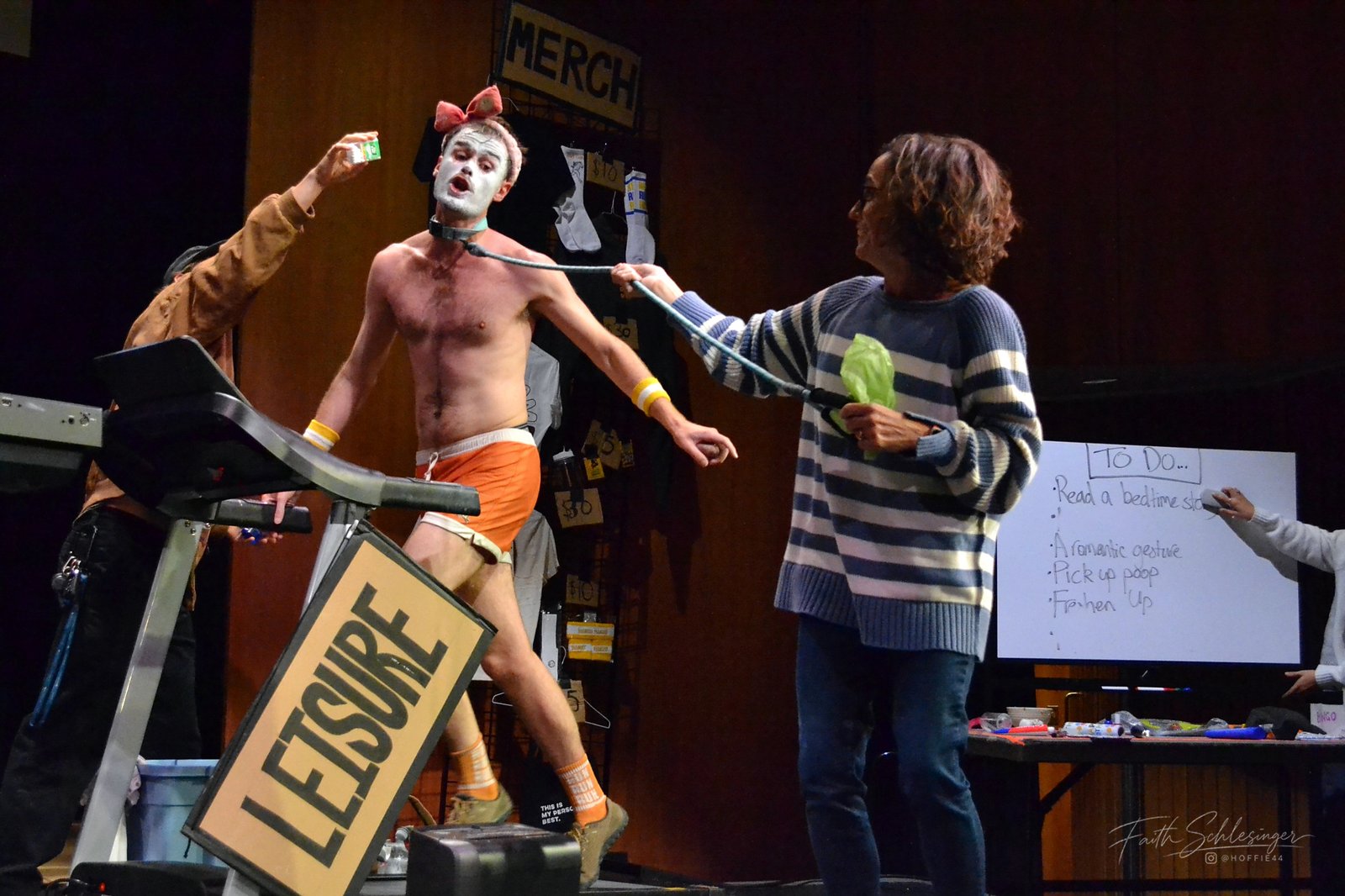
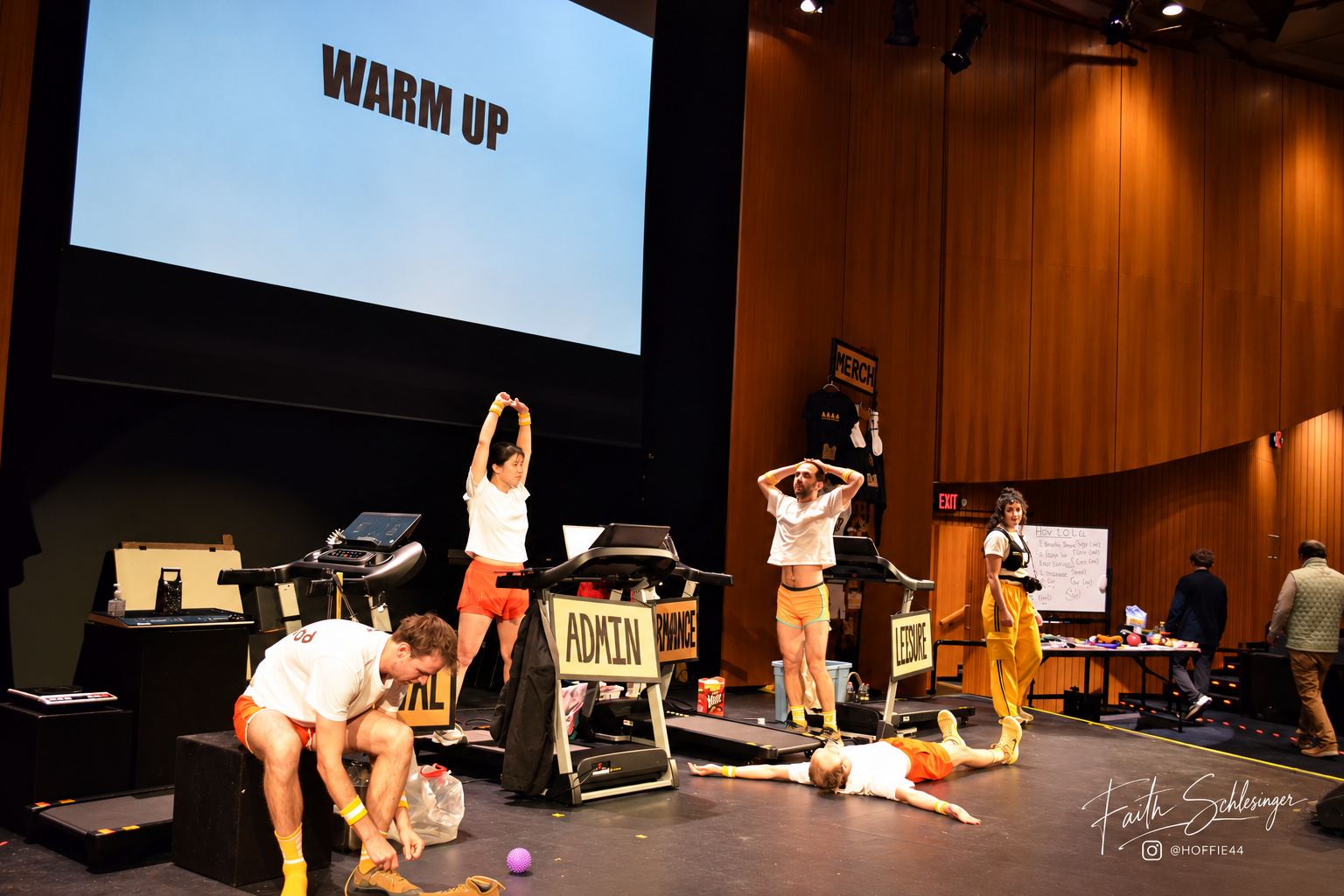
With the theater doors open, the audience is ushered into a fully lit room. Five artists mill about the stage, stretching, chatting, and hydrating. Four adjacent treadmills are labeled with handwritten signs: SURVIVAL, ADMIN, PERFORMANCE, and LEISURE. A whiteboard sits just offstage, displaying a to-do list, while a nearby table holds an assortment of odds and ends. Above the performers, a projector screen reads “Warm Up.”
As we find our seats, we watch knee bends and stationary stretches. It takes a moment to realize that the stage directions have quietly extended beyond the performers. We, too, are warming up for what’s to come.
The artists mount their respective treadmills, and the fifth member of the collective assumes the role of timekeeper, host, and something of a maître d’ at a particularly unhinged restaurant, with a table for two at the head of the theater. The audience is welcomed into the experience, and the objectives are laid out.
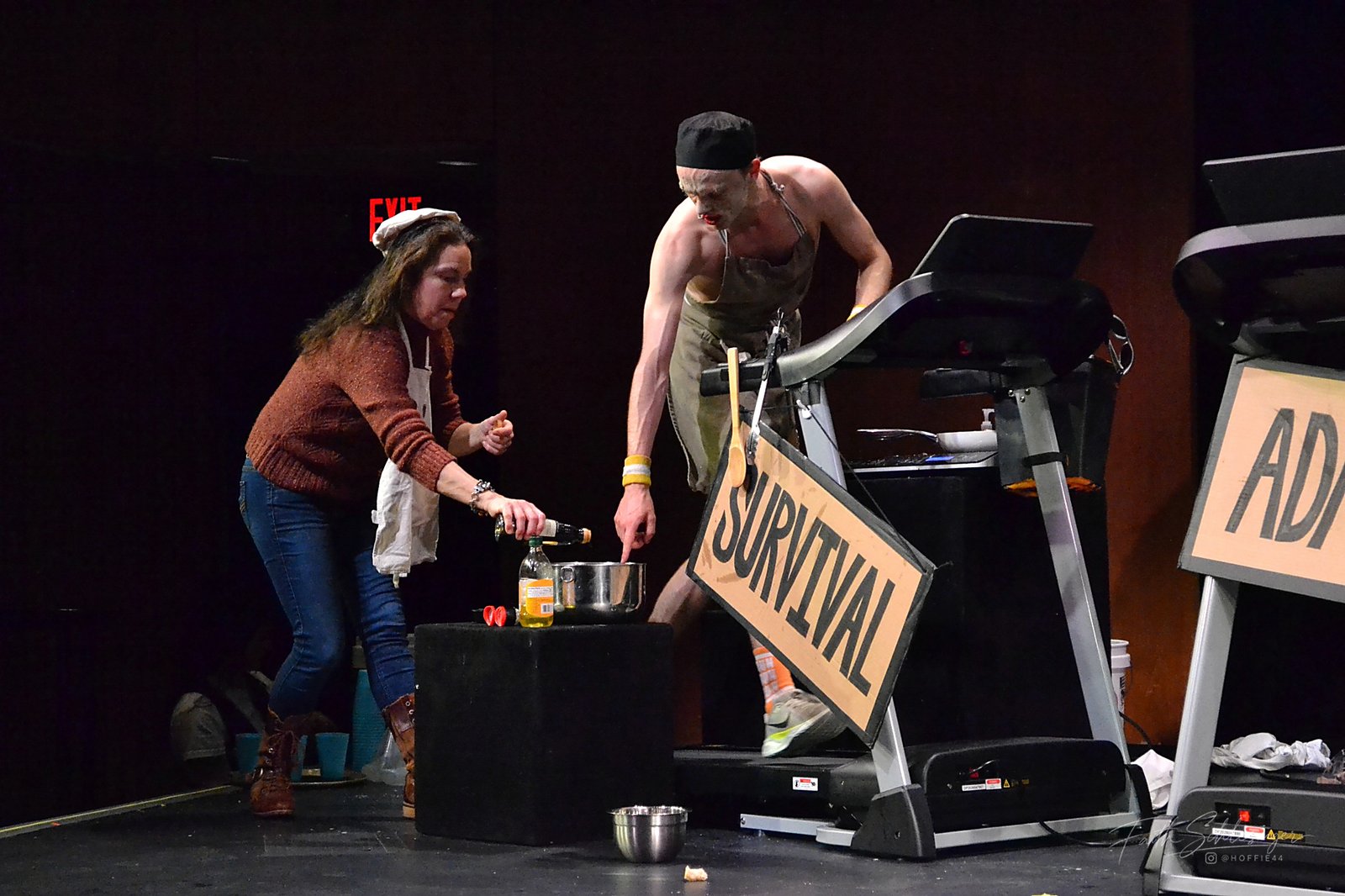
The challenge is deceptively simple: complete an escalating list of tasks while keeping the treadmills moving. Each machine represents a different category of life’s demands. Survival involves the practical necessities of living, including preparing food. Admin involves the bureaucratic labor required to keep a creative enterprise afloat. Performance demands that the audience be entertained, while Leisure is devoted to the everyday rituals and personal tasks that supposedly make life enjoyable.
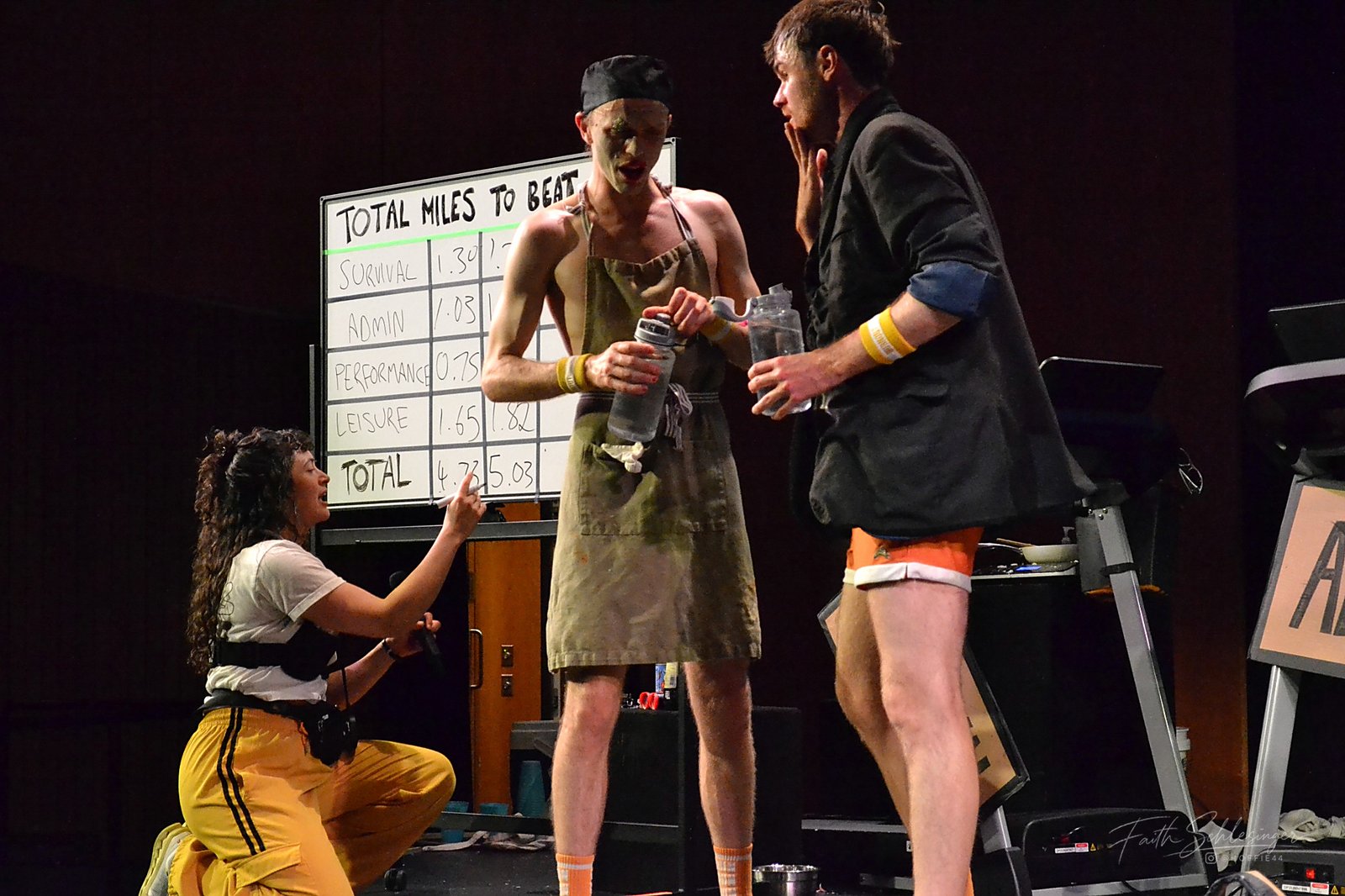
Like real life, the clock is ticking. There are only so many hours in a day, and only so many minutes in the show. The performers must complete their tasks within the allotted time while beating their previous distance record. If they fail, the audience is entitled to a full refund. The host tells us that the company has failed 134 times. Suddenly, there are stakes, and the audience is part of the game.
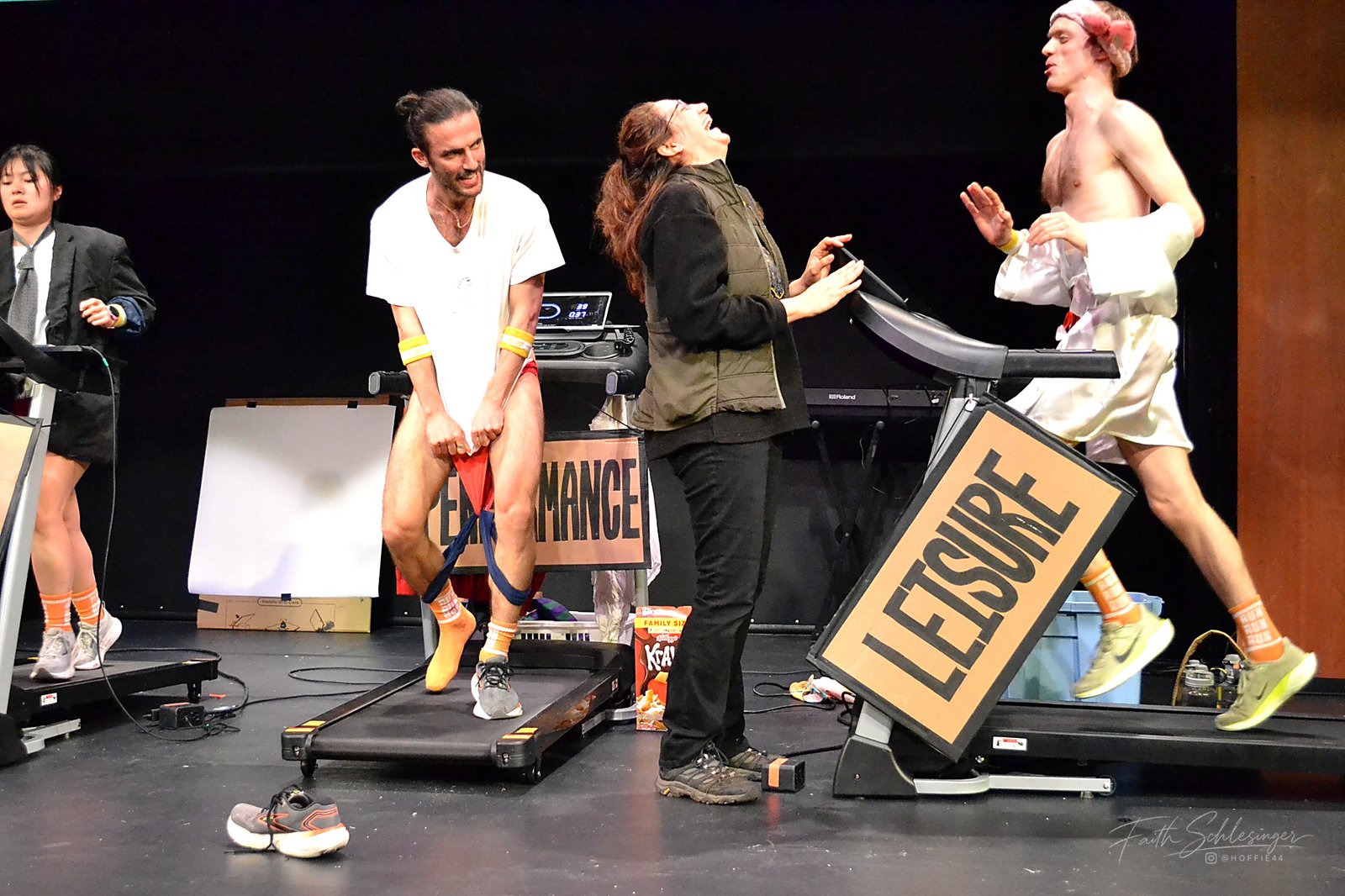
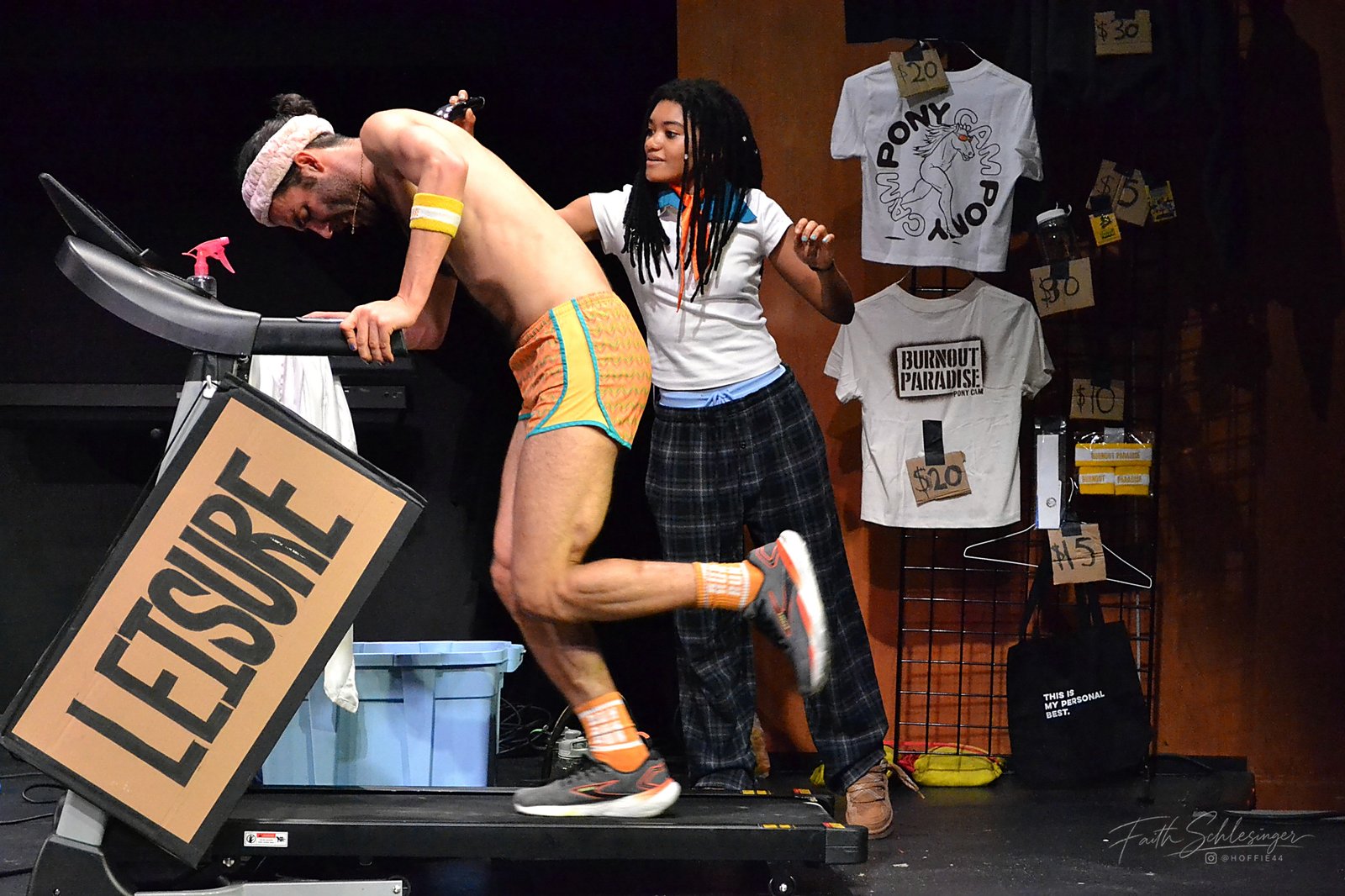
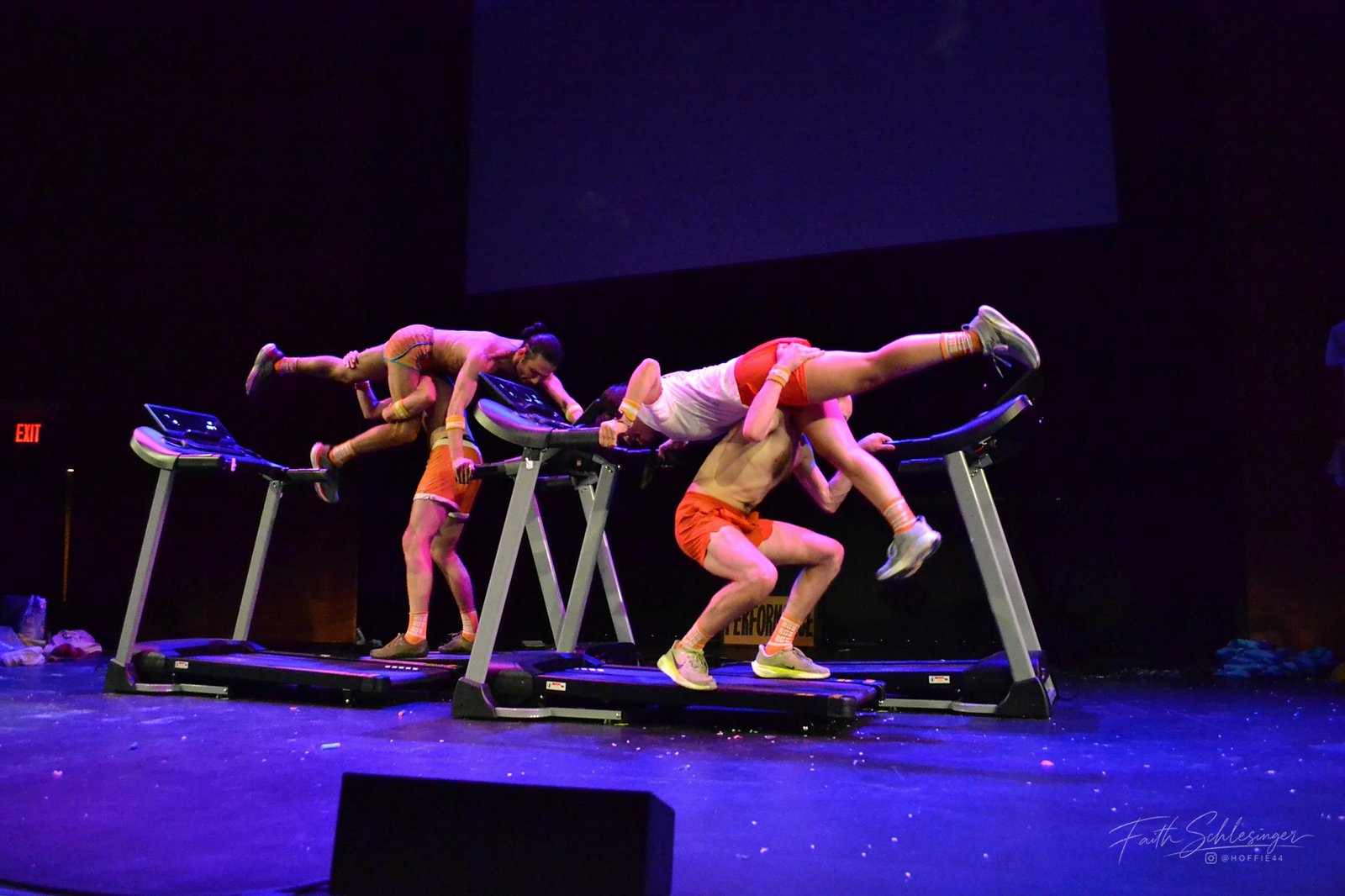
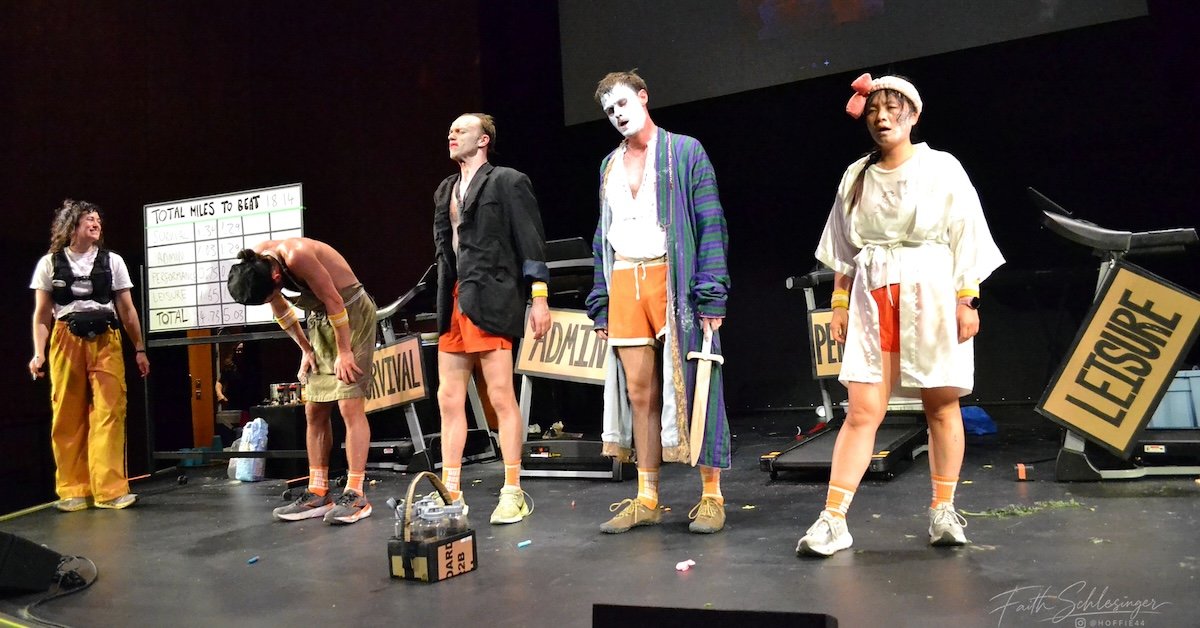
What follows is a wonderfully absurd demonstration of the arithmetic of modern life. A grant application takes shape on the projection screen. Shakespearean monologues compete with a live back-shaving for the audience’s attention. A performer’s accidental breaking of a glass pot lid becomes the basis for a request for photographic evidence to be emailed live and added to the grant application. There are shakes, beeps, music, and an ever-increasing sense that the entire enterprise might tip into chaos at any moment.
“Burnout Paradise” reminds us that movement is mandatory, but progress is never guaranteed. Yet the show never settles into a lecture. It makes the experience funny, physical, and immediate. We laugh at the ridiculousness of the situation, even as its familiarity begins to sink in and we, too, engage in the community of the show.
My favorite moment, however, is one of the quietest.
At a certain point, “a moment of zen” becomes the task at the forefront. The lights are brought down, and the audience, alongside all four treadmills, which have now slowed to a calm walk, is invited to pause for a moment of mindfulness and deep breathing. For a brief instant, the atmosphere shifts. The noise recedes. The room settles. There is space to breathe, to be still, to exist without immediately needing to accomplish something.
Then the house lights return. The treadmills continue their relentless hum. The beeps resume, the pace accelerates, and the demands come rushing back.
The contrast feels painfully familiar. We are told to practice mindfulness, to take care of ourselves, to find balance — but how often are those moments squeezed into the margins of an already overburdened day?
By the time the performance reaches its conclusion, the room has changed. The audience that entered wondering what a “treadmill show” could possibly entail has become part of the spectacle. Some of us have helped with tasks; others have cheered, laughed, or simply watched the madness unfold. Participation has taken different forms, but everyone has shared the experience.
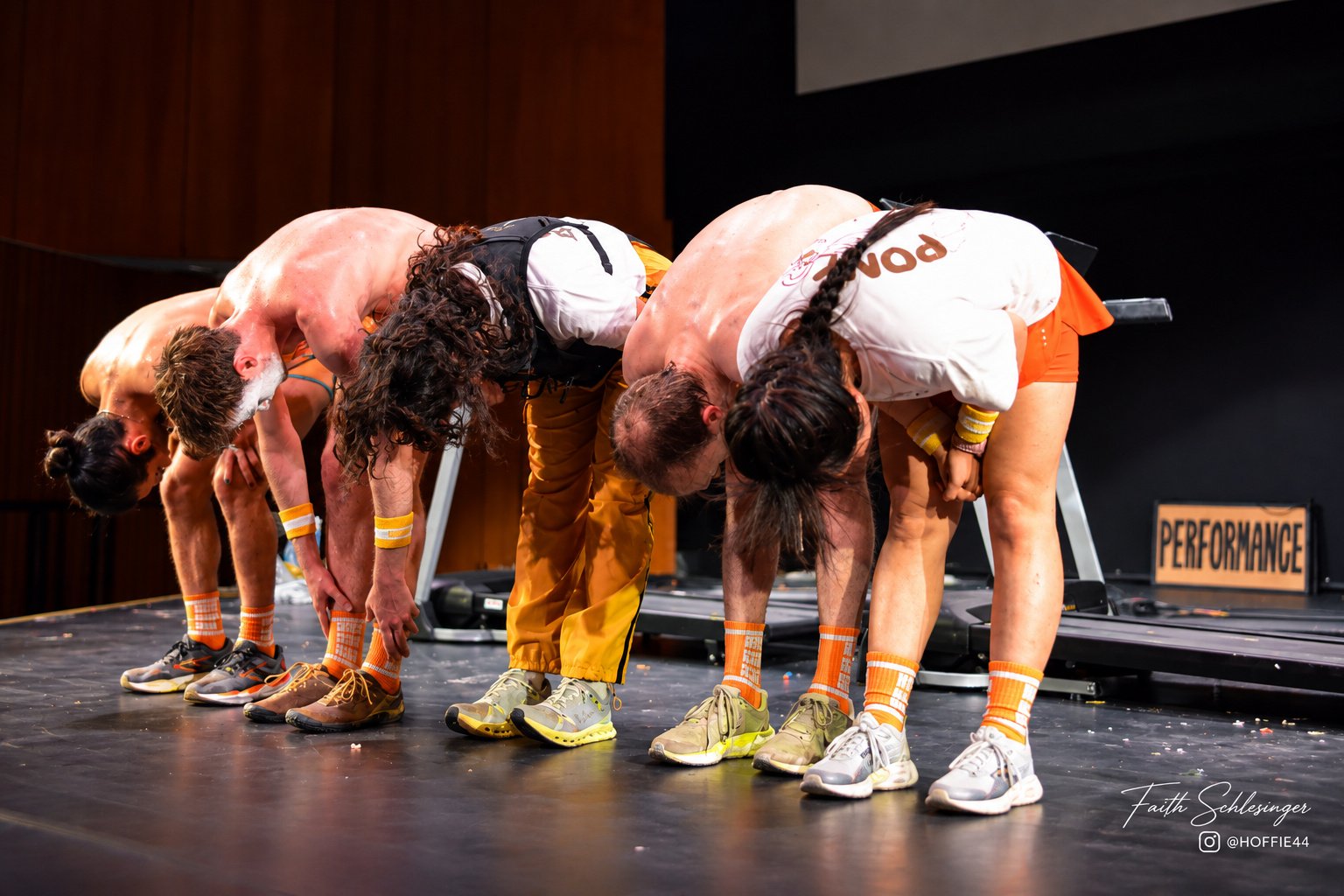
In a satisfying conclusion, the artists and audience complete all the tasks, and no refunds are issued. As the bows conclude, the normal rush to get to the parking garage begins. Before the audience settles back into keeping pace on our own treadmills, though, one last moment of community unfolds — one that even the artists didn’t expect. Every member of the audience gathers patiently, each taking a moment to engage with the artists, congratulate them, and applaud an amazing experience and performance. Almost everyone leaves not only without a refund but also having purchased some merch, while taking a sip of the glacier-blue Gatorade kindly offered on a literal silver platter.
I left feeling that the show had taken burnout down a few notches — not because it offered a solution, but because it made the struggle visible, ridiculous, and unexpectedly joyful. “Burnout Paradise” transforms the familiar exhaustion of trying to do everything into an experience that belongs to everyone in the room. For a little while, we are not running our separate races. We are in it together.
Find more information about the Pony Cam Collective and future tour dates on their website https://ponycam.co
Photos by Faith Schlesinger