

By Jason Irwin.
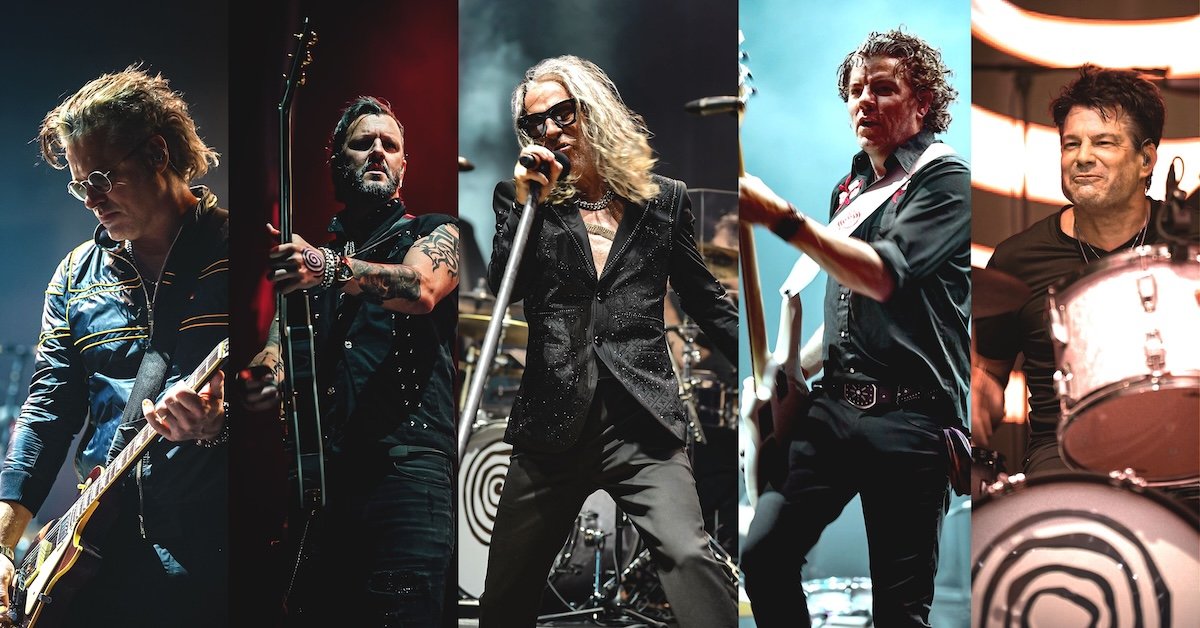
Collective Soul has been making music for more than three decades, going from clubs to Woodstock ’94, with radio hits like “Shine,” “December,” and “The World I Know,” and a catalog that has crossed generations. The band brings that catalog and new music to the Palace Theatre Albany on October 20. I caught up with bassist Will Turpin to talk about the early days, staying together for over 30 years, and why it still comes down to one thing: the song.
RadioRadioX: When you look back at the beginning of Collective Soul, when did you first realize, “Holy crap, this is actually going to be something big?” Was there a specific moment?
Will Turpin: Man, we were always just—our heads were down. We were focused on creating music and carving out a career. I just remember thinking, “We need to work more. We need to do more.” Woodstock ’94 was a big deal, but that was just the start. I don’t think I felt like we had made something and established a legacy career until 20-something years later.
RRX: I was at Woodstock ’94. I believe I caught your set, too. I also got covered in mud.
WT: Yeah, you were still clean during our performance. We were on Friday night, and it hadn’t rained yet. What a sea of humanity that was in front of us. Oh my gosh.
RRX: And what a time for music, too.
WT: Yeah. Friday night was a bunch of brand-new bands—Sheryl Crow, Live, Blues Traveler, and Candlebox. King’s X performed, too. They weren’t new, but they probably would have been my most-listened-to band in that era. A muso’s band, so to speak. The Violent Femmes played around midnight, too. That was the first time I met the guys in Live and Blues Traveler. We still hang out together from time to time.
RRX: A lot of those bands from that era suffered from what some people like to call the “one-hit-wonder curse.” You guys didn’t. What do you think was the difference?
WT: Songs, man. I mean, it all boils down to songs. My father had the studio that we all grew up in, and he instilled in us some really strong tenets of being a band. He said the strength lies within the song. I feel like Ed’s lyrics belong amongst the best of our peers. As a band, we sounded different and knew how to follow each other. You have to be a band and learn how to have fun on stage. Sometimes you’ve got to understand that being a band is part of being a team. But yeah, man, it’s the strength of the songs. These songs are more popular than they’ve ever been in our entire career.
RRX: Of the bigger Collective Soul hits, what’s your personal favorite to play or listen to?
WT: I love playing “December” because we turn it into like a seven-or eight-minute thing. Me, Johnny, and Jesse have fun with the middle section. Playing “Shine” is always a special treat. You see people celebrating the memories. Some people are crying, some are smiling. “The World I Know” is a grounding moment. It makes you feel appreciative.
RRX: What’s a Collective Soul song that you absolutely love that you always wished had been a bigger hit and that more people had heard?
WT: There’s a bunch of them. On “Dosage,” “No More, No Less” was one of the songs on the sticker, but somehow it never was a single. I feel like it should have been a big crossover hit. On “Rabbit,” I feel like “Fuzzy” should have been released. But it’s one of those things where no one owns a crystal ball. There were songs I thought were mistakes that ended up being number-one rock tracks. It’s one of those roll-of-the-dice situations. We’re not known for filler. We’re not known for weak songs. And the fans know the deeper cuts.
RRX: You’ve been playing with these guys for decades. What’s the secret to keeping a band together this long when a lot of bands eventually implode?
WT: I think we were friends. They’re doing a book—Marshall Terrill, a biographer, is doing a book on Real 2 Reel Studios, the studio my father opened. There’s a picture of all of us at a volleyball tournament we hosted in my backyard. We had sand delivered and played two-man volleyball. It had nothing to do with music. Me, Ed, Shane, Ross, and Dean, and 20 other people were there just to play volleyball and hang out, two or three years before Collective Soul. So I think when you’re genuine friends first, that makes a difference. For Collective Soul, I think it’s the strength of the songs and family. We’ve just known each other and each other’s families our entire lives.
RRX: You mentioned Real 2 Reel. You guys grew up inside that studio, and now you run it. What does it mean to you to carry that legacy forward?
WT: I’m loving it, man. I’ve got three or four really good releases coming out, and people are coming from all over to work with me. It’s a production house. Almost everything through there is stuff I’m producing. I’m really enjoying working with The Stews. Atticus Roness has a record coming out this week that I think is a masterpiece. Hey Dreamer and Red and the Revelers are also recent projects. I just love creating, and when people trust me with their music, we have a whole lot of fun. Sometimes you’ve got to let go of the steering wheel and trust me. I’ve been doing it my whole life, and I play every instrument, so it’s easy to communicate with almost any instrumentalist. I open my ears and let the universe dictate what’s going to be on the records.
RRX: You were classically trained musically. How did that influence the shape of Collective Soul’s sound compared with being more self-taught, like many rock musicians?
WT: When it comes to rock and roll, you try not to let any of the technical music-theory stuff creep into your mind. I’m really just creating by feel. The piano lessons and orchestration I studied allow me to open up a larger tool chest. But ultimately, the technical training came afterward. We had to come up with words to teach and communicate with each other. Even the monks and Gregorian chants—they weren’t taught music and then created it. They created music because it felt good to the human ear. That’s still what you ultimately have to do, especially in rock and roll, because rock and roll throws those rules out the window. I carry that training with me, especially in production. I see things as a big staff and understand what’s going on to serve the song. But ultimately, it always just serves the song. With rock and roll, you’ve got to create from the heart and with feel.
RRX: When you’re writing new music for Collective Soul, does it still feel like the same process as it did back then?
WT: We’re a little faster than we used to be. We used to jam more and suss it out more as a group. We can skip some of that stuff a little now. But when we’re in the same room, the one thing that’s the same is when we know. Sometimes we have to jam on it for a while before we go, “Boom. That’s how we’re starting the song. That’s the vibe right there.” That still happens by getting together and knowing when it feels right.
RRX: How do you balance the newer songs with the classic hits when you’re putting together a live set?
WT: We try to keep the vibe and emotion moving without breaking it up. Sometimes we’re wrong. We’ll change the set list the next night. We’re gonna hit some of the bangers. We’re not gonna be able to play them all, though. But we’re also gonna hit some of the new stuff that people like. Our fans know the records aren’t filler, so they know the deep cuts. We can take them on any adventure with these songs, but we’re not leaving out the big hits.
RRX: That must be kind of a good feeling knowing you have so many bangers that you can’t play them all.
WT: It is. I remember in the ’90s thinking, “I can’t wait to have at least five hits,” so our set list will be full of hits. And we did that and more.
RRX: You’ve got people who discovered Collective Soul in the ’90s standing next to people who discovered you through their parents. What’s it feel like looking out and seeing multiple generations singing the same songs back at you?
WT: That’s just magical, man. That’s probably the most magical thing we get to do. You’ll literally see three generations out there—a 60-year-old grandpa, a father, and a 15-year-old son enjoying songs together. I think that’s part of what music is—being able to share that with your family and friends and across generations.
RRX: You’ve seen pretty much every version of the music business—CDs, MTV, streaming, social media. What do you think today’s young bands have that you didn’t have when you started, and what do you think they’ve lost?
WT: They made cassettes of our first three records. The major-label game was pretty much the only game in town. We started on an independent label, which was part of our success, but you never stayed independent in those days. Today there are more outlets, for good and bad. I like that you can do more independently and that recording can be easier. But I do feel like sometimes the younger generation misses the true band vibe where they’re really working songs out as a band and then they’re able to go to a studio and play like a band. I’m working with a band called The Stews right now. Young dudes right out of college. They’re a band—they play, sound, and record like a band. No one’s got all the answers. If somebody tells you, “I know the TikTok recipe. I know the viral recipe. I can make your band successful by following these steps,” that person is lying. Every band has a different path. You have to figure it out as you go. Follow the leads, man. Follow the sparks. Again, the strength of your song is going to be, at the end of the day, what dictates success.
RRX: I’m going to end with this. After everything Collective Soul has accomplished, what still makes you excited to get on a bus, fly across the country, plug in an instrument, and do it all over again?
WT: Not much, man. I get paid for all that. I don’t get paid for the time on stage. That’s a time for reflection. Like, “Wow, look what we’ve done.” We enjoy playing songs and playing live music together. I like seeing old friends on tours or cruises. After 32 years, I feel very fortunate to play live music. But no, you don’t wake up going, “Wow, can’t wait to get on this plane and then get on a bus for three hours.” Everything becomes a job at some point. Everything gets monotonous. But the moment I can’t play on stage and create music with my friends, that will be a sad day, and I’ll desperately miss it. The time to get to the stage is kind of laborious.
RRX: Well, we are looking forward to seeing you in Albany on October 20. We’re enjoying the new record, and congratulations on an amazing musical career.
WT: Right on. Thanks, man. Appreciate your time, too.

