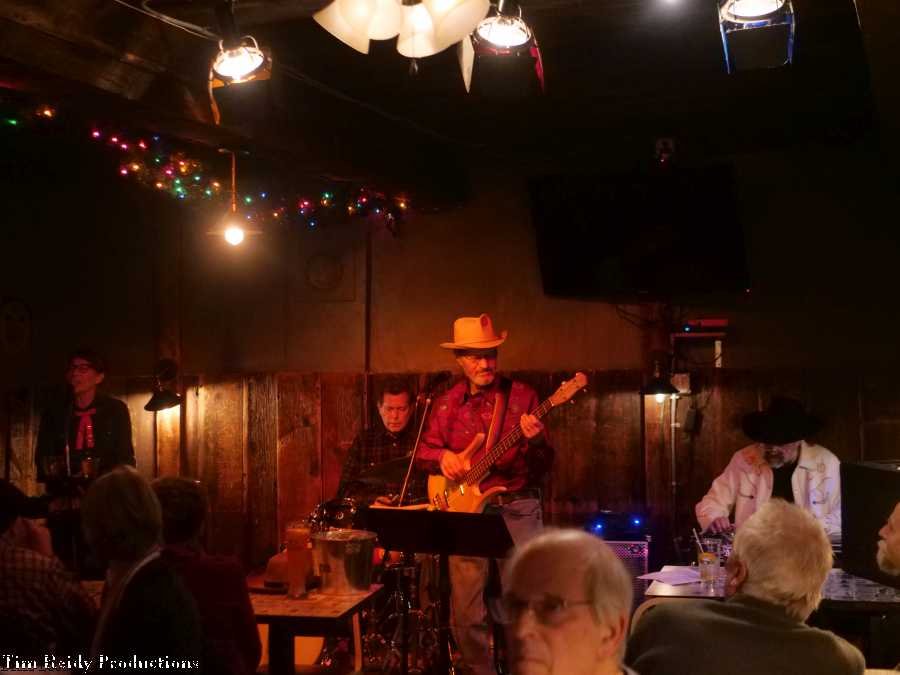
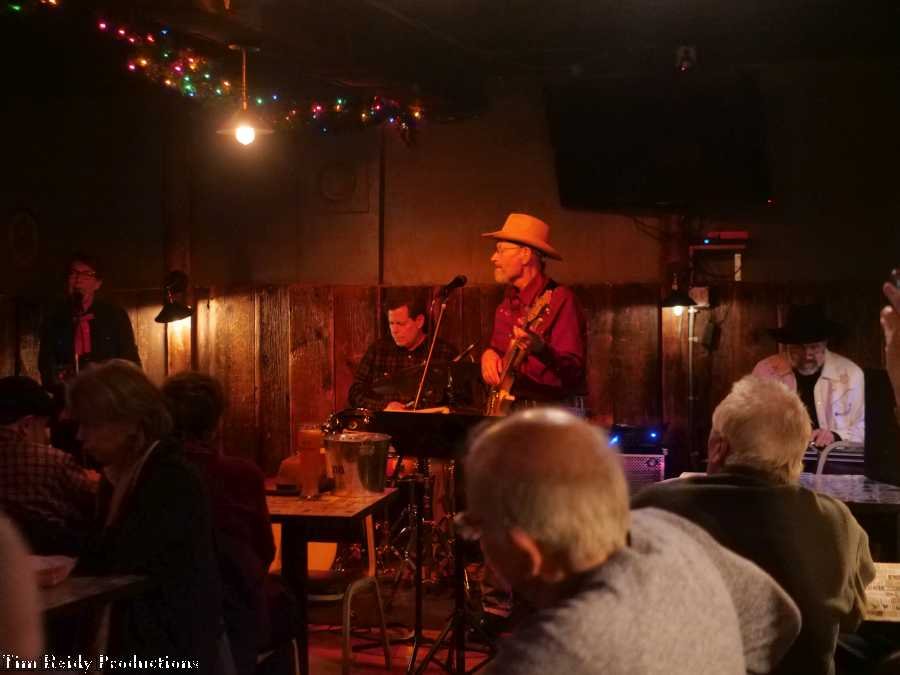
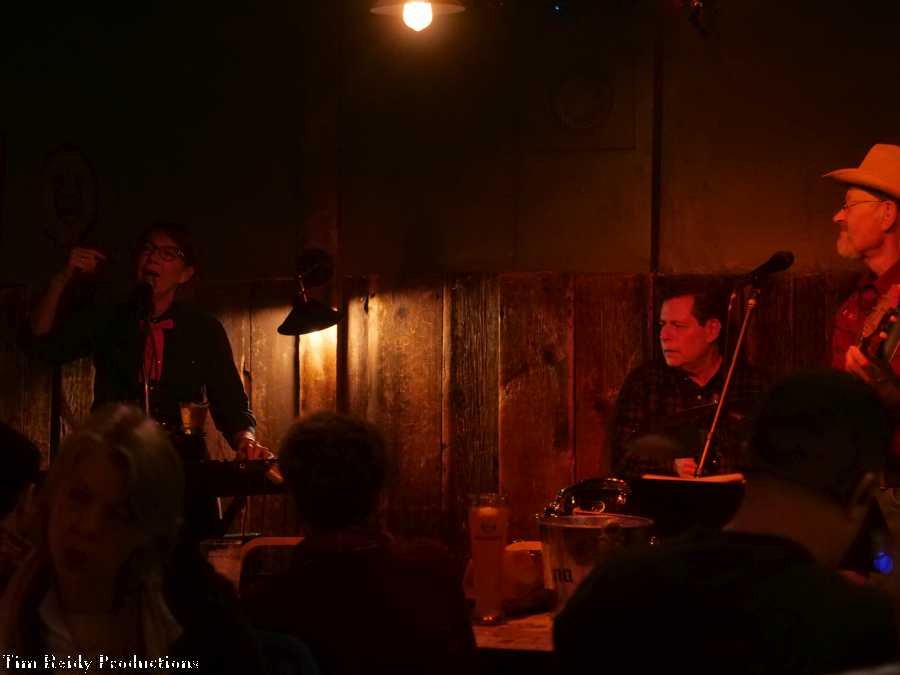
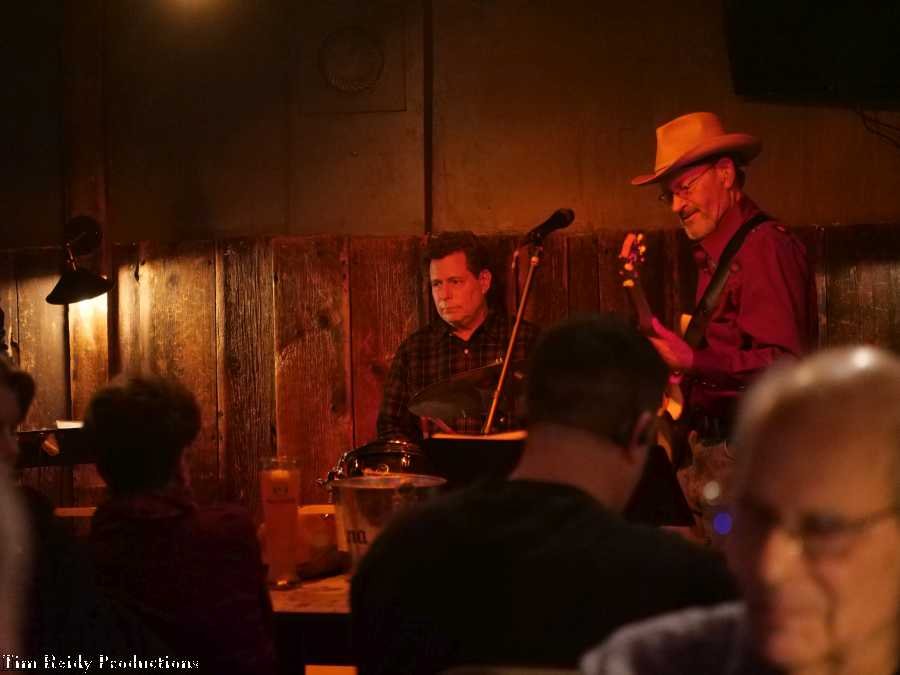
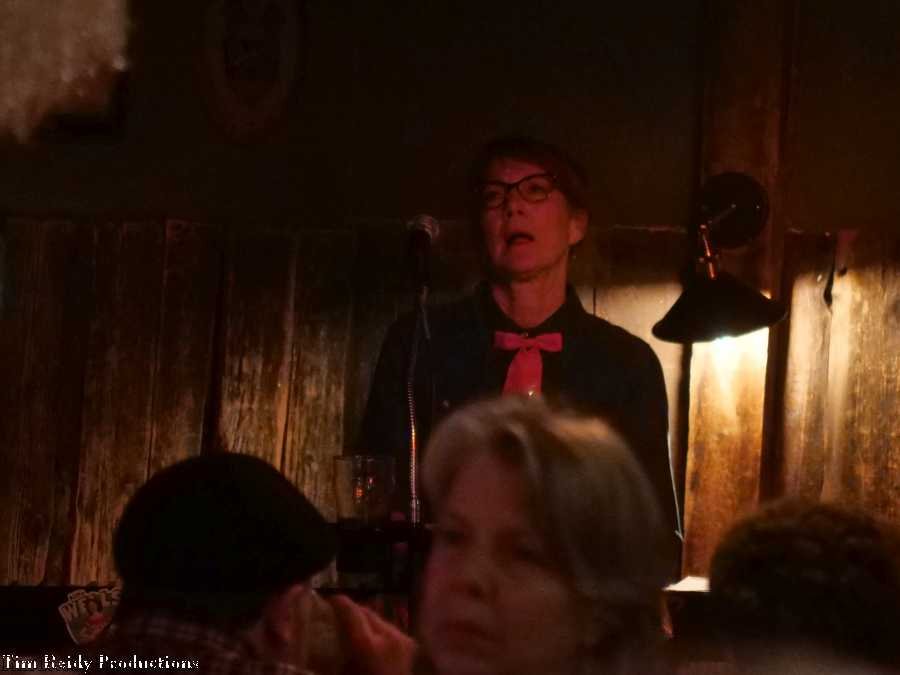
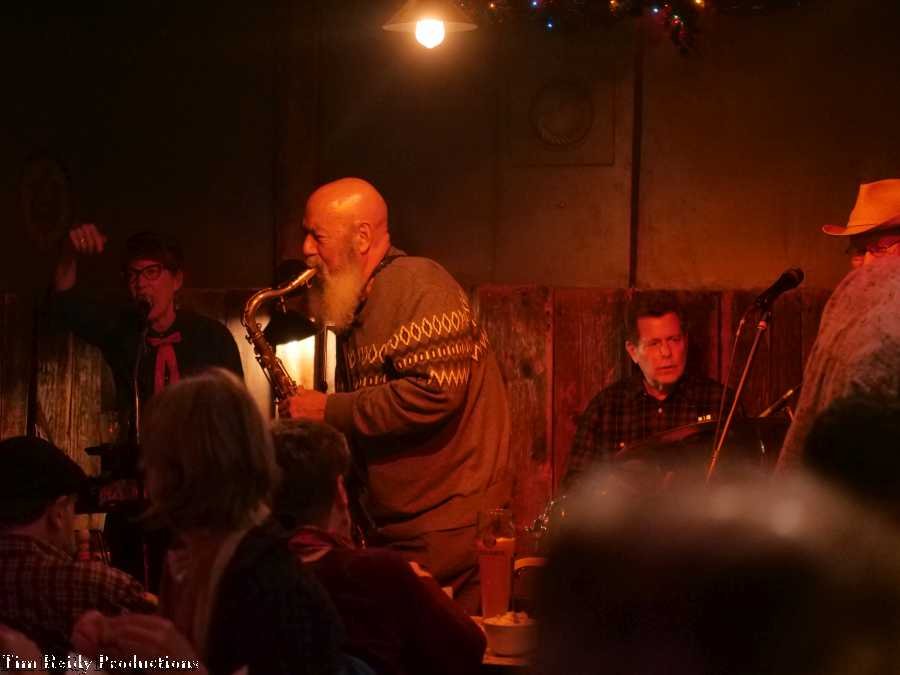
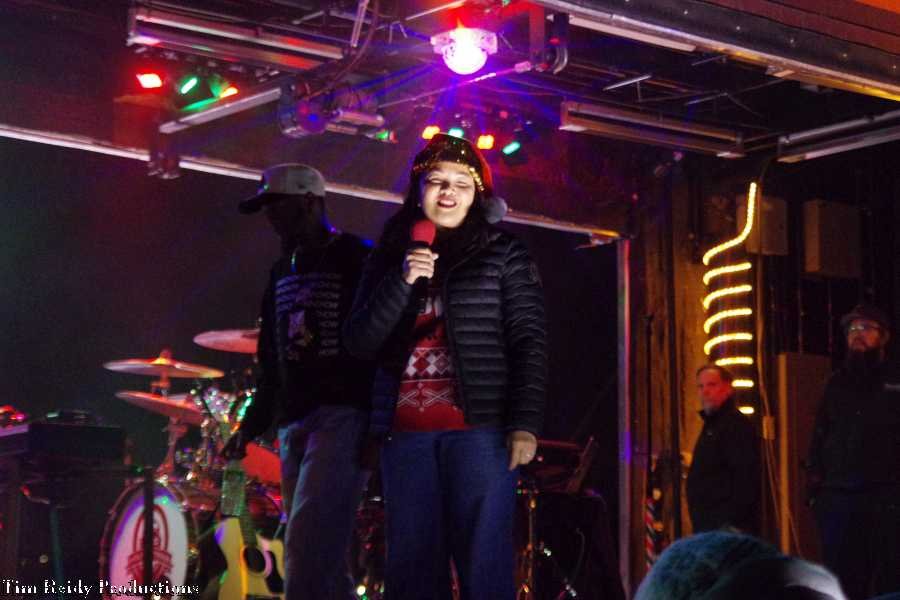
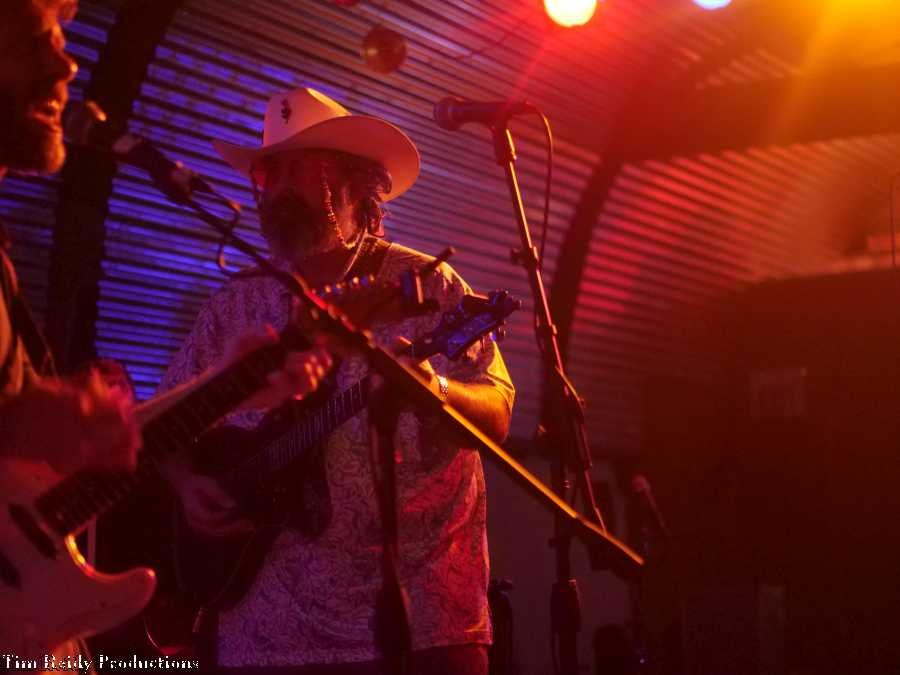
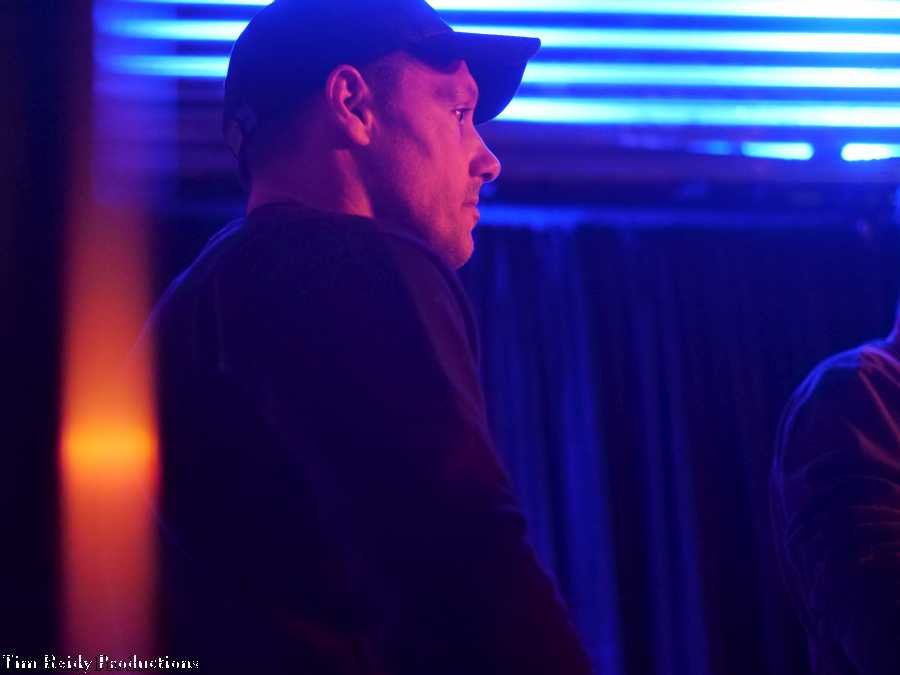
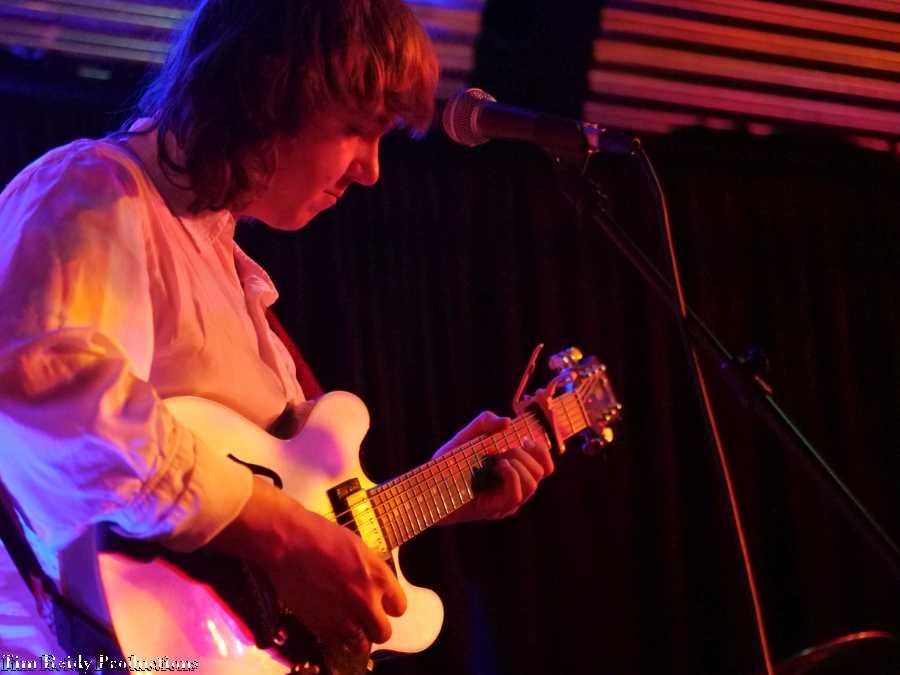
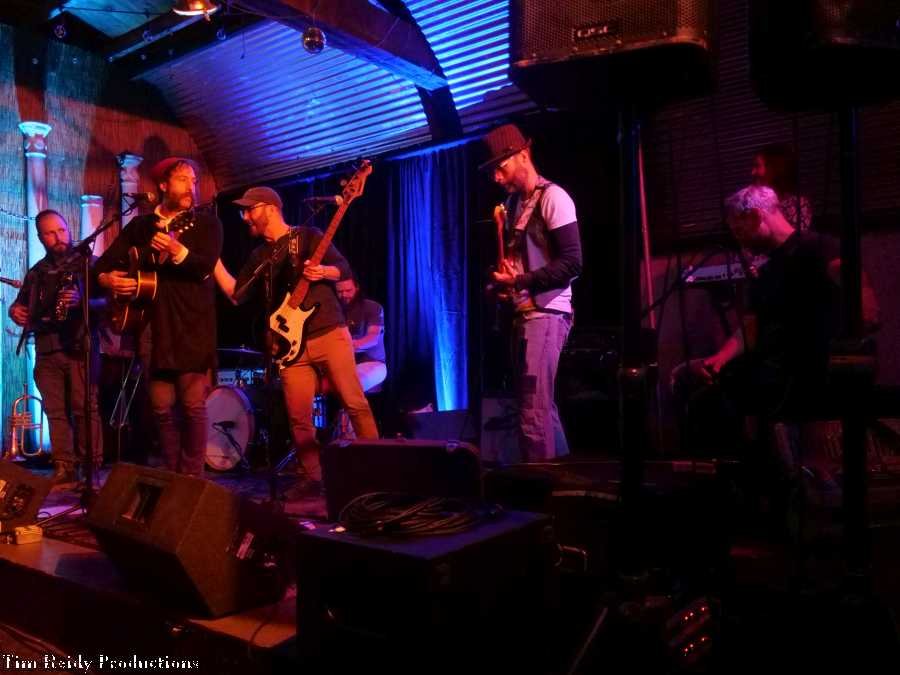
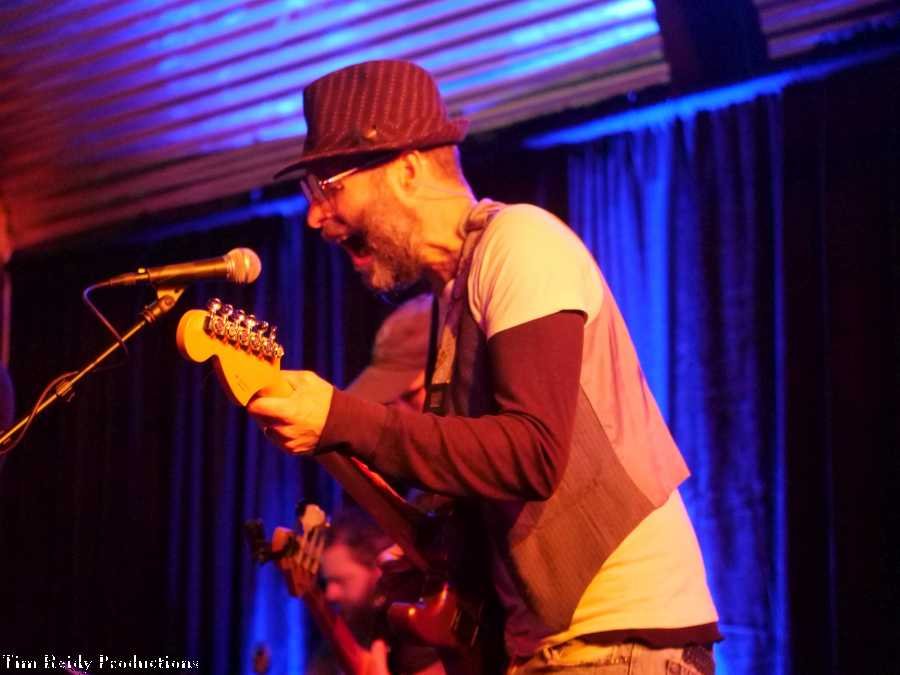
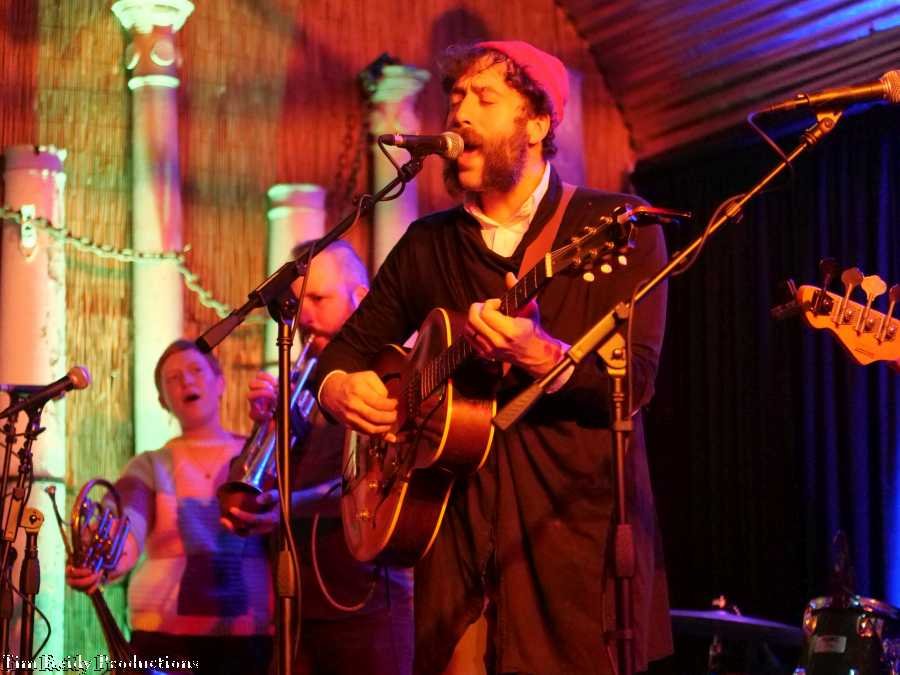
It was honky tonk Tuesday at the Ale House on November 25, as Miss Paula and the Twangbusters were joined by saxman Luke McNamee.
Photography by Timothy Reidy.
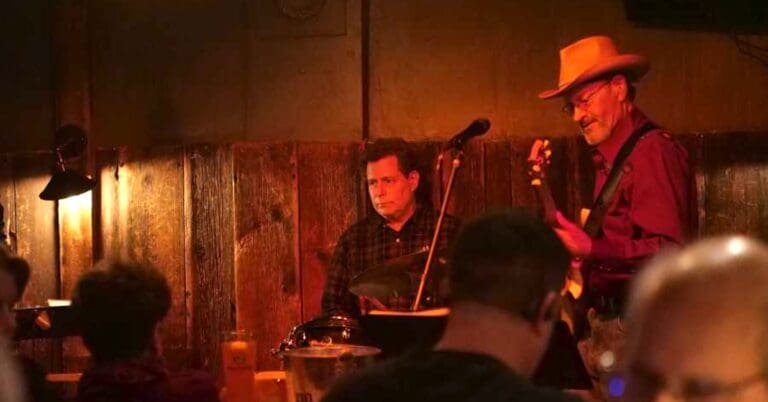
It was honky tonk Tuesday at the Ale House on November 25, as Miss Paula and the Twangbusters were joined by saxman Luke McNamee.
Photography by Timothy Reidy.
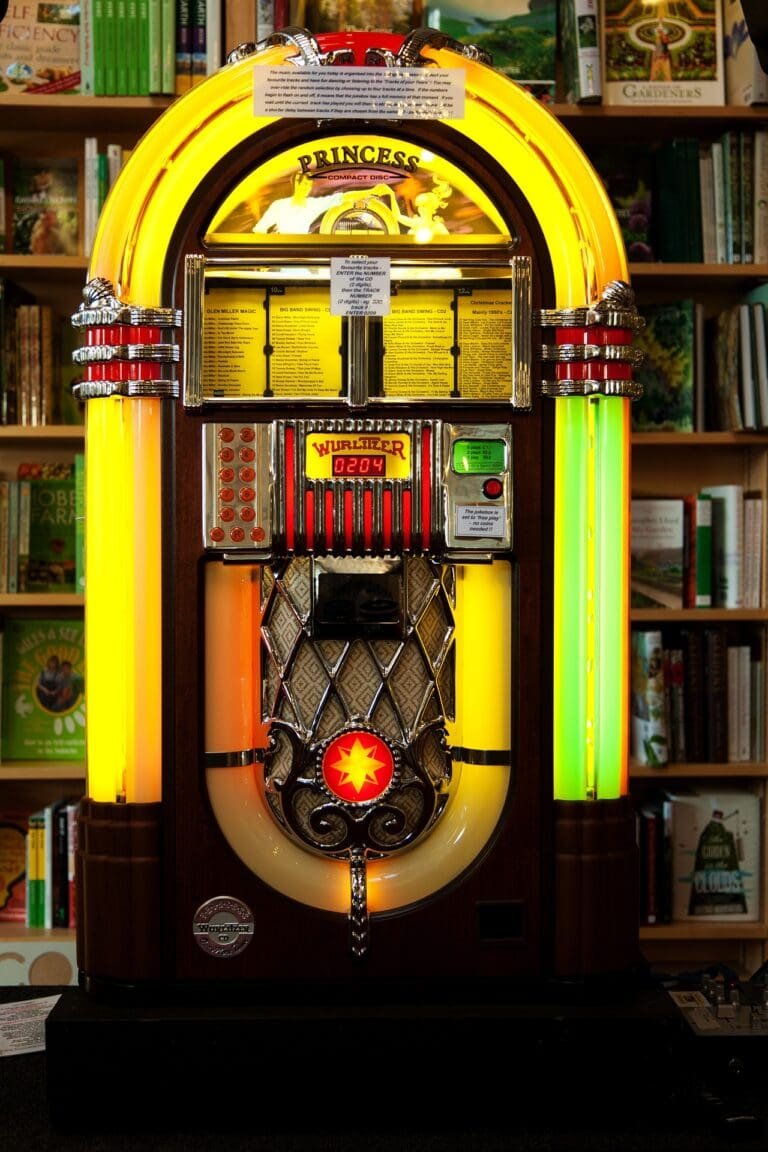
Jukebox.
Flea, iconic bassist for Red Hot Chili Pepper, has his first full length solo album coming out next year by NoneSuch. He’s drawn the pick of the litter of contemporary music, with the likes of Anna Butterss, Jeff Parker, Deantoni Parks, Maurio Refosco, Rickey Washington, Vikram Devasthali, vocalist Chris Warren and saxophonist Josh Johnson.
Flea had this to say: “yearning for a place beyond, a place of love, for me to speak my mind and be myself. I’m always just trying to be myself. I don’t care about the act of politics. I think there is a much more transcendent place above it where there’s discourse to be had that can actually help humanity, and actually help us all to live harmoniously and productively in a way that’s healthy for the world. There’s a place where we meet, and it’s love.”
Counting Crows has a new documentary out called “Have You Seen Me Lately”. It was directed by Amy Scott, and now has a streaming release date, which is December 18th. on HBO Max. The documentary covers the rise of Counting Crows and Adam Duritz’s struggle with mental health. It includes interviews with the likes of Coldplay’s Chris Martin and Cyndi Lauper
To make the most impact possible, artist Lily Allen is releasing her “West End Girl” packaged as a butt plug with the album on an incorporated USB drive. Preorders began yesterday. The idea for the butt plug traces to Allen’s song, ”P***y Palace.” Allen’s ex-husband is Stranger Things’ David Harbour, and he isn’t happy with the product or the song it was allegedly based on his secret stash.
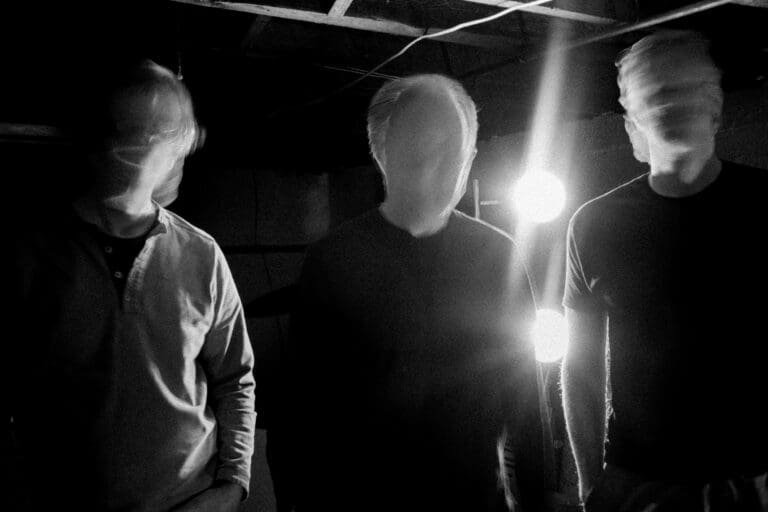

31/Atlas: Comet or Cosmic Cruiser? – The Weird Side of the Internet – by Liam Sweeny.
31/Atlas. The third identified thing ever to come into our solar system from outside the galaxy. NASA says that it is a comet and nothing more, and conspiracy theorists think… well, they think a lot of things, but the words ‘hostile alien craft’ have been thrown around.
I’m not sure where I am on 31/Atlas. I can totally believe that it’s an alien craft of some sort,m but in my heart I know it’s just a comet.
Hear this, though, that NASA’s in the sh*t position here. Say they’re right? Who’s gonna pat them on the back for getting it right once everybody’s moved on. But if they’re wrong, they’re really, really wrong. Like “it-will-be-mentioned-in-the-history-books” wrong. But Joe Dick can say it’s a breeding facility for grey lizard conquerors and the next day who the hell cares? I get why conspiracy theories are so tempting to get into.
So here’s something I thought about. 31/Atlas is cool and weird and all that could still be just a comet, but an advanced alien craft would be well set to disguise their craft as a comet so they don’t get nuked. Like we would almost certainly do. The nuclear football would definitely score a field goal that day.
And to go even further, the way things are going, we’re going to be cranking out materials that can do anything, be anything. We assume that ‘advanced’ means ‘sleek’ when really a ship constructed as a comet couls still be crazy advanced. There’s no air resistance in space, so you don’t have to have an aerodynamic ship. The Borg cube, for example.
I’ll leave one last point. Is anybody else kind of hoping they’ve come to take over the world? I’m like ‘C’mon, friends, let it happen.’ I’m about to have a roof party with an ‘Abduct Me’ sign.
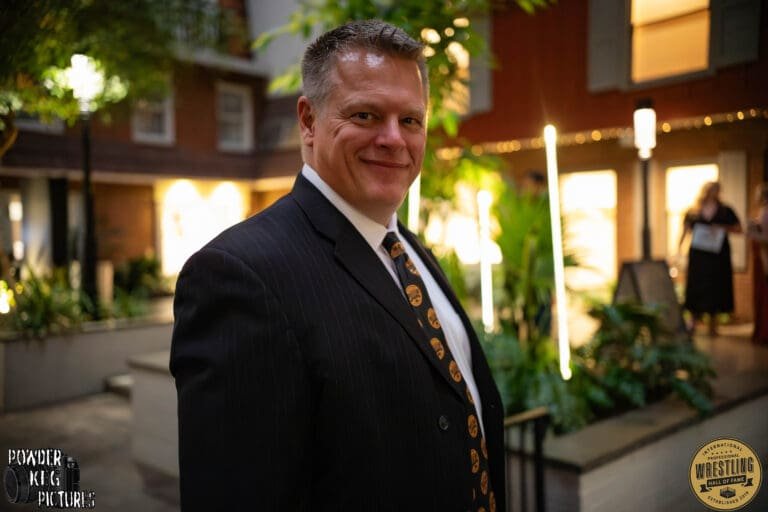
Seth Turner – An Xperience Interview – by Joshua Scarselli.
A hidden treasure sits here in Albany, N.Y. The International Professional Wrestling Hall of Fame sits in the MVP arena. Seth Turner tells us about how this gem came to be in Albany and what we can find inside.
RRX: How did the museum end up at the MVP Arena?
ST: There was a professional wrestling hall of fame located in Amsterdam, N.Y., and then it moved to Wichita Falls, Texas. When it went to Texas, there was a significant void in New York and in the Northeast for gatherings and for people to appreciate pro wrestling history. Along with a group of individuals, starting with Mike Lanuto, then involving gentlemen Greg Wachtel, Mike Viscosi, Joe DeFino, and Andrew Groff, we decided to take steps to get chartered as a museum in New York State. Once we got the ball rolling with that, we were lucky enough to cross paths with the Albany County Executive, Daniel McCoy, who helped champion the effort for us to get a spot located at the MVP Arena. Eventually, we had a collection of great artifacts. We’ve been supported by the pro wrestling community. Every time (whether it’s WWE or AEW) it comes through the arena, we get visited by the pro wrestling community, by the wrestlers themselves. It’s been wonderful, but it’s been a long road and a lot of work, and we (of course) are all volunteers. This is a not-for-profit.
RRX: Can you tell us a little bit about the artifacts you have here?
ST: Each person who comes in finds something that’s special to them. This is on loan to us from the Santel family, and that’s from Ad Santel. It’s well over a hundred years old. Ad Santel was involved in professional wrestling from the very early 1900s until the 1930s. This belt probably started in Great Britain, but he obtained it in Australia, then defended it in Japan and in what is now Hawaii, and in Europe. Not only do we have the belt, but they also maintained a scrapbook, chronicling all of the matches along the way. We’ve gone and digitized that book so that people can go and read and see the history of themselves. Another one I would go to is Gorgeous George’s hair curling machine. This is a very large apparatus with a number of electric tentacles that would hook into his hair. His wife was a hairdresser. This particular apparatus, in (I believe) 1947, was in Life Magazine with Gorgeous George. He defined what being a heel was and using entrance music, and is widely recognized as one of the greatest of all time.
RRX: How do you acquire the artifacts?
ST: We’ve acquired a number of significant artifacts through donations. Otherwise, they’re generally put on loan from the families or from the pro wrestlers themselves. We like to have items on loan even for a short duration. Then we’ll give it back to the families or the owners and borrow it again down the road. We’ve got a really cool artifact currently on loan from the Malenko family. That’s the steel chain from Russian steel chain matches used in the Florida territory primarily in the ‘60s and ‘70s. This steel chain has been used with the greatest pro wrestlers of that era and has their blood and sweat all over it. We get a number of artifacts from the WWE, which is very willing to work with us whenever we’ve requested particular artifacts. They’ve been supportive. It’s nice that we have a relationship with all of the big names in professional wrestling. But it’s important that we have those collaborative relationships..
RRX: Who are some of the wrestlers who have come to visit the museum?
ST: Well, let me start with the first pro wrestler that came into the museum as we were unpacking items and artifacts: Mick Foley. He’s been an ardent supporter of us and has come into the museum on multiple occasions. Mick Foley, a fellow New Yorker and someone whom we genuinely appreciate. Lita and Trish Stratus, who came to the museum shortly thereafter to shoot an episode of “WWE’s Most Wanted Treasures.” Being part of that program and with those two lovely ladies certainly springboarded us into the stratosphere. The AEW crew came in, and it was wonderful to see all of their pro wrestling talent, as well as their crew members, come in.
WWE, likewise, whenever they’ve come in, we’ve had so many pro wrestlers come in and be part of the museum. But I would go right to the top and say it was jaw-dropping when Paul “Triple H” Levesque walked over, enjoyed a tour of the museum for about 25 minutes on his own. He really appreciated the history of pro wrestling and was supportive.
RRX: The annual induction dinner was in October. Let’s talk about that a bit.
ST: We had our Class of 2025 induction and award ceremony on October 12. The Rocky Johnson Medal of Mettle Award Winner is going to Darren Vale, a very deserving young man.
We have the Excelsior Award, which is being given to William Patrick Corgan, the president of the NWA. Then we have our Trailblazer Award, which is being given to Clarence Bouldin. He is believed to be the first African-American champion in wrestling in North America. His family was here to accept that. This is the first public recognition of Clarence Bouldin, again, a wrestler from the very early 1900s. Then we’ve got the class of 2025, being headlined by Trish Stratus. The dinner was hosted by Bill Apter, famed pro wrestling journalist. Tito Santana gets inducted this year along with Johnny Rodsz, Rocky “Soul Man” Johnson, and Tony Atlas.
RRX: Let’s talk about Thumb War and the apparatus you designed.
ST: Thumb war was derived from my work as a school administrator in an elementary school. When there was indoor recess because of bad weather, I wanted something for the kids to be able to play. I also wanted it to annoy the cafeteria ladies. I wanted to hear every few minutes something that would annoy people. I knew thumb wrestling was big with kids. The bigger and stronger ones could manipulate and turn it into something physical. But what I did was invent the patented pop method, in which you can get disqualified for being too aggressive in your thumb wrestling. It really makes it so that people with different capabilities can be more competitive in thumb wrestling.
RRX: How does it work?
ST: Everybody knows regular thumb wrestling. But what you do in this case is, you’re going to wear the lanyard around your wrist, and you set the mechanism. Then the thumb wrestling takes place on the post. This is a bell, a hard wooden base. Each participant holds it down.
They do the thumb war, but if you are too aggressive and ring the bell by pulling the pin, then you are disqualified. It brings the action back to the ring. This has been something that we’ve taken on the road, and it’s taken off, and I’ve got a patent pending on this.
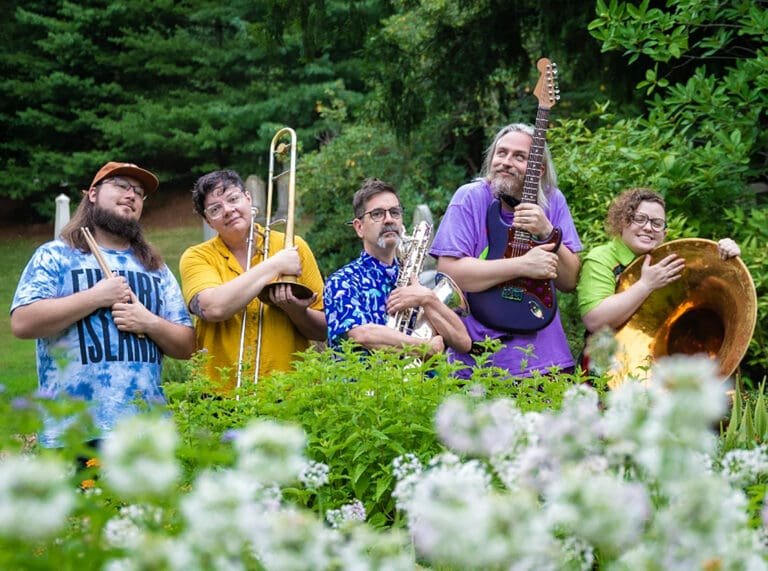
RRX: We got Dylan Foley on the line. Dylan is an eight-foot manchild, apparently.
DF: That is correct.
RRX: What do you guys eat?
DF: What do we eat?
(Both Laugh)
RRX: I figured I’d give you a call … a friend of mine, Mike from Jupiter Queen … he’s a great salesman for you because he really pushes how awesome your band is. But I’ve been familiar with the band for a little while, and I agree.
DF: Oh, that’s awesome.
RRX: So you guys are a Boston band?
DF: We are based out of the Greater Boston area, yeah. Some of us in Boston, some of us on the other side of the river, kind of scattered to the four winds, but yeah, we’re generally Boston-based.
RRX: There are a lot of really cool bands that have come out of Boston. Who do you think is, like, the most Boston of all the bands?
DF: Oh, jeez! I mean, is Dropkick Murphys too obvious a choice?
RRX: It’s a choice that makes a lot of sense, though.
DF: Yeah, sure. I mean, there’s also the band that has the name of the city.
RRX: I know, but if they didn’t do it, somebody else was gonna. I was actually talking to Rick Barton of the original Dropkick Murphys lineup. And he told me a story about … if it wasn’t for the Bosstones, the Dropkick Murphys never would have been what they became. The Bosstones took them under their wing. They paid for them to go on a European tour and everything.
DF: That’s awesome.
RRX: But the Bosstones are no more, right?
DF: I believe that they had their final show either last New Year’s or maybe two years ago. I don’t remember.
RRX: So that means there’s a vacancy, huh?
DF: We’re ready to step up and take up the mantle and represent Medford at least.
RRX: Exactly. So how long have you guys been around?
DF: Well, that’s a complicated question. The short answer is, this version of this band got together just before the pandemic started. But there has been a band called Eight Foot Manchild in existence off and on for various stretches of time, with long breaks in between, since about 2005.
RRX: Oh, wow.
DF: Yeah, but the band that started way back then has no resemblance to the band today except that I am the one consistent member. I originally started as a free improv trio, just playing like weird ambient soundscape music, and then evolved into a band that did a lot of weird cover songs of like mashups of TV theme songs and things. That was off-and-on for a number of years, and then this version, the doom brass version, is, I think, the final form. We emerged in early 2020, and of course, the pandemic hit right after that, so we were doing things long-distance for a while there, and then started doing practices and shows in earnest in late 2021.
RRX: Yeah, a lot happened for people making music during the pandemic. Either it was like my band that ended up doing nothing because of it …
DF: A lot of bands broke up during that time.
RRX: … or the opposite, and you got some stuff accomplished.
DF: Yeah, it was a very productive time for me, music-wise. I spent a long time writing music, putting things together, and making plans. It was sort of a blessing in disguise, I guess, on that front.
RRX: You mentioned doom brass, and I didn’t know that term even existed or if you guys invented it. I was trying to figure out what genre you were, and that makes sense.
DF: Yeah, we invented the term; we like to call ourselves the world’s first and therefore best doom brass band. Obviously, we’re aware that we’re not the first band to use horns in the context of heavy music; that’s been around since before there was such a thing as heavy metal. If you go all the way back to King Crimson, “21st Century Schizoid Man,” then you know that goes back even before Black Sabbath. So the concept has been around since before there was even such a term as heavy metal. But we like to think that we’re forging a new path in that, and in a few years from now, all bands will have horns regardless of genre.
RRX: Right? It’s a breath of fresh air sometimes when you’ve got a horn section up there and you’re not just doing straight-up ska music.
DF: We still get mistaken for a ska band from a distance, not just because of the horns but because of the way we dress and the way we carry ourselves. I don’t think anyone would be surprised if we got up there and just went like … pick it up, pick it up, pick it up, pick it up! But we like to pleasantly surprise people. Not that we’re opposed to playing with a ska band. We actually just did our first show on a bill with some ska bands, and it was an absolute blast.
One of the dreams that this band was founded on was … I really wanted to be able to play a huge variety of different shows. I wanted this project to feel at home playing on a whole bunch of different types of bills. And so far, it’s been successful. We’ve shared bills with everything from full-on, just nasty, grimy-ass sludge metal bands, screaming with shrieking harsh vocals and walls of feedback type bands, all the way through ska, folk punk, and street brass, like New Orleans-style street brass bands. We felt at home during all of it; we’re never quite too out of place. Surf rock bands we played with, prog, and funk bands. We kind of have our hands in a lot of different pots, and I really like it. I think it’s great.
RRX: I think so, too. As a part of the job, I don’t pay to get into concerts. I do spend a lot of money at the bar and buy merch, but … I think about the concertgoers’ experience because these people paid money to get in here. There are definitely some concerts where I’m like … why couldn’t they just break it up and throw a band in there that’s a little bit different? But then you guys come out on stage and they’re like, Oh, thank God, something different.
DF: Yeah, once you see the sousaphone get on stage, you know that some wild sh** is about to go down!
RRX: Eight Foot Manchild reminds me of two things. One is our editor, Liam, here at Xperience, who is actually just about 8 ft tall and could be considered a manchild (but aren’t we all?).
DF: Really?
RRX: Yeah. It also reminds me of Sasquatch. Have you met an 8-foot-tall person, and do you believe in Sasquatch?
DF: No, and sure, why not?
RRX: Right? I’ve very much been into the UFO thing. I’ve actually videotaped one, so I know they’re real. But the Bigfoot thing, I was kind of like … I don’t know. But then … what’s his name from Blink 182? The UFO guy, Tom DeLonge, recently came out and was talking about the fact that the government has files on Bigfoot, and I mean … he was right the last time. Well, we’ll see.
DF: Yes, if that does happen, I’ll go ahead and write a song about it because why not?
RRX: Well, maybe start writing it now! Get ahead of the curve.
DF: Exactly, put it out like the next day, like holy sh**, that was quick!
RRX: Was there anything that you’d like to say to people out there to entice them to check your band out and to go to shows when you’re in town?
DF: Yeah, if you’ve never heard horns and heavy riffs together in one place, you’re gonna realize something that a lot of people have told us, which is: Oh wow, this is something that I never knew I needed, and now I need more of it.
RRX: So yeah, if you’re horny, check out Eight Foot Manchild!
DF: We’ll take care of you.
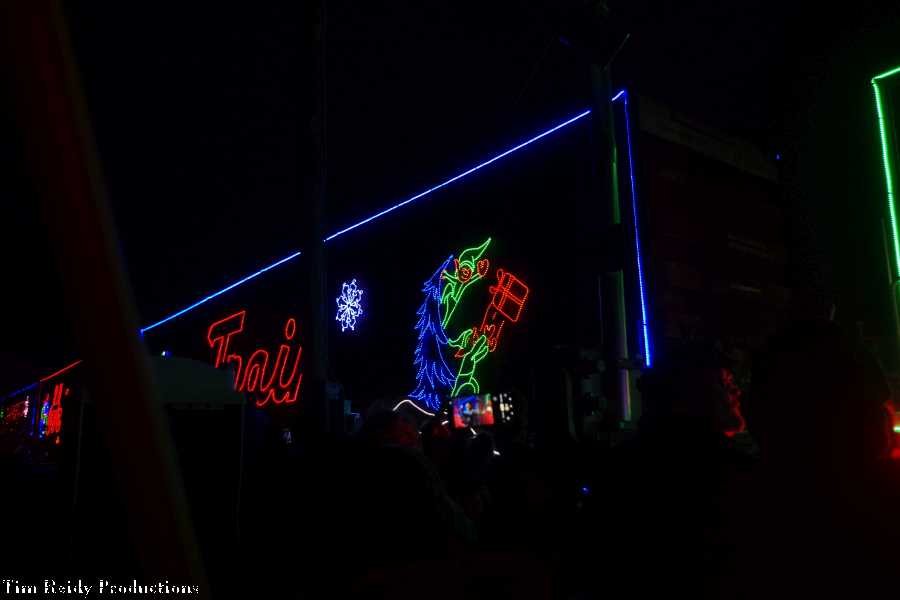
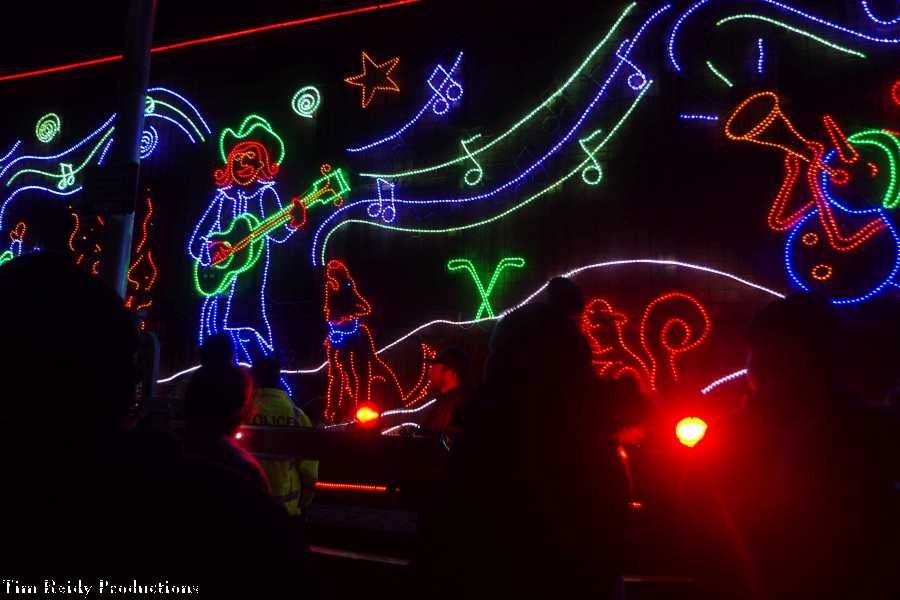
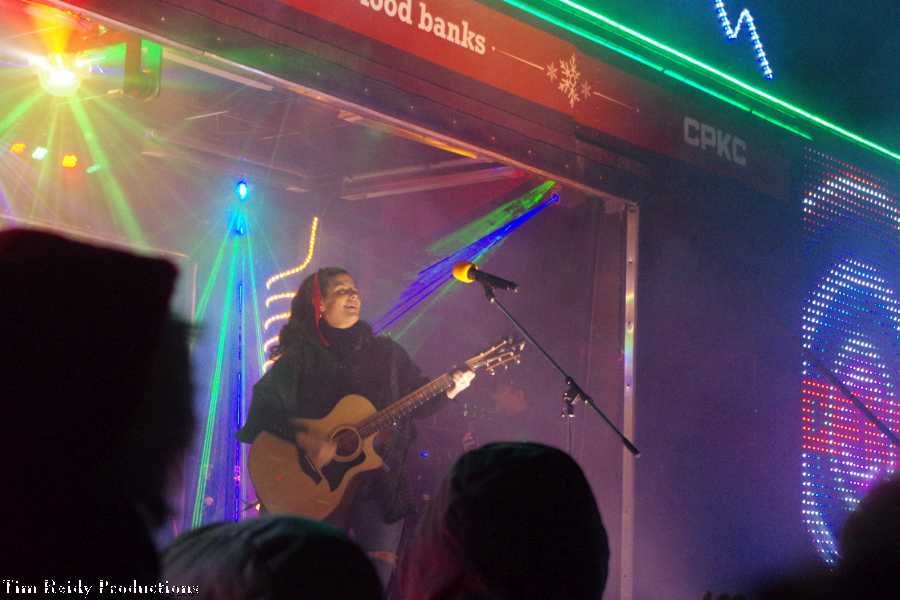
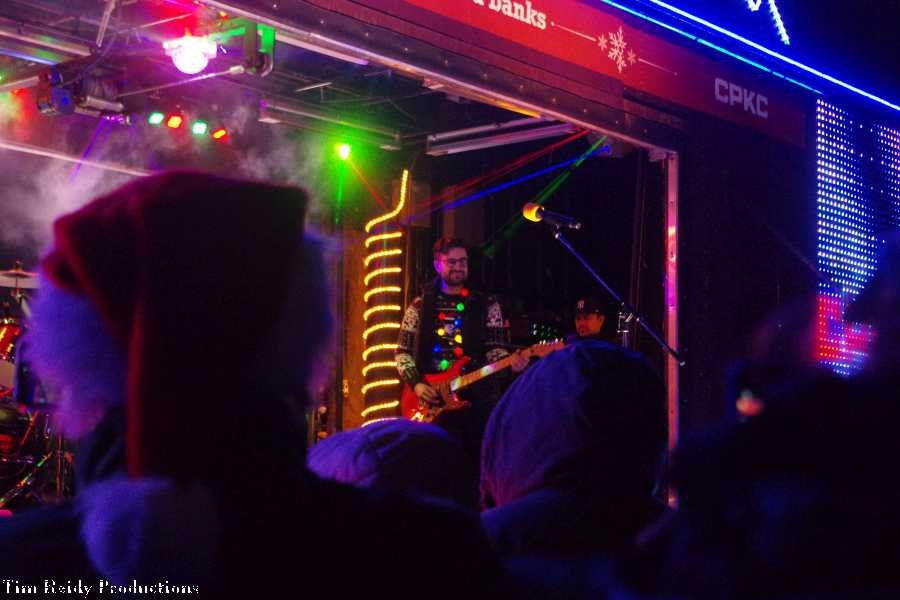
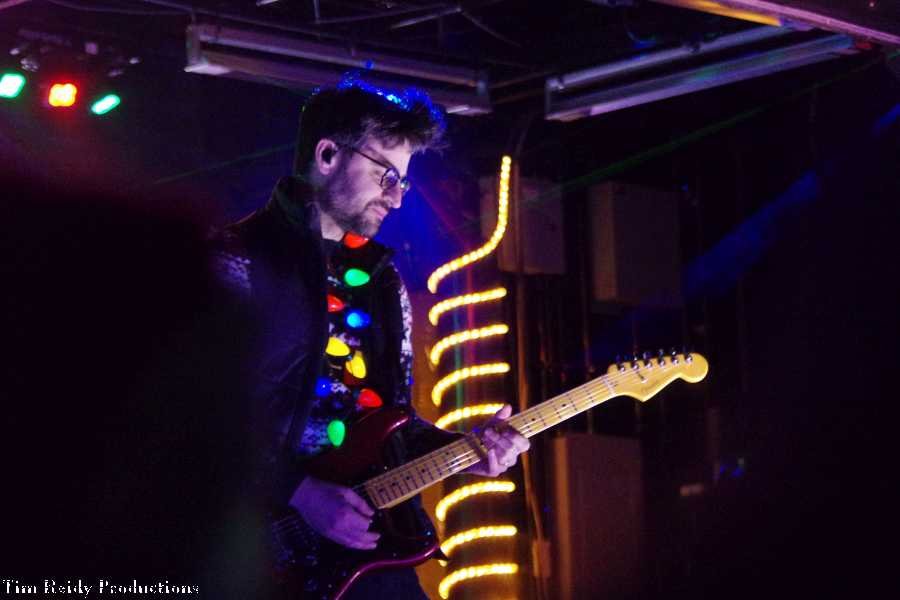
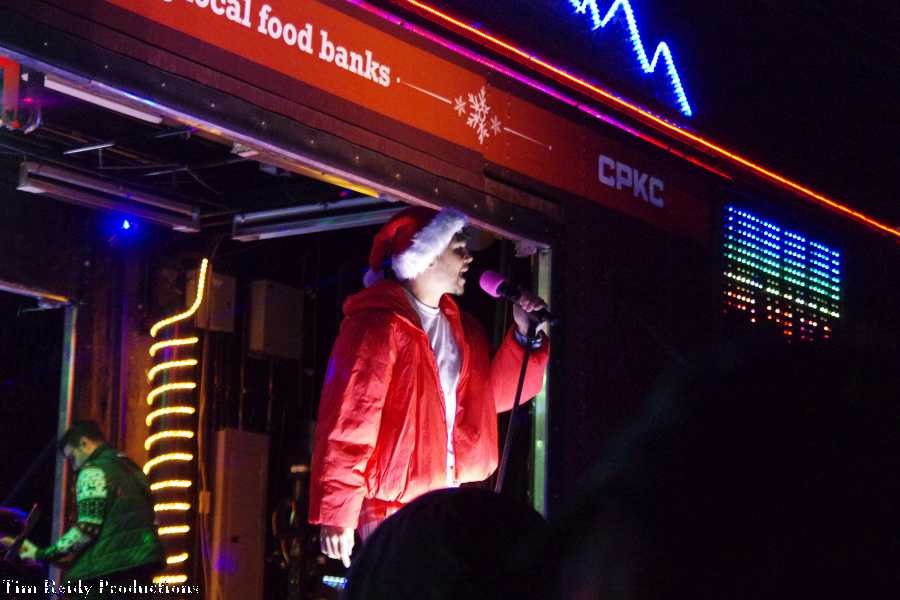
The CPKC Holiday Train annually tours the U.S. and Canada to raise money and awareness for food banks. This year, it stopped at Ganser-Smith Park in Menands on November 25 and featured Tyler Shaw and Brittany Kennell.
Photography by Timothy Reidy.
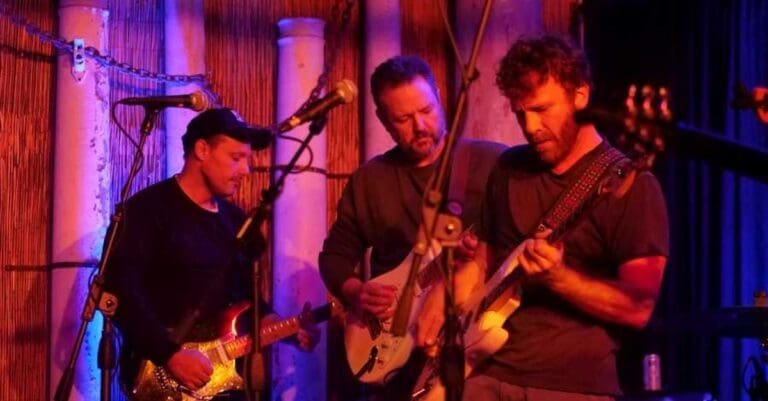
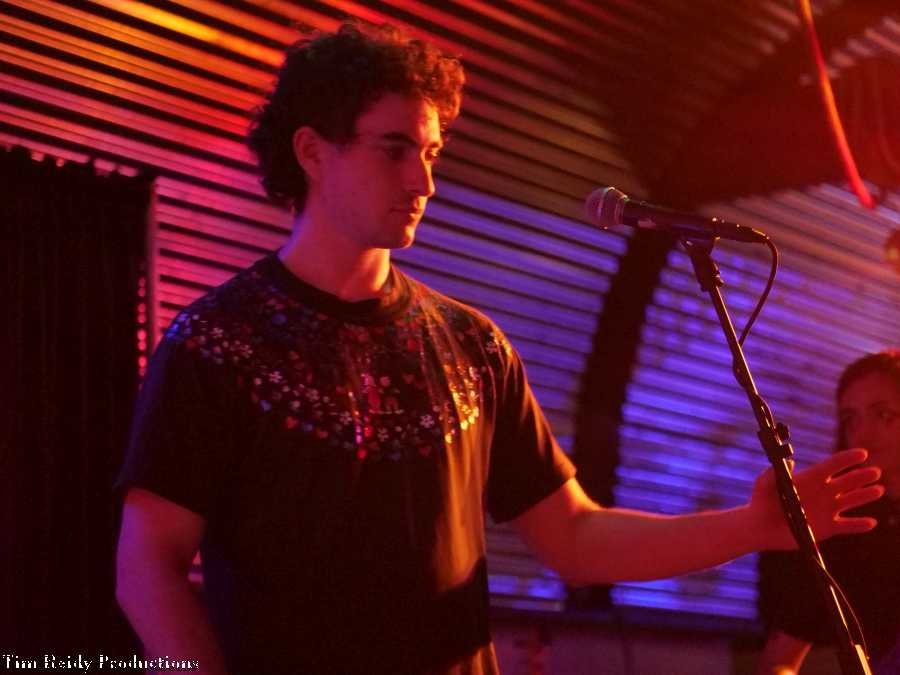
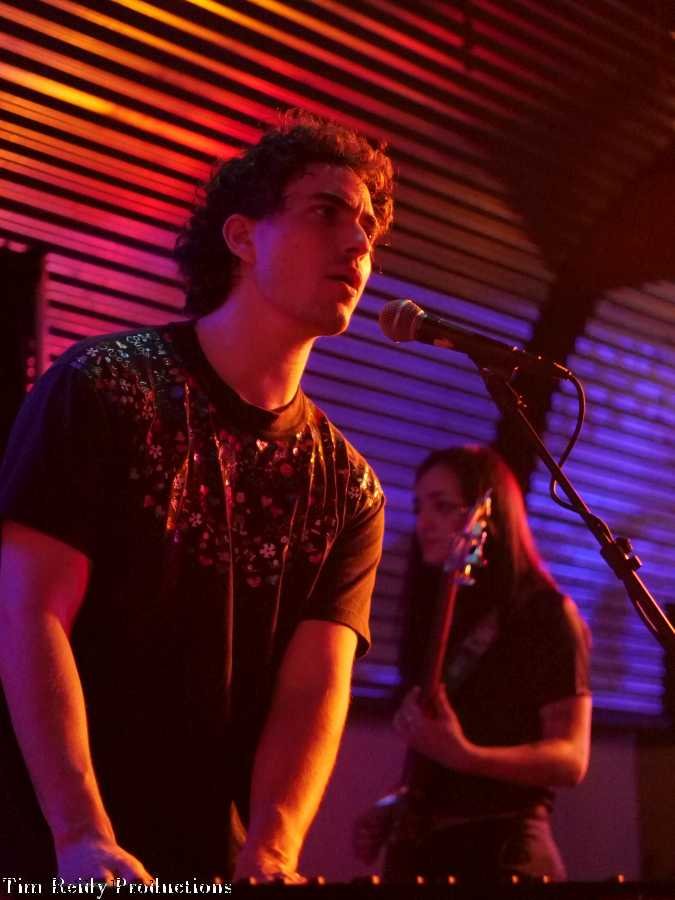
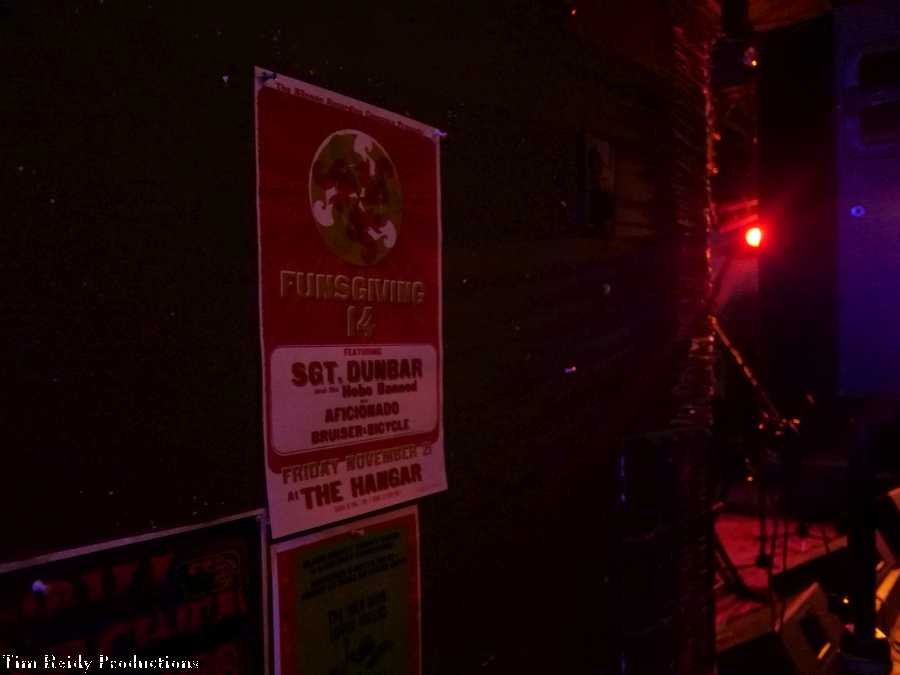
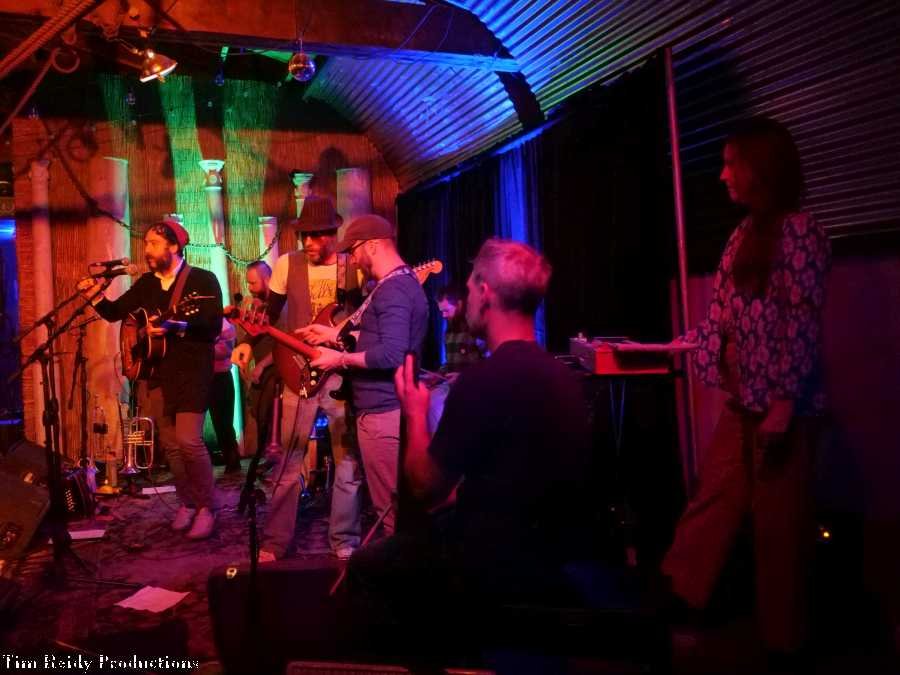
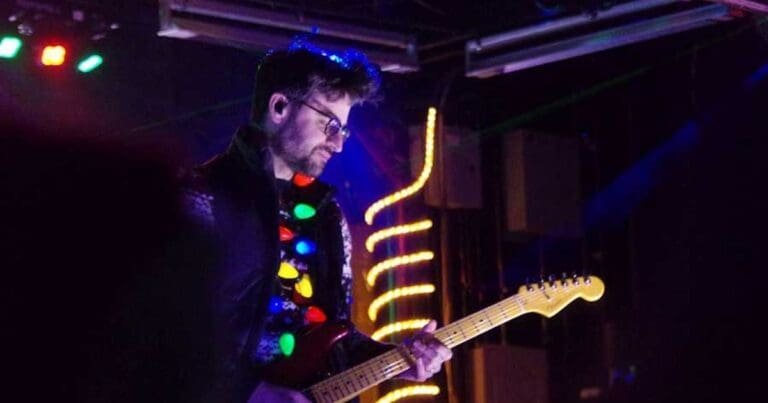
The B3nson Recording Company returned to Hangar on the Hudson for the 14th annual “Funsgiving” on November 21. The Husbands got the joint jamming, while Bruiser and Bicycle were a nice bonus. Sgt. Dunbar and the Hobo Banned came with their standard eight-member lineup and played many of their favorites.
Photography by Timothy Reidy.
More from Hangar on the Hudson …

Cinderklous – An Xperience Christmas Story – by Liam Sweeny.
What a handful of explorers know, upon placing foot and flag on the ephemeral vortex of the North Pole, is that there is absolutely no way to tell that one is at the North Pole. The air is as cold there as it is in the town of Longyearbyen in Norwegian Svalbad, and through 20/20 vision, both are, on average, formless and white. If there were a factory led by a jolly regent in red velvet and fox fur cuffs, no human had ever laid eyes on it.
He gripped the iron shovel and hoisted it, arms raised, hanging for a moment before they slammed it into the ice. He evacuated mere chips from the frozen ground, and after the day’s work, he had a sharp, ragged hole into which he could’ve buried a dog. But reindeer are much bigger than dogs. And the one lying bound and stiff two yards away was well fed and of good stock. And old; very old and very dear to the man, and would need a burial plot not for its size but for its stature.
“Pater,” Bastijn put his hand on the man’s shoulder. “Let me help.”
“Go inside, Bastjin. Mother needs help with recipes.”
“She doesn’t want help.”
“Neither do I,” the man said as he rested the shovel, tip to ground. “Did you raise this beast from its seed? No, you didn’t. A man’s calf is his burden.”
“We’ve never had this burden before.”
“No,” the man said. “And we won’t speak of it to mother. She is not like us. She is of them and she will worry about the future, for hers runs out to a point. She is not us.” The man raised the shovel and forced it through the ice again and again, grunts like primer caps, his exhausted breath their recoil.
“Pater,” Bastjian said. The man wiped his brow and picked up the shovel.
“Pater,” he repeated. “Santa.” The man, Santa, turned around.
“You know you’re not to call me that,” he said. “You’re my baern, you are not an elf born of the loins. You are my son. They are offspring.” Santa hunched over and balanced his upper body on the shovel handle.
Bastjian stood by his father and they peered into the hole he had dug. “Why are you in pain, pater? Why does your swing barely bite into the ice?”
“It is a long story,” Santa said. “But it is your birthright. It is as much your birthright as the sleigh, and in very much the same way.”
“The sleigh is off-powered, to speak of it,” Bastjian said. “We tested it yesterday. You didn’t seem to care when I told you.”
“The difference between not caring and not showing it.” Santa handed Bastjin the shovel. “If you wrap yourself in heavy enough clothes, it keeps the world inside as much as it does outside.”
“Mother is fraught. I think she’s angry with you. She always shuffles her recipes when she’s fraught with you.”
Santa sighed and with his index finger directed Bastjian to dig while he pulled his pipe from his pocket and tapped it with his index finger to light it. He took a drag and coughed.
“She knows about the muscle aches, the pain in my joints,” he said. “She’s looking in the old papers for soup recipes.” Santa puffed, the glow of tobacco embers painting the contours of his face. “She won’t find anything. Half of those recipes are from the Dark Ages. The ingredients are extinct.”
“Would soup work?” Bastjian took a strike at the earth and pulled up more than his father had all morning.
“I am not ill, baern.” Santa said. His second puff brought another fit of coughing.
Bastjin descended into the hole to judge its depth. “It’s Christmas spirit, isn’t it? The elves are talking. It’s fading.” He hopped back out and pitched the shovel into the growing crevasse. Santa walked over to the reindeer and knelt beside it, stroking its stiff fur with a bare hand liberated from its glove.
It was dark by the time they finished the grave and buried the reindeer. It was dark when they started, and with the exception of the auroras, it would be dark until March. Santa put his hand gently on Bastjian’s shoulder.
“We’ll walk through the workshop,” he said. “There’s something you must know.”
In the New World, in a Victorian city in New Amsterdam called Troy, a poem would be printed that would fracture Santa’s domain more than the Inquisition or the crusades. That poem was titled “The Night Before Christmas,” and it created in the North Pole a time before it, and one after it.
Before the poem, Santa, while flying his sleigh on Christmas Eve, delivered gifts to the children of the world by bouncing through time to and fro over the previous year, minutes here, minutes there, using magic to change fate in ways that would benefit the children. After the poem, expectations changed.
Santa and Bastjin hugged the center column and climbed a row of granite stairs scuffed raw of age, finding their way to a room with walls of windows, from where the entire workshop was in view.
Santa pointed down to Line Three. “We didn’t need tools back then. I know you don’t remember that.”
Bastjian rubbed the window clear of dust and grime and put his eyes to it. “I only remember the sound of the machinery,” he said. “And the tool-working before that. It’s been so long.”
“You left for an age, Bastjian.”
“I stayed for an age before I left,” Bastjian said. “And you never called for me.”
Santa leaned back against the seat that served the front desk. “You’ve not seen an age, Bastjin, not a true one,” he said. “I wanted you to have a life in this new world, baern. I wasn’t a father before you were born, in the ages that came before; just ugliness wrapped in crimson, soaked in bitter tears. Not a father. By the time you drew your first breath I knew the roads and the forests would have to care for you.”
A shriek came up from the floor. A whisp of iridescent blue vapor burst into a glittering cloud.
“There is so much you don’t know, Bastjian. All of the tinkling of the bottles on the center floor by the aged elves, and the smell of mint and brimstone… have you yet gathered what it’s for?”
“Mother-,” he said. “Claudette, she said they make Christmas spirit.”
Santa laughed as he removed his thick coat, revealing fading rings of sweat around his neck and down his chest.
“Christmas spirit,” he said. “There isn’t any. There’s never been. Parents speak those words to their children like gloss, covering over the fact that they don’t see the tricks we play behind their backs.”
Bastijn moved to hold his father’s arm and found it stiff. “Pater, something is wrong.”
“It’s potions,” Santa said. “Petty spells that make poor mothers find hundred-dollar bills on the street. Put cheer in a CEO’s check writing hand. A grimoire of lucky pennies, cool rocks that might be fossils and well-timed snow days.”
“Why do you say such a thing to me?” Bastjin said. “Are you testing my faith?”
“I haven’t been in an actual house or down a red brick chimney in my life.”
They left the control room and descended the granite steps on the other side, emptying out onto the outer edge of the workshop. Santa pointed at an elf peering at a dusty book two ounces beyond his weight.
“He’s dying,” he said. “That book isn’t for bringing cheer.”
Bastjian walked over to the elf, flipped the book cover to read the Ogham title before quickly returning the book to the reader. He walked back to his father’s side, wide eyed and crestfallen.
“Father, you know what is happening. I want to know. As your heir, I demand it.”
“You say that with the conviction of a wind-up toy,” Santa said. “I said I needed to tell you something. We’ll walk, and you’ll not rush me.”
“Okay Pater.” Bastjian’s eyes grew wide and he wrapped himself in his arms.
“And don’t ever demand anything of me,” Santa said.
They walked miles, through square footage that would’ve been impossible if the building was planted in Pittsburgh or Detroit. No one knew how big the workshop was, not even Santa. But he knew where the basement was, and eventually he and Bastjian found the door.
Santa grabbed a torch and gripped the greased canvas bulb, causing it to catch fire. The basement was ancient and never updated. It smelled of rust and oil and the air was balmy and thick. Bastjian covered his mouth as they walked down the stairs but soon stopped as it was a pointless gesture.
“Father, what’s in here? No one is allowed down here.”
Santa grunted as they neared the bottom. “The truth is down here, baern,” he said. “I’ve buried it metaphorically and physically.”
When they got down the stairs, Bastjin shielded his eyes from the glow of the basement’s seeming showcase content. It was another pointless gesture once the glow subsided, and Bastjian walked over to it to feel it. Santa grabbed his hand.
“You don’t want to do that,” he said.
“What is it?” Bastjian said.
“It’s a harness.”
“Who is it for?” Santa was silent.
“Pater, who is it for?” Still silence. Santa was transfixed by the harness.
“Pater…”
“It was for me,” Santa said. “At one time, it was for me.”
Santa took Bastjian deeper into the basement. It was a treasure trove of fine dishes, candlesticks, iron swords, meticulously engraved silver shields and sacks filled to the brim with coins, nothing newer than Medieval. Santa sat Bastjian down on one of the sacks, he on another. He lit his pipe and held his forehead with his free hand. If Bastjian could’ve seen clearly down there, he would’ve seen a deflated version of the Santa that decorated lawns and soda bottles.
“I came into being at the end of the fourth century,” he said. “I had to look that up. In my time, everything was seasons. There was no need for me to count years, as I was alone.”
Santa picked up a gold coin that only looked brand new.
“I was called Cinderklous. A pagan demigod of the forest. The learned men said I was a minor demigod, as my forest was small. My name is similar to that of a Catholic Saint, so my story has always been clouded. That is a good thing for us, bearn.”
He coughed and gripped Bastjian’s shoulder.
“I had a good existence for many years,” he said. “The nearby villagers brought me gifts, what they could, and I would fly up and talk to the sky to plead their case for rain, wrestle the earth to release their harvests. It was good, bearn, I was happy.
“Then the Romans found me,” he said. “And they filled my forest with the most lavish gifts. Gold and silver, copper and brass, fine cloth, rare spices, dishes and candlesticks. I didn’t own a house, bearn, and I hoarded these things. And they lured me into the villages of their enemies, told me their children were being raised to cut down the forests, my forest and every forest. They wanted me to get in their homes and…” Santa dragged his pipe through never-spoken words
“Did you kill them, pater?”
“I did,” Santa said. “And I put them in my sleigh and I drove it through those villages to terrify the enemies of Rome.”
Bastjian didn’t speak, which, for a young man of endless questions, drew up a panic in Santa. He’d never told anyone of this, bearn or not. He knew he had to continue.
“It went on for twelve seasons. Until I was sent to a village near my home, to a village that was one of my villages. I wish I could say I came to my senses, but I had not. I had every intention of murdering their children. Until I was confronted by a group of Druid monks.” Santa spit. “Powerful Druid monks.
“They laid a curse on me,” he said. “They made me immortal, forced me to live the farthest north a thing could live. And once a year I would be compelled to fly my sleigh over the entire world in an act of penance, giving a gift to every child, just like the gifts the Romans gave to me.”
Santa knew he had to wait for Bastjian to speak. There was no more to say, no redeeming arc, there was simply acceptance or rejection – of his story, of his life. Bastjian had to come to terms with his own origin story being a fabrication three days before Christmas.
Bastjian wandered the corridor, picking up items of treasure and dropping them as if he were told they were coated in plague. Santa could hear his breath, shallow and ragged in between the rapid-fire clearing of his throat. He was a child, a baern, even at two-hundred and thirty-four years old he had the look and the mind of seven years, his ears barely tipped to a point, easily passing for full human.
“Is this why you’re falling apart?” he said. “Is it the curse?”
“It is. It’s lifting. The curse; it’s lifting.”
Bastjian touched the harness and it shocked him, making him withdraw his finger. “Is that not a good thing?” he said. “Curses lift, is that good?”
Santa sat up from the bag of coins and pocketed his pipe. “Some curses are meant,” he said. “And some curses take on a life of her own.”
Santa snapped his fingers. He and Bastjian were in the sleigh, hundreds of feet above the North Pole. From above, and to anyone who could see it, Santa’s workshop looked much like the Kremlin with its colorful, ornate cathedrals.
“This curse of penance,” he said, “my curse; it’s grown. It encompasses the entire world now. It has become the hope of a promise to the children, from parents who murder them every day with processed food and deforestation and whatever degenerate lech they vote for. Without that hope, without the umbrella of that curse and the compulsion to atone, we’ll quickly return to the Dark Ages.”
Bastjian gripped the front edge of the sleigh, stooped forward and looked down. “Pater,” he said. “Will we die?”
“Me, yes, though I don’t know what it means to die when you’re a demigod.” He tugged the reins as if to steer a sleigh driven by no reindeer. “I don’t know if you will live, Bastjian. I wish I could tell you better.”
They floated above the arctic, neither a word between them. Santa smoked pipe after pipe, Bastjian scanned the skies and played with a coin he found in the basement.
“Can you use your magic to fix it?” Bastjian said. “Re-curse yourself?”
Santa stayed silent. Bastjian studied his father’s face.
“Pater? Did you hear me?”
“I did.”
“Can you?”
Santa turned away, into the wind.
“You would let the world go dark?”
“The cost is great.” Santa said.
Bastjian snapped his fingers, the coin in between them, and it zipped before the sleigh before being quickly overtaken.
“So you know how to cure it.”
“I do,” Santa said. “The same way I brought it on.”
“You need to kill children.” Bastjian said, not a question.
“I need to kill one.”
Santa dipped the sleigh and it banked on Bastjian’s side. The aurora slithered in faded indigo and vibrant green, punctuated by stars that had seen it all before.
Bastjian picked at a frayed hole in his tan corduroys. “Pater, why are you telling me all of this?”
“Bastjian, you must understand that I am in a position of no choice.”
“Pater…”
“You are my thirtieth child. Children, not offspring. And without deceit I can say that you are the first I’ve had the capacity to love. I believe you are more than a boy. You are the very lifting of the curse.” Santa sighed. “But, again, this is bigger than me. Bigger than us.”
Bastjian had little room to move away from his father, but he claimed every inch.
“I’d like to go back to the workshop now, please.”
“…Humans go to war with bombs that fill the skies with death, all for the sake of ground it is impossible to truly own. They claim that they are making the world safe. Would they put their bombs away if the generals could sacrifice their own sons and save millions?”
“Pater, I’m scared. I don’t know what to say right now. Please tell me what to say.”
Santa glanced over, his face hard, wrinkles like canyons, tears of a desert rain descending from eyes that didn’t want to look over at his child, but knew he must.
“Say you understand, baern,” he said. “Or speak no more.”
Santa twirled the sleigh suddenly, swiftly, pulling enough gravitational force to be withstood only by the grip of adult hands. Bastjian’s scream trailed as Santa guided the sleigh out of earshot.
He felt the moss-green glow of the Druidic sigils once again burning into his ancient skin. He felt the primordial urge to atone, for a new sin, the murder of his own heart. He know he would need the harness once more.
Christmas was saved.
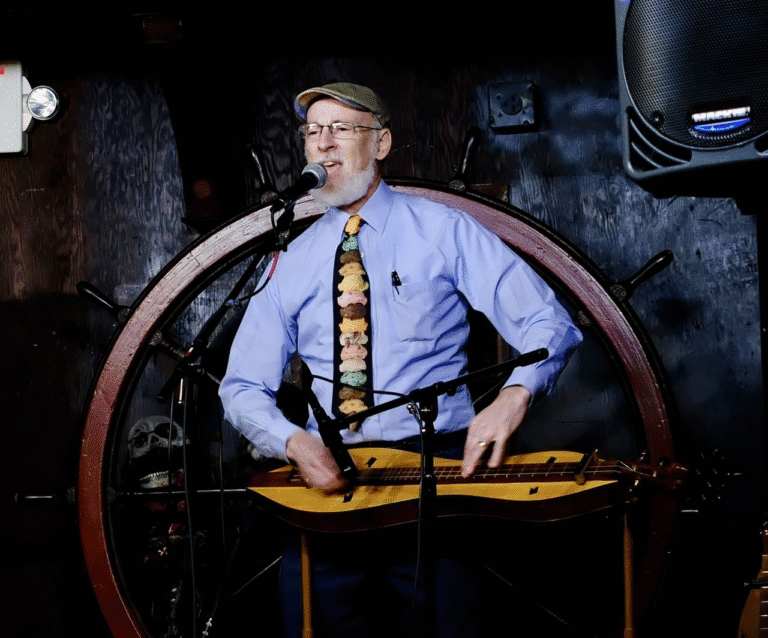
Sam Edelston – An Xperience Interview – by Rob Smittix.
RRX: All right, Sam. Looks like we’re in business.
SE: OK, talk to me.
RRX: Recently, you came to the Capital Region of New York for the Northeastern Regional Folk Alliance Conference at the Desmond in early November. I’ve never been. What’s that all about?
SE: OK, well, so … just as doctors go to medical conferences and lawyers go to legal conferences, folk music – I’ll call it an industry – has its folk music conferences, and this was the one for the Northeast. It was several hundred musicians, venues and presenters, agents, recording studios, and everything else. I was just one of several hundred performers and others trying to learn to do more and trying to get noticed by the right people.
RRX: Yeah, well, it sounds like you’re getting noticed because I’m talking to you! (Laughs)
SE: Oh, that’s a great thing. Especially coming in with something that’s just so different from everybody else.
RRX: That it is. The dulcimer is not a common instrument. You don’t see it, you know? Every night of the week when you’re going out and watching live music, that’s for sure.
SE: Well, I’m working on that.
RRX: Right? We actually do have a dulcimer player from the area. I would imagine she was at this conference. She goes by the name Deb Cavanaugh, I’m not sure if you’re familiar?
SE: As a matter of fact, she’s a friend of mine.
RRX: No way. Well, there you have it.
SE: I ran a little showcase at this conference called “Anything But Guitars” because everybody else is playing guitars, and she was one of 24 people performing in my showcase.
RRX: Well, cool. I guess I don’t have to hook you up then. I’m glad you are friends. Well, that sounds awesome. Tell us a little bit about your history and what got you into doing the music.
SE: Well, I’ve been into music ever since I was about in 8th grade. Started out as a songwriter and had to get away from the loud piano that was right next to the kitchen. So I got into the guitar, finger style guitar, used to playing a complete sound. Had no interest whatsoever in the mountain dulcimer for 30 years. I did get hooked on the other instrument called a hammer dulcimer, which is more of a very distant, low-tech cousin of the piano. As a result of that, I became the chair of a dulcimer festival down here in Connecticut, where I live. And as a result of that, I decided I’d better get acquainted with the other side of the family. Sure enough, I discovered that I could produce music with melody, accompaniment, and bass lines all at the same time. It’s a much richer instrument than I had given it credit for. So, it’s an instrument that I could teach you or any other total novice to play an interesting song within five minutes.
RRX: Well, sign me up, I’m interested.
SE: Yet at the same time, it’s sort of like chess. You can teach anybody the moves in five minutes, but the deeper you get into it, the more possibilities there become.
RRX: Absolutely. I’ve always been intrigued by instruments. I’ve been into music pretty much all my life. At the same time, I’m also a firm believer that almost anything can be an instrument. I play a mean soda can, I play a great steering wheel, but I can’t get behind a drum set and make it sound great, you know? It’s kind of like a new exploration, I think … of music. I’m totally down to try it and see if I can do something within five minutes and smile! I picked up a banjo once, and that didn’t work out too well.
SE: Well, the banjo is an art form, but I play that too. Once you get the hang of it, that works out really well as well.
RRX: I didn’t give it much of a chance.
SE: But, you know, the fascinating thing to me is that the mountain dulcimer comes from a long, beautiful tradition. It’s been around since the late 1700s, early 1800s. It’s got ancestors in Northern Europe. And so most of the players come to it through the traditional side of the music, you know? Folk music had sort of a folk revival in the ’50s and ’60s, and I came to it from the opposite direction. Just as the folk played the music that was around them that the kin and their neighbors played, I, with the advantage of radios, tape recorders, stereos, and cars to get into see concerts, I play the music that’s around me.
RRX: I noticed.
SE: I’m playing all sorts of popular music – rock and roll, some classical, a little bit of jazz and bossa nova. All over the place, but my special cause is the music of the people, rock and roll.
RRX: I checked out a bunch of your videos and songs that you had online. What you just said is what I noticed. You’re not doing it 100% traditional. We’re exposed to all this other music, so you take your own approach to it. But you keep it as fun, and I like that.
SE: Well, that’s the important thing. Music is fundamentally something that just speaks to people. And so when somebody says, “What is that thing you’re playing?” I’ll say, “What kinds of music do you love?” And they’ll say, whatever, a big band or Motown, classical or hymns, and I’ll play them a little bit of something that they already know and love.
RRX: Yeah. Well, I am definitely digging it. What would you say is the most outlandish cover that you’ve done? Something that no one would expect to hear out of dulcimer?
SE: Well, I guess “Bohemian Rhapsody” has to be one good answer to that.
RRX: Wow! Yeah, that’s gotta be a tough one.
SE: That was the one song that really made me understand that I needed to make a CD.
RRX: Mhm.
SE: And then it was just a matter of finding the right person to do the CD with, which took a few years.
RRX: Well, you gotta do it the right way, that’s for sure. So you put out this CD, this album, recently, right?
SE: It’s actually been out for about a year, but it’s still getting the word out. Obviously, without record label-type budgets, it takes time for that information to spread.
RRX: Oh, you’re not kidding. But, you know, if you could stay away from the record labels, do it as much as you can. It’s a DIY world that we live in now.
SE: Yep. I called the album “Making Waves,” and it takes time for waves to propagate.
RRX: Yeah, ain’t that the truth. Well, if you had to talk to our audience that’s reading this right now, who are interested in the dulcimer, where do they start?
SE: If you are just looking for a casual introduction to the dulcimer, there’s actually an organization called the Dulcimer Association of Albany. They actually have a festival in March that anybody can sign up for.
RRX: No kidding. How did I not know this? Thank you for filling me in.
SE: It’s like any other special interest; it’s invisible to the general public, but if you’re in the network, you can find it anywhere. So the place to find out about the Mountain Dulcimer Music Festival that is gonna be in Latham, March 13-15, is www.dulcimerassociationofalbany.com.
RRX: That’s wild. I never knew it. That’s awesome though.
SE: I’ll be teaching there, and I’ll be performing a couple of songs on stage.
RRX: Oh, cool. I’m glad that you’re coming back to our area. I’m also glad that you already know Deb Cavanaugh because I was definitely gonna recommend her to you, but you’re way ahead of me.
SE: (Laughs) There are quite a few great dulcimer players that have come out of the Albany area.
RRX: Well, she’s the only one I’m aware of, but I’m sure there are. See, I gotta do my homework a little bit.
SE: Ah, don’t worry about it.
RRX: Well, I appreciate your time. Is there anything else that you’d like to say to people? Any notes of positivity, prosperity, or good vibes?
SE: At the Nutmeg Dulcimer Festival a couple of weeks ago in Connecticut, the T-shirts for that said “If everybody played dulcimers, we all could live in harmony.”
RRX: I dig that. And you know what? I think that’s probably true.
For more on Sam Edelston visit: Samthemusicman.com

RadioRadioX & The Xperience Monthly
© 2018 - 2026 Imperial Broadcasting. Most Rights Reserved.