On July 15, the Capital Concert Series at the Empire State Plaza continued with NYC’s Lawrence, alongside local faves Side-B.
Photography by Timothy Reidy.


More coverage of the show here …
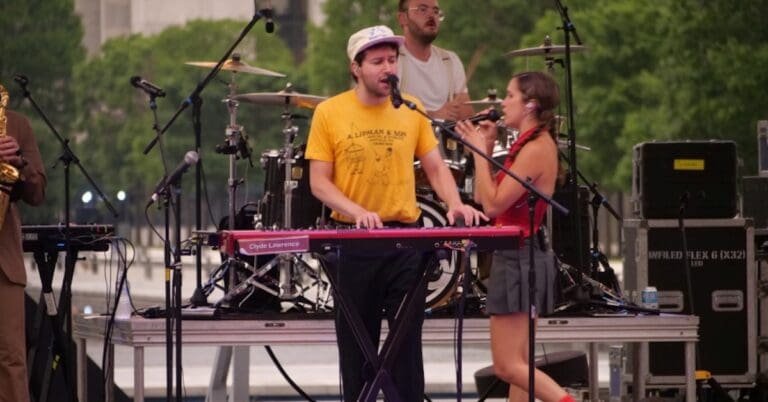
On July 15, the Capital Concert Series at the Empire State Plaza continued with NYC’s Lawrence, alongside local faves Side-B.
Photography by Timothy Reidy.
More coverage of the show here …
By Charla Earney.
The rain came. The rain left.
That’s just the New York way.
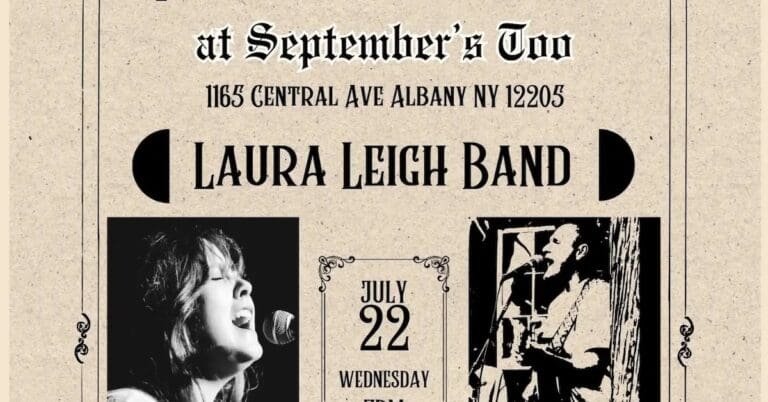
I talk about the weather more than most people because I’ve come to think of it as the universe setting the tone for the evening. It’s a reminder that there are only so many things we control. The weather is not one of them. I’ve stopped fighting it. Instead, I let it become part of the story. Rain changes a perception, so does the open air. A coffee shop during a storm feels different than one on a sunny afternoon. A neighborhood bar is filled with people looking for shelter, conversation, and maybe a little music. By the time I walked into September’s Too on Wednesday night, the clouds had already moved on, leaving behind one of those evenings that feels full of life.
Some bands connect with me within the first few notes. Others take time. I’ve always joked that I love the blues because ninety percent of it lives inside the same handful of chords. Country music isn’t very different. Four familiar chords become thousands of songs, each musician adding their own personality, stories, and emotion. That’s where the magic happens. Laura Leigh was different for me. I’ve seen her perform several times over the past year, beginning with one of her shows at Unihog. Each time I left feeling like I was missing something everyone else was hearing. I’ll admit something most reviewers probably wouldn’t. I didn’t get it. Her voice didn’t immediately draw me in. I struggled to connect with it. While the crowds around me were dancing and singing along, I found myself standing there wondering what I wasn’t hearing. Friends whose musical opinions I genuinely respect loved her performances. Fans described her as someone you either instantly love or simply don’t understand. That bothered me.
One of the biggest lessons I’ve learned since I started writing about live music is that sometimes it isn’t the artist. Sometimes it’s me. Instead of writing Laura Leigh off, I kept coming back. Last night, someone who follows my writing encouraged me one more time to really listen. Not to the performance. To the person. That changed everything.
When I listen to live music, the instruments are what keep me grounded. Bass, drums, and guitar establish the rhythm that makes your feet tap and your shoulders sway. Vocals do something entirely different. Vocals tell the story. Lyrics become what I call “the art of relation.” It is the place where listeners recognize pieces of themselves inside someone else’s life.
That’s where Laura Leigh shines.
She isn’t trying to be larger than life; she just is. She feels like the hometown girl who picks up an acoustic guitar around the campfire, and suddenly everyone IS singing along. Her songs carry joy throughout her performances. There is an authenticity in her delivery that simply can’t be manufactured. It sounds lived in. Earned. Happy. Once I heard that … I couldn’t unhear it. The voice that had once distracted me became the very thing that makes her unique. It isn’t technical precision that defines Laura Leigh, although she has it.
It’s her tone.
Every singer has one voice. Great singers have an identity. Laura Leigh’s tonal inflections remain remarkably consistent from note to note. They’re distinctive enough that, at first, they distracted me. Once my ears adjusted, I realized that uniqueness is exactly what separates her from countless other singers. The closest comparison I could think of was Sonny Bono. His voice wasn’t traditional, but it carried a character that was unmistakably his own. Alongside Cher, that distinctiveness helped create something audiences still recognize and love decades later. Laura Leigh has that same kind of musical fingerprint. Around her stood a band that made the entire evening a good time.
Andrew Crawford guest spotted with lead guitar and deserves special recognition. His Telecaster drifted effortlessly between classic country twang, bluesy bends, and rock-and-roll swagger. Every slide seemed perfectly placed, adding color without ever overwhelming the songs. He’s quietly becoming one of those guitarists you find yourself watching more and more throughout the night.
Chris Macchia held everything together on bass. Calm, confident, and impossibly steady, he anchored every song with the kind of consistency audiences rarely notice until it’s missing. He carries himself with a quiet confidence that says he knows exactly where every song is headed before anyone else does.
Behind them, Chanda Dewey reminded everyone why great drummers don’t always need flashy solos. Relaxed in everyday clothes with her hair in a loose bun by the end of the night. She carried herself with such an easy, unassuming presence that I couldn’t have guessed what was coming just by looking at her. That is the type of presence that carries through whether doing the dishes or putting on a show. When she played, it was solid. Tasteful. Consistent. Every beat served the song instead of competing with it. It’s the kind of musicianship professionals and I admire.
Together, the band blends country, folk, roots rock, bluegrass, and classic Americana into something that feels to me Appalachian. Their traditional influences aren’t just heard; they’re visible in the audience. Before long, boots were tapping, feet were moving, and smiles spread naturally around the room.
It’s no surprise Laura Leigh was named the 2026 Capital Region Eddie’s Americana Artist of the Year, and earlier this year the band released a five-song EP. I believe I heard several original songs Wednesday night. I didn’t know them then. Now I want to. One of the unexpected gifts of writing about live music is discovering that first impressions aren’t always final impressions. Sometimes an artist doesn’t change.
I do.
Laura Leigh didn’t perform differently Wednesday night than she had the first time I saw her.
I listened differently. And somewhere between the rain clouds clearing and the final song, I realized I’d gained another artist to follow. Sometimes the best music isn’t the kind that grabs you immediately. Sometimes it’s the music that patiently waits until you’re finally ready to hear it.
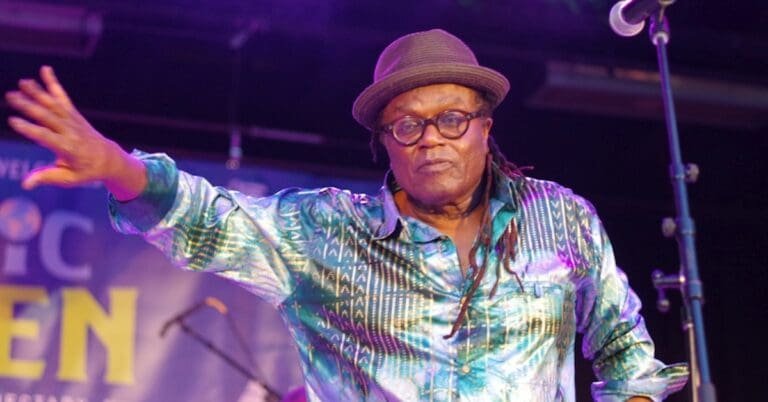
Ricardo Lemvo and Makina Loca brought a fusion of Cuban and African traditions, while Taina Asili kicked things off at Music Haven.
Photography by Timothy Reidy.
By Chad from Albany.
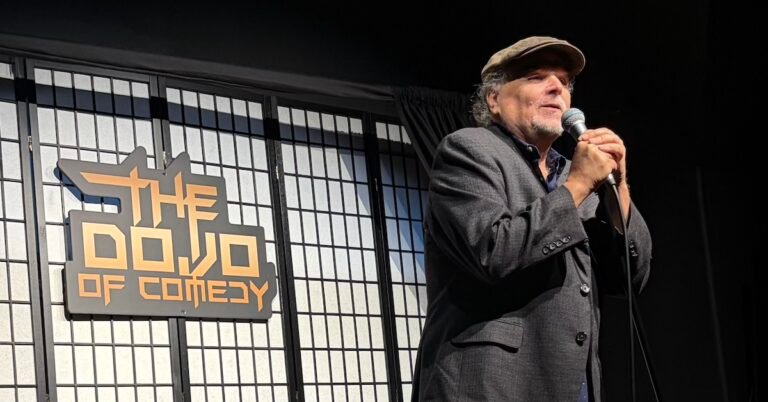
On Saturday, July 18th, Ron Bennington, the beloved host of “The Bennington Show” on SiriusXM, performed an intimate and personal show at the sold-out Dojo of Comedy, located above Tiff’s Restaurant in Morris Plains, NJ. This event became a special show not only to his loyal fanbase, who traveled in from around the East Coast, as well as other parts of the country, but for Bennington himself. Not long after the tickets to this show went on sale (and sold out within 24 hours), Bennington was hit with a curveball that he wasn’t expecting- a Stage 4 colon cancer diagnosis. As the date approached, those in attendance were questioning whether or not this show would be going on, as he had started receiving chemotherapy treatments. But “Ronnie B.” made sure that he made the date, which was an example of the approach he has taken after learning his diagnosis – of using humor to get himself, his family, and his fans through the journey to recovery – and what he has been doing for those dealing with the same struggles since has been another chapter of his storied career.
“The Bennington Show” is quoted as “the ONLY father/daughter radio show in the history of radio,” which is said in every show opening by his daughter Gail, with whom he has hosted since 2014. But his radio career dates back to 1987, when he and Ron Diaz hosted the nationally syndicated “The Ron and Ron Show” during the early days of “shock jock” culture, and which was based out of Tampa Bay, FL, until its final episode in 1997. Following that, Bennington took his then-producer Fez Whatley under his wing and created the wildly popular “Ron and Fez” show, which took them from Florida all the way up to New York’s WNEW (which included a stint in Washington, DC on WJFK from 2003-2005), before finally ending up on XM and then SiriusXM after the merger with Sirius. Whatley retired in 2015 and passed away in 2021. Bennington is also widely considered one of the best interviewers in the world, thanks to his series of interviews titled “Unmasked.” And after all of his credentials, what may be his most im”port”ant work (you will understand that terrible pun in a little bit) is what he has been doing since his diagnosis.
So back to the Dojo of Comedy … when opening comedian Danny Braff introduced “the living legend – Ron Bennington” to the stage, he was met with the first of three thunderous standing ovations in a too-brief 40-minute set. As he talked about on his show, he didn’t have anything planned, and to me, I was uncertain if his comments on air earlier in the week about him questioning what his performance would be like were real or part of his schtick. I even called into the show to let him know we all love him and whatever he said would be great. He told me that he would look for me in the crowd to see if I gave it a thumbs up or a thumbs down. I imagine he didn’t see, but he was given two thumbs up. Way up. This proved to be much more than a comedy show. It was a gathering of people in love, adoration, and support of one of the most respected people in the industry.
In his set, he thanked everyone for coming out and told stories of his ongoing battles and his approach to them, and choked up when reminiscing about his beloved Fez Whatley. One of the best jokes of the night referenced Bennington’s childhood friends from Twin Oaks, PA – several of whom were in the audience that night- in which he brought up that one of his friends couldn’t be there because he was battling ALS. Ronnie pointed out the irony that the worst baseball player in their group was the one who got Lou Gehrig’s Disease. Tremendous! The uproarious laughter was another example of how he has been using humor in the midst of darker times. Towards the end of the show, “Bennington Show” producer, the beloved Chris Stanley, took the microphone around the room to have patrons ask questions for him. Many just took the mic to show love or reference inside jokes from his 30 years on air. When Bennington asked if anyone had a story worse than Stanley had about his father, who he often references on the show with disdain, I raised my hand, and I mentioned that mine burnt my house down. As quick as a whip, Bennington said to me, “Did you live with him?” I said, “Yes.” He said, “Well, it was his house to burn”. In the 26 years since that happened to me, it was the first time I ever laughed about it.
That is the magic of Ron Bennington.
And just like the joke he said to me, and about his dear friend’s condition, he shone a light through the darkness with the brilliance of his humor, which is something he is doing now on his road to recovery through his “Portcasts”. The tongue-in-cheek name of his mini-podcasts at first came as a way to create content for social media, but has morphed into something that everyone should be watching, and is a beacon of hope and light for people battling their own ailments. As Bennington receives his chemo treatments in the medical facilities where he is treated, some of the biggest names in comedy sit in with him during the process for short comedic interviews filled with laughs, strength, and love – and dealing with it all through the power of humor. The list of comedians to date includes heavy hitters such as Dave Attell, Joe List, Ian Fidance, Jim Norton, and Shane Gillis, to name a few. These can be seen on Instagram @benningtonsxm. I cannot recommend these enough for anybody who loves comedy, especially those dealing with cancer, and who want to laugh through relatable experiences in their own journeys, with the help of the legendary “Ronnie B”, as he is experiencing HIS journey for all of us to see, learn from, and laugh along with.
Thank you for doing this, Ronnie.
Opening the show were comedians Danny Braff and Daniel Geneen. Braff, who has been heard on Kill Tony and seen in venues from The Stress Factory in NJ all the way to the legendary Comedy Store in CA, tells his stories with a great, almost deadpan delivery, with the context of them sometimes being so uncomfortably funny that even the most easily offended person has no choice but to laugh. He could break anyone. Geneen’s charm and relaxed approach to his stories keep you enthralled, and his brilliant lines have made him a favorite at NYC’s coveted Comedy Cellar.
You can see Ron Bennington’s Portcasts on Instagram @BenningtonSXM
Find Danny Braff on Instagram @DannyBraff and Facebook @DannyBraffComedy
Find Daniel Geneen on Instagram @DanielGeneen and www.danielgeneen.com
You can see Danny Braff as part of the Saratoga Comedy Festival on September 11-12
Get your tickets now at www.saratogacomedyfest.com
Photos by Chad from Albany.
By Charla Earney.
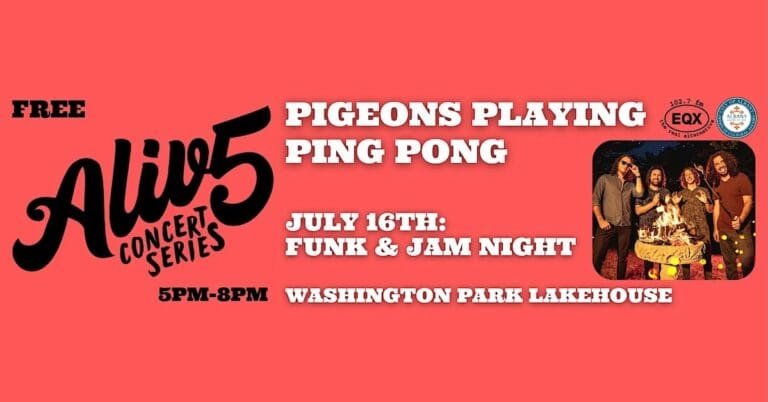
Albany was spoiled last week. Three straight days of perfect summer weather settled over Washington Park, bringing just enough breeze to tame the July heat without stealing the sunshine. The air quality be damned, I was excited to see a full crowd. It was the kind of evening made for an ice-cold beer, lawn chairs, and live music. Alive at Five delivered all three.
Before a single note was played, the event itself reminded me why this concert series has become one of Albany’s summer traditions. Local vendors lined the park with everything from festival food to cold drinks, and every beer sold helped support the community through volunteer organizations. The spirit of giving seemed to echo throughout the evening.
Former mayor Kathy Sheehan stopped by to welcome the crowd, speaking about the importance of music and community. There was nothing ceremonial about her appearance. Wearing a baseball cap and running pants, she looked like someone who simply wanted to spend a Wednesday evening with her city. That authenticity wasn’t lost on me.
The Albany Police Department and Albany County Sheriff’s Office also maintained a visible presence throughout the park. Their DWI awareness booth was busy all evening, but what struck me most wasn’t the display; it was the officers themselves. Everyone I encountered smiled, shook my hand, looked me directly in the eye, and spoke with genuine warmth. As someone attending events alone, their presence made me feel safe while surrounded by thousands of strangers. Music has a way of softening even the busiest professionals. I even caught Officer Teddy, one of Albany’s mounted patrol horses, swaying ever so slightly to the rhythm. With his dark coat, gentle brown eyes, and polished leather tack, he may have been the most handsome attendee of the evening.
Then the music began.
The NoLaNauts walked onstage looking every bit as colorful as they sounded. Even before the first song, their bright clothing hinted that this wasn’t going to be an ordinary set.
Founded by guitarist and vocalist Tom O’Connor, the Albany-based collective has built its reputation by recreating the spirit, not just the sound of New Orleans. If the Capital Region and the Crescent City ever had a musical child, the NoLaNauts would be the firstborn.
Although typically a ten-piece ensemble, the band performed without one of its regular members. The remaining musicians filled every inch of the stage with an infectious blend of New Orleans funk, R&B, soul, and brass-driven grooves.
Sharing frontman duties with O’Connor, guitarist Ben Moss brought a second voice to the performance that kept the set feeling fresh. The two traded vocals effortlessly, while bassist Jason Sarubbi anchored every groove with equal parts confidence and attitude.
Behind them, drummer Joe Sorbero became the evening’s engine. Every beat seemed to push the music forward, keeping the energy high while allowing the guitars and horns room to soar. His playing never overpowered the band; it simply refused to let anyone stop dancing.
And dancing they were.
The true stars of the performance may have been the horn section. Trumpeter Brian Brancato and saxophonist Bill Ringwood unleashed wave after wave of New Orleans brass that transformed Washington Park into Bourbon Street. Ringwood’s psychedelic snake-print shirt and crisp white slacks perfectly matched his vibrant saxophone lines, while Brancato’s geometric orange-and-gray patterned shirt reflected the same colorful personality he poured into every note. Together, they didn’t just play melodies—they created a whirlwind that swept the audience straight to Louisiana.
One of the evening’s most memorable moments came when Jess Bowen stepped to the microphone for her interpretation of “It’s a Man’s World.” Her smoky, controlled vocals built steadily before delivering a breathtaking finish that earned one of the night’s loudest ovations. Dressed in a flowing blue skirt, white peasant blouse, dark blue bandana, and oversized sunglasses, she carried herself with effortless confidence. It was impossible not to watch her.
Throughout the set, I wandered around Washington Park checking the sound from different vantage points. Whether standing near the stage or further back on the lawn, the mix remained remarkably balanced. The bass never buried the vocals, every instrument found its place, and the clarity made it easy to appreciate the musicianship.
The NoLaNauts don’t simply perform songs. They celebrate an entire musical culture. Drawing inspiration from legends like Dr. John and the Meters while mixing in original songs such as “Neutral Ground,” “Early Warning,” and “Up Until the Morning,” they’ve become one of the Capital Region’s finest ambassadors of New Orleans music. Their reputation is well deserved.
By the time Pigeons Playing Ping Pong took the stage, Washington Park was fully warmed up.
The Baltimore quartet, formed by college friends at the University of Maryland in 2009, has earned a devoted following not by chasing radio hits but by becoming one of the country’s most respected live acts. Their fans, known simply as The Flock, come for marathon performances, seamless transitions, and nonstop dancing.
My first observation?
Hair.
Every member seemed to have a head of hair perfectly suited for psychedelic funk, flowing in every direction as the grooves stretched further and further into improvisation.
Frontman Greg Ormont commanded the stage with infectious enthusiasm while guitarist Jeremy Schon delivered extended solos that often sent the songs into unexpected directions. Bassist Ben Carrey quietly held everything together underneath those explorations, while drummer Alex “Gator” Petropulos maintained a steady pulse that never let the momentum fade. Keyboardist John Brady, who recently joined the touring lineup, added another layer of color to the band’s already expansive sound.
I must admit something.
I’m not naturally a jam-band fan.
I like lyrics. I enjoy hearing the end of one song before another begins. Pigeons Playing Ping Pong doesn’t believe in those rules. Songs flowed into one another with barely a pause, often making it difficult to tell where one composition ended and the next began until the vocals returned.
For devoted jam fans, that’s paradise.
For listeners who love bands like Goose, Phish, or the Grateful Dead, this performance was exactly what they came for.
Their music carries flashes of the Red Hot Chili Peppers alongside psychedelic improvisation. It was all wrapped inside an unmistakably joyful energy that kept the crowd dancing from beginning to end. Whether playing material from their latest album, “Feed the Fire,” or reaching back through earlier releases, every extended jam felt less like a performance and more like an invitation to join the celebration.
Alive at Five reminded me that concerts aren’t only about the artists on stage.
They’re about volunteers pouring beer to support local organizations. They’re about city leaders taking time to be present. They’re about police officers making strangers feel welcome. They’re about families dancing barefoot on the grass, friends singing together, and musicians creating moments that linger long after the amplifiers are switched off.
For one beautiful summer evening, Washington Park became both New Orleans and Baltimore at the same time, and Albany and I couldn’t have asked for a better soundtrack.
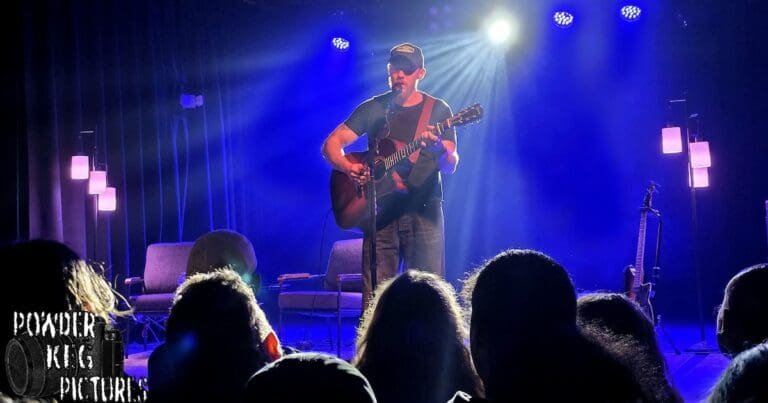
Matt Maeson at Empire Live, July 18, 2026 – photo by Joshua Scarselli.
By Charla Earney.
Some musicians sing. Some perform. And then there are the ones who somehow narrate your life while you’re busy living it.
Life hurts. It changes us. It breaks us open, rebuilds us, and leaves us carrying experiences we never expected. Musicians go through the same hardships everyone else does, yet somehow a handful of them manage to distill those experiences into three or four minutes that stay with us for years. What makes a songwriter special? Is it wisdom? Better observation? A greater ability to articulate what the rest of us only feel? Some writers spend months collecting pieces of songs: one line scribbled on a napkin, another thought caught while standing at the kitchen counter, a melody that finally finds its home months later. Eventually those scattered pieces become something that feels inevitable.
I’ve spent years reading philosophy. I’ve read Nietzsche, some of it twice. There is a quote about him that says he could express in a few sentences what it would take another man an entire book to explain. I think great songwriters do the same thing. B.B. King wasn’t Nietzsche, and yet, in another way, he absolutely was. A simple lyric can summarize an entire philosophy of living without ever sounding complicated. The funny thing is, I noticed that I remember song lyrics far better than I remember philosophy books. I can still hear U2’s words from various albums. Most of Nietzsche’s eventually floated away. U2 Lyrics stayed.
I stopped being an album listener when I was able to formulate my own playlist. When I was a kid, we called playlists radio. Playlists let me keep the songs that become part of my life at my fingertips. They become personal soundtracks instead of someone else’s sequence. Years ago, I subscribed to Amazon Music. Their Discovery Mix knew me frighteningly well. Before streaming, I downloaded music the same way everyone else did in those days. My sister had over two million songs saved across her hard drive. Deleting anything was never an option; they just bought more storage. When playlists arrived, it basically reinvented radio, except this time we got to be the DJ. I loved that, still do. Eventually I made the conscious decision to stop downloading music illegally and pay for a subscription.
My sister thought I was crazy. “Why would you pay for something you can get for free?” My reasoning was sound. Maybe the artist only gets a fraction of my monthly subscription. Maybe it’s only pennies. But they’re my pennies, and they get them. I like the multiplier effect. If millions of people each contribute a tiny amount, eventually it becomes enough to keep musicians making music. That mattered to me. The security didn’t hurt either. I had already learned the hard way what computer viruses could do when you download music off Lime-Wire. Amazon Music felt safer. Eventually my sister became the Apple Music queen. I stayed loyal to Amazon for years.
Then life changed.
I’ve been trying something different. I stepped away from constant streaming, social media, and algorithm-driven recommendations. These days I mostly listen to YouTube and extra-terrestrial radio (my own thoughts). And oddly enough … I miss my algorithm. Not because I miss technology. I miss the discovery option. I have recently developed a limited online connection lifestyle. I call it a “No Noise life”. “No Noise” doesn’t mean silence. It means choosing what deserves my attention instead of letting an algorithm, a notification, or a screen choose it for me. It is the deliberate act of stepping back into my own life, where discovery happens by being present instead of scrolling. The music sounds different, the conversations feel deeper, and for the first time in a long time, I feel like I’m living the soundtrack instead of simply consuming it.
Instead of letting an algorithm introduce me to music, I’ve been creating my own real-life Discovery Mix. Going to local shows. Standing in small clubs. Listening to opening acts I’d never heard before. Paying attention.
Then Matt Maeson released his acoustic Stepping Out tour dates. One of them being at Empire Live in Albany. Holy sh**. I’ve watched Matt Maeson’s tours come and go for years. I didn’t have the money. Or transportation. Or the mental bandwidth. I live with a traumatic brain injury. Crowds, bright lights, and sensory overload aren’t minor inconveniences; they’re something I must manage if I expect to make it home safely. This time I had all three.
Empire Live is sensory overload for me. A local business owner told me a lot of tickets had been sold. Judging by the humidity inside and the condensation literally dripping from the ceiling, I lived it. Empire Live isn’t my favorite venue. But here’s what I love about it. There’s a smoking patio outside where, on cool evenings, they leave the door open. You can stand outside, catch a breeze, smoke, and still hear the performance almost perfectly. For someone whose nervous system occasionally needs a break … that’s heaven.
I discovered Matt Maeson years ago through Amazon’s Discovery Mix. He blends alternative rock, indie folk, and blues-infused Americana with raw, emotionally charged songwriting that explores addiction, faith, mental health, and love. His music is stripped-down and deeply personal, pairing soulful vocals with lyrics that feel more like an honest conversation. It is music that quickly became part of my life. I write and cook while listening to it. I have made decisions and formed plans with it playing in the background. Seeing him live felt surreal. It wasn’t just hearing songs I’d loved for years. It felt like two versions of my life collided. The life I used to live online, and the one I’m trying to build now. Standing there in downtown Albany, surrounded by a thousand strangers singing words that had once only belonged to headphones, something clicked. It confirmed. It reminded me that reality feels different when you’re standing inside it instead of watching it through a screen. Music isn’t background noise.
It’s participation.
Being physically present reconnects me to something that algorithms never could. To my soul. Music is the way. That realization has made me rethink how I consume everything. How many artists did I dismiss after watching a thirty-second clip online? How many bands did I scroll past because the algorithm didn’t grab me immediately? I’ve started assigning shame to that habit, not to punish myself, but to change it. That’s what shame is supposed to do. Point us toward better behavior, not keep us quiet to continue to NOT change. I’m trying not to judge entire experiences by thirty-second previews anymore. The amount I’ve been missing is staggering.
Matt himself? He was terrific. And honestly? Far better looking in person than his promotional photos suggest. The album images make him look like a confused beta fish trapped in a fishbowl. In real life, he’s relaxed, confident, wearing a simple black T-shirt, dark pants, boots, and a baseball cap. Nothing flashy. Just a guy with a piano and a guitar, strong shoulders, and songs that inspire people to sing along. If I’d passed him on the sidewalk, I’d have simply thought, “Good-looking guy.” Not knowing his stage presence is captivating.
That is what live music gives. Not perfect sound. Not polished production. Not the convenience of skipping a song after thirty seconds. It gives permission for strangers to sing the same words together. There are moments that can’t be paused, rewound, or replayed; it gives me the opportunity to be present. It reminds me that musicians aren’t just voices coming through our speakers; they’re people who have lived enough of life to write something that became part of mine. I walked into Empire Live thinking I was going to hear Matt Maeson perform songs I already loved like “Blood Runs Red,” “Hallucinogenics,” and my beloved “Cringe.” I heard all of them. I walked out remembering why music was meant to be experienced together.
If we want to support artists, subscriptions matter. Buy the album. Stream the songs. If you want to support the soul of music, you have to show up. Stand in the crowd. Cheer for the opening act. Buy the ticket. Put the phone in your pocket occasionally and let yourself be completely there. Somewhere, in a small club or a packed venue, is a song that could change your life. It has mine. The algorithm might have introduced me, but only live music let me truly meet the music I love.
Epic Show.
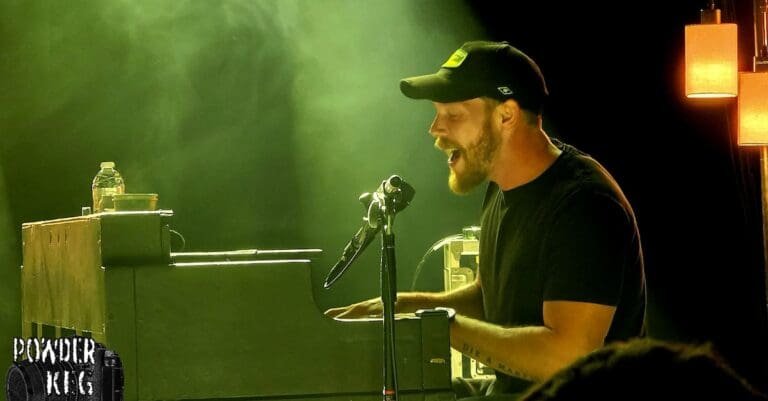
Virginian singer-songwriter Matt Maeson visited Empire Live on July 18, with support from Joe P.
Photography by Joshua Scarselli.
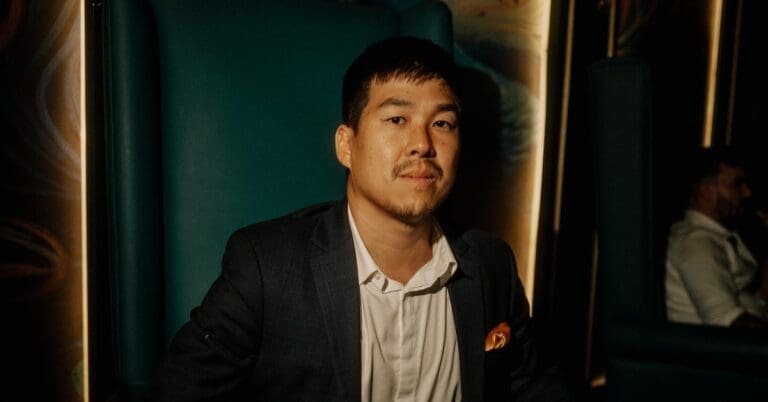
A Literary Profile Essay by BradQuan Copeland.
Sugared gummies dissolve beneath my teeth as I double-fist vape pens, coating my lungs with the dense sweetness of a honeypot high drawn through a bong packed with live resin wax and freshly ground flower.
My tension yields to the chilled contortions of my subconscious mind, gently drawing me through the veil of the dark morning sky as my heart takes flight and lands at my brain. In this moment, I transcend the mundanity of mere existence and step into the true gift of living within the ambiance of consciousness. It’s through this state that I come to discover something just as priceless as a mother’s home cooking: the rare beauty of community.
It was on the night of Tuesday, May 19th, that I received a text from a friend, rising recording artist and content creator, Lil Baby Suplex, asking me if I’d like to be a part of Jay Don’t Sleep’s 24-hour live stream at the Son of Egg restaurant in Rensselaer, NY the following month, from 7 pm on Friday, June 19th to 7 pm on Saturday, June 20th. I’m not one to ponder much on invitations as I don’t receive them often, so I said yes and figured I’d ask whatever questions later.
Upon arrival, my jaw was rocked by the welcoming warmth of the bright yellow branding that stands out like a rebellious child among its peers. Walking in, I found a place burning with eclecticism, boasting a café atmosphere with a bar setup, showcasing elements of a convenience store selling various Korean snacks, merchandise, a claw machine, and artful décor.
In the moment, it was a bit of a puzzle to make sense of, feeling less like a restaurant and more like a collection of worlds converging beneath a shared canopy of possibility.
It was packed, and having no idea exactly where the stream was taking place, I asked some unaware customers before wandering up the stairs, where I passed by countless signs highlighting community events. It was on the second floor where the parties lived. I say parties because there was another group: Chill Chat Connect, living their best lives off to the back right of the space, emitting a vibrance that matched the flair of the live stream I was honored to be a part of.
Exuberantly, I approached Suplex, who was the center of attention, shining in Versace shades, dapping him up before placing my items on a nearby table and acknowledging the others who were present.
There was Hanif, the founder and CEO of the rising fashion brand Autumn; Jay, the 22-year-old head of the stream who streams professionally and is the cousin of Suplex; PlugWave, the manager of the electrifying Plastic Boyz rap collective, who occasionally drops a few bars of his own; Dylan, a gladiator and king of debauchery (my personal favorite) who boasted of a recent fight he won where he was charged at with a machete that left two scars on his hand equivalent to that of papercuts; and his brother, Moose, another professional streamer and former Division 1 football player.
They began taste testing various alcoholic beverages and ranking them from worst to best for a segment dedicated to Hanif’s side podcast project: 518 on the Rocks. Offering me a drink, I politely declined as I’m Cali sober, but requested a black coffee from the gracious owner of the establishment, Justin Ko, who made his way upstairs.
Taking my seat with my right ankle resting on my left knee as I slowly sipped my brew, I observed the festivities, catching the attention of Moose, who found my presence hysterical. “Yo, you look like the parent watchin’ over the bad ass kids, bro!” he said as I joined him in laughter before Justin took a seat beside me, and we began a dialogue.
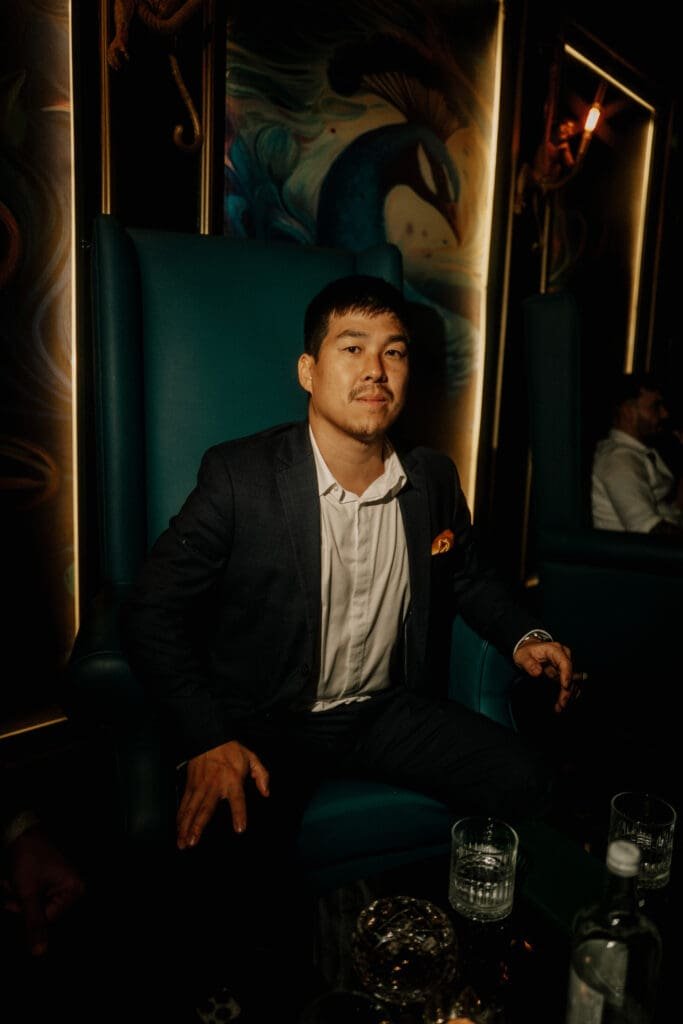
The 31-year-old carries a business-like poise that would thrive in corporate America, yet refuses to conform to its rigidity. Beginning his academic journey at Xavier, he later transferred to HVCC, where he joined an investment club and apprenticed under a real estate developer who showed him the art of entrepreneurship in real time.
Completing his education at RPI, he began experimenting with online businesses, starting a successful Rubik’s Cube tutorial YouTube channel inspired by a young girl at his church. Through marketing mastery, he went viral. From there, he slung various products through Amazon e-commerce before departing to help his mother create Son of Egg.
As our conversation continued, Suplex began recording and meticulously crafting music live. The oneiric atmosphere of his trap-infused sound captivated the room, drawing Moose and Plug onto various tracks. “This is Michelangelo at work here,” I said, chuckling before Justin and I made our way out back to the balcony for a little more peace and quiet.
What further unfolded went beyond the makings of a successful business owner. It revealed the blueprint of a gifted man who comes alive through the engineering of meaning. He spoke of Albany’s importance, outlining its vast spectrum: the simplicity of blue-collar grit, the passionate vitality of its luminous arts and culture, and the suit-and-tie complexity of its political legislature, while at the same time highlighting the unfortunate reality that many of its citizens lack a sense of civic pride.
“A lot of the talk in Albany was that there’s not things to do. Son of Egg is going to be a third place for a lot of people with a lot of interests that aren’t even necessarily mine, but we can host it, and that was the vision,” he said. A “third place,” being a space that is neither home nor work, but somewhere people gather, connect, create, and belong. Such a space can become a haven for leisure, networking, and era-defining ideas, particularly through music, given the strength of its unifying force.
My curiosity led me to ask, “When people utilize the space for shows, do you charge them for that? How does that work?” “I realized these are hungry artists. They’re working and doing their art, which is very difficult, and they might not have the funds to pay for their show or their marketing. But I realized this is the key, because it’s all about partnerships and collaborations. If I throw a show and a hundred people come, I shouldn’t be charging them. They’re bringing the people. The art is bringing the people. That’s why I never charged them. We’re actually partners. By bringing people in, they’re naturally going to eat, get drinks, and support the space, so everybody survives,” he replied.
As a fellow starving artist, his approach struck a chord. What intrigued me even more, however, was his economic perspective. We got into a discussion in which I voiced my displeasure with the ills of capitalism and how easily it can plunge society into the bowels of hell, concocting a cocktail of poisonous agents: selfishness, greed, exploitation, and the commodification of humanity.
But everything, positive or negative, exists on a spectrum, and his perspective reflects capitalism in its purest form: a system capable of generating the resources that make philanthropy and community projects possible. “I have this big vision now, and it couldn’t work without capitalism. I want to create a kitchen that’s actually free for everybody. The community actually funds it, so you don’t have to charge anybody that comes in. Anybody that comes in gets to eat for free.”
What fascinated me most was the tension within his worldview. Here was a man defending capitalism while dreaming of a future where nobody who walked through his doors would have to pay for a meal.
Justin Ko strikes me as a communitarian: a man who believes strong communities breed better lives and pursues wealth with the wisdom to know when enough is enough. So engrossing was our conversation that a customer who had no connection to either of us lingered nearby for well over an hour. Though he never contributed a single word, he remained within earshot, quietly occupying himself to hear Justin speak.
As a skilled boxer, Justin’s philosophy is deeply rooted in stoicism, reflected in his capacity to welcome the ruin that others resist. He launched the business during COVID and endured immense betrayal from trusted employees, handling it all with regal composure.
Such fortitude is undoubtedly owed to his spirituality, one that’s deeply rooted in interconnectedness rather than doctrine.
“Your neighbor is you,” he stated, reflecting a unique hybrid ideology that weaves together the teachings of Christianity, Buddhism, and systems thinking.
Despite the various political and societal maladies that spread through the collective consciousness like cancer, he chooses to live within the optimism that most people are trying to do good.
Our reality becomes what we think about all day, and impossibility can only exist where we fail to realize the answer is us. I signed up to participate in the shenanigans of a 24-hour live stream and found myself awakened in a school of free thought.
As our conversation concluded, he went back in to join the stream while I remained on the balcony for some time, sipping the last of my coffee in observance of the Albany skyline glowing beneath the nocturnal haze. Somewhere between the music and the philosophy, I realized Son of Egg was proof that people still hunger for one another.

By Rob Smittix.
RRX: I’ve been doing this thing where I talk to DJs from other radio stations across the region. I knew that you started doing a show over at 88.3 WVCR The Saint, so I thought it’d be a great time to chat. How long have you been there?
MH: At a year this month.
RRX: How’s the experience been so far?
MH: It’s been a learning experience. I’ve never done radio. I didn’t do radio in college either. This was just an opportunity that was presented to me last year. It’s been a great experience so far.
RRX: That’s pretty cool. I’ve been in radio since 1994. I worked at most of the companies that are around here in some shape or form at one point in time. I find it very interesting when new people are coming up, when people are brand new to it. Here at RadioRadioX, I mean … we have Jimmy Barrett, he’s got more experience than anybody. He’s been at it for almost 60 years with Kaleidoscope, and we have others who also have a lot of experience. But … there’s nothing like throwing somebody new into the mix that has absolutely never done it before. Just seeing the energy and attention that they give it for the first time around. That’s why I’m excited for you. It’s a good feeling to be on air.
MH: It absolutely is, and you make a great point. I’m a rookie. I’m an amateur. This is volunteer work. I don’t get paid for it. It’s just something that I do because I grew up loving the magic of radio. Right?
RRX: For sure.
MH: John Garabedian, Open House Party … in our market, I think he came on the air Sunday nights, when I was a kid.
RRX: Sounds about right, yeah.
MH: I would listen to that every Sunday night. I just loved that energy. I think there’s a kid out there now that has rekindled that spirit of his and is doing a show. It’s beautiful to just hang out in your bedroom, listen to the radio, and have the DJ select a song you didn’t realize you needed to hear, right? It’s a song that you either pulled out of your memory, you didn’t remember it until just that moment, or you’re feeling a feeling and this song just speaks to you at this hour. It’s just fate, and it’s beautiful, and that’s why I like doing what I do. The folks you talked about, Barrett and yourself … so many of the folks that have been on the radio for so many years … these are the people who I try to not necessarily emulate (because I can’t), but I at least try to listen to the radio, and it’s like homework for me now. It’s like … when did they say this? Why did they say this? What are they saying before the break, or how are they doing the segues? I’m paying attention to all the nuances because I didn’t go to school for this, not professionally, so I have to do it in some way or form just to play the part and do something that appeals to our listeners when I’m on the radio. So that’s just the mindset that I bring to it.
RRX: Well, one of the things that I tell people when they’ve never done it before is … I stole this from the Reese’s commercial, but there’s no wrong way to eat a Reese’s. Like, it does not have to necessarily have to be structured in a way that other people are doing it. You just have to be yourself is the absolute main thing. I’ll tell you this, too – I’ve only been on commercial radio, but even when I was on those stations (with the exception of just monitoring what we were doing), I always only listened to college radio. It was always WVCR, WRPI, and WCDB. The unique thing that college radio DJs get to do, and fortunately, I get to do that here too … but on regular FM/AM stations that are owned by the big corporate conglomerates, none of those DJs get to play what they want.
MH: Right.
RRX: Getting to pick your own music, that’s a wonderful luxury that a lot of DJs don’t get.
MH: Oh, it’s great. I think the win for me is, I’ll hear it from my wife, or I’ll hear it from Darrin Scott (Director). They’ll be listening to the show, and they’ll be like … is this guy local? Or is this band local? Yes, they are, and to your point … I’m preaching to the choir here, but we have one of the best music scenes in the country. It’s full of talent and resources, too, to support them. The music that comes out of this scene is incredible, and to be able to share it on a radio station that’s also on the iHeartRadio Network, that’s great. And so it gives me the opportunity to share some music that the audience hasn’t heard yet and introduce them to a band that has immense talent. And so, like when they say, “Oh, I don’t listen to the radio,” or “I don’t like Top 40, it sounds like it’s a formula,” well then listen to your local music. I mean, these folks are out playing the small venues, the bars, and you’re talking over them while you’re hanging out with friends. Pay attention to what they’re doing because they’ve got good stuff to listen to.
RRX: They sure do. I think sometimes the musicians around here kinda forget how vibrant it actually is here. Albany, the Capital Region, has always had a kind of complex because we’re the Capital and New York City is our big brother, so people have always tried to compare. There’s no comparison to New York City. I don’t care if it’s Chicago or LA. New York’s comparable to Hong Kong. It’s an entirely different monster.
MH: You and I grew up here, so we both recognize the inferiority complex that we have, where some people call it Smallbany, right?
RRX: I hate that!
MH: And I remember still the marketing video that they still circulate online when Crossgates Mall first opened. “We’re in between New York, Montreal, Boston, and Buffalo.” Like that’s the selling point. Like we’re here in the middle of these four larger cities, and that’s the only selling point that we have. No, it’s not, come on now.
RRX: Here’s the thing that I always tell people: go travel throughout the United States. You’ll come back with a better appreciation of what we have right here. Well, we’re getting close to time. Is there anything else you’d want to add?
MH: If you are tired of the Top 40, if you’re tired of the formula that you recognize in contemporary music today, you really got to give the local music scene a shot.
“On The List” with Michael Hallisey. Thursdays at 6 p.m. on WVCR 88.3 FM
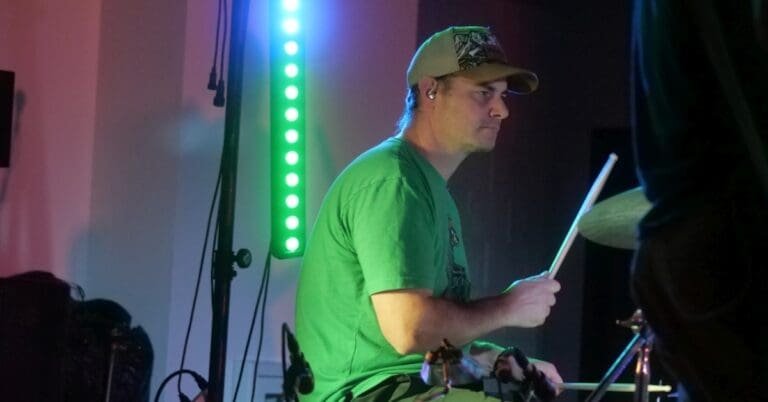
Oobleck brought the funk to Slidin’ Dirty in Troy.
Photography by Timothy Reidy.

RadioRadioX & The Xperience Monthly
© 2018 - 2026 Imperial Broadcasting. Most Rights Reserved.


