By BradQuan Copeland.
“As long as I can see you, you’ll always only be mine,” he echoes softly to them, his hand pressed lightly against the small of their back as their lead-laced lids peeled open one at a time.
Elegantly dressed, they stand as mere specks within the gilded hall, marble floors pulsing beneath the blood of their shoes as they waltz with symphonic grace through spiraling woodwinds and crystal light.
He looked at them, adorned in the stitching of stretched flesh, striving desperately to become one body. The crooks of their lips rose as one, a cold gleam flickering across the silken threads their life clung to. Within their velvet-draped cage, they’re as free as a bird, blood trailing from their mouth, sticky and sweet.
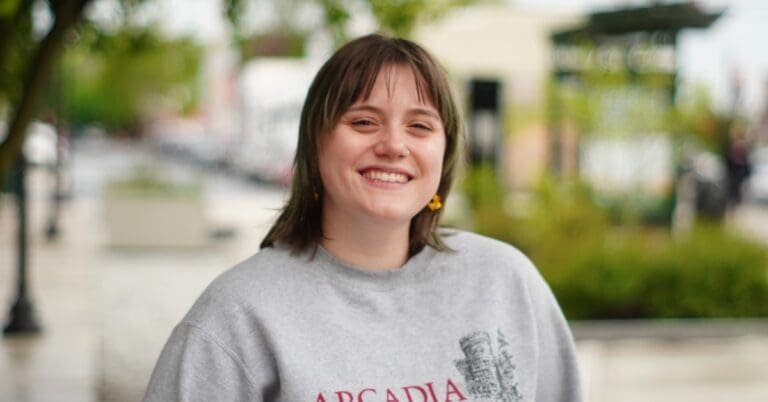
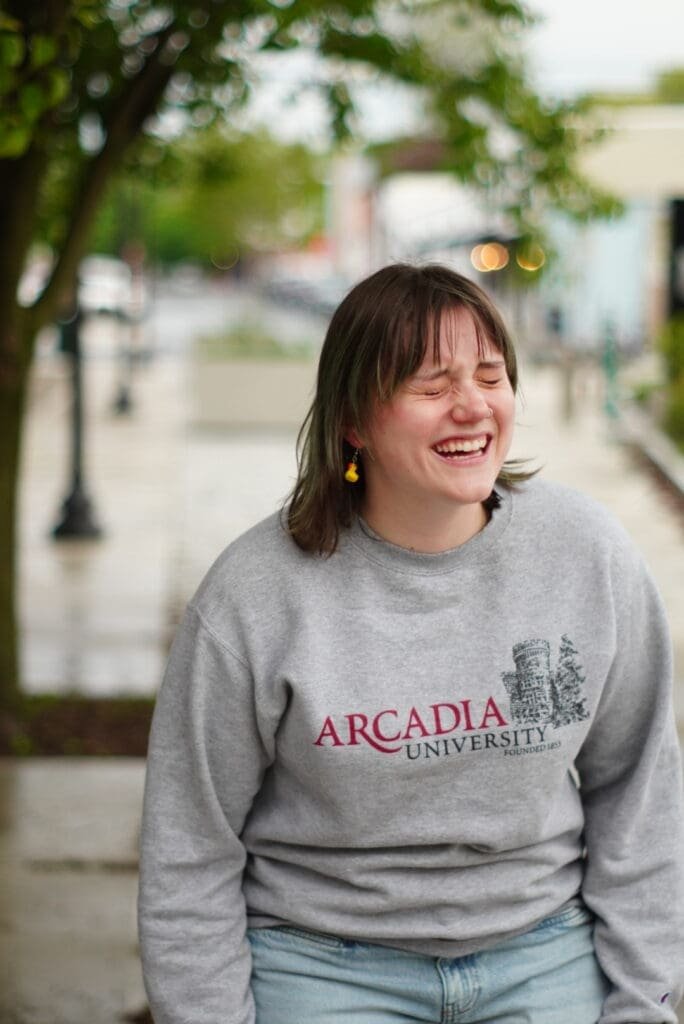
This micro scene was part of an untitled short film I wrote in the summer of 2025, later reworked as an adaptation of the psychological gothic poem “Puppeteer,” written by Troy, NY resident Jo Coates: a young scholar, international choral singer, former teenage near-professional hockey player, aspiring writer, folk musician, deeply introspective thinker, and current Biochemistry and Biophysics PhD student at the prestigious Rensselaer Polytechnic Institute.
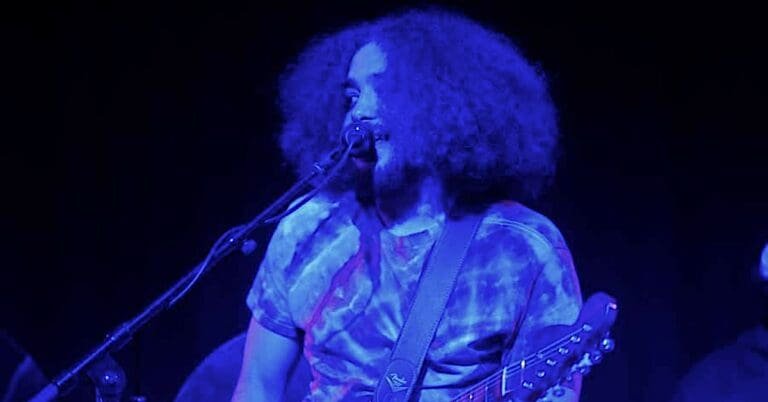
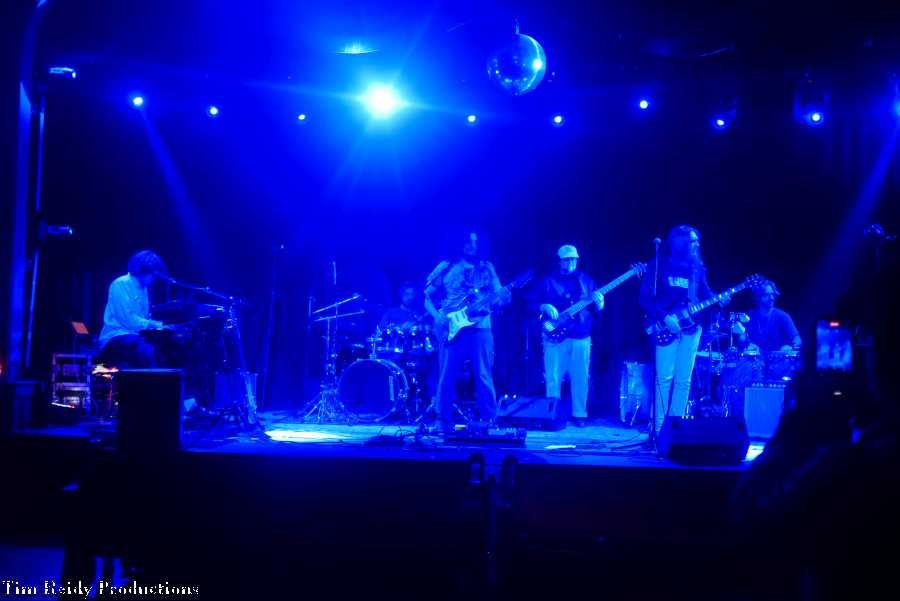
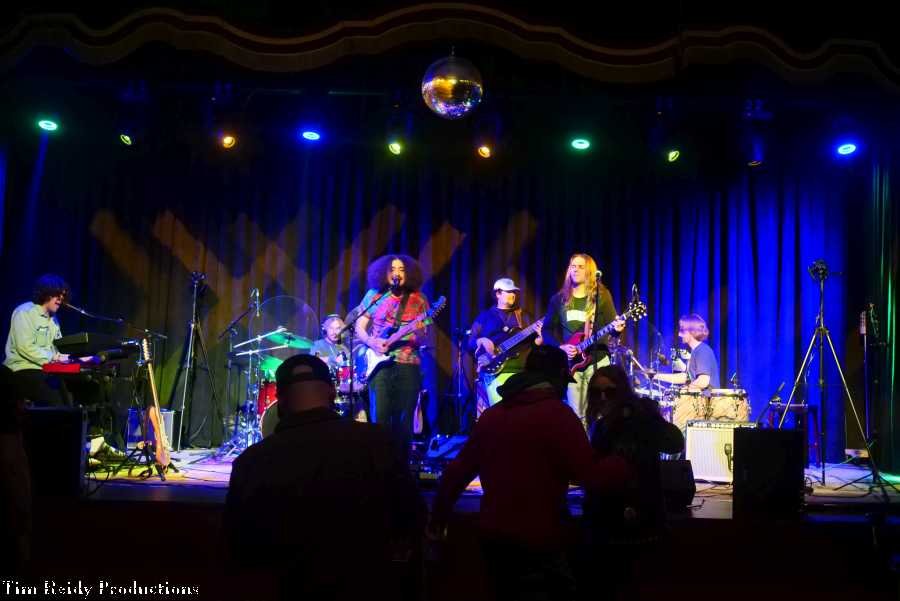
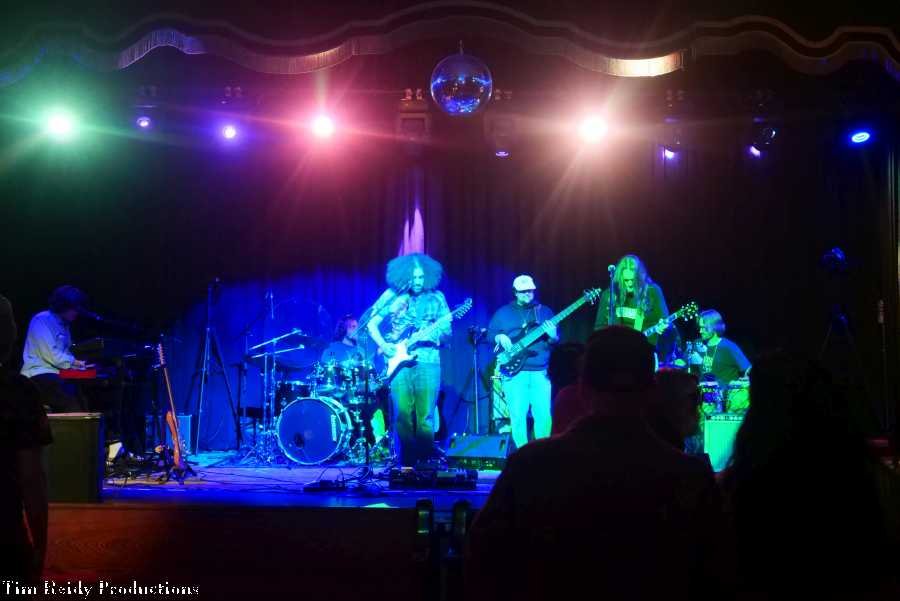
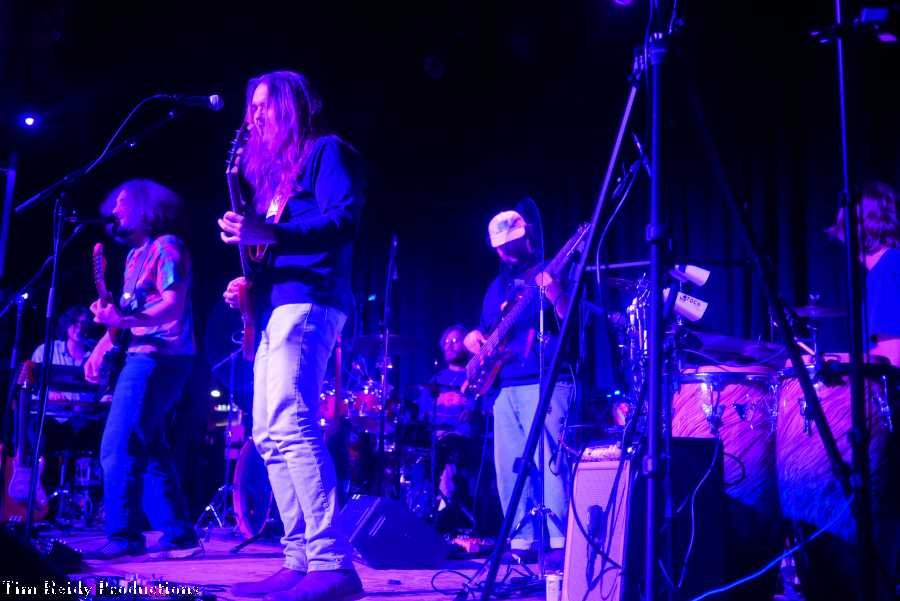
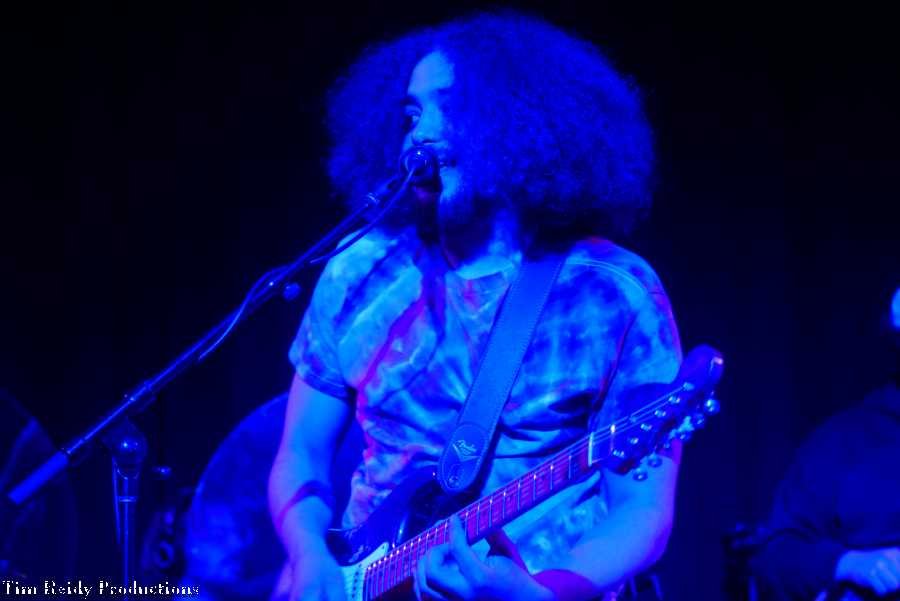
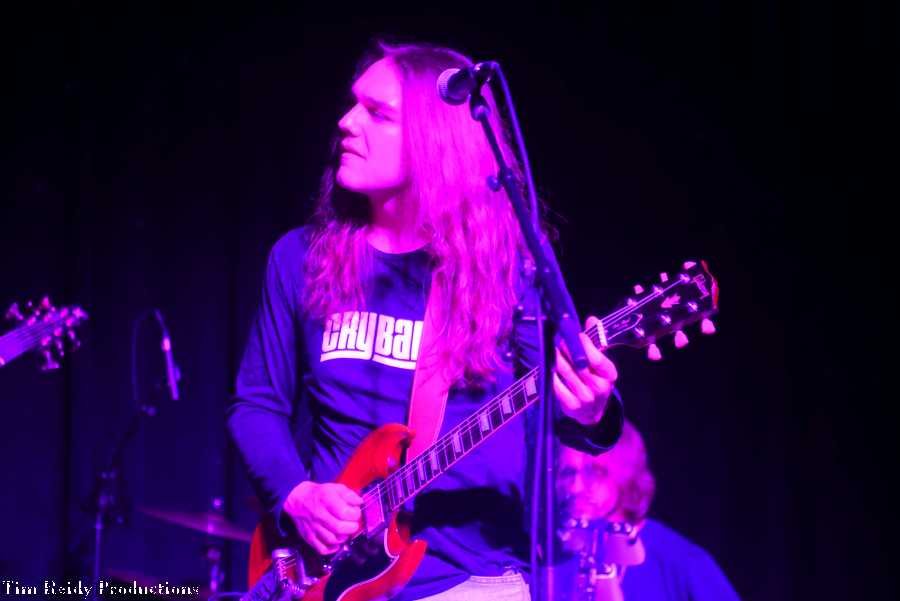
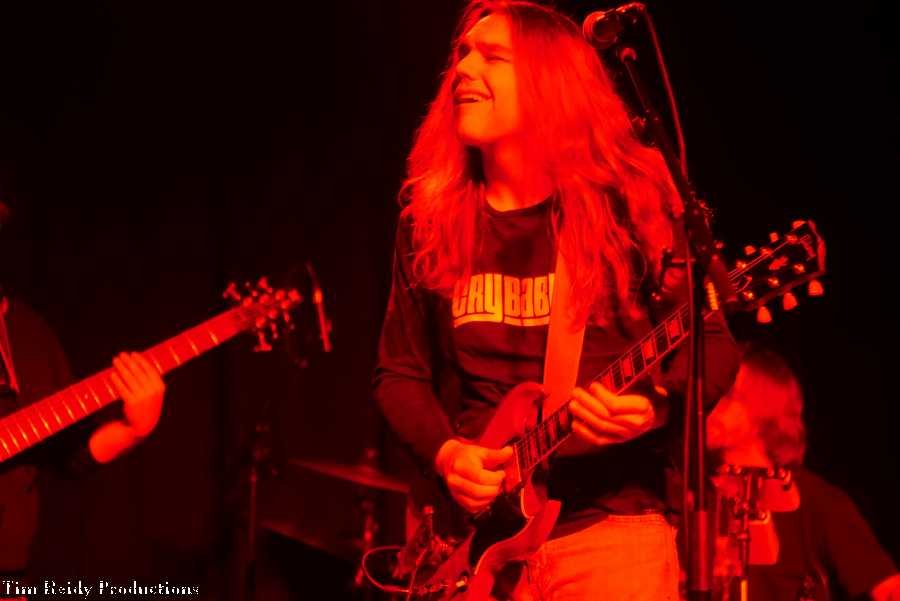
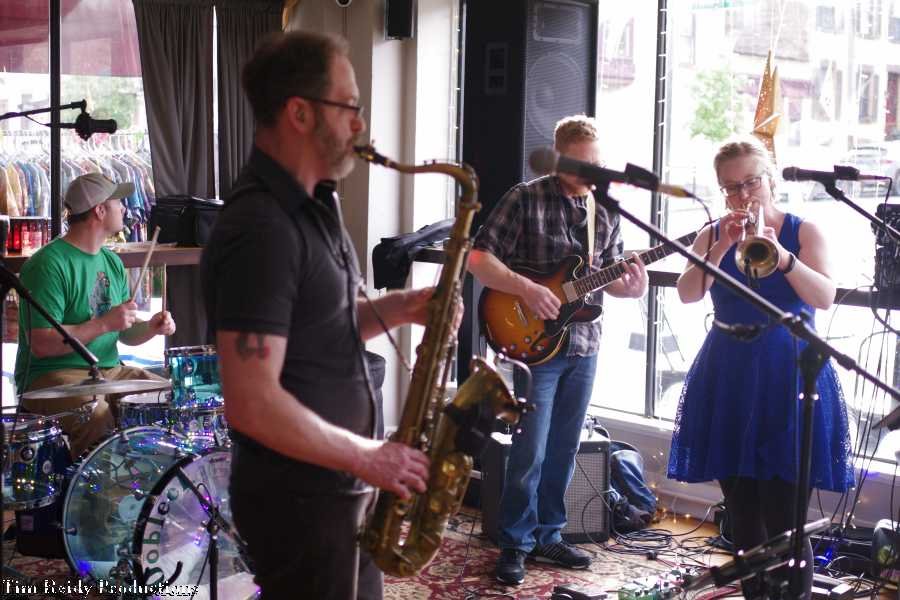
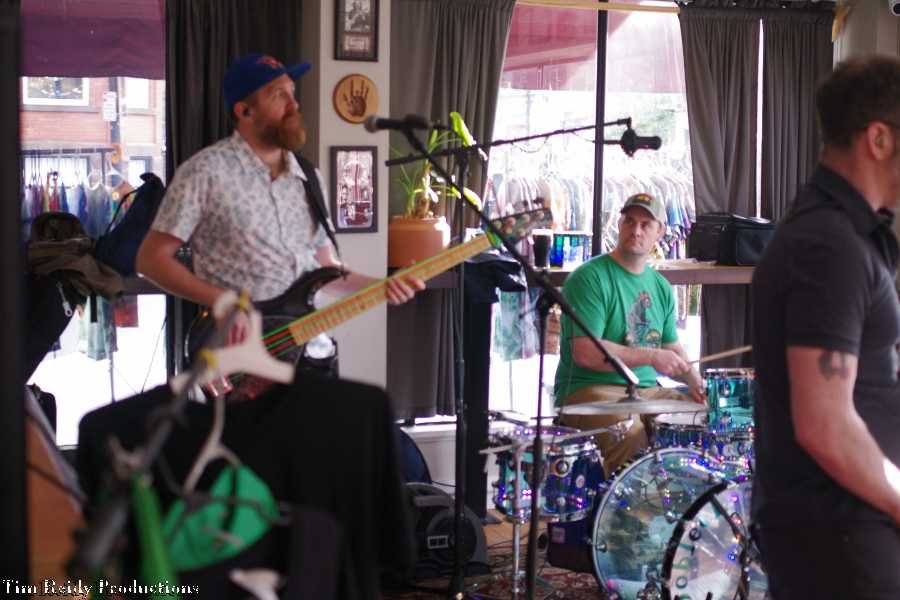
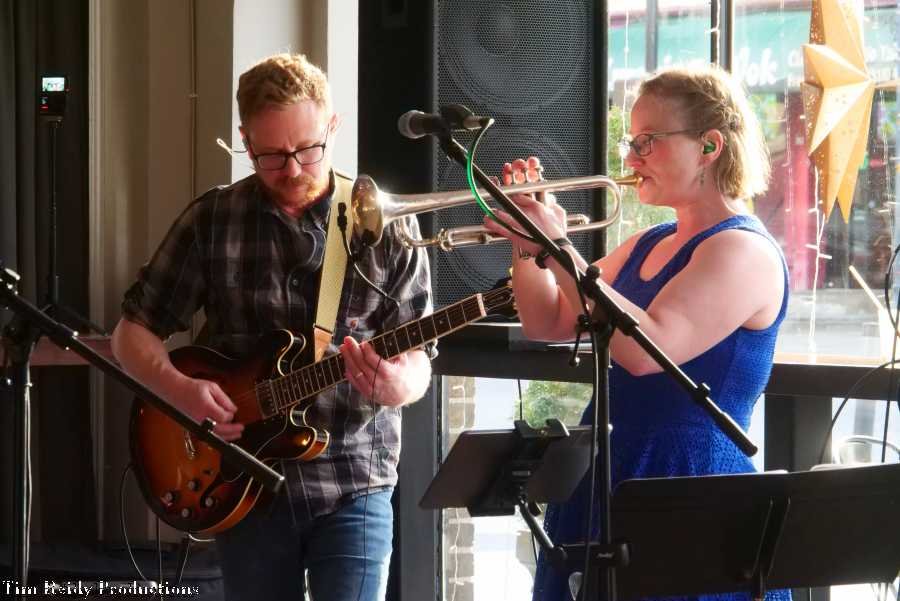
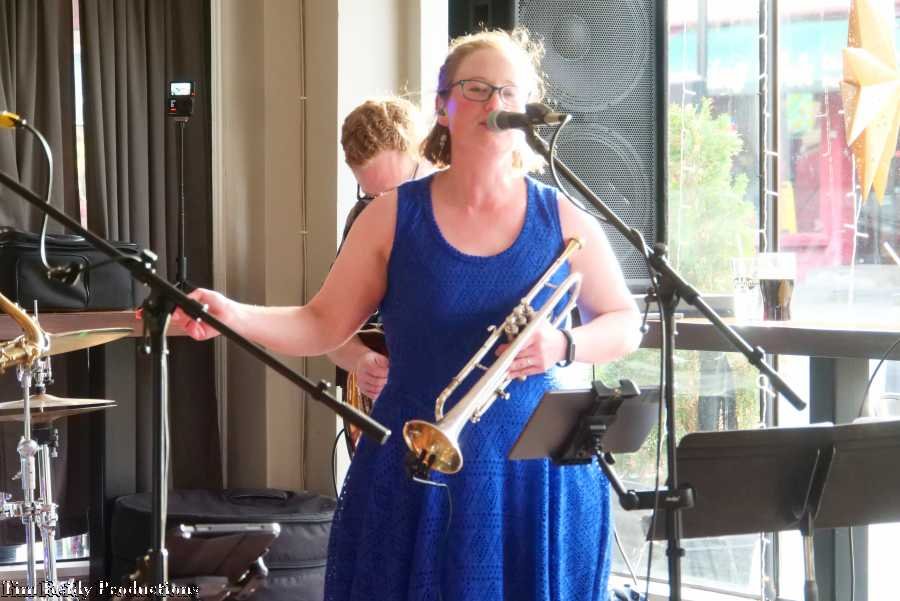
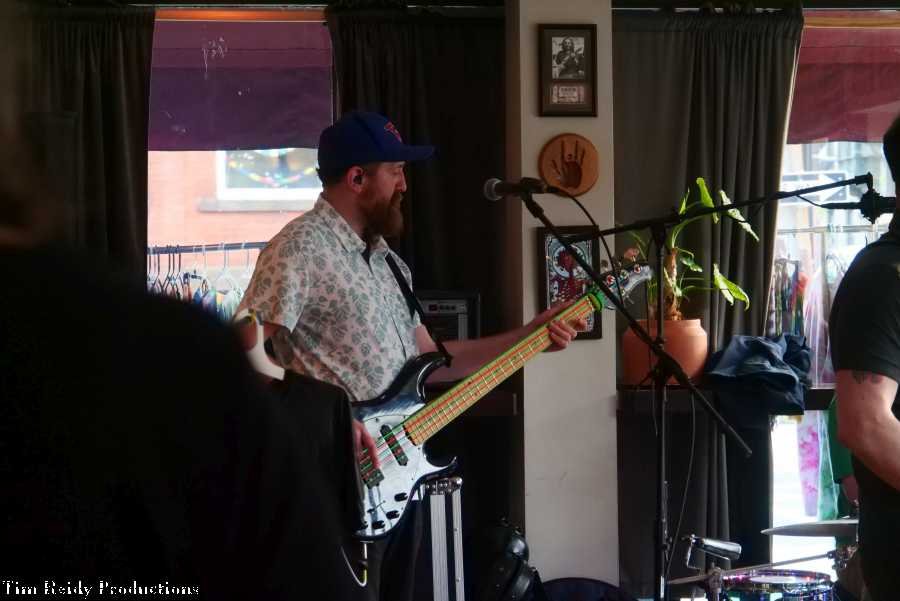
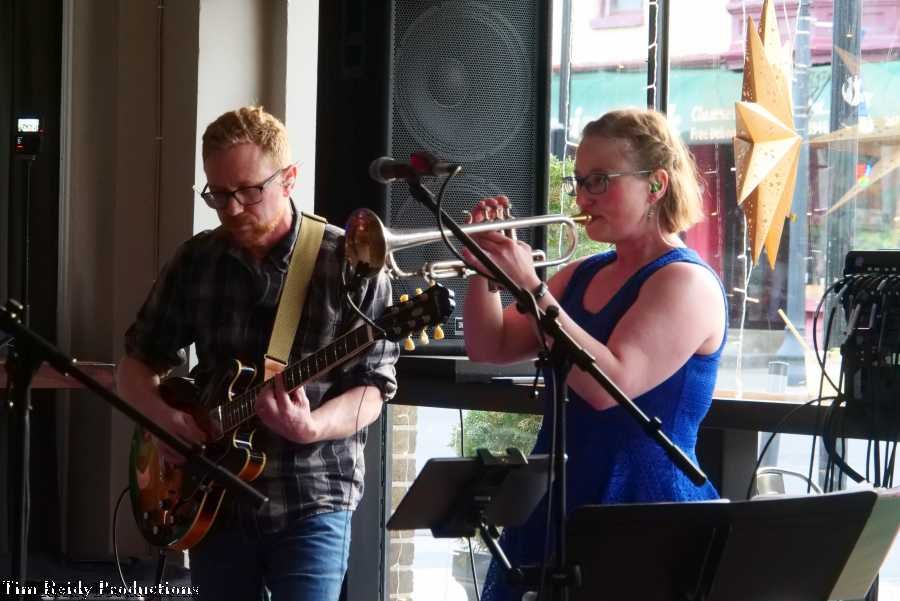
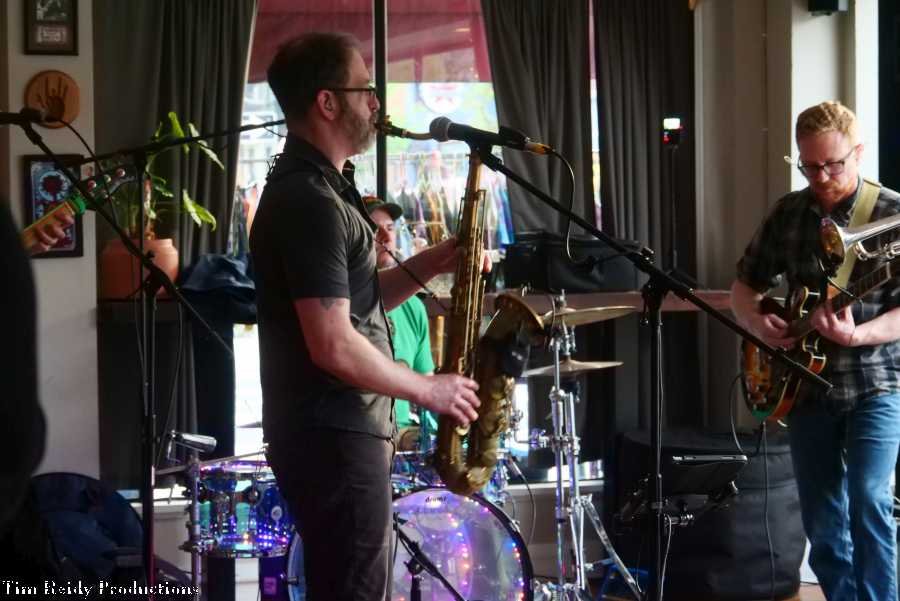
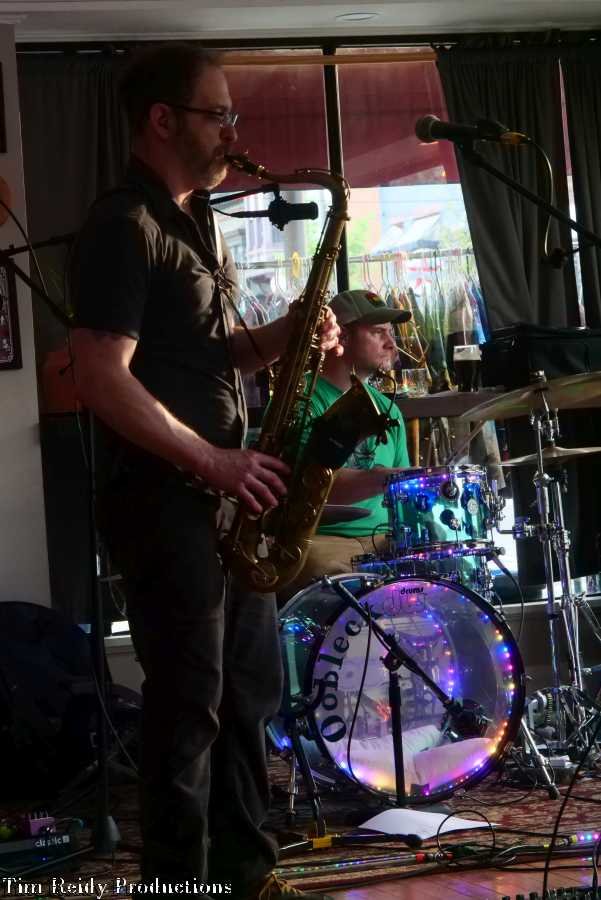
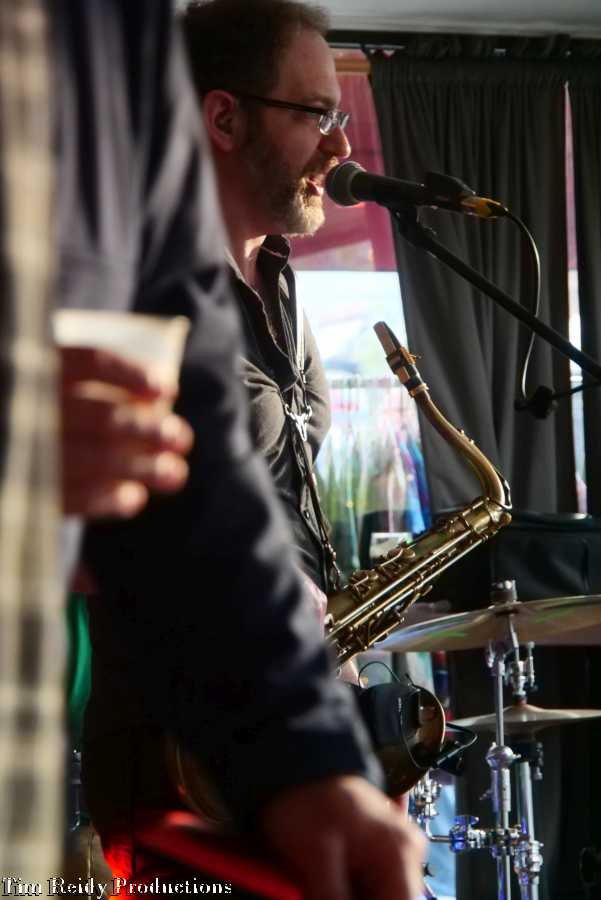
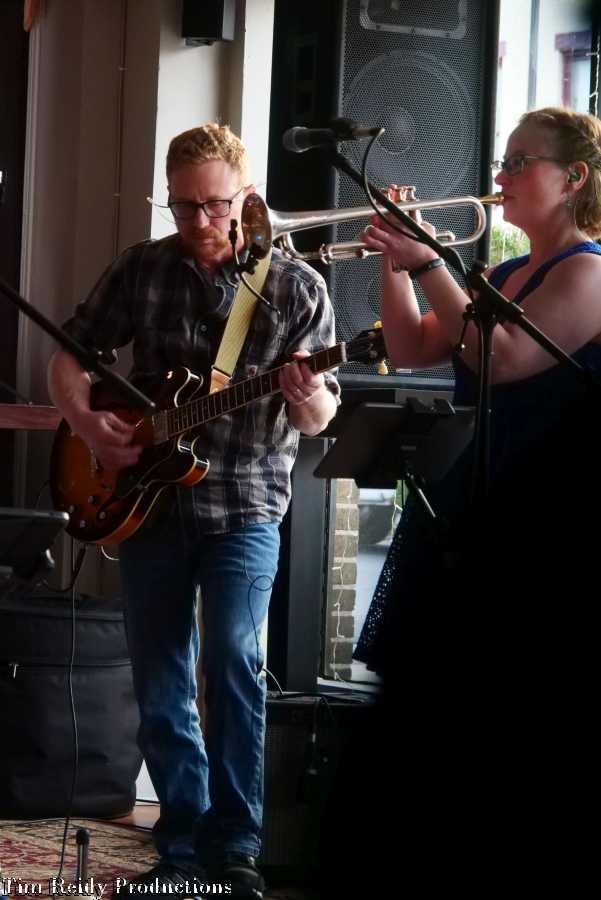
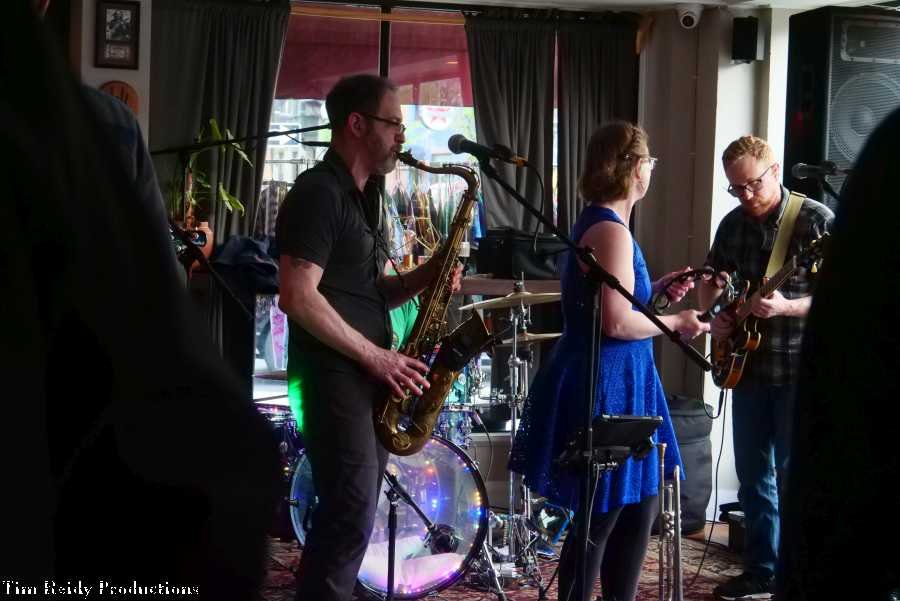
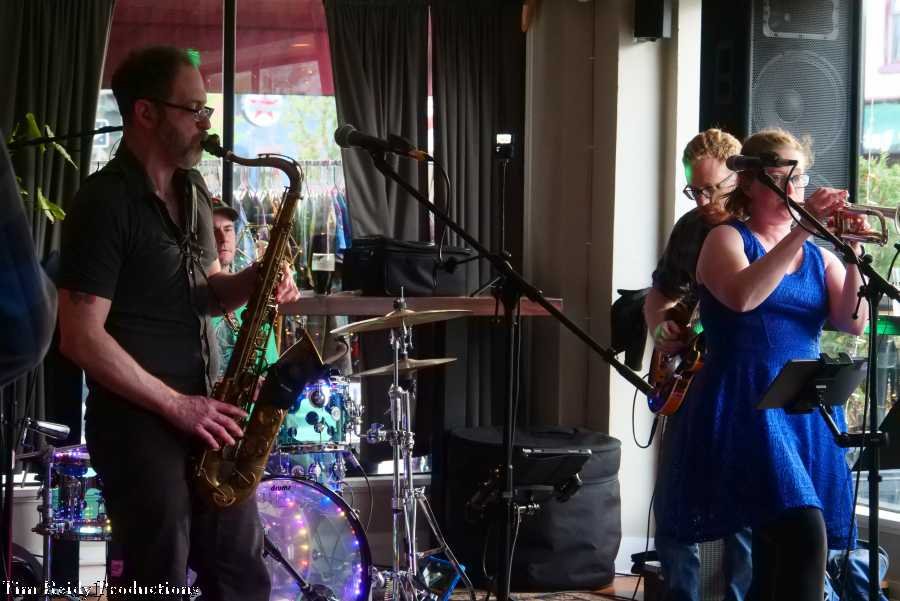
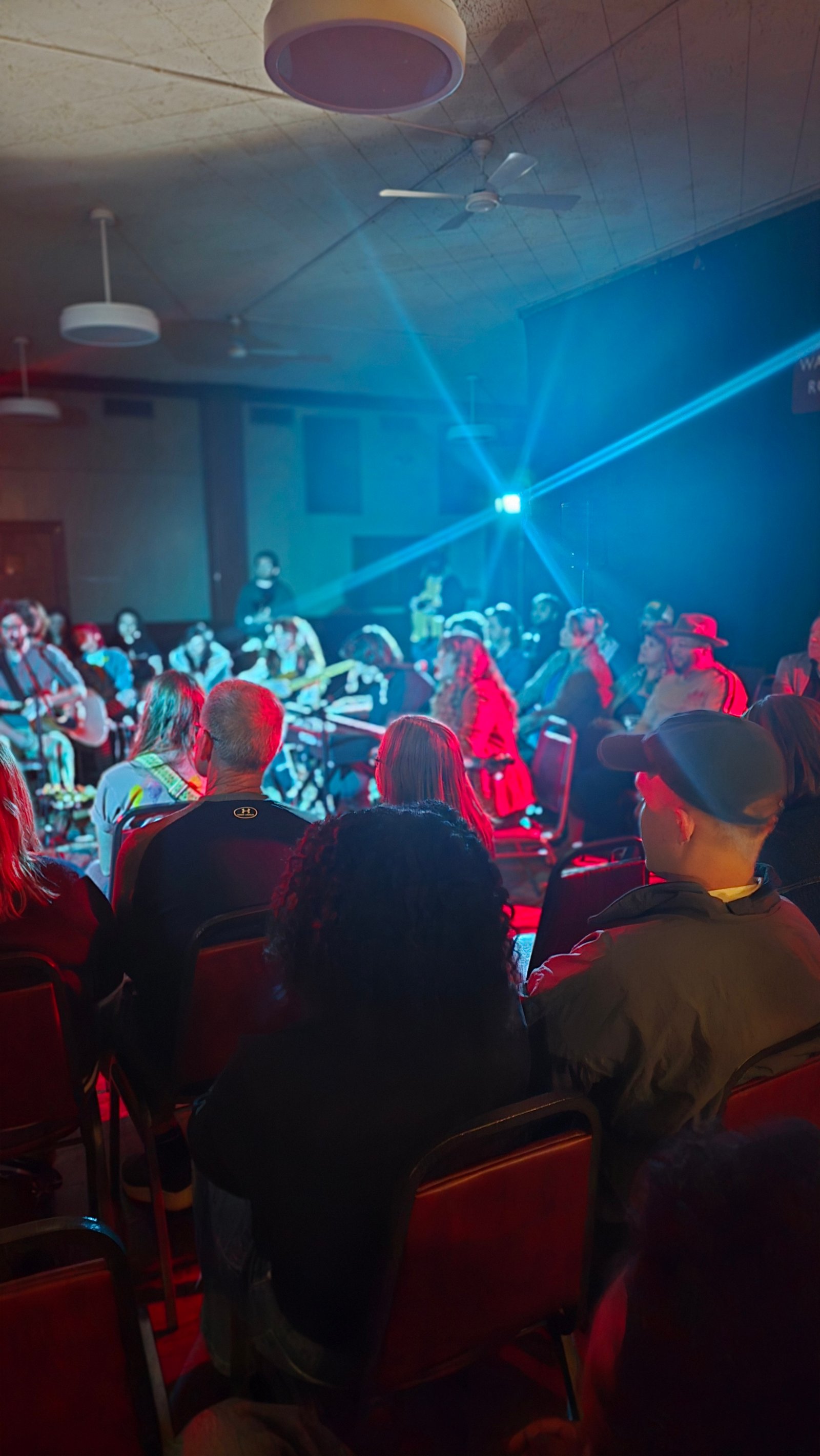
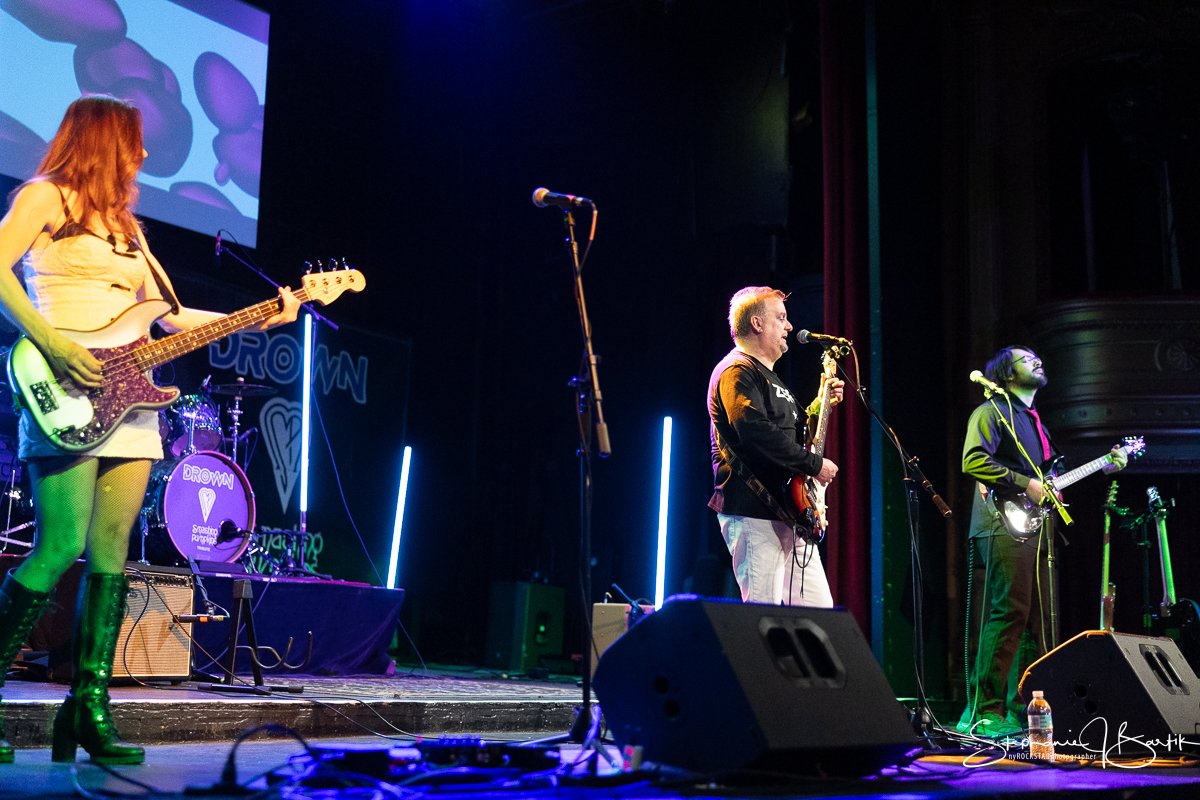
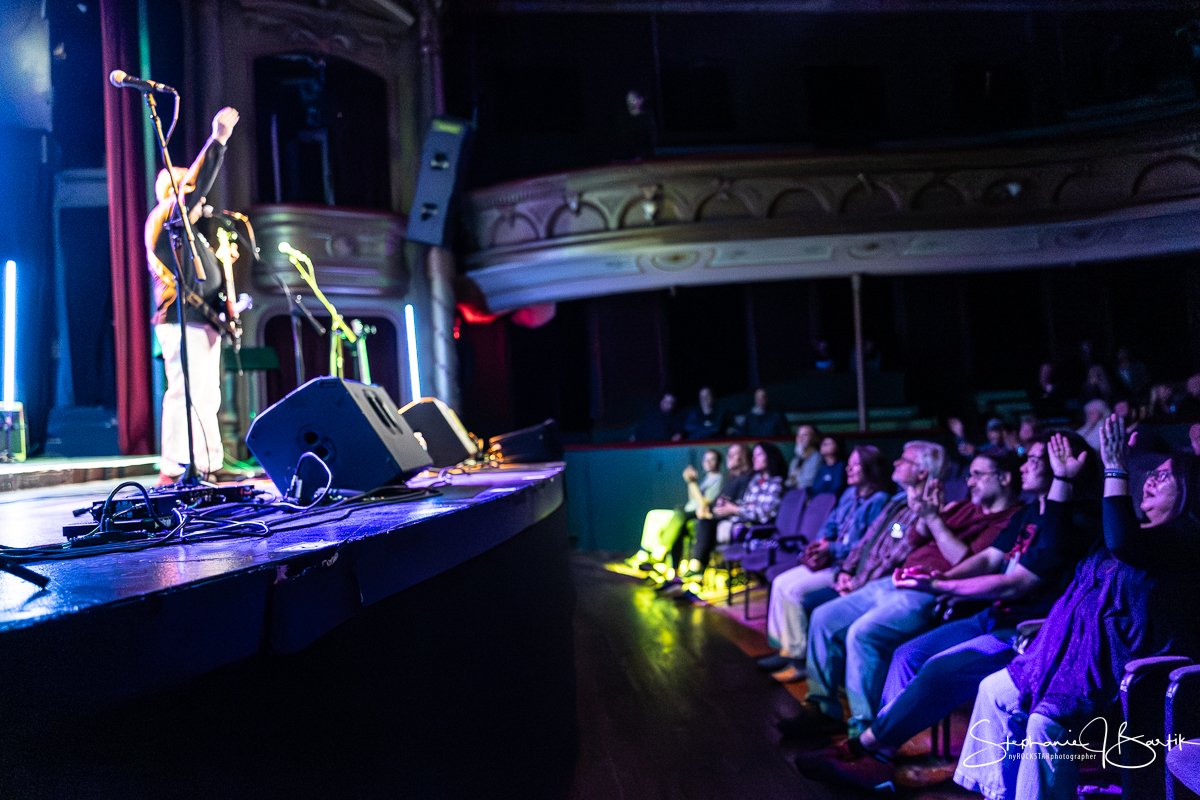
I first came into contact with them via Instagram sometime between January and February of 2026 through the recommendation of a fellow colleague, friend, and brilliant photographer Christopher Ebbs, who told them to reach out to me following their band “The Space Between’s” largest performance yet at his Longstock Festival back in September of 2025, where he became their de facto representative.
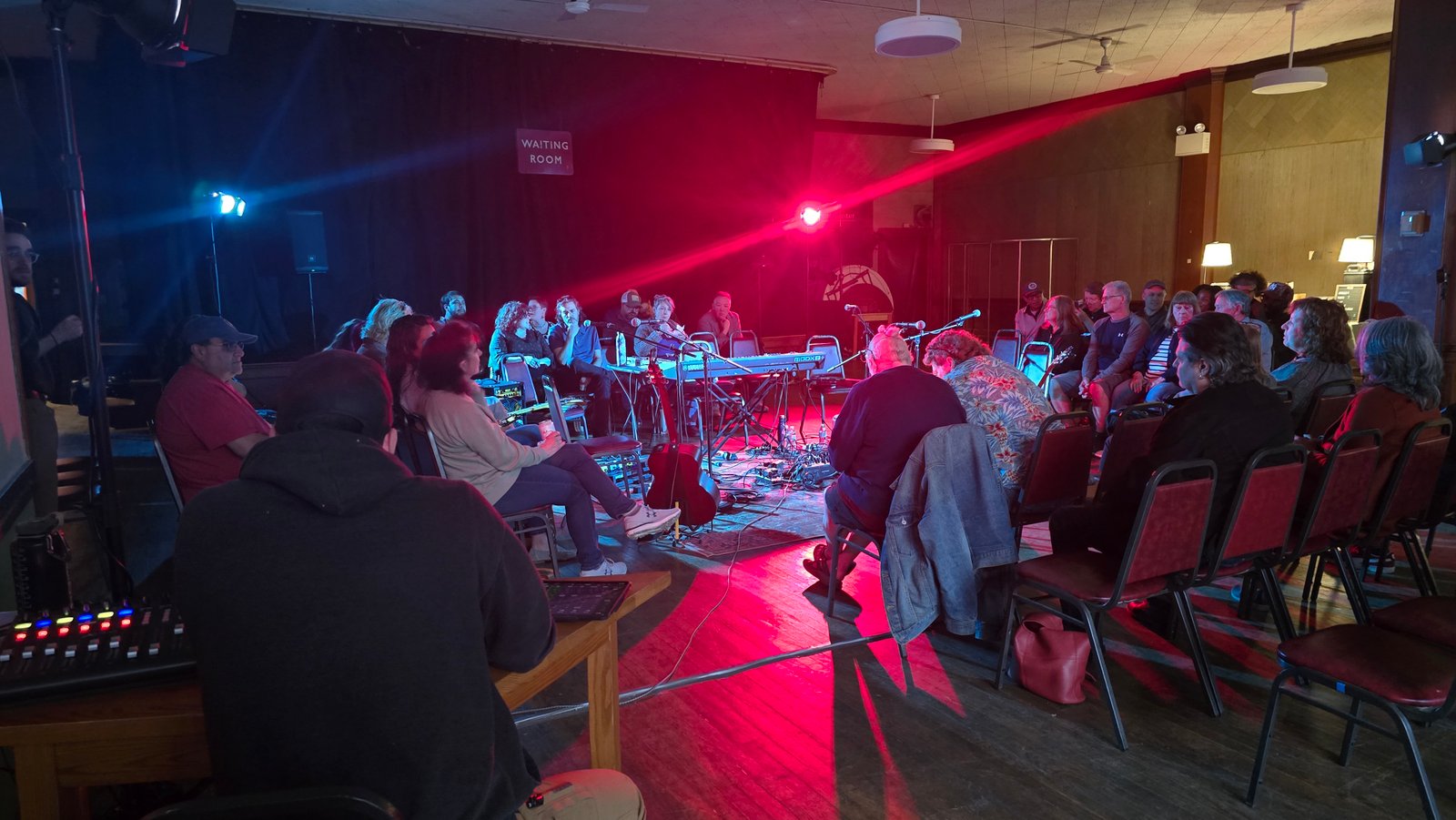
We finally met face to face on a 55-degree overcast Saturday afternoon on March 21st at the Moon and River Café in Schenectady, NY, a local haven where art drapes the walls, voices take the stage, consciousness blossoms, and identities are curated within the amber-lit openness of free thought.
“Would you like any food?” I asked as they looked at the menu. “No thanks, I’m fine with just water,” they replied as we descended into a dialogue circling one central tension: how someone can be extraordinarily capable, immensely perceptive, and deeply wounded all at once.
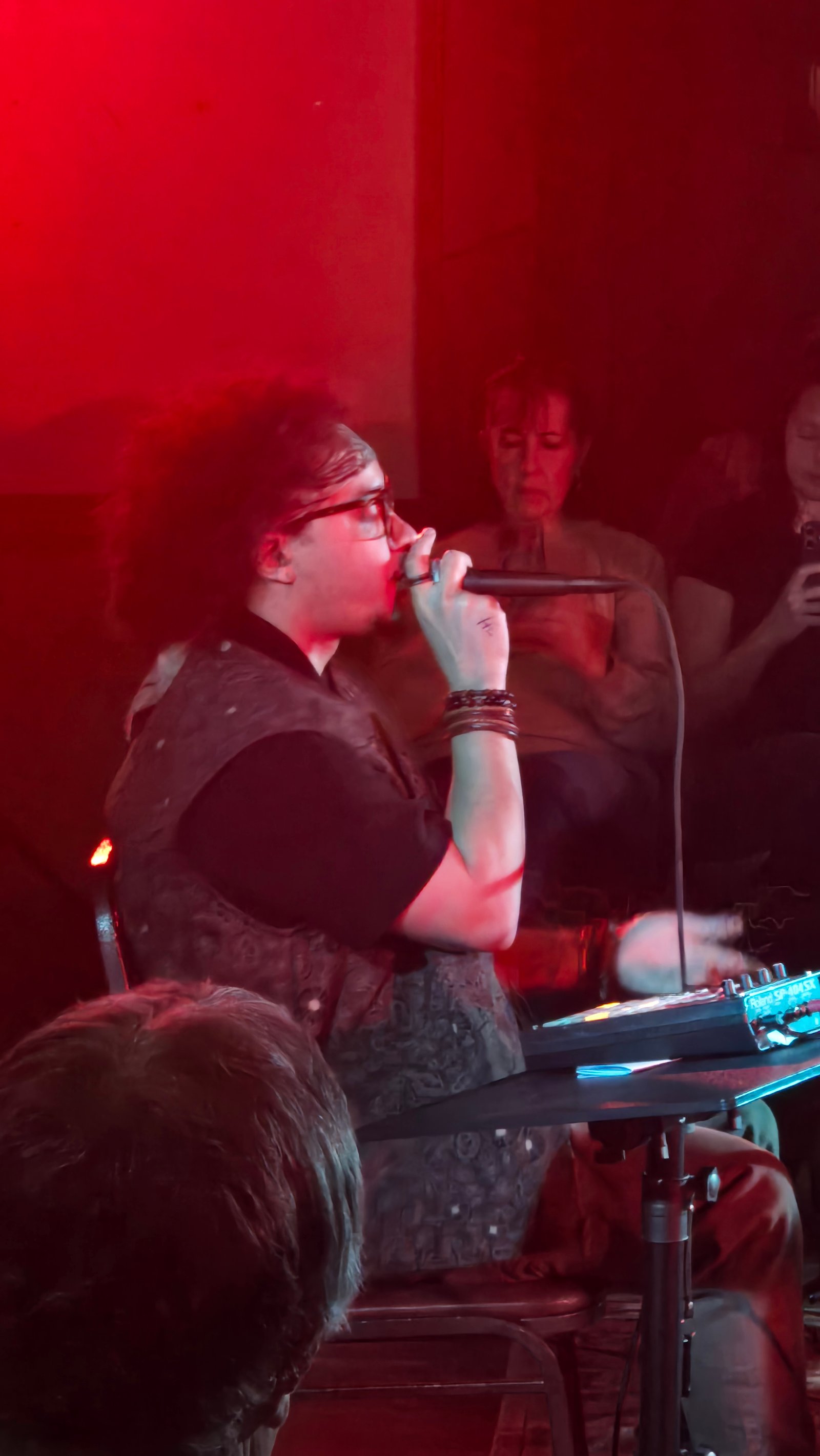
As our conversation unfolded, it became increasingly clear that Jo doesn’t merely experience art intellectually, but sensorially. “I have synesthesia, which is really funny because I’m also a scientist. I can taste words when I’m speaking. I can feel when I listen to music. Music is math and math is everything, and so I can blend that whole, like, oh yeah, I can feel and sense everything, and also mixing my science brain into the way that I think about music.”
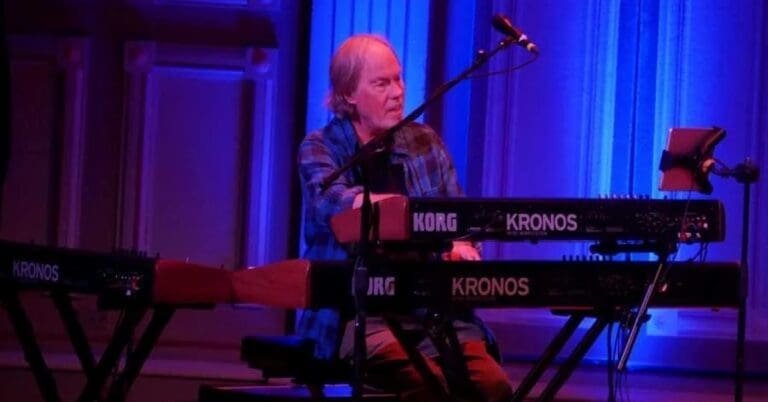
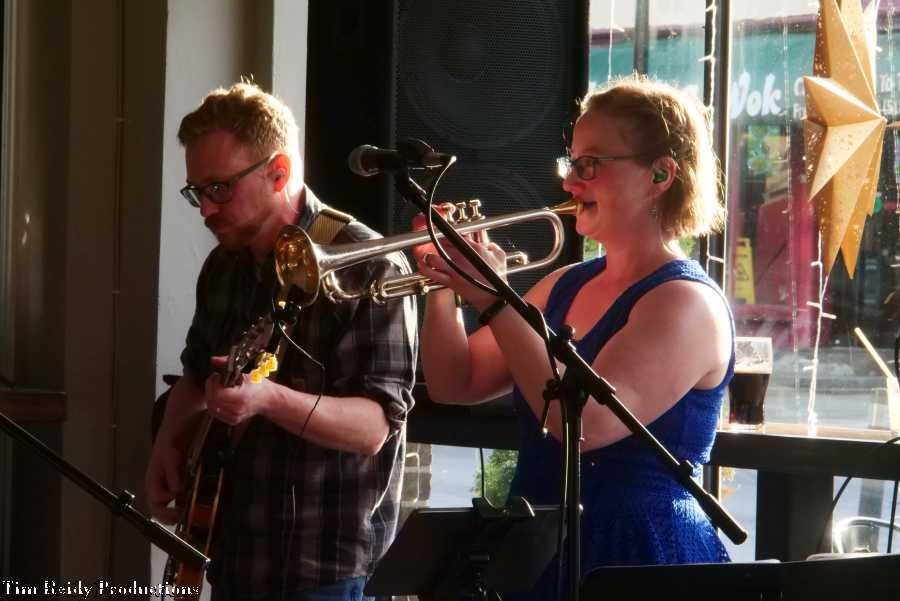
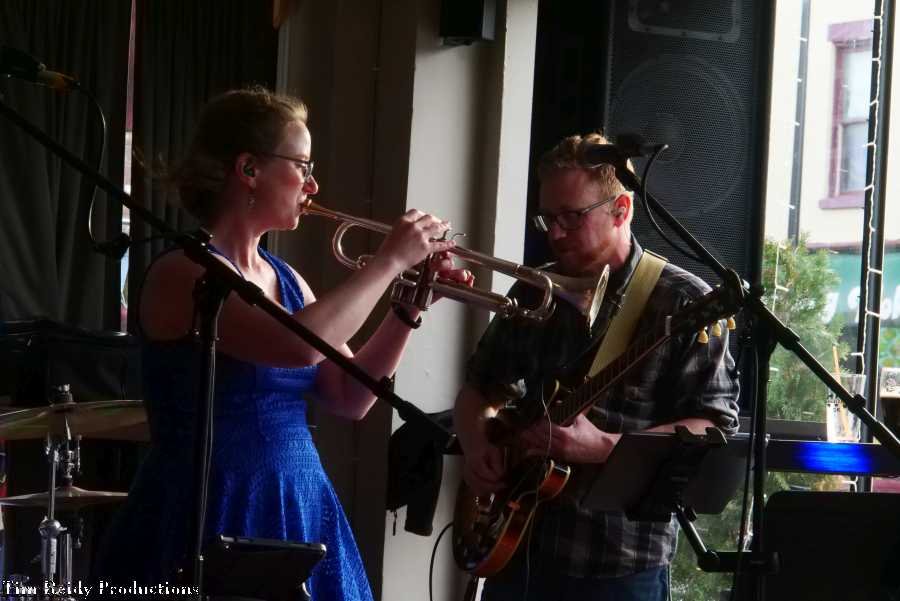
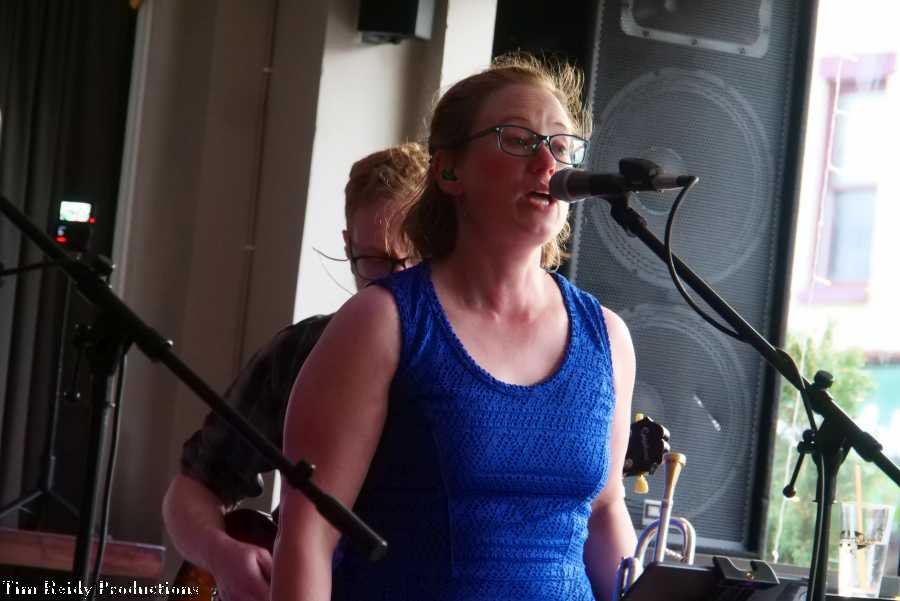
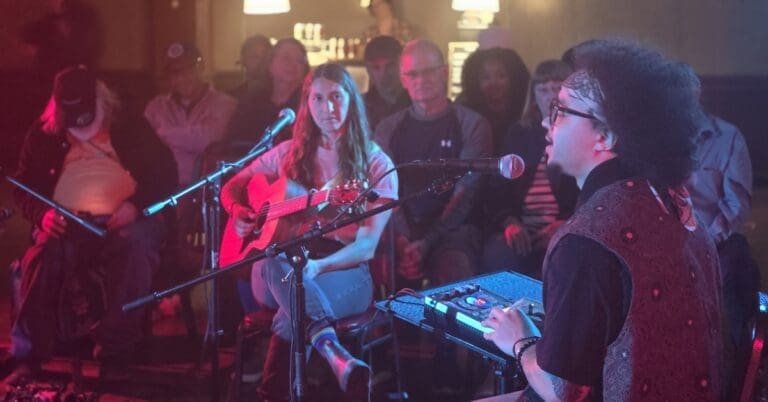
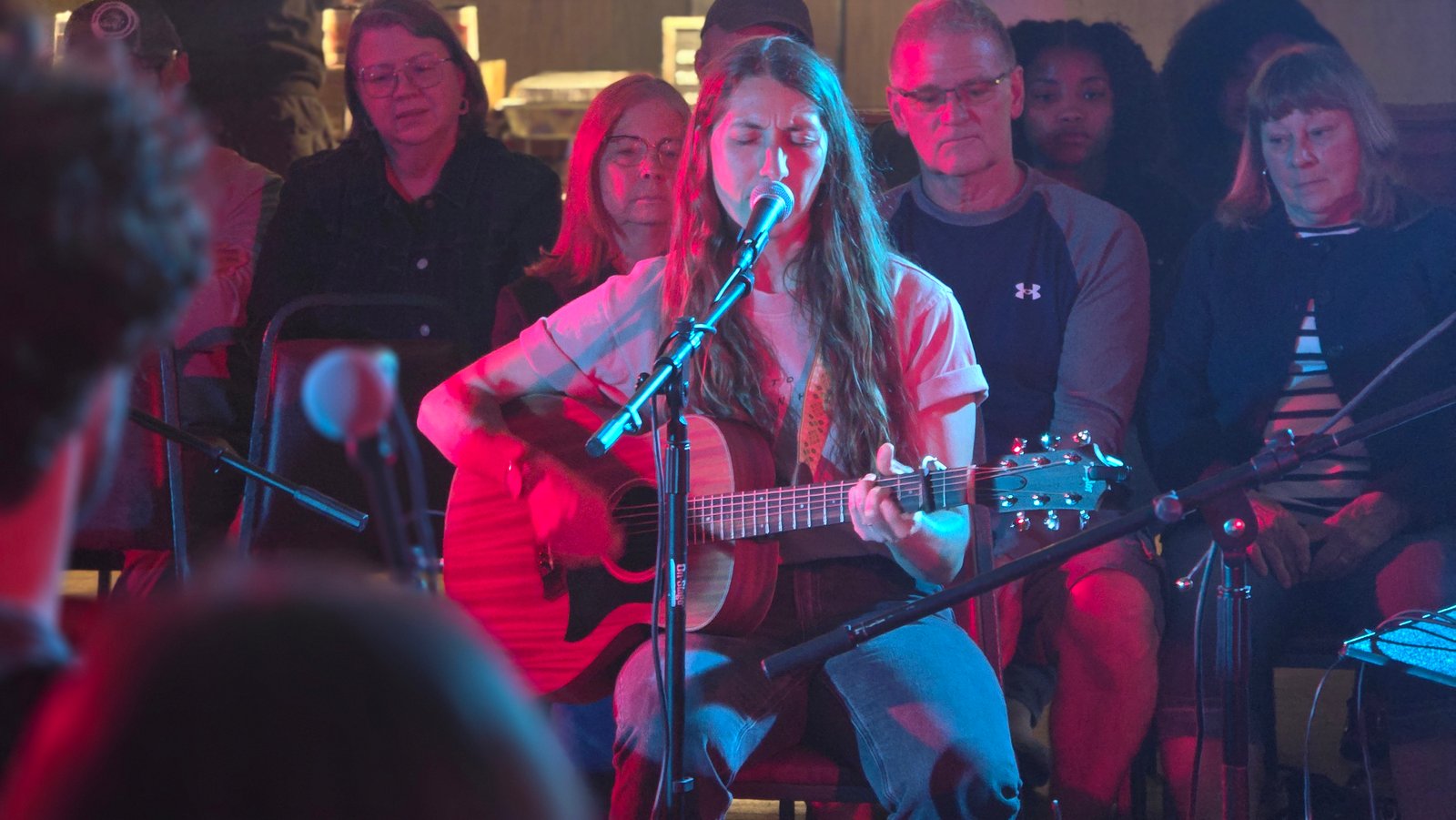
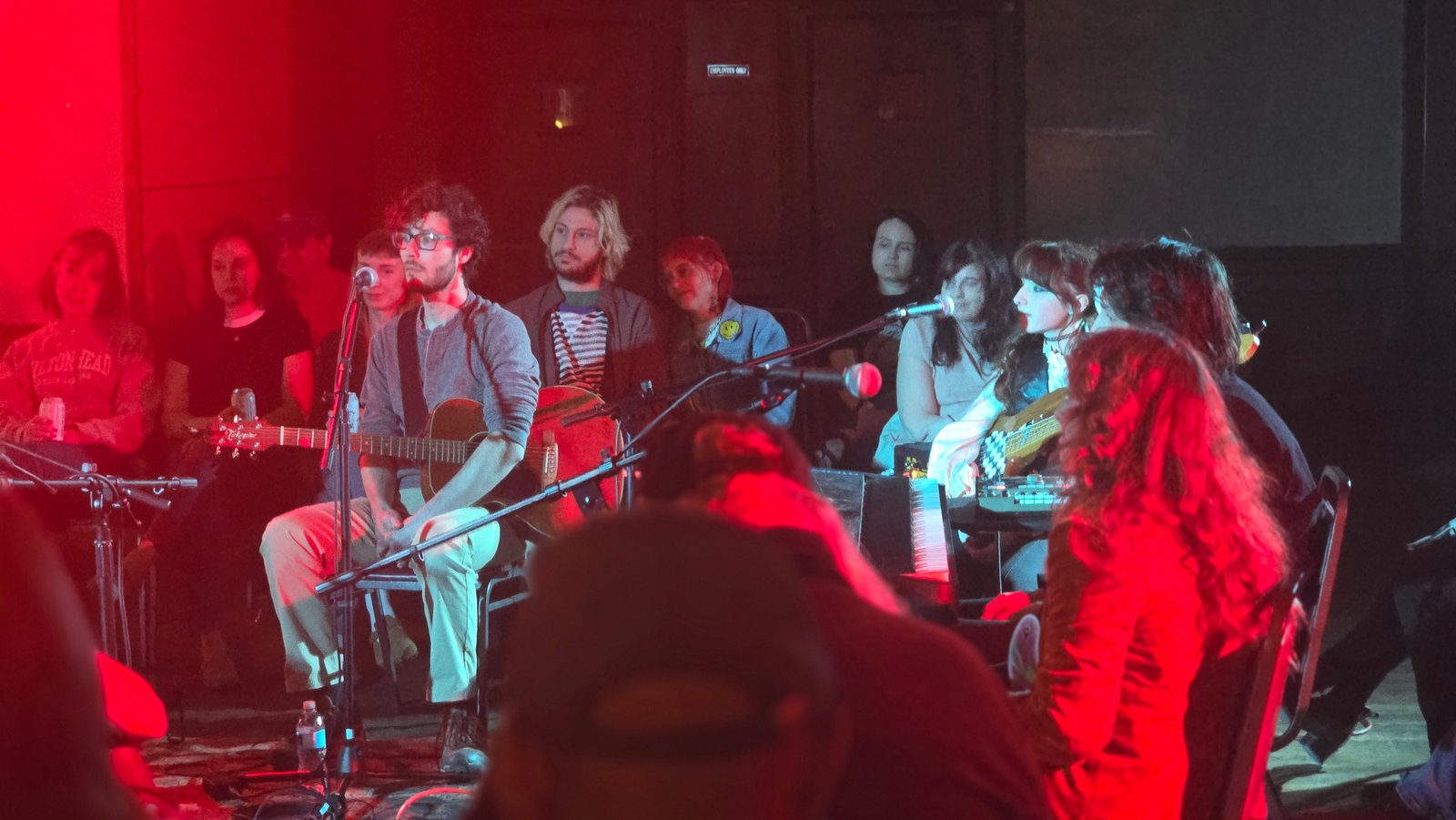
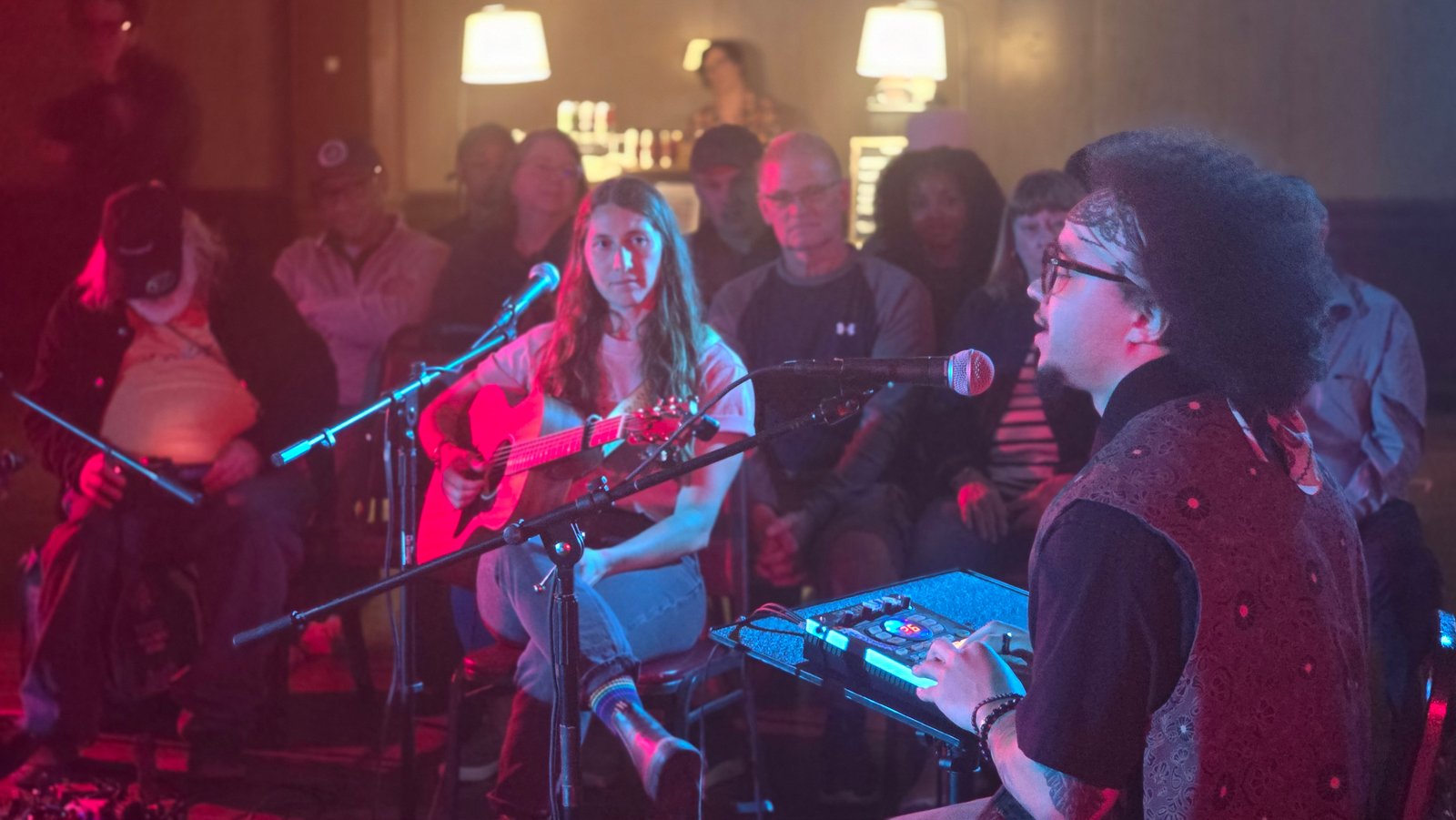
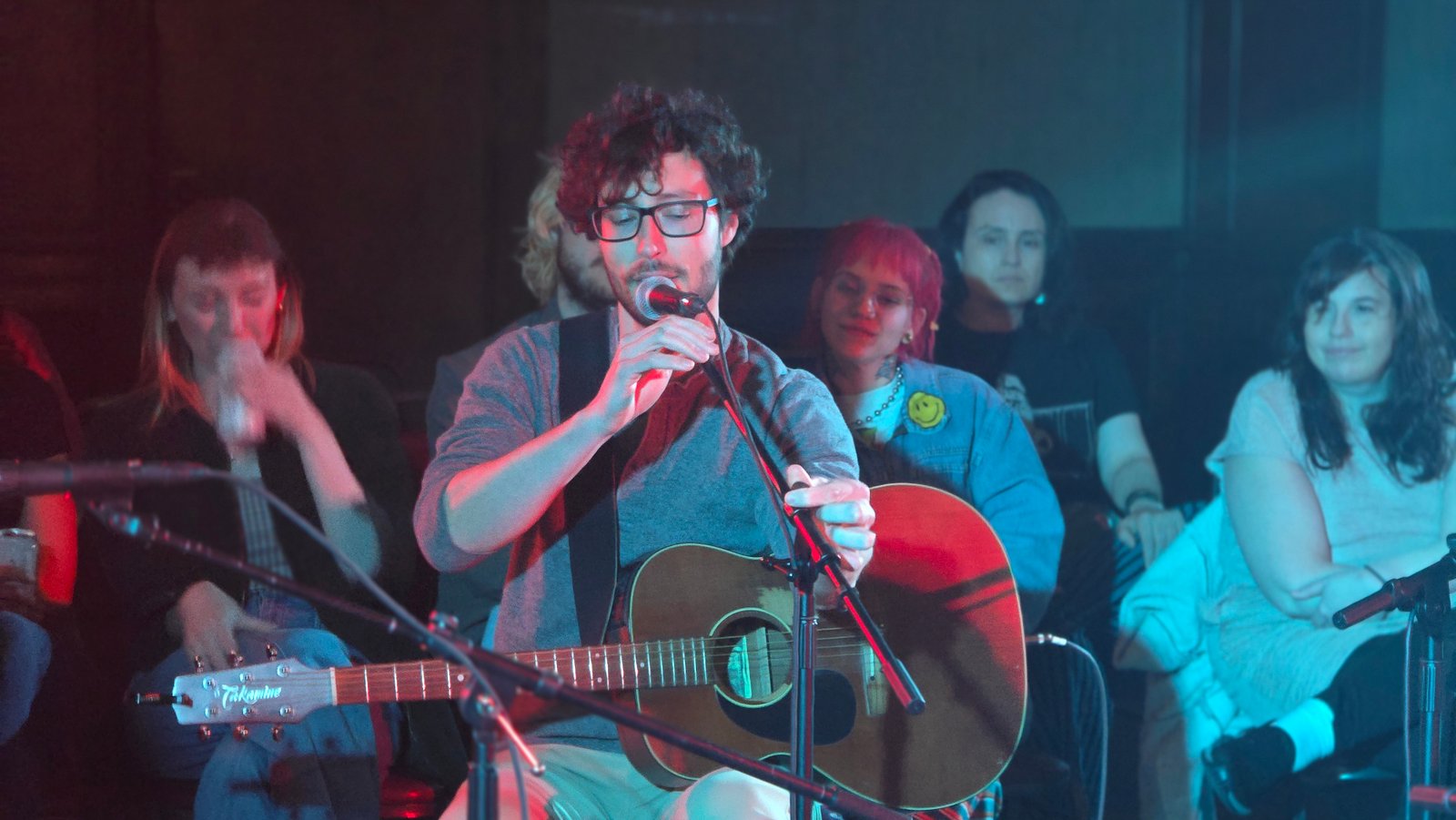
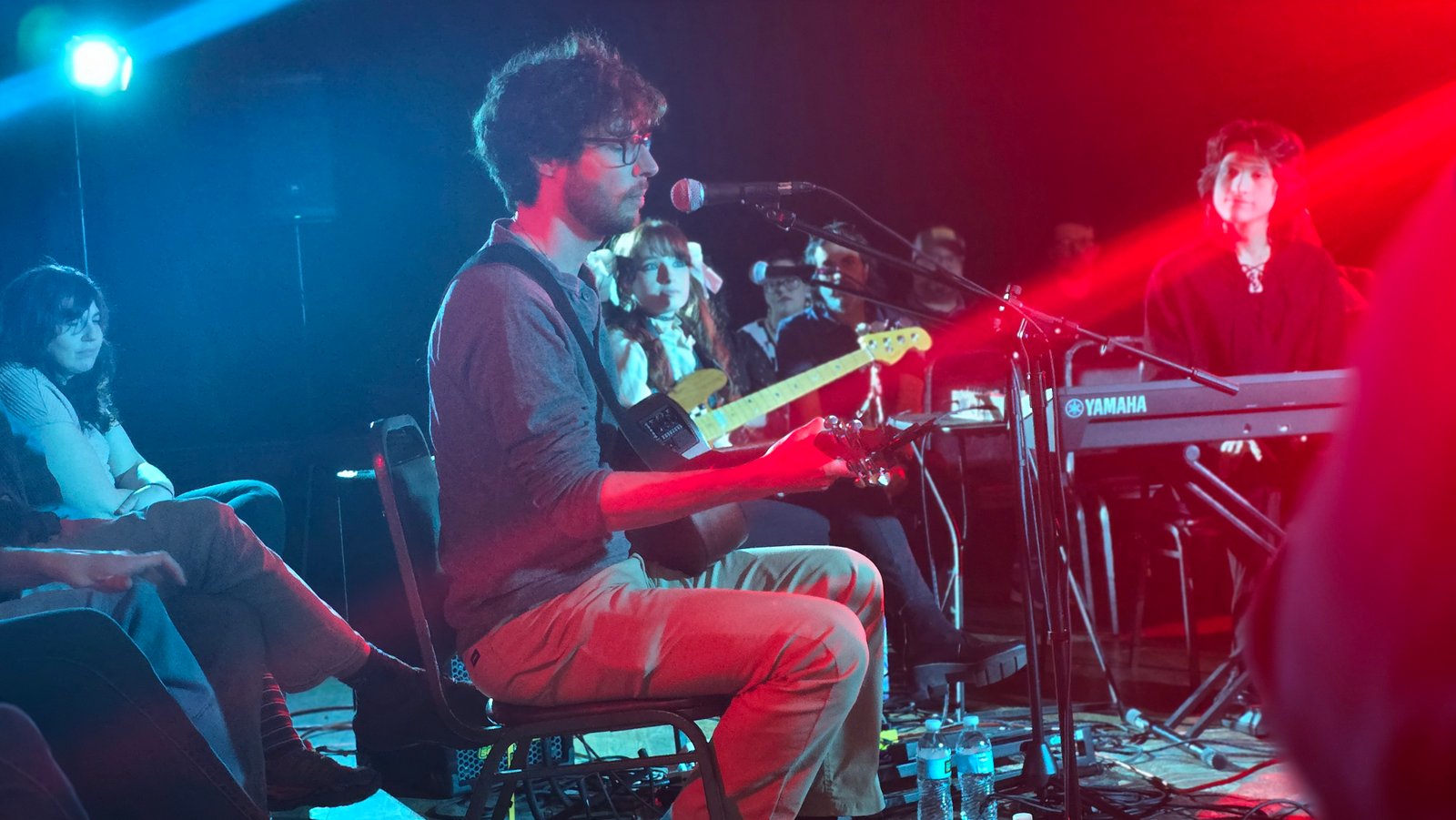
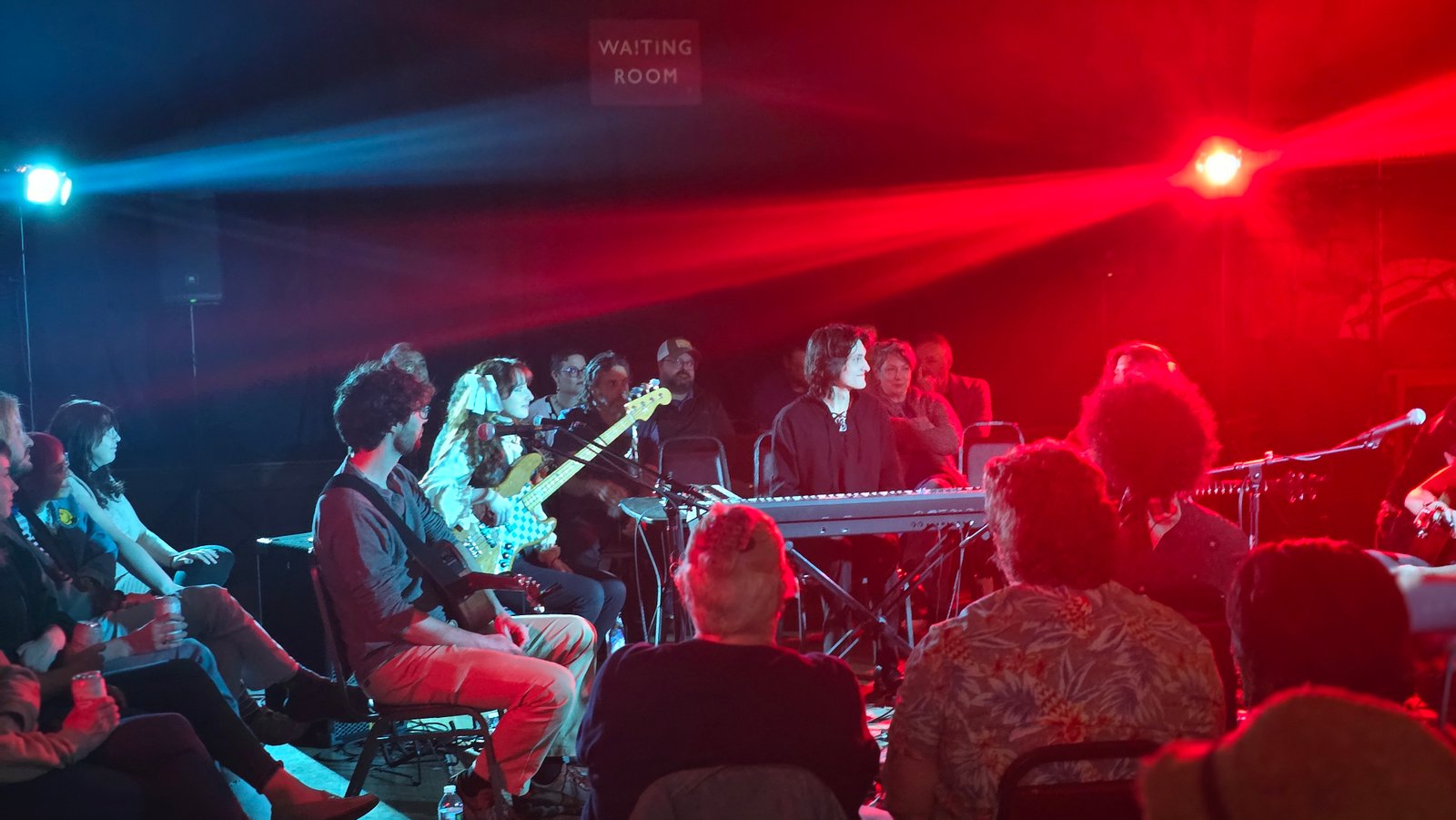
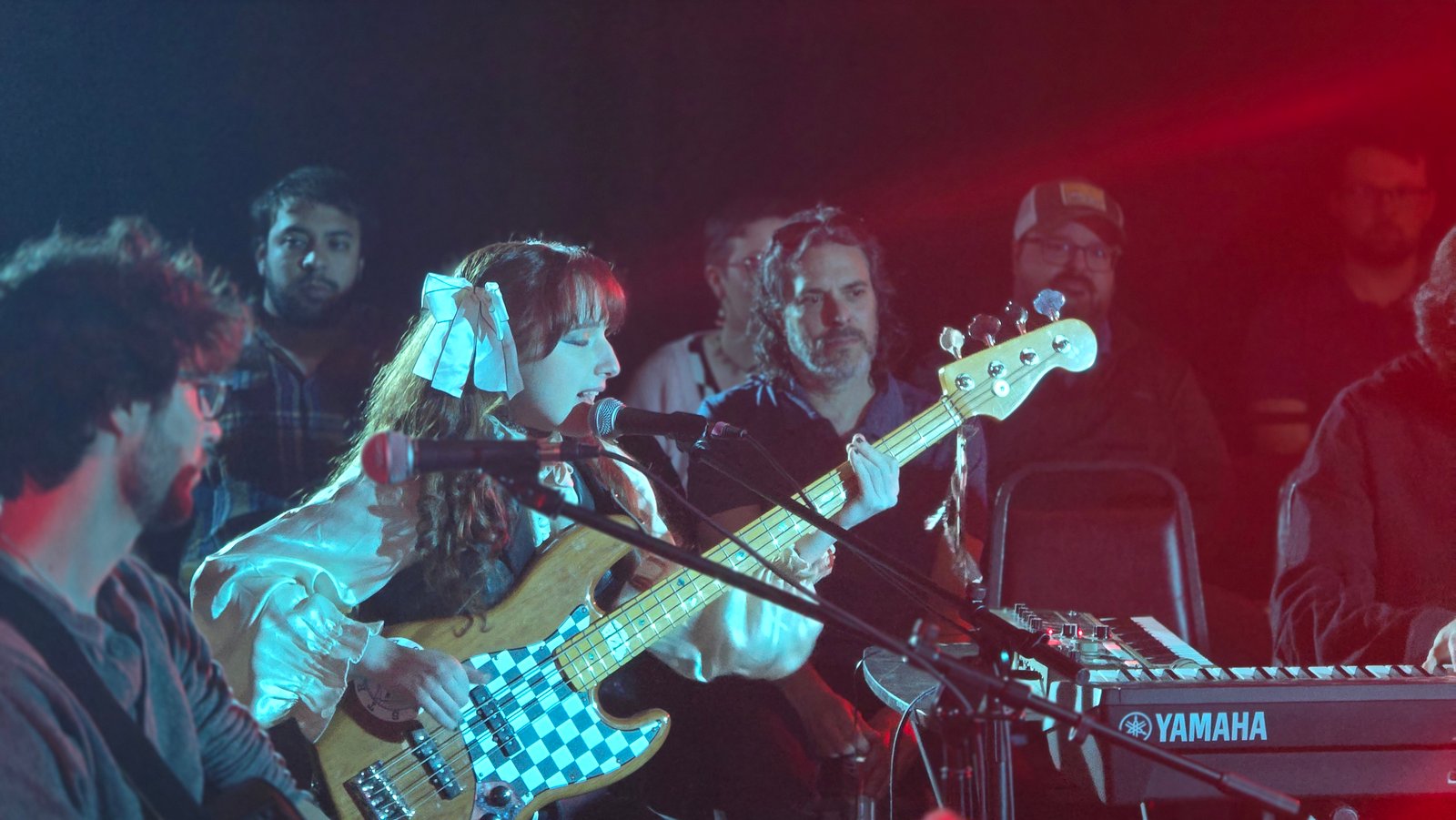
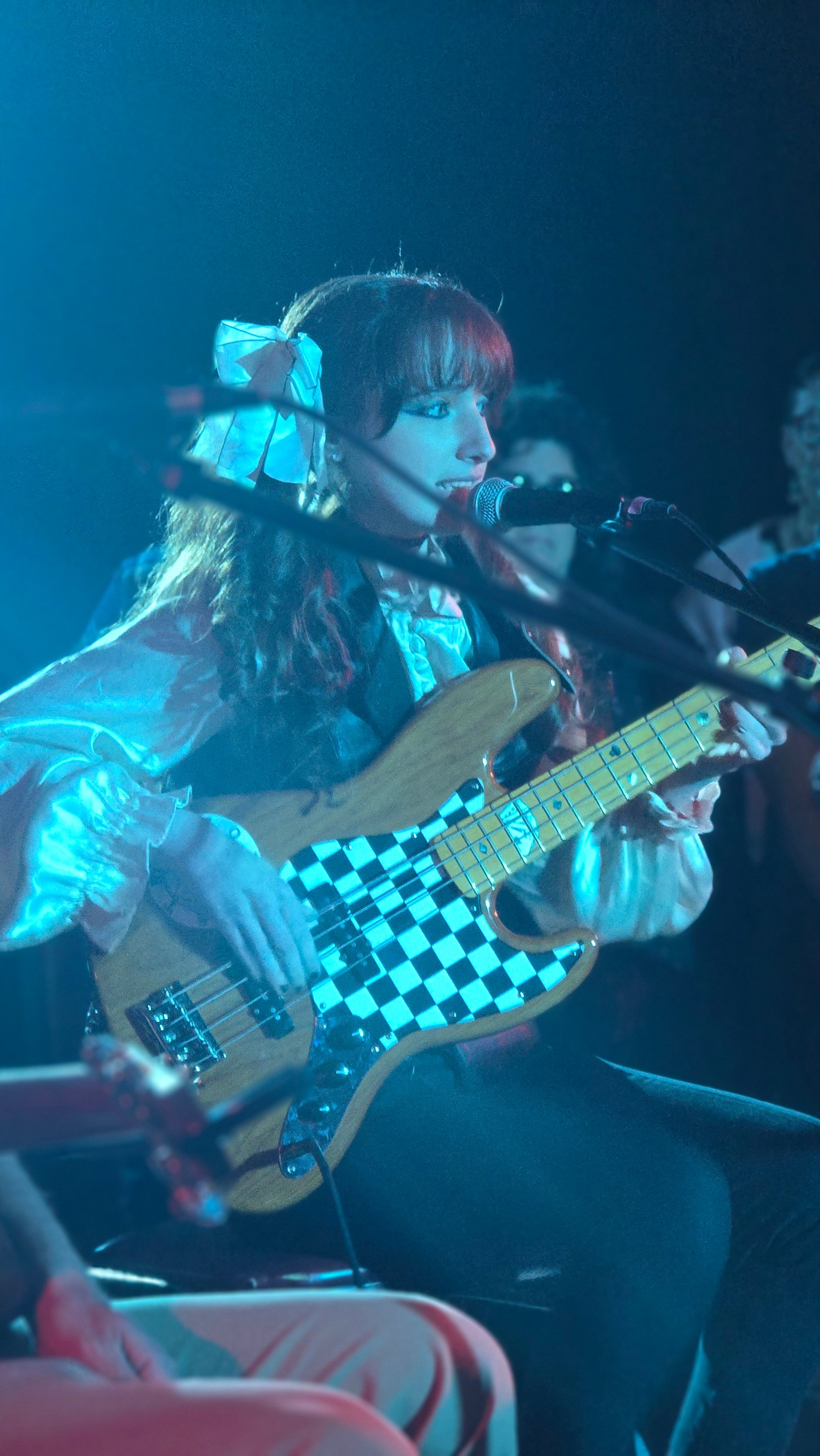
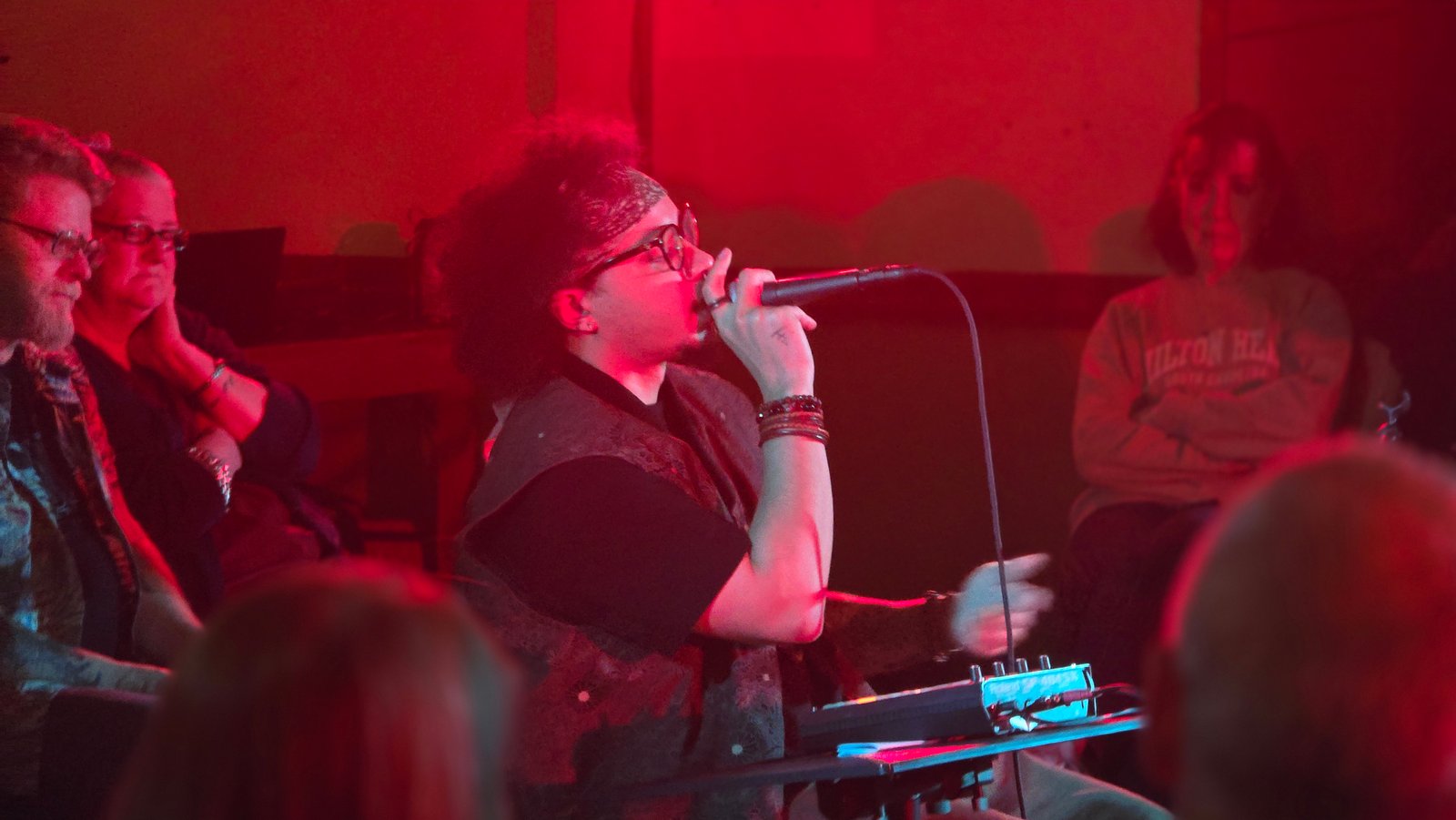
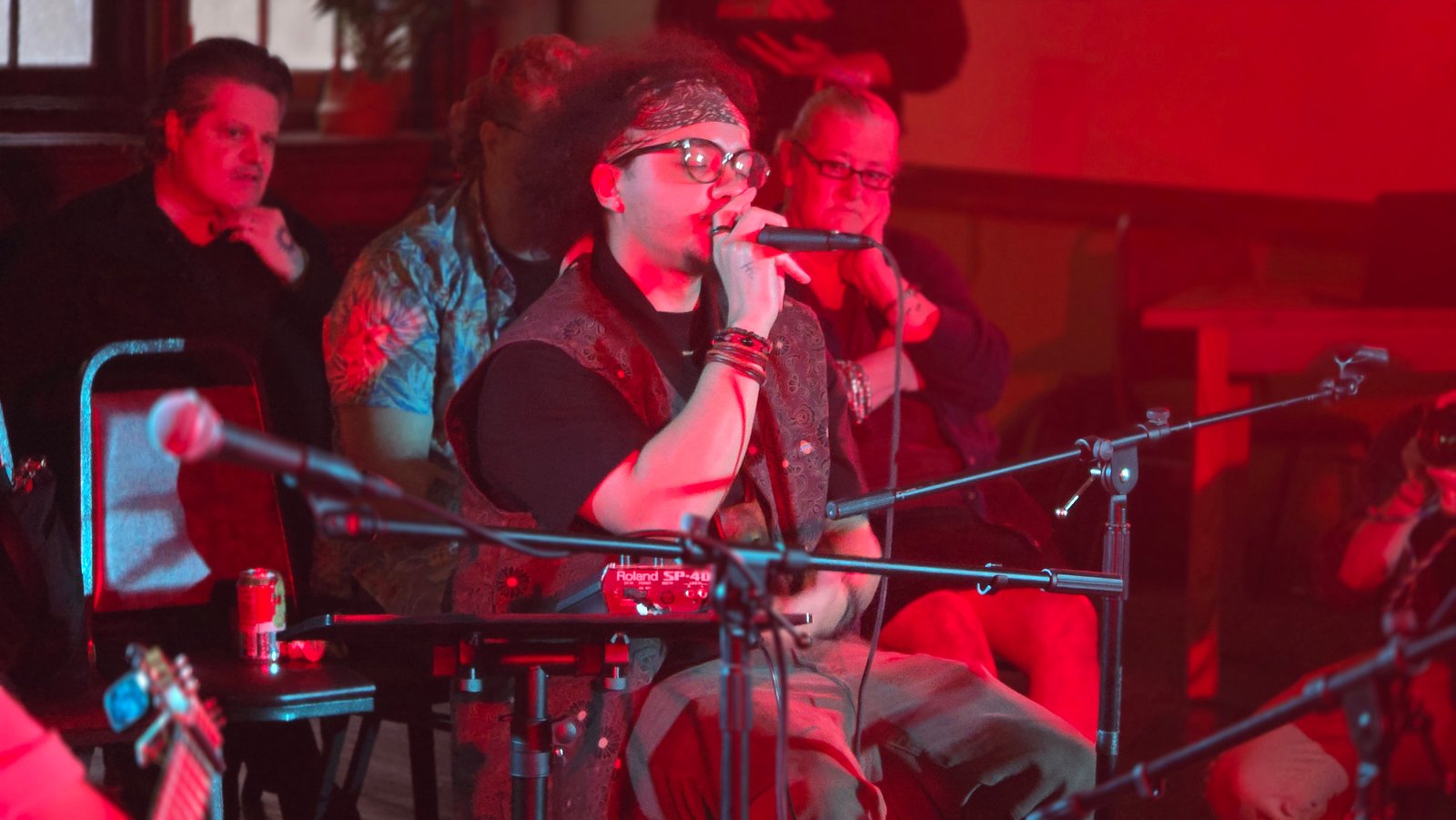
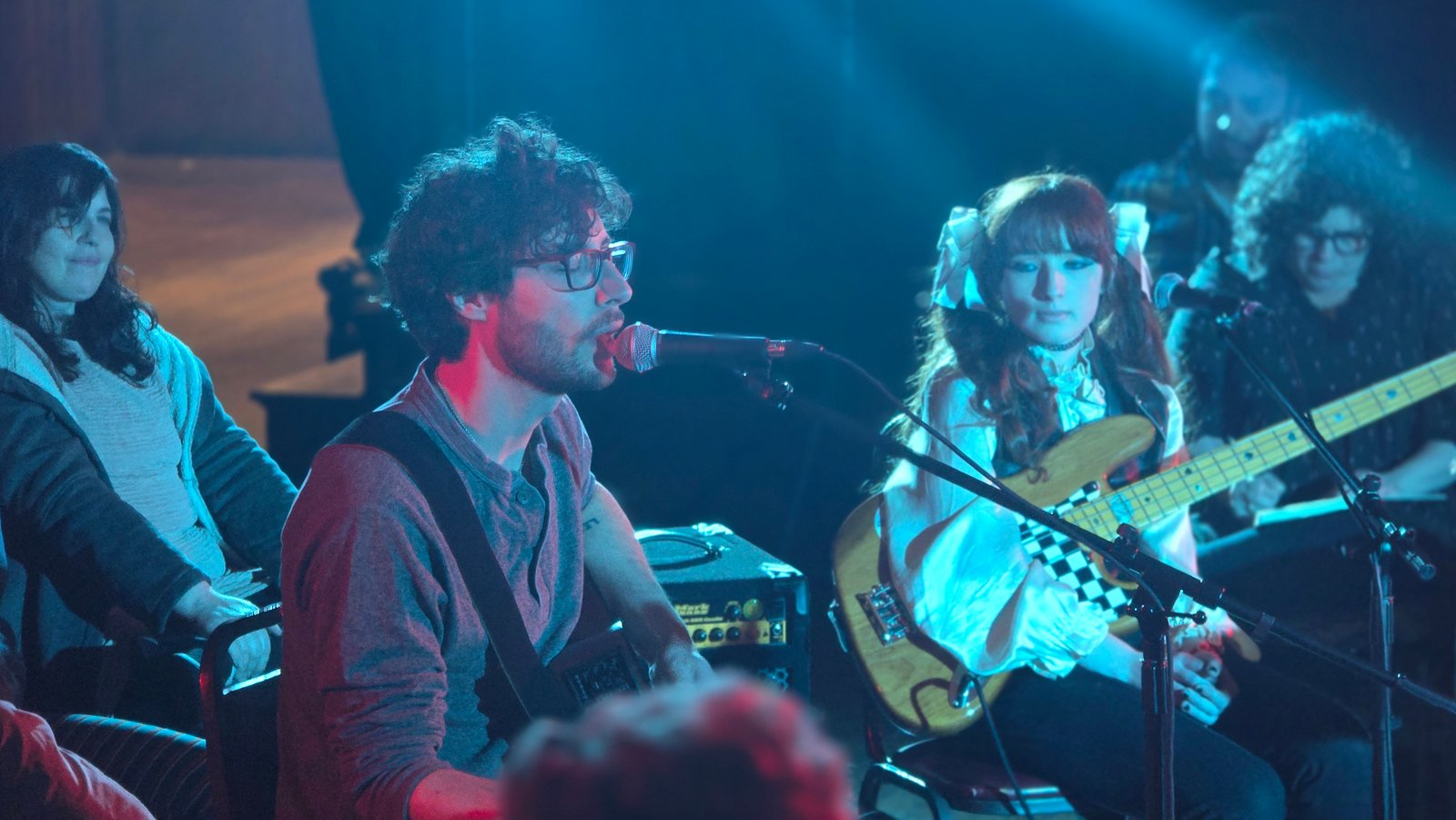
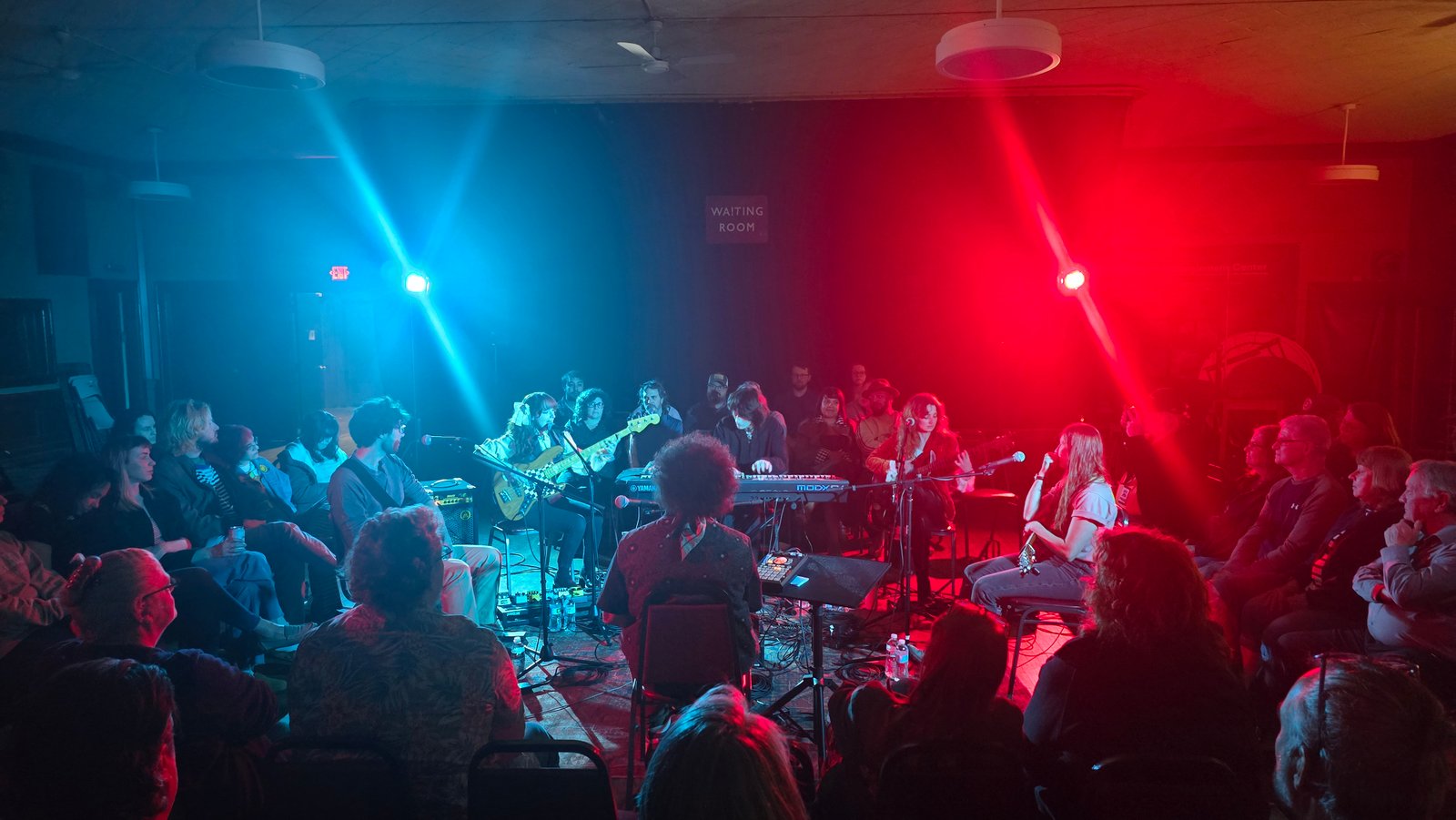
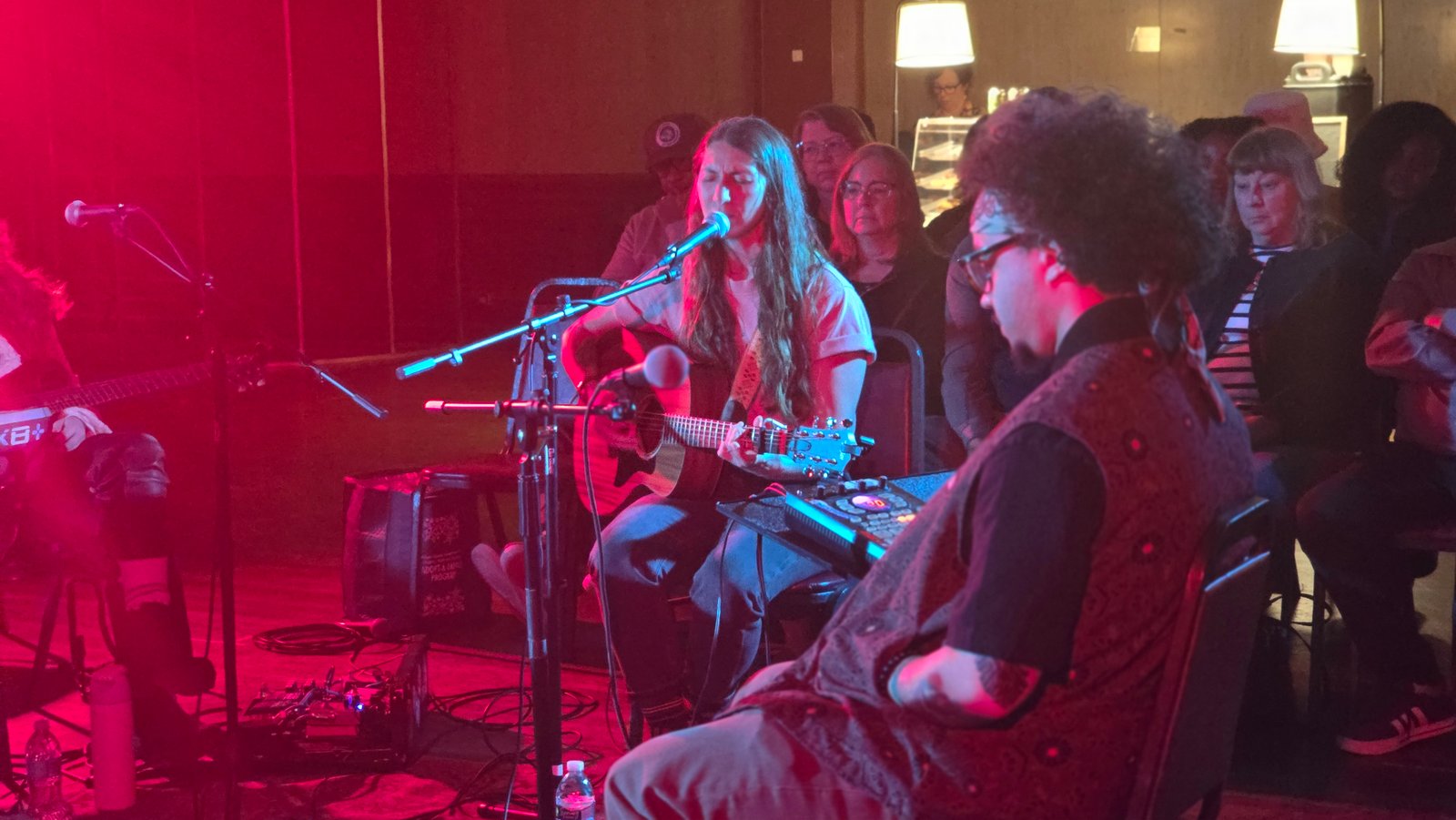
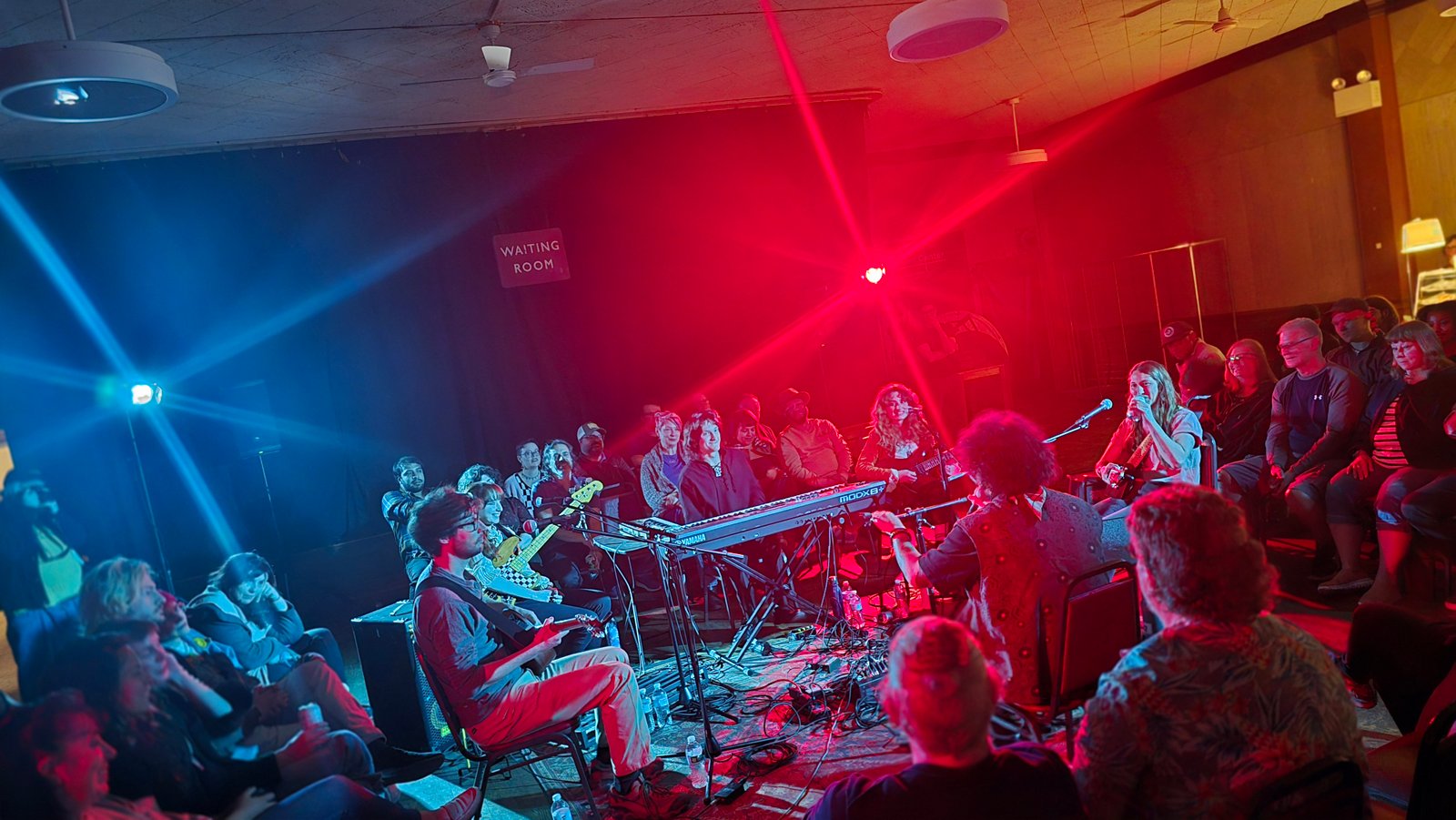
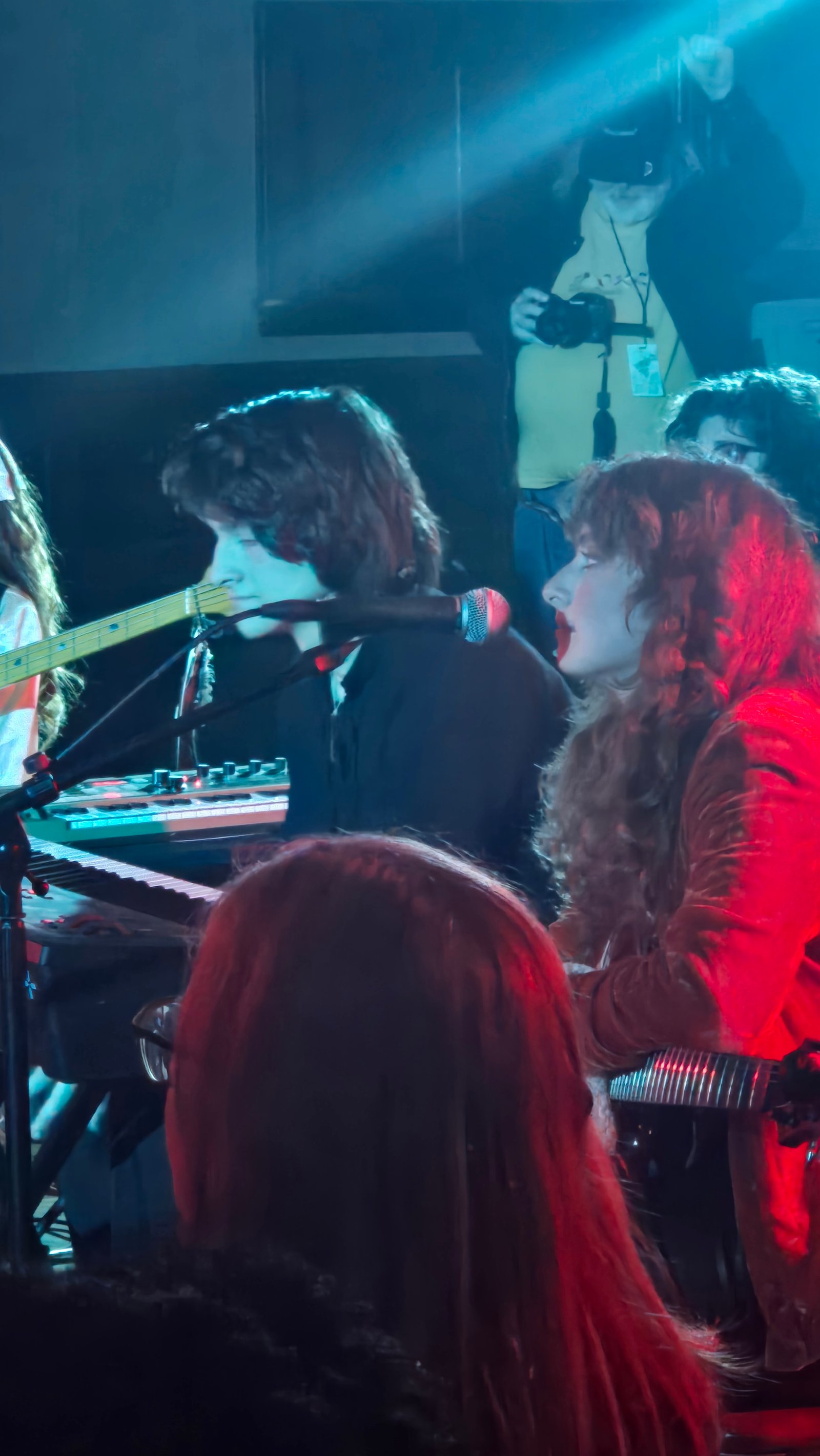
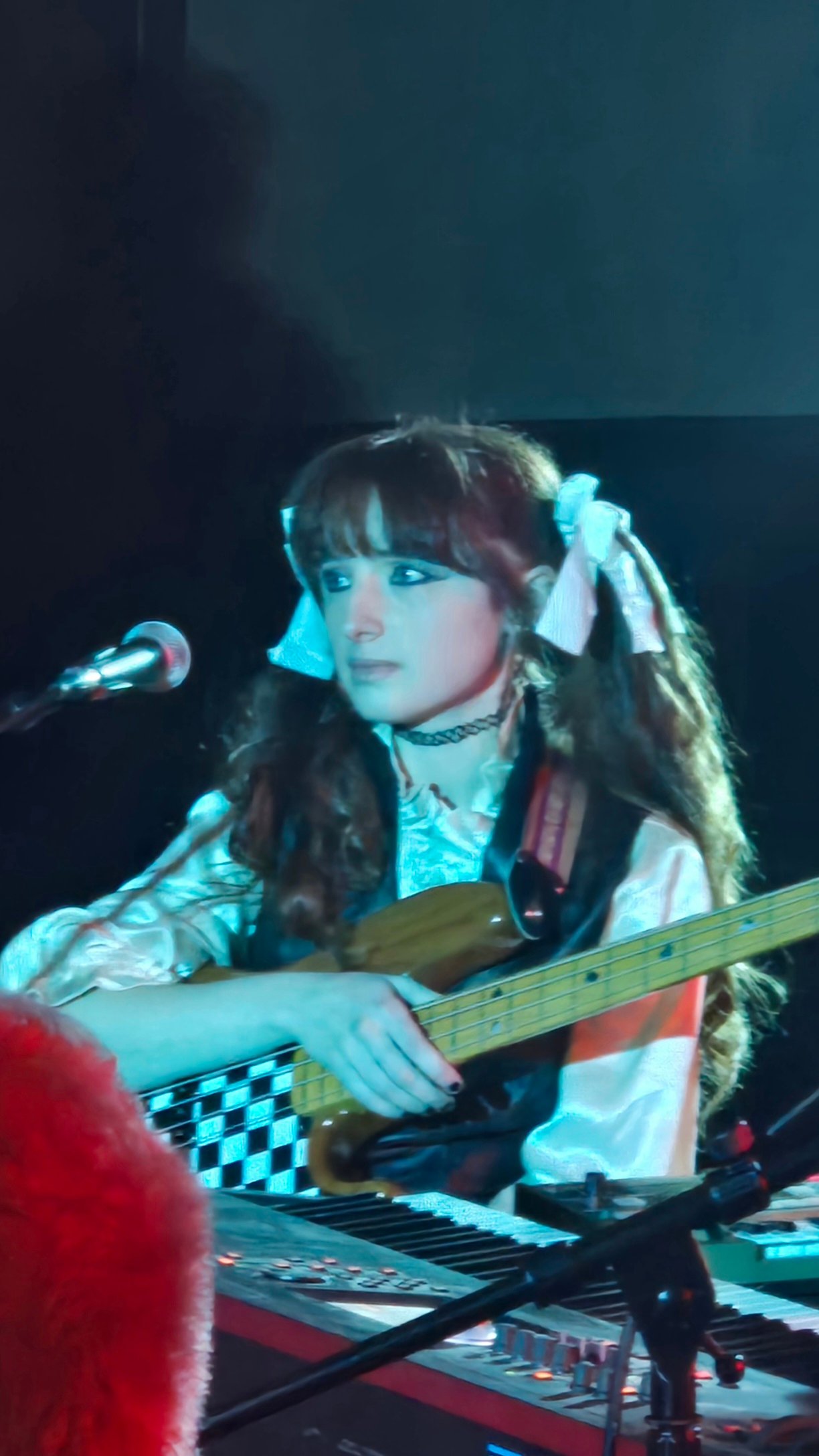
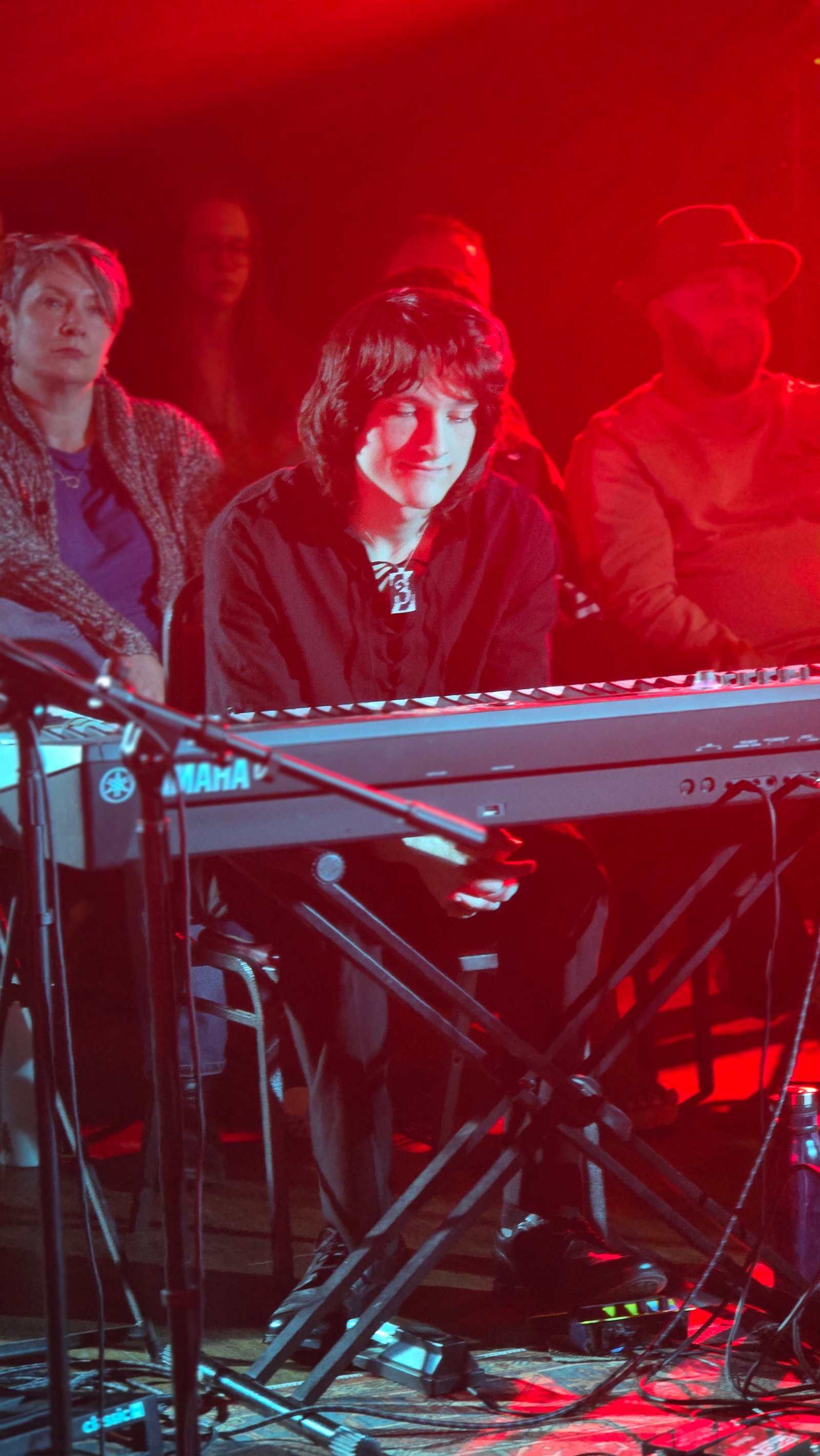
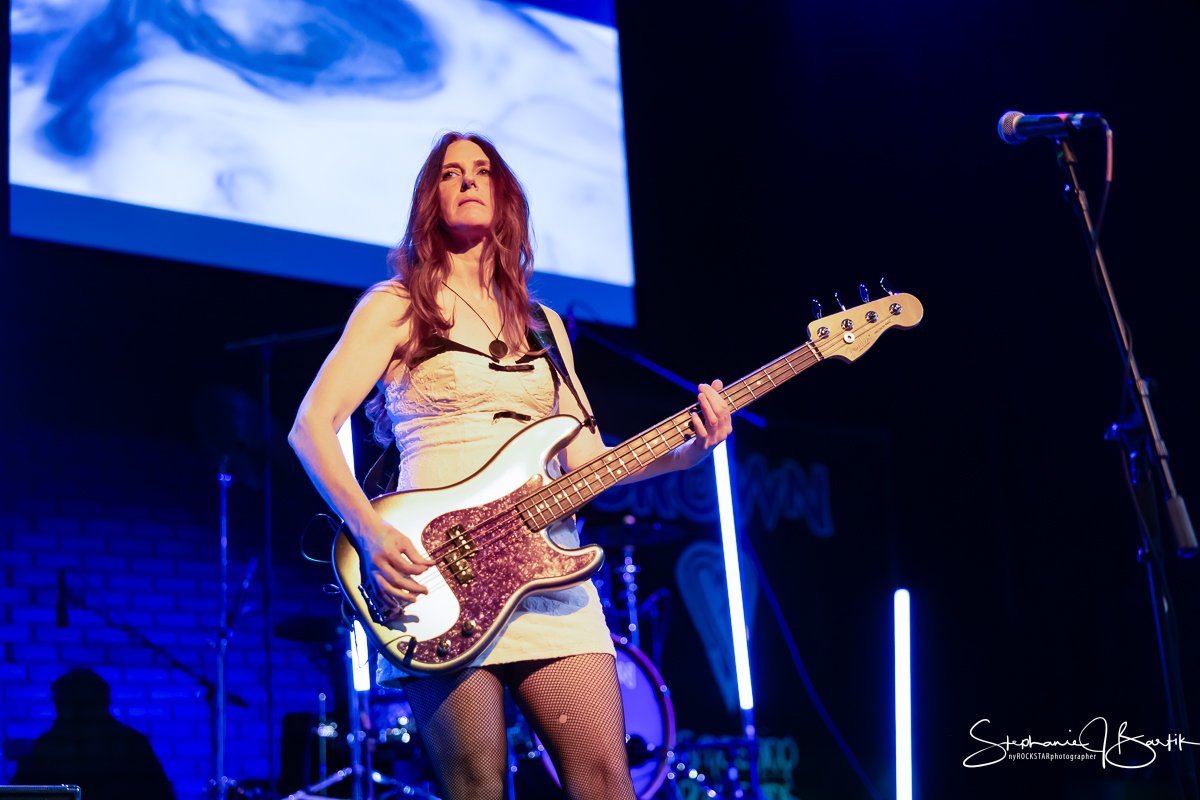
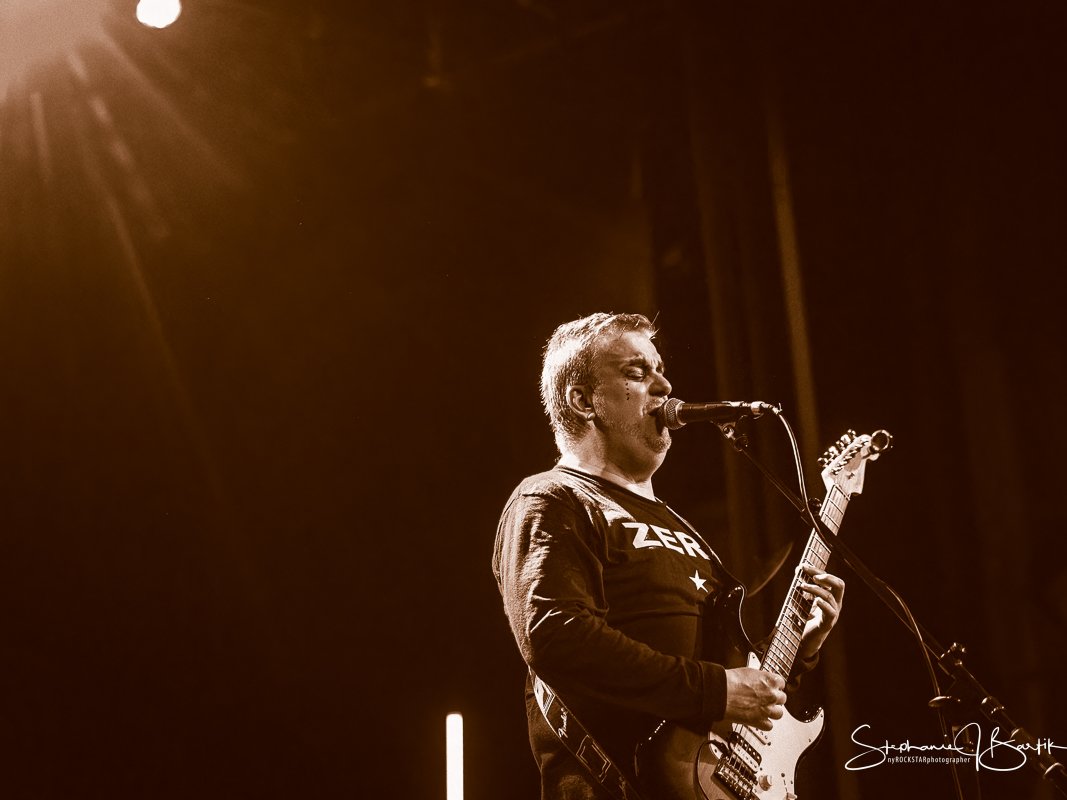
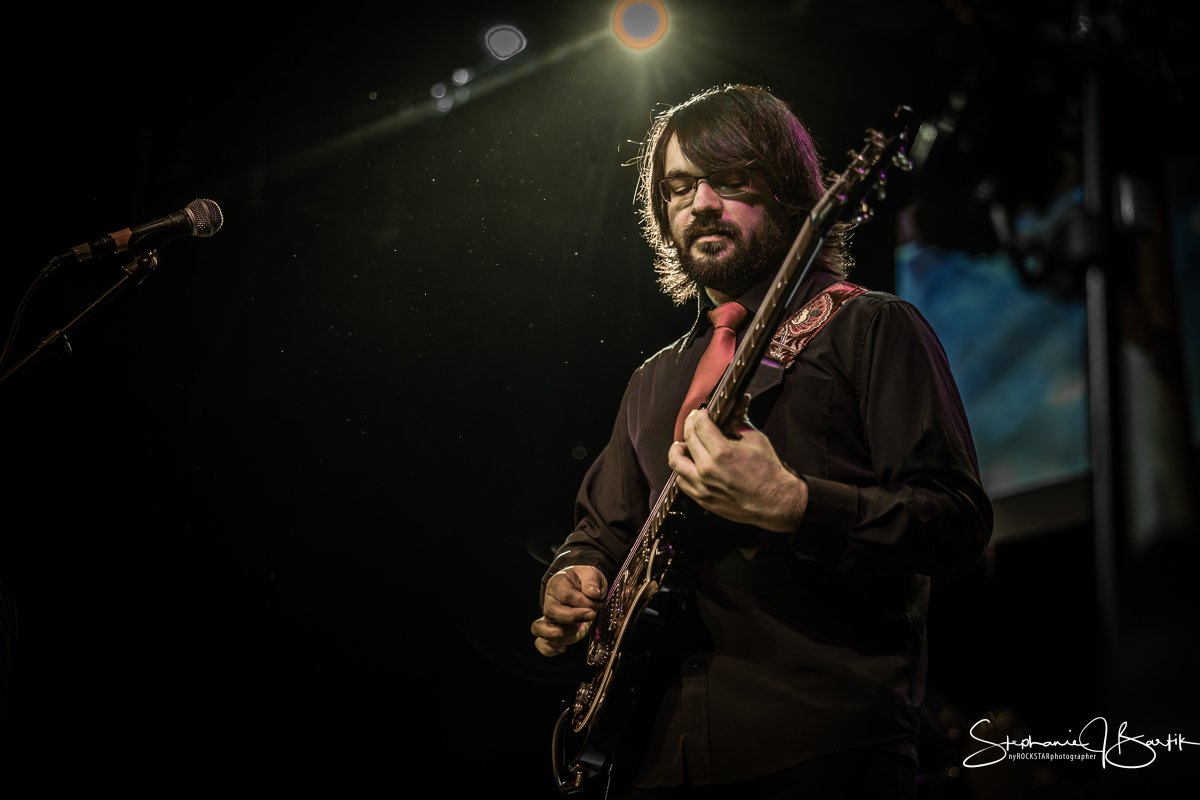
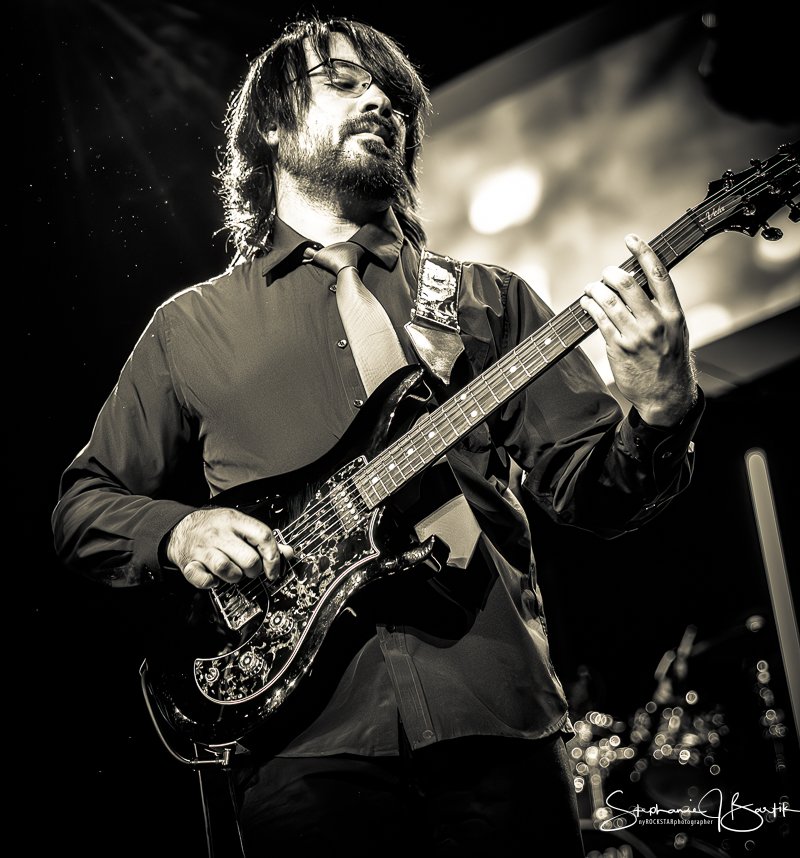
Such heightened sensitivity bleeds directly into the artistry of their band, The Space Between, where duets become central to their sound. “Most of what we sing is duets,” they told me, “But they’re like straight duets all the way through. It’s both of us layering our voices on each other, singing the same words,” creating what they described as “a very deep musical complexity” in which both voices become “greater than the sum of our parts.”
At just 23 years old, they already carry the weight of an arduous uphill climb, one that greatly battered their joints to near mush before becoming reshaped into something far more unshakable. Their early experiences with hockey became the origin point of that fracture.
“When I was younger, hockey was my life. When I was 15, I got invited to play for a professional team in Canada. I stopped going to regular school and moved to a fully online, asynchronous system. No teachers, no nothing. I stopped all forms of art, and I ate, slept, and breathed hockey for my first six months. My goal was to play Division 1 hockey since there was no women’s league at the time, so that was the end goal. I was on the short list for the national team, and then the hockey world wasn’t exactly kind to me, and there’s lots of people with very similar stories to mine.”
In a former elementary school turned dormitory, Jo, along with numerous other athletes, were sculpted through the tyrannical force of a maddened coach who controlled nearly every aspect of their lives and regularly subjected their developing minds to extended periods of extreme verbal abuse, coercive food control, isolation, emotional intimidation, identity erosion, and a profound fear of failure. “I reach for the stars in everything that I do. I want to be the best at everything, and I have a hard time not being the best,” they told me, revealing perfectionism forged through survival.
This brought my mind to the 2014 indie film Whiplash, where student drummer Andrew Neiman buckles beneath the psychological pressure of his abusive instructor. Beneath its musical ambition lies a haunting question: how much suffering can the mind normalize before abuse becomes indistinguishable from discipline?
Such conditioning created a stunted culture in which suffering became normalized. From my understanding, this created a survival bond between fear and obedience, as Jo learned to adapt to the demands of their abuser by constantly molding themself to the needs of others.
The keys to their heaven dangled just beyond reach as they were led into the eye of the hurricane, sprinting toward a destructive force disguised as athletic success, unaware of the future agony buried within it. The result is a relentless internal tug of war between achievement and self-worth, both sides pulling with full intensity, oblivious to their flesh blistering beneath the friction of the rope.
That’s the insanity perpetuated by a society so fixated on vanity that it never learns the value of verity. That complexity became even more apparent when our conversation shifted toward harm, forgiveness, and the darker contradictions lurking within the shadows of human behavior.
Throughout their life, Jo has repeatedly confronted the uneasy reality that people are capable of both genuine tenderness and profound cruelty, sometimes simultaneously. One night, someone they trusted dearly attempted to sexually assault them while heavily intoxicated, an experience that deeply altered the way they understood safety, intimacy, and trust.
The following morning, he was horrified by events he couldn’t recollect, and expressed extreme sorrow for what he’d done. Though forgiven, they could never look at him the same, dissolving their relationship without allowing the experience to calcify into resentment or extinguish their belief in the goodness still harbored within people. That’s what I found most fascinating about their character. Despite being nine years their elder, I left the conversation realizing how little I truly understood about human nature.
No matter the brutality that once shaped them, they still hope to teach someday, a desire rooted not in prestige, but in a genuine investment in the growth of others. Such praise regarding their intellect, however, was met with resistance, as they often minimize themselves to protect the worth of others, particularly romantic partners. “I sometimes struggle to believe that I matter because I’m a person, not because of my accomplishments.”
Beneath that instinct lingered a far deeper concern: If I am alone and stripped of performance, achievement, usefulness, and connection… who am I left with? It made me wonder whether someone shaped by adaptation could ever feel fully loved without performance. At one point in their life, love itself became entangled with recklessness, less a sanctuary than a controlled arena through which chaos could masquerade as intimacy.
As they sat across from me, their fragility caught my attention as they fidgeted with their ring necklace, a gift from their late grandmother. I admired how carefully they considered each question, often sitting silently for fifteen to thirty seconds before answering. They’re cautious, yet comfortable under watchful eyes. And their pain, though depleting, has left them unusually capable of understanding others without ever absolving them.
It made sense as to why they didn’t want to be reduced merely to the strength of their mind, because the mind simply interprets reality, whereas the soul absorbs it in motion. And after everything I observed, the clearest understanding of Jo came not from my interpretation, but from listening to them directly.
Interview with Jo Coates
- When you write about wanting someone to stay, what fear feels closest beneath that desire?
“I reach for the stars in everything that I do. I want to be the best at everything, and I have a hard time not being the best.
And I’m terrified of failure.
I’m also terrified of my success, because over and over again, as I start to succeed, the people that I can make other people will tell me that my success is making them feel less than and so I start to hide my success and hide myself in an urge to get that person to stay with me and being left. I don’t like being alone. Terrified of being alone. Can’t I can’t do being alone very well. I can’t do silence very well.
But my biggest fear, in general, with everything it is the biggest fuel of my anxiety. And sort of what fuels a lot of when I write like, I want someone to say is not being good enough. And at the core of that lies this idea of like, oh, I want to be good enough for other people because I don’t know what being good enough for myself is, because I’ve always struggled with my sense of self and where do, where does other people’s perception of me end and I begin? What does it mean to be good enough? Why does it matter if I’m good enough? Why can’t I just be good and always, it is something, I mean, I deal with that still. Every day I struggle. It is the crux of like my internal struggle and anxiety and such is that fear of being alone.”
- What does love represent to you when it feels more dangerous than comforting?
“I think for a while in my life, I used love and my romantic life as a way to be careless, because it was a controlled amount of carelessness. I could do whatever I wanted, and I was I believed that I was untouchable until I wasn’t in a relationship.
I couldn’t physically self harm. It was too obvious. I had too many health checks and people watching over me at all times. I had an eating disorder, but I was an athlete, so there was only so much that I could deprive my body of nutrients before I could no longer be my best athlete.
So the one aspect of my life that I control that didn’t usually affect my ability to succeed in school and athletics and my work was my love life. And so I self sabotage through dating. I dated people who were mean. I dated people who were bad for me.
I believe that I could fix people really long time that people were projects. You know, I have a very strong attachment to the idea of love, and I get very attached people very quickly, if I can find some sort of comfort with them.
And what I always find is it starts out as comfort and then it becomes painful or dangerous or harmful, and I think that I can, I always think that I can get back to the place of comfort. And instead of recognizing that I shouldn’t want to be with someone who treats me like that, even if there was a place of comfort, I instead try and fight to get back to that place of comfort until that person then ends the relationship.”
- In moments where meaning feels absent, what keeps you choosing to speak instead of going silent?
“I always I speak, even when I will always choose to speak, because I think that is a part of me that is so integral to me, and I like being able to speak, and it makes me feel like myself, even when I don’t feel like myself.
And the second thing I think of is what happened back in October when I made my public facing post about my experience with sexual assault, and I had so many people that I had a bunch of people that I didn’t really know that followed me be like, wow, this is really powerful.
But then I also had a lot of people from my life in the past I hadn’t talked to in a while message me and be like, you are the reason I went to go get a degree in musical theater. You’re the reason I went to go get a degree in choral. I did this thing because of you.
I had someone say to me, ‘You were the only person who was kind to me in my freshman year of college.’
And so I realized that I shouldn’t be surrounding myself with people who aren’t going to be kind to me like you were.
Me speaking out publicly when I’m thinking about it and being thoughtful and mindful about it is important because it makes people feel comfortable coming forward. But me speaking just in general also inspires people when I don’t even realize people are listening. So I try to never stay silent for that reason, because I’ve inspired a lot of people.”
- What part of yourself do you feel most seen when someone holds you, even briefly?
“Everything that I’m thinking out comes back to mattering to other people, and that reminder that, like, oh, right, I am something to other people.
I sometimes struggle to believe that, like I exist, and I know I don’t exist in a vacuum, but it also can be tough to like feel sometimes that like I matter because I’m a person, not I matter because of my accomplishments.
So being held, the things I think of immediately are when I’m held by my boyfriend, I feel like I can relax and just kind of melt.
And when I haven’t seen people in a long time, and you get that super tight hug of like, oh my god, I haven’t seen you in forever, I think of that moment and that importance to other people in such a like, oh yeah, I am a person.”
- How do you understand the difference between longing and love in your own life?
“I’m a big yearning nerd. I love yearning. I love the idea of yearning, and I think the difference is I can long for a lot of things. Love is purposeful.
Love isn’t just something that happens. Love takes time. Love takes intent.
I didn’t trip and fall in love. I knit every single part of that relationship together by putting intent and effort behind what I wanted to do, what I felt and how I wanted to.
Feelings exist, right? Love is the extra step and effort and time of intention behind feeling.
Longing is a lot less intentional. In my mind, it also is a lot more protective than love is.
You can long for someone, but it’s an ideal of someone. Love is recognizing and holding and being intentional with what you’re doing.
And also people are a lot more real when they’re right in front of you than they are when you think about them.”
- When you describe obsession, what need inside you feels unmet?
“I need to be wanted.
The ultimate struggle for me is being wanted, being needed.
But being needed really, it’s being wanted because I want the intentionality behind it, but I settle for being needed, because I am always useful.
I’m a very useful person, and so I think that I obsess over people, and people obsess over me, and I think it’s because I can make myself into the perfect version of what I need to be, to be needed, and maybe that will be enough to fill the urge to be wanted.
That’s not just in my romantic relationships. It’s also in my academic life. It’s in my friendships. It was when I was a hockey player. It was in every aspect that I can work and change things about me to be exactly what people need, and so I obsess over people and things like that to be needed in substitution of actually being wanted.”
- What does surrender mean to you when you write about being carried or blown away?
“I’ve always had that like, I am a stone girl. I am made of stone.
I tend to be all that I can rely on, and I’m always on edge. I’m always aware of all of my surroundings, and when I’m dealing with something really tough, I definitely am like, I am stone. I rely on myself.
For a while in my life, I believed that the only thing that I could rely on was myself.
And I always long for that moment, you know, the moment in movies where the main character has a big breakdown and there’s someone holding them and they’re crying and they’re like, this is everything that I’ve been holding on to for a really long time.
I yearned for that moment, for being able to feel like I could just relax and melt away and I could stop being so hardened.
And I hope to be able to surrender and allow myself to rely on someone else when the going gets tough.
Not to be completely codependent on someone, but to be able to lean on other people for the emotional side of things.
And that ability of just being carried or held or blown away, or just being able to melt and not have to be so tough, is something that I strive, that I’m working towards.”
- Where do you feel most divided between who you are alone and who you become in connection?
“I’ve always been a social butterfly. I can very easily make friends.
But I don’t think I am a social butterfly as much as I am a social chameleon. I adapt. I change.
And when I was younger, I would change everything about myself down to the way my voice sounded depending on who I was talking to.
And it started to blur this line of like, who actually am I as a person?
And so as I’ve gotten older, if I’m in a situation where I feel myself slipping back into that habit, I can struggle to be like, wait, stop for a second. Make sure I’m trying to be myself and be truthful and honest.
And then when I’m alone, like, who actually am I? That’s something that I’ve been dealing with a lot recently, is who am I, what defines me, and can I define myself without bringing up external things or what other people think.
That’s something that I struggle with a lot, because I’m not sure I know.”
- What truth about yourself feels hardest to admit without turning it into a poem?
“I think a lot of my fears and insecurities are self imposed.
They come from pressures and from other people. But those pressures are now gone, and I still feel them.
And it’s so hard to like…
I’m terrified of being alone. I don’t mean being lonely. I mean I’m terrified of being alone with myself in a room without something else being there.
I can’t do silence in a room. I don’t sleep in silence. I do white noise or I listen to stories or podcasts.
I’m really scared of my own mind. I get trapped in it sometimes. I have a lot going on up here.
I started using music as a way to cope with the thoughts in my head from a young age, and now I struggle to be alone in silence because I’m so scared of my own mind.”
- If your writing could answer one question you keep asking yourself, what would that question be?
“I think when I go back and read my stuff is how I survived all of it. Everything that I write about, everything that I experienced, I survived. None of it took me down.
And I think that I return to that sometimes when the going gets tough.
I’ve dealt with a lot of pretty heavy stuff in my life. I’ve dealt with a lot of trauma and a lot of troubling things, and I made it through.
And then this past July, I had a moment where I almost took my own life. It was the first time I had ever truly attempted to take my own life.
I stopped taking my meds and the voices in my head telling me to do it got louder than the ones telling me I needed to stay.
I was like, okay, yeah, this is it. I’m done. I’m done being alive.
Went to crisis, went to the crisis center, and I ended up being okay.
But it was this moment where I was finally like, you know what, I’m done. I’m tired. I don’t want to do this anymore.
And then after that happened, nothing changed. I went the next day and the only thing that changed is my parents knew what my struggle was.
And then I had a tumor on my left ovary.
But I had a moment where I almost died. I was sitting on my couch. I was dying. I kept asking my mom for a Bible and a priest.
My mom fully thought she was about to lose her kid.
And it was like I’ve survived so much up until this point.
First of all, I survived so much. I kind of just want to start living. I kind of just want to start being.
And so I think my work is such a good encapsulation of like, I survived all of this stuff, and I’m still here. I’m still kicking.
And that’s why I strive to bring myself back to this place of enjoying life and being alive.”