Home Blog Page 47

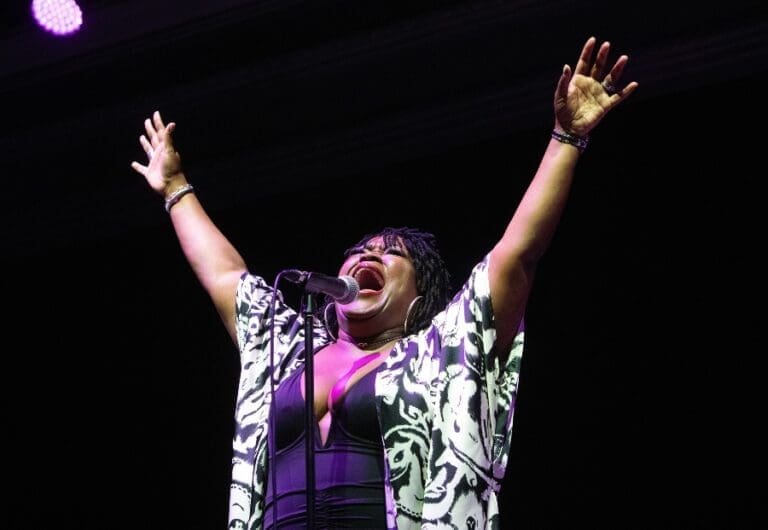
Shemekia Copeland Coming To The Egg on 5/22 Interview By: Rob Smittix

0

Interview: Shemekia Copeland
By: Rob Smittix

Photo By: by Janet Mami Takayama

RRX: I’m excited to be talking with you today. First of all, I’m reaching out because you are coming to our area, pretty much around the corner. May 22nd at the Incredible Egg. I don’t know, have you ever been there before?

SC: I have been to the Egg. It’s so cool. I’m very excited to come back.

RRX: Excellent, yeah, it’s quite unique and it’s just been revamped, so it should be an enhanced experience this time around.

SC: Oh, that’ll be great. I’m looking forward to it.

RRX: Us too. So with the show coming up, what does Shemekia have in the bag for us? Any tricks? Anything up your sleeve?

SC: Well, I wouldn’t say I have any tricks but we always definitely come ready to have a good time. We’ve been having fun performing songs from the latest record, you know? Mixing things up a bit and just having a good time.

RRX: Excellent. Now, I also saw that you’re playing the America’s 250th Birthday at the Bruce Springsteen Center for American Music at Monmouth University, which I didn’t even know existed until now.

SC: It’s just opening.

RRX: Oh! The more you know. That’s cool, that’s gonna be something.

SC: Yes, there’s so many amazing artists performing on that, so I feel like it’s gonna be a great hang. So, I’m definitely looking forward to that.

RRX: I don’t know if it’s sold out yet but I’m sure it will.

SC: Oh, it sold out within an hour ,I think.

RRX: That’s pretty cool, I thought that was the case. People were pretty quick to get those tickets and I don’t blame them.

SC: Mhm, yeah.

RRX: So, music wise, we have a blues show on our radio station and I mentioned to the host today, that I was gonna be talking to you and he was like… oh man, Shemekia’s a legend. You’ve been called that I’m sure quite a few time but how does that make you feel?

SC: It’s hilarious to me to be called that, I’m only 47, you know? To me that word’s for older people, but I appreciate people.

RRX: Right.

SC: But I really do appreciate people thinking of me in that way because I certainly and definitely want to make it there at some point, you know what I mean?

RRX: Well, I appreciate the humbleness but it looks like you earned it pretty quickly. But yes, you are still a very young woman. I was just 47 myself, just turned 48 and I don’t know about you but I’m definitely not rounding up to 50.

SC: You know? I’m looking forward to, it’s so funny to me because age is not a thing for me. But I’ll tell you, a weird thing happened… last November, my brother turned 50, my older brother and it was a weird experience because I was just like… oh my God, we’re grown-ups now, you know?

(Both Laugh)

SC: And it was just like… we’re grown ups. Oh my God, you know? But I didn’t think that at 30, I didn’t think that at 40 but we got right there at 50 and I’m like holy s***, we’re grown ups. We done grew up. And it was just a weird feeling but not like old, not sad about it, but just like, wow! We’re adults.

RRX: I get that. Being 48, I’m a very young grandfather. I got 3 grandkids because I started early. It’s kind of cool but I still never really felt like I was a man until I was 30. And then I’m like… alright, well I’m a man now but definitely hadn’t felt old yet. Yeah, let’s just embrace this thing!

SC: We gotta embrace it. Look, it’s a good thing. I actually have a grandbaby too, because of my husband, I have two stepdaughters, I adopted them. They’re my babies now too, but I have a little grandbaby because of them, I’m so excited about that too. So, yeah, it’s fun. But I also have a 9 year old, so…

RRX: Oh okay, so you’re still doing it. Yeah, my youngest is 18 and he’s giving us a run for our money.

SC: Yeah, they do that they do that.

RRX: He’s a senior and he’s been skipping school almost every day, my Mom literally said I will give him $1000 if he doesn’t skip for the rest of the year and he blew it already. Like, you can’t even offer the kid $1000 to do the bare minimum.

SC: Oh my gosh, he’s just like, I don’t wanna do this. I don’t wanna be bothered with this school thing.

RRX: It’s like bribery is not even working anymore. But having grandkids though is awesome, I didn’t know it was gonna be so cool. People told me they’re like… you’re gonna love them more than your own kids and I’m like, Nah. Now I’m like, maybe I do.

SC: Yeah, how is that possible? But it’s like, you know? You get to do all the cool stuff without any responsibility. That’s awesome, you know what I mean?

RRX: I do and when it gets tiring, well now you can have ’em back.

SC: Yeah, exactly.

RRX: Well, that’s awesome. Shemekia. I just wanted a chance to talk to you. We’re gonna push this show for you at the Egg and all of that. Was there anything that you wanted to say to people to encourage them to come out?

SC: The last time we were there, we had a time. It was really great. So come back out and see us again. Because we’re just gonna have a great time. It’s just as simple as that. If you wanna have a great time, come on out and hang out with us.

RRX: Amen to that. Well, I’ll be seeing you there for sure.

SC: That’s great.

The Egg Presents

Shemekia Copeland

Fri, May 22 at 08:00 PM EDT at The Egg – Swyer Theatre GET TICKETS HERE!

Emil Altschuler @ Troy Savings Bank Music Hall, 5/12/2026

0

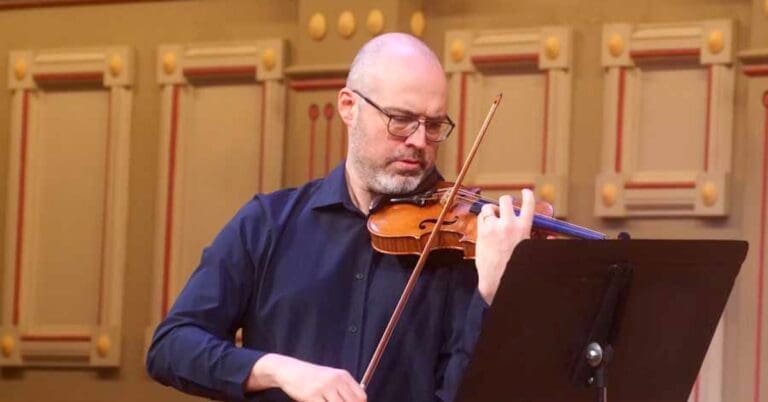
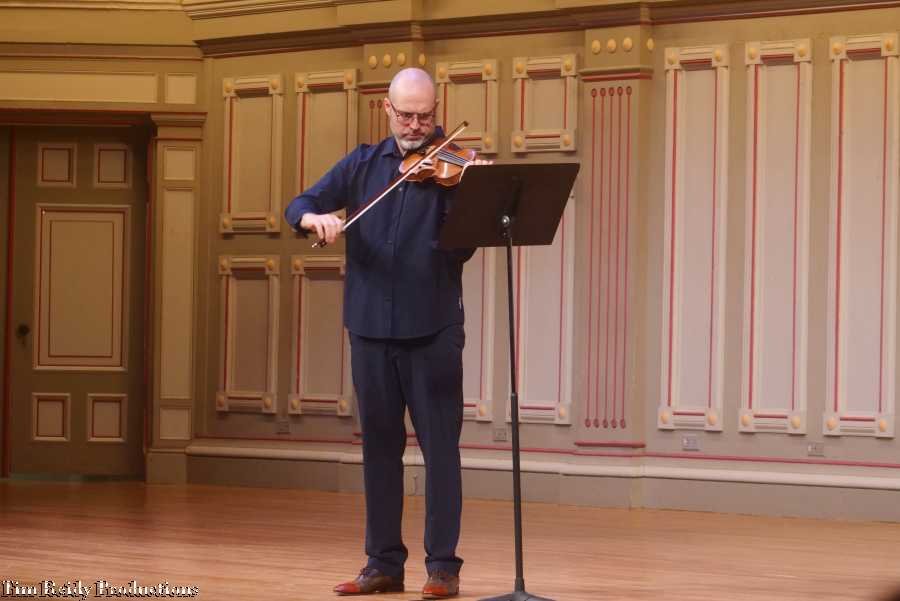
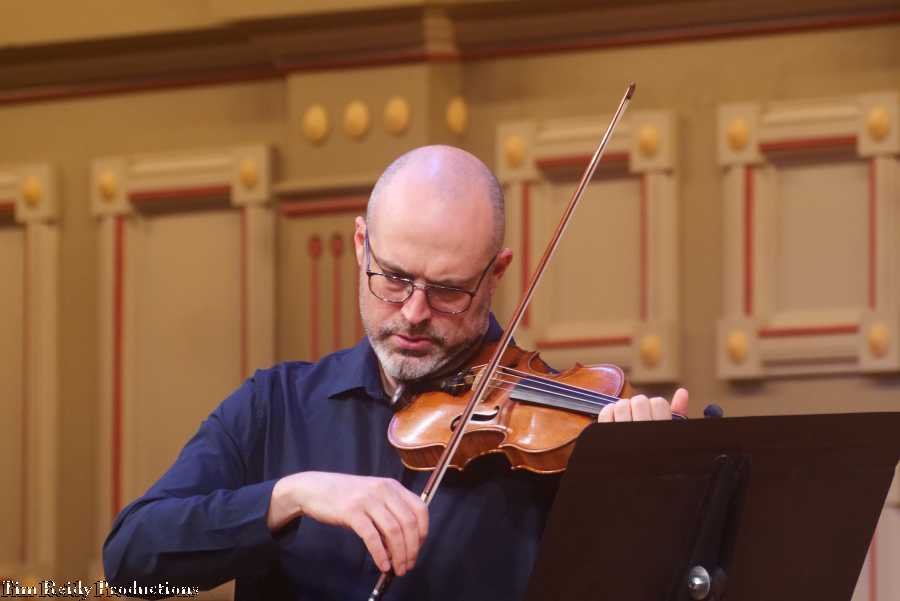
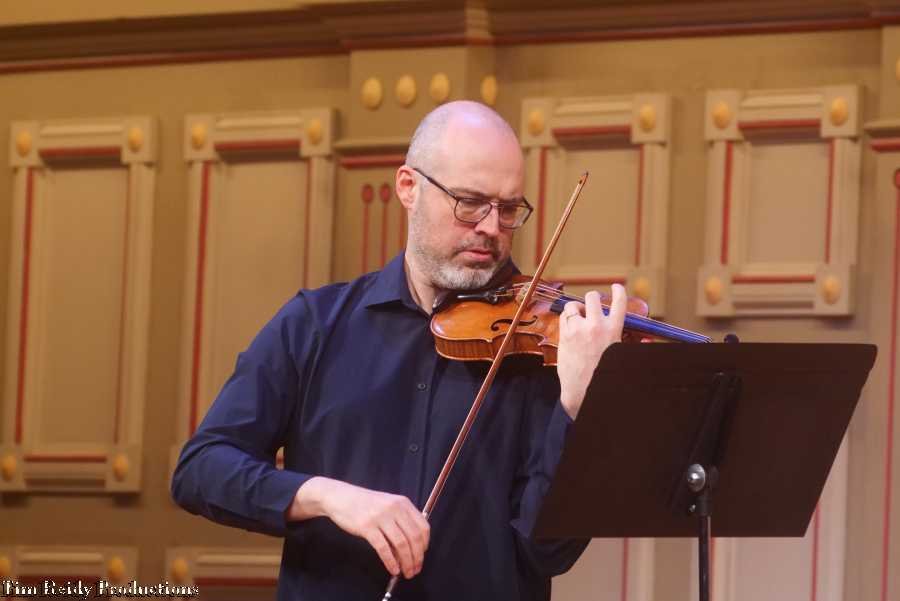
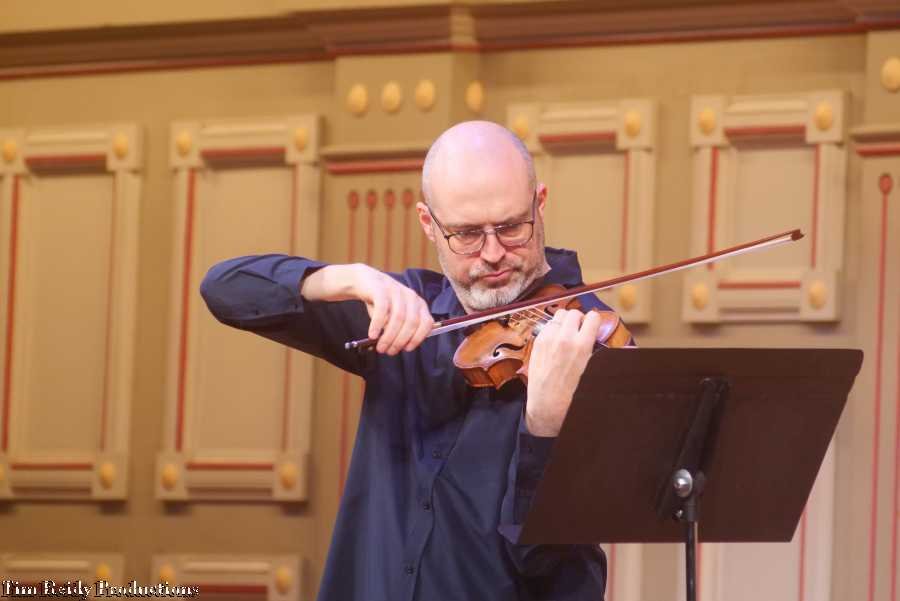
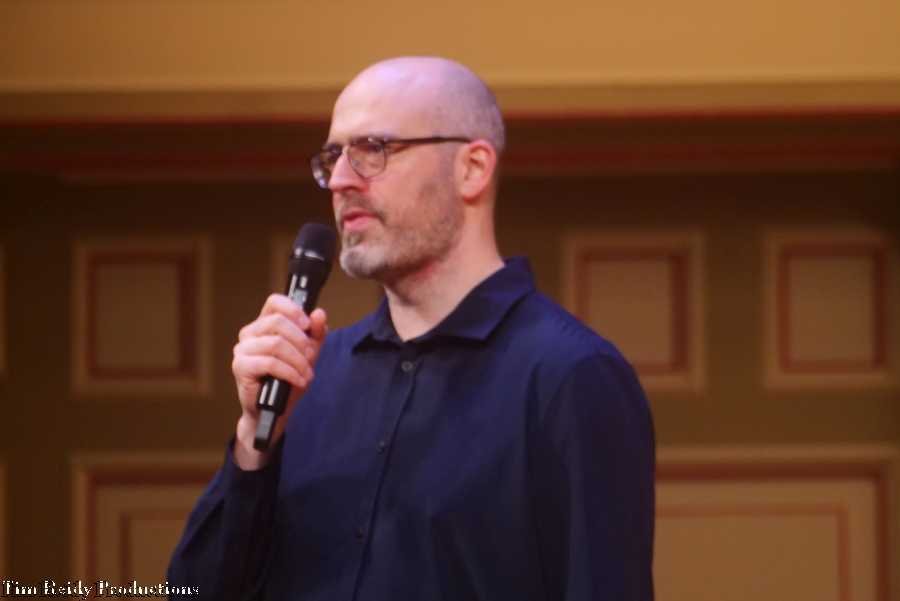
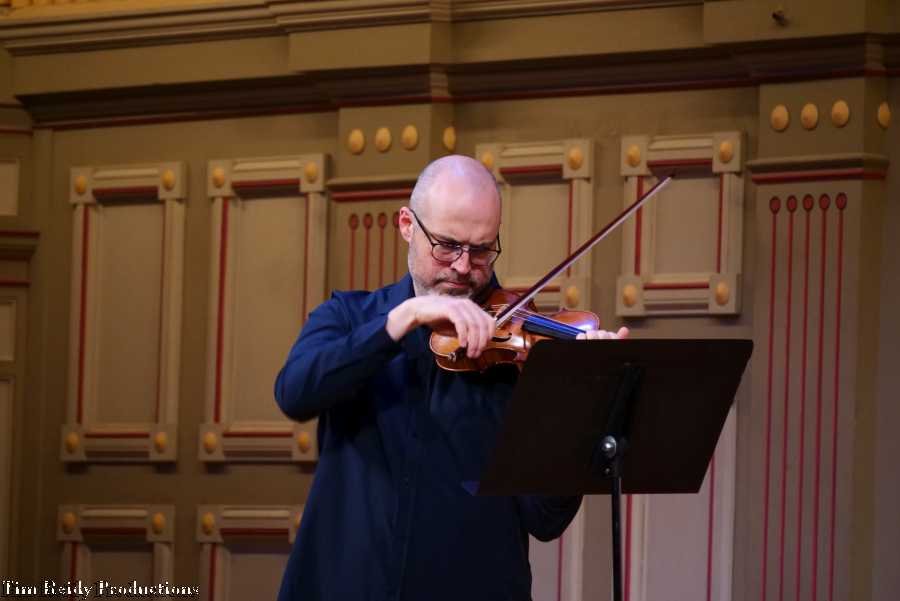
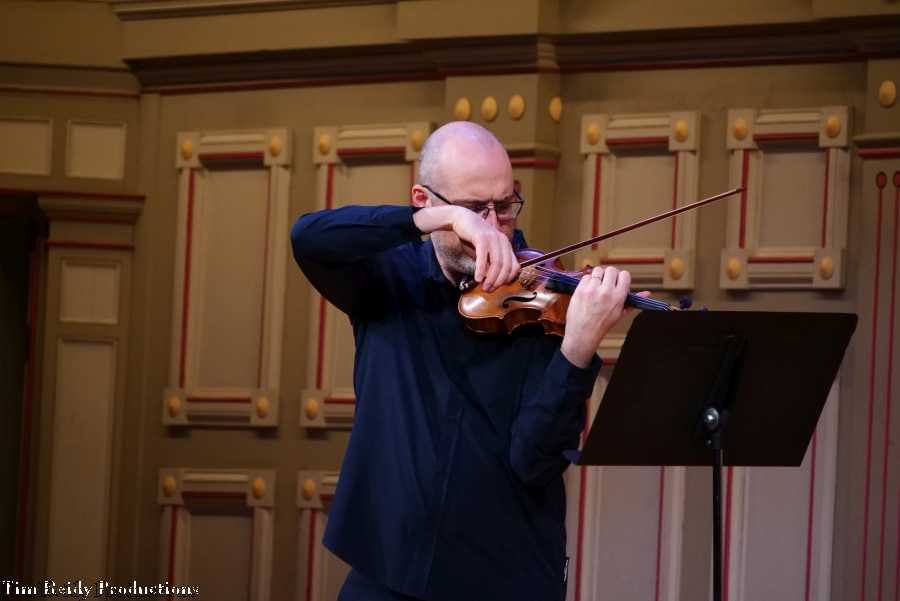
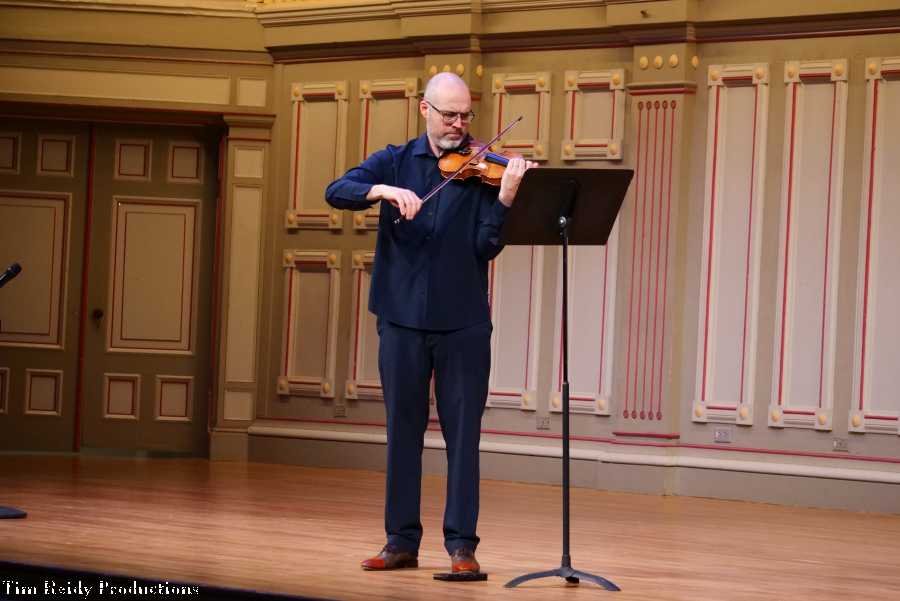
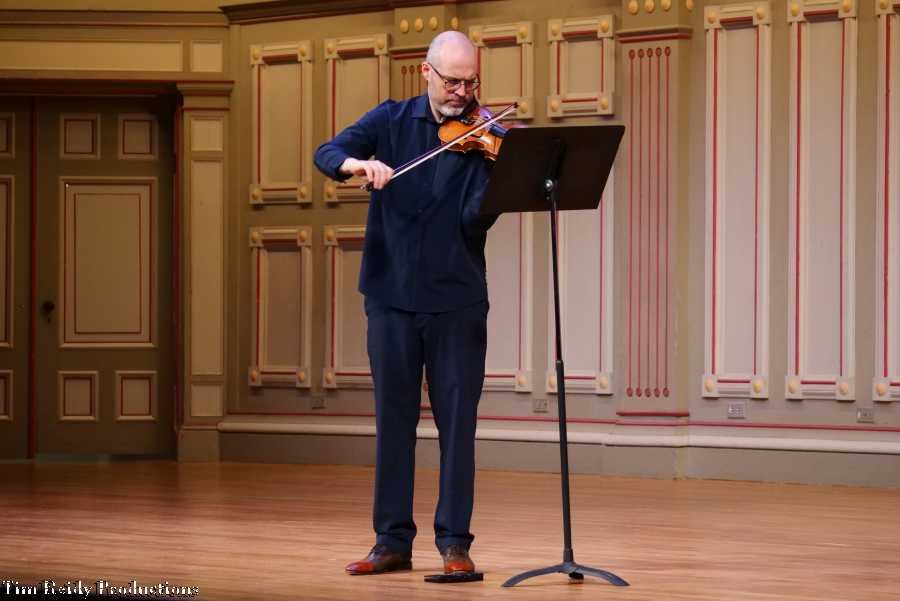
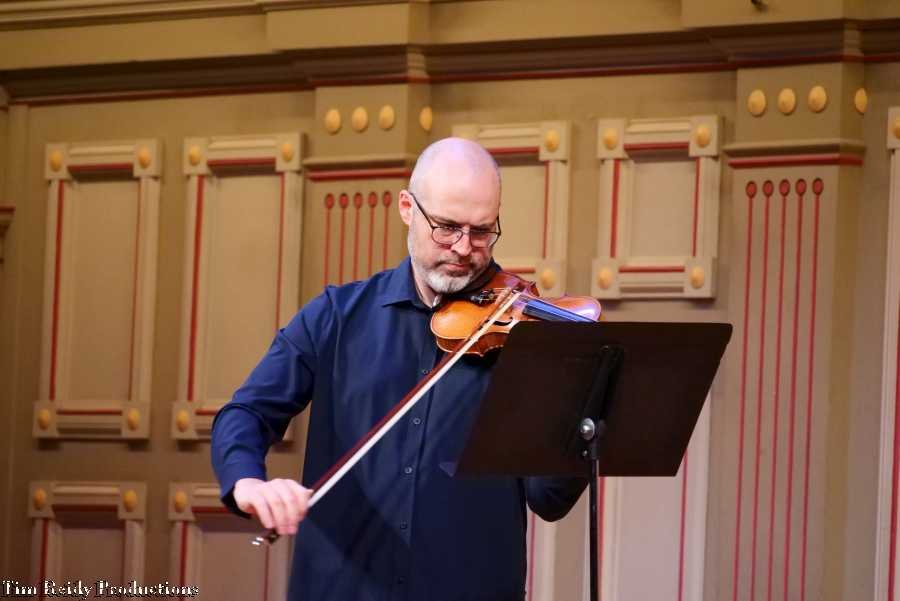
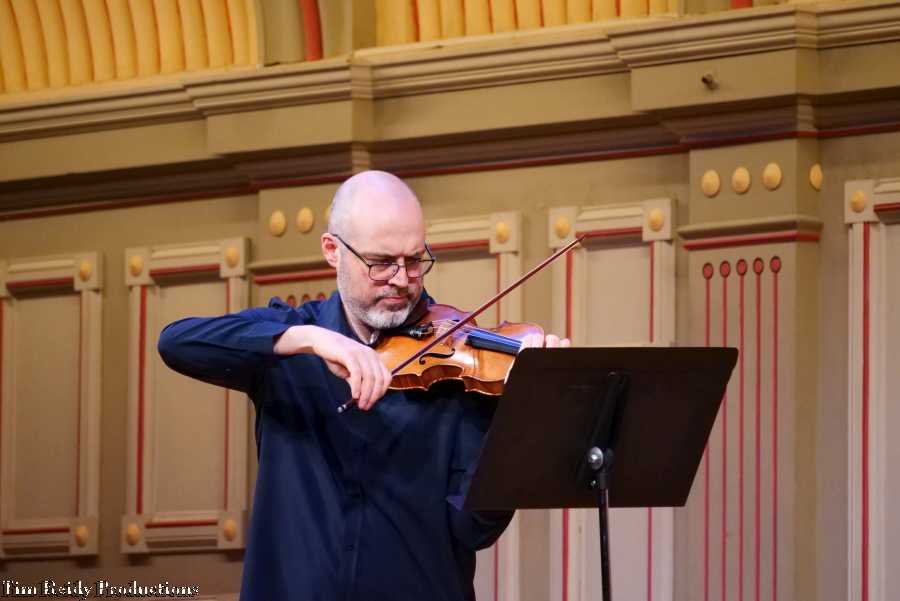
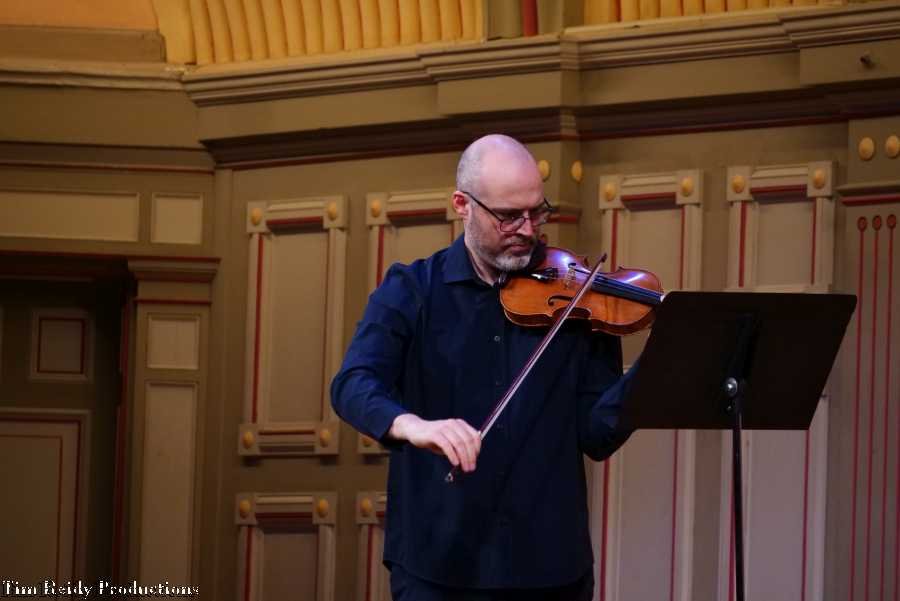
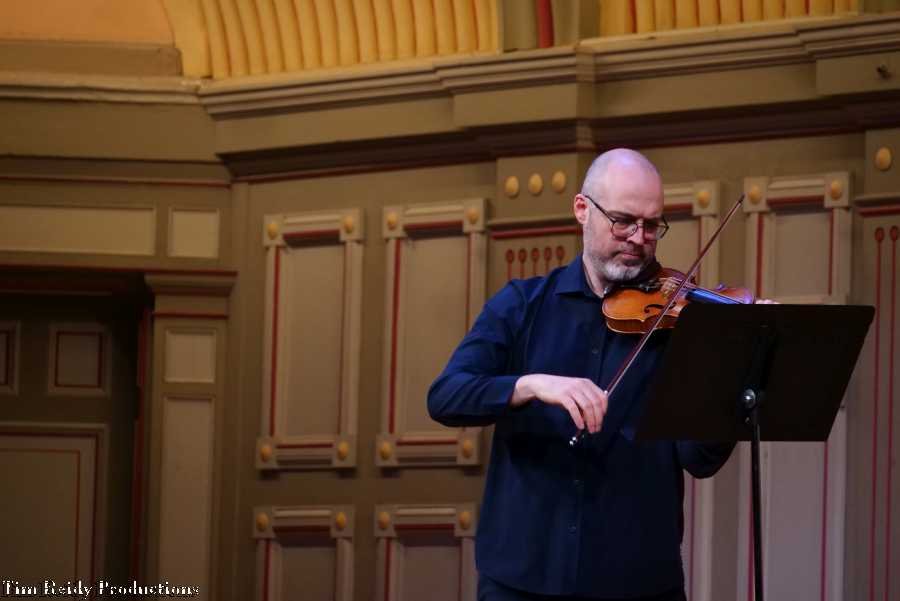
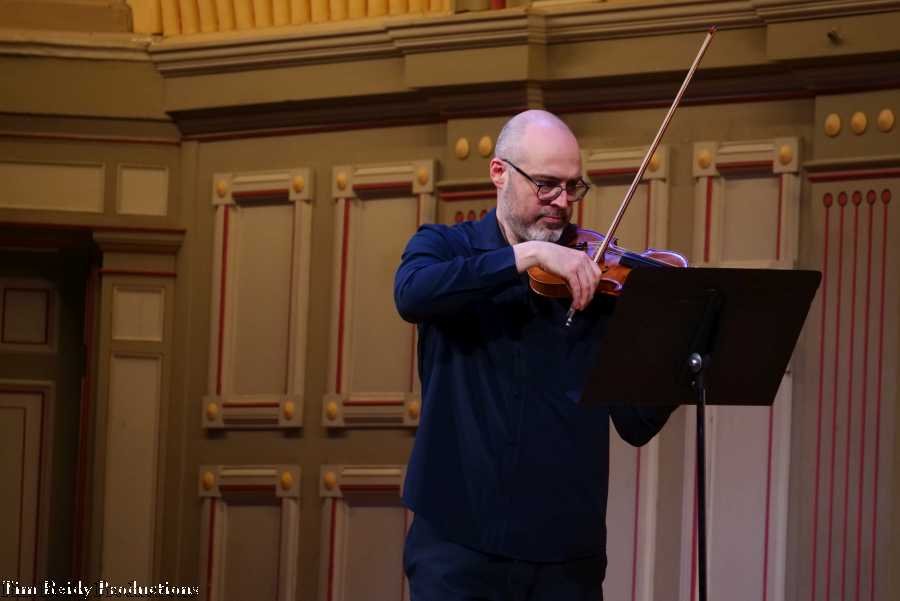
May’s edition of the Music at Noon series at Troy Savings Bank Music Hall featured violinist Emil Altschuler and included:

Partita No. 3 in E Major
Caprice No. 20
Ballade
Mediation from Thais
Tango Etude No. 3
Theme from “Schindler’s List”
Por Una Cabeza
An American in Paris

Photography by Timothy Reidy.

More from Troy Savings Bank Music Hall here …

Upbeat on the Roof returns July 9 with free Tang Concerts

0

2026 Upbeat on the Roof Series Begins July 9

 Free summer concert series highlights regional musical talent

SARATOGA SPRINGS, NY (May 15, 2026) — The Tang Museum at Skidmore College announces the 2026 Upbeat on the Roof concert series. The free outdoor concerts begin Thursday, July 9, at 6 pm and continue each Thursday evening through August 20.

The series highlights regional musical talent in an array of styles, including funk, pop-punk, R&B, folk, indie folk, indie pop, and Americana. Performances take place on the lawn outside the Tang and are free and open to the public.

 The Lineup

July 9: Oobleck
July 16: Paintbrush Charlie
July 23: The E-Block
July 30: Carolyn Shapiro
August 6: Little Saints
August 13: Nice Hockey
August 20: The Millstone Rounders

Before each concert, Tang Art Educators will offer Crafts on the Grass: art-making kits for kids starting at 5:30 pm. A different craft will be available each week. All projects are suitable for children ages 5 and older, with adult supervision recommended. Materials will be distributed on a first-come, first-served basis.

The Upbeat concert series began in summer 2001 on the roof deck of the Tang building. The series became so popular, however, that the concerts came off the roof and onto the lawn. The Upbeat on the Roof name remains. Visitors are invited to bring blankets, camping chairs, food, and drink to picnic on the lawn; plenty of parking is available in the lot adjacent to the museum.

In the case of inclement weather, the art-making activities and concerts will be held inside the museum.

Admission is free. The Tang is on the campus of Skidmore College. The main entrance is at 815 N. Broadway in Saratoga Springs. For more information, please call the Visitors Services Desk at 518-580-8080 or visit tang.skidmore.edu.

 About the Performers

July 9: Oobleck

Oobleck is a high-octane, five-piece funk band that has performed around the Capital Region, Hudson Valley, and Vermont since 2008. The band plays grungy original horn funk inspired by the after-dark variety of New Orleans street music, with heavy drums and bass, chunky guitar riffs, and highly improvised, kinetic horns. The group’s sound is high-energy and dance-focused, moving among soul-funk, Afro-funk, and expansive improvisation.

July 16: Paintbrush Charlie

Paintbrush Charlie is a pop-punk-adjacent trio based in Troy, New York. Featuring Julia Alsarraf, Brendan Tompkins, and Katy Chau-Westfall, the band creates high-energy performances of punchy yet tender songs that hit straight in the feelings.

 July 23: The E-Block

The E-Block is a four-piece R&B band from upstate New York that blends the acoustic warmth of singer-songwriter music with an ice-cold rhythm section informed by modern R&B. With wide-ranging influences and a free-flowing style, The E-Block has earned a reputation as a distinctive live act in the New York scene and beyond.

 July 30: Carolyn Shapiro

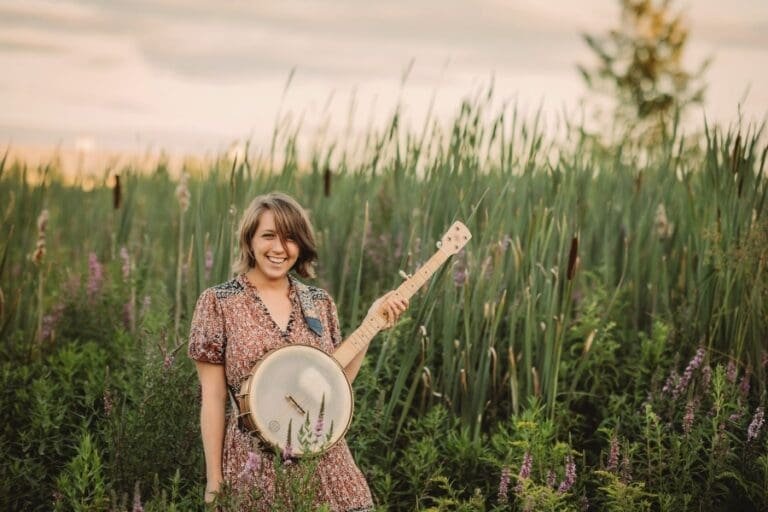
Carolyn Shapiro, Skidmore class of 2015, is an award-winning old-time banjo player and songwriter from the Southern Adirondacks. Named Folk/Traditional Artist of 2026 by the Capital Region Thomas Edison Music Awards, Shapiro blends a soulful, contemporary edge with deep-rooted traditional style. Her songwriting pushes the boundaries of the banjo and explores the intimate complexities of being human. She returns to the Tang after her debut Upbeat on the Roof performance in 2022.

 August 6: Little Saints

Little Saints is an original band born in Saratoga Springs. The three-piece, genre-bending group features singer-songwriter Natalie Santini, guitarist Andy Arnold, and bassist Ian Dingman. Drawing on influences including Brandi Carlile, Stevie Wonder, and the Tedeschi Trucks Band, Little Saints blends Americana, indie folk, and modern soul.

 August 13: Nice Hockey

Nice Hockey is a donut-fueled indie-pop quartet from Schenectady, New York, featuring Skidmore Psychology professors Dom Vuvan and Harrison Schmitt. The power-pop band was started by Dom and Chad and completed by Harrison and Eric. Their songs are charming and big-hearted, with stories about friendship, everyday life, chameleonic vibes, and how to survive the impossible.

 August 20: The Millstone Rounders

The Millstone Rounders perform acoustic Americana that incorporates country, gospel, blues, trans-Atlantic fiddle breakdowns, and proto rock ’n’ roll. Performing on acoustic instruments around a single microphone, the group creates a sound that is both timelessly classic and thoroughly contemporary.

About Skidmore College

Founded in 1903, Skidmore College is a highly selective, private liberal arts college of about 2,700 students located in the dynamic town of Saratoga Springs, New York. Consistently ranked as a top liberal arts college by U.S. News & World Report, The Princeton Review, Forbes, and more, Skidmore has also been recognized for its innovation, value, and sustainability efforts. Skidmore fosters academic and personal excellence — all driven by a belief that Creative Thought Matters. Its comprehensive array of opportunities encompasses more than 40 bachelor’s degree programs, including popular offerings in business, psychology, and the creative and performing arts; competitive NCAA Division III athletics; world-class facilities; and hands-on civic engagement and career development resources.

About the Tang Teaching Museum

The Tang Teaching Museum at Skidmore College is a pioneer of interdisciplinary exploration and learning. A cultural anchor of New York’s Capital Region, the institution’s approach has become a model for university art museums across the country — with exhibition programs and series that bring together the visual and performing arts with fields of study as disparate as history, astronomy, and physics. The Tang has one of the most rigorous faculty-engagement initiatives in the nation, the Mellon Seminar, and robust publication and touring exhibition initiatives that extend the institution’s reach far beyond its walls. The Tang Teaching Museum’s building, designed by architect Antoine Predock, serves as a visual metaphor for the convergence of ideas and exchange the institution catalyzes. The museum is open Tuesday through Sunday, from noon to 5 pm, with extended hours until 9 pm Thursday. More information at http://tang.skidmore.edu.

Press Release: Five One ART Studio LIVE Saturday, May 17th

0
Hello Everyone!
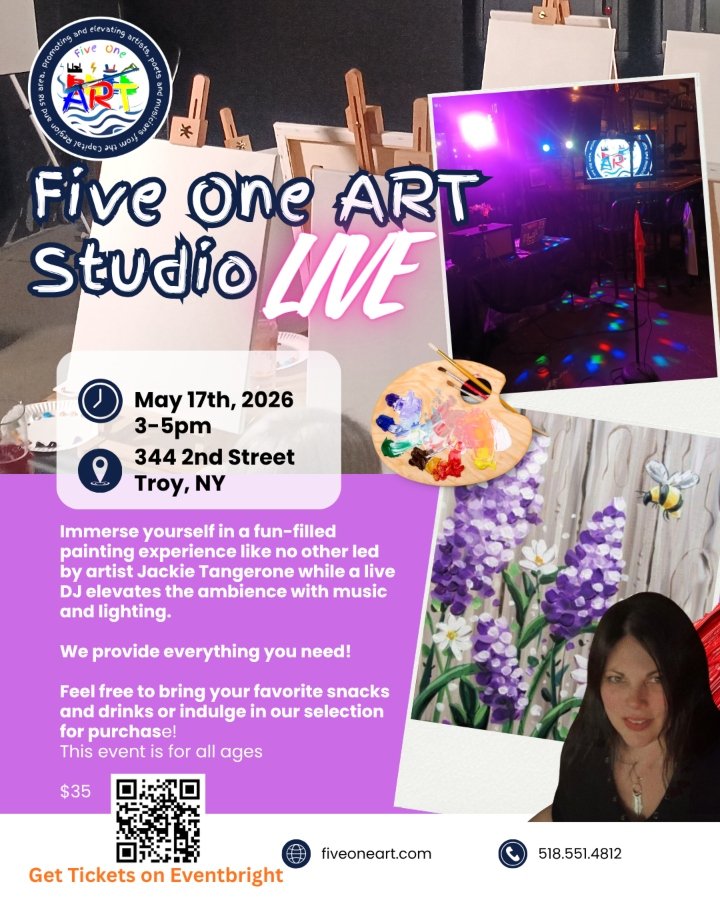
We’re excited to extend a warm invitation to you for our inaugural Five One ART Studio LIVE!, happening this Saturday, May 17th at 3:00 p.m. at 344 2nd Street in Troy!
Under the talented guidance of Jackie Tangerone, get ready for an immersive art experience that promises to be both inspiring and enjoyable. To elevate the atmosphere, we’ll have a live DJ spinning tunes and setting the mood with vibrant lights!
Feel free to bring your favorite snacks, or indulge in our delightful selection of refreshments available for purchase.
Tickets are just $35, and we’d love for you to join us! We also encourage you to spread the word and invite your friends—let’s make this event a resounding success! Your support will help us create more opportunities for local artists and share the joy of art and music across the Capital Region.
To purchase tickets, simply scan the QR code on the flyer or click the link below:
We can’t wait to see you there!
In creative collaboration,
David Sutliff

Program Director/Event Coordinator

Peak Music and Dance Launches New Multidisciplinary Arts Center

0

Peak Music and Dance Launches New Multidisciplinary Arts Center
Following $500,000 Personal Investment by Founders

LATHAM, NY — After years of growth, community performances, and building one of the
Capital Region’s most distinctive music training programs, the founders of Peak Music
Studios are taking the next major step.
Crystal Moore and Jeff Moore have partnered with Jillian Ruddy to officially launch Peak

Music and Dance, a new multidisciplinary performing arts center in Latham designed to
integrate high-level music and dance training under one roof.
The expansion was fueled in part by a deeply personal decision. Crystal Moore invested the
bulk of her retirement savings into the project; savings she says began with her very first
paycheck as a community college professor at age 23.

“Instead of treating our savings as something to simply protect and grow from a distance,
we chose to reinvest it directly into the Capital Region and into a vision we believe can
genuinely change lives for the better,” said Crystal Moore, co-founder of Peak Music and
Dance. “We wanted to create a place where children, teens, and adults can become the
best artists they are capable of becoming while being surrounded by a supportive
community that values them for who they are.”
The new center represents the evolution of Peak Music Studios, which has operated since
2018 and built a reputation for structured music training, public performances, and
community-centered arts programming.

The vision for expansion accelerated through several converging forces: the rapid growth of
Peak Music Studios, the development of the multidisciplinary performance project Dark
Ballet, and a growing belief among the Crystal, Jeff, and Jillian that music and dance
training could be meaningfully integrated into a single artistic environment.
Joining Crystal and Jeff Moore as co-owner and investor is longtime dance educator Jillian
Ruddy, formerly of Spendwood School of Dance and Gymnastics. Ruddy says studio
ownership and the opportunity to help build a multidisciplinary arts center has been a
long-time professional dream.

“Peak Music and Dance is being built around the idea that the arts should challenge
people, support people, and bring people together,” said Ruddy. “Whether someone wants
to dance recreationally, sing professionally, perform competitively, or simply grow
creatively, they deserve high-quality instruction and a community that believes in them.”
Unlike many traditional arts programs that separate disciplines into isolated silos, Peak
Music and Dance was designed around integrated artistic development.

Students train through structured progression systems across disciplines while also
participating in collaborative performances that combine music, movement, stage
production, and storytelling.
The founders describe the approach as “real artistic development” rather than
disconnected lessons or casual participation.
“We believe students thrive when they are surrounded by other people who are genuinely
working to improve,” said Jeff Moore. “A recreational dancer deserves quality training just
as much as a future professional performer. We’re creating an environment where artistic
growth is taken seriously, but where kindness, encouragement, and community matter just
as much.”

Peak Music and Dance serves youth and adult students across music and dance

disciplines and emphasizes structured progression, performance opportunities, and long-
term artistic growth.

In addition to instruction, the organization has become known for community-centered
arts initiatives and charitable work, including support for Building on Love and Our Angels
Remembered through events such as Finding Christmas. The founders say giving back
through the arts has always been part of the studio’s culture.
The founders say the new facility is not simply about expansion, but about building a
stronger artistic home for the Capital Region.

“We believe the arts can transform confidence, discipline, emotional expression, and
human connection,” said Crystal Moore. “This investment was our way of putting our belief
into action.”

Peak Music and Dance is located at 920 Albany Shaker Road in the Town of Colonie and
will open on June 8th, 2026.

The new center is being developed in partnership with British American, another locally
based business, reinforcing the founders’ commitment to investing in the Capital Region
community.

For more information, visit: www.peakmusicanddance.com
Media Contact: Crystal Moore crystal@peakmusicanddance.com; 518-727-3401

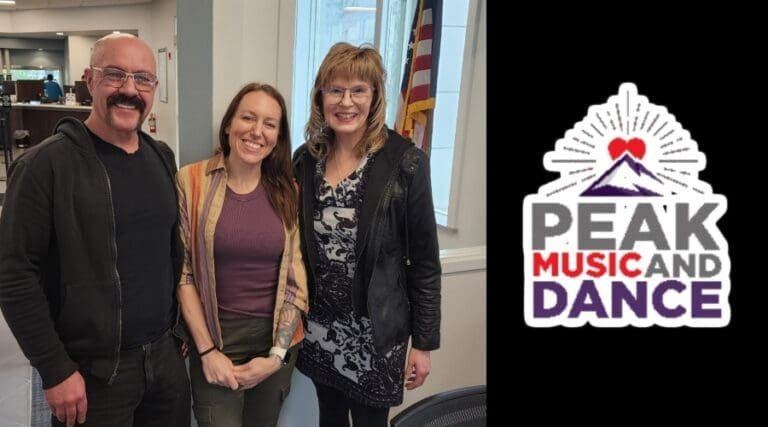
Jeff Moore, Jillian Ruddy, and Crystal Moore
opening the Peak Music and Dance business
account at Pioneer Bank, one of many local
partnerships supporting the studio’s investment
in the Capital Region arts community.

Ribbon Cutting Celebration for the Capital Region Music Hub May 19th

0

Ribbon Cutting Celebration for the Capital Region Music Hub

Tuesday, May 19th 10:00AM

  TROY, NY — Community leaders, arts advocates, and supporters will gather to celebrate the official ribbon cutting of the Capital Region Music Hub, a new space located at the Troy Savings Bank Music Hall dedicated to supporting music education, artist collaboration, live performance, and creative entrepreneurship throughout the Capital Region.

 What: Capital Region Music Hub Ribbon Cutting and Remarks
Who: Project partners, local elected officials, project donors and supporters.
When: Tuesday, May 19th at 10am
Where: Troy Savings Bank Music Hall 30 Second Street Troy NY 12180

Jo Coates – The Space Between Becoming

By BradQuan Copeland.

“As long as I can see you, you’ll always only be mine,” he echoes softly to them, his hand pressed lightly against the small of their back as their lead-laced lids peeled open one at a time.

Elegantly dressed, they stand as mere specks within the gilded hall, marble floors pulsing beneath the blood of their shoes as they waltz with symphonic grace through spiraling woodwinds and crystal light.

He looked at them, adorned in the stitching of stretched flesh, striving desperately to become one body. The crooks of their lips rose as one, a cold gleam flickering across the silken threads their life clung to. Within their velvet-draped cage, they’re as free as a bird, blood trailing from their mouth, sticky and sweet.

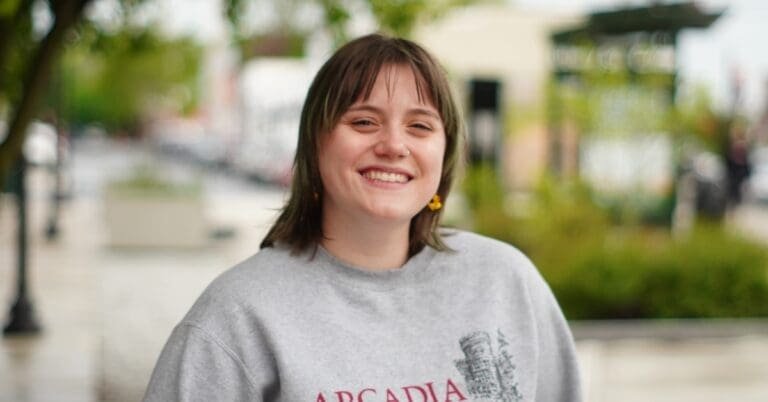
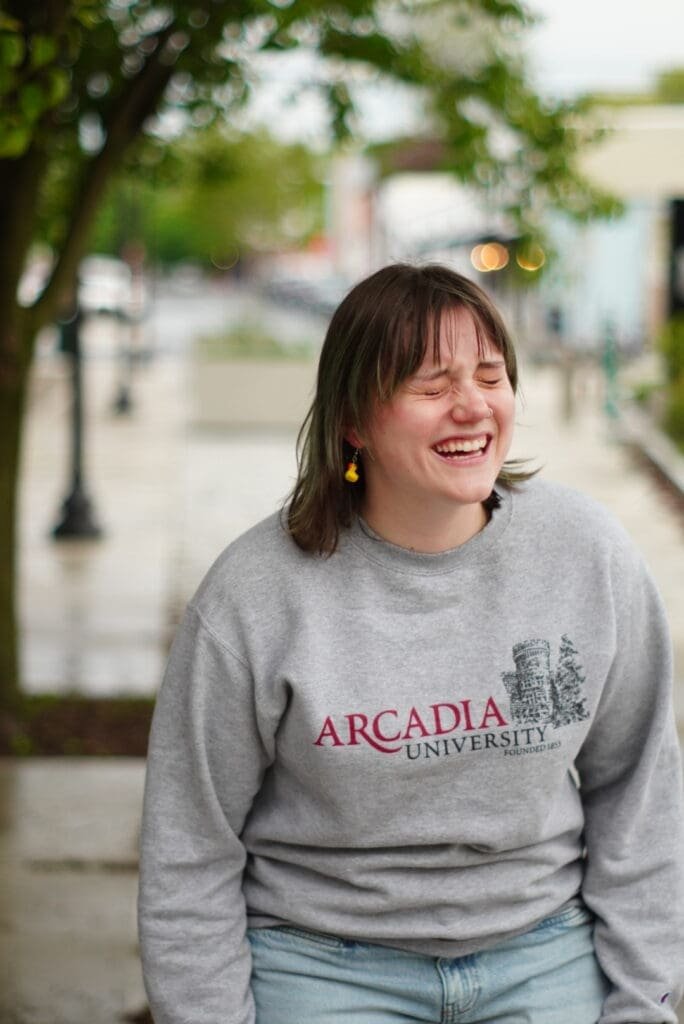
This micro scene was part of an untitled short film I wrote in the summer of 2025, later reworked as an adaptation of the psychological gothic poem “Puppeteer,” written by Troy, NY resident Jo Coates: a young scholar, international choral singer, former teenage near-professional hockey player, aspiring writer, folk musician, deeply introspective thinker, and current Biochemistry and Biophysics PhD student at the prestigious Rensselaer Polytechnic Institute.

I first came into contact with them via Instagram sometime between January and February of 2026 through the recommendation of a fellow colleague, friend, and brilliant photographer Christopher Ebbs, who told them to reach out to me following their band “The Space Between’s” largest performance yet at his Longstock Festival back in September of 2025, where he became their de facto representative.

We finally met face to face on a 55-degree overcast Saturday afternoon on March 21st at the Moon and River Café in Schenectady, NY, a local haven where art drapes the walls, voices take the stage, consciousness blossoms, and identities are curated within the amber-lit openness of free thought.

“Would you like any food?” I asked as they looked at the menu. “No thanks, I’m fine with just water,” they replied as we descended into a dialogue circling one central tension: how someone can be extraordinarily capable, immensely perceptive, and deeply wounded all at once.

As our conversation unfolded, it became increasingly clear that Jo doesn’t merely experience art intellectually, but sensorially. “I have synesthesia, which is really funny because I’m also a scientist. I can taste words when I’m speaking. I can feel when I listen to music. Music is math and math is everything, and so I can blend that whole, like, oh yeah, I can feel and sense everything, and also mixing my science brain into the way that I think about music.”

Such heightened sensitivity bleeds directly into the artistry of their band, The Space Between, where duets become central to their sound. “Most of what we sing is duets,” they told me, “But they’re like straight duets all the way through. It’s both of us layering our voices on each other, singing the same words,” creating what they described as “a very deep musical complexity” in which both voices become “greater than the sum of our parts.”

At just 23 years old, they already carry the weight of an arduous uphill climb, one that greatly battered their joints to near mush before becoming reshaped into something far more unshakable. Their early experiences with hockey became the origin point of that fracture.

“When I was younger, hockey was my life. When I was 15, I got invited to play for a professional team in Canada. I stopped going to regular school and moved to a fully online, asynchronous system. No teachers, no nothing. I stopped all forms of art, and I ate, slept, and breathed hockey for my first six months. My goal was to play Division 1 hockey since there was no women’s league at the time, so that was the end goal. I was on the short list for the national team, and then the hockey world wasn’t exactly kind to me, and there’s lots of people with very similar stories to mine.”

In a former elementary school turned dormitory, Jo, along with numerous other athletes, were sculpted through the tyrannical force of a maddened coach who controlled nearly every aspect of their lives and regularly subjected their developing minds to extended periods of extreme verbal abuse, coercive food control, isolation, emotional intimidation, identity erosion, and a profound fear of failure. “I reach for the stars in everything that I do. I want to be the best at everything, and I have a hard time not being the best,” they told me, revealing perfectionism forged through survival.

This brought my mind to the 2014 indie film Whiplash, where student drummer Andrew Neiman buckles beneath the psychological pressure of his abusive instructor. Beneath its musical ambition lies a haunting question: how much suffering can the mind normalize before abuse becomes indistinguishable from discipline?

Such conditioning created a stunted culture in which suffering became normalized. From my understanding, this created a survival bond between fear and obedience, as Jo learned to adapt to the demands of their abuser by constantly molding themself to the needs of others.

The keys to their heaven dangled just beyond reach as they were led into the eye of the hurricane, sprinting toward a destructive force disguised as athletic success, unaware of the future agony buried within it. The result is a relentless internal tug of war between achievement and self-worth, both sides pulling with full intensity, oblivious to their flesh blistering beneath the friction of the rope.

That’s the insanity perpetuated by a society so fixated on vanity that it never learns the value of verity. That complexity became even more apparent when our conversation shifted toward harm, forgiveness, and the darker contradictions lurking within the shadows of human behavior.

Throughout their life, Jo has repeatedly confronted the uneasy reality that people are capable of both genuine tenderness and profound cruelty, sometimes simultaneously. One night, someone they trusted dearly attempted to sexually assault them while heavily intoxicated, an experience that deeply altered the way they understood safety, intimacy, and trust.

The following morning, he was horrified by events he couldn’t recollect, and expressed extreme sorrow for what he’d done. Though forgiven, they could never look at him the same, dissolving their relationship without allowing the experience to calcify into resentment or extinguish their belief in the goodness still harbored within people. That’s what I found most fascinating about their character. Despite being nine years their elder, I left the conversation realizing how little I truly understood about human nature.

No matter the brutality that once shaped them, they still hope to teach someday, a desire rooted not in prestige, but in a genuine investment in the growth of others. Such praise regarding their intellect, however, was met with resistance, as they often minimize themselves to protect the worth of others, particularly romantic partners. “I sometimes struggle to believe that I matter because I’m a person, not because of my accomplishments.”

Beneath that instinct lingered a far deeper concern: If I am alone and stripped of performance, achievement, usefulness, and connection… who am I left with? It made me wonder whether someone shaped by adaptation could ever feel fully loved without performance. At one point in their life, love itself became entangled with recklessness, less a sanctuary than a controlled arena through which chaos could masquerade as intimacy.

As they sat across from me, their fragility caught my attention as they fidgeted with their ring necklace, a gift from their late grandmother. I admired how carefully they considered each question, often sitting silently for fifteen to thirty seconds before answering. They’re cautious, yet comfortable under watchful eyes. And their pain, though depleting, has left them unusually capable of understanding others without ever absolving them.

It made sense as to why they didn’t want to be reduced merely to the strength of their mind, because the mind simply interprets reality, whereas the soul absorbs it in motion. And after everything I observed, the clearest understanding of Jo came not from my interpretation, but from listening to them directly.
Interview with Jo Coates

  1. When you write about wanting someone to stay, what fear feels closest beneath that desire?

“I reach for the stars in everything that I do. I want to be the best at everything, and I have a hard time not being the best.

And I’m terrified of failure.

I’m also terrified of my success, because over and over again, as I start to succeed, the people that I can make other people will tell me that my success is making them feel less than and so I start to hide my success and hide myself in an urge to get that person to stay with me and being left. I don’t like being alone. Terrified of being alone. Can’t I can’t do being alone very well. I can’t do silence very well.

But my biggest fear, in general, with everything it is the biggest fuel of my anxiety. And sort of what fuels a lot of when I write like, I want someone to say is not being good enough. And at the core of that lies this idea of like, oh, I want to be good enough for other people because I don’t know what being good enough for myself is, because I’ve always struggled with my sense of self and where do, where does other people’s perception of me end and I begin? What does it mean to be good enough? Why does it matter if I’m good enough? Why can’t I just be good and always, it is something, I mean, I deal with that still. Every day I struggle. It is the crux of like my internal struggle and anxiety and such is that fear of being alone.”

  1. What does love represent to you when it feels more dangerous than comforting?

“I think for a while in my life, I used love and my romantic life as a way to be careless, because it was a controlled amount of carelessness. I could do whatever I wanted, and I was I believed that I was untouchable until I wasn’t in a relationship.

I couldn’t physically self harm. It was too obvious. I had too many health checks and people watching over me at all times. I had an eating disorder, but I was an athlete, so there was only so much that I could deprive my body of nutrients before I could no longer be my best athlete.

So the one aspect of my life that I control that didn’t usually affect my ability to succeed in school and athletics and my work was my love life. And so I self sabotage through dating. I dated people who were mean. I dated people who were bad for me.

I believe that I could fix people really long time that people were projects. You know, I have a very strong attachment to the idea of love, and I get very attached people very quickly, if I can find some sort of comfort with them.

And what I always find is it starts out as comfort and then it becomes painful or dangerous or harmful, and I think that I can, I always think that I can get back to the place of comfort. And instead of recognizing that I shouldn’t want to be with someone who treats me like that, even if there was a place of comfort, I instead try and fight to get back to that place of comfort until that person then ends the relationship.”

  1. In moments where meaning feels absent, what keeps you choosing to speak instead of going silent?

“I always I speak, even when I will always choose to speak, because I think that is a part of me that is so integral to me, and I like being able to speak, and it makes me feel like myself, even when I don’t feel like myself.

And the second thing I think of is what happened back in October when I made my public facing post about my experience with sexual assault, and I had so many people that I had a bunch of people that I didn’t really know that followed me be like, wow, this is really powerful.

But then I also had a lot of people from my life in the past I hadn’t talked to in a while message me and be like, you are the reason I went to go get a degree in musical theater. You’re the reason I went to go get a degree in choral. I did this thing because of you.

I had someone say to me, ‘You were the only person who was kind to me in my freshman year of college.’

And so I realized that I shouldn’t be surrounding myself with people who aren’t going to be kind to me like you were.

Me speaking out publicly when I’m thinking about it and being thoughtful and mindful about it is important because it makes people feel comfortable coming forward. But me speaking just in general also inspires people when I don’t even realize people are listening. So I try to never stay silent for that reason, because I’ve inspired a lot of people.”

  1. What part of yourself do you feel most seen when someone holds you, even briefly?

“Everything that I’m thinking out comes back to mattering to other people, and that reminder that, like, oh, right, I am something to other people.

I sometimes struggle to believe that, like I exist, and I know I don’t exist in a vacuum, but it also can be tough to like feel sometimes that like I matter because I’m a person, not I matter because of my accomplishments.

So being held, the things I think of immediately are when I’m held by my boyfriend, I feel like I can relax and just kind of melt.

And when I haven’t seen people in a long time, and you get that super tight hug of like, oh my god, I haven’t seen you in forever, I think of that moment and that importance to other people in such a like, oh yeah, I am a person.”

  1. How do you understand the difference between longing and love in your own life?

“I’m a big yearning nerd. I love yearning. I love the idea of yearning, and I think the difference is I can long for a lot of things. Love is purposeful.

Love isn’t just something that happens. Love takes time. Love takes intent.

I didn’t trip and fall in love. I knit every single part of that relationship together by putting intent and effort behind what I wanted to do, what I felt and how I wanted to.

Feelings exist, right? Love is the extra step and effort and time of intention behind feeling.

Longing is a lot less intentional. In my mind, it also is a lot more protective than love is.

You can long for someone, but it’s an ideal of someone. Love is recognizing and holding and being intentional with what you’re doing.

And also people are a lot more real when they’re right in front of you than they are when you think about them.”

  1. When you describe obsession, what need inside you feels unmet?

“I need to be wanted.

The ultimate struggle for me is being wanted, being needed.

But being needed really, it’s being wanted because I want the intentionality behind it, but I settle for being needed, because I am always useful.

I’m a very useful person, and so I think that I obsess over people, and people obsess over me, and I think it’s because I can make myself into the perfect version of what I need to be, to be needed, and maybe that will be enough to fill the urge to be wanted.

That’s not just in my romantic relationships. It’s also in my academic life. It’s in my friendships. It was when I was a hockey player. It was in every aspect that I can work and change things about me to be exactly what people need, and so I obsess over people and things like that to be needed in substitution of actually being wanted.”

  1. What does surrender mean to you when you write about being carried or blown away?

“I’ve always had that like, I am a stone girl. I am made of stone.

I tend to be all that I can rely on, and I’m always on edge. I’m always aware of all of my surroundings, and when I’m dealing with something really tough, I definitely am like, I am stone. I rely on myself.

For a while in my life, I believed that the only thing that I could rely on was myself.

And I always long for that moment, you know, the moment in movies where the main character has a big breakdown and there’s someone holding them and they’re crying and they’re like, this is everything that I’ve been holding on to for a really long time.

I yearned for that moment, for being able to feel like I could just relax and melt away and I could stop being so hardened.

And I hope to be able to surrender and allow myself to rely on someone else when the going gets tough.

Not to be completely codependent on someone, but to be able to lean on other people for the emotional side of things.

And that ability of just being carried or held or blown away, or just being able to melt and not have to be so tough, is something that I strive, that I’m working towards.”

  1. Where do you feel most divided between who you are alone and who you become in connection?

“I’ve always been a social butterfly. I can very easily make friends.

But I don’t think I am a social butterfly as much as I am a social chameleon. I adapt. I change.

And when I was younger, I would change everything about myself down to the way my voice sounded depending on who I was talking to.

And it started to blur this line of like, who actually am I as a person?

And so as I’ve gotten older, if I’m in a situation where I feel myself slipping back into that habit, I can struggle to be like, wait, stop for a second. Make sure I’m trying to be myself and be truthful and honest.

And then when I’m alone, like, who actually am I? That’s something that I’ve been dealing with a lot recently, is who am I, what defines me, and can I define myself without bringing up external things or what other people think.

That’s something that I struggle with a lot, because I’m not sure I know.”

  1. What truth about yourself feels hardest to admit without turning it into a poem?

“I think a lot of my fears and insecurities are self imposed.

They come from pressures and from other people. But those pressures are now gone, and I still feel them.

And it’s so hard to like…

I’m terrified of being alone. I don’t mean being lonely. I mean I’m terrified of being alone with myself in a room without something else being there.

I can’t do silence in a room. I don’t sleep in silence. I do white noise or I listen to stories or podcasts.

I’m really scared of my own mind. I get trapped in it sometimes. I have a lot going on up here.

I started using music as a way to cope with the thoughts in my head from a young age, and now I struggle to be alone in silence because I’m so scared of my own mind.”

  1. If your writing could answer one question you keep asking yourself, what would that question be?

“I think when I go back and read my stuff is how I survived all of it. Everything that I write about, everything that I experienced, I survived. None of it took me down.

And I think that I return to that sometimes when the going gets tough.

I’ve dealt with a lot of pretty heavy stuff in my life. I’ve dealt with a lot of trauma and a lot of troubling things, and I made it through.

And then this past July, I had a moment where I almost took my own life. It was the first time I had ever truly attempted to take my own life.

I stopped taking my meds and the voices in my head telling me to do it got louder than the ones telling me I needed to stay.

I was like, okay, yeah, this is it. I’m done. I’m done being alive.

Went to crisis, went to the crisis center, and I ended up being okay.

But it was this moment where I was finally like, you know what, I’m done. I’m tired. I don’t want to do this anymore.

And then after that happened, nothing changed. I went the next day and the only thing that changed is my parents knew what my struggle was.

And then I had a tumor on my left ovary.

But I had a moment where I almost died. I was sitting on my couch. I was dying. I kept asking my mom for a Bible and a priest.

My mom fully thought she was about to lose her kid.

And it was like I’ve survived so much up until this point.

First of all, I survived so much. I kind of just want to start living. I kind of just want to start being.

And so I think my work is such a good encapsulation of like, I survived all of this stuff, and I’m still here. I’m still kicking.

And that’s why I strive to bring myself back to this place of enjoying life and being alive.”

Bill Payne from Little Feat – An Xperience Interview

0

By Liam Sweeny.

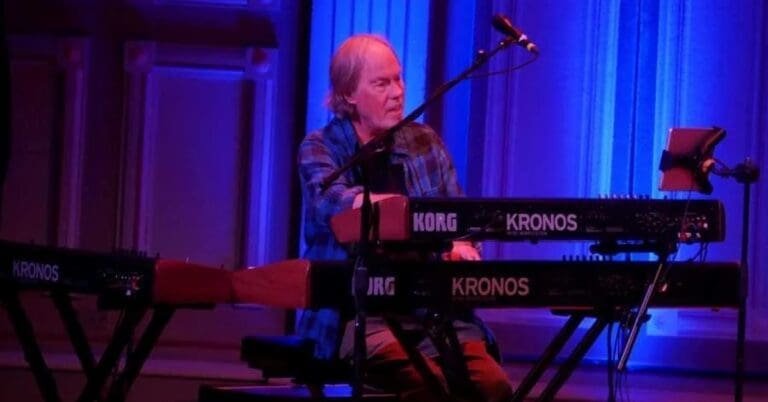
Little Feat is an iconic band that formed in 1969, and it would be rare to find someone who hasn’t heard a Little Feat song. With a sound uniquely their own, the band has refused over the years to do anything not authentic to their principles and vision. We talk to keyboardist Bill Payne.

RRX: Little Feat started in 1969. What was it like to start a band in that era, that particular time period?

Bill Payne: Well, that’s a good question. It was chaotic. There was a lot going on. The Vietnam War was taking place. There was a lot of mayhem, murder-wise with Charles Manson and his people. The LaBianca family was murdered down the street from where Lowell [George] lived. It was less than a half a mile, I think. You know, things were like they are now. They were intense, but there was music, which was very powerful. It was a powerful agent with regard to voicing concerns and whatnot. It was a great time to be in a band, and a lot of great music was brought out then, too. The times were ripe for people who were creative to be able to address issues. There wasn’t the kind of overlay in terms of people telling you what you could write and what you couldn’t write and what was correct and what was not correct. I mean, it was just a lot more wide open back then.

RRX: When you guys were starting, was there something you wanted to focus on musically?

BP: I think that’s a natural thing to do, too, by the way. At first, we were trying out a lot of instrumental music, more like Frank Zappa stuff. Then we started graduating into songs, writing songs, and one of the first ones we (Lowell and I) wrote was “Truck Stop Girl,” which the Byrds recorded. There were groups like The Band that were out there. We, we had some stuff that kinda sounded like The Band, the Rolling Stones … the Stones liked us, we liked them. You know, that kind of thing. 
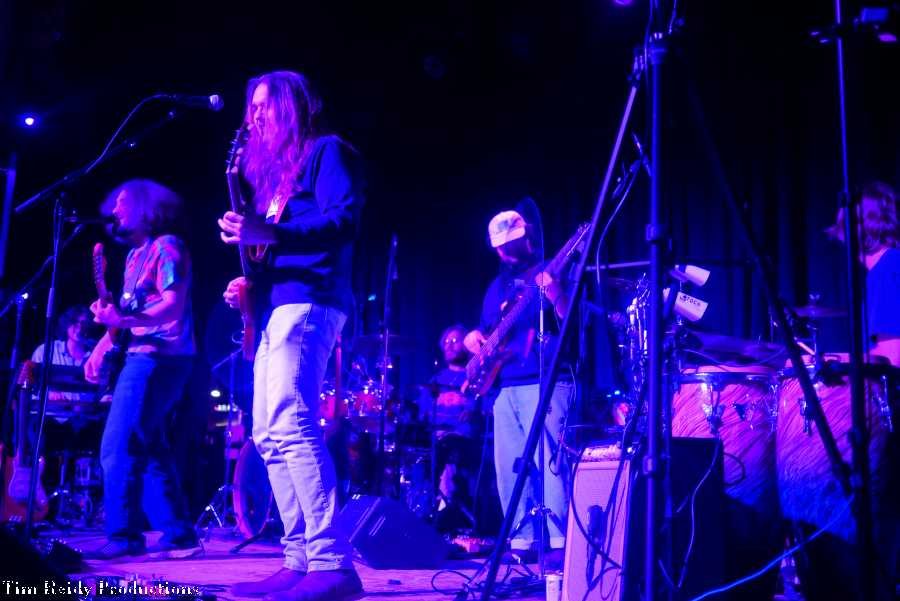
Being in Little Feat, it’s like being in ten different bands, right? Because the scope of the music – it was rock and roll, it was country, it was some R&B. It had a little bit of everything. Then, in 1972, we brought in Kenny Gradney and Sam Clayton from Delaney & Bonnie. And there’s an element of Louisiana, New Orleans music in our repertoire, so things graduated from there. 

But that’s a natural thing to set out a scope in front of you and say, “Hey, what do we wanna do?” I think we made the right call, and it confused a lot of people at first, especially with the people trying to sell our music, that we were outside the boundaries. You can package it like this and that, but it helps us in terms of longevity to have a band that plays so many different styles.

RRX: When I listen to Little Feat, the feeling I get is like when someone’s playing accordion. They go out, and the music comes back to a point, and then it expands outward again, and then it comes back in. I hear that a lot in Little Feat. I love it. 

BP: Yeah, well … it’s more of a thing with jazz players, where you have the music … Miles Davis used to talk about it … and I think Zappa too, although he wasn’t doing jazz, but it’s those areas where you have terra firma under your feet. There’s solid ground, and then when you jump off and start swimming, you can either drown, or do the dog paddle, or get eaten by a shark, or whatever, but there’s freedom there. And then you swim to the next little island, where there’s a recognizable lick of the recognizable riff that you’re gonna play. And those things tie in. The Grateful Dead did that a lot, too. So it’s just a device that musicians use to be able to, as you say, expand and contract their music. Basically, it’s like jamming is what it is.

RRX: What’s Little Feat doing at the moment? What’s going on? 

BP: Well, Little Feat is on what we’re calling the last farewell tour. And this last farewell business is going to take probably two to two-and-a-half years before we come to dock. After that happens, we just won’t be jumping on the bus anymore, but we can go out and play residencies. We wanna go on a cruise or two, we can do that. If there’s a special festival we wanna play. We’ll just have to decide what we wanna do. When the act of actually touring ends (and we can always make records), we do everything we want, but it’s a new way of retiring.

RRX: Is there any possibility in the near or far future of another record?

BP: Oh yeah, I believe so. Little Feat will certainly do one. I’m gonna be doing a solo project, which will come out after my book. The book is scheduled to be released in February of next year, and I’d say I probably have an album ready for the fall of that year (2027). So we’ll see. And Little Feat’s gonna be recording too, so there’s a lot on the plate right now, which is great.

RRX: You wanna tell us anything about the book?  

BP: They’re my memoirs. I want people to know how a kid who learned classical music growing up was allowed by the teacher (Ruth Newman) to play music by ear, as well as learn how to read music by Bach, Beethoven, and Brahms. The facility to do that, and the freedom to play by ear, is what created my personal piano style, and it’s worked out pretty well, I would say. I’m leading people through those shows and through the strata of the history that our music was made in, which you alluded to earlier, and it’s a pretty darn good book. I mean, Doug Brinkley, who’s a friend, he’s a presidential historian. He thinks I’ve written something pretty darn good, so we’ll see how it floats once it gets out there. It’s a book about music. It’s a book about life. It’s a book about redemption and family, family things that went very badly at one point, and coming crawling back from that. But also a really good book.

I think it’s honestly told. Just writing about Lowell could have taken up the whole book, but you know, I wanted to tell the truth about people, but without hurting people.

RRX: Yeah, right, and that’s not always easy

BP: Not easy to do so, but I think I did it.

Hilltop @ Lark Hall, 5/9/2026

0

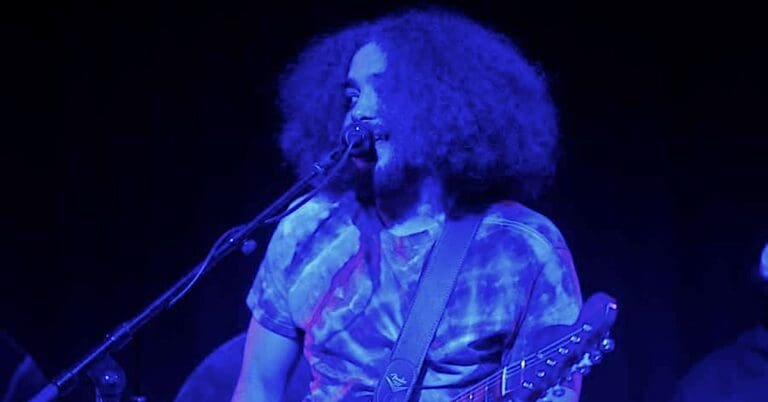
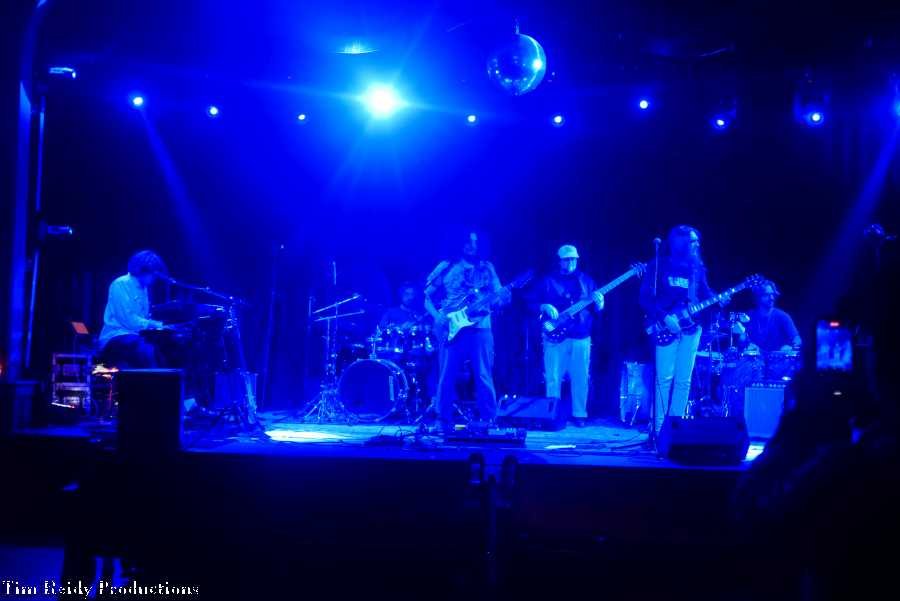
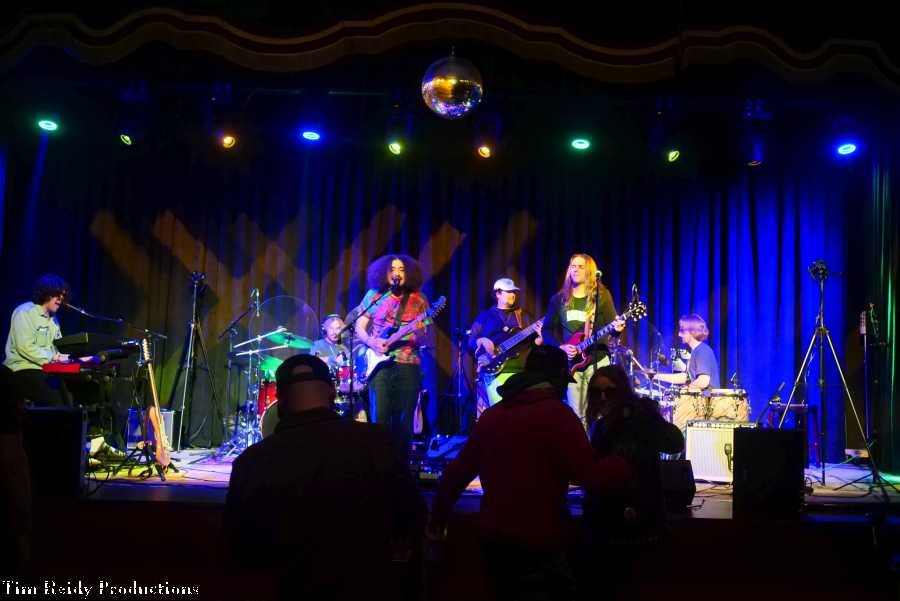
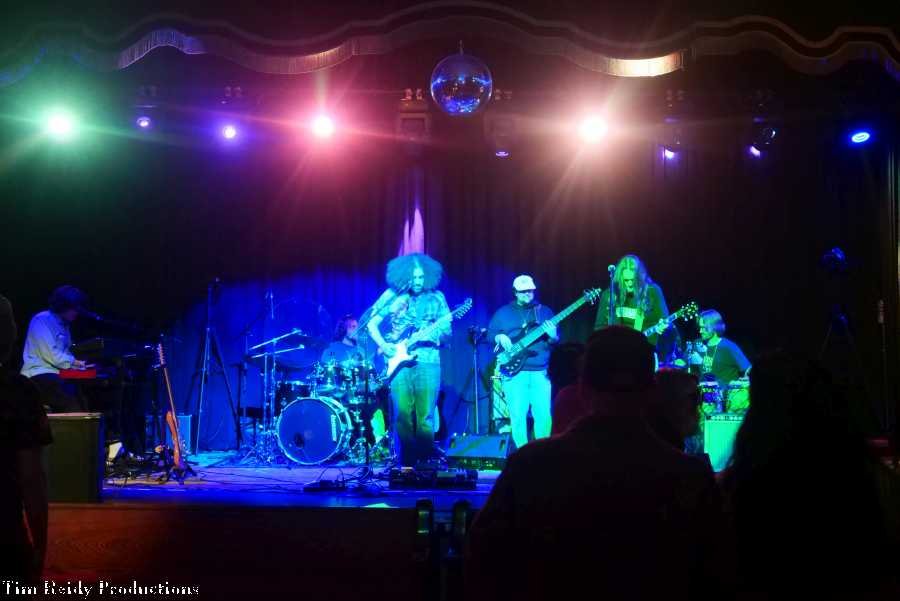
Folks came to the top of the hill on Hudson Avenue to see the classic jamming of Hilltop at Lark Hall.

Photography by Timothy Reidy.

More from Lark Hall here …

Whassup in the 518? – Weekend Shows 5/15-5/17

0

Outpost 40: Friday 5/15 Donna Tritico 7pm Saturday 5/16 River Country 8pm

Seven Friday 5/15 Nick Horace 7pm Saturday 5/16 Kelly Duo & Son

Caffe Lena Friday 5/15 House of Hamill 8pm Saturday 5/16 Andrew Duhon

Other One Brewing Friday 5/15 Matt Finnegan 6:30pm Sunday 5/17 Ron Comstock 1pm

Empire Underground: Friday 5/15 Snuffed On Sight 7pm Saturday 5/16 Sparks The Rescue 7pm

Empire Live: Friday 5/15 The Emo Night Tour 8pm Sunday 5/17 Fleshgod Apocalypse 7pm

Lark Street Tavern Friday 5/15 Trivia 6pm 5/17: Local Band Sundays 2:30pm

E1 Presents: Saturday 5/16 Legend (Journey Tribute) at The Strand

The Hangar: Friday 5/15 SaintSeneca & Lily Seabird 8pm

Troy Savings Bank Music Hall Sunday 5/17 Glimmerglass Opera’s Happy End 3pm

Rustic Barn Friday 5/15 Alex Riddell 6pm Saturday 5/16 Psycho Mutton Chops 8pm

Cohoes Music Hall Fri 5/15 Lez Zeppelin 8pm Sunday 5/17 Aztec Two-Step presents Simon & Garfunkel (Tribute) 3pm

No Fun Friday 5/15 Rabid Children / Huntress Wizard / Mental Weather 7pm Saturday 5/16 Sunset Splatter -A Play by Lila Rallatos 2pm CRSC Benefit Show: The Belle Curves / GNBAHT / Nada Y Nada / Mongooze 7pm Sunday 5/17 The Strip / GOLEM / TV Dinner / The Snorts / Snow White 7pm

Park Theatre Glens Falls: Friday 5/15 Rewind at The Park’ with Strange Souls – The Doors Reimagined 8pm

Park Theater Hudson: Friday 5/15 Pete Muller & Matt Hartke 8pm Saturday 5/16 Black Mountain Symphony & Kilashandra 8pm Saturday 5/16 Student Showcase 8pm

Putnam Place: Friday 5/15 Weird Phishes & Strange Machines 7pm

The Egg: Friday 5/15 Brett Dennen 8pm