
A Feral Gentleman (March 2022) By Jon Rodat
Start the surveillance-tape replay at the 0830 time stamp; the angle from above the registers, pointing down the center aisle toward the inside of the front door. The store is dim but it’s bright outside. The empty parking spaces in front are sunlit and clear. Our hero enters from the left. He’s a middling sort: middling height, middling weight. That middling sort of black-gray hair people call “salt and pepper,” that middling sort of sartorial formality people call “business casual.” His eyeglass frames are large enough to imply middling vision, such that we can assume, even at this distance, that were we actually there he couldn’t without them make out our own features, even at this distance.
Still, there’s something of a cheerful energy to his walk. He’s got a travel mug in his far hand, and a colorful vinyl lunch bag over his near forearm. It’s the gait of man who woke early enough to make a fresh pot of hot coffee, rather than start the morning with the room-temperature remnants of yesterday’s brew; a man with sufficient foresight to have made himself a decent sandwich, rather than to, again, rely on a nearby gas station for bland egg salad on elastic white and a bag of snack chips with a flavor name that sounds like a wrestling move, or worse: Nitro Sriracha Suplex or Bukkake Ranch. He might even have an apple in there.
He unlocks and opens the front door with a graceful maneuver that redirects but doesn’t stop his stride, spinning into its opening as, just behind him, a spotless white Mercedes Benz pulls into the parking space nearest him – really quite near, actually. Kinda worrisomely near, and kinda worrisomely fast. The driver’s-side door pops open and a head can suddenly be seen above the car’s low, sleek roof. Our hero waits a beat – does he shrug? He steps forward into the store; the interaction is evidently over. He then goes briefly rigid. With another dance-like movement, he turns, propping open the door with his foot, never displacing the lunch bag or so much as a drop of coffee, and adopts a forward-from-the waist, arms-out posture recognized in every Spring Break location around the world as the “Come at me, Bro.” He holds the pose for seconds, then relents. He locks the door from the inside, and heads inside, down the center aisle toward the alarm panel, which he deactivates. He hits the lights and fires up Spotify on the store’s iPad. The whole exchange takes fewer than the 90 seconds allowed by the motion sensors, but, still, his walk is noticeably less lively than at our earlier, idyllic time stamp.
Some products, they say, sell themselves. This is nonsense. Some categories of product are, sure, easier sells than others, and I am fortunate, as salesmen go, in that regard: I sell drugs. Legal drugs but drugs, nevertheless. I am the manager of a fine wine and spirits shop that I’ll call Wine Behind the Pines. We’re located in a comparatively affluent suburb outside a no longer very electric Electric city, which is itself a kind of satellite of a capital city the motto of which is “Assiduity.” (Yes, yes, you’ve figured it out. But we are soon to enter the realms of fantasy and slander. So, plausible deniability will be our watchword.) Point is, imagine that you’re a professional working in cubicles or laboratories in or around a city the slogan of which is, essentially, “grind.” How much does that make you want to drink? Right.
And yet, while people are always happier to buy recreational drugs than to buy, say, snow tires, space heaters, or rock salt, the product still doesn’t sell itself. Even a motivated buyer needs a warm and semi-sentient body to get said product – be it a Gundlach Bunschu merlot, redolent of plum, bay leaf and chocolate, or a shatterproof pint of Ol’ Weepin’ Wound Whiskey, redolent of night sweats and weak coffee in later church basements – into their hands. And woe betide the middling middleman whose job it is to open the door to the impatient: To paraphrase Jimi Hendrix, “What if 8:30 turned out to be 9?” To paraphrase me, “It doesn’t. Give me a few.”
Turns out, the Mercedes DTs are sweet-looking but uncomfortable rides, and their drivers can have whole mouthfuls of abuse for a recreational-drug salesman with a service-economy chip on his shoulder and a novelist’s mean streak.
So, imagine that surveillance-tape, but with audio. Imagine the vulgar needy impatience. Imagine the vulgar defensive retort. Imagine our hero getting on with his job, seemingly. Retrieving the bank bags and counting out the registers. Checking the stock levels of the domestic varietals on the floor, in the Old World fixtures, and in the chiller of whites and sparkling wines. Reviewing the notes reminding him to adjust regular ordering for this or that impending holiday and/or alco-centric sporting or cultural event. Reviewing the special orders. (Is it a Jamo or a Jäger kind of bash? Are your new in-laws Bordeaux or Burgundy kinds of in-laws?) Then pulling up a rolling office chair, kicking up his soft-soled Johnston & Murphy wingtips and slowly, slowly, slowly eating his apple. In other words, taking his sweet fucking time, staring at the sunlight-bright Benz, enjoying the store’s iPad’s Spotify Velvet Underground radio channel as it fills the empty space: “First thing you learn is that you always got to wait.”
Is this getting a little dark? It feels like it’s getting a little dark. Like it’s funny, but not, you know, fun.
Ah, well, a “novelist’s mean streak” is another way of saying a working slob’s revenge fantasy. It didn’t play out quite like that. Much of it is true. But the Benz didn’t linger; it hurried along to another purveyor, probably, of whatever quality of quaff he needed so pressingly. Maybe it was a hastily researched 2015 Les Carmes Haut-Brion to impress a cultured and stand-offish boss in a last-ditch attempt to get a crack at the Glengarry leads; maybe it was a mag of econo-moscato for a nooner with a mature-for-her-age undergrad at the insufficiently gated college down the road; maybe it was, in fact, a pint of any goddamn thing at all to keep the hands steady.
In any event, our hero did not extract his slow revenge by eating an apple as the VU played. (He had in fact forgotten to pack an apple and ended up rounding out his meal of homemade tuna-salad sandwich with a bag of XXtreme PrejuDill Pickle Chips). In actuality, after the shouted insult, the Benz went on its own way without further event, and our hero opened the store, as he had many times before, to Spotify’s Steely Dan radio. See, look, there he is unlocking at the 0900 timestamp, in broad daylight.
“They got a name for the winners in the world . . ..”
By Ivy Effing-Ryotte
Extra! Extra! The March Issue of Xperience – Digital Edition – Get it Here!
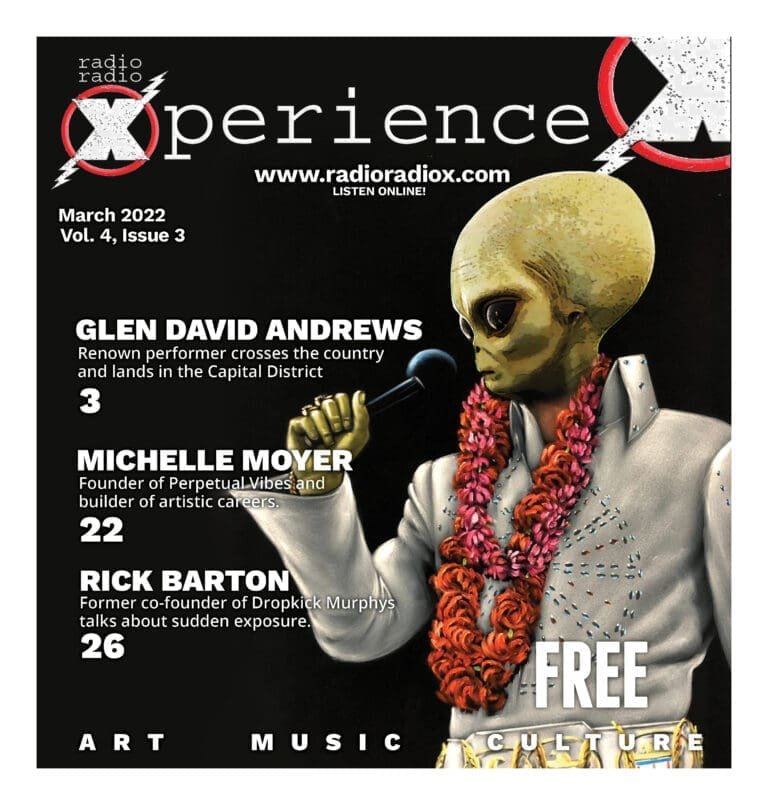
It is the cusp of spring, and here at Xperience it is the time we break out the barbecues and the sun tan lotion – doesn’t hurt to show up early. Featuring Glen David Andrews, Rick Barton and Michelle Moyer, and, of course…. more.

Michelle Moyer (Perpetual Vibes) Interview by Rob Smittix
Today we speak with Michelle Moyer owner and founder of Perpetual Vibes.
RRX: Perpetual Vibes. Explain in your own words what it is that you do.
MM: Perpetual Vibes is a marketing management company, specifically for artists or any type of talented person really. I’ve talked with people such as book authors to musicians. Right now, I have four signed artists. I started this company last year during COVID, I was working with Hilton as a sales marketing manager, my whole background is sales and marketing. I was in the music industry for 25 plus years, right out of high school working and running a music store back when there were music stores. Then working my way to the labels, I’ve worked for BMI Capitol Records after I got out of the retail end of things. Anyway, my girlfriend and I met up during COVID and she had a digital marketing background that we wanted to intertwine with my experience in the entertainment business.
We formed Perpetual Vibes to basically try to help local musicians or talented artists that wanted help with branding. Get them more gigs, get them out there basically to build a career. I’ve started with Sly Fox and the Hustlers. Carrie Ann, my partner, has since left the business, she has a family and couldn’t really dedicate the time needed. So right now, it’s just me.
I’m working with friends and band members. We work in tandem; they work just as hard as I do. We really work together, it’s really grassroots. That’s kind of what makes it work. Sly Fox and the Hustlers was kind of our beta band. Figuring out what we could do to help grow the band. We got them a tour last fall and they have a new single that came out on Valentine’s Day called “Find Someone,” this will be the first new music in a while, so we’re excited about that. We start another Spring tour in May.
We’re also working with the band Thanks. A local indie rock band from the Saratoga Springs area and they also recently put out a new single “I Choose You.” Then I’m working with Jennie Angel and The Outlaws, that’s more of a country artist. She is actually part of the Academy of Country Music Awards. We’ll be going to that in Vegas on the 7th of March.
RRX: I’m jealous
MM: We’re really super excited about that. This year she wasn’t able to be nominated because we haven’t had a top 50 charted single yet. But that’s our goal so next year we can get her there and be nominated. So, baby steps but we’re getting there. She just played NYC at the Rock Wood and The Fire down in Philadelphia and she’s playing a lot of local places but we’re going to get her on a tour. She’s going back into the studio soon so we’ll be able to put out some new music, but she does have a new single called “Leaving” and a new video that accompanies that.
And then I have Deb Cavanaugh. She is a folk Americana singer; she also does a lot with children’s music and events. We are getting her in some festivals, she can do some workshops and teach children. She plays the mountain dulcimer. She’s really about the American history and culture of the music and instruments that go along with that. So, she teaches that to the children. She’ll be playing at Caffe Lena on March 5th, it’s a family event. We’re also going to get her into the studio but she’s in the midst of forming a new band. She’s a solo artist but she has Dandelion Wine which typically has been fill-ins but now we want to make it a permanent band.
We do have a new logo that’s another thing that I work on. The logos and branding across social platforms, better websites for them and making sure their presence looks professional when we start to pitch them to clubs, labels and the next steps.
For more information on Perpetual Vibes visit perpetualvibes.com
Emmanuel Treski -Making the Right Drink Isn’t Just an Artform; it’s a Science -Interview by: Liam Sweeny
 Going to a bar is a social experience nearly every American adult has had. Cuba Libre or club soda, we’ve all been in a bar. The alcoholic delights seem endless, even though we have our favorites. We all have a way we sip a Mai Tai or down a shot, and most bartenders know just how much English to put on a mug of beer as they slide it across the bar. And the great ones, the legends; they can dazzle you with a show before the drink ever hits your hand.
Emmanuel Treski is an artist and a performer, and I was turned on to him by a friend, a patron stunned by the experience, who told me he was truly one of the great bartenders in the Capital Region. Let’s find out.
I sit down with Emmanuel and we talk about bitters and not-so-bitters.
RRX: We’ve interviewed a couple of people with books that were cocktail themed, and I put an anthology together in my off time where we had a bartender come up with their homemade cocktail recipes. These kinds of publications are popular. But books like this give people one kind of cocktail experience. What are they missing out on?
ET: First off, I would like to thank you for taking the time to sit down with me! I’ve gone through a few of your interviews, and I love the variety of topics you cover.
I’ve found that a lot of cocktail books like to tell you about some fancy new fun recipe that they came up with, or their version of what makes the best Manhattan, Old Fashioned, etc. Truth is that the base for all the great cocktails came up in the 1800’s all the way up to a few years after prohibition. It’s not to say that great cocktails are being made these days I find myself to be a fan of the more modern ‘Naked & Famous’ or even in the early 90’s when Don Lee introduced fat-washing (infusing spirits with a fatty or oil substance into the cocktail world), but as mentioned previously, it seems like bartenders focus on making the next best drink instead of practicing the basics of what goes into making a solid cocktail.
I often cite Liquid Intelligence by Dave Arnold as the modern cocktail bible, as he thoroughly breaks down cocktail composition (there is a section in the book that explains why you want to shake and stir for 8-12 seconds, along with the thermal content of the drink against water dilution), while also introducing readers to new techniques (centrifuging juices, bottle aging, etc.). Knowing the science behind what makes your drink taste right opens a world of possibilities.
RRX: Home bars are a hot ticket. I tried myself to stock a home bar, but I came across the issue of not knowing whether to buy that ingredient, expensive usually, that I might need to use in only one cocktail recipe. If I was retrying my home bar, what would be a few all-purpose, all-around, “sugar, butter, and flour” kinds of items I should have?
ET: Haha, starting a home bar is probably one of the more common questions I’ve been asked. I compare a home bar much to the drum set I have at home. Attached are two tom-toms, multiple ride cymbals, a wood block, and a cowbell, but I would easily be able to get by with just my bass drum, snare drum and hi-hat. With that said, if I had five items to stock a bar with, it would be whiskey of any choice, sweet vermouth, aromatic bitters, sugar (to make simple syrup), and an aperitivo (think Campari, Aperol).
With those ingredients, you can pick and choose to make at least an old fashioned, Manhattan, boulevardier, just to name a few.
When looking for tools at home, you can get by with at least a set of shakers (preferably weighted 18oz and 28oz Boston shakers), a stirring device (bar spoon), and a strainer. Build your bar after those items, but the shakers, bar spoon and strainer are like my bass drum, Snare and hi-hat.
RRX: Let’s have a little fun. What you do when you mix drinks is poetry in motion. So, what I would like you to do is to describe the most complex drink you can make, including how you present it, in the most poetic way possible. The ingredients, how you mix it, spare no expense and detail. Points if it doesn’t rhyme.
ET: Oh man, no points for rhyming!? I’m a poet at heart – just kidding, that shit doesn’t pay enough, haha. As mentioned before, it’s fun to create cocktails, but when you can replicate an old school classic right, it feels just as rewarding. The cocktail itself is a Tom & Jerry cocktail, which I had no idea about until I saw Robert Mack, the first bar manager of the now shut down Speakeasy 518, make it for a private party when I worked under him before eventually becoming the GM of the spot when he left to join Prohibition Distillery, now known as Do Good Spirits. In the nature of who I am, if somebody else does something and I don’t know about it, inside my head I go “that’s cool” for about two seconds, and then my mind shifts to, “I’m gonna learn how to do this.”
You start by separating egg yolks from their whites. Whip the egg white with gum Arabic to make a stiff meringue. Take the egg yolks, and mix them together with some Autumn style spices (cinnamon, nutmeg, all spice, cloves, etc.). With the egg yolk mixture, add some confectionery sugar until viscous. From here you mix the egg white mixture with the egg yolks. In a glass, pour in some brandy and add four oz. of the egg mix. From here, stir the mix while adding hot water until it has hit the wash line (one inch from the top of the glass), and add nutmeg and cinnamon over the top. Clean up your mess while drinking!
Unintelligible at Any Speed By Johnny Mystery

Whether you believe that our truly original art form started in the upper Midwest or the Mississippi Delta, where the devil met Robert Johnson at the crossroads, or somewhere else.
It was born on the back porches of unknown sharecroppers after working 16 hours a day in the field. It was played on three-string box guitars with milk bottle slides. The music would define generations. Several generations.
Blues would eventually need a beat and become rhythm and blues. Countless artists would form the guitar-based drums band that would become the basic rock ‘n roll group. They made thousands of mostly forgotten records. Richard Berry made one of these records and it was called “Louie, Louie”. If you listen closely, you can almost hear it. Duh-duh-duh-duh-duh-duh-duh-duh.
It is basically a shanty about a sailor lamenting to a bartender about his longing to visit his girl in Jamaica. He can smell the roses in her hair. Apparently, Richard needed money so he could marry his own flower-haired girl. Hence, he sold the publishing away to “Louie, Louie”.
“Louie, Louie” by Richard Berry was discovered by a slew of bands in the Northwest. Not only was it a fun song to play, but it was also an easy song to play, as well as a crowd pleaser. Groups like The Sonics, Paul Revere and the Raiders, and The Kingsmen all recorded their own versions.
It was The Kingsmen’s version that became the hit. It rose to the top of the national charts in 1963. Because of its mumbled vocals, and the fact that it was crudely recorded in less than an hour for 50 bucks, kids started making up their own words to it. They sang it at the top of their lungs and passed notes back and forth in class. It wasn’t long before the adults started pushing the action button against this filth infiltrating the lives of the children.
Soon the FBI got wind, and having nothing better to do, they spent a year investigating Louie. They talked to the band. They talked to the writers. They talked to the DJs! They played it backwards. The played it forward at 33, 45, and 78. J. Edgar’s boys could only come to the conclusion that it was unintelligible at any speed.
Pretty much all they accomplished was getting the record higher sales. Tell kids they can’t have something, and they’ll just want it more.
With that be sure to get over to the American Legion Post on 111 Main Ave in Wynantskill on March 27th. Starting at 2pm, The Lawn Sausages and a bunch of other local musicians will spend about six hours playing “Louie, Louie” to raise money for the local food pantry.
GRAMPFATHER Seeks To Bring The World Together Through Murder Hornets -By: Joshua Reedy
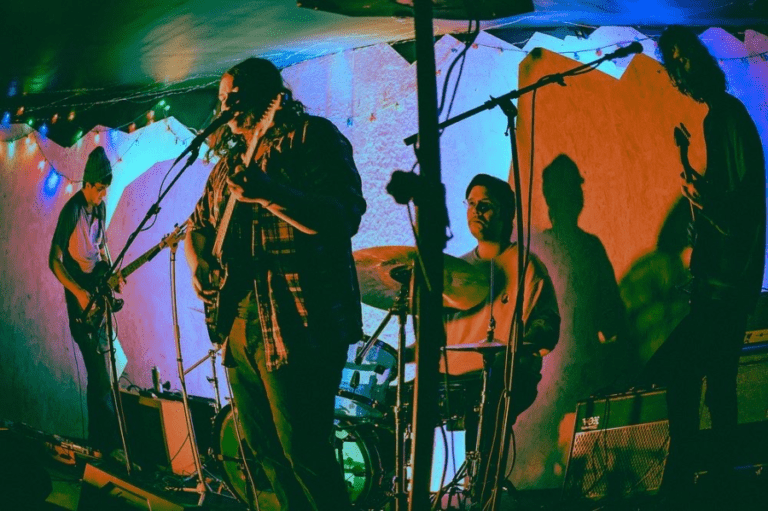
Grampfather are a Kingston band with a prolific ability to dynamically blend the fuzzy, prodding guitar blasts of psych-rock with the addicting, cool melodies of indie-rock. Their latest release Gramppappies boasts an eclectic mix of hard-hitting tracks, from the distorted stabs of “Murder Hornets” to the gliding riffs of “Poppies.” The band has featured a rotating crew built around guitarist/singer James Kwapisz and fellow long-term guitar player Andrew Blot. Grampfather’s rhythm section is composed of Tony DiMauro on drums and Jake Offermann on bass; the band is known for their electric live performances. Frontman James Kwapisz recently wrote in to discuss Gramppappies and what makes Grampfather such a unique band.
RRX: Before I get into more specific questions, why don’t you guys tell me a bit about your new album in your own words? What goals did you have when setting out to record this one?
JK: Gramppappies is my favorite of our albums so far. I think it comprehensively exemplifies our range of sounds/genres in a way that flows from song to song and isn’t disjunctive. While our last album, Magnum Grampus (2020), we think of as our “thrash album,” this one is a bit more dynamic. It starts off a bit thrashy and abrasive, kind of beginning where our last album ended, continuing the doomy theme, but as the album progresses the themes get more hopeful and the music gets lighter, chiller, and a little poppy at times.
The reason we titled the album Gramppappies is to draw attention to the pluralization of Grampfathers. I started the band in 2013 and have had members come and go throughout the years, but our current line-up is solid and dedicated to the project, so I wanted to shed light on all of us and not just me.
RRX: Tell me about where you guys recorded, is the album cover a photo of the studio?
JK: The album cover photo was taken in our studio space at Jake’s house. It’s actually in his bedroom. While we did record Tony’s drums there, the other instruments were recorded at our own places. I recorded my vocals and my guitar, synth, and bass parts at my house because I get kind of self-conscious and want to get everything perfect, thinking, “This is it; this is what the song will be forever–let’s get it right so there’ll be no regrets in the future.” Sometimes it takes me hours to get one instrument track done after countless takes.
RRX: I really enjoy the seamless blend of more technical psych rock and a kind of smooth alternative sound. Would you say that’s an accurate description and was this style intentional?
JK: Yeah, that’s pretty accurate. We’re big fans of King Gizzard and the Lizard Wizard. They’re so eclectic, prolific, and hit the nail on the head with each genre they explore–all qualities that we strive for in our music. Their influence especially shines through in songs like “The Myspace Tom Continuum,” “Dead Ends,” and “Odd Times for Odd Times” in that they, as the latter song indicates, explore odd time signatures and kind of proggy song structures.
RRX: I feel like your live energy is a huge draw for people, do you feel that capturing that raw emotion is a major focus when recording new material? Or do you like to keep the experiences of live/recorded material separate?
JK: Before I started the band, I used to make instrumental chill rock stuff under the name Cat People. I was inspired by the house/basement show scene in New Paltz, so I started a new band to emulate that rowdy, enlivening, and just fun energy. “Grampfather” came from the juxtaposition between the name and the youthful, energetic nature of the music. But it can’t be wild and in-your-face all the time. I think the fact that we waver between abrasive and chill stuff is what makes our live shows, and albums for that matter, alluring and never boring. I think of shows and albums like an EKG–the idea is to never flatline. Gotta keep ‘em on their toes.
RRX: Listening more closely to the lyrics on tracks like “Murder Hornets” there’s obviously a deeper message, how has the social climate impacted your music?
JK: “Murder Hornets” carries on the anger and frustration from Magnum Grampus that resulted from the shit show of 2020. After the seemingly endless tragedies of that year, the news of murder hornets just struck me as a cartoonish cherry on top of it all. But how long can you stay angry and frustrated? It’s not a great way to go about life. Sure, there are many things wrong with the world that we should be passionate about, but I don’t think being so divisive and extreme about them is doing much good.
RRX: What are some of your favorite contemporary bands, these could be local friends or huge bands you’d love to see.
JK: King Gizzard is a big influence, as I said earlier, but also Modest Mouse, Broken Social Scene, and The Strokes for the indie vibes, The Mars Volta for the chaotic, proggy explorations, and a bunch of others. People have told us we sound like Pavement, Dinosaur Jr., and other bands that I hadn’t listened to until we received that feedback. Some cool local bands we dig are Moonunitt from New Paltz–super chill, tight, and pretty prolific–Lemon of Choice from Albany–surfy, chaotic psych rock and great stage presence, and many others that people should check out on our “Gramppappies’ Friends” playlist. Moon Tooth I think deserves a notable mention. They’re kind of like the hometown heroes in my eyes. In a previous line-up of the band, we used to practice in the same space–the guitarist Nick Lee and our former drummer Jesse Grayer used to live there. They’re blowing up. They just got signed to Pure Noise Records and were on Rolling Stone’s top 50 albums list in 2019. They’re a big inspiration for us.
RRX: I think my favorite moment on the new record might be the transition from the blistering solo on “Thad B. Radd” to the sweet and catchy riffs on “Poppies,” is that sort of juxtaposition something you guys thought about a lot?
JK: Yeah, so although we’re broke and can’t really afford to have vinyl records made at the moment, we think of the first five songs as the A side and the latter five as the B side. We chose the first songs of what we think of as the A and B sides, “Murder Hornets” and “Poppies,” to release as singles because they exemplify the hard rock quality of the first half of the album and the chill rock vibe of the second half.
RRX: What makes Kingston unique to you? What’s the go-to spot to catch a show?
JK: Kingston is awesome. After having lived in New Paltz on and off for five or so years while going to SUNY for undergrad and grad school, it was a great shift for me to move here. Being that New Paltz is a college town, it can make you feel ancient when you’re only in your late 20s. I do miss the abundance of bars and house/basement venues in New Paltz. In comparison, the Kingston music scene is pretty sparse, sadly. Tubby’s is a great spot for great shows, but it’s tiny. Since it’s like the only place in Kingston for live music, it can be hard to book there since they’re inundated with so many booking inquiries. The deaths of BSP and The Beverly were a big blow for the town’s music scene.
RRX: You’re all phenomenal players, how did you first come together as musicians? Do you find that you push each other to grow as songwriters?
JK: Besides me, Andrew’s been in the band the longest of the current line-up. I met him through our mutual friend Brandon, who–fun fact–played drums on the last three songs of our 2019 album The Gramp Stamp. Before meeting him it was tough for me to jive with other guitar players, but our styles blend pretty awesomely I think. He’s definitely a better lead guitar player than me, so it was nice to take a more reserved approach to writing my guitar parts, focusing on rhythm so as to let his lead guitar skills shine.
When our former drummer Matt told us that he planned to move to Philly, our former bassist Freddy hit up his friend Tony to join the band. Tony’s got a background in heavy rock, so after jamming with him I gleaned from his style and skills and was inspired to write some heavier stuff, utilizing his double bass pedal for example.
After graduating, Freddy moved back to Queens, so it was pretty tough to get together for practice. I met Jake at a dog birthday party–yep, you read that right. Our mutual friend Kevin had shown Jake Magnum Grampus, and he was a big fan of it, so I asked if he’d be interested in playing bass for us.
RRX: I love the sense of humor that comes out in some of the track names, where did the concept of “grampfather” and the personality behind the band come from?
JK: So yeah, again, the juxtaposition between an agéd, decrepit old man for the name and the enlivening, wavering energy of the music is pretty amusing to me, and I hope others feel the same. I think it’s fun to think up a bunch of ridiculous band names for projects that’ll probably never happen, many of which end up becoming song names. For example, “The Myspace Tom Continuum,” “Large Garbage,” and “Praised Bork” would be pretty funny band names. Maybe I’m the only one laughing, I don’t know. We have fun.
RRX: Finally, the album, “Gramppappies,” will already be publicly released when this interview is out (congrats!) Are there any shout outs you’d like to give or anything special you’d like to tell the readers?
JK: Thanks! We’re all so happy with how this album came out. Big thank yous to Westfall Recording Company for mastering the album and making the songs sound crispy, our friend Simon Mandic for filming and editing our music videos, Jake’s sister Emily Offermann for making the “Poppies” single art, Cole Solis-Jativa for designing the “Murder Hornets” single art, Jake for creating the album art, and to all my bandmates. After having so many people bail on this project, it’s so awesome to finally be making music and playing shows with such a committed group of amazingly talented, funny, and genuine people. I hope everyone enjoys the album. We’re always cooking, so follow us to stay updated on new music and shows.
Rick Barton (Continental and Original Founding Member of Dropkick Murphys) Interview by Rob Smittix

RRX: Many people may or may not know that you were an original founding member of the Dropkick Murphys, we don’t have to focus on it but certainly we should touch on it.
RB: Especially because it’s the 25th anniversary of the legendary album Do or Die.
RRX: I know you have stories but to briefly sum it up. What would you say about your experience?
RB: It was an incredible time in my life but at the time I didn’t know it was incredible. One of the most interesting stories from that whole record was sitting outside of my garage in Quincy, that was our practice space. Lars Frederiksen from Rancid flew in, he was staying at my place because the practice space was right next to it. We congregated outside of the garage, we were sitting around talking and he recently produced Swingin’ Utters’ The Streets of San Francisco album. We were talking about sales, and he said you’d probably be lucky if you did what Swingin’ Utters did, they’ve sold 10,000 and I just looked at everybody and said we’re going to sell 50,000 easily. I broke all punk rock ethos and cred at that moment by blurting that out! Obviously, the album has gone on to surpass way more than 50,000. I’ll never forget saying that but at the same time I didn’t think that we were that great. I kind of knew, when we pulled into Buffalo and there’d be 500 kids lined up. We’re pulling in with the van and I’m like who are these kids? Are they actually there to see us?
My original band Outlets did very little touring. Bands back then didn’t tour, you only toured if you were on a major label. The band that bypassed that and jump started the rest of the bands was The Mighty Mighty Bosstones. Around 88′, 89′ or whatever, they got in the van and they toured. They were one of the first ones from Boston. So anyway, we pull up to these places and I was like this is unbelievable. I knew the phenomena, The Outlets became huge in Boston, we would play for 1200 seat rooms within our first year as a band. I understood fans coming to see your band, but I just didn’t think it was possible in another city. You know what I mean?
RRX: Absolutely but I’ve never achieved that.
RB: Not many people have. Compared to the amount of people that start bands it’s astronomically low.
RB: But why are they coming? Are they coming because we have bagpipes? Are they coming because of our name? Did they like a certain song? Keeps you wondering about all of this stuff. We were fairly new at that point. Matt Kelly the drummer had some experience but besides from him and me, we weren’t really that seasoned. Mike and Kenny were both brand new at music.
I go to see the Dropkick Murphys all of the time and I love listening to Kenny talk from the stage. He cracks me up. The things that he says, it’s like the opposite of Paul Stanley at a Kiss concert. I often say that if the old legends came back from the grave and they dropped in on a Murphys show and heard Kenny talking from the stage they’d be like what the hell is this? What did the mayor of Boston form a punk rock band? It’s not typical banter but I love it!
One thing he says a lot from stage is “I don’t know how other people do it but this is the only band I’ve ever had.” That is so rare.
I helped, obviously Mike was instrumental, and Matt Kelly is an incredible drummer but it’s really Kenny’s brain child. It’s just an unbelievable story, it’s fascinating and at the time, sadly, I kind of resented Kenny, not kind of, I did. I was hanging onto the old guard, like all of my old music friends who were so talented and never got anywhere. Even though I was in his band, I was resentful, I was jealous. We’ve made amends with each other, but Kenny and I ended up hating each other after five years in the band. We both stepped it up and talked about the experience. He’s credited me with basically helping him develop his career because he says he couldn’t have done it without me. That’s probably true, not that he couldn’t have done it because I was Rick Barton, he just needed somebody that was just going to make up some chords and show him some songs. It just happened to be me. It wasn’t like Kenny and I were this magical duo, although we did write some pretty good songs together. It’s kind of mind blowing when I look back now 25 years later, it’s pretty incredible that we put that together.
Let’s face it, Mike quit after the first record, Kenny was not easy to deal with, but I didn’t realize why. The reason he was so brutal was because that was the only way to succeed. We needed that person who was going to be worrying and stressing around the clock and that was Kenny’s job. Like I’ve said, I’ve apologized to him for not being a team player. I’m not lamenting the fact that I quit the band. I don’t know what would’ve happened if I had a million dollars or if I became a rock-star if I stayed in the band. Maybe the band would’ve imploded eventually, who knows? I also like to think that if we kept the original line-up, we probably could’ve been the next Clash. It would’ve ended up going in a different direction than they ended up going in. Needless to say, I feel somewhat embarrassed that I didn’t realize how much suffering Kenny was doing. I just thought he was a bastard the whole time. The typical thing workers feel about their boss. You know what I mean?
RRX: Oh, for sure.
RB: Of course, now I realize it was me. I should’ve adapted and helped Kenny. I should’ve been there every step of the way encouraging him. In my defense there were a few times I tried to make peace. I came up to him and I said Kenny I know we just can’t get along, but you know certain songs like “Wheel of Misfortune” we wrote together and it’s really inspirational and it feels like a magical moment. I would occasionally try to get sentimental and patch things up through the art. He’d just go yeah FU let’s go play. He didn’t want any part of that BS sentimentality thing, but it wasn’t really BS it was heartfelt on my part. But it was too little too late at that point. The good news is that even though I didn’t capitalize monetarily, no one knows who the F*** I am, a very few people, which is fine with me in a way. I have those moments from like January of 96′ until I was still working on the third album in March or April of 2000. It was a short amount of time, a little over four years. It was an intense period of time; we made tons of music and did tons of touring. So, no matter how much I didn’t gain, I have that time period in my life that was magical. And as much as I thought Kenny was ruining my time on the planet at that time, I was wrong about that. It doesn’t matter now. I think about the music we made, the people I met and that incredible time in my life. It was a gift to me that was given.
Rick Barton is still making music with his son Stephen Barton in his current band Continental and has recently hit the studio so be on the lookout for new music soon!
TV Doctors Play Super Dark Collective at No Fun 2/26/2022 Photos By: Tim Reidy
2/26/22 8pm Super Dark Collective Presents: T.V. Doctors band at No Fun, Troy
Glen David Andrews (A Home Away from Home) Interview By: Rob Smittix
GDA: How you feeling my brother?
RRX: Feeling good, how about yourself?
GDA: Really better since December I had like five procedures and a surgery. I’m so happy to be back out but I’m more excited to get back to Troy and hang out with my friend Susie because that’s the first person that brought me to Albany.
RRX: I never knew that.
GDA: We played at Susie’s like two or three times then we moved to the Lionheart and then we’ve been with Lost and Found ever since but I never lost my friendship with Susie and her husband. Man, I’ve been coming to Albany for ten years straight. I F*** with Albany.
RRX: I see that and I see the Mardi Gras tour started out in Albany at Lost and Found.
GDA: You better believe it, we did a live record!
RRX: Then you’re coming to Troy at McAddy’s March 4th.
GDA: We’re going to bring that same audience, well hopefully some more people, some different people from Troy. I noticed Troy is growing at a rapid rate.
RRX: It is. Troy is really up and coming, I think.
GDA: Somebody put some serious money into Troy.
RRX: They’re on the rise, that’s our Brooklyn.
(Both laugh)
RRX: I’m a big fan of your music, I’ve been listening non-stop. You have a great voice first of all. Are you still carrying around that big trombone everywhere you go?
GDA: Not as much, my cousin Revert Andrews plays for me now, but I would never put the trombone down.
RRX: I play a lot of instruments. You know? Jack of all trades, master of none but I have never been able to pay a horn. You need a lot of breath for that.
GDA: It’s a passion of mine that I’ve had since a child and I’m so grateful that I was able to have a horn take me all over the world. From 1994 to present I’ve been somewhere out of the country every year since because of a trombone.
RRX: How many people do you generally take on a tour like this?
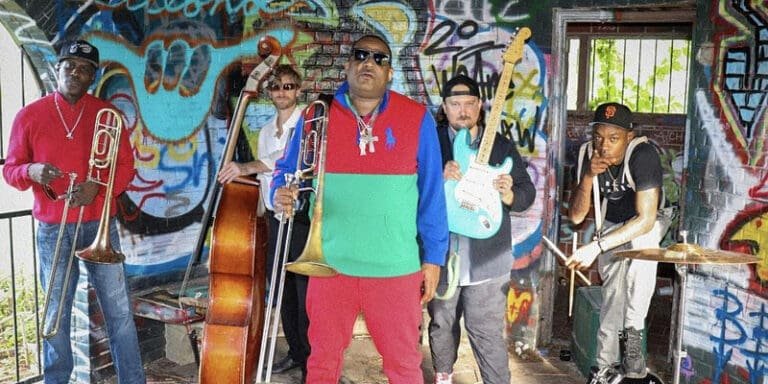
GDA: It depends. I could have from four to nine. On this trip I only have two trombones, bass, guitar, organ and drum.
RRX: That’s still a lot.
GDA: Well, believe it or not we’ve had no choice but to cut it down financially. Four members of the band I had to axe for just realistic financial reasons. I came to Albany last year in the height of quarantine and I went to Vermont, and we did some outside shows and made it work. That’s just the love and the passion that the town had, that you would open your club, that’s not doing too well during the pandemic and reach out and help me. That’s been the story for me in Albany for the past ten years. When you look at my record chart, my fourth and fifth biggest market for album sales is Albany.
RRX: Well, I’m glad.
GDA: There’s a lot of music in Albany. A lot of barrooms and such.
RRX: There really is.
GDA: I’ll be honest with you between Hudson and Albany I’ve met so many major musicians who live in Upstate New York. You’ve got some major players in the game who live there.
RRX: One of the past touring members from Guns and Roses lives in Hudson.
GDA: The bass player (Tommy Stinson), he comes to my shows, the dude cool as F***! He told me he loves Hudson because he can walk around like a nobody.
RRX: So, you’re originally from New Orleans?
GDA: Born and raised, my whole family plays music.
RRX: And the roots of American jazz clearly is New Orleans.
GDA: New Orleans gave it to the world. Louis Armstrong and them took it up to Chicago. St Louis to New York, New York to LA and to the world!
RRX: And now you’re doing that!
GDA: I just feel humbled that I’m able to walk in the steps of those people who came before me. I’m very grateful to the predecessors. For me to be 41 years old and have been through a lot of different things in my life that I’m very fortunate to be over and getting through. It’s a serious consideration this summer on how I’m actually going to make that move and make it happen. Realistically I think it might be six months there and six months here.
RRX: We’d be happy to have you up here.
GDA: I won’t be there in the winter, oh my God. Look I watch the weather because I’m coming up there. Oh my God, I just bought some boots from LL Bean, I’ve got battery powered gloves. I’m going to look like a Buffalo, like a woolly mammoth man.
Glen David Andrews will be at McAddy’s 452 Broadway Troy, NY Friday, March 4, 2022, at 8pm.