Tyler King – An Xperience Interview
Written by Joshua Scarselli on January 22, 2026
Have you ever been to a live wrestling show or watched one on TV? A lot goes on with these productions. You need more than just the wrestlers to make a wrestling show successful. Today, we talked with one such person, Tyler King. Tyler gives us a little glimpse of what it is like to be one of the non-wrestlers who make a wrestling show so great!
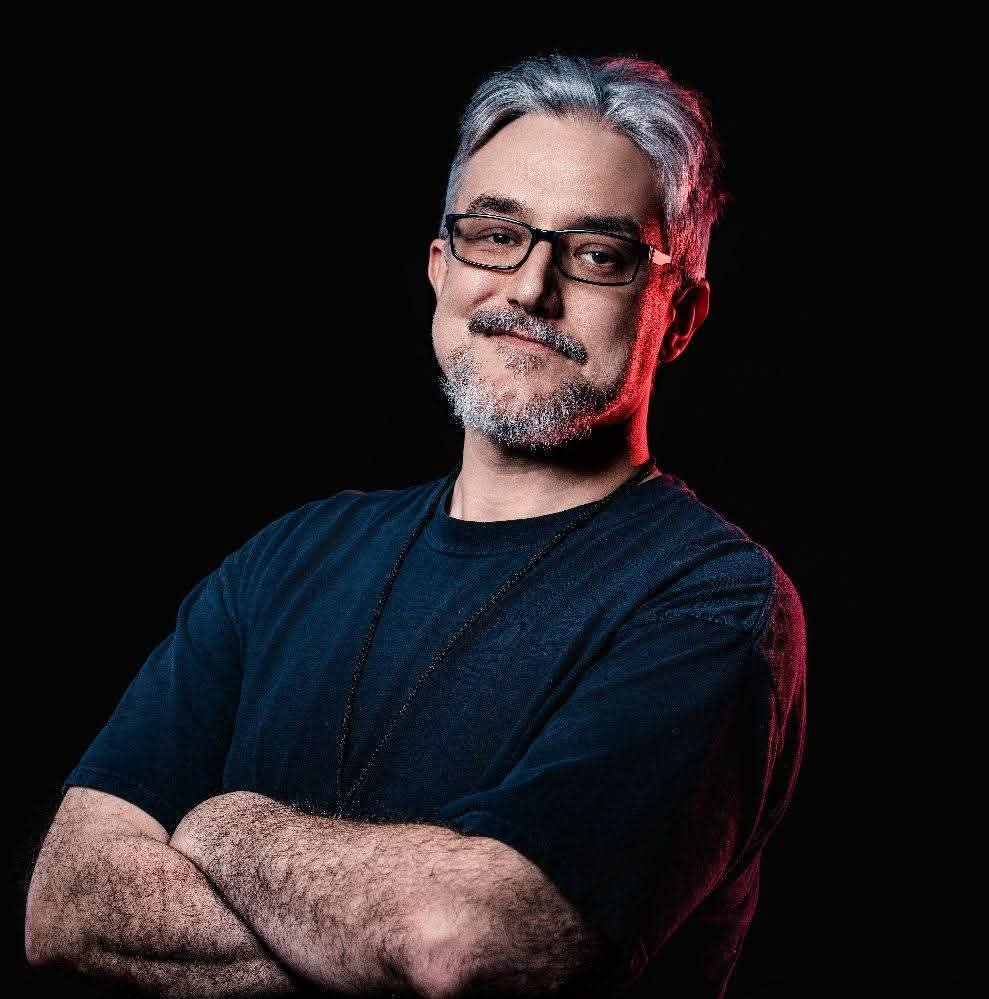
photo by Andrew Elder
RRX: How did you get involved in wrestling?
TK: My first time working behind the scenes was for Dynasty Pro Wrestling in St. Johnsville, NY, for their February 2017 show. I still work there today.
I had attended their shows semi-regularly up to that point, and after watching one with my childhood friend James, he suggested that I follow his lead by working with the ring crew and attending a seminar hosted by professional wrestler Robbie E at the next event.
After that, I joined the street team, spending hours driving around hanging event flyers wherever I could, just happy to be involved.
James and I had only worked two shows, and it was mere hours before the third when one of the promoters, Chris Envy, approached and informed us that we would be the camera operators for the event following a double cancellation.
I still remember the feeling of anticipation and excitement all these years later. Within moments of the show starting, James tripped walking backwards and fell over the ring steps. It was at that moment I realized that the path to going further in the wrestling business than James or anyone else that I used to backyard wrestle with was wide open for me.
RRX: What is your favorite thing to film?
TK: That’s a hard question to answer because after doing a good job, my two favorite things are working with friends and life experiences. I quite enjoy working in new states, for new promotions, new venues, new forms of combat sports, anything. Actually, just this afternoon I learned that one of my gigs next month will have me working two miles from the Bush Baked Beans Museum and Factory. That might not seem exciting to some people, and honestly, I wouldn’t drive more than five miles to see it myself, but I enjoy travel and offbeat things like that.
If we are talking from a fandom perspective, my favorite thing to film is hardcore and deathmatch wrestling. I know a lot of people think of it as lesser than, but I’ve been a fan of destruction in general ever since I was a little kid. In the first grade, I was told I could do whatever I wanted for my birthday. I requested to go to a junkyard because I enjoyed looking at smashed cars so much. Also being born in the ’80s, it seemed like wrestling was the only thing that wasn’t hyperviolent, so naturally I fell in love with ECW the first time that I saw it. When I finally attended my first wrestling show at the age of 15 and picked up a Japanese deathmatch VHS tape, I was deeply enthralled and off to the races.
RRX: What’s the most gruesome deathmatch stuff you’ve shot?
TK: I filmed a buddy of mine, JJ Escoba,r breaking his back jumping off a balcony. I filmed a wrestler get a hypodermic needle stuck through his nether regions, but I’m not sure if that’s even appropriate for this interview. I’ve filmed a lot of really bad cuts, but I’d have to imagine that the broken back would be the gnarliest injury I have filmed. It was legitimately very scary and disturbing; it took hours to find out if he was even able to feel his legs, and he ended up with a considerable amount of hardware screwed into his spine.
I also filmed a friend who wrestles under the name “The North Korean Assassin” suffering third-degree burns after being set ablaze by a fireball gone awry. He was fully engulfed. He had to get skin grafts; the skin was hanging off his back, arms, and hands. He was in the hospital for a long time. That was an interesting moment because I was kind of torn between getting the shot and watching somebody who I consider a friend running around in the ring on fire. I was kind of frozen in time for a moment; everything slowed down. That was an interesting experience.

Photo by Mr. Dan the Photo Man
RRX: What other jobs besides operating a camera have you done?
TK: I mentioned earlier that I started out on the ring crew, and after that, I joined the street team, going around getting flyers hung up at local businesses. After becoming a camera operator, I was a driver for the fly-in wrestlers for a while. I would pick them up at the airport or their hotel and then help handle the autograph signing. After that, I would drive them to and from the venue. I got to spend the day with a lot of talent I grew up watching. I got to sit down and eat with people like Billy Gunn, Carlito, Gail Kim, and Ron Simmons, among others. I was also a poorly trained referee for over a year, working in several different promotions across several different states.
I always tried to make myself useful in any way I could. I’ve even produced and directed shows to test-drive that role and to gain a better understanding of what goes into a production. My love of pro wrestling and appreciation of being involved has really had me wearing many different hats. I even found myself on the pyrotechnics crew for a no-rope exploding barbed wire deathmatch at last year’s Carnage Cup. I think the area I have been most talented in would be as a ringside camera operator, but I was actually able to try my hand at commentary recently …
RRX: That was going to be my next question. Let’s talk about your new on-camera gig as a commentator. How did that come about?
TK: I was looking to try something new. I will always love filming events, but after deciding that being a referee wasn’t for me, I thought I would accomplish an old childhood dream and see if there was still an on-screen role that suited me in the wrestling business. One last shot. I wasn’t even sure that I would want to do it again after the first time, which is why I’m really grateful for the management at Mass Movement Wrestling for having the faith in me to try something out that I wasn’t even fully sure I wanted to pursue.
I really thought it would be a one-and-done type thing. I imagined that afterward, the wave of relief that I would feel after having gotten it done with would wash away any thoughts I had of doing it again in the future, but that isn’t what happened at all. I had a lot of fun and felt a sense of satisfaction afterward. It was kind of like a new avenue opening up for me and something new to pursue in this business that has already given me so much enjoyment.
RRX: How was the transition from being behind the camera to being on camera?
TK: I’ve never been much of a center of attention type of person, but I think that my enjoyment and my love of wrestling is what drives me to go outside of my comfort zone and do these things, to explore new roles and be involved in something that I’m really into. I hope that’s evident in my work. I hope that people hear my commentary and I sound like somebody who actually respects the sport and wants to do a good job.
RRX: What is one of your favorite moments that you’ve been involved with, as far as either being behind the scenes or being a ref or being a commentator?
TK: Well, the first show I ever attended was an ECW house show in 2001 that my father took me to. Many years later, with him in attendance, I was able to count a title match pinfall win for the wrestler who was world champion of ECW back in 2001 at that first show. Being able to have my father watch me hand over that title was a cool full-circle moment. Then afterward, he said he thought I did pretty good as a referee, but I wasn’t believable and he could tell that I was acting. I guess you can’t win them all!

Photo by Tyler King
RRX: Who are some of your favorite in-ring talents that you have worked with?
TK: I’ve been lucky enough to work with basically every active American deathmatch wrestler that I consider worthwhile. The first deathmatch event I filmed was headlined by the Necro Butcher versus Shlak in a no-canvas, bare boards, no-rope barbed wire deathmatch. Necro Butcher is a certified legend. Shlak is a modern-day legend. To be able to film that match as the main event for my first deathmatch show was, well, I really couldn’t have asked for anything more. It’s always fun to work with people from my childhood, like the Hardy Boyz or Raven, but I’m forever just so grateful to have gotten to film all of the top talent from my favorite genre. Sure, I would love to film guys like Rob Van Dam or Masato Tanaka, but after all I’ve gotten to experience already in wrestling, in addition to working combat sports stadium shows in front of thousands of fans, setting new goals would almost make me feel ungrateful.
RRX: Who would you put on your Mount Rushmore of Wrestling?
TK: Deathmatch Wrestling or overall? Deathmatch wrestling would have to be Atsushi Onita first and foremost, of course. Then Mr. Danger, Mitsuhiro Matsunaga, my personal favorite. The Necro Butcher would be next, and the fourth spot would go to the human meat grinder, Shlak.
As far as mainstream wrestling, my personal favorites have always been what I call the Holy Trinity of ECW. Sabu, The Sandman and RVD. Being the age that I am, it’s like ECW was tailor-made for me.
I know there’s a fourth spot on there also. That would be a toss-up between Mick Foley, Razor Ramon, and Mike Awesome.
RRX: Where can people keep track of you?
TK: You can find me on Facebook or my neglected instagram @macpheerson
If you’re interested in hearing my commentary, our latest show from Mass Movement Wrestling is available completely free in its entirety on the Rumble app, you don’t even need to create a membership to watch. If you’re looking for a top-notch production team for ANY event (not just combat sports!), reach out to our pro team at STF media.
Also, please consider supporting local promotions like Dynasty and Immortal Championship Wrestling to keep live shows accessible in our area. Lastly, thank you to everyone reading, and remember the light at the end of the tunnel, maybe you.
 RadioRadioX