Matt Smith – An Xperience Interview
Written by Staff on April 12, 2026
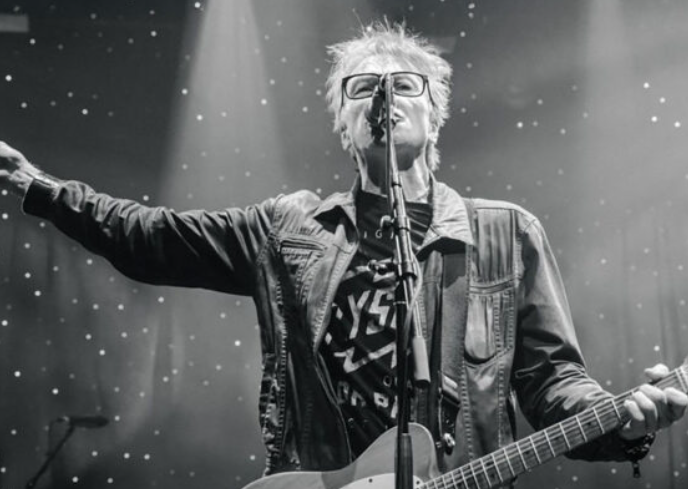
Matt Smith – An Xperience Interview – by Rob Smittix.
Matt Smith: First of all, I want to thank you for doing this. Obviously, I grew up there (Capital Region), and that’s my home. That’s where I came up, and it’s beautiful to get some love.
RRX: I heard that you’re originally from the area. Where did you actually grow up?
MS: I grew up in Clifton Park, and I went to Shenendehowa High School. I came up playing my own stuff, and then I was one of the founders of Interstate. Then I played with E.B. Jeb for a while. I guess it was 1988, I started playing my own music (the Matt Smith Band), and I lived there ’til like ’94. Then I went to New York City and lived there, but still came back all the time to play. I lived there until 2009, then I moved to Austin, and I’ve been here ever since.
RRX: Well, Austin’s quite the music town these days.
MS: I have a place here called 6 String Ranch. It’s kind of like a mentorship place for artists coming up and a recording studio. We have video channels and stuff like that. But that’s what I’ve been up to for a long time now.
RRX: Awesome, and I see you put out your 20th album on the 1st of the year?
MS: Yeah, that’s right.
RRX: So that means you’ve definitely been around for a while.
MS: Well, I’m 66 now, and I’ve been doing it since I was 10, and I’ve never done anything else. I have to say, a lot of the stuff that really inspired me was the music scene in Upstate New York. When I was coming up, we had places like the Skyway and Allen’s and places like that. Back then, you could still go out at 18. So places like that would have these amazing bands that were from all the upstate corridors; bands like Talas (Billy Sheehan’s old band), the New York Flyers, 805, and Heartbeat. Bands like that set the bar for us. Like wow, you could either suck your thumb in a fetal position or get with it.
RRX: I’ve heard so many stories, and I mean … I’m 47. The nineties were really when I started to be able to enjoy anything, but the scene was still pretty good, and we’ve still got one. Still loads of bands around here, but the stories I heard from the generation before about all these places like JB Scott’s and others that used to exist. It makes me wish I were born just a little bit earlier.
MS: I come up at least a couple times a year, still to this day, every year, because I still have the band up in Saratoga, the guys who I grew up with. I actually have an album coming out this summer, of 35 years of playing live, and there’s a ton of performances from clubs in the Capital District. Different bands that I played with over the years, while playing my own music. That’s the next one that’s on the plate. It’s pretty much already done, but I wanted to honor those guys who are all truly amazing musicians. They’re all still very active and playing in different bands up there. Like Pete Sweeney, Chris Peck, Tony Perrino, Brian Melick, and Charlie Tokarz, all those guys who I’ve been playing with since probably 1993.
RRX: Wow!
MS: My roots are still very deep there, even though Austin is my home now, and that’s where I live. But that’s where I come from, and I’ve always honored that.
RRX: No, Austin’s definitely the move as far as music goes. I know they got South by Southwest, but I have mixed emotions about that because they make you pay to apply to play.
MS: Oh no, it really is probably the biggest scam I’ve ever seen. Really. Let me qualify that for you because people come in … not just guys from New York, but people come in from like Turkey, you know? If they give them like 200 bucks, they don’t guarantee any kind of crowd is gonna watch it. The important thing to understand is there’s like 12,000 musicians living in Austin, and at least 2500 bands that live here. Then you bring in another 1500 bands on top of that. So there’s 4000 bands in town that week, all doing multiple shows. If you’re a consumer of music, there’s a band in a vacant lot over here, there’s a band in the grocery store, there’s a band in the airport (of course, there always is in Austin). I love this town, but it’s also hard for musicians now coming up. It was always hard in our business, but as far as South by Southwest now, I think a lot of what’s happening is the bands that get attention during South by Southwest are already getting attention.
RRX: Correct! My friends are going down there, playing a bar with three people in it, because everybody’s at the other shows.
MS: It’s a little overwhelming and oversaturated, but this is what I’ve been blessed to have been able to do my whole life and somehow get away with it. You know what I mean? I love everything about it, same thing as you. You obviously have a deep passion for this, or you wouldn’t do what you’re doing.
RRX: Oh yeah, and being in the radio business since ’94, I had to take a long break because I couldn’t even make a living doing it for a while. I can finally do it for a living again.
MS: We have a saying in the music industry, especially on our side of it … you too can make hundreds or even tens of dollars in the music industry over a few short decades.
RRX: That’s correct.
MS: That was a quote from my friend Jimmy Kelly. My newest record has a lot of Capital District guys on it. Steve Candlen, who I co-wrote the song “Orphans” with, also played on that. And also Jimmy Kelly co-wrote “I’ll Never Fall in Love Again” with me. I had him play the drums and sing on that with me, too. I recorded a lot of those tracks at Tony’s studio up there. The last record I did up there was my “Into the Light” record, which I recorded half with my New York State band in Tony’s studio and half in my studio in Austin with my band that I play with down here. Like I said, that connection is never broken. It’s never broken my entire career.
RRX: Honestly, I listened to the album, but I had no idea just how much of a connection you had to this area besides the fact that you lived here previously. You know … people are gonna read this and say, oh man, we gotta check out his new album.
MS: Well, the new album … I just want to say a few words about it. I’m a centrist Democrat. All of my music for many years has contained social consciousness issues within it. I’m deeply concerned about where we are now in the division within our society and in our country. So I had to address that on this new record. I rewrote “America the Beautiful” on July 4th. There’s a song on there called “Cry for America,” and on July 4th, I sat behind my studio, and I rewrote it because I was horrified by the things I was seeing. Then I brought in all these great Austin singers. I sang the whole song, and then I brought in Black, Hispanic, Jewish, Arab, and all these different singers to come in. I had them all sing the whole song, and then I edited each line for each singer, so that it had this weight to it. I started in June, and the album was done and mixed by November. I wrote all the songs one after another. It was a tremendously deep thing for me. Not only that, but I was also dealing with the death of my parents. That’s the song I co-wrote with Steve called “Orphans,” and it’s about a certain point in life, where we all become orphans. But that’s part of the circle of life, and it’s beautiful, you know? So there’s a lot of very philosophical and very deep emotional connection with that, and a lot of that part of my life comes from my connection there. That’s why I was really excited to talk to you about this and to talk to the people who I grew up with.
RRX: I appreciate our conversation; it was great connecting with you. Was there anything I didn’t cover or ask about that you would like to say?
MS: What I would love people to do is to understand that my album is an album of trying to help heal rifts in society while still maintaining integrity in my own thoughts.
RRX: I love that. I’ve been listening to it, and I agree.
Continue reading
 RadioRadioX