

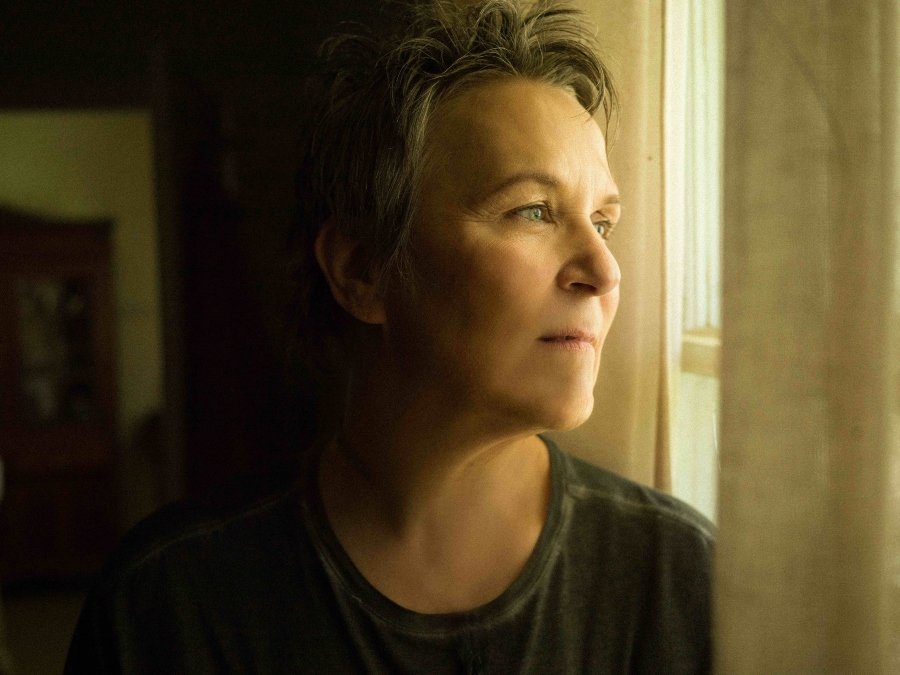
Interview: Mary Gauthier
By: Rob Smittix
RRX: How are you today?
MG: Well, Nashville’s hotter than hell. We’re in a heat warning, don’t go outside warning situation, but I am personally very good.
RRX: Oh, that’s great to hear. What are the temperatures like down there?
MG: They’re talking 97, 98 possibility of 100 degrees. We’re just a humid place, so that makes it feel like an oven.
RRX: Yes, here in Upstate New York, temperature wise we’re about the same right now. The whole world’s in a heat wave.
MG: I saw that the city looks like they might be hit… 100 degrees in Manhattan is a brutal thing.
RRX: It’s not fun at all.
MG: Oh God.
RRX: But I appreciate you taking the time. I see you coming near our area here in upstate New York this month. Looks like you’re gonna be in a few places in New York, Big Indian, New York, which I don’t know where that is, but I’ll find out, Woodstock and Spencertown.
MG: Yeah, they’re all in a pretty close area. Big Indian is the home of the Full Moon Retreat Center. I’ll be up there teaching songwriting with Richard Thompson and then we’re gonna go to Woodstock and do two shows together. Then I head over to Spencertown.
RRX: That’s so cool. So you’re actually gonna teach some songwriting. That’s interesting because you obviously are a renowned songwriter and to learn from someone that’s been doing it for so long is amazing.
MG: I really love working with songwriters and helping them to have confidence in their own voice, to take some risks, to be vulnerable, to be brave, to put it out there and see what happens. It’s one of my great joys to work with adult songwriters who’ve always had the call to do it but have kinda toggled back and forth between actually doing it and just wanting to do it. I’m super excited to have been invited by Richard to be a part of his songwriting camp this year.
RRX: That’s amazing. I’m a songwriter myself but I’m always down to get some tips. I think one of the things I see nowadays is and I think you mentioned it before about… having your voice. I think there’s a lot of very talented musicians, a lot of people that have a lot of great voices. But I still think sometimes, especially with upcoming artists, they’re afraid to say what they really need to say. You know what I mean?
MG: I totally know what you mean and that’s where I come in. When I say voice, I don’t mean singing voice. I mean writer’s voice. How do you sound like you? How do I sit down and write a song that sounds like a Mary Gauthier song? I’ve learned over the years how to teach that… not how to sound like a Mary Gauthier song but how to sound like yourself. It almost always involves taking a risk and saying something that’s a little scary to say and saying something that really matters to you. Putting some skin in the game, that’s gonna do it. Like you said, there’s a risk to that because we live in a cancel culture. We live in a world where people’s comments are immediate, knee-jerk and often unkind and so it’s scary. But the rewards outweigh the risks. There’s a service element to it. I think it’s a very valuable and useful thing to do the thing that’s hard.
RRX: That’s right and you know what? You can’t satisfy everyone but being true to yourself certainly is a satisfaction in itself.
MG: Yeah, the only person that needs to be proud of your song is you.
RRX: That’s right. Now you’ve been doing it obviously a long time but how long has it actually been? Like when did you really get started and start performing and everything?
MG: I’d say uh 1995, 1996 something like that which for most artists comparatively, I got started pretty late. I started writing songs when I was 35. I had been in the restaurant business prior to that. I went to chef school. I was in the culinary arts and loved it but then I became really passionate about songwriting and the culinary arts just didn’t compare for me. I liked being on stage with the song, telling the story more than I liked being in the kitchen cooking jambalaya and so, I enjoyed the transition around my mid-30s and came to Nashville when I was 40 to do this full-time, full-on.
RRX: So you’re right, you actually did get kind of a late start but it seemed to to work out for you and I’m sure in your own kitchen, you’re probably still a mean chef.
MG: Well, honestly, kinda but you know? I don’t have the time, I’m not home enough and I don’t have the ingredients. I mean, I’m home for a week here and I’ll do one good dinner but I’m not the maestro I used to be in the kitchen because I got rusty. You gotta do it to keep it alive and I’m better at booking flights, hotels, rental cars, getting on the highway, playing and singing songs than I am cooking these days, for sure.
RRX: Well, that’s a whole lifestyle right there. How far geographically has your music brought you?
MG: Oh, all over the world, multiple times, everywhere.
RRX: And I mean, obviously, we have a world that’s out of whack and even this country at many times, but I mean… was it always a welcoming situation everywhere that you went?
MG: Well, you know? After 911 there was such goodwill, I mean… I’d walk into a place as an American and people would hug me in tears after 9/11. There was such goodwill for America and Americans and then Bush started that war and never really was able to legitimize it in the eyes of the world or in the eyes of a lot of Americans. And the goodwill went away and then anti-American sentiment started. I’ve lived through that and the best way to battle that is play Woody Guthrie songs, you know? Let the audience know where you’re coming from. Most audiences, I gather are able to make a distinction between the politics of a country and artists from that country. The girl punk band Pussy Riot is in direct opposition to Putin and I think audiences understand that. I would say my music is in direct opposition to sexism, racism, ageism, homophobia, hatreds of all kinds and anti-immigrant sentiment. I’m in opposition to that and my music are songs of love and resistance to hate.
RRX: I can get down with that any day of the week.
MG: Most people can.
RRX: You’re so right about that and I think people forget that almost all governments are pretty sh***y and almost all people are pretty good.
MG: I think so. We live in an awkward time of transition with media and we don’t know what to believe, and that seems to be getting worse. We don’t know what’s true, real or what’s actually happened. But I also have an abiding faith in people in general and in the spirit behind the eyes of human beings that lights up a life and a heart. And that spirit is a large intelligence and it’s fundamentally energetically connected to love. I believe in it and I’m never not gonna believe in it.
RRX: I love that. I’ve made this joke many times but when anyone that ever becomes Grammy nominated or a Grammy winner, that becomes your first name in everybody’s article. Never in mine though but Grammy nominated is something that they’ve described you as for how long?
MG: 2018, and it’s an honor, you know? I think there is a legitimacy that comes with being Grammy nominated because you’re voted on by your peers. That is something that has great value to nominees. Once you reach a stage of fame with household nameness, the Grammys don’t really matter so much anymore because you’ve already been legitimized but in the smaller categories it’s huge. I would call it an energetic boost. The smaller categories aren’t on TV and you don’t get to perform. It’s like two award shows, there’s one during the day and there’s one on TV. I was in the category for best contemporary folk record of the year. So it’s the smaller category, not on TV but it was a wild ride and man, I enjoyed it!
RRX: Absolutely, I know several musicians with the same deal, nominated for a category that wouldn’t be on TV. I’m over here thinking… these are the categories I’d actually wanna see because I’m not into the mainstream.
MG: Honestly, I’m not either. I like the outsider art, the stuff that’s not fundamentally commercial in nature but is fundamentally art. To me, that means it says something that creates an emotional connection with the listener that oftentimes can even be disturbing but useful in a way that has deep value. That’s what art is and commerce is different. Commerce is all about units sold. If I had a choice between a commercial restaurant, let’s say… McDonald’s, Burger King, Wendy’s, KFC, or a restaurant that’s owned by a human being in the kitchen who’s cooking and making sure the plates come out beautiful and there’s love in the hand that made the food; that’s where I’m going.
RRX: I couldn’t agree more, I’m the same way. Well, again I appreciate you taking the time with me. Was there anything else that you’d like to say to people, to the world or anything that you just want to get off your chest?
MG: Gosh… no, not really, other than there’s artists out there just a little below the radar who are doing great work and bringing hope to audiences right now in this time of struggle and that hope can come in a variety of forms but it comes from being connected. And those connections that happen through art are really valuable always, but right now they’re intrinsically important because we’re so disconnected.
RRX: Well, couldn’t have said any better. Mary, it’s been a pleasure talking to you, I hope you have a great tour and stay cool down there.
MG: Thanks for having me on, you stay cool up there.

