

The pale distance of light paints a sky doused in lethargy. For three months, feral air nips at the lungs. Stagnant trees stand stripped of all dignity, and hours stretch to the point of mental deformity. Seeking relief from the brute force of Gaia’s despair, I drag my leaden husk to the edge of the Arctic abyss for mortal release.
Then suddenly, a cacophonous orbit of birdsong serenades my consciousness as the once-pugnacious wind eases into a tender howl that cradles.
“Sic semper tyrannis!” shout the minerals exhaling through soil like phantoms of nature’s past, frigidly banished by an oppressive regime that thrives on the silence of entrapment. “Without music, life would be a mistake,” a famous aphorism by 19th-century German philosopher Friedrich Nietzsche.
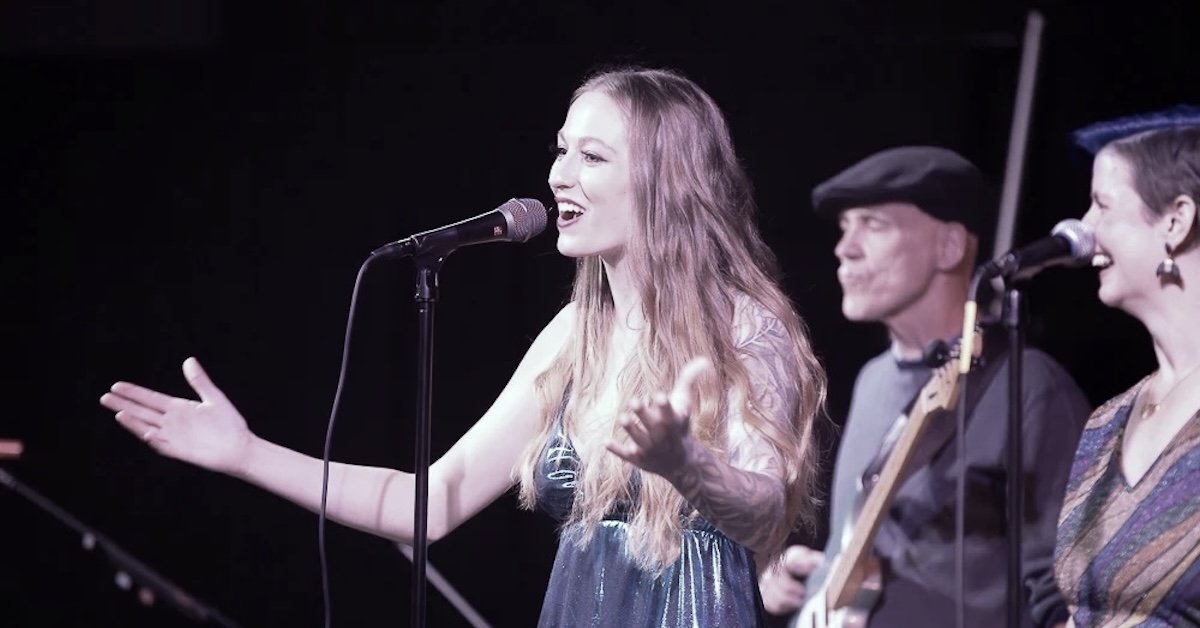
A statement that suddenly felt less like philosophy and more like oxygen upon exploring the musical mastery of singer-songwriter Shannon Tehya, whose airy goddess anthem “Body and Soul” pressed me into a corner, igniting my heart the way a craving breath kindles an ember.
Upon deep inhalation through the nostrils, a spiraling revenant forms, whose lucid lyrics settle you with a gentle hand into a harmonic bed that swiftly adapts to the heat of your spiritual tension. “You are not broken at all. You are in control. Child, you must make peace with your body and your soul,” she elegantly sings, echoing through the veins of thought like a chemical hymn in the sanctum of mythic oblivion.
Meeting Shannon was like coming face-to-face with the personification of emergence. It was at Alexis Diner in Troy, New York. Across the table sat a woman who could’ve been mistaken for a beautiful piece of marble sculpted by the brilliant hands of Gian Lorenzo Bernini, a being who’s introverted and private, yet radiant, scrappy, and bulletproof as hell on stage.
What’s intriguing about the vigor of her stage persona is the fact that she created it from working in a strip club, where she was forced to develop an ironclad exterior and a businesslike demeanor.
“That’s just not presenting yourself well. A stripper is just someone who objectifies themselves and takes the easy way out in a morally corrupt way,” stated a local man, who asked not to be named. I’m sure that’s the level of criticism she’s dealt with more times than she can count.
But the power of intellectual fortitude lies in those who possess the ability to invest their care not in the optics of a situation, but in the substance of it.
Reflecting on that idea reminded me of past moments when I’d find myself philosophizing on the necessity of strategically weaving oneself into the throes of capitalism in order to acquire the resources needed to force the change they wish to see.
This is precisely her approach to stripping, as its easy access to money allows her to invest in her art while also building a large and ever-growing fan base, coupled with the attention of major record labels.
Our dialogue then delved into its emotional nucleus when I inquired about what pain has granted her as both an artist and human, to which she told me of an event that took place during her teenage years, when a boy she was close with was accused of sexual assault.
And though she knew without a sliver of doubt that he wasn’t guilty, immense social pressure cornered her underdeveloped mind to side with the accuser, eventually leading to his suicide, which stung beyond comprehension, as she was the last to speak with him beforehand.
From this came a monsoon of depression, forcing her to swim through the aquatic murk of addiction, homelessness, and a dramatic departure from her previous plans of attending an Ivy League university.
Such an epic compression of unhindered anguish was enough to lead some toward a similar fate, but for her, a diamond was forged. Conjured through a lengthy internal analysis surrounding the merits of good, evil, shame, and accountability, Shannon is a breed built to last, and the opportunity to interview her and soak in her energy was a treasure money couldn’t grant.
RRX Interview with Shannon Tehya
RRX: When you strip away roles, expectations, and outputs, who are you when no one is listening? And how does that self differ from the one who writes songs?
Shannon Tehya: Wow, I love this question. I almost feel like the person who I am when no one is watching is the person who writes the songs, but she’s not the one who performs them. That’s where the difference happens.
When nobody’s watching, I’m a lot less feminine, a lot less extroverted. I’m actually an introvert. I’m very shy. I really just want to stay at home and take care of my house plants. That person, when I’m really peaceful and removed from being perceived by anyone, that’s when I feel comfortable enough to write music.
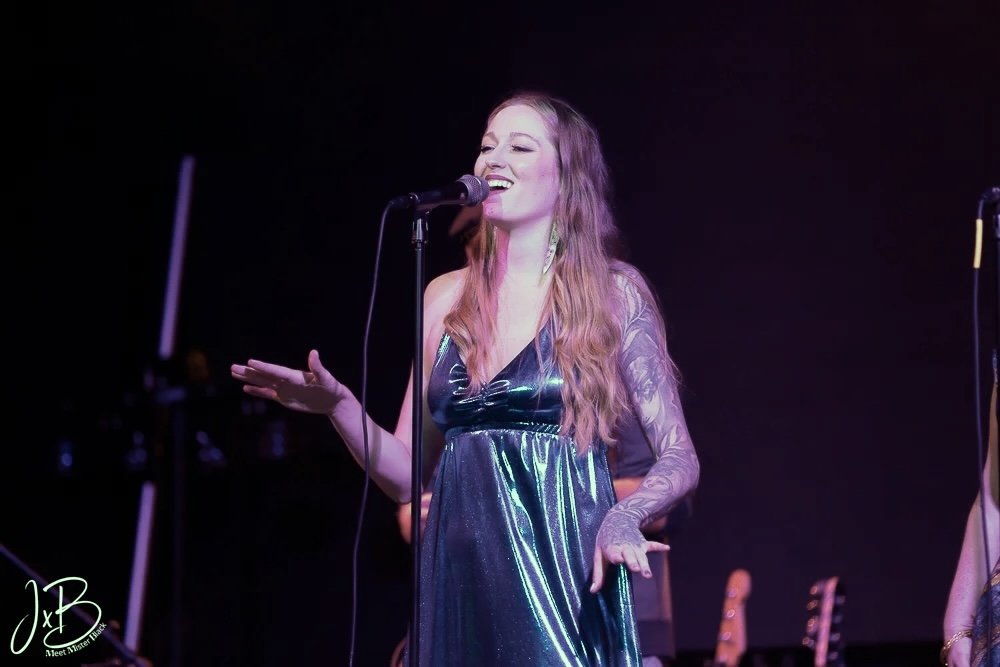
But the person that people see performing — especially when it’s a big show with my band — that’s a character I created. She’s me, but she’s also not me. That character was born in the strip club, actually. I work in a fully nude strip club, and I’ve done that for almost seven years, so I had to create a version of myself that was completely bulletproof and impervious to criticism.
She’s harder. She’s like an alter ego. If someone messes with me on stage, I’m ready. But the real me is not like that.
RRX: Does the stripping for you — is stripping a way of taking control of your femininity? What is it for you?
ST: For me, it’s been primarily a way of hacking the capitalist system so that I can make music. I strip so I can sing.
There’s no other job I could do that would pay me enough money to survive while also giving me the time to make music. I work nights and spend my days working on music. Every startup cost for my musical career has come from stripping. My gear, my band, my house — all of it.
So I think of it like collecting coins in a game. I go to work, collect coins, go home, fund my music career.
Do I love stripping? Not necessarily. It’s not my passion. But I love music enough that I’ll do whatever I need to do to keep making it.
RRX: What has the pain you’ve endured — especially what still reveals itself — granted you on both an artistic and human level?
ST: I think I owe everything to my pain.
When I was eighteen there was a traumatic event in my life. Someone I was very close with committed suicide, and I was the last person on the phone with him before he did it.
There had been a rumor spread about him, accusing him of something he didn’t do. People asked me if I supported the girl who made the accusation, and even though I believed it was a lie, I said I supported her because I didn’t want to look bad socially. I told him I hated him. That was the last thing I ever said to him.
At his memorial, the girl admitted she made the whole thing up.
I felt responsible for years. I went through addiction. I was couch surfing. I hit rock bottom.
But that moment launched a mental investigation into good versus evil for me. I was convinced I was a bad person. Over time, I realized we’re all just doing our best.
It changed my entire life.
RRX: What internal signal tells you that a feeling is ready to be turned into a song rather than kept private?
ST: I know when a song wants to be written when it starts writing itself.
I don’t sit down with the intention to write songs. Usually I’m doing something else — driving, cleaning, working on something — and suddenly the idea appears.
Then it’s a mad dash to get it out before it disappears. I’ll grab my phone and record a voice memo.
Usually what comes out first is a rough draft that’s kind of unusable, but it has the core message. Then I go back and revise it, sometimes with help from my band.
RRX: At what point in your life did music stop being expression and start becoming a way of understanding reality?
ST: Honestly, it has always been a way of understanding reality for me.
My first words were singing “Twinkle Twinkle Little Star.” I started playing violin when I was five. Then piano. Then guitar.
Music was always how I interacted with the world, especially because I had really bad anxiety growing up and struggled communicating with people.
When I perform, I push through the anxiety, and then I enter this flow state. It’s the only time I don’t feel that pressure in my chest.
RRX: How do you emotionally reconcile the fact that your most personal moments now live inside strangers?
ST: I actually find comfort in it.
I’ve always struggled connecting with people, so when someone hears my music and lives inside that emotional space with me — even just for the duration of a song — it makes me feel seen and connected.
Music becomes this shared experience where everyone is on the same emotional ride together.
RRX: What does being honest actually mean to you in art beyond simply revealing painful experiences?
ST: It means showing the parts of my personality that I’m embarrassed about.
I’ve started posting more online recently, and sometimes I almost don’t post something because I feel weird or awkward in it.
But then I remind myself that authenticity attracts authentic people. I don’t want an audience that connects with a polished version of me. I want people who are comfortable being themselves.
So honesty means letting people see the weird parts, too.
RRX: When fear shows up in your creative process, do you treat it as a warning or as an invitation?
ST: Usually, it’s an invitation.
If something makes me uncomfortable creatively, I want to explore why. But if the fear feels more like a warning, I talk to my band about it.
My band is like my creative board of directors. I trust them completely, so I bring those early ideas to them, and we decide together whether something should move forward.
RRX: Where do you physically feel a song first before it becomes language or melody?
ST: In my gut.
It’s the same feeling you get as a kid when you’re excited about something — like going to a sleepover or waking up on Christmas morning.
It’s right there in your stomach. That’s where I feel it.
RRX: In your view, is connection something art creates, or something it merely reveals that was already there?
ST: I think it reveals what’s already there.
Humans need community. Art helps remind us of that. During the COVID lockdowns, one of the hardest things for artists was losing physical community.
Art keeps us sane. Technology helps us progress, but art helps us stay human.
RRX: If someone encountered your work long after you’re gone, what aspect of your humanity would you hope they feel most clearly?
ST: I hope they feel driven. I hope they feel the love.
I failed at being loving at one point in my life, and it cost me everything. So now I feel responsible for encouraging loving interactions between people.
Empathy saves lives. If people take anything from my work, I hope it’s that — to be gentler and more compassionate with each other.
…
And perhaps that’s the silent miracle of Shannon’s music. She transmutes the weight of her life into something communal that slips beneath the armor we’ve spent years building. Her work trembles within the fragile space between collapse and emergence, where shame becomes resolve and pain becomes fervor.
Not every artist ventures into such depths, but those who do lace their presence with something luminous, human, and timeless.
So as spring slowly unfurls its wings against the tyranny of winter, it seems Nietzsche’s famous words sing truer than ever: Without music, life would be a mistake.
So please, tap into the multitude of work shared by Shannon Tehya through YouTube, Apple Music, and Spotify, and be sure to catch her as she blesses stages across the Capital Region on any given night.
Through her palms, music blossoms into a vessel greater than sound. It’s spiritual proof that even the bleakest winters give rise to song.

