

The Rarity of Being
What’s the rarest material in the universe? Gold? Diamonds? Well, those assumptions aren’t even close. According to astrophysicist Neil deGrasse Tyson, such materials are so ubiquitous throughout the universe that there are entire planets composed of the very elements most of us would sell our souls for here on Earth.
But here’s the real gem he dropped in a lecture I stumbled upon late one night on YouTube. If one could travel the entirety of the universe at the speed of light, it would be a miracle, like glaciers withstanding hellfire, to encounter even an infinitesimal trace of wood. That’s right, wood, the thing we so easily take for granted.
Despite all the advanced technology man has created throughout the sands of time, and the cosmic forces that shape the universe, nowhere else, as far as we know, can produce even a single tree. That’s because trees can only exist where there’s life.
This dense, heaving spectrum of vitality towers in monumental stillness, revealing a growth that never boasts and a beauty that never grovels for gaze. Wood is what’s real. This symbol unravels an essential truth: life itself is a rarity, textured with time, stretching our consciousness like branches reaching with a patience that borders on devotion.
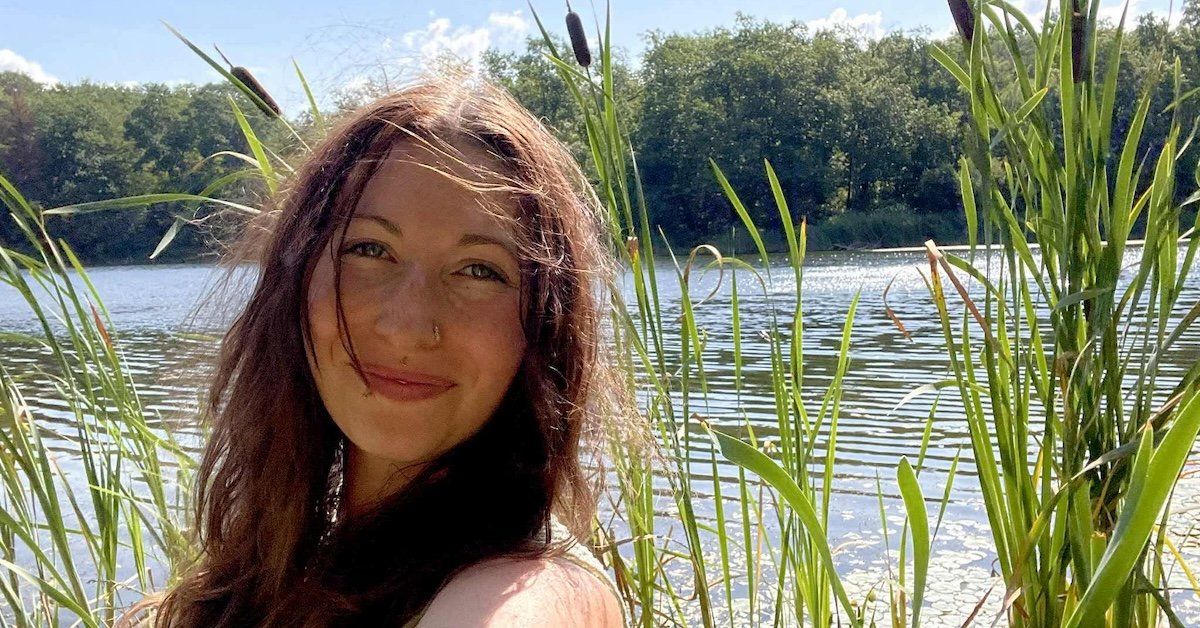
It’s this same rarity that reveals itself in the natural brilliance of the fine art of Karryn Cristi, whose creations, and whose very being, are deeply rooted in an intricate, unwavering web of life and sincerity.
I first came across her name in the mid-fall of 2025 while on leave from work. Looking for ways to stay productive, I decided to make my way to an open mic poetry event at a bar one evening in Cohoes, New York. There, I met the host of the event, as well as a bartender, and fellow poet and musician, Dave.
Following my performance, he handed me his business card. Five One Art was the name of the independent organization he not only belonged to, but created. Based in Troy, New York, it serves to elevate local artists while raising money for schools. On the same card, the name of the art director struck me as unique. Karryn Cristi, it read, leading me to ask him, “Hey dude, who’s this Karryn Cristi?”
He responded exuberantly, praising her work as both a leading figure within the local arts scene and an artist in her own right. Taking my seat as another poet performed, I popped an edible, ordered onion rings, and was offered light conversation, as well as a portion of Lo Mein by another writer seated nearby. Before making my way out, Dave made sure to encourage me to check out Karryn’s work online, which I drifted toward in my own time.
Upon looking up her profile, I caught a glimpse of her observational brilliance. And though I was intrigued, a trailer simply isn’t enough to satisfy the hunger of a curious mind. So, I decided to reach out to her in hopes of seeing more of her work. A day or so passed, and I was then extended an invitation to the Albany Center Gallery, where one of her pieces would be on display within the vibrance of expression meandering throughout the exhibition space.
Arriving one Friday evening with a friend, we pressed our way through the clamorous patrons, where scattered clicks meshed with the swift flare of flashes from photographers, and the thickness of humility and appreciation from creators and spectators alike, saturated the hush-lit showroom.
At last, my buddy and I finally stumbled upon her 12 x 16-inch piece amongst the plethora of work. Five O’Clock Flower was the name of her oil on canvas. At the surface, it’s a morning glory, but with further descent, the engulfing warmth of her personality is felt through it, mirroring the tip-to-toe dissolve of tension from sun-gazed sand yielding beneath the sole on a free-spirited summer beach.
In terms of sensibility, her piece echoed the essence of Claude Monet. The blue of the flower pulsing with tranquility, meshing with the tender ruggedness of the green and brown landscape. What’s truly interesting is how the brilliance of the piece hides in plain sight. It soars beyond the mere simplicity of just a flower and instead transcends into a moment of palpable perception, where human consciousness clicks and settles into the neurobiology of nature.
I messaged her via Facebook soon after, to which she responded the next day, offering to email me a folder composed of all her work. Well, most of it, I’m sure. Of course, I eagerly agreed, and once I received it, I studied her compositions closely, sharing the experience with another friend of mine, to which she responded with astonishment, “These drawings look so real!”
She creates with an almost metaphysical, surgical precision. The lightness of her lines affectionately whispers into one’s spirit, making it known that here, form is suggested rather than imposed. Her mind is able to suspend objects traveling at the speed of illumination, mimicking the tonal control of Renaissance creators long before technology was a flick on the societal radar.
The work of Karryn Cristi is psychologically driven, where the body becomes a philosophical site and each rendering feels like visual linguistics chosen to express differing states. Realism offers intimacy, while abstraction breeds fracture. Together, they reflect the existence of someone not looking to fit within the mold, but, through conscious internal inquiry, forging her own lane and leading from within. This work speaks to a form of individualism that can only take shape when one is willing to mesh the societal image they protect with the repressed shadows cast aside by artificial light.
I was able to sit down with her at Daisy’s Café in Cohoes, NY, a space that reflects the same hushed warmth of the very work that brought us there. She entered with a modest vibrance, emitting a modern bohemian winter energy that says, “I’m cultured,” without pretension. Further decorated with subtle piercings that finely dot the I’s with the smooth finesse of a ballpoint pen, we grabbed food and made our way to the back, where we delved into a dynamic dialogue that felt familiar.
Interview with Karryn Cristi
RRX: What does the body represent to you beyond anatomy?
Karryn Cristi: The body itself doesn’t mean much to me beyond health. What matters is what’s under it, the spirit. That’s what I’m trying to capture. When I’m painting, I feel plugged into that. It’s meditative, like I’m in another realm. I’m trying to express someone’s purest form, the thing inside that moves the body.
RRX: Many of your figures seem caught between vulnerability and power. What internal tension are you exploring through that balance?
KC: The vulnerability comes from emotional wounds, like being hurt in a way that makes you more sensitive to future pain. The power comes from choosing to face that through painting. Every piece is me working through something. By the end, there’s relief. Each piece is a small victory.
RRX: When you distort faces or obscure eyes, what truth are you trying to reveal that realism alone cannot?
KC: Eyes are the most identifiable part of a person. When I remove them, I want the viewer to project themselves into the piece. I want them to ask: Who is this? Is it me? Someone I know? It makes the experience more personal.
RRX: Do you see identity as something stable or something continually rebuilt?
KC: Identity is always changing, but I think having a strong foundation, values, and morals gives you something stable to build from. Without that, it’s harder to navigate everything else.
RRX: How do you understand humanity’s relationship with the natural world?
KC: I see the earth like a body, everything connected. Nature mirrors us, and we mirror nature. Life and death exist in both. The more we recognize that, the more we treat everything with care and respect.
RRX: What role does shadow play in your understanding of the self?
KC: The shadow is always there. You can’t exist without it. Sometimes you’re aware of it, sometimes you’re living in it, sometimes you’re overcoming it. It’s just another part of who we are.
RRX: What philosophical ideas guide your choice to move beyond straightforward representation?
KC: Life isn’t straightforward. Most of our thoughts aren’t either. I use symbolism because I want people to interpret the work in their own way. I feel like I’m always creating for someone, even if I never meet them.
RRX: What determines when clarity is necessary and when ambiguity is more honest?
KC: I don’t really separate the two. I try to be as honest as I can in the moment. If something feels unclear later, it might just mean I didn’t fully understand it yet.
RRX: What does closeness mean to you in a world that often feels fractured?
KC: Closeness is like mending something broken, like stitching pieces back together. It’s healing, whether that’s through relationships or within yourself.
RRX: What recurring question about existence do you find yourself returning to in your work?
KC: My work has always followed a pattern of pain and relief, going through something difficult to reach peace. But now, for the first time, I feel like I’m creating from a place of relief instead of pain. And I’m excited to see where that leads.
I left our interaction rather fascinated with how she carries herself. She’s a millennial who doesn’t own a smartphone, which is an anomaly in today’s society. In fact, she owns the traditional Razr flip phone, whereas I own the modern version, showing the subtle difference within our shared thinking.
Not closed off, but separated from the digital dissonance of the 2020s, she possesses the challenging ability to paint both the inside and outside of something at once. “This is proof you see the world differently,” I stated. “I’ve been thinking about evolution. Neil deGrasse Tyson talks about how humans are only like 2% different from chimps. So you wonder what’s 2% above us. The best thing a human can do is like what a toddler can do in their species. I say that because your lens feels like that, almost evolutionary. To a painter, you just do this. But to me, it’s like an evolved way of seeing.”
It’s this uniqueness of her innate being that grants her the gift of rarity we too often take for granted as we trudge through our day-to-day: raw humanity. That’s the gem that irons the wrinkles of societal chaos, allowing one the freedom of flight. A wise man once told me, “Artists don’t live long, they give long.” Well, similar to the longevity and inevitable demise of a tree, the artistic fortitude of Karryn Cristi exists to remind us of how small we are in comparison to what we are. And when it’s all said and done, like the rings of a tree’s life exhibit all that was given, her work will be a testament to the natural wonder that is life.

