Glory Addie: Closing the Distance Where Sound Meets Form
Written by BradQuan Copeland on May 1, 2026
Back in the early winter, a little after easing into the exuberant inception of the new year, I linked up with the local rising recording artist Ricky Bandana, who welcomed me into his gracious abode, where we kicked it in his DIY studio for a day-in-the-life interview. After coursing through his discography, as well as the inner workings of his psycho-philosophical development, he put me on to the recordings of his collaborators and friends.
As I slouched into the upholstered depths of his couch, he threw on a song performed by a woman whose voice carried a bell-like resonance. I can’t quite remember how many edibles were in me, just a hazy mix of a vape, a live resin pen, and an infused guava drink on the rocks. Sipping slowly, he threw on a song that flipped a switch within me, loosening my muscles while simultaneously cradling me in place. It carried a muted tenderness that left me feeling weighted without strain.
My eyes were barely open, resembling slits given by a cutman to a boxer’s swollen lids, yet my ears opened into a chasmic depth, devouring the sensation of every note. The production was so defined that I not only felt the pulsating rush from the strum of the guitar strings but could smell the metallic tang slipping into my senses, pulling me into an intimate warmth that resembled the astonishment of childlike discovery.
“Damn, who dis?” I asked. “That’s my friend Glory. She’s really talented, dude, but she always uploads and deletes her songs.” That latter fact went without saying, but its reiteration added emphasis. Though I couldn’t fathom why someone this gifted would delete such beautifully crafted material, it added a layer of intrigue that made me want to meet her all the more.
Upon being provided with her IG handle from Ricky, I located her page and was instantly hooked by the tagline in her bio: “The reward for conformity is that everyone likes you but yourself.” Such autonomy certainly contributed to her well-deserved following of well over 20,000, further underscoring the caliber of her artistry.
Without hesitation, I reached out, and it wasn’t long before I received a response. “Hi BradQuan, Ricky is the best! I would love that. Let me know what your schedule is like.” From there, we set a date at Alexis Diner in Troy, New York, for early the following month.
On a dreary February afternoon, chilled but not windy, we greeted one another outside before heading in, where we took our seats at a window booth. “Are you gonna order something?” she asked. “Nah, I’m good with just tea,” I replied. “Well, I’m gonna order something for later,” she said before placing an order for a BLT wrap with a side of fries.
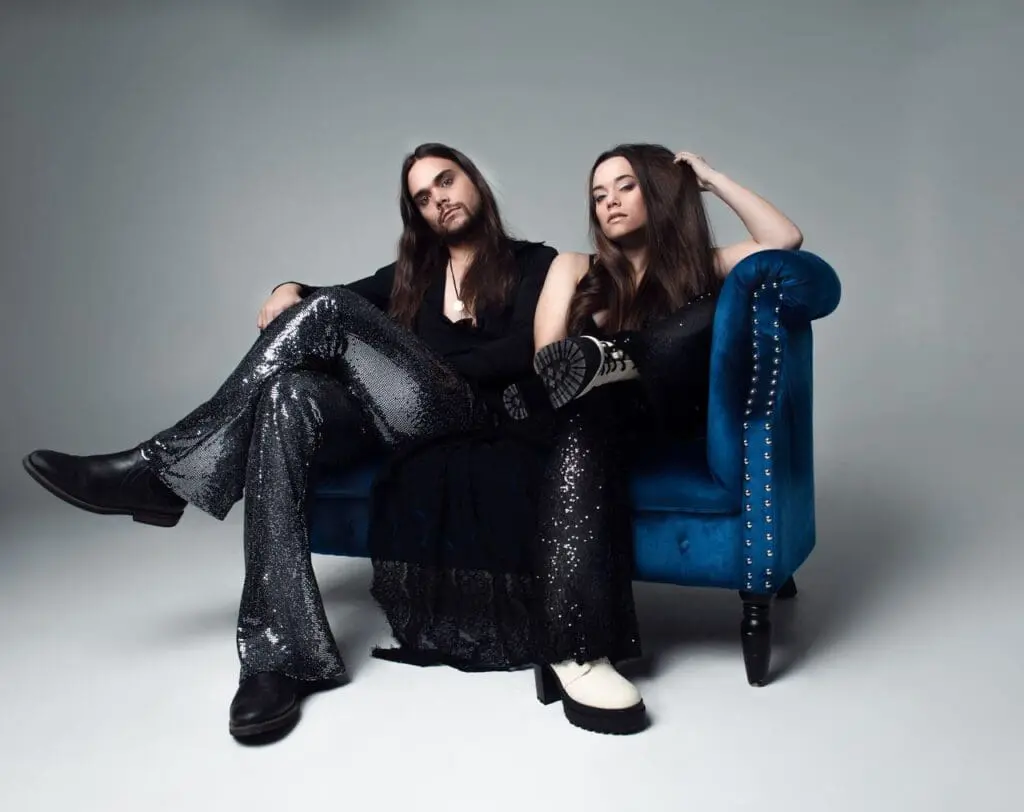
Her presence was delicate but harbored an underlying vigor that reminded me somewhat of Daenerys Targaryen. Her eyes were bluish-green, emitting a quiet attentiveness that felt aware without ever trying too hard.
It didn’t take long before we began to swim through consciousness, with me immediately asking why in the hell she would take down such good music. She chuckled before explaining that it was because she hadn’t quite mastered her sound yet.
“So you’re a perfectionist?” I asked. “I mean, I wouldn’t say perfectionist. I just have high expectations for what I want something to sound like, and I’m not willing to settle,” she replied.
As we peeled deeper into the topic, it seemed fair to conclude that, though she rejects the label of perfectionism, she does project a perfectionistic standard toward her art, which I can wholeheartedly understand, as such work is built to outlive us.
Her answer lingered with me longer than the moment required, forcing me to sit with what she meant rather than just what she said. It all seemed simple on the surface, but my mind, working in its usual hyper-analytical way, couldn’t help but drift toward Plato’s theory of forms. A form is perfection, something that everything else only ever approaches. No perfect beauty (music) exists in the tangible world, yet everything we call beautiful gestures toward that ideal.
What struck me was how Glory operates within that same tension. She chases a standard she knows she’ll never fully reach, yet refuses to settle beneath it. It isn’t truly perfection she’s after, but proximity, the act of closing the distance between what is and what could be.
And maybe that’s why the old saying holds: shoot for the moon, and even if you miss, you’ll land among the stars. The moon becomes perfection, singular and unreachable, while the stars represent greatness, a space already occupied, and therefore attainable. Not perfection, but participation in greatness.
That said, it led me to ask myself: how does one truly measure greatness in music? For me, it’s a sound that rises and falls like a chest drawing breath, painting a narrative vivid enough to be lived through, not just listened to. Greatness isn’t something you simply hear. It’s something you experience. What is experienced lingers, echoes, and demands to be spoken about, which is precisely why I felt compelled to write this piece.
What further piqued my interest was her consistent perseverance through cycles of depression, serving as the emotional anchor for much of her work. “I don’t think that I’m in a lot of pain anymore. I think that I’ve worked through a lot of the stuff that I’ve gone through. But I think that sometimes it’s not even pain. Sometimes it could just be a story or a situation that inspires us, but for me, it’s just stuff that kind of happened over the years of my life. They were difficult roads to walk down, and so music was just something that was an outlet for me to get my emotions out.
“Like suffering is part of life, and death is part of life, and all of it’s part of life. We learn different things along the way. And for me, a lot of that stuff happened when I was young, so I just kind of grew up with … a lot. My sister was really sick when I was 10. I found her covered in blood, and she almost passed away. And then my cousin passed away when I was 13. Then my best friend passed away when I was 15. And then I took care of this elderly lady who lived across the street, and she had cancer. I would go over and clean up her blood, and I’m like 15. And then she passed. Then my other cousin passed away. And my son’s father has been in prison for 10 years for something he didn’t do. For me, processing that stuff was always just like, let me sit down, let me write, get it out of me. Music has always been a way to feel and process,” she shared.
Her words never felt rehearsed. They carried the weight of someone who had already made peace with saying them aloud. Her songs, she explained, often arrive fully formed, surfacing through dreams with lyrics, melodies, and even guitar parts already intact. Listening to that, I couldn’t help but wonder if that kind of clarity is something shaped in response to chaos, a way of organizing what once felt overwhelming into something coherent, something survivable. Not an escape, but a thorough translation.
From there, her relationship with music has continued to evolve. What began as a means of release has grown into a deeper involvement with production, where she’s steadily building the language and understanding needed to bring what she hears internally into something tangible. Each step forth feels less like reinvention and more like refinement, closing the gap between imagination and execution.
She also spoke on identity, touching on gender, experimentation with queerness, and self-expression without feeling confined to any fixed definition. There was a comfort in her fluidity, a quiet rejection of the need to perform within rigid expectations. Whether through the way she dresses or the unspoken authority she carries into any room, she seems to move freely between spaces that others often feel pressured to choose between.
That balance, in part, has been shaped by experience. Having navigated abusive relationships in her past, there’s a grounded awareness in how she carries herself now, one that allows her to operate with both sensitivity and strength. It’s evident not only in her presence but in the life she’s built, raising three children while running a successful hair salon as a sole proprietor.
By the time our conversation reached this point, a clearer image had begun to take form. Not just of an artist, but of someone who seems most at ease when she isn’t performing at all. Someone who, when left to her own devices, moves through the wild without the need for armor, guided more by verity than by vanity.

Glory Addie – An Xperience Interview
RRX: When silence enters your life, what does it usually ask of you?
Glory Addie: “Reflection. Silence doesn’t enter my life that often, but every night I feel like I sit down and it’s quiet in my house, and I just think a lot. I think I self-reflect a lot. I’m just a very deep thinker.”
RRX: What belief about yourself have you had to unlearn in order to keep creating?
GA: “I always do this thing where I’m like, Well, you’re not a real musician. You’re not a real singer. You’re not actually an artist. I’ve had to unlearn that feeling of this imposter syndrome, that nagging voice in my head that’s kind of like, You’re a fake. It’s like, yeah, I am. I am an artist. I am a creative person. Even if I’m not, this makes me feel better. So I’m gonna keep doing it.”
RRX: What fear has shaped your voice more than any success ever has?
GA: “Performing-wise, I’ve had some really embarrassing performances. I remember I just froze. Another time, I just kind of stopped in the song and said, I’m done now. I feel like I haven’t even really had success yet. I’ve been humbled in the music world.”
RRX: When you create, do you feel more like you are discovering something or declaring something?
GA: “Declaring and discovering, because when you’re creating, you’re learning things about yourself, but you’re also declaring them to be true by writing them.”
RRX: What part of your inner life do you protect most fiercely, and why?
GA: “My children. I don’t post them. I don’t involve them. I’m very protective over them.”
RRX: When you imagine your future self listening back to your work, what do you hope they recognize about who you were?
GA: “I hope that they realize how free I was to just be accepting of whatever version of myself I was. Maybe not being perfect, but always being real.”
RRX: What does freedom mean to you when no one is watching?
GA: “Knowing that you do the same type of behavior when someone’s looking and not looking. Being able to be the same person behind closed doors that you would be in front of people. Always making sure that I’m living my life in a way that’s truthful and real, even when nobody’s watching.”
By the time we stepped out of the booth and wandered back into the cold, there was a deeper understanding of what I’d initially felt that day on Ricky’s couch. It wasn’t just the sound that was immersive, but the intention radiating from within the center of it all. It was in the refusal to reduce worth for mass approval, the willingness to sit in discomfort, and the ability to communicate life as it is, not as it is supposed to be, that made all the difference, shifting me from settling into the role of an enthusiast of her work to a legitimate fan.
Some artists chase attention. Others chase perfection. Glory balances both realities to inch her way closer to an artistic mastery worth remembering. I missed the opportunity to see her live once. That’s a mistake I won’t make again. This is an individual with the makings of a star, someone whose talent carries her from coast to coast and into meetings with people willing to invest in and support her music, visuals, and overall becoming in a pivotal way. With a strong and steadily growing community behind her, I don’t see a ceiling in sight for this woman.
And maybe that’s what I heard before I ever knew her name. Not just the beauty of music, but the sound of someone closing the distance between who they are and who they’re becoming. “And I can’t look back now cause I’m flyin’, far away now I can’t come back down …” she sang in the hook for an older song that could easily have hundreds of thousands of streams and counting, and still feels like something meant to be lived, not just heard.
Continue reading
 RadioRadioX