

By Larry Felton.
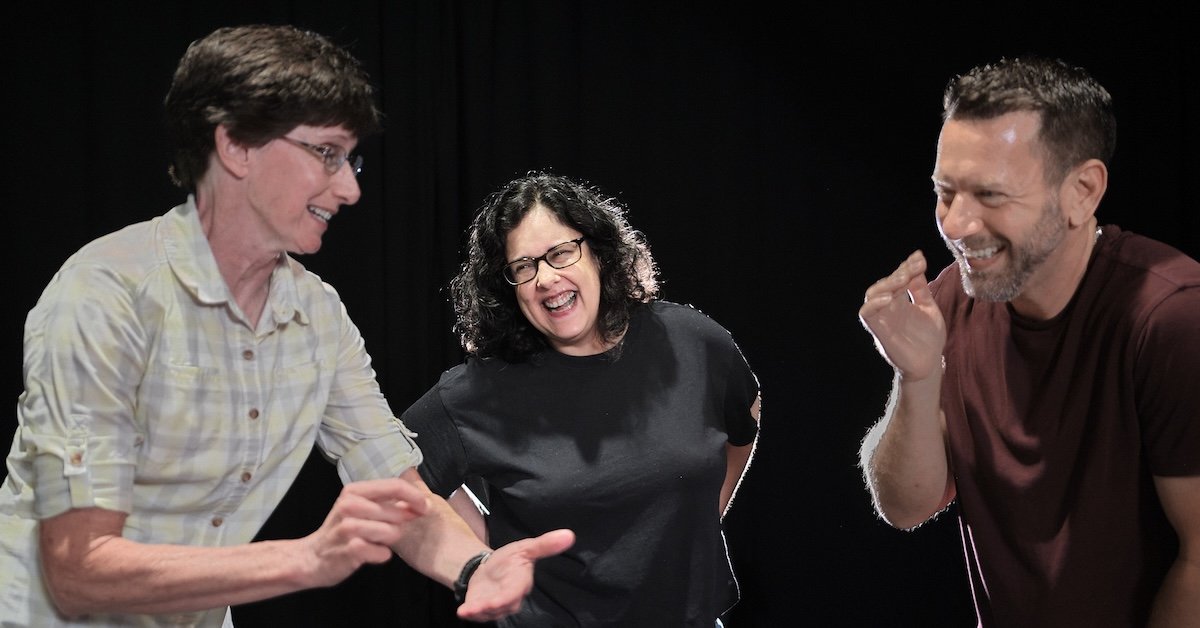
When artistic director Michael Burns suggested Maria Ayoob as someone to interview at MopCo Improv Theater, he also invited me to enroll in her Improv 101 class. Three weeks later, after six hours as one of her students, I sat down with Maria to talk about how a Google search turned into an unexpected creative life.
What intrigued you enough to sign up for that first class—the one I am taking now?
Before I took the class, I read an article about what to expect in your first improv class. I was fascinated by the idea that something which looks so magical when people do it well can actually be broken down into learnable skills. I got really interested in the learning part of it—how do you learn those skills until they become this cool thing you see on stage?
What led you to improv?
I tried every hobby that you can think of. I always wanted to make sure I was doing something outside of work that was different from work. So I took woodworking classes and photography and knitting and all those things. But they would keep my interest for a few months, and then it would fall off.
Why did improv stick when nothing else had?
I think one of the things that drew me to improv is I’ve always liked connecting with people through humor. There’s also the fact that I’m in my fifties, and it’s happening for me now. I never thought I would have this whole creative fulfillment happen for me at this age.
You’ve called MopCo the heart of this community. What do you mean by that?
People dive into the community. They come to Monday nights (Mopco holds drop-sessions for community members on Monday evenings), go to shows, meet people—and they create friendships and relationships out of it.
In my twenties, friendship was coffee-based. You talked, you ate, you drank coffee. This is different. The friendship is an outcome of an activity you’re doing together, which has been very cool.
You’ve described the people at MopCo as geniuses who are also your loving friends. How does that happen?
I think it’s taking those principles and really practicing them several hours a week—saying, “I’m going to appreciate what you’re doing,” instead of what happens in so many other parts of our lives. You’re spending two hours delighting in other people and being delighted by them. What it’s brought me is joy, honestly, which I don’t think I ever would have imagined wanting. It wouldn’t have even been a goal.
How did you end up teaching it?
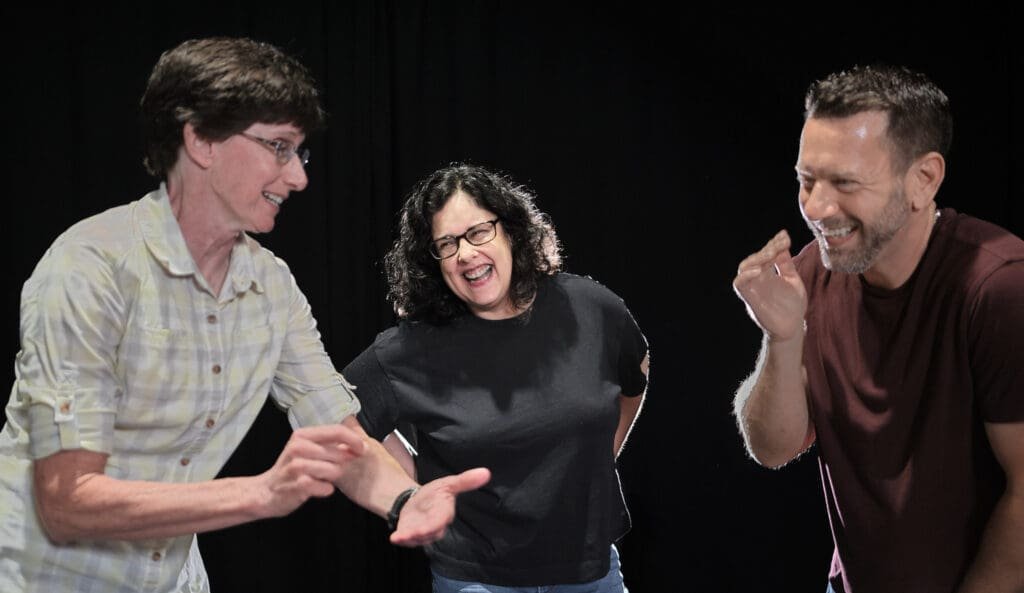
Michael needed coverage for the first session of a four-week class, and he asked if anybody would do it. I said I’d shadow him for a class first, then try one myself—and I fell in love with it immediately. I love being able to spend two hours creating a space where people can feel safe, let their guard down, and laugh.
Do students find the same thing you did?
I had a woman in one of my first classes who came back the second week and said, “I work in sales, so I hear ‘no’ all the time, all day. This was two hours of hearing ‘yes’ and being affirmed.”
I think that’s a lot of what people get that they’re not expecting—the power of approaching other people with a different attitude and being able to receive more from them in return.
What’s the furthest you’ve seen a student take it?
I’ve only been teaching for about a year, but there are people from one of my first classes—a whole group of them started a troupe, and they’re doing a performance at MopCo in a few weeks. A lot of people come back and keep taking classes. Some take Improv 101 again. A lot come back for Monday night workout sessions. People stick around.
What would you tell someone before their first class—before the one I’m taking now?
I would tell them to just show up. That’s one of the things improv has helped me do. This thing is going to happen, and I can’t stop it, so I’m just going to show up, and we’ll make something of it.
I would also tell them they’re not going to have to work as hard as they think they’re going to have to work.

