Home Blog Page 131

Lithium, Chptr 12 – Xperience Fiction

0

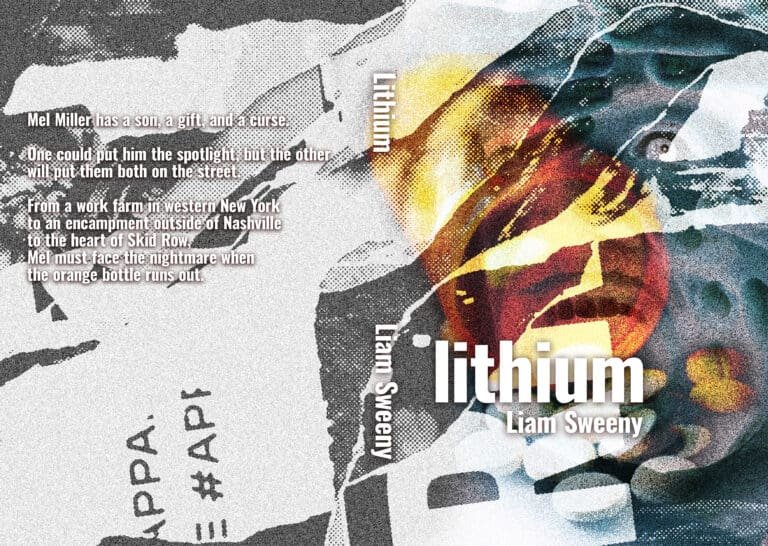
Lithium, Chptr 12 – Xperience Fiction – by Liam Sweeny.

Mel woke up to something odd. Not ‘aliens were parked and having a barbecue’ odd; just that something wasn’t the way it was supposed to be. He was dog tired, his adrenaline from yesterday long since gone. So it may have taken him extra time to notice the thing that was not like the others. Because it wasn’t a thing; it was the absence of a thing. A tent. Max’s tent.

Mel didn’t even try to come up with some logical reason for the tent to be gone. Burle, likely Casey, removed it. Max would get out of the ER and he wouldn’t be welcome there. It was wrong, and in a civilized world, Max could’ve sued the pants off Burle and the whole farm. But the most he could do would be lodge something in small claims court, where he’d have to show up, if he even could, in street clothes.

The town was in Burle’s pocket. So, of course, was the farm, and all the workers were nothing more than useful lint.

Allie walked out as Mel was standing by the space where Max’s tent was.

“Did you see the accident?” Allie asked.

“Yeah. I was painting, and he was one the side roof pulling shingles.”

“Is he going to be okay?”

“I don’t know,” Mel said. “Did you see them take the tent away?”

Allie yawned, covering her mouth with her sleeve. “No. And I was up until at least midnight?”

Mel pulled out a stick of gum he got from Ulysses. “I thought Casey didn’t come up here?”

“He does if he’s evicting someone.”

“He takes their tent?”

“I don’t know,” Allie said. “Maybe they put it in storage for them to pick it up. And if they don’t pick it up, who knows?”

“I can’t believe they’re evicting Max because he got injured,” Mel said. “He did nothing wrong; I swear to you. I was watching him. That damned roof must’ve been rotted out underneath.”

Andy came out and joined them, stretching and yawning, which he did a lot for a kid. Then again, Mel didn’t know how being a drifter affected kids.

“That’s where Max was,” he said as he pointed to the empty spot.

“I know.”

“Is he gone, dad?” Mel didn’t want to answer that, largely because he only suspected the answer.

“I’m gonna talk to Burle, find out what’s going on.”

A pallor hovered over breakfast at the house. It was never energetic and joyous, but it was never free of small talk. Everyone knew that Max’s tent was gone, and everyone knew about the accident. And thanks to Mel around the fire the night before, everyone knew how Casey and Burle tried to handle it.

Mel waited for Burle to give Casey the orders of the day before catching his ear.

“What was wrong with Max?” He said. “How did the ER go?”

“It was fine,” Burle said. “Just cuts and scrapes, like we said.”

“Okay, so tailing on that, we have a problem up at the clearing.”

“You know, Casey’s the one you’re supposed to talk to about this, not me.”

“This one, I think, is a ‘you’ problem.” Knowing how easy Burle was to beat the crap out of made it a whole lot easier to be assertive.

“Okay, fine. What is it?”

“Max’s tent is gone. Did you kick him out because he got injured?”

“I didn’t kick him out.” Burle pulled out a pack of cigarettes. Mel didn’t know he smoked. “When we were in the waiting room, he told me he wanted to leave. So I gave him what pay he was owed out of pocket, and I told him I’d grab his tent and bring it to the shelter in Jamestown.” He flicked his lighter to spark up. “Honestly, I didn’t get back until two-thirty. So, no offense, I’m not going to be the ‘questions’ person beyond this.”

Mel went back out to work on the barn, which unfortunately put him in constant sight of the hole that swallowed his friend. He had been there long enough to know all the motions and stops on the grapevine. He had news of what Burle told him to everybody by lunch.

Lunch, like breakfast, was quiet. Everybody could sense a storm coming, but no one knew who the eye of the storm would be. Everyone had reason to lash out, or to harbor resentment, and the work was relentless. In fact, sometimes, Burle and Casey gave out work assignments that had little- or nothing to do with running the farm, and everything to do with keeping people busy. If it weren’t for the fire, life on the farm wouldn’t be life.

At the end of the day, about a half-hour before the sun went down, Ulysses came up to Mel and tapped him on the shoulder.

“You need to see something,” he said. “Up in the north field.”

“Can I go grab Andy? He just got back from school.”

Ulysses looked around with cool eyes. “Your kid can keep a secret?”

“Yeah, of course,” Mel said. “Stay here; I hear him, he’s not far.”

Mel found Andy gabbing about class with Allie, sounding excited for once. He told him they needed to fix the tent, which was a lousy lie to tell in front of Allie, but it was all that came to mind.

They joined Ulysses in a trek to the north field. It was uphill and a far walk, and no one went up there because there was no actual part of the farm there – just uncultivated land.

“You sound excited about school.”

“Yeah,” Andy said. “We have tomorrow off. Teacher thing.”

“Oh, well, that’s something, I guess.” Mel took a deep breath as they started the ascent. “Is it getting any better for you?”

“Yeah. Turns out those kids that beat me up couldn’t beat Zombie Master. I beat that whole game, so I gave them the cheats. Now they like me.”

Mel felt bittersweet about that seeing as how temporary their address might be.

They walked into a small clearing with a multicolor tree line. Ulysses pointed.

“That’s it right there,” he said. “See it?”

Mel squinted. “What am I looking at?” He said.

“Take a good look.”

Mel squinted, and it took a minute before he could catch the angles and stripes, and square patches of color. It was tents, all collapsed and mashed up. And standing on the edge of the tree line, a slightly less dinged up tent, grey with orange stripe.

Max’s tent.

***

Mel realized he was lucky among the workers, at least for then, because he had a minivan. And it was great that he could ride the other workers into town, or even to Jamestown, but he could also depart from the farm as time and gas allowed. He found a spot a mile-and-a-half down the road, where a parking area was cleared off at a section of state park. He liked to take Andy there after he finished work, and Andy got off the bus. They wouldn’t stay long, maybe ten minutes if they lingered. If Mel were being honest, it would’ve been a satisfying bone cruise when he was in his twenties.

He didn’t know why he chose to leave the north field to talk with Andy that afternoon. It was desolate, and if they just stayed there, likely no one would’ve intruded. But Mel needed space. He needed distance of mind from the graveyard of tents. He didn’t want to have to face what all those people were to Burle and Casey. What he knew they now were.

“Andy, we can’t stay here now. Not for long.”

“Do you think they killed Max?” Andy asked.

“I don’t know. I really don’t,” Mel said. “But their story is obviously made up.”

“We should go find him. Or find his body.”

“I’m not against it, kid. But we don’t have money and we don’t have the gas to go looking. My plan right now is to grit my teeth, get paid tomorrow, and make my move.”

Mel adjusted his rearview mirror, more than half expecting to see the headlights of Burle’s pickup, but the road was clear.

“I’ve been working for two weeks, so, minimum wage in New York is fifteen an hour. Max told me he pays minimum. But let’s assume he’s going federal minimum wage, cause we’re under the table, so that’s seven-and-a-quarter.”

Mel lifted his eyes beyond his lids and tapped the tip of his thumb against his fingers, not with tardive dyskinesia, but with numbers in his head.

“So seven and a quarter times ten hours times six days times two weeks, minus a half day for the trip to the pharmacy, that’s… eight hundred and seventy bucks.”

“Minus room and board,” Andy said. “Even though the food is donated.”

“Well even if room and board for the both of us is half that, which would be a ripoff, that’ll leave us four hundred and thirty-five bucks. That’s a bit less than what was on the EBT card.”

“That’s go money, right, dad?”

“That’s absolutely go money.”

Andy opened the glovebox and pulled out the atlas. “But where to go?”

“Good question,’ Mel said. “Not back home. Not back home for a while.”

A stack of fresh pallets stood by the fire pit that night, including scrap wood. Mel knew that Max’s blood was on part of that scrap wood. Everyone else did too because it would lay there unburnt all night. Mel had the morbid thought that if they did burn it, at least Max would’ve gotten cremated. They could’ve had a service, even gone up to the north field and retrieved his tent, also to burn.

Allie rubbed Ulysses’s shoulders. Marcus and Maria were drawing in the dirt with sticks. Kevin, Will, and Sam, three workers who Mel barely knew, were breaking up the pallets to throw in the fire. And Andy was in the tent with a flashlight, still doing homework, even though he had no real reason to. Mel figured he needed the distraction.

“I can feel it,” Allie said. “In the vibe. Max’s vibe was primo when he was good.”

“Burle should be shot,” Marcus said. “Casey too. Both of ‘em. Lined up. Shot.”

“They’re gonna’ find theirs in the pit,” Allie said.

“Yeah, if hell exists,” Marcus said.

“Hell’s here. Right here. Right now. We livin’ it.” Ulysses coughed into his fist.

“Yeah, hell exists. Real pitchfork cloven hooves hell. H-E-Double-Hockey-Sticks. I saw it.” Allie said.

“Get out of here with that shit.” Marcus said. “You was high or crazy. Can’t see hell and live to talk it up.”

Allie wrung her hands. She was prone to fantasy, and no one challenged her proclamations because they were fun. She wasn’t used to the skepticism. And Mel figured about this time Max would smooth out the vibe. But he wasn’t there.

“Look guys, I’m out of here tomorrow,” Mel said. “I’m getting paid and that’s it.”

“Do you have a specific journey in mind?” Allie asked.

“No, just… out of here.”

“What about Nashville?” Ulysses said. “You heard about the tent city there?”

Mel hadn’t considered leaving the state, much less leaving the whole northeast. “What is it?”

“It’s a tent city,” Ulysses tossed a pebble in the fire. “It’s on private property, so it’s safe. The cops can’t just move you if you have the guy’s permission to be there, which I heard he lets everybody stay. And there’s a whole artist thing going on there. It’s pretty cool.”

“Okay, how come you’re not there?”

“I’m not into that hippie commune shit,” he said. “Rather just tuck my head in and do some work, get paid, keep to myself.” Ulysses looked around. “Present company excluded.”

“Of course,” Mel said. “So is it in Nashville, or near it.”

“Near it.” Ulysses said. “It’s just west of Nashville. If you can figure it out from there, you should go. You’ll fit right in with your art.”

Mel sat with the rest of the crew all night, celebrating Max’s life, though Mel hoped beyond hope that Burle and Casey were just general grade scumbags, and not murderers. He knew Max wouldn’t come back for his tent, because it would mean having to ask to come on the farm, hat in hand. Max had more pride than Mel figured men in their position had a right to. Max might come for his paycheck because it was owed. Mel would have to see the next day, assuming he stayed long enough.

Mel went to bed, wrapping his arms around Andy. He missed his boy to the school, making it a mixed blessing to pull him from it.

***

The clouds were thin and sparse, and once Mel could see it eye to sky, instead of through the tent’s mesh, he knew he would be able to see the pre-dawn constellations. And it would make him feel so small, and yet so important, that he could be a cosmically miniscule being on an unremarkable rock in the vast upon vast universe, and with but a glance, he could connect with it all. He could see the past of the starlight as he contemplated both present and future, and if he stayed long enough, he could see that cosmic presence fade to the rise of their own star.

But Mel had something personally cosmic to attend to in the tent. He had the flashlight in his phone turned on and away from where Andy was sleeping. His pillbox sat in his lap, and the bottles were surrounding it in a fold of his sleeping bag. He was making decisions with determination that two weeks ago would’ve terrified him. And it wasn’t because he had grown as a person; it was that he was suppressing the terror.

Ever since he had gotten diagnosed with bipolar 1, he split himself into two people: the law-abiding, present, practical, logical community citizen, and the shameful, wild, pitiable, and dangerous-under-the-wrong-conditions lunatic. The meds he held in his pillbox formed the wall in his head separating the one from the other.

Lithium. Valproic acid. Risperidone, Trazadone. Diazepam. These were his shield from the great abyss that he could at any time fall into. They made him whole, but they exacted their toll. He was fatter than he ate for. He had restless legs that made getting a comfortable night’s sleep a challenge. He couldn’t drink or do drugs or skip a night of meds without two days of feeling lousy in a way that was tough to describe to a doctor, even a shrink.

He stared at the pillbox. Every other day the slot was empty. He would have liked to cut down his dosages to keep taking them daily, but he would need new scripts, and scripts were a problem in the first place. He didn’t dare chop the pills in half without a foolproof method of not crushing them beyond use. He knew he couldn’t take the meds as is, even after he got paid. They needed that money for food and gas. He didn’t know what lay ahead, and the experience on the farm had rubbed the polish off his hope.

He got Andy up, and they disassembled the tent. He knew it was too early for Burle or Casey to be up and about, even on a farm. They left the very early morning tasks to the workers. So they took the tent and the sleeping bags to the car, unnoticed by anyone but Ulysses.

“You out, huh?” He said.

“Yeah, after we get paid. We’re just done.”

“You’re smart. Good thing you have a car. You gonna’ go to Ark Church Mission?”

“What’s that?”

“Homeless shelter in Jamestown,” he said. “It’s alright. Not too crazy.”

“I was thinking we go to that tent city in Nashville.”

“Alright, alright,” he said. “But let me say, watch yourself out there. The country is all different in how it treats homeless folks. What could pass here won’t pass there, you know?”

Mel nodded. It was food for thought. But they couldn’t stay in New York. Mel had heard horror stories about shelters, and even if they were able to stay, Debra could find them in New York. She’d likely weaseled her way into some Family Court judge’s heart by then. Not to mention that Mel didn’t exactly pull Andy out of school in any official way.

Thinking about staying made Mel realize that, at least in New York, he might be wanted.

Payday was after breakfast, and from what Allie told him, it was the only day that they got paid time off, basically the amount of time it took to pay ten people. It was also the only day it was fun to work. Burle paid everybody with a white envelope. People would get their envelope and move over to count it.

That should’ve told Mel something.

When he got his envelope, he opened it.

“Over there to open and count it,” Burle said. “Don’t hold up the line.”

Mel sidestepped, opened it, and it looked light. No way it was four-hundred dollars, even. He counted it out; two hundred.

“Burle,” he said. “There’s only two hundred here. I think you made a mistake.”

“No, that’s it. Two hundred.”

“I worked two weeks.”

“You worked two weeks minus a half-day, minus the half-day you took with Max, minus the gas money and expenses to get him to the ER, which I told you you were paying for. Plus the cost of getting Andy in school. So, two hundred.”

“That’s bullshit and you know it,” Mel said.

“You want to swear, you can get out of here.” Burle handed an envelope to Allie. “I have rules.”

“It’d be nice if one of your rules was not ripping off your workers.” Mel felt himself becoming more animated in his movements. He was gaining steam.

“And oh yeah, about that painting,” Mel said. “You sold that to a gallery in Jamestown for five hundred bucks. You gonna keep that too?”

“I told you, that’s on commission.”

“So let’s go back to the gallery and take it off commission, and I’ll go take it back. If it’s on commission, we can do that, right?”

“I’m not going back there.”

“No? Then how will you get the money when it sells?” Mel used finger quotes for the word ‘sells.’

“If you don’t like the way I do things here, you can leave. You and your kid.”

“Sure. Better leave alive than have you pretend to drive us the hospital but leave us in a ditch. Or did you kill Max outright?”

“I don’t like what you’re suggesting,” Burle said.

“We saw his tent in the north field,” Mel said. “All the tents. How many workers have you killed?”

By that point, the workers were gathered around Mel, mainly because they were in awe that someone would speak to Burle in that way. But Ulysses saw something coming.

“What are you gonna do, call the cops?” Burle said. “You’re nobody, here or anywhere. They arrest folks for trying to feed you people ‘cause you’re vermin. And you think what, you’re gonna lead an uprising here? These people are going to go right back to work when I kick your dust from my boots.”

“You ain’t nothing,” he said. “And your kid ain’t nothing.”

Mel lunged without having any sense that he was doing it, or any plan to do it. Just a muscle in him that twitched because it was poked. He felt hands grip his shoulders. Rough, black hands. Ulysses.

“Chill, it ain’t worth it,” he said.

As soon as he said it, Mel felt pressure against his eye socket, and a brilliant flash of light. Burle had punched him, but aside from the shock of him doing it, Mel wasn’t on his way to the mat.

Burle snatched the envelope out of Mel’s hands and immediately walked back to the house. If Mel hadn’t already emptied the envelope, Ulysses wouldn’t have been able to stop him.

“You guys gotta go,” Ulysses said. “He’s gonna call the cops.”

“Good, let him call.”

“Bad. For all of us,” Ulysses said. “Thank you for standing up to him. Now please go.”


More from Liam Sweeny…

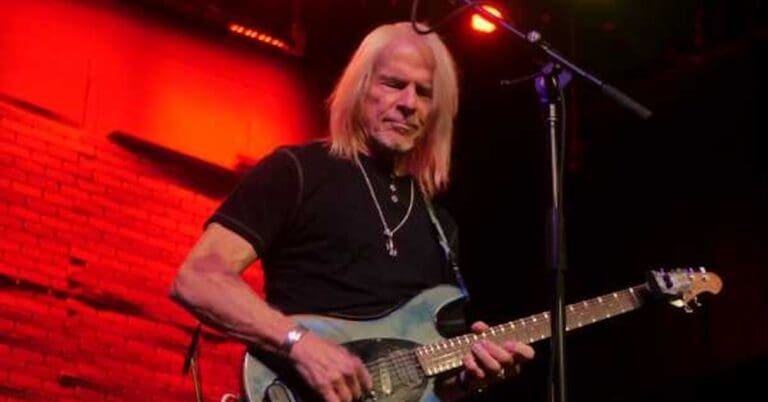
Steve Morse Band @ Cohoes Music Hall, 10/25/2025

0

Multiple Grammy-nominated, Dixie Dregs founder, and ex-Deep Purple guitarist, Steve Morse, brought his four-piece band to Cohoes Music Hall on Saturday night, as part of their “Triangulation” tour.


Photography by Timothy Reidy.

More from Cohoes Music Hall here …

Gail Sparlin – Thanks for Asking!

0

Gail Sparlin – Thanks for Asking! – by Liam Sweeny.

RRX: What was the very first reaction to your music, from the first person to ever hear so much as a practice jam or the demo of your first song?

GS: The reaction was encouragement. I was in college and I used one of my songs as part of a project. The reaction from the class was a big surprise. I wasn’t expecting such positivity about the song. I was an art major at the time. It was one of the reasons I switched my major to music. I have been playing guitar since I was twelve and started writing songs in my twenties. My family had monthly gatherings of twenty to thirty family members and there was always a sing along. Me, my brother Scott, my Dad, and my cousin Loretta lead the way. My brother has had a band since the 70’s. But I was an artist. It didn’t occur to me to be a professional musician. The attention that my songs started bringing encouraged me to switch. I am a people person. I love to chit chat. Art is solitary. So, I switched my college major to music and became a music teacher and area performer. It was one of the best decisions I ever made.

RRX: “The best laid plans of mice and men…” I don’t really know the quote, but I know this one; sh*t happens. When we least expect it, calamity befalls us. Sometimes just comic inconvenience. Please tell us a story about some comic inconvenience that happened to you whilst performing?

GS: I wrote a play/musical in 2014 about growing up in a bar, which I did. It was titled Pokegama Hotel, the actual name of the bar.  On one evening of the show, the sound gave out for about 5 minutes. The actors stopped briefly, but then resumed their acting and singing. They were shouting. The audience started laughing. Fortunately, whatever stopped the sound gave way and the mics began working again. The actors were still speaking loudly, but then they heard themselves. Then they began laughing, but only for a moment. The play continued on and it was a success. But that was a nervous moment!

RRX: My singer punched my drummer out. Memorable moment, though nothing to brag about.  But we have these things that, when summing up your endeavor, an incident comes to mind. What do you got?

GS: I went to school for sound engineering and it was part of what I taught. In my teaching career, I frequently invited area bands to perform for my students and show them what it’s like to be a musician and part of a band. Sometimes, certain men in the band would not trust my stage skills and make remarks such as, “Where’s the sound techs,” assuming I didn’t know what I was doing because I was a woman. They eventually stopped being critical when they saw me and my students being capable sound techs. I just smiled at them and kept on working.

RRX: We have to play somewhere, and sometimes those places have more going for them than a stage and a power outlet. What is a memorable place you played, and bonus points if it’s not a well-known place.

GS: Caffe Lena. You walk in with your guitar and the rest is waiting for you, including a piano. It’s a studio with a stage. I have performed there several times. It is truly an awesome experience. One of my favorites.

RRX: Playing out is tricky because you never know what’s going to happen when you get there.  Sometimes everything goes wrong. What was your worst show like? 

GS: I think my worst shows are at places where nobody listens. After doing bar gigs for 30 years, it is hard to look out and see nobody paying attention. But, that’s the deal most times. That is part of the reason why I started my Swamp Lily Charity Hour. You have an audience that is there to listen. And, help out local charities.

RRX: Would you rather have one of your songs blow up and make you a one-hit wonder and household name, or would you rather have all your songs be solidly received, but no chart-climbers? (You have to pick one or the other here.)

GS: At this stage in my life, I am happy with my songs being solidly received. The Capital District, including Saratoga, has an awesome music scene. There are so many wonderful musicians and there are so many places that take on music. And, we have WEXT radio that plays local music. That is not a common thing. It is such a gift to be a musician in this area. Truly. I’m happy doing what I do.


More from Liam Sweeny…

Caffe Lena – Week at a Glance 10.27

0

Greetings – The longstanding culture of Caffe Lena is that you’re part of a gathering, not just an audience. I point this out because this whole week of events lives up to the promise of gathering. Not just the regular shows, but Open Mic, Folk Club Kids, Slow Jam, the Capt. Fun Lunchtime Listening Hour, Kate’s Little Folks Show, Lena Go Round, Playwright’s Jam, and our numerous group classes. Given that it’s Halloween week, I think it’s okay for me to state that it’s possible to tell when the spirits in the room are happy. (Yes, there are spirits in those bricks.) As you come walking through the door to discover, support, and connect this week, you’ll be feeding the good spirits at Caffe Lena–and they’ll feed you back.

See you at the show,
Sarah

Monday
7:00 PM – Open Mic Night


Tuesday
CLOSED  
8:00 PM – “Live From Caffè Lena” on WEXT 97.7 or 106.1 FM


Wednesday
10:30 AM – Folk Club Kids: Stories, Songs & Sing-Alongs (Infants to Pre-K)
7:30 PM – LENA GO ROUND SONGWRITERS SHOWCASE
7:00 PM & 12:00 AM – “Live From Caffè Lena” on Folk Music Notebook


Thursday
1:00 PM – Slow Jam
7:00 PM – HOT CLUB OF SARATOGA  LOW TICKET ALERT!
with BALTIMORE’S SAM FARTHING


Friday
9:30 AM – Music With Miss Deb
12-1 PM – CAPTAIN FUN LUNCHTIME LISTENING HOUR
6:30 PM – DEADGRASS
9:00 PM – DEADGRASS


Saturday
3:00 PM – LITTLE FOLKS SERIES: KATE TAYLOR
8:00 PM – AN EVENING WITH KATE TAYLOR


Sunday
1:30 PM – Playwright’s Jam
7:00 PM – PIERRE BENSUSAN LOW TICKET ALERT!

Life on the Cutting Edge – Discoveries and Advancements

0

Life on the Cutting Edge – Discoveries and advancements

Aging is Controlled by One Protein in the Blood

https://www.ox.ac.uk/news/2024-08-08-proteins-carried-blood-offer-new-insights-ageing-and-age-related-disease-risk

Korean Scientists Invent Plasma Torch that Turns Waste into Pure Chemicals

https://techxplore.com/news/2025-09-plasma-torch-hassle-free-plastic.html

Japanese Scientists Find Way to Erase Bad Memories from the Brain,

https://www.tohoku.ac.jp/en/press/saying_goodbye_to_traumatic_memories_astrocyte_manipulation_of_the_fate_of_memory.html

Peter Mulvey – An Xperience Interview

0

Peter Mulvey – An Xperience Interview – by Liam Sweeny.

Peter Mulvey has been there and seen it all, possibly even seen the giant ball of string. This folk singer/songwriter tours internationally and constantly, and will be in our neck of the woods at Caffe Lena on November 2oth. Let’s welcome him.

RRX: What’s going on with you right now? I know you have a show coming up at Caffe Lena. Any other things going on that I didn’t manage to glean?

PM: That’s the closest show I have to you. I’ve got shows in Wisconsin and shows in Massachusetts, Vermont, and New York City … that’s how I’ve made my living for a long time.

I have a reputation for that, in that I toured from – I’m gonna say like ‘94 until now – for 31 years. In the beginning, it was what dumb young people do, like 240 shows in a year in my 20s, and then I got married and slowed it down some, ‘cause you need to come home. All these years later, I got a 4-year-old. And so, honestly, I still tour more than a lot of people, but I try to restrict it to 4-day-run outs. It makes the West Coast and the Mountain West brutal because you have to get up at 0 dark 30, take a couple of 3-hour flights, and then drive to the gig. And it’s a triple shift. It’s like 24 hours before you go into bed. But I gotta be home; these years do not come back.

RRX: Most people don’t realise, when they’re just listening to music, that no matter who they’re listening to, it’s a job for them, even though it might be very fun, it is still a job. When you’re playing four out and you’re doing all this kind of touring, how do you keep it from being just a job? How do you keep it fresh?

PM: I mean, there are a lot of things that do that. One, I’m a natural. I think I’ve always wanted to do this. I’ve done it since I was 16. Also, I got really lucky to fall in with Kelly Joe Phelps, and then also my good friend David Goodrich, who produced a bunch of records for me and toured with me for a long time. Both of them are major improvisers, more so than most singer-songwriters. I play the songs differently every day. I try to stay in the moment, and I try my best to not quite know how I’m gonna sing a phrase until I’m singing it. And I’ve learned that that puts me in the position of the audience. If I don’t quite know what’s coming next, then neither do they. In a very real sense, we have to lean forward a little bit, both myself and them.

RRX: I’ve never actually heard anybody put it like that, but that’s pretty cool. Nobody really knows what’s gonna happen cause you don’t know what’s really gonna happen.

PM: The jazz musicians could tell you quite a bit about this. That’s the bedrock of jazz. It is worth mentioning that most people who take this approach have a way better vocabulary and a way firmer grasp on harmony. But it is surprising how spontaneous you can be. I’m kind of known as a guitar yahoo, you know, like one of those, “Oh, that guy’s such a great guitar player.” But the truth is, my primary instrument is my voice. I’m talking right now, thinking off the top of my head. I really have done that now for 56 years, all day, every day, and I don’t play guitar nearly as much as that. So, I don’t know. This is my personal thing. I often try to get my students who are singers and songwriters to realise that they have a lot more potential to do this kind of stuff than they actually think.

RRX: Busking, I love the whole concept. I don’t know if I have the wherewithal to ever do it myself, but it’s so cool to think about busking and to watch people do that. You spent time busking. What’s something that people should probably know if they ever were gonna try to start doing it?

PM: Just keep going. I feel like busking is the most elemental form of performing, cause you’re just nobody. It’s tempting to even think of you as on par with someone who’s simply panhandling, you know, like it’s to make yourself just absolutely nameless. I loved that because you can still be a tremendous musician, and you have to be to really thrive. In fact, I got to introduce Brandi Carlile, who’s a giant star playing with Elton John and etc. But I got to introduce her at a festival, and I just went on stage and I said, “Brandi Carlile started out busking at the Pike Place Market in Seattle, and it still shows.” There is only one way to survive as a busker, and that is to reach out with your whole self towards strangers. And I could see her offstage, and she just put her hand on her heart, and you could tell she was going like, “Oh my God, this guy gets it.”

RRX: I hate to ask this, ‘cause you’re obviously good at both, but if you had to choose one day where you could say, “I’m either gonna go do some busking or I’m gonna go play at a place.” If you had to, if you just had that choice one day, is it an easy choice, or would it depend on other factors?

PM: Nowadays, if I had just one day, I suppose I might do busking just cause I haven’t done it in forever, and it would feel so fresh. Having said that, the one thing that I miss from busking … you can create this spontaneous community where you’re on a subway platform and there’s 40 people. And like, seven of them are just tuned into what you’re doing, and you’ve suddenly created the spontaneous community.

But I gotta say, I love venues. I love venues, especially my very favorite venues like Club Passim in Cambridge, Massachusetts. Caffe Lena is a tremendous example. The Cafe Carpe, which is sort of my spiritual home turf in Fort Atkinson, Wisconsin. I love venues that are consciously seeking to be a center, not just of music, but of music and community and justice and, you know, of humanity. And Lena’s real good for that.

RRX: We have a folk tradition in America that goes back, in one form or another, hundreds of years. When you tour internationally, is folk something that’s American, or does it just kind of tap into something that’s everywhere?

PM: I think it taps into something that’s everywhere. When I go to Ireland, there is a sense that, oh, you know, “he’s American, so he probably wears denim, and he has that midwestern twang.” And there is also the sort of romanticization of America. I remember once, there was a television ad for some show I was doing in Belfast, and they were like, “from the streets of Milwaukee, Wisconsin.” I was like, you know, “God, that’s weird. That’s like saying from Monaghan in Ireland.” The whole audience chuckled because they knew exactly what I was saying. They’re just places. Having said all that, all of my father’s ancestors, every single one of them, are from Ireland. And then starting with about his grandparents, they were all Americans, but they were all American immigrants. And I have to say, like when I go there, I just get it. Every third person looks like a cousin, and the sense of humor is like what all of my funniest cousins are like.


More from Liam Sweeny…

The E-Block / Glass Pony / Victory Soul Orchestra @ Lark Hall, 10/17/2025

0

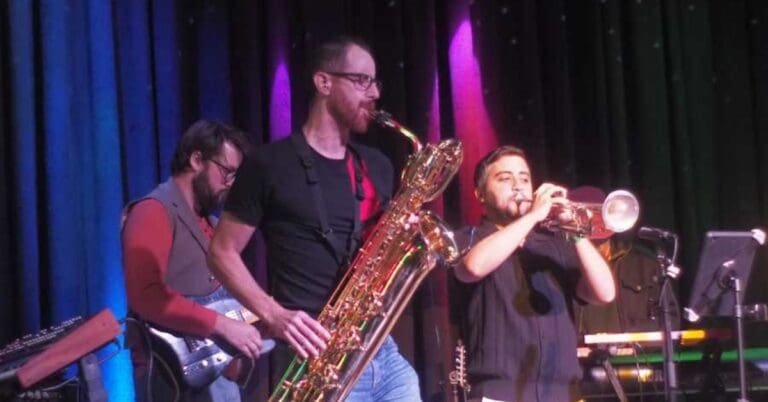
On October 17, the Capital Region rocked with this Greg Bell show featuring Victory Soul Orchestra, Glass Pony, and The E-Block at Lark Hall.


Photography by Timothy Reidy.

More from Lark Hall here …

Jillian Davis – Xperience History

0

Jillian Davis – Xperience History. by Liam Sweeny.

Originally Published in September 2020.

Music is movement. That’s not a metaphor; it’s the movement of air particles, and changes in the pressure that drives them. We use our instruments to change the air, and in turn, it changes us, in some cases, to get up and move our bodies in syncopation to the air. It’s the closest thing to magic we have – the music and the dance.

Jillian Davis is a prestigious dancer and a choreographer in New York. She’s been a spirit of the air, so-to-speak, since she was a child. Now she is taking acolytes under her wing and showing them how to control the air themselves.

I sit with Jillian to discuss various sorceries.

RRX: Dance lies in a border area between sport and art. There is practice, and training, probably far more than a lot of other sports. Yet the greatest dance performances look effortless. Are there physical, or mental exercises that you do when you’re dancing to bring the audience’s attention away from all the effort of it?

Photo by Theik Smith.

JD: I think all dancers can agree that yoga and Pilates are the go-to cross training options we have, along with swimming. Even though our work is so physical, cross training helps us strengthen muscles or even muscle groups that we may not utilize on a regular basis. Keeping the entire body as strong as we can helps with creating the effortless look, our endurance on the studio and the stage, as well as, and probably most importantly, helps us avoid injuries.  I personally enjoy yoga more, mostly because it focuses on both stretch and strengthening at the same time while also incorporating the mental aspect.

Which brings me to the next point. It’s obvious we are a physical art form, but so much of the work happens in our head – how we approach the movement, push through a ballet, and sometimes (well, a lot) push through injuries of varying severity. I know a lot of dancers who meditate on a regular basis to keep themselves centered and focused. Whenever I feel overwhelmed, I (again) turn to yoga, usually just incorporating a simple stretching series, but sometimes just going through a class and pushing through it. Especially during this pandemic, I need to keep my body moving in order to keep my mind in a good place.

All of this goes to say, the audience doesn’t see all of the behind the scenes work. They usually come to see a performance to take them to “another place” and that is what artists will continue to push for.

RRX: When I started playing guitar, I imitated the masters, got okay enough at that to feel I had foundation, and built my own sound from that. Is dance like that? Or is there an added expectation to “perform the masters” even well into you having your own foundation, similar to the prevalence of classical recitals?

JD: In ballet, there are three main classical ballet techniques: Vagonova (Russian), Checetti (Italian/European), and Balanchine (American). Some other techniques or “teaching curriculums” have popped up over the generations of dance – the most prolific I can think of being American Ballet Theater’s National Training Curriculums. The contemporary ballet company I dance for, Complexions Contemporary Ballet, has a technique, ‘Nique, that has been developing over the years and would be one of the first coined curriculums in contemporary ballet training (that I am aware of). Modern also has a wide range of techniques (Martha Graham, Horton, Paul Taylor, Merce Cunningham, etc.). There are so many “masters” to learn from.

From a dancer’s standpoint, we train our whole teenage life to be as versatile and diverse as possible because it is the new normal to be able to do any style at any time without hesitation. My training focused on classical ballet in those three major techniques mentioned earlier and then I switched to contemporary ballet in my late teens. (Contemporary ballet keeps the classical ballet base, but then incorporates different dance styles at the same time.) It was an adjustment for me to get “funk” in my body (you don’t want to see me in a hip-hop class), but I was able to develop my artistry (or how I speak to the audience/viewers in this style) because of my knowledge of multiple dance forms even though it’s possible I haven’t mastered them, so to speak.

There are still prolific choreographers that will have special programs or whole festivals dedicated to their legacy, but for the dancers, we are expected to know basically every style and to be able to do it.

RRX: You are not just a dancer; you are also a choreographer. So you direct people who come to you into complex and coordinated movement. And I can only imagine that people come to you with all skill sets. Would you say it’s more of a challenge to work around the skill set that is, or use your experience to boost the skill set to fit a need?

JD: I have been fortunate enough to work with a range of abilities and experience over the years and I can say I have learned a lot from the dancers. While I hope to be challenging them in some sort of way, I also strive to push myself – by trying to get out of my comfort zone and also making myself use words to describe my movement. My whole career, I just kind of “did” what was asked of me, but when I had to describe to someone “how” to do a certain movement, I wanted to be able to find a way to describe it the dancers. Working with the directors of Complexions Contemporary Ballet (Dwight Rhoden and Desmond Richardson) over these past six years has helped me find ways to explain movement or the emotion they are trying to see from us through different parts of a ballet.

It is a challenge to “boost the skill set to fit a need” (as you said), but when it works, it is the most rewarding for both parties. I continue to strive to push both dancers and myself to learn something during the creation process and the journey is going to be different for every situation.

RRX: The Jillian Davis Dance Project. This is something you started as a finalist at Rider University’s Emerging Choreographer’s Competition. It sounds like a way you, and for others, to explore the space in choreography and dance. Can you tell us all about it?

JD: When I decided to start JDDP, I was freelancing in New York City just trying to find any dance-related gig at the time, but was not having much luck with auditions. It was mostly a hustle to make my own network of dancers, choreographers, or small companies. I already knew that I eventually wanted to be a choreographer, but I thought, “If I can’t dance for anyone, then I might as well make my own work.” To this day, I haven’t been able to choreograph for myself, but I have been able to dance works that I set on other people first.

The Emerging Choreographer’s Showcase was one of my first big group works and it consisted of all the friends I had met at the time. I was submitting the program notes for Tiel (the ballet I presented) and realized I needed to make a company name because, well, we were a small but mighty company. I still think of Jillian Davis Dance Project as a placeholder name, but if/when I get to spend more time on it, I would like to get more creative with the name.

RRX: You are known for working with the music that is, if I’m saying this right. You find the dance routine in the music by listening to it, feeling it, which may run counter to some peoples’ concepts of professional dance, which people may think is more musically rigid. What musical genre is the most fun? The most challenging?

JD: Everyone has different ways of hearing music, but if there is a definite beat or counts in the music I’m using, I will be a stickler on hitting it at a certain time. If the dancer needs to count it in a certain way to achieve what I want, I am totally for it. My go-to style is usually with heavy percussion of varying intensities. Going back to Tiel for the Emerging Choreographer’s Showcase, there were a lot of syncopations and not very clear counts, but it was all bells and, eventually, heavy drums layered in. I don’t usually work with strict classical works like Bach or Beethoven, but I do like what I consider contemporary classical, if that is a thing.

Eventually I would love to tackle a vocal or choral work. I have several songs I am interested in, but I get distracted or preoccupied with the message the singers are trying to sing about and it pulls me out of my creative space. I will definitely want a group of collaborative minds when I finally tackle a project like that.

RRX: Every stage is soaked in stories, whether it’s the saw-dusted floor of a honky-tonk, or the stage at a midwestern middle-school auditorium. You’ve been on a great many stages, grand and otherwise, and with dance, it’s only you. You can’t even hide behind a microphone. Do you have one stage story that will never leave you?

JD: So many!!! There have been many times when a dancer got injured during a show and we had to cover on the spot. I have, unfortunately, gotten injured as least twice on the stage and have had to continue performing (that was fun).

Most recently, during Complexions’ 2020 New York Season, my partner was injured and we had rehearsal to try to lessen his load or take him out of what we could. It got to be too much and the director made the decision at our 30 minute call that my partner would not be performing. Although terrifying, it turned out to be one of the best shows we had because all dancers were at full focus – being aware of each other, looking at each other to make sure we were in the right spots, and just supporting each other. This was show 14 out 15 in our two-week run, we were exhausted (we’d had a matinee show earlier that day), and it seemed like we just whipped up that show out of nothing. It was quite the adventure.  And it was my first time turning a duet into a solo on the stage!

RRX: This is where you answer the question I didn’t ask. Do ballet slippers ever last long enough to be your favorite? Pain reliever of choice? Educate, enlighten, emote – the floor is yours.

JD: Ironically, I’m going through a little pointe shoe switch now. There are so many brands and styles, that it is tempting for me to keep trying something and seeing if it works better. I have been consistent with a brand (Bloch) with a variety of styles, but I am adding another brand (Freed) to the mix for my classwork. During rehearsals, I can easily go through a pair of pointe shoes a day, but I make them last longer by using HotStuff, which people use to put together airplane models or small delicate crafts like that. Very lightweight, but super strong, which helps my pointe shoes last a few days longer.

For pain killers, I try to go the more natural route because it is so easy to turn to pain killers and it just eats at your stomach. An acupuncturist I visited recommended Black Seed Oil pills (cold-pressed cumin seeds) for inflammation relief and it has been life changing. I turned a few colleagues onto it and it works wonders for everyone. I also look at sour cherry tea, which helps with inflammation, magnesium pills or a powder for muscle recovery, and, when I’m in full rehearsal mode, I incorporate a multitude of supplements to help keep my body working as best as possible. After suffering two mild concussions (yes two, within a year and a half of each other), I turn to acetaminophen pain killers like Aleve or Tylenol for more heavy-duty relief. Also, compression socks are life-saving, or should I say leg-saving?


More from Liam Sweeny…


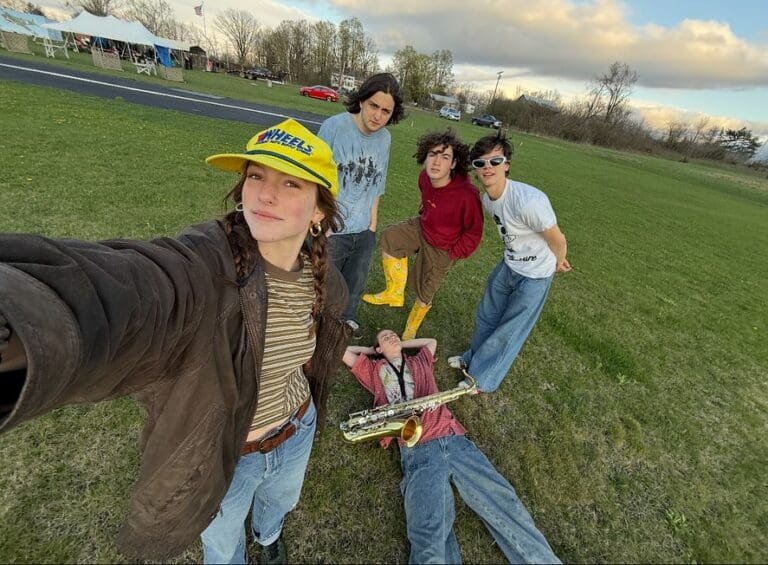
Pink Lady – Thanks for Asking!

0

Pink Lady – Thanks for Asking! – by Liam Sweeny.

RRX: We all get a little support from those around us. And we also can be impressed by our fellow performers. Who do you admire in your community, and why?

John- I’ve always been a sucker for Bird Week, their melodies and heavy folk rock get me so excited. I also love bands like Safety Meeting and Lemon of Choice for making music fun while also being catchy as hell.

Justice– The Albany community is so tightly knit it has been a blast to grow some roots here, but I gotta say Joe and Sam of bands like Cheesy Snacks and Lemon of Choice have to be the ones that seriously have pointed us in the right direction countless times, and we strive to just have fun on stage like they do every time we are up.

James– I love our bustling community especially the folks in cheesy snacks, lemon of choice, and safety meeting because they are dedicated to having fun on stage.

Annamae– I think the band that inspired me the most to pursue making music might have been Mildly Allergic, even though they are more local to SUNY Purchase and Connecticut, but to high school me, they were doing shit that I had dreamed of doing one day

Evan– the Albany scene is full of love. all the folks at tummy rub records, and those who work with them are some of the most fun and uplifting people around. They also know how to make some catchy ass tracks.

RRX: A band is a business. A business of love, but you got to work for it. Let’s pretend, instead of a band, you all owned a business. What would it be, and why would it be good?

John– If I owned a business it would be a shitty gas station that smells but has really really good snacks and beverages in stock

Justice– I could see us all doing evil shit at an evil headquarters of some sort. Our goal would be to take over the world. You guys are lucky we are in a band and not off doing this.

James– My grandfather opened up a restaurant in Albany many moons ago so I would probably steal it

Annamae– Pink Lady as a business would probably be us making stupid shirts. It would be dope

Evan– if we all owned a business it would be a VHS rental store. no work would get done. but, our staff picks would be superb

RRX: Cover art is cool. It shows listeners what the artist thinks the album is all about. Because music can be felt visually. If you had to give the public a visual image that you think they would see and just “get” your groove right away, what would it be?

John– Our vibe in the form of a visual image would be an old polaroid of a bunch of best friends having fun at a sleepover and watching “Step Brothers”

Justice– Imagine 5 people running and jumping around, but each ‘frame’ becomes a still image and tracks the movement of each person. That would match our sound pretty good. Lots of colors too.

James– Our whole vibe can be visualized by a kid being pantsed while his friends laugh  all while someone in the corner throws the horns up

Annamae– I think my ideal album cover art would be a little clown dude

Evan– put yourself in a boring classroom. whatever you doodle on the page in-front of you. that’s pink lady

RRX: Artists, musicians, we immortalize. We set it in stone. Is there anyone who has passed that you feel you have been immortalized in your work? If so, can you tell us a little about them?”

John– I am a huge fan of Johnny Ramone, every single Ramone lives on in our music. I try and down pick through whole songs in order to tribute Johnny and Dee Dee

Justice– Dog Date is a great band that broke up (they didn’t die) but I’d like to imagine I have captured a bit of their essence in the music I write.

James– As a drummer I can say that the work of John Bonham lives in every stroke of my sticks whether I realize it or not.

Annamae– Someone who I will always look up to musically, especially when it comes to writing in guitar, will always be Elliott Smith (even though I play bass for Pink Lady)

Evan– the influence of old jazz musicians such as Coltrane or Davis stick with me to push bounds and keep things groovy

RRX: Stereotypes are a bitch. I mean, aside from the really bad ones, you have cultural stereotypes about everything, including music. Would do you think is the stereotype for the music you play, and how far are you away from it?

John– A stereotype for garage rock is that we just copy Ty Segall and the Oh Sees,

THIS WAS TRUE AT SOME POINT BUT NOT ANYMORE

Pink lady is Idiot Rock….Remember that

Justice– We are the first idiot rock band and I’d like to imagine we have become the stereotype. For our fake genre…

James– With one punk adjacent EP under our belt it is easy to group us in with that crowd, but we don’t love to confide ourselves to a genre. A lot of the new songs we recorded are completely different from our previous work.

Annamae– Recently on a flier we were labeled as ‘idiot rock’ and I couldn’t agree more.

Evan– with 100+ years of recorded music there’s bound to be some overlap, not conforming to any one genre helps us beat out any one. However, we will always just be having fun.

RRX: Our style comes from the extension of our influences. It’s like an evolution. We’re influenced, and it inspires us to influence. What can you say about your influences, and What do you feel you’ve done with their influence as a musician or band? Have you extended their work?

John- We were recording songs for our record last night and our engineer Sam who plays in Cheesy Snacks and several other bands told us how we inspired him to go home and work on his own songs. This was an awesome feeling for us because we love Sam and his music has greatly influenced ours so It’s awesome how we are paying it forward. We also met Ishka Edmeades from the bands Tee Vee Repairman, Gee Tee, and like 2000 others and we hope we can influence him as much as he’s influenced us. ROCK IS BACK

Justice- I cant think of just one so I will list a ton. Daughter Bat and the Lip Stings, Dog Date, Teeth, Tee

Vee Repairman, PHF, King Gizz, Forth Wanderers, Floatie, Quasi, My Son the Doctor, Mac DeMarco, Thee Oh Sees, The Moondoggies, Mike Krol, Helvetia, and Low Measure. Oh and Super Ego and the Id.

James- The whole band has a pretty wide range of influences but I would cite king gizzard for teaching us that you don’t have to stick to a certain genre or vibe. They also inspired us to invite all our friends into the band for shits and giggles  Annamae- Quasi.

Evan- We pull from a swath of artists, however australian punk has a home in our hearts. Each member has their own genre they bring in, and that’s what breeds Albany’s finest idiot rock.


More from Liam Sweeny…


Hammer and Nail @ Albany Distilling Company, 10/17/2025

0

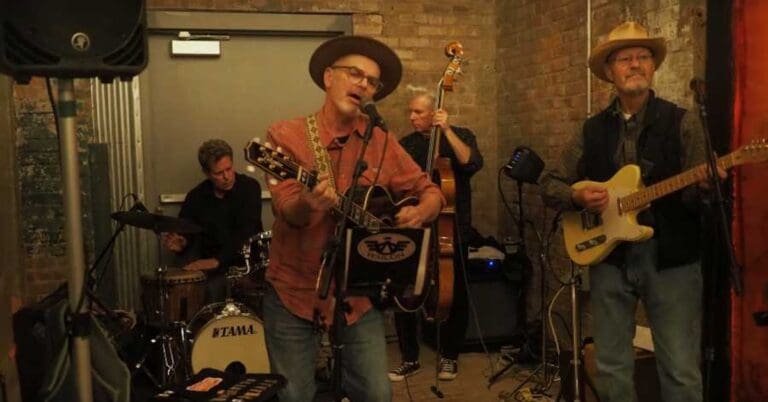
Hammer and Nail brought their Americana to Albany Distilling Company, October 17.


Photography by Timothy Reidy.

Read an interview with Hammer and Nail here …