Home Blog Page 536

Interview: Riley Mulherkar Speaking on Jazz, His Brass Quartet and The Songs We Love -By: Niki Kaos

0


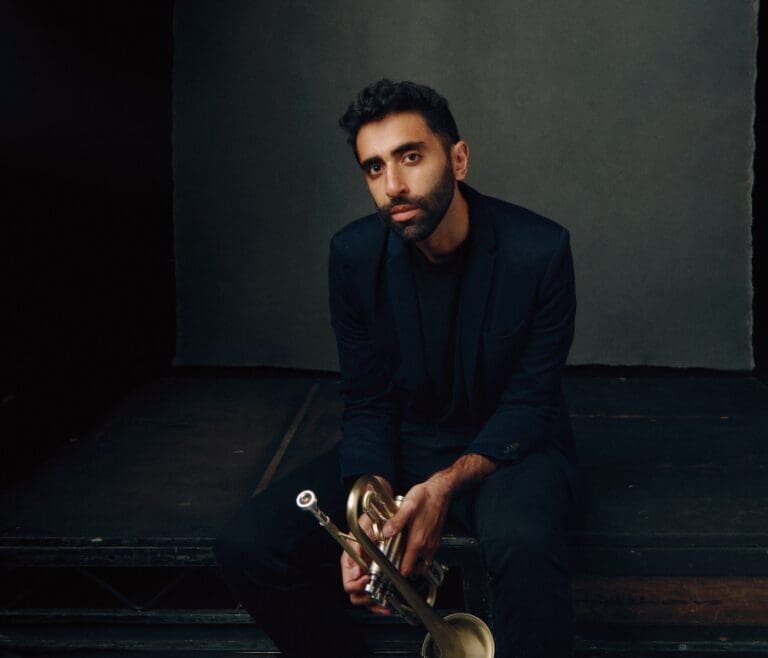
Riley Mulherkar’s love of the trumpet started at an early age and grew into an incredible career. Performer, bandleader, composer, arranger, and music educator, this jazz cat seems bursting with endless energy.

February 26th at Universal Preservation Hall, his Jazz At Lincoln Center (JALC) production of The Songs We Love will bring the magic with an array of classics from some of the most iconic artists of all time. I’m interested in learning more about how his creative choices inspire success.

RRX: You are the 2020 recipient of Lincoln Center’s Emerging Artist Award. What an honor! What are some experiences that helped shape your success as a jazz musician, composer and ensemble leader?

RM: A lot came from the community that was built within JALC. I had moved to New York to study at Juilliard, which is under the Lincoln Center umbrella, and is very close, geographically, to JALC. The dorms were only 5-6 blocks away, so I found myself going there all the time. Sometimes just to hang out on the side of the stage to hear the JALC Orchestra and Wynton Marsalis. And other times to go to the jam sessions at Dizzy’s.

It was from being around the scene and investing in all these relationships that it was time for me to try my hand at putting shows together. I had a full community to lean on, in terms of musicians to call and mentors to ask questions. And audiences to experiment with, and play for, and learn from night after night. So, a lot of the folks in this ensemble are friends of mine from those early days in NYC together.

I really think it was really just from putting in the time and the trial and error, and the risk-taking night after night at Jazz at Lincoln Center that really trained me more than anything else, not just as a musician, but as an organizer for productions.

RRX: I love that. I see that in my community. The ones finding those partnerships through trial-and-error situations. Finding the right musicians who gel. It sounds like that’s what you’ve done for your production of The Songs We Love. Were there certain musicians in the ensemble who inspired certain songs? What are some favorites and some unexpected songs you had to bring into the production?

RM: This show premiered in 2016 at JALC, and so a number of the folks in the touring production were original members of that show. A lot the show is built around the vocalists, who lead the way in the storytelling of the songs and pay tribute to so many musical heroes, so I think the audience will definitely recognize some songs that they love.

The classic “See See Rider”, which we play as a tribute to Ma Rainey and the Duke Ellington Song, “I’ve Got It Bad and That Ain’t Good”. Or “Somewhere Over the Rainbow”. These songs are really enmeshed in the cannon of American jazz music.

And also we have songs that a jazz fan will really be familiar, but we try to put our own spin on that. Whether it be “I Loves You, Porgy” for Porgy and Bess, or “I Cried For You”, which is an old standard that Billie Holiday used to sing. So, I think the repertoire is really rooted in the history of this music, but the interpretation is very much derived from the individuals themselves. And that’s my favorite thing about this whole show. It’s completely different every night because of the individuals in the band.

RXX: That sounds fantastic, bringing in the personalities of these talented musicians.

RM: Thank you. We’re having a good time!

RRX: I’m jealous – can I audition? (laughs) Now I want to jump to another project I noticed, The Westerlies. Who sparked the idea and what drew you to that project?

RM: The Westerlies are near and dear to my heart. More of my time goes to The Westerlies than to anything else in my life. It comes from childhood friendships. The original four members were born and raised in Seattle, WA. We grew up playing music together, and then landed in NYC around the same time. We missed the Northwest, and we missed playing music with each other, so there was sort of this extra-curricular ensemble after school hours.

Over the summers, we would pile into a minivan. Play anywhere that would have us. Have concerts for art galleries, rock clubs, jazz clubs, concert halls, you name it. And over the years we were lucky to build a small following around the music and invest the time into the group. We just celebrated our 10th anniversary with a number of albums out now. And we’ve got a big album coming out March 24th titled Move.

It’s a brass quartet, so two trumpets and two trombones. And we’re all improvisors, but the music falls more under the umbrella of chamber music. The new record is influenced by a lot of our favorite contemporary composers, like Caroline Shaw and Nico Muhly. We also write music for ourselves. We feature a piece, called “For Rosa” from the great young up and coming composer Mason Bynes, that we commissioned in a partnership with a premier at the Rosa Parks Museum.

RRX: Wow. That’s fantastic. And unique! You just said two trumpets and two trombones? And has a little bit of a chamber feel? I’m trying to imagine what that’s like.

RM: We function just like a string quartet in terms of how we play together and interpret music. That being said, we’re all improvisers, so there’s a lot of creative possibility. That’s what I love so much about the group. It’s a very personal project.

RRX: Since you’re from Seattle, but you’ve spent a lot of time learning and performing in NYC, I have a funny question for you. And I want to ask it in a way that doesn’t get you in trouble. (laughs) So it is not which is the BETTER coast – West or East. It’s what different flavors do you love about the west coast scene? And what do you love about the east coast scene?

RM: So many of my mentors are from the west coast. So, I’m very much attached to the Seattle music scene that I grew up in. And also, Seattle and the whole northwest’s appreciation for the outdoors. I find it fascinating how that can shape the music. With The Westerlies we used to spend every summer going out to the San Juan islands and have no cell service and no internet. Just working on music all day. Rehearsing, writing, arranging. And I think the environment finds its way into the music.

And it does in a similar process in NYC, the music is shaped very differently. The history of Jazz, in particular, in a place like NYC is so deep. The intergenerational lineage of the music is up there in value being in NYC. You’re so close to the people who helped create this music. And getting to spend time with them. And that is the greatest gift of being a student of this music.

So… I don’t have a favorite coast. I can bounce around quite a bit. I need my nature. I need that Pacific Northwest air, but NYC is sorta my home right now.

RRX: You do a lot around youth engagement and education. You are already so busy with these other projects? How do you find the time for this work?

RM: I see it all as the same thing. Especially with jazz music. The way it’s handed down through mentorship, through sharing and inspiring. So, on this tour, and a lot of places we go, we’ll do a concert like The Songs We Love, and we’ll do a concert for kids around the area modeled on Let Freedom Swing, which is a program I took part in for years in NYC. We go to schools all over the region and give lessons about jazz music, its relationship to Democracy, and The Great Migration and the civil rights movement. Because jazz offers a lens to learn history, and to learn about what’s going on now, and where we’re coming from, in this concert.

I find that Jazz is a gateway with which to engage with our heroes like Louis Armstrong and Duke Ellington to the environments they were living in and creating in. What their communities were like in the Harlem Renaissance and what that meant. What was the context around that? So, I think it’s a valuable way to bring the students into the music, and into their understanding of American history.

RRX: Wow! That is really inspiring. At what age did you fall in love with the trumpet? And do you enjoy playing any other instruments? Was there trial and error? Or was the trumpet your jam from the start?

RM: I fell in love very young with the Trumpet. In Seattle, public music education and jazz education are a big thing. So my babysitters played in the jazz band. My older brothers played in the jazz band. By the time I was five or six, I was begging my parents to get me a trumpet. And I started when I was eight. I did play some other instruments when I was growing up. I picked up an electric bass at one point. I was living in Seattle and grunge was such a thing there.

RRX: Everybody needed a bass player!

RM: Yeah. I wanted to be like Nirvana. But the trumpet was really a constant for me. For sure.

RRX: What is your practice advice for aspiring musicians looking to bring the best out of their performances?

RM: I know exactly my answer to this. And I’m plagiarizing my answer, because it was the first advice that was given to me. When I first started playing the trumpet, I had the opportunity to meet Wynton Marsalis. And it was backstage at the show. And I told him I just started playing trumpet. And he told me, “Practice slow”. That was his advice. And that’s what I always tell students. Or anyone. Doing anything, music or otherwise. Practice slow.

RRX: I love that advice and follow it myself. Thank you so much for your time. It was a pleasure getting to know you.

You can catch Riley Mulherkar and the Jazz at Lincoln Center performance of Songs We Love on Sunday, February 26th at 5pm at Universal Preservation Hall in Saratoga Springs, NY. And look out for The Westerlies new release Move on March 24th.
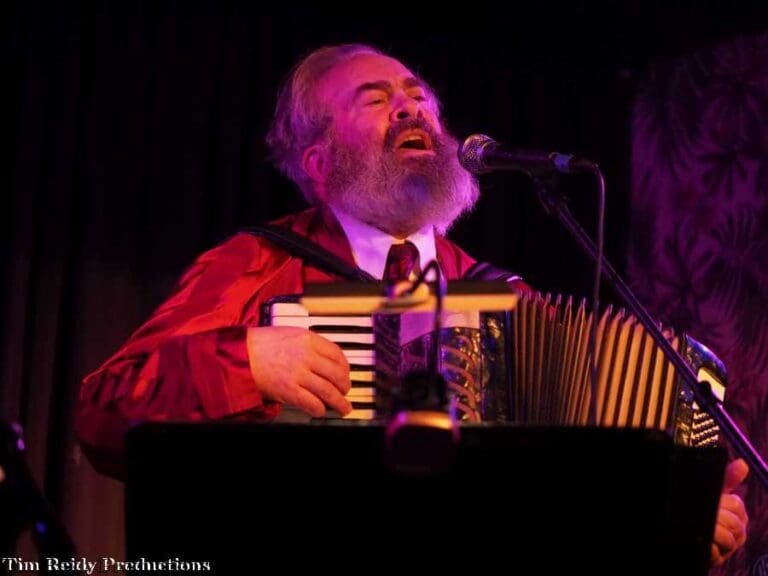
Photo Gallery: Brian Dewan at Avalon Lounge 02/13/2023

0

Photography By: Tim Reidy


Recap: Rye Bread Family Day 02/11/2023 at Green Island Lanes -By Rob Smittix -Photos By: Tim Reidy

0

I (Rob Smittix) was super excited about the Rye Bread Family Day for a couple of reasons. For one I feel like I was a part of it because Nick Batto hired me to design the poster for the event. I have made fliers and posters for numerous events in the past but this poster was created a bit differently. I couldn’t find the art work I was looking for online, so I decided to test the waters with artificial intelligence. I typed in Grateful Dead Bowling Alley into the AI program and low and behold a tie-dye bowling alley was created. For two, it’s rare that an event with this level of entertainment and fun would be held directly across the street from my house. Having home-base just steps away was priceless.

As soon as I entered the doors at Green Island Lanes I felt the love immediately. Families were bowling, people were dancing and a rotational list of known and talented musicians took to the center makeshift performance area. Most people know me for being a punk-rocker but believe me I can get down with the jam scene and I support it. I was wearing the only Grateful Dead long sleeve T-shirt that I own and I suddenly realized that I do not have any tie-dye hanging in my closet. So I purchased the first tie-die T-shirt ever in my adult life and it was in support of a fella named Scott Guiton who is really going through it right now.

It is always nice running into so many friends in the scene and I know that everyone had a blast. Nick Batto made an announcement to the crowd at Family Day, that the Line Up for Rye Bread Music and Arts Fest 47 at Schaghticoke Fairgrounds July 27th-30th will be announced very soon! Can’t wait!

Photography By: Tim Reidy

BANDwith Xperience: JJ Savage & Ashley Purdy (Black Veil Brides) Form Supergroup -Interview By: Rob Smittix -Photos By: Stephanie J Bartik

0

RRX: So how many different music projects do you have going on these days?

JJ: I’ve got my solo project which has been running a few years now since I went to California. And then…for the past year as well I’ve been working with Ash Purdy, who’s the old bass player from Black Veil Brides. We’ve been writing and sending each other sh*t for the past few years. It was weird. At the moment I reached out to him on Instagram, we were both going through dark moments in our lives. It was really cool to start writing music with somebody. It’s a different place from where it’s coming from, not just hey let’s write some songs. 

RRX: That’s pretty encouraging man. Black Veil Brides are pretty big these days too. 

JJ: Yeah, they’re doing good and I think this project with Ash could be bigger!

RRX: Nice! What’s the band called?

JJ: I don’t think we have a name announced just yet. I don’t want to say too much about that. 

RRX: You just played in Albany not that long ago, that was your solo act, correct?

JJ: It’s the solo act JJ Savage. It was weird because the past few years I’ve been touring with Andy Galeon from Death Angel and Michael Butler from Exodus and those guys had to cancel the week before, so I had to manage to put together a full level line up and get those guys to learn the songs and rehearse two times during the week of Thanksgiving and all of that sh*t. The week before I got into a bar fight. It was not a fun time but once we got to the show I’m like f**k yeah, let’s do it! 

RRX: Wow, sounds like it’s been a wild ride. But when you are a songwriter and a musician, I know you’ve got to stay creative, or you’ll go nuts.

JJ: I just had a parent of one of our younger LA based bands hit me up and said our daughter is a huge fan and she wants to be a rockstar and all of this, what are your recommendations? In my head I think just don’t f**king do it. 

(Both laugh)

JJ: I said whatever path you end up going down, make sure it’s about the music no matter what. Don’t get distracted by record labels, producers or money. As long as it’s about the music and the music is good, you’ll do fine. You’ll find people that actually want to do it because they like it. As long as the music is good and you give a f**k about it, it always comes back to that. 

RRX: True that.

JJ: I’m just writing songs with Ash and sending it back and forth between Nashville and Oakland or wherever I’m at. That’s been working really well for us. When I hit him up, I had never met the guy before. I’m just this f**king guitar player on Instagram, when he got out of Black Veil Brides, I hit him up like a week later, like let’s write some music and sh*t. He was like let’s write one song and see how it comes out and next thing you know, we have like ten songs ready to go on an album. 

RRX: That’s dope! 

JJ: He’s got no ego. Usually when you hit guys up like that, from bands like that, they won’t even read your f**king message. He answered in a minute or two probably and that’s cool. 

RRX: That’s really cool and that’s rock n roll. The difference between that and let’s say the hip hop industry is that if I hit someone up of that pedigree and that caliber and asked for a collaboration in the hip hop world, they might say yes but there’s a price tag that will come along with it. That’s a big deal because to me it’s like do you want to make music together or not? 

JJ: With that genre, there’s really no instruments being played, everything is on like Ableton and you can copy and paste your beats and your choruses. You could throw together an album in a day or two but with a rock album it could take a year or two, sometimes three. It costs a lot more money too. 

RRX: Aw man, you’re not kidding. My band has been working on an album for almost three years now. So, I get it.

JJ: People just don’t understand that. They want more music and they want it faster, that’s how it is nowadays but it’s like please give us a year to make this album. Nobody’s buying sh*t, it’s all Spotify and they don’t f**king pay you sh*t so… Record labels don’t give you a budget anymore, where they say here’s a million dollars go make an album and get yourself a couple of ounces of cocaine to power through it! 

(Both laugh)

RRX: The good ol’ days. 

JJ: It’s gone but it’s important that people like you try to keep pushing for musicians, bands and the rock stuff. There’s too much of the other sh*t, you know pop and country, which is all good. I love a lot of that but there’s really just too much of it. 

RRX: Well it’s pop, it’s popular and unfortunately a lot of what has mass appeal isn’t timeless. It’s good for a few months and then it’s old. 

JJ: Exactly. Like Hendrix, you know? Nobody’s ever going to forget Purple Haze or sh*t like that will stick around for eternity. 

RRX: It definitely will. I was at a show the other day and everybody there was pretty old. A lot of times now when I go to the younger shows I might actually end up being one of the older guys but I was surely one of the younger people at this one. I leaned over to my friend and said man there’s a lot of old people here and he says yeah, thank God because without old people the music scene as we knew it is dead. We need them.

JJ: 65% of the crowd at our shows are 45-year-olds or 55 year old people. I love it because they respect it more and actually have appreciation for what we’re doing and they know good music from bad music because they grew up with a lot of good music. It’s good to have the other 35% of the crowd be younger because they’re being exposed to something that is actually good for once. They have fun and it’s just a good mixing pot. It’s good to have everybody in one crowd. If you go to a Metallica show I guarantee many people will be 60, married and miserable. You know? Which is cool. 

RRX: Totally.

JJ: But for local shows, it’s good to have people coming out to the same clubs they were 20 years ago, I think that’s rad.

RRX: Well, that’s the thing and that was the observation that the older music fans are keeping it alive but like you said on the flipside we need the younger audience too. This thing has to keep going.

Check out the newly released video from  Ashley Purdy – No Easy Way Out (Brock Purdy Rookie Highlights)

Credits: Produced and Mixed: Mitchell Marlow – Cuddle Death Studio Mastering: Howie Weinberg Solo Guitar: JJ Savage Cover Art: Renee Runfola Video: K Enagonio

Six Degrees of Alex Chilton by Johnny Mystery

0

How to get an alternative band from Minneapolis to write a song with your name as the title, thus procuring your status as a rock icon. 

The fickleness of the record buying public is only outdone by its short attention span. People forget. People move on. Art is disposable unless you associate that art with a time in your life that was somewhat monumental. Music is the greatest form of art for evoking a memory. Hearing one line of melody or a catchy chorus can take you back to the sights and smells of another place and time. With that in mind, how could you forget about The Box Tops?

In the fall of 1967, The Box Tops and their vocalist, Alex Chilton took their first record, “The Letter” to number one on the pop charts. Quite the feat for a debut record but even more impressive when you consider Alex and his band were still teenagers. It’s even more impressive when you realize that such a mature vocal was coming from a 16-year-old.  That is to say, unless you saw them live, who would believe such a powerful smoky sound was being made by a skinny white kid! I would venture to say that except for The Young Rascals, the Box Tops were the best blue eyed soul band to come out of the U.S.

The Box Tops had a more than healthy run of hits in the final years of the 60’s. Follow up records include “Cry Like a Baby,” which included a sitar and keep in mind these are soul records. More Top 40 gems that followed were, “Soul Deep”, “Neon Rainbow”, and the very clever tribute to street walkers, ”Sweet Cream Ladies Forward March.” A lot of social consciousness coming from high school boys was happening here. 

Years back, I got the chance to talk to the drummer from the final Box Tops tour and he told me about Alex’s idea for a new band that would primarily be a four piece that would be strictly rock n roll but with songs that contained introspective lyrics. It wasn’t about genres back in those days. It was about ideas. The idea Chilton had would eventually be sighted as the first alternative band and the name of that band would be Big Star. Musicologists from Timbuktu to Portland, Maine will argue all night about who the first alternative band was. Candidates who come to mind would be the likes of The Velvet Underground and The Modern Lovers but as great as those groups are with their own different sound, neither of them had the proper factors that would allow them to assimilate into what we now consider modern alternative to be. At least, not the way Big Star did. 

Throughout the 70’s, they released three albums worth of material. Chilton’s attitude towards record people was moot and their advice on producing a hit fell on deaf ears. Big Star only managed to impress the critics but the music consumers at the time seemed uninterested. Sales were less than stellar, despite songs like, “Thirteen” and “September Girls” the latter of which would go on to be covered by The Bangles.

When Big Star broke up, Chilton spent time soaking up the punk scene in New York and producing several bands, most notably, The Cramps. He helped them with several of their early records. He also became a fixture later in his hometown of Memphis and later in New Orleans, recording, producing and performing but nearly forgotten. Around 1988 however, alternative gods, The Replacements wrote and released their tribute song “Alex Chilton” and just like that, he was back on the radar.

For the rest of his life, Alex enjoyed a resurgence in his career and participated in reunions of both The Box Tops and Big Star. He also continued to travel, write and record solo projects till his death in New Orleans on March 17th, 2010. By following his own musical ideas his contributions to rock and roll have been tremendous. 

Now get out there and start diggin’ through the crates!