

By Joanna Palladino.
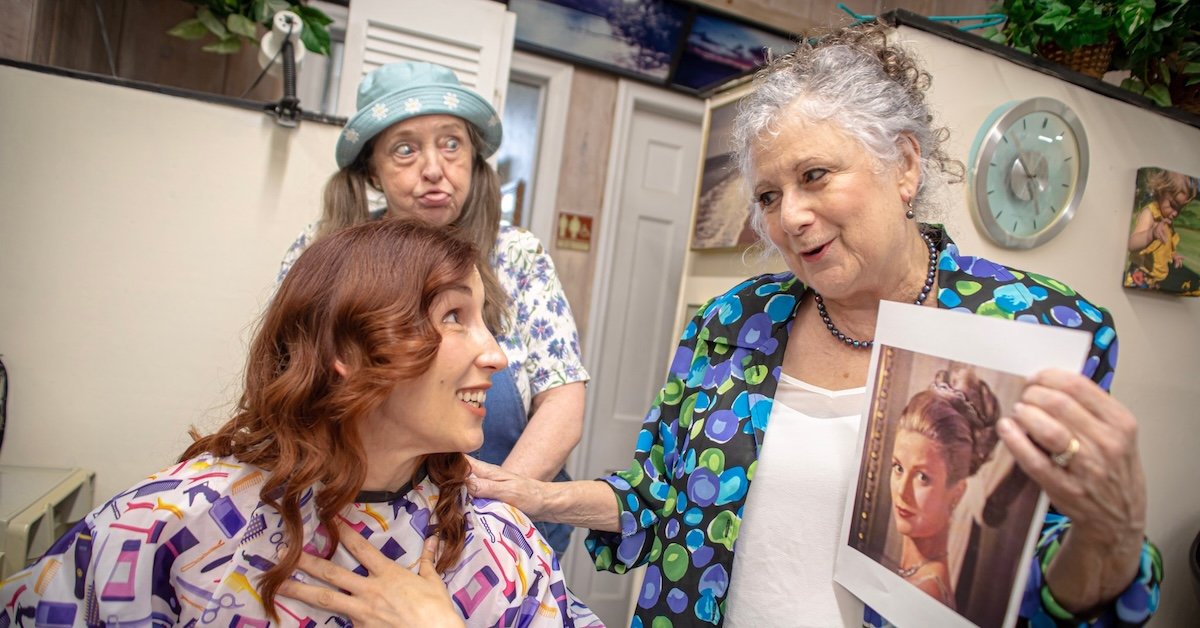
Schenectady Civic Players returns to the salon with a warm, funny, emotionally generous production of “Steel Magnolias” — and under the direction of Kelly Sienkiewicz, the show understands something essential about the play: memory has a soundtrack.
Set inside Truvy’s beauty salon in Chinquapin, Louisiana, Robert Harling’s beloved play lives and dies on rhythm — the rhythm of gossip, grief, teasing, ritual, interruption, and the kind of friendships where people can wound each other and heal each other in the same breath. Sienkiewicz leans into that pulse from the very beginning, creating a production that feels lived-in rather than staged. The women don’t merely recite lines; they overlap, react, needle, console, and laugh like people who have known each other for years.
Amanda Conlon gives Truvy warmth without reducing her to caricature. As the salon owner and emotional center of the play, she keeps the story grounded with charm, timing, and genuine generosity. Brigid Beck charts Annelle’s evolution from a shy and uncertain outsider to self-assured woman with lovely comic timing and sincerity. Melissa Putterman Hoffmann delivers Clairee’s dry wit with impeccable precision, bringing elegance and mischievous sparkle to nearly every scene. Carol Charniga wisely avoids turning the famously cantankerous Ouiser into a one-note punchline. Her sharp barbs land because they come from recognizable loneliness and guarded affection.
Jennifer Schnurr gives Shelby genuine brightness, stubbornness, and vulnerability — making her feel less like a tragic symbol and more like a fully realized young woman determined to live on her own terms. Joan Horgan as M’Lynn anchors the production emotionally with restraint that makes the play’s most devastating moments hit even harder. Her performance understands that grief is often fought quietly until it suddenly can’t be contained anymore. Her shining moment is the heart-wrenching scene made famous by Sally Field in the movie. Horgan doesn’t mimic that scene at all. Instead, she delivers her own beautifully acted interpretation of the tease of grief with authenticity.
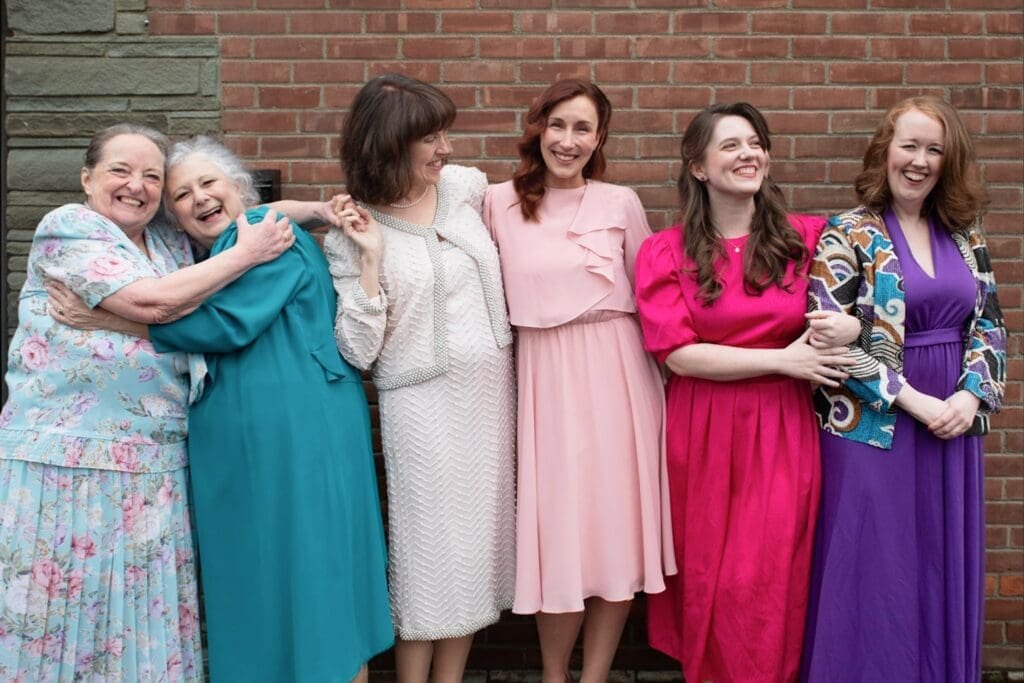
What’s most striking, though, is the ensemble chemistry. These women feel connected from the first scene. There’s an ease to the pacing and interaction that suggests deep trust between performers — exactly what this play requires.
Kudos to the Crew
The production also benefits enormously from the work happening beyond the stage lights. Director Kelly Sienkiewicz brings a clear and deeply personal vision to the production, balancing humor, nostalgia, and heartbreak with remarkable confidence. Assistant Director Jean Carney helps maintain the production’s fluid pacing and emotional cohesion, while Producer, Dialect Coach, and Hair Designer Laura Graver wears multiple hats throughout the production with impressive skill.
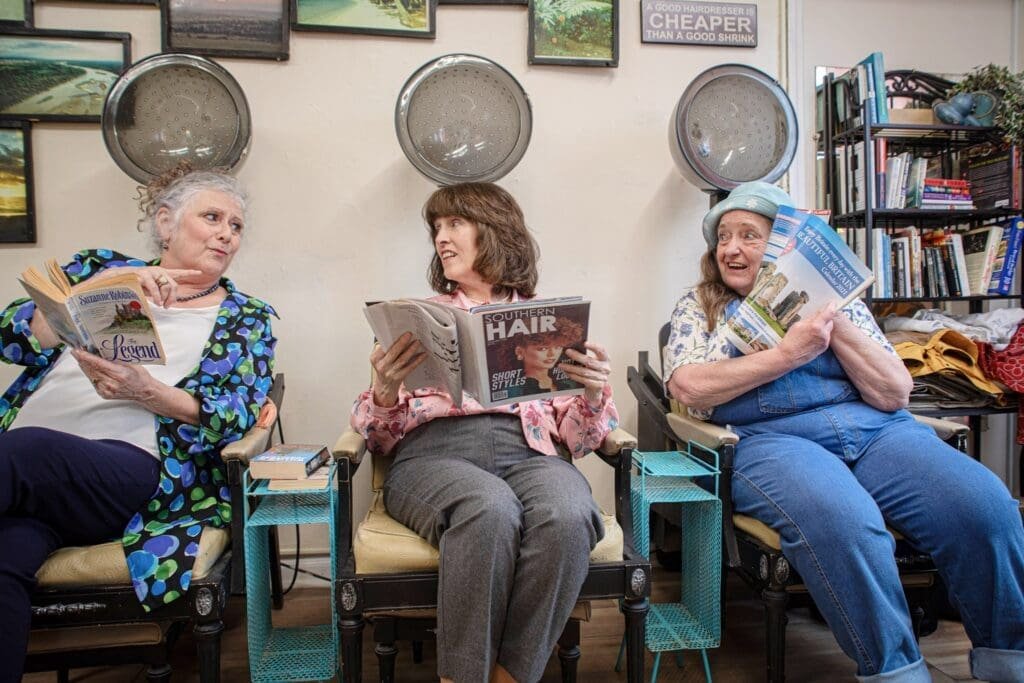
Stage Manager Amanda Lupe keeps the show moving seamlessly, while Scenic Designer David Zwierankin creates a salon space that feels genuinely lived in — intimate, practical, and believable. Zwierankin’s set construction work further enhances the realism of the environment. Lighting Designer David Caso gives the production warmth and softness without overcomplicating the emotional palette, assisted by Cheryl Hussey and Stephen Wilson. Costume Design by Sienkiewicz and Laura Graver captures the era without parody. Board Operator Jennifer McCumber keeps the technical execution sharp and smooth, and Melissa Peterson fills the salon with props and details that make the space feel authentic down to the smallest touch.
The sound design created by Barry Streifert alongside Sienkiewicz should also be mentioned – transforming familiar 1980s songs into emotional storytelling devices rather than simple nostalgia cues. The complete musical journey of the production becomes a character all its own. And surrounding all of this is a lovingly curated soundscape.
Before the show even begins, the audience is immersed in a late-1980s sonic world full of mall-radio optimism and Aquanet confidence. Then the house lights dim and “Hurts So Good” (John Cougar Mellencamp) kicks in for the opening scene — a perfect choice. The song’s swagger and loose energy immediately announce that this version of Steel Magnolias isn’t embalmed Southern nostalgia. It’s alive.
Throughout the evening, music arrives organically through an onstage radio gifted to Truvy’s salon, one of the production’s cleverest framing devices. Instead of awkward transitions or dead air, scenes bleed into one another through songs that subtly comment on the action. Christmas selections like “Hard Candy Christmas” (a wink and a nod to Dolly Parton, who played the character Truvy in the film) create tonal complexity: funny, melancholy, kitschy, and deeply human all at once.
What’s especially impressive is how the music tracks Shelby’s emotional arc without ever becoming manipulative. Songs like “Live to Tell,” “Father Figure,” and “Can’t Fight This Feeling” quietly underscore the show’s deeper concerns: mortality, caretaking, romantic idealism, and the terrifying fragility beneath everyday life.
And then there’s the ending.
The use of “Theme From Hawaii Five-O” — used by Shelby during a competition complete with flaming batons in high school — lands with surprising emotional force. It’s a memory cue disguised as a novelty tune. By the time the cast reaches bows with “Sisters Are Doin’ It for Themselves” (The Eurythmics & Aretha Franklin) the production has fully revealed what it has really been about all along: female friendship as survival.
That final musical choice is especially poignant. Released in 1985, “Sisters Are Doin’ It for Themselves” was groundbreaking for its time — a full-throated feminist anthem bringing together Annie Lennox and Aretha Franklin in a celebration of women’s independence, resilience, labor, friendship, and survival. In the context of “Steel Magnolias,” the song becomes more than a triumphant curtain-call number. It feels like a final thesis statement for the entire play: women carrying one another through joy, illness, disappointment, grief, beauty, humor, and life itself.
Sound Designer Barry Streifert shared the entire playlist of the show.
Pre-Show Playlist
- I Wanna Have Some Fun — Samantha Fox
- Shake Your Love — Debbie Gibson
- I Think We’re Alone Now — Tiffany
- Girls Just Want to Have Fun — Cyndi Lauper
- Only in My Dreams — Debbie Gibson
- When Doves Cry — Prince
- How Will I Know — Whitney Houston
- Candy Girl — New Edition
- Heaven Is a Place on Earth — Belinda Carlisle
Act One
- Hurts So Good — John Cougar Mellencamp
- White Wedding — Billy Idol
- Christmas in Hollis — Run-D.M.C.
- Peace on Earth/Little Drummer Boy — Bing Crosby & David Bowie
- Last Christmas — Wham!
- Rockin’ Around the Christmas Tree — Brenda Lee
- Do They Know It’s Christmas? — Band Aid
- Hard Candy Christmas — Dolly Parton
- Christmas Wrapping — The Waitresses
- Wonderful Christmastime — Paul McCartney & Wings
- Dominick the Donkey — Lou Monte
- Every Little Step — Bobby Brown
- Material Girl — Madonna
- Girl You Know It’s True — Milli Vanilli
- Lost in Emotion — Lisa Lisa & Cult Jam
- In Your Room — The Bangles
- Pour Some Sugar on Me — Def Leppard
Act Two
- Cruel Summer — Bananarama
- Never Gonna Give You Up — Rick Astley
- Hysteria — Def Leppard
- Burning Down the House — Talking Heads
- Take on Me — a-ha
- When I’m With You — Sheriff
- Father Figure — George Michael
- Every Rose Has Its Thorn — Poison
- Can’t Fight This Feeling — REO Speedwagon
- If I Could Turn Back Time — Cher
- Cold as Ice — Foreigner
- Live to Tell — Madonna
- Theme From Hawaii Five-O — The Ventures
Curtain Call
- Sisters Are Doin’ It for Themselves — Eurythmics & Aretha Franklin
In an era where many productions treat period settings as excuses for aesthetic irony, this “Steel Magnolias” instead treats the late 1980s as emotional geography. The soundtrack matters because these songs mattered to people. They played in salons, kitchens, malls, cars, and living rooms. They marked first loves, bad marriages, grief, reinvention, and ordinary afternoons.
This production remembers that.
The salon doors may close at curtain call, but the voices, music, and memories of these women follow you home.
Show Info
Location:
Schenectady Civic Players
12 South Church Street, Schenectady
Performance Dates:
May 8 – 17, 2026
Fri & Sat: 7:30 PM
Sun: 2:30 PM
Tickets: www.civicplayers.org

