
Theater Review – Harbinger Theatre’s The Best We Could: A Wild Wild Life of Regrets and Revelations
-Joanna Palladino
How many times have we heard someone say, “I did the best I could”?
Harbinger Theatre’s production of Emily Feldman’s The Best We Could (a family tragedy), directed sublimely by Chris Foster at the Sand Lake Center for the Arts, takes that deceptively simple statement and turns it into a complicated exploration of family, regret, responsibility and forgiveness.
The story begins with a father-daughter road trip. Ella (Tiffany McWilliams), a thirty-something-year-old woman struggling to find her footing, accompanies her father Lou (Robert Francis Forgett) across the country to adopt a rescue dog.
It sounds like the premise of a charming family comedy, and there is plenty of humor along the way. There are laugh out loud moments that remind you of a National Lampoon’s Vacation movie. But as the journey progresses, it becomes clear that this family is carrying far more baggage than anything packed for the trip.
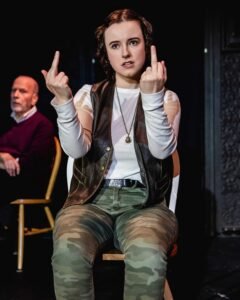
Tiffany McWilliams takes on the emotional centerpiece of the play as Ella, a woman trying to reconcile the family she remembers with the realities she’s beginning to understand. It’s a demanding role, moving between affection, frustration, vulnerability and a growing sense of moral clarity. Ella is particularly compelling because she isn’t simply an adult daughter angry with her parents. She’s someone struggling to understand and accept her parents despite their trivial and seismic flaws. McWilliams’ Ella is positively endearing and relatable displaying the right mix of youthful passion, familial frustration, and unapologetic indignation.
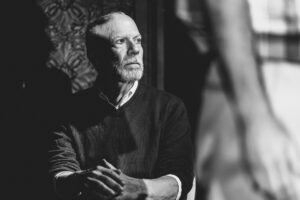
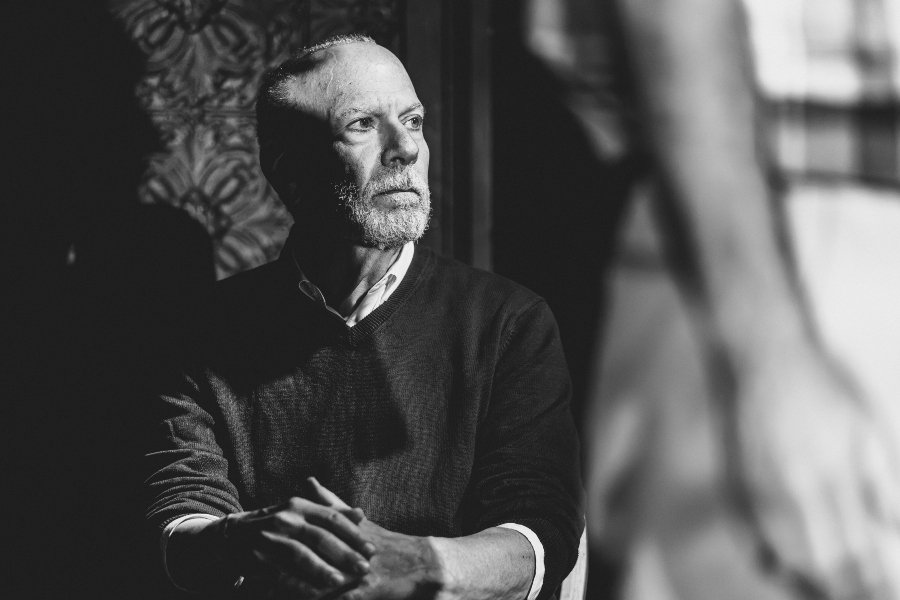
Robert Francis Forgett’s Lou is equally complicated. He’s a father who wants to believe he’s lived a decent life, even as the consequences of his decisions become increasingly difficult to ignore. It’s a challenging character; he cannot simply be categorized as good or bad. The relationship between Ella and Lou is the emotional heart of the play, and both roles offer considerable opportunities to explore the uncomfortable space between love and disappointment. Robert Francis Forgett’s performance of Lou is achingly human. His Lou is disarmingly guileless and tragically naïve and yet somehow wins the audience’s affection.
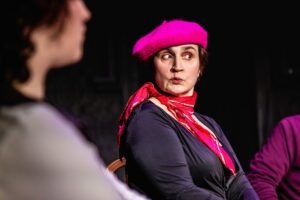
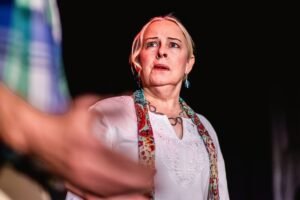
Kathleen Carey delivers another powerhouse performance and brings an important dimension to the family as Peg, Ella’s mother. Peg’s place in the story raises questions about loyalty, silence and the compromises people make to preserve their relationships. It’s an essential character because sometimes the hardest part of a family conflict isn’t what someone did, but what others knew and chose not to confront. Carey’s performance is a tour de force, hitting every emotional note with extraordinary precision. She’s maddening, magnetic, vulnerable, and gloriously exasperating, taking the audience on a wild ride through the contradictions and absurdities of the human experience.
Daniel Smirlock’s Marc provides an important counterpoint, broadening the play’s examination of responsibility and reminding us that the same events can look remarkably different depending on whose perspective we’re hearing. Smirlock delivers a deceptively layered portrayal of Marc, a man whose emotional obtuseness and shallow nature make him difficult to like. Yet Smirlock pulls off something remarkable: by the end of the play, the audience realizes that underneath Marc’s superficiality is a fundamentally decent man.
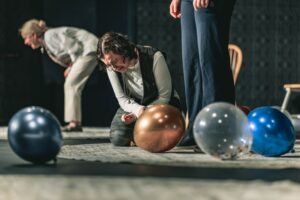
And then there’s Tanya Gorlow as Maps, one of the play’s most inventive characters. Maps serves as narrator and guide, moving the audience between locations while offering observations about the challenges of navigating life itself. Gorlow embodies multiple characters – Marc’s Francophile wife, Lou’s Zumba loving former coworker, a highway patrol officer, a random woman living in the family’s old neighborhood, etc. It’s a particularly clever theatrical device, giving Gorlow a distinctive role in connecting the family’s literal road trip to its larger emotional journey. Gorlow is a theatrical chameleon, fully embodying each of her characters with impeccable timing, nimble character work, and moving between humor and heartbreak without missing a beat. Gorlow’s Maps is both our compass and our companion throughout the play.
Kudos to the entire crew as well! The production’s technical team supports the shifting geography and emotional landscape beautifully. Lighting designers David Caso and Cheryl Hussey help define the changing theatrical spaces, while Lisa Morgan’s costume design grounds the characters in their everyday world. Stage manager Kal Muste coordinates the moving parts of a story that refuses to stay in one place.
Of note, and one of the more interesting creative elements is Stephen Wilson’s sound design.
Wilson has assembled an eclectic musical landscape that moves between alternative rock, funk, jazz-rock, lounge music and film scores. And while the selections may initially seem unrelated, several offer intriguing connections to the play’s larger questions. If you can arrive early, do so. Without an intermission, much of the sound design is before the show begins and Wilson’s selections feel like a well curated mixtape.
His complete preshow playlist includes:
- “Rainy Day” — Coldplay
- “Time Escaping” — Big Thief
- “Wild Wild Life” — Talking Heads
- “Race for the Prize” — The Flaming Lips
- “Carousel Ride” — Rubblebucket
- “Speed of Sound” — Coldplay
It’s an energetic collection for a play that begins with a road trip, but there’s something more interesting happening beneath the surface. Big Thief’s “Time Escaping,” from the band’s 2022 album Dragon New Warm Mountain I Believe in You, uses unusual rhythms and experimental percussion to create a restless, almost disorienting sense of movement. The lyrics of the song echo many of the major themes of the play:
“Everything, everything, everything falls through
Each dimension breaks in two
Like the two hands clapping
Like the two wings flapping
Everything, everything, everything for free
As it all eventually
Turns to dust and petal
Molten rock and meadow”
Time escaping
Time escaping”
It’s a fitting introduction to a play about people trying to make sense of a past that cannot be changed. Time has a funny way of altering our understanding of things. Decisions that once seemed reasonable may look very different years later, particularly when we begin to understand their consequences.
But perhaps the most fascinating preshow choice is The Flaming Lips’ “Race for the Prize.” Released in 1999 on the band’s critically acclaimed album The Soft Bulletin, the song tells the story of two scientists racing to find a cure for a deadly disease. Musically, it’s enormous. Thunderous drums, sweeping synthesizers and Wayne Coyne’s unmistakable vocals create something that sounds almost triumphantly optimistic. But underneath all that exuberance is a story about ambition, sacrifice and the human cost of pursuing something we believe is good. The song asks us to consider what people sacrifice in pursuit of what they believe is right. It’s not difficult to see the parallel with the play’s characters of Marc and Lou with these lyrics:
“Forging for the futureBut to sacrifice their livesBoth of them side-by-sideSo determined
Theirs is to winIf it kills themThey’re just humansWith wives and children”
Wilson’s transition music is equally varied:
- “Newsbeat” — Vulfpeck
- “Swinging Cocktail Hour” — Richard Freitas
- “Drug Deal Blues” — Angelo Badalamenti
- “Gaucho” — Steely Dan
The selections move between playful funk, cocktail-lounge sophistication and something considerably more unsettling. “Drug Deal Blues” is an instrumental rock and roll track written by Angelo Badalamenti for his collaboration with David Lynch’s show Twin Peaks. Badalamenti was known for his film scores for Blue Velvet and Mulholland Drive. But what is striking is Badalamenti also scored National Lampoon’s Christmas Vacation, making Wilson’s use of a Badalamenti composition perfect for this play on multiple levels.
Wilson’s use of Steely Dan’s “Gaucho,” released in 1980, offers another interesting connection. Donald Fagen and Walter Becker were masters at wrapping messy human behavior in impeccably polished jazz-rock arrangements. “Gaucho” sounds smooth, elegant and almost impossibly sophisticated, while its subject matter involves jealousy, questionable behavior and complicated relationships. The lyrics of “Gaucho” and some of the themes also seem tailor made for this production:
“Lord I know you’re a special friend
But you refuse to understand
You’re a nasty schoolboy with no place to go”
(As a musical aside, Steely Dan’s “Gaucho” was so heavily inspired by Keith Jarrett’s 1974 instrumental composition “Long As You Know You’re Living Yours” from his album Belonging. So heavily inspired that Jarrett sued for copyright infringement in 1980 and won and is listed as co-writer on the track.)
Wilson’s final musical selection is Max Richter’s “On the Nature of Daylight.” Composed for Richter’s 2004 album The Blue Notebooks, the piece was influenced by the composer’s opposition to the Iraq War and his reflections on violence and suffering. It later appeared in films including Arrival and Shutter Island. It’s a deceptively simple composition built around slowly unfolding strings. There’s no singer telling us what to feel, no driving beat and no dramatic musical tricks. It’s beautiful song, but there’s something deeply sorrowful about it. Richter’s music seems to make room for grief, love and regret to exist together. And that’s particularly appropriate for a play in which understanding someone doesn’t necessarily mean excusing their behavior.
The musical journey from Big Thief’s restless rhythms and The Flaming Lips’ exuberant idealism to Steely Dan’s polished cynicism and finally Richter’s aching strings reflects the emotional terrain of this play. Wilson’s sound design begins with movement and possibility, confronts the contradictions of human behavior, and arrives somewhere more reflective.
Harbinger Theatre’s production of The Best We Could (a family tragedy) offers no easy roadmap to life’s questions about what happens when the stories we’ve told ourselves about our families no longer hold up. When love and disappointment occupy the same space. When regret arrives long after the decisions that created it. Instead, it gives us a father, a daughter, a cross-country trip, a dog, and a guide who reminds us that navigating life is rarely as simple as following directions.
There’s no going back. No opportunity to rewrite the past. No guarantee that forgiveness will be waiting at the end of the road. But there’s still a road ahead. We don’t get a map of our lives, and we can’t always choose where the journey takes us. But we can choose how we travel from here.
Get in your car, launch whatever map app you use, and navigate to see Harbinger Theatre’s production of The Best We Could (a family tragedy). It’s worth the trip.
Performance Info:
Sand Lake Center for the Arts
11/13-11/22
$15
11/13-Opening Night/Talkback 7:30pm
11/14-Harbinger’s 5th Birthday Reception 6:30pm
11/15-Matinee 2pm
11/20-Talkback 7:30pm
11/21-Show #5 7:30pm
11/22-Closing Matinee 2pm
Tickets may be purchased by clicking here
Photos from Andrew Elder of Best Frame Forward