

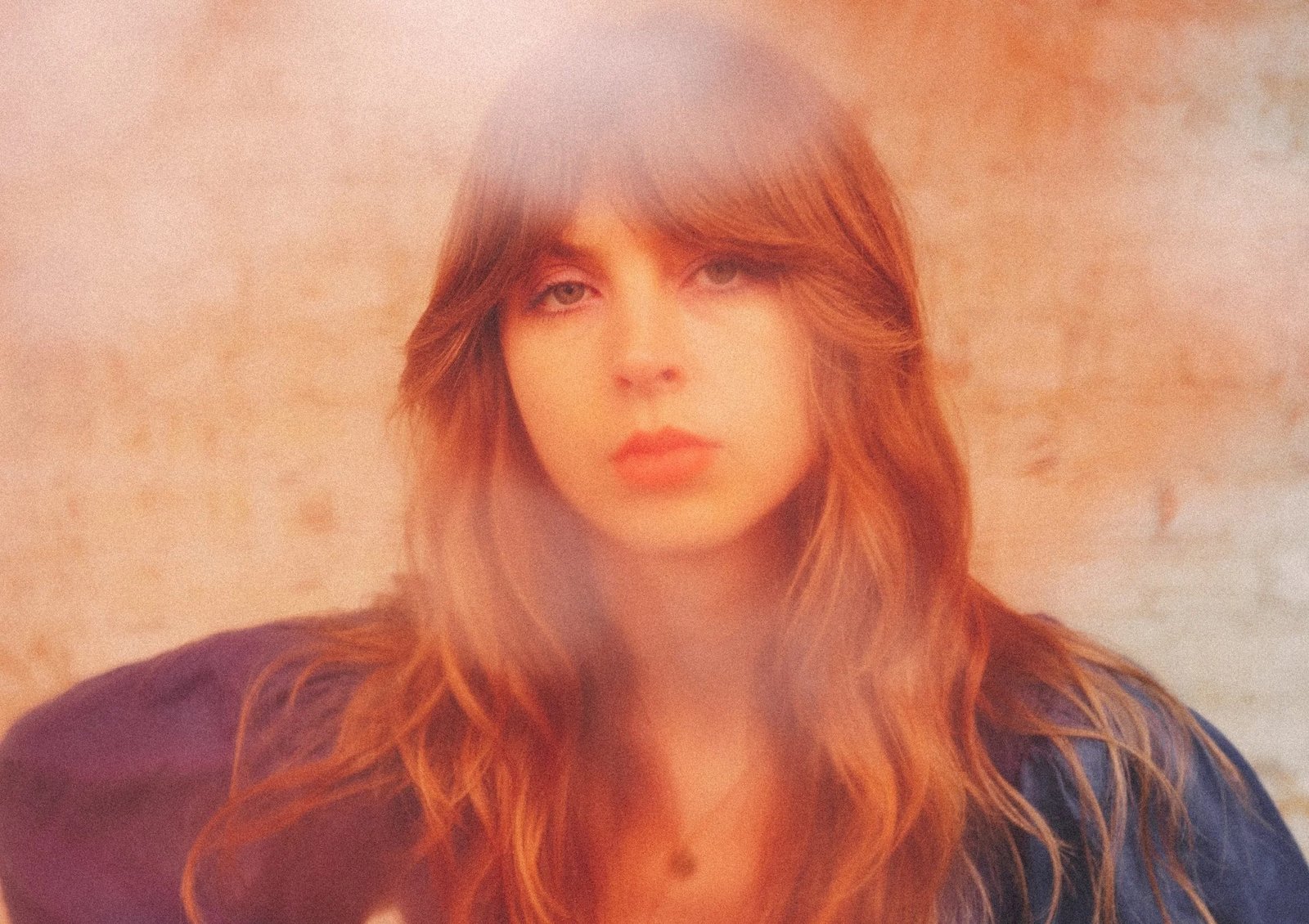
Mikaela Davis – An Xperience Interview – by Liam Sweeny.
When you think of the harpsichord, you think of heaven, or something like it. You have notions of ethereal bliss. You recognize that it’s a hard instrument to play, but it’s not considered a hard-driving instrument like a six-string. But harpist Mikaela Davis, while continuing to impart the ethereal, has brought the harp into the list of instruments that every band needs. She’s playing Lark Hall on September 20th.
RRX: You use the harp in a way that most harp players don’t, very much an integral part of your songs, both melody and rhythm. People are used to the harp being this kind of standalone instrument, and you make it the backbone of a bigger sound. I know you have a lot of musical influences, but are there any harp-specific influences that helped you break out of the mold, so to speak?
MD: Sure. I grew up playing classical harp and listening to other classical harpists, but then later, I discovered Joanna Newsom, who’s a songwriter who plays harp and is, I believe, self-taught. So once I heard her, I decided, oh, maybe I could write songs on harp instead of piano. And then after that, I discovered that you could play jazz on the harp. I discovered Dorothy Ashby, and then when I started listening to Alice Coltrane more, I got really into using extended techniques and more like textural movements on the harp. Those are some of my influences.
RRX: Tell us about “And Southern Star,” your new album. When you’re in a band, you’re out there on your own; there’s always pressure to put things out, especially if you’re signed. Did you feel that pressure, or were you kind of chomping at the bit to put this together?
MD: It was my last album, which isn’t so new anymore; it’s a couple of years old, and I worked on it during the pandemic. I was signed to a label that I actually parted with during the pandemic because I was going to have to wait longer than I wanted to start working on that album. I left the label, which was kind of the best thing I could have done because then it gave me complete freedom to do whatever I wanted. We recorded that album in Catskill, New York, and then did all the overdubs ourselves. And then we mixed it at Tarbox Road Studios in Fredonia with Mike Fridmann. And the whole process was super fun because we just made it. I made it my vision, and the boys, we all worked on it together and made all the decisions ourselves. And then once the album was finished, I brought it to Kill Rock Stars, and they put it out for me. I’m actually working on my next record. I’m here in LA finishing it this week. So for these shows in September, I’m going to be playing a lot of songs from my new record that’s gonna be coming out sometime in the future.
RRX: Another question about “And Southern Star.” This is a quote from your bio: “[And Southern Star] was a truly collaborative effort that ruminates on the choices we make and the people we always come back to.” Was the collaborative description just the music being collaborative, or did you all spend time as a group talking about these things?
MD: I guess it refers to the fact that a lot of these songs were co-written with my bandmates. Some of them were their songs, so it’s just a little bit of everybody in the band on that record.
RRX: You’ve played with Bob Weir, Phil Lesh, Christian McBride, and others. We’re talking about people who draw a scene that kind of exists autonomously of the music, a lifestyle as much as a fandom. Playing with them, especially with an instrument the size of a harp, were you at all insulated from that crowd, or were you able to experience that lifestyle?
MD: Playing with Bob and Phil was really fun cause I was playing a kind of music that I hadn’t played before, and I hadn’t really improvised too much on the harp, so that kind of jump-started me into improvising and experimenting a little more. I’ve played with Christian a couple of times, and the same thing. I don’t call myself a jazz harpist, so being able to get my toes into the jazz world a little bit was very inspiring and inspires me to study that further in the future.
RRX: Phil died last year in October. Were you in that orbit when it happened? How did you find out? Were you able to connect with anybody closer to him?
MD: I found out the same way everybody else did, and it was really sad for me because I had recently been playing with him. I was supposed to play the last show that he played, this festival out in California, but my flight got cancelled. It was the day that the system went down for Delta, and all their flights were cancelled for the next three days, and I could not get out there. I ended up not being able to play that show, but because of that, I went out to his studio a couple of weeks later when my dad was on tour. I got to do a Terrapin Station session with him called Dark Star, which is the last time I saw him, the last time I played with him, and I think it was in July last year. So that was really special, and I’m glad that it worked out that way.

