Review: Harbinger Theatre’s Deep Blue Sound Relies on Musical Rhythms to Explore Our Connections to Each Other and to Nature
Written by Staff on September 12, 2025
By: Joanna Palladino
Opening this weekend at Steamer 10 Theatre in Albany is Harbinger Theatre’s production of Abe Koogler’s play Deep Blue Sound. Directed flawlessly by Chris Foster, Deep Blue Sound modernizes the Thornton Wilder’s classic Our Town and explores the human tendency to seek connection and our challenges in securing it. The play asks the question: Why are people so unable to connect with each other to confront personal and community crisis?
Deep Blue Sound is the story of a nameless Washington state island community in the Puget Sound dealing with the mysterious disappearance of an Orca pod that has failed to show up for their annual visit to the island. The play uses the missing whales as a catalyst to bring the townspeople together to address the environmental crisis – while revealing the personal crises of each member of the town. Over the course of 90 minutes, the play uses the Our Town approach where each character tells their stories while grouped together, with limited use of traditional scenes or elaborate sets. Mimicking real life, many of the discussions never quite finish, and the story flows into the next subject. Deep Blue Sound is surprisingly funny – even during the exploration of the impacts of divorce, homelessness, death with dignity, isolation, and grief.
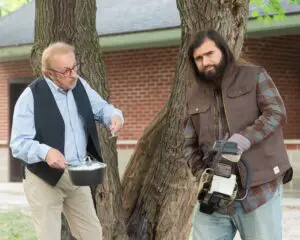
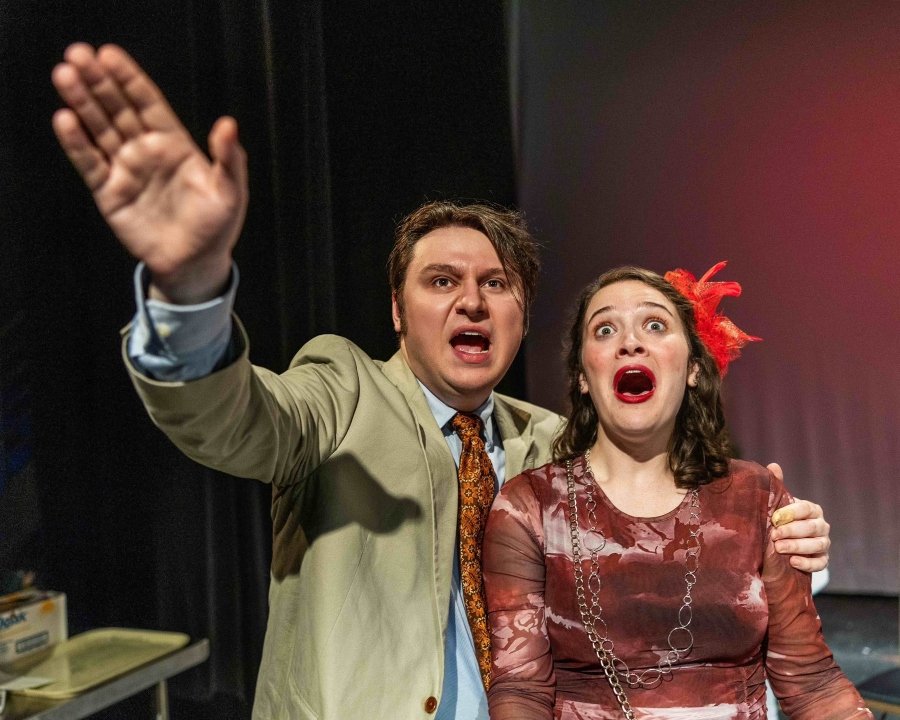
The ensemble cast of Deep Blue Sound is sensational! Much of the cast plays multiple characters – with the main characters described here in the review. You’ll have to see the play to catch a glimpse of all of the townspeople. Kathleen Carey (Mayor Annie) is hilarious playing a symbolic Mayor with no power. Carey showcases the Mayor’s worst flaws with adept comic delivery, and peels away the comedic layers perfectly to see true vulnerability and humanity. Carol Charniga (Joy Mead) plays the local town newspaper reporter with the experience of being in a cult, with humor, sparkle, and compassion. Jessica Córdova (Mary) is so realistic in her portrayal as a woman in the midst of a divorce – showcasing strength, determination, uncertainty, anger, and empathy. Christine Kenefick (Ella) is a revelation! Kenefick plays one of the central characters that is struggling with her mortality and diagnosis with cancer. You are pulled into her orbit from the very beginning of the play with her grounded-ness and approachability. Quinn Solace (Ali and pharmacist) plays Ella’s daughter who has returned from NYC to care for her mother. Solace’s Ali is strong and fierce and yet helpless and floundering. Solace brings depth and realness to her Ali and her scenes with Ella are enchanting. Tony Pallone (Chris, Alexander, Oceanographer) plays three main characters during the play – Chris, Mary’s estranged husband, Alexander a young boy determined to be a great dancer, and a German Oceanographer. Pallone plays each character definitively – each with their own humanity and each with sincerity. He is funny, visceral, and his scenes with Mary are submerged with honest realness. Joyce Reynolds (Leslie) is adorable as a local horse groomer and prolific pen pal. Reynolds was such a pleasure to watch on stage and she delivers Leslie’s fantasy of visiting Spain with such genuineness – you want Abe Koogler to write a sequel to the play to see if Leslie makes it to Spain and to see what she does when she gets there. J. Scala (Homeless Gary and Whale) is a chainsaw wielding mystery not only to the audience but to the townspeople themselves. Scala delivers his Gary with opacity and mysticism. He is other worldly – yet grounded. Scala is enchanting as the whale and you can’t help but to be transfixed on him as he delivers his lines. Dennis Skiba (John) is simply wonderful as John, Ella’s good friend. He embodies the best qualities of all of us and his scenes with Homeless Gary deliver a reprimand to each of us cloaked by his own blunders.
The crew should also be acknowledged for their contributions. Props to Stephen David Caso (lighting designer), Cheryl Hussey (assistant lighting designer), and Rachel Stewart (stage manager). Of special note was the awesome sound design by Stephen Wilson.
Playwright Abe Koogler himself mentions that the characters tell the audience to “give up and not hold onto little things as these sounds and characters wash over you,” referring to the play’s unique, water-like rhythm. Stephen Wilson’s sound design contributes to supporting that rhythm and doesn’t detract.
Wilson relied heavily on works from Antônio Carlos Brasileiro de Almeida Jobim to set the tone of the production. Wilson’s preshow playlist includes:
-Água de Beber- Antônio Carlos Brasileiro de Almeida Jobim
-Wave 1967- Antônio Carlos Brasileiro de Almeida Jobim
-Blue Bossa (Remastered)- Joe Henderson
-Captain Bacardi- Antônio Carlos Brasileiro de Almeida Jobim
-Jardim Dos Deuses- Joyce Moreno
-Look to the Sky- Antônio Carlos Brasileiro de Almeida Jobim
-Dónde Estabas Tú- Omara Portuondo
-The Red Blouse- Antônio Carlos Brasileiro de Almeida Jobim
For those of you who aren’t familiar with Antônio Carlos Brasileiro de Almeida Jobim, he was a Brazilian composer, musician, singer, and songwriter. Jobim merged samba with cool jazz in the 1960s to create the art form of bossa nova. Jobim, also referred to as Tom, was the composer of the smash hit Girl from Ipanema.
Wilson’s sound design for the play relying so heavily on music from Tom Jobim, makes so much sense in this production. Deep Blue Sound’s main themes about connection and alienation still leave room for the themes that explore the impact of the environment and the power of nature on our lives and souls. Jobim once said:
“My music comes from this environment here, you know, the rain, the sun, the trees, the birds, the mountains, the rocks… Beautiful.”
As an aside, if you haven’t listened to the album he recorded with Frank Sinatra, 1967’s Francis Albert Sinatra and Antonio Carlos Jobim, you need to check it out. The album represents one of the finest presentations of Jobim’s music.
Most of the piano tracks used during the actual scene transitions during the play were taken from the album ‘Fred Hersch Plays Jobim’ (2009) and is also worthy of a listen. My favorite tracks from the album are Por Toda Minha Vida, Luiza, and Insensatez.
The connection between the words of the play, the weaving of musical rhythms in the speech patterns of the actors, the sound design, the natural cycles of life explored on stage, all of this makes the experience of seeing Harbinger’s production of Deep Blue Sound almost – indescribable. It’s best said by the playwright Abe Koogler who wrote these lines in the play:
“emerging… rising… cresting… falling”
Go see Harbinger Theatre’s production of Deep Blue Sound at Steamer 10 Theatre. Let this play and the music wash over you – you’ll leave the theater feeling profound healing.
Performance dates are:
Fridays and Saturdays: September 12, 13, 19, 20 7:30pm
Sundays: September 14 and 21 at 2:00pm
All tickets are $15. Tickets are available online through the Harbinger Theatre website here: https://harbingertheatre.ludus.com/index.php. You can catch the show at:
Steamer No 10 Theatre
500 Western Ave, Albany, NY
Photos by Emmali Lanfear






 RadioRadioX