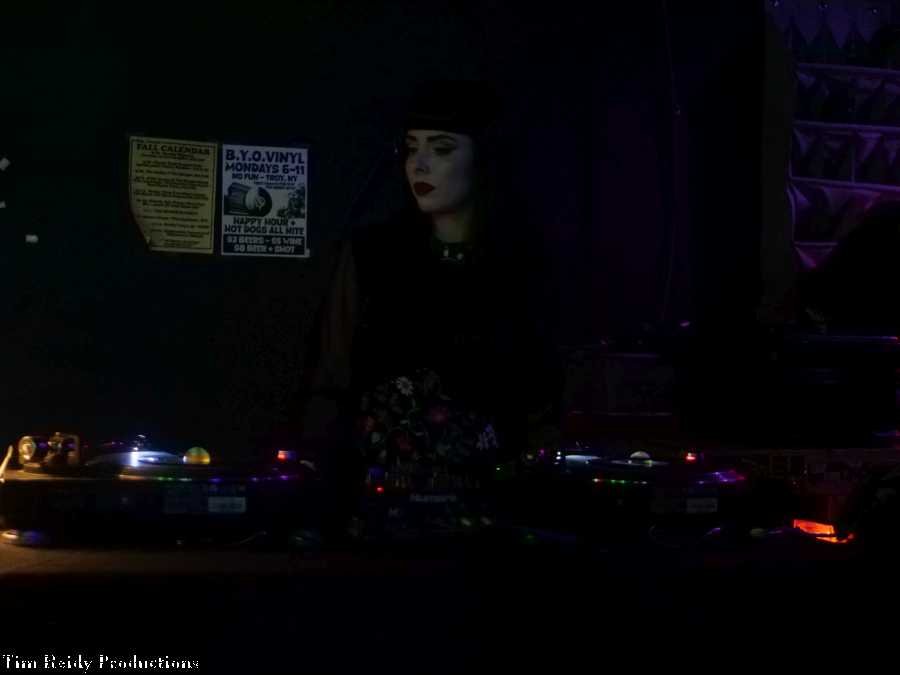
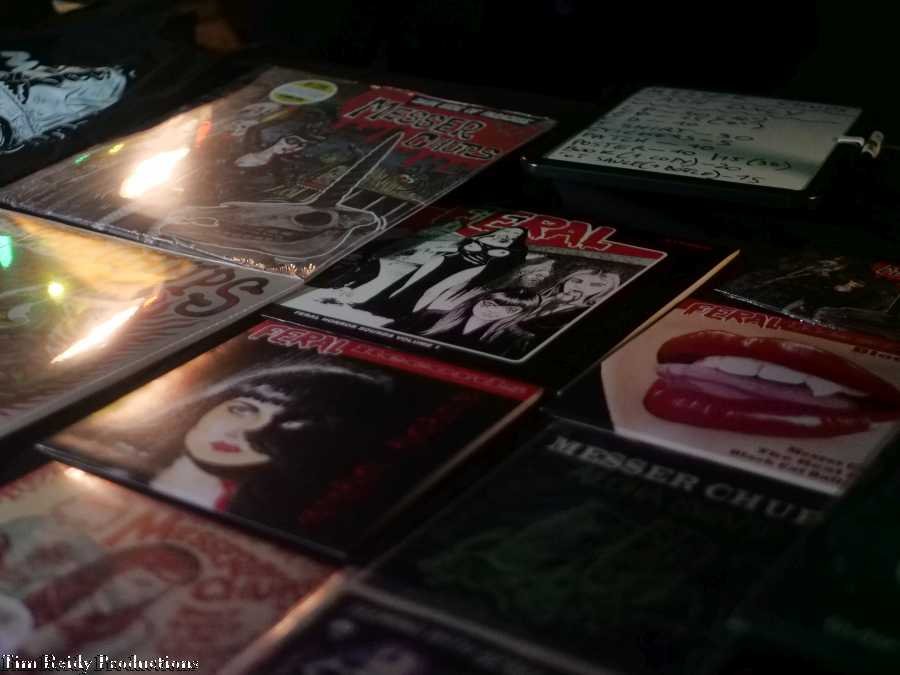
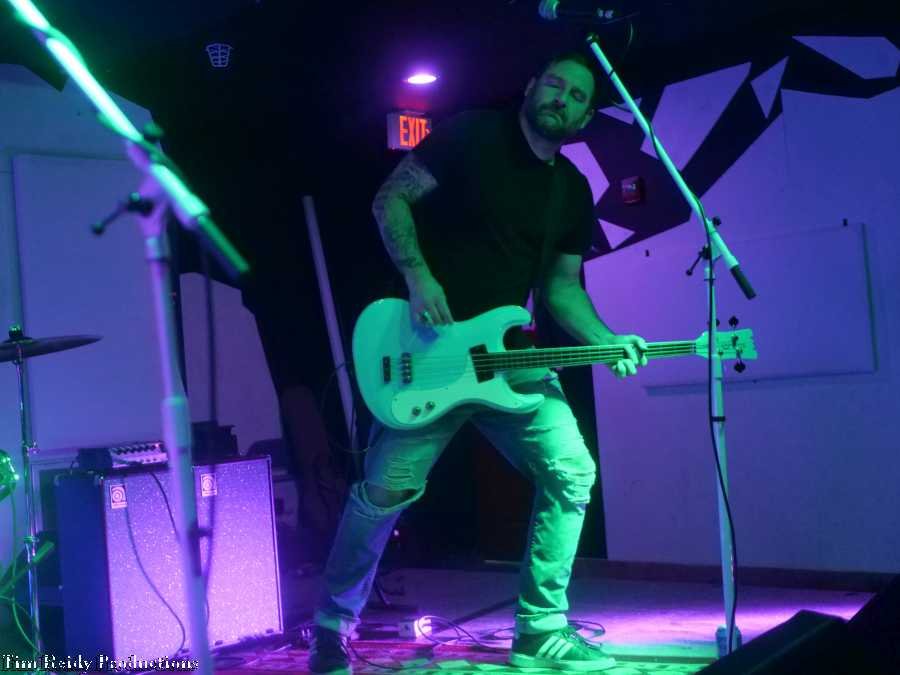
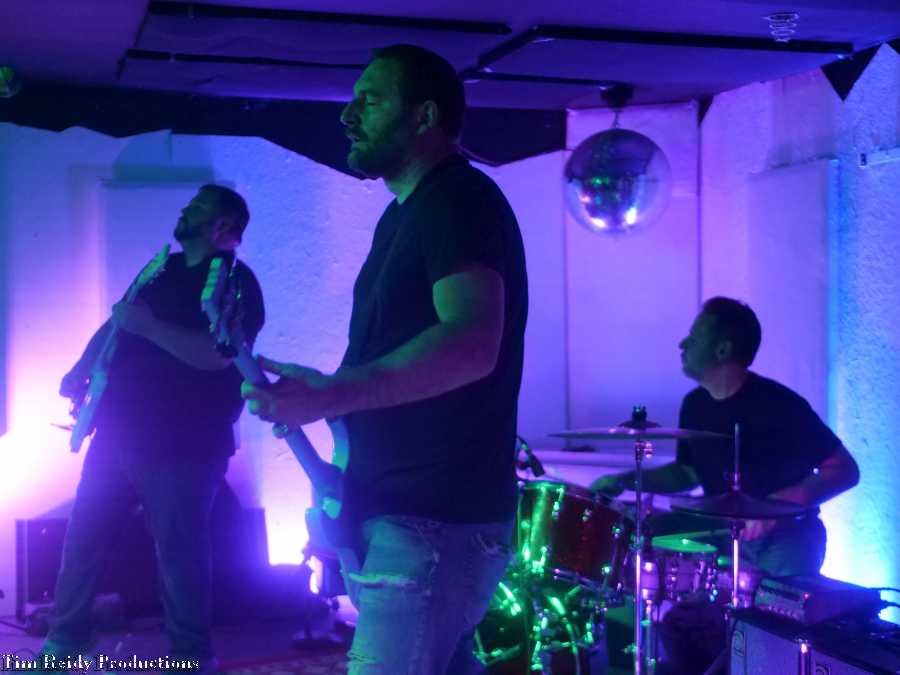
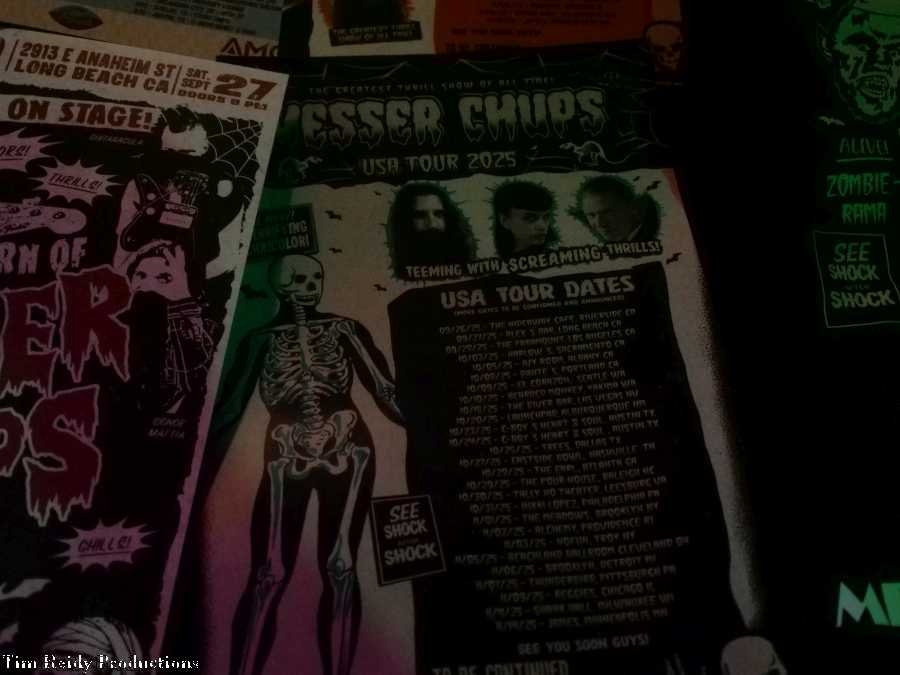
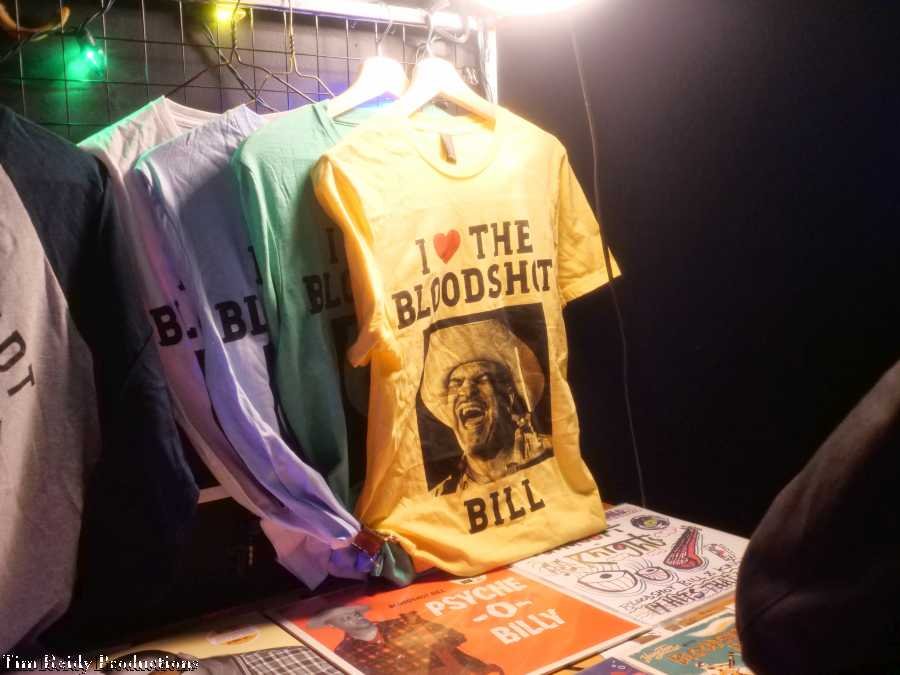
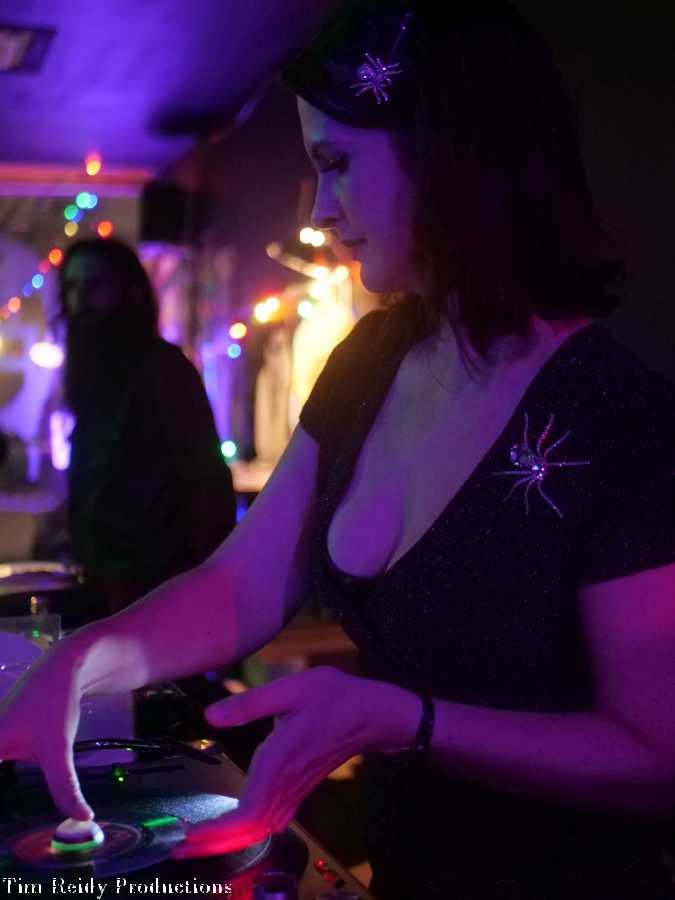
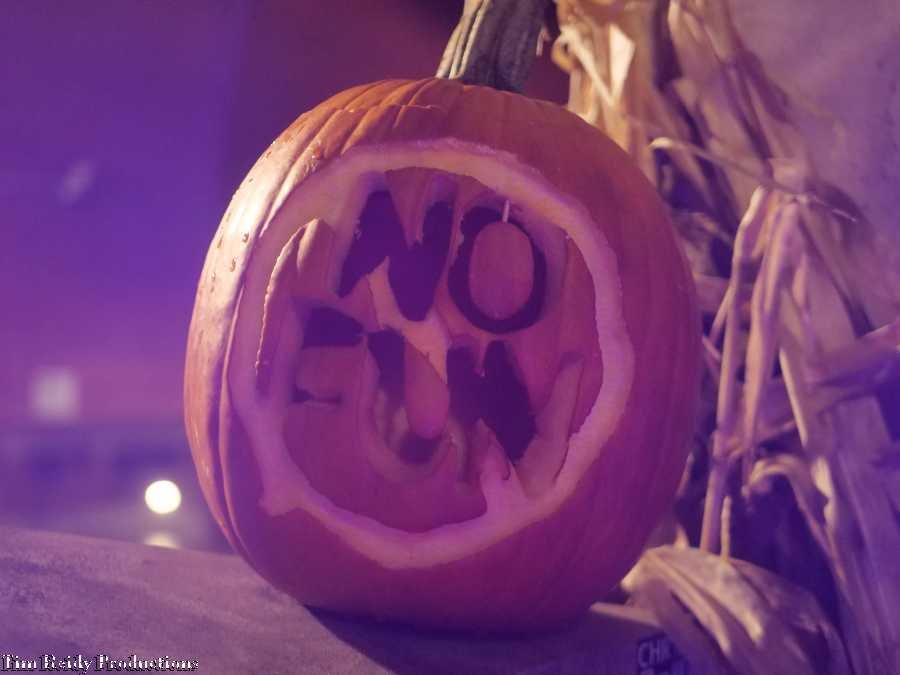
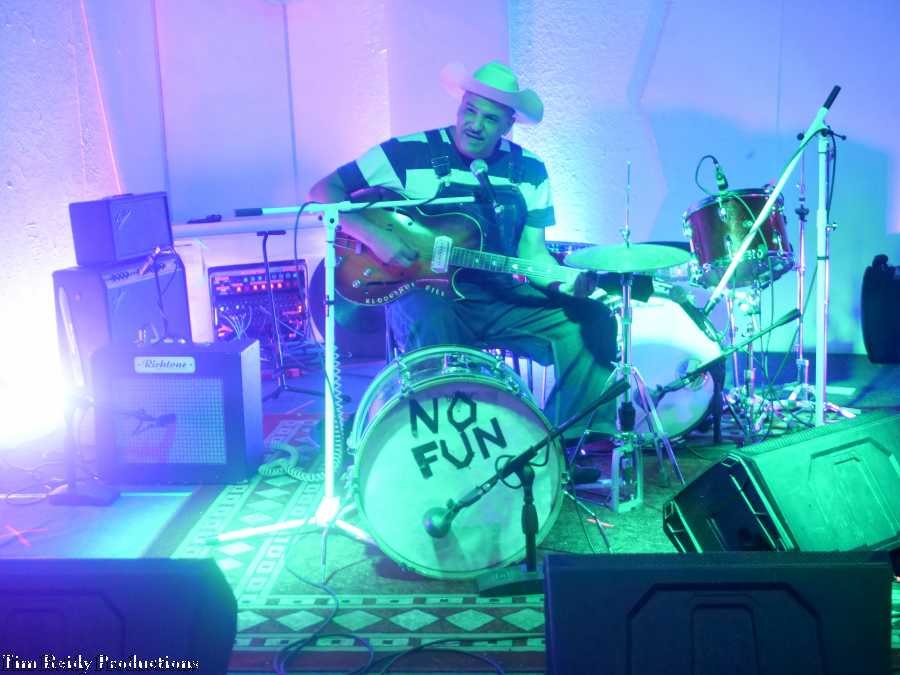
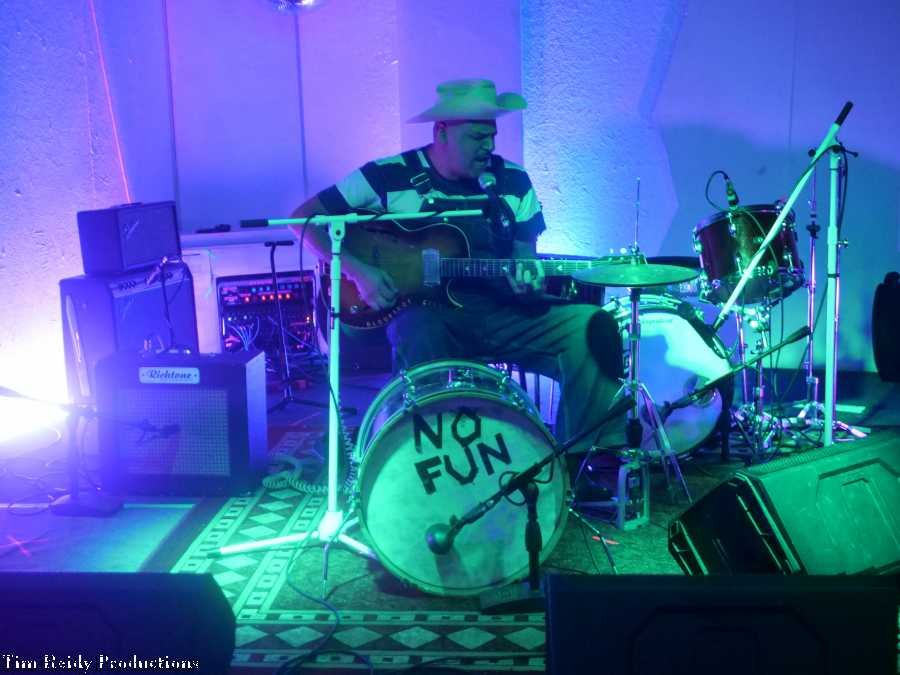
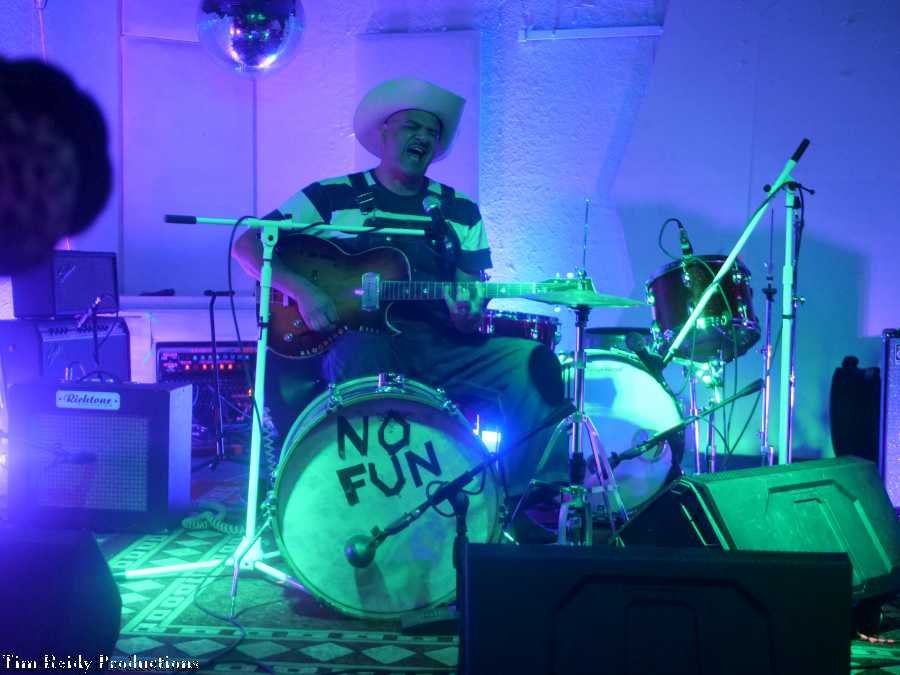
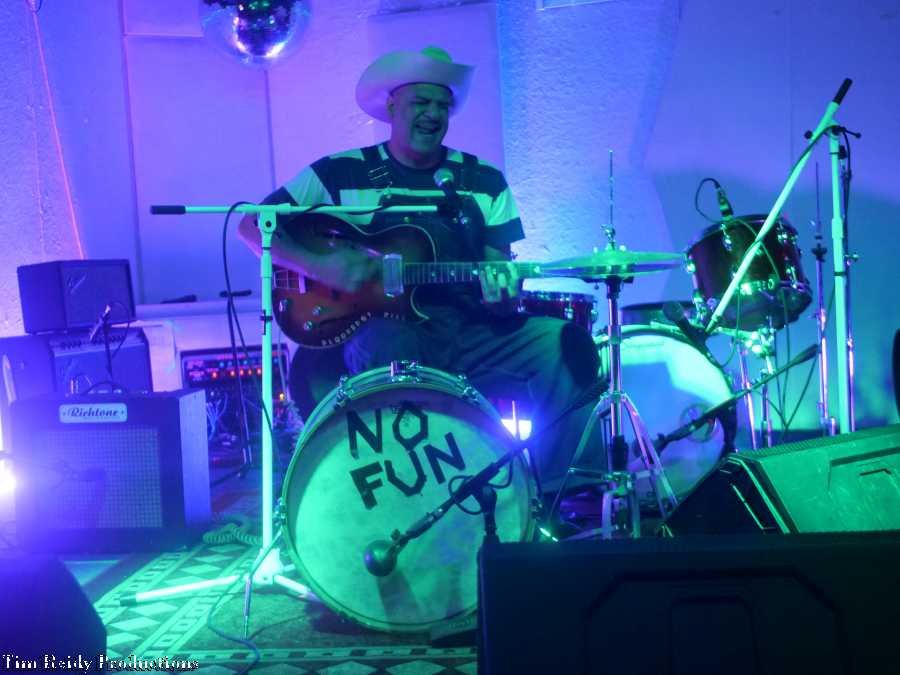
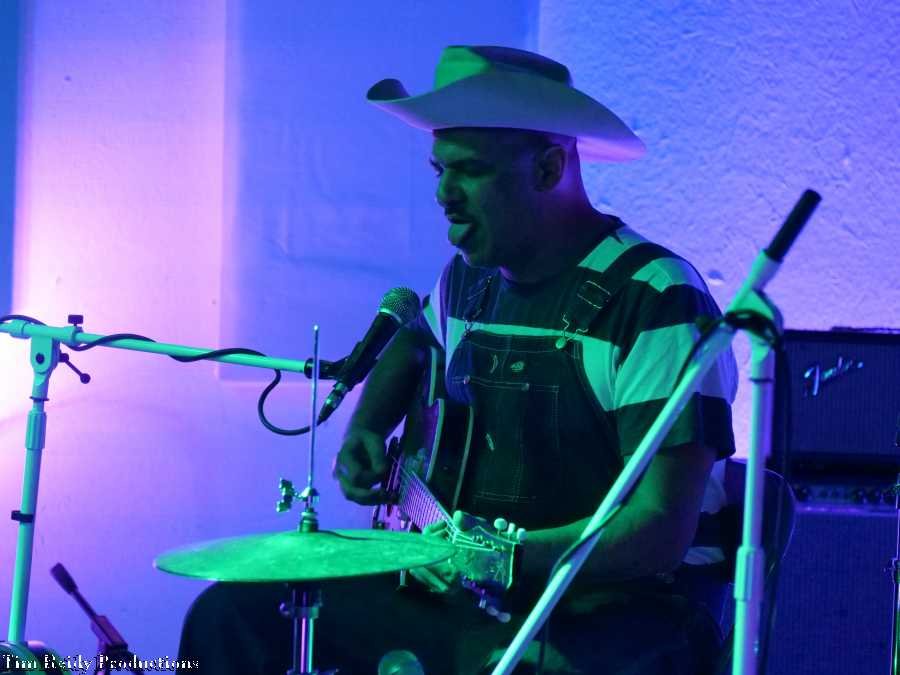
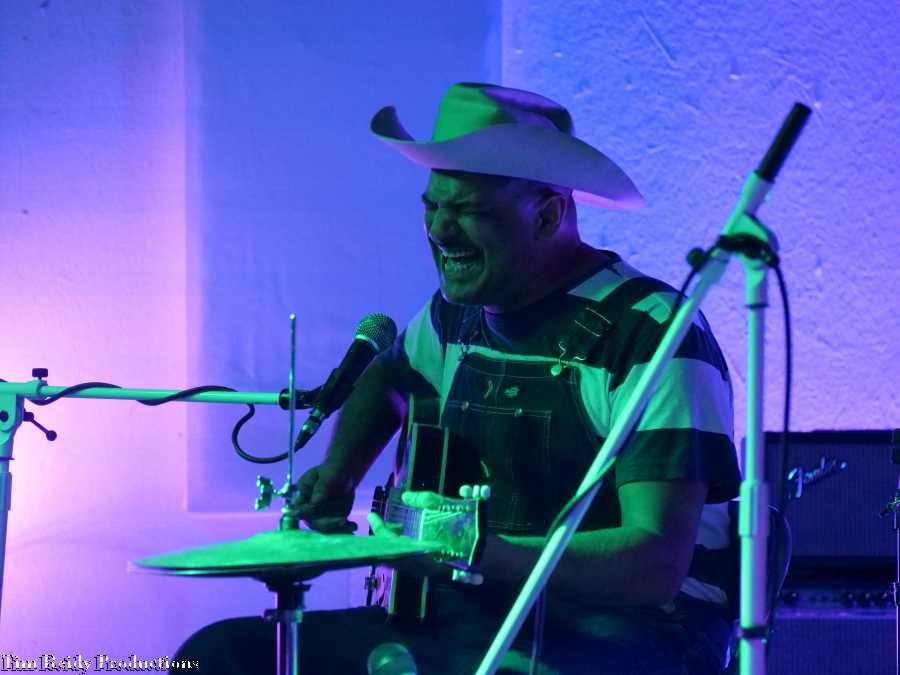
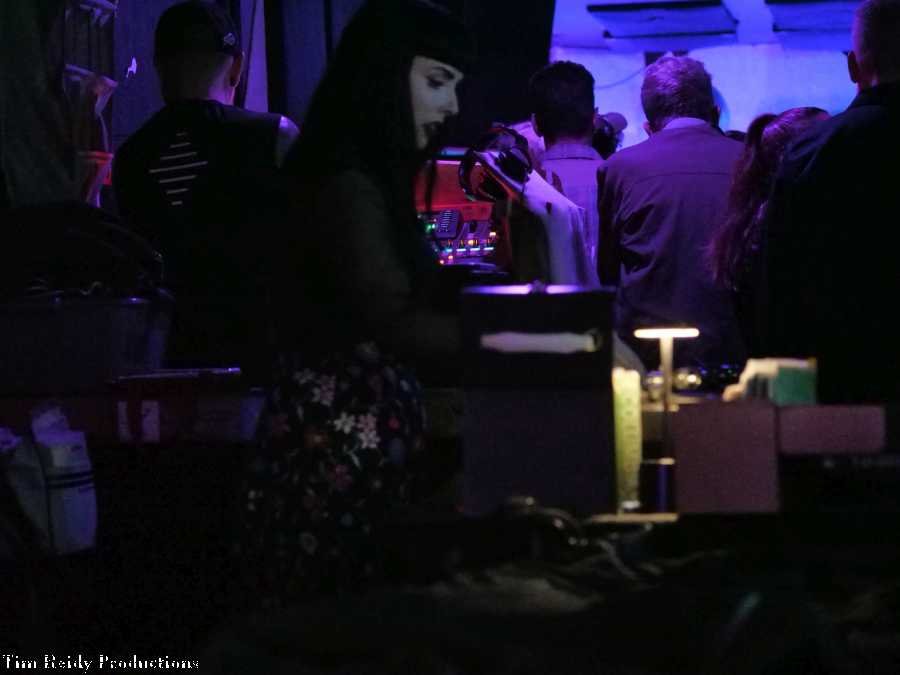
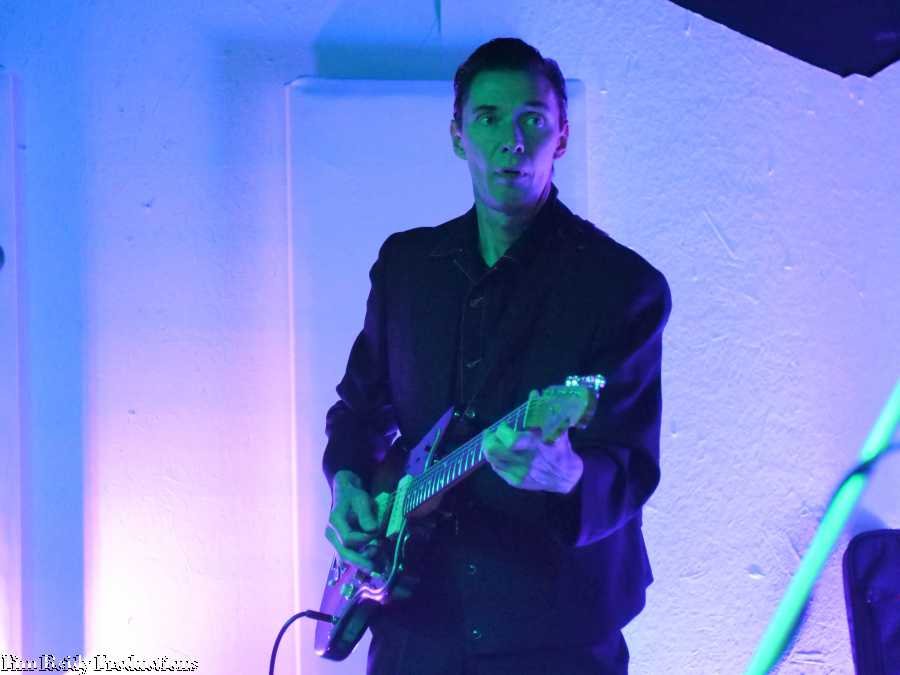
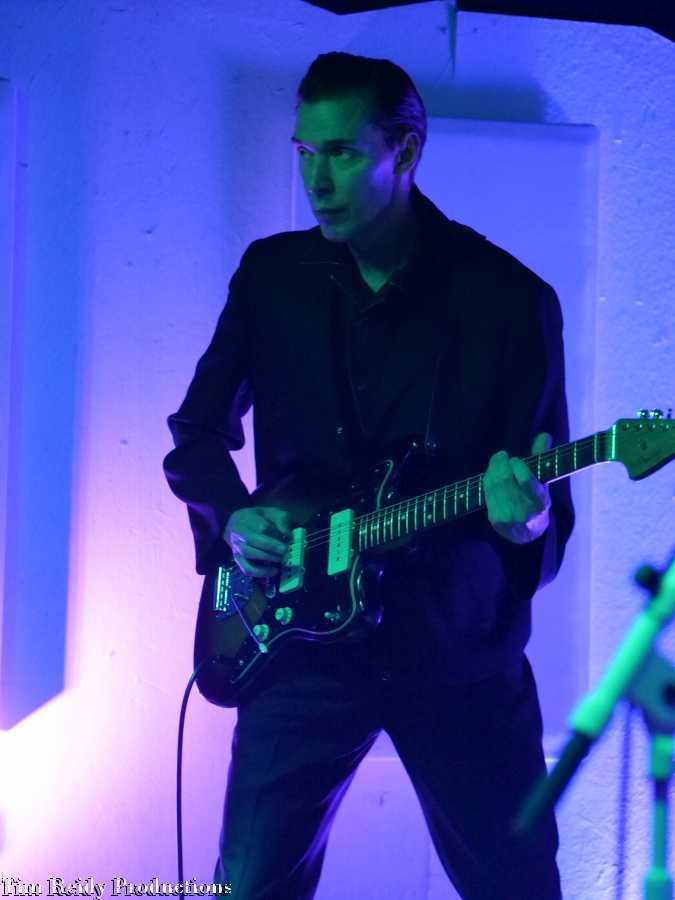
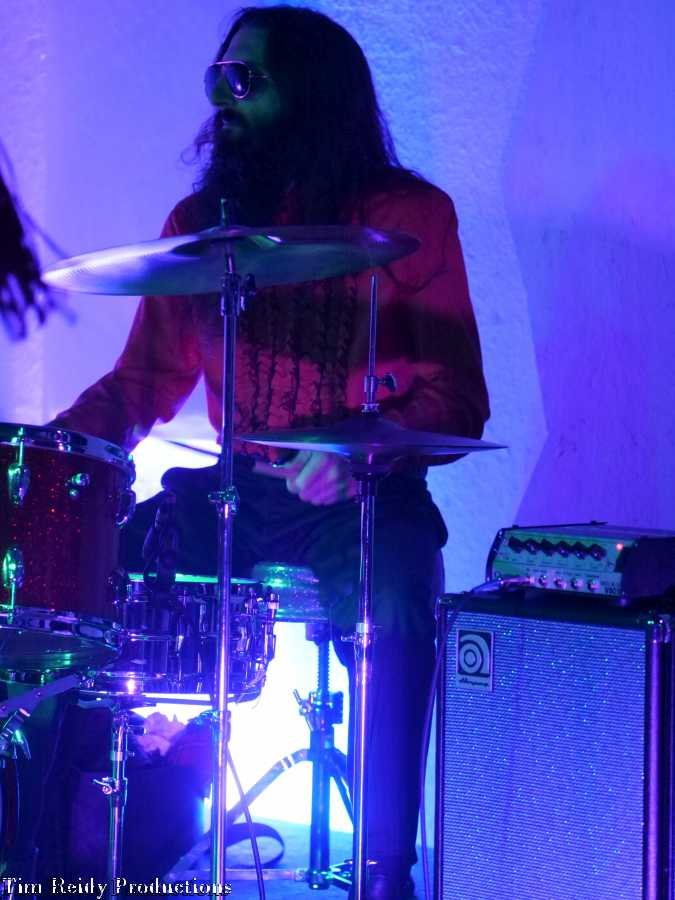
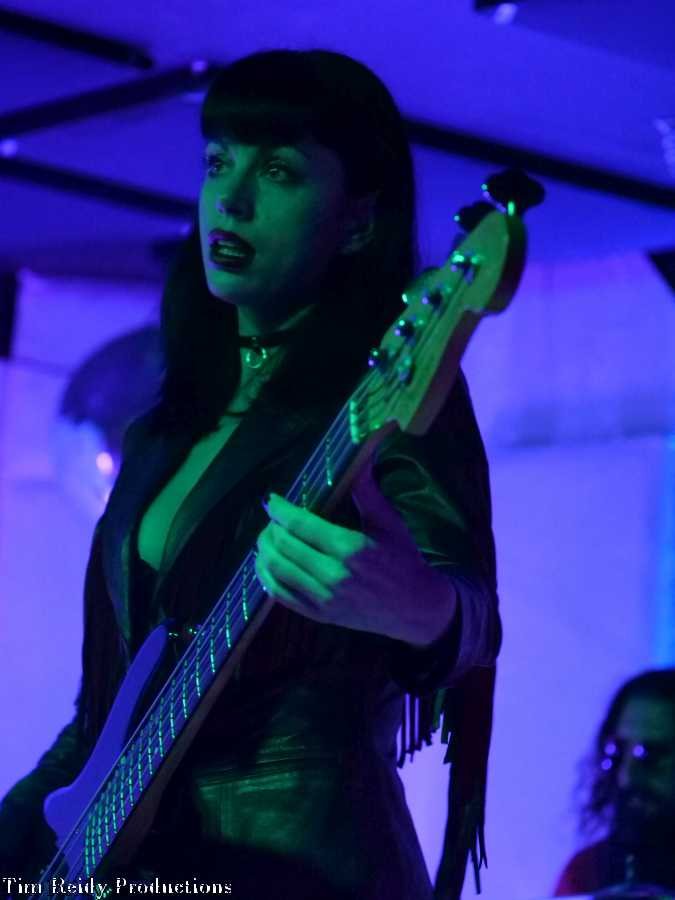
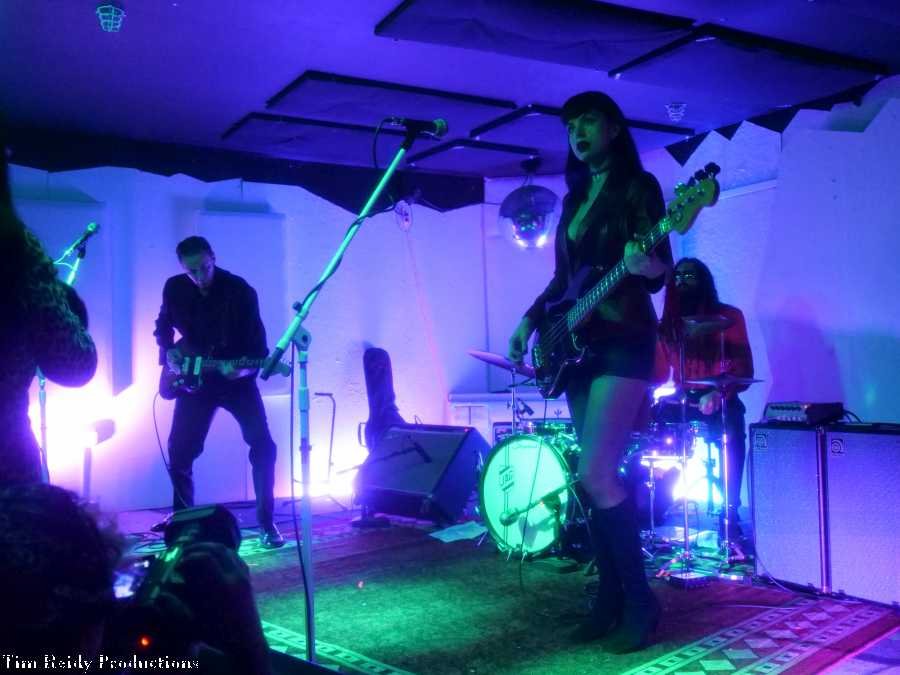
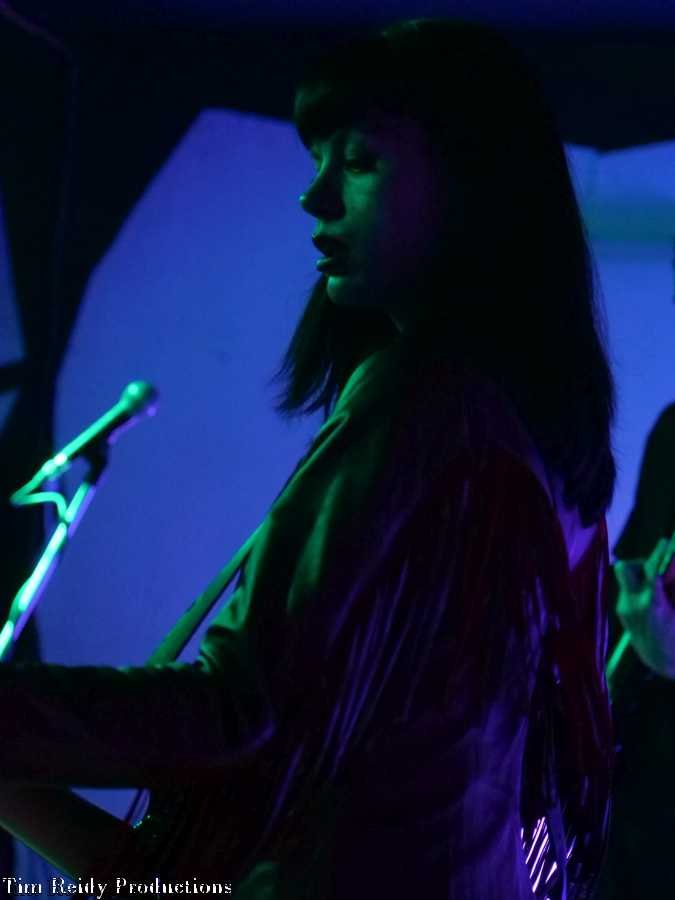
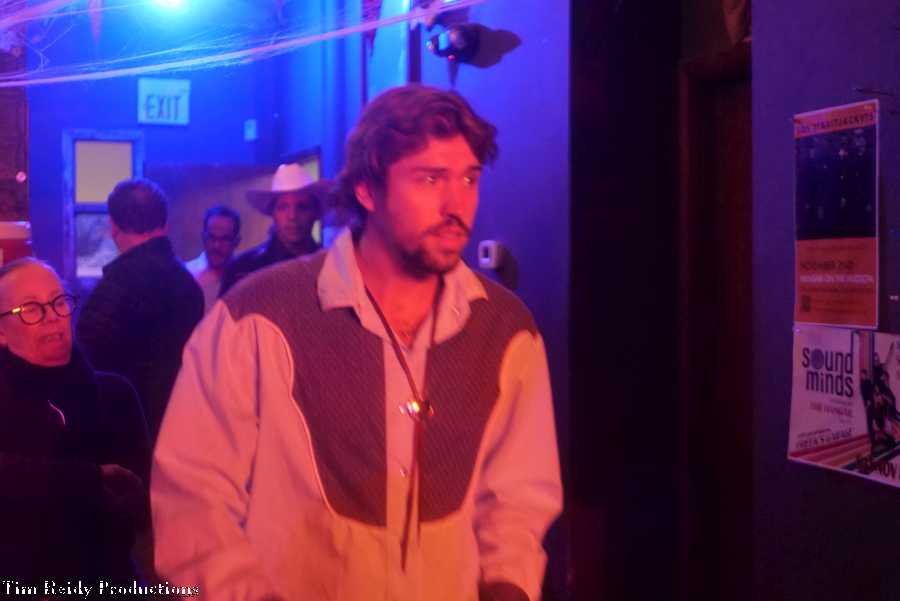
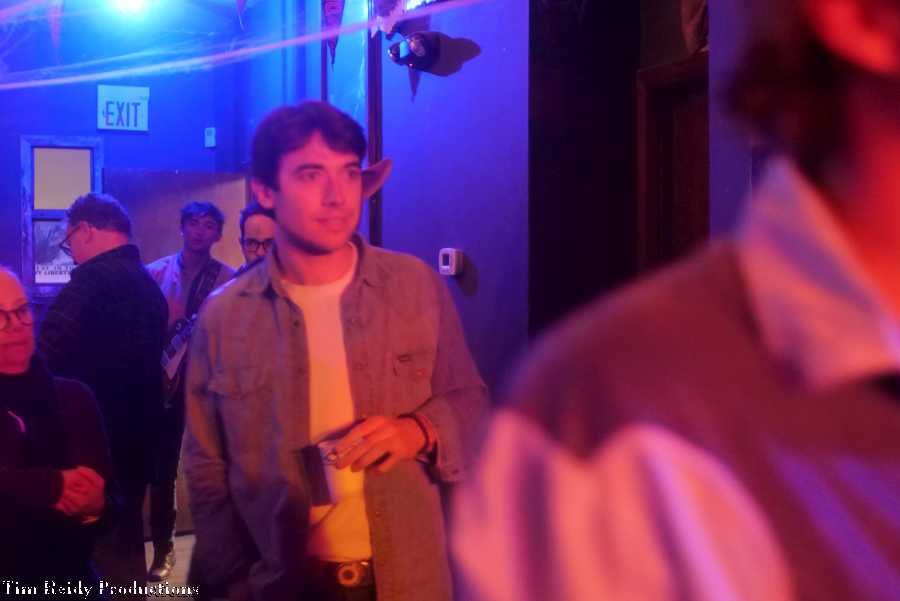
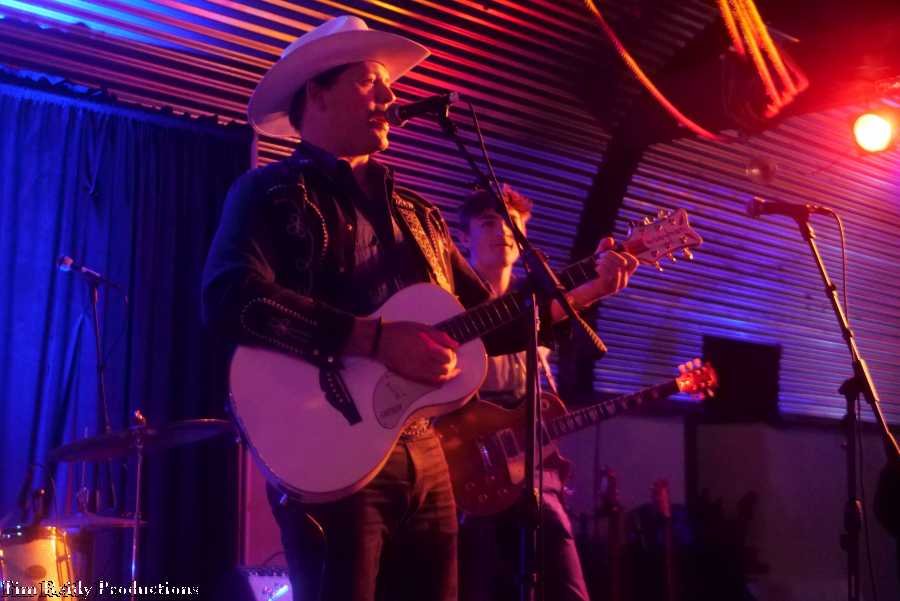
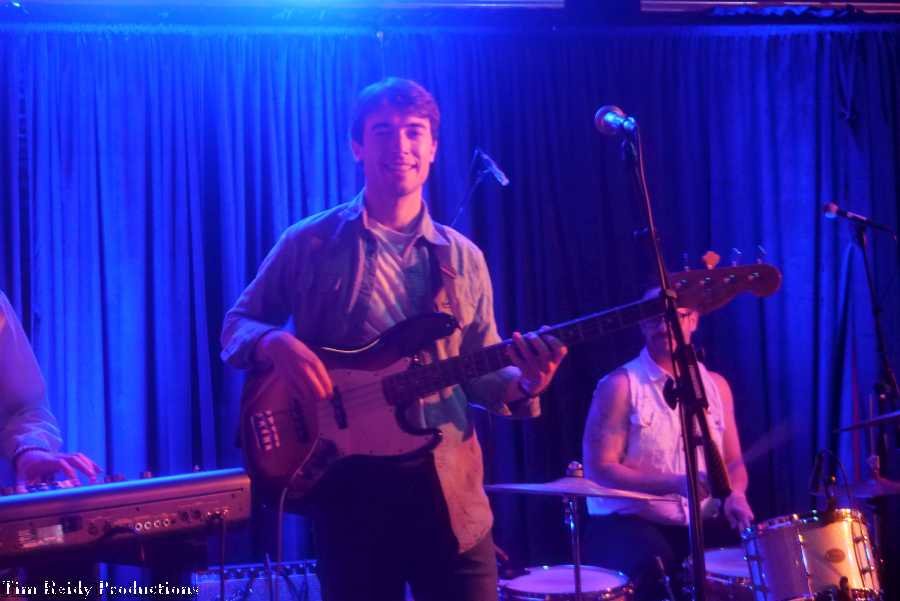
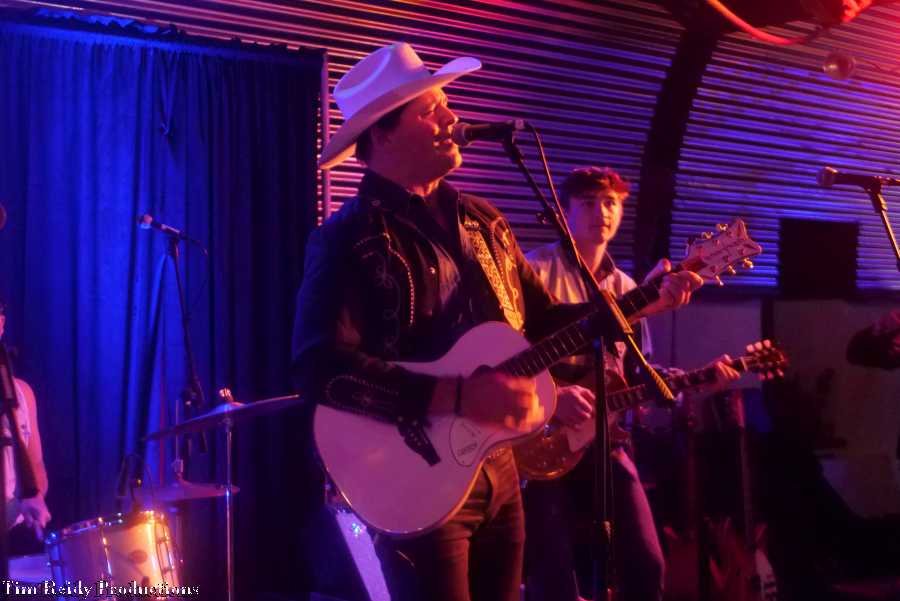
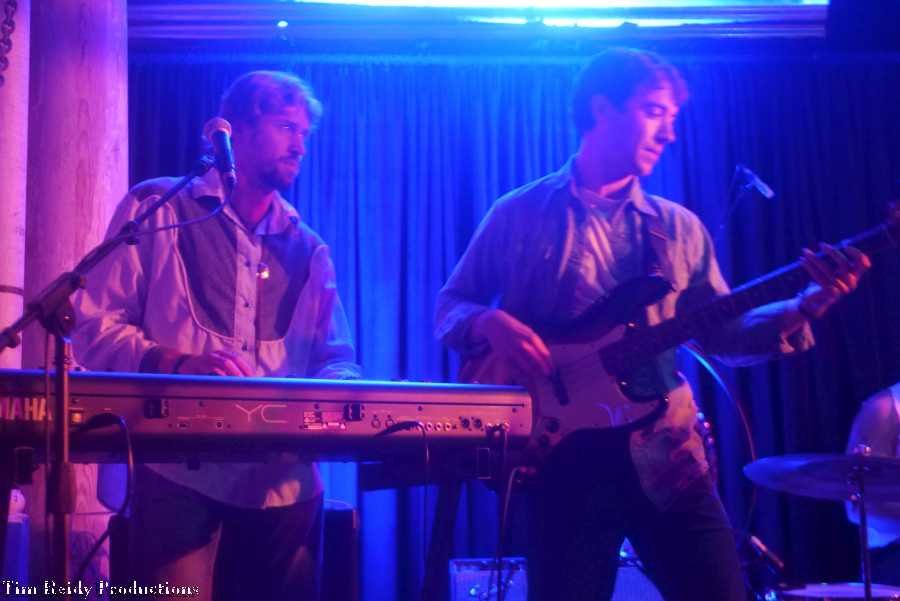
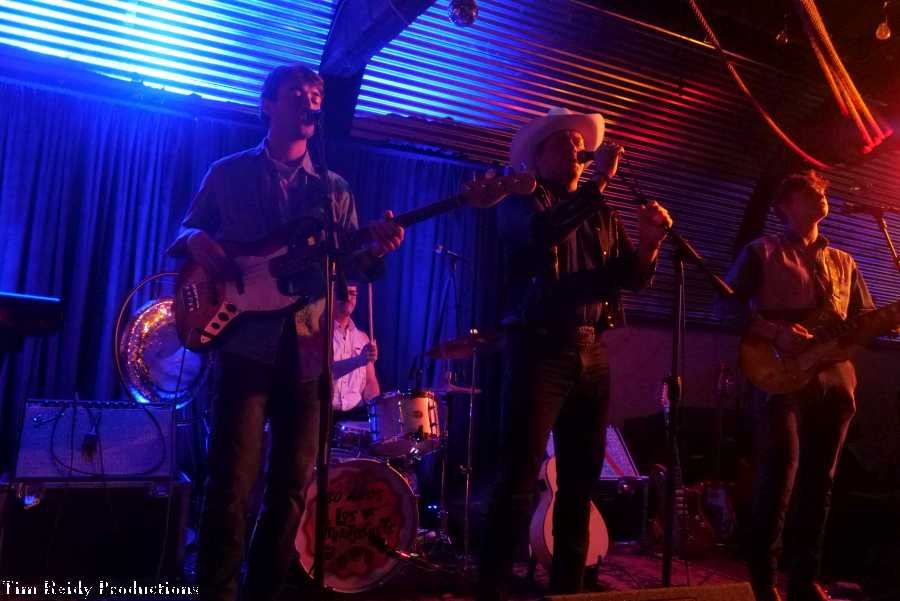
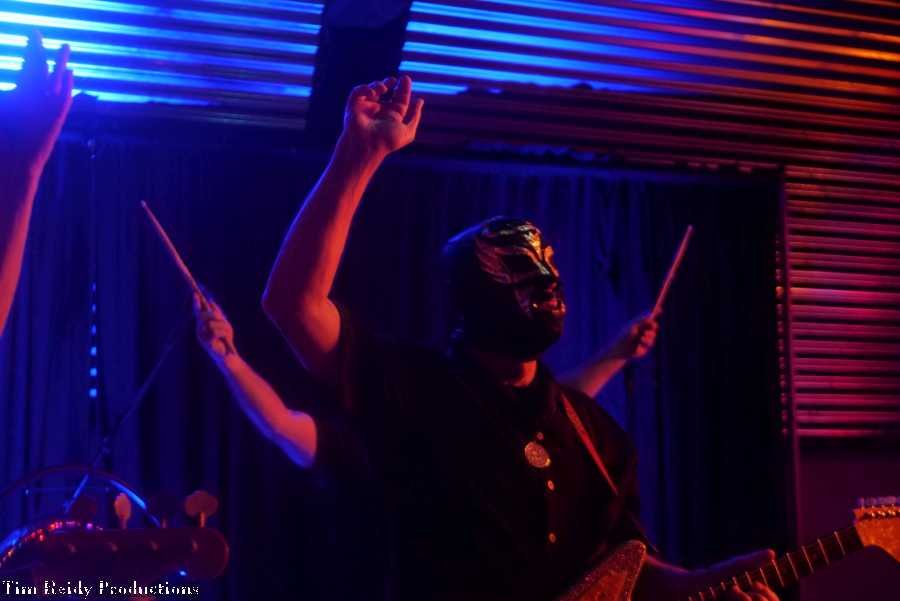
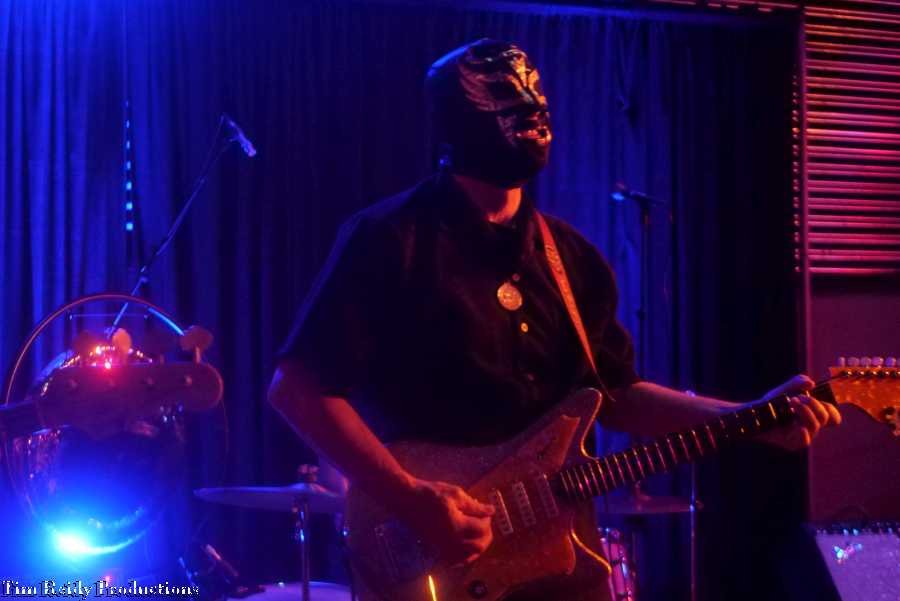
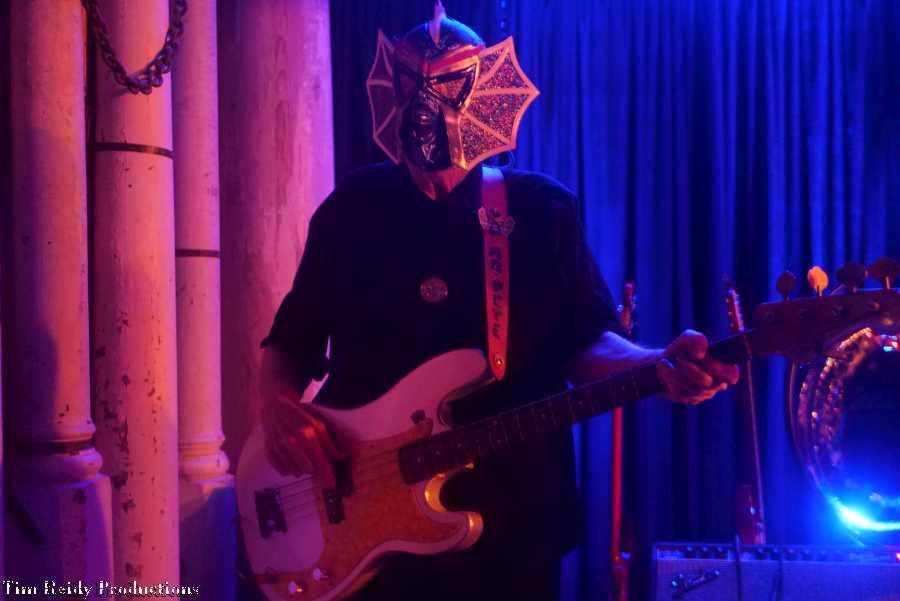
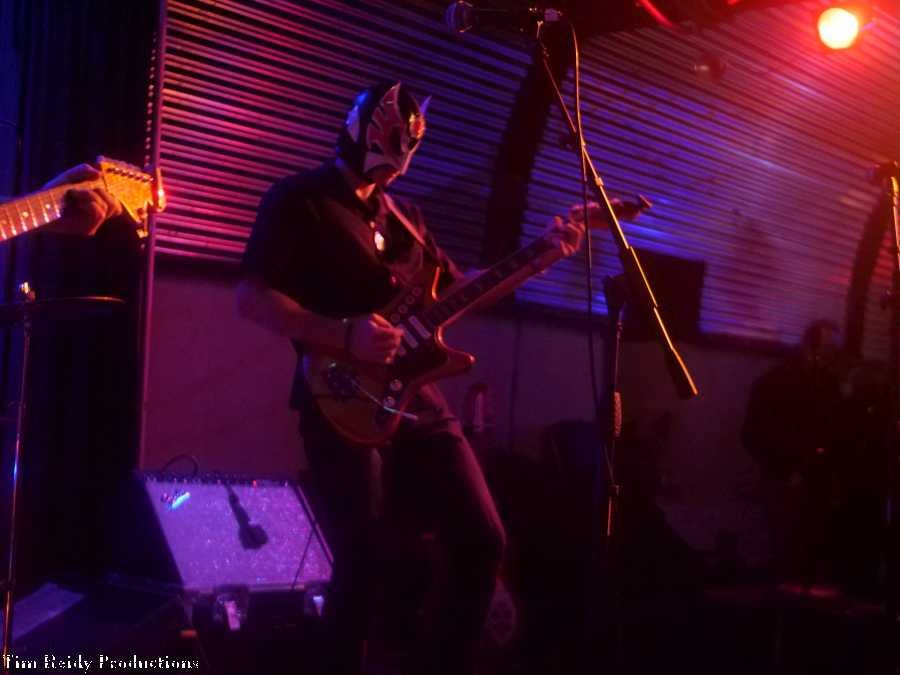
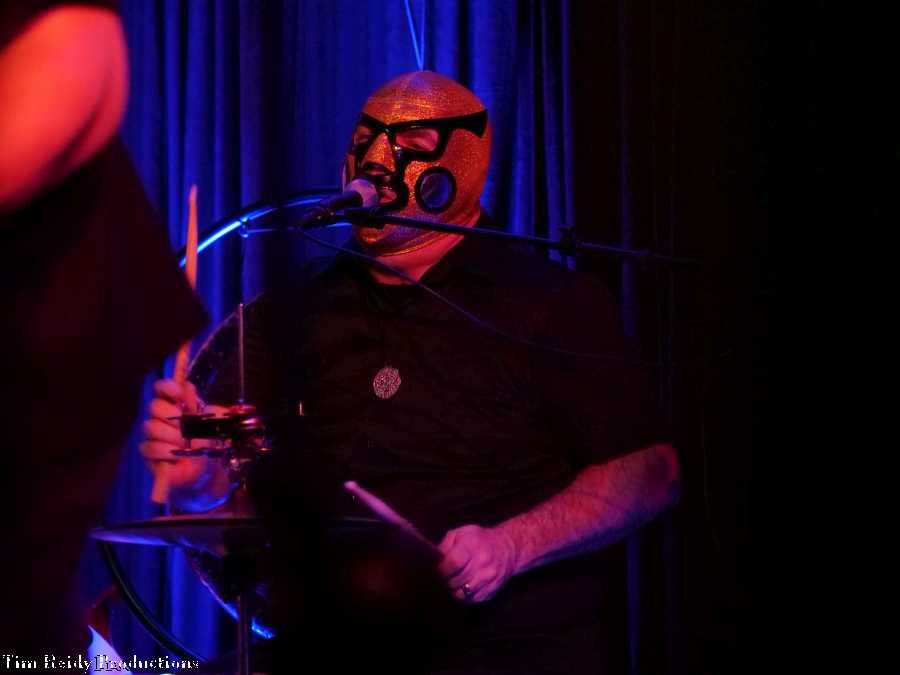
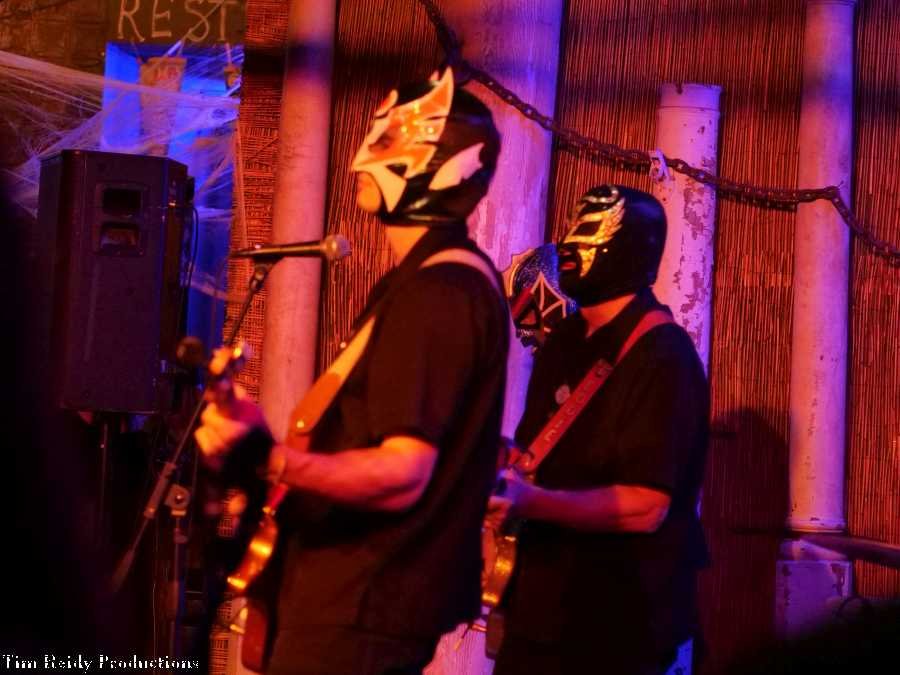
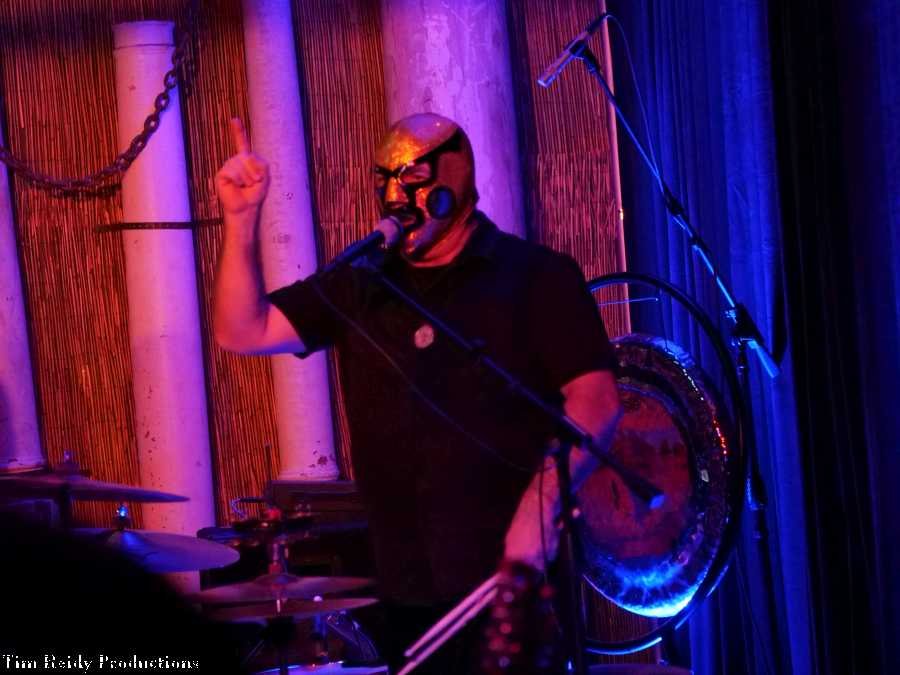
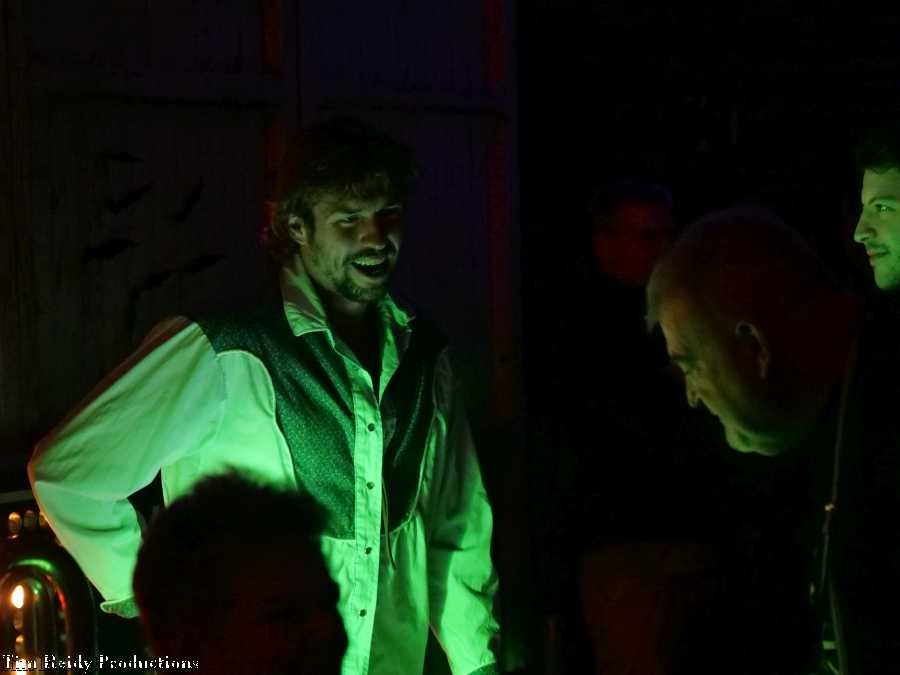
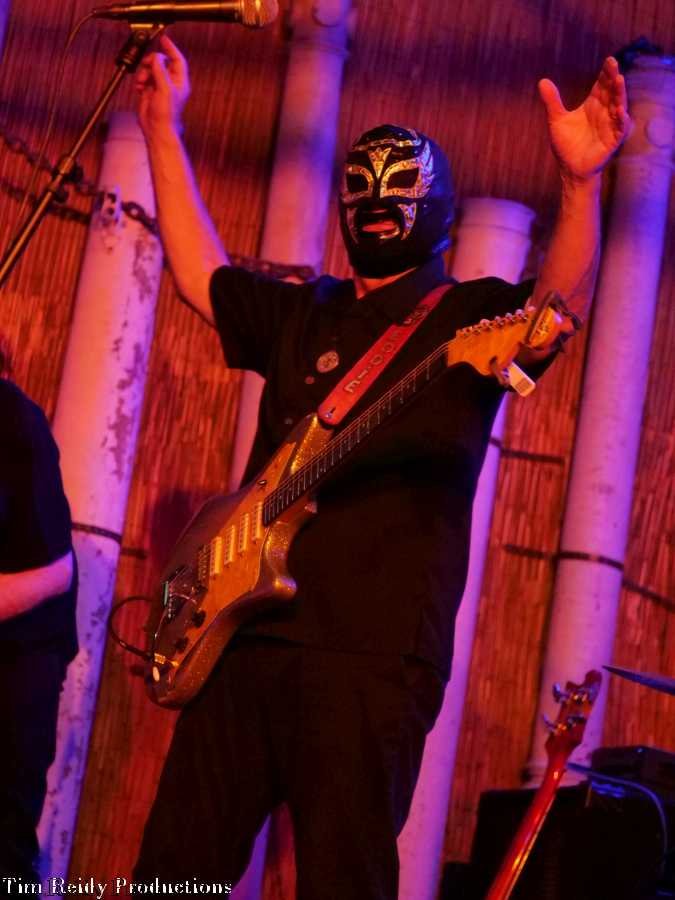
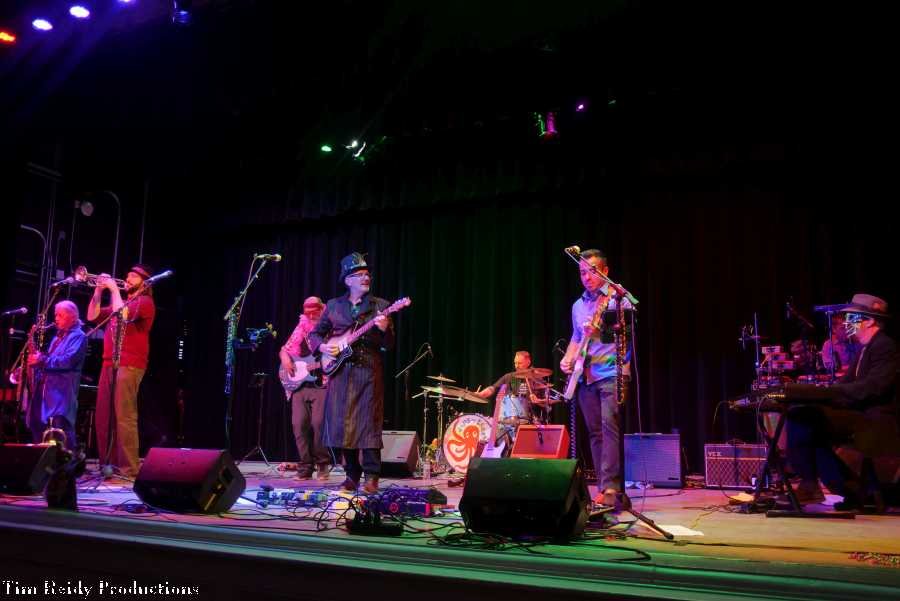
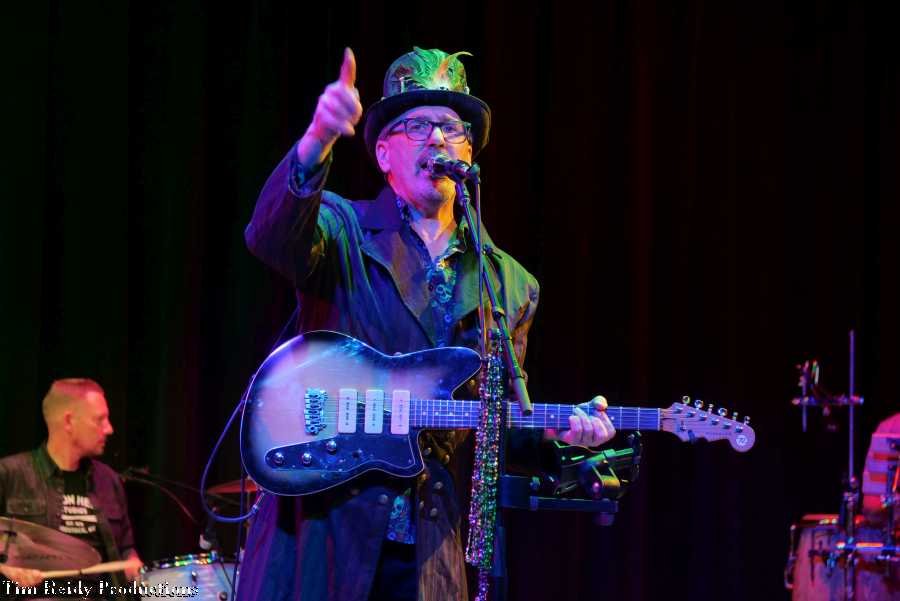
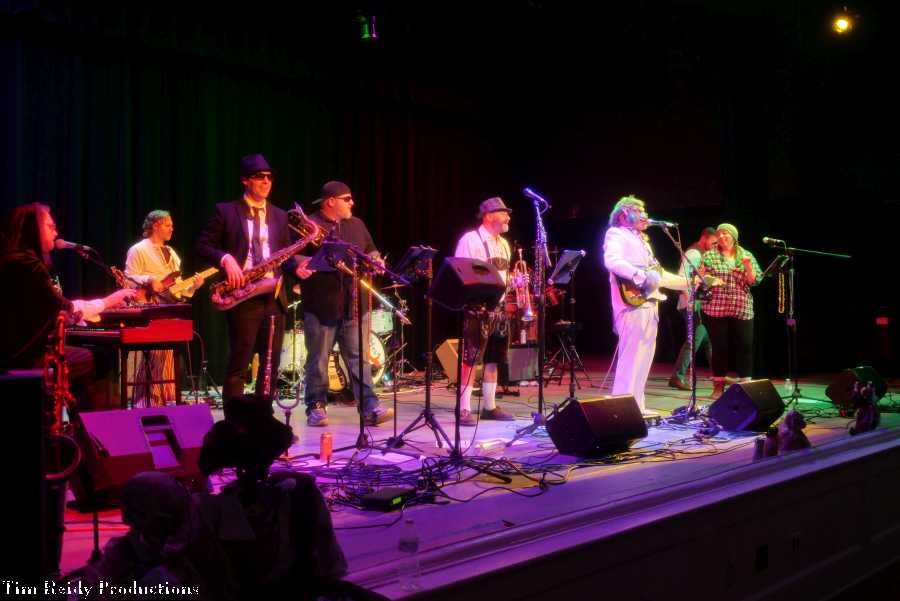
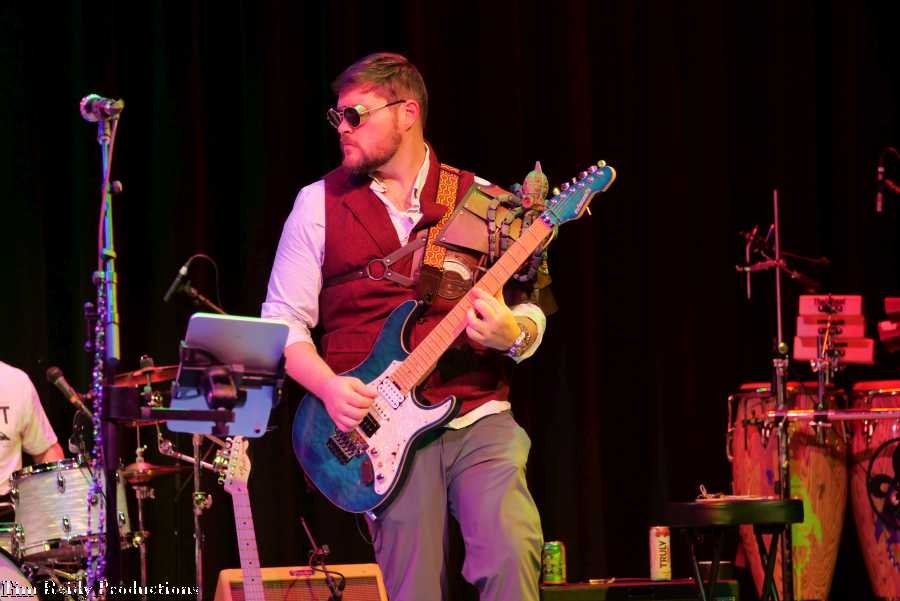
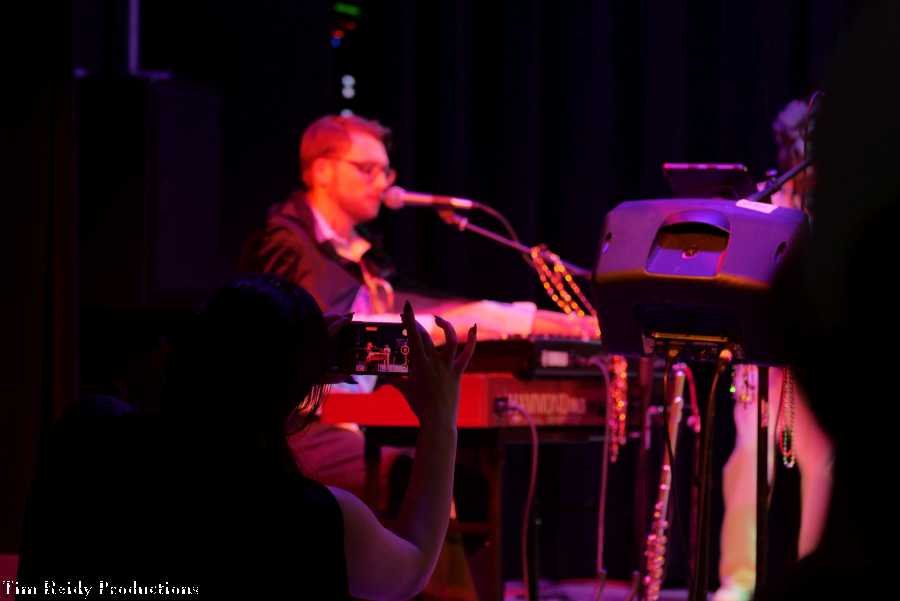
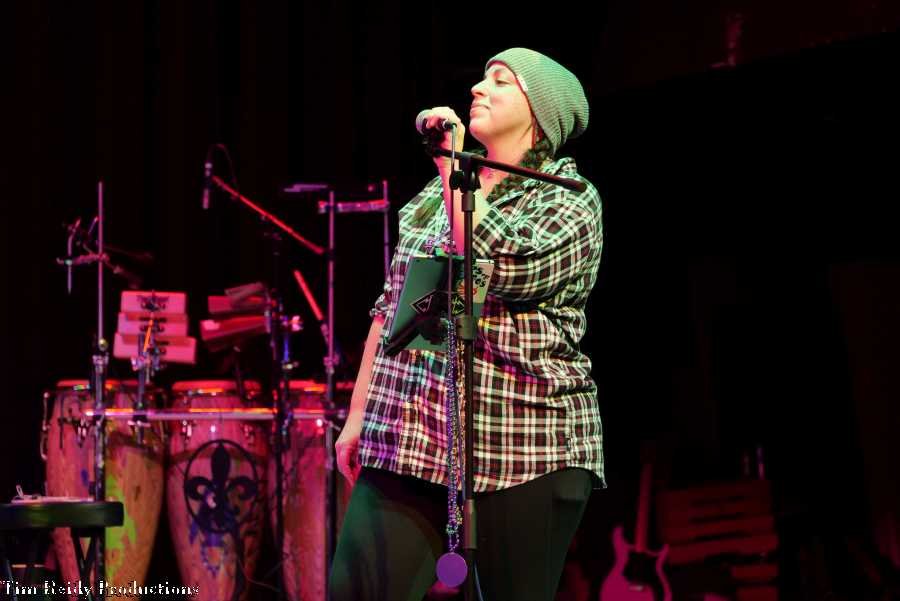
The first Monday of November saw Hey Greasy hosting two surf bands (Messer Chups and the Jagaloons) and Bloodshot Bill at No Fun. DJs were mixing it up as well.
Photography by Timothy Reidy.
The first Monday of November saw Hey Greasy hosting two surf bands (Messer Chups and the Jagaloons) and Bloodshot Bill at No Fun. DJs were mixing it up as well.
Photography by Timothy Reidy.

Amy Rigby – Xperience History – by Liam Sweeny.
Originally published January 2021.
A girl from the suburbs has a dream, and through the trials and errors of hard-fought experience, she finds her dream and claims it. And lives it. Artistic expression can be beautifully described in the tools of a writer’s trade, but we can never forget that art, all art, is the telling of the artist’s story.
Amy Rigby is an artist’s artist; singer, songwriter, book writer, artist… and yet above all, storyteller of her own design. She has a few things in the fire, and she’s asking everyone to come get warm.
I sit down with Amy and we talk about the finer rules of highway bingo.
RRX: You have a great story, growing into being a professional musician from an Elton John fan in the Pittsburgh suburbs. Luckily, it’s a story told in your memoir, Girl to City. Memoirs are tough, because writing a good one forces you to write what they want to read, as much as what you need to write. What did you learn from the effort?
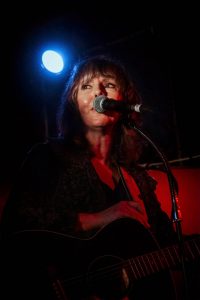
AR: Well I love to read memoirs so I just wrote what I’d want to read if I didn’t know me. I learned that writing a book really is as hard as people say, but worth the effort. It also made me appreciate the quick payoff of songwriting.
RRX: You spent time in a lot of different places, New York, Nashville, England, just to name a few. And now you’re back in New York, a bit north of the city. Based on your travels for the arts, would you consider it easier to move to a new place and have to establish yourself, or move from a place, and have to let go?
AR: I find it easier to move from a place because I never really let them go! I still feel like New York City is my town (though I admit it gets less so), parts of London will always feel weirdly familiar and same with Nashville. The buildings change but the topography remains the same, and a lot of the people do too. Many of my New York friends still live in the same apartments they’ve been in since we were just out of college. Starting over in a new place is something I never worry about until I’m actually in the middle of doing it, but I think because I travel so much for gigs (or did until this past year) I don’t need to rely on the place where I live to provide as much for me as if I stayed put. It is wonderful to get to know the people and place where you live though, I’m appreciating that even more this past year. Even if I only see very occasional glimpses of friends at the takeout coffee line, I’m appreciating community more and more.
RRX: You have a podcast, Looking for the Magic, with Elizabeth Nelson of the Paranoid Style. I’ve only done a blog, and I’m not afraid to admit I suck at it. And I know a lot of writers who did them with good starts, and they run out of gas. How do you and Elizabeth plan on keeping up a schedule and keeping it interesting?
AR: I started a podcast back in March, Girl to City, where I read a chapter of my book each week and worked music into each episode, spending hours editing and getting it up at the same time every week for 20 weeks. I could never have done that if I hadn’t been stuck at home but I had the content already created. It was good to have something to focus on every week. This new podcast Looking for the Magic is a different experience – flying by the seat of our pants, committing to finding a topic related to music/songwriting every week and meeting up live online on YouTube, then uploading as an audio podcast. I’ve written a blog for many years now and just make myself do it. It’s discipline but is always rewarding – I always feel better when I’ve created new work or articulated something I couldn’t get to without an imagined audience in my head. The hardest thing is the energy needed to find readers, listeners etc. Which reminds me, I need to share about tomorrow’s episode on every platform…especially tough to self-promote when there is so much going on in the world, but we can all use a little pleasant distraction.
RRX: Touring is tough, no matter how you do it. But touring while raising a kid, I imagine that’s like being a computer hacker with a warm keyboard and a room full of cats. It must have been difficult from a logistical perspective, but it had to balance out, right? Was there any moment :that cemented, in your mind, the benefit of doing it?
AR: Looking back I honestly don’t know how I did it. I was driven, and maybe one of the beauties of having kids is you feel like whatever you do it’s for the team, like you need to make it count and be worthwhile because there’s someone else relying on you. Not to say I didn’t feel selfish some of the time and I still look back with guilt and regret. I was just remembering taking my daughter out of school, flying to the UK with her, taking a train to Bristol where her dad was playing a gig and putting her on a tour bus with him, carrying on doing my dates by train and then picking her up at the airport in Dublin. Shared parenting insanity. It sounds glamorous but it was scary and hard and I probably spent any money I made! I do think my daughter had fun though, and she knew she was loved. When she was a bit older she and I worked up some punk covers together so she could play on tour with me and that’s a treasured memory. I think whatever you do as a parent, you’re never sure you’re doing the right thing so I guess I didn’t do too bad.
RRX: We like to explore the creative minds of the people out there that use that part for their bread and butter. Seems that people making a life of one craft have their toes (or legs) in the pool of other crafts; art, writing, sculpture… So, you have had your life in music and writing. Are there any other worlds you’re trying to conquer?
AR: I really loved turning my book Girl to City into a podcast and I love doing the podcast with Elizabeth Nelson. Years back, another artist Marti Jones and I created a live show called Cynical Girls where we had a whole little stage set and scripted bits – I guess it’s closer to theater or TV. And I admit there have been a few times I’ve tried to turn a set of songs into a musical, or collaborated with a playwright and I still love the idea. I know that’s what every songwriter ends up doing – yep, why should I be any different?!
I also have always made visual art – studied illustration at Parsons – and I keep coming back to graphics, drawings; laying out books, screen-printing. I just designed and printed a Dancing with Joey Ramone tea towel and selling those over Christmas basically helped me support myself. I get a giddy thrill out of packing them up and sending them to people all over the world!
And then there’s my dream to have a combination cafe/hotel/shop/venue – we stayed at one in Holland years ago and I still have fantasies of doing that.
RRX: When I heard your name, I also heard the name of Wreckless Eric, whose also spent a life of notes and measures. You two are not only married in song, but married in life. If you had to pick, would you say you more complement each other musically, or compete to keep each other on your toes?
AR: I think we definitely complement each other musically – from the first time I ever heard Eric back in the seventies, I thought he was a kindred musical spirit. I think we definitely keep each other on our toes but not through competition, just support and encouragement, and also offering another perspective, shared with love and honesty. If we can aim to be insecure at different times over different things, that’s the best!
I know I said we don’t compete, but I will say I’m inspired by Eric’s work ethic. He keeps moving forward making new work and doesn’t get bogged down and I’ve learned a lot from being around him.
RRX: This is where you answer the question I didn’t ask. Do your instruments have their own luggage tickets? Who’s hiding out in the upstate? Educate, enlighten, emote – the floor is yours.
AR: I hope we’ll all take something away from this pandemic era that is positive – I’ve been unemployed for almost a year but have had freedom to create stuff without constantly coming and going on tour and self-promoting; I’ve lost heroes and friends and my stepmother to COVID and almost lost Eric due to COVID but those experiences have highlighted how it’s people that matter. I’ve hardly seen a soul but feel connected to everyone in a deeper way as it’s put us all in a humbler, more elemental place. Even when I walk around our local Walmart and see everyone doing their best, wearing masks – I feel like we’re all a lot closer to each other than divisive forces would have us believe, if only we could see it.

…2..3..4 – An Xperience Column – by Chris Busone.
“The two most powerful warriors are patience and time.”
So says Leo Tolstoy, a man who knew a thing or two about warriors, war … and, well … peace.
When I came across this quote I began to think about time. It’s what we desire most, but too often waste. And it made me think about how I use this time, my time and space in this publication, and how I can use it in the most significant, albeit occasionally sarcastic, way.
I have previously written about people who have passed on and influenced me in my life and musical endeavors. But Tolstoy’s words about patience and time started me thinking that I should spend some time paying tribute to those influences who are still in the here and in the now, and deserve my acknowledgment.
That’s so lengthy a list that it may be confused with the local Troy city census. So, as I did in my previous tribute piece, I’ve narrowed it down to a manageable number who had the patience and the time to have a positive impact on my musical, and for lack of a better term, real life. I decided to go chronologically, because well, why not?
I am the youngest sibling of six. Three boys, three girls. And as inherently annoying as I can be (yea I know it, how could I not?), my sibs were the kindest, most patient, most encouraging group of folks that anyone could ever ask for. They all took time with their little brother in their own way. But it was my eldest brother Philip, ten years my senior, who started me down the musical path.
It was the late sixties, a time full of peace, love, long hair, funny political slogans (did we ever figure out how many kids LBJ killed today?), even funnier cigarettes, and more guitar players than you could shake a G-clef at. My brother Philip was one of those players, along with a group of his friends. They would have impromptu jam sessions in our house sometimes when my parents were out of earshot, and my brother would play alone most nights while I watched intently, yet covertly, trying to memorize the fingering madness he was perpetrating upon that guitar neck. Then, when there was a clear coast and the opportunity availed itself, I would sneak into the room where his guitar lay, a veritable prepubescent ninja, and try to mimic these digital calisthenics.
It was a good plan; I mean, the plan was working. It was. Until my brother woke up uncharacteristically early one fateful morn. But happening upon his little brother purposefully strumming a makeshift C chord on his treasured nylon 6-stringer did not send him into a full-blown berserk as you might think. He studied me with an earnest gaze of curiosity and said, “Do that again.”
My 9-year-old fingers shook as I pressed down the notes in a deliberate sequence and gave them a strum, squinting in hope upon hope that they produced a somewhat acceptable sound that might justify this breach of instrumental etiquette. When, to my complete astonishment, the sound emerged, my big brother said, “Do you even know what that is?” I shook my head quickly in the negative. “It’s a C chord. Where did you learn it?”
“From watching you,” I answered. “I try to remember where your fingers are when you play, then … well … I do that.” His gaze now turned to a quizzical grin.
“Well, first, that’s just ridiculous,” he snickered, “and I’m not even gonna ask how you could possibly pull that off. Do you know any others?”
“I know upside-down triangle!” I proclaimed, and quickly (well, relatively quickly) contorted my hand on the guitar neck.
“There are those of us, in certain circles, who call that a D chord,” he grinned. “Let me show you some others.”
And so, our lessons began. Passing his guitar back and forth at first, until he bought a new one and gifted me that one. And in between lessons, I practiced and practiced, and my siblings never complained; at least not to me anyway. The very idea that my brother, this guy I looked up to and admired so much, was actually taking the time and patience and had this belief in me was enough to feed my relentless drive to practice.
When I tell it, Philip likes to end this story by saying that in six months I could play as well as he, but that’s of course not the case; it was a solid eight (remember the phrase … inherently annoying?).
In truth, anything and everything I possess in the way of talent began with him and his time, patience, and belief in me. I love you bro.
Less than a decade after my first C chord, I was in a band. It was comprised of my lifelong friends, for as much life as we had lived at 15. We called it Chaser.
The members, as follows, were a rag-tag group of Green Islanders who assembled in the cellar of a bowling alley with a dream and a couple quarts of Genny Cream Ale: Rod Choppy (guitar), Jim Lazzaro (drums), Joe Cocca (bass) and literally the glue that held us together and kept us somewhat in line, our soundman/road manager/guy who could fix anything, John Degen.
We were together every night, either playing in some club or rehearsing until we couldn’t stand upright any longer. We would plan our future and chart our course into fame, fortune, and world domination. Ya know, regular teenage stuff.
It was great fun, but make no mistake, it was hard work. Eventually, we would travel 27 to 30 days at a clip from state to state for 1, 2, 3 nighters, sometimes 5 if we got lucky. Sleeping mostly in the van, but in the luckier times we’d get a band house or two hotel rooms for eight of us, roadcrew included. We spent most of the money we made after all the overhead expenses on booze, but sometimes we’d splurge on the fixins for bologna sandwiches. And we loved every single moment of it. It was all more than worth it when we got up on the stage a counted it off … well, you know … but it’s too early for that.
We were a unit in the truest sense, transfixed on a common goal, and we fed off our commitment to each other and our love of what we were doing.
I was the singer/guitarist/songwriter of the bunch, and until we formed this group, I had had no aspirations to be in a band such as this or had even dreamed of playing and singing in any venue larger than my parents’ living room (I tried to book the sun porch, but they never got back to me).
But the time, the patience (there’s those warriors again), and the belief that my first bandmates bestowed upon me spirited me into creative heights that I never imagined I was capable of. Their belief in me not only inspired me to be a better musician and a better singer-songwriter, but they also made me a better person and gave me confidence in my real life that I honestly don’t think I would have today if not for them. My first bandmates were, in the very truest sense of the word, my friends, and still are today.
And for a kid who could barely talk to anyone, to have these great friends behind him, believing in him, giving him the space to stretch out and see what he was capable of, meant the world to me. I truly wish that for every kid who can’t find an outlet to articulate what’s burning inside of them. I wish them friends like Rod, Jimmy, Joe, and John who started me down the collaborative path of my musical life, and the lifelong path living outside myself. I couldn’t have asked for better bandmates, better friends, and better times. Thanks guys, love you all.
It wasn’t long before we had begun to make a name for ourselves in the local scene, even though some of us weren’t old enough to be in clubs yet (a mere technicality). But by some unexplainable twist of music and time and fate, the most sought-after, the most eminent booking agent/manager in this area and beyond took notice of us.
Bill Rezey has many talents, among them the ability to speak to you as if you are the only person in the room, the only person on his mind, and that you’ve been on his mind the entire time since your last conversation. That’s less of a talent and more of the genuine man he really is. I truly believe he is that focused on his friends, family, and clients and wants nothing but the success for us all. He personifies patience, time, and belief. He lives Tolstoy’s warriors.
He was simply the best at what he did at the time we met, and we were awestruck that he was interested in us. The playing schedule he put us on and his guidance transformed us from a young band with raw, frenetic talent into a seasoned act that he could place in the number one club in any region. We worked (a lot), made money (a little), traveled the states and beyond, and opened up for major acts for a couple of decades, all due to Bill’s expertise and tireless hard work.
That’s the business side of the man. But that’s not even half the man Bill Rezey is. His total, unwavering friendship and belief in me and my abilities, to this day, leave me at a loss to find words to thank him. He is someone whose opinion I respect so enormously, particularly in all things professional, that the fact that he believes in and supports my efforts is a source of pride for me beyond measure.
But moreover, he is my friend. And has been for the last four decades. He can buoy my spirits when they’re sinking and tell me the hard truths that sometimes need telling. He fought for me in the years we were trying to score a record deal like his life depended on it. And when I felt like I let him down, let everyone down, just wasn’t good enough, he made sure to tell me that we were all in this together, and as long as we were, we could never let each other down.
There’s no way I could ever repay Bill for the time, the patience, the actual monetary expense, and the blood, sweat, and whatever else he spilt for me. I can only offer him my undying friendship and thanks, for everything. Thank you, my friend.
I am acutely aware that I am not the only person who has had influences who have shaped their lives. I’m sure anyone who reads this can make their own list, and I encourage you to do so. Let’s let those folks know what they mean to us while we can, while the so-called gettin’ is good, and get the goods out there. I know I want these people and many more to know how much I appreciate their (you guessed it) patience and time and belief in me that propelled me up on stages all over God’s green to count it off (now’s the time to say it!), 2…3…4.
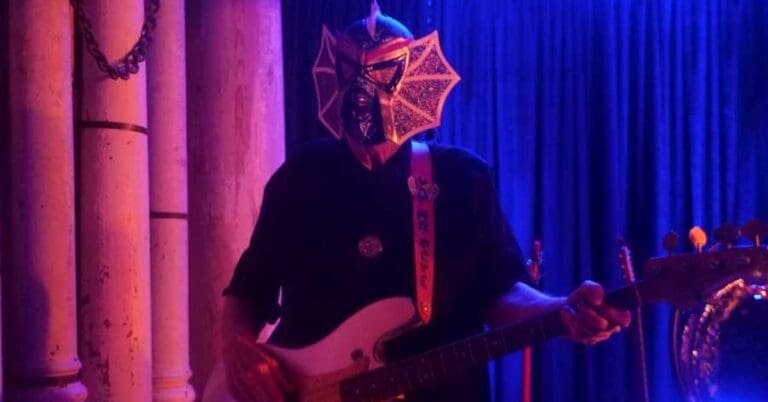
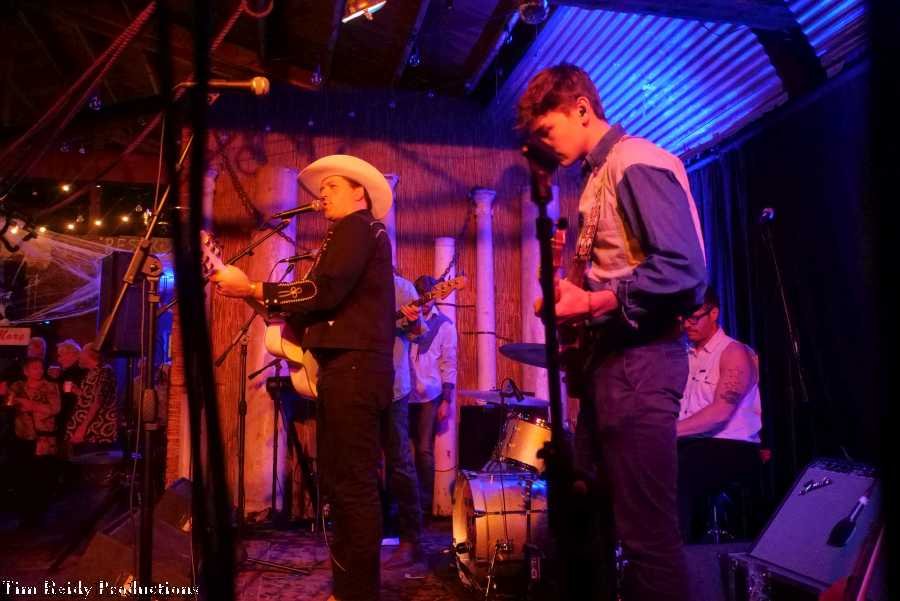
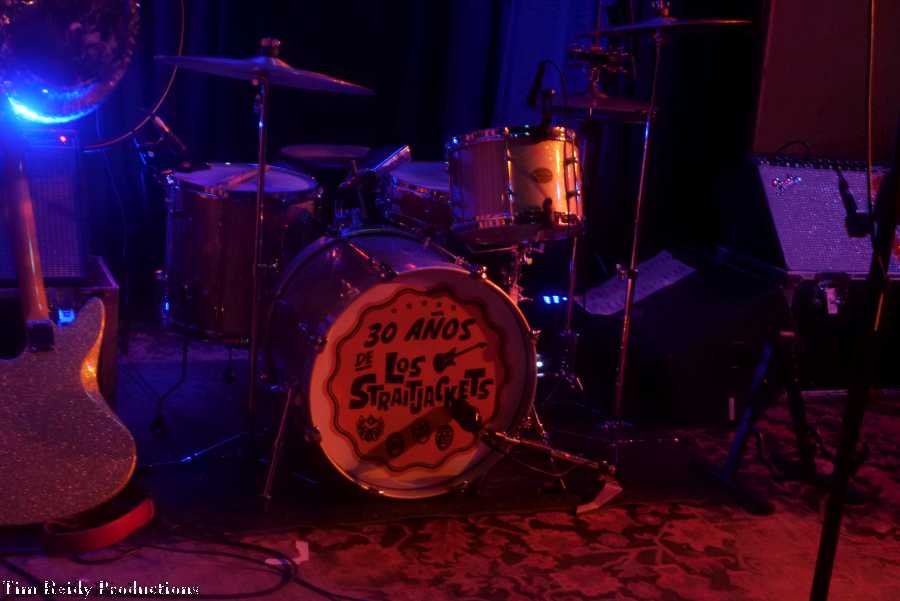
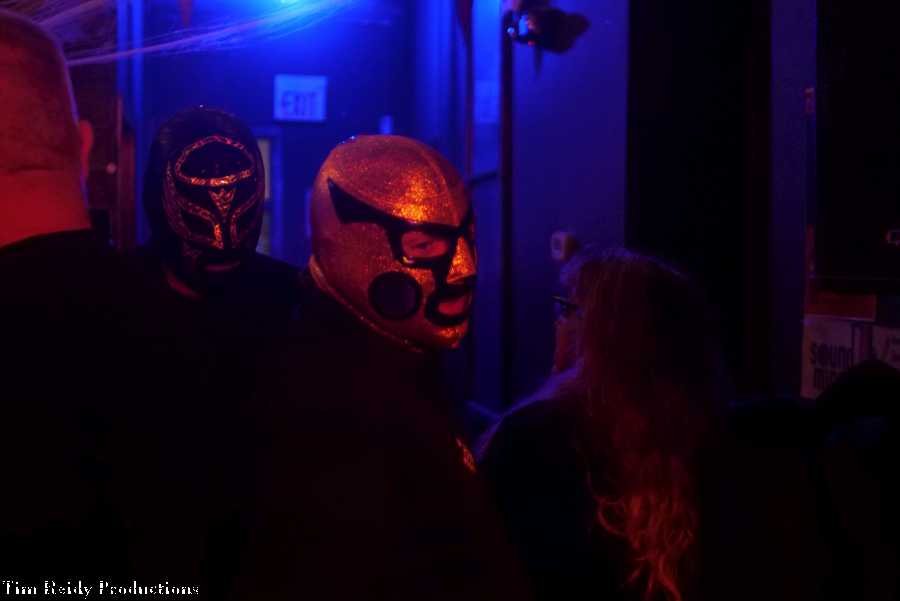
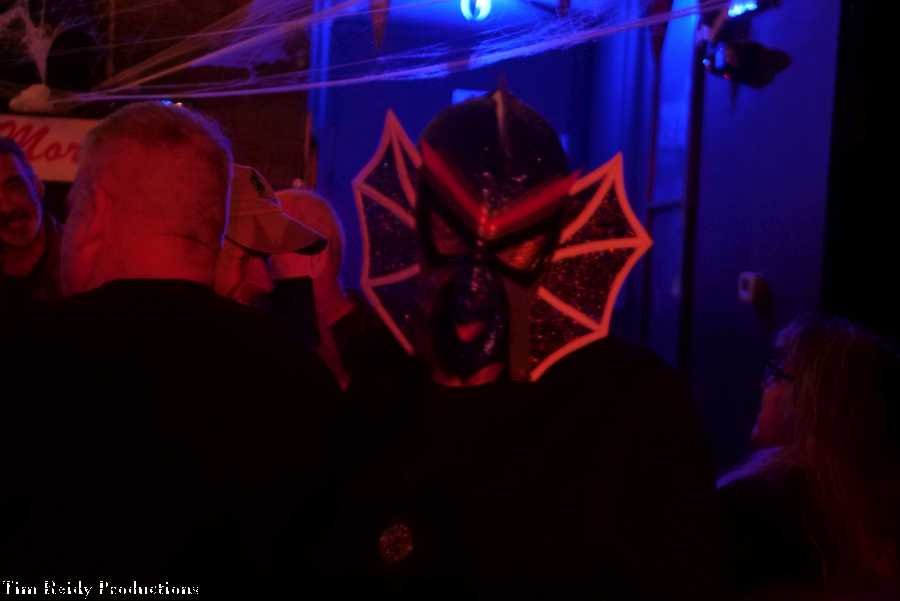
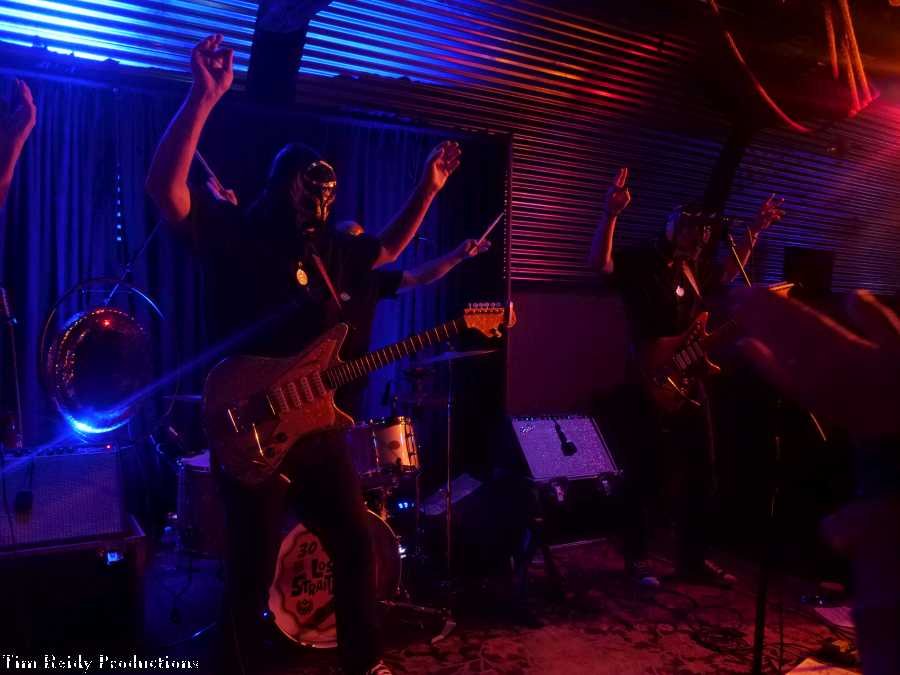
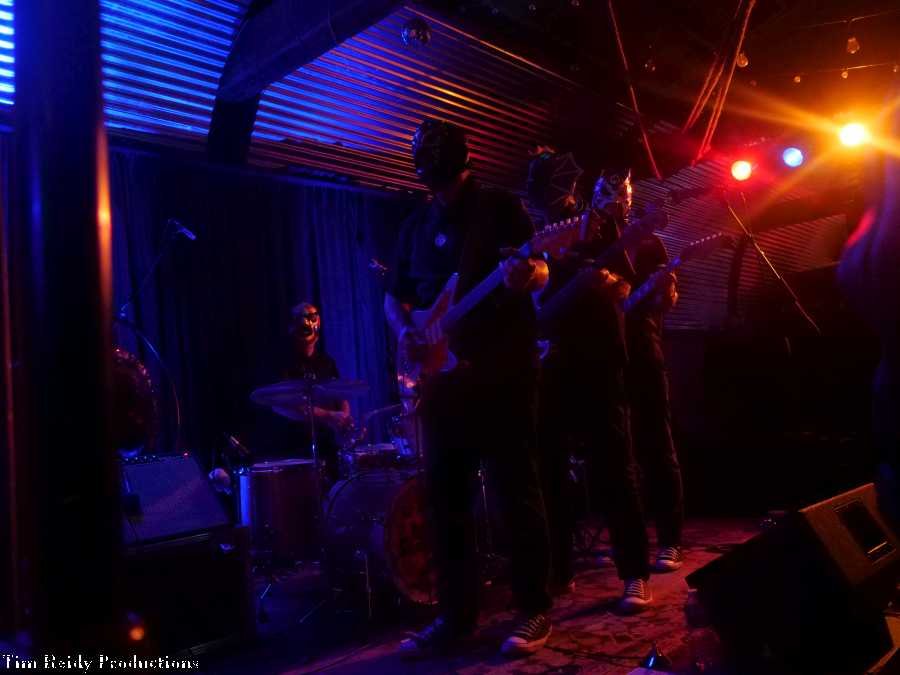
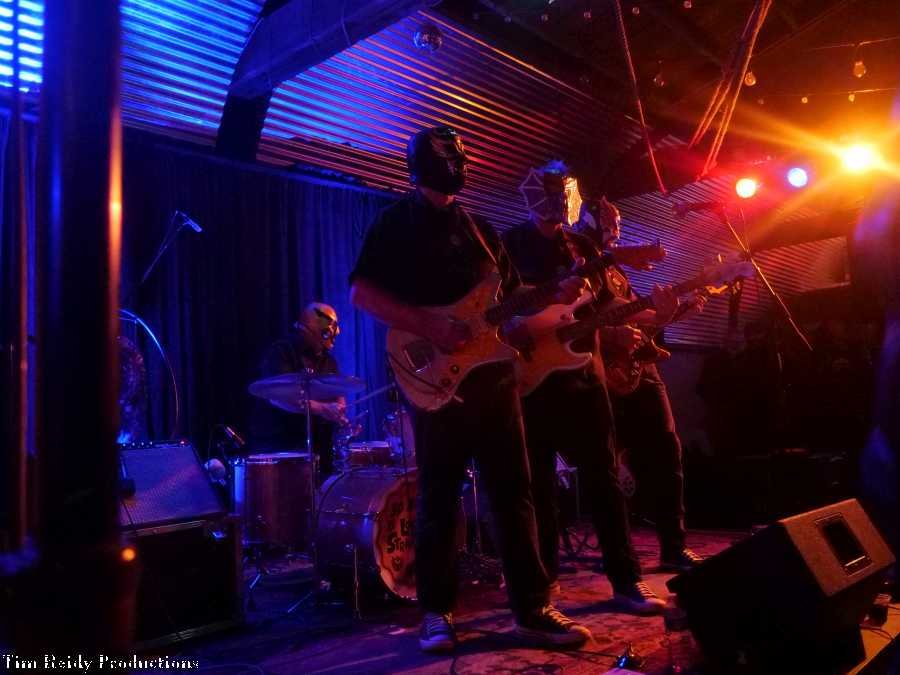
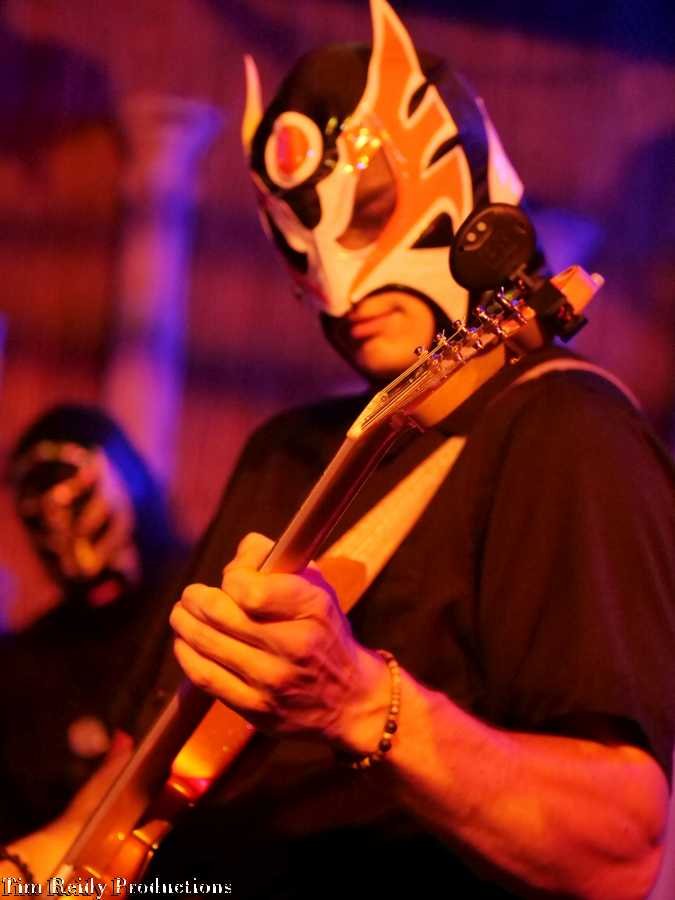
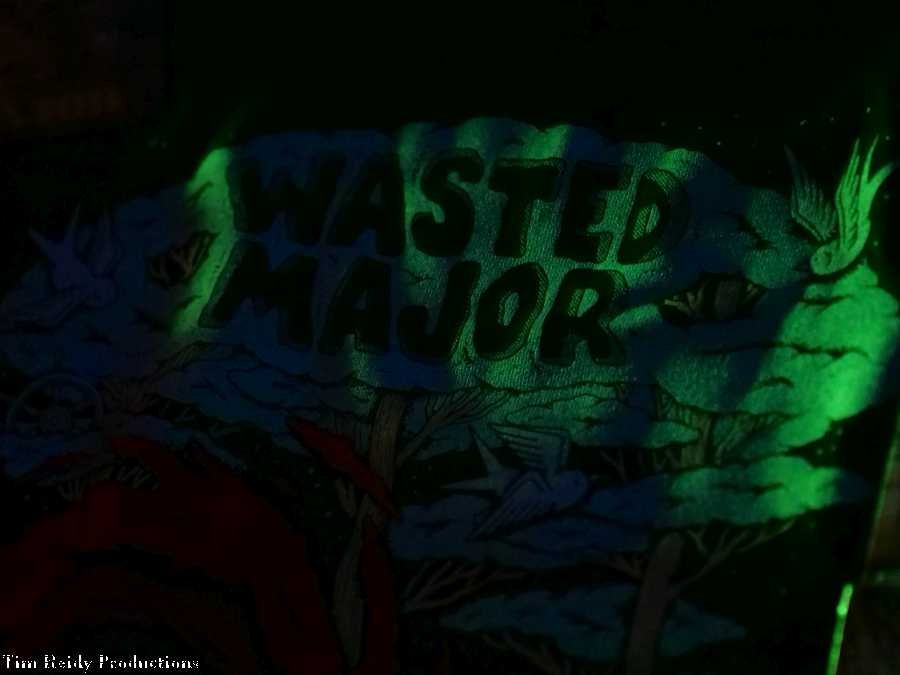
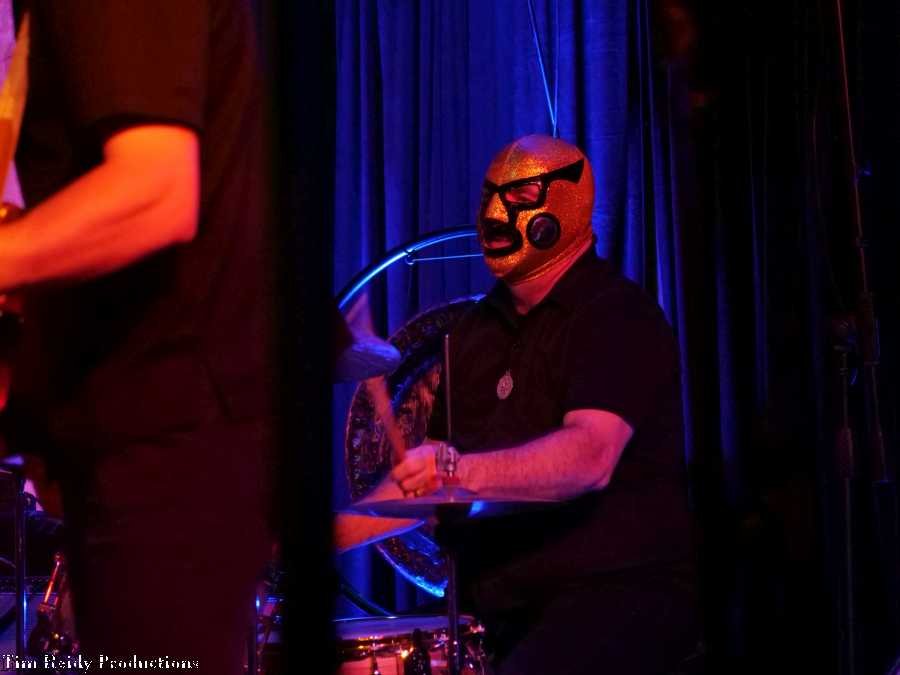
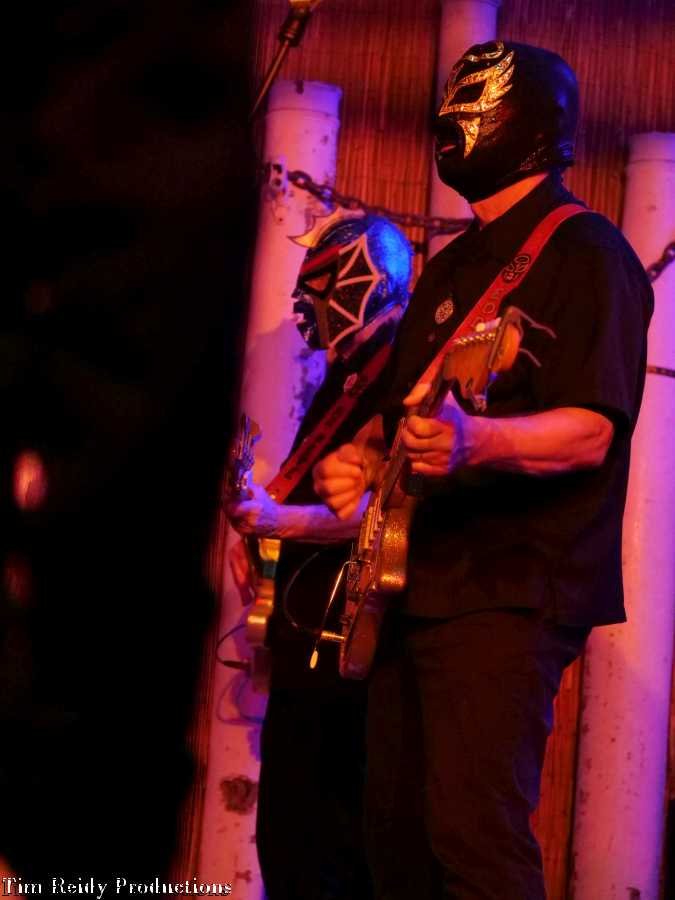
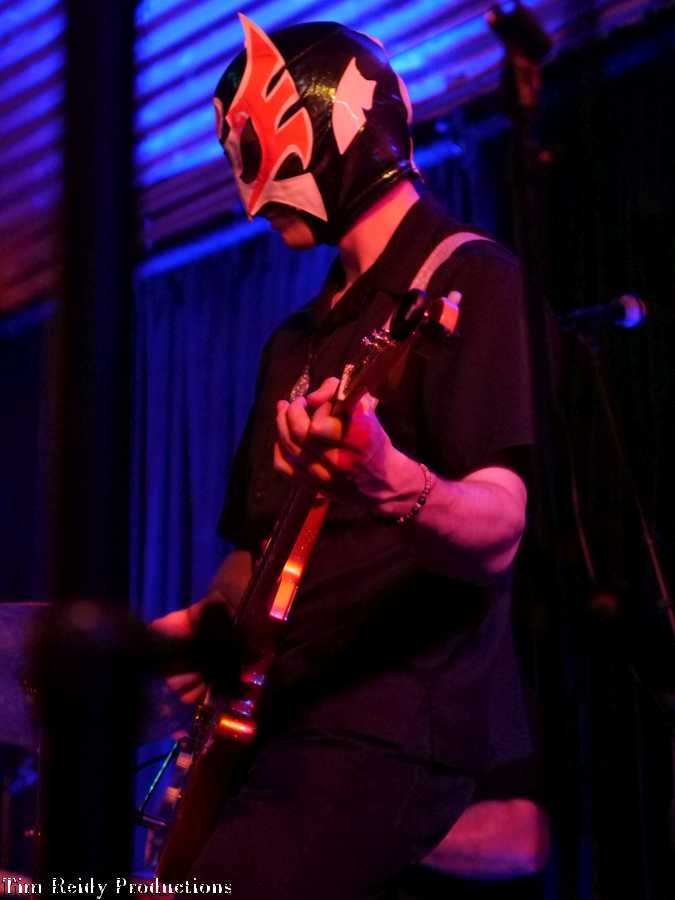
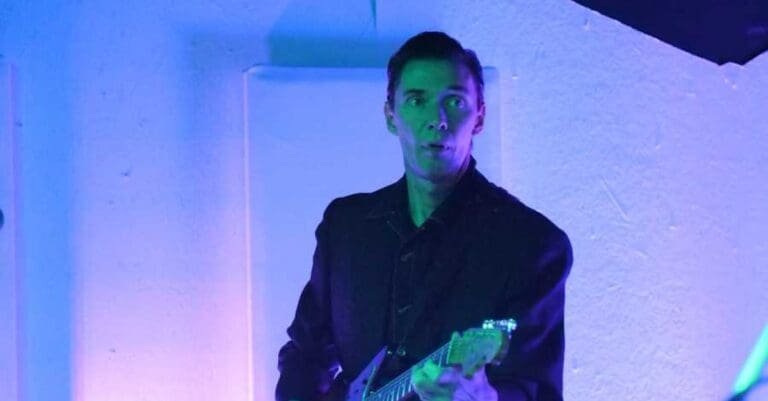
Lots of surf music as the inimitable Los Straitjackets returned to Hangar on the Hudson, supported by Nashville’s Wasted Major. That may have been the last time seeing this formation, as it was announced that “Mister Pete” Curry would be retiring as the band’s bassist.
Photography by Timothy Reidy.
Read an interview with Eddie Angel of Los Straitjackets here …
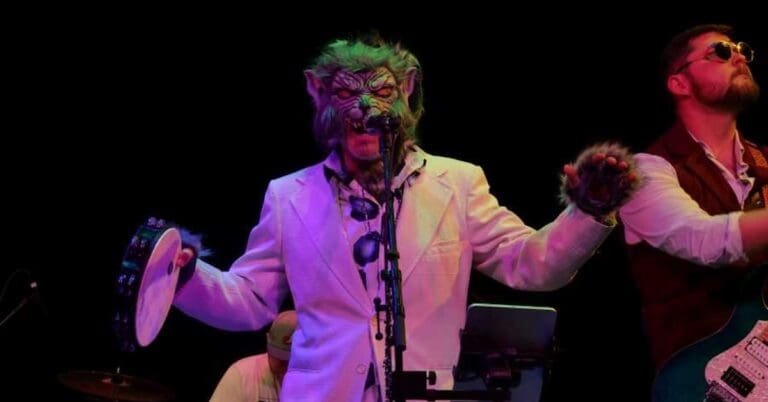
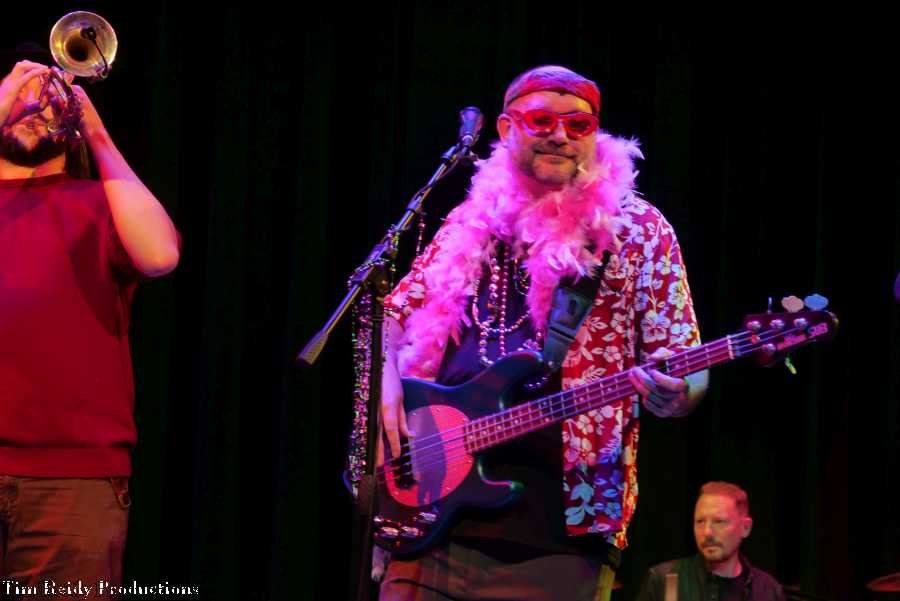
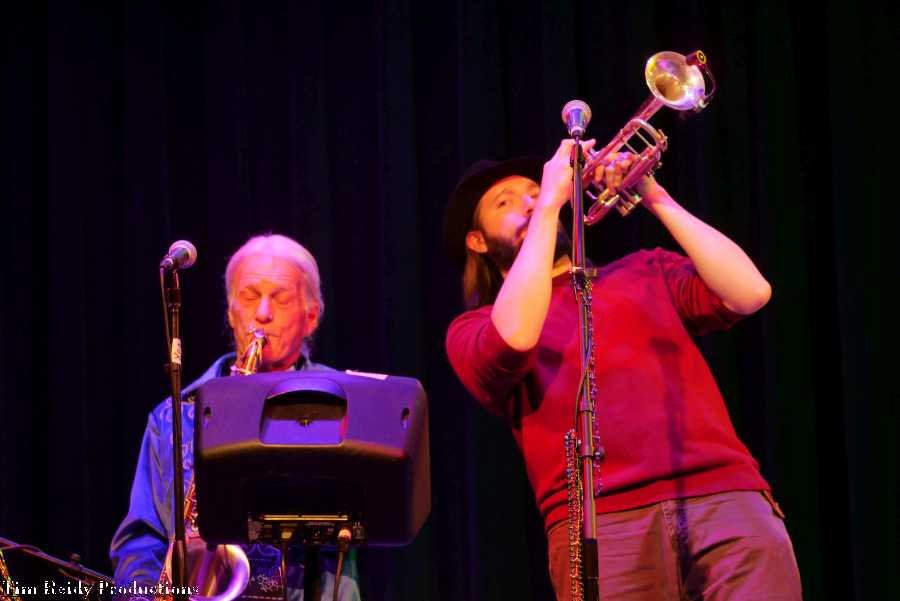
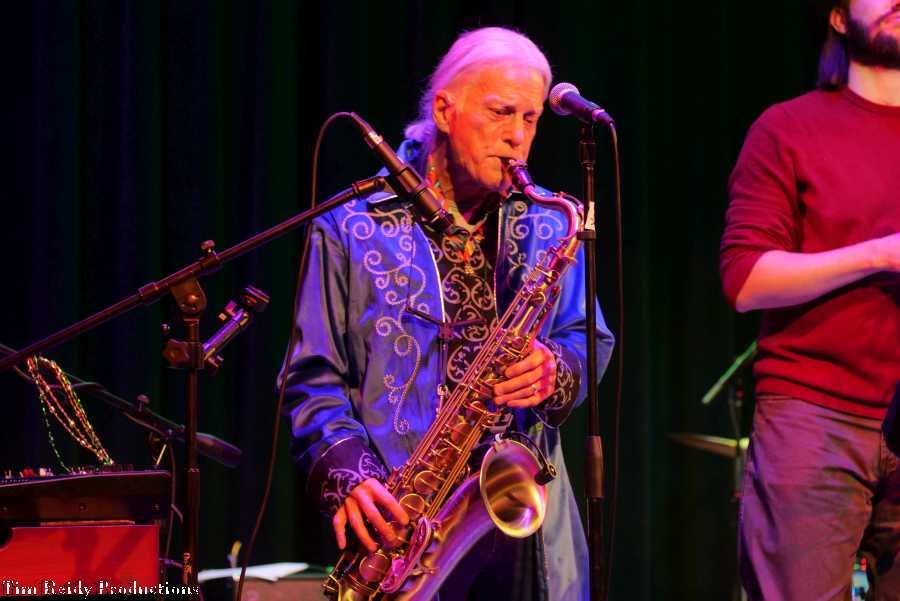
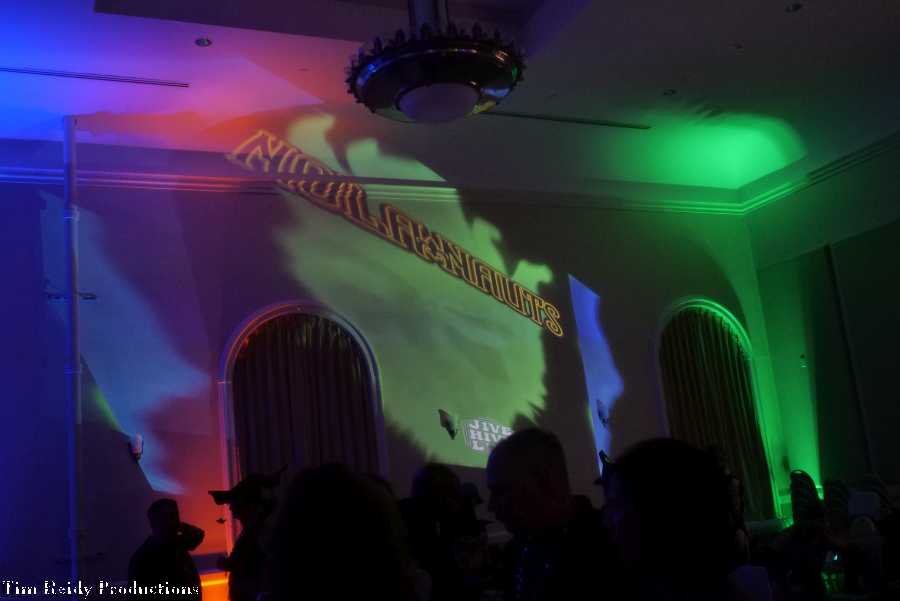
On November 1, Jive Hive Live presented the Voodoo Ball, featuring Tops of Trees and the NoLaNauts, at Saratoga Music Hall. Tops of Trees previewed some songs from their upcoming album, “Do Something.”
Photography by Timothy Reidy.

Devan Tracy – An Xperience Interview – by Liam Sweeny.
Saratoga native Devan Tracy is an acoustic folk singer/songwriter, percussionist and road traveler. On November 25th, that road will take her to the release of her album, Human Doing, at Caffe Lena.
RRX: Tell us a little bit about yourself. You are coming to Caffe Lena. Are you doing that as a part of a tour or is this you just showing up as an individual engagement?
DT: So this is a very short tour. So I grew up in Saratoga Springs, and I currently live in New Hampshire as a musician. My day job is as an engineer, but I’m a musician to keep me sane, I tell everybody. So I’ll be doing a CD release there on the Tuesday before Thanksgiving, get my college band, get back together. I am going to be bringing some of my music teachers from Saratoga from growing up as a little bit of a reunion. But there’s a mini tour. I did a CD release in February in New Hampshire, and this will be the 2nd stop.
RRX: OK, so tell us a little bit about the CD. Is it new material?
DT: It’s mostly new material. The title track, it’s called “Human Doing” and it’s probably the last five years’ worth of songs compiled. I went through several different milestones through that period. Of course COVID happened. I also got married, bought a house and moved to New Hampshire. So I think all of those themes are part of the songs in some way, but Human Doing, the title track, that phrase came to me through my yoga practice. where I had a yoga teacher say, ‘we’re not human doings, we’re human beings.’ Why are we always doing? That’s the inspiration for the title track, which I happened to write on a yoga retreat in New York, I think it was on the Battenkill River. We were tubing down.
RRX: I’m so not aware of yoga at all. I probably could stand to be aware of yoga actually. People don’t think of yoga as very kinetic, You think about the poses and stuff like that, very sedate. You don’t think about it in the kinetic way. When I think of music for yoga, I’m thinking very, light jazz or very calm music. Do you think there’s more to it than that? Do you think that more of the kinetic aspect of music that can be applied to yoga?
DT: I think so. The one thing that I think where I see the correlation between yoga and music is a mantra, that repeating; it’s almost like a riff. So I’ve translated that. I’m trying to think of the, the exact phrasing here off the top of my head, but its ‘pause and do nothing.’ And you keep repeating that phrase. A lot of what you do in yoga is you pick a phrase, and it’s the mental aspect of yoga, not necessarily the kinetic, or the movement, but that repetition of a phrase to kind of embed it in your mind. I’ve tried to put that in some of my songs, and also the breathing aspects. I think in a couple of songs, you’ll actually hear me breathing, where normally you would want to take that out, cut that out of the mic, but that was very much intentional in some of these songs.
RRX: So you have that breathing in there to have that authentic sound, right?
DT: Exactly.
RRX: You do acoustic folk and also pop. I’ve always wondered when I hear pop music, I’m like, ‘well, isn’t pop just basically any other genre that happens to become popular?’ I don’t know if there is a standard convention of pop, maybe there is. So when you’re doing, when you’re writing songs with that element of pop, what would you consider that element to be as it pertains to like acoustic folk.?
DT: I struggle with genres, to be honest. I agree with you. If it’s pop, then it’s become popular, right? So what are the aspects of pop music that make those songs popular? I think I’m still trying to figure that out and infuse that a little bit. I don’t think I’ve figured it out. People ask me ‘what type of music do you do?’ And I think I just put a blanket statement acoustic folk pop without much deeper thinking than that.
RRX: So you recently performed with All The Best Kids in DC, how was that?
DT: I loved that time. I was living in DC uh prior to moving up to New Hampshire, and this was an eleven-piece funk band. We had a whole horn section, a rapper, a female vocal lead, and then I was on the keyboard and backup vocals. Then I would fill in for the drummer when she was out. So it was a great experience. It’s something very different from what I had ever done. And most of us also had full-time gigs. I was just always shocked. How do we even find a common time every week to rehearse, let alone gig? But it was a great opportunity. The rapper happened to work in the music industry in DC. He would help, he would book all the gigs, and I would just show up. It was the best of all worlds. You just show up and play music, like how much better can you get than that?
RRX: Now earlier you had mentioned getting your classmates together, you had gotten people close to you into your music. And I thought that was cool because not everybody brings people that are from their personal lives into their music.
DT: For this gig at Caffe Lena, some folks still live in Saratoga that I played with in college. I’m looping them in. My mom is also going to join me and my brother, who lives in Maine. He’s gonna join me and the two of them also perform live on the album. And actually, the producer of the album, Jason Bardeau, he happens to play bass, so I’ve invited him to join me up on stage. I just made a pact in the last couple of years that I’m not saying yes to any gig if it’s solo. It’s just to me, there’s so much less joy in performing by myself. So I’d rather share that moment on stage with others. I just get a lot more joy out of that.
RRX: That’s cool. When you were growing up, was there a lot of music in the family or was that something you kind of branched out into?
DT: My mom had always played music. My dad’s been a wannabe, but he actually took drum lessons when I left home and left my drum set there. He said, ‘you know, it’s sitting here, so I might as well learn to play.’ But yeah, there was always music in the house, and my brother picked up music later in life. I didn’t get into songwriting until college, but I did a lot of piano growing up and percussion and drums, and then it kind of evolved from there.
RRX: When you were in college, when you started songwriting, was there anything that made you start songwriting or was it just ‘well, why not?’
DT: I don’t know if there was one thing in particular, I would say the thing that comes to mind is I was starting to journal. That was again inspired by one of my yoga teachers. It was actually a requirement. We had to journal for class. And at one point, I said, ‘you know what, I’m pretty sure other people are feeling these feelings that I’m feeling. So why don’t I just share them with the world through song?’ And that was kind of the inspiration of how I transitioned into songwriting.
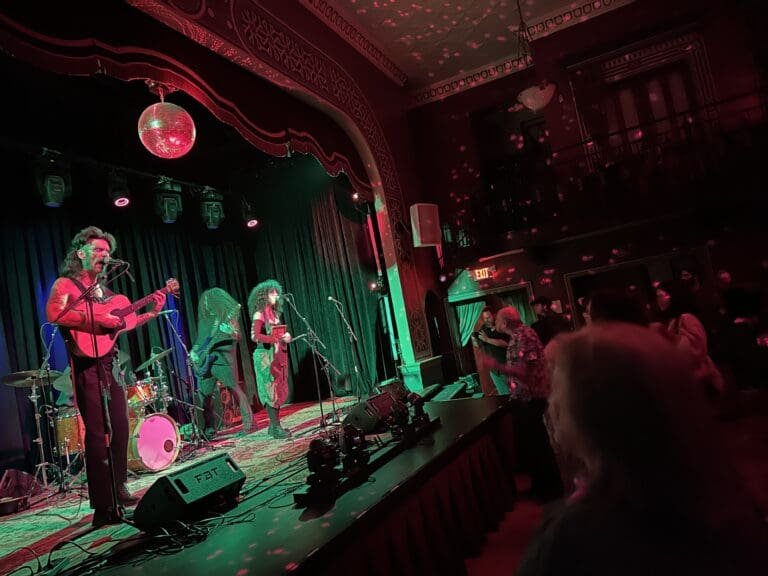
BACKWOODS GOTHIC AND GLAM METAL – Bella’s Bartok and Dust Bowl Faeries at Lark Hall – by Dean Giagni
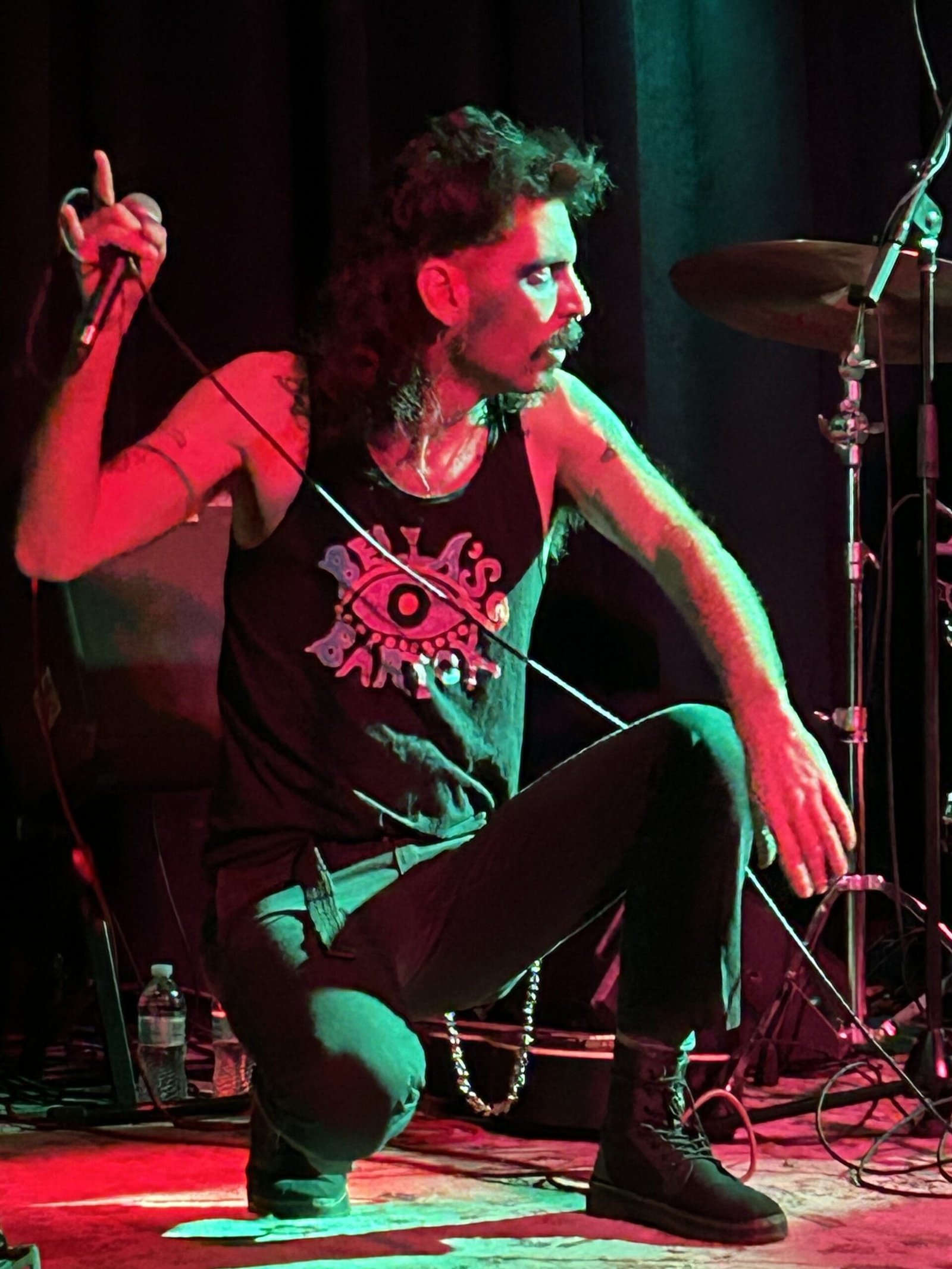
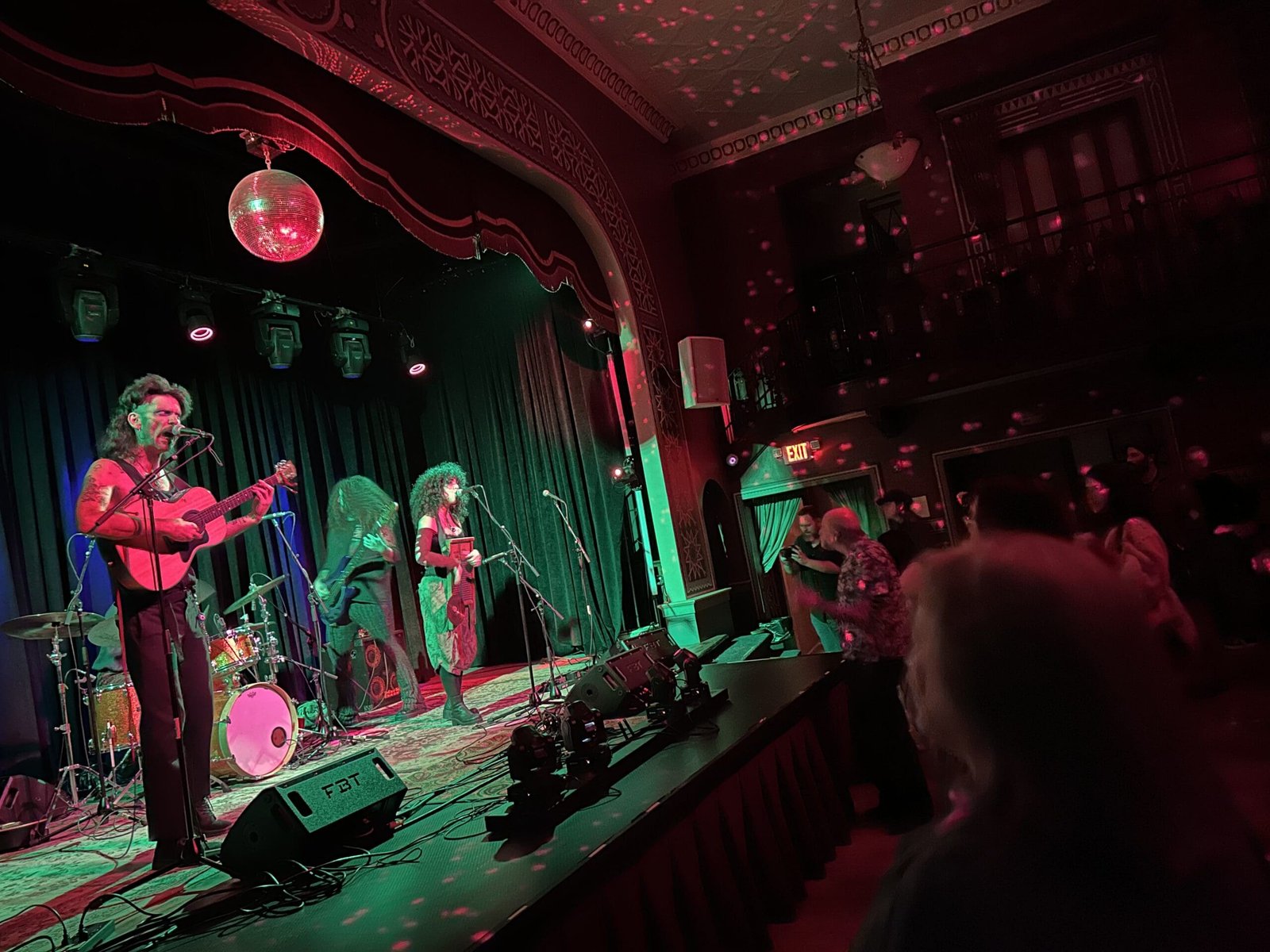
When you search Bella’s Bartok online, the keyword that comes up over and over again is “folk” but when you visit their Facebook it emphatically states “not a folk band”. I definitely heard a little bit of folk last night, but what I didn’t expect to hear was so much metal. Fronted by homunculus made of equal parts Frank Zappa, Alice Cooper with a dash of Mick Jagger thrown in and a washboard strumming pixie hippie channeling Karla DeVito, Bella’s Bartok at its core has an amazing hard rock power trio supporting all of the bizarre antics and musical choices.
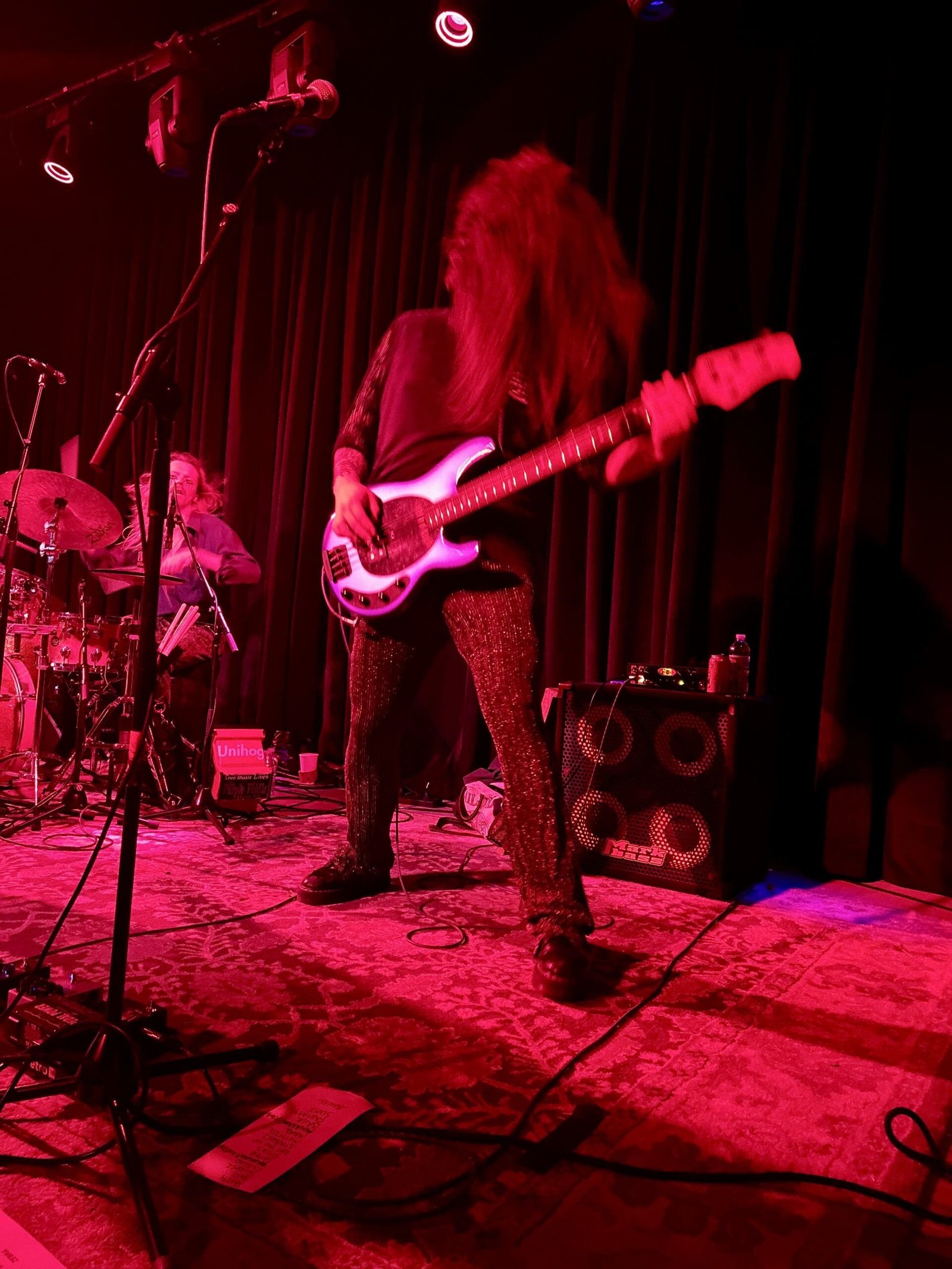
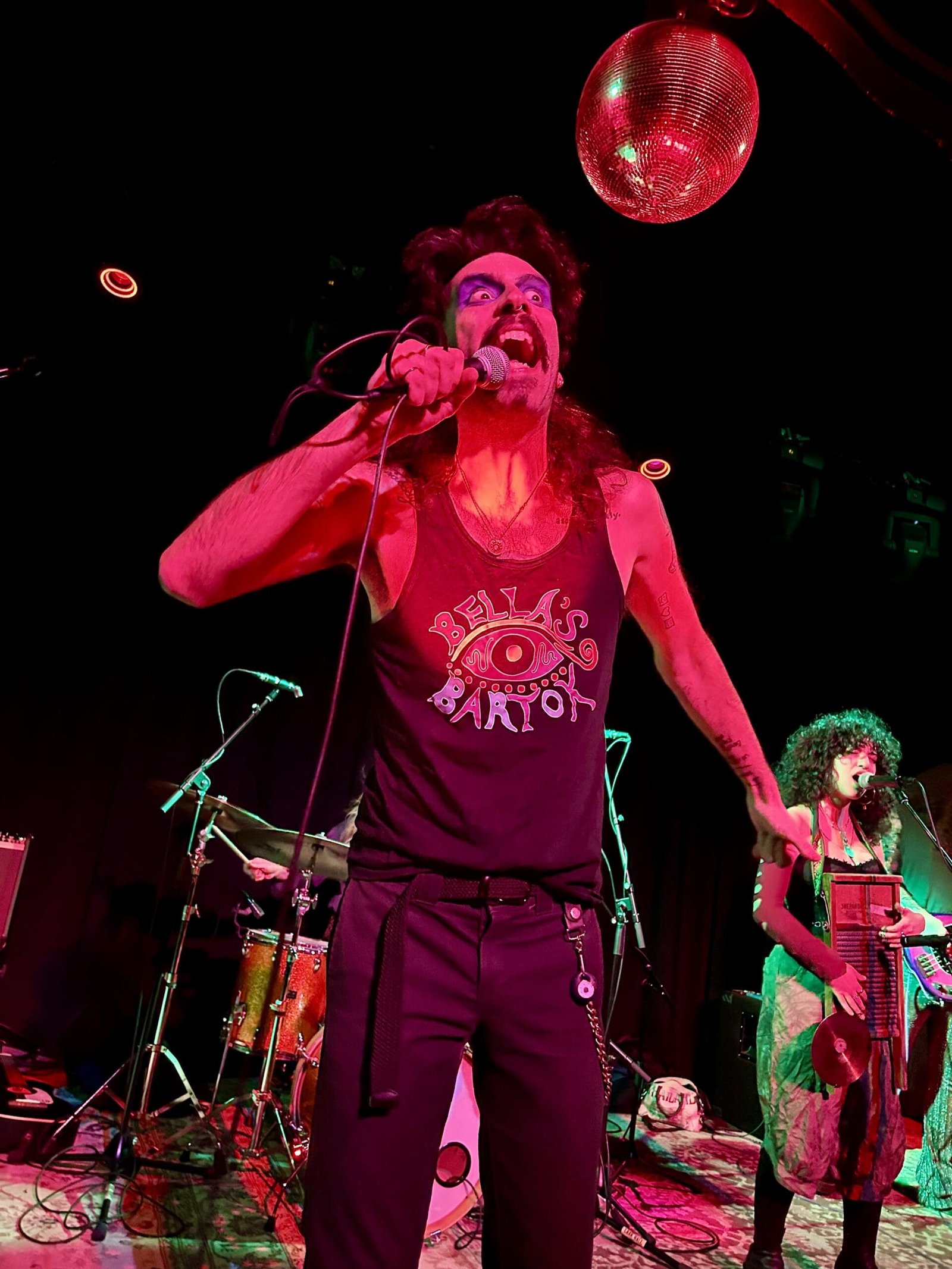
Pleading that he can’t see very well, lead singer Asher Putnam quickly asked everyone in the audience to come up come closer to the stage so he could feed off their energy. With black kohl eye makeup and an all-black outfit resembling a negative version of Freddie Mercury, Putnam gracefully pranced and shuffled his way across the stage, knowing exactly where to put his face in the limelight for maximum dramatic effect, occasionally adding his own flourishes of acoustic guitar. Second vocalist, Julia Posen on washboard and a tiny little symbol was equally impressive; her powerful voice remining strong and constant while being in constant motion, dancing and stomping with the music. Even with so much going on stage; five pieces playing simultaneously, the sound was tight, funky and crystal clear. This is a band that can make a lot of loud and heavy noise without sounding muddled, mixing blues, hard rock and metal flourishes complementing the Eastern European melodies and sensibilities. I found myself being surprised over and over again by the sneaky but appropriately heavy metal shredding of guitarist Chris “Fancy” Kerrigan. Leading from behind, or should I say stage right, bassist Dan Niederhauser formed an amazing rhythm unit with the heavy hitting drummer Crisco (yes, you read that right) who sported black tears Wednesday Adams style eye make-up. The metal influences could not be denied in the sound, but also in Niederhauser’s amazing head banging, his giant head of hair in constant motion
The highlight of the show was the band’s epic song “Strange Ones”, talking not only about their themselves, but the audience. Going through multiple parts and theatrical changes, the song was epic and dramatic recalling some of the best elements of arena glam rock.
I ran into Dust Bowl Faeries’ lead singer Ryder Cooley outside the venue and said hello. She related she was having parking issues and I thought, “how could such an ethereal creature ever have to deal with parking a car?” Even on the street out in front of Lark Hall, she stood out as a Victorian folly, a dark iron statue covered in filigree. A magical creature not of this world.
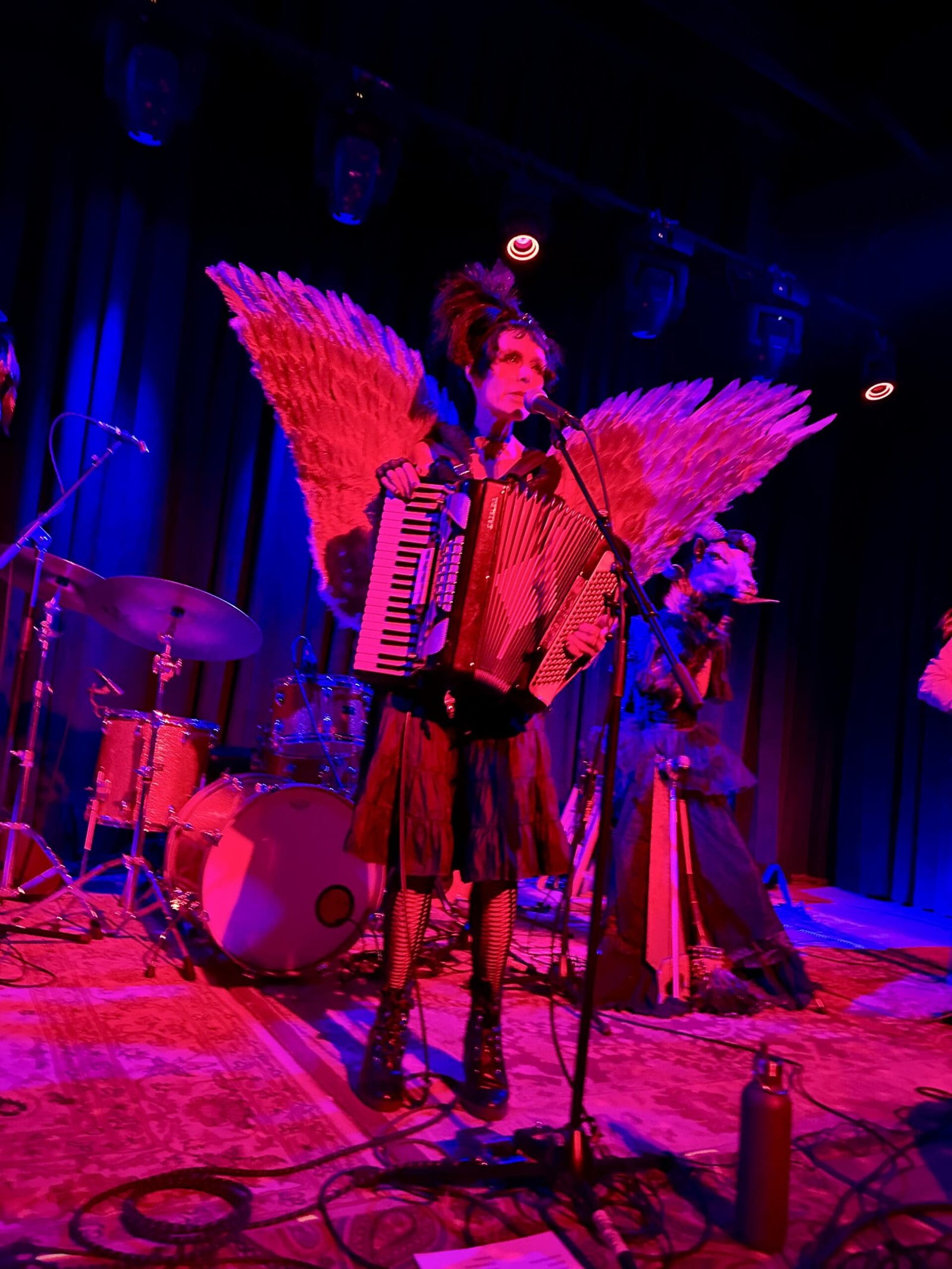
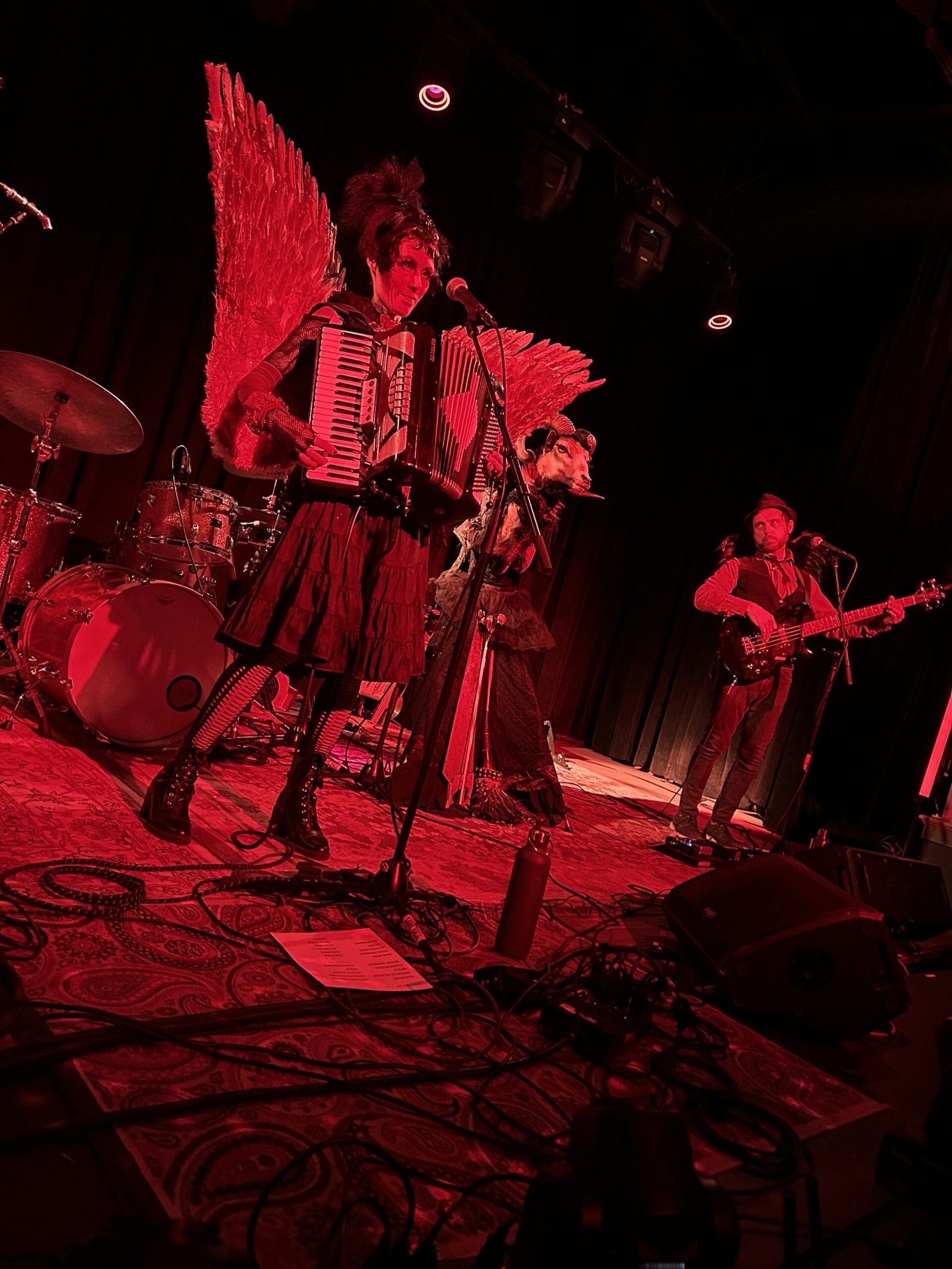
Less than 5 minutes later she appeared on stage, joined at the neck to her spirit animal, Hazel, the taxidermy goat. Immediately setting the stage for backwoods Gothic weirdness, Cooley open the show with the evocative sound of a bow being dragged across a musical saw. She quickly shed the husk of Hazel for her second signature spiritual signifier, her wings; and morphed into the dark angel of black velvet draped cemetery music that we’ve all come to know. But it is her sharp diction and precise phrasing that makes Dust Bowl Fairies a transformative experience. Employing the weird, treacly voice of a little girl telling a horror story to her dolls, Ryder plays it straight, not kitsch. She uses her voice like a cast of actors and actresses, shifting modes and emotions, complimenting the creepy, hurdy, gurdy sound of her accordion playing. Like Morticia Adams, you wouldn’t be surprised to see her cut the head off of a Barbie doll to improve it.
One of my favorite songs of the evening, and a thing I admire in an artist or musician especially; is the ability to take a relatively simple, innocuous idea and somehow mine it into a serious, dramatic presentation that will have you laughing and smiling at the same time. “Bad Bun” comes off like an epic poem. Introduced as a seemingly innocent story of adopting distressed rabbit, it twists into a horrific recounting of how an “innocent” homeless pet, a mere fluffy bunny became a monster rivaling the rabbit of Caerbannog in Monty Python and the Holy Grail. The fuzzy tyrant taking over their house, biting, kicking, scratching and attacking their other animals. This is all presented with a straight face – gravitas with the occasional wink, like something out of a Cormac McCarthy novel.
The crowd for both bands was passionate and enthusiastic with a lot of dancing. A cozy, creepy and cathartic time was had by all.
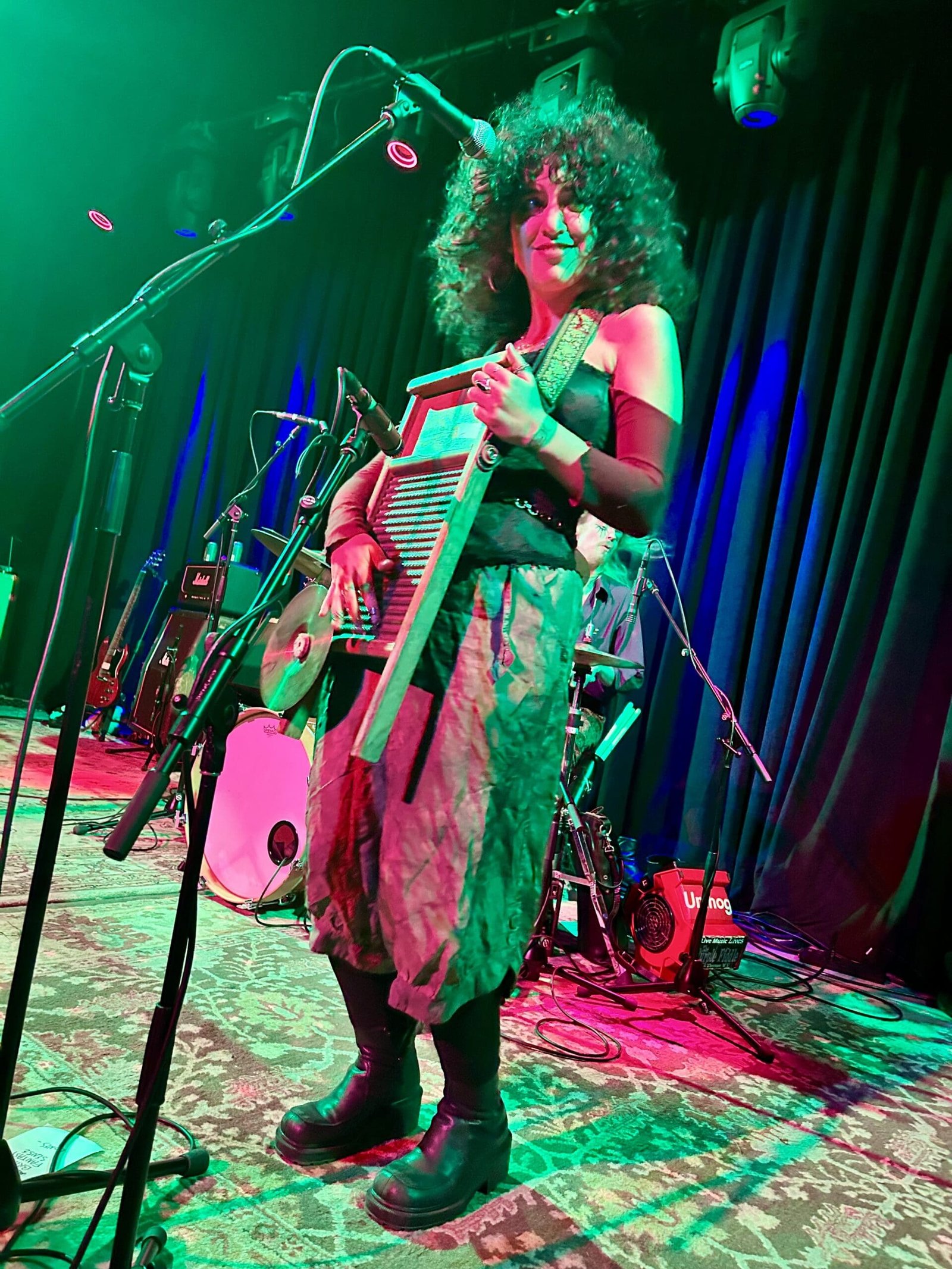
By Dean Giagni.
ALBANY, N.Y. – November 6, 2025 – When you search Bella’s Bartok online, the keyword that comes up over and over again is “folk,” but when you visit their Facebook, it emphatically states “not a folk band”. I definitely heard a little bit of folk last night, but what I didn’t expect to hear was so much metal. Fronted by a homunculus made of equal parts Frank Zappa and Alice Cooper, with a dash of Mick Jagger thrown in, and a washboard-strumming pixie hippie channeling Karla DeVito, Bella’s Bartok at its core has an amazing hard rock power trio supporting all of the bizarre antics and musical choices.
Pleading that he can’t see very well, lead singer Asher Putnam quickly asked everyone in the audience to come up closer to the stage so he could feed off their energy. With black kohl eye makeup and an all-black outfit resembling a negative version of Freddie Mercury, Putnam gracefully pranced and shuffled his way across the stage, knowing exactly where to put his face in the limelight for maximum dramatic effect, occasionally adding his own flourishes of acoustic guitar. Second vocalist Julia Posin, on washboard and a tiny little cymbal, was equally impressive; her powerful voice remaining strong and constant while being in constant motion, dancing and stomping with the music. Even with so much going on stage – five pieces playing simultaneously – the sound was tight, funky, and crystal clear. This is a band that can make a lot of loud and heavy noise without sounding muddled, mixing blues, hard rock, and metal flourishes, complementing the Eastern European melodies and sensibilities. I found myself being surprised over and over again by the sneaky but appropriately heavy metal shredding of guitarist Chris “Fancy” Kerrigan. Leading from behind, or should I say stage right, bassist Dan Niederhauser formed an amazing rhythm unit with the heavy-hitting drummer Crisco (yes, you read that right), who sported black tears/Wednesday Adams style eye make-up. The metal influences could not be denied in the sound, but also in Niederhauser’s amazing headbanging, his giant head of hair in constant motion
The highlight of the show was the band’s epic song “Strange Ones”, talking not only about themselves, but the audience. Going through multiple parts and theatrical changes, the song was epic and dramatic, recalling some of the best elements of arena glam rock.
I ran into Dust Bowl Faeries’ lead singer Ryder Cooley outside the venue and said hello. She related that she was having parking issues, and I thought, “How could such an ethereal creature ever have to deal with parking a car?” Even on the street out in front of Lark Hall, she stood out as a Victorian folly, a dark iron statue covered in filigree. A magical creature not of this world.
Less than five minutes later, she appeared on stage, joined at the neck to her spirit animal, Hazel the taxidermy ram. Immediately setting the stage for backwoods Gothic weirdness, Cooley opened the show with the evocative sound of a bow being dragged across a musical saw. She quickly shed the husk of Hazel for her second signature spiritual signifier, her wings, and morphed into the dark angel of black velvet draped cemetery music that we’ve all come to know. But it is her sharp diction and precise phrasing that make Dust Bowl Fairies a transformative experience. Employing the weird, treacly voice of a little girl telling a horror story to her dolls, Ryder plays it straight, not kitsch. She uses her voice like a cast of actors and actresses, shifting modes and emotions, complementing the creepy, hurdy-gurdy sound of her accordion playing. Like Morticia Adams, you wouldn’t be surprised to see her cut the head off of a Barbie doll to improve it.
One of my favorite songs of the evening, and a thing I admire in an artist or musician especially, is the ability to take a relatively simple, innocuous idea and somehow mine it into a serious, dramatic presentation that will have you laughing and smiling at the same time. “Bad Bun” comes off like an epic poem. Introduced as a seemingly innocent story of adopting a distressed rabbit, it twists into a horrific recounting of how an “innocent” homeless pet, a mere fluffy bunny, became a monster rivaling the Rabbit of Caerbannog in “Monty Python and the Holy Grail.” The fuzzy tyrant, taking over their house, biting, kicking, scratching, and attacking their other animals. This is all presented with a straight face – gravitas with the occasional wink, like something out of a Cormac McCarthy novel.
The crowd for both bands was passionate and enthusiastic, with a lot of dancing. A cozy, creepy, and cathartic time was had by all.
Photos by Dean Giagni
Read an interview with Ryder Cooley of Dust Bowl Faeries here …
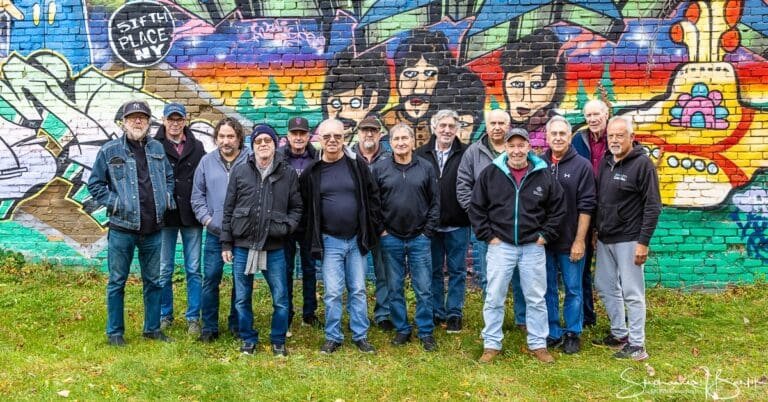
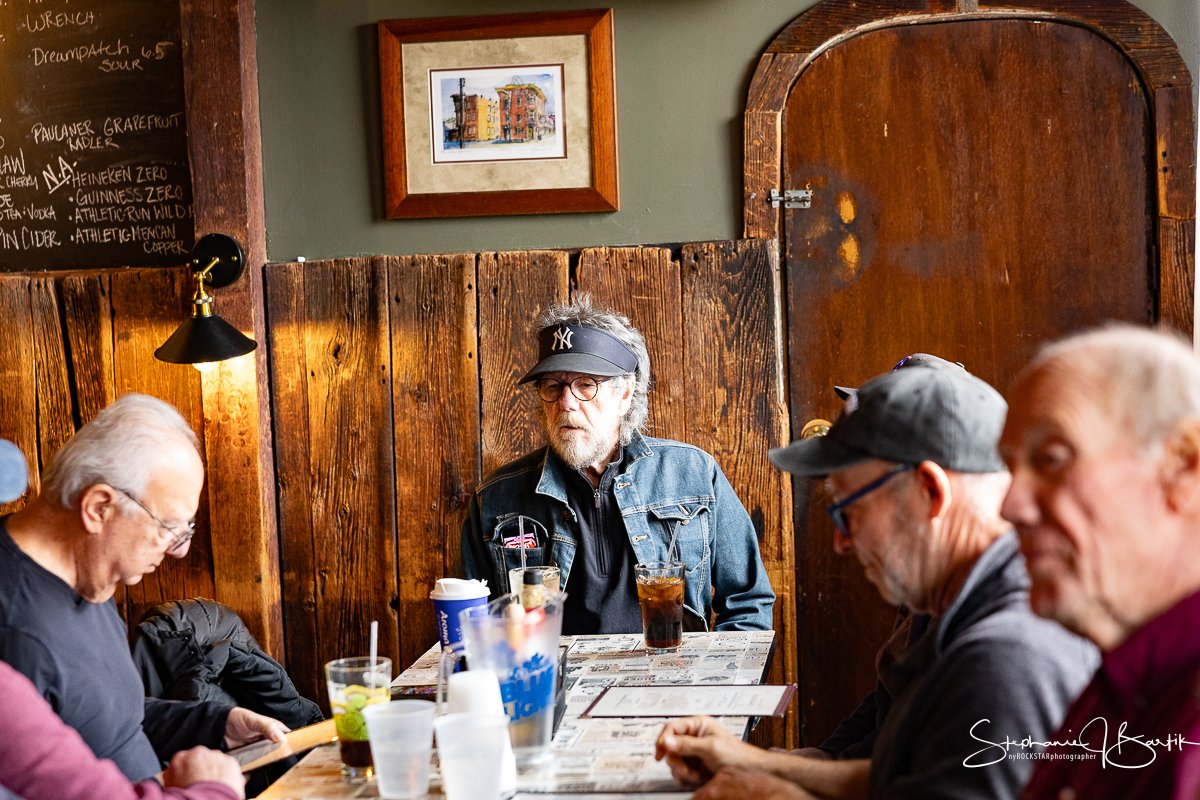
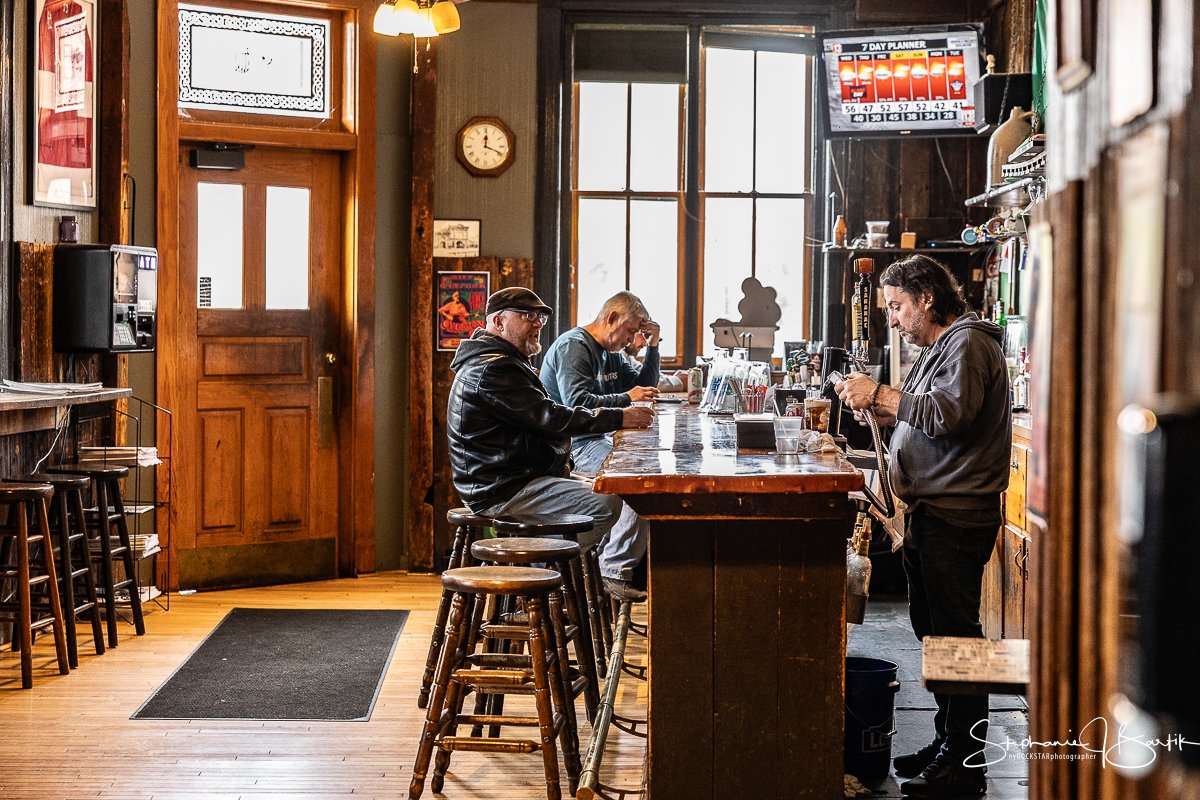
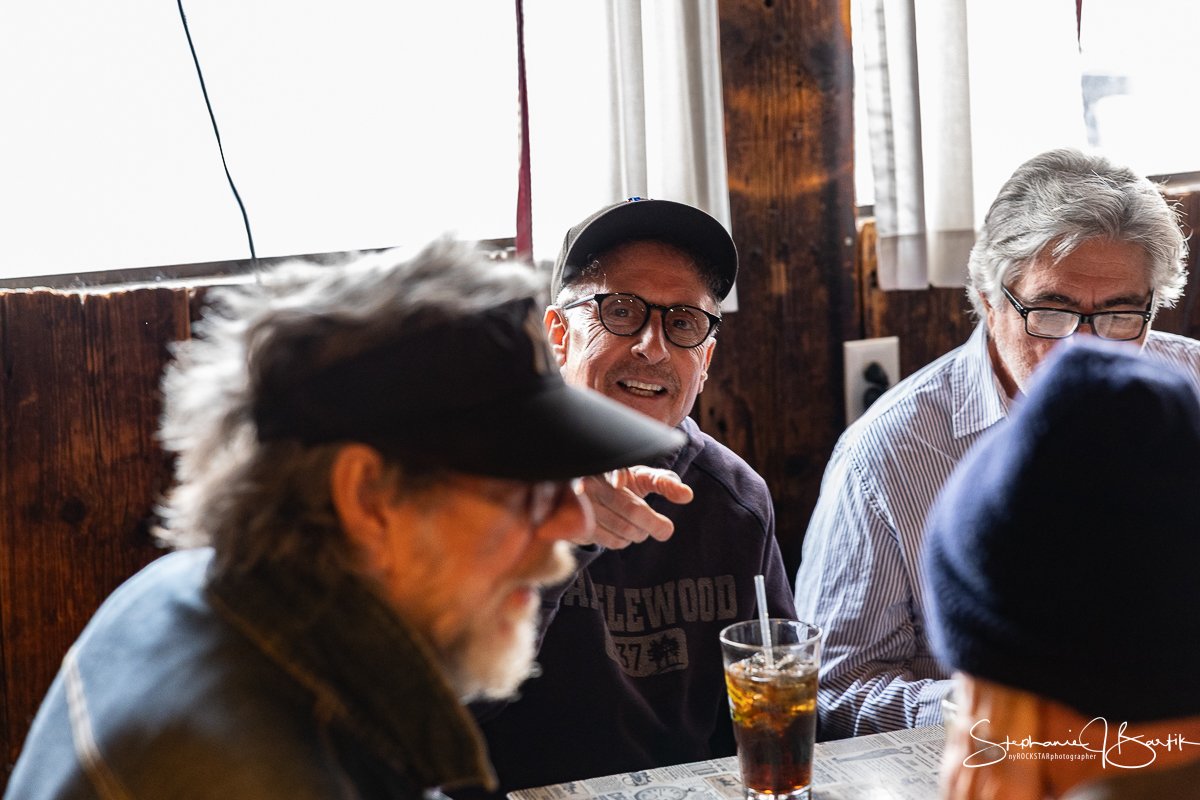
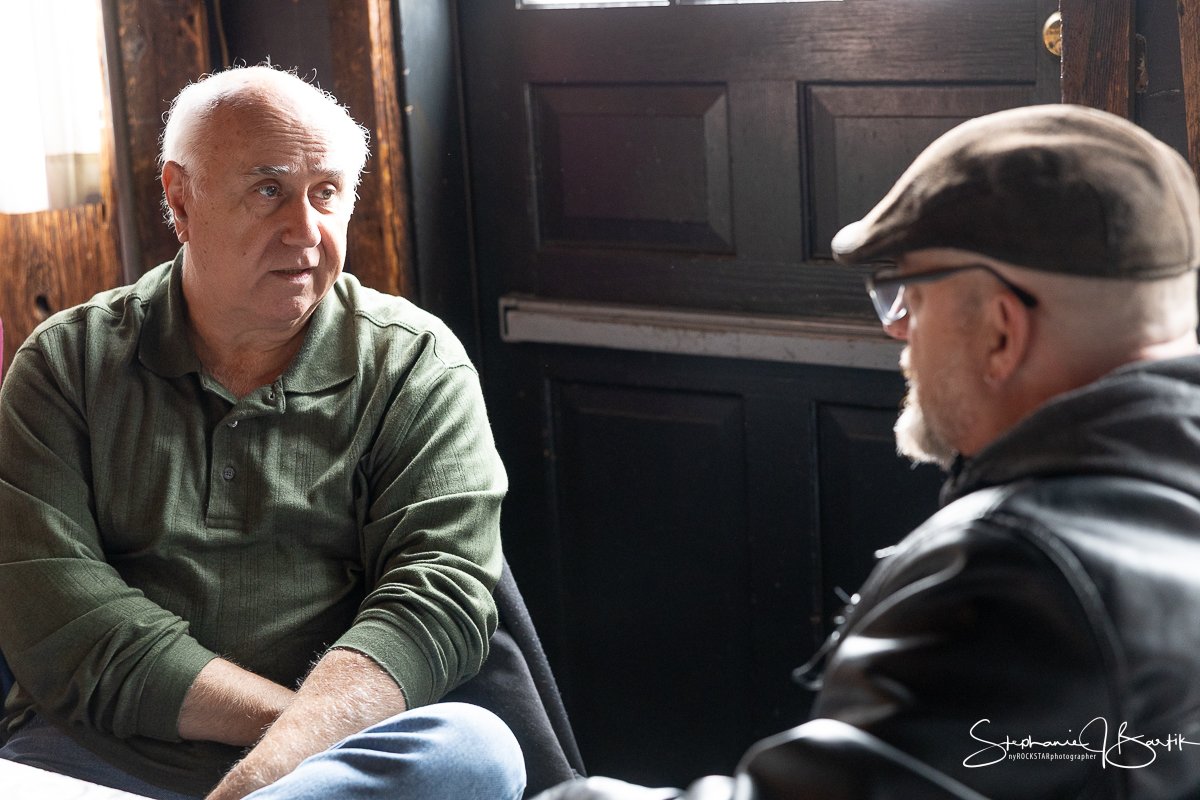
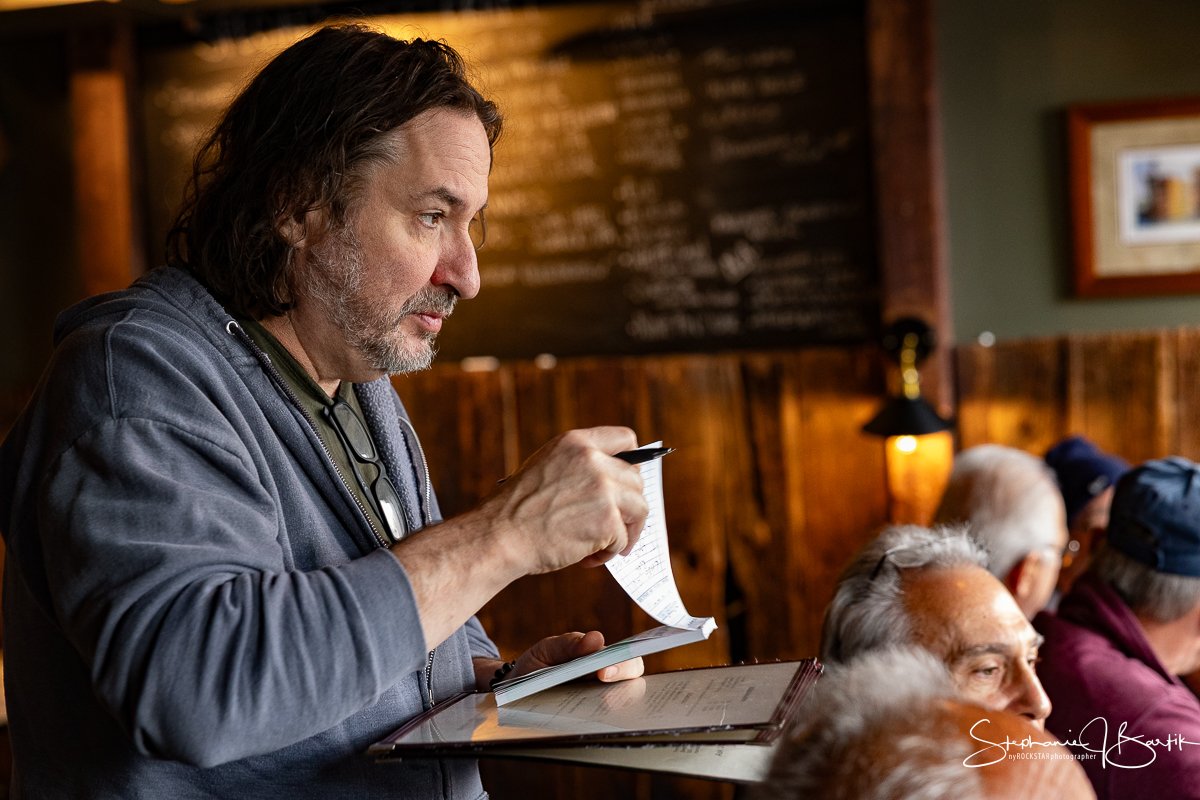
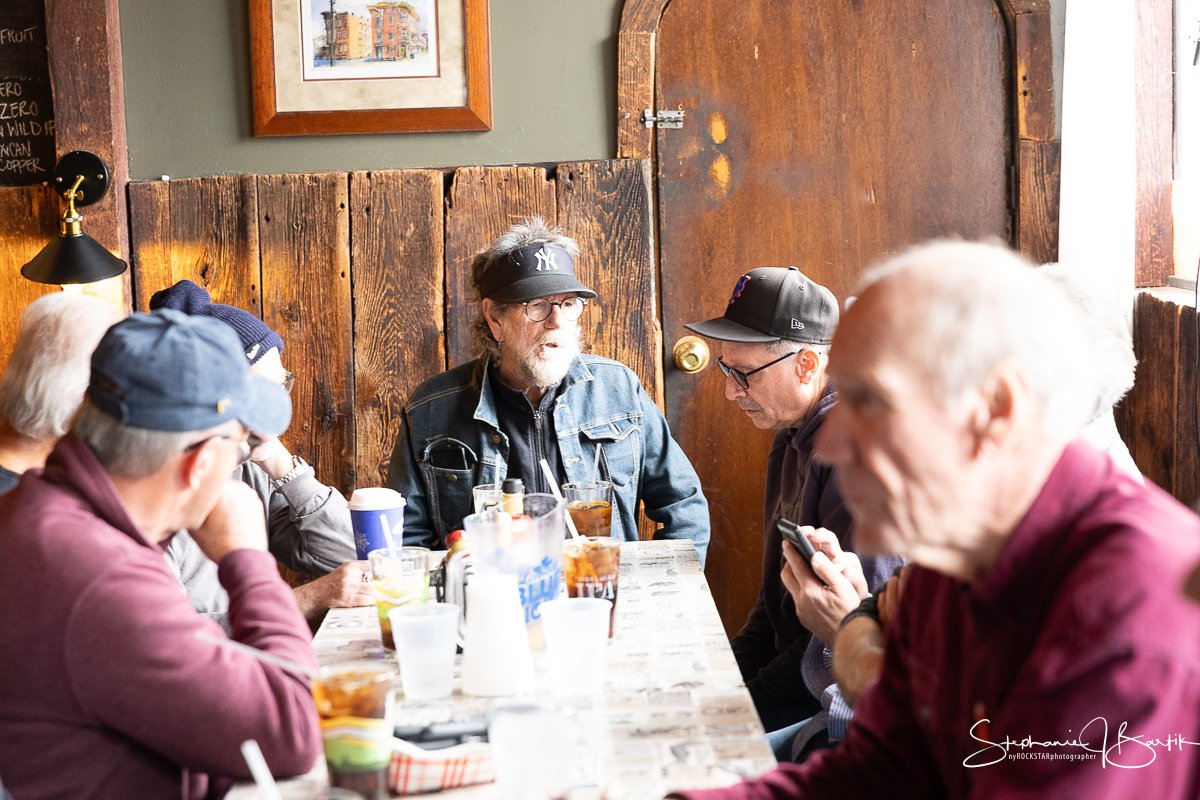
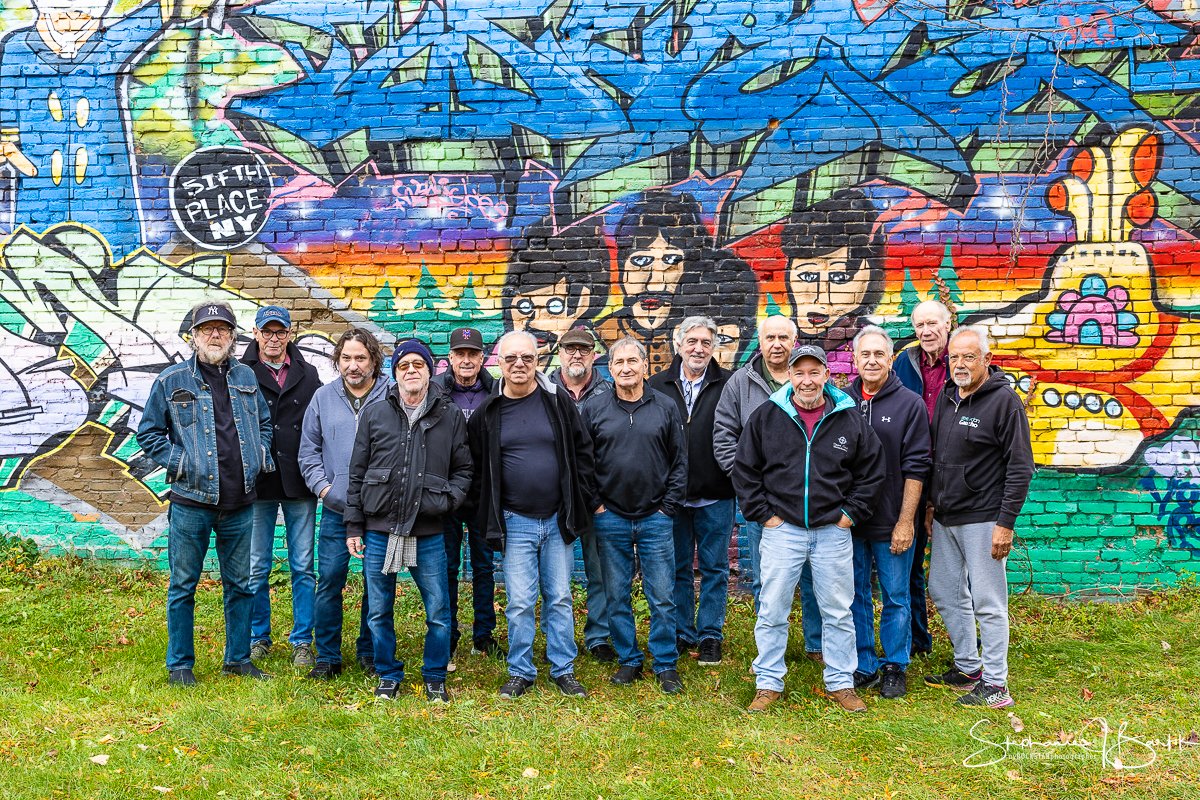
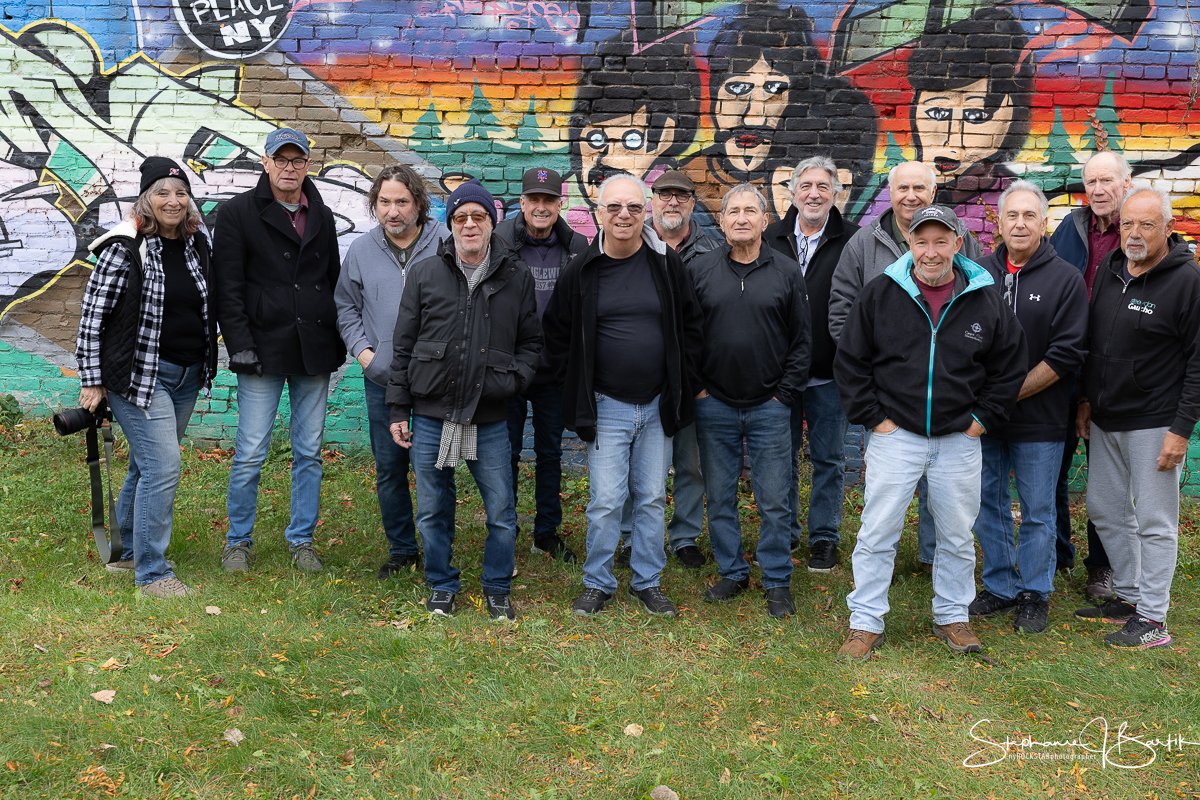
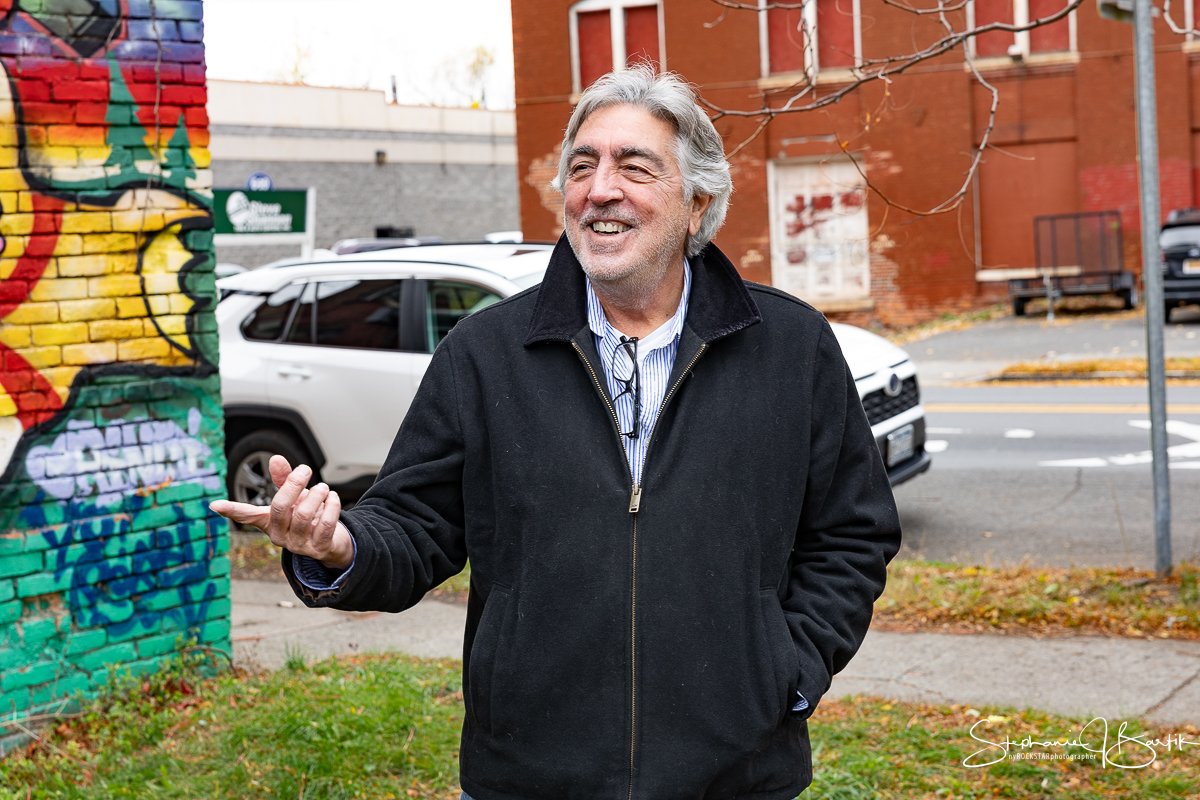
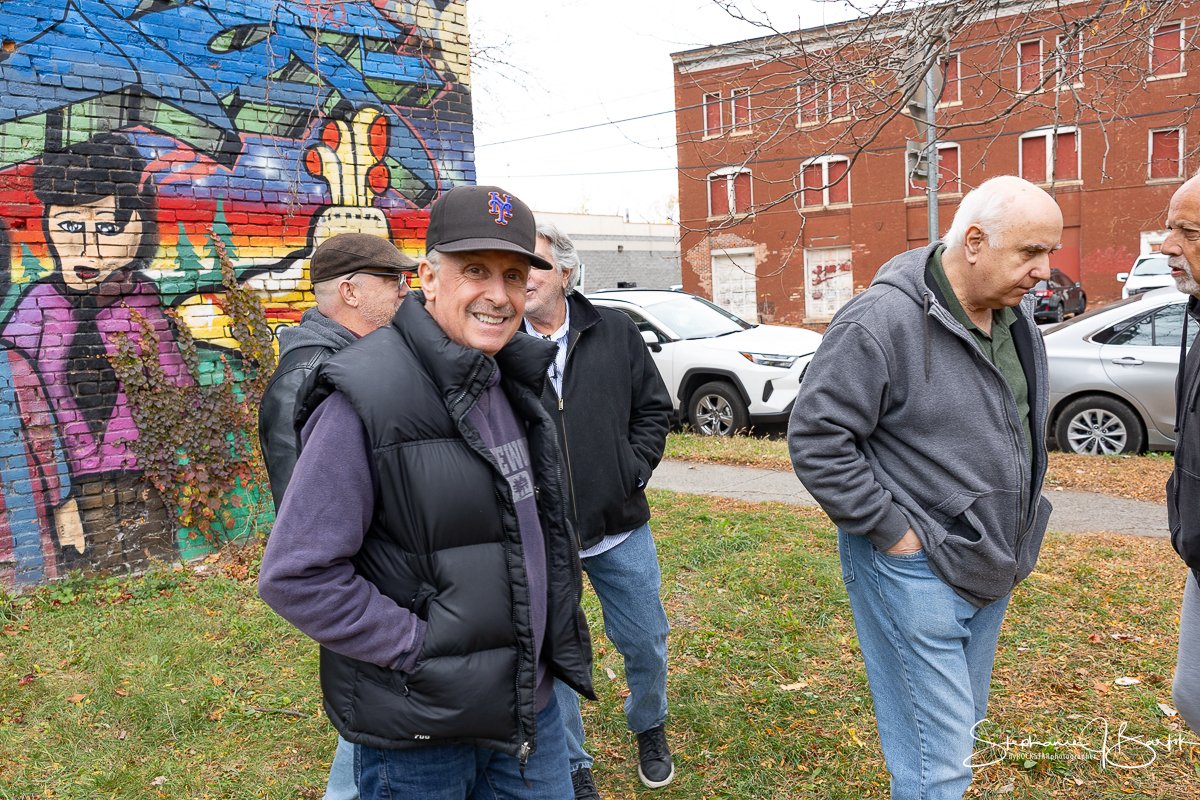
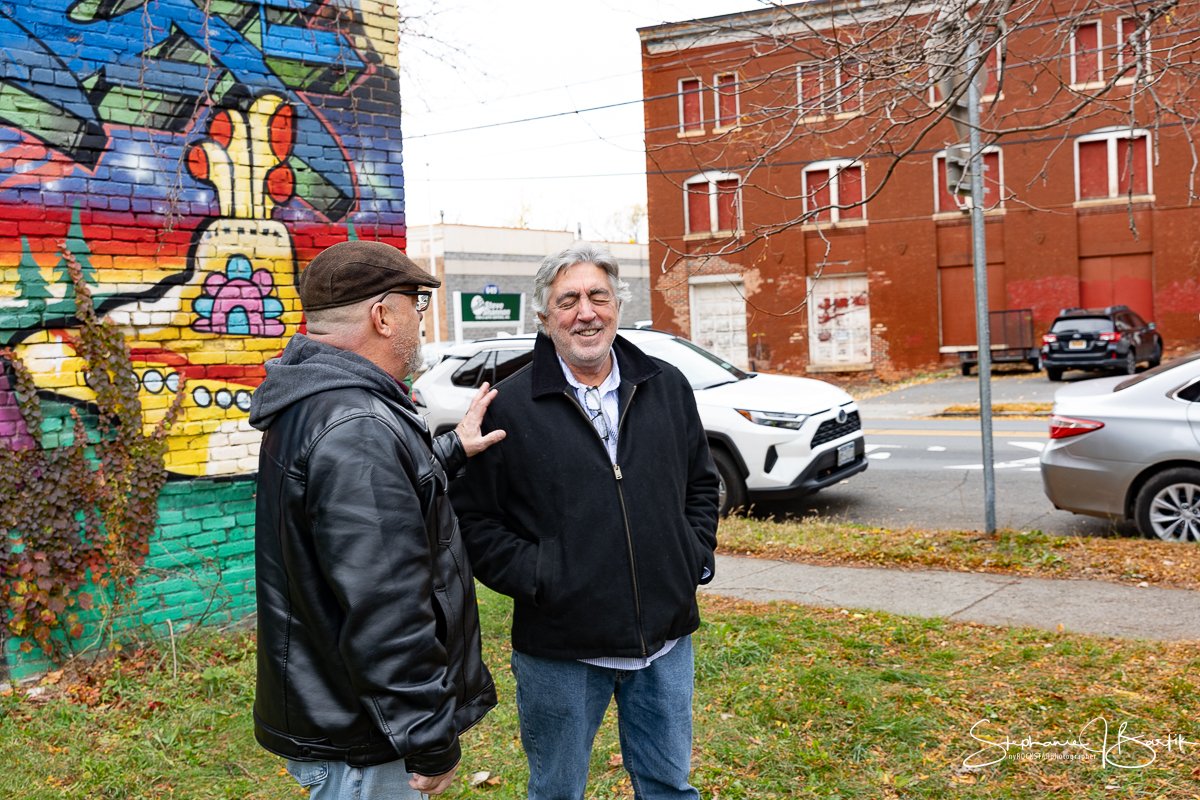
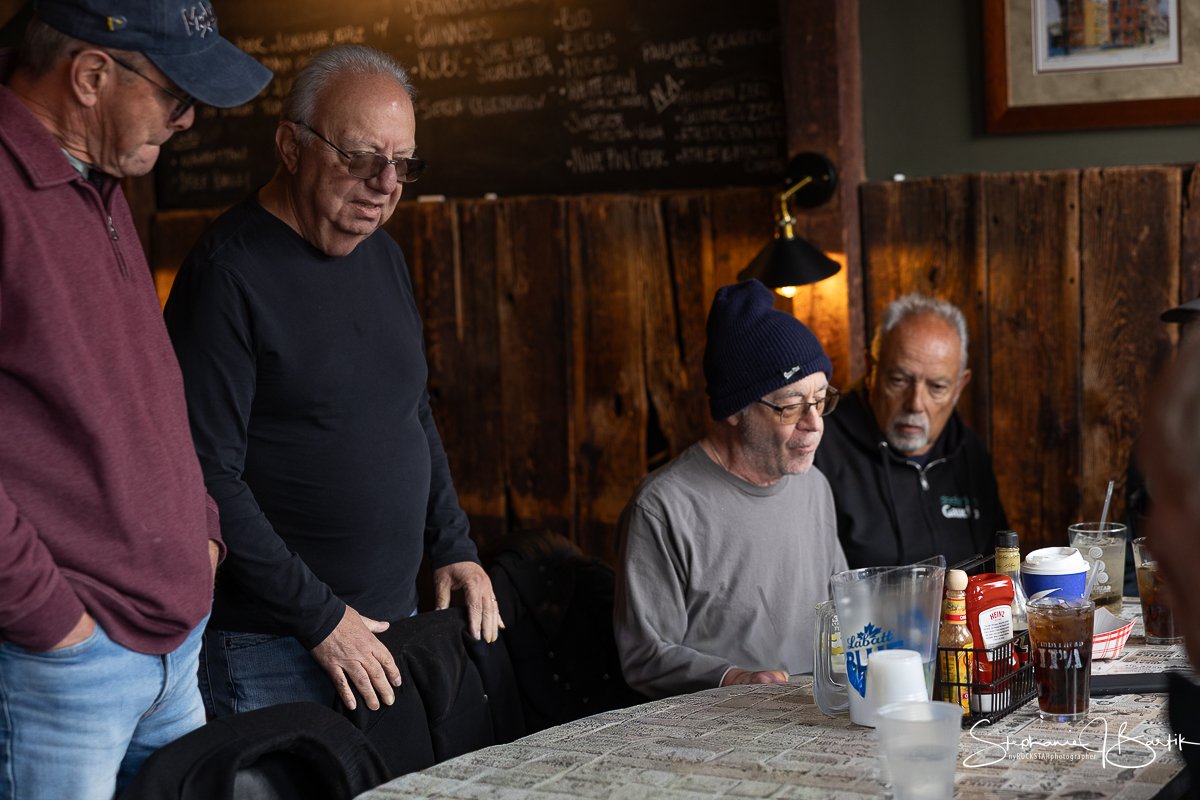
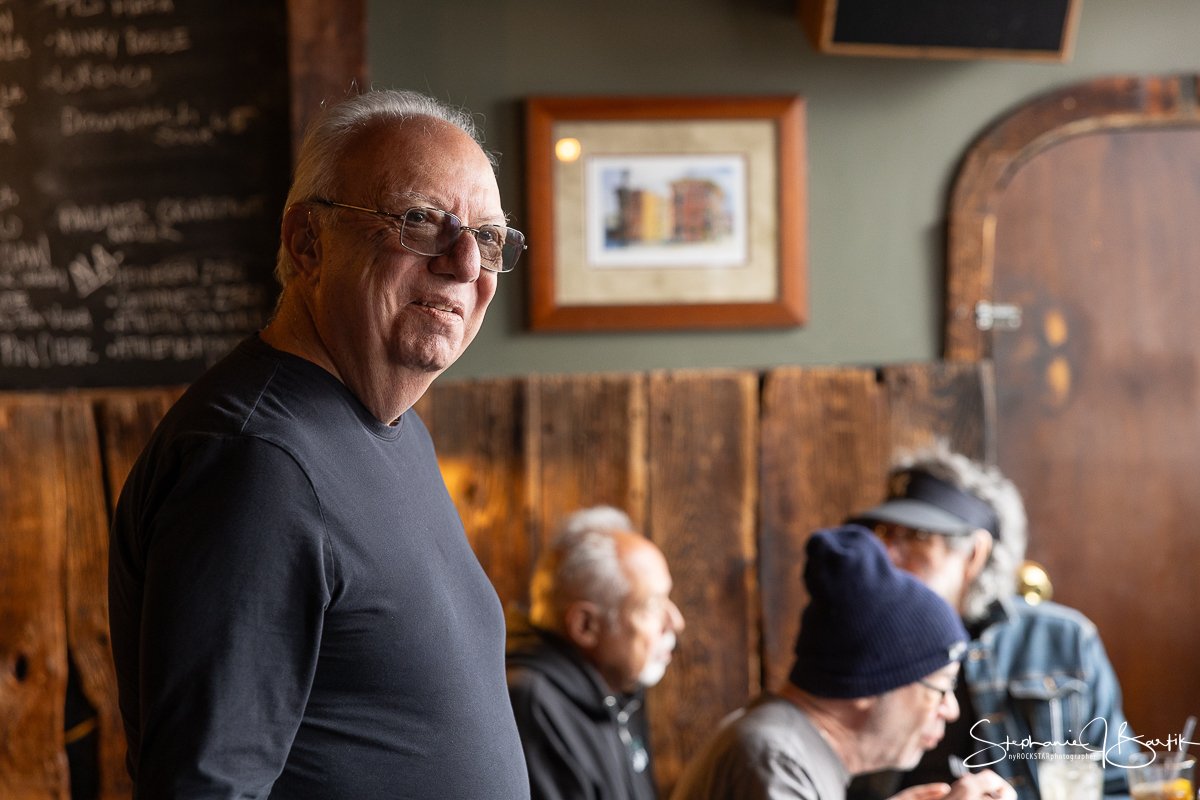
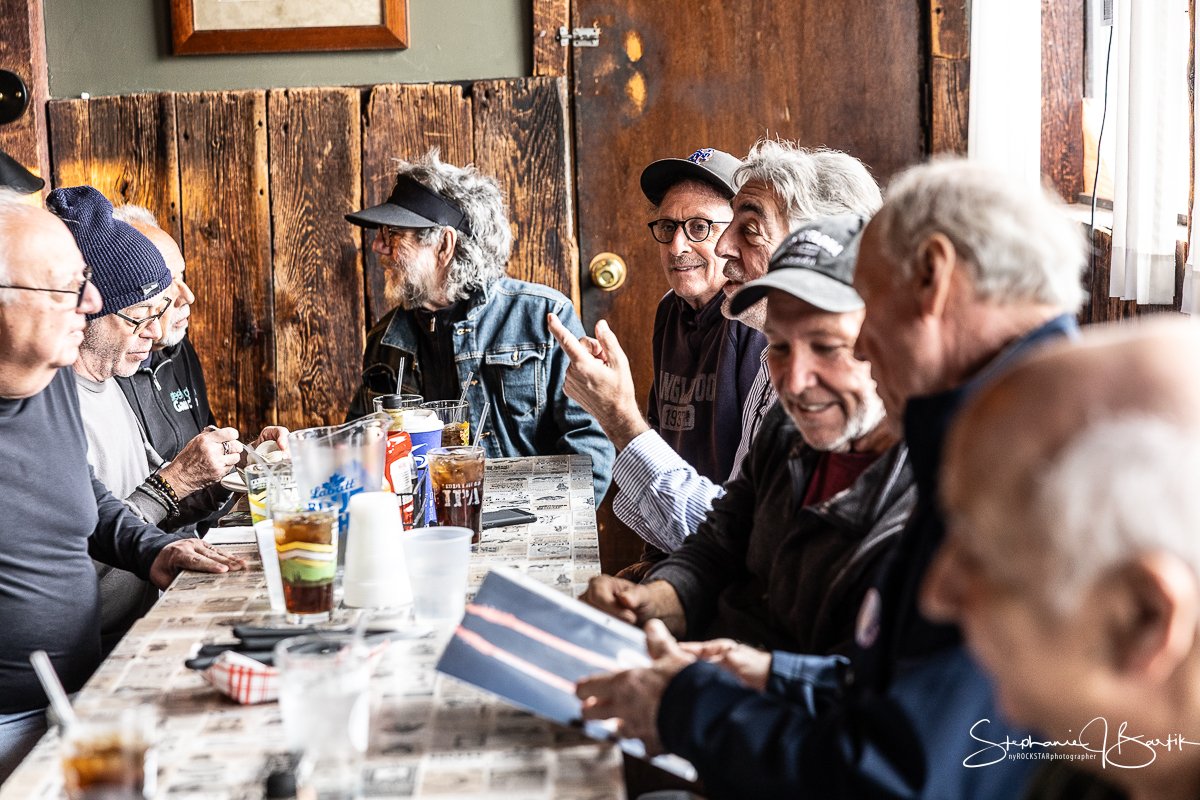
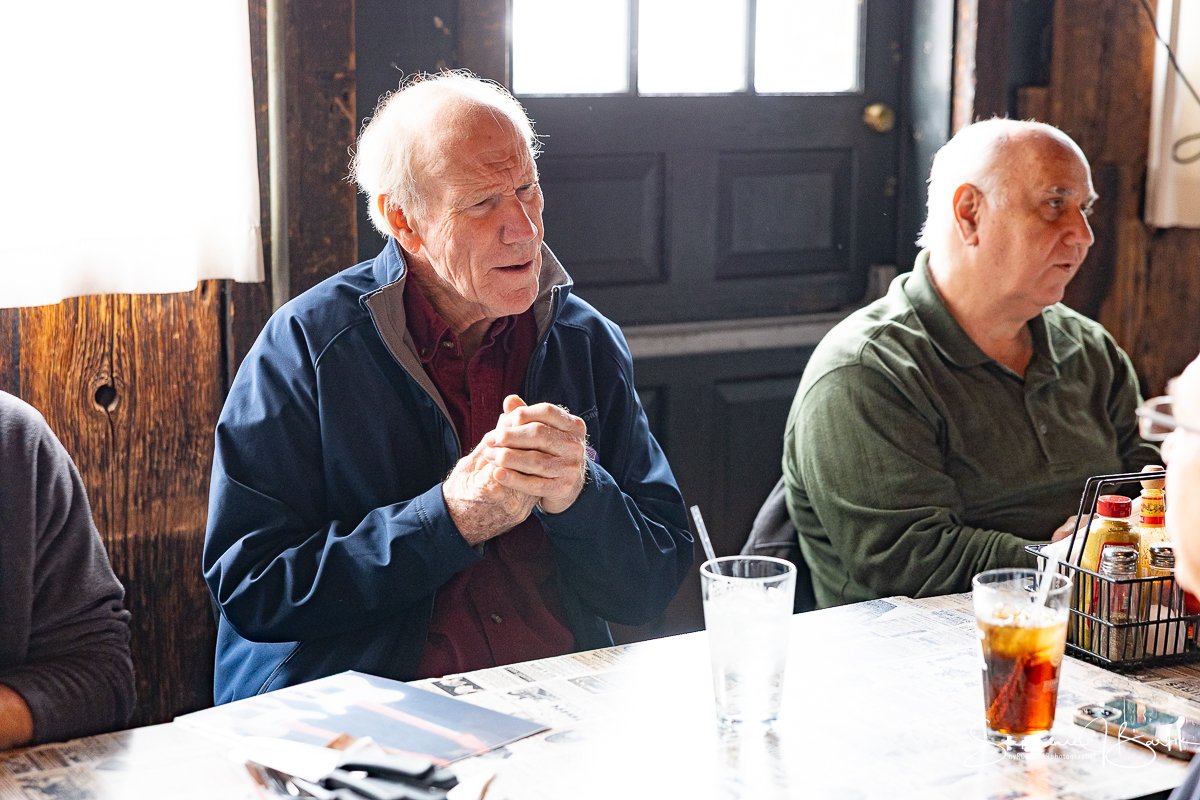
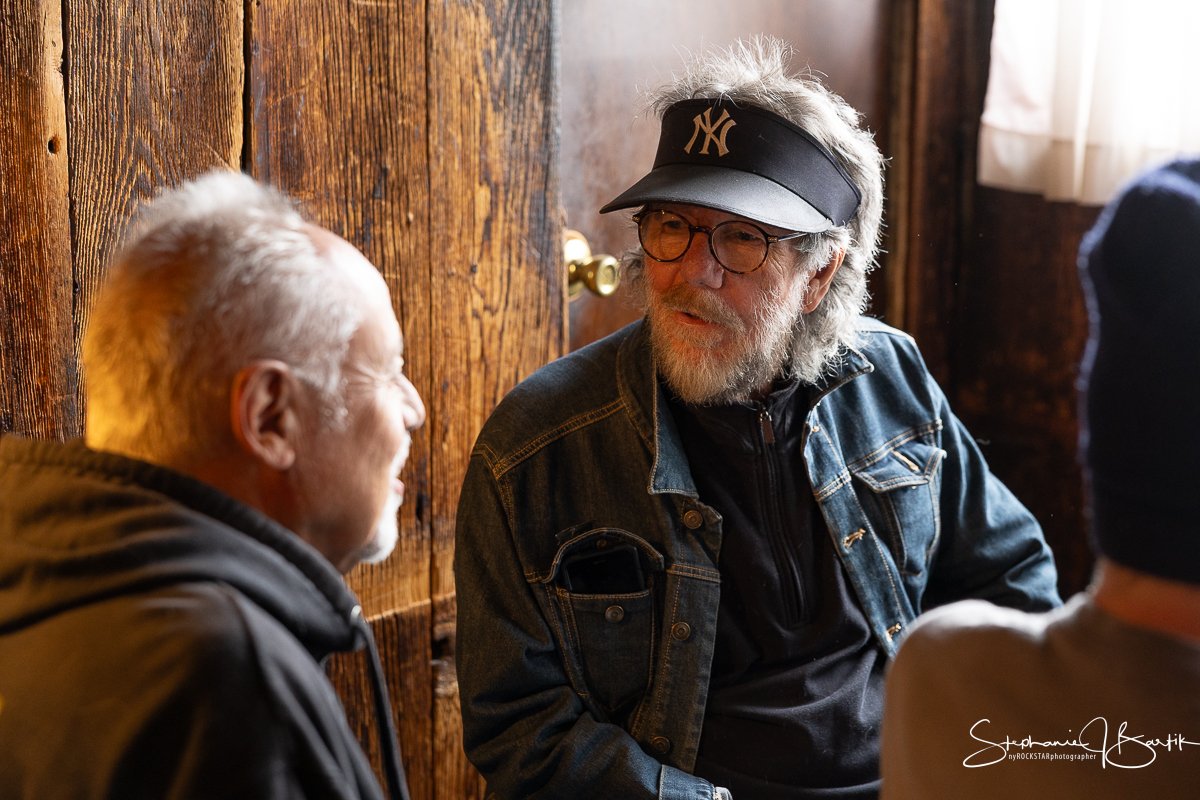
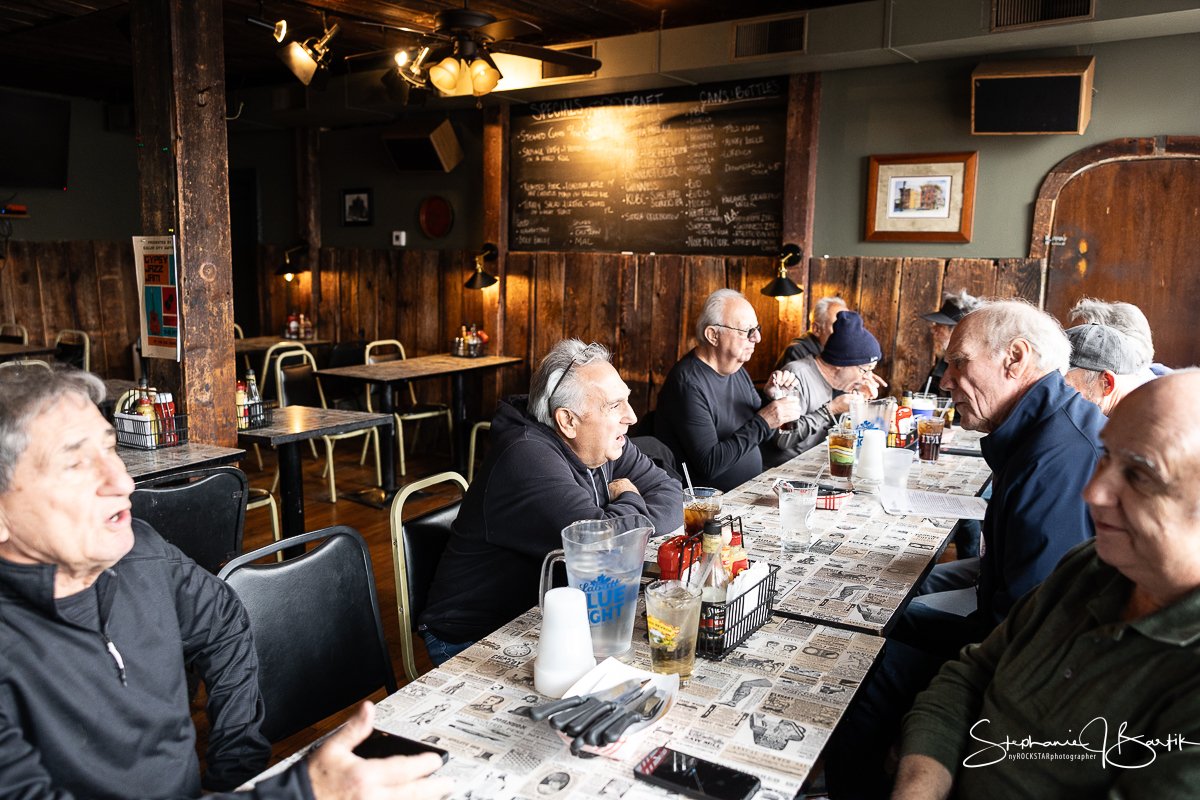
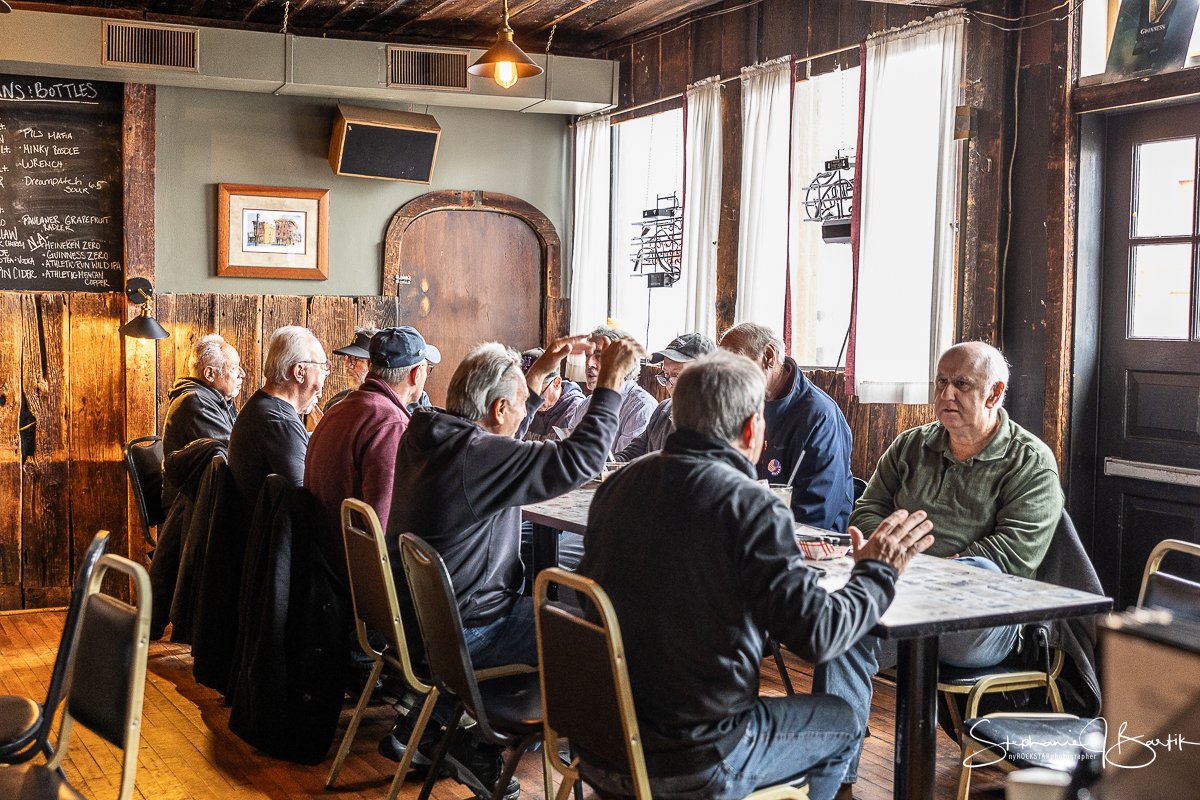
On the first Wednesday of every month, a group of local musicians gathers at the Ale House in Troy, N.Y. – old friends who’ve shared more stages, stories, and laughter than most could count. They’ve been doing this for years: swapping memories, teasing each other, and keeping the spark of those “good ol’ days” alive over lunch.
I have been lucky enough to be invited into this circle – a seat at their table – over a year ago, and I never take that for granted.
While they catch up, I stay mostly in the background, camera in hand, just listening – like a fly on the wall soaking in a living history of the local music scene long before I was ever part of it.
After lunch was ordered and before the plates were delivered, we always step outside for a group photo – a ritual now, like a school class picture marking another chapter together. Each month’s photo feels like a time capsule, a moment of friendship, music, and connection frozen in the light.
All are welcome, no invitation needed. Noon, the first Wednesday of the month
Carly Simon, you’re so vain … google it. I mean, no one buys records anymore, so why would you even know who she is? No offense, but she was, is, and will always be more popular than your band. Relax, already – it’s not always about you. Trust me, sometimes we all feel like we’ve been tied to the whipping post. Tore up from the floor up, and tore down almost level to the ground. I get it. Your band can’t get gigs, and it’s a bummer. The thing is, no one owes you anything. Be undeniably good, and the gigs will appear. Easier said than done, as we all know. If you’re not getting work, then maybe, as a band, you need to look within? There’s no shame in trying to get better. The shame is in blaming everyone and everything else for your lack of development. I’ve been there, by the way.
If you’re a band, you’re a band. You all work together, it’s part of it. You grow together by being supportive and encouraging to one another. And once you’ve reached that level of trust and respect for everyone in the combo, then a lot of good things can happen. Sometimes, though, there’s an outlier. I have played music with some very toxic human beings, and I suffered through it because I really wanted to play. But it’s never worth it.
Quite often, it’s the least skilled who are the least dedicated. Yet they always seem to be the most entitled. I suppose it’s just easier to carve people up behind their backs than it is to work on honing your craft. Although you could actually listen to music and dig deep into things. If you play guitar, listen to all the stuff that you enjoy, and when you’re feeling like it, focus on what the guitar player(s) is/are doing. But really focus – critical listening, as they say in the biz. Not listening to criticize, listening to learn. It’s always fun to understand things like how one guitar might follow the vocal or how the timbre of a note can change depending on where it’s played on the neck of your guitar. In the old days, this kind of self-study was called “woodshedding” – practice your instrument, keep your mouth shut, and stay out of the way until you’re competent enough to hold your own. Jazz players used to toss you off the stage if you couldn’t hang. There were no participation trophies; it was survival of the fittest. If you wanted gigs – and who didn’t – you had to earn them.
If we were to listen to the players that move us and then listen to the players that moved them, we could be on to something. Respect the lineage of the music? Great idea! When we’re first getting it together, we kinda copy the players we dig; it’s a great way to learn. Over time, we develop the way we play based on who we’ve listened to and what resonates with us. It’s a fascinating process. It takes time, though. Not to get all Book of Proverbs on you, but … patience is a virtue. For what it’s worth, it feels pretty good when you believe you’ve cracked the code on whether or not The Beatles used a capo on the song “Girl.” See, your ears always have your back, or something like that.
Ten percent of the bands get ninety percent of the gigs, or at least that’s how it seems, right? Maybe it’s because they’re good enough to play them? I think that’s it – that’s the list. So, dear reader, when you get a gig, value it. Be on time, be in tune, be respectful of the venue, the staff, and the people who are there to watch and listen – if anyone shows up. Remember, no one owes you their time or their money – never forget that. And while not everyone wants to hear 11-minute songs about trees, flowers, and dogs, those who do will be in your corner – it just might take time. All we can do is keep trying, right? Stay true to your vision. And when you get work, be ready to fulfill your obligation. Decent footwear is always a plus, too. Because people do look and judge. I mean, I do …

RadioRadioX & The Xperience Monthly
© 2018 - 2026 Imperial Broadcasting. Most Rights Reserved.