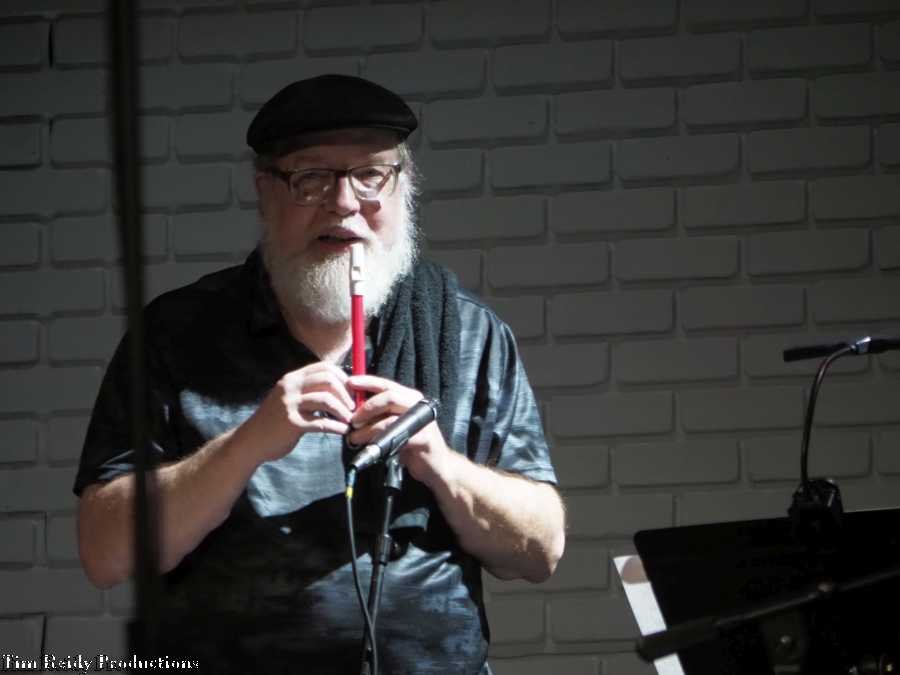
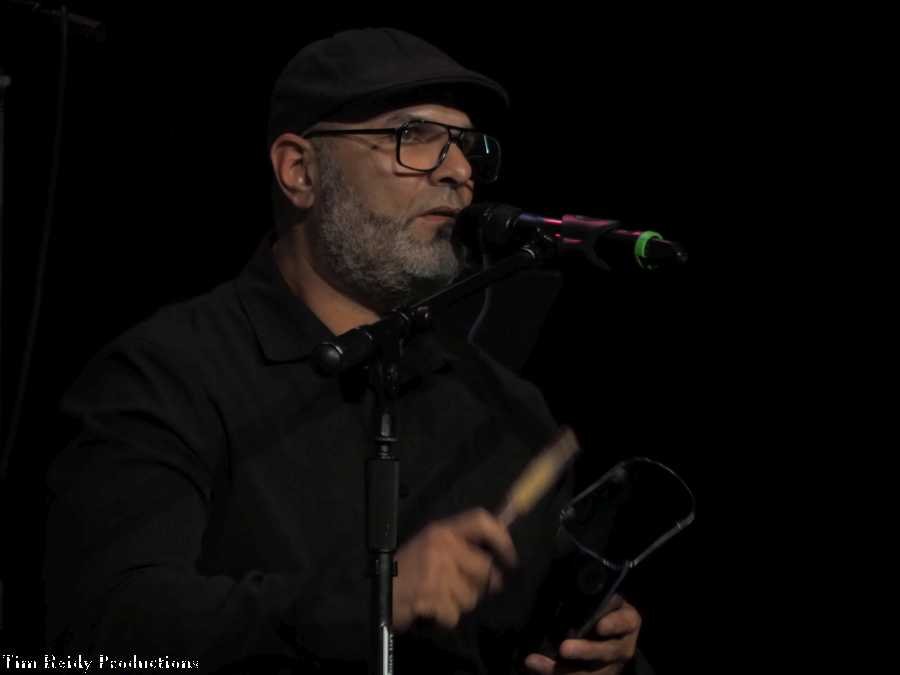
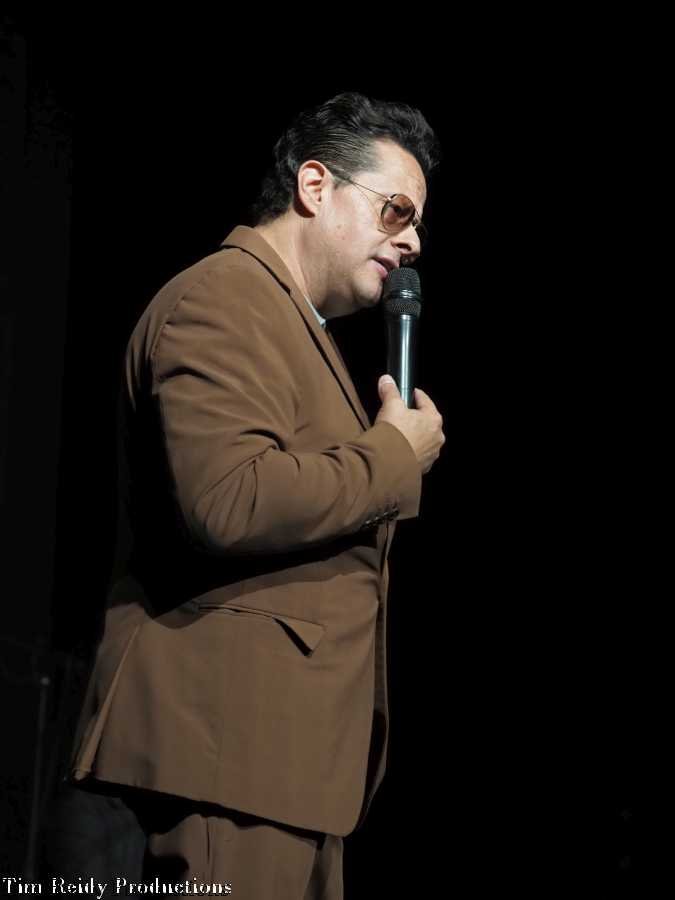
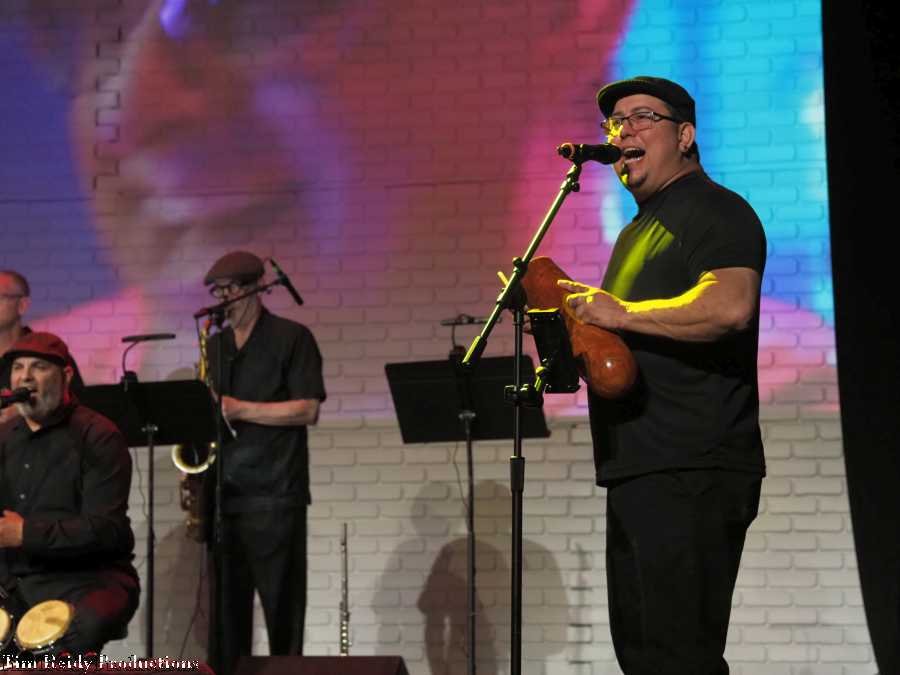
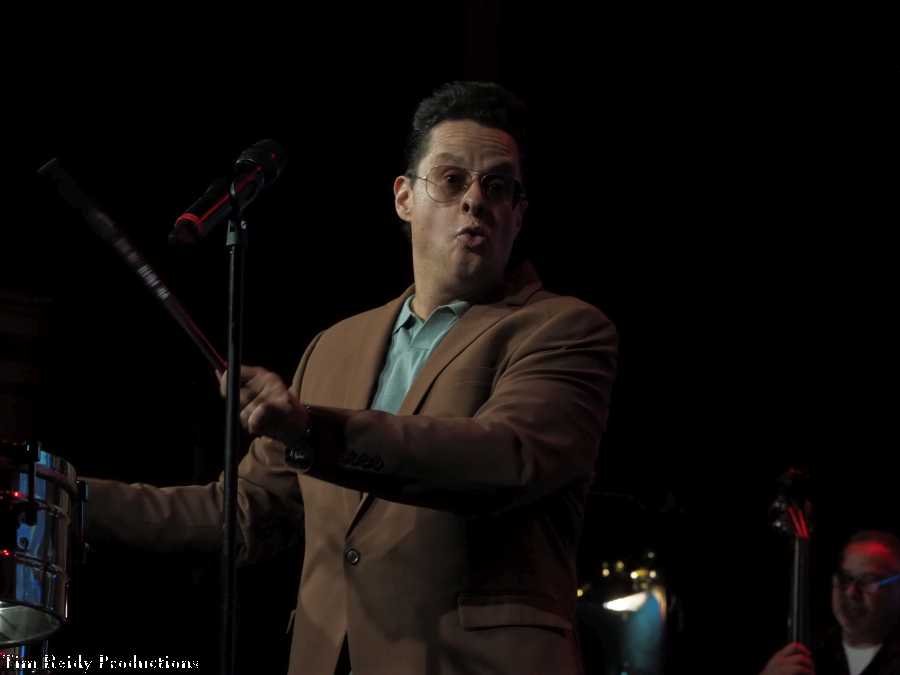
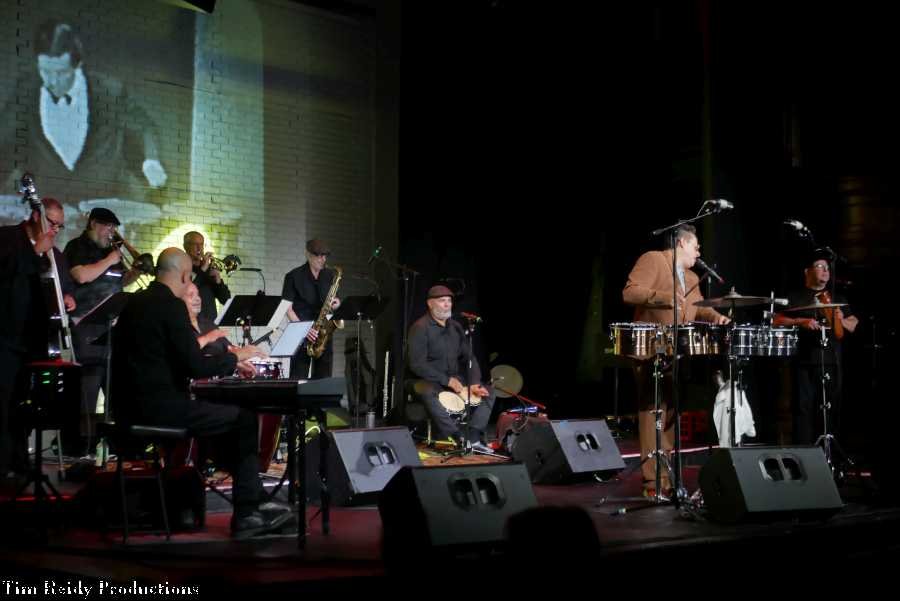
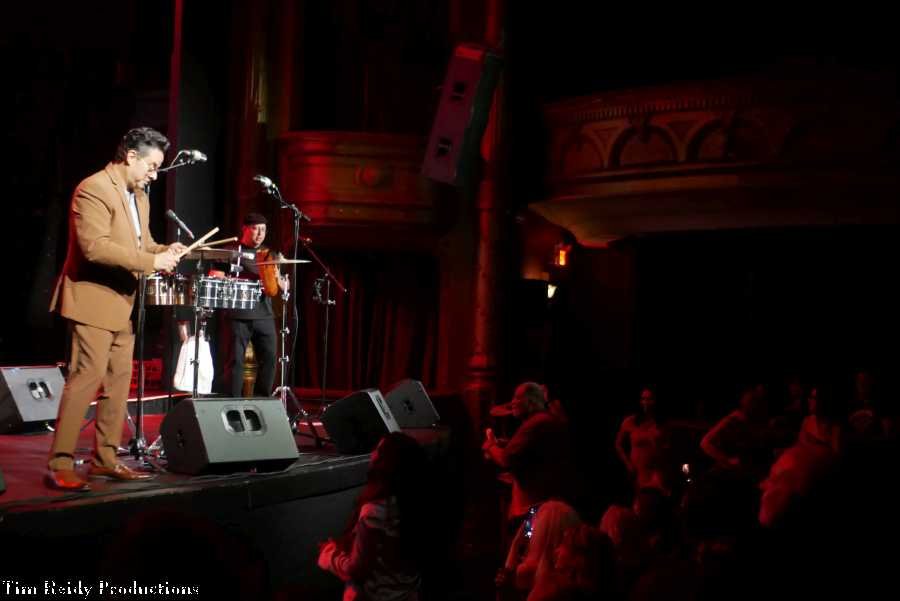
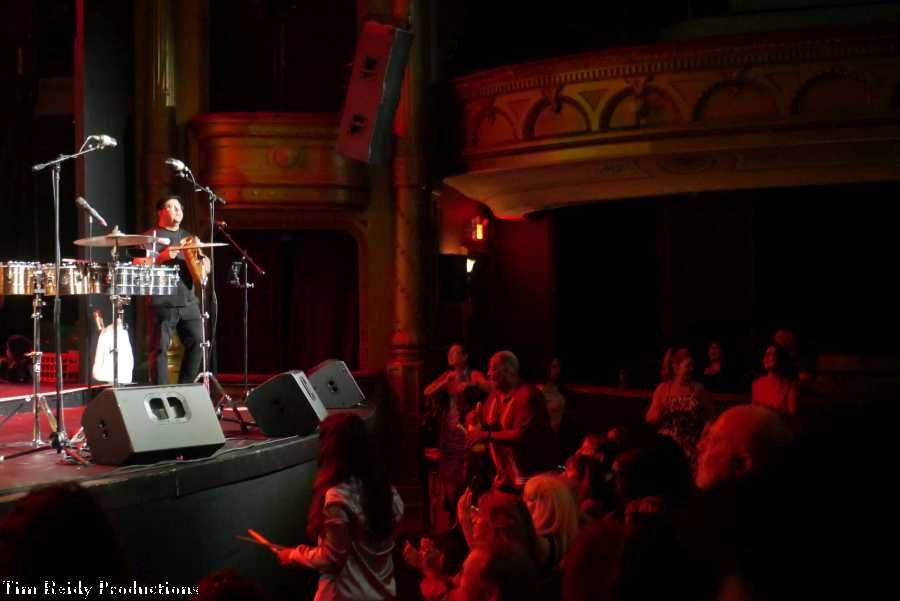
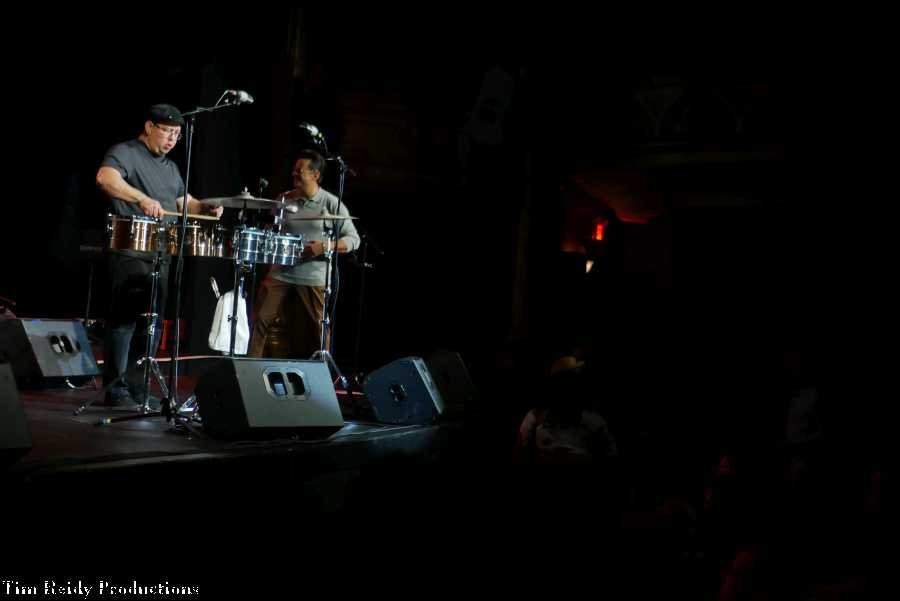
Master percussionist and showman Tito Puente Jr. played a tribute to his father and other stars at Cohoes Music Hall.
Photography by Timothy Reidy.
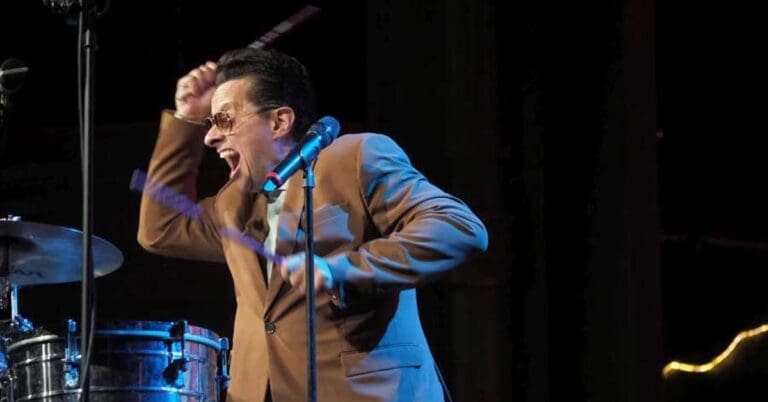
Master percussionist and showman Tito Puente Jr. played a tribute to his father and other stars at Cohoes Music Hall.
Photography by Timothy Reidy.
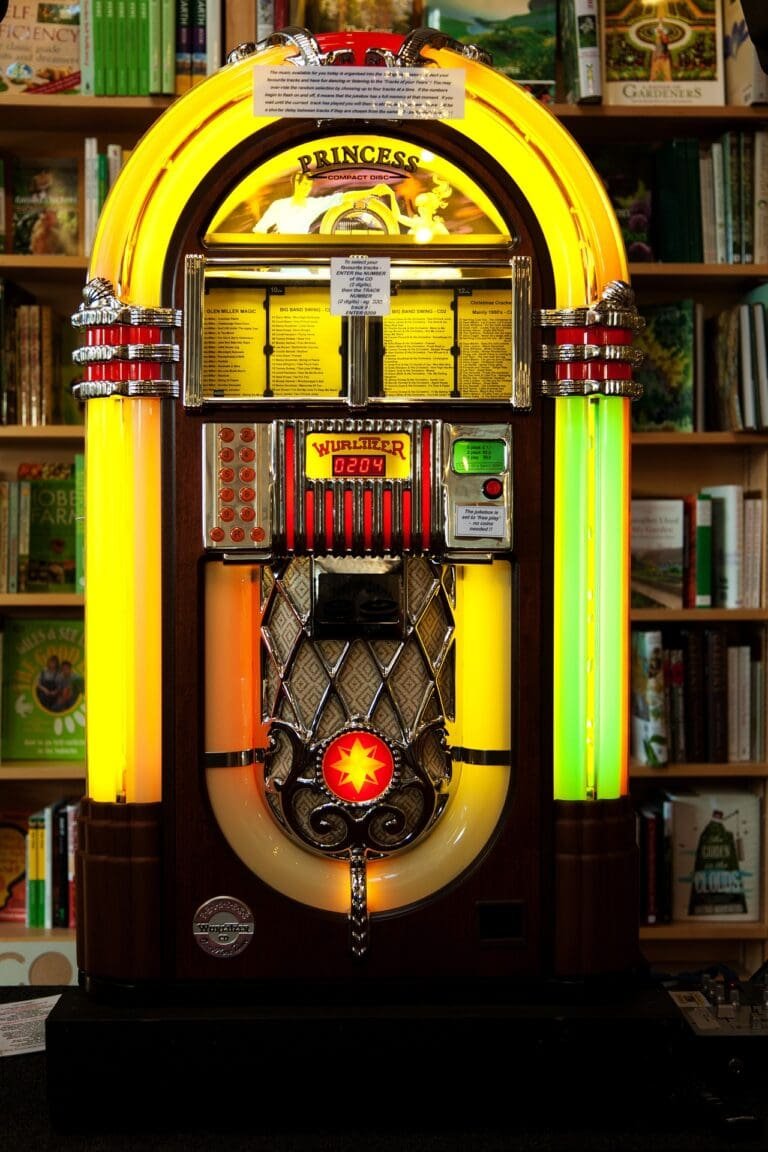
Jukebox.
In an interview with NME, The Cure’s Roger O’Donnell talks about surviving cancer and putting together his new solo album “Projections.” He also talked about The Cure’s future plans.
“It was just nice to be alive, for one thing! And nice to make music again. During the treatment I was so emotional the whole time that I couldn’t touch an instrument” O’Donnell said.
“Projections” will be O’Donnell’s eighth solo album. He has been writing scores and other projects away from The Cure.
“I did two electronic records in the early 2000s, and I always felt that it wasn’t a completed episode,” O’Donnell told NME. “Two is no good, you have to have three of something. I always felt that there was always another electronic album in there. The first two I recorded entirely using a Moog Voyager, and for this one I gave myself a little bit more space.
“I introduced quite a few more different instruments, but it’s like finishing that era.”
Stranger Things’s Finn Wolfhard, with a collaboration with his father, is writing a script for The Replacements bio “Trouble Boys.” “One of my parents’ first dates was to a Replacements concert. Then I was born! As [Paul] Westerberg once said, ‘Let’s let em down.’”
Wolfhard has experience with music, having fronted the band Calpurnia, and from that to “The Aubreys.”
According to press materials, the biography “a deeply intimate portrait, revealing the primal factors and forces that shaped one of the most brilliant and notoriously self-destructive rock ‘n’ roll bands of all time,”
Rock band Def Leppard to be given a star on the Hollywood Walk of Fame. They’ll be receiving it under the title of ‘Recording.’ Guest speakers will be Universal Music presiden Bruce Resnikoff and Jon Bon Jovi. Def Leppard said, “Honored to share that we will receive a star on the Hollywood Walk of Fame on October 9, courtesy of the Hollywood Chamber of Commerce. None of this would be possible without YOU. Thank you.”
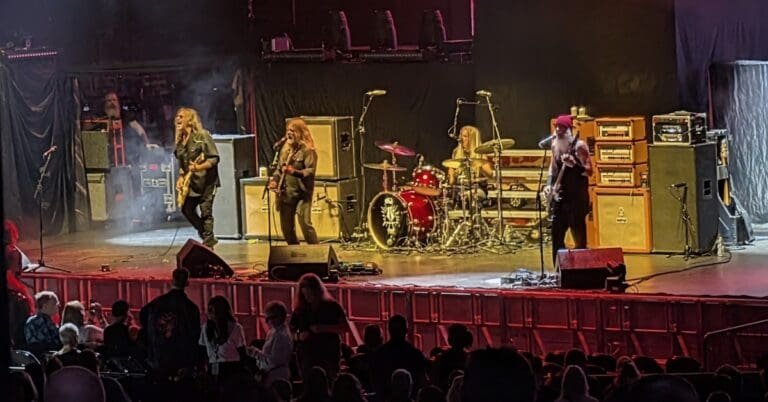
Words and Photography by Lori Anne McKone.
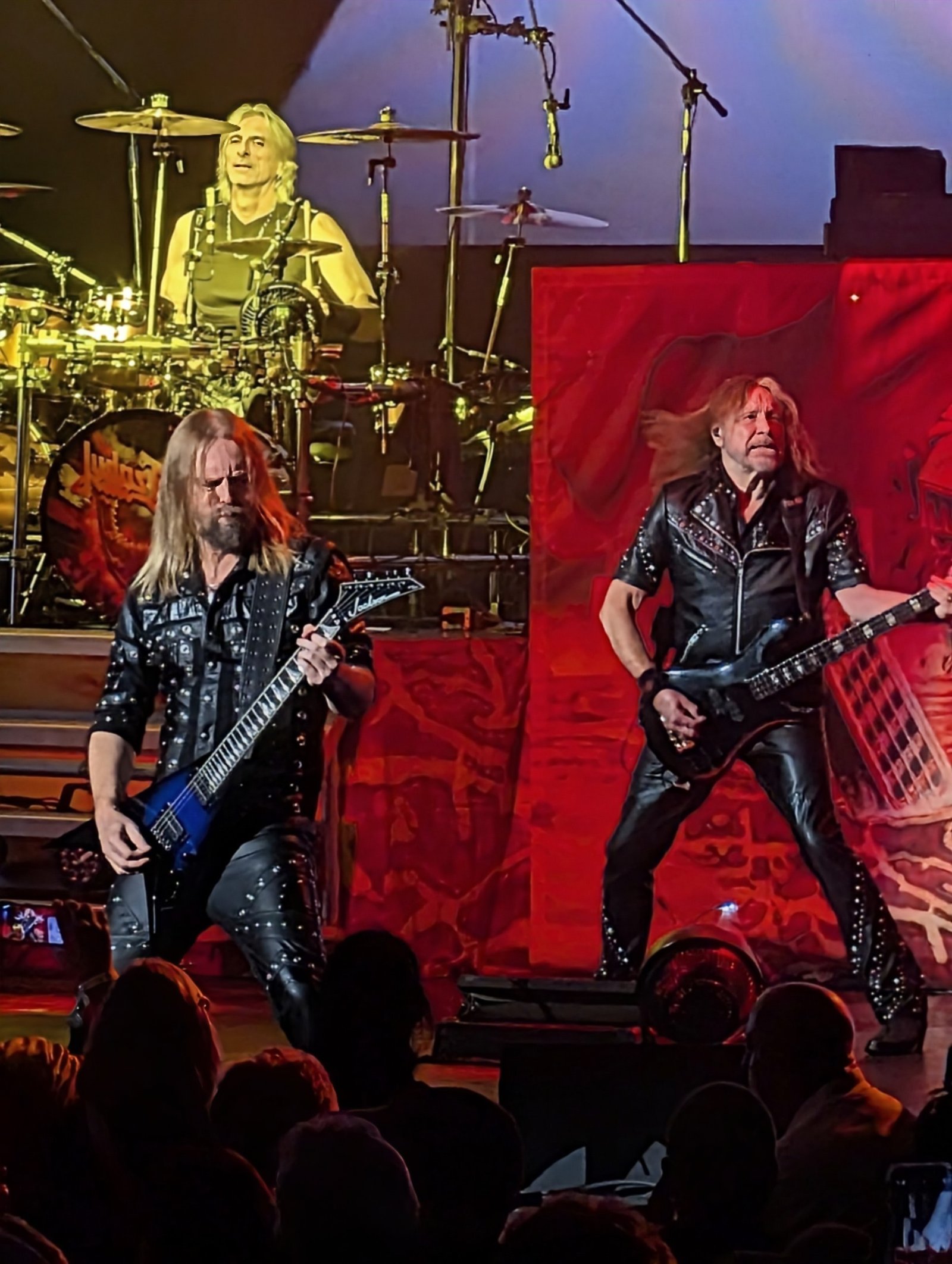
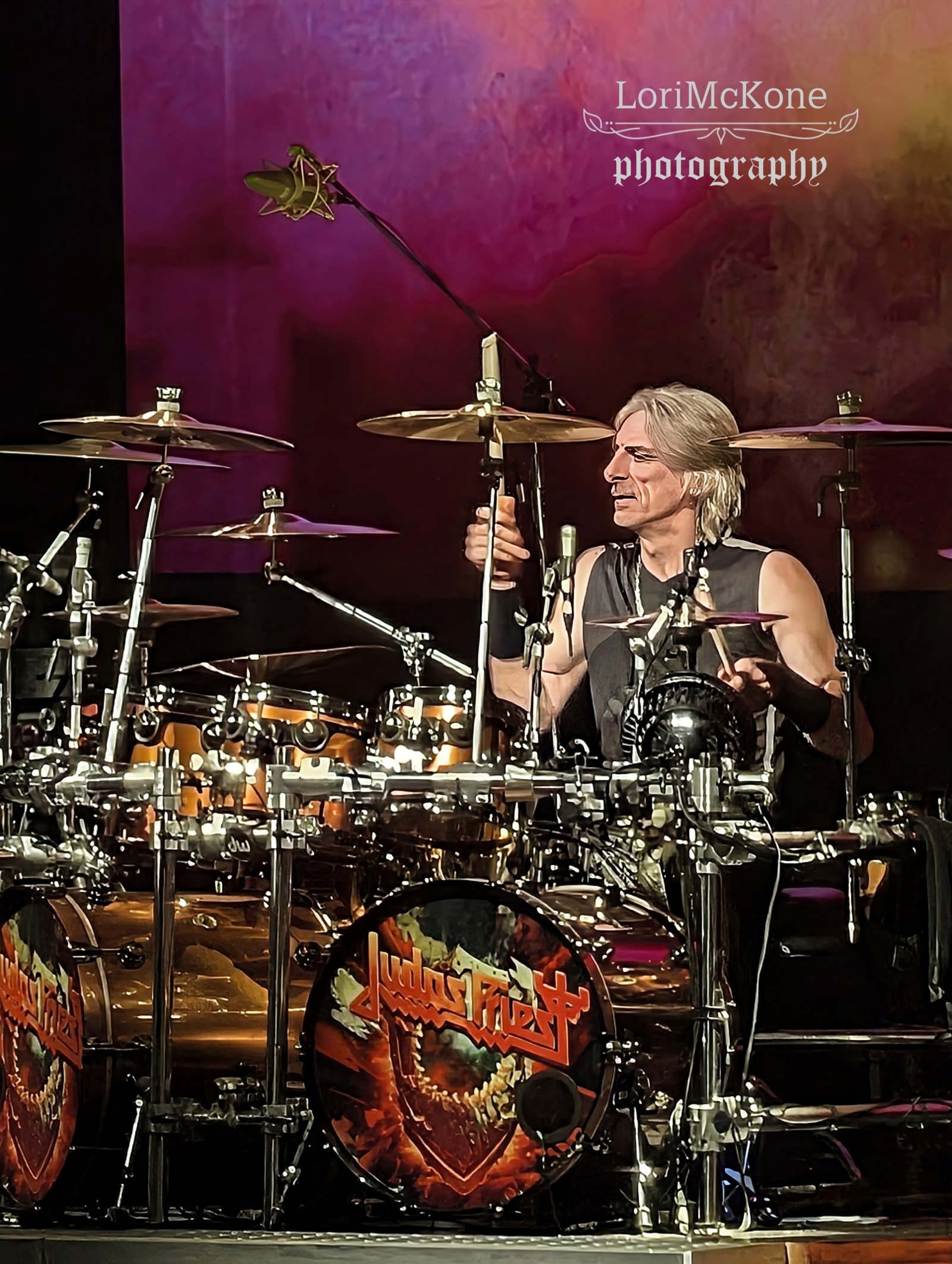
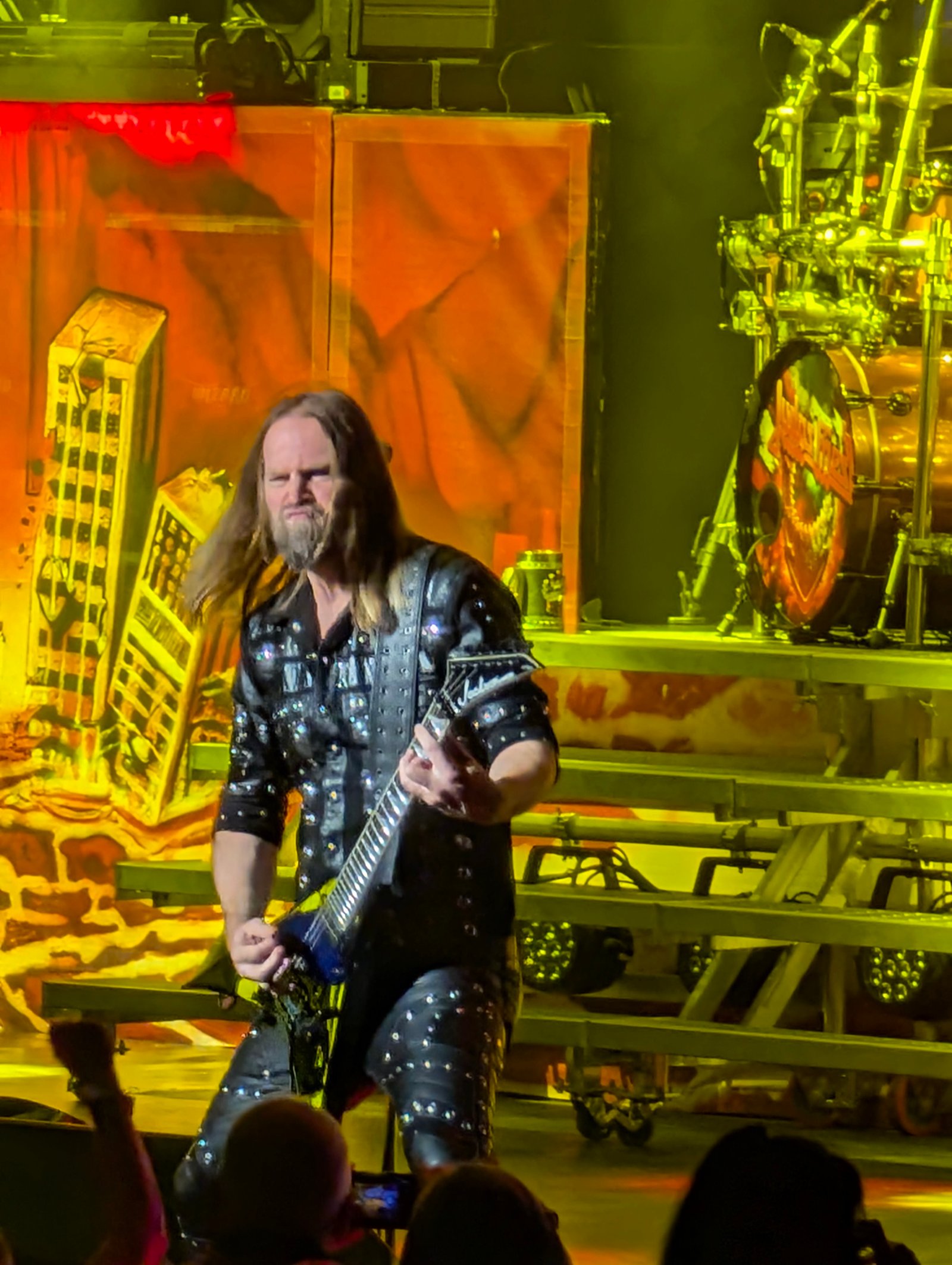
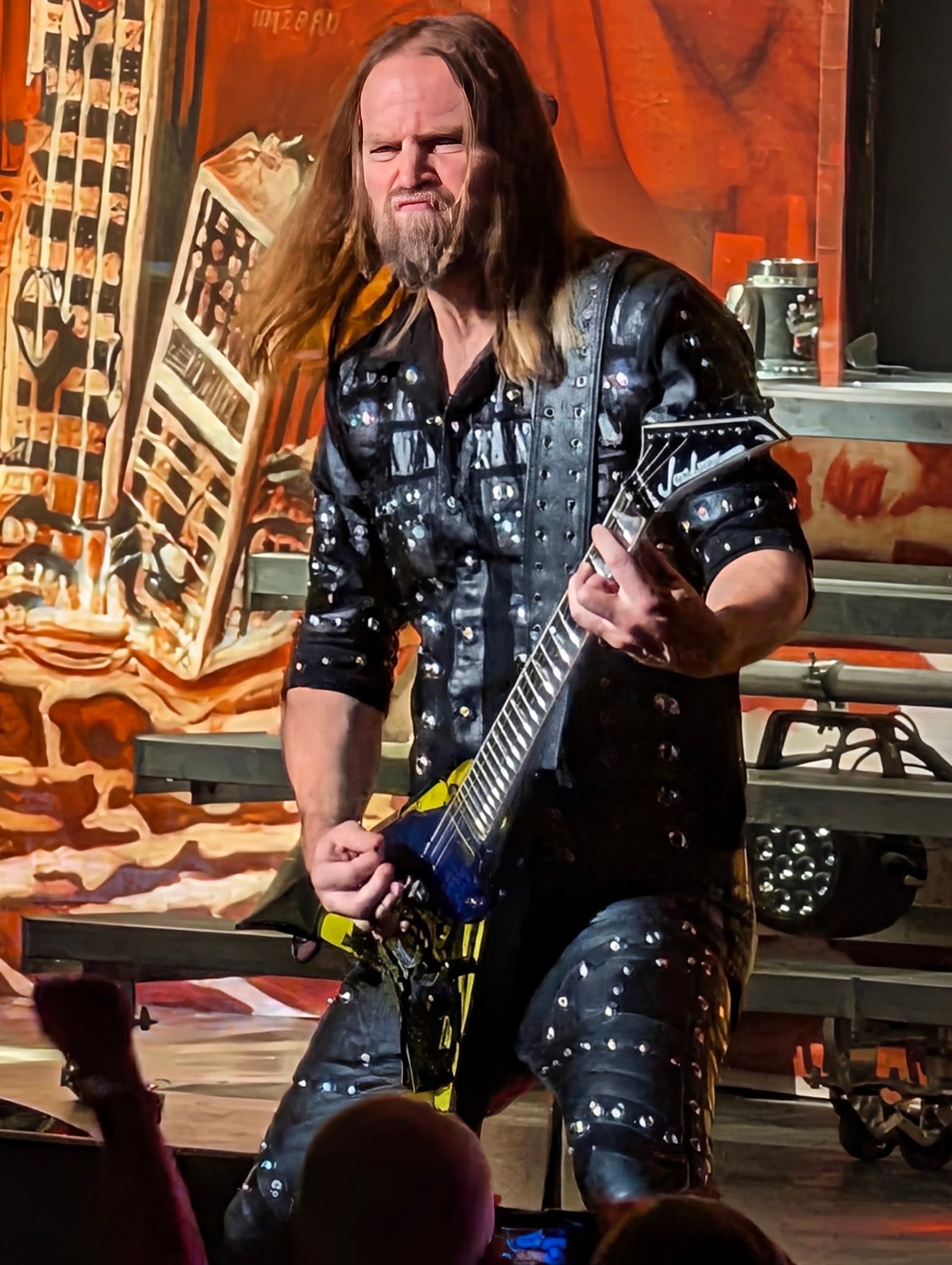
The September 27 triple-threat lineup at SPAC – Corrosion of Conformity, Judas Priest, and Alice Cooper – was a full-throttle celebration of metal’s enduring spirit, with each act delivering a distinct flavor of rebellion and theatricality. Lori Anne McKone captured some of the night in words and pictures.
I didn’t know what Southern sludge was supposed to sound like until Corrosion of Conformity stepped on stage – and then I felt it. It’s not just a genre. It’s a mood. A weight. A kind of slow-burning intensity that crawls under your skin and stays there.
Their set opened like a storm rolling in – no flash, no warning, just thick, groove-heavy riffs that felt both ancient and alive. The guitars weren’t trying to dazzle; they were trying to drag you under. And it worked. I found myself swaying more than headbanging, caught in the pulse of it. It was heavy, yes, but not chaotic. It was deliberate. Grounded. Like they were building something out of distortion and sweat.
What struck me most was their ability to make heaviness feel intimate. You didn’t need to know the lyrics to feel the weight of them. You didn’t need to be a longtime fan to get swept up in the pulse. They weren’t there to impress. They were there to play. And that honesty? It landed.
No pyro, no theatrics – just four musicians locked in, playing like the music was a living thing they’d summoned. Pepper Keenan’s vocals had that worn, whiskey-soaked grit that made every lyric feel like a confession or a warning. And the crowd – maybe not everyone knew the songs, but everyone felt them. You could see it in the way people leaned forward, tuned in, and let the sound take over.
For a first timer, their sound hits like molasses poured over a thunderstorm: slow, sticky, and powerful. The riffs were massive, each chord felt earned, each solo like a howl from the belly. It didn’t feel like I was watching a band. It felt like being initiated. Like stepping into a world where the rules are written in feedback and groove. It was the kind of set that made you want to dig into their catalog afterward – not because you missed something, but because you wanted to stay in the world a little longer. I didn’t just hear COC, I got them.

Cow Control – The Weird Side of the Internet – by Liam Sweeny.
I’ve seen a lot of weird stuff here on the weird side of the internet, and I’ve seen some frightening stuff, but what I am about to tell you is terrifying. This is just distopian sci-fi crazy.
A Russian Startup has put neuro-implants into living cows’ brains to improve milk production. They did the surgery with the cows awake, and plopped them back into production right after. And they’re not giving numbers, but it works.
This wasn’t just some surface chip. It was probes deep into their brains, controlling appetite, stress, reproctive, stuff like that. And yeah, this is terrifying.
Cows aren’t much different than us, and if they can do it to them, they can do it to us. And the craziest thing is being a person that doesn’t believe in conspiracy theory, rabbithole stuff (me,) having to report on literal mind controlled cows.
And it shows an interesting aspect of our classic notions of mind control, where we’ve always thought of it being “thought control” when it could end up being emotional or “hormone control.”
Andrey Neduzhko, General Director of the Steppe agricultural holding is negative about the development, citing the safety risk to the animals, also the cost of the procedures, which is pricey.
This is something where everyone should join the animal rights people about. This really blurs every ethical line.
What scares me most as I trawl the weird is how there are zero f*cks given about ethics when these scientists are doing their thing. It’s the wild west and everybody’s Dr. Frankenstein. And it’s pretty much going to keep on keeping on until we’re mining Pluto and we don’t have a shred of humanity left.
So they’re turning cows into the Borg. I hope at least they can play the cows music once in a while. Or maybe we just grow milk in a lab like they’re growing everything else, with a 3D printer.
More from Liam Sweeny.
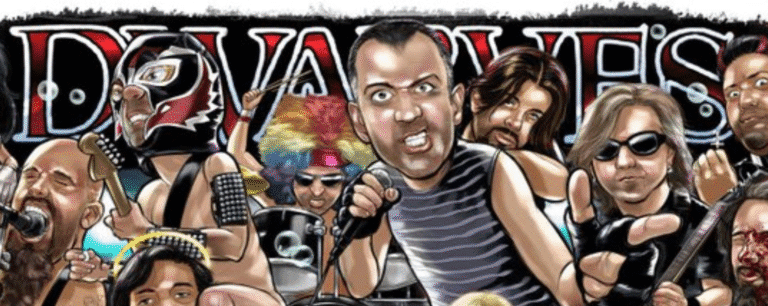
Blag Dahlia – An Xperience Interview – by Rob Smittix,
RRX: So yeah, you’re hanging out on the mean streets of Burbank, huh?
BD: That’s right. Preparing to head to Canada tomorrow.
RRX: Oh yeah?
BD: Yeah, we got a little Canadian tour coming. So that should be fun.
RRX: Yeah. I love it up there in Canada; they have an excellent scene. So what’s a day in the life of Blag like?
BD: Is this the interview? Have we started?
RRX: (laughs) Yeah, I just like to shoot sh**. I don’t like to throw a bunch of questions at you. I’d rather chat like we’re old buds, you know?
BD: (chuckles) Well, my day today is picking up people at the airport and getting ready for rehearsal. It’s kind of a tedious one. But yesterday, I got to go sit in at Jimmy Kimmel in the audience and watch Spinal Tap. That was hilarious.
RRX: That’s dope!
BD: Yeah, I’m actually so ancient that I saw Spinal Tap in 1984 in Chicago, and that was hilarious. They did all their songs, and they opened with “Rockin’ Robin.” So it was wild 40 years later to see them again in Hollywood.
RRX: That’s so cool. I saw they had the cast there last night, so you got to chill and watch it with them?
BD: Yeah, it was wild. They were just talking sh**, improvising, going back and forth like they do. It was great.
RRX: Those are the perks, man, the highlights of life. I keep saying it, man, each day you get something good like that in your life, embrace it. Now, I know you guys have been doing it for a really long time. What’s it like to come out to one of your shows today, and is it any different than it would have been decades ago?
BD: Well, yeah, I mean, I was better looking decades ago. I think that’s one part of it. I think audiences are a little tamer now than they used to be. I mean, we’re the kind of band that really feeds off that live energy. So if people are going wild, then we’re going wild, and if they’re taking it easy, then we just do the best we can up there, you know?
RRX: So, what do you think of playing Albany?
BD: It’s been quite a while since we were in Albany because, even when we played in that part of the country, we tended to play Rochester every once in a while. So, we haven’t done a huge amount of Albany, but I’m ready.
RRX: Yeah, we’re ready too. And the club, Empire Underground, is definitely the place to play for punk rock music. It’s the place to play. So you’ll never want to go back to Rochester again. You got yourself a new home.
BD: Hey, you know … half of that’s already true. I never want to go back to Rochester again.
RRX: Exactly. Definitely not in the winter, that’s for sure.
(both laugh)
RRX: Well, that’s cool, man. Obviously, you’re keeping busy and all that, but I’m glad that you’re still at it. How long has it been? I know it’s been a long time, but how long have you really been at this thing?
BD: Well, we played our first club show in 1983 in Chicago.
And I moved to San Francisco in ’86 and you know … just been touring ever since. So it’s been over four decades of rock, and you know? We’re legendary, man. There’s no getting around it.
RRX: Definitely no getting around it! You’re right, though.
BD: And these old bands, you know, they tend to kind of stagnate. Maybe they made one cool record in the ‘80s or the ‘90s, and then they live off it forever. But … we kind of work on two different tracks. Live, we’re still like a punk band, you know? It’s real low production value, and we just get out there, knock it out, and rock out. But then on records, we’ve managed to make these very kind of … sophisticated, cool, pop-sounding records. Records that are kind of created between hardcore thrash and that kind of stuff, and then just pop, punk, mid-tempo rock, experimental, and surf stuff. The story is really kind of there in the records. We never stopped making records; they’re all kind of different, and the production levels are pretty high. But then you go see the band and it’s very just gut level, f*** yeah, let’s rock!
RRX: I love that, though. A lot of people don’t realize this. I mean, you got credits on a SpongeBob record? Is this really a thing?
BD: (laughs) Well, Salt Peter, our original bass player, wrote a lot of the SpongeBob songs. In the first season, before they had a budget, they had to get me to come in and sing sh**. So I sang “Do the Sponge” in the first season of SpongeBob. Probably the biggest thing I’ll ever do (laughs).
RRX: That’s amazing, though. I don’t think that got on everyone’s radar to realize that was you. Maybe if somebody requests it at a show, you could throw it into the mix.
BD: Yeah, it’ll make me very popular with 7-year-olds all over the world.
RRX: Hey, you gotta teach the children well.
BD: That’s right. I think it was Jeffrey Epstein that said that.
RRX: (laughs) Oh my God. I feel like we live in an episode of The Simpsons.
BD: Yeah, I mean … truth is definitely stranger than fiction these days.
RRX: I feel like we went off the track somewhere back in like 2012, and we never really got back on them. Things are wild, man.
BD: That is accurate.
RRX: Anything else we should know about Dwarves?
BD: The Dwarves are legendary. Big stars play on our records; Josh Freese, Nick Oliveri, you know? The lineup of the band is always brilliant. Dwarves always got a new thing up our sleeve. And then I got a solo thing going called Ralph Champagne, which is kind of retro pop music from the ‘60s and kind of countryish. I’m just trying to cover all the bases, make interesting records, and just never quit; that’s the goal.
RRX: I’m glad that you’re still out there doing it and actually making a living. These days, it ain’t easy.
BD: If you call that living.
RRX: Yeah, man, success is measured differently by everyone, but if you’re still having fun, that’s what’s important.
BD: I’ve done it my whole life. I know no other approach to existence. You get out there, you rock, you make the records, you play the show, and you know … you go to Albany. Gotta do it.
RRX: You gotta go to Albany. It’s the center of the universe.
BD: Right on, bud. Well, thanks for having me.

More ‘Dynamite’: Rick Sims of the Didjits!
By Justin Smulison
Subscribe to our YouTube Channel HERE!
We recently published the first half of my interview with Rick Sims, a punk (and) rock
hero who reactivated his seminal power trio, the Didjits, in September for performances
in the Midwest, most notably at RiotFest in his home-base of Chicago, Illinois.
Though the Didjits disbanded after 1993’s Que Sirhan Sirhan, they were being
discovered by wider audiences, thanks to the Offspring’s cover of “Killboy Powerhead”
on their multi-platinum album, Smash, and the video for “Judge Hot Fudge,” which
appeared on the original run of “Beavis & Butt-Head.”
Rock aficionados have been celebrating their music for years, and as a testament,
Touch & Go will release Strictly Dynamite: The Best of Didjits on Oct. 3, in various
physical formats (as well as digital).
Following his band’s first dissolution, Sims stayed active in other groups through the
years and launched his Rick Sims Sound Design, near Chicago, Illinois. There, he
composes music and sound effects for theater companies and other live events and has
maintained ownership of that entity during multiple other musical ventures.
One such venture was his all-too-brief time with rock ‘n’ roll badasses, the Supersuckers
in roughly 1994-96, on Sacrlicious Sounds. Released by renowned Seattle-based label,
Sub Pop, that album marked my introduction to Mr. Sims and I began following his
career forward and backward (thus, finding the Didjits).
Jumping ahead to the very late 1990s and 2000s was a quartet, the Gaza Strippers,
which captured the fun and chaotic affect of the Didjits, but with a more streamlined rock
approach.
But jumping backward, an album was released shortly after Sacrilicious in 1996 on
Touch & Go, which would change the way I heard rock music – Blastronaut, by the Lee
Harvey Oswald Band. If you imagine a supercharged rock-heavy David Bowie without
any major, overly sophisticated synth, with a second singer with a much higher pitch
and the occasional old-school punkish cover, this is . While there is nothing in the liner
notes to suggest nor confirm that Sims is handling guitar and second-singer duties on
this record as Dredge, his high-pitched voice and immaculate guitar solos are a dead
giveaway (the photo also was not terribly hard to decipher, despite the hat). And since
Blastronaut is approaching its 30 th anniversary, I had to pry and confirm – for once and
all – if Sims was involved and who the elusive Zowie Fenderblast really is (spoiler alert
– it’s not Gibby Haynes).
Last, but not least, we learn about how Rick is educating the next generation of
musicians and sound engineers – not just through Rick Sims Sound Design – but
through his work with local high schools in Illinois.
Please enjoy watching me geek out (again)!
Song clips: “Hitting the Gravel (Supersuckers), “Cat Fight” (Gaza Strippers),
“Morphodite,” and “Green Like the Color of Blood,” “Brontosaurus” (Lee Harvey Oswald
Band),” “Que Sirhan Sirhan. (Didjits)”
Rick Sims and Didjits online:
YouTube: https://www.youtube.com/channel/UCptg-tx6aBIuH6ksKnLDwdA
Rick Sims Sound Design: https://www.ricksimssounddesign.com/
Touch & Go band page: https://store.touchandgorecords.com/collections/didjits
Strictly Dynamite: The Best of Didjits:
DIDJITS Strictly Dynamite: The Best of Didjits LP (Purple)
Bandcamp: https://didjits.bandcamp.com/ – Remember, October 3 is
#BandcampFriday! All purchases go directly to the artists.
By Rob Skane.
On a platform that is inundated with highlight reels and hot (well, mostly lukewarm) takes, Baddog Sports stands out. He has carved out his own corner of social media by turning a passion for sports into a fast-growing YouTube channel. The reactions and analyses are always sharp, informative, and spirited. BaddogSports has built an audience of 152,000 people who tune in regularly for the personality as well as the play-by-play. I recently had the chance to ask a few questions, and here’s what BaddogSports had to say:
RRX: What inspired you to start your YouTube channel, and what was your very first video like?
BS: Back in 2007, I was searching YouTube for Giants highlights, and I came across a channel that had a highlight video of still shots of Giants history. I clicked on the channel and found a guy who had videos of him talking about the New York Giants, and I immediately said, “Man, I would love to do that!” So I made a channel and began talking about Giants football. I had that channel from 2007 to 2009. I left YouTube for five years and came back with a new channel in 2014.
RRX: How do you come up with ideas for your videos, and what does your creative process look like from concept to upload?
BS: When I make videos or content, the ideas are kind of made by the team itself. I discuss the game, or things I’d like to see within the organization. I talk about things I like and dislike.
I also broadcast live games, giving play-by-play and analysis for the Giants, Yankees & Lakers.
The best idea I came up with was the roundtable concept. I came up with this during COVID in the summer of 2020. With no sports to watch at the time, I thought it would be cool if I got a content creator from each of my division rivals Cowboys, Commanders, Eagles, and myself [Giants]). This was immediately popular and has become a staple all over YouTube, with others using the idea for each division. Even beat writers used this concept (Giants, Eagles, Commanders, and Cowboys beat writers did a roundtable as well)
RRX: What was the turning point when you realized your channel was gaining traction?
BS: When I began doing live play-by-play and reaction streams during sports games. I noticed my channel starting to gain a lot of traction. I’d always wanted to be a play-by-play commentator. It was my dream job, but I never pursued it. YouTube allowed me the outlet to live out my dream, and do it without censorship, allowing my personality to shine through. The Los Angeles Lakers live streams are where I really began to grow. Although I’m a Knicks fan, I began doing Lakers games in 2018-2019 because they played late at night. This allowed me to still spend time with my family and stream after they went to sleep. The Lakers have a massive global following, and my channel started to grow in other countries.
RRX: How do you build and maintain a genuine connection with your audience?
BS: I try to say hello to each and every person who enters one of my live streams. Sometimes there are thousands of people in there, but I try to make it a point to greet everyone who enters the chat if they comment. I do my best to interact with them during stoppages in play as well.
RRX: What’s been the biggest challenge you’ve faced as a creator, and how did you overcome it?
BS: The biggest challenge on YouTube is trying to figure out their ever-changing algorithm. It is a very complicated thing that nobody seems to quite understand. So it is a constant challenge trying to keep up with the algorithm so people will continue to see your videos in their feed and get notifications when you’re live, or make a video
RRX: How do you balance making content you love with adapting to YouTube trends and the algorithm?
BS: As mentioned previously, trying to figure out the algorithm is definitely a challenge. When I see a video that exceeds my normal analytics, I try to use the same keywords, description, and similar thumbnails, but my content rarely changes. I continue to cover the same three teams (Giants, Lakers, Yankees)
RRX: What’s something surprising or misunderstood about being a YouTube creator that people don’t see behind the camera?
BS: There’s no difference between what people see on camera and how I am in real life. The only surprising thing may be how much time it actually takes for a content creator to make videos and live-stream games. Especially when you work a full-time job on top of it.
It may seem pretty easy just to sit in front of a camera and give your thoughts. And while the concept is easy, the amount of time spent making the content may be underestimated. Most of the bigger content creators do not work full-time jobs, have wives, or children. I have all of the above. And, as you know, I also go to the gym five days a week, so I stay pretty busy. I take great pride in my work ethic, and always want to give my best for the people who tune in to my channel.
RRX: How do collaborations or networking with other creators shape your work?
BS: Collaborations are a great way to have your channel seen by another audience. It is a great way for content creators to help one another get seen. My buddy and I were the first to have a weekly running show of one particular team (the New York Giants), and it helped both of us grow at the beginning of our YouTube careers. Some people have the misconception that YouTube is a competition. That is the farthest thing from the truth. The great thing about YouTube is, anyone can tune in to anyone’s channel at any time. You do not need to pick and choose one particular content creator to watch.
RRX: In what ways has creating content changed you personally or professionally?
BS: There really has been no change for me personally or professionally. I just get less sleep, lol.
Also, once in a great while, someone may recognize me, in public, from my YouTube channel.
It’s extremely humbling when people thank you for what you do. As a guy who is just an average person, and a fan of a team who shares his opinions, I’ve been humbled many times by people who thank me for what I do and how I may have helped them through tough times in their lives. Or people who look up to me as a content creator, or a fan.
RRX: Where do you see your channel and creative journey going in the next few years?
BS: I don’t plan on making any drastic changes to my channel. I enjoy covering the teams I do. Doing play-by-play and collaborating with other creators. I’m just hopeful my channel and audience continue to grow over the years. When I started doing live streams in 2018, I had around 2,000 subscribers. I never imagined my channel would grow to over 150,000 subscribers.
Words by Lori Anne McKone.
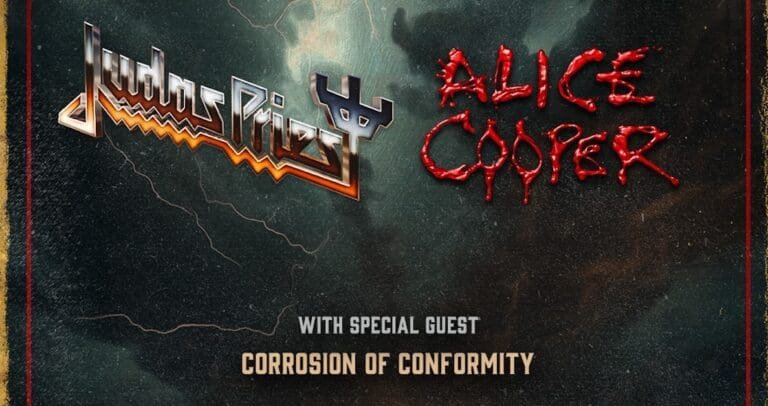
The September 27 triple-threat lineup at SPAC – Corrosion of Conformity, Judas Priest, and Alice Cooper – was a full-throttle celebration of metal’s enduring spirit, with each act delivering a distinct flavor of rebellion and theatricality. Lori Anne McKone captured some of the night in words and pictures.
I’d never seen Alice Cooper live before, and now I’m wondering how I went this long without stepping into his twisted carnival. From the moment the curtain rose, it was clear: this wasn’t just a concert, it was a production. Every song felt like a scene, every costume change a shift in mood, every prop – from guillotines to serpents – a character in its own right.
The music wasn’t just background; it was the spine of the show. Laid out with precision, each track built on the last, guiding us through madness, mischief, and menace. Cooper’s voice was sharp, theatrical, and perfectly matched to the chaos around him. He didn’t just sing – he narrated the descent like a ringmaster in a haunted circus.
What struck me most was how immersive it felt. You didn’t just watch – you entered his world. The lighting, the pacing, the choreography – it all worked together to create something bigger than the sum of its parts. And yet, beneath the spectacle, there was a sense of control. Cooper knew exactly when to turn up the spectacle and when to pull back and let the music speak.
For a first timer, it was exhilarating. Not just because of the theatrics, but because it reminded me that rock can be more than sound – it can be story, character, and myth. Cooper didn’t just play the hits. He embodied them.

Words and Photography by Lori Anne McKone.
The September 27 triple-threat lineup at SPAC – Corrosion of Conformity, Judas Priest, and Alice Cooper – was a full-throttle celebration of metal’s enduring spirit, with each act delivering a distinct flavor of rebellion and theatricality. Lori Anne McKone captured some of the night in words and pictures.
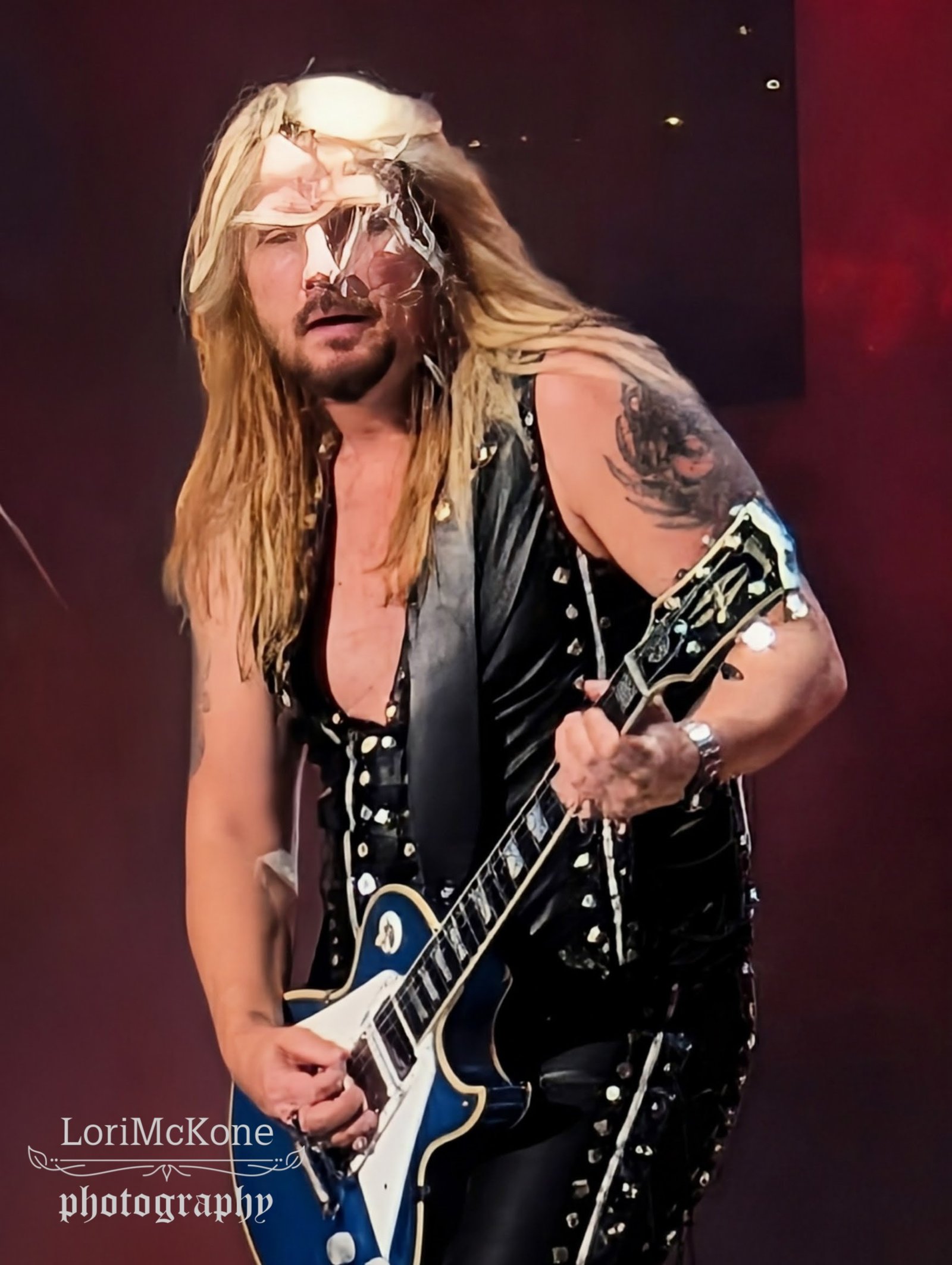
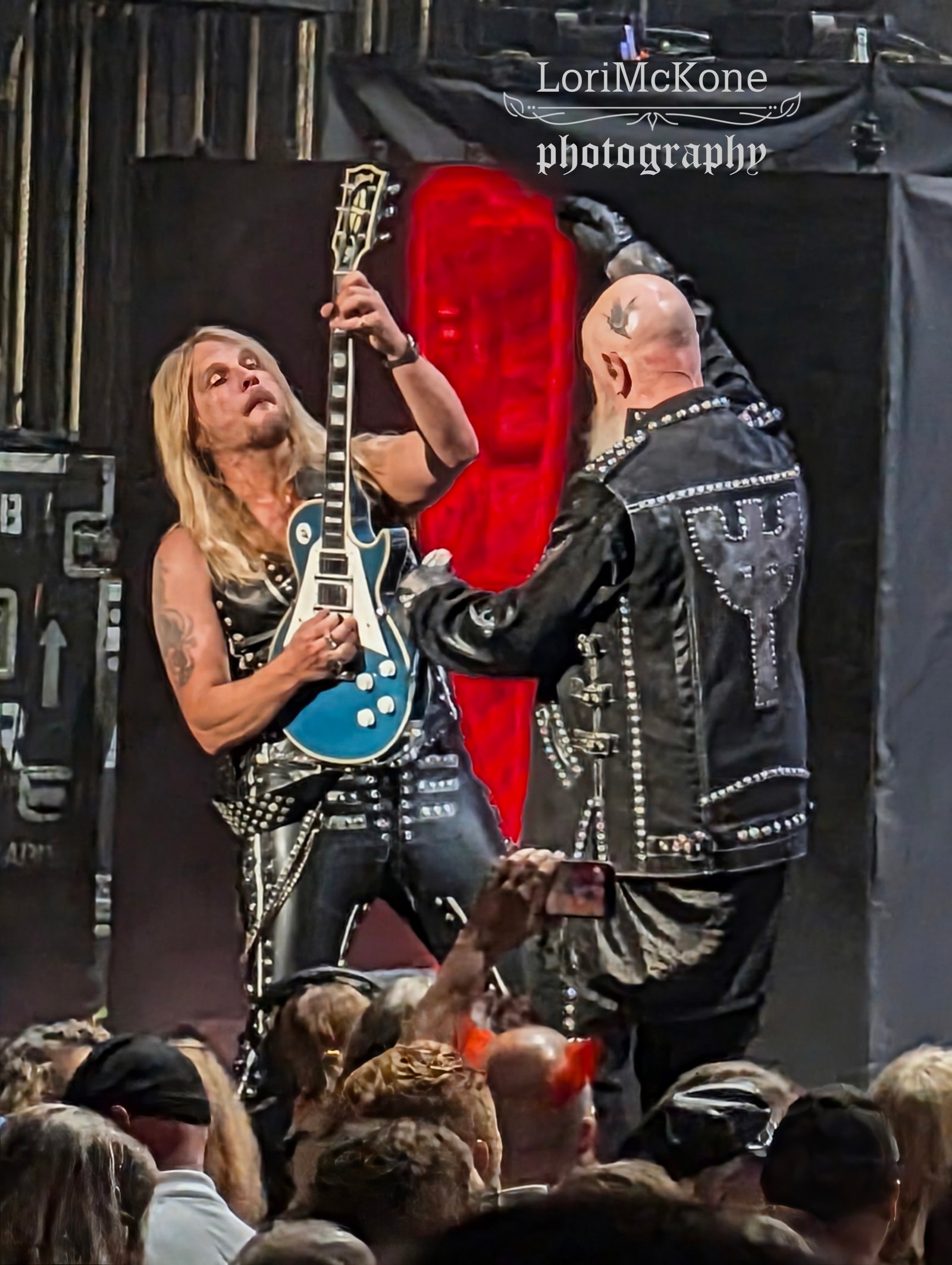
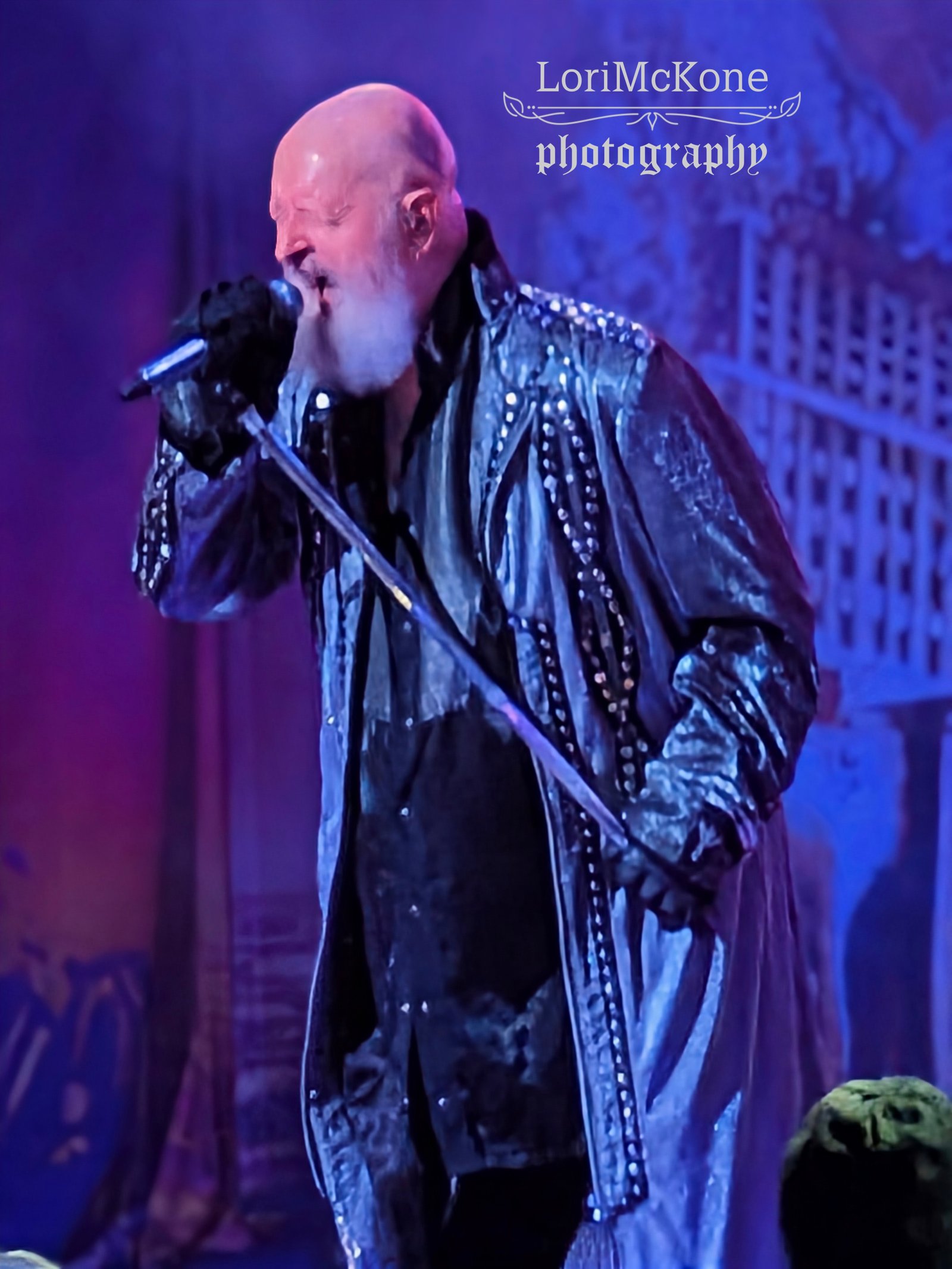
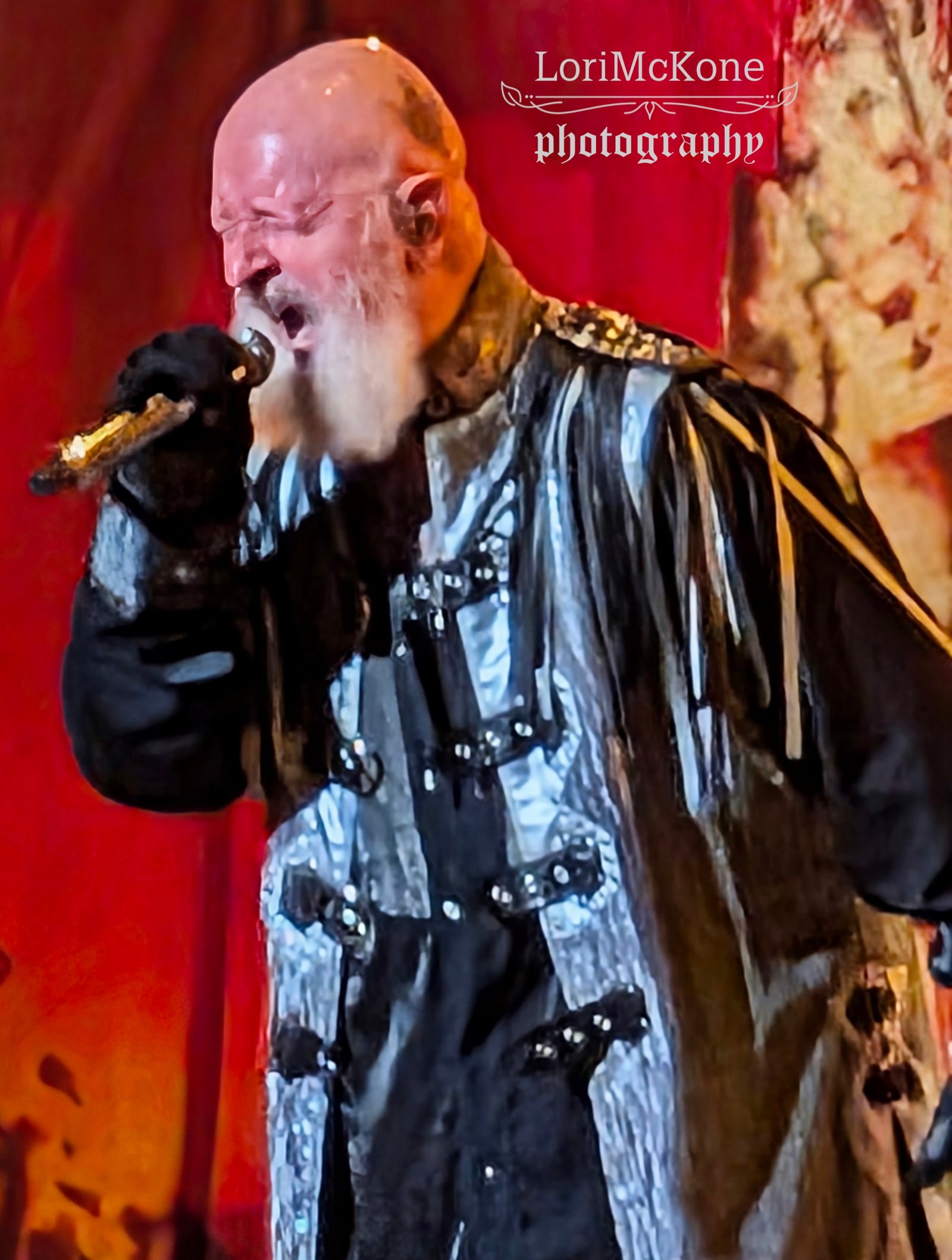
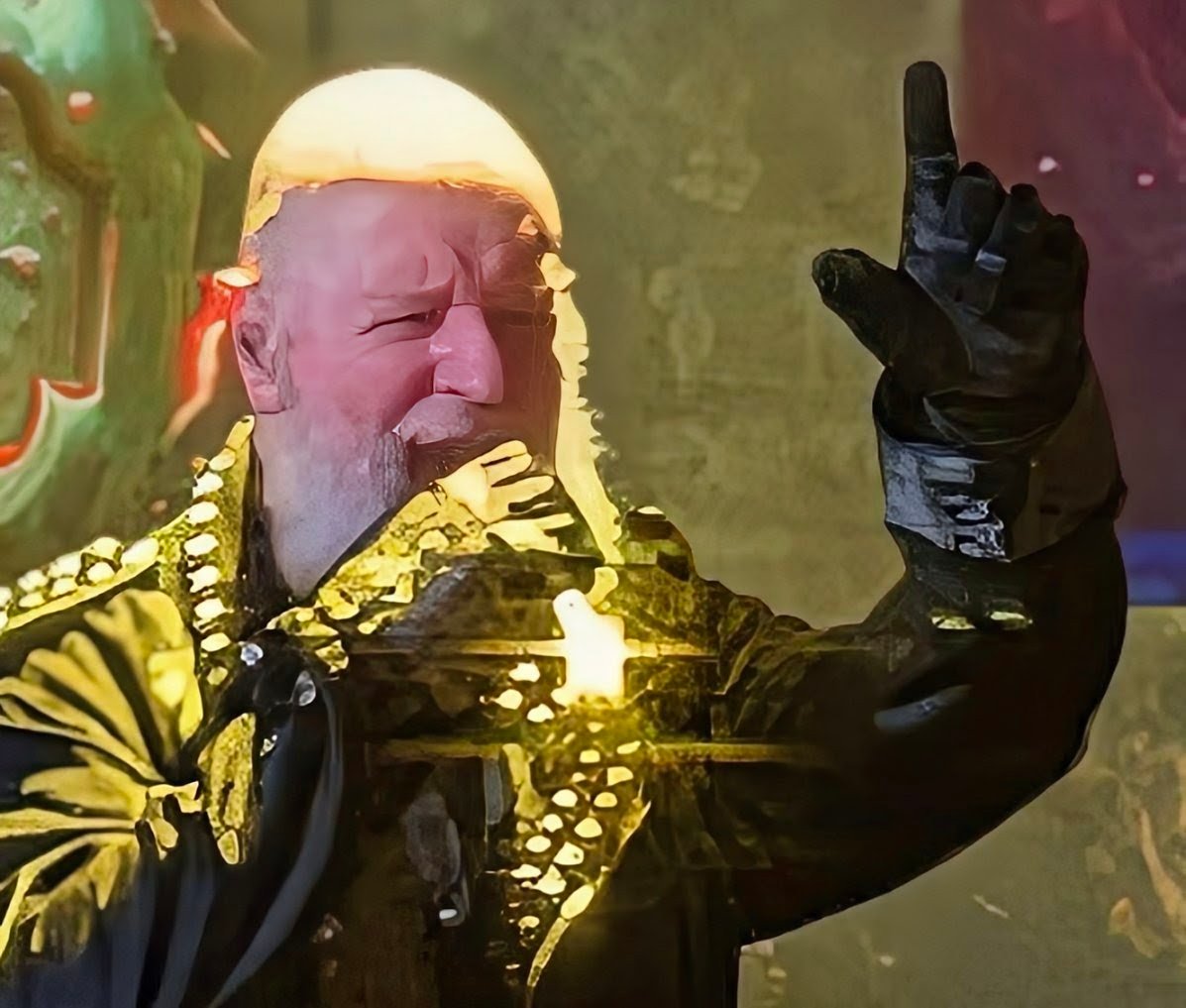
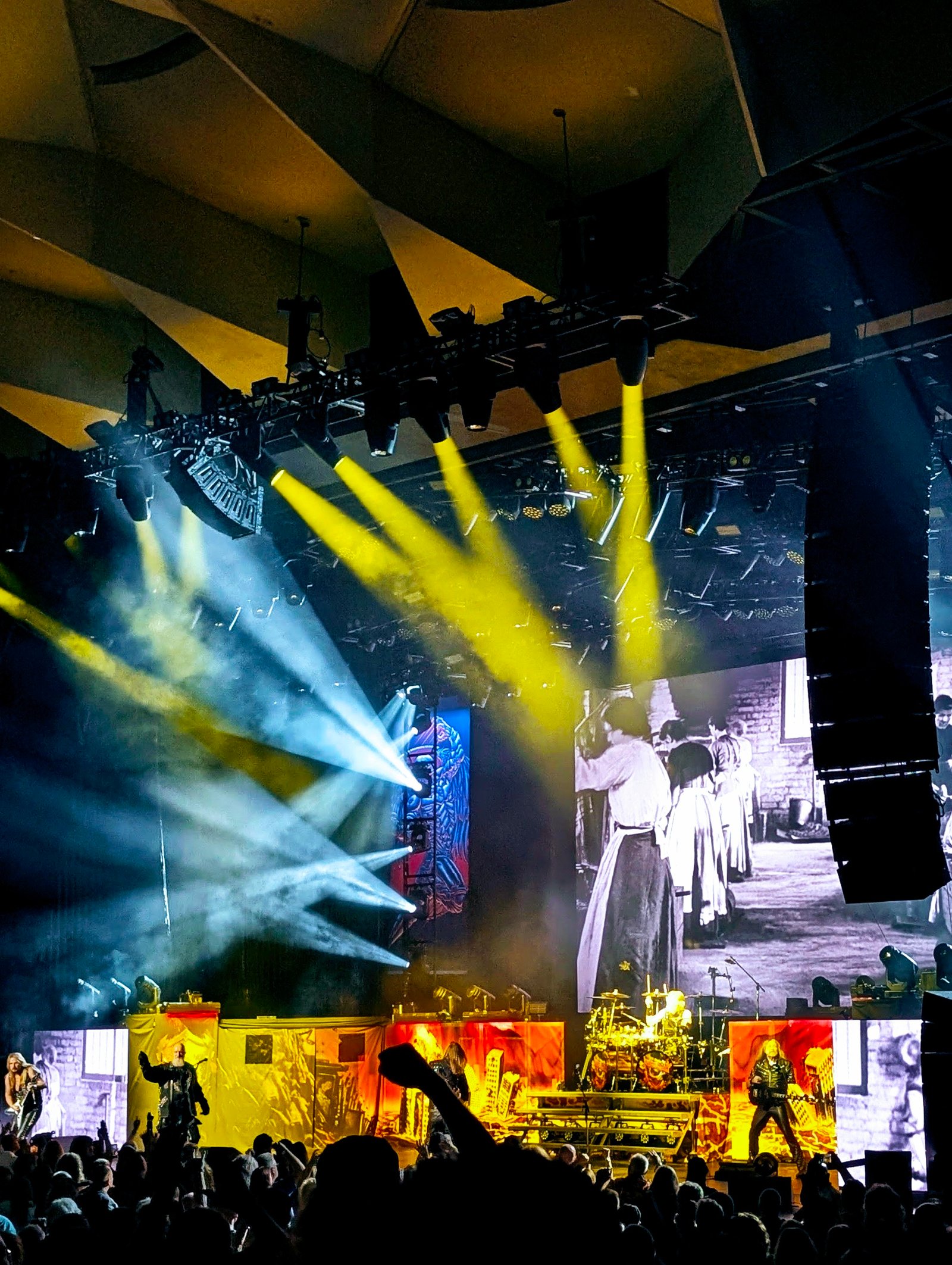
By the time Judas Priest took the stage, the air was already thick with anticipation – and they didn’t waste a second cutting through it. From the first riff, it was clear: this wasn’t a concert. It was a reckoning. A reminder of what metal sounds like when it’s forged in fire and precision.
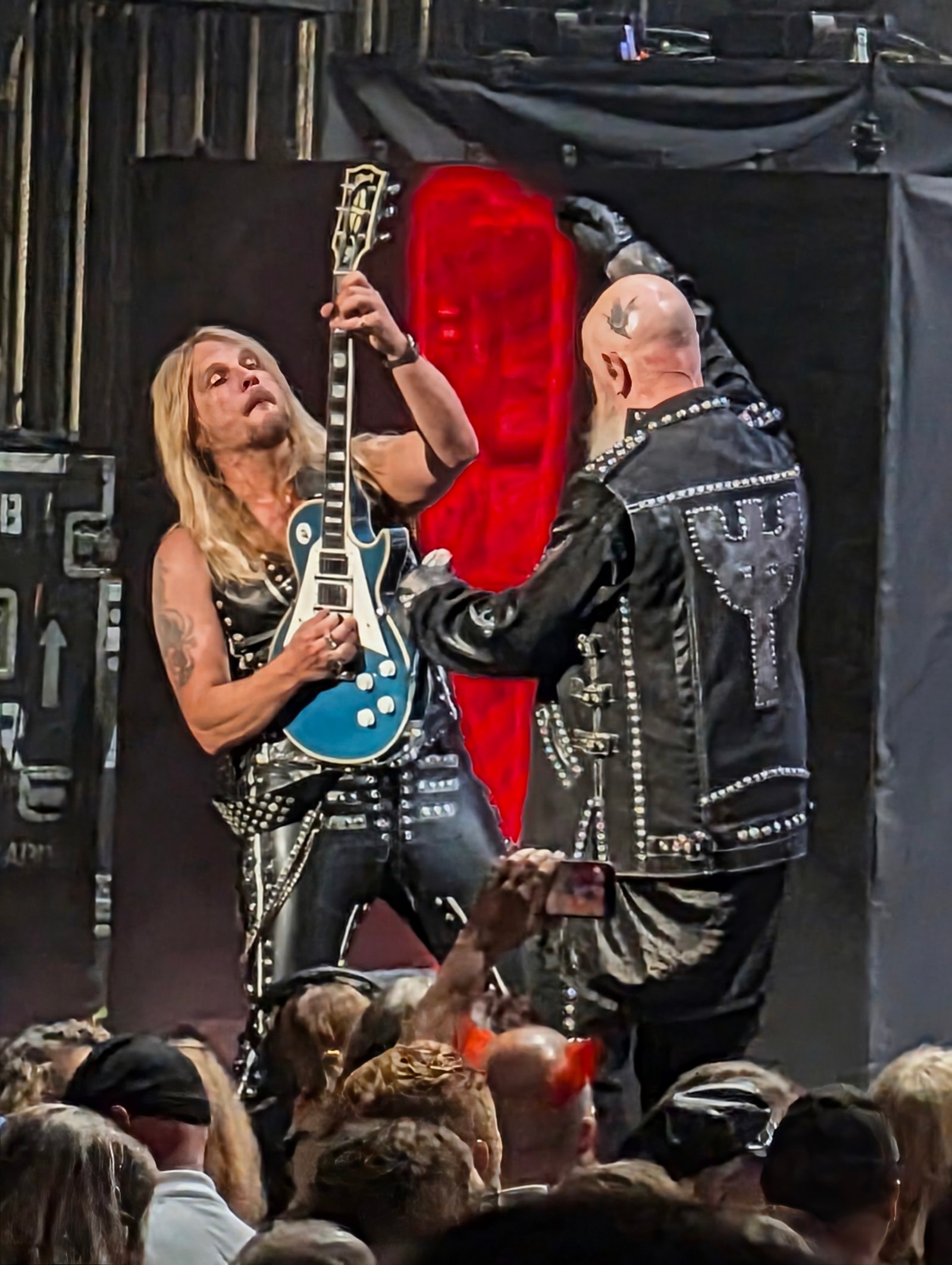
Rob Halford didn’t just sing, he commanded. His voice was a weapon, sharp and deliberate, and every time he hit a high note, it felt like the crowd collectively braced for impact. Watching him move – measured, regal, almost predatory – you could feel the years of mastery behind every gesture. He didn’t need to run across the stage. He owned it by standing still.
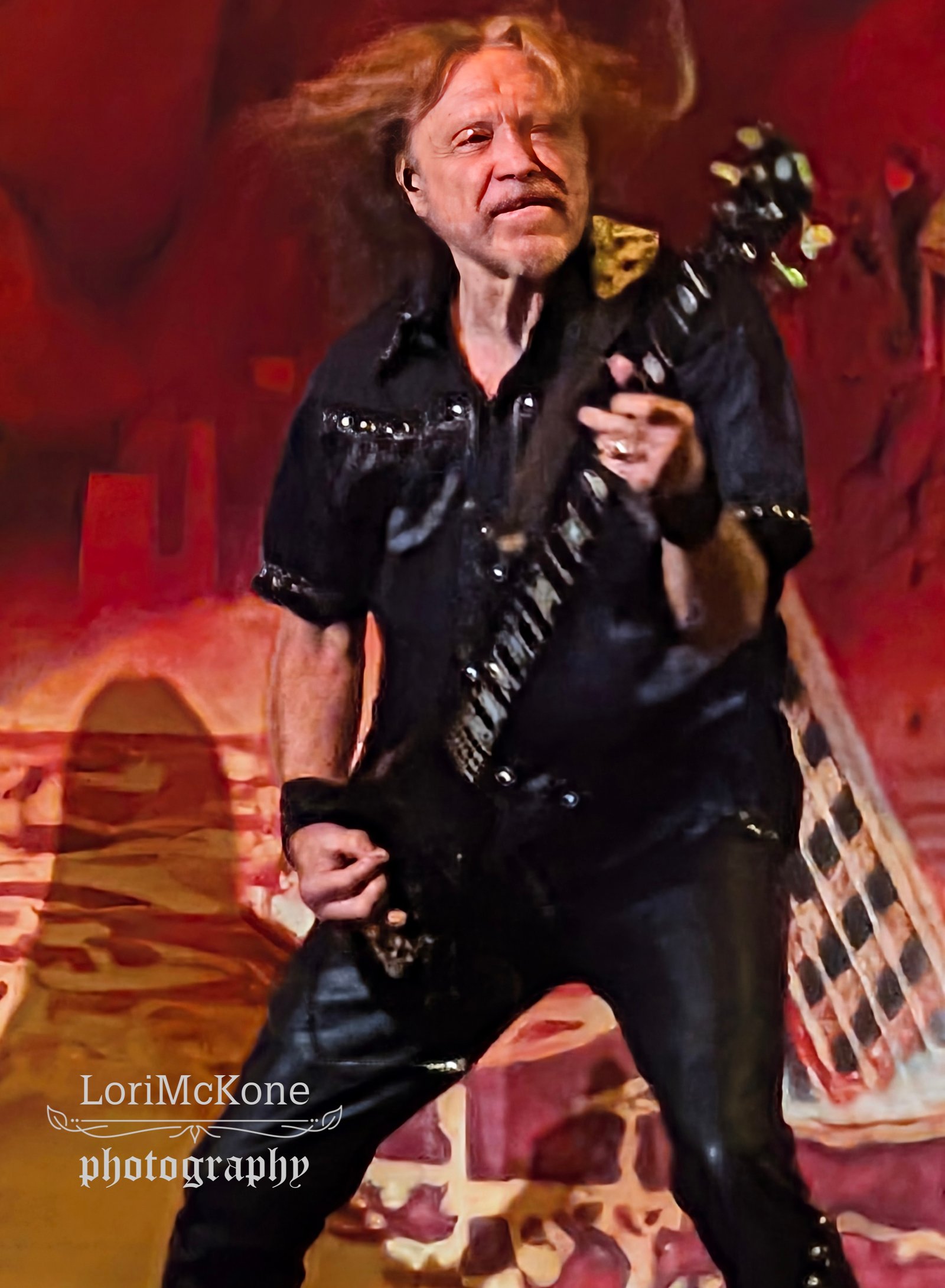
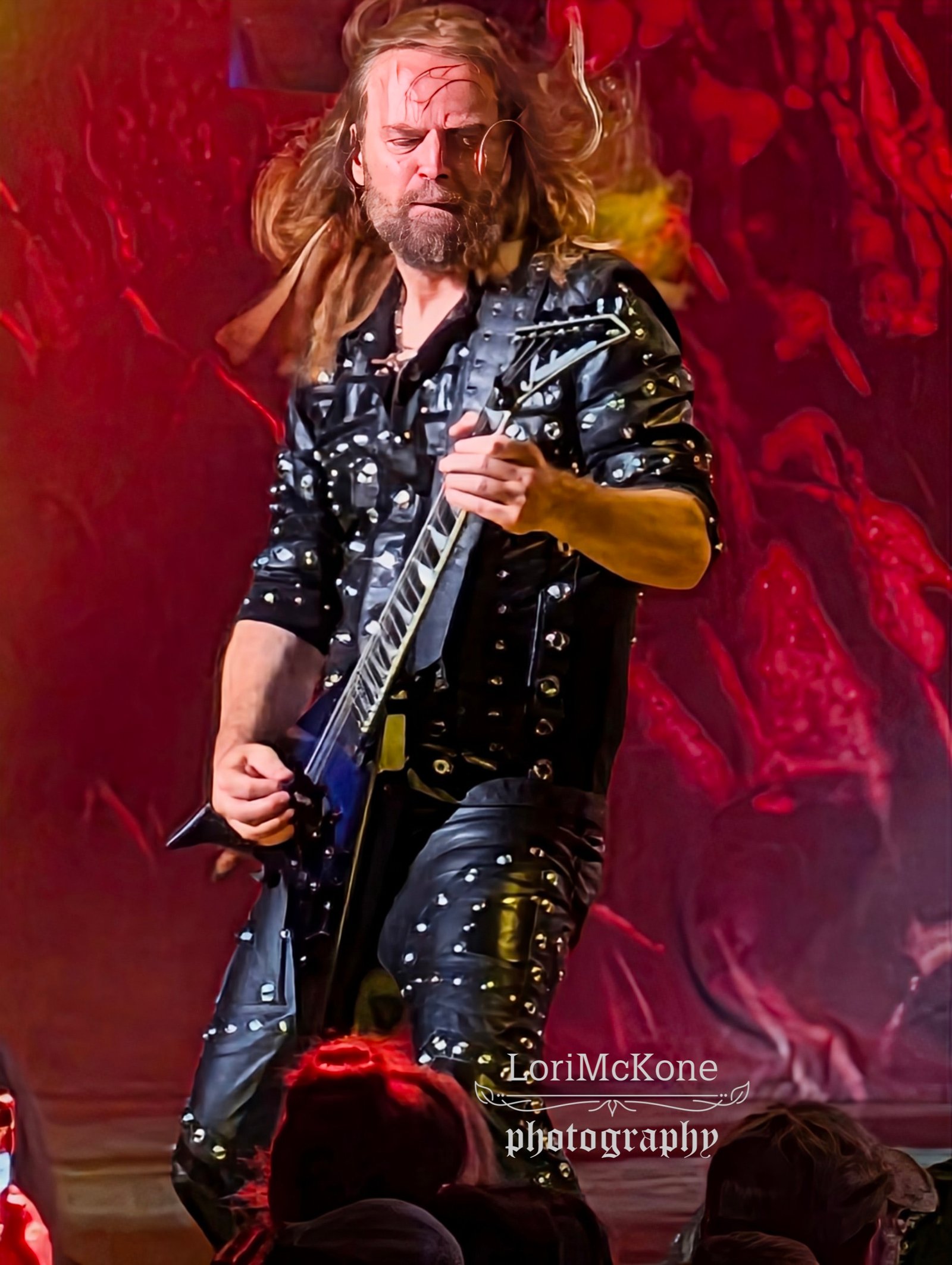
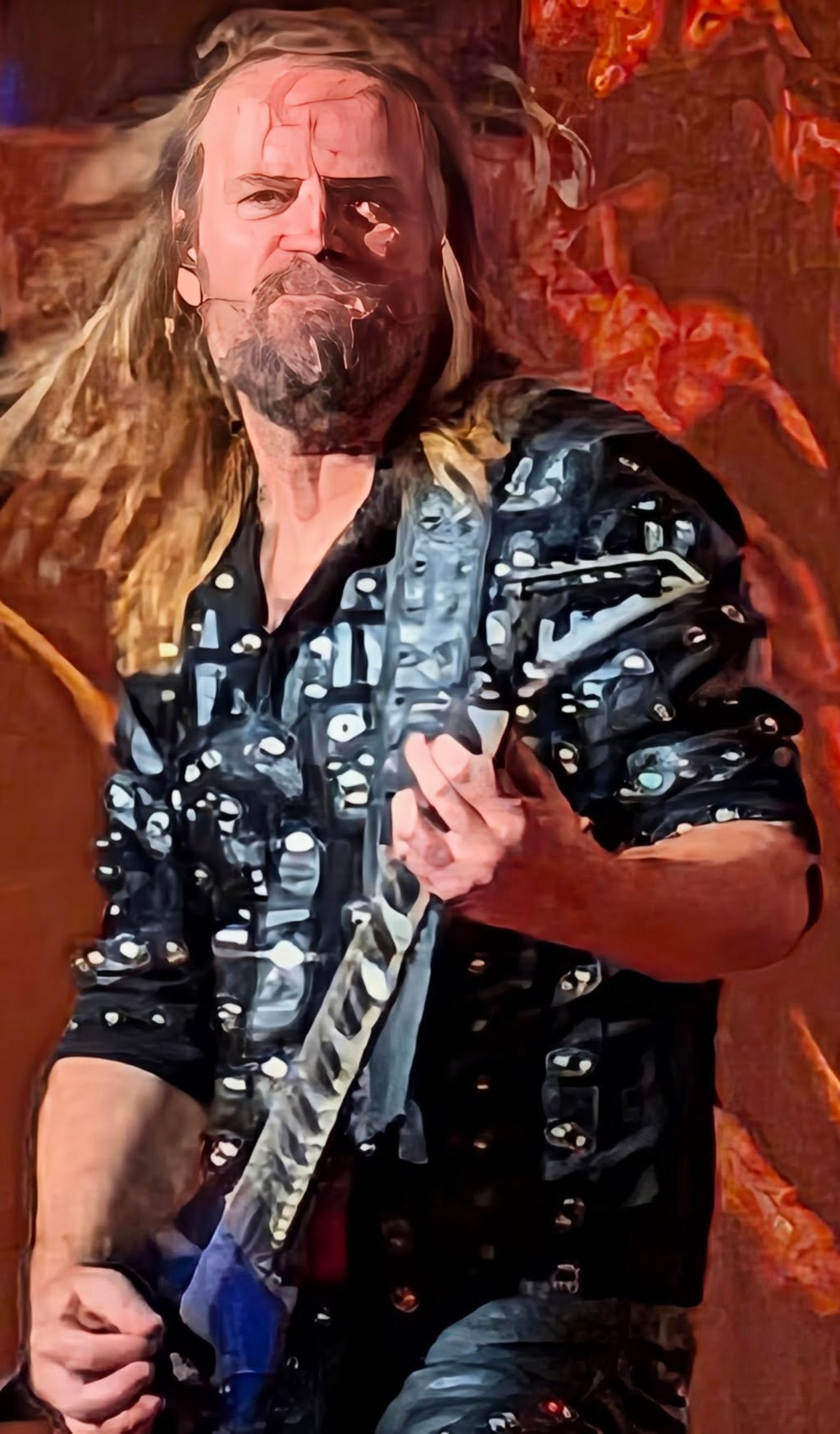
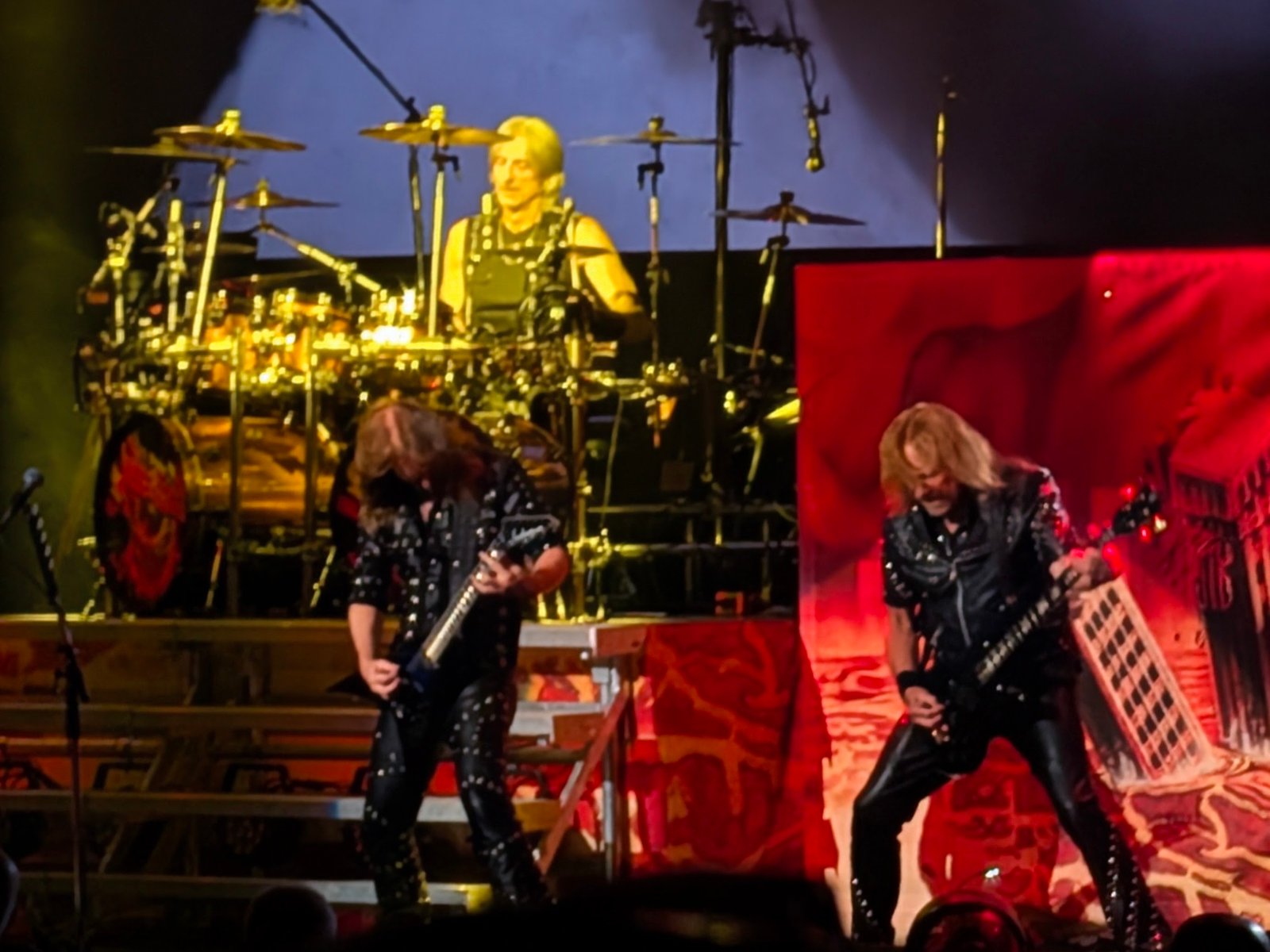
The dual guitar work was surgical. It wasn’t just loud, it was layered, melodic, and brutal in all the right places. “Painkiller” felt like a ritual, like the crowd had been waiting their whole lives to scream that chorus into the night. And when “Living After Midnight”
hit, it was pure release – joyful, defiant, communal.
What struck me most was how tight everything felt. Not just musically, but emotionally. There was no filler, no indulgence. Just a band that knows exactly who they are and what they mean to the people in front of them. For me, it wasn’t nostalgia, it was awe. They weren’t coasting on legacy. They were proving it.
The metal gods roared in with their Shield of Pain tour, unleashing a setlist that spanned decades. Highlights included classics like “Breaking the Law,” “Painkiller,” and “Hellbent for Leather,” alongside deeper cuts like “Solar Angels” and “Giants in the Sky.” Rob Halford’s vocals were commanding, and the dual guitar assault kept the crowd in a frenzy. The encore – “Living After Midnight” – was pure catharsis, a communal scream into the night.

Taylor Destroy – Xperience History – by Liam Sweeny.
Originally published in July 2024.
RRX: What is Taylor up to today? What are you doing?
TD: I’m in a band called Aspect Iris. We are a progressive metalcore band and we’ve been writing a lot recently. Our last EP Vol. 0 was recorded with Landon Tewers from The Plot in You. It was the first thing we ever released. I also was invited to New York Fashion Week recently and our song actually got played on one of the top three biggest runway stages, which was so fucking cool. I never in my whole life would imagine being a part of something like that. But I got to go and be in the front row. I watched all these models walk down the runway to our song. It was an incredible experience. As for just Taylor Destroy right now, I’ve been working on coming back full force with my TikTok, Instagram, and YouTube content along with posting more things to streaming platforms.
RRX: I’m picturing this, uh, Fashion Week. So when I picture Fashion Week, when I picture the runway, I’m picturing EDM music, you know, like in the movies or whatever because I don’t go to that stuff. I just picture that in the movies or the TV shows like that’s the kind of music – I wouldn’t imagine progressive metalcore being used for something like that. Did you ever get a sense of why they used it? Is it that they’re just changing? Is it a cultural thing? How did you explain it to yourself?
TD: It depends on the designer. One designer had country music, another designer had some EDM, another designer had pop music, but the designer that used our music, her name is Harleen Middleton and her designer studio name is Haus of Harleen, and she is very alternative. She’s really cool, tatted all over the place and her runway was more of a message. So all the other shows I watched that day were just your typical models walking down the runway and that was pretty much it. But what Harleen did is she told a story and it was so impactful. Each piece that she created aligned with the story about things like sexual abuse, mental abuse, and things that you go through throughout life. It was just really cool. So it was more alternative. It made me really proud to be a part of something that had a message like that. I stand up for the girls, the gays, the “theys,” and the entirety of the LGBTQ+ community. One thing I love about my community – I haven’t even been posting regularly for about a year. I broke my ankle last year. But even though I’m not really posting much right now, if somebody makes a video saying women can’t scream, my community will tag me in there and say, ‘Taylor, did you see this?” They just want me to go in there and roast them. So, that’s what I do.
RRX: That turns into a question. I almost don’t want to answer or ask it because it seems like it’s such a common question. You’re a female metal singer. You know, what’s it like in that world? And let me try to find a way to answer or to ask that uniquely. Did you ever encounter any vocal challenges? Not even as a woman, just as a person. Did you, did you encounter any vocal challenges when you were coming into it? Were you encouraged to scream louder than other people or were you encouraged the opposite way?
TD: Being a woman in the scene, I was never looked at too kindly. I was actually in music about eight to 10 years ago and I was in our scene. Everybody shit on me and didn’t take me seriously. Everybody hated me. No matter what I did, it didn’t matter. I would post things and the comments online were just people being nasty to me. They even went as far as saying that they hope that I get assaulted at shows or sexually assaulted at shows. It was awful and I got bullied out of it. So I stopped making music for about, God, I wanna say like six years. Then came TikTok. I got on that just for fun. My sister got me on it to do some cosplay stuff. I didn’t expect anything. Then I saw someone I looked up to for years; their name is KTheScreamerOfficial on YouTube. So I decided to duet them and the video did all right. I was like, “Oh well, maybe I’ll come back.” Then I posted my cover of “Popular Monster” by Falling In Reverse and, overnight, I got 100,000 followers. It was the most crazy thing. And then everyone was like, “Where’s your band? Where’s your merch?” And I didn’t have any of that. I was gone for so long, but then everyone was just so encouraging. It’s changed a lot now. So now you got people like Courtney LaPlante and Maria Brink and all these other amazing female-fronted bands. It’s more accepted now. Back when I started, it didn’t matter if you were good or not, it was just, “We’re gonna shit on you because you’re a woman” and that’s kind of what it seemed like anyway. You still get those comments saying, “You don’t actually scream; it’s autotune,” which makes no sense. I’m sure you know this; you can’t generate a scream from autotune. But regardless, it’s an amazing thing to be a part of now. And I love just seeing all of my friends coming up. My best friend Kasey Karlsen from Deadlands – she’s killing it and I’m so proud of her. Now is the time for us to rise up. And I think we’re doing a damn good job at that right now.
But I guess to go back to your original question. Was there anything difficult when I first started screaming? So I started when I was 10 years old. My mom and my dad raised me on metal. I was looking up to people like Chester Bennington and one day I was, like, I wanna do that. So I started learning to scream in my room and my parents didn’t know about it until my 13th birthday party. I screamed in front of the entire family and everyone was just stunned. They were like, “What just happened?” It was funny, but it actually came rather easy to me the first time I screamed. I was at my friend’s birthday party. We were just passing around a mic trying to give our best metal scream, and I did it. One of my friends said, ‘That was actually pretty good.” So I went home and just practiced it until I could do it. The only thing I could say that I’m struggling with now is that I’m trying to get into doing false chords. I found out from our producer that I’m actually using a fry and a false chord at the same time, but I can’t just strip it away and do just a false chord. So one day I would really like to be able to do that.
RRX: So can you explain what a false chord is? Because that’s something I don’t even know.
TD: Ok, so a false chord is kind of like a loud over-exaggerated sigh. Where a fry is more restricted. So it’s more like a cat’s meow or the grudge. A fry sounds more like that if that makes sense.
RRX: Tell me about your band, Aspect Iris. Tell me how you came up with the name because I always loved it. That’s something I’m always interested in and I never ask.
TD: So I guess I’m just gonna go through the whole thing from start to finish. When everything was happening on TikTok, I was explaining to one of my old producers the kind of band I wanted to be in. He then said, “You should just join this band” and then connected us all together. We all sat down and we just clicked. It’s something I’ve never seen in a band dynamic, personally. I used to take photos and videos in the scene back in the day. I was all over Bogies, Valentine’s, and Northern Lights back when they called it that – just taking pictures. And a lot of the bands, not all of them but a lot of them, hated each other. So I always said, “I never want that.” I want a big friendship and that’s what I found. I’m so thankful and proud that I found people who are just such genuine human beings. We all love the same things and we’re all so supportive of one another. I’m in a band with my best friends, and that’s all I ever wanted. And it’s why we’re not eagerly looking for a bass player right now. We don’t wanna mess up our vibe.
But Aspect Iris originally was gonna be called Iris Aspect. The boys came up with that before I even showed up. What ended up happening is I took to Google (as I do) and there’s a painter somewhere that goes by something similar to Iris Aspect. And I was like, “Oh, we can’t take this small artist’s name.” So then I was like, “But wait, what if we change it to Aspect Iris? Wouldn’t that be cool?” The boys ended up loving it more so we stuck with it. Basically, what Aspect Iris means is everyone has a different perspective on everything. What you see through your eyes could look completely different to someone else. It’s all about the aspect of it. So Aspect Iris.

RadioRadioX & The Xperience Monthly
© 2018 - 2026 Imperial Broadcasting. Most Rights Reserved.