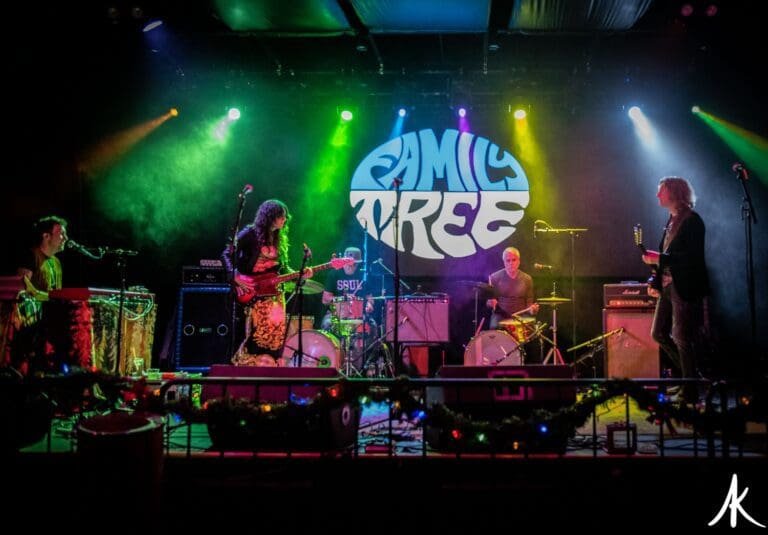
FAMILY TREE BRINGS FIVE REGIONAL SUPERSTARS TO PUTNAM PLACE
Project finds residency in Saratoga Springs and talent throughout the Capital Region.
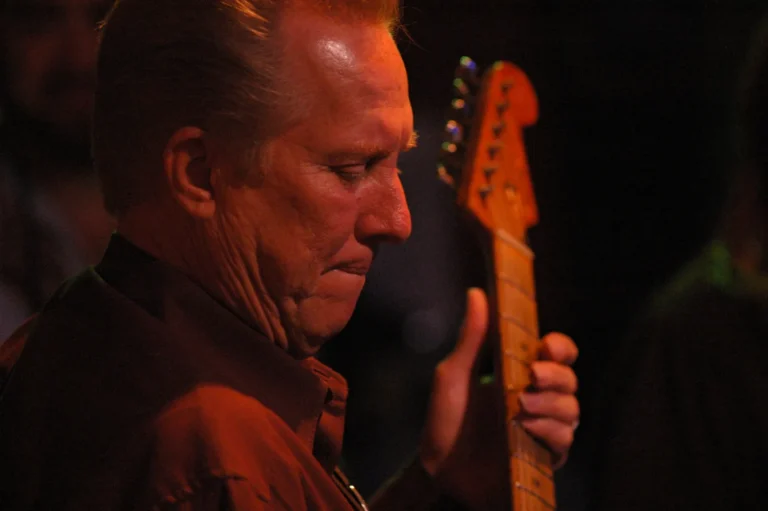
SARATOGA SPRINGS, New York, June 11th – Since 2021, Putnam Place in Saratoga Springs has given residency to Family Tree, a local supergroup composed of drummer Chad Ploss from The Audiostars and the Rob Beaulieu Band, well-toured drummer Steve Candlen, multi-instrumentalist session player Chris Carey, and Super 400’s Kenny Hohman and Lori Friday.
Listeners and fans can expect energizing improvisations of classic 60s and 70s rock and soul songs, as well as a revolving door of local musicians sitting in, including Joe Daley, Rob Flemming, Erin Harkes, Leio Kachedurian, Bert Pagano, Nick Landess, Jeff Prescott, Mike McMann, Chris Beam, Derrick Forget, Nick Horace, Mario Sevayega, Jerry Walz and Keviin Warren.
You can experience Family Tree every Monday at its residency, and elsewhere in the area. Check the Putnam Place website (www.putnamplace.com) for times.
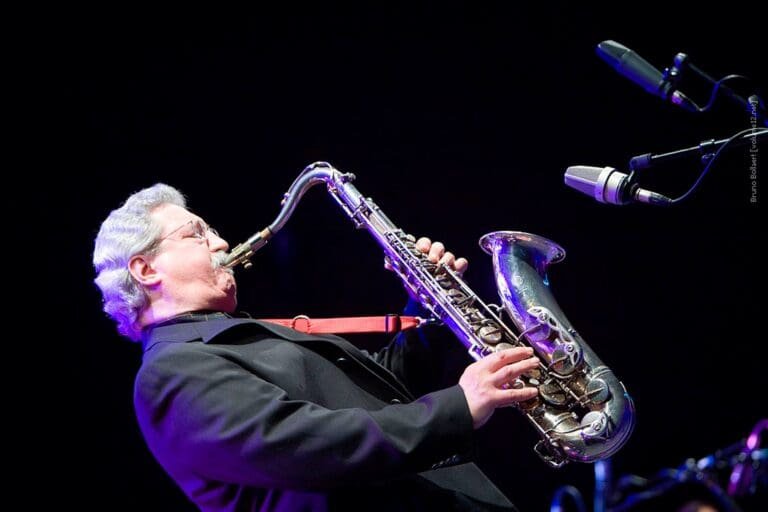
One of the most difficult achievements an artist can obtain is developing a voice and identity on their instrument so unique that, within a few bars of music, the listener instantly recognizes exactly who they are listening to. One such voice is that of four-time Grammy winner, international recording artist, educator, composer, and clinician Ralph Lalama. For nearly five decades, Lalama’s husky and lyrical saxophone personality has been an integral part of the NYC jazz scene. He has woven his way inside the fabric of jazz music’s rich history and cemented his place among the elite improvisers to have ever played this enchanting American art form.
Let’s get into it…..
I first met Ralph Lalama in September of 1999 while launching my first semester as a student within the jazz studies program at SUNY Purchase in Westchester, NY. He was performing with pianist Pete Malinverni on Pete’s Master’s recital in room 81 of the music conservatory. I hadn’t known of Ralph, nor was I aware he was one of the jazz professors. However, when the show took flight, it was apparent to all in attendance that Lalama was one of the heaviest cats on the scene. From the first note, his joyful tone, swinging feel, and command of the music were obvious. He transported the entire audience back to those precious times when players like Dexter Gordon, Hank Mobley, John Coltrane, Junior Cook, Sonny Rollins, and others were at the forefront of the jazz movement. It was an inspired and engaging introduction to the mind, life, and music of Ralph Lalama.
Fast forward a few months…
It was December of 1999, and I wanted to record my first-ever album as a bandleader. I had chosen the music, but wasn’t completely committed to the personnel. After careful consideration and with a fierce level of confidence, I decided to ask Ralph if he would like to play on my first recording. He asked what the tunes were, when the date was scheduled, and how much it paid. After a small conversation, he agreed. Shortly after we recorded “Joe Barna Quartet / A Rose For Pam.” This effort was dedicated to my mother, Pamela Rose Barna. It featured four originals and three jazz standards. This project, which also included James Weidman (piano) and Ryan Berg (bass), would be the catalyst launching me into a long career as a composer, drummer, and bandleader.
It was now 2000, and the album had been completed. All that was left to do was book the band and begin spreading the word. The first stop in upstate NY would be the legendary Van Dyck jazz club in Schenectady. What an honor it was to share the stage with a legend like Ralph Lalama. His musical guidance on the bandstand was like nothing I had experienced up till that point. The way he could lead the rhythm section through a solo without uttering a single word took the playing to elevations I didn’t know existed. The giant sound he achieved on his horn, his unique phrasing, and the vast wealth of content present inside every solo captivated all who took the time to be there in person. It’s a night I will remember forever.
BREAKING NEWS…….
It is with great honor that I announce…Coming to the Van Dyck on Thursday, June 26th, will be a 25-year anniversary reunion commemorating the first time Ralph Lalama and I joined forces to present a performance in this historic venue. To have an opportunity to perform with someone who has toured and recorded with the likes of Buddy Rich, Joe Lovano, Kenny Barron, the Village Vanguard Orchestra, and more for 25 years has been a privilege. The lessons I’ve learned are priceless. His encouragement and commitment to seeing the scene grow and helping young musicians find their way is something I just can’t measure in words.
In addition…
I’d also like to announce that WAMC reached out to Chris at the Van Dyck and asked permission to document the one-night-only performance to be showcased on WAMC 90.3 radio. We are humbled and appreciative to have this rare moment captured on recording, and would like to thank all involved for being a part of this gathering.
The featured musicians will be:
Ralph Lalama (tenor sax)
John Esposito (piano)
Jason Emmond (bass)
Joe Barna (drums & cymbals).
We invite each and every one of you, who is reading this article, to come out and be an important part of this joyful celebration. I’m pretty sure we won’t be seeing a 50 year anniversary, so here is your chance to experience something special right here in the Capital Region. It will be our pleasure to perform for all in attendance
The Joe Barna Quartet w/ Ralph Lalama
Thursday, June 26th 2025
Sets at 7:30 & 9pm / Doors open at 6:30 for early seating
This Old Ramshackle House – The Weird Side of the Internet – by Liam Sweeny.
Let me paint for you a picture of childhood imagination. If you grew up anywhere near an industrial area, you might, and I stress “might,” have a fond vision of towering, anarchy-laden construction. Ramshackle, like the tree fort you might build in the local woods. It’s because industrial areas have a lot of industrial junk and not much concern about the kids making forts out of it all. Well, that was the eighties. These days, with the whole “helicopter parent” thing, probably no kinds are playing in the junk piles. But in a village in southwest China, 42 year-old Chen Tianming is the kind of building with junk.
Chen was an ordinary guy living with his family in a bungalow when developers came around, offering to buy up his- and his neighbor’s properties to put in a resort. Everybody took the cash except Chen, and as consequence, every house was demolished except Chen’s. And that’s when he started building… vertically.
Somewhere in southwest China, there is a concoction of wood plank and tentpoles, baling twine and stripped screws, and a devil-may-care position on local ordinances and building code. Currently, he’s having morning tea in a ten-story monument to human pluck.
The crazy thing here is that the resort went bust, and they just walked away and left Chen surrounded by the rubble of his former village, giving Chen endless building materials. This is really good, because he’s spent tens of thousands of yuan in court.
One final cool thing. Now that people in China are aware of Chen’s life’s work, it’s become an attraction. Not saying people go inside. I don’t blame them. A lot of people think it’s reminiscent of the work of artisy Miyazaki’s Studio Ghibli, in particular the chaotic building of masterpieces “Howl’s Moving Castle” and “Spirited Away”.
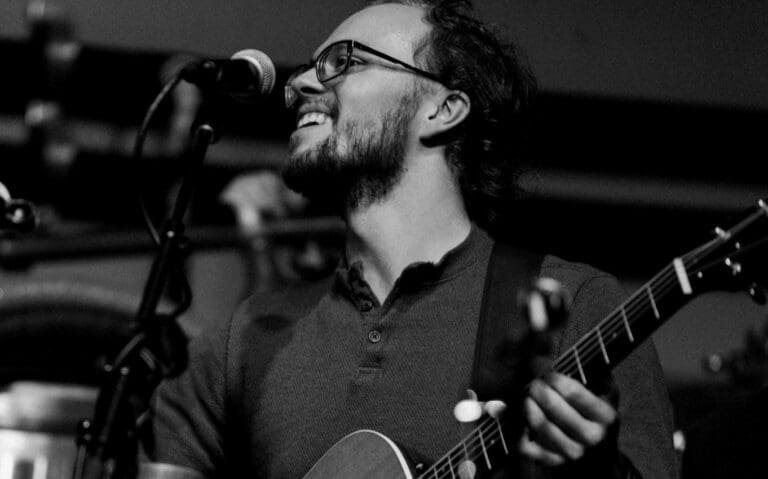
Hunter Frost – Interview – Thanks for Asking! – by Liam Sweeny.
RRX: Every artist’s first song is a milestone. But so is the latest song. Describe the first song/album you recorded, and also the latest song/album you recorded; what are the differences?
HF: This is an interesting one, because my first release and my upcoming release are not that far apart!
The first song I released is called “Dreaming of Starfall” – it’s a one-take acoustic guitar instrumental that I released in January 2024. I wrote it sometime in 2022, recorded it in a voice memo, and completely forgot about it until I was scrolling back through past work and it caught my ear. I had completely forgotten what I played, and had to re-learn my own song by ear… and I decided to record it before I forgot it again! The song name speaks to what I see when I hear it: laying on the roof of my house, drifting in and out of sleep watching shooting stars fly across
the night sky. It’s a very important piece to me – guitar was my first instrument, before I started singing and long before I started songwriting, and I’m proud to be able to
showcase that on it’s own. My latest release (officially) is an EP of instrumental songs called “Reflections”, though my upcoming full-length album is my true recent project. It’s an 11 song
project called “Love, Always”, and tells the story of moving through past pain and traumas, learning to open up and be vulnerable, and falling deeply in love again. There are songs about loss, forgiveness, and love, and it is wholly dedicated to the love of my life: Shannon Tehya. She’s an indescribably talented songwriter, musician, and performer (which I’m sure some of you readers know very well), and she has inspired me more than I can put into words. She’s the reason this album exists. I’m excited to say that the production is complete, and it will release this summer!
RRX: Part of learning to be a musician is to fall in love with a song, an album, and hammer away at your instrument until you can play that whole thing. What was that song for you? Was there a hardest part?
HF: Absolutely! Like I mentioned earlier, guitar is my first instrument, and the hardest song I’ve ever learned is “I Wonder What Is Keeping My True Love Tonight”, arranged and performed by Josienne Clarke and Ben Walker. It’s a tragic, traditional UK folk tune, which tells the story of a woman who is betrayed by her lover, and Ben’s guitar work is some of the best I had ever heard (like so many modern renditions of incredible UK and Irish folk tunes). I spent months practicing and performing it in the mirror. It may not be the hardest song I can play, but it was a pretty early addition to my catalogue, and directly led to my growth as an instrumentalist.
RRX: Sex, drugs, and rock and roll. Or so they say. Whether you’re off the wagon, on it, or never been, there’s something you got a thirst for. What are some of your basically harmless vices?
HF: Basically harmless vices… more than anything, I’m a hard-core coffee addict. Outside of music, I’m a full-time process engineer at the Albany Nanotechnology Complex, and am in the final stages of a PhD, so caffeine is the only way I’m able to function each morning. I have nearly a dozen ways to make coffee, always have some specialty light-roast beans in the house, and will unabashedly judge mediocre coffee when out in the area… luckily there are some great venues to grab quality coffee in the Capital Region: shoutout to Kru Coffee in Saratoga, MochaLisa’s Cafe in Clifton Park, and Kickstart Cafe in Schuylerville!
RRX: What instrument would you add to the band if you could? Is there anything you are trying to do musically that would be helped with one or more additional players?
HF: Well, as the bassist and harmony vocalist for Shannon Tehya & The Troupe, I am privileged to know quite a few talented musicians: drummers, guitarists, pianists, vocalists, and nearly every other instrument you can imagine (thanks, Soahn, on EWI). That said, I’ve always loved the sound of classical string quartet instruments: cello, violin, and viola. I would love nothing more than to hear some versions of my songs with string arrangements, and maybe someday that will happen. If there are any string players reading… reach out!
RRX: Love is a big part of music. We’re talking first loves here. Lots of cool stories about first loves and the things we do for those loves. Can you (or, in the case of a band, one member) talk about your first love, especially if you did something cool to express that love? (No names needed.)
HF: Love is such a tricky thing to describe, and I’m not sure I could call any love a first love. I think that each time we fall in love with something or someone, it’s a new love of its own, and it’s always the first of its kind, and there’s a sort of beauty in that. The first time I ever fell in love with someone ended quite tragically, and that experience inspired many of my original songs, including one of the tracks on my upcoming album: “Unfair”. It’s a song about love and loss, and it was the first song I ever finished. My first long-term love was a year-and-a-half-long relationship in high school, which ended my senior year. That inspired the opening track on the album: “California”. It’s a song about learning forgiveness and understanding, and is a song I’m quite proud of. And, of course, my lifelong love and soulmate is Shannon, who has inspired so many of my songs, including the last track on the album: “Always”. It’s a confession of everything that love means to me, and it’s the closest I can get to describing how much she means to me. Each of these is important to me, and they each help tell the story of the album in their own way.
RRX: I know when pitching it helps to tell someone it’s “this meets that.” So let’s try that with you. If you had to give me two bands that meet each other in your sound, what are those bands? More than two bands?
HF: I would have to say that my music would be: John Smith meets Glen Hansard. I admire John Smith’s guitar work more than anyone, and have been so inspired for my own music, and I love Glen Hansard’s lyricism and reverence for traditional Irish folk music, both of which feature prominently in my own music. If there were other musicians to add to that list… a bit of Novo Amor, Ben Howard, and Gregory Alan Isakov rounds it out! Thanks for asking!
The Turd: An American Journey – Xperience Fiction – by Liam Sweeny.
Ernest sat in the green room with his palms making out with his knees. His eyes made time with the brick face of the outer wall and the bare sheet-rock inner walls. The fluorescent overhead bulb strobed out in a rust-edged ballast. The low pile ringlets of the stained gray carpet beneath his feet was perfect breeding ground for static charge and he wondered if there were green rooms that were actually green. He glanced over at Lysette who had her notebook resting on her prototype, pages in a whirlwind, speared at points by anxiety. Ernest got a queer feeling in his stomach seeing his surefire wife scrambling over anything.
Two days prior, a man in an easy suit showed up at their door. He handed them a handshake and a card that said Funding Angels. It was a show on VidYou that was really a knock-off of a more famous venture capitalist show, blending it with a seventies variety show and an antiques appraisal show. It was Lysette’s guilty pleasure;
Ernest could’ve taken it or left it.
Their visitor told Lysette that he had seen her inventions and wanted to give her a shot on the show. Moreover, he saw Ernest’s daily struggle in the background and knew viewer junk food when he saw it. Lysette was invited so long as she could bring Ernest as her plus one.
“You okay, hun?”
Lysette scratched her temple with her pen cap. “I’m fine. I just didn’t have enough time to put this in trials. I tried it quick myself last night, but I don’t know if it’s supposed to taste like that.”
“Wait, you took a shit and ran it through that thing?” Ernest said. “When?”
“Last night. But I ate it this morning. I made my flapjacks with it.”
Ernest soured his face. “That’s why you wouldn’t let me have any. I just thought you were being greedy.” He scratched his face. “So how did it taste?”
Lysette concealed a grunt. “Nutty,” she said. “Very nutty.”
“Did you eat nuts?”
“I had a peanut butter sandwich yesterday,” she said. “Crunchy. I don’t know if it tasted nutty because the nuts didn’t digest and just got ground up by the machine.”
Ernest got up, patting Lysette’s two-hour hairstyle, to her swatting him away.
“It worked though, right?”
A PA with a busy headset opened the door.
“You guys are on,” he said. “Just remember not to swear. We’re live. And this is just a guideline – don’t walk out there with a shit.” He looked at Ernest. “Not that you could, big guy, if I heard right. If they want to see your shit…” he looked at a clipboard in his hand. “Lysette, they’ll ask. They have a Porta-Potty offstage which they’ll bring out.”
“Oh, I just have an invention,” Lysette said.
“Yeah, I get that, but…” he reached in his pocket and pulled out a tiny party bottle.
“Laxative,” he said. “Just in case. Good luck folks.”
Ernest guarded Lysette with her invention and notebook gripped tight to her chest as they walked out on stage. It was a real green-room, the size of an old factory.
Cheap tables, chairs, almost everything in Big Value black plastic or particle board.
One of the investors, a placard named ‘Cal’ on his chair, held up a card.
“So we have Ernest and Lysette Kreb. Welcome. Why are you here?”
“Um, you sent a guy?” Lysette said. The investors all laughed.
“Oh, no, honey,” another executive, ‘Tina’ said. “What do you have for us?”
Lysette set down her device and placed her notebook on top.
“I wanted to invent something to make a positive impact in the world,” she said. “And it occurred to me that if we could reconsitute our own waste and turn it into something that could nourish us, we could radically reduce our agricultural footprint. So I found an amazing combination of microbes and enzymes that can turn that waste into a material similar in form and function to flour.”
‘Teddy’ swiveled in his executive chair and came to a rest with a pencil aimed at
Lysette.
“Are you saying we can eat shit?”
“I would never tell you that.”
“No, but with that device, we could eat our own shit, right?”
“Well, yes,” Lysette said. “Exactly, yes.”
The investors swiveled toward each other seeing if they had concord in giving their supplicant the funding that might not launch the assembly lines, but would at least further the development.
“So Ernest,” Cal said. “Word is you haven’t shit in… forty-three days. That true?”
“Yes sir.”
“What are you going to do with the turd once it does come out?”
“I’m going to flush it,” Ernest said. “Maybe break it up a little before it goes.”
“Not even take a picture of it?” Tina said.
“Probably not.”
“Okay, so I’ll tell you what,” Teddy said. “Lysette, we’ll fund your project. We’ll figure out what you need. But Ernest, we want that shit. It’s a package deal.”
“Y’all think this is a joke, right?” Ernest said. “I hate this thing inside me. I’m flushing it. That’s it.” He looked over at Lysette and saw disappointment. “I’m sorry, Lys, no.”
“We were going to give her up to ten thousand dollars,” Teddy said. “Name your price. I’ll give you twenty thousand.”
“No.”
“Thirty,” Tina said. “No; forty.”
“Fifty-five,” Teddy said. “And we’ll fund the poop oven.”
Ernest felt his face hot. He wasn’t carrying a turd for forty days to give it to some entitled rich asshole to forever own a piece of him, no matter how despised a piece it was. Ernest walked over to the craft table tipped it over, spilling eclairs, donuts and bottled water all over the stage floor.
“Lysette, I’ll be out in the car,” he said. “Fuck these people. I’m sorry, babe.”
He left the set and stormed out in the parking lot with hot stinging moisture in his lower eyelids and a dull ache in his gut.
#
Their bag straps hung draped over the back of the chair in front of Jasen’s desk. They were lucky to get back to the office from the conference room without grabbing employees at random by the shoulders and shaking them.
They were going to purge the whole internet. All social media. Everything. Gone.
Jasen unraveled his four-lane cheeseburger. Four patties, shredded and sliced cheese, bacon strips, tomato, lettuce, onion – everything. Ophelia’s chin rested on her clenched fist. They were watching the Weather Channel because they couldn’t agree on what to watch and at least the Weather Channel had tornadoes on it. And it didn’t involve poo in any way.
“Everything,” Ophelia said. “I’ve never not had social media.”
Jason flicked a paper football across the room. “My first real memory was of a cat playing piano,” he said. The internet’s been my whole life. I met my first girlfriend on Gravesong; I used to make mods, like really high-end equipment, god-killing hammers and shit, and she bought from my shop in the game. We had a long distance relationship for like six months.”
Ophelia chuckled. “My first boyfriend broke up with me with a meme. Really weird, too. Like one of those cartoons you have to think about to get it. He basically had to explain what he meant by it, which made me feel pretty stupid, to be honest.”
Jasen walked over to his bag, leaving his burger unmolested for the moment to pull out a small, thin laptop and cable.
“You need a flash drive?” He asked. “I got a couple. I got a one-terabyte, that should hold everything you got.”
“What do you mean?” Ophelia said.
“Pictures.” Jasen flipped her the flash drive. “Figure we got advanced notice here.
Grab as many of your pics as you can before they shut it off.”
“So you have, just, no faith in us whatsoever.”
Jasen plugged his laptop into his office desktop’s USB-C port to charge it. “We gotta find the anti-poo before our government scratches this itch,” he said. “We have no idea when they’re going to do that, and from everywhere we’ve gone, poo reigns supreme.”
“What about the hospitals?” Ophelia said. “I’m sure people are eating poo, so they gotta be getting sick with E. Coli, not to mention like thirty other things. Maybe we can go to the hospital and film some of it.”
“You want to go to the hospital, we can, but do you think warning people of the dangers of eating poo is going to be the end of poo? They had a fried-egg commercial about ‘your brain on drugs,’ and it just made stoners hungry for eggs.”
“So that’s it? We’re going to lose the internet and our jobs too?”
“I’m just saying, we need to find a way to lean into the poo in order to throw people off it. We have to grab the attention before we can divert it. And we got a ticking clock.”
The room grew quiet to all but the sound of the meteorologists explaining the whims of mesoscale convection and the soft hum of three computers. Jasen started compressing his data from Profiles.
“I ate poo once,” Ophelia said. “By accident.”
“Oh, nice,” Jasen said. “How did that taste?”
“Like shit. I don’t know. Wasn’t good.”
“How do you eat shit by accident?”
“I was twelve,” she said. “Susie Whitmore told me that if you put poo on your face
like a mask, it gets rid of pimples. I had pimples, so I tried it. And I got some in my mouth. Come to find out Susie was making the whole thing up.”
Jasen chuckled.
“Wasn’t funny then, asshole.” Ophelia grabbed the remote and turned the Weather Channel up loud enough to drown out Jasen’s mirth.
“In the fight against climate change,” the anchor said. “We have many inventions that could use a fighting chance. In a town outside of San Francisco, a married couple have developed a machine that can turn human waste into flour to make bread, and one of the two has a miraculous story.
“Turn that up,” Jasen said.
“It is up.”
The screen shifted to a crappy venture capital show knock off calling Funding Angel. A quirky couple had a device in a white case between them. He was in blue denim overalls and red flannel shirt, she was in a blue sequined dress.
“Lysette is the inventor, and her husband, Ernest, is an amateur engineer. They’ve developed a device that uses enzymes and microbes to break down everything in our waste and reconstitute it into a protein- and carbohydrate-rich food, a flour of sorts.”
“You think that could help us?” Ophelia said.
“Shh… I’m listening.”
“But the real story here is Ernest hasn’t gone number two in close to forty-three days. He eats normally, and it is a good question of where this food goes. But on the show, a bidding war broke out for Ernest’s poo when it comes out, a bidding war ended with Ernest leaving the show in a meltdown.” The screen switched over to Funding Angels, and Ernest turning over the craft table.
“Maybe he’s saving the poo for himself to use the machine on,” another anchor said. “Forty-three days could make a lot of flapjacks.”
They took their time in banter, and Jasen shut off the television.
“Ernest Kreb,” Jasen said as he jotted the names down. “Ernest and Lysette.”
“I can’t think of anyone more anti-poo than a guy who can’t poo,” Ophelia said.
“We gotta find him,” Jasen said. “I think he’s our shot, but we gotta be careful. He hasn’t shit in forty-three days, he’s bound to be ornery. And if he’s our only shot, we can’t afford to piss him off.”
“You think he’ll talk to us?” Ophelia said.
“I think he’s tired of poo culture right now,” Jasen said. “Real tired. He might just be looking for us right now without even realizing it.”
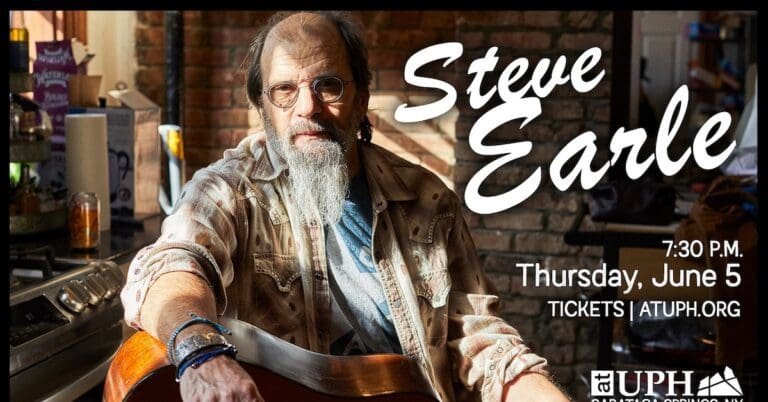
Billed as “Fifty Years of Songs and Stories: Solo and Acoustic,” Steve Earle’s performance in Saratoga Springs last Thursday seemed like a victory lap of sorts for the first hour or so. Armed at first with his trusty Martin acoustic guitar and some harmonicas, Earle opened with “Tom Ames’ Prayer” and “Ben McCulloch” before unleashing a string of early hits, almost as if he was establishing his credentials.
“The Devil’s Right Hand,” “Guitar Town,” “My Old Friend the Blues,” and “Someday” made Earle a star of the alt-country regiment in the mid- and late-’80s, alongside Dwight Yoakam and Lyle Lovett. Happily, these songs have stood the test of time, and even in these stripped-down arrangements, the tunes resonated beautifully in the lovely confines of the Universal Preservation Hall.
Earle enlivened “I Ain’t Ever Satisfied” with some high lonesome harmonica playing and cajoled the audience into singing along. Despite the lovely melody, “I Ain’t Ever Satisfied” is not really a sentiment conducive to declaiming with much gusto, and in turn, the crowd sounded a bit tentative. While the songs themselves were polished gems, with nary an extraneous note or thought, Earle’s stories were rambling and discursive, with maybe a little too much “the album didn’t do as well as the previous one” and music industry gossip about behind-the-scenes figures such as Irving Azoff and Jimmy Bowen.
The stories worked better as the show went on, and they became more personal. An extended riff about being bullied in a San Antonio high school until a football player named Bubba took a shine to Earle set up “No. 29” quite effectively. After a rousing raucous version of rocker “Copperhead Road,” (“I made a different kind of record,” noted Earle with a touch of pride) the set list became markedly less predictable and the show even more compelling.
After recounting his stint in rehab, Earle confided, “I wrote the first song I’d ever written sober” before launching into “Goodbye,” a deeply affecting performance that was enlivened by some of Earle’s best finger-picking of the night and another lovely harmonica solo. “South Nashville Blues” was another harrowing tune inspired by Earle’s struggles with addiction and despair.
As a 70-year-old man, Earle has learned a thing or two about pacing and variety, so he switched to a 12-string guitar for “CCKMP” and man oh man the sound in the UPH was just glorious! Earle’s confident singing and the 12-string sounded great on the subsequent “Transcendental Blues” as well, and in an odd way, the guitar switch served to underscore the show’s narrative arc.
Earle then switched to the bouzouki (aka octave mandolin) for “City Of Immigrants.” Inspired by the last 20 years or so that Earle has spent living in New York City, “City…” was an implicitly political call-to-arms in the current environment, and the crowd sang “all of us are immigrants” with rather more zeal and ardor than they had summoned for “…Satisfied.” The bluegrass excursion of “The Mountain” made for a nice segue into “It’s About Blood,” about a 2010 disaster at the (non-union, Earle pointedly noted) Upper Big Branch Coal Mine in West Virginia. The roll call of 29 victims’ names near the end of the song had a certain understated power, acknowledged by the audience with the first of two standing ovations.
For the first encore, opener Zandi Holup, a Southern belle blessed with a lovely voice that benefits from a few grains of grit, sang a duet with Earle on their new and hitherto unreleased composition “I’m Not Missing Anything But You.” It was another highlight, evoking the sound of Emmylou Harris’ and Gram Parsons’ soulful duets on “GP” and “Grievous Angel” some 50-odd years back. “Tell Moses,” from Earle’s 2016 collaboration with Shawn Colvin, and “The Galway Girl” capped a marvelous evening.
Ansel Adams in 1930 had been training to become a concert pianist while considering a career as a photographer. He decided, after seeing the photographs by Paul Strand, that “the camera, not the piano, would shape [his] destiny.” His mother and aunt both pleaded, “Do not give up the piano! The camera cannot express the human soul!” To which Adams replied, “The camera cannot, but the photographer can.”
Martin Benjamin Rock Shots 50 Years of Photographing Rock and Roll.
The show will run from June 20th- July 19th, with an opening reception June 27th 6-8pm.
SH: I’m here with Marty
Benjamin, you’ve had this career as a Union College Photography Professor, exhibiting artist and a photographer for many international, national and local publications, how did this all start?
MB: I was always interested in live music. But when I was in college at Albany State, I started working for the Albany Student Press. I took my first faculty course in summer 1968 because I needed to make up two credits from my abysmal freshman year start, so somebody said, take photography, it’s easy, and the guy’s an easy grader. So not knowing, I just took photography. And that class was amazing because Gary Gold was in it as well as five other people that went on and had careers in photography. So, it was a special sort of moment, but I took the courses at SUNY and signed up to work for the student newspaper. When Gary Gold became editor of the yearbook, I worked for him. Then I became editor my senior year. I had pretty good access, I started with a show by Pete Seeger at Albany State in a classroom, I just got there early, sat in the front row, had a camera, took pictures, and they ran them, and I thought that was pretty cool. I then started working for the student newspaper all the time, and the yearbook, and then when I graduated, I didn’t keep on with the music so much because I had no access or affiliation. I won a photo contest Sponsored by Nikon, and three of the judges were distinguished, Fred McDarrah Village Voice, photo editor and Howard Chapnick, legendary in stock photography and his nurturing of young photographers. I don’t remember who the third person was, but after I won the prize, $2,500 from Nikon, I called up the Village Voice cold and made an appointment with McDarrah and also with Chapnick at Black Star. Both of them basically told me they loved my work, and they would hire me in an instant if I lived in New York, but you, Albany, we’re never going to have any use for you up there so, but love seeing your work. Thanks. I started just doing it on my own, buying tickets and going to concerts, taking my camera in, or sneaking my camera in. And I did that for Bruce Springsteen at the palace in 1978 and I tried to get a photo pass, but there were no PHOTOS ALLOWED on the tour, so I snuck a camera in, got a really good shot, and then I noticed he’s playing in New York the next night. And I called up McDarrah at the Voice, and reintroduced myself, and I said, “You know, I did this great picture of Springsteen live last night, and I know he’s playing in New York tomorrow; you’re not going to be able to get a photographer in. He said, oh, we will get a photographer, we always get a photographer in. I said, okay, well, I have a picture. I’ll just send it down anyway. And we sent pictures back then on Greyhound, next bus out. So, you had to, like, make the prints, get to the bus station, have it addressed there. They had to have someone on the other end picking them up. So, Greyhound it down to New York and he had the picture, and they didn’t get a photographer the next night, and they ran my picture. That was my first, even internationally published picture, because Village Voice went around the world back then. Because of that, I made an appointment at Rolling Stone and went in and showed them my work. I’m standing there with photo editor, Laurie Kratochvil, and she’s looking through she’s going, oh, these are great. We want to hire you. We want to do some stuff, this is great. Rolling Stone Editor Jann Wenner walks into her office, and she turns around, she goes, God, this photographer is great. We got to hire him. And he just, like, looked at me. He said, “Well, hire him.” And walked out. I got a couple of assignments over the years from them, but it never really, you know, got moving, but so because of that photo contest, I went to New York and started showing my work around. And then I started shooting rock and roll.
SH: How did your long relationship with the original Metroland begin?
MB: There was a photographer that Metroland wasn’t paying who went in and on deadline, he had pictures of some show and said, here’s my pictures, but I got to get paid first for everything you owe me. And they just like, laughed at him or something, and he ripped up his pictures in the office, I’m told, and walked out, and I took my pictures over of the same band and they ran them. About that time JB Scott’s opened, and they had house photographers. They were like, not into having outside photographers, necessarily, but somehow, I got to the first or second show with Tim Curry got some great shots, and went over to Metroland with them, and they put it on the cover. And after that, I was always welcome at JB Scott’s.
SH: So, there are so many amazing photos and stories in your book, I want to ask about a few. First, the double exposure of the Kinks, Ray and Dave Davies. I still don’t know why the brothers had a falling out.
MB: Yeah, I don’t know why either. The double exposure, I did it because I wanted them together in the picture, and they were like on opposite sides of the stage. So years later, when they played at the Starlight, or whatever the place was called at the time, I went to the show, and I had a big printed Ray on stage, which is really a cool print. He’s got his arms out, I was hanging out afterwards because I had some prints, I wanted to have him sign them or give him some. And he came out the backstage door. He’s like, kept like, looking at me and hiding behind the door, looking at me and then finally, he sent somebody over to get me. He loved my father’s hand, a non-band photo of mine he was doing a new album with Dave, The Kinks album called To the Bone, and he wanted to not use that picture, damn it. He wanted to do something like that. So, he asked me to come to Cape Cod the next two days later, and photograph the band and do backstage group shots and live shots and then try to do something with their hands on the guitar. And I didn’t do a very good job with it. The hands were actually the opposite way or something, I don’t know, but they were hard to work with because they were bickering the whole time. But I did those pictures. They paid me backstage at the Starlight in advance, he had a paper bag under their table while they were eating, and pulled it out, paid me in $100 bills to come and photograph them in Cape Cod in advance.
We met in Cape Cod, and I did that shot with the guitar back near the motel where they were staying. Then I shot the live show, and I sent him a whole bunch of stuff, and then never heard back from him, but he had the shot redone in LA in London by another photographer with him, and it’s better, it’s in the studio, and it’s totally different. So, they used my father’s hand as the idea for their cover, and I got paid, so Wow.
You know, it was great. And then I struck up a relationship after that with Dave, Dave was the friendlier of the two. Dave was whacked out, I think he’s probably less whacked out now, but he would call me at midnight often enough, and it was always like the phone would ring. And I think I got to the point where, like, the third or fourth time he called me, I said to Donna, were in bed, she was reading, and I said, Oh, it’s probably Dave Davies. Pick up the phone. Hi, Martin. This is Dave, Dave Davies, and you always, you know, because he was using my pictures for his solo album covers and stuff like that. And I never charged him. So, he loved me. And Donna was reading his autobiography one night, I think, when he called, and she was right at the point where, oh, my God, you’re not going to believe this. And I said what I’m on the chapter where he’s picked up by aliens and beamed into space, onto their spaceship. And it was, on his part, factual, but obviously not, So Dave. I got to know him and then he came and played the Van Dyke a couple of times, and I always hooked up with him and just said hi and did some more pictures. Ray, he’s pretty standoffish, pretty weird guy, but I like them.
SH: To me, they were like as some people attribute Neil Young as the father of grunge, I consider the Kinks the fathers of Punk. They don’t in general get the respect that the Beatles, Stones or the Who get.
MB: They’re great when Dave played the Van Dyke once in the 90s. Lee Harvey, Paul Rapp, he was there, and I remember walking out and Paul going, oh my god, that was like the clash. That’s how, that’s how he played that night with whatever band he brought along to play the Van Dyke. So, yeah, they’re pretty intense group that don’t quite get the credit in the history of all their influence.
SH: So I had you talk about that. Is there any photo experience or photo that you really want to talk about?
MB: Stalking Bob Dylan and meeting him.
SH: That’s what people want to hear that one. So, let’s go.
MB: It’s intense.
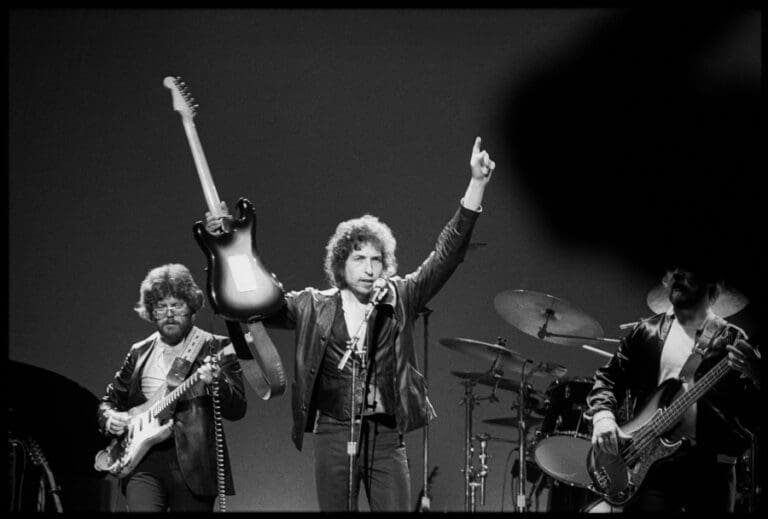
He was playing the Palace Theater in 1980 he was on the gospel tour. No cameras allowed, and they played for two nights. Dylan’s show was not selling at all, so they went around and gave them out to all different religious organizations to come, and they ran these obnoxious ads for the Palace Theater that said, Don’t come to see Bob Dylan. If you want to hear his old stuff, he’s not going to play it. Don’t come. If you do, you know, kind of dissuading people from coming, because everybody was booing him at all his shows and they gave tickets to the to Kite, front rows, second or third row seats for both nights. So first night, I went with a nun who was a guest artist at Union, very hip, I said, Hey, Carlotta, you want to go see Bob Dylan tonight in Albany? So, she went with me, and she smuggled the 135mm lens in her clothing, and I put the camera body in the back of my pocket. I took that picture of where he’s pointing to Jesus that night, first night, now, I went home the next day, you know, next day I developed the prints, developed the pictures made some 11 by 14. I had tickets for the second night, so I went with Carla the second night, and then afterwards, I thought, I’m going to track the guy down in Albany, why not? And I found out for the Palace, that the band was staying at the Best Western. I don’t know what it is now, but that hotel, so I went down there pouring rain, went into the bar. Nobody was there. Now, all of a sudden, I saw Spooner Oldham, the keyboard player, walk in and sit at the bar. I went, Okay, I’m in the right place. I went over and bought him a beer. And then I started asking about Dylan, and then he clammed up. He wouldn’t talk to me. And then the band came down. They sat at a booth in the bar, and I went over to them, and I was like, I think I identified myself as a photographer, but I said I saw the shows the last two nights, and I know Bob’s not staying here. Do you know where he’s staying? They wouldn’t say a word, and they wouldn’t even talk to me, I was like, okay, and then they came to get the band, to get on the bus. It was all it was a Trailways bus and Tim Drummond, great guy. He was Neil Young’s guitar bass player also. They started walking out, and then Tim came over to me and said, you didn’t hear from me, but he’s staying at the Wellington Hotel. I said, oh, okay, thanks, drove up parked in front of the Wellington pouring rain. Three in the morning, nothing, he led me on a wild goose chase, but I just sat there for like an hour, and then a Trailways bus pulls up parks out front. So, then I go, well, this is to not to pick up. passengers, I got out with my Leica and my 35 millimeter, flash on the top, put it on me, went and stood in the doorway. The bodyguard came down, checked me out, went back, back up. Singers came out, got on the bus, I just stood there. And then it was so great, I see Bob coming down from the lobby to the front door, and he’s coming towards me , I read the week before Dylan punched a photographer in LA for taking his picture, I thought, how cool would that be? And I just stood there. Then he approached, the bodyguard was next to him. I said, Hi Bob. Do you mind if I take a picture? Do you? And I picked up the camera and just took the picture. And he turned his head, so I had just the side of his head, and as he walked by me, he said, What do you want a picture me for anyway? I said, as I walked behind him, and I said, I saw the shows the last two nights, and they were so great. And he stopped and right at the door, and he said, you liked them? And I said, Yeah, fucking great musicians, Great songs. We talked about the show, but then I said, oh, you know, Bob, I grew up in West Saugerties, he went, Oh, how’s everybody doing in West Saugerties? I said, everybody’s good and I live up here now, we chatted a bit more and then he said, “I got to go now. I said, okay, well, thank you. Oh, can I take your picture? Can I do a portrait, one portrait? And he goes, Sure, and it’s okay, and we’re like, under the awning outside, and I pick up my camera, and he goes, let me turn around so we can get the bus in the background. I said, “Great. I took one snapshot. Stupid, straight on snapshot. And thanked him and watched him go get on the bus and drive away. It was like a close encounter with Bob, Bob Dylan.
Oh, that picture where he’s pointing to Jesus, I always thought that’s like the perfect picture him. It’s never been picked up by anybody except the cover of kite magazine, and I would have it maybe in a show or something. But I got a call because people from Eric Clapton’s archive tracked me down because there was a picture of Eric Clapton from 1970, I did when I was a student in the alumni gym, he toured with Derek and Domino’s, and I had, you know, like, 15 frames or something. They called me up and they said, “Are you Benjamin from Albany? And I said, Yeah, he goes, well, we have this little clip from Albany Student Press. This is, like, 30 years later, and it’s got Eric’s picture, and it’s got under dash Benjamin. I said, “Yeah, I did that. So, they wanted those pictures because they didn’t have any. They were making a book of comprehensive pictures of the life of Eric Clapton, never seen before. And this guy from London tracked me down and said, “Well, we want to get we want to see those pictures. So, I sent them to them, and they loved them, and they ran in the book. Then months later, I get a call from somebody, they say “Hi, this is so and so from the Bob Dylan Archive, and I said, “Yeah”, We got your name from Eric Clapton’s people, and we’d like to acquire the rights to that picture of Bob Dylan. They used it for the promotion of the box set for the email that went out about the release of the album. Sony Music bought it, and it was in a movie that was included in the box set, and then they needed it for something else too. They bought rights for like, four or five different uses from me, 40 years later, it was great.
SH: Are you actively photographing now?
MB: Not too much.
SH: What current music are you listening to?
MB: I love the Felice brothers. I went down and saw The Hold Steady at Levon Helm’s place. I really like The Hold Steady and one of the last bands I photographed, probably before the pandemic at Valentine’s, and I really got into them. Craig Finn, the lead singer, which we’re going to see down in Bearsville in August. He’s playing the Bearsville Theater. I went to see him up in Maine, in a little theater out in the woods, an old barn they converted really cool place. So I like those guys.
SH: There’s no best, no best or favorite. There’s a current rotation of a lot of quality things in the world. But could you name a couple of albums or artists that are a go to for you?
MB: Oh, anything by Neil Young, Tom Petty, Bob Dylan, I play The Hold Steady steady a lot. I love the Felice brothers. I play them a lot, and I’ve seen them five or six times. Seen the hold steady four or five times, and Craig Finn two or three times, those guys. But you know, I stacked the front of the book with my favorites the one where Dylan is pointing to Jesus. The little hazy spot is my friend Carlo, the writer, because I had to kneel and hid, and that’s his elbow. That’s great. I just missed clipping his hand. Thank God.
SH: So if you could, I’m going to keep going with this stuff. You could have a Super Show. You get five bands they play in their prime, but it’s today. We’re all going to go to this festival. Would they be those bands you were talking about?
MB: Oh, at that show, The Band, Bob Dylan, Neil Young, Tom Petty and Bruce Springsteen.
Bob Dylan, Albany, NY, 4/28/80 [outside Wellington Hotel at 3 AM]
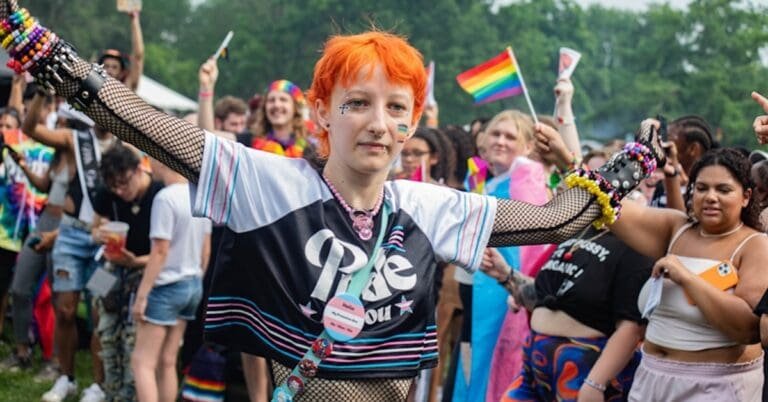
Sunday saw the 2025 Capital PRIDE Parade and Festival in Washington Park. Entertainment included pop stars DEV and Mila Jam, along with the Albany Drag Queen Revue.
Anson Funderburgh – An Xperience Interview – by Liam Sweeny.
RRX: When I was looking into you, I saw that you grew up in a family that listened to music and dance. How much has your love of dance influenced you when you go out to play blues?
AF: Well, you know, when I was starting to play in nightclubs, there was a dance called the Push that existed around the Texas area. It looks a lot like the Shag from the Carolinas. Not sure if you’ve heard of any of those dances. And both of those look a little like swing dancing from the West Coast. It’s sort of a combination of the Jitterbug and the Lindy hop. In the Push, the couple dances in the slot, and the only person that sort of leaves the slot is the man. And you know, they spin the girls and pull them through their legs and get fancy with it or not, but you know, we played. All the songs for the Push, most of them were like shuffles, like honky tonk and “Linda Lou” by Ray Sharp and Freddie King; that’s Kansas City. Those kinds of things. Any kind of Jimmy Reed song, if there are about 120 beats a minute. Which is a sort of a perfect shuffle.
RRX: When you see people dancing when you’re playing, I mean, is it something that you’re aware of, or is it just something that you know is probably happening but you’re too, you know, focused on what you’re doing?
AF: Well, no, I mean, I like looking out there and watching people dance. I’ve been seeing it ever since I was 15-16 years old. Like I said, the bands that I’ve played in, you really sort of had to know honky tonk, you had to know the hideaway, you had to know Jimmy Reed songs, you had to know Linda Lou. Because the Push Club, you know, there’s a club called the Push Club; not a nightclub, but a dance club. There’s a dance club where people dance the shag in Fort Worth, they had the Fort Worth Push Club. In Dallas, they had the Dallas Push Club. In Houston, they had the Houston whip. These are all like underground dance organizations. So I played for a lot of that kind of stuff. When I got my first guitar, the people that I bought the guitar from gave me a box of 45s, and they must have been push dancers because it had honky tonk and it had Freddie King’s “Hideaway.” It had Albert Collins “Sno-Cone Part Two.” I mean, and all those things were Kansas City; bright lights, big city, so these people must have danced.
RRX: People start playing guitar, and the playing is the hardest part. But then they get to the point where they’re touring and everything except the playing is the hardest part. How has being on the road for most of your life affected your musical Zen? I guess that might be the word to put it.
AF: I think it affects everyone. The older you get, the more it affects it. And even when I was leading my own band, it seemed like that. You were the person that was doing the interviews, you were the person booking the band or promoting the band, you were the one getting people from point A to point B. The plan was the fun part, and that was the work part, is getting from point A to point B. And then there’s all the stuff that’s in between or outside or however you wanna look at it. You know, looking at a blank calendar going, ‘Man, I don’t have any work’ … and you got four or five guys looking at you going, man, rent’s due and the lights are fixed to go off … it can keep you up a little bit at night sometimes. So jumping in and out of a van, it’s a little bit more of a challenge. I still love it. I love to work, I love to play. If you’re gonna play, you gotta travel. I mean, I don’t know of anything that just kind of has it right. You know, where you’re not travelling.
RRX: You’ve raised money and you’ve otherwise been involved with The Heart Fund, which, from what I’ve read, helps people who have been falling on hard times. Can you tell us a little bit about that fund and how you came across the organization?
AF: It’s part of the BMA Awards, The Blues Music Association. This foundation, it helps if somebody falls on hard times, needs a bill paid, and is sick and can’t do it. You know, they’ll pay the bill for you. They were a huge help during COVID for a lot of musicians, myself included. So was the Music Cares from the Grammys association. They might buy a headstone for someone that had passed, they might, you know, pay a hospital bill for someone that was sick, you know, both of those foundations: The Heart Fund and Music Cares
RRX: What would you tell a future guitar player coming into the world as you see it now, compared to the way it’s been for so long?
AF: You know, it’s changed a lot, and things are different. You know, I think that if you really love music and you really want to play music, you need to enjoy it, and it has to be something that you have to do, and it can’t just be for money. You may make a living, and you might make more money than you’ll ever know what to do with. And you may not be able to make a living at all playing it. So it has to be something that’s worth you doing. You almost do it because you got to. I love music, and it’s been with me my entire life, and I certainly wouldn’t want to ever discourage somebody from playing music. But it’s just not an easy thing to. You’re not gonna hang a guitar on your neck and make millions of dollars. It’s not an easy success story,
RRX: One of my favorite recordings that I listen to every time I’m walking around and I wanna feel music is Stevie Ray Vaughan, performing “Texas Flood” Live at the El Macombo. Was he as good as people say, about his character?
AF: Yes, he was … he’s one of the kindest, most approachable people that I’ve known. I mean, I knew him back in the 70s, when I lived in Austin … what a sweet man he was.