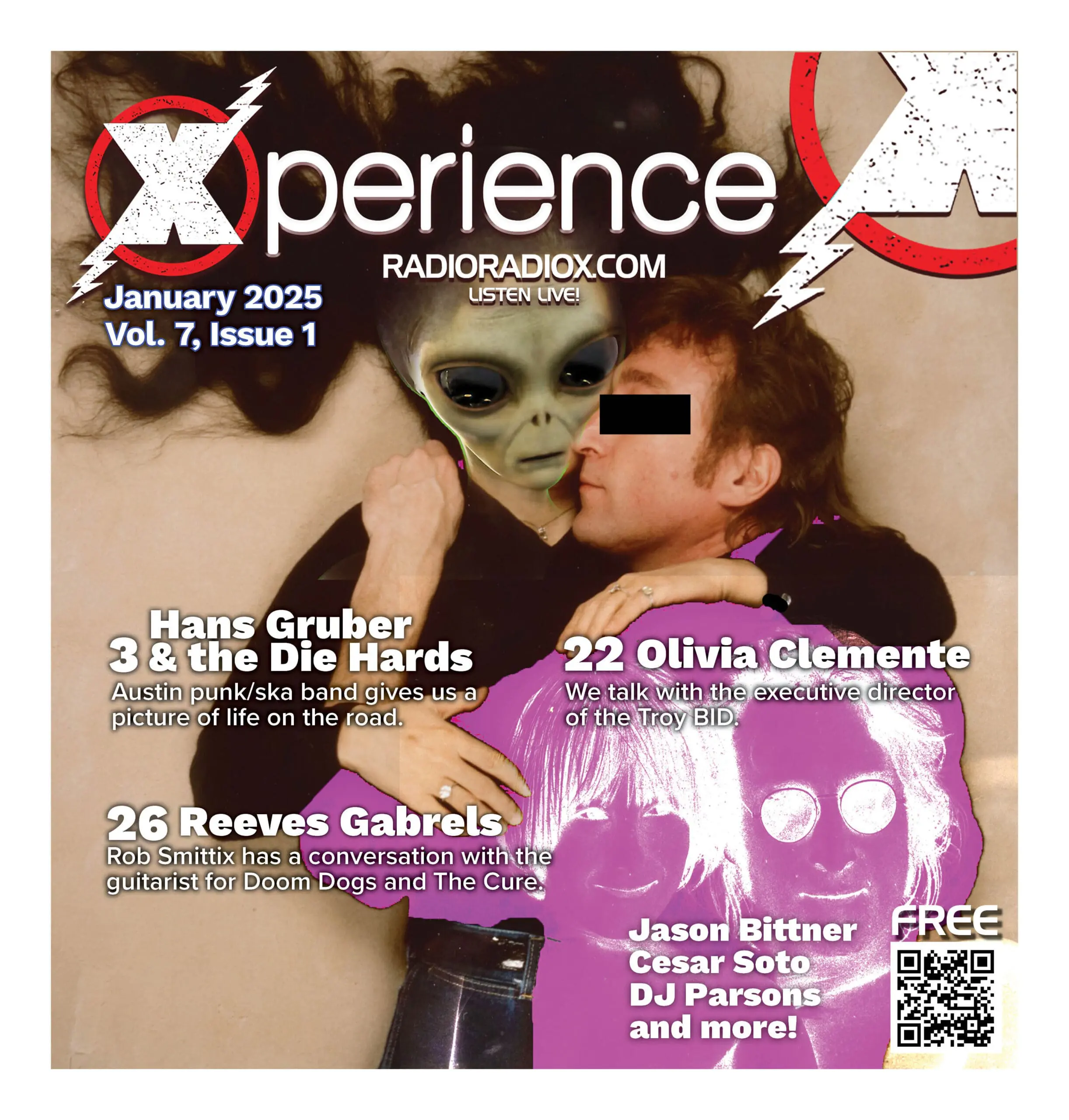
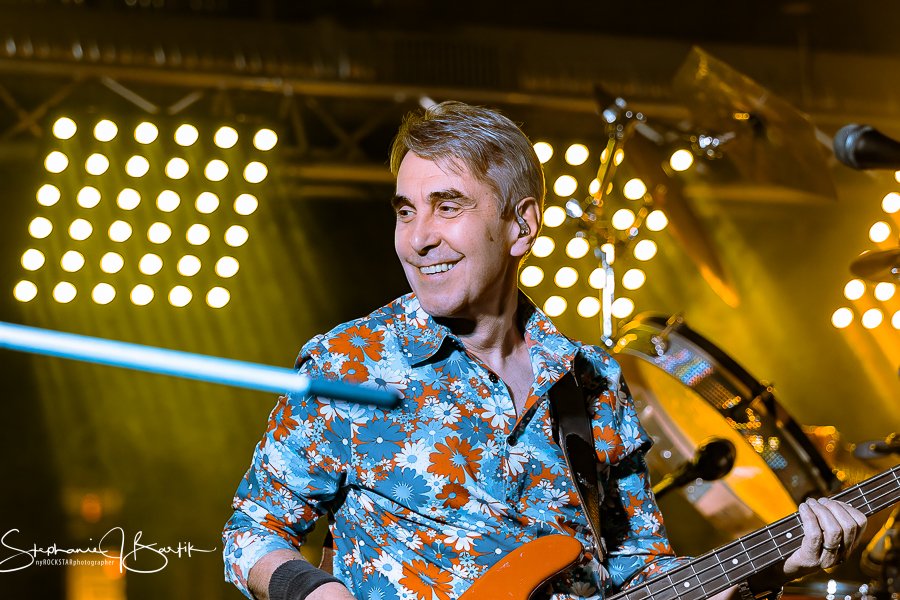
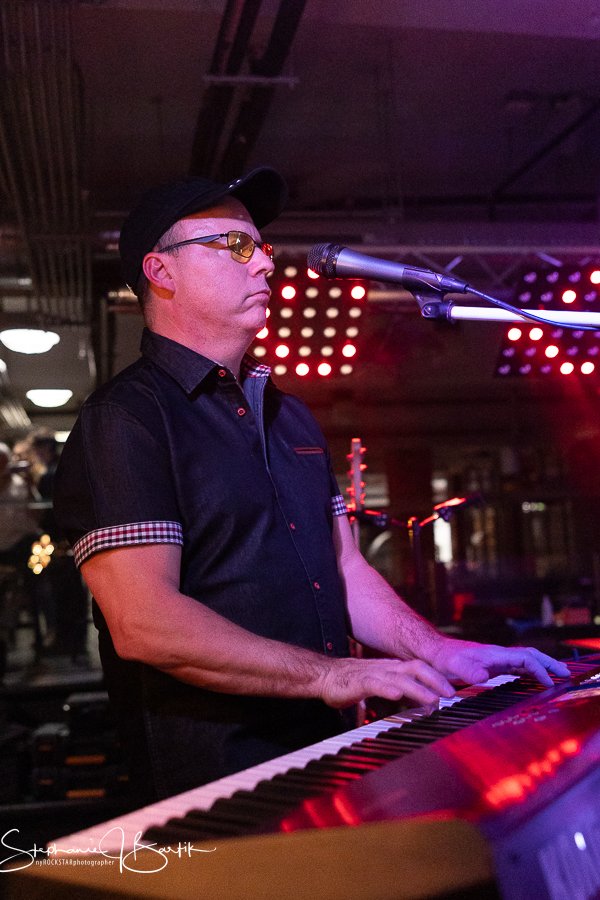
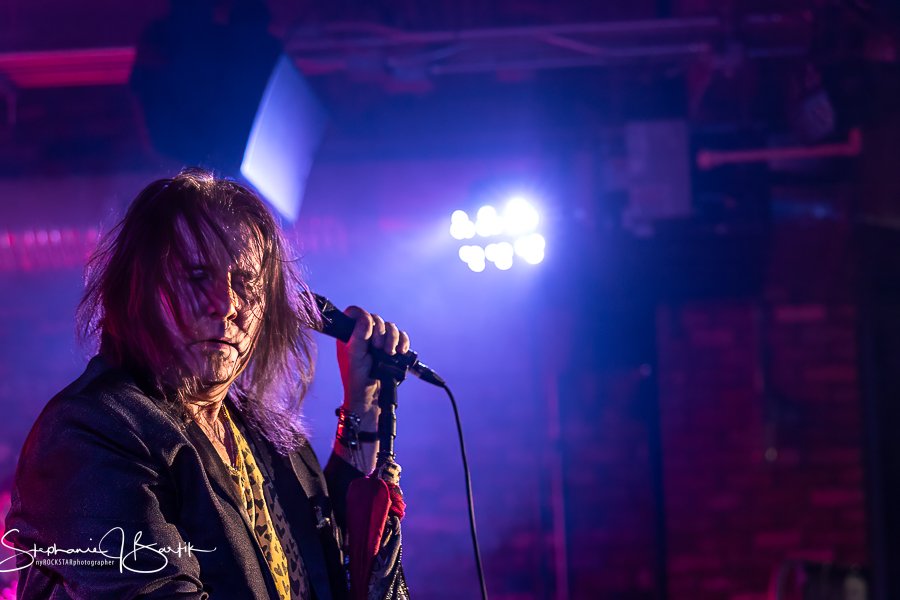
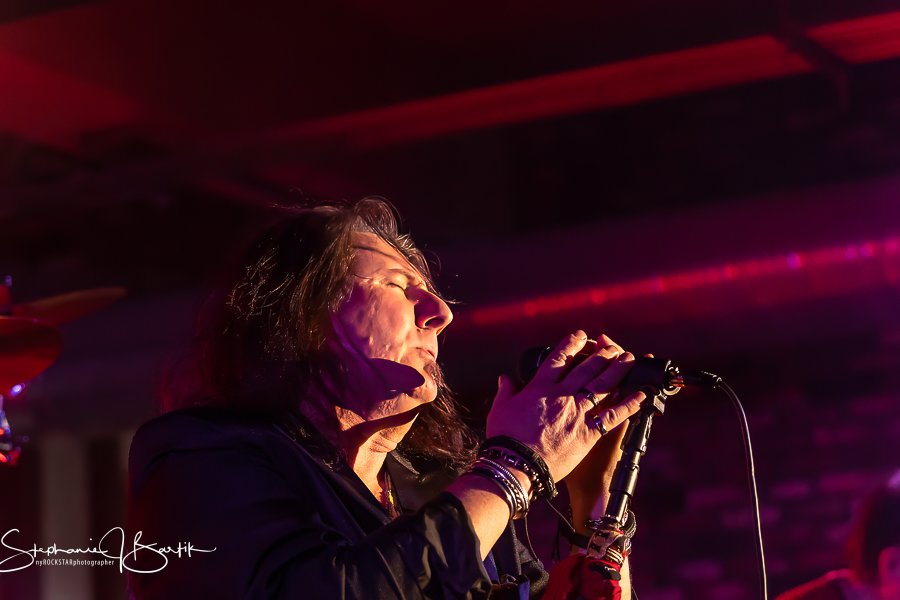
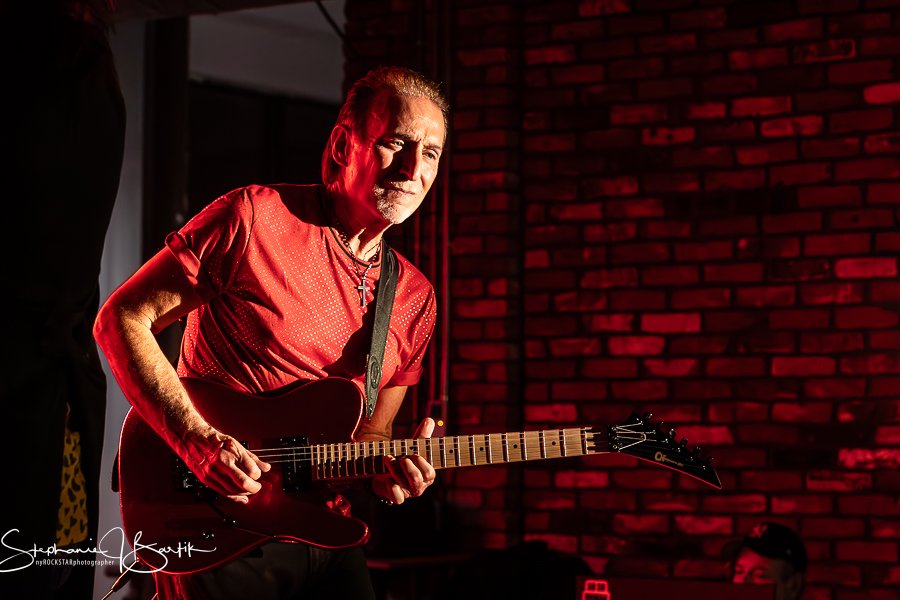
It is a new month and a new year. But at Xperience Monthly, it’s always new. The Xperience January 2025 Digital Edition features Hans Gruber and the Die Hards, Troy BID executive director Olivia Clemente, and last but certainly not least, Reeves Gabrels of The Cure and Doom Dogs.
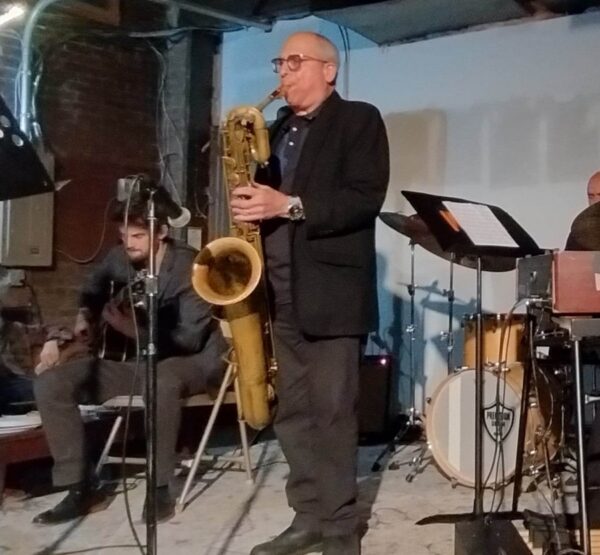
Gary Smulyan – Xperience History
Gary Smulyan – Xperience History – by Rob Smittix.
Originally published in January 2023.
RRX: Where are you based out of?
GS: I live in Yonkers, New York. Just north of New York City.
RRX: Oh yeah New York City’s hat, I’m familiar, it’s like the extra piece of the Bronx.
GS: Yeah, we’re just north of Riverdale which isn’t very far, just near the Bronx border.
Every time I come up to Troy, the pressure is on because that’s Nick Brignola’s home territory. Bring your best game every time you play in Troy because the spirit of Nick Brignola is hovering all over the place up there.
RRX: That’s right!
GS: It’s an inspiring place to play.
RRX: And Troy is really up and coming, a lot is starting to happen there.
GS: A lot of it is Joe Barna too. Joe’s the real deal. He creates things and makes music happen. He finds places to play, he finds musicians to play with, he creates venues, he creates opportunities for musicians, both who live there and from out of town. Joe is making it happen. I tip my hat off to him for all of the hard work that he’s doing.
RRX: Oh, absolutely. We have an award show called the “Listen Up Awards” and Joe actually won that and he had a fantastic speech. Ever since that I’ve really been in Joe’s corner for sure.
GS: So, what was that award for?
RRX: He won the favorite jazz musician award for the region.
GS: Okay, that’s well deserved.
RRX: It was favorite too, it wasn’t the best, so it shows that people like him.
GS: Well, you know I think a big part of it is that Joe is providing places for people to hang out and listen to music. Especially now, I think it’s incredibly important. After COVID happened, people are getting more comfortable with going out now and they’re getting excited about hearing live music, supporting live music and being able to get out of the house. To have venues like what Joe is doing, I think is really appreciated by the public. They’re really glad that he’s doing it and they’re very happy to support it and get out for a night and hear some music.
RRX: What’s really cool too is that he’s leading the jazz scene, but the goal is to link various genre scenes together here. It’s something that hasn’t been done in a really long time.
GS: So, what do you mean like clubs are supporting each other?
RRX: Yeah finally. People are starting to get out of their little groups and are starting to get out and support each other. There’s still a lot of work to do and we’re starting to see a difference.
GS: That’s important, everyone’s successful if you do that.
RRX: Yeah, we’re finally scratching the surface.
GS: Wow that’s great news. To be so separated and protective of your little scene, doesn’t really help the scene as a whole.
RRX: I’ve been saying it for years.
GS: No. I agree with that. Especially in a place like Troy, you know? Because it’s not New York City, it’s a smaller scene, so you really have to do that to ensure the success of everybody. It’s not just about one place or two places, it’s about everybody being successful and the only way to do that is to support everybody. It’s important, man. So, for me because I haven’t been to this new venue yet. I’ve played in the region quite a few times, so to discover a new place and to see how people come out and react and support; I’m excited about seeing what it is and what the scene is going to turn into. I hope it really is successful.
RRX: I don’t know if you actually change this on your ID or your passport but how long has it been since your first name became Grammy-Winner?
GS: I don’t know, I don’t think of myself like that. I’m just trying to play music and get better, I don’t know. I’ve been fortunate enough to be a part of a number of projects that have won Grammys. It’s been an honor and a thrill but I don’t focus a lot on that honestly. The bottom line is that it’s the work that’s important right? So, Grammy winner, the thing is other people do that I don’t add that, when I talk about myself. I’m happy other people do it and maybe it helps sell a few tickets or something, but I don’t think of myself in that way.
RRX: It’s like when I’d bring somebody to town and you never would’ve known they used to be in such and such a band, so you throw it on the flier and it helps put butts in the seats.
GS: Oh yeah, of course, from an advertising point of view you have to do that.
RRX: Right.
GS: I actually don’t talk about myself like that at all. I’m just happy to have been a part of these projects over the years. I’ve been really fortunate and in the right place at the right time and I’ve been really fortunate to have played on these beautiful records.
RRX: That’s the thing, it’s really about the music and the end product. I’m just really feeling bad for the kids these days. When I say kids I mean the generation that never knew the world without the internet.
GS: Yeah, I think about that all of the time. With cellphones and computers and not really having the opportunity to go record hunting. There are so many distractions today that take young people away from the essence of trying to learn music. I agree with you. I think it’s very hard and also the opportunity to go play. I was with Woody Herman’s band when I was 22. I left school and went on the road for two years and that’s where I really honed my craft. Those big bands that toured all of time, it’s kind of over. On the flip side though, young musicians are really learning to use social media to further their careers, which is something that I’m not very good at. I’m an old guy, I’m 66 and I find that very challenging. The world is shifting from going on the road to posting a video of you playing something and having people look at it and that’s how you get hired now. That’s the platform where young people are getting gigs now. It’s fascinating to me but it’s a world that I find mystifying, I don’t have my head wrapped around it yet. You know? Putting up a video and seeing how many hits you get and all of that. But some young musicians really have that down, really get it and use it in a positive way to further their careers. Whether they’re teaching, performing or both, that’s where the scene is going now.
RRX: You’re not kidding, it definitely is.
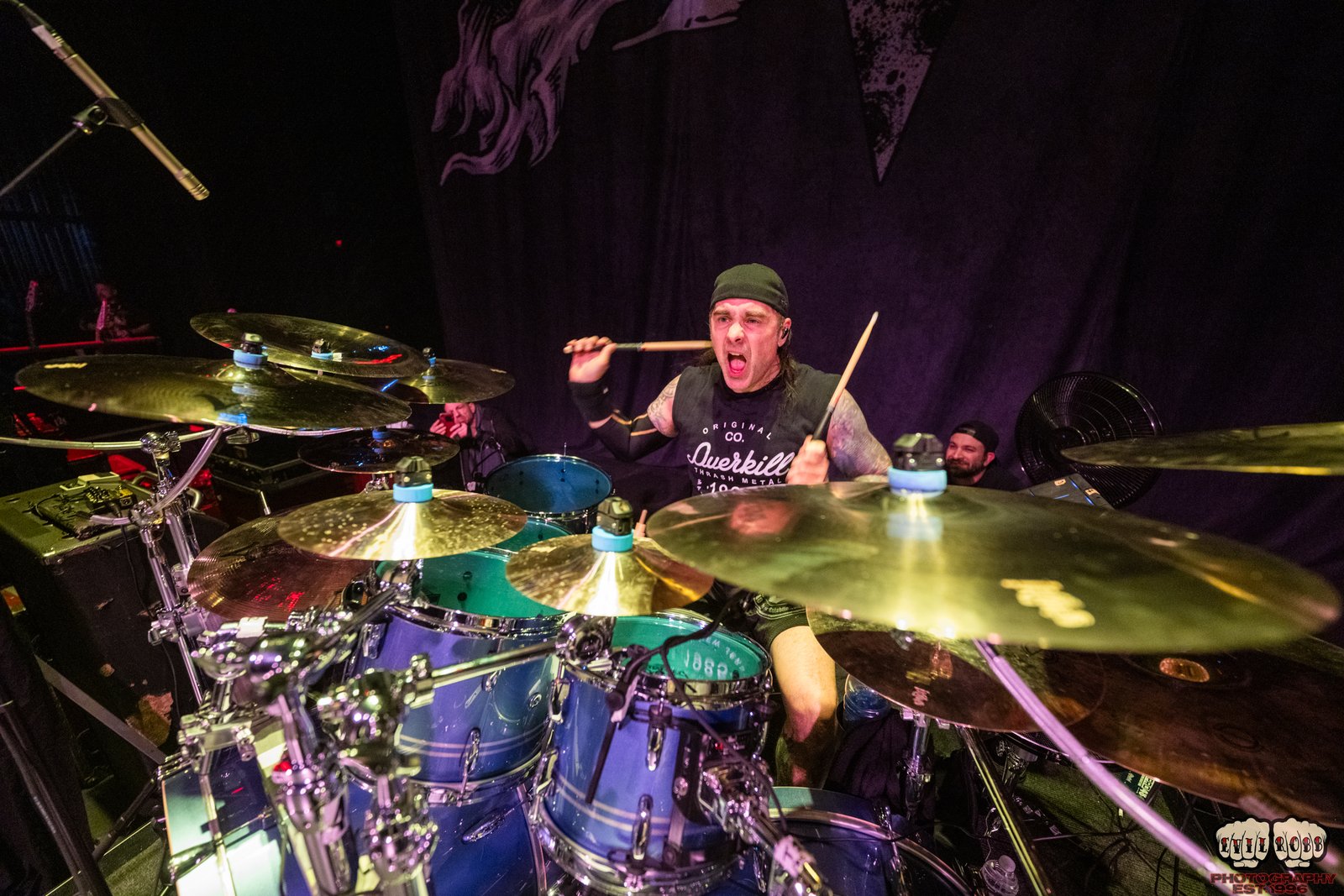
Jason Bittner – Capital Region Timekeepers
Jason Bittner – Capital Region Timekeepers – by OP Callaghan.
Jason Bittner is no ordinary timekeeper. The internationally well-known and respected drumming phenomenon behind such artists as Overkill, Shadows Fall, and supergroup Category 7, Bittner is a two-time Grammy-nominated drummer who, when not on tour, calls the Capital region home. I first saw Jason with local hardcore band Stigmata, and later with China White and Burning Human. The man is a powerhouse behind the kit; a master at his craft, and a charismatic performer. Jason has an exceptional memory, and I really enjoyed talking with him. He has great stories, a keen eye for detail, and (despite his incredible success) is a really down-to-earth and humble guy. Listen to any of his work with any of his multiple bands, recordings, or live performances, and you’ll see a level of devotion and ability that is simply staggering. On January 11, Jason will be hosting the 2nd annual Extreme Music Awards, which will include a performance from the Jason Bittner Birthday Bash All-Star Jam featuring members of Exodus, Slayer, Shadows Fall, Megadeth, Anthrax, Hatebreed, and Sick Of It All. Jason will be the master of ceremonies again this year, and has gathered a collection of some of the finest extreme performers, both national and local. The man is a powerhouse, and eats, sleeps, and breathes music. I’m proud to welcome him to the Capital Region Timekeepers!
RRX: Jason, thank you for doing this. I realize that you are extremely busy this time of the year. You have the Bubba Bash (Neil Peart Tribute Concert) coming up, it’s the 20th Anniversary of the Shadows Fall album “The War Within,” it’s the holidays, and you’re putting together an amazing show called the Extreme Music Awards! I can’t thank you enough. As one of the greatest drummers of our generation, tell us how you got started playing drums.
JB: I was 3! My grandparents have pictures of me with tree branches, beating on garbage cans. There was no other influence at that time, but my dad was always listening to music, so I was already exposed to some of the greats. My parents were not musicians, but they were music fans, so they just kept encouraging and supporting my interests. My interest in music was not initially drums. I wanted to be Gene Simmons from Kiss! But I continued to hit things, and I finally started lessons in 3rd grade with the regular band/chorus teacher at school. Once I got to 6th grade, I started working with the band teacher, Mr. Charles Stancampiano. He was my middle school band teacher. Eric Baumes (bass player in Big Sky Country and the Decadent Royals) was playing trumpet, and we used to fuck around all the time and get kicked out of class. But Charles really got me focused and learning to read music. Later on, I broke my wrist racing BMX, right after making the marching and jazz band. I was out for nearly a year recuperating and wound up changing schools to Niskayuna. I started working with the teacher there, Mr. Tabano, whose wife also taught music at my previous school. In my senior year, I got really serious about honing my skills, including reading and focusing on music theory. I knew that I wanted to go to Berklee School of Music in Boston, and I started working with Don Bush, who was Vic Firth’s college roommate.
RRX: Who were some of your early influences?
JB: The first guy that made me take notice of the drummer was Keith Moon. I was fixated on the cover of “Who’s Next” because they were peeing, hahahaha! I was listening to the Who, Jimi Hendrix, Cream, and all that stuff because that’s what my parents were listening to. I heard “Won’t Get Fooled Again” and fell in love with the drumming. But after that, Stewart Copeland of the Police changed everything. Everything he did was incredible, especially “Ghost In The Machine.” Later on, I got turned on to Iron Maiden and eventually Rush. A high school friend turned me on to “Exit Stage Left.” The first time I heard Neil Peart, I was completely blown away. Peart was it. You’ll never get “greats” in drumming like that again. Those guys have left a legacy that may never happen again. Obviously, as I got into thrash, the big four: Metallica, Megadeth, Slayer, and Anthrax became significant influences.
RRX: Tell me about your first kit.
JB: A red sparkle Del Ray. My dad got it for me in 5th grade. It was incredible, and then I added Rogers concert toms, and a 16″ Rogers floor tom. The next year I added Tama concert toms. My first real kit was a Tama Imperialstar kit I purchased in 1983; then I endorsed Tama from 2001-2013.
RRX: You’ve had a career that most would admire, as well as some truly incredible performances and experiences. Tell me about some of your favorites.
JB: There have been countless highlights. I’m really, really lucky. Ozzfest in 2005 was one of the best times and experiences of my life. Touring with the final Damage Plan show where Dime was killed, sitting in and subbing for Charlie Benante in Anthrax, the list goes on. The biggest achievement was meeting and becoming friends with Neil Peart. It was 35 years of hero worship, and then to meet and become friends. That is an incredible gift. Nico McBrain from Iron Maiden has also become a wonderful friend. I love the guy, he’s a fucking treasure.
RRX: As a drummer, to call those iconic players friends and coworkers, must be a dream come true. Do you play any other instruments?
JB: I play guitar and bass. I just dabble a bit. I use them for writing
RRX: Tell me about your most recent work with Category 7. How did that materialize?
JB: We had all worked together in other bands. Phil and I were in Overkill and started talking with Mike Orlando. So we put together some ideas, started writing songs, and making a list of guys that we wanted to work with, and the first two guys on the list accepted! It was really easy, as the chemistry was there. It just came together very organically. Once the song train started, it didn’t stop!
RRX: What are you playing for a kit now?
JB: I am playing Pearl Masterworks Birch. It’s really f*cking nice, 4-ply shells and 4-ply reinforcement rings in Jeff Porcaro grey.
RRX: You’re hosting the 2nd Annual Extreme Music Awards again this year. Tell me about the EMAs and what we can look forward to this year?
JB: This year is full of surprise guests from some of the best bands ever. Former and current band members of mine, as well as some really close friends. I was lucky enough to get a bunch of guys out of their nice, warm environments to fly out and celebrate with us in the freezing cold! It’s going to be insane. This year we’re looking at 24 songs in the setlist. I’m really looking forward to it, and it’s going to be great!
RRX: Last year’s show was incredible and full of exceptional performances. It was great to see you hosting and directing!
JB: It’s always evolving, even in the days leading up. Last year, there were travel issues, sickness. Blitz (Bobby Ellsworth from Overkill) had a tree fall on his house last year, so there are always variables that you can’t plan for, hahahaha!
RRX: What do you like to do when you’re not drumming?
JB: My leisure time is spent in the gym, doing yoga, and taking care of shit around the house. But this business is a 24-hour business, so there are very few breaks. I’m literally at it all day, even when I’m not on tour or in the studio.
RRX: And it sounds like a wonderful life!
The Second Annual Extreme Music Awards will be held on January 11, 2025, at Empire in downtown Albany. Featuring members of Exodus, Slayer, Anthrax, Shadows Fall, Flotsam and Jetsam, Smoke AD, Category 7, Adrenaline Mob, Sick of It All, Brand New Sin, Hatebreed, the Erotics, Faded Line, and Brick By Brick, this year’s show will surely be a not-to-be-missed event.
“From musicians, for Musicians, by musicians,” according to another local celebrity musician, Mike Valente. Valente’s band, Brick by Brick, will also be on the bill, as well as the pre-party event, featuring Smoke AD, Dysentery, Hope for Now, Against the Reign, and headliner Concrete, who will be celebrating an album release the same night. Valente has been a staple on the local music scene and is currently working in the studio on new Brick by Brick material. His tireless support of the local and national extreme music scene is simply unparalleled. His devotion, support, and hard work help make the scene a success. We are lucky to have him on the side of extreme music, as well as a nurturing force for local and national musicians alike.
“Extreme music is, and forever will be, neglected by the mainstream. So be it. We do just fine admiring our own. We do not need corporate justification to know true talent.”
Don’t miss the second annual Extreme Music Awards on January 11, or the pre-party on January 10, both at Empire on Pearl Street in Albany. Both shows are sure to be legendary. See you there! Many thanks to Jason Bittner and Mike Valente for their devotion to local music.
…2..3..4 – An Xperience Column
The bands that I was in during the ’80s to ‘90s were created, dedicated, and (in actual fact) singularly infatuated with the search and seizure of the elusive record deal.
It was a time when record labels actually came to showcase gigs and looked for bands to sign and record, thereby granting them entre to a world that we all aspired to, but could barely imagine in our wildest of wild. A time prior to when you could record your own record on your laptop (primarily because there was no such thing as a laptop), so you needed serious financial backing to pay for expensive studio time to commit the next million-dollar seller to tape. Yes, tape, people. It was two inches wide and sounded amazing.
The lucky ones got the attention of someone at a record label, who would offer you a “spec” deal and then you’d quickly burn off a few demos on their dime. Then the shopping and showcasing and shmoozing commenced, complete with fingers crossed and hopes high.
Writer’s disclaimer: I made a promise to myself that if I were given the opportunity to write a column for Xperience Monthly, I would not make it all about me; a wise old veteran offering sage advice to all you fledgling artists. Truth is, no one’s ever accused me of being either wise or sage, and I’m not all that old goddamn it. But unfortunately, the only point of reference I have to pull from for these quippy ponderings is what has happened to me during my own career. So, you’ll have to sit through brief, periodic, meanderings down memory lane. Buckle up.
When it comes to the business of trying to score a record deal, I ran that particular gauntlet countless times in those years. In three different instances with major labels, the deals all took the same shape and form. They’d start with, “We love what you do, we love the band, we love the songs, we can’t wait to work with you.” They would then culminate inevitably with, “We still can’t wait to work with you, but we want to change the band, change the songs, and also and most importantly, we still love what you do, but we really want to change the way you do it, and every other conceivable thing about you.”
I was in my early to mid twenties, so I turned all those deals down flat. I felt confident that the band and I would be offered about a dozen more deals to choose from. I overestimated that number by about a dozen. But I have no regrets about not traveling that cookie-cutter road. It wasn’t me, and it would never have worked. And even if an unfortunate alignment of the musical stars had resulted in their alteration of my very being, catapulting me to glory and riches, I would have ultimately become one of those whining rockstars. The ones who are sooo disillusioned by fame and who (through dewy blue, soul-bearing tears) exclaim, “I just want a normal life again Oprah!” You know, those guys we all wanna to slap. It’s like, “Hey brah, wanna switch gigs tonight? You play the bowling alley, and I’ll play Wembley Stadium.”
But here’s why this story is worth the telling. It’s not because I -not so subtly- slipped in there that I got three record deal offers from major labels (and I mean, like, biggies you guys, no kidding), or to forewarn you, dear reader, of the perils and pitfalls of the record industry. No. It’s about what I learned along the way. You know, like how we learn everything worth knowing in life.
I learned that making music, and the people I was making it with and for, meant more to me than glory and riches and record deals. Crazy right? I learned that working a job so I could play only the gigs I wanted to play, with the people I wanted to play them with was more satisfying to me than playing five nights a week simply for the dough, all the while wishing the night would end so I could get my $75 and eat something. I learned that every time we – all of us – get up on a stage, it is important. And we should be thankful that we get to do it. Because not everybody does.
But the biggest lesson learned here was that even if your initial musical hopes and dreams don’t come to fruition, you can still have a fulfilling, meaningful career with incredibly talented people in an extremely cool music community. And that maybe, that was the dream all along.
And maybe, just maybe, if you’re lucky, you get to write about it in a really cool magazine that’s part of that music community, and remind people that you had three record deal offers from major labels in your twenties. I’m just saying. But enough about me.
Somebody count it off…2…3…4.
Reeves Gabrels – An Xperience Interview
Reeves Gabrels – An Xperience Interview – by Rob Smittix.
RRX: How are you doing this morning?
RG: Good. I’m up early because we’ve got a cat we got over a year ago after the first gig we did with Doom Dogs, and I think it was July of ’23 … with the current lineup of the band. Anyway, Susan (Mrs. Gabrels) was looking at this cat online, and I could see she kept going back to this cat, and I said “Is that cat calling your name?” Because we had cats, and all of them had passed away over time. They just aged out. It was working for us with traveling because we didn’t have to worry about taking care of the cat. You know? Just lock the door and go. Anyway, the reason why I bring the cat up is, he wakes one of us up every morning between four and five to eat. Then we feed him, and then he gets in bed between us and falls asleep for a little while. Then he gets up again at eight and wants to get fed again. So I’ve been up a while, and he’s probably thinking, yeah I can get another meal out of him.
RRX: (Laughs) I hear that, I’ve got a knucklehead of a cat myself. Yeah, I heard you tried to text me from your iPhone and I didn’t get any of those texts. But I’m thinking the iPhone sometimes has those features on it where they don’t like us Android users. I’m Team Android all the way, though. I like to pay less and still get the same features.
RG: Well, I always liked the little green man.
RRX: Right.
RG: That was really what sold it for me. But then everybody I work with … there’s so much file transferring going on … I’m of the generation, when I was in high school, there was one computer in the computer room.
RRX: Oh yeah.
RG: And that was it. Between just squeaking by, taking typing, which I was a great source of embarrassment to my Mom because she was a legal typist. She worked for the clerk of courts and stuff, and when she was in her late teens, she was a competitive typist. I guess they had a competition. I could barely type 20 words a minute, but I managed, and I had already gotten accepted at the college I wanted. I just needed to get this one credit; I think they just took mercy on me and let me squeak by. It’s funny, I could not watch the screen, I had to watch my fingers when I typed, it’s one of the big crimes in the typing world. The point being that everybody I work with is better with computers than I am, and they all use Apple. So I just thought, oh well, f*** it, I’ll get an iPhone. And I like the fact that if I get music on my laptop, I can also listen to it on my phone, just the little convenience of that.
RRX: Definitely. They never offered me a typing class, which sucks because, with my job, I could have really used it.
RG: Yeah, well, they offered it to me and it hasn’t helped.
(Both Laugh)
RRX: One of the greatest moments in my music life would be hanging out with you and Buck Dharma at the Hilton Bar after Blue Öyster Cult played at the Egg. We’re all just talking, and I felt like we were all on the same level for a minute. But then you guys started talking about these major rock stars that you both worked with and now I’m wondering how do I get back into this conversation? In my head, I was thinking, “Should I ask these guys if they ever played Valentine’s?” But then I asked, “Do you guys remember the band Jeebus?” And that brought me back into the conversation because you played guitar with Jeebus, and my band Smittix did a show with you once, years back.
RG: Yes, that show felt like it had to have been a bank or something in downtown Albany, and I seem to remember angled parking.
RRX: Yes. The venue was Savannah’s, and that building definitely was a bank at some point, and I think it is again.
RG: You could bring your gear in through this marble hallway. It’s funny the things I remember. I don’t remember street names but I’ll remember the tree that was on the corner.
RRX: (Laughs) I was talking to you outside while I was having a smoke and you said a few things that I never forgot. I’m thinking, “Here’s a guy that was out there just playing with (David) Bowie not that long ago. I’m sure he’s played arenas and stadiums.” But you said to me that this is what it’s all about. You told me that you missed this … that you missed playing in this intimate setting and the smaller clubs. And that really stuck with me.
RG: Yeah, I mean … obviously, it’s still true. Especially now being with the Cure. We played big places with Bowie and Tin Machine. But Tin Machine was an idea so David could play small places (for him) and not play any old Bowie songs. Once we made it clear that we weren’t playing any of the hits, the crowds got smaller. So we could play 2,500, 3,000 capacity places. I mean … at the same time, we did play Paradiso in Amsterdam, which is like an 1,800-capacity place if I remember correctly. But there were 25,000 people outside!
RRX: Damn!
RG: The city had to erect what were called jumbotrons back in the day, just to take the heat off from the people trying to get in. At least that’s the way I remember it. And then we left through a back door, down a stairway into a boat. We kind of escaped down a canal back to our hotel.
RRX: That’s wild.
RG: Yeah, it was kind of like a James Bond movie or something. But … his idea of playing small was playing for 3,000. The Fillmore East, I think, was 2,600 people, and there are lots of great live albums that came out of that. I would say for a big rock band, that’s a good size place to play and record. For me … I guess I still have some sort of overly romanticized vision of the occupation. I can’t say I enjoy carrying gear, but I like the idea of walking in with a guitar case, a bag with some pedals over my shoulder, and the amp in my other hand. You know?
RRX: Right. Well, brings it back.
RG: All of the formative experiences happened at an early age. I’m originally from Staten Island and there was a circuit every weekend of high school dances, and there were bunches of small – like 100 capacity – clubs, and they were old man bars. On the weekends, they’d have bands in to play, and we were always working and were often underage. Or playing at the Hawk’s Nest, I think it was called at Wagner College, at 16. We were playing at these beer-blast kind of things. That’s where I learned what it felt like to be slowly electrocuted.
RRX: Oh, there you go.
RG: Somebody knocked over a pitcher of beer, which would be a saline solution. I was playing my first guitar, which was a Telecaster, probably through an old Fender that someone had pulled the grounding pin out of. I felt like every time I touched the strings, I was touching pins. Like a little stabbing. And then I noticed that the hair on my arms was standing up straight! I looked down, and I realized I’m standing next to the mic stand, which was the venue’s equipment. The rubber feet on the mic stand had long since worn off. It’s a metal mic stand, and it’s surrounded by beer, and I’m standing in that same beer that some drunk college student had knocked off the table. I was just slowly completing the circuit. But those smaller venues are where you learn the craft, I guess, or trade of it.
RRX: Exactly.
RG: You learn how to survive it.
RRX: Now, the Doom Dogs are going to be playing January 8 at Troy Savings Bank Music Hall. And that’s not necessarily a small venue. You’re playing a series called The LIFT Series, which I’ve been to a couple of those, and they are really cool because we get to join the band on stage, that’s where the audience sits. But I know that if there’s an overflow, they’ll start seating people in the regular seats. Well, I’m team overflow. I’m pushing for that.
RG: It is funny because, for Doom Dogs, it’s a little bit larger than usual but it isn’t so large that we’ll lose that sense of intimacy. For me personally, it’s why I do it. I like being in a close, sweaty nightclub. Especially during COVID, it was like where you didn’t want to be. An over-packed place where you can see the humidity in the air, which means you can see the bacteria and the germs floating. Between that and playing at Mojo’s (Troy), which I think has an indoor capacity of like 40 or 50 people, and if they open the back, it goes up to like 120. You can’t see the band if you’re in the back but you can hear it. The drummer, Jonathan from Doom Dogs, and I, do this [different] thing with Ross Rice, who I’ve known for years now. I’m not sure what his actual title is at RPI but he runs the music production department and teaches music there.
RRX: No kidding.
RG: He’s like Steve Winwood. He’s playing bass with one hand. He’s got one synth set up to sound like a precision bass. He runs that through a bass amp. Then he’s got his regular keyboard that is set up more or less for, like, organ-type stuff. Ross and I both sing, and we call it the Blues Episode. Despite the name, we do some Blind Faith, we do some old Taj Mahal stuff, we do some Steely Dan, and a couple of originals of mine. It depends on whether we’ve had time to rehearse and the mood we’re in. They’re all solid songs that people recognize, so we can take liberties with them and they’re durable, you know? It’s hard to break “Can’t Find My Way Home.”
For a certain generation, it’s a really solid song. Or just the blues form in general … you can mess with that in so many different ways. It’s fun, and to go back to what I said to you, this is why I do it, this is how it should be. I mean, you can actually have a literal conversation while you’re playing with people that are there to see you play. If you can get together with a couple of people who you enjoy traveling in a van with, chances are that conversation will continue on, in a more abstract way, onto the stage.
RRX: That’s a cool way to look at it.
RG: We have that going on with Doom Dogs, and we have that going on with Blues Episode. My solo thing is probably really the template for me on what I look for in a group of people to play with.
RRX: Oh yeah.
RG: You don’t have to agree on everything. You just don’t kill each other.
RRX: (laughs) Exactly.
RG: You laugh at each other rather than kill each other.
RRX: Well, it really does come down to having the best people with you. I’ve been in a band for about 18 years. My bassist moved out to Montana and everybody’s like, why aren’t you guys playing? Just get a new bassist. I don’t wanna look at anybody else on the stage. I’d rather start a new band, you know?
RG: Yeah, it’s almost a loyalty, but it’s like a familial kind of thing too. It’s like family after a while.
RRX: Exactly.
RG: The thing about the smaller venues too, is … when you’re playing for over 10,000 people … that makes me sound like a real ass****, but with 10,000 people, you’re screwed. What I mean is, I have to start making considerations in my head. Like I have to play fewer notes. I have to make sure that the song communicates a room with more echo. I have to carve a little more space for the singer. If you take that up to like 100,000 people, then you’re basically in a position where you have to paint the song in broader strokes; so that it’s recognizable, it speaks, and it still lives up to what the fans of whatever band it is wants to hear. Whereas in a small place, you’ve seen me play out, I love playing lots of notes.
RRX: Yes, you know all of them!
RG: I guess a lot of my feelings towards smaller places go back to when I was in New York. I remember seeing Dexter Gordon at the Village Vanguard and seeing him walk off the stage and walk into the kitchen to get something to eat. Then, he’d walk back out on the stage when the piano player was done with his solo. Another story I think about the Vanguard … Miles Davis doing the same thing except going over to the bar after his trumpet solo and getting a drink at the bar, then walking back to the bandstand.
RRX: How cool is that?
RG: That’s been in my head, but then there was a place in Boston when I moved there called Michael’s Pub. That was like two blocks from where I was staying in a rooming house for $18 a week. So you can imagine, it was the lap of luxury.
RRX: (Laughs) Yes it was.
RG: All the roaches I could kill for free. The guy that worked the door took pity on me, and instead of charging me the $2 to get in, he would let me in for free. One night, I walked in, and it was Mike Stern playing guitar with a guy named Randy Rouse, who’s another famous Boston fusion guitar player, with Jeff Berlin on bass. Jeff Berlin ended up playing with Bill Bruford and a bunch of other people. Steve Smith was the drummer that night, and Steve Smith was the drummer in Journey during their prime, their most commercial years. I think Steve Smith was actually playing with Journey at that point. He definitely was, because when I think back to the time, I remember thinking myself, what the f*** is he doing here?
RRX: Right?
RG: It was just one of those bars … it was the bar equivalent of a shotgun shack. It was just a straight rectangle, the bar went down about half the length of the venue, and the rest were some tables and chairs . There was no stage, the band just set up in the corner. Mike Stern was already playing with Miles Davis at that point. I just thought, so it’s about the love of it! It’s about your craft, and it’s about keeping your knives sharp. And it’s about the conversation. I always use the word conversation which sometimes confuses people, but it’s like the thing that happens in an abstract manner when you’re improvising with other people. In my mind, it’s almost like the thought balloons you see in comic books; you can see everybody’s thought balloons when you’re playing with them.
RRX: I could imagine, with Doom Dogs being so improvisational … your instruments really are doing the talking for you.
RG: Jair-Rôhm, the bass player, and I started doing Doom Dogs while I was doing the “Outside” record with Bowie. I had a couple of weeks off in the middle, and he was living in Copenhagen. He just booked a little run of gigs for him and I, and a drummer that he knew. That first Doom Dogs record, “Personal Nuclear Device” (which is the actual name, it’s been posted a couple of different ways). The idea behind the “Personal Nuclear Device” was, if you reach the point where you can’t argue with a liar … If you reach the point where you are just so exasperated with someone, you just hug them and you hit the red button on your chest!
(Both Laugh)
RG: And it’s worth it to take both of you out.
RRX: Exactly. I always wanted to go out as spontaneous human combustion. I think that’s the way to go.
RG: But to go back to your thing about letting the instruments do the talking. We showed up at this first gig in Brooklyn a year and a half ago, and Jair-Rôhm had found Jonathan. I had seen Jonathan play with Swans, but I had not met him then. I figured, well, sure, it’ll be fun. We haven’t played in a couple of years because Jair-Rôhm and I would get together maybe once every year or two and play someplace with somebody. The thing that happened that night was we introduced each other while we’re setting our gear up, and Jonathan says to Jair-Rôhm, so what are we going to play? And Jair-Rôhm says, just play! Jonathan kind of went, “Oh, okay, it’s gonna be like that then.” We were so surprised by what happened that we’ve been doing it ever since. I go back to Cream and Hendrix, and that kind of got filtered through, you know? Miles and more jazz improv stuff. I used to have an 11-piece horn band when I was at Berklee College of Music in Boston. So there’s all this stuff kicking around in my head. When you get together, and you improvise freely … I remember … I think it was Jack Bruce that said to me, some nights we really sucked.
RRX: Yeah, sure.
RG: You’re just trusting the muse. It’s an interesting thing. A couple of times, I think we may have done a three-in-a-row at one point, or we did two days on and a day off and then another show. To do something that’s improv-based that close together with guys that you’re traveling with … it’s almost like a little bit of distance is nice because you get to have an experience that the other guys don’t, so you can bring that into the equation. Bowie and I used to talk about that all the time because when we used to write together, if we had not had a break between the writing or the tour and the writing and the recording … it was harder to do just because – I know what your next move is gonna be. I was standing next to you when you saw that red car down the street that you’re writing about.
RRX: Ahh, that makes sense.
RG: So the challenge is to dig up stuff that’s fresh for yourself but also the responsibility you have to the other two members of the trio. I like trios because it’s like the concept of the tripod, either all three legs are working or the thing falls over.
RRX: Well, I’ve been calling it a supergroup trilogy. That’s the way I put it.
RG: Susan came up with genre free improvisation, I think was the description of what we did.
RRX: It makes sense.
RG: We really don’t know who’s gonna start. We really don’t know what we’re gonna play. We’re starting over time to define our own internal vocabulary. Ego aside, we’re all distinctive players, we do bring that to the party. But it’s still surprising to us, which is really what makes it work. It’s that moment where you feel like Wile E. Coyote and you’re not sure whether you’ve gone over the edge or the cliff and if you’re gonna make it back just by treading air. Whether it’s gonna go ping (sound effect voice) and just be a puff of dust down in the valley. We have fun when we do it, but we take it seriously. Nobody’s gonna be quoting the Mickey Mouse Club theme. The music is serious, the conversations you have with us in between, not so much.
RRX: Any last thoughts on Doom Dogs to get people to come out and become the overflow?
RG: Yeah, we’re gonna play exactly what you expect!
(Both Laugh)
RRX: Hey man, it’s been a pleasure, I’m glad we finally got to do this.
RG: It’s been great talking to you.
For More on Doom Dogs: jairrohm.wixsite.com/doom-dogs
Lift Series: Doom Dogs
Troy Savings Bank Music Hall
January 8, 2025 -6pm
For Tickets: Troymusichall.org
Playhouse Stage Company – 2025 Summer Musical Theatre Season
Enduring Rodgers & Hammerstein classic OKLAHOMA! to play at Albany’s Park Playhouse & GPAC, with new musical THE WAITING premiering at Cohoes Music Hall
Albany, N.Y. (January 2, 2025) –Today, Playhouse Stage Company announced plans for its 37th Summer Season presenting professional musical theatre to Capital Region audiences in 2025. The company announced productions that will play at Albany’s Park Playhouse, Cohoes Music Hall, and GPAC at Tawsentha Park. Playhouse Stage Company has been producing free, outdoor summer musicals at Albany’s Park Playhouse since 1989, and has been presenting musicals year-round at the historic Cohoes Music Hall since 2016. In 2024, the company also began an encore summer residence for it’s outdoor production at Guilderland Performing Arts Center in Tawasentha Park.
The free outdoor musical to be presented at Park Playhouse in Albany’s Washington Park will be a new production of Rodgers and Hammerstein’s first collaboration, Oklahoma!,
The production will be presented in association with the City of Albany. The City traditionally provides use of the Lakehouse venue, police officers for crowd control, and support from the Department of General Services, but, this year, will also provide direct financial support to the free theatre program for the first time since 2010. “Park Playhouse is a vital cultural resource in our Capital City, welcoming tens of thousands of residents and guests to enjoy accessible, free musical theatre each summer,” remarked Albany Mayor Kathy Sheehan. “In the face of funding challenges at regional theatres across the country, and mindful of inclement weather affecting recent Park Playhouse seasons, I am proud to provide City support to the Playhouse to ensure that this Albany tradition continues and flourishes for generations to come,” Mayor Sheehan continued.
Oklahoma! will be directed by the Playhouse’s Managing Director and veteran stage director, Chuck Kraus, with choreography by Playhouse Stage Academy graduate Alexis Papaleo, and musical direction and original Bluegrass-inspired orchestrations by Brian Axford. The production will play at Park Playhouse from July 1 through July 27, with performances Tuesday through Sunday at 7:30pm. An encore weekend of performances will be held at Tawasentha Park, sponsored by the Town of Guilderland, from July 31 through August 2. Free seating will be available at both outdoor venues.
Prior to Oklahoma!, the company’s summer season will kick off at Cohoes Music Hall with a world premiere production of The Waiting: A New Folk Musical, playing from June 12-15, coinciding with the first annual Capital Region Festival of Theatre. The musical was written by Capital Region native and former Playhouse Stage Academy student Maria Andreoli and EmmaLee Kidwell. The pair developed the work while students at Pace University, and have since presented readings and concert presentations at Quisisana Restort, The Triad Theatre, SheNYC, and Open Jar Studios. Playhouse Stage will support a two-week developmental residency for the musical’s cast and team at Cohoes Music Hall, ahead of a public weekend of performances.
As previously announced, the summer season will continue at Cohoes Music Hall with the Playhouse producing new productions of two beloved Disney musical adaptations. First up, from July 17 through August 11, is the musical adaptation of the fim that sparked “The Disney Rennaissance,” Disney’s The Little Mermaid. The show, which will be directed by Playhouse veteran Michael LoPorto, with choreography by AshleySimone Kirchner, will feature the company’s advanced teen students alongside professional performers, including PSC veterans Molly Rose McGrath as the Sea Witch Ursula, and Brandon Jones as Sebastian the Crab.
The season will close with Playhouse Stage Academy’s younger students performing the youth adaptation of Disney’s modern hit Moana. Featuring original songs by Lin-Manuel Miranda, Moana Jr. tells the story of a brave young girl in the Pacific Islands, who journeys to discover the truth about her heritage. The production will play at Cohoes Music Hall from August 20-24, 2025.
Season 37 Memberships are now on sale online via playhousestage.org, by phone at (518) 434-0776, and in person at the Cohoes Music Hall box office. Memberships are $50 per household for the season, and give patrons two weeks early access to tickets ahead of the general public for each production, 30% off ticket purchases for the season, and the ability to exchange tickets between performances and productions. Individual tickets for summer productions will go on sale later in 2025. For more information, audiences can visit www.playhousestage.org.
Olivia Clemente – An Xperience Interview
Olivia Clemente – An Xperience Interview – by Rob Smittix.
RRX: I’ve got Olivia Clemente of the Troy BID (Business Improvement District) on the line. Olivia, what’s your actual title there?
OC: Executive Director.
RRX: Oh, that’s got a ring to it, doesn’t it? I don’t think I’ve ever had “executive” in any of my titles before. If I did, it was nonsense.
(Both Laugh)
OC: Yeah, right. But sometimes I feel that way, it’s fine.
RRX: I know that most people (including myself), when we look at what the BID does, we’re always just wondering what events are happening in Troy. Is there more to it than just events? What does the BID do on a daily basis?
OC: There are way more than just events. We handle the beautification needs of the city, and when I say beautification, it ranges. The BID is in charge of the hanging flower baskets throughout the entire district. We hang 150 of those every year. We pay for that, and then we also are in charge of cleaning the streets. We have two beautification staff members who are out from 8 a.m. until about 6 p.m. They pick the garbage up, and they also water all of the plants in downtown. We also are in charge of the holiday decor. So, all the holiday decor you see in downtown right now. We worked with the city of Troy since our budget just wasn’t able to reach it. So, working with them, they helped bring the decor back and do way more. We put a proposal together, picked what we were gonna do, picked the areas, and the city helped us fund that. So those are things that the BID does aside from events. We also plant trees in downtown. We have a raised plant grow program, and people sponsor that, where we have either individuals who live downtown or some businesses or corporations donate money to plant a tree. We planted 12 this year, and we’re planting 12 next year.
RRX: That’s awesome. See, inquiring minds wanna know. I didn’t know everything that you did. So there’s a lot to it, and right now, I think Troy is doing really well when it comes to what’s going on downtown and with people coming out.
OC: Yeah, I think our tourism has increased a ton in terms of like … the Troy Glow Festival that just happened at the Art Center. We teamed up with them for Troy Glow, where we put all of the artists and musicians inside retail shops to be able to make everyone go into the stores and realize these retail shops are here. We had over – oh my God – I think over 2000 people that night that came out just for that event alone.
RRX: That’s a clever event, you know? People gotta start getting clever with things and thinking outside of the box, and I think that event definitely was one of them. We’re looking forward to the New Year 2025 … looking ahead to the future. What do you think is gonna be different in 2025 for Troy?
OC: I think that in terms of it being different is just that people are actually coming back out. We’ve had slow years since COVID, and this past year proved to us that people are going out again. We saw increases at every event. Even in terms of our vendors, we saw an increase. I started in 2022 and I only had maybe 60 vendors at that River Fest. And this is, again, coming right out of COVID. This past year in 2024, we had 85 vendors. So the numbers are going back up. So that’s a big tell of what the nexus of 2025 is gonna look like. I think we’re gonna see an increase of people coming out and an increase in vendors that wanna get back into being in Troy and participating. We’re doing all of our classic events, from our Troy River Fest, our Rocking on the River, Pig Out, Chowderfest, our Taste of Downtown, which is a restaurant week, and then we end the year with Shop Small, Shop Troy. We also start the year with the Hot Chocolate Stroll, which is something new that we added in 2022. We are increasing again because last year we did 350 mugs, and we sold out. When we first originally started Hot Chocolate Stroll, we were at 200 mugs flat, and we sold out as people kept coming in. They’re like, “We want mugs,” and I’m like, holy crap. I didn’t know how many people would come out for this. So this year we’re gonna go to 500 mugs and see what happens.
RRX: Yeah, I think you’d have to. When does that take place?
OC: The last Friday in February.
RRX: Okay, I’ll have to mark it on my calendar and make sure I get a mug.
OC: Upstate of Mind makes the mugs for us, and they’re like collectible items.
RRX: These mugs could be the next Hess truck. I think back to Albany when they had First Night. In my opinion, I think First Night Albany was amazing for a very long time until it wasn’t. But those buttons they had are collector items. We gotta steal First Night back and bring it to Troy.
OC: Yeah, I mean, we do the Troy Night Out which I mean … we have to find a formula for it. We haven’t been able to crack the code completely on Troy Night Out. A lot of people come out, I will say, in the summer months. You’ll see the streets are packed, everyone’s out and about, and the stores are full. But we haven’t been able to figure out how to get them here from January to April. That’s the tough part. Those winter months are when we see that decline of people coming in and out because it’s so cold, rainy, snow, et cetera. So that’s kind of the thought process when we do the Hot Chocolate Stroll in February when no one’s doing anything. March has Saint Patrick’s Day. So we see the influx of Saint Patrick’s Day – Ryan’s Wake, Bootleggers, and the Ruck. They all do a bar crawl for Saint Patrick’s Day – and McAddy’s – they all do that.
RRX: Man, Troy is hopping right now, and I’m very happy about that. Actually, my heart breaks for Albany. That’s where I grew up, and just to see so many things gone and for the reasons that they’re gone. We gotta put a bubble around Troy, so none of that happens here. I’m actually praying for Lark Street right now with a passion. The whole terrain has changed, and I think Troy is winning.
OC: Yeah, I mean … it used to be that you would go to Albany to see awesome bands, et cetera. And now you can go to Troy for all of that, which when I was growing up, it wasn’t like that. It wasn’t like … “Oh I’m gonna go to Troy,” it was … “I’m gonna go to Albany.”
RRX: I’m gonna get me an Enjoy Troy T-shirt.
OC: I say Troy is looking positive. I think a big thing is an understanding of supporting the Business Improvement District.
We do all of this. It’s not the city that’s doing these events; it’s the BID that does all of this for downtown. In order to get this done, the BID needs to have good funding, and we need to have good people supporting us. If we can’t get that community support, if we can’t get that funding, we’re gonna lose these events.
RRX: And that would make me sad, so yeah, let’s keep that funding going. Olivia, I appreciate your time and look forward to working with you more next year.