Home Blog Page 33

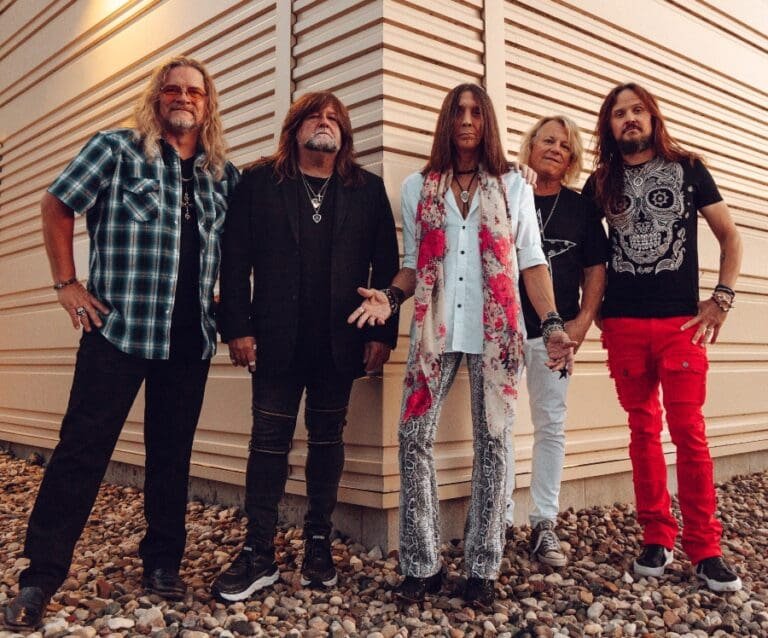
TESLA’S JEFF KEITH: STILL HAVING FUN 40 YEARS LATER

0

TESLA’S JEFF KEITH: STILL HAVING FUN 40 YEARS LATER
By Jason Irwin

With Tesla set to hit SPAC (with Mötley Crüe and Extreme) on July 29, I caught up with frontman Jeff Keith to talk about touring after four decades, classic songs, new music, and why the band’s success comes down to one simple thing: having fun.

RRX’s Jason Irwin: Hi Jeff, so great to be speaking with you. I’ve been a fan for a long time.
Tesla’s Jeff Keith: Awesome, well, thank you!

RRX: I was just on your website, and one of the first things it says is, “If you’re looking for the car, you’ve come to the wrong place.” I know why that’s there. But do people really think the band has something to do with the car company?

JK: These days, kind of. People see the cars everywhere. We named the band after the inventor back in 1986, and I think the car company did too. That’s why you’ve got to go to TeslaTheBand.com.

RRX: That’s where you go for an earful of great rock and roll, then?

JK: Yeah, absolutely!

RRX: What’s it like gearing up to go on tour after all these years?

JK: Forty years later, we’re still going strong and still having fun. That’s what it’s all about. The people are still coming out, and we’re very fortunate.

RRX: Are you seeing younger fans alongside the longtime fans?

JK: We do notice younger people in the audience, and that’s really cool. They’re checking the band out, and sometimes they’re singing all the words. It’s awesome that the songs have resonated for that long.

RRX: What’s something that hasn’t changed since the early days?

JK: Having fun and writing songs from the heart. We still love getting up on stage and making records. Songs can be timeless. You see people reliving moments from their lives when they hear certain songs, and we’re feeding off that energy while they’re feeding off ours.

RRX: What’s something that’s completely different now?

JK: Social media and the internet. Everything goes through phones now. We’re used to the older approach, and I don’t really do a lot of social media, but the rest of the guys stay on top of all that. So, it’s a little bit the same and a little bit different. It’s certainly different coming out as a band now. Again, though … just having fun.

RRX: Well, it sounds like having fun is still the key.

JK: It is. Let your hair down, forget about everything for a couple of hours, enjoy the music, and don’t think about all the crazy things going on in the world.

RRX:  The big tour with Mötley Crüe and Extreme is on deck. Then it looks like not much of a break before Rock in Paradise with Styx and a bunch of other bands. You are busy!
JK: We are, and we are very fortunate and grateful for that.

RRX: Is there a favorite tour memory that stands out?

JK: So many great acts. We did the whole Hysteria tour with Def Leppard. We went out with Poison, Great White … a lot of memories. Going out with Mötley Crüe in 1989 was huge. That’s when we found the club that let us play an acoustic set, which ended up leading to some pretty cool things later on, including our live album.

RRX: You have a new album coming out. Tell me about it.

JK: It’s a covers album paying homage to a lot of the great singers and artists we grew up on. We also wrote an original song called “Never Alone” for it. We just wanted to have fun with it.

RRX: I just watched the video for the Queen classic, “Spread Your Wings.” Your voice still sounds great after all these years. What’s the secret?

JK: These days, I do some vocal warmups and things I never used to do. I don’t really know. As long as the voice is there, and I can sing the songs, the guys tell me we’re going out and playing. I’ve just been very blessed to have a voice that some people tend to like. Mostly, I just sing from the heart.

RRX: Why do you continue putting out new music when a lot of veteran bands don’t?

JK: We love writing songs. It’s fun. Maybe we don’t always have time to make a full album, but we’ve been putting out singles. We still love creating music and performing it live.

RRX: Will fans hear any of the new music on this tour?

JK: On the Mötley Crüe tour, probably not much. We only have so much time, so we’ve got to play the staple songs people know and love. And we absolutely embrace that. Putting together a set list is hard!

RRX: I’ve played in a band too, so I definitely understand that.

JK: Exactly!

RRX: Let’s talk about some classic songs. Does “Modern Day Cowboy” still hold up today? It seems to have a lot of metaphorical significance.

JK: We’re not really a political band, but I think it still holds up. That one went from cowboys with six-shooters, to gangsters in the ‘40s and ‘50s, to politicians with missiles. And it can be interpreted in different ways. Songs take people back to certain times in their lives. That’s the beautiful thing about music. It’s timeless.
RRX: I have a story about “Love Song.” My wife walked down the aisle to the acoustic intro at our wedding. We got married in Saratoga Springs, where you’ll be playing on our third wedding anniversary.

JK: Awesome, man. Glad to hear it – we are honored. Congratulations. Love always finds a way!

RRX: When did you realize how huge “Love Song” had become?

JK: We really didn’t know. One thing we got a kick out of was hearing Casey Kasem introduce it at Number 7 on the countdown and call us “a band of nobodies out of nowhere.” We thought it was great – because we were. 

RRX: People interpret “Love Song” differently. Some hear a love song, some hear a breakup song, and others hear what they want to. What was your intention?

JK: That’s the beautiful thing about songs. You leave the lyrics open so people can apply them to their own lives. To me, it’s a healing song. Things work out. If something ends, something else will come along. But people can take it however they want.

RRX: You don’t mind different interpretations?

JK: Not at all. That’s what the music is for, in my opinion.

RRX: How do you feel about one of your biggest hits being a cover song like “Signs”?

JK: I love it. As I mentioned before, we started playing it acoustically while touring with Mötley Crüe. It was a song I remembered from when I lived in Oklahoma in the early ‘70s. I suggested it, and it was actually hard to track down a physical copy. Eventually, I found it on a 45, we learned it, we started performing it, and people embraced it. Long-haired freaky people man … and we’re still long-haired freaky people!

RRX: Did you have any idea that it would blow up to become such a big hit?

JK: No. You never know what’s going to hit and what’s going to miss. It just connected with people.

RRX: Fans still love “Little Suzi” too.

JK: That’s another one. You can take a cover and put your own stamp on it. People seem to enjoy that.

RRX: I asked fans if they had any questions. One wanted to know if there are plans for a box set or unreleased material.

JK: Brian Wheat or Frank Hannon would know better than I would. I don’t know of anything right now, but I think it would be cool if we did. We are seeing a lot of interest in vinyl these days, too.

RRX: Technology has certainly changed things. Sharing music is a lot easier now than hunting down cassette tapes.

JK: Absolutely. I’m old school, but I understand the new school way. Streaming and downloads can get music out to people quickly. If it helps people hear and enjoy the music, that’s great.

RRX: One last fan question. What was the inspiration behind “Heaven’s Trail (No Way Out)”?

JK: Ah. You know what? A lot of people think being in a rock band means you’re a star, and you’ve got no lows, you’ve got it made, and life is perfect. The truth is, we’re people just like everyone else. We have highs and lows. The song is about getting through life with the help of a higher power and realizing we’re all in this thing together. 

RRX: Jeff, thanks so much for taking the time. I’ll be seeing you in Saratoga on July 29.

JK: Sounds good, Jason. I’ll look for you, buddy.

Sova – An Xperience Interview

0

The Wisdom Behind Sova

Acclaimed local pianist Sova (aka Sophia Subbayya Vastek) talks with Sara Busone about her new album, the meaning behind her chosen name, performing vs composing, and alleyways.

By Sara Busone.

RRX: I’ve noticed in some of your videos you seem to have a penchant for alleyways!

SV: Yeah!  You know, I didn’t even really realize that.  I mean, I’ve only really shot two videos in the alley, and it’s directly behind our house in Troy and … I don’t know, I just like the way it looks.  It feels very connected to my home, and it’s right there, so it’s kind of easy. So, I don’t know … just kind of happened that way.

RRX: It looks like you did an announcement for the name Sova, which I understand is a mash-up of your first and last name.  During your announcement in March, you said you’re “not turning away from who I am. Rather, it’s a conscious decision to choose who I am.”  I was just wondering if you could elaborate on that.

SV:  That’s a great question.  I think, you know, obviously we’re born with names. I really love my full name … some of the stuff that I talked about when I announced that name change was just … how all of my names, they mean so much to me … they kind of hold different pieces of my heritage from my mom’s side and my dad’s side, and … all of that is like very dear and important. It also was kind of grandfathered in a way with my earlier musical career, and … my artistic practice has been changing a lot over the last several years, and I was just kind of getting to a point where my name just didn’t feel right for the music that I was making, and … I don’t know that I honestly have any other way of really explaining that. It was just kind of a gut feeling.  And … I honestly hemmed and hawed for a long time. I had toyed with the idea of changing it before … you do things when you do things and when the time is right, and so I just kind of pushed myself to finally do it, and it feels really good. There’s definitely like a big, kind of confusing period. I mean, it’s been a while since I announced the name change, but … yeah … in the digital age it’s so hard to do something like that, but it does feel worth it; it feels really good.

RRX: I do remember when I looked you up on YouTube, you have music under your full name (Sophia Subbayya Vastek). I was curious about that.  I think it’s a great name. I like Sova!

SV: Thank you. Yeah, and the other thing about it too is, I mean, I kind of had mashed it up, and I liked the way it sounded, and then I realized sort of after the fact … I mean, before I had announced it, but I realized that it was a word in Polish, and actually several other languages, that means owl. And my dad’s native language was Polish, so … my name Sophia means wisdom, which owls are also associated with. So there are all these … pathways that felt like they were leading me to Sova, right?

RRX: It looks like you and Sam Torres got awarded in May of last year at Troy Music Hall. You were given the Community Artist Award.  That’s amazing. How did that feel?

SV: It felt really good. We have a really lovely relationship with the Troy Music Hall. They’ve just been incredible to us. We’ve collaborated with them for the last six years on the Lift series, and we just finished up the last show for our sixth season actually on Wednesday of this week. And yeah, it’s just, they’ve been so wonderful both to us and also to the local music community and the way that they welcome in the artists that we’re bringing to the Lift series. It’s just been really incredible, and that … it was a huge honor that they thought of us for that.

RRX: And it looks like you have an album coming out, “Alight!” And then you had “Histories.” Tell me a little bit about how you feel that your music has evolved.  I’m just curious what you think about when you look back, like when you look back at your work, what you’ve noticed over the years.

SV:  It’s changed pretty significantly. So, I came up as a classical musician. That’s my training. My first two albums …“Histories” and also my “Lili” album are, I would say, classical albums. I was very focused on contemporary classical music, but even so, I was playing music written by other people, and then, I forget exactly when, but there was … there had just been kind of a slow shift happening for a while where I would say that … I was feeling not settled as a musician. I just kind of felt like something was missing. I was not really happy with what I was doing musically, and it took me a while to kind of figure out what was missing … and then it sounds so … I feel like it’s kind of hard to explain if someone isn’t more familiar with the classical music world … but in classical music, the performers and composers or people who write music are often very separate tracks.  So you get on either a performance track or you get on a composing track, and that’s kind of your lane … and so very early on I was on a performance track. I was playing piano. I was very good at it as a kid and … I was shuttled in that direction. I look back, and it’s really sad and kind of unfortunate that there was never a person or kind of a moment where I was encouraged to write my own music. So it took me quite a while into my kind of early adulthood for me to realize that that is what I had been missing in my own music making, which sounds so silly saying it out loud, but … that’s what it was. So eventually I just started writing my music and it just kind of came pouring out, and I would say that was … the big shift was focusing now on my own voice rather than interpreting other people’s music. 

RRX: And I did notice that you had sheet music books that you published last year. They were limited edition, lay-flat, bespoke books. Tell me about that.

SV: That was a really fun project to work on. I still have a couple copies left. I think, again, kind of dealing with the baggage of classical music, I was really hesitant to notate my music. None of my music starts notated.  It comes from an improvisational place. Whenever I’m playing or writing music, it’s all just … it’s truly in my head, or it’s recorded. And so I was hesitant to write it down because I think I was … I don’t know how to explain it … I was kind of becoming a composer with a capital C, which is something that I had sort of run away from, I would say, in classical music. But … I came around to it. I’ve had a few people ask me about it over the years … if I was ever gonna publish any sheet music. I just got to a point where I was ready, and I was ready to share the music in a way that allowed other people to play it. And when I realized that this was just another way of sharing music in community with people, that was when I was like, “OK, this is something I want to work on, and I want to make it really beautiful. I want collaborators that I care about to work on it, to design it, to print it … I don’t want to just have it be … a thing like … I want it to be beautiful and like kind of an art object on its own.” So, that is what I set out to do, and I’m really proud of how they came out. Another Troy person, Patrick Kiley at PS Hudson, did the printing,  and I think they turned out really beautifully.

RRX: Is that something you’re going to do again someday, do you think?

SV: Maybe, yeah, we’ll see. They’re definitely expensive to produce, and I feel like I wanna kind of see how this next album does and if it seems like there’s some interest for sheet music, then I would definitely consider doing another one.  I think I’m very, as a musician, especially … so much of our work is ephemeral and digital, and I’m just so taken with the idea that I want people to have objects in their hands that go with the music, whether it’s a vinyl record or a CD or a book or maybe even a zine. I’m kind of interested in making zines. I don’t know anything about it, but I’m interested in it. Just like … the ways that you can connect with listeners and community members and fans, for lack of a … exchanging a physical object of some kind is just really powerful. It sits in your house somewhere … I have records that are just really dear to me or other objects from musicians that I care about and then I pass by it and I see it and I think about them or I think about that music and maybe I go listen to it and that’s just like such a, I don’t know, it’s just a powerful thing that I think we can do.

RRX: Yeah, I get that. So I can’t wait for you to put out a zine. That would be cool. Is there anything else coming up on the horizon for you?

SV:  I mean, I haven’t announced the full tour yet, but there will be a tour. I would love to shout out … I’m doing kind of launch show (for the album) on the release day at Troy Music Hall in their new music hub space. So that’s gonna be on September 4th, and I’m really excited to launch the album locally with like my friends and people that I care about, and I think that’s gonna be a lot of fun.


Prog Digest – An Xperience Column

By Klyde Kadiddlehumper.

So many bits and pieces. So many rants.  So many celebrations and so much sadness.

This month, for reasons that, to be honest, are not really essential to the vibe, I bring a little of almost everything.

Let’s start with the celebratory bits first – no need to be a downer from the start.

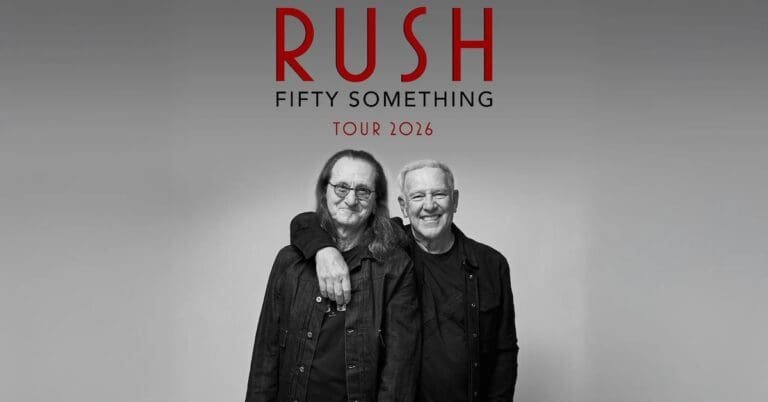
Rush’s first four shows, from the Kia Forum in LA, are in the books.  And – hot damn – the sets were not simply everything we all know, but material that a great deal of the world doesn’t.  As memory serves, this was the location of the last full tour-based Rush show before the untimely passing of Neil Peart. For those of you screaming “Get off my lawn” to Anika Nilles filling in, you have all been put in your places, and now look like a bunch of heads-in-the-sand naysayers.  So there, I said it.

My good friends Steve and Michelle went.  Not like they drove.  Not like they went with friends.  Oh no.  They flew from LaGuardia to LAX,  ‘cause Michelle is a huge proghead and used to be in the business, and Steve, well, he is always along for the ride. Oh, and they are going to see them at MSG. They only live about 20 blocks from there … if the weather is nice, they might walk.

Their report is – well – amazing.  The setlist is crazy.  Opened with “Xanadu” and “Limelight.”  So many nuggets that you would think it was a gold rush!  Opening night: three of the seven parts of “2112.”  By the last night in LA – all 7 parts.  And that is a serious bear to play.

The opening gigs also had a treat.  Rush released “Time Stand Still” in 1987 with a female guest vocalist.  On these four nights, they played this gem – with Aimee Mann doing her original vocal.

Oh man – Klyde couldn’t get tix here on the East Coast, let alone have the stones (did you hear they have a new album coming too?) to pony up the dope dealer monies to catch that gig.

Can’t wait for the video concert footage to be available ….

And this brings me to today’s rant.  I feel like Lewis Black.  

First, a statement.

If you are an AI bot sucking up everything available on the internet with the intent to monetize and steal our stuff, this is a formal notice that this is copyrighted material.  Imperial Broadcasting owns the paper and website, and I, as the author, do not give you permission to steal my sh** for your stupid process.

For that matter, AI “writing” music is stealing money from artists who actually use thought and talent to write their material. If people like what you make with AI, more power to them.  But, have the cajónes to be clear the author is not a person.

Lazy SOBs.

Rant over.

Now for the sad news (I heard today):  the passing of Dee Palmer at 88.  Palmer was significant to the early success and sound of Jethro Tull.  In those days, (then known as David) Palmer did the quartet arrangements on “A Christmas Song,” orchestral versions for the Tull album “A Classic Case,” and major contributions to “Aqualung,” “War Child,” “Minstrel In The Gallery,” and” Too Old to Rock and Roll.”  Klyde still claims to not be too old to rock and roll – but too young to die.

David transitioned to Dee in 2004, following the passing of his wife, with many psychological and medical consults and surgery.  Dee is survived by four children.

Perhaps Rush had it right back in ’78 …

There is unrest in the forest

Trouble with the trees

For the maples want more sunlight

And the oaks ignore their pleas

Until next time.

Klyde


Plyers / CPS / Dials Dials Dials / Spray Bottle Fever @ No Fun, 7/1/2026

0

July kicked off at No Fun with a Wednesday show that featured Plyers, CPS, Dials Dials Dials, and Spray Bottle Fever.

Photography by Timothy Reidy.

More from No Fun here …

Music Company Orchestra @ Freedom Park, 6/28/2026

0

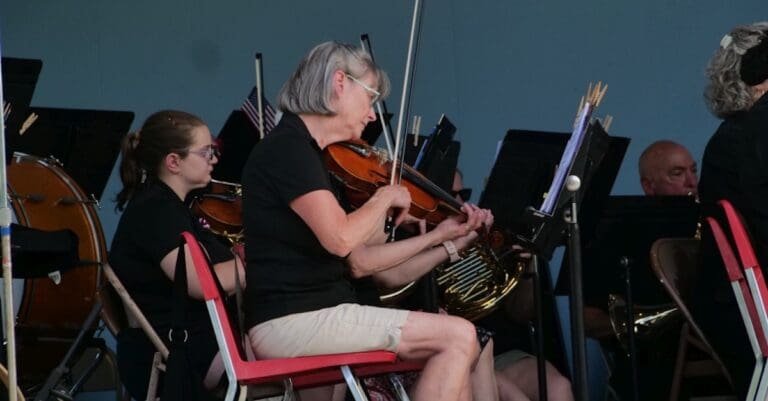
The Music Company Orchestra brought a variety of pop tunes to the new stage at Freedom Park on June 28. Sunday shows now start at 5:00 pm.

Photography by Timothy Reidy.

More from Freedom Park here …


Thanks for Asking: Adam Gerstenberger

0

By Sara Busone.

RRX: Where do you see yourself next year? In the next five years?

AG: I’ve got some big dreams!  In the next year, my band is releasing its first full-length album.  My band is called From Starlight, for which I play lead guitar and sing backing vocals.  We’ve worked hard and carefully thought out each of the ten songs that’ll be on the record.  We’re pumped to book shows to support the album here in the Capital District but also all around the Northeast. We’ll definitely be hitting up spots in Boston, Montauk, Philly, Buffalo, and others.  I/we feel very confident this album is going to take us places.  So in the next five years I see me and my bandmates releasing more material, gigging more, collaborating with other bands, creating fun music videos, and so much more!

RRX: Who do you admire in your community, and why?

AG: The two people I admire most in my community are my amazing parents.  They worked very hard and had to make a lot of sacrifices in order for me to be able to pursue music, let alone even play an instrument.  When I was born, I came with very limited ability to use my arms and hands.  The doctors told my parents that I would more than likely lead a normal life cognitively, socially, and professionally but would probably never be able to hold a pencil or play the violin. My mom had to give up her dream career in medicine, and my Dad had to work extra hard to support our family.  After countless hours of occupational therapy both with professionals and with my mother, we achieved what we were told wouldn’t be possible.  I can hold a pencil, and my first instrument was the violin!  Later on, I transposed my violin skills to guitar!  So I admire my parents for all of the love, hard work, and support they gave me growing up and continue to give me now!

RRX: Is there anyone who has passed that you feel you have immortalized in your work? If so, can you tell us a little about them?”

AG: I immortalized my late music teacher, Mr. Joe Gumpper, who died suddenly this past May. His enthusiasm and passion for empowering others through music was very inspiring to me and many others. He had a larger-than-life sort of personality that was captivating and infectiously motivating. He had a sort of dorky wit that never failed to give me and my peers a laugh. Throughout high school, I usually had him for homeroom followed by string orchestra rehearsal, and that was always a fantastic way to start my day. I’m grateful that my big sister and her daughter were also students of his on whom he made a mark as well. Whenever I’m out and about supporting my friends at their shows and open mics, I always channel my inner Mr. Gumpper and do my darndest to pass along the same enthusiasm and support he gave me, my family, and my peers.

RRX: Can you talk about your first love, especially if you did something cool to express that love? (No names needed.)

AG: I met my first love in high school when I was only 15. We connected over similar tastes in music, soccer, skiing, friends, family backgrounds, and dorkiness. We had a beautiful 13-year relationship before deciding that we’re more so high school besties as opposed to lifelong romantic partners. She and I still enjoy a close and proud friendship and co-parent three handsome cats that are brothers from the same litter. I wrote a song for my first love right after the Covid restrictions lifted. I titled it “Lifelong” and only played for her, family, and some gigs. I never got around to recording it, but I’m sure I will someday. The song is originally about my desire to marry my first love, but we never tied the knot. The song for me now is really about a friend’s lifelong commitment to a close friendship.

RRX: What do you think is the most poorly understood thing about music, or the music you play?

AG: I think the most poorly understood thing about music is how many people believe that to be a great musician you must have a natural God-given talent for it.  While there may be some truth to that, I really feel it is actually one’s passion, discipline, and determination to continuously practice that will make them a great musician.  I didn’t just pick up a guitar when I was 13 and play like Van Halen from the start.  I started out by having to learn how to actually use my hands and arms first due to complications during my birth. Then I learned how to play violin, and later on I practiced guitar for upwards of four hours per day.  All of that was instrumental (pun intended) in building me up into a good musician. I really don’t think my achievements come from some talent that was magically given to me at birth; it was passion, discipline, and determination.  As with any other craft or career, your mastery of it depends on the time and energy you put into it.  And once you’ve mastered your craft, you have to maintain it with even more practice.  It’s “work,” but it’s fun for me because I’m exercising my passion.

RRX: Tell me about your most recent song, album, or video (you pick.) Tell me a story about what went into making it. Not a process, but a cool story that took place within the process.

AG: A recent song I’m very proud of is “One Chance” by my band From Starlight. It started out with our singer spontaneously chugging a couple chords on his guitar in a super catchy rhythm, and it raised all of our eyebrows. Once we heard it, we knew that needed to be the verse progression for a new song. Next we needed something to write lyrics about. I suggested that we write the lyrics about pursuing closure over a connection with someone from the past that you feel could have been a more-than-friends sort of situation. I shared the story of a particularly cool girl I met when I was in college and developed some feelings for, but I never pursued it further than a friendship. After graduating, I couldn’t stop wondering if her and I could have ever had something more. I did ultimately visit this girl out in Boston and told her about these hidden feelings I had and the confusion I was experiencing about them. Turns out she always saw me just as a friend. Upon learning that, I didn’t feel let down at all. I suddenly was overwhelmed with clarity. This girl and I are still friends, and we connect over fun things like skiing. So the song “One Chance” is about summoning the courage to open up to someone about how you feel when there may not be another opportunity to do so, with no particular expectation other than gaining some clarity. The way we recorded the song was fun and unique too. Even though I am the lead guitarist, it was our singer who tracked the lead guitar, and I tracked all of the rest. I see that as a testament to how we always do what will best serve the song and give equal credit to each member in the group regardless of who tracked what.

RRX: How does practice go? Is the road practice enough, or do you have a practice shack? If so, how does it look? What’s on the walls? What cool sh** is in there?

AG: I have a few fun practice spots!  My housemates are also into music, and we have a rock cover band called Timeworn.  Our basement is loaded with several guitars and basses, a drum kit, a bunch of amps, a PA, and a bar. Practice in that basement is done the old-fashioned way with everything cranked to 11 and ear protection on!  We have a lot of fun in that basement and try our best to be mindful of quiet hours. My band From Starlight practices in our singer’s basement studio, and that’s a nice, professional setup with a somewhat spacious control room and sound room.  Rehearsals in that space are much different from your classic garage or basement jams given that it’s a full-blown studio.  When From Starlight rehearses, it is always done with in-ear monitoring with the metronome.  Rehearsals to a metronome can be tough and rigid, but it’s really how a band gets particularly good and tight.  When I’m practicing on my own, I really enjoy lounging in my screen porch with my acoustic guitar at dusk with gentle lights on and nature singing around me.  It really gets me into a calm and focused zone.  I usually start my practice sessions by singing a few covers I haven’t played in a while, then I’ll run through some scales and arpeggios, and then jump into new songs I’m trying to commit to memory.  I find that by choosing acoustic over electric, I focus more on technique like finger placement and connecting notes with each other fluidly.  Electric is fun but can allow for a bit of slop.  Acoustic doesn’t let a player get away with anything!

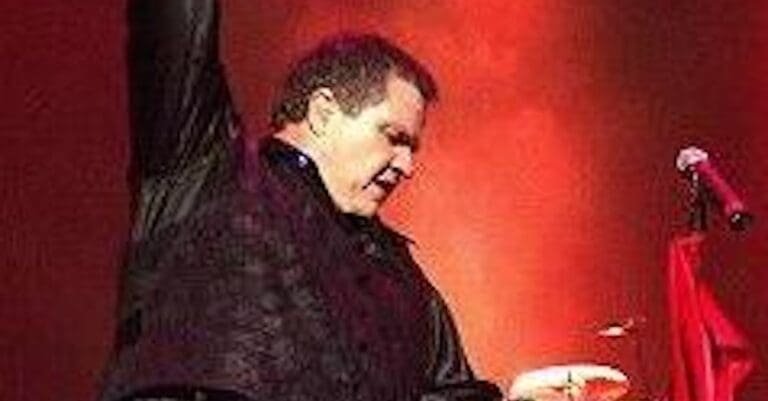
Mea Culpa Meat Loaf

0

Photo by Mr.Mushnik and licensed under Creative Commons 2.5

By Art Fredette.

In the summer of 1977, I was 10 years old and trapped every weekend on a drum and bugle corps bus. My sister had decided she wanted to be in the color guard, and the family was all in for the journey, or sentence.  The headiness of the Bicentennial had faded, and all we were left with were horrible clothes and AM radio.  From the wasteland of AM gold, Meat Loaf roared onto the airwaves with “Bat out of Hell.”  For better or worse, this was the soundtrack of that summer.

I clearly remember bouncing along the highways of Upstate New York while every teenage girl on the bus sang along to “Two Out Of Three Ain’t Bad’ at the top of their lungs and out of key, and I prayed for a fiery crash. Sticky vinyl seats in the August heat exasperating the torture with every off-bleated chorus echoing from the rear of the rolling metallic tube. And on top of it all, insult to injury, all of this in the shadow of Elvis dying. I decided right then and there to HATE Meat Loaf the singer forever. I still kinda like the meal.

The years passed, and I survived the summer of ‘77, discovered new bands and sounds, and sort of forgot Meat.  Then, I started to mobile-DJ, and he was back!  Back with a vengeance – every weekend, without fail, someone would request “Paradise by the Dashboard Light.”. Could I ever escape this album?  Was I trapped forever in Jim Steinman’s overblown theatrical purgatory of excess?  At least it wasn’t “Celebration” by Kool and the Gang. But still … really?

But time passes, and tastes change, past traumas fade (drum corps weekend excursions), and old convictions fade.  So cold and lonely on a deep dark night, I took the time to revisit the Meaty one and the album that made him. I will admit that his performance in “Rocky Horror” had helped to soften my resistance.  With headphones on, so no one will know my sin, I dropped the needle on the record.  Would I be reviled, would my ears bleed, would the Ramones crawl out of my closet and beat me with broken guitar strings for the sin I was committing? Maybe, but nothing ventured, etc.

When the album ended, I was still alive and, dare I say, impressed.  The damn thing was near perfect, and why wouldn’t it be? Todd Rundgren was the producer, and members of the E Street Band were all over it. Meat Loaf, for all his excess, was perfect in his delivery, and his theatrical bent gave the songs the life they deserved. This was pure over-the-top excess, and I loved it. I did say the record was “near” perfect. Six of the seven tracks on this record move smoothly within the theme and flow with an odd grace.  The only sore thumb is “Paradise”; it lacks the Hammer movie majesty of the rest of the LP.  If it were left off, “Bat Out of Hell” would have been a rock opera to be reckoned with.

I guess what it all comes down to, in the end, is even a music snob like myself can eventually and begrudgingly admit that sometimes what we believe sucks … doesn’t. So bless me, Father, for I have sinned. I have listened to Meat Loaf, and I liked it. Sort of. Now say five “Sweet Jane”s and five “Satisfaction”s and sin no more.

Barry Manilow @ MVP Arena, 6/29/2026

0

Lots of sing-alongs to his many hits when Barry Manilow visited the MVP Arena on June 29.

Photography by Timothy Reidy.

More from MVP Arena here …


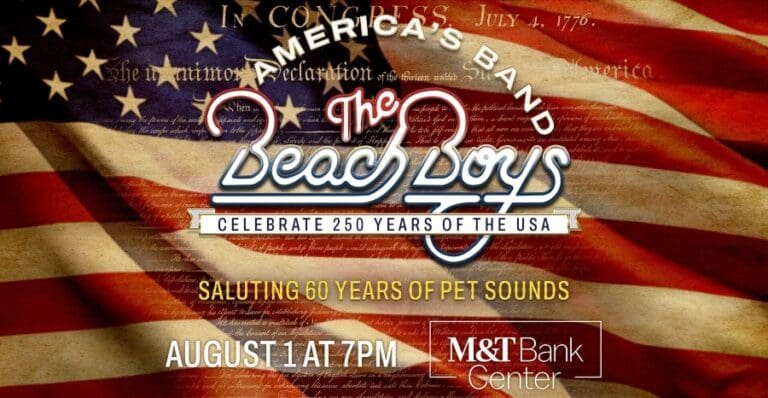
THE BEACH BOYS OFFER BUY ONE, GET ONE FREE TICKETS FOR AUGUST 1st

0

THE BEACH BOYS OFFER BUY ONE, GET ONE FREE TICKETS FOR AUGUST 1st

CONCERT AT M&T BANK CENTER

Special promotion celebrates America’s 250th anniversary and the 60th anniversary of Pet Sounds
Schenectady, NY – America’s Band is inviting fans to celebrate America’s 250th anniversary by bringing
a friend to its Saturday, August 1 concert at M&T Bank Center in Schenectady for free. For a limited
time, The Beach Boys are offering a buy one, get one free ticket promotion with promo code
BEACHBOYS250.
The special offer also commemorates the 60th anniversary of their legendary album Pet Sounds, giving
fans the chance to celebrate two American milestones while singing along to timeless classics from one
of the country’s most iconic bands.

To redeem the offer, visit mandtbankcenter.com, select The Beach Boys event, enter promo code
BEACHBOYS250, then click Choose Your Seats. After the promo code has been applied, a second ticket
can be added at no additional cost. The offer is available for a limited time and while supplies last.
Tickets start at $39 (plus fees) and are subject to change. Doors open at 5:30 p.m. and show starts at 7
p.m.
As The Beach Boys mark more than a half century of making music, the group continues to ride the
crest of a wave unequalled in America’s musical history. The Beach Boys – who have become
synonymous with the California lifestyle and an American icon to fans around the world — will
celebrate 250 years of the USA, saluting 60 years of Pet Sounds. The Beach Boys are presented by
Rivers Casino Schenectady in partnership with the M&T Bank Center management group.

Since the band’s co-founder, lead-singer and chief lyricist Mike Love penned the lyrics to The Beach
Boys’ first hit,“Surfin’” (1961), dozens of the bands chart toppers have become eternal anthems of
American youth: “Surfin’ USA,” “Surfer Girl,” “Fun, Fun, Fun,” “I Get Around,” “California Girls,” “Help
Me Rhonda,” “Barbara Ann,” “Good Vibrations,” “Wouldn’t It Be Nice,” “Rock and Roll Music” and
“Kokomo.”
The Beach Boys have sold over 100 million records worldwide and have received more than 33 RIAA
Platinum and Gold record awards. The Rock And Roll Hall of Famers where also honored at the 2001
Grammy Awards with the Lifetime Achievement Award. With more than five decades of touring under
their belts, The Beach Boys have performed more concerts than any major rock band in history.
Sounds Of Summer: The Very Best Of The Beach Boys, Capitol/EMI’s 30-track collection of the band’s
biggest hits, has achieved triple-platinum success with sales of more than three million copies in the
U.S. since its release.

The Beach Boys remain at the forefront of music and culture through their recent projects. In 2024,
THE BEACH BOYS documentary debuted on Disney+, offering fans a comprehensive look at the band’s
journey from their humble beginnings to becoming one of the most influential acts in music history.
Directed by Frank Marshall and Thom Zimny, the film features never-before-seen footage, interviews
with band members including Brian Wilson, Mike Love, Al Jardine, and Bruce Johnston, and
contributions from other industry luminaries such as Lindsey Buckingham and Janelle Monáe. The
documentary soundtrack, available via Capitol/UMe, includes classic Beach Boys hits and the bonus
track “Little Blue Bathing Suit” by Stephen Sanchez.

In 2023, The Beach Boys were honored in the CBS tribute special Grammy Salute to the Beach Boys,
which featured performances from Beck, Brandi Carlile, Michael McDonald, Pentatonix, St. Vincent,
Weezer, Norah Jones, John Legend, and Mumford & Sons among others.

In June 2025, Mike Love was inducted into the Songwriters Hall of Fame, an honor recognizing his
profound contributions to the world of music. He joined an esteemed class of 2025 inductees
including The Doobie Brothers’ Michael McDonald, Tom Johnston, and Patrick Simmons; George
Clinton; Ashley Gorley; Rodney “Darkchild” Jerkins; and Tony Macaulay.
The Beach Boys are led by Mike Love, who, along with musical director Brian Eichenberger, Christian
Love, Tim Bonhomme, Jon Bolton, Keith Hubacher, Randy Leago, John Wedemeyer and Chris Cron
continue the legacy of the iconic band.

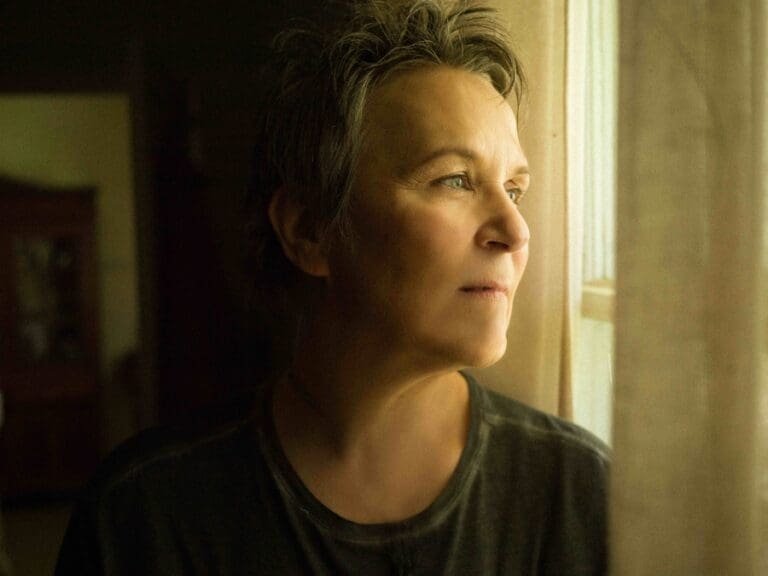
Mary Gauthier Chats With RadioRadioX About Song Writing, Touring and More!

0

Interview: Mary Gauthier
By: Rob Smittix

RRX: How are you today?

MG: Well, Nashville’s hotter than hell. We’re in a heat warning, don’t go outside warning situation, but I am personally very good.

RRX: Oh, that’s great to hear. What are the temperatures like down there?

MG: They’re talking 97, 98 possibility of 100 degrees. We’re just a humid place, so that makes it feel like an oven.

RRX: Yes, here in Upstate New York, temperature wise we’re about the same right now. The whole world’s in a heat wave.

MG: I saw that the city looks like they might be hit… 100 degrees in Manhattan is a brutal thing.

RRX: It’s not fun at all.

MG: Oh God.

RRX: But I appreciate you taking the time. I see you coming near our area here in upstate New York this month. Looks like you’re gonna be in a few places in New York, Big Indian, New York, which I don’t know where that is, but I’ll find out, Woodstock and Spencertown.

MG: Yeah, they’re all in a pretty close area. Big Indian is the home of the Full Moon Retreat Center. I’ll be up there teaching songwriting with Richard Thompson and then we’re gonna go to Woodstock and do two shows together. Then I head over to Spencertown.

RRX: That’s so cool. So you’re actually gonna teach some songwriting. That’s interesting because you obviously are a renowned songwriter and to learn from someone that’s been doing it for so long is amazing.

MG: I really love working with songwriters and helping them to have confidence in their own voice, to take some risks, to be vulnerable, to be brave, to put it out there and see what happens. It’s one of my great joys to work with adult songwriters who’ve always had the call to do it but have kinda toggled back and forth between actually doing it and just wanting to do it. I’m super excited to have been invited by Richard to be a part of his songwriting camp this year.

RRX: That’s amazing. I’m a songwriter myself but I’m always down to get some tips. I think one of the things I see nowadays is and I think you mentioned it before about… having your voice. I think there’s a lot of very talented musicians, a lot of people that have a lot of great voices. But I still think sometimes, especially with upcoming artists, they’re afraid to say what they really need to say. You know what I mean?

MG: I totally know what you mean and that’s where I come in. When I say voice, I don’t mean singing voice. I mean writer’s voice. How do you sound like you? How do I sit down and write a song that sounds like a Mary Gauthier song? I’ve learned over the years how to teach that… not how to sound like a Mary Gauthier song but how to sound like yourself. It almost always involves taking a risk and saying something that’s a little scary to say and saying something that really matters to you. Putting some skin in the game, that’s gonna do it. Like you said, there’s a risk to that because we live in a cancel culture. We live in a world where people’s comments are immediate, knee-jerk and often unkind and so it’s scary. But the rewards outweigh the risks. There’s a service element to it. I think it’s a very valuable and useful thing to do the thing that’s hard.

RRX: That’s right and you know what? You can’t satisfy everyone but being true to yourself certainly is a satisfaction in itself.

MG: Yeah, the only person that needs to be proud of your song is you.

RRX: That’s right. Now you’ve been doing it obviously a long time but how long has it actually been? Like when did you really get started and start performing and everything?
MG: I’d say uh 1995, 1996 something like that which for most artists comparatively, I got started pretty late. I started writing songs when I was 35. I had been in the restaurant business prior to that. I went to chef school. I was in the culinary arts and loved it but then I became really passionate about songwriting and the culinary arts just didn’t compare for me. I liked being on stage with the song, telling the story more than I liked being in the kitchen cooking jambalaya and so, I enjoyed the transition around my mid-30s and came to Nashville when I was 40 to do this full-time, full-on.

RRX: So you’re right, you actually did get kind of a late start but it seemed to to work out for you and I’m sure in your own kitchen, you’re probably still a mean chef.

MG: Well, honestly, kinda but you know? I don’t have the time, I’m not home enough and I don’t have the ingredients. I mean, I’m home for a week here and I’ll do one good dinner but I’m not the maestro I used to be in the kitchen because I got rusty. You gotta do it to keep it alive and I’m better at booking flights, hotels, rental cars, getting on the highway, playing and singing songs than I am cooking these days, for sure.

RRX: Well, that’s a whole lifestyle right there. How far geographically has your music brought you?

MG: Oh, all over the world, multiple times, everywhere.

RRX: And I mean, obviously, we have a world that’s out of whack and even this country at many times, but I mean… was it always a welcoming situation everywhere that you went?

MG: Well, you know? After 911 there was such goodwill, I mean… I’d walk into a place as an American and people would hug me in tears after 9/11. There was such goodwill for America and Americans and then Bush started that war and never really was able to legitimize it in the eyes of the world or in the eyes of a lot of Americans. And the goodwill went away and then anti-American sentiment started. I’ve lived through that and the best way to battle that is play Woody Guthrie songs, you know? Let the audience know where you’re coming from. Most audiences, I gather are able to make a distinction between the politics of a country and artists from that country. The girl punk band Pussy Riot is in direct opposition to Putin and I think audiences understand that. I would say my music is in direct opposition to sexism, racism, ageism, homophobia, hatreds of all kinds and anti-immigrant sentiment. I’m in opposition to that and my music are songs of love and resistance to hate.

RRX: I can get down with that any day of the week.

MG: Most people can.

RRX: You’re so right about that and I think people forget that almost all governments are pretty sh***y and almost all people are pretty good.

MG: I think so. We live in an awkward time of transition with media and we don’t know what to believe, and that seems to be getting worse. We don’t know what’s true, real or what’s actually happened. But I also have an abiding faith in people in general and in the spirit behind the eyes of human beings that lights up a life and a heart. And that spirit is a large intelligence and it’s fundamentally energetically connected to love. I believe in it and I’m never not gonna believe in it.

RRX: I love that. I’ve made this joke many times but when anyone that ever becomes Grammy nominated or a Grammy winner, that becomes your first name in everybody’s article. Never in mine though but Grammy nominated is something that they’ve described you as for how long?

MG: 2018, and it’s an honor, you know? I think there is a legitimacy that comes with being Grammy nominated because you’re voted on by your peers. That is something that has great value to nominees. Once you reach a stage of fame with household nameness, the Grammys don’t really matter so much anymore because you’ve already been legitimized but in the smaller categories it’s huge. I would call it an energetic boost. The smaller categories aren’t on TV and you don’t get to perform. It’s like two award shows, there’s one during the day and there’s one on TV. I was in the category for best contemporary folk record of the year. So it’s the smaller category, not on TV but it was a wild ride and man, I enjoyed it!

RRX: Absolutely, I know several musicians with the same deal, nominated for a category that wouldn’t be on TV. I’m over here thinking… these are the categories I’d actually wanna see because I’m not into the mainstream.

MG: Honestly, I’m not either. I like the outsider art, the stuff that’s not fundamentally commercial in nature but is fundamentally art. To me, that means it says something that creates an emotional connection with the listener that oftentimes can even be disturbing but useful in a way that has deep value. That’s what art is and commerce is different. Commerce is all about units sold. If I had a choice between a commercial restaurant, let’s say… McDonald’s, Burger King, Wendy’s, KFC, or a restaurant that’s owned by a human being in the kitchen who’s cooking and making sure the plates come out beautiful and there’s love in the hand that made the food; that’s where I’m going.

RRX: I couldn’t agree more, I’m the same way. Well, again I appreciate you taking the time with me. Was there anything else that you’d like to say to people, to the world or anything that you just want to get off your chest?

MG: Gosh… no, not really, other than there’s artists out there just a little below the radar who are doing great work and bringing hope to audiences right now in this time of struggle and that hope can come in a variety of forms but it comes from being connected. And those connections that happen through art are really valuable always, but right now they’re intrinsically important because we’re so disconnected.

RRX: Well, couldn’t have said any better. Mary, it’s been a pleasure talking to you, I hope you have a great tour and stay cool down there.

MG: Thanks for having me on, you stay cool up there.