Home Blog Page 603

 Shred’s Not Dead, baby! Shred Flintstone Interview By: Joshua Reedy

0

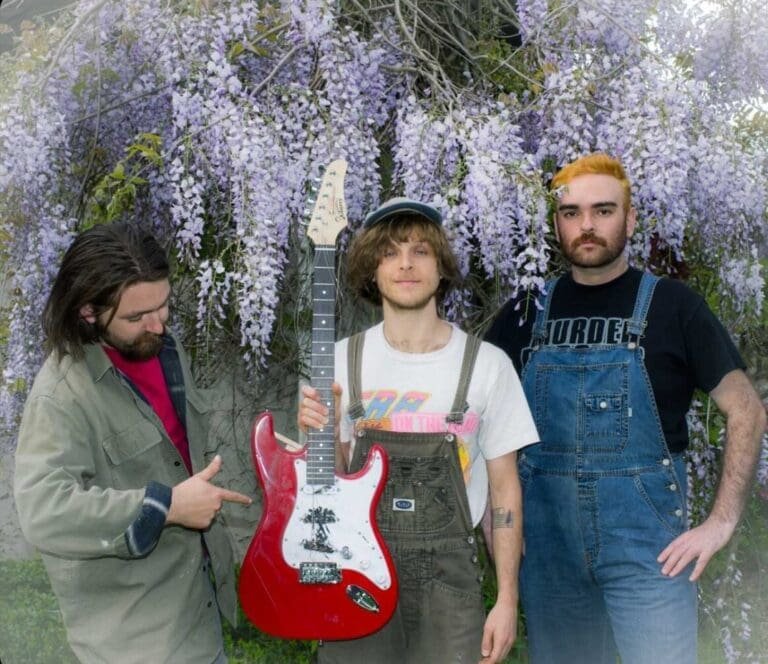
(Left-Right: Ed Weisgerber, Dan Barrachia, Joe Giambra)

Shred Flintstone are the energetic three-piece made up of front man Dan Barrachia, bassist and fellow vocalist Ed Weisgerber and drummer Joe Giambra. The outfit has toured extensively in the U.S. and Canada showing off an explosive and dynamic sound to basement shows as well as established venues alike. Their sophomore release titled Unlimited Power arrived to eager ears on September 3rd, 2021. After a powerful set at the Byrdhouse in Albany, I managed to arrange a sit down with the hottest New Jersey band since Visiting Day. Shred Flintstone discusses their album, their crazy tours and some of their wacky music videos below. 

RRX: So, to start let’s just talk about the new album, Unlimited Power. Am I correct that this is your second full-length to date?

JG: Yes, second full album.

RRX: How did you go about working on it? Was it all you guys doing an independent recording or did you have other people working on recording, mixing or anything else? 

EW: No label, we wrote everything, arranged it all and got all the sounds we wanted, but we did go to a studio; Kaleidoscope Sounds in Union City, New Jersey. We worked with a good friend of ours Jeremy on the record. 

RRX: There’s obviously benefits to maintaining an independent nature in regard to putting an album together; I know a lot of your song titles are very humorous for example “All My Friends are Bread,” where does that humor come from? Is it mostly you (Dan) and are you a primary songwriter?

DB: No, we’re all the songwriters. I just write most of the lyrics, for the ones I sing. If Ed sings a song, he’ll write the lyrics. We all write the songs equally. Ed will bring a lot of skeletons of the songs, basslines and choruses. Or I’ll bring a riff and we just jam it out. Song titles come last and if I wrote it I’ll tell them and they either like it or they don’t. I usually go through about three or four song title ideas before they agree on one. 

RRX: What are some titles that were left on the cutting room floor?

DB: “Lego Island”

JG: Yeah “Lego Island!”

EW: There was one song that was supposed to be about cinnamon buns and that was one time Joe and I stepped and said no (laughs). 

DB: Yeah, we have a song called “Trashed” that’s on the Shred’s Dead EP and originally the song was just about cinnamon rolls and I was singing the lyrics and Joe and Ed were like “You have to change the lyrics on this one.” I was like “Really?” So, It’s no longer about cinnamon buns, but it was originally. 

RRX: I wanted to bring up that song actually, because I really like the music video for it. I wanted to talk about the direction for some of the videos.

JG: Shout out to Spaghetti Jesus for being an awesome director. 

RRX: I wanted to mention that as well, because I saw the name in the credits and wanted you guys to talk about who that is; Is it just a guy that you know?

JG: Yeah, he’s done a lot of collaboration.

DB: He’s an enigma. 

JG: His (Spaghetti Jesus’s) name is Josh Bruce. His dad is also of Comic Book Men fame. He’s on that show with Kevin Smith. His dad runs the store. But he (Josh) is very into Kaiju and Godzilla type stuff. He’s very into underground street art and Japanese art; that’s where you see a lot of Godzilla-type stuff in our videos. We embrace Josh’s style because destruction of the city style stuff like in the video for “Trashed” is the shit. Ed made the shirt for that video, the three-headed shirt.

EW: No, actually my friend tailored us a custom shirt for that. I made the extend-o neck for the guitar though. 

RRX: When you film these videos, who is assigned the role of being in the monster suit or the robot suit from the new video for “Unlimited Power?”

JG: I was the robot.

DB: We make Joey do the dirty work (laughs).

JG: It was dirty alright, because we were shooting for two hours and the fuckin’ eye holes were too low and I’m walking around blind the whole time.

RRX: I usually talk about the scene when I do these interviews as well, but this is the first band I’ve spoken to from Jersey. What are some of the iconic Jersey venues or bands that you’ve gotten to know over the years?

EW: At Rutgers in New Brunswick there were about three shows a night Friday and Saturday every week. I saw hundreds of bands roll through and made a lot of friends. I met Rob from Professor Caveman who is a good friend of mine. I just helped him shoot a video. They always pack the house. There’s lots of great locals like Dog Date, who played the first leg of this tour with us. 

JG: There’s a lot of people that we came up with that are cool like Skylar Pocket and Tula Vera.

EW: There’s lots of great places to find a show around New Brunswick and Montclair.

DB: The Meat Locker. 

JG: Right, the Meat Locker which was the New Brunswick scene. Dan went to William-Patterson and I went to Montclair State so we were part of the Meat Locker/Montclair scene. 

DB: Yeah, it was the only place to really have good shows in Montclair; the Meat Locker was a grungy old punk basement that has flooded before. A guy lives down there, his name is Lenny or something?

EW: He’s got the room right under the stairs and you can kinda look into it when you come down. 

DB: I saw GG Allen’s band the Murder Junkies down in that basement. I saw the guy do some shit that you wouldn’t see at a normal venue. 

JG: Multiple drum sticks up one guy’s ass. 

DB: It was a grimy place but there were a lot of great shows there despite that. 

RRX: So now, tell me a bit about the first record. Your most popular song, at least according to the internet, is “Delta” from the first album. 

DB: Well Ed hadn’t joined the band yet for that record so our old bassist Bridget played on that. She’s in a band called Whiner. We didn’t know what we were doing as much as we do now. We really winged that one. 

JG: there’s something special about the lyrics on that one, you know Bridget still talks about what a beautiful lyricist you (Dan) are? That was definitely a more lyrically based album. 

DB: It was a lot of finding our way. 

JG: Either way, that album and with what we did for Unlimited Power, I’m very happy with how everything turned out. 

DB: It’s nice seeing how far we’ve come with Ed joining the band and us having a vision as opposed to just being like “what the fuck” and throwing some songs together. 

RRX: And by the way, for a three-piece band, you guys have a very big sound live. What goes into that?

DB: Joe’s drumming probably, Joe’s a very powerful drummer.

JG: I have to drum in a way that brings up the bass and undertones. And we practice so that when we play live either Ed hits a chorus pedal or Dan hits a pedal that fills the void whenever there’s a solo or something. 

EW: And I play a lot of chords on the bass, especially when Dan is using a lot of pedals the bass needs to get right under it and glue it all together. 

RRX: So, this is a stop on your current tour of the East Coast. Have you been on a bigger tour? 

JG: We did a U.S. tour in 2019 that started with the northwest, all through the southeast and southwest; five dates in Texas. We just skipped the whole northern quarter and drove straight to Seattle from New Jersey. 

DB: It was a lot of fun driving across the country, we went 36 hours straight at one point.

EW: We got to Wyoming and started hallucinating.

JG: I grew up in the car a lot because half of my family is from Georgia. 

RRX: Any crazy tour stories?

DB: Well, the story of our song “Red Dawn.” I won’t tell the whole thing but, in 2018 we went to SXSW when our friend Jack was playing bass. We were crashing with this guy who liked to do a lot of cocaine and keep us up at night watching the movie Red Dawn with him until like, four in the morning. We were all sick, it was torture. 

JG: He kicked the door in at 6am once.

DB: Yeah he came in and said, “Everybody up, I just made out with a dude, we’re watchin’ Red Dawn!

RRX: Any other projects you guys are in that you want to mention? 

EW: I have an electronic project with my old friend Shaun, we have about ten songs to be released. 

JG: All of our roommates are talented artists including Ed, who did the mural of Judge Dredd that we had behind us. 

EW: I did the album cover and single cover for this release as well and I do painting with my dad. 

JG: I had a solo grindcore project called Latex as well that was more of a passion project that talked a lot about gender dysmorphia and Sailor Moon.

RRX: What’s your biggest collective influence?

JG: Ween.

DB: Yeah, our uniting pinnacle is Ween. 
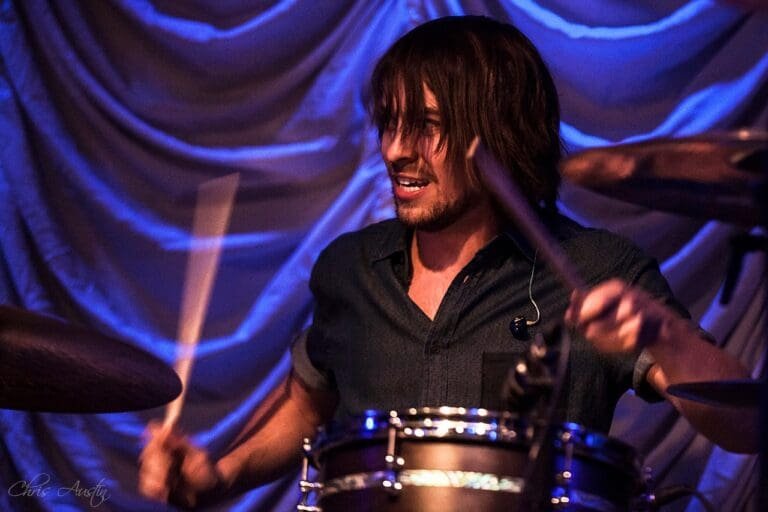
Sharing the Ways of the Beat- Pat Gerasia Interview By: Liam Sweeny

0

Drums are very guttural to the human experience. You could say that it is something that was one of the first elements of music, even from hunter-gatherer days. Throughout history, warring armies were at a disadvantage if they didn’t have a drummer. But even more than that, life itself has a beat; the heart itself.
Pat Gerasia is a drummer, and a good one. He’s played with some big names, and now has a teaching business in Saratoga Springs. Let’s welcome him.

RRX: You’re the drummer for new alt rock band The Violent, and before that, the rock band Red Sun Rising, which The Violent came from. I ask this first, because people hear drums usually in relation to other music, not counting drum solos. What kind of a sound were you all going for in Red Sun Rising, and from that to The Violent?

PG: The drumming approach in Red Sun Rising was more organic and involved all five of us getting in a room, hashing out parts and seeing what came out naturally.  The process with the Violent has been vastly different.  With only three band members, there is less to hide behind so every musical choice is that much more exposed.   My drum parts are more focused on creating excitement and energy in the track.  There are more frantic kick/snare patterns and crunchier, grittier drum tones.  I think the drum parts in The Violent songs are way more aggressive and showcase more personality.  The drums sound angry! Maybe they are…

RRX: We’ve interviewed a few drummers, including Gary Burke and recently, Mahavishnu Orchestra’s Billy Cobham. What I’ve come away with is that the success of a drummer is in their ability to hang back. A solo here and there aside, the drummer can’t hot dog it like a guitarist. So how do you hang back when you feel the need to bust out?

PG: Having restraint is one of the most important lessons to learn as a drummer.  When I first started playing out, I had a massive drum kit and wanted to show off my chops at every opportunity. Once I learned to play for the song, I started to hear and feel the magic in my drum performance and that’s when the sound came alive.  Suddenly I was making art instead of just making noise. And that’s when my phone started to ring for real opportunities.

RRX: You’ve toured all over the world, including Europe, Japan, and Russia. When people hear about world touring, they think about crowds of thousands and massive stages, and I’ll bet that in some cases, that’s true. But are there smaller venues? In particular, small venues around the world that have cultural significance, like CBGB’s does here?

PG: Some of my all-time favorite shows were in tiny venues! The energy is so different in a packed club compared to an arena or amphitheater.  You can look people in the eye and feel their excitement more. There are definitely small venues that have some cultural significance, but I think my favorite clubs are the places that not everyone knows about. A couple small venues that come to mind are The Machine Shop in Flint, MI and The Chameleon Club in Lancaster, PA.  There is a vibe in those rooms that is so special.

RRX: You give lessons, both online and in your studio in Saratoga Springs. You’ve learned from teachers like Elitch, who played for Mars Volta and Miley Cyrus,  and Jeff Friedl, who played for A Perfect Circle and Eagles of Death Metal. How did they approach teaching? Did they teach based on their band-work, or was it more basic?

PG: Dave Elitch is a technique and body mechanics guru. He really taught me how to be more fluid and effective behind the kit and my playing comes off more effortless as a result.  When I was studying with Jeff, we did more talking than playing a lot of the time!  He really helped me fine tune my mindset and I always left feeling inspired and ready to tackle whatever challenges were in the way of my career goals.  So while I’m sure they often end up teaching their students drum parts from their respective catalogues, I had a much different and more rewarding experience.

RRX: One of the things that I think would be difficult, as an instructor of music period, is to teach rhythm to somebody who doesn’t have it. I can learn melody, and I can learn the mathematics of an arpeggio, but if my fingers jump and jerk, that’s harder to teach. How do you teach someone who has zero natural rhythm?

PG: I’ve always focused more on the mental side of drumming. I use the phrase “if you can say it, you can play it” all the time during lessons.  When someone doesn’t seem as rhythmically gifted, I find that it’s really helpful to step away from the drum kit and work on counting and understanding how rhythms and subdivisions work.  I’ve yet to have a student that’s a “lost cause.”  Drumming comes more naturally to some, but I’m confident that once I get to work fine tuning your drumming brain, you’ll see growth. It really depends on how hard you are willing to work.

RRX: I have a guitar. And it’s a Mexican strat with battle scars everywhere, cigarette burn marks in the headstock. I haven’t changed the strings in years, but I can get on it and play my damn heart out. And it doesn’t sound that bad. Point here is that you can make any guitar sound good with enough moxie. Is it different with drums?

PG: I don’t think it’s different at all.  I used to focus on having top-tier gear but as I’ve spent more time in the studio, I’ve learned that the vibe of the instrument is more important than how impressive it sounds.  There are times where I’ve intentionally used cracked cymbals or cheap, detuned drums.  The character of the instrument is way more important than how expensive it is.  You just have to get creative and choose a sound that works with the music you’re playing!

RRX: This is where you answer the question I didn’t ask. Your thoughts on ‘bah-dum-tss?’ Best kind of sticks for a power session? Educate, enlighten, emote – the floor is yours.

PG: The “bah-dum-tss” must be saved for the perfect moment (never more than once a day).  As for sticks, I’ve been using Vic Firth 5B’s for over a decade and they make the cut for almost any style of music.  On a final note, I’d like to thank everyone who has jumped on board with our new project, The Violent.  Your energy has kept us inspired to keep building during an uncertain time for musicians.  We only have four songs out at the moment but the floodgates are opening soon. Thanks! – Pat

Blues For a Better Day’s Sunrise- Mark Emanatian Interview By: Liam Sweeny

0

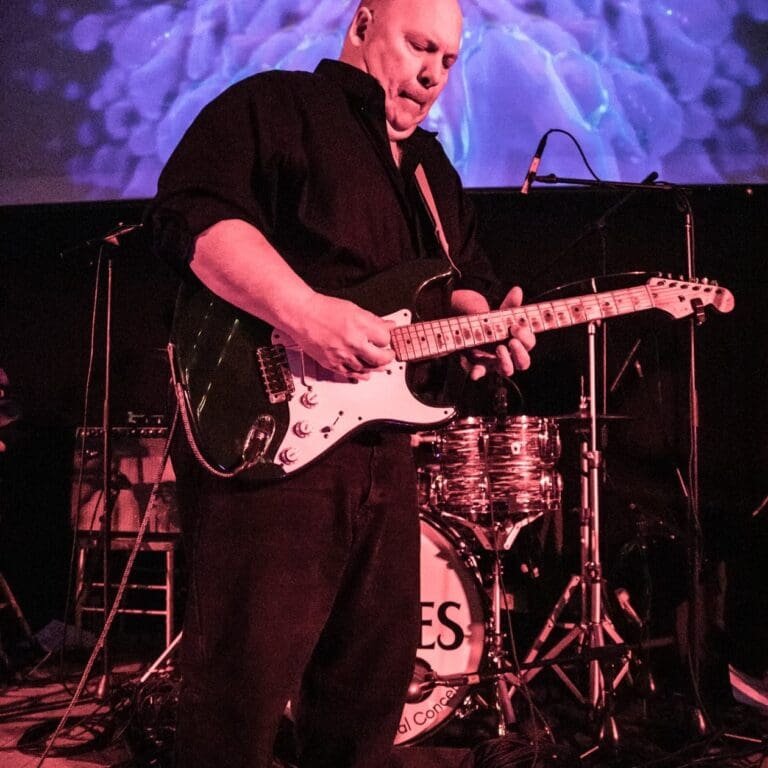
Driven. That’s Mark Emanatian. Since March 2020, when the Covid-19 Pandemic hit, he has built a coalition that has organized mass food distributions feeding over 250,000 people in our area.  He plays in a few bands, among them Soul Sky and The Lawn Sausages. He does a lot, some of which we know, and much of which we’ll likely never know (unless he spills during this interview.) 
He’s a gracious guy, and did I mention he was driven? It’s in the music too, encapsulating the upstate New York “crank-it-up” attitude. Both well liked and well regarded among musicians, and first among equals. I sit down with Mark and talk about a little wet marble, third from the heater.

RRX: The thing that is universally said about you is that you have a lot heart that you bring to the stage, and to your work in the Capital Region community. And there’s a parallel that you could draw between the giving nature of music and other forms of giving. Are your music and your community work branches from the same trunk, do you think?

 ME: I think at its best, music builds community. Music helps make a better world. It makes people feel. I don’t view the work I do as charity; I view it as community building to make a better world. And just like music, there is a lot of improvisation. 

RRX: I’ve heard you play, and you go from having a real stomp acoustic road-trip vibe to some slick hotwire blues riffs. I heard a tribute to Ernie Williams, departed local blues great, and I’m always curious, when I hear blues players, what it means to them to play the blues, or to sing the blues. Can you describe that meaning, and how it motivates you?

ME: I heard blues music when I was a kid and it grabbed me right from the start. So did the sound and look of a guitar. So I studied it. Listened to everything. Read everything. Tried to meet blues musicians. Went to Mississippi and Chicago and Memphis. It’s a music that reaches across time and distance and makes you feel alive. I don’t strictly play blues, but it informs all the music I play.

RRX: Jimmy Barrett was one of my earliest interviewees, and he was in high praise of you being someone who could straddle the fence of having a career and a music career. I’m sure you read it, as Jimmy is a friend to all, so I figured I’d give you a chance to comment on it. I’m sure there are quite a few aspiring string-slingers who’d like to catch some wisdom here.

ME: Jimmy Barrett is the best. He is funny. He is generous. He has an encyclopedic knowledge of music. He uses his influence to build up the music scene and the musicians who make it. He is always encouraging and building bridges. And he has helped so many people and charities. I think that’s what we all should aspire to be like. People who build up rather than tear down.

RRX: It’s about that time of year, the fall-winter, where people pause the slug-fest of most of the year and reflect on what good exists in the world. The number of “good” events go up dramatically as we near the holidays. And Foodstock is one of those events. Can you tell us more about that?

ME: So many people in our area are living in hard times. They have trouble making ends meet. There are children, elderly and poor people who can’t afford enough food. Foodstock is the work of the wonderful Bob Gamache and Jody and Jason Brenenstuhl of the Rustic Barn. It raises money to feed the people that need it. It supports the work of the Food Pantries for the Capital District. I help as best as I can. We have been trying to do two concerts a year to raise money and awareness and we have been very successful for many years. Covid threw a monkey wrench into it last year, but we are going to do it this year on November 7th.

RRX: Latching on to the last question, we also have a memorial event for Josh Bloomfield, friend to all, who we lost to cancer last year. He was beloved, and we all eagerly waited for news on his memorial. So when is it, and what’s it going to be all about?

ME: Well first off, I can’t tell you how much we all miss Josh. His passing left a big hole in all of our hearts. I wish I could talk to him again. I wish I could hear him laugh. I wish I could hear him play music again. The cancer that took his life is a horrible cancer called Cholangiocarcinoma. We want to get together with the musicians who played at the Jam for Josh concert and raise some money in Josh’s name to help the people fighting this cancer.  And almost more importantly, we want to get together and remember our friend and brother and raise a glass in his honor. We are going to do this on Sunday, November 21st at the Hanger on the Hudson.

RRX: Memorial concerts are an expression of love and remembrance. But some of them end up transcending that love and remembrance, and grow into standalone events in their own right, which is really a great thing. The Dustin Mele benefit is one of those events. Can you tell us a little bit about it? 

ME: My dear friend and band mate Joe Mele lost his son to suicide almost a decade ago. Joe and his family have used that tragic event to raise thousands of dollars to help people suffering from depression and mental illness. The music community has rallied around this annual event to remember Dustin and to shed some light on one of the things that affects so many of the people we know and love. It is another example of building community and spreading some love through music. We are going to do this in March, 2022 at Revolution Hall.

RRX: This is where you can answer any good questions I didn’t ask. Who’s on the edge, who deserves a ‘like’ or a ‘share’? What projects do you have coming up? I yield the floor.

ME: I would just like to say thank you to you and all the people that are using their talents to build the community we have been talking about. These have been some hard, hard times, but in many ways it’s brought out the best of who we are. It has reminded us of what’s important. So do what you can. Keep music alive. Take care of your family and friends and keep your chin up.

Tinkerers of Melody and Rhythm-Eastbound Jesus-Interview By: Liam Sweeny

0

RRX: You all are from Greenwich or the surrounding areas, and my apologies if there are any commuters. Greenwich, that whole area, has a certain feel to it. I spent some time there, enough to say that I’ve seen the Tractor Parade. I was one of maybe a thousand, which surprised me. What’s the music scene like up there?

EJ: The tractor parade is quite the scene. We played it one year, but it rained on us and ruined our soundboard. It was fun though! The music scene up here is a bit sparse as we don’t have a real venue of sorts to play at but there’s some good performers out and about playing at a couple local breweries. Then there’s the Throwdown venue of course where we put on our festival each year so that spot helps the music scene cred. around these parts. Music has always been a part of Greenwich though. It’s the home of country legend Hal Ketchum and more recently Sara and Josh of Phantogram.

RRX: I just picked up Full Moon Over Salem, which is your fifth album, including a live album. And honestly, I love it. It’s got this really rich, full sound, with just a sheen of something, I don’t know, glamorous. I want to say country/bluegrass, but I’m not sure if that covers it. Can you tell us what you were going for with Full Moon Over Salem?

EJ: Full Moon over Salem was really just a collection of songs written over five years. Some of those songs we have played for a long time and others are much more recent to our catalog. I don’t know if we were going for anything really except to push our musical sound and make another fun album. That album took us a while to write so it’s kind of slowly developed over the past few years and it took some time to arrange the songs how we wanted them and also to write new tunes to fill it out more.

RRX: You have five albums. That’s five entry points for someone getting into you. So, I’m getting in at number five, and I’m feeling the music a certain way, and I’m seeing the band a certain way, but a different way than someone that comes in with album two or album one. What about Eastbound Jesus would all comers agree with?

EJ: I think all of our albums are great and show the progress of the band, but I think we as well as the fans always come back to Northern Rock as kind of that ultimate album. It was our third album and we were in a great zone writing material. We did three albums in three years and we were kind of musically on fire at that point. People always love the first album though too. It was recorded with one mic in my bedroom and there’s something great about the simplicity of it. We still play a lot of those original songs at shows today because we loved them so much when we wrote them eleven years ago.

RRX: We haven’t covered a lot of country and bluegrass in our publication. But not through any conscious choice; we just haven’t. You interview a rock band; they’re talking rock bands. Interview a rapper, they’re talking rappers. So, let’s talk country and bluegrass, and local players. Who’s been on the country/bluegrass circuit here?

EJ: I’d say the country/bluegrass scene is still a bit small in this area but we’ve had the opportunity to meet and play with a lot of great bands in the Northeast such as Driftwood, Cabinet, The Mallett Brothers Band, The Blind Owl Band, Saints & Liars, and our local buddies The North and South Dakotas. It’s been fun to become friends with these bands over the years and help get them in front of the local music scene so people can see how great these players are.

RRX: My inspiration is the Inside the Actors Studio with James Lipton that I watched TV at 3 a.m. So I always ask people about their method, and their craft, even bands. So, when you’re going from “Damn, we need some new songs,” to excitedly playing that MP3 for friends in your car, what does the band go through?

EJ: Our process can be anywhere from someone plays a riff and we work for months off that to slowly build a song to someone brings a song with lyrics and music to practice and we quickly fill in the gaps. There is no real method, I guess. But regardless we are constantly tweaking our songs. They never end up on the album how we first iron them out. We either forget how we played them (haha) or we throw something different into them to change things up.

RRX: Let’s talk about country and bluegrass. A lot of people who grew up with country think that it’s gotten soft, and “poppy” but bluegrass has been able to avoid that. It’s almost like when bluegrass gets poppy it just branches off to become just an element of a pop song. Country doesn’t seem to have that luck. Why do you think that is?

EJ: I guess bluegrass is just more of an old timey traditional sound with diehards that want it to sound a certain way. But there are a ton of musicians taking that traditional bluegrass style and making it their own, it just will never make it to the radio like the top 40 country music is. I have no idea why that is. I would categorize us very far away from the pop country music that is out there today so it’s hard to call us a country band when we sound nothing like Kenny Chesney. But music is music. Just play what you love to play and forget about the whole genre game.

RRX: This is where you answer the question I didn’t ask. Where do you hide the twang when you’re not using it? Ever jam out on one of the tractors? Educate, enlighten, emote – the floor is yours.

EJ: Haha. No, we never jam out on tractors. None of us are farmers so we don’t own tractors. Just normal dudes working and taking care of little kids that get together every week to try and make some great tunes. Music is our therapy and our escape from the craziness that is everyday life. That’s why we want our fans to escape with us when they listen to our music or rock out at a show. Music is a powerful tool and medicine for all whether you’re on the stage or in the crowd.

I’ve Been Here Awhile- Dave Gutter Interview By: Rob Smittix

0

Photo Credit -Kaitlyn Gradie

You may know him as the front man from Rustic Overtones, you may know him from Paranoid Social Club, you may have seen him perform with his band Armies or perhaps even laying down his hip hop stylings with Beards. But you haven’t heard Dave Gutter solo, until now! His solo EP entitled I’ve Been Here Awhile along with a theatrical nearly seventeen minute long video has recently been released. 

RRX: You recently released your first solo project. 

DG: Yeah, it’s weird because I’ve worked with all kinds of people on all kinds of stuff but I realized that I’ve never done a song that was just me. It was always me and somebody else. When you bounce an idea off somebody else it kind of validates it because you share the idea together. When you are doing it by yourself, you’re just wrapped with doubt. It’s a whole different thing. 

This record, I wrote and came up with a concept for it when I had COVID. I wrote this because as soon as the news got out that I had COVID people that I didn’t even know still had my number from like 20 years ago were calling me and were like; just want you to know you’ve really made us proud and you’re a great guy. And I was like woah… people think I’m going to die! Although they were concerned, it’s a little insulting. I started thinking about it and well… this is the perception; I’m getting older and entering into this next phase. I got the feeling I wanted to do something that was really honest. A breath of fresh air in contrast to everyone living their lives through social media, everything is edited, everything is filtered, you just see what they want you to see. I wanted to create a window to where I’m at right now. It was both self-deprecating and confident at the same time. You know that flaws and all, that’s kind of what spawned doing the record by myself. Although I had a little bit of help from Bensbeendead and the original Rustic drummer Tony Mcnaboe, he didn’t actually play drums on any of it, he played piano on one song and Jamie Colpoys from Rustic plays trombone on the last track. Other than that, all the keys, all the drums sequencing, and all of that stuff was all done by me. 

RRX: I know almost pretty much all your musical projects have Jon Roods on the bass. So that must’ve been weird without him. Was he working on another project at the same time?

DG: Yeah, him and his girlfriend are doing like a family band thing with one of their friends. But it was mostly because I was quarantined and I wasn’t seeing anybody. I really didn’t want to wait around like oh when the pandemic is over I can get somebody to play drums for me or when it’s over I can get someone to play bass. I didn’t have any gigs so it was a great thing to focus on. A lot of the imagery for the video, the artwork, the whole thing was conceived at the same time. 

RRX: I love that you released the EP with a video attached to it. And not just for one song but all the songs.

DG: Yeah, I got a theatre and a mic guy and a camera girl and I just thought of these connotations for each song and what they are meant to be. I ordered costumes and set up five different scenes at the theatre and for seventeen minutes straight had to change outfits and be entertaining. It was super fun to do.

RRX: You can tell you were enjoying yourself.

DG: Because of the honesty behind it, I never had imposter syndrome at any point. I’m just writing 100% about me. I just felt like what I am doing is real. 

RRX: So, this EP is released digitally only right now? 

DG: Yeah, well it’s part of a series I’m going to be doing. I’ll be doing a bunch of albums that will be visual EP’s.

RRX: Oh wow, okay so there’s more of this coming.

DG: Exactly, in a few months or whatever I’m still conceptualizing all the ways I want to lay it out. I’m going to make videos for every song. I think the next one might be about body image, just trying to do stuff that is very human. If I do it solo there’s less stuff, you know? With Rustic, we’re seven guys and a wall of sound but sometimes a poignant lyric or a turn of phrase can get lost in the sonic boom. So it’s kind of fun to peel it back a little bit and make it about the lyrics. 

RRX: Totally. And… of course I have to mention Dave Noyes. I’m not going to say celebrity but there were two people that were known to me in my world that really affected me in their passing. One was Anthony Bourdain and the other Dave Noyes. I didn’t even know Dave personally but because I latched onto the band for so long, it hurt. I was one of the first people that caught the stream of The Lucky Ones which was a phenomenal tribute to your trombonist. I also can’t watch the video for The Gov’t Shutdown without tearing up. Kind of like happy tears, you know?

DG: Yeah I know, that was the thing about Dave’s death. I think all of us who knew him very well were just waiting for him to mess up, like he can’t be this perfect, he must be messing up when we’re not around. He must be shady when we’re not around, he must be dishonest to somebody. When he passes all of a sudden it comes rushing in like this guy is a perfect human, he was fair, he was honest, he was real and he was passionate. Not that I ever overlooked Dave’s talent or his super niceness, he was always so consistent. It really sunk in, in a profound way when he passed the influence he had on people. He played a range of horns on the last Whitney Houston album and didn’t even tell anybody. He was so humble. 

RRX: Wow. If I found myself in that situation, I wouldn’t be bragging but I’d have to share with my bandmates.

DG: I’d be flexing like crazy! 

A Little Rock and/or Roll -Nickopotamus -Interview By: Liam Sweeny

0

RRX: Nickopotamus has a pretty diverse sound. So it’s something to let people know, because they may only hear one of your songs, and not really get a full sense of your sound. If people could only hear one song, which one do you recommend and why?

AF: Wow, that’s a really hard question! I’ve been sitting here fifteen minutes thinking about it, going over all my songs in my head. I’d like to think that no two are alike and not one individual song would give a full sense of Nickopotamus’ sound. They’re all little snapshots of my whole musical spectrum, I guess, and I never seem to stick with the same sound, too boring. But the one song I would recommend is “BCBC (Brown-Chicken-Brown-Cow)” because people really seem to like it when we play it live and it’s lots of fun to play, which is what Nickopotamus is all about?

RRX: You describe your music as having rock, jam, funk, punk, groove, and zydeco elements. How have others outside of the band described it? Have they all been straightforward descriptions, or any funny ones? The least accurate way it’s been described.

AF: I don’t even know how to describe my music when I’m asked. rock and/or roll (a line from the Simpsons) is a phrase I always like to use. I guess rock fusion maybe?  We’ll play a fast-paced two-step, then a disco beat, then a heavier song and everything in between. We’ve got about 90 songs in our repertoire between all the originals and covers that we play. The most straightforward description is when people have come up after a set/show and tell us that we’re a fun-time party band that they really enjoyed listening to, but that doesn’t seem to be a genre. Someone once told me we were just a jam band. We do have some of those elements, but I just can’t narrow it down like that.

RRX: No band is an island, except for island bands. We all have friends out there. Do you have a buddy-band? A band that you jam with, or get into street brawls with or maybe steal jewels with? If so, who is it? And how did you connect?

AF: I guess we are sort of an island band. We’re just out there doing our own thing. No real buddy bands and certainly none that we brawl with!  I don’t mind opening for someone, I love the exposure, or playing an occasional showcase show but I prefer to play shows where it’s just us playing. The only reason is because I need to play for hours and I have a plethora of material that I love to perform. It’s the only way I feel completely satisfied and I got it ‘all out of my system’, so to speak. Don’t get me wrong, I know some musicians in other bands and I try to get out to see them when I can and I love seeing them at my shows as well.

RRX: When it comes to live music, a band is a part of the equation. The bigger part, for sure, but there’s another part of the experience, the venue. Venues have a huge hand in making a show what it is. If you could build your own venue, describe it. Flesh it our.

AF: I would have a venue that, somehow, it would be impossible for anyone in the audience who is standing to be blocking anybody else’s view behind them, regardless of the height/position of that person. Full bars on both sides and back, super circumference PA and light show. Plenty of room, some comfortable furniture, awesome green room, full local door to door/hotel shuttle service for ticket holders, with side walls that can open and a retractable roof.

RRX: You have an album out, Stone Chromozone. I listened and loved. Do you have any new music coming out on the horizon? Any albums or songs, even if they’re only on the practice room wall? And any shows, let’s say going out from now to six months?

AF: Thank you man, I appreciate that! Yes, I’ve had over an album’s worth of music written for a little bit now. The pandemic let me add a few more onto the pile. I started laying down the basics this past Spring and will continue to peck away at it and bring the other members in to record their parts. The material is very well polished from the good amount of rehearsing we did over the past year and our recent shows. We have been booking private parties and publicly playing at the 217 Café (Local 217). It’s got a great outdoor courtyard venue and is right up the street from my house. We’ll be playing The Hangar in Troy soon, just played Putnam Place not long ago and hope to get back out to some of those pre-COVID places like Dinosaur BBQ and my favorite bar the Excelsior Pub!

RRX: Here is where you answer the question I didn’t ask. Words of wisdom? Proper method for breaking bass strings? Educate, enlighten, emote – the floor is yours.

AF: Awwwwwwwwwwww man, I used to break a lot of bass strings in my youth. I’m serious! You know, it took me a long time to learn finesse. I habitually go at almost everything I do as hard as I can and eventually will ease back off the throttle. You can definitely hear this in my music. On the album High Tailin  It I really come out attacking hard. Then with Stone Chromozone’ you can tell I’m loosening up and having more fun with it. This is mostly due to surrounding myself with great bandmates! Nickopotamus is by far the most fun, drama-free band I’ve ever been in and you can tell how much fun that we are having when you see us play live. It’s what we all live for…and our loved ones too!

OBSERVATIONS AND RAMBLINGS FROM A CRANKY OLD GUY -By: Jeff Spaulding

0

How are you?

Two quick notes before the topic at hand.

One, MAJOR thanks to those who made it out to celebrate Broadcast Legend Jim Barrett.

Second, and I’m VERY late in doing so (thanks Fredette, or COVID, not sure which is more deadly).

Last summer, I had a heart attack and a bypass.

I’m fine, better than before, and I’ll outlive all ya bastards (shout out MTE).

When I returned to this tripe called a column, I wrote about my experience.

Sometime after it was published, Art says I got some “fan mail.”

This past weekend, I finally was able to get the package.

It was from Al Spain, who appreciated the story, more so because he went through what I did, in 2017.

After his “pause on the Thruway of life”, he designed a logo he turned into a shirt,

The front had a huge zipper, with the words:

“STENTS ARE FOR WIMPS. REAL MEN HAVE BYPASS SURGERY”

I guess I’m officially in the club.

Al, greatly appreciate the gesture, perhaps we’ll meet someday.

And, being competitive, my scar is bigger than yours.

Now, back to the regularly scheduled program, already in progress.

Last time, I talked about how Jim Barrett helped influence my choice of careers.

I made it to the Buckeye State, where men are men and sheep are scared.

(This was before I made it to Indiana, but more on The Stepford State down the line)

I divided my time in college with two trades, my soon to be Bachelors of Arts Degree in Broadcasting, and my soon to be Associates Degree in Theatre Arts.

With two very active fields, there was very little time for other things, like studying, if you include beer, women, beer, weed, beer, well you get the idea.

I thought everything I was taught about radio and television was the gospel truth, and the ONLY way to work in this business.

Well, that was my idea when I got my first professional radio job, in May of 1977, between Junior and Senior years of college.

As I started working there, I kept saying “What a bunch of ranch hand loons in this building, NO ONE is doing what they are doing like I was taught IN THE BOOK!”

I eventually learned, as in every business around, f*ck the book.

Often I wonder what my former students at the local radio school, successful or not, thought when they found out I was making much of the sh*t up I was saying in their class.

My first radio job went from part time to full when management decided to become a 24-hour, 7-day a week station.

Boys and girls, in the past many stations signed off the air at midnight, if not sooner, especially back then when there HAD to be a live person in the building.

In 1980 I moved to the station one town over.

In 1983 I moved to right outside of Cleveland.

In 1986 (after a slight demotion), I got motivated to move to a job in the Capital District, home.

In 1991, I was “future endeavored” as it were, so I worked in a different field, keeping my broadcast ties in teaching.

In 1996, I returned to the air, part time at first, then another full-time position.

In 1998, a move to Indiana.

In 2002, a move to Vermont.

In 2003, a move to Berkshire County.

In 2007, back to the Capital District, to radio, to the dark side (I sold advertising)

A slight detour in 2008 to full time on the air radio in Glens Falls.

And in 2010 back to full time radio in the Capital District, at this point I ain’t moving nowhere.

I’ll either retire from what I do or learn to greet people while wearing a blue vest.

And in part, it all started by meeting, and being influenced by Jim Barrett.

I may not make 55 years like you have, Jim. I’m hoping for 50, but if it ends tomorrow, I think I made my mamma proud.

Be hearing you.

New Beginnings and Old Questions- Andy Shernoff -Interview By: Art Fredette

0

Andy Shernoff is a founding member of the pioneering New York rock band The
Dictators, a band in which he wrote nearly all the songs. Over the years he has lent his
skills to numerous other iconic bands. We reached out to Andy for an interview and he
kindly responded.

RRX: I have had the pleasure of booking you in the past. One of my favorite nights was
a solo acoustic evening where you told the stories behind the songs. On that night you
mentioned that you essentially went to rock -n-roll high school. Who were the people
you were referring to?

AS: Yeah, I remember that night…. I went to Flushing High School with The Fleshtones
plus a few other semi famous musicians, so it was pretty rock and roll but the actual
rock and roll high school I was referring to that night was the neighboring Forest Hills
High School. We all know The Ramones went there and that should be enough but some
of the other illustrious attendees were Simon and Garfunkel, Leslie West, Randy
California (Spirit), Waddy Wachtel (Keith Richards), Fred Smith (Television) and Burt
Bacharach

RRX: The Dictators have often been referred to as a punk band. I have always thought
of the band as hard hitting rock-n-roll. Do you view the band as punk? Or do labels fail
to capture the spirit of what you set out to do?
AS: The Dictators have incorporated many genres, over the years. We’ve recorded punk,
hard rock, surf, pop and garage songs. I think it made it difficult to market us but we’ve
evolved into a solid two guitar, hard rock sound, more along the lines of the MC5 or
Alice Cooper than The Ramones or Sex Pistols. A good riff, a catchy chorus and a driving
beat, as far as I’m concerned that’s all you need and there really aren’t a lot of people
doing it these days

RRX: When we first met you were with The Masterplan, we were introduced by Bill
Milhizer of The Fleshtones. Besides The Masterplan what other acts have you played in
or written for?

AS: Besides The Dictators and The Master Plan I have played in The Fleshtones and the
Joey Ramone solo band plus a dozen other lesser known projects…my mantra is every
day you make music is a good day.
I haven’t written specifically for other bands very much but I have been lucky that other
artists have covered my music, the most famous being Dion DiMucci, the Ramones and
Joey and Dee Dee Ramone solo. I’ve also had some good song placements in movies, TV
shows and video games like Kindergarten Cop, Boys Don’t Cry, Billions and Call of
Duty.

RRX: Can you tell us about your recent collaboration with Ric Orlando? Do you see
more coming from this project, perhaps a full album? Ric was also featured in last
month’s magazine.

AS: For those who don’t know, Ric is a Hudson Valley chef and the former owner of
restaurants in Woodstock and Albany who was a musician before he opened restaurants.
When the pandemic hit, I was looking for projects to keep me busy. I had an
uncompleted song called Born Hungry and I thought it would be cool if a real chef sang
it. Ric did a great job. We gave the “band” a goofy name, The Huckleberries and put the
song up on Spotify and YouTube. The whole experience was a lot of fun; however, I don’t
foresee an album unless I come up with more food songs.

RRX: Recently, you reformed the Dictators and released a song called “Let’s Get The
Band Back Together”. What does it feel like to bring the band back and will a tour
follow?

AS: It’s been really great. The new lineup has Albert Bouchard from the Blue Oyster
Cult on drums and we just added a guy to take the place of Scott Kempner who had to
bow out due to health issues. We have a new song coming out in September and another
one in December. We’re doing a live stream on September 12 but until everybody gets
the jab, the touring situation is up in the air.

RRX: My final question, rock-n-roll has been so bastardized over the years , do you see                                                                                                                                                                                                      the genre continuing as the force it once was or fading? Are there similarities to the mid
70’s that gave rise to the New York scene or has the “business” of music completely
taken over?

AS: Rock and roll will never drive the culture like it used to in the 60’s and 70’s. It’s
basically three chords and a backbeat and you can only do so many permutations of that
before you start repeating yourself. It’s hard to do something new. Back then rock was
part of a counterculture, it eventually became mainstream and is now fading in
importance. It’ll always be around but I see a smaller role for rock and roll maybe like
jazz is today, not particularly innovative and certainly not the force it used to be….The
world is constantly changing, you gotta ready roll with it