

The Journey of Total Art- Maxime Taccardi -Interview By: Liam Sweeny
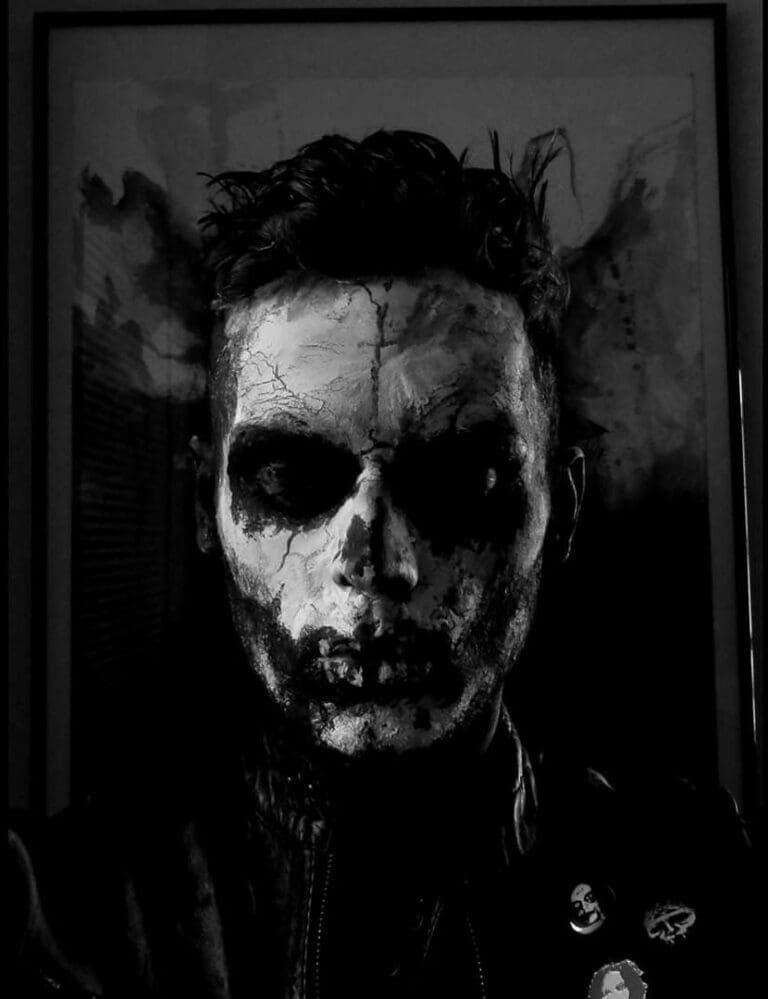
 We have a strange relationship with darkness. We get a kick out of zombies and mummies on Halloween, but we fear flesh-eating diseases and terminal illnesses. We run from dark things, and turn to face them, and explore them, when they’re trapped in the cellulite of film, or infused in the fibers of paper pulp or canvas.
Maxime Taccardi is a French artist and writer that once and again brings fears to the streets of the Capital Region noir. The darkness of his illustrations and paintings are surpassed only by the brilliance of his composition and absolute consistency of his technique. If there isn’t a hell, Maxime might be creating it.
RRX: You’re from France, Paris to be specific, and you spend your time going back and forth between there and the Capital Region. Of course, your calling travels with you. How is the transition between operating in the French art community and operating in the American art community with regard to the cultural aspects of your work?
MT: Yes, that is right, my wife is from the Albany area so I had the pleasure to visit and stay here for a while. I was a teacher near Paris for ten years but quit in 2020 to focus on my art and move here. The art community is basically the same over there in terms of getting art shows and things like that, but I feel the Americans might be a little more open minded compared to the French. As an artist evolving in dark themes, the head of the Paris school was a bit scared and worried about me and my art, it was a relief for them when I told them I was planning on quitting the educational system. They just want puppets to obey and don’t go out of the scheme. That being said, I always had a great relation with my students and I feel my eccentricity brought them something.
RRX: Your work is very fantastical and dark. Someone seeing your work might think you live in a world of darkness yourself, and there may be truth in common guesses, but there’s a separation between artist and art. What’s something about your life that contrasts with the thrust of your work? And what’s something that drives it?
MT: I’ve always been driven by urges to create and translate what I see in my dreams and visions. It took a darker turn when my parents died of cancer when I was in college. I guess the darkness surrounding my work was a way for me to cope with their loss at that time. But like you mentioned, there is indeed a separation between the art and the everyday life even though I consider it to be faces of the same entity. It is a catharsis, an outlet to make something out of my darker feelings.
RRX: You paint and draw with a varied technique, not only bringing your style “out of culture,” like a demonic Mr. Burns from the Simpsons, but in exploring media with paint, pencil, pen, and in some pieces, your own blood. Since every media has its own peculiarities, which one is the wildest ride, and why? Is it blood, or something else?
MT: I enjoy experimenting with all sorts of techniques, I also work sculptures, music, video etc. There is that principle, theorized by Wagner called Gesamktkunstwerk in German which means total art: It has to be seen as the melting of all senses into one which is called synesthesia and this marked me on a deep and spiritual level. To answer your question, the wildest has to be the blood indeed, I’ve been working with it for the last decade. I wanted to simply put some of myself into my work, literally. This is also some sort of a ritual; I could use a syringe but I rather use the pain resulting from the cut as part of the process. Kind of like Jackson Pollock for which the ritual and the dripping was also important but in a macabre way for me. The final result isn’t only the art in itself, the whole process is part of it. There was also a quote by Picasso which always influenced me, he said that if he had been imprisoned and left without anything to paint, he would have used his saliva and fingers. Upon reading about that, I thought to myself, why not use your own blood? I see it as a statement, the art being one with the artist.
RRX: You have your work coming on October 22nd to Etrice Gallery, an Albany gallery owned by Davion Brink, son of Capital Region musician Maria Brink, from In This Moment. Galleries are the stage of the artist, probably one of the places an artist is really putting themselves out there live. What makes a great gallery exhibit for you, all things factored in?
MT: My exhibition is entitled “Beyond Khaos” and will take place at Etrice Gallery indeed. I like when the people working in galleries give artists the chance to control the visual aspect with the configuration and also in terms of sound as I will have my music playing during the opening. Both are deeply linked, my music being the sonic translation of my paintings. It is like a communion of spirits; galleries help artists to be seen and it is also a sign of trust which I’m really grateful for. I also have to mention my wife Kristen who is my business manager and assists me on a lot of aspects, she helps me to promote, find the venues etc. and also provides me an inexhaustible source of inspiration.
RRX: You have hundreds of thousands of followers on Facebook and thousands on Instagram. It seems that social media, Instagram in particular, has become the vehicle to beat for gaining an artistic presence. Do you think social media changes the kind of work you do when you’re looking at a blank canvas? Why or why not?
MT: It is a great help for sure despite the censorship going on lately. I’m not going to lie, social media really increased my reach in the art world but it does not affect my creative process as I never think of what people will think of it, art is very personal and as long as you are true to yourself, the biggest part is achieved. Besides, most of my art is very spontaneous so sometimes I don’t know what will come out of the canvas but the urge is too strong to let go.
RRX: You’ve also written books, namely the Book of Death. From what I’ve seen, it’s like the Necronomicon with a little more class, or Davinci’s evil twin’s notebook. It’s great to see exactly how you incorporated picture and verse, and how the words have a scrawl that complements the demonic imagery. What was its creation story?
MT: The Book of Death has been handwritten in three years and is a compilation of my poems and essays with illustrations matching the texts. I see it also as some sort of a diary, an artistic journal compiling my thoughts etc. The second volume, called The Book of Demons, follows the same formula but with a poem for each demon that appeared in most religions, from Zoroastrianism to the Abrahamic faiths. The third volume will be entitled The Book of Shadows and I’m still working on it. I also published another book called Beyond Khaos which is about my art in general covering 15 years of work. They are all available from my publisher Heavy Music Artwork which is located in London, England.
RRX: This is where you answer the question I didn’t ask. Tricks? Tips? Educate, enlighten, emote – the floor is yours.
MT: First of all, I’d like to thank you Liam for the interview, it really means a lot to me. Art is very important in this world in my opinion, it can take different shapes and forms and it remains a real form of freedom anyone can taste or be part of.


Extra! Extra! Get the October 2021 Xperience Digital Edition – Get It Here!
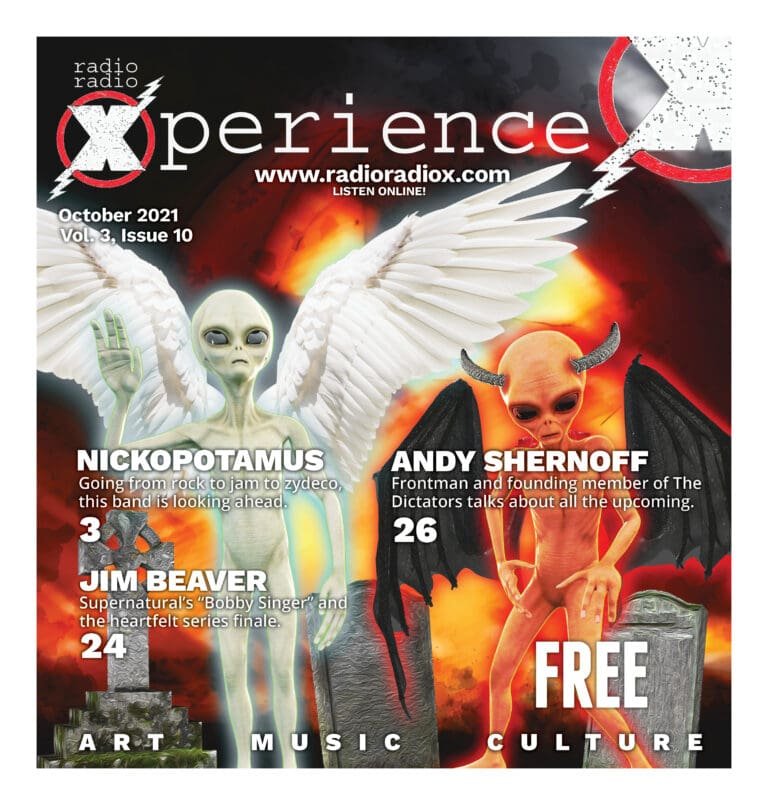
Fall is herre, and as you descend upon the pumpkin spice, apple cider, and hot chocolate, cozy up to the October Digital Edition of Xperience, the art, music, and culture publication of the Capital Region. This month features Supernatural actor Jim Beaver, Dictators’ frontman and founder Andy Shernoff, and Nickpotamus, Rustic Overtones frontman Dave Gutter, artist Maxime Taccardi, Eastbound Jesus, The Velmas, and so much more!

We Never Really Say Goodbye-Jim Beaver (Supernatural) Interview By: Liam Sweeny
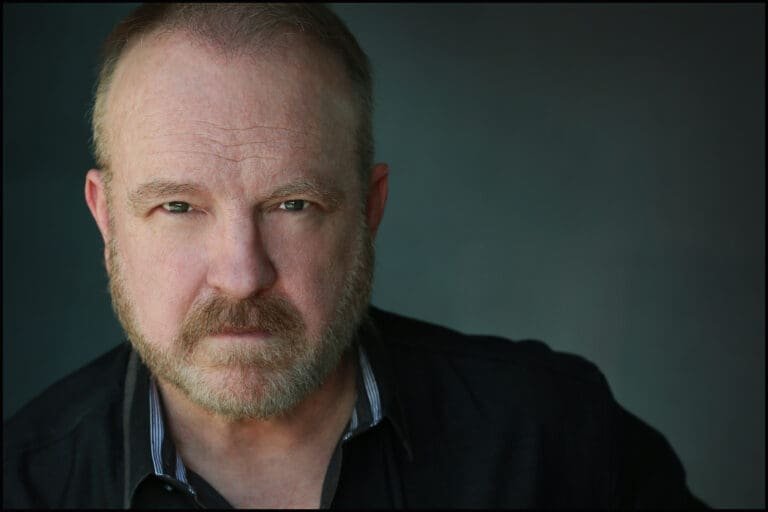
 Some actors are known for just one thing. Other actors have been in so many things, they’re just known. And some actors, to each of us, occupy that middle ground, in that you see them everywhere, but they’ll always be that one role to you.
If you watch TV and movies, you know Jim Beaver. His list of credits would take up a whole other article, and then you wouldn’t hear about Albany’s hottest garage band. But to me, he’ll always be Bobby Singer, demon hunter extraordinaire and irascible father figure to Sam and Dean Winchester.
I sit down with Bobby and we discuss proper vampire decapitation techniques.
RRX: You’ve been in so many great shows; Deadwood, Justified, The Boys, soaps like The Young and the Restless, Days of Our Lives, and, my favorite in the world, Supernatural. And I imagine acting in one show takes a lot out of you, so how have you been able to do it and not develop multiple personalities? Or is that the secret?
JB: First of all, acting doesn’t take a lot out of me, except for the hours, usually. It’s work, yes, but generally speaking, it’s fun, it’s revitalizing, and I’d rather do it than sleep, most days. And I like to sleep! Multiple personalities aren’t necessary, because one is usually only playing one role at a time. Once I’ve figured out who the character is, it’s a simple matter of sticking to the traits that define him. I can’t speak for other actors, but I don’t find anything hard about being a character, if I’ve been able to figure him out. It’s not rocket Scientology. The writer has done most of that work, anyway.
RRX: I have been watching Supernatural since it came out. For me, it’s a show that got me in a groove as a writer, as an artist, but as a person too. For the readers, it’s about two guys driving around the country, hunting monsters and urban legends gone bloody in a ’67 Impala, listening to classic rock. You played Bobby Singer. Who’s Bobby Singer?
JB: Bobby is your typical laid-back, stressed out, tender, sarcastic, sensitive, ultra-macho, gruff but lovable, self-deprecating loner with a need for family… who’s good at killing. Other than that, I couldn’t say.
RRX: Supernatural isn’t just a show; it’s a family I like to consider myself part of. Without throwing spoilers, the last episode had a wide shot of the film crew on a bridge. It moved me to tears, not ashamed. But you were there. Was it bittersweet, or did it fall more solidly on the happy/sad scale? If you’d be willing, take us there.
JB: My final scene in the series was shot on the last day ever of filming. It was a weird day, being back after a long time off due to COVID, being restricted from close contact with people I love, and knowing it was THE end. They asked me to stick around after my scene was finished so I could be part of the final goodbye on the bridge. I don’t remember getting teary-eyed, but I wouldn’t put it past me. There was so much history on that bridge, not just of the show, but of years-long relationships with crew people. I knew that I’d see the cast again, as the convention circuit will go on for a long time, I’m sure. But the crew doesn’t go to conventions, and it was deeply sad thinking I might not see these specific people again, except by chance. I think we all felt something like that. By the end of that drone shot, when it was all done, all the COVID protocols went out the window and we were all hugging each other, not because we didn’t care about the pandemic, but because a great wave of love and loss washed away our caution. It was a beautiful experience. I’ve never had one like it, and don’t expect to again.
RRX: One more. The soundtrack. When I “sell” the show to people that have never seen it, I always mention the sweet-ass music. Yeah, what Sam and Dean play in the car, but the whole soundtrack. Who, how, where did that set-list come from? Was it picked by someone in the crew, or was it Eric Kripke, or was it a democratic vote? Did everybody just empty out their CD racks?
JB: I don’t know much about the music, though I do know that the plan to use such great stuff came from Eric Kripke. Of course, using popular music on a TV show is dreadfully expensive, and they had to cut back after a while, to everyone’s disappointment. The biggest music disappointment, though, was in having to abandon plans to have the band Kansas appear in the final episode to perform “Carry On, My Wayward Son.” Blame COVID.
RRX: Speaking of Eric Kripke…The Boys. Holy crap, that show is insane. A really well-crafted world, and just a bizarre complexity you can’t look away from. You play Secretary of Defense Robert Singer (shout outs acknowledged.) How does working on The Boys differ in the sense of the world that’s been built from anything else you’ve been in?
JB: The biggest difference, I think, is the scale of the thing. I remember being told in 2003 while doing Deadwood that we were the most expensive hour drama ever made. Well, I think The Boys must surely have taken that record now. The sets and costumes alone are the most extraordinary I’ve ever seen on a TV show. Feature films regularly work on that scale, but TV? On the other hand, most of my scenes thus far are pretty grounded in the real world. As of today, I’ve never worked in a scene with a superhero or special effects on the show. So my character’s world is a little bit more grounded in the everyday world than some of the others. But that’s as of today. Things change.
RRX: I have seen Justified, and I have HBOMax now, so Deadwood‘s on the docket. These are different kinds of roles than, say, a Bobby Singer (either of them.) But they are both gritty shows, and you play a great gritty character. When you have characters with similar, say, grit, how do you, as an actor, make them distinct? What are some of the tricks, exercises, etc.?
JB: I don’t usually give any thought to making two characters “different” from each other. The writer has done that with his creation of the character on the page. It’s as though it’s Halloween and I’ve been handed a different costume than the one I wore last Halloween. I don’t have to “make” it different. It’s different when I get it. Yes, I get a lot of roles that have similarities — often gritty or gruff characters. But it’s what they say and do that makes them different, and the writer does that. If I say the lines I’ve been given and do the actions in the script and wear the clothes the costume people give me, the character will be different from others I’ve played. It’s like performing a song. Frank Sinatra’s songs are different from each other even though it’s the same guy singing it, because the words and music are different. Same with acting. Give me different words and actions and clothes, and it’ll be a different character.
RRX: I didn’t know you were in The Young and the Restless and Days of Our Lives. Jensen Ackles (Supernatural) was also in Days of Our Lives. I have always imagined that soap operas were, for dramatic actors, similar to SNL is for comedic actors, like a proving ground. Is that the case, or is it more of just an entry point for actors?
JB: Soaps are their own world, having only a small connection with the rest of acting. Not that the acting itself is all that different, but the process is VERY different. It is a pretty good place for young actors to get a start, to get a foot in the door. But it’s also not the best training ground, because the values are different, from the producers’ standpoint. It’s FAST. They do an hour show every day. A regular hour-long TV drama takes about eight days to shoot. Soaps do one a day, and there’s no time for great nuance or art, if it can’t be done speedily. There are great actors on soaps, and occasionally great writing. But mostly, from my limited experience, a soap is like a shark — it’s got to keep moving or it dies. And when speed is the prime factor, art is often the first thing to get tossed out. But I’ll say this: If you can act well on a soap opera, learning a new script every single day, you can probably handle anything the acting world hands you.
Video of the Day: Jackie Venson Live in Texas Full Concert
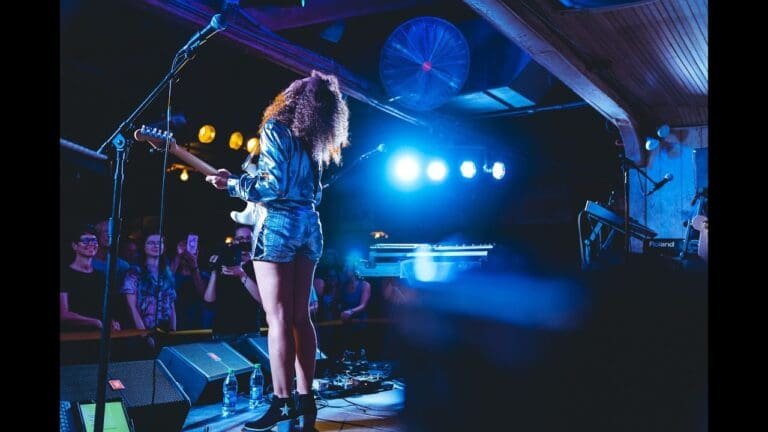
We at RadioRadioX are huge fans of Jackie Venson and for all of you who are new to her music, here’s an entire concert to get you started!

