Home Blog Page 63

Sly Eaze – An Xperience Interview

By Joshua Scarselli.

Sometimes the best way to meet new artists is just being out and about. That’s exactly how I met my new friend, Sly Eaze. Sly is new to the Capital District music scene and ready to take it by storm.


RRX: Can you tell me a little bit about your background in music and what got you into performing?

Sly Eaze: I grew up surrounded by music; it was the first language I ever really connected with. Over the years, I taught myself 10 instruments, and that opened the door for me to not just play music, but to understand it on a deeper level. I’ve participated in marching band, jazz band, all-county band, and a variety of different groups that enhanced my overall abilities. That curiosity pushed me into engineering, producing, and eventually studying Music Production & Technology in college.

Performing came naturally after that. Once you spend enough time creating sound, you want to share it. I realized early on that performing wasn’t just about being on stage; it was about creating a moment people could feel. That’s what pulled me in and kept me here.

RRX: How would you describe your own personal style of music?

SE: My music is built on feeling first. It’s emotional, textured, and honest—songs that sit with you long after they end. I pull from real moments, quiet thoughts, and loud emotions, then wrap them in soundscapes that feel immersive and intentional. It’s music for people who listen closely and feel deeply.

RRX: Where do you draw your inspiration and influence from?

SE: My inspiration comes from a mix of lived experience and the artists who shaped me. Because I play so many instruments, I pull from a lot of different genres — soul, hip‑hop, jazz, rock, film scores, even world music.

But honestly, a lot of my influence comes from life itself. The people I meet, the places I’ve been, the things I’ve survived. I’m always trying to translate emotion into sound. If I feel it, I can turn it into music.

RRX: What’s one of your favorite songs you’ve produced and why?

SE: There’s one track, “Holy Ghost,” that feels like a turning point—the moment where my sound finally caught up to my vision. Every choice on that song was instinctual, not forced. It captures exactly where I was emotionally when I made it, and every time I hear it, it reminds me why I started creating in the first place.

RRX: What are your favorite types of venues to perform in?

SE: Intimate rooms. Dim lights. Crowds close enough that silence matters. I love venues where the energy moves both ways—where the audience isn’t just watching, they’re part of the experience. Those spaces make performances feel raw, human, and unforgettable.

RRX: How do you want the audience to feel when they go to one of your shows?

SE: I want people to walk away feeling like they experienced something real. Not just a performance, a connection.

My shows are about energy, storytelling, and musicianship. I want the audience to feel seen, inspired, and part of something bigger than themselves.  They leave with a memory instead.

RRX: Do you have any upcoming gigs we can check you out at?

SE: New shows are on the horizon. I’m lining things up carefully because I want each performance to feel intentional—not just a show, but a moment. Announcements coming soon.

RRX: Where can people keep track of you and your music?

SE: Social platforms and streaming services are the heartbeat. That’s where I share new music, upcoming shows, and glimpses into the process behind the sound. Sly Eaze on all platforms. 

RRX: Anything you would like to add?

SE: I don’t take listeners for granted. If you press play, come to a show, or share a song—you’re part of this story. I’m building something honest, and this is only the beginning.

More from Joshua Scarselli here …

The Year of Storms, Chptr. 3 – Xperience Fiction

0

The Year of Storms, Chptr. 3 – Xperience Fiction – by Liam Sweeny.

The steady hum of electricity through the walls floated up to the light panels and the sound washed over itself. They were trying to rob her of the sounds of degenerate humanity, but she had to wonder if near-perfect silence was worse. She stood in her doorway staring down the hallway toward the common area. Maybe she could get into a fight and salvage some of the weekend. Too bad she didn’t know one lick about giving lickings.

She entertained the notion that, should she ever pull a similar stunt, which she wouldn’t, she would sneak in an entertainment pod. The one she had was small, and would likely have fit up her rectum, though ergonomics would not be on her side. But it had movies; it had endless 2D movies, celluloid, as they would’ve called it before ExP changed the landscape of entertainment.

She had movies and she had television shows, Star Wars and Star Trek and ET and Taxi, M.A.S.H. and Hill Street Blues and countless other cinematic treats that Unity had no knowledge of or use for. She would watch them over and over again until she knew every line by heart. And then she would watch them again until she could figure every stage cue and knew every name in the credits by memory. She would pore through the culture of the end of the twentieth century, a golden age before the aftermath of that age made itself impossible to ignore or explain away.

The pads of the soles of her jumpsuit were unsurprisingly comfortable as she walked down the hall on the balls of her feet. It really was the lukewarm porridge of a facility.

She opened a pneumatic door to the shrill sound of a girl yelling.

“So you all are going to sit there all day? Huh?”

She was animated, flipping her shoulder-length pink hair around her head and tipping her glasses. Cellie hadn’t seen glasses on a person except Hadley, and the Farmers when she went on her discovery outside of Unity. Outsiders seemed to gravitate to the antiques. More likely, it was all they had.

Along the wall were seven glossed-over gazes, seeming to ponder what the woman was yelling at them.

“They’re noners,” Cellie said. “I think they’re going to sit there all day.”

“I know that.” The woman sighed. “Fucking noners.”

“Why bother yelling at them?”

The girl walked over to the head of the row, took a sip of her drink and flicked her wrist, sending the liquid into the faces of three of them. They wiped it off with their hands, appearing to ponder that too.

“One time I was in a transport stop, and it was just noners sitting on the benches.” She took broad steps over to the Go dispenser. “I was pissy that day, and I just let one have it. I mean, full vent, ‘cause who are they gonna tell, right? And out of nowhere, and God to fuckin’ Christ nowhere, this one starts screaming. Full blast; thought she was gonna break the glass, that loud. Fully animated.”

“A noner? Sure it wasn’t just a normal person having a bad day? Maybe they were medicated and they just looked… noner-ish.”

“You don’t know me but believe I can pick a noner from a norm,” she said.

“So what was it, then? What had that one spun?”

The girl took a sip of her Go and walked over to empty it in one of the noner’s laps.

“I think they don’t just experience nothing,” she said. “They want to. They think they do, but there’s something missing from that emptiness. They’re still in there. Repressed desires and urges, maybe. Buried, but not wiped. Cause when it comes out, it’s scary shit.”

Cellie picked a cup out of the cupboard and filled it. She wondered how many cups of Go her de facto companion had emptied on the noners. She didn’t look forward to running out of Go in such a boring place.

“So you’re trying to get them to freak out,” Cellie said.

“Yup.”

“How long have you been trying?”

“What time is it?” She asked.

“No clue.”

“Same answer, then. I know it was light when I woke up, and they were in here then.”

Chellie tried to feel bad for the noners, but she knew you could light one on fire and throw it a birthday party and it would feel the same about either.

“I’m Cellie.”

“Alandra.”

“That’s a weird name. What’s it mean?”

“How would I know? Your name mean something?”

“My dad’s favorite dog, what he told me. But I think the dog was a year younger than me, so he was probably just screwing with me.”

Alandra let out a laugh.

“That sucks. Sorry I asked.”

“I liked Cellie… the dog. I mostly know her from pictures, though. Don’t much remember my childhood.”

“So you ain’t from Unity, ‘cause I know dogs are frowned upon in the snoot snoot.”

“Frowned upon,” Cellie said. “Not forbidden. And I’m from CenterLock, so we could’ve kept sewer monsters as long as we licensed them.”

Cellie sat down on a long polymer table with recesses for cups. A faux-wooden basket of nutrition bars occupied the center, and she grabbed two. They couldn’t have been more generic, but in the absence of choice they were the top shelf. Alandra walked along the wall of noners, pretending to go on the attack in the hopes of releasing a dragon. Eventually, she made her way to the table.

“How’d they get in here, anyway?”

Alandra aimed her thumb to point. “Them?”

“Yeah. What crimes do noners commit?”

Alandra adjusted her glasses. “Good question.” She craned her neck. “First one of you tells me why you’re in here gets…” She felt the space where her pockets would be. “Got nothing to give them.”

Cellie grabbed a controller of the bench and turned the lumen panel on. It was a history teacher’s show, fairly popular given that the most sought-after history in Unity was usually the last New Year’s celebration.

“Hypnocurrency and ExP run our lives,” the teacher said. “That is obvious. But did you know they started with this needle in my hand?”

“Oh, no,” Alandra said. “This stuff?”

Cellie shrugged. “C’mon, I like this guy.”

“The earliest experiments on human memory involved stimulating tiny areas of the brain with electrical shocks, and seeing what happened. Say, for example, I opened up your skull and poked your brain here,” he pulled out a poly brain model and tapped it with his needle. “You might smell muffins. Or see a traffic light. Or hear a piano key.”

“Hey, got any needles?” Alandra said. “Let’s make the noners remember stuff.”

Cellie shushed her, which he hoped wasn’t a mistake.

“Turns out, if you shock the brain just a little bit, in the right places, you can make people experience anything, even things they’ve never experienced before. The brain just gets stimulated a certain way and interprets it all as an experience. And if you can copy a real experience, get all those little electrical synapses firing in just the right way, just the right combination, and you program that pattern onto something physical, like a chip that can be replayed over a different brain, you’ve just created ExP. Or hypno, which is just the economic version of ExP, and is another lesson on my feed. That ExP can then be shared with another person, who takes the chip and connects it into their own brain through this lovely interface we all have.” He pointed to the small, round, titanium jack on his neck. “Right here.”

“Can’t believe you watch this crap?” Alandra said.

“I am this crap. Feed 432.”

Alandra grabbed her own nutrition bar and opened the wrapper with one hand before dipping the bar in the remains of her Go.

“I don’t even have a lumen panel,” she said.

“Are you a Farmer?”

Alandra adjusted her glasses. “These, right?”

“Well, yeah.” Chellie ran her index finger along her brow to scratch at her nervousness. “Also, you’re pretty gruff. No offense.”

“I was underground,” Alandra said. “I escaped up to Unity three years ago.”

“Escaped? I didn’t know you had to escape being underground.”

Alandra cleared her throat. “You do when you kill someone.”


Cellie didn’t ask Alandra anything else in the common room. She didn’t stay in there much after that. It was one thing to pass the time with another day tripper and have fun with noners. It was another thing to risk even associating with a killer.

As she sat in her room, she realized that associating with killers was going to happen if they’d thrown her in the real jail. Something about spending even a few minutes with Alandra was odious if she couldn’t use it to up her rank.

She didn’t know what time it was, only that it was dark, and it was the second set of meals. She’d be let out the next day. She’d be back to her life, back to her show, and she’d paint her graffiti enterprise as a success by some imaginative storytelling.

She went to sleep wondering what the noners did to get arrested.


***


The Muni Line 4 floated from the island that housed the Unity Detention Facility over the magnetic bridge to Unity proper, which looked like the straightest flight, an entire commuter skiff suspended in the dead center of four powerful magnetic fields. Cellie looked out the window at the iron tips of a physical bridge that succumbed to the Collapse. Thirty years and they still weren’t finished pulling bridgework out of the bay.

The commuter load was light for a Monday morning, but then again, how many people were in a rush to leave jail so early? She glanced at people in wrinkled garb stained with rancid Go, industrial grime, spots and sprays of blood and the ragged edges of residues of sweat and maybe in that context, tears. They were shiftless, release tickets grasped in hands trying to wring the ink out of them. She reassessed that maybe it was the one Line where everyone was in a rush.

They cruised through Inseledex and Beton, past towers gleaming with liquid murals imbued in the glass by artists like LuCayme and Stalls, Bridden and Wirexen. Cellie could only imagine the contracts that were given out to make the towers’ art. Not that many knew; it was a social faux pas to publicly put a price on art. But it must have been astronomical. Any one of the artists that took part probably got their own hypno reserve.

Cellie got off on Avenue 56, a few blocks from her housing cylinder. She felt the breeze from the gap in the buildings, laden with the smells of orange and cinnamon and cherry from the bakeries and fresh soaped faux leather from an artisan shop. She thought she smelled a hint of the kind of antiseptic barbers used, which wasn’t a surprise in the Craft District.

She tugged at the bottom edges of her button-down Nyraweave and took a deep breath. She spent so much time there when she was a little girl. It might have seemed odd, as most kids her age spent their days in ExP chambers and their nights crying because the dinners their parents made couldn’t touch the dinners of some chef’s memory in ExP.

Cellie’s father, her biological father, was an engineer. He was well known, both before the Collapse and after. Cellie remembered being brought up in the Arboreal District, not because they had to; they could’ve lived anywhere, but because her father appreciated the value of being in a mix of regular people. But for Cellie, it was a young life between two worlds, between crystal and steel.

He did the best he could, and part of that ‘best’ was exposing Cellie to as many real experiences as he could – even if that meant letting her get her head shaved by a straight razor in a barber’s shop on Avenue 43 when she was ten. That was shortly before he disappeared.

She weaved in and out of the Craft District, checking her meter to see when her rank would adjust to reflect her time in Detention. It wasn’t until she was on a lift to her cylinder that it did.

Down .25 points.

How is that possible? She knew she might not go up, but how did she go down? The graffiti alone should’ve brought her up a half point for being art.

She tapped her meter, which did absolutely nothing. She turned it off and on again, which also did absolutely nothing. She thought or breaking it and ordering a new one, but there wasn’t anything hard in the lift.

“We’re here,” the driver said. “That’ll be seven minutes hypno.”

The driver tapped the receiver panel on the front of the lift. She tapped the top button on her implant jack. One beep, and she was ten minutes lighter with the tip.

“Yeah, thanks.” The driver tapped the door panel, letting her out.

She glanced up at her cylinder, which, unlike the towers in Inseledex, bore no art. The windows were coated with a tinted film to collect energy, which made the apartments dreary. The tops of trees poked up over the edge of the roof railing, put in for the rooftop park. It was pleasant feature of the cylinder, though kids used it to fight with each other and build their ExP. Or they’d do whatever concentration of Go they could get their hands on and make noise.

“Hey Cellie,” called out the Ancient, an eighty-year-old man that sat on the front stoop every day it didn’t rain and shared stories. And at the end of the stories, he would offer to sell them off. Everybody knew he sold off all the usable runs of any memories worth buying. Memories degraded with each selling unless you had a rig like Cellie’s, and selling them too much “off the brain” was illegal, similar to fraud. But cops tended to leave people alone who were old enough to live through the Collapse, which the Ancient had.

“Hey old man.”

“Did I ever tell you about how I raided a slaughterhouse with a hatchet?

“No, but I have to go in. Raincheck?”

“Oh, I don’t come out when it rains. Gets in my bones,” he said.

“Oh yeah, okay. Suncheck?”

The Ancient took hold of his cane from its resting place on the bench and tapped it on the ground like he was summoning something through the concrete.

“Ayup, ayup.”

Cellie took the middle tube to get up to her floor, it being the cleanest. It opened to the vestibule, which was oddly empty. Usually, the Floor Watch was drinking hot Go and chatting away, stopping occasionally to check out all comings and goings.

Cellie wandered down the hall, tired and in need of solid food. She followed the curvature of the cylinder until, just near her door, she saw a man towing a tired, eight-year-old boy. She knew he was eight, just like she knew the man had nothing good to say to her.

He was her husband once. And judging by the look in his eyes, they were about to have a problem.

“We need to talk,” he said.


More from Liam Sweeny…

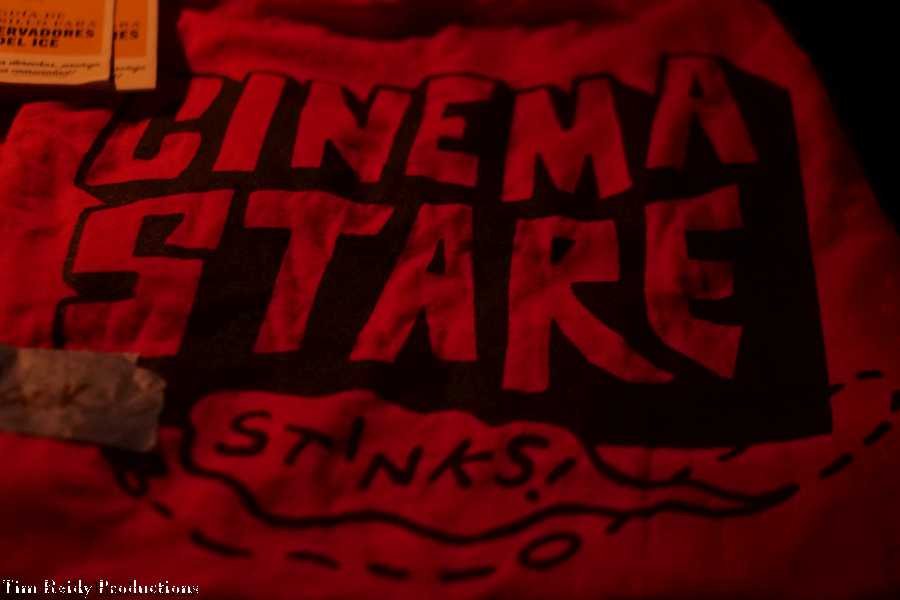
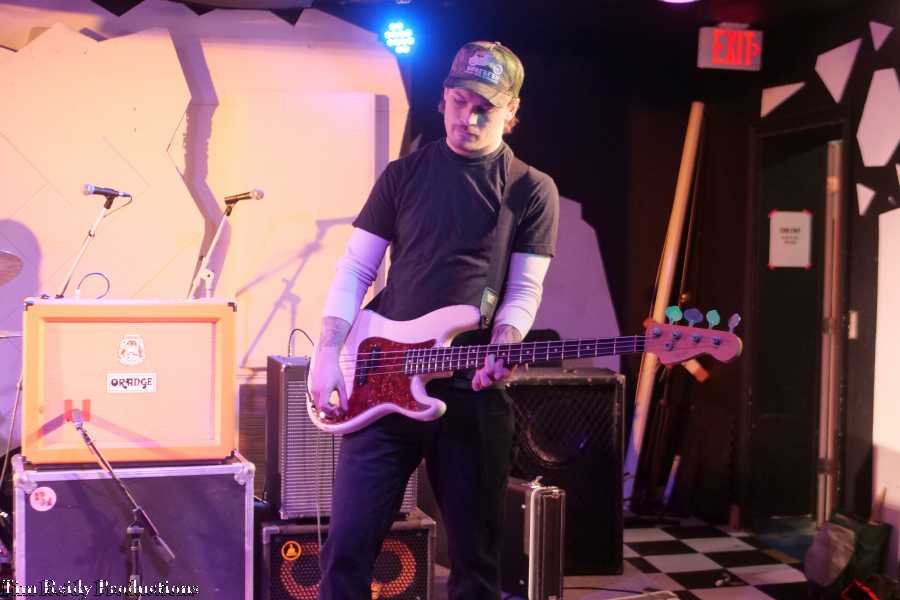
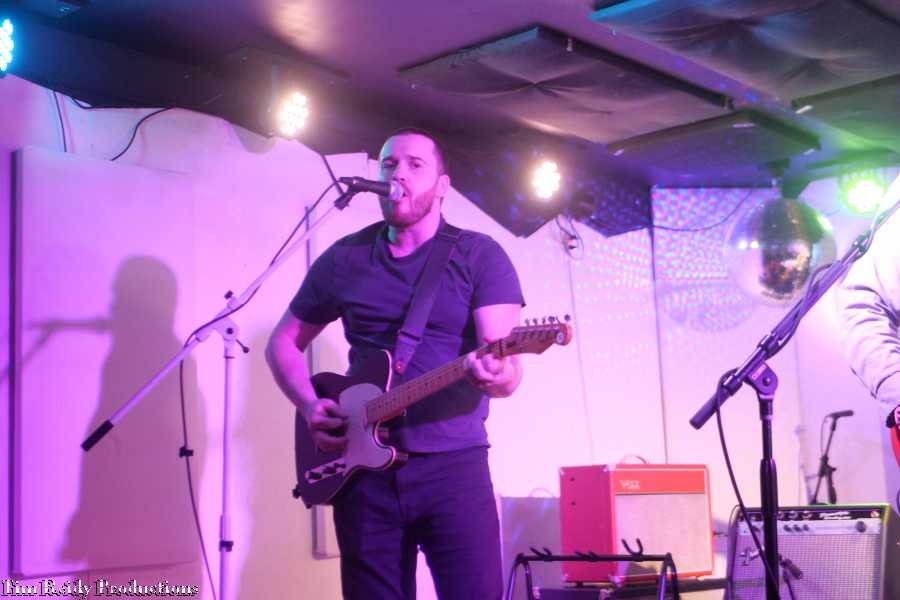
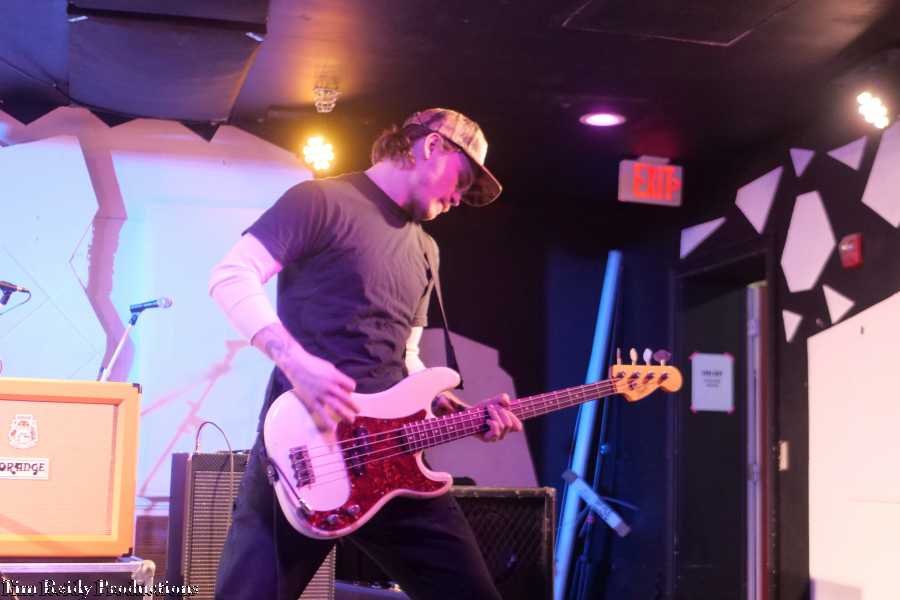
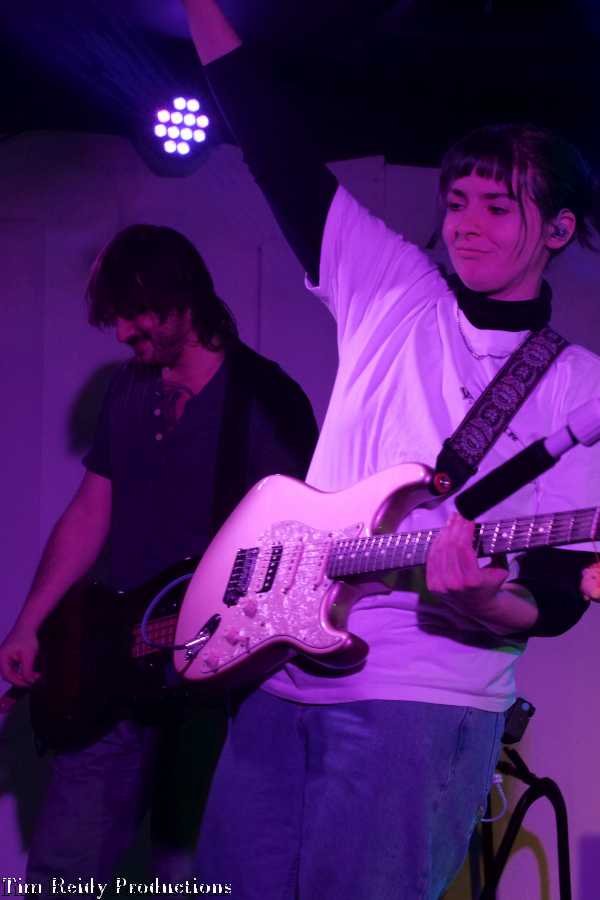
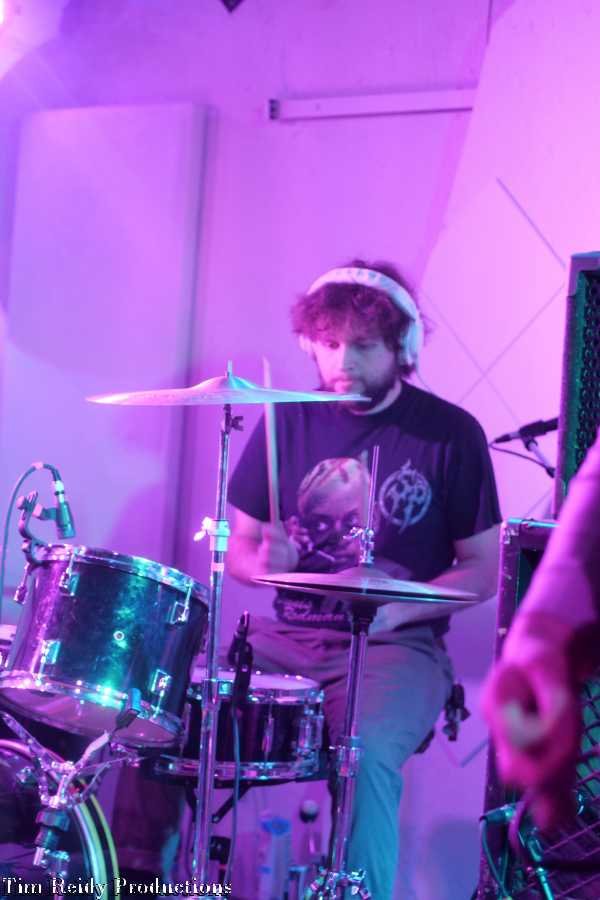
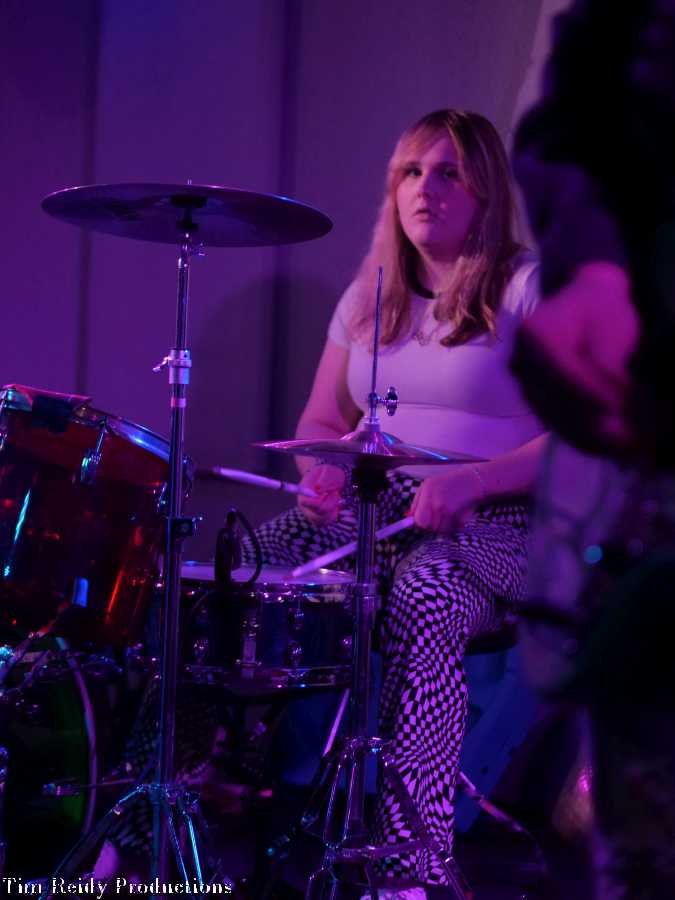
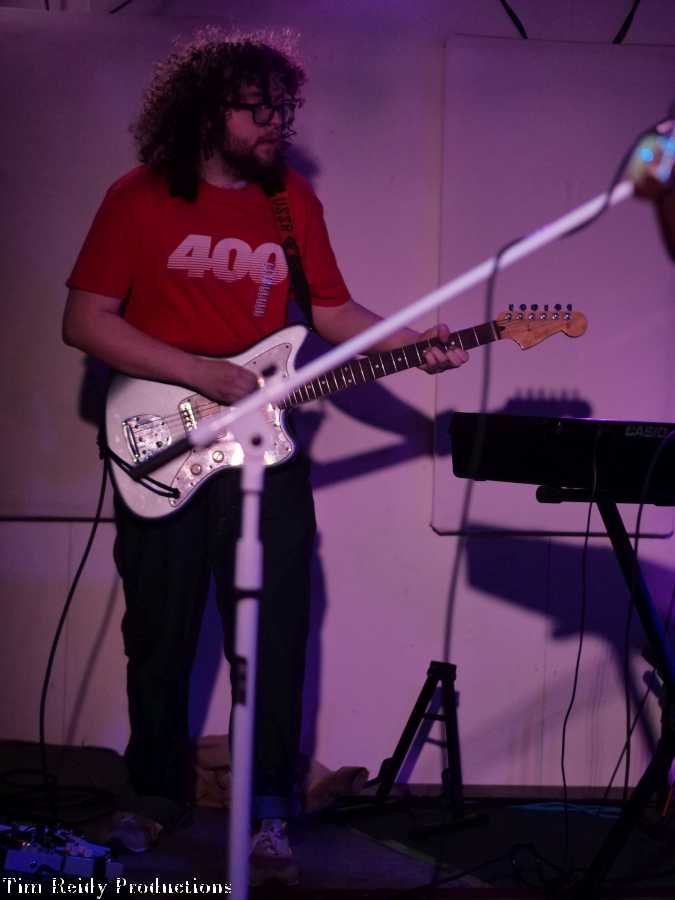
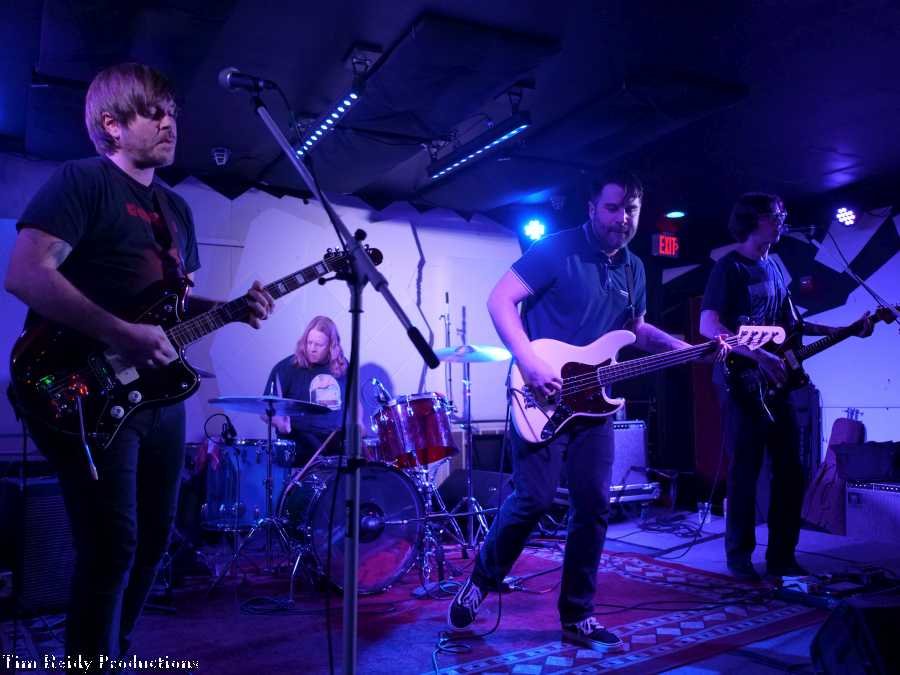
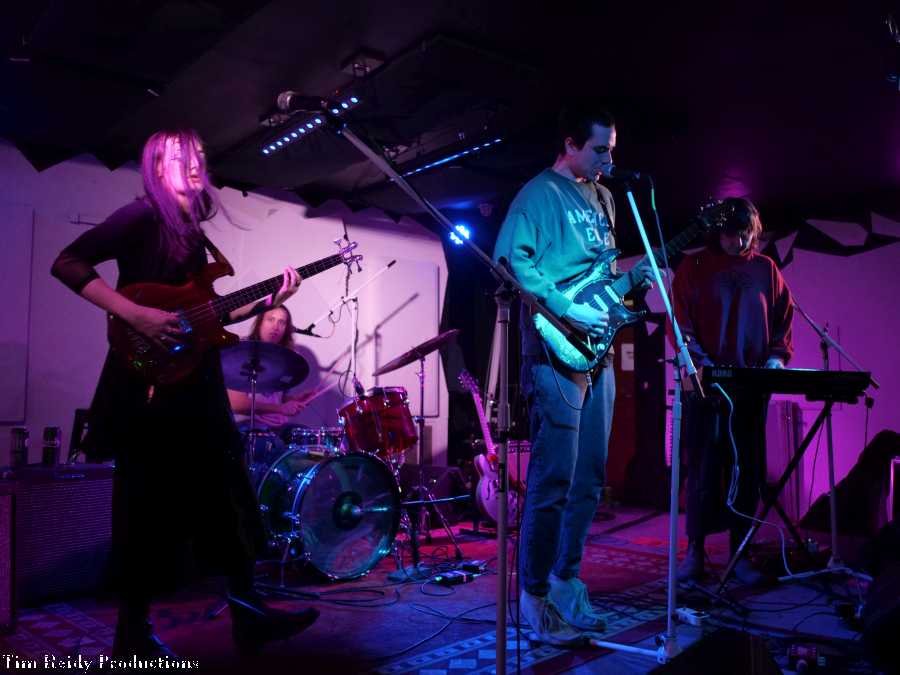
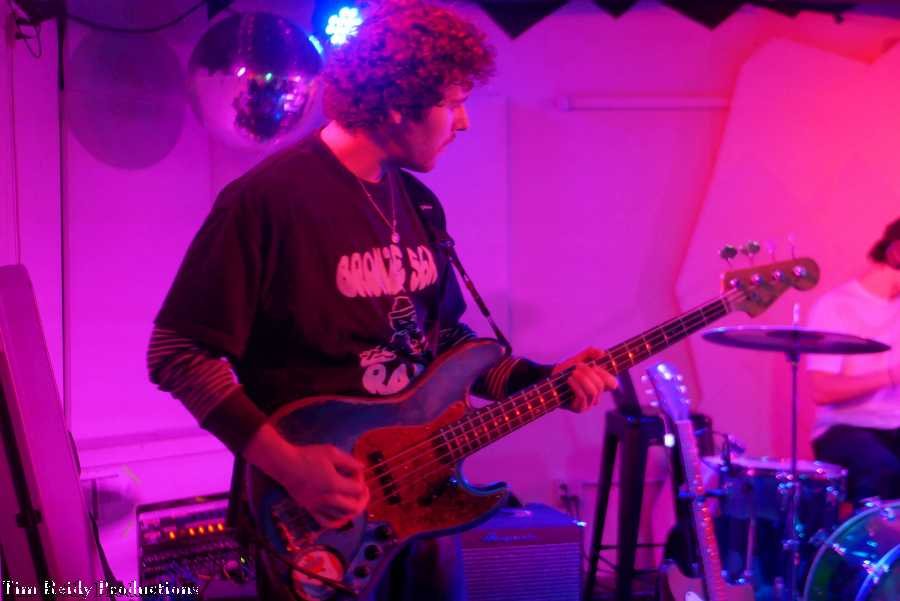
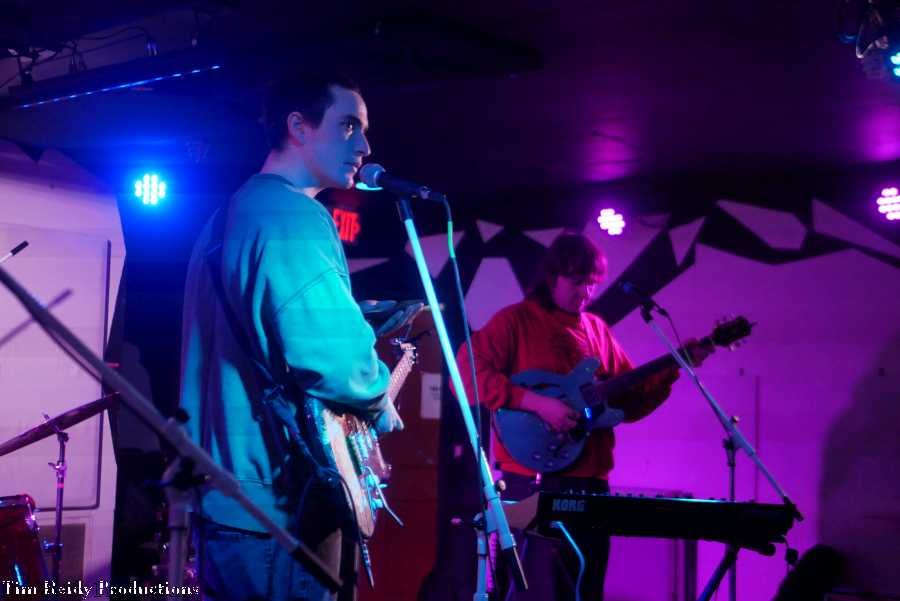
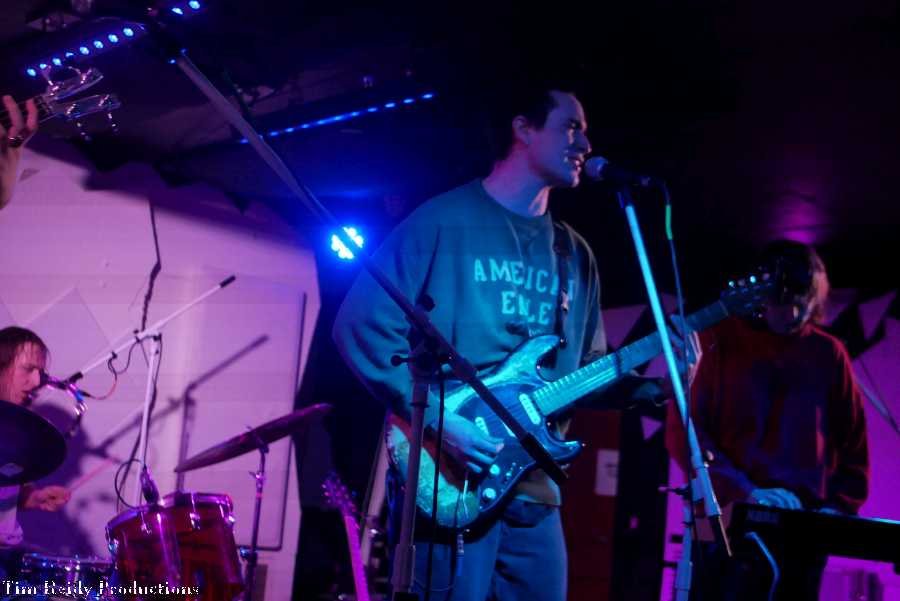
Cinema Stare / Nicoteens / Precious Metals @ No Fun, 3/1/2026

0

Local favorites Precious Metals joined New Englanders Nicoteens and Cinema Stare at No Fun on the first of March.

Photography by Timothy Reidy.

More from No Fun here …


Caffe Lena – Weekend at a Glance

0

Greetings – Did we earn this weather, or what? I hope you have time to go outdoors and gulp a few lungfuls today. Every sort of music has good songs for spring. Fewer have songs for getting your garden started, or maple sugaring, and other homey pursuits. Good folks, this is our time to shine!

Many of you will have learned on Facebook that our music community suffered a couple sad losses over the past few days. Two greats of acoustic blues, John Hammond and Roy Book Binder, both passed away. Here’s what we shared: Hammond and Book Binder both played Caffe Lena throughout their careers. Roy especially was a bridge between the Lena years and our evolution into a nonprofit. He would always arrive hours early to just hang out and tell stories, and to find a good parking spot for his camper (he regarded hotel rooms as an unnecessary luxury). He brought the early days of the Caffe to life with his recollections of characters, details, incidents–all lovingly and wryly described. He’d test out any good guitars we had lying around, giving us a private moment with an extraordinary craftsman. He first showed up at the Caffe as the driver for Rev. Gary Davis, and he kept coming back every year. He would have played this May 1. Roy is truly part of the unofficial Caffe Lena Pantheon and this is a very sad loss for our community. Here’s a wonderful obituary written by Bob Carlin.

The great John Hammond was a less frequent guest, but left an indelible mark. In the words of our soundman and house photographer, Joe Deuel, “He was one of the most passionate performers I’ve ever seen, and one of the greatest.” Hammond’s first visit to the Caffe was with Bob Dylan in 1962. Years later he said, “I’m still the same guy, and I still play a lot of blues. I don’t go out with a set list. I just play whatever I feel like. It still amazes me how many years that Caffe Lena has survived. It’s wonderful. Once you’re there, you don’t forget it.”

Rest in peace, John Hammond and Roy Book Binder, and thank you for keeping the flame alive all these many years. We’ll see to it that it’s passed forward.

See you at the show,
Sarah

Monday
7:00 PM – Open Mic Night


Tuesday
7:00 PM – JAZZ AT CAFFE LENA: THE CHUCK LAMB TRIO WITH SPECIAL GUEST GREG ABATE
8:00 PM – “Live From Caffè Lena” on WEXT 97.7 or 106.1 FM


Wednesday
10:30 AM – Folk Club Kids: Stories, Songs & Sing-Alongs (Infants to Pre-K)
2:30 PM – After School Folk Ensemble with James Gascoyne and Oona Grady
5:45 PM – Clawhammer Banjo with Carolyn Shapiro
7:00 PM – Music Theory For Jammers with Bruce Thompson
7:00 PM & 12:00 AM – “Live From Caffè Lena” on Folk Music Notebook


Thursday
1:00 PM – Slow Jam
7:00 PM – CAITLIN CANTY


Friday
2:00 PM – Music With Miss Deb
8:00 PM – STÉPHANE WREMBEL QUARTET


Saturday
10:00 AM – Songwriting Club Hosted by Reese Fulmer and Girl Blue
☘️ 4:00 PM – CHERISH THE LADIES    SOLD OUT
☘️ 8:00 PM – CHERISH THE LADIES 


Sunday
☘️ 7:00 PM – KEVIN MCKRELL SOLD OUT


Richard Wang – An Xperience Interview

0

Richard Wang – An Xperience Interview – by Liam Sweeny.

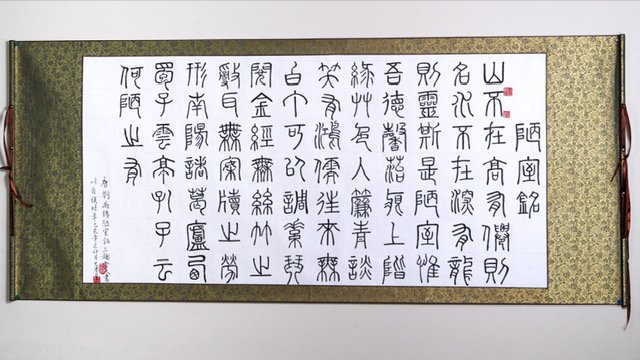
Chinese calligraphy is a beautiful art, and Master Calligrapher Richard Wang has a dedicated mastery and treats us to an inside look at an ancient art form. We welcome Richard as he shares his world with us.

RRX: When did you start doing calligraphy? Were you young, or did you pick it up as an adult? Does it serve any other purpose in your life, like relieving stress?

Richard Wang: I started learning Chinese calligraphy since 9-years-old, when I was third grade. I was fascinated by the booth on the street, with the local master calligrapher writing couplets, which is a tradition during  Chinese New Year. Almost every family buys a set to put on their door. It happened that I had a neighbor who wrote Chinese calligraphy, and he taught me the first few years. Later, I found an artist to continue teaching me.

RRX: Are there any legendary calligraphers? Is the art scene like that? Are there different schools?

RW: Chinese Calligraphy has a very long history, over 2000 years. There are many legendary; Wang Xizhi is the most famous one.

RRX: Where do you present your work? Has it been anywhere big (say, in New York), or are you aiming to get your work there?

RW: I have displayed my artwork at the library, the Chinese Community Center, the Arts Center of the Capital Region, and the Albany Center Gallery. I haven’t tried places like New York City yet. However, I am planning to contact galleries and museums in other cities.

RRX: A lot of younger people these days don’t know cursive because it isn’t used commonly. And they really miss out on the beauty of the hand rendering of the letters. You are even further along that path, emphasizing the beauty of text. What experience have you had with younger people as they see your work?

RW: I think the youth use phones and computers too much; they don’t use hand to write anymore. Once you give them a chance, they enjoy it. I had a workshop named Ink for Healing for youth last year. All the kids who joined the program liked it. Many young people buy a bookmark with their name in Chinese calligraphy as a gift for themselves or friends. Each year at multicultural festivals, there is a long line in front of my table. I am sure they love calligraphy.

RRX: Every artist has their toolkit, and I imagine you do too. Is there a history behind the tools you use?

RW: Yes, all tools  – brush, rice paper, ink holder, and ink – have stories. The Chinese brush is from the Qin dynasty, over 2000 years old. Paper is from the Han dynasty, which is nearly 2000 years old. Ink and ink holders, too.

There are many different kinds of brushes, rice paper, inks, and ink holders, but for beginners, keep it simple: a middle-sized mixed brush, fully cooked rice paper, a bottle of prepared ink, and a cheap ink holder or a small dish would do the job.

RRX: I imagine there are aspects of the Chinese alphabet that would baffle a Western mind. To an American, there may not be a perceptible difference between Chinese standard lettering and Chinese calligraphy. How might an American tell the difference?

RW: There is no alphabet in Chinese; you have to memorize all the words. Students learn the simple ones; just a few strokes first, then go harder and harder. There are 3,000 basic words, 7,500 for advanced levels. Experts need to remember around 10,000 words

Calligraphy is a more artistic way to write a word. There are five different scripts: seal script, which is from oracle, the oldest standard script from the Qin dynasty. The clerical script started in Han Dynasty, which is more flat and simple. The regular script (standing style) is in modern-day use and taught in Chinese schools today. It is clear, balanced, and readable — this is the foundation of all calligraphy training.

Running script is semi-cursive. The brush begins to move freely, connecting strokes naturally. It feels like handwriting — elegant but still readable. Cursive script is the most expressive form. The characters are no longer drawn. They are performed. The brush records movement, rhythm, and emotion, almost like music. This is purely for artwork now. Not many people can recognize it.


Check my website for more samples and information

mastercalligraphwang.com


More from Liam Sweeny…

 

Lunasa @ Troy Savings Bank Music Hall, 3/1/2026

0

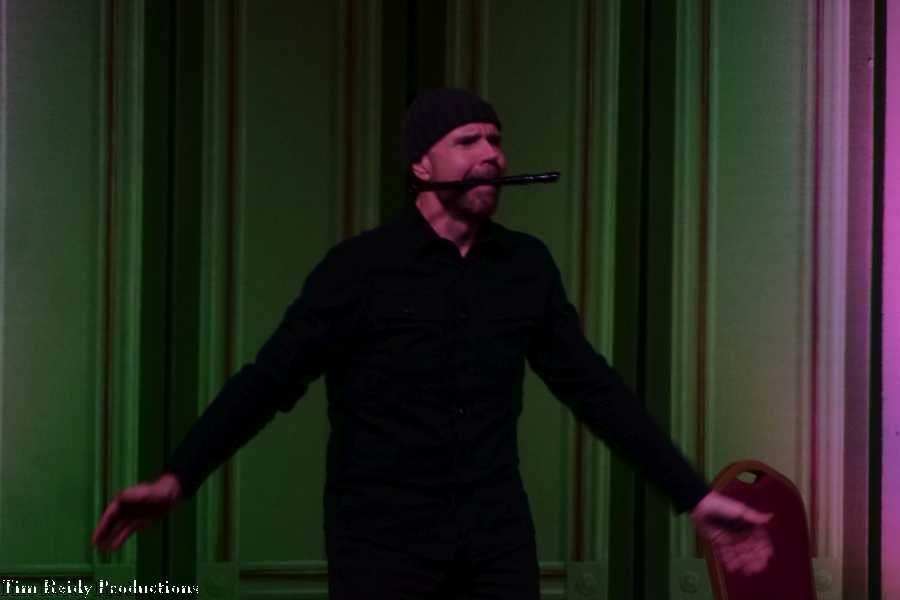
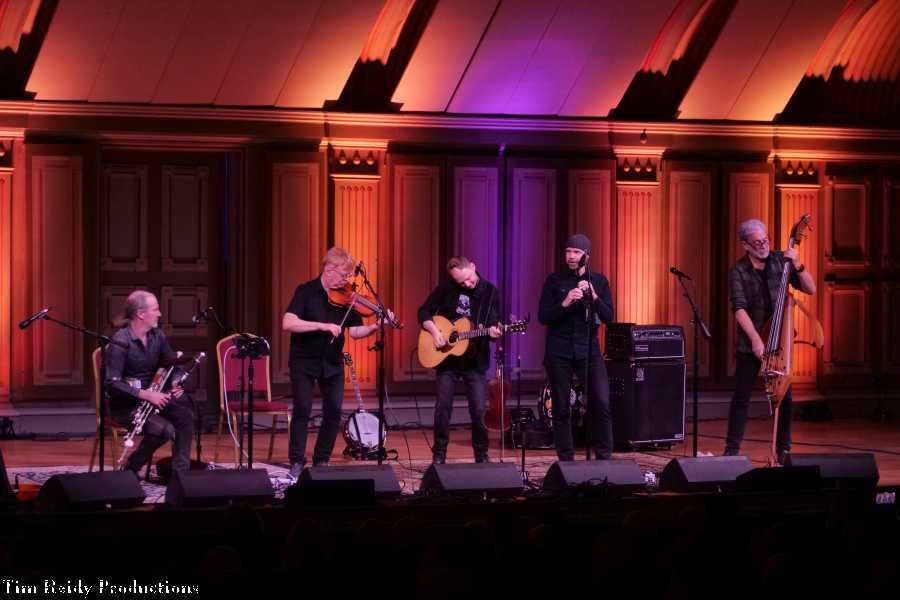
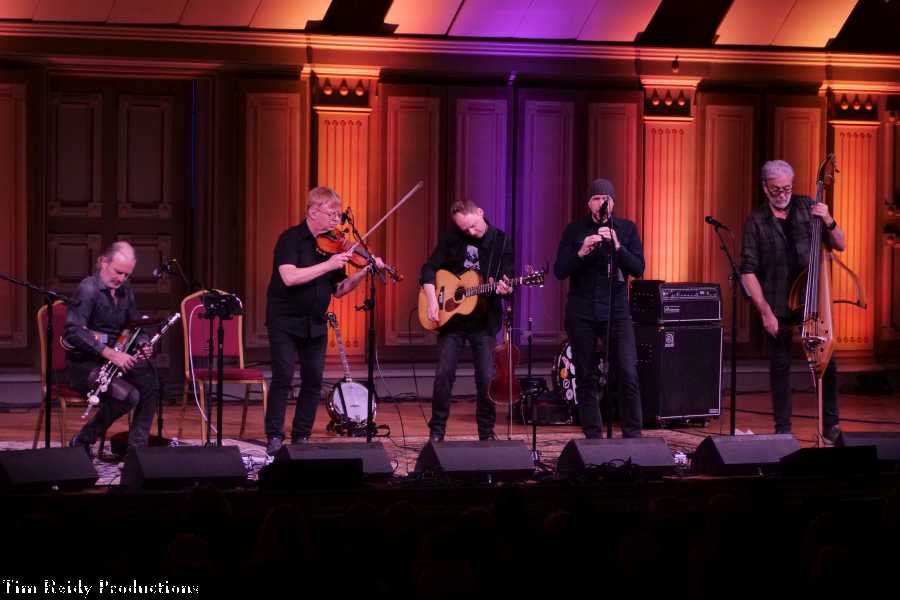
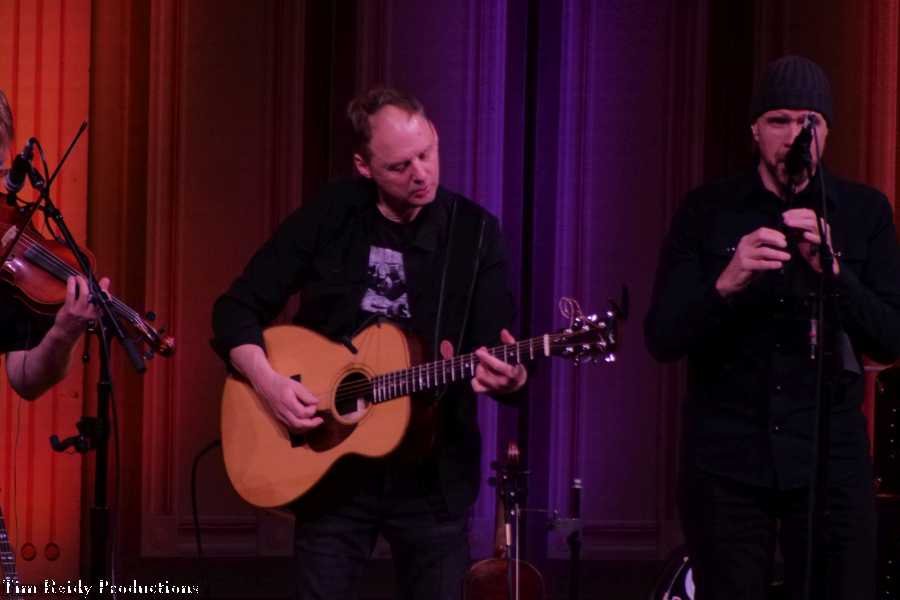
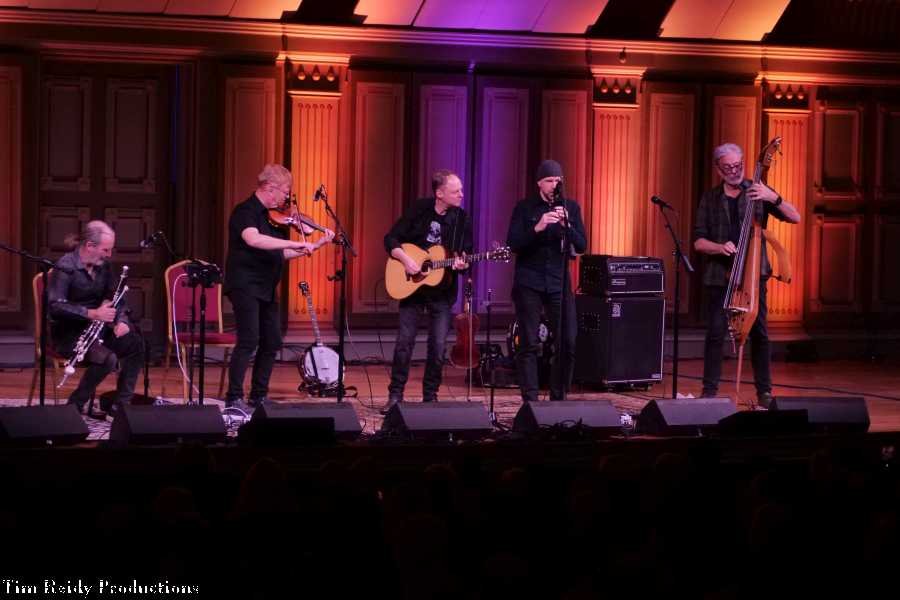
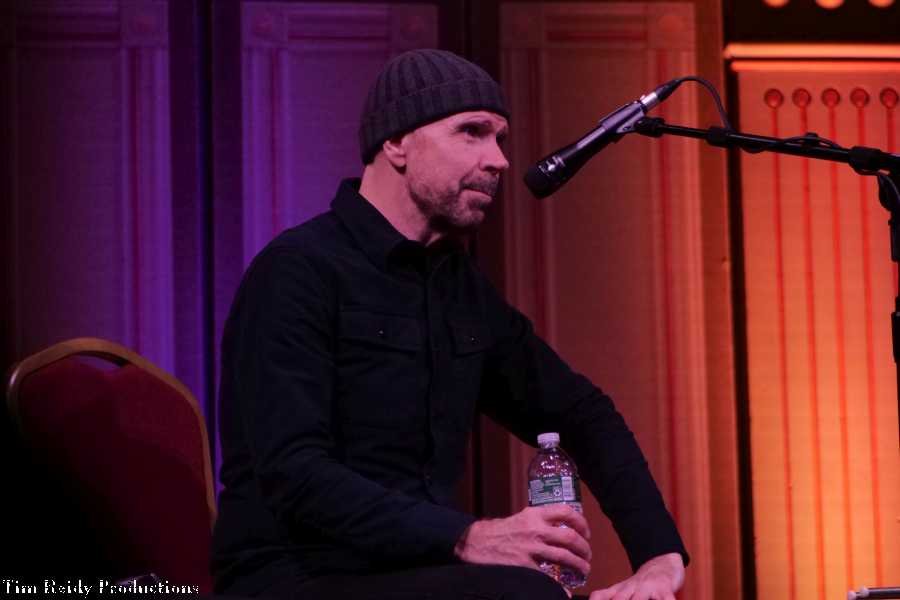
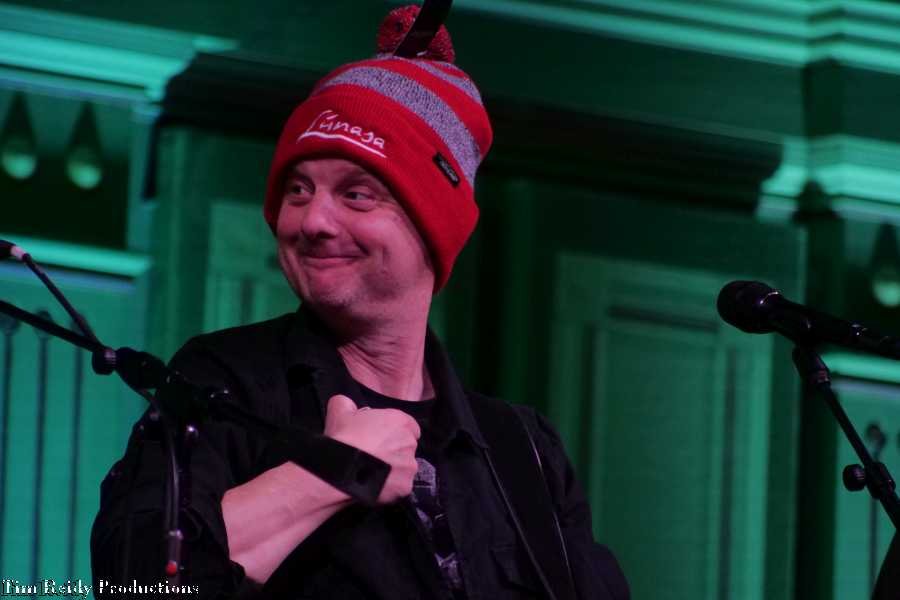
Lunasa brought Gaelic flair to the Troy Savings Bank Music Hall on the first day of March.

Photography by Timothy Reidy.

More from Troy Savings Bank Music Hall here …


Days ‘n’ Daze – Xperience History

0

Days ‘n’ Daze – Xperience History – by Rob Smittix.
Originally published in April 2021.

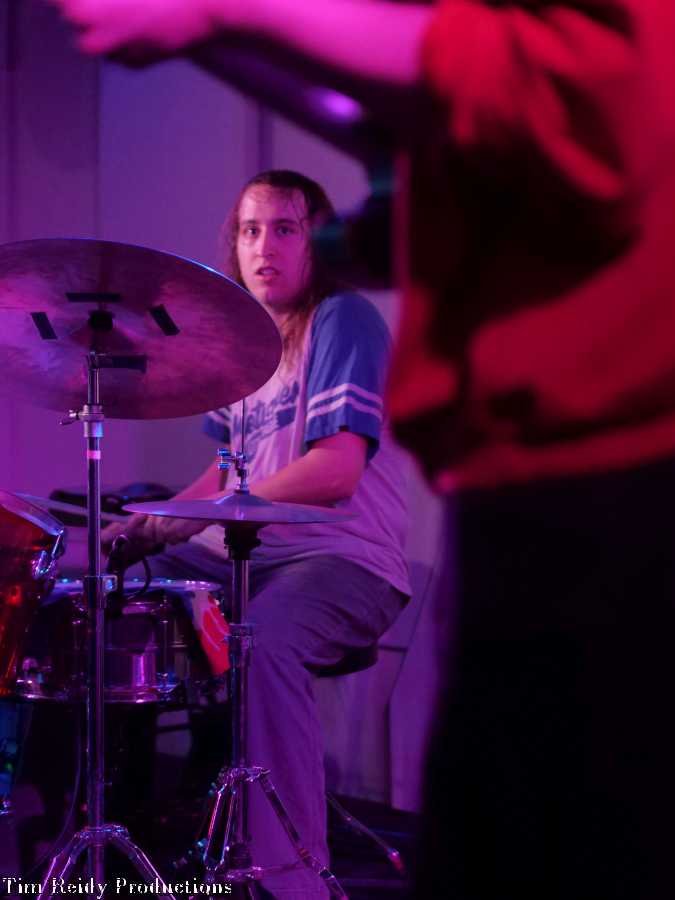
The Houston-based folk punk band Days N’ Daze is at the top of their game. The group formed in 2008 and a couple of years ago landed on Fat Wreck Chords, which all punk fans know is the label you want to be associated with; after all it was founded by none other than Fat Mike of NOFX. Today it is my pleasure to chat with Jesse (Je-C) Sendejas vocalist and acoustic guitarist of DND.

RRX: What’s been going on?

JS: Trying to keep busy and not lose my head or become too stagnant. We’re all stuck at home for a little bit longer.

RRX: So, I’ve been listening to your band Days N’ Daze for a while. I’m all about lyrics. I feel like I can relate, I feel like we became friends through these lyrics and you didn’t even know it. I imagine you get a lot of feedback like this from fans. People reaching out to say a song touched their life.

JS: Fairly often I’ll get an email or message from somebody that we resonated with. From something I wrote about which is incredible. It makes me feel less alone because I’m just throwing these thoughts and feelings out into the void and to have those thoughts and feelings reciprocated, it gives me a boost to my mental health for sure.

RRX: These lyrics of yours “don’t waste your best years just sitting behind a desk” and “can’t be worse than a nine to five cubical jail cell.” Let me tell you something, I was working in corporate America a couple of weeks ago and these words were circling around in my head. So, I told my boss, I’m not feeling it today. He asked what do you mean? I literally said, I’m going to make like a banana and split and I walked off the job forever.

JS: (Laughs) Hell yeah that’s F’n sick. Congratulations.

RRX: I didn’t know if you were aware that your lyrics had that kind of compelling impact on people.

JS: I really appreciate that. It means the world and it’s also absolutely horrifying to know. I never really think about it. Whitney and I both write to get thoughts out of our heads that we need out of our heads, so we can focus and move on to the next thing. I try and make sure that I’m not writing something that’s going to be detrimental to anybody that hears it, these days. But… there are songs I wrote when I was younger that I didn’t put that kind of thought into so hopefully it does more good than bad.

RRX: One of the things I find fascinating about your band are the instruments. Instead of a bass guitar you have a gut-bucket player, Geoff.

JS: Personally, the esthetic of it is incredible, I love it. It makes a live show a little more interesting. Especially when we’re like busking and stuff. If we had an acoustic bass I feel like people might just mosey on by but when people see a washtub with a shovel handle with a string all together, they pause for a second and pay a little more attention. More importantly than the esthetics it’s what we went with in the first place because it was so much cheaper. The whole instrumentation just comes from us wanting to start a punk band when we were kids but not having money for amps, drums and things which you know can become incredibly expensive. We went with an acoustic guitar, trumpet, washboard in lieu of the drums and a gut-bucket. When it comes down to price and ease of transportation, you just can’t beat it.

RRX: Yeah and you have Meagan on the washboard. I’ve always thought that was cool, I want to get one of those.

JS: A lot of the more ubiquitous made right ones that you can find at a hardware store will have these big rolling crimps to the metal part. You want to look for the tiny little pyramids, that’s how you get a smooth, less invasive sound. It blends a lot better.

RRX: Thanks. Now Whitney of course does a lot of the writing with you. She’s the trumpet player and a vocalist. I’ve seen this on social media, is she having an issue with carpal tunnel?

JS: Yeah, it started out just like carpal tunnel then she might be allergic to water, which I was not aware was a thing that could happen. Apparently a very small percentage of the population is allergic to water. No more baths, really quick showers, not really sure what it entails and she’s still kind of going through all of the tests. So, we’re not really sure what’s wrong with her. It’s been a nightmare for her because she hasn’t really been able to play. She’s been sticking it out though, I’m proud of her for keeping her spirits up. She sent me a picture of her hand and it looked like her hand has been submerged in water for an hour. It was just from touching a tap and washing her hands for a second. I could only imagine trying to fret a guitar or ukulele or something with your fingers all pruney like that would be super uncomfortable.

RRX: Well she’s definitely in my thoughts, throwing good vibes into the universe for her because we’re going to need her out there.

JS: For sure we’re all doing what we can to make sure she gets back to 100% sooner than later.

RRX: Being cooped up in quarantine, when is the last time you’ve seen the band?

JS: The last tour we went with our band Escape from the Zoo in March and that’s when quarantine started. So, we booked it back from California and we’ve been hunkered down in Texas ever since. Meagan is in San Antonio, Geoff is in Austin, Whitney is up in New York. So, I haven’t seen them since January maybe was the last Days N’ Daze tour, so yeah it’s been over a year for sure.

RRX: That sucks, that really sucks!

JS: Yeah it really does.

RRX: Now you’re on Fat Wreck Chords, I mean do you feel like you’ve made it yet?

JS: Oh yeah, I felt like I made it the first time when more than two people showed up at our show. I never thought that when Whitney and I were writing these stupid little songs on our back patio that anything was ever going to come of it. It’s all very surreal to me.

RRX: So, I see the reissue of the album Crustfall just came out on vinyl anything else that fans can look forward to?

JS: Escape from the Zoo just finished recording nine new songs, they’re getting mixed right now. Chad Hates George another band I’m in with my little sister, we’re finally recording some new stuff. We’ve only recorded like 11 songs in ten years and that was it so hopefully before I leave on the next tour we can knock a few songs out.

RRX: Any final words for the kids?

JS: Just take it day by day. Truly try and live in the moment that’s something I’ve been trying to focus on. It’s a hard thing to do but it’s been rewarding consciously trying to do it.


More from Rob Smittix…

Music Notes – An Xperience Column

0

Music Notes – An Xperience Column – by Peak Music Studios.

The YouTube Trap

There’s a quiet trap that catches more musicians than bad posture and cheap strings combined. It isn’t a lack of talent or even laziness. It’s YouTube.

Before anyone gets defensive, I’m not anti-YouTube. There is some excellent information online. There’s also a lot of recycled half-truths presented with confident thumbnails and dramatic titles. The issue isn’t the platform itself. The issue is how people use it.

This conversation happens in my studio almost every week. I’ll ask how the workout went, and a student will tell me it felt hard, so they looked up a trick online to make it easier. I ask if it worked. There’s usually a pause. “A little.” And we both know what that means. A little better is still a little.

The Psychology of the Shortcut

Human beings are wired for efficiency. Psychologists call it cognitive ease: we gravitate toward what feels smooth and rewarding in the short term. A quick insight gives you a dopamine hit, and your brain registers it as progress, even if nothing measurable has changed.

Watching “10 Hacks to Shred Faster” feels productive. Buying “Master Guitar in 8 Weeks” feels decisive. Signing up for the online course, “Professional Voice in Six Months,” feels like momentum. But feeling productive and building skill are not the same thing.

Daniel Levitin writes in “This Is Your Brain on Music,” “Practice isn’t the thing you do once you’re good. It’s the thing you do that makes you good.” There is no neurological workaround. Skill develops through repetition that strengthens neural pathways over time. It is slower than people want. It is less glamorous than people hope, but it works.

The Riff Illusion

Every so often, a guitarist walks in and plays Eddie Van Halen’s “Eruption” note for note. It’s impressive, and it takes coordination. Then I ask them to sit in a simple groove, improvise something melodic, or shape a phrase with real dynamic control, and things start to unravel.

They’ve memorized movements, but they haven’t built control. Copying shapes is not the same as understanding sound. Executing a sequence is not the same as owning the instrument. Bruce Lee’s line about practicing one kick 10,000 times applies directly to scales, intervals, breath coordination, timing, and chord transitions: the unglamorous work builds the freedom that people think the flashy stuff gives them.

Why Basics Feel So Hard

Fifteen or twenty minutes of focused fundamentals each day isn’t physically overwhelming. It’s mentally demanding. That’s where most resistance shows up.

Research on deliberate practice consistently shows that high performers spend time working at the edge of their ability with structured feedback. It isn’t always fun. It isn’t dramatic. It’s specific and repetitive. Scrolling for a new trick feels easier, but most real breakthroughs are the result of consistent, accurate repetition.

The 5-Minute Rule

Here’s something practical. Before you open YouTube, practice five real minutes of targeted skill work. Not noodling. Not singing the fun part. Not casually strumming what you already know. Set a timer and do something that actually builds control. If you still want to watch something after that, go ahead.

The following week, make it ten minutes. Then fifteen. Within a month, you’ll be practicing long enough to create real neurological change. Around twenty focused minutes a day is where noticeable shifts begin to happen.

But it has to be foundational work: timing, articulation, tone control, breath efficiency, fretboard awareness, harmonic understanding. If you’re not sure what that means for your instrument, that’s where a good teacher matters. Not someone who just hands you cool riffs, but someone who builds musicians. If all you have are riffs, you have tricks. If you build foundations, you have music. And music gives you options.

Good luck out there.

This Month in Music History — March

March 1, 1973 – Pink Floyd releases “The Dark Side of the Moon.”

March 4, 1966 – John Lennon’s comment that the Beatles were “more popular than Jesus” is published in the London Evening Standard, setting off controversy across the U.S.

March 5, 1963 – Patsy Cline dies in a plane crash at age 30.

March 9, 1987 – U2 releases “The Joshua Tree,” blending atmospheric rock with American roots influences and defining a generation.

March 19, 1982 – Ozzy Osbourne guitarist Randy Rhoads dies in a plane crash.

March 21, 1685 – Johann Sebastian Bach is born.

This Month in Music History – March

March 23, 1743 – George Frideric Handel premieres “Messiah” in London.

Here’s the strange part. There is a story that King George II was so moved during the “Hallelujah” chorus that he stood up. And when the king stands, everyone stands. Historians aren’t even sure it happened.

Yet nearly 300 years later, audiences still rise during the “Hallelujah” chorus. Possibly because a king was overwhelmed. Possibly because he was uncomfortable. Possibly because someone simply stood up for whatever reason.

Music does that. One moment, one gesture, and tradition is born.

Any questions? Have a suggestion for a topic? Drop Jeff an email at jeff@peakmusicstudios.com


More from Peak Music Studios…


Paper Lady / Bruiser and Bicycle / Mall Goth / Glimmer @ No Fun, 2/28/2026

0

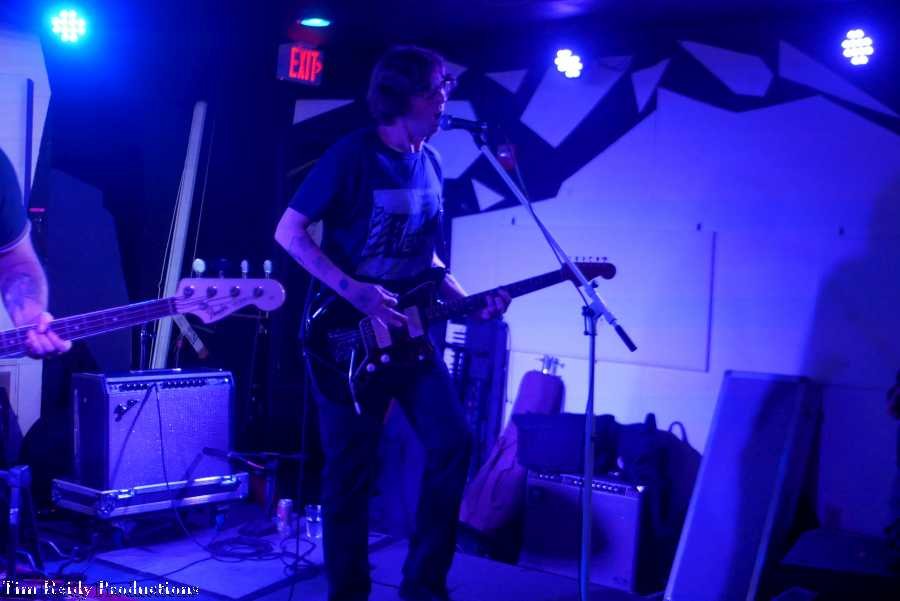
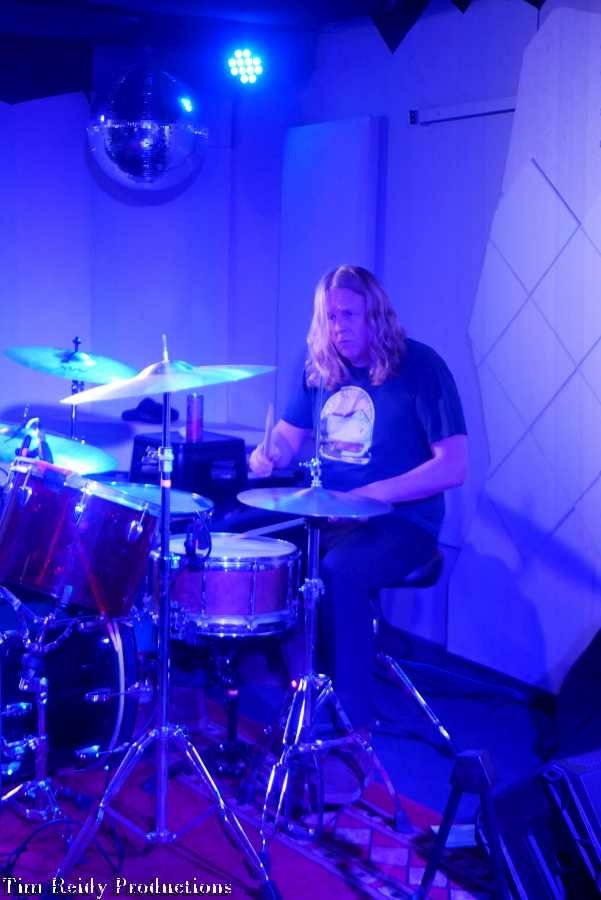
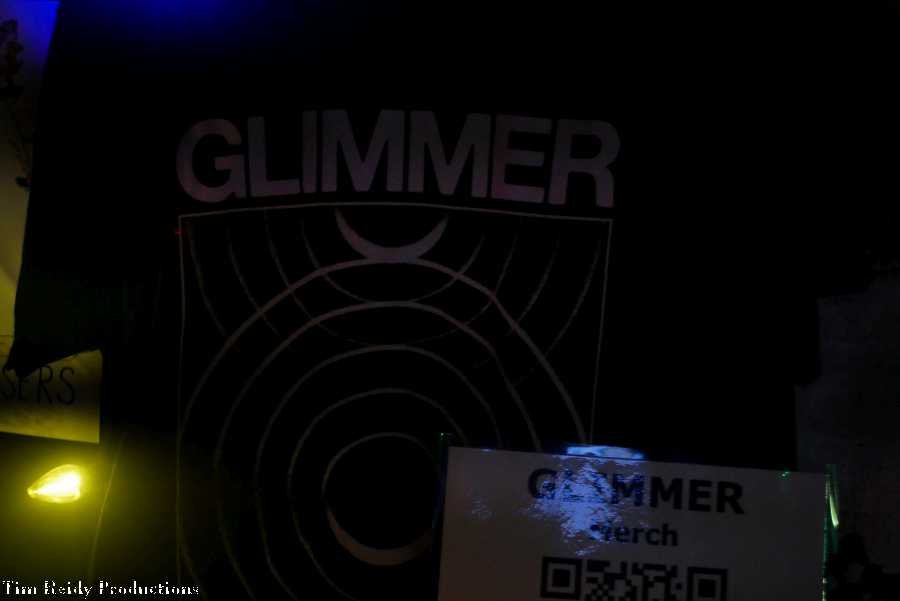
A rocking Saturday night show at No Fun with Paper Lady, Bruiser and Bicycle, Mall Goth, and Glimmer.

Photography by Timothy Reidy.

More from No Fun here …