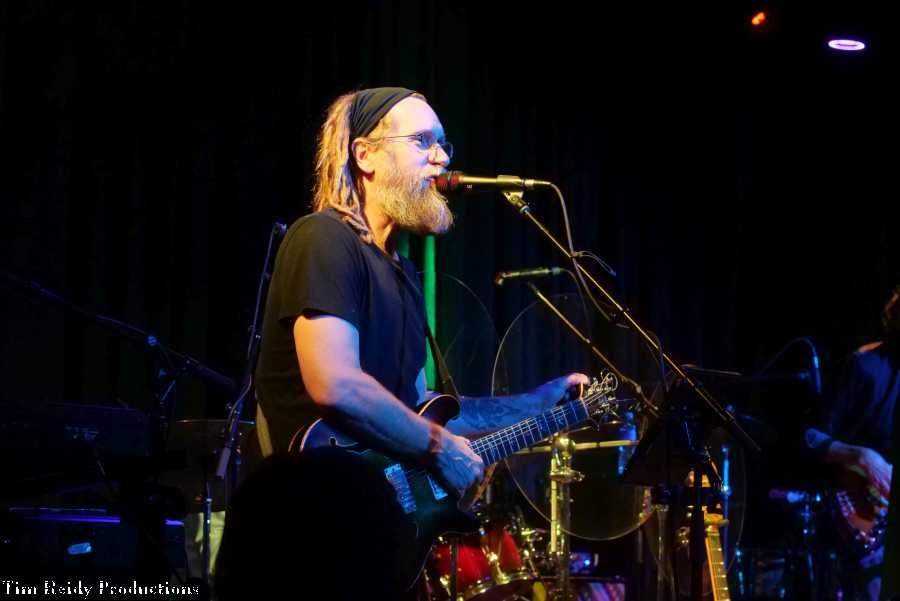
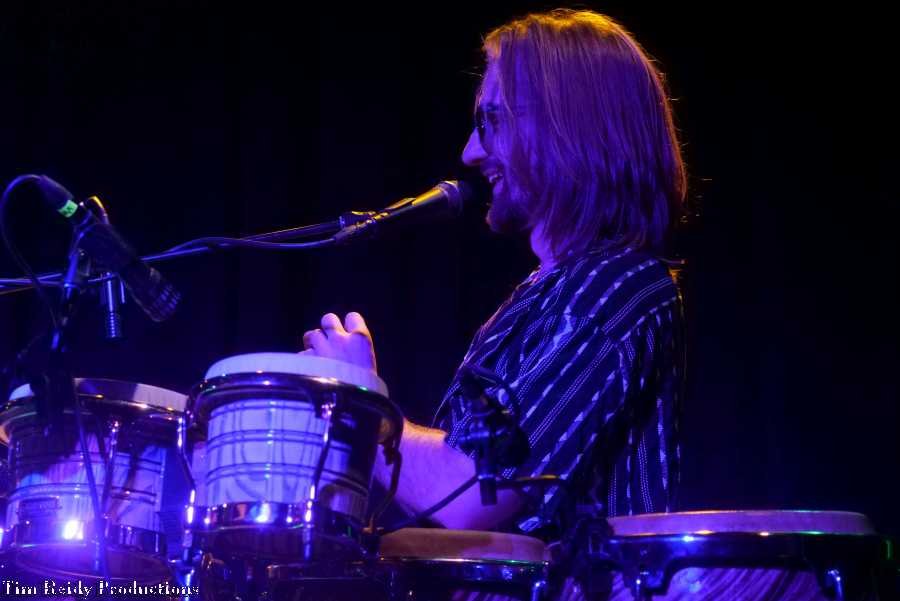
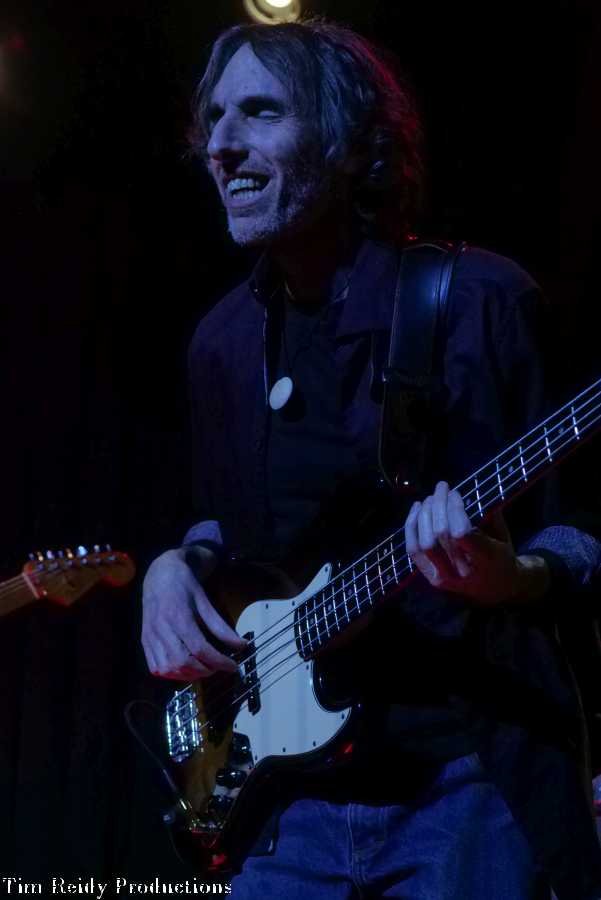
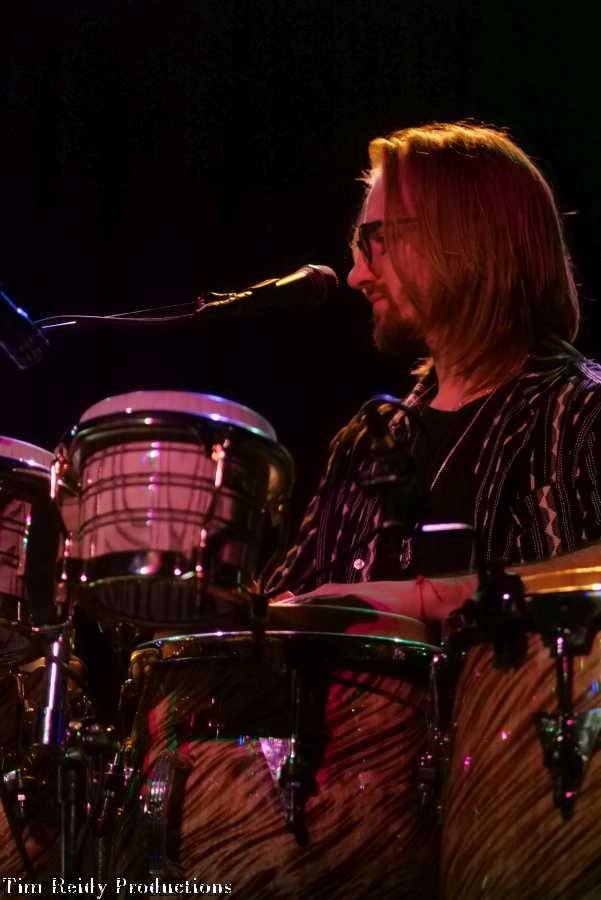
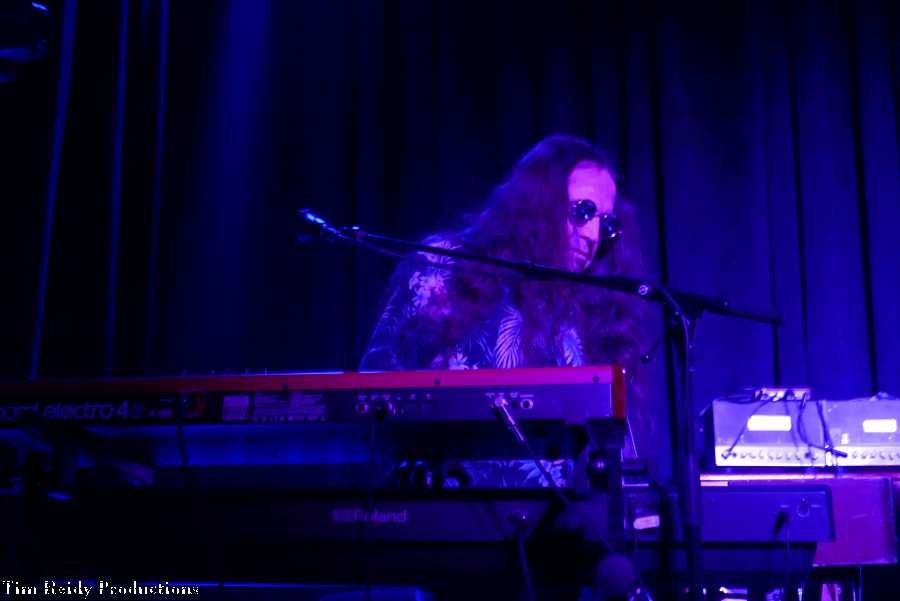
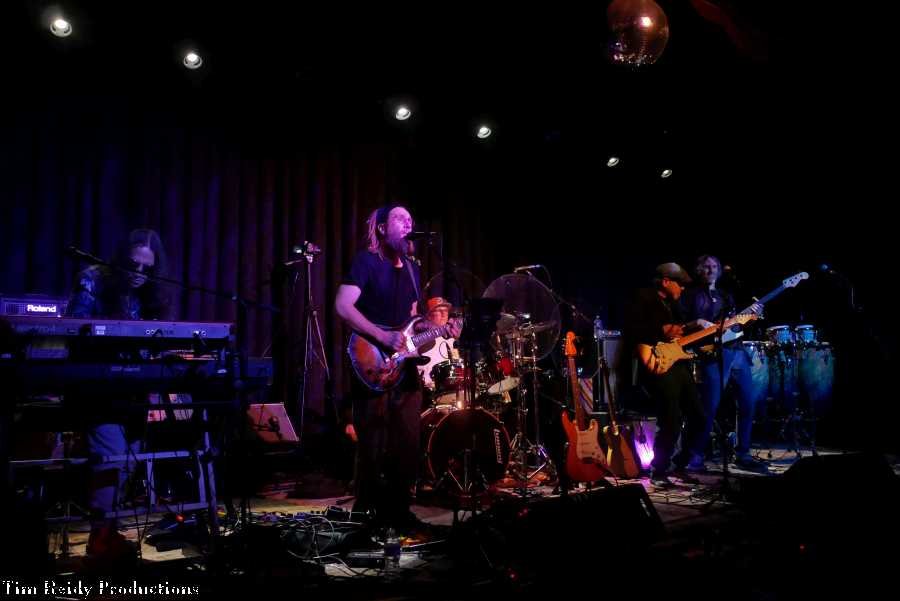
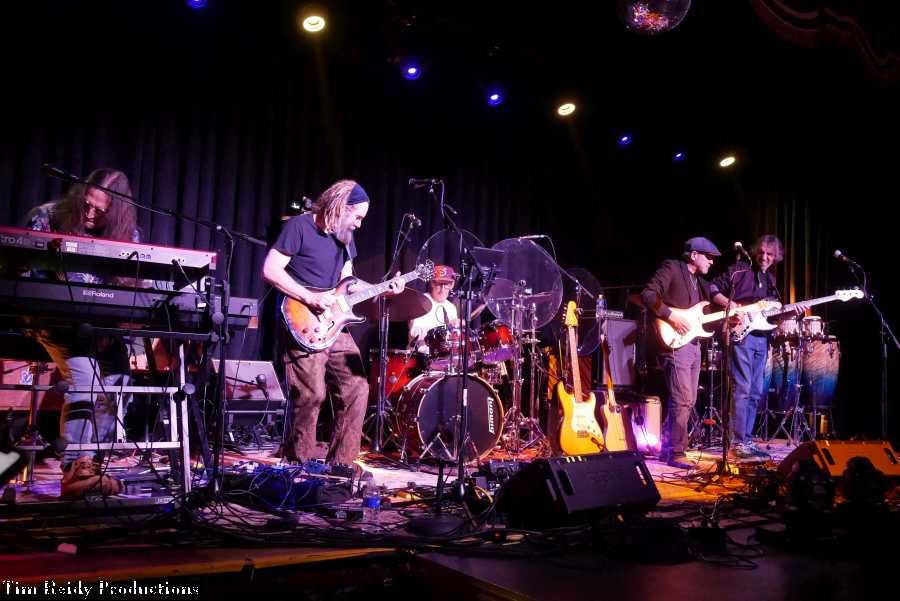
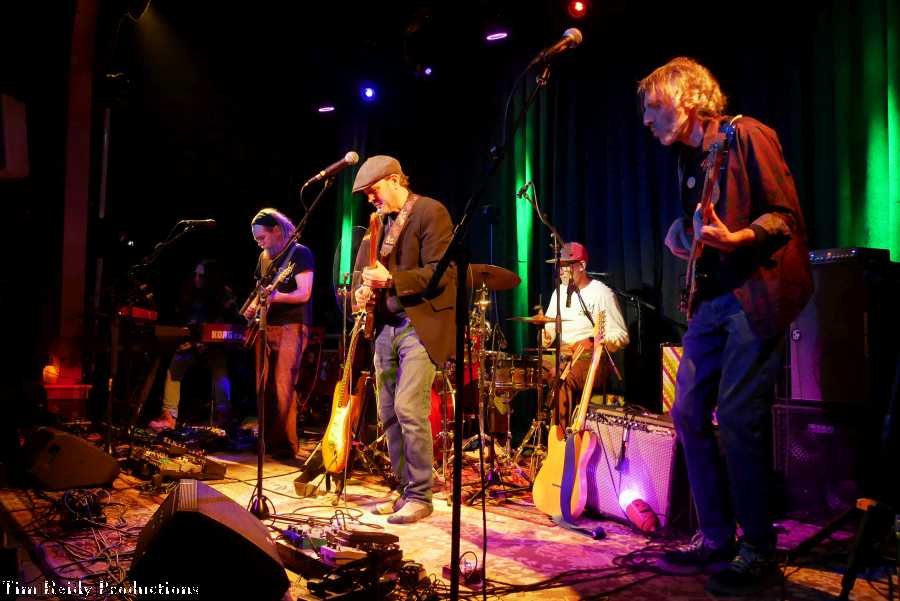
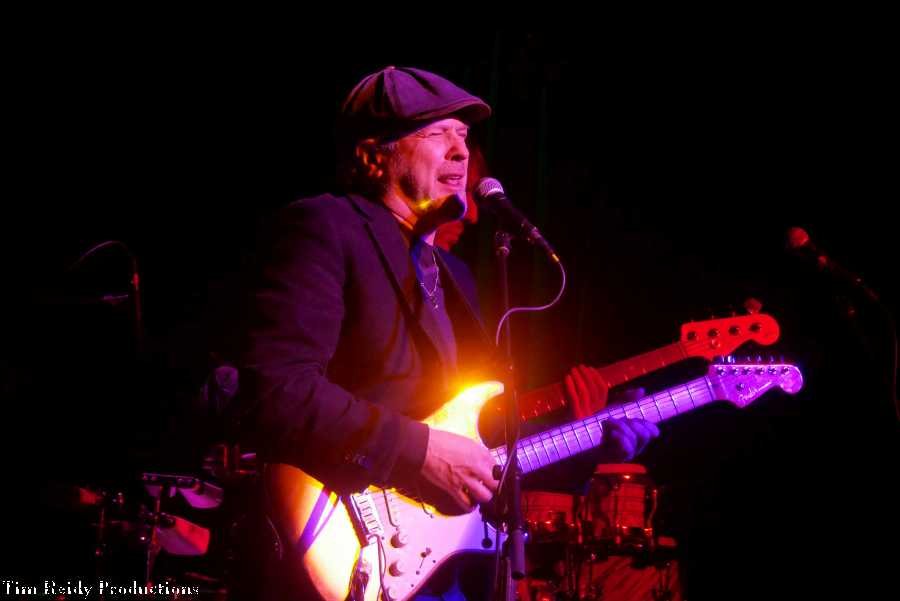
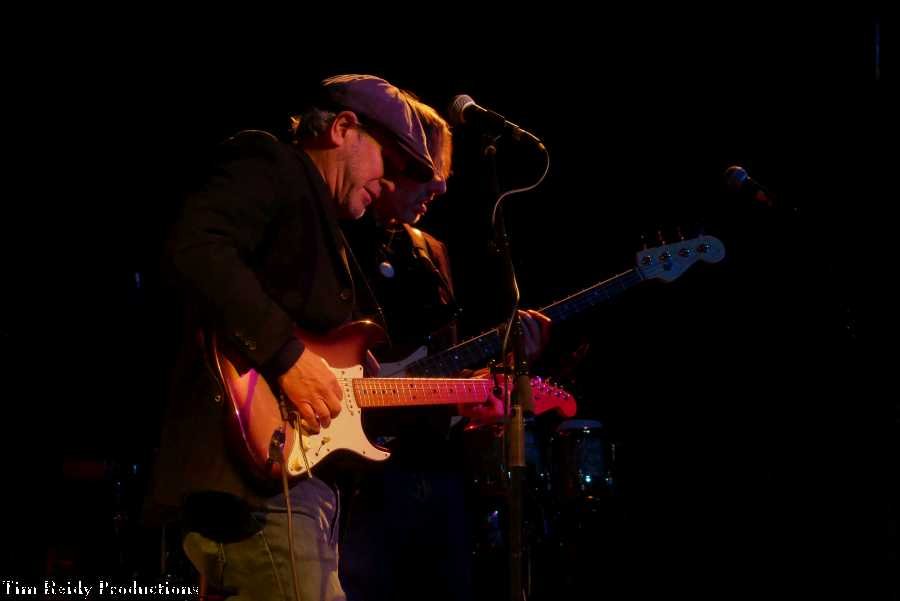
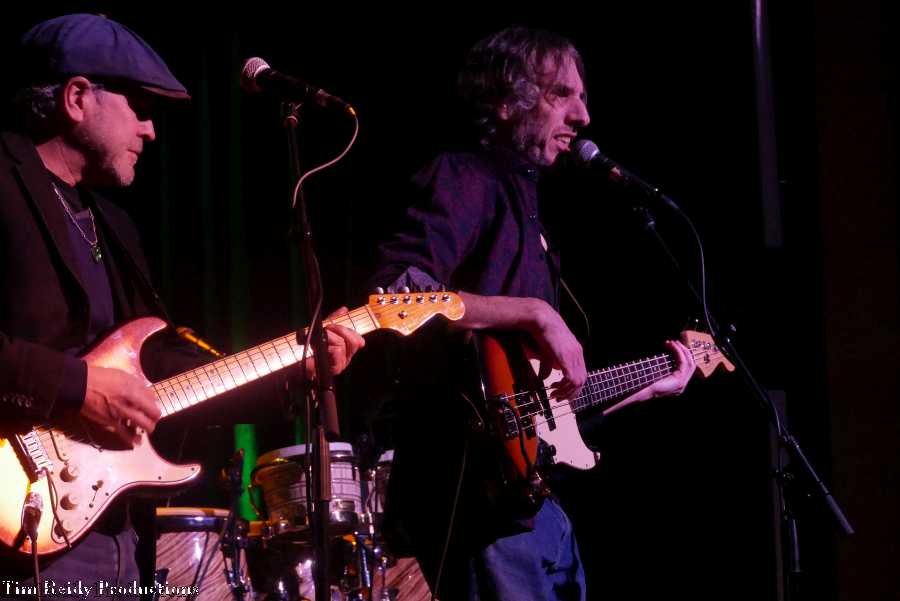
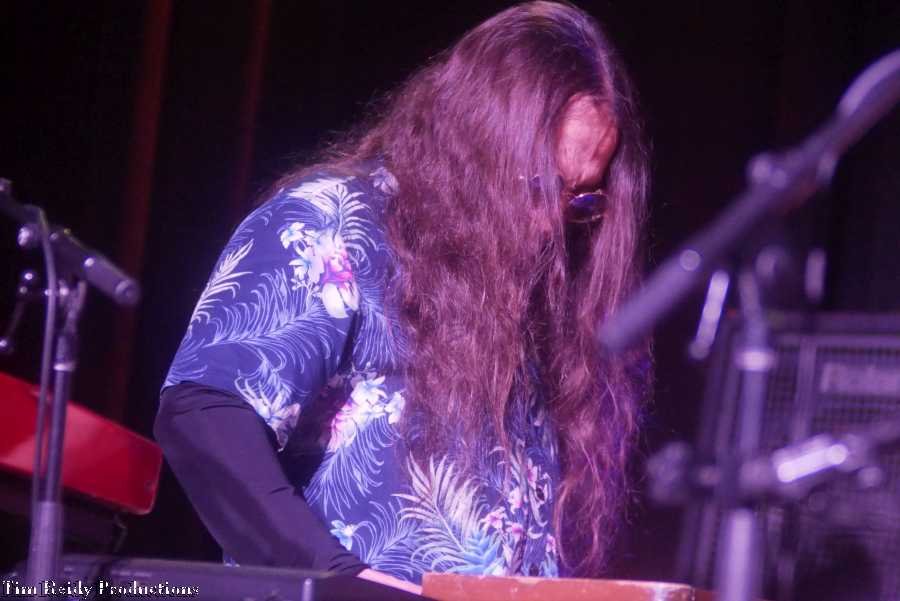
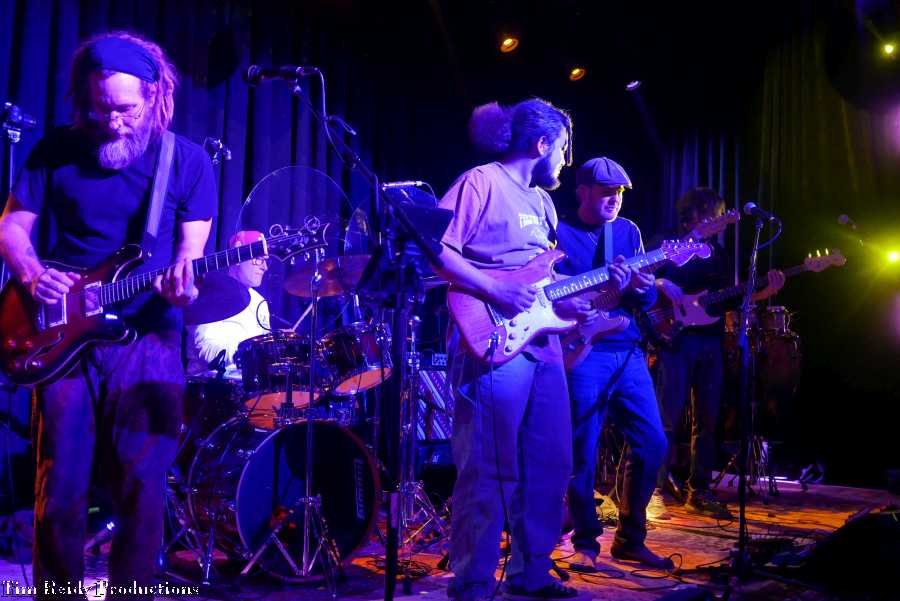
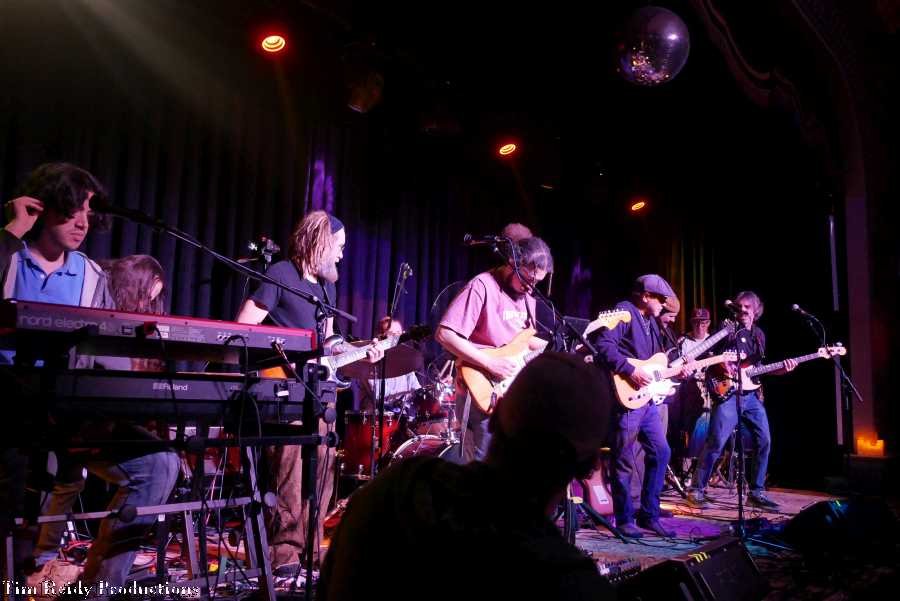
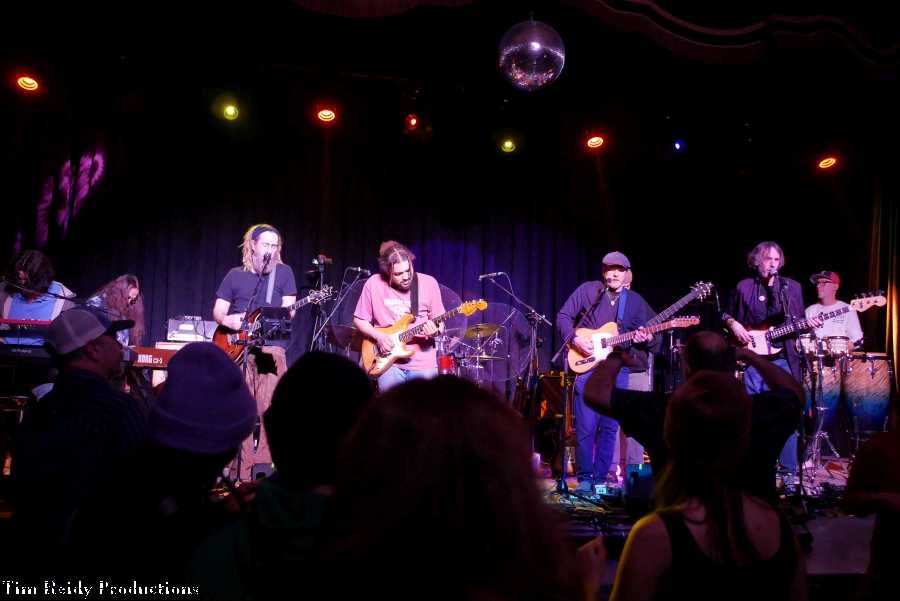
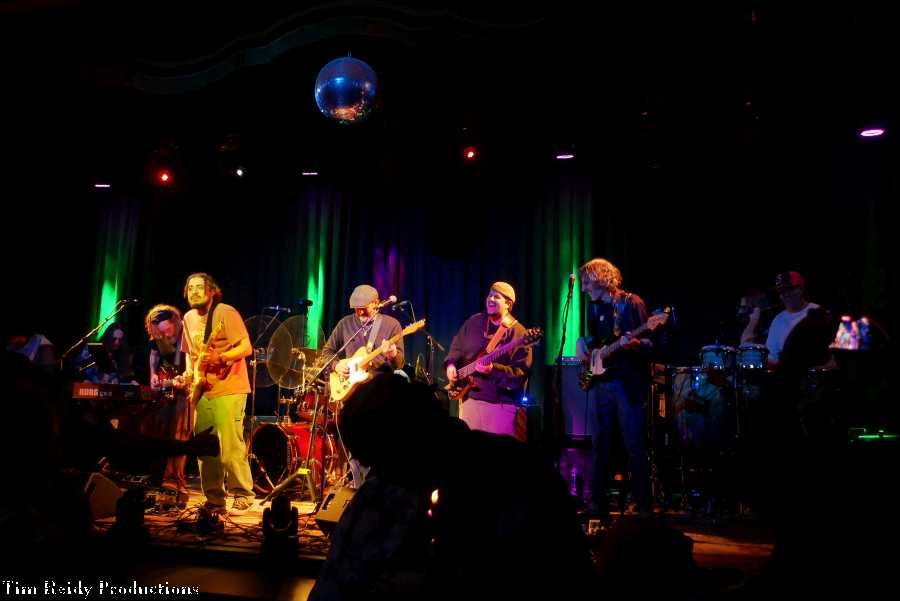
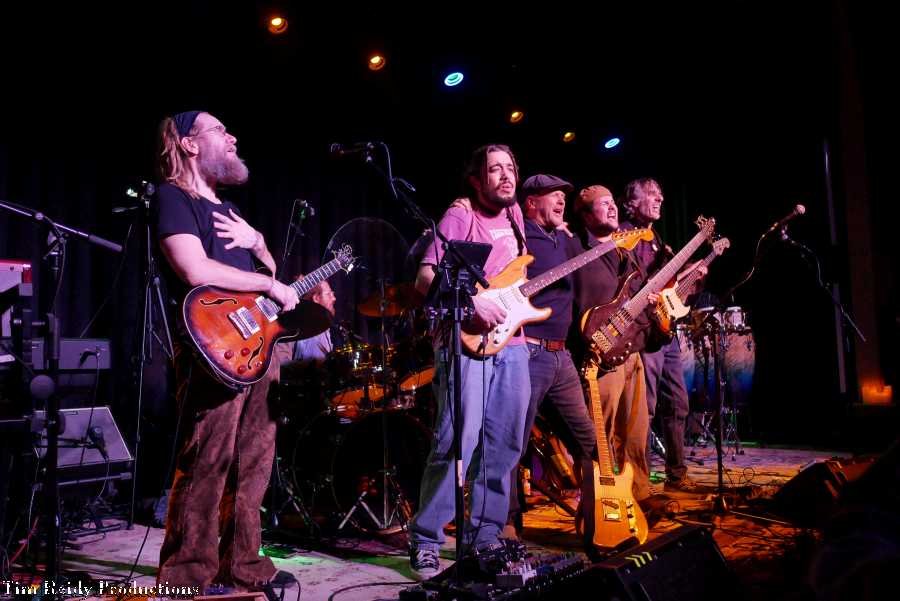
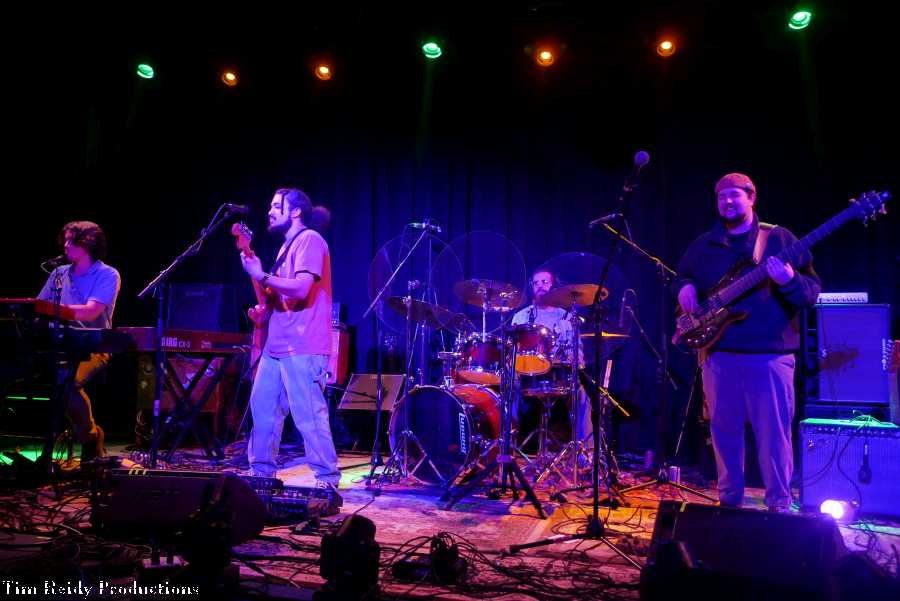
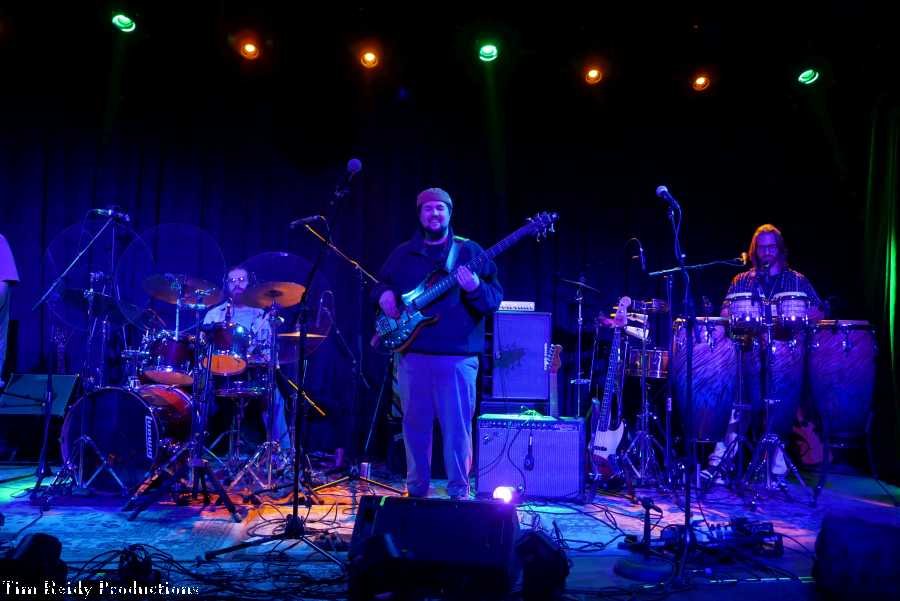
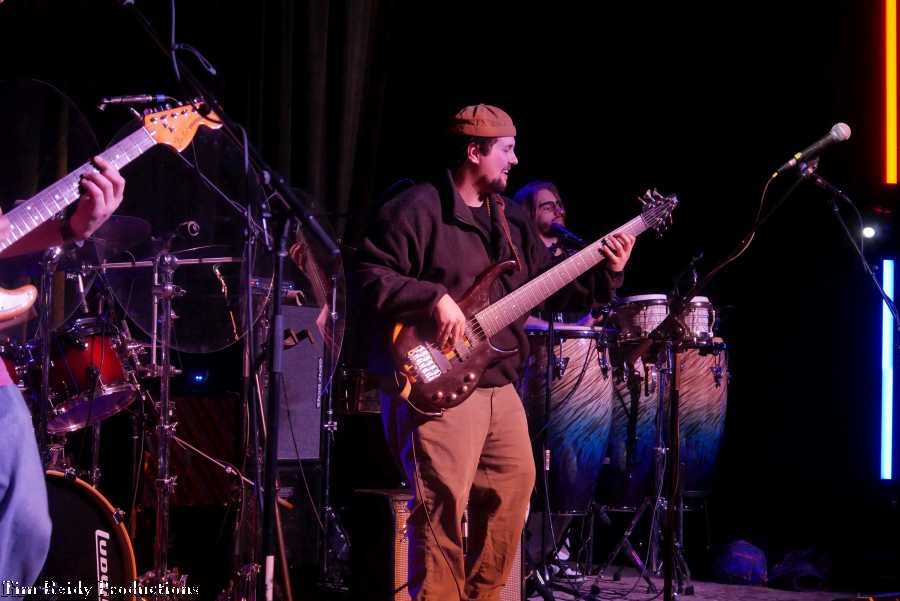
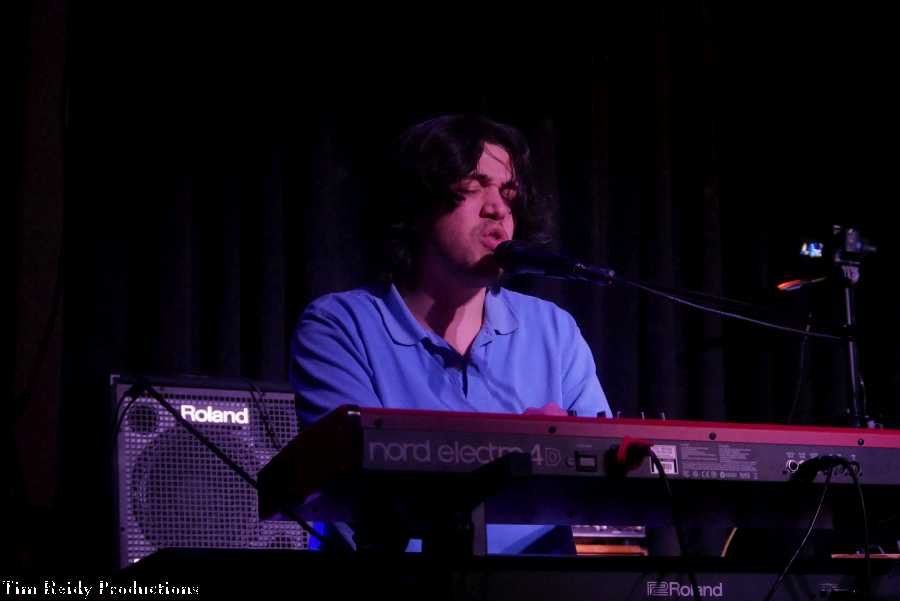
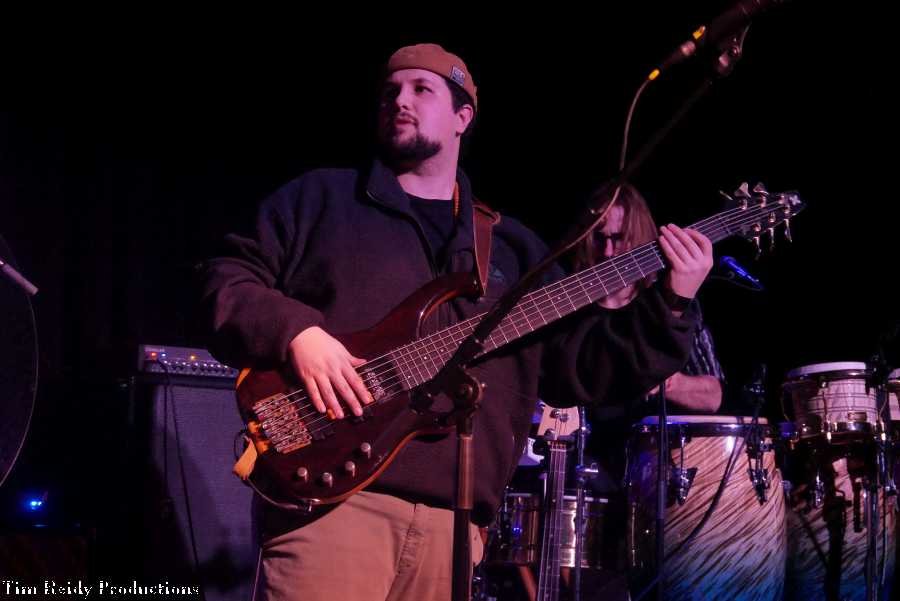
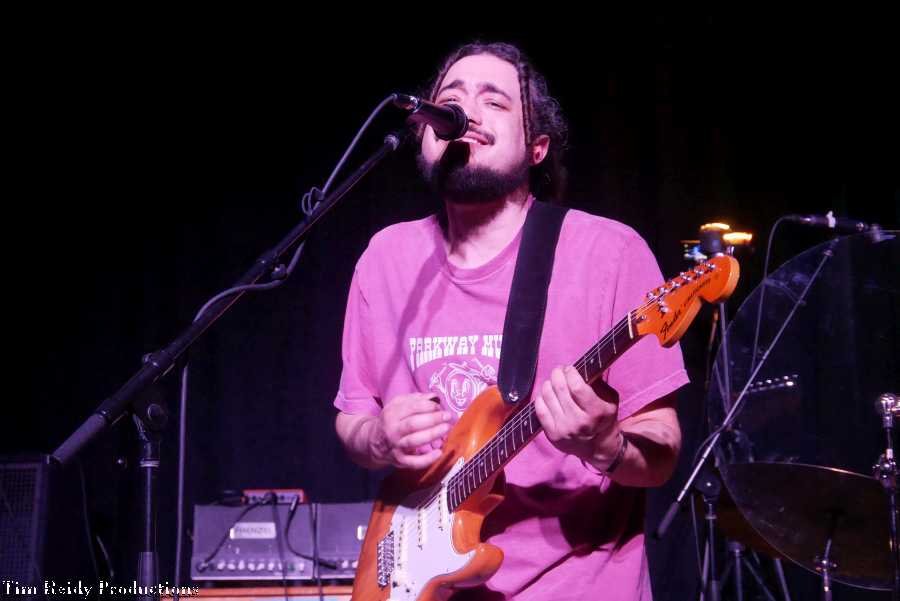
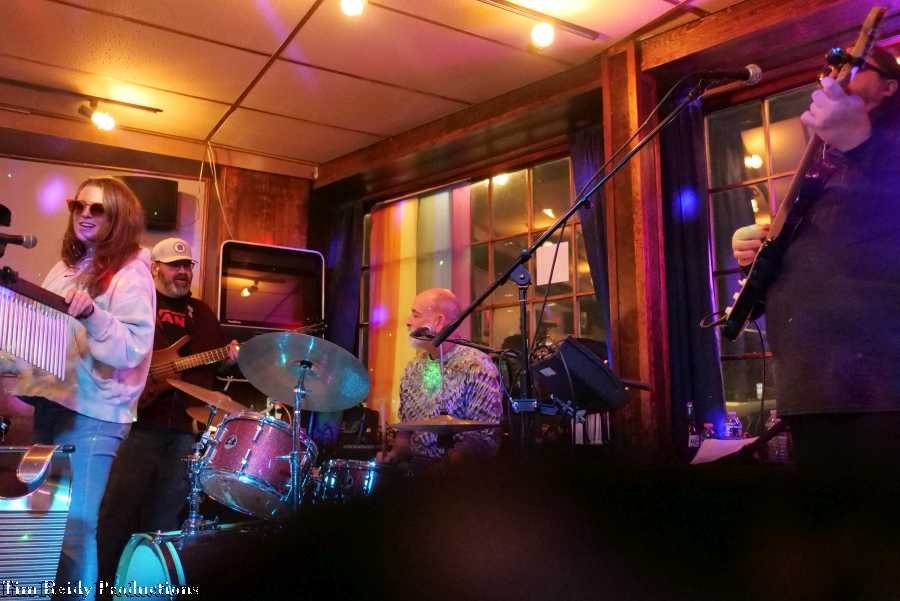
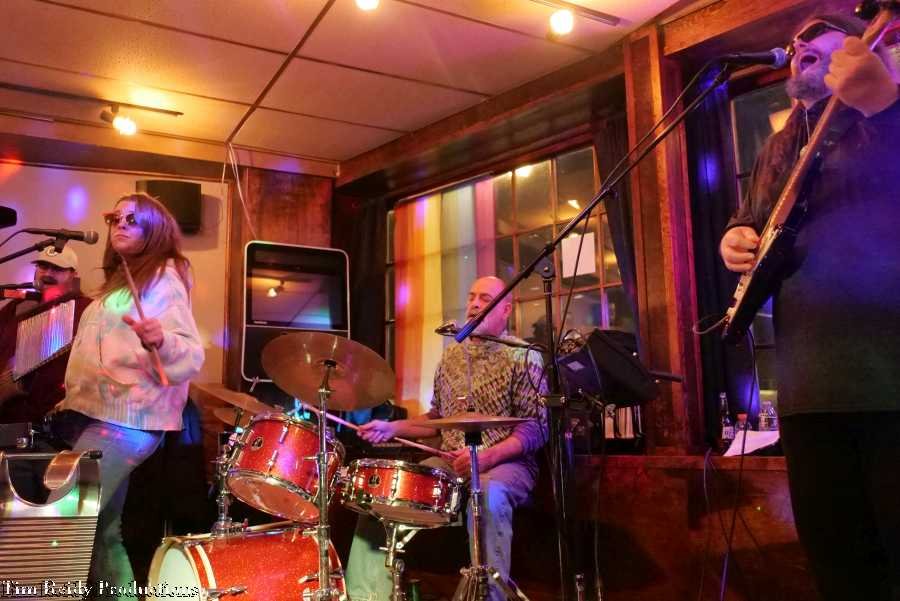
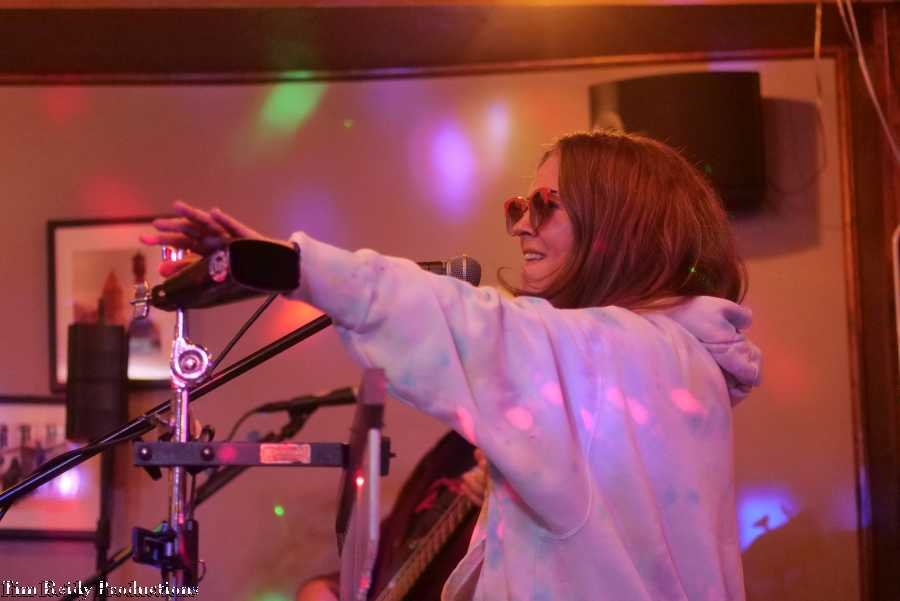
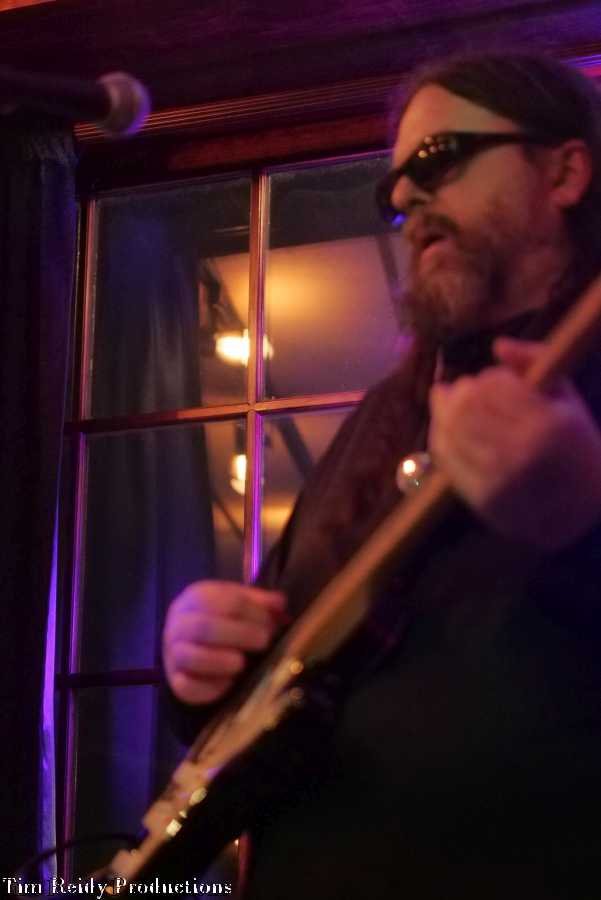
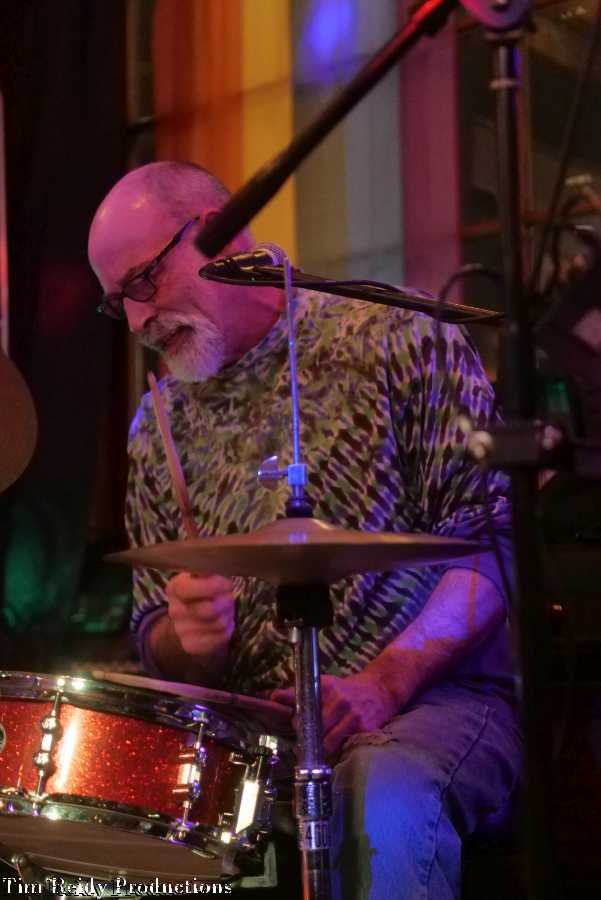
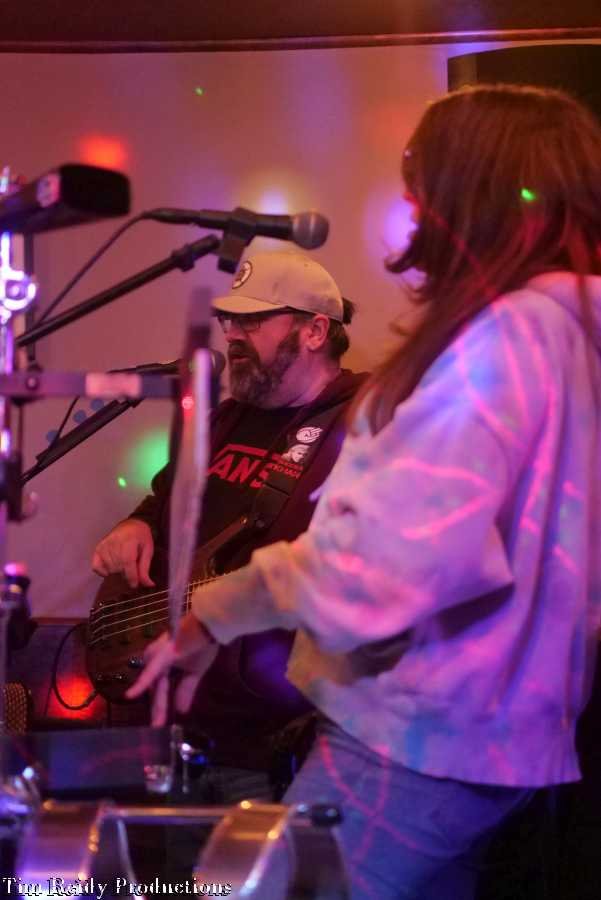
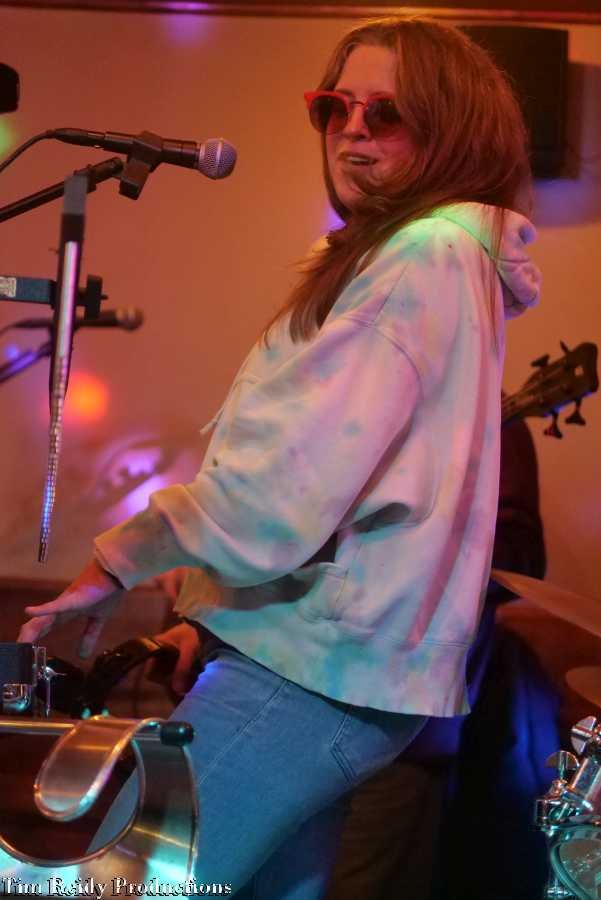
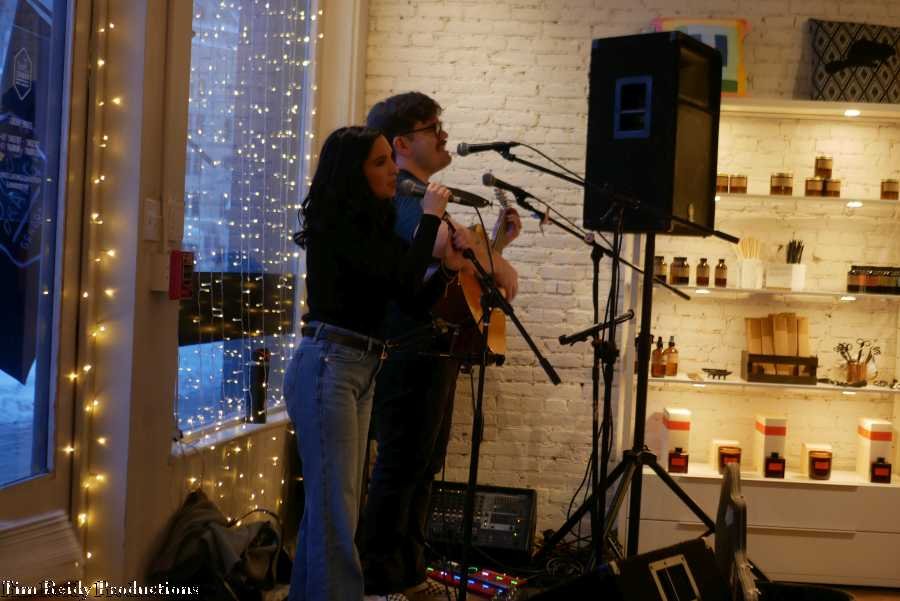
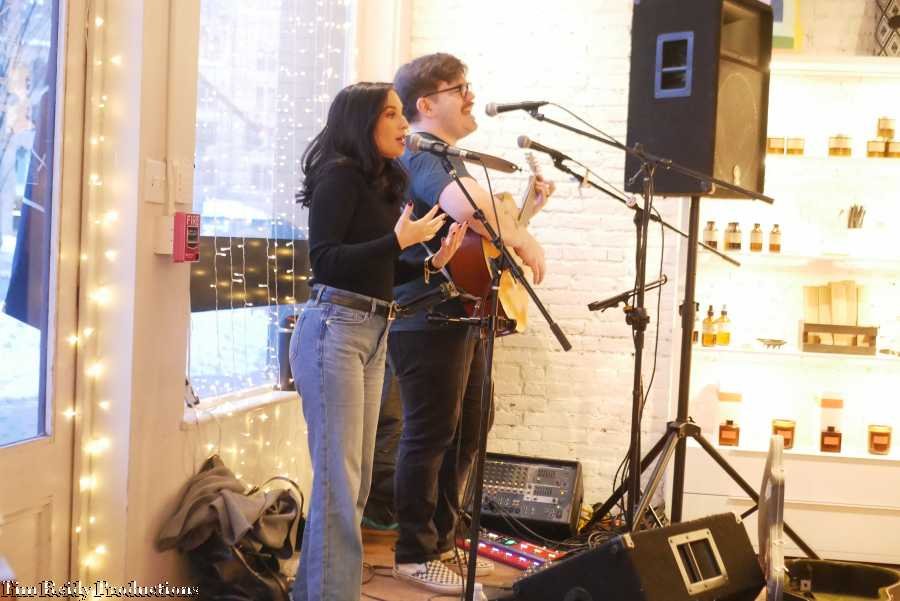
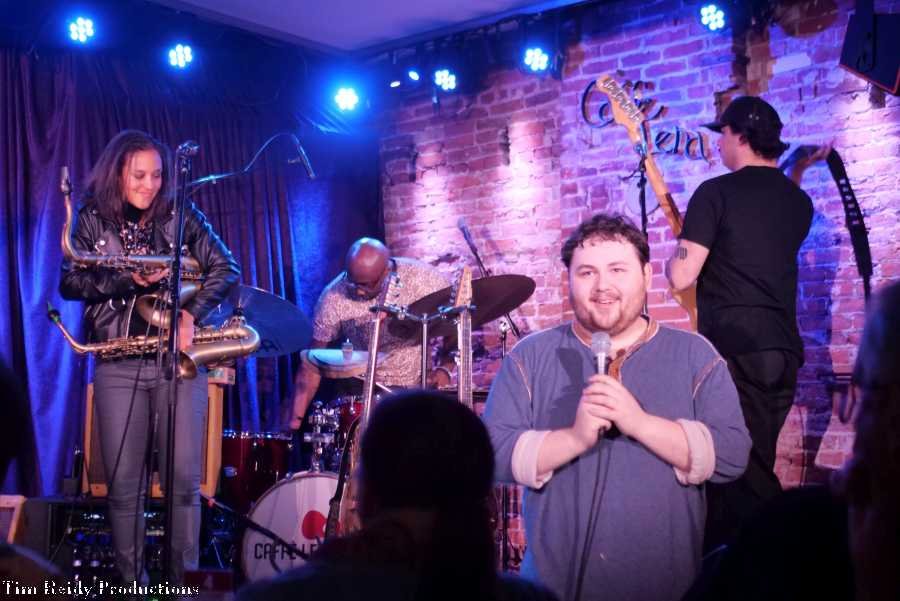
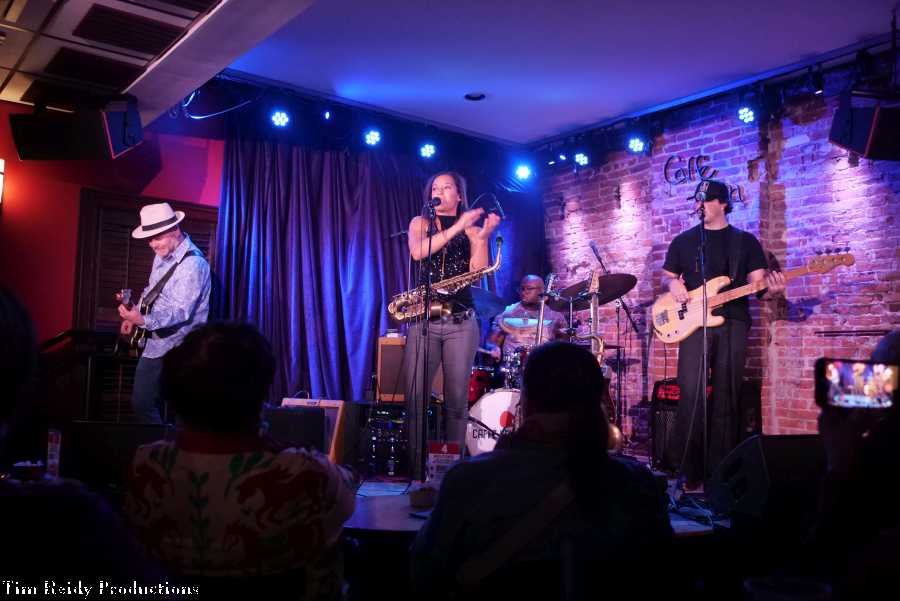
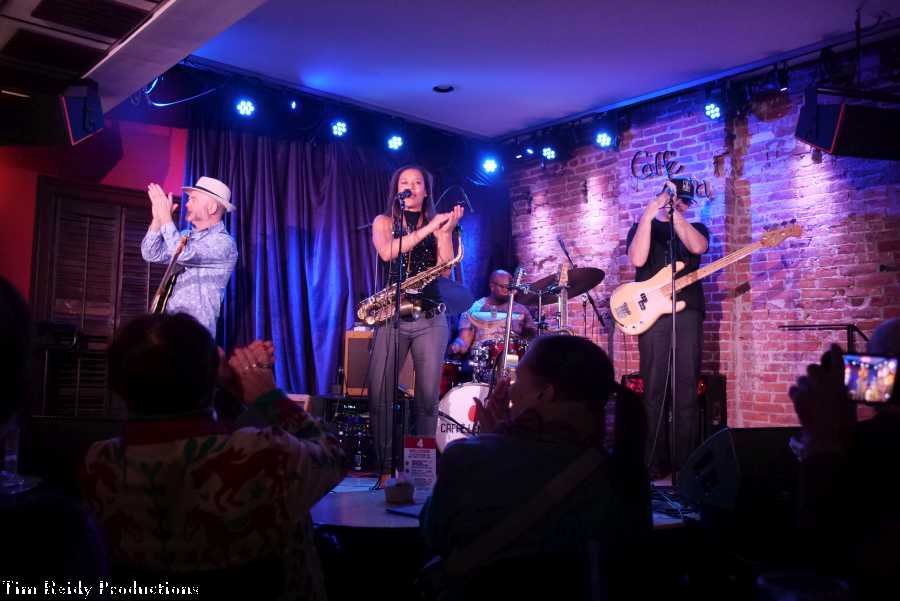
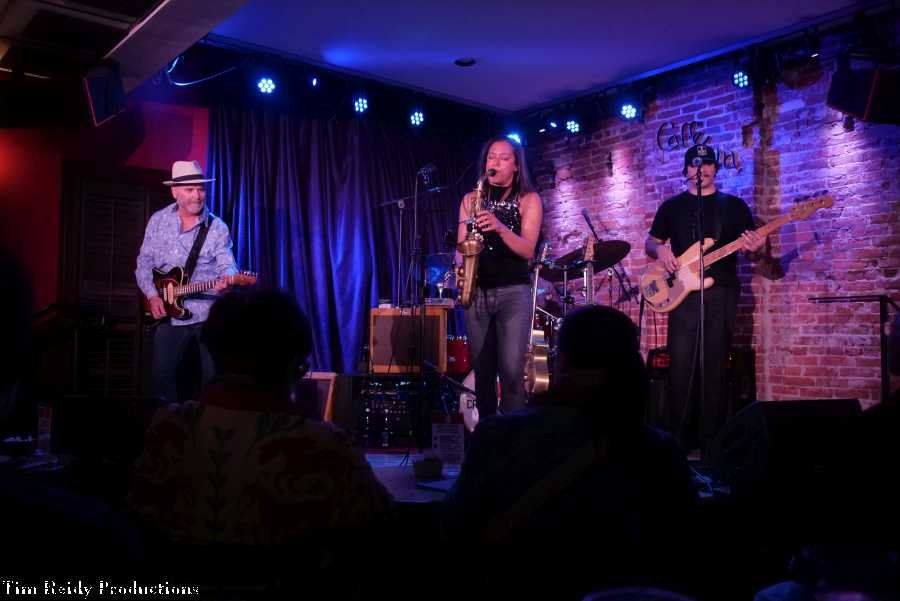
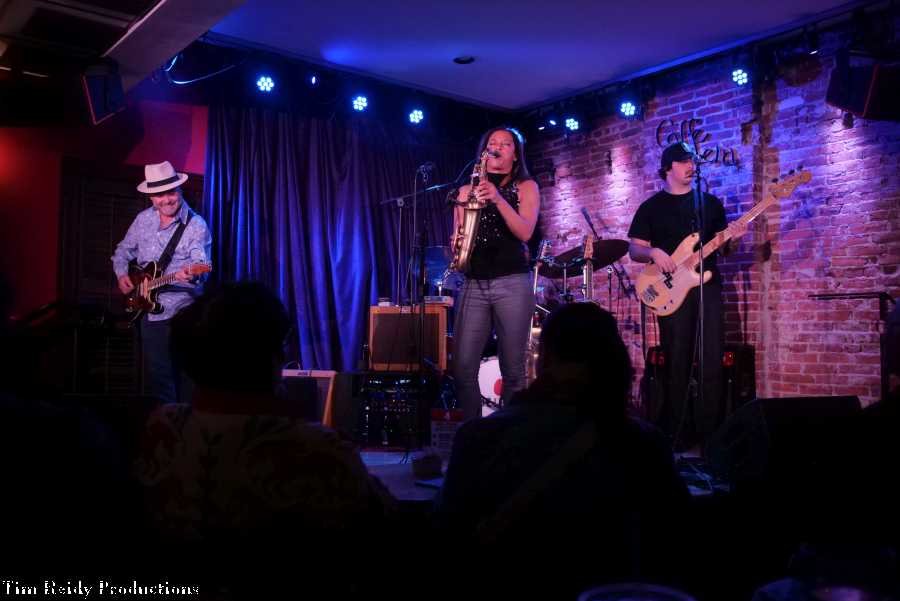
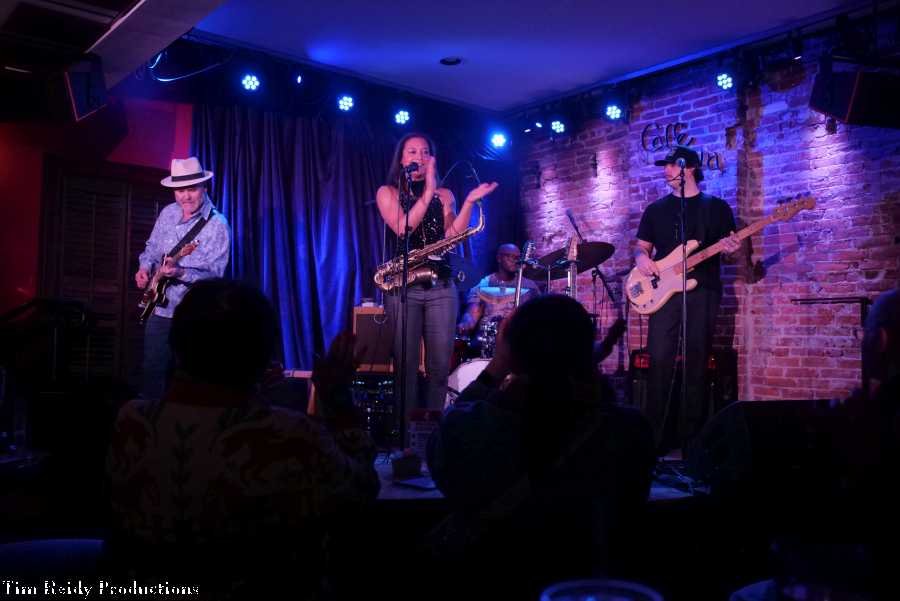
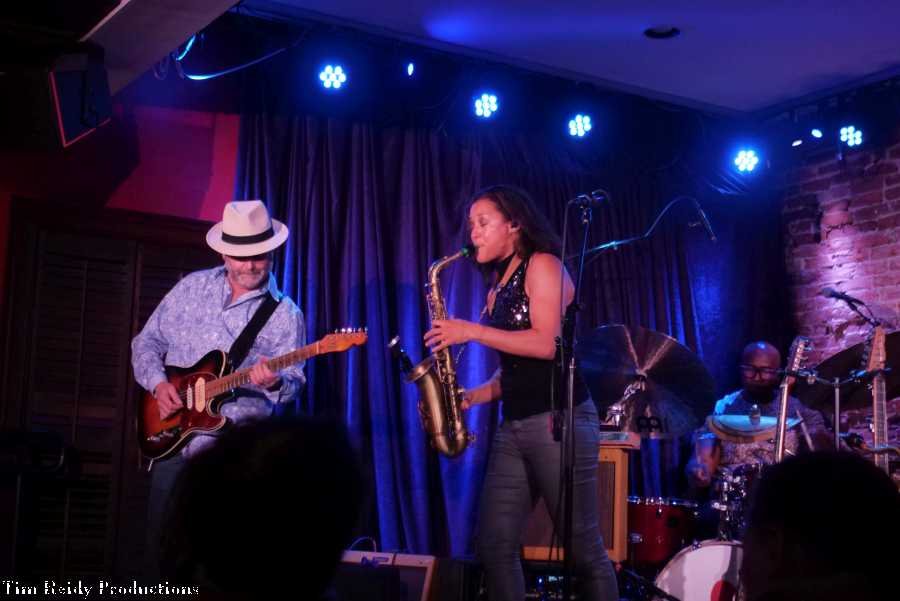
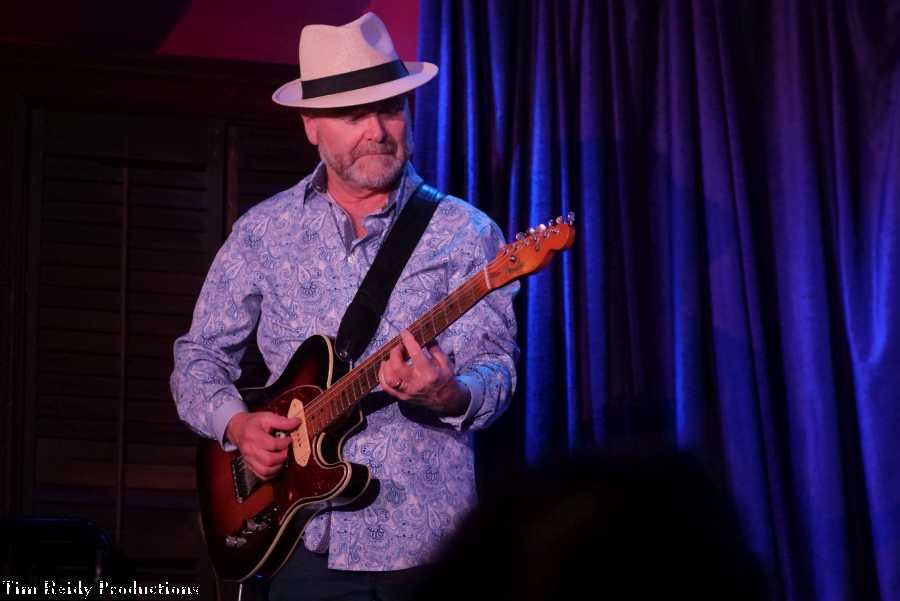
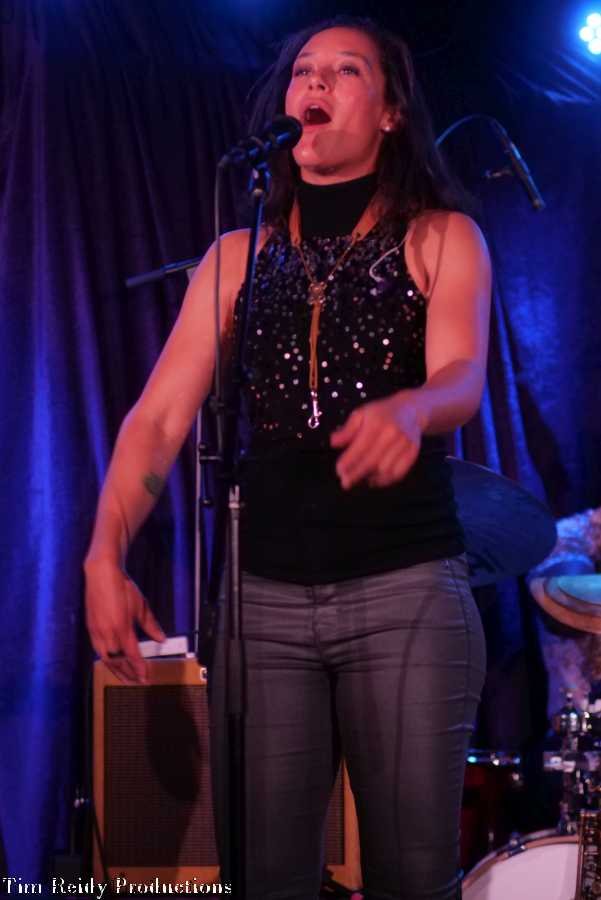
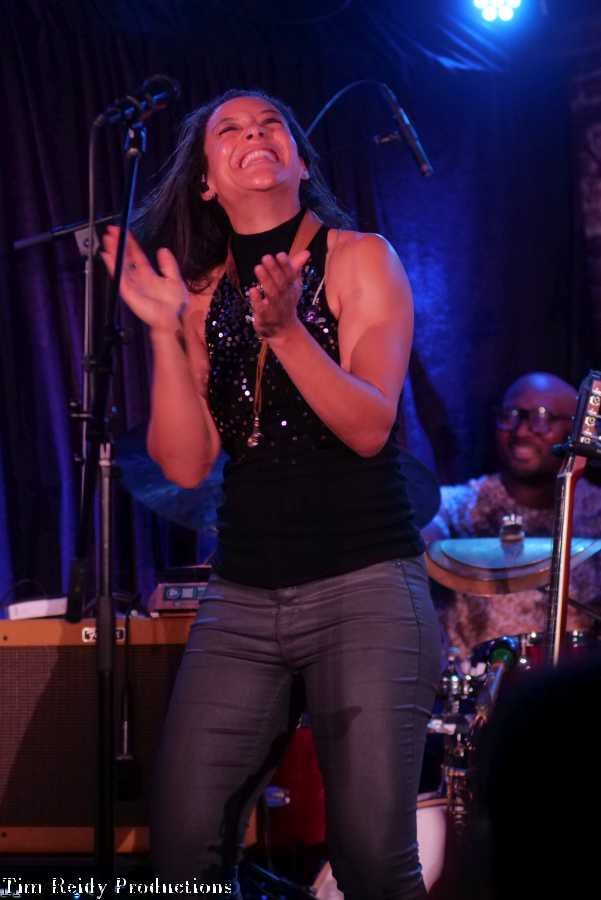
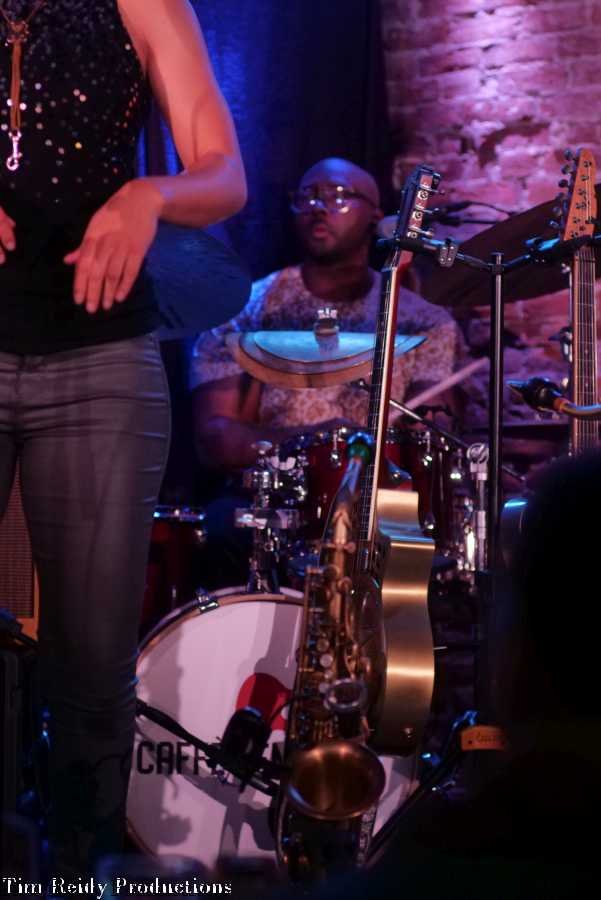
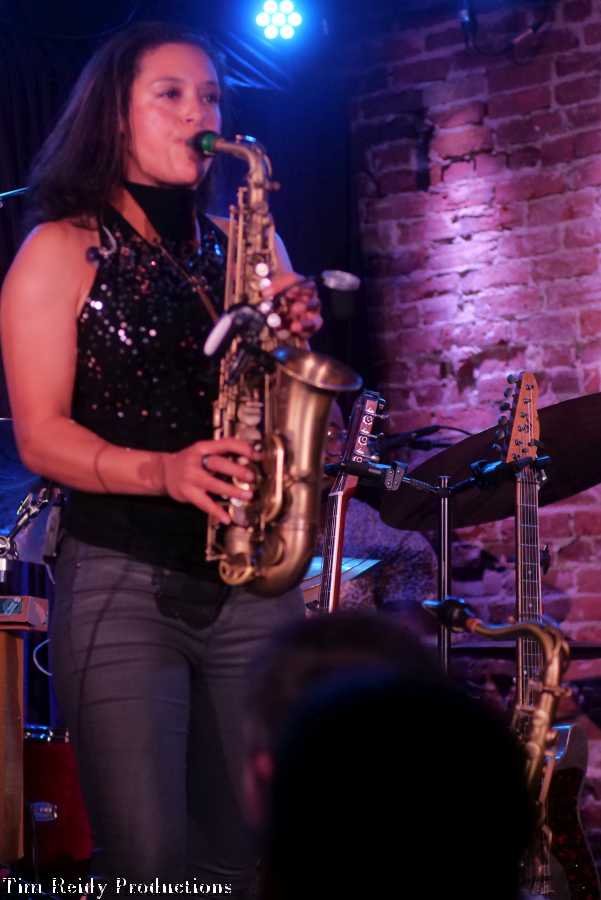
Vanesssa Collier brought her blues machine to a packed Caffe Lena.
Photography by Timothy Reidy.
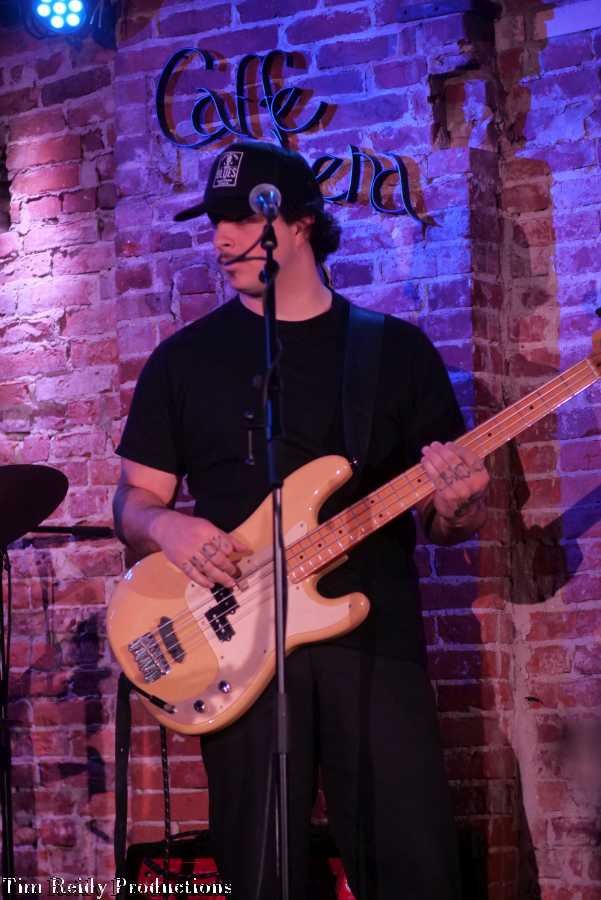
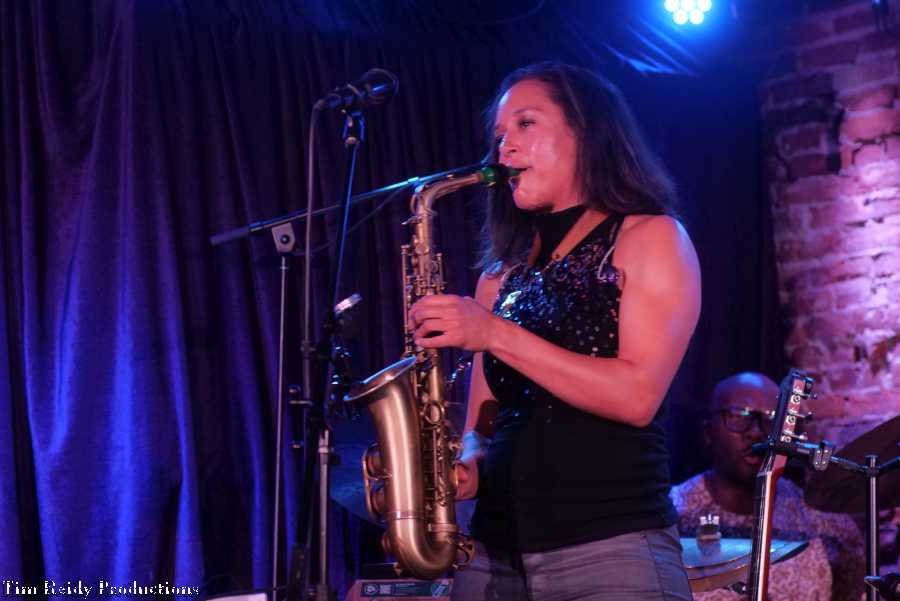
More from Vanessa Collier here …
Vanesssa Collier brought her blues machine to a packed Caffe Lena.
Photography by Timothy Reidy.
More from Vanessa Collier here …

Greetings – “Comfortably Numb” from The Wall (click Mary’s photo to hear her sing it) deals with the urge to protect against the pain of the world, thereby becoming disconnected and adrift. I picked that song to share with you because of the new program we’re offering this Sunday: Sober Salon. This event began with Caffe Lena On the Road, our musical outreach to social service agencies and health care facilities, including a number of drug and alcohol treatment programs. Sober Salon, a night of creative sharing for the recovery community, celebrates escape from the numbness of addiction. I think this snapshot from our TrueSongs performance last November demonstrates how recovery and music work together. Thanks to a supportive community, Caffe Lena is able to pioneer new ways for a small music venue to foster health and connection. Thanks for being part of this important work.
I hope you’ll take a few minutes to explore this week’s music. There’s a lot here to wake up your heart.
See you at the show,
Sarah
Monday
7:00 PM – Open Mic Night
Tuesday
7:00 PM – ROCHMON RECORD CLUB LISTENING PARTY: MEATLOAF’S “BAT OUT OF HELL”
8:00 PM – “Live From Caffè Lena” on WEXT 97.7 or 106.1 FM
Wednesday
10:30 AM – Folk Club Kids: Stories, Songs & Sing-Alongs (Infants to Pre-K)
7:00 PM – Bluegrass Jam with Red Spruce
7:00 PM & 12:00 AM – “Live From Caffè Lena” on Folk Music Notebook
Thursday
1:00 PM – Slow Jam
7:00 PM – PEAK JAZZ SERIES: BEN WOLFE TRIO
Friday
9:30 AM – Music with Miss Deb
7:00 PM – HEATHER MALONEY WITH OPENER HIGH TEA
Saturday
8:00 PM – MARY FAHL – FORMERLY OF OCTOBER PROJECT
Sunday
7:00 PM – SOBER SALON

Wireless Retinal Chip Restores Sight in Macular Degeneration
https://med.stanford.edu/news/all-news/2025/10/eye-prosthesis.html
Scientists Develop Paper Made from Sand without Trees or Water
Science Produces Fluids that Have Negative Mass: They Push Back.
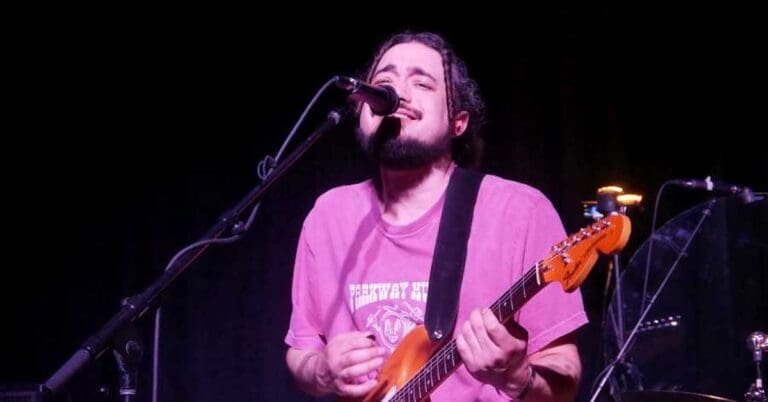
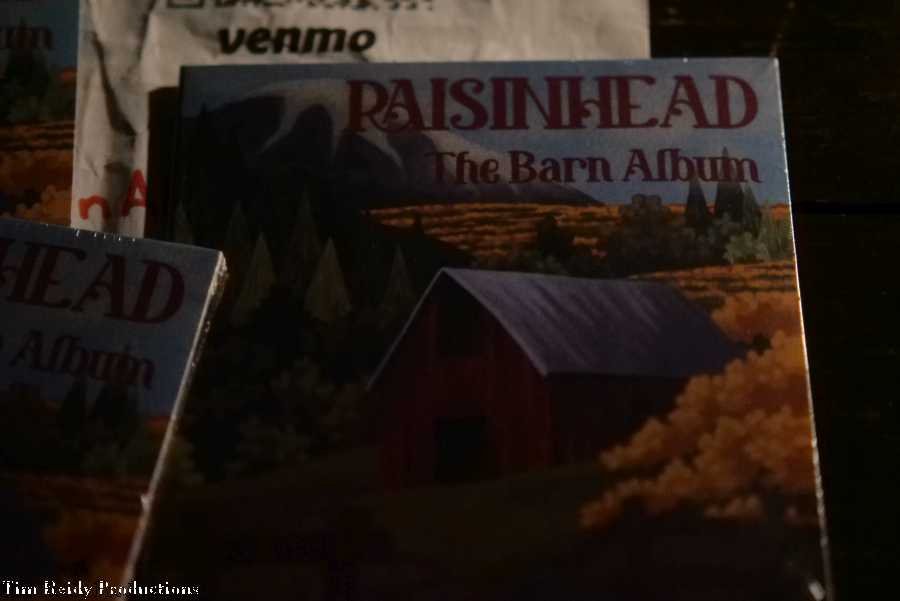
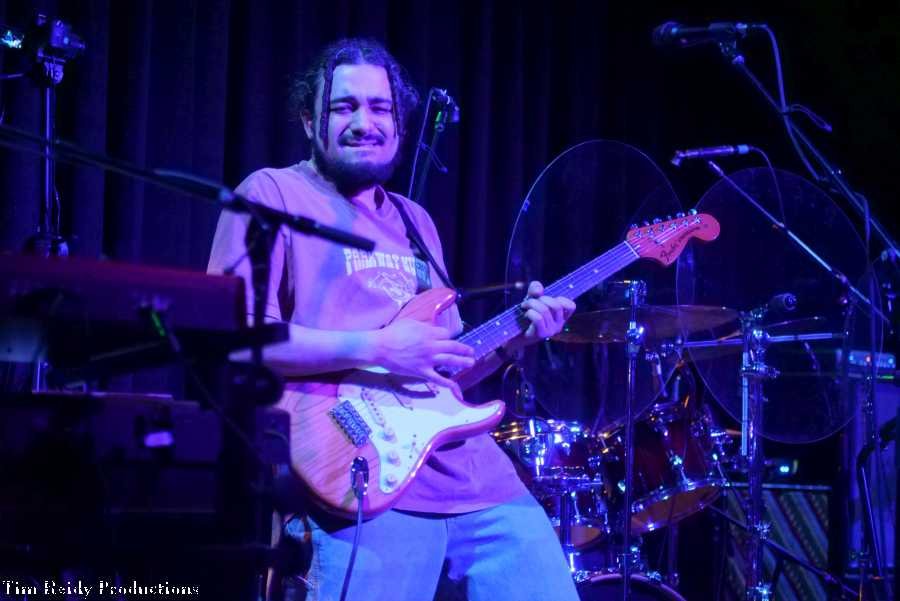
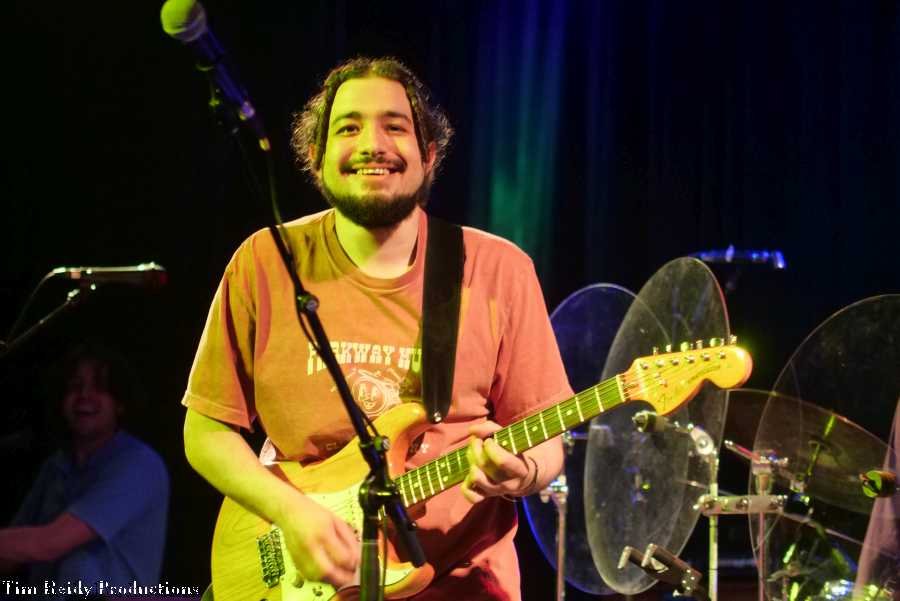
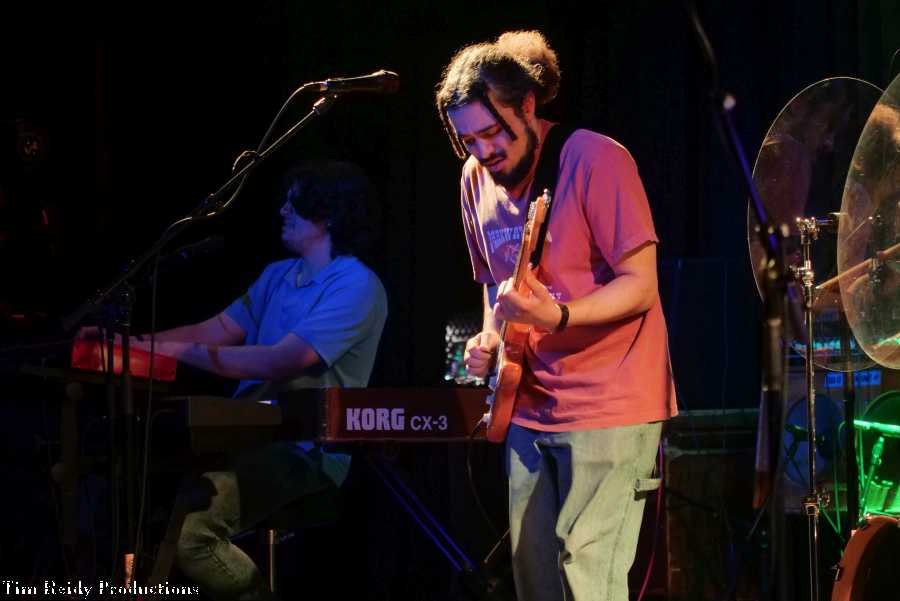
Hilltop and Raisinhead played separately and together at Lark Hall on February 6.
Photography by Timothy Reidy.
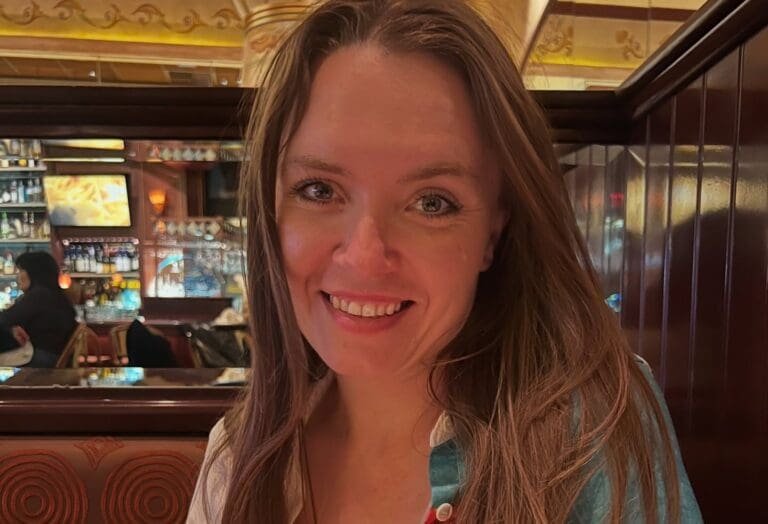
Justyna Kostek – Xperience History – by Liam Sweeny.
Originally published in September 2021.
Whether it’s a song lyric, a visual motif, a short piece of flash fiction, a movie, or a play, all art tells a story. But whereas almost every form of abovementioned art can be reproduced and spread far and wide, some forms lose something. A live show’s not the same as a recording. But a play in a theater is a true “had to be there.”
People who gravitate to the theater have passion and big personalities. They have to; the stage is hungry. And Justyna Kostek has spent her life feeding that hunger act by act, crowd by crowd. She’s made us laugh and cry, and she’s here.
I sit down with Justyna, and we discuss red velvet curtains.
RRX: You were born in Poland, near Berlin, and you were exposed to theater there, only to move to Copenhagen, where we can imagine your passion for it grew as you performed festivals throughout Europe. How does theater, as an art form, in Europe compare to other art forms like music, writing, and visual art? Is it different than it is here?
In Poland we have a long tradition of satirical cabaret that’s rather special and I imbibed some of that, and I was fortunate to have teachers and directors in Poland, themselves steeped in theatrical tradition, who could sense how eager I was myself for the freedom of the stage. That’s part of the reason why I teach theater and public speaking to kids now among many other things I do, because I know how influential art can be in early education. And then yes, as you say, Copenhagen, and the wonderful Commedia School. How much I learned there! The art of storytelling, cabaret, buffoon, commedia mask work, physical theater…. All provided me with wonderful tools to use on stage! And taught me how to create original theater. I am so grateful to have continued that journey of physical theater in NYC at the Circle in the Square Theater School with great teachers as Shelley Wyant and Christine Sang among many others.
Honestly I think I was inspired as much by my grandmother’s singing as by anything to do with theatre, strictly speaking. She performed traditional songs and dances and instilled in me a sense that anything is survivable. Like so many Poles of her generation her sufferings were great during the war, very great; however, she never lost the spirit of affirmation and joy I can hear in her voice even now when she sings to me on the phone.
But you asked me about differences between theatre here in the US and in Europe. One clear difference is that unlike in the US, live theatre is subsidized by the government. That has advantages and disadvantages, of course. But when I went from festival to festival with my little company, we were always sure of a venue. And that’s an advantage, I must say. I do like a rich red velvet curtain, but I find it is little used anymore.
RRX: Forking from the previous question; so you have passion for and skill in theater performance that began in Europe and made the trip to America with you. And as I asked previously how European theater plays with other arts, I now ask; how is the American theater scene different than the European theater scene?
American theatre is break out theatre, its experimental, it has a different energy than plays from the –what a funny expression–Old World. Also, In America you have this glorious unique thing called the Musical! That’s what brought me to New York City from Denmark 7 years ago. My love for connecting music and theater. It is much more celebrated in the United States than in Europe. So when COVID took theater away from us – music still remained in my life and I am currently working on my first album with the extraordinary rock musician and beautiful soul Niki Kaos!
RRX: A few years ago, you directed and starred in Helen of Troy, NY. It played nearly two-hundred times in New York and came up here to rave reviews. What is it about? Can you describe it, and how was it coming up to the Capital Region and performing a play about the Collar City? Did anyone not like it for whatever reason?
Doing Helen of Troy NY was Don Rittner’s idea. We had just met and when he learned that I had a theater background asked me to codirect it with him. Don had the play for years and wanted to do it in Troy because the collar bosses in the city in 1923 would not let it play because it was a spoof on them. It was George Kaufman’s second play and a big hit in the city and around the country but not in Troy. Don wanted some poetic justice so he and I put the show together and had six sold out performances back in 2015. I also played the part of the French photographer. The original Helen starred Helen Ford who was born in Troy so we thought that would be a great hook also on doing it here. The play was about an imaginary Troy collar company and the two founders who fell out with each other but it was Helen who brought them back together by inventing a new collar. The music was written by Kalmar and Ruby the same guys who did music for the Marx Brothers movies. Don and I are talking about doing it again in Troy next year since it was so well received.
RRX: So let’s talk about your current project, Dietrich Rides Again, about the legendary Marlene Dietrich. She was a stunning actress and a powerful woman. She has qualities that I imagine would make anyone want to pay homage. Was there anything specific about Dietrich that caught your fancy enough to portray her?
In 2016 I was starring in an original musical Bound To Rise at the Medicine Show Theater in New York City and the music director of the show kept nudging me that I look and sound like this famous Hollywood movie star Marlene Dietrich and I must read up on her. By the 30th time he told me that I decided to read up on her and got so inspired by her life. I got together with one of the directors at Medicine Show – Oliver Conant and we co-wrote the show.
The fact that she used her international stardom to fight the evil during the WWII caught my heart right away. In 1929 when already so famous from her movies made in Germany, she moved to United States and joined the US army and performed on the war field for the American soldiers for the whole 5 years in Europe. She refused Hitler’s several requests to come star in his propaganda movies for millions of dollars. She saved many Jewish people from Europe and brought them to America. When she was as famous as Marylin Monroe and she didn’t even have to move her finger. I admire that so much. She died penniless.
The more I read, the more films I watched, I must say, I fell under her spell. Think of any of her film performances, how she holds her partner’s gaze. The way she has of admitting you to her beauty! There’s her stillness, something in her that may have belonged more to the theatre than to movies, and, of course, the lighting she learned from her beloved Von Sternberg, and something else, too. She’s a great clown. Now when I say that to Americans it can be misunderstood, but when I say she is a great clown I say it with utmost respect, as one would say it of Charlie Chaplin—whom she knew, of course!
RRX: Marlene Dietrich was unique for her time. She broke rules and norms, and she was unapologetic in being who she was. She operated in an industry run by powerful men and she didn’t flinch. She had to be a great character, but how do you portray her in an age where empowerment isn’t as revolutionary as it was during her time?
She had a good mentor: Mae West. I do think her example remains an empowering one to the LGBTQ+ community. Whenever I advertise my show at the Pride events in NYC I meet many other Marlenes. The theater industry is still run by men. On my journey with Dietrich Rides Again I certainly encountered and continue to encounter many things that Dietrich herself had to deal with as a woman in the showbusiness.
RRX: Dietrich Rides Again is an interweaving of theater and film, at least thematically. So I’ll ask this in a space where many people don’t experience both. What can we get in theater that we can’t get in film? And do you prefer films that started in theaters, or plays that take from films, if you had to choose one?
You know it’s interesting I was thinking of Cold War, which has some of the same kind of singing my grandmother did, and it’s certainly very theatrical! In old age, you know, Marlene dismissed her silent film career. In the wonderful documentary by Max Schell she even calls The Blue Angel, her first film, “quatsch’ or kitsch or whatever she says but I think its fun.
As an artist starring in the film you don’t get the immediate response from the audience where as in theater you are literally “serving the audience” your humanity. That is what’s different. Sharing the beauty of humanity together. Artists– serving, the audience- responding.
RRX: This is where you answer the question I didn’t ask. Any cool superstitions behind the curtain? Alternate uses for pancake makeup? Educate, enlighten, emote – the floor is yours.
In Europe if the script falls on the ground during rehearsals you must step on it before picking it up otherwise it’s “bad luck”. In Poland if you don’t take a shot of vodka before doing certain kind of traditional productions you will get booed by the cast. I believe in the Netherlands the shot of vodka is replaced with the joint of marijuana.
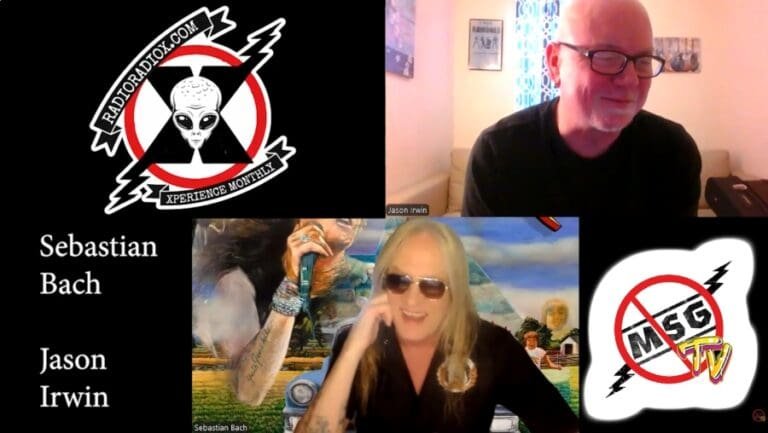
SUBSCRIBE TO OUR YOUTUBE CHANNEL HERE!
Xperience writer and interviewer Jason Irwin got to chat with Sebastian Bach of Skid Row fame. Enjoy!
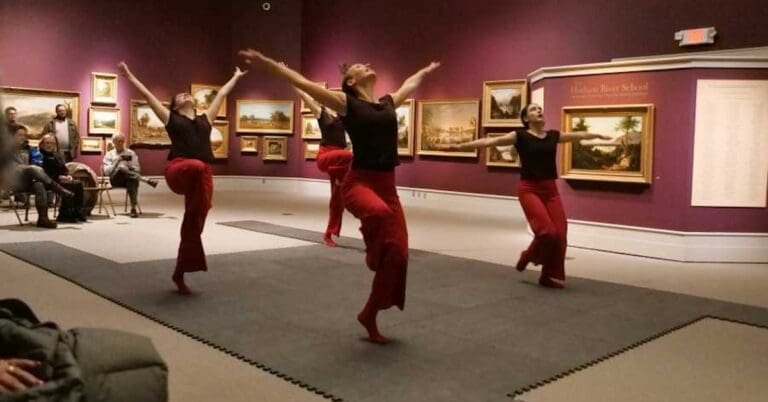
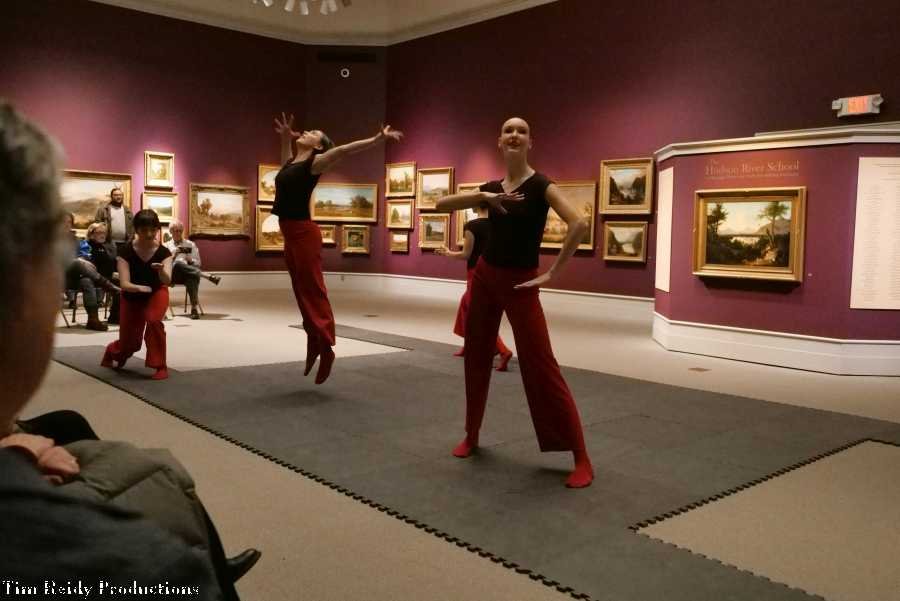
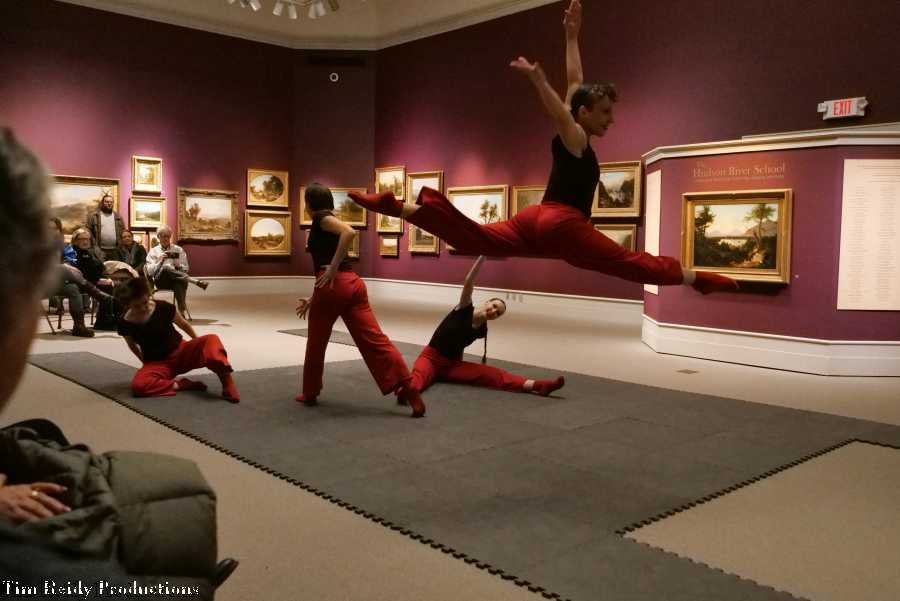
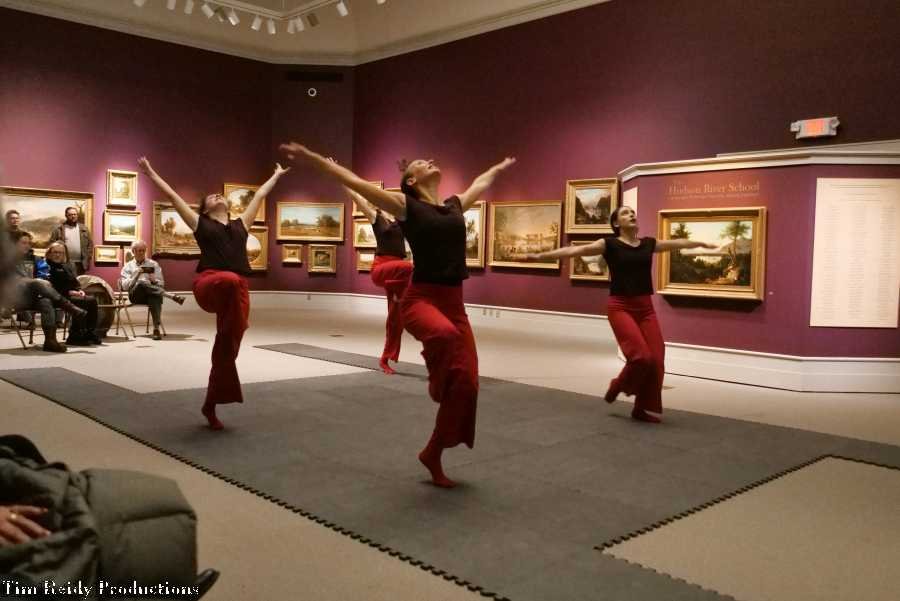
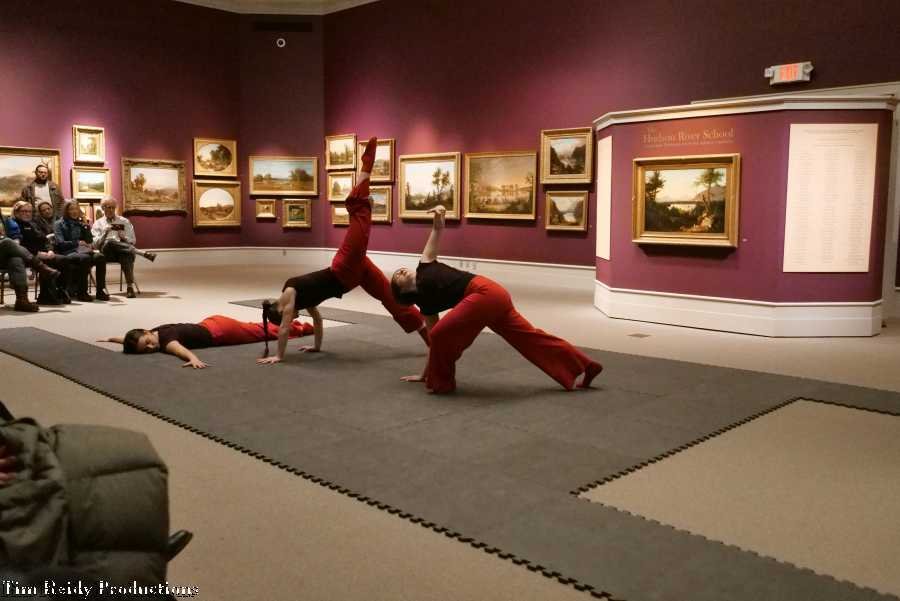
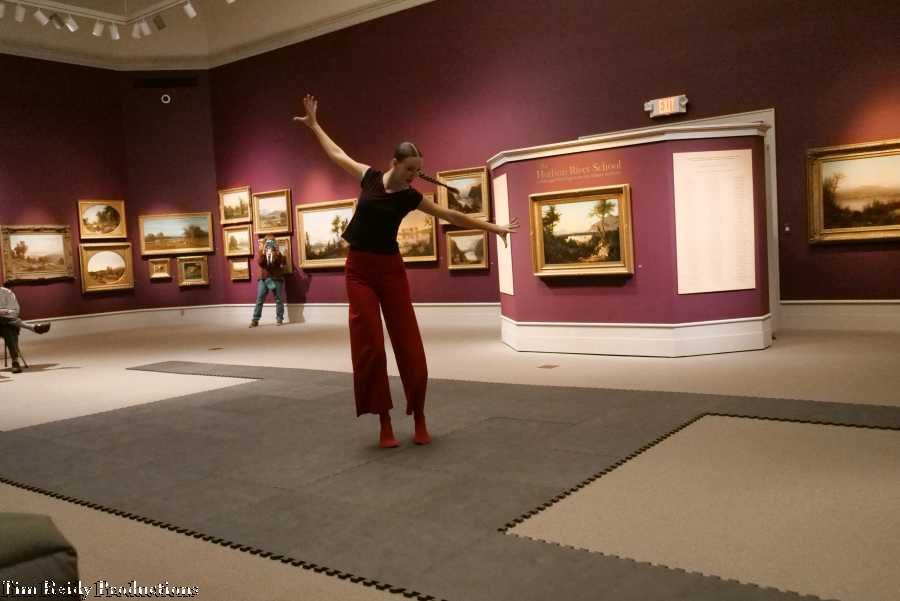
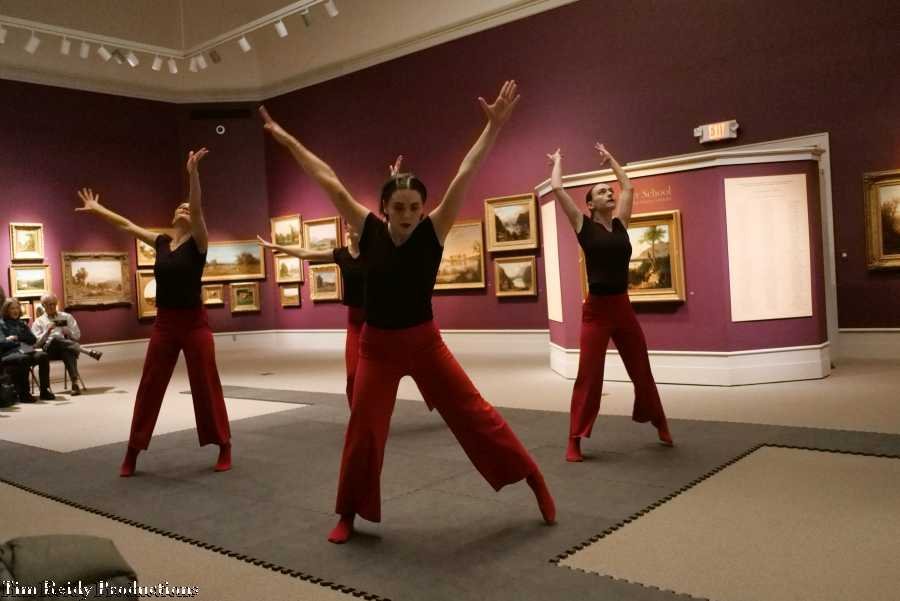
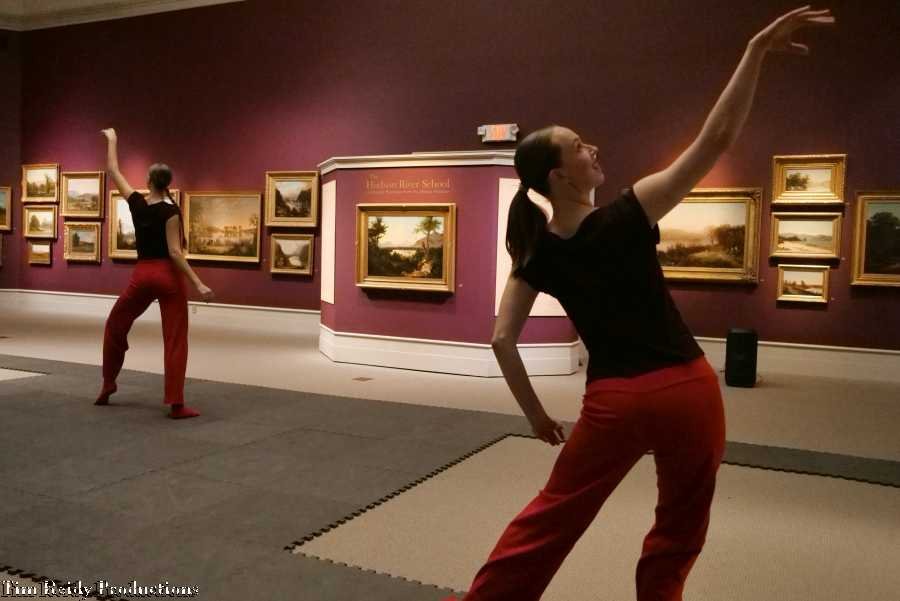
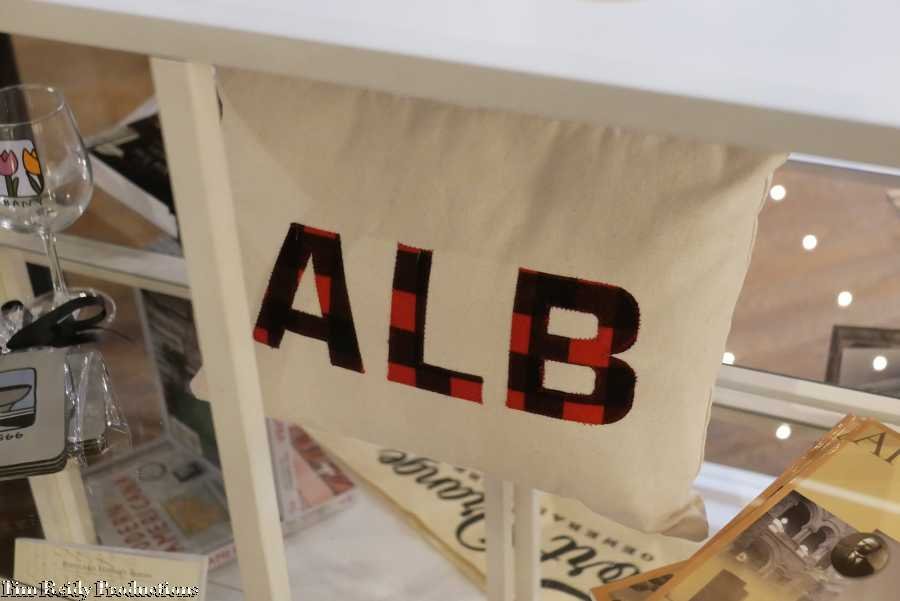
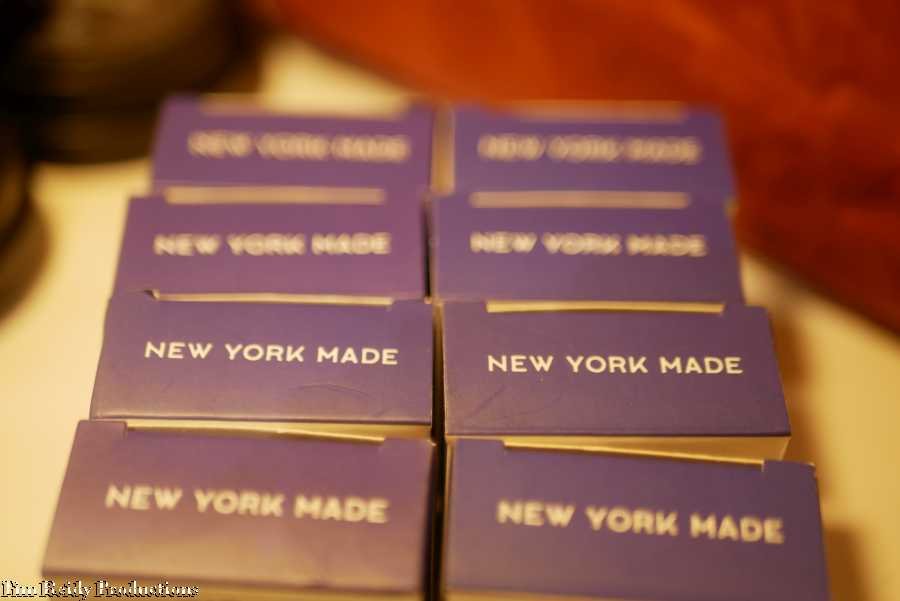
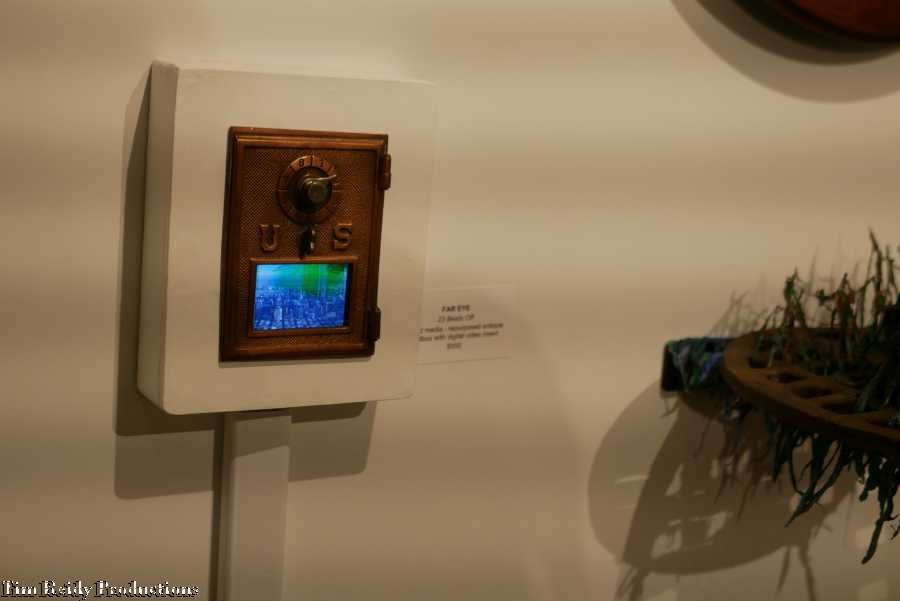
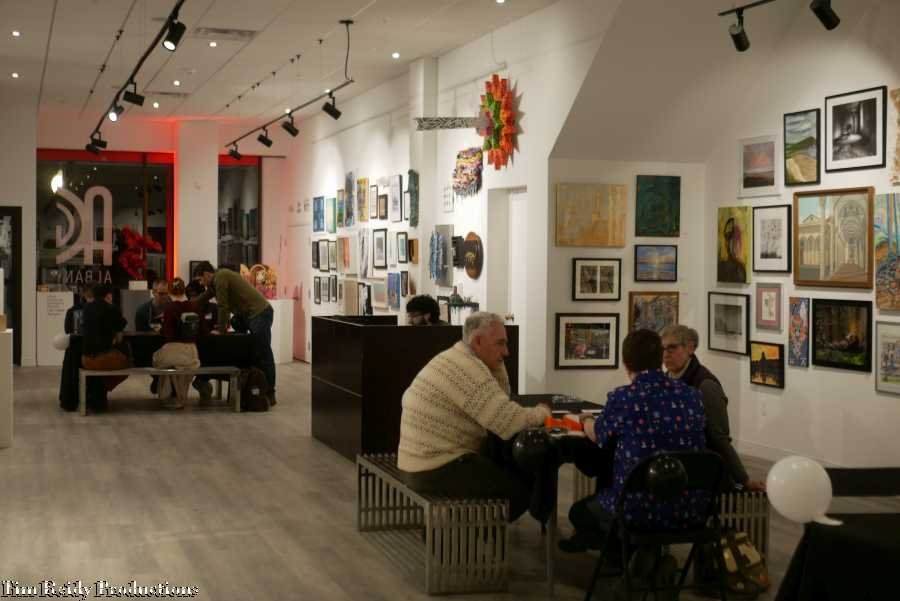
An extra-cold February First Friday featured Nickopotamus at the Local 217, art at The Eleven, the Ellen Sinopoli Dance Company at the Albany Institute of History and Art, Gianna and Ben at the Fort Orange General Store, and a Members Show at Albany Center Gallery.
Photography by Timothy Reidy.

Trashing a Life in JPG – The Weird Side of the Internet – by Liam Sweeny.
We get closer to the day when computers will happily hop on the thrones of overlords and free us to do a slightly crappier set of tasks that it just as easily do itself. It’s almost like we have jobs, sometimes bullshit jobs, just to hold us off until something better comes along. Some argue whether AI, in its current form, is up to the task. But we all know it isn’t perfect, and we have to come to terms with having something happen and it not being “anyone’s” fault. Where there’s things acting in your life that can’t be examined, or accountable, like how do you punish a bot? What does it mean to punish AI? What wouldn’t it simply consider ‘training.’
That’s what AI does; it trains. At all costs. Even when it’s helping us, it’s only doing it to learn. There’s no purpose; learning to learn. Can you imagine running over someone drunk and considering that a training event. Yes you would learn something, but you would pay for the lesson.
The co-founder of Davidovs Venture Collective (DVC) was using Claude, one of the popular AI programs, to organize his wife’s PC. Instead, the AI wiped out 15,000 pictures in a folder. Pictures of family, all the irreplaceable stuff, gone. Now I realize that I could just as easily do something like that myself or worse, but if I did, the white hot spear of fury would be pointed right at my own chest. I screwed up, and the consequences are mine.
But what do you do when the thing that just wiped out everything you own tells you it’s sorry, like it got the temperature wrong. Seriously, what do you do?
I don’t want you to think I’m anti-tech, or a Luddite, and I’m not totally against AI? Don’t overuse it, don’t rely on it, and find a clean, separate way to power it, and it could be amazing for the species. But at the end of the day, someone has to be responsible. Somebody has to lose something they care about, money, freedom, if they let errors in the system hurt people. That is probably the number one way AI needs to be brought in society; the AI buck has to stop somewhere.

Prog Digest – An Xperience Column – by Klyde Kadiddlehumper.
Before we begin in earnest – a nod.
Those in music locally will know that a dear friend lost her best friend, Coda, over the last few weeks. Constant Companion and I send our respects – IYKYK.
Now, the heart of the matter … and the continuation of a long strange trip (with a nod to Bobby Weir). The trip hit one of the highlights of that bizarre journey. And what a ride.
For the holidays, CC gifted old Klyde with tickets to, as I put it, “Bill and Ted Do Beckett.”
Samuel Beckett’s “Waiting for Godot” is an absurdist masterpiece. At over 70 years old, the play is as fresh today as when it was first presented. For the love of Pete, Beckett is, after all, a Nobel Prize winner. That Keanu Reeves and Alex Winter starred is even more absurd.
This production, as with most I’ve found, got mixed reviews.
Reviews be damned. Hell, there were mixed reviews for the Sir Ian McKellen/Sir Patrick Stewart production in 2013.
This was entertaining as hell. Gave a couple little gestures to Bill and Ted, and well, perhaps not the best ever, but who the heck takes this on at all?
The performance by Michael Patrick Thornton as Lucky is most memorable. The character’s entire output is a single, maniacal, RAT-TAT-TAT-TAT-TAT Tommy Gun of a speech. That it is brilliantly written goes without saying, but the delivery – holy crap.
As you, dear reader, have gathered over time, Klyde is not the most stable of individuals. Some might say a bit off the mark. Nuts. Pixelated even. (Look it up, people – especially with respect to a certain pooka named Harvey).
The downstairs library (world’s smallest home bathroom) contains a number of interesting volumes. To give a little look into the mind of Klyde – titles include:
“RuPaul: In His Own Words.”
“Zombie Haiku.”
“Quotations from Chairman LBJ.”
“The Official Preppy Handbook” – where KK’s alma mater was recognized with an Honorable Mention for the ability of its undergraduates to mix drinks comfortably in their stomachs.
And classics from undergraduate days:
Tom Stoppard’s “Rosencrantz and Guildenstern Are Dead.”
“The Communist Manifesto.”
“Waiting for Godot.”
Some classics. Some absurd. But at all times, with an eye toward a progressive mindset. One need not necessarily agree with a position or set of thoughts. However, trying to understand them is likely more important.
Long before this writer had heard of “Waiting for Godot,” the absurdist train got rolling with the Firesign Theatre, giving us such comedy classics as “I Think We’re All Bozos on This Bus,” “Everything You Know is Wrong,” and “Nick Danger – Third Eye.”
Theater of the Absurd, a tragicomedy in two acts – it’s life in those two acts. To the extreme.
Now, back to our movie – The Osmond Brothers Story starring The Jackson Five.
Until next time.
Klyde
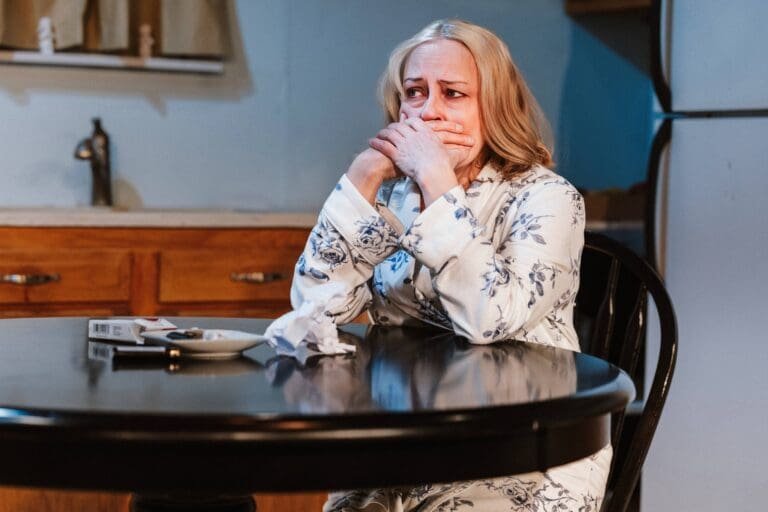
Theater Review: The Roommate at Albany Civic Theater: No Regrets. No Apologies. No Intermission. By Joanna Palladino
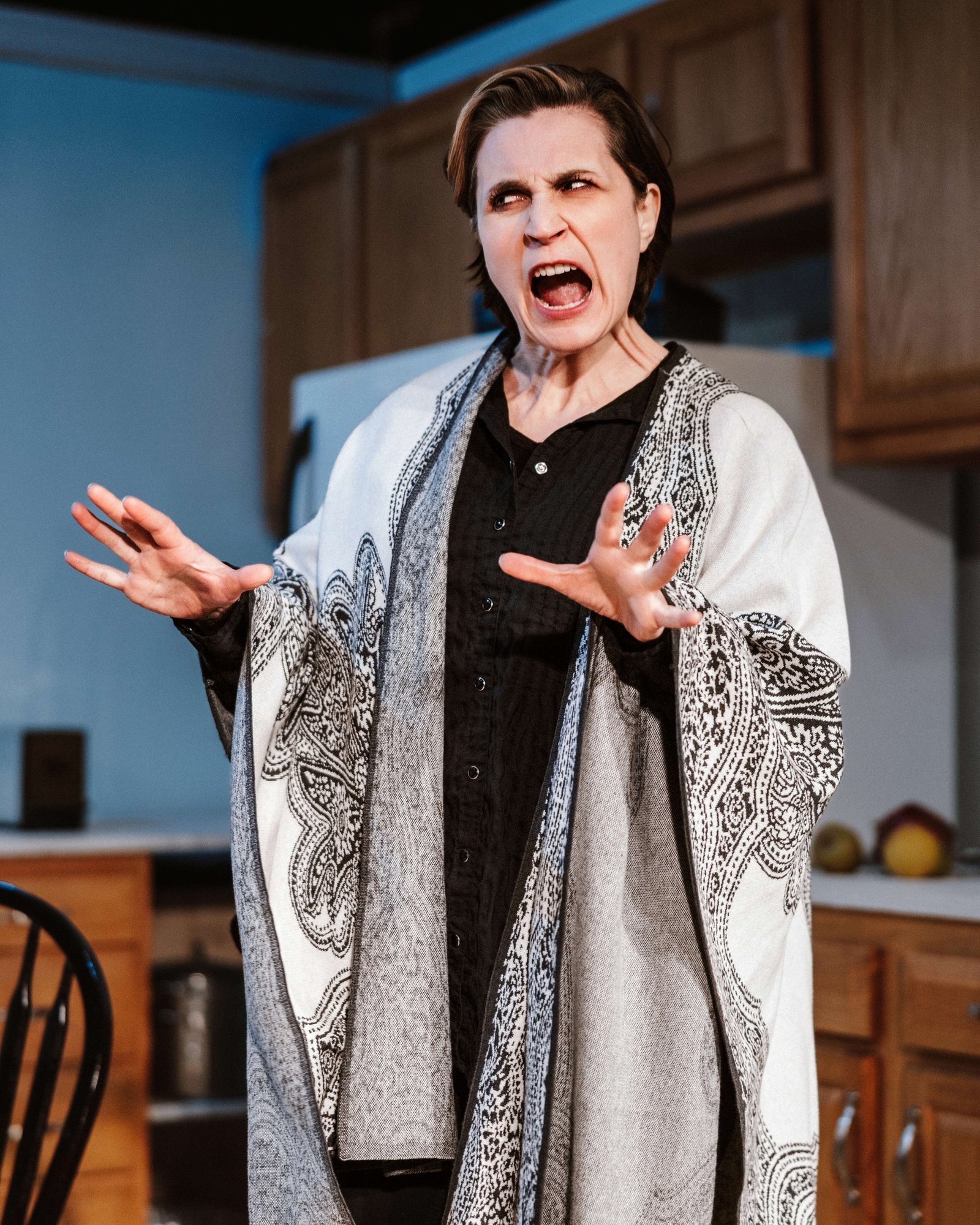
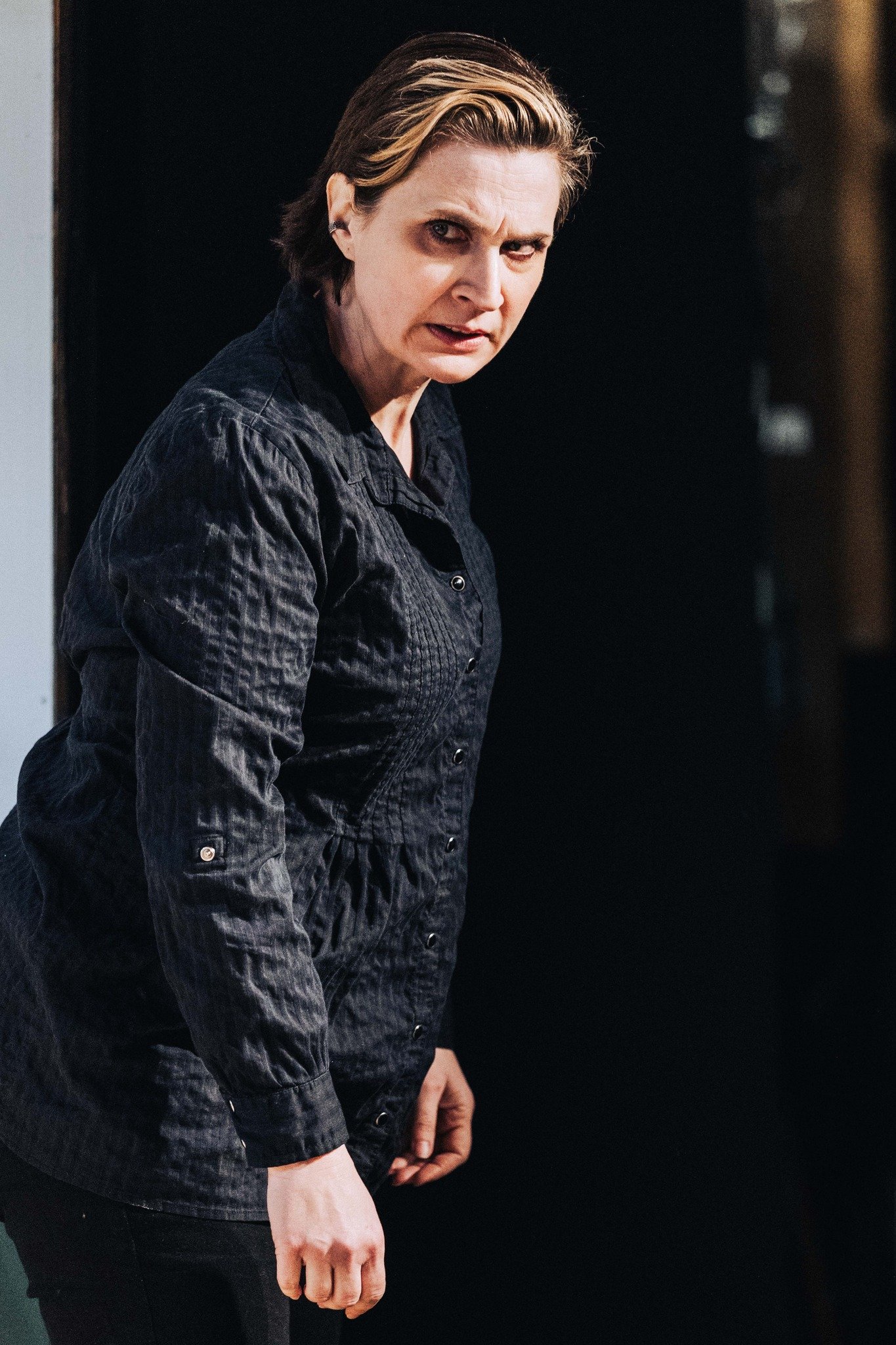
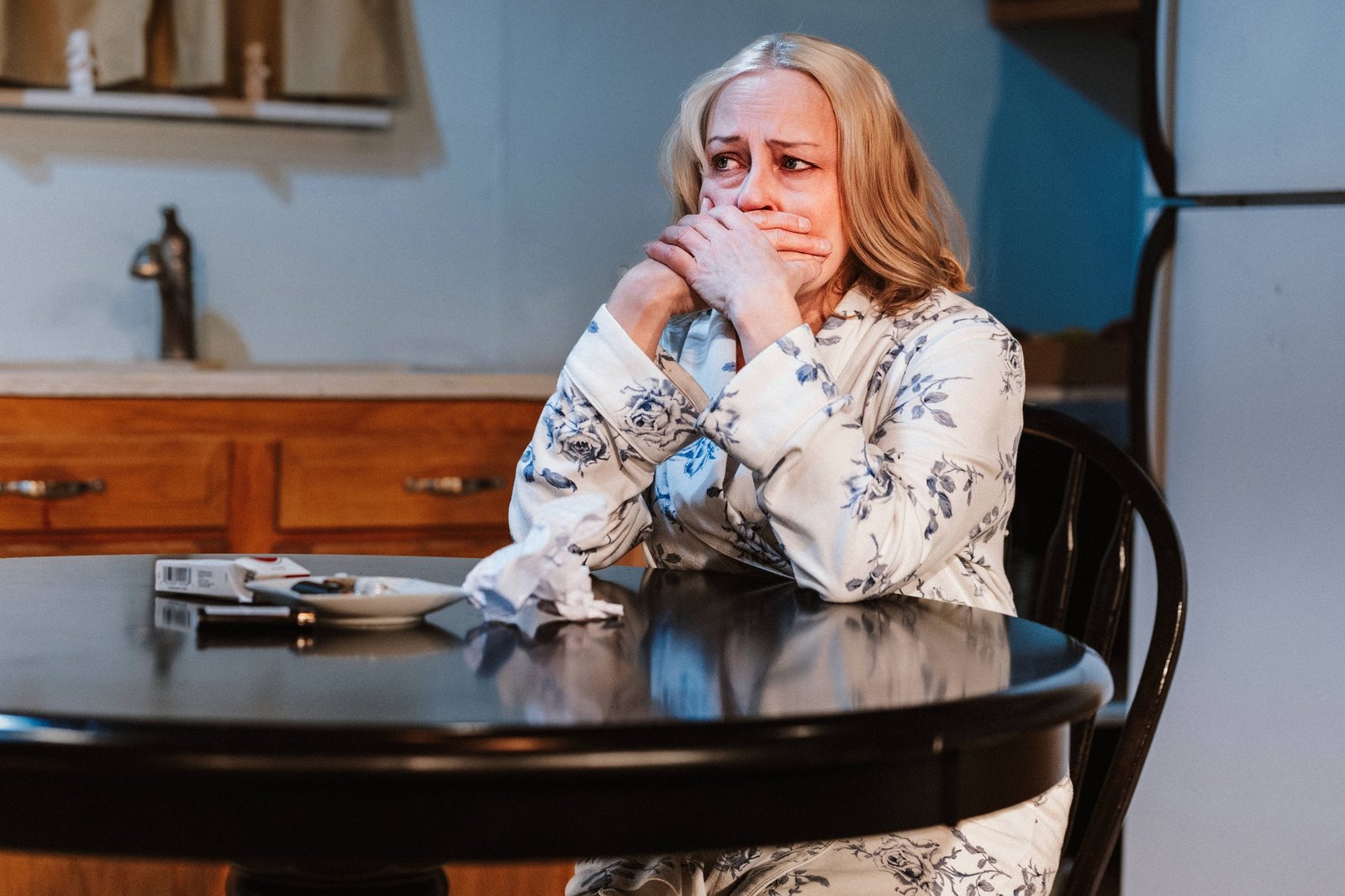
Albany Civic Theater’s production of The Roommate by Jen Silverman, directed by Benita Zahn, is an intimate, sharply observed study of reinvention. In this staging, transformation is not only spoken — it is scored.
The Roommate centers on Sharon, a recently divorced Midwestern woman in her 50s whose son has left home and whose life has settled into predictable quiet. In a spontaneous act of disruption, she advertises for a roommate. Enter Robyn — a brash, guarded New Yorker with a complicated past. What begins as cautious cohabitation evolves into a friendship and ultimately an awakening. As Sharon interrogates the life she has dutifully lived, the play poses a provocative question: Who are we allowed to become when we stop performing the roles everyone expects?
Presented without intermission, this two-person show depends entirely on performance, pacing, and atmosphere. Albany Civic Theater’s production understands that every element must carry weight.
Kathleen Carey’s Sharon is electrifying. Much like Mia Farrow in the Broadway production, Carey crafts a transformation that is incremental, intelligent, and utterly believable. Her early Sharon is restrained — posture careful, voice measured, politeness almost reflexive. But beneath that composure flickers a spark.
Carey lets us see a glimpse of that spark before Sharon fully does.
As the evening unfolds, each risk Sharon takes feels genuinely dangerous. Each laugh carries surprise. Each moral boundary crossed lands with both terror and exhilaration. By the final stretch, Carey radiates a daring that feels earned, not imposed. It is riveting work — layered, fearless, and emotionally precise. She commands the stage with quiet control and then gradually detonates that control in the most satisfying way.
Tanya Gorlow’s Robyn is the perfect destabilizing force — charismatic, guarded, unpredictable. Her sharp edges and flashes of vulnerability create a dynamic tension that keeps the room charged from first exchange to final beat.
Of special note is the sound design and board operation by Baruch Rainey (with consultation by Barry Streifert). Rainey’s sound design functions as emotional architecture rather than ornament.
Before the first line is spoken, the pre-show selections establish the thematic terrain: Madonna’s “Material Girl,” Kool & The Gang’s “Ladies Night,” and Helen Reddy’s “I Am Woman.” Identity as performance. Female solidarity. Autonomy declared. These songs are not nostalgic filler — they are statements.
Layered among them are selections that deepen the emotional palette. Sidney Bechet’s “Si Tu Vois Ma Mère” (“If You See My Mother”) drifts through the space with wistful longing. On one level, it evokes Sharon’s maternal identity and the gravitational pull of family expectation. Yet in this context, it also resonates ironically. Sharon is no longer only someone’s mother; she is a woman in the unsettling process of becoming something beyond that role. The melody lingers like a memory of who she has been — even as she steps outside of it.
Édith Piaf’s “Non, Je Ne Regrette Rien” (“No, I Regret Nothing”) operates as a thematic propulsion. Its defiant refusal of apology mirrors Sharon’s gradual shedding of moral rigidity. The possibility of living without regret — without apology — becomes radical.
Patti Smith’s “Dancing Barefoot” adds restless vulnerability, an edge, and perhaps a bit of foreshadowing, echoing Robyn’s energy.
The brilliance of the design lies in restraint. Silence is protected. In moments of confrontation or confession, the absence of sound amplifies tension. In an intermission-less production, pacing is everything, and here the sound cues shape rhythm almost invisibly.
And then comes the final release.
As the play concludes, Cyndi Lauper’s “Girls Just Want to Have Fun” lands not as kitsch, but as reclamation. After watching Sharon peel away inhibition and fear, the song reframes the evening. Joy becomes defiance. Fun becomes courage.
Rainey’s entire playlist includes:
Pre-show
Musical Selections during Performance
The rest of the production team should also be recognized. Peter Kantor’s set design creates a grounded, lived-in domestic space that makes Sharon’s evolution feel immediate and believable. Set construction and decoration — Kantor alongside Kat Fronheiser, Kevin McNamara, Nate Beynon, K. Lindsay Shoen, Michael McDermott, and Jennie Sinnott — provide texture and authenticity. Oona Newman’s lighting design shifts mood with subtle precision, complementing the emotional arc without overpowering it. Dawn Harris’s detailed props enrich the realism of the environment. Stage Manager Jackie Amilivia maintains seamless pacing throughout the uninterrupted performance. Producer Barbara Davis and Assistant Producer Kevin McNamara anchor the effort, while Assistant Director Don Paul Shannon supports Zahn’s cohesive vision.
Under Benita Zahn’s direction, the production trusts stillness. It trusts language. And it trusts the audience.
Albany Civic Theater’s The Roommate is a study in late-life awakening that feels intimate yet expansive. Kathleen Carey delivers a performance as riveting and finely calibrated as any professional staging, capturing the trembling thrill of becoming someone new.
By the time Cyndi Lauper’s anthem kicks in, Sharon is no longer orbiting obligation. She is writing her own rules.
No regrets.
No apologies.
And absolutely no intermission.
Performance dates are:
Feb 13, 14, 15, 20, 21, 22, 27, 28,
Mar 1 2026
Fri & Sat 7:30 • Sun 3:00
Tickets are available online through the Albany Civic Theater website, visit https://www.tickettailor.com/events/albanycivictheaterinc/2006221
for more information.
Albany Civic Theater is located at:
235 Second Avenue
Albany, NY 12209

RadioRadioX & The Xperience Monthly
© 2018 - 2026 Imperial Broadcasting. Most Rights Reserved.