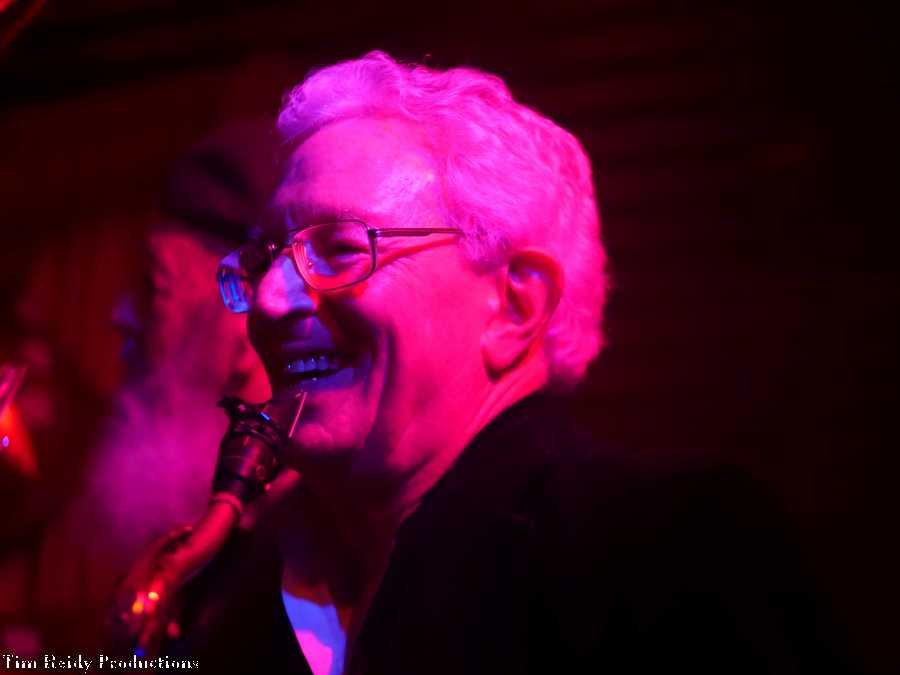
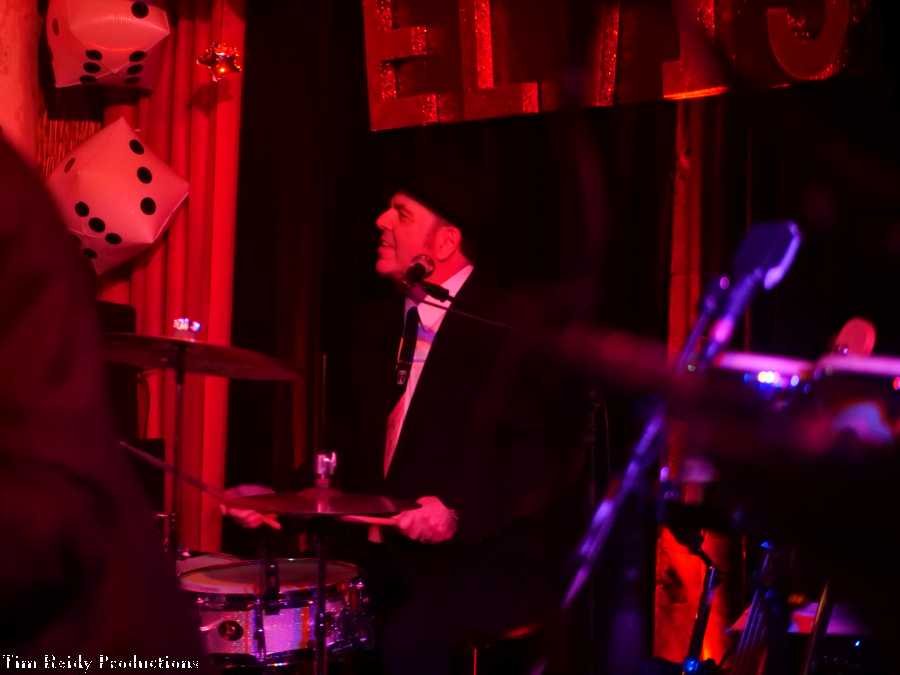
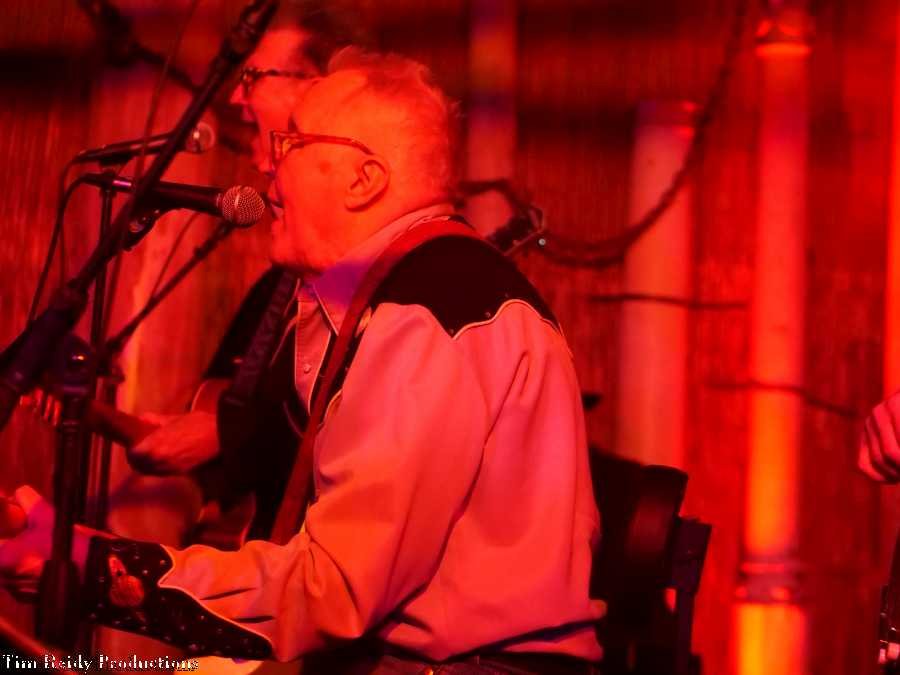
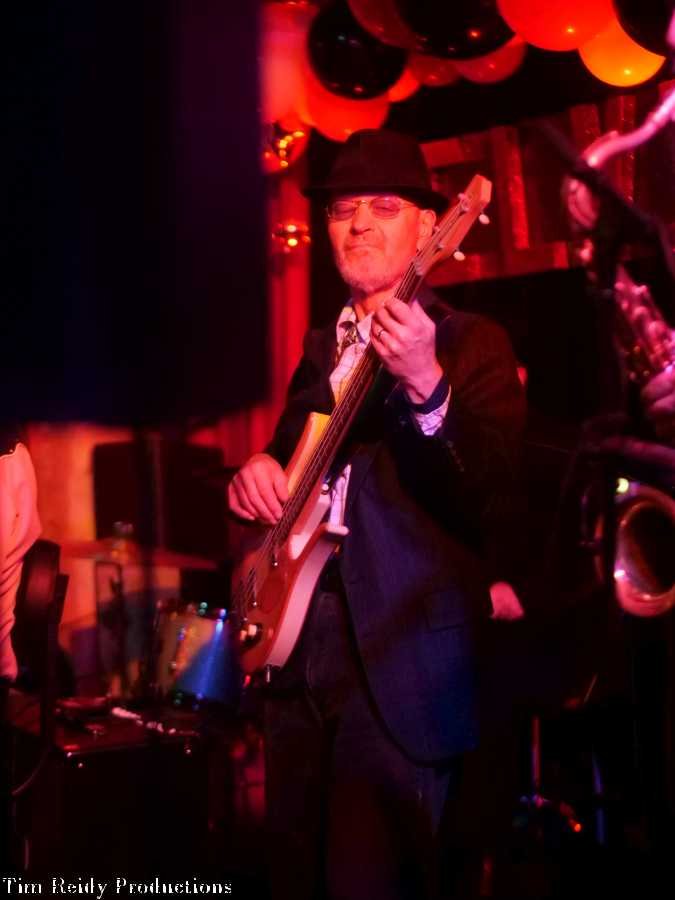
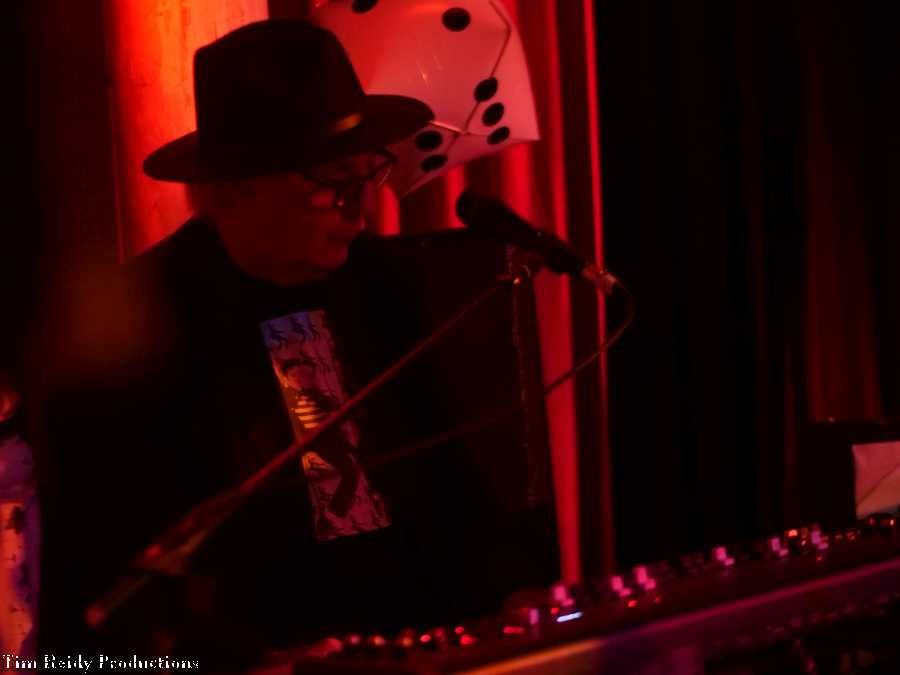
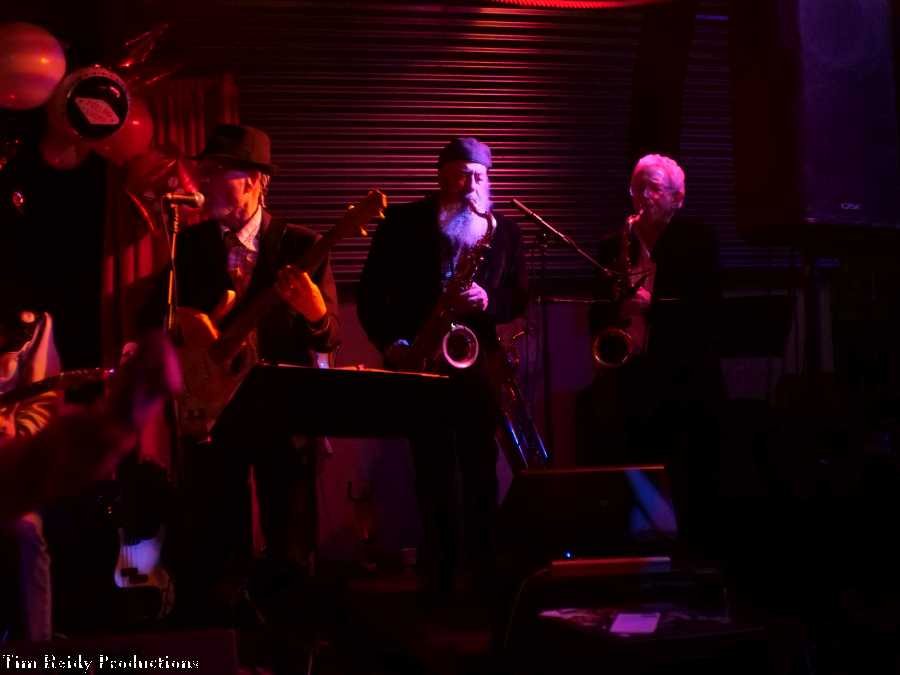
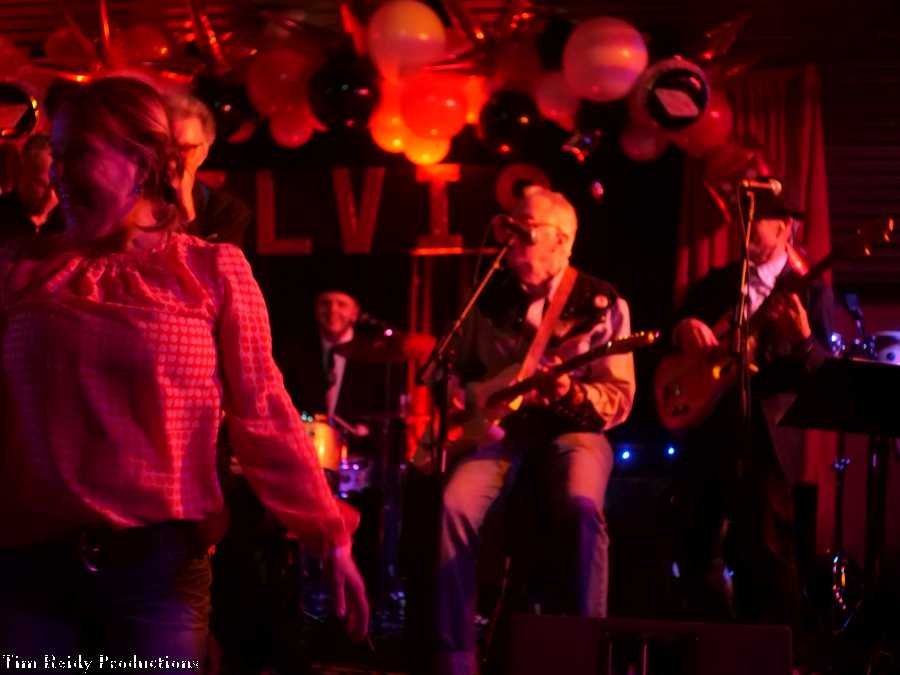
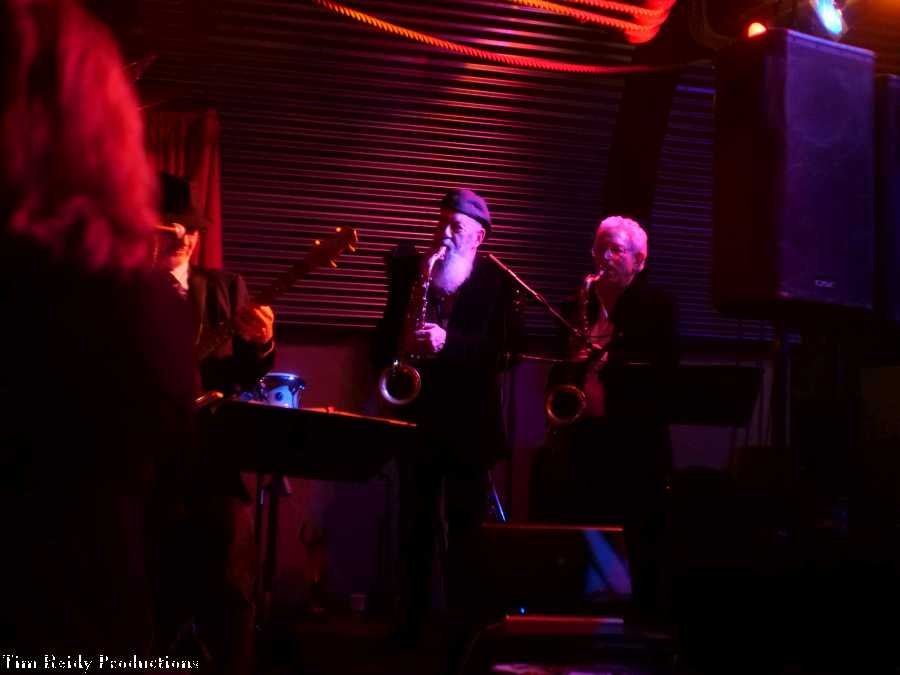
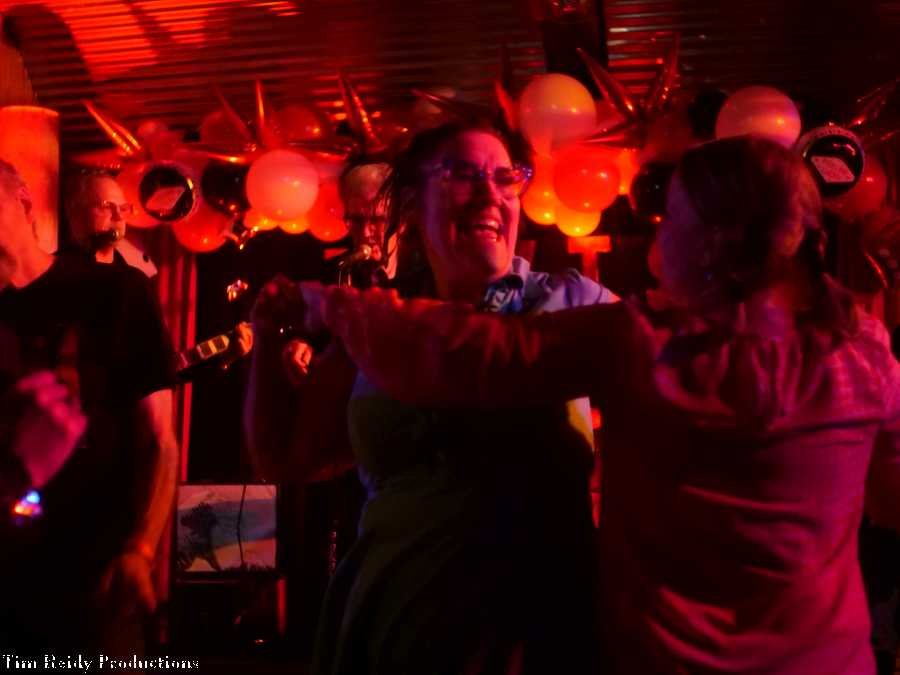
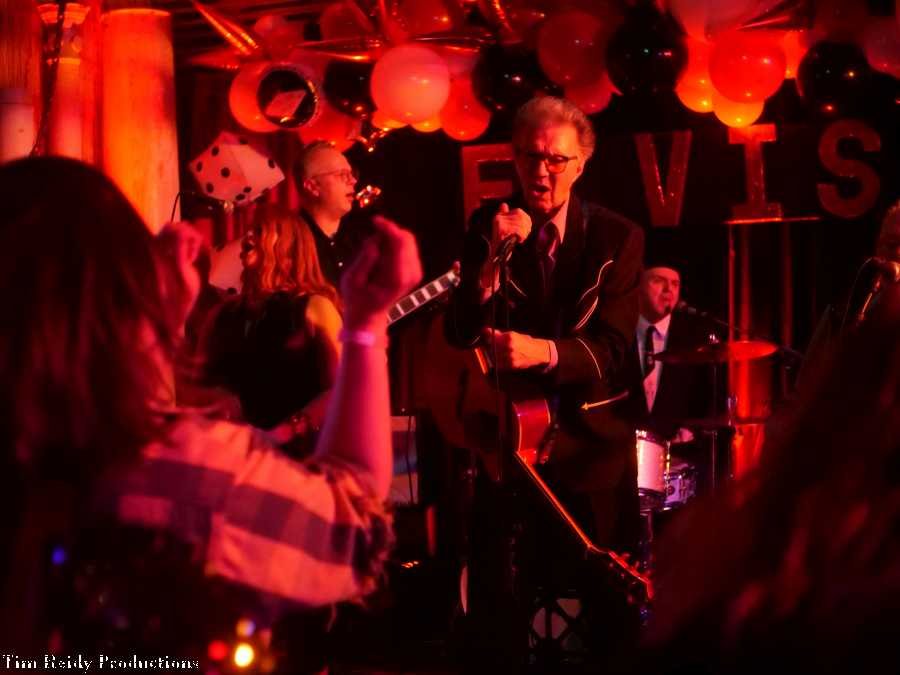
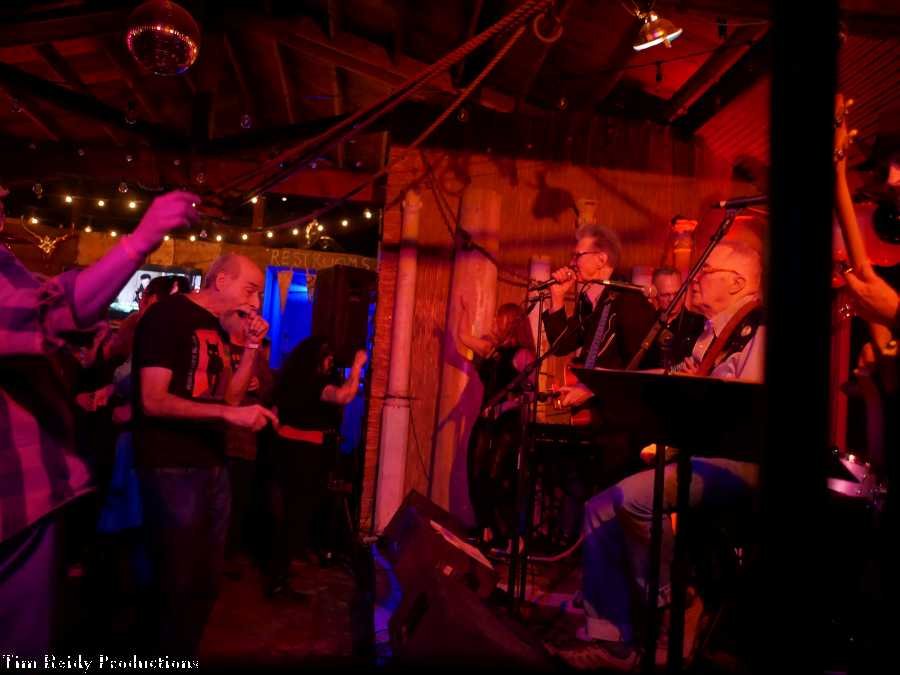
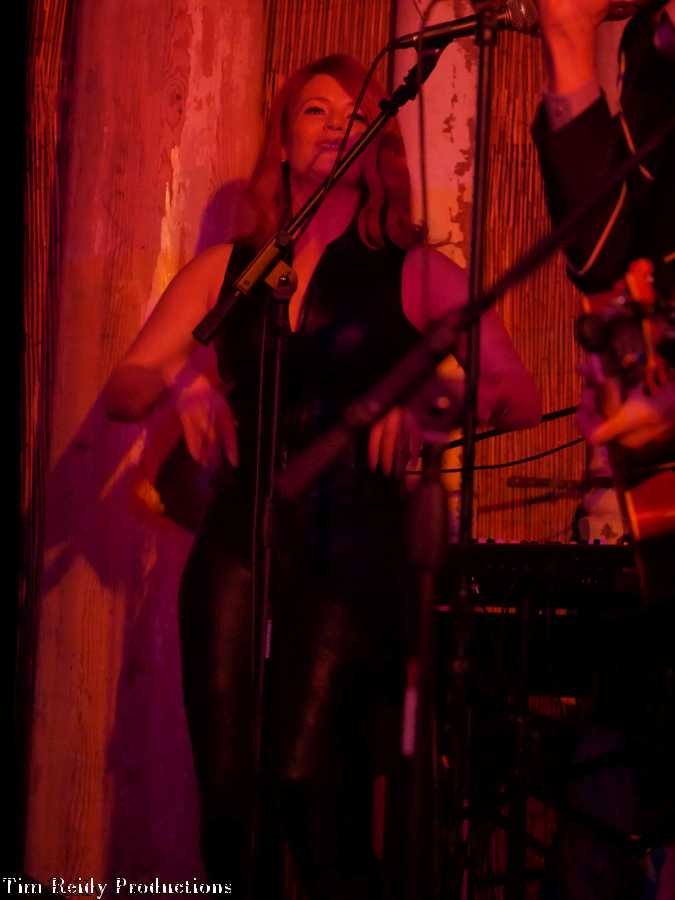
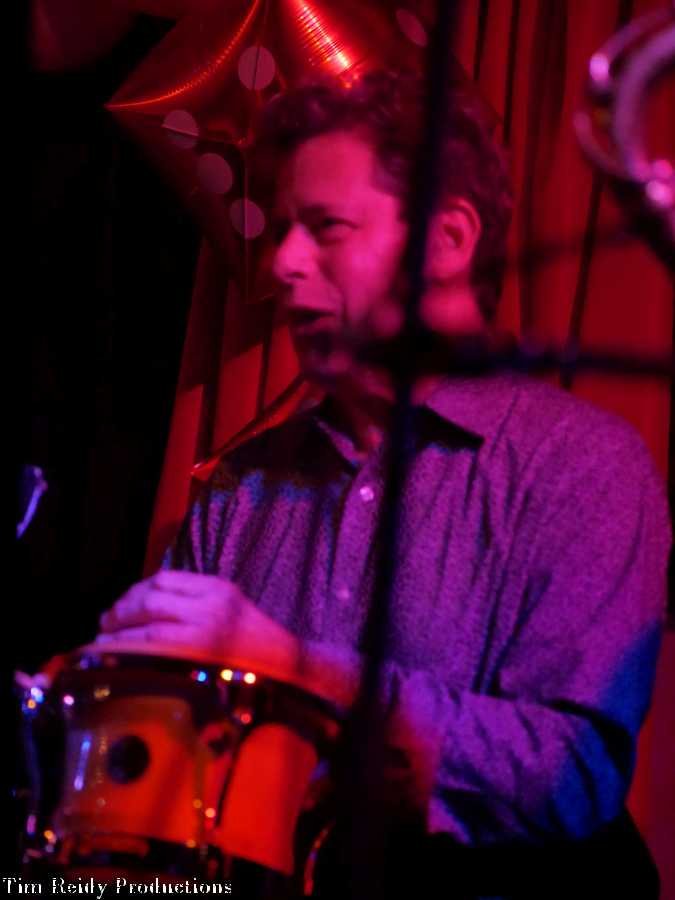
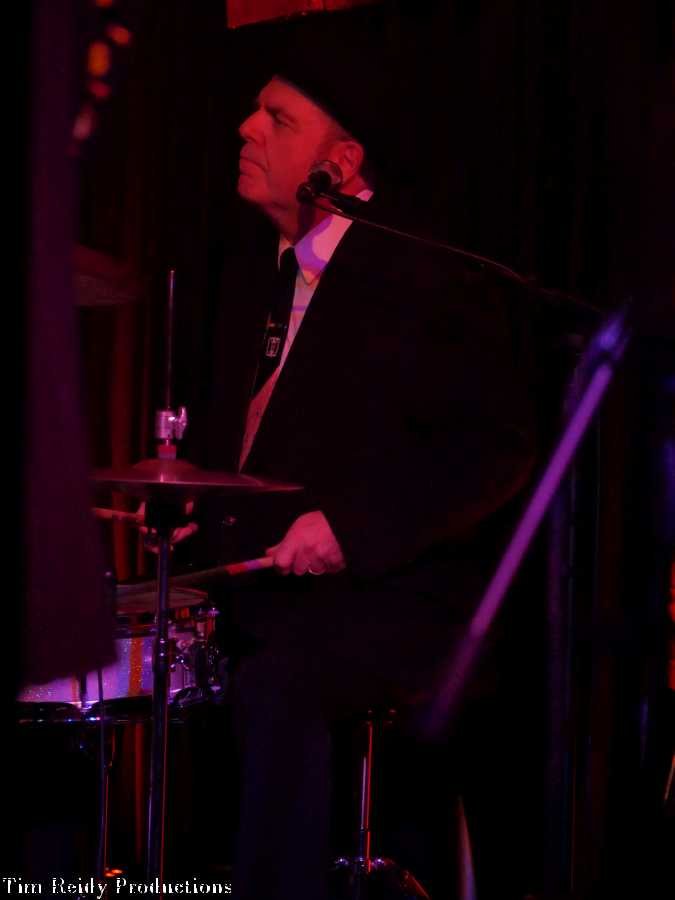
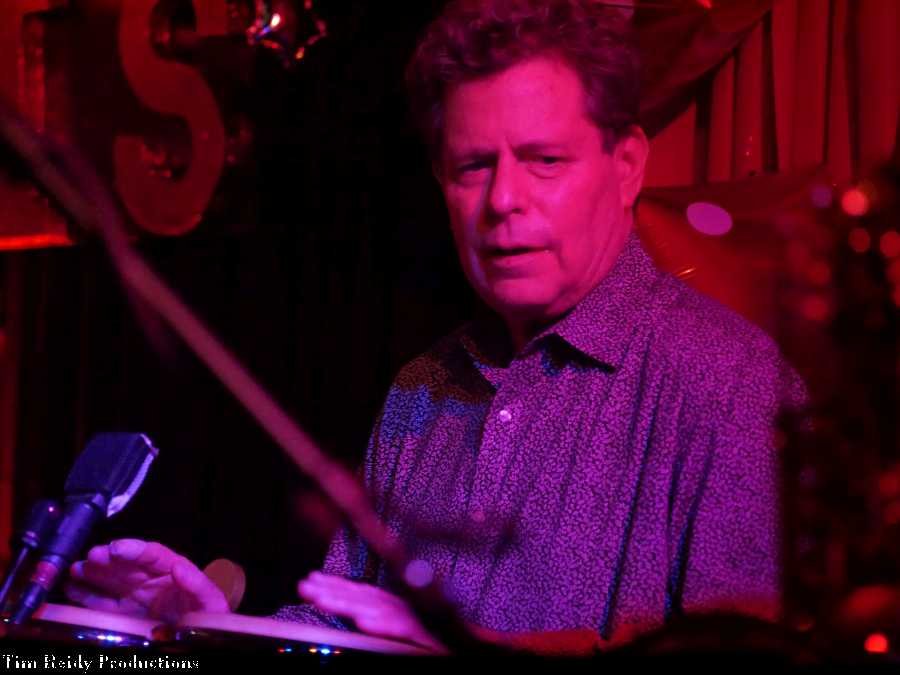
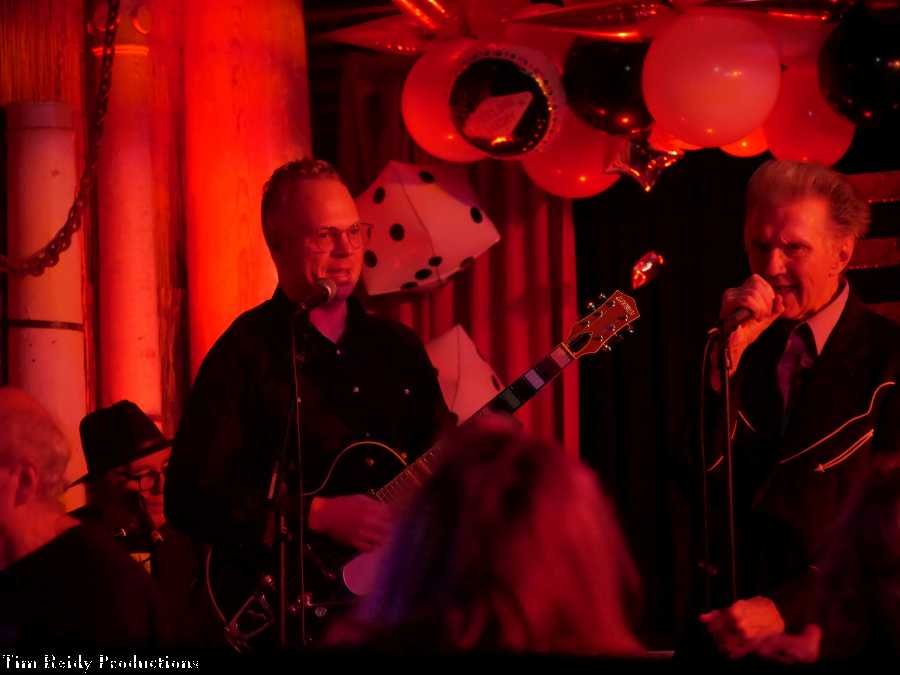
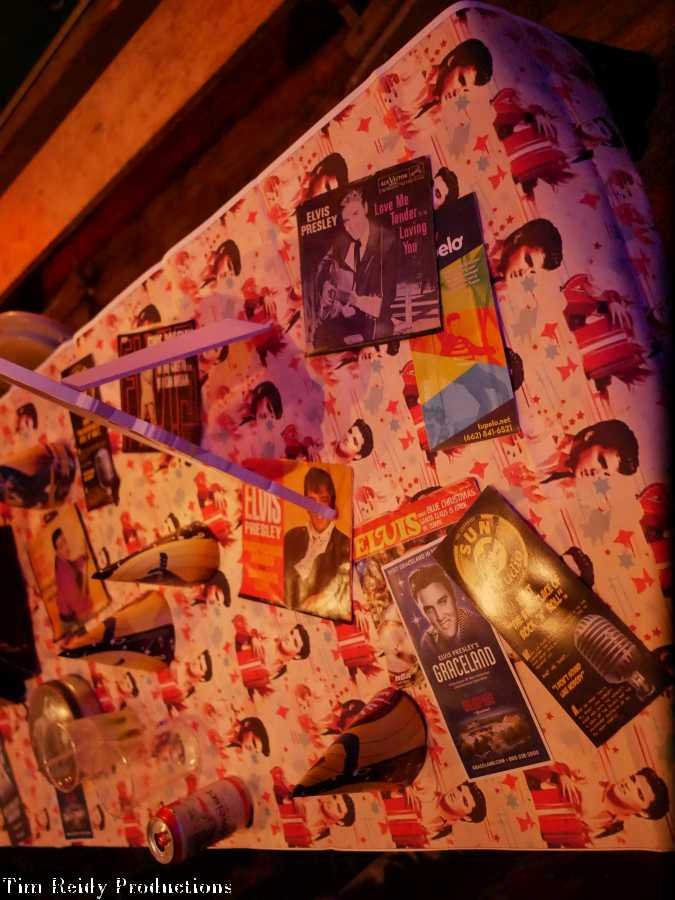
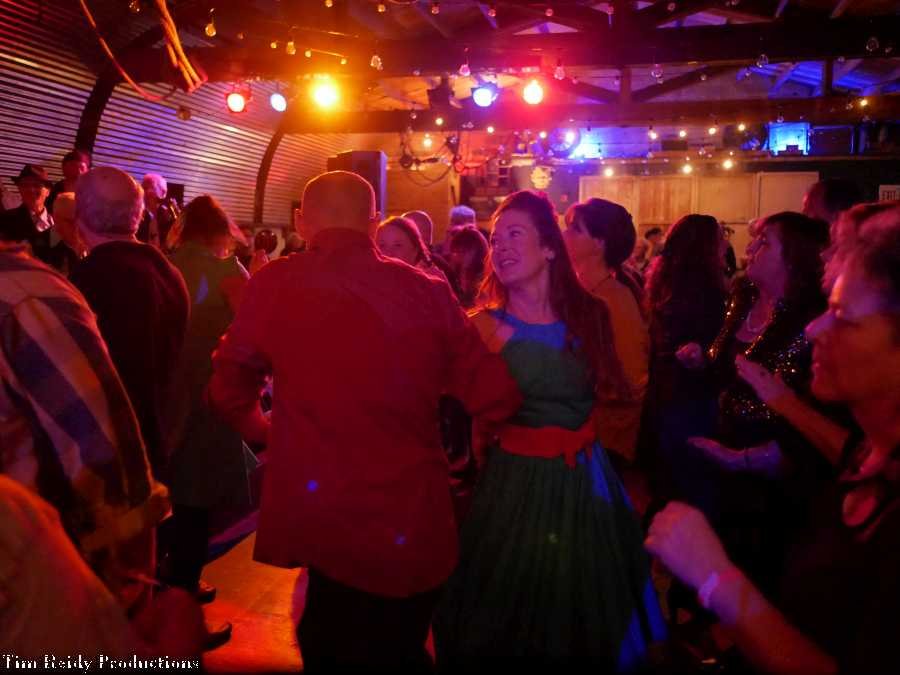
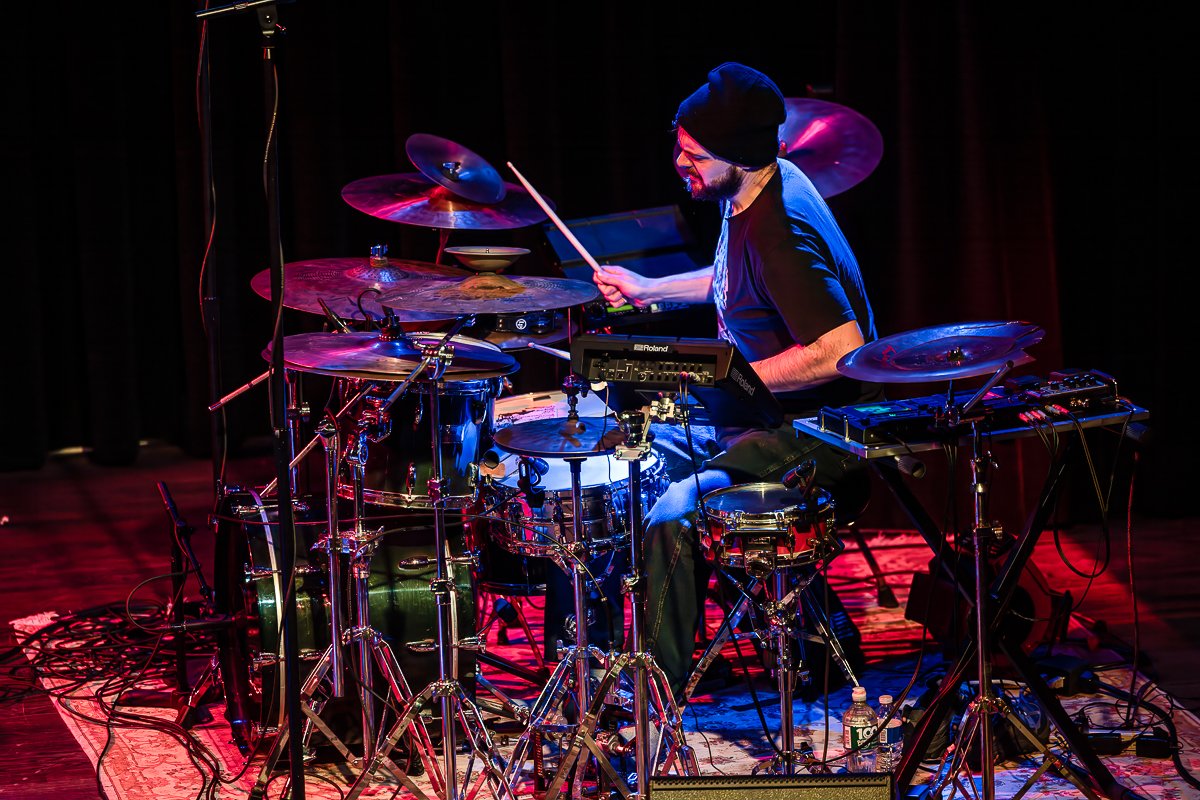
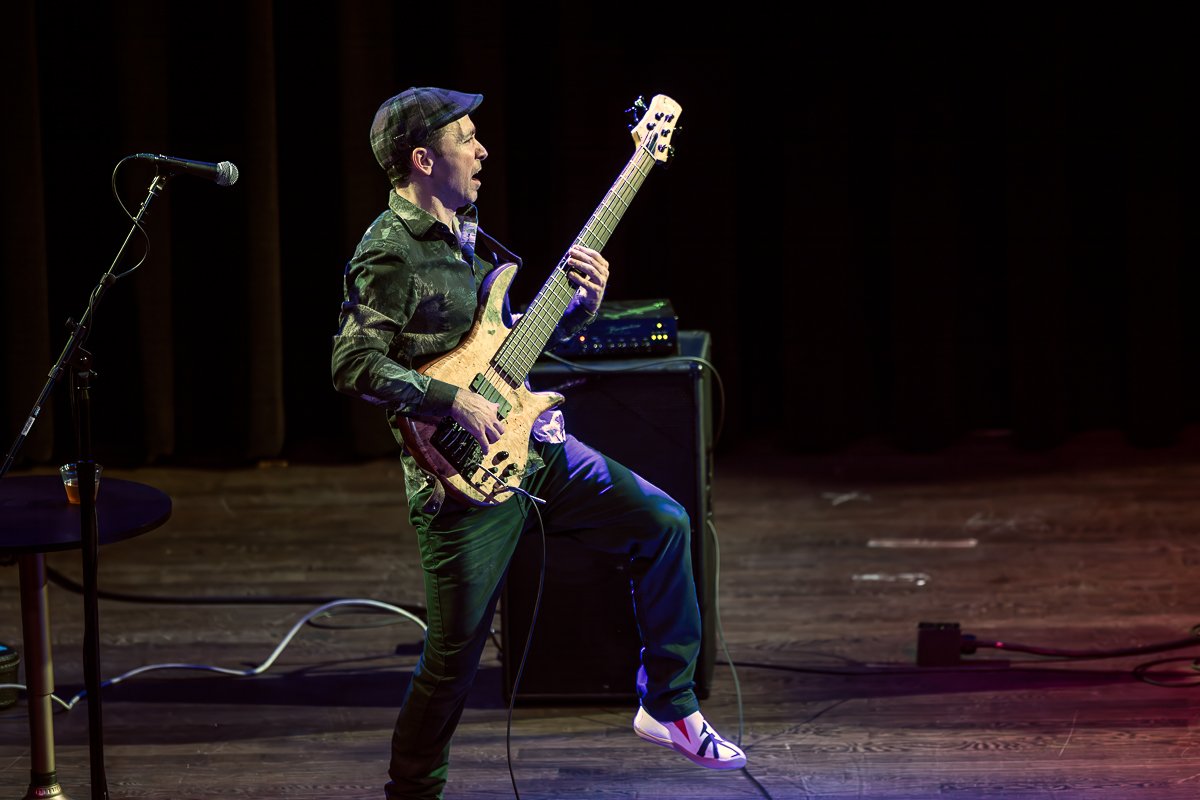
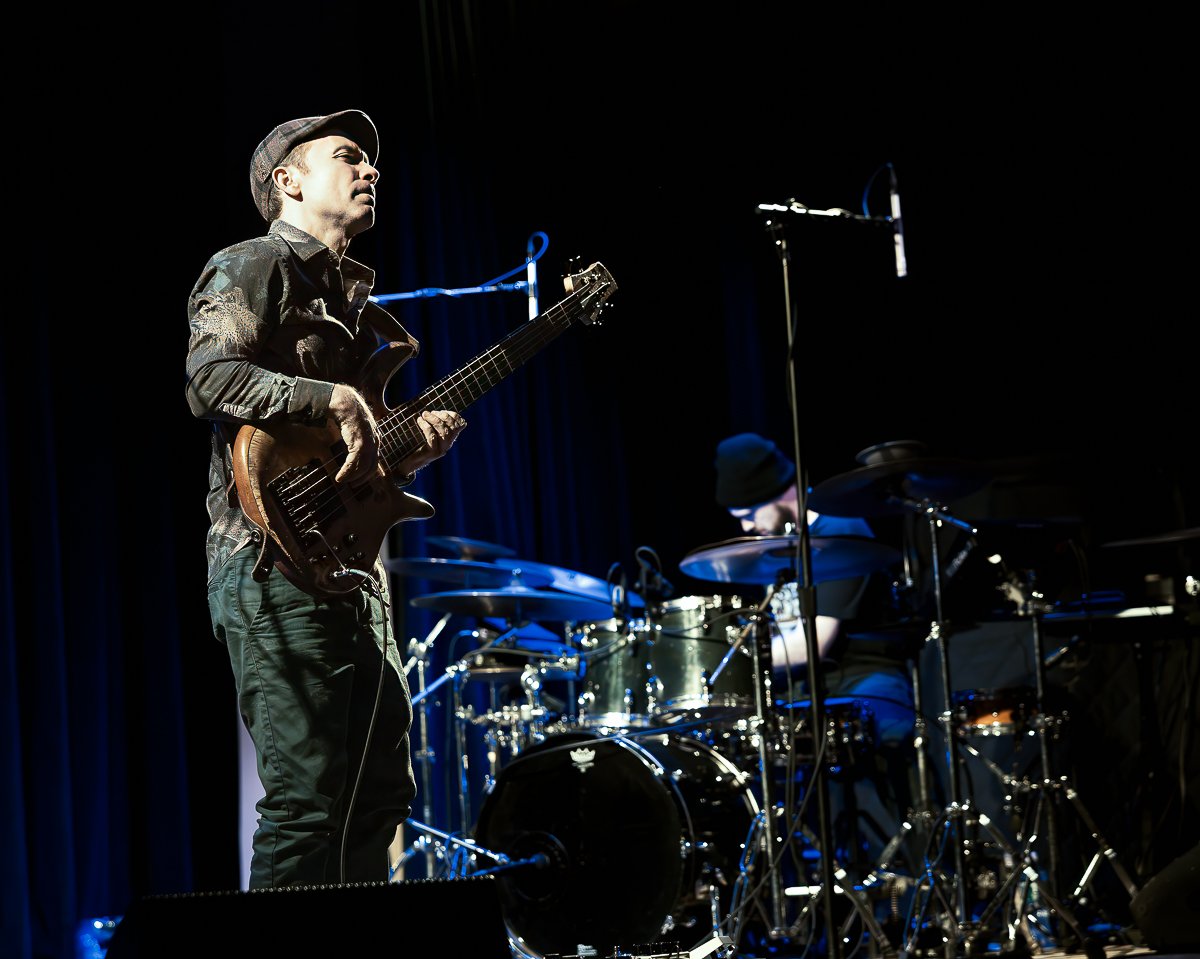
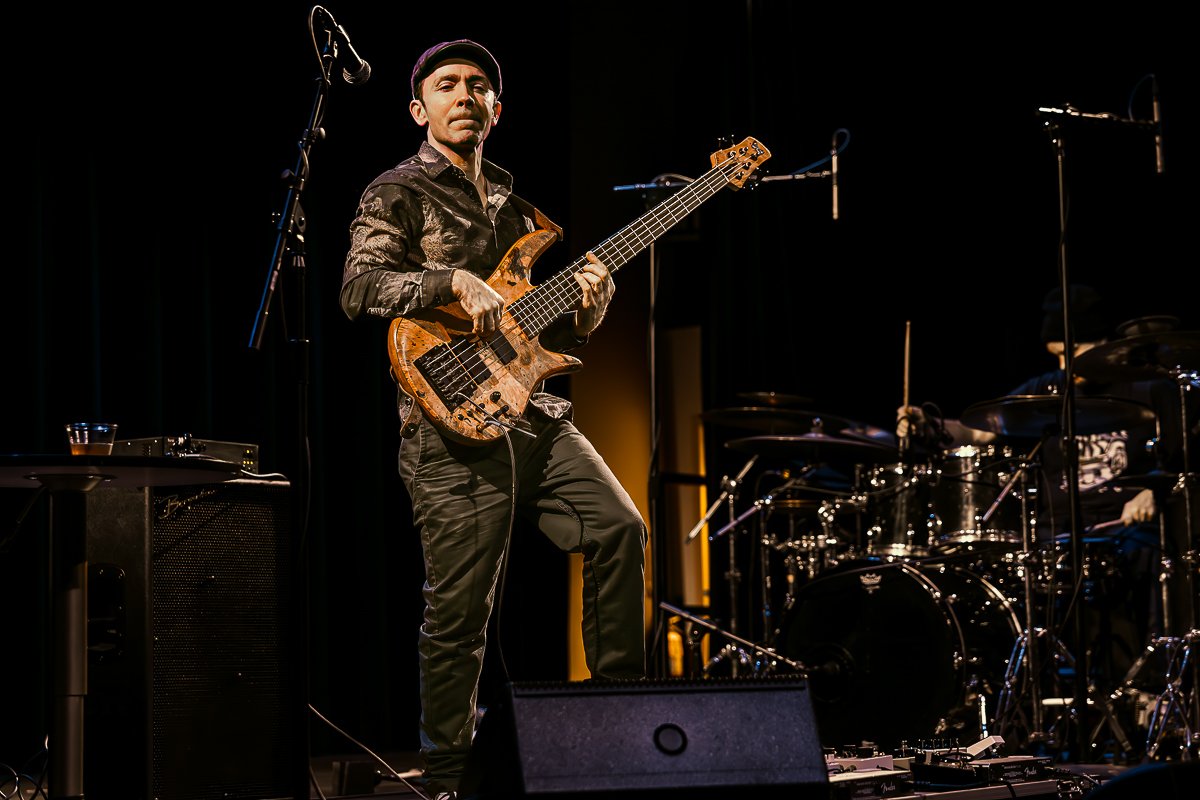
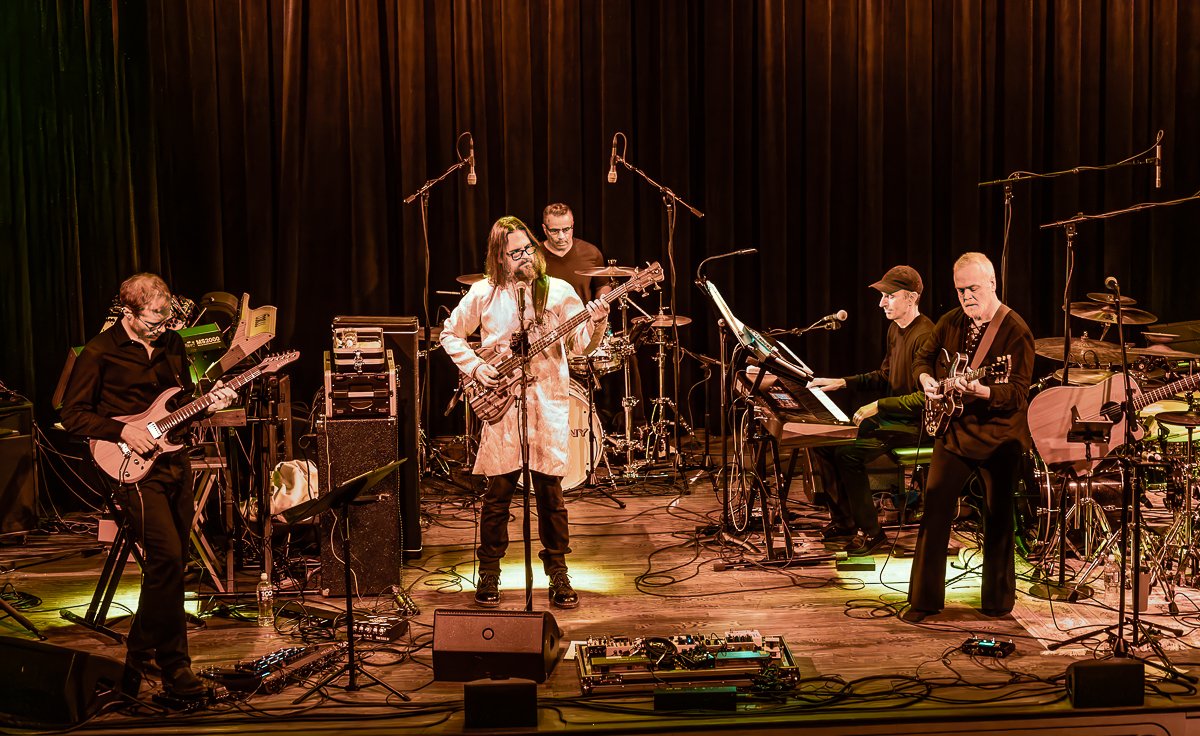
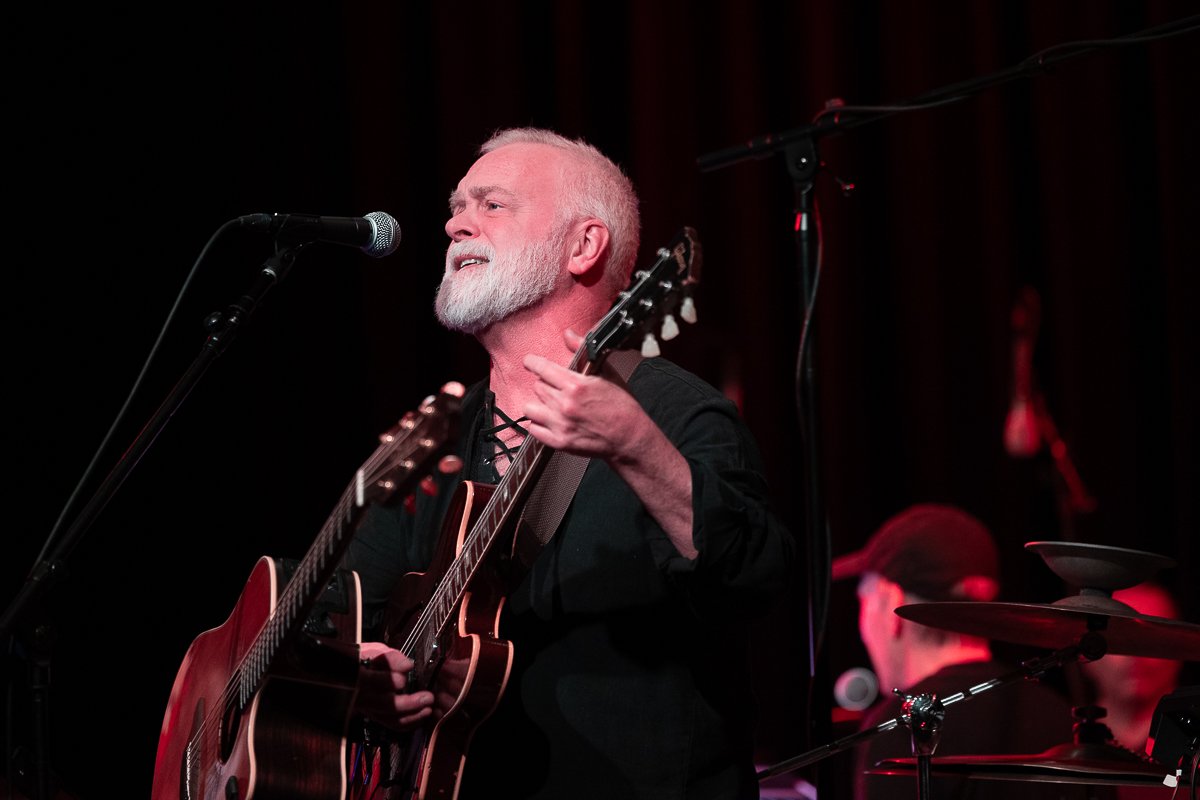
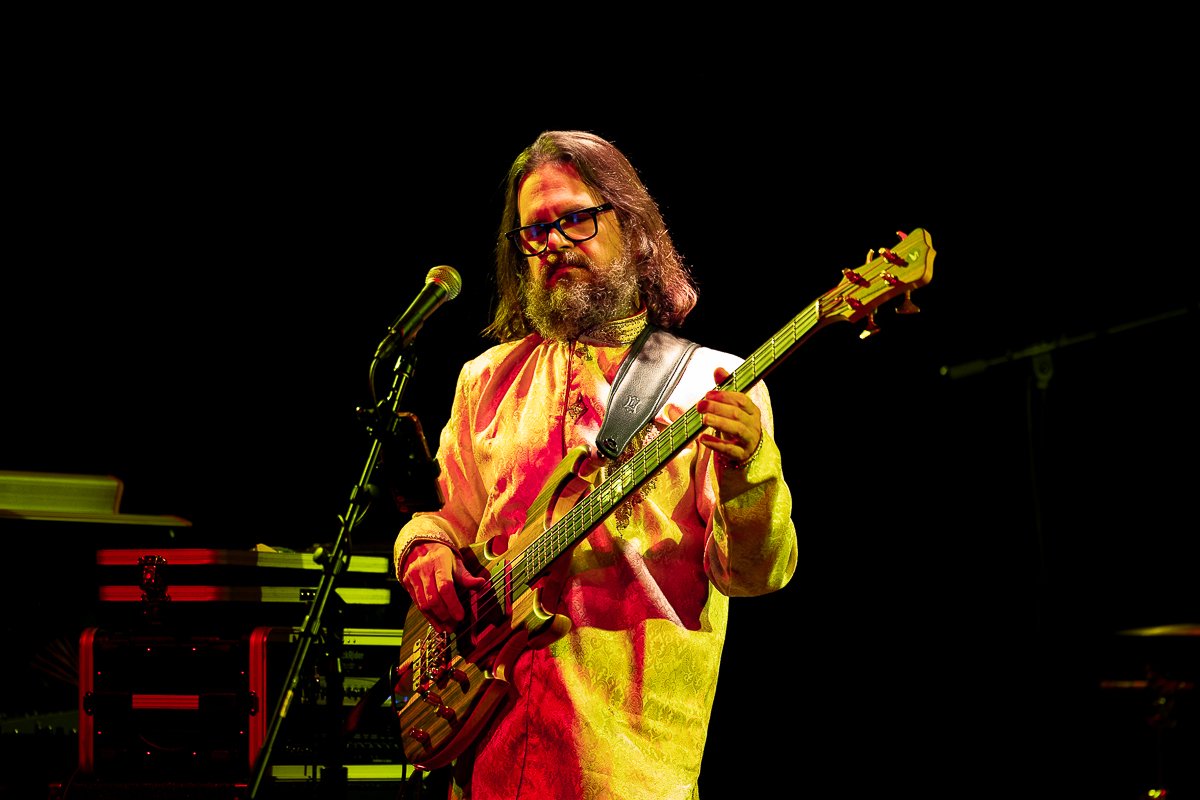
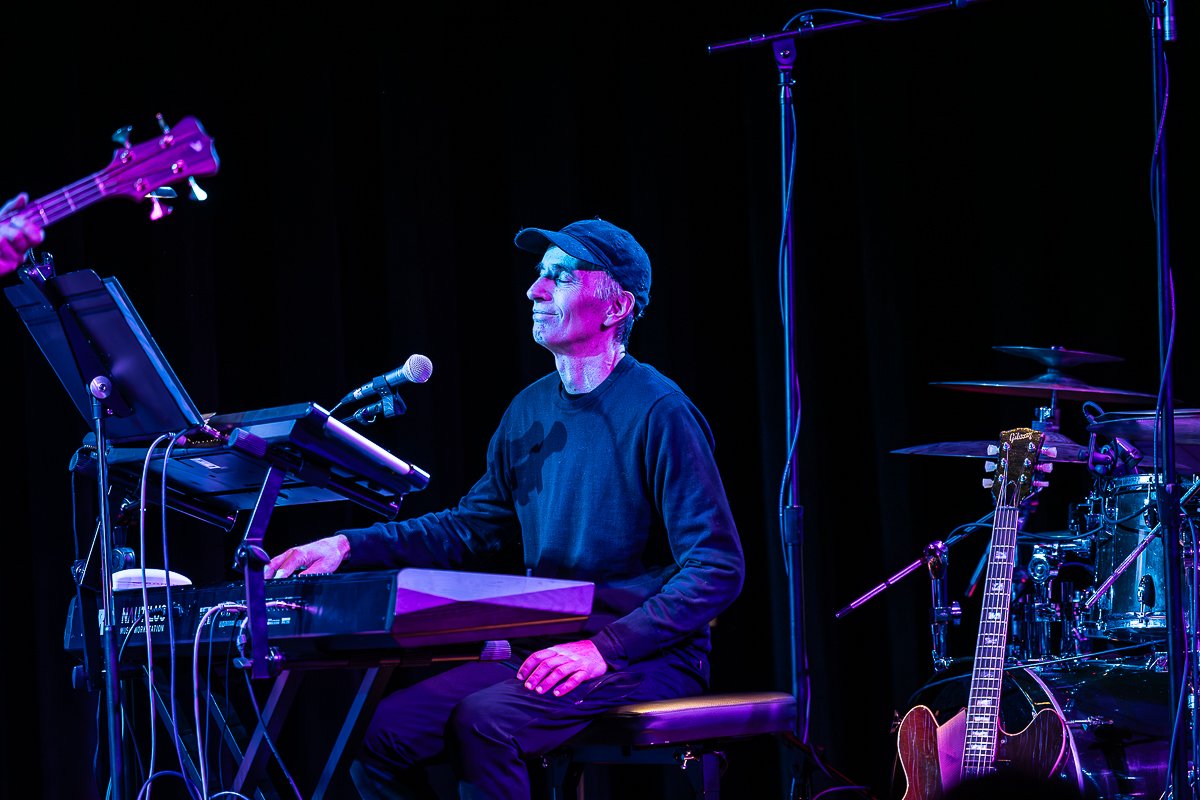
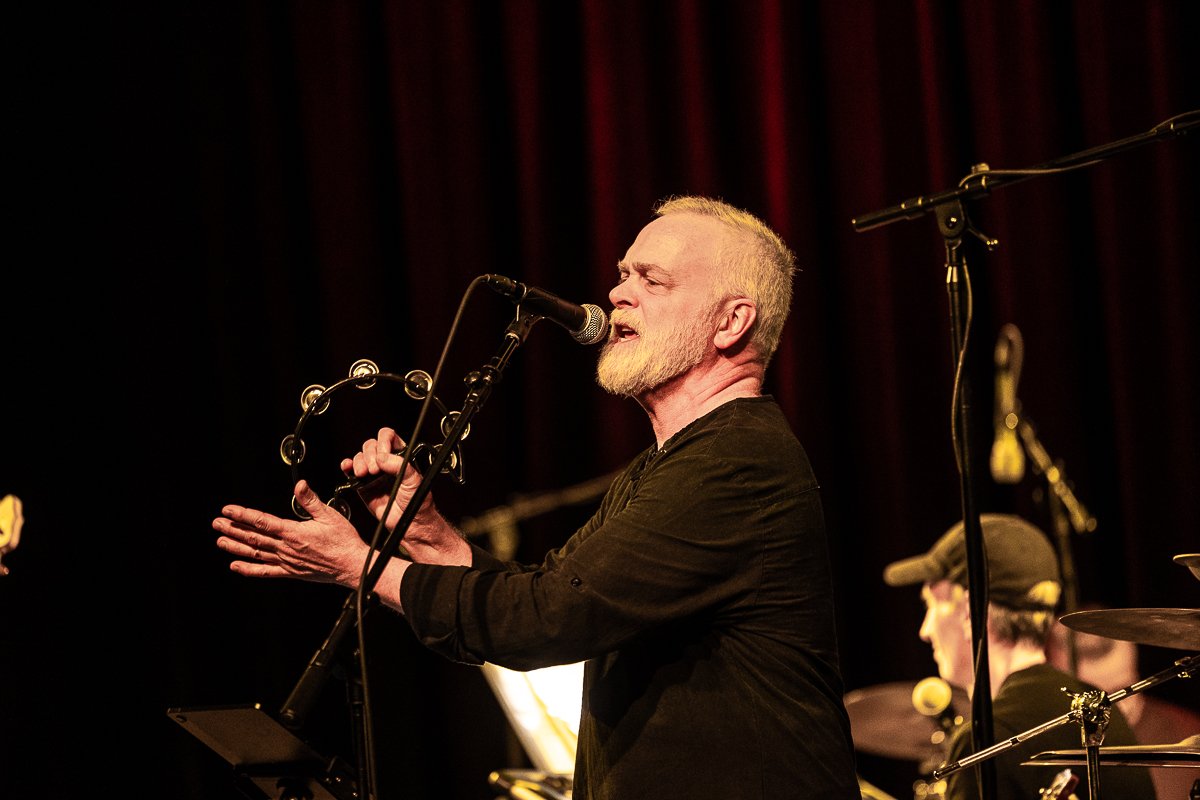
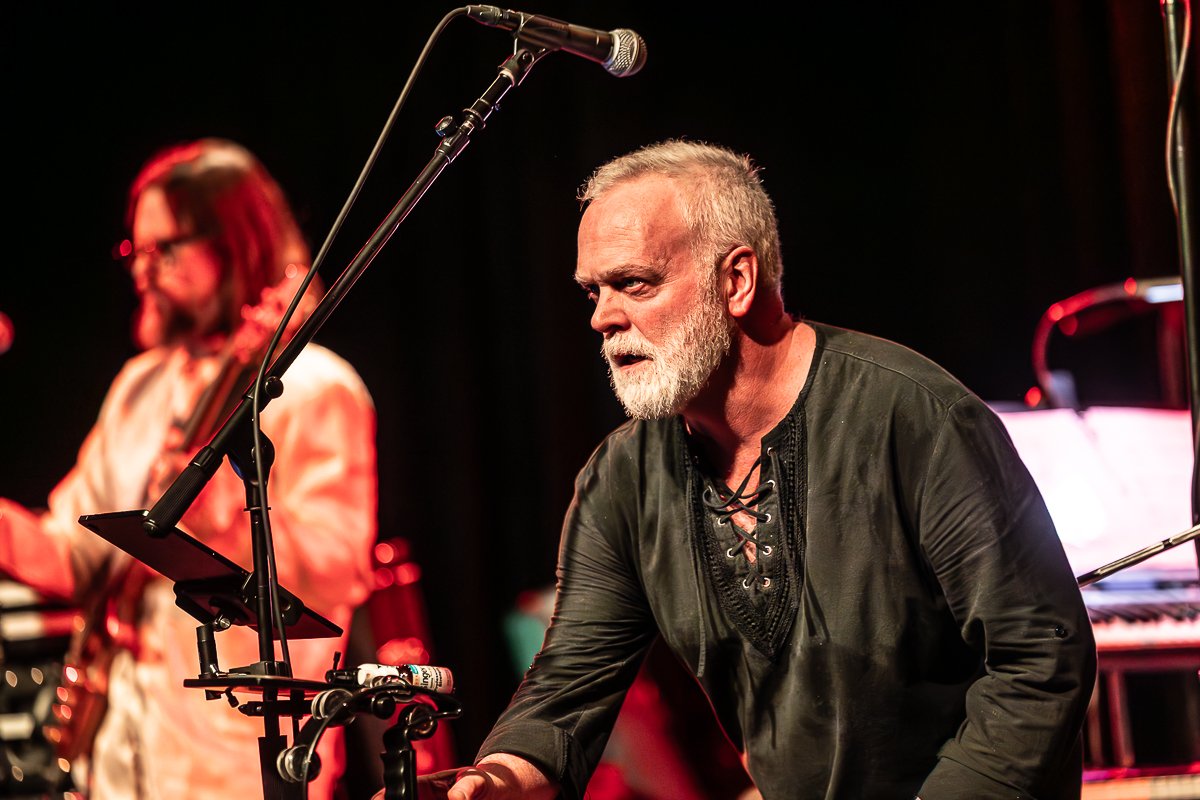
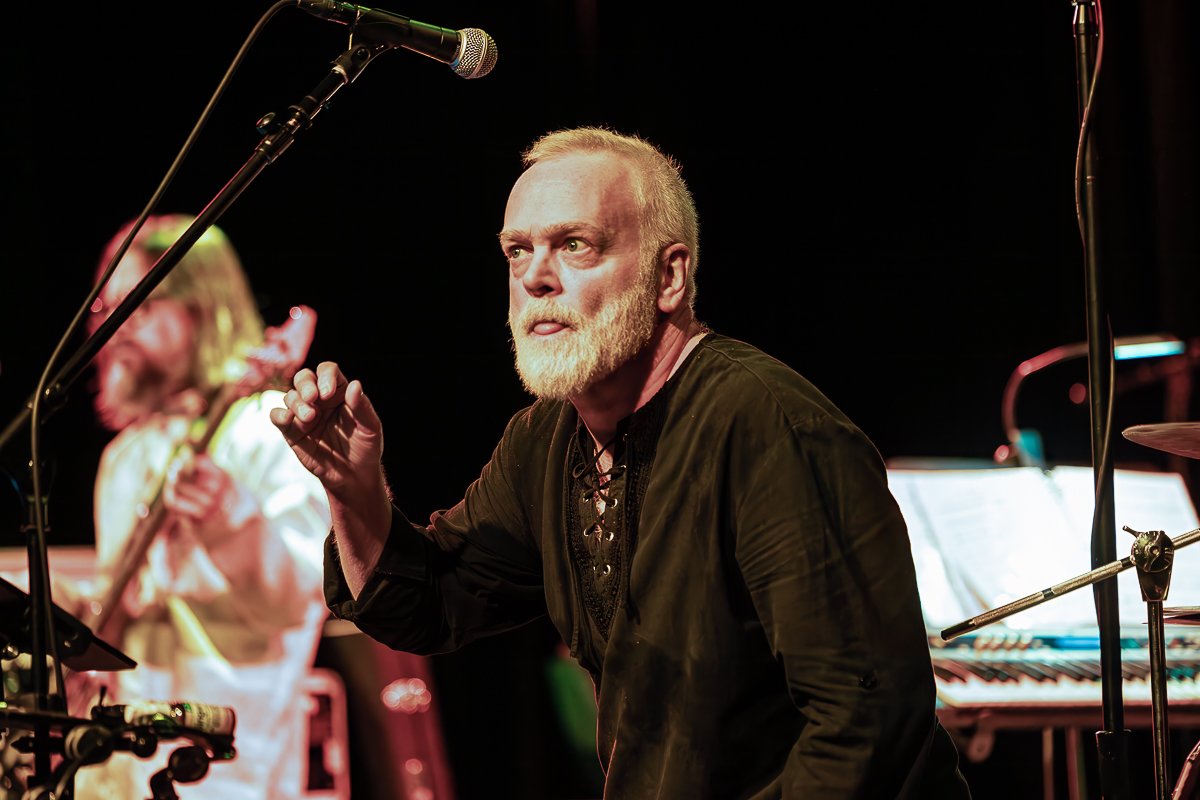
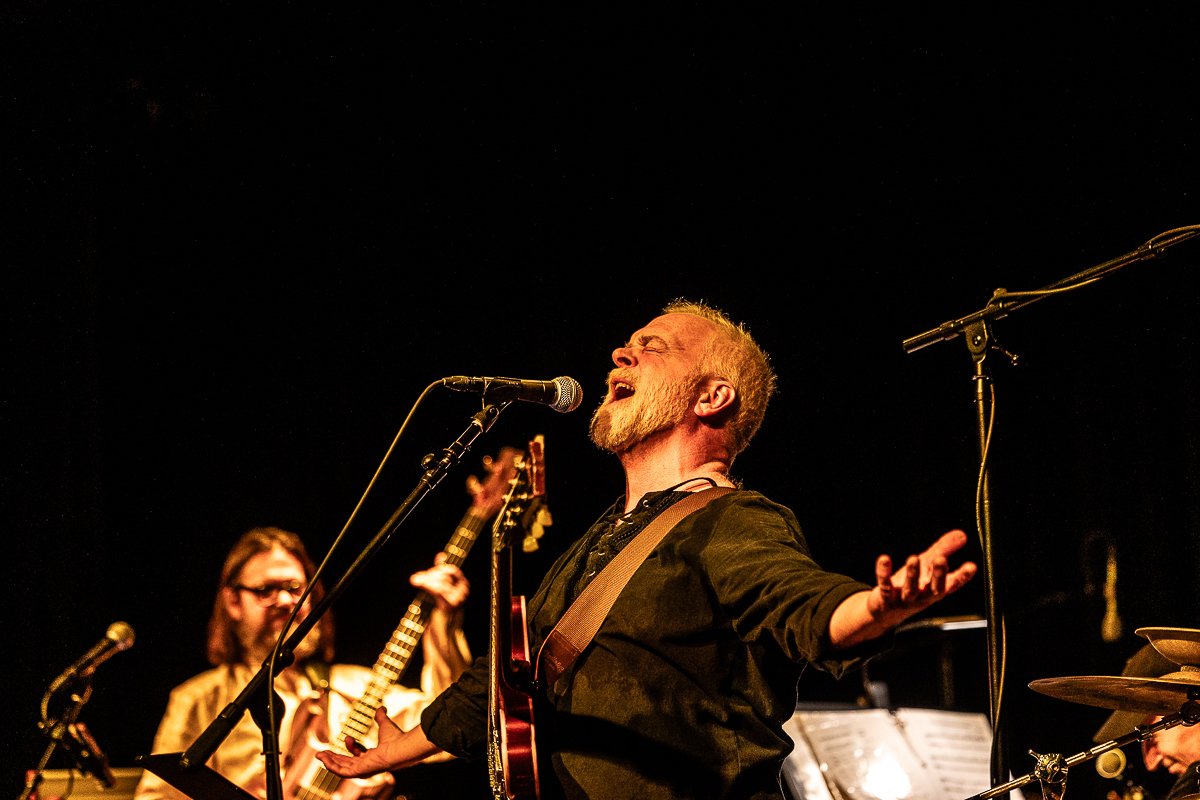
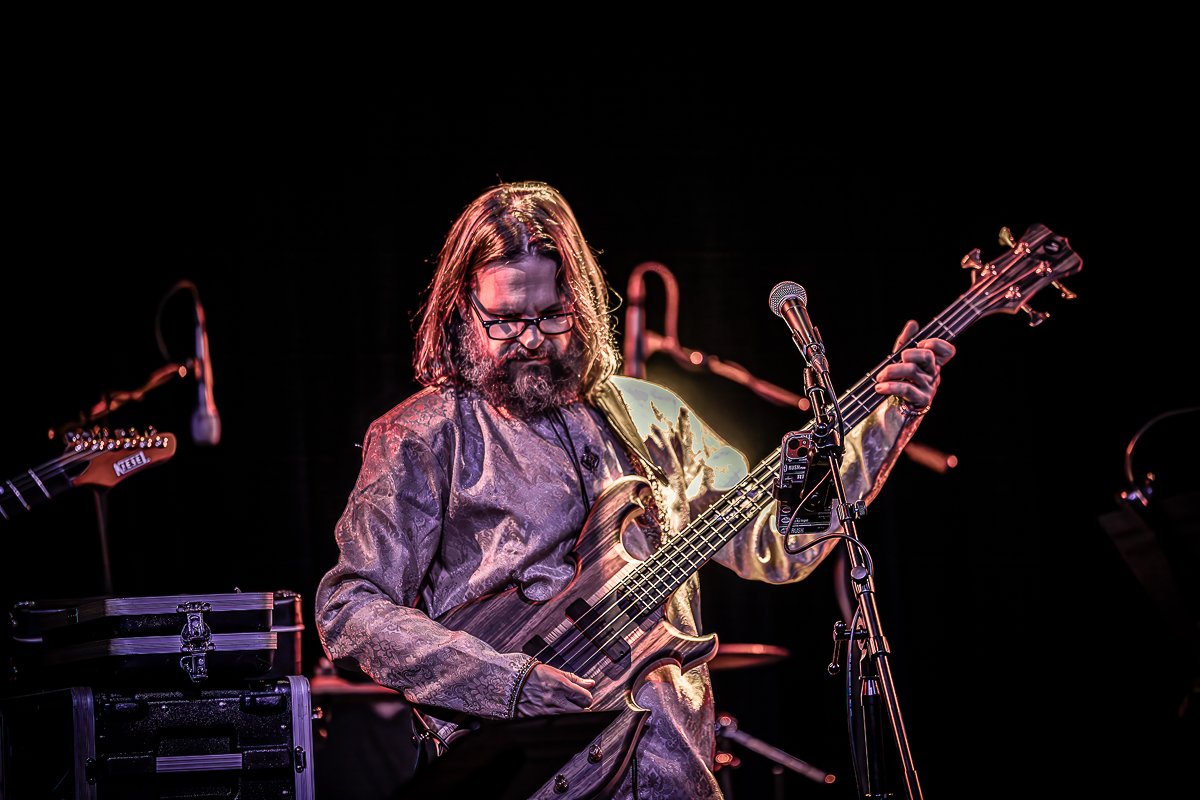
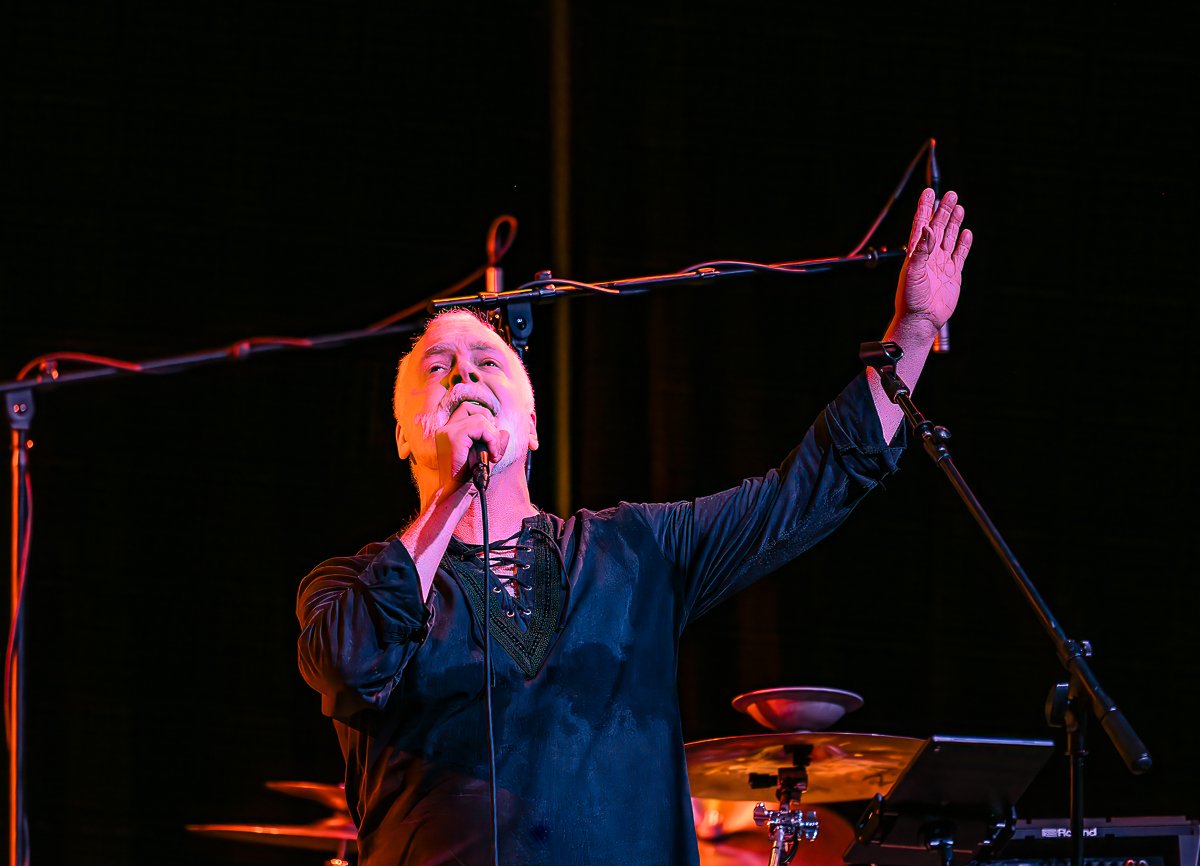
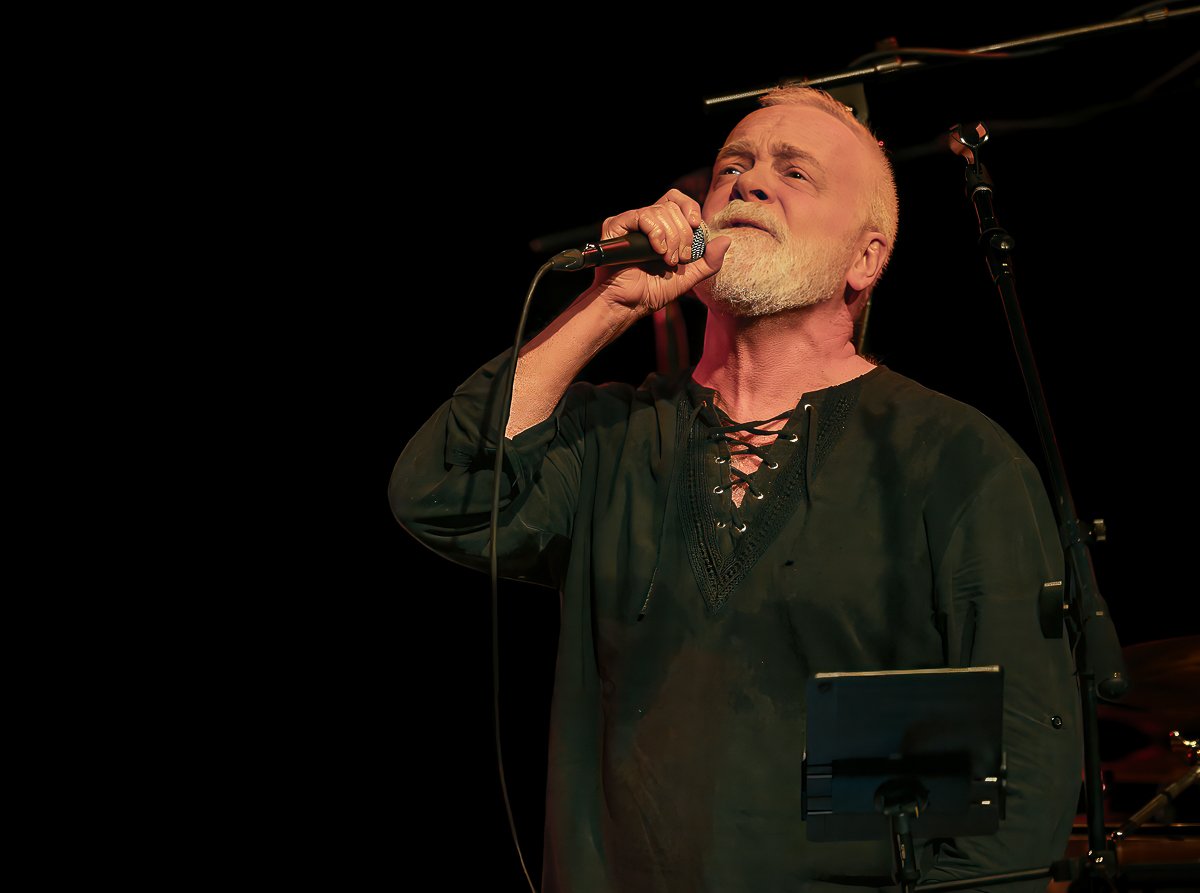
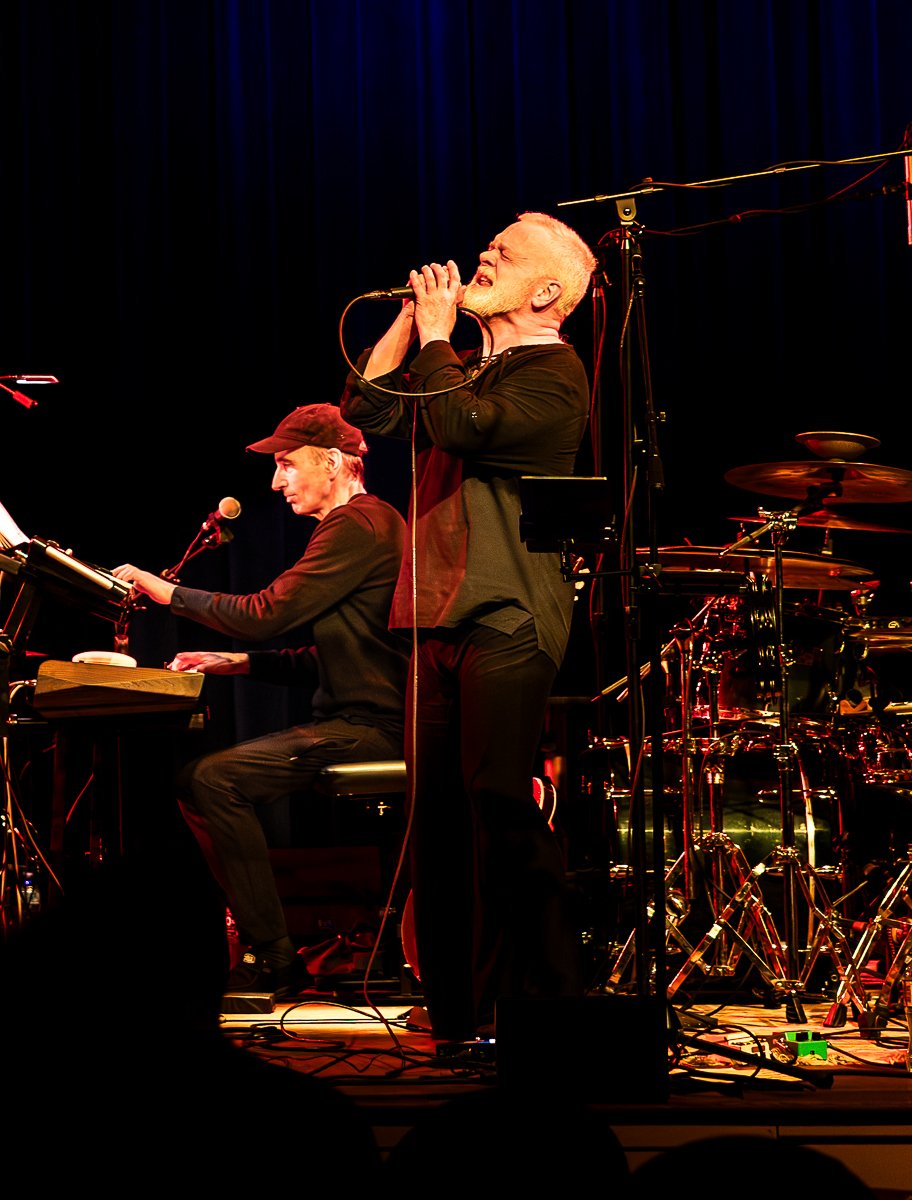
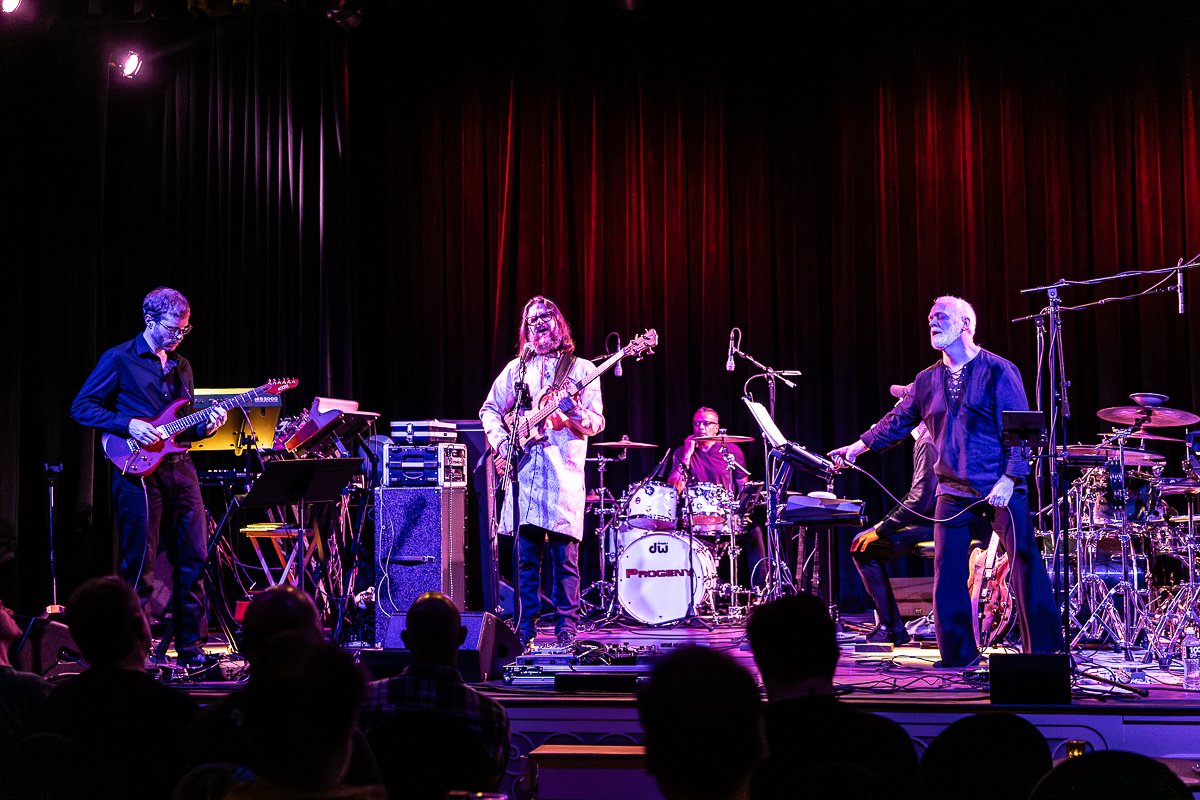
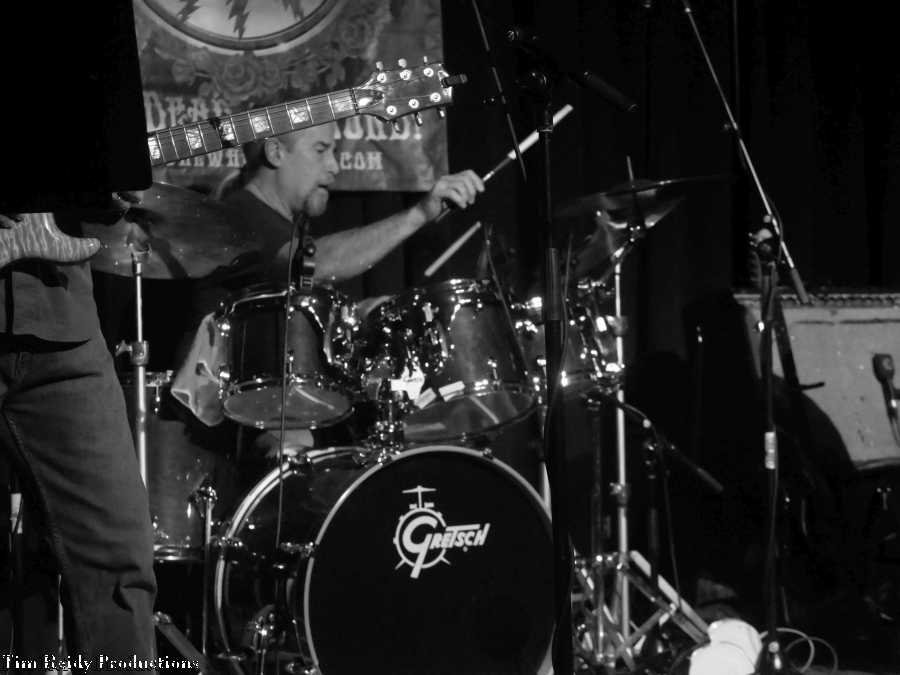
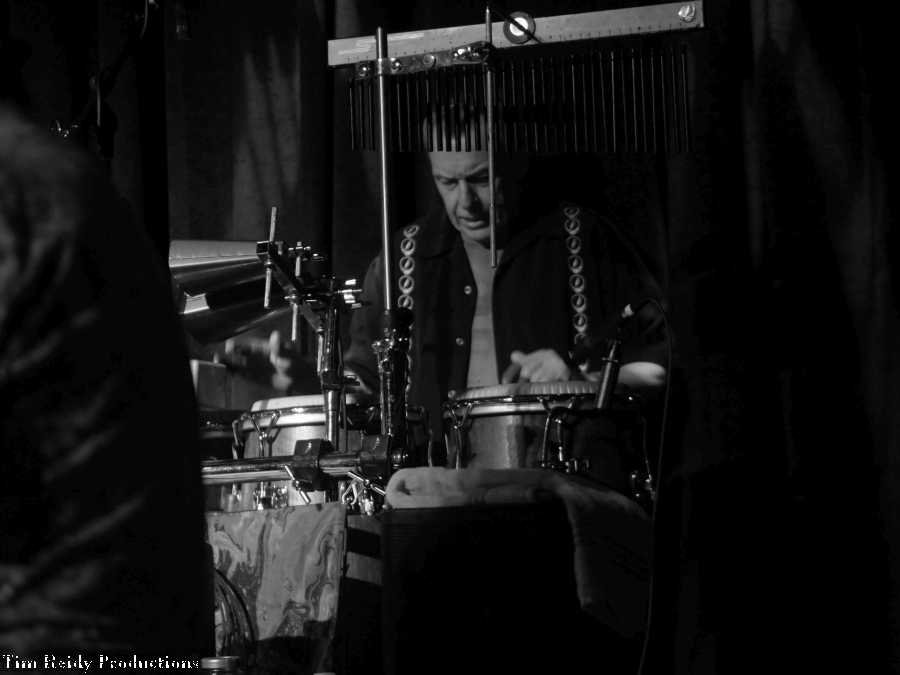
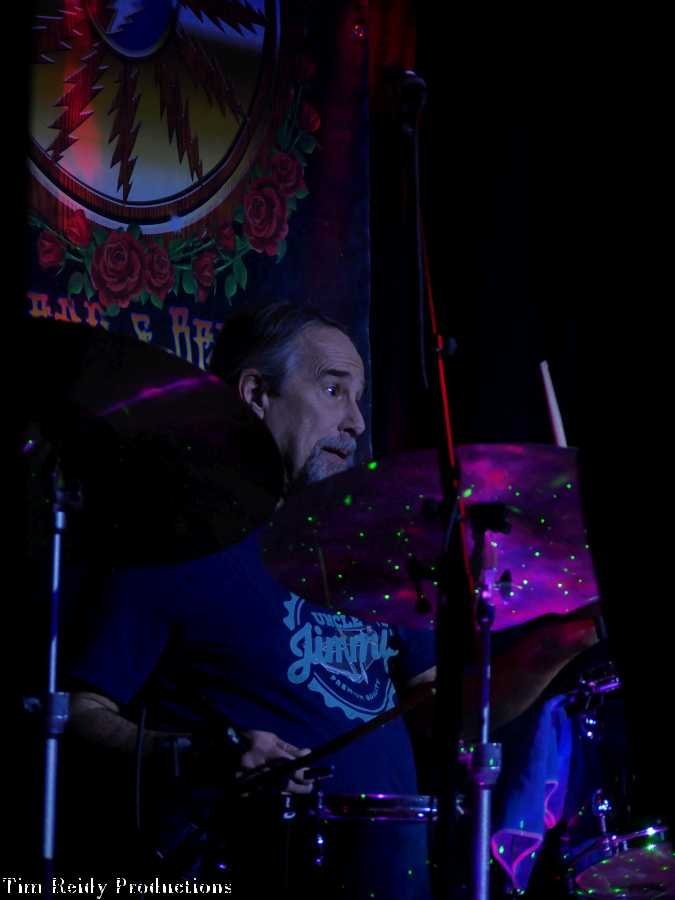
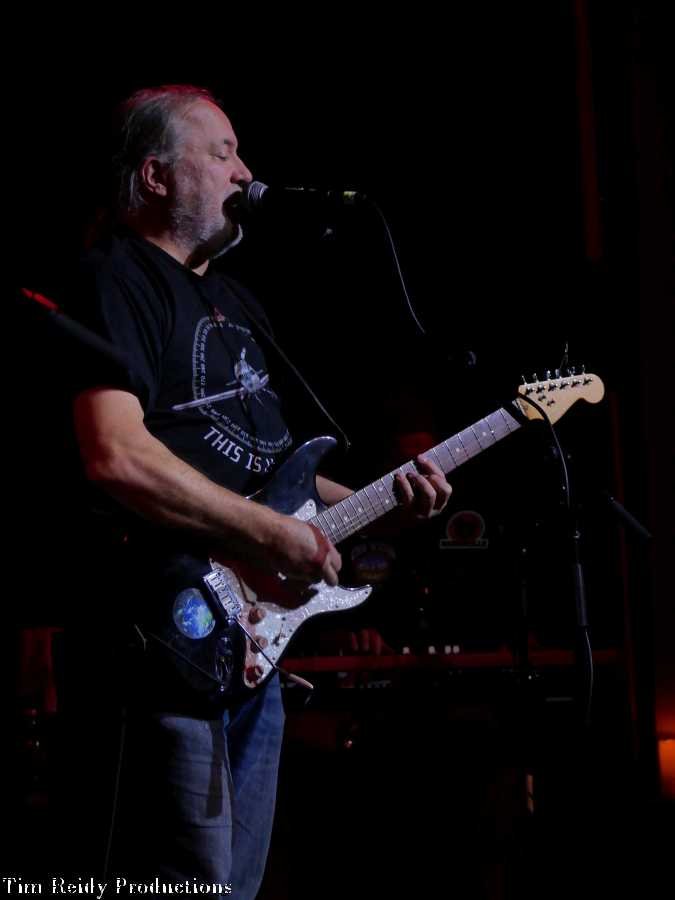
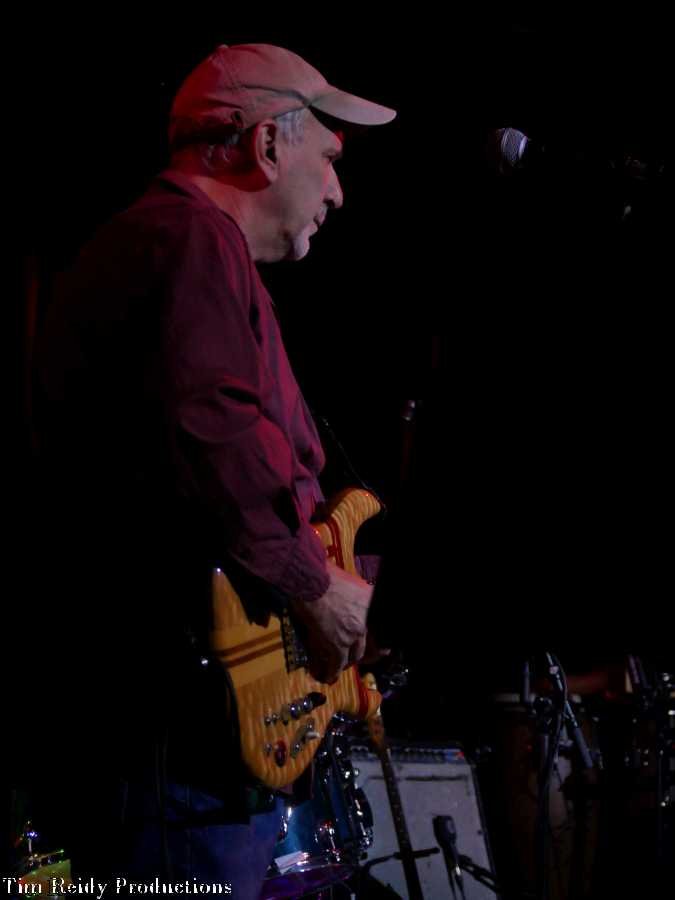
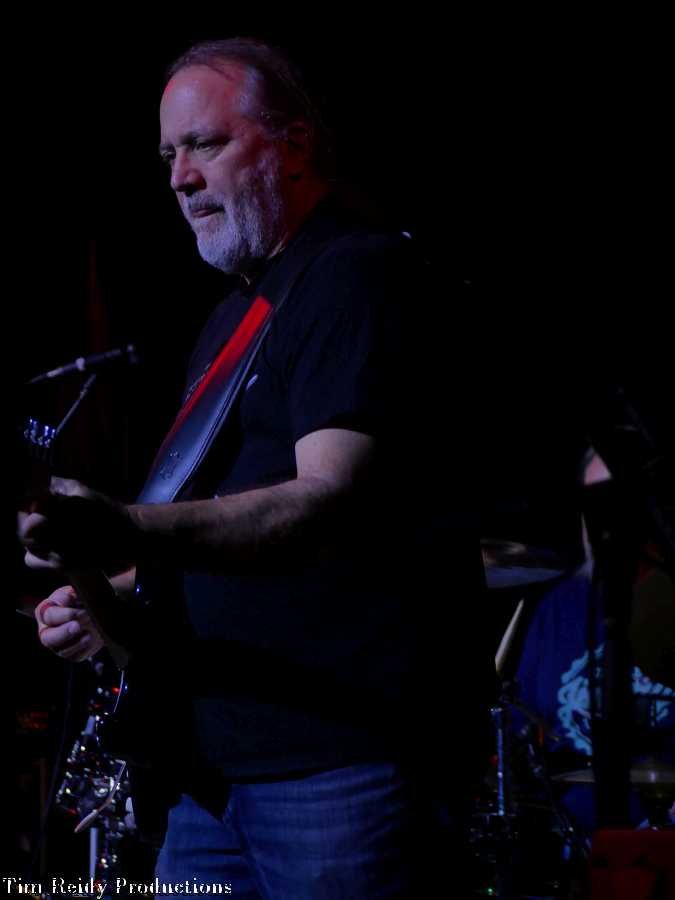
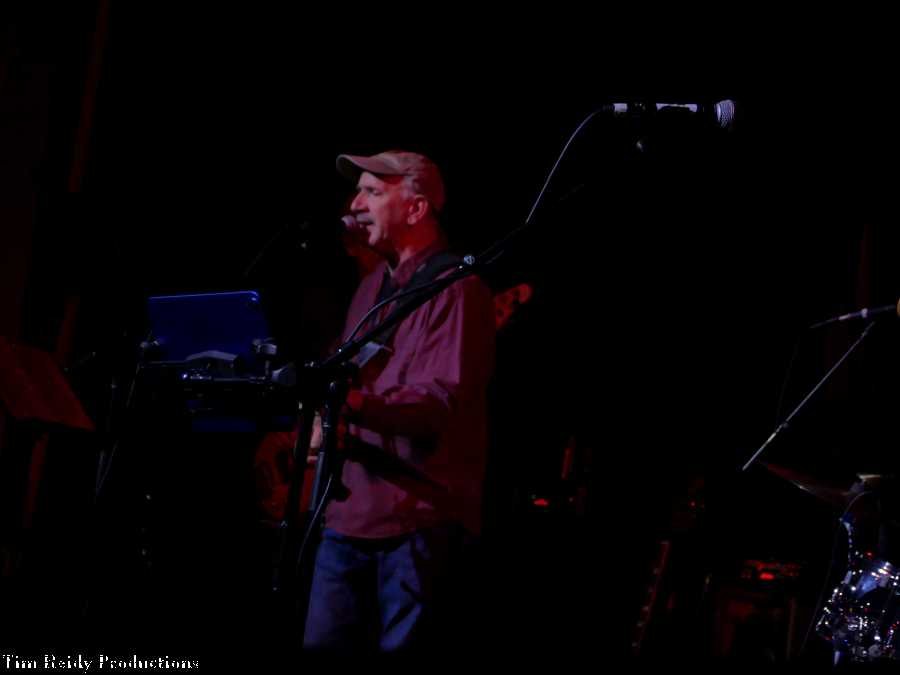
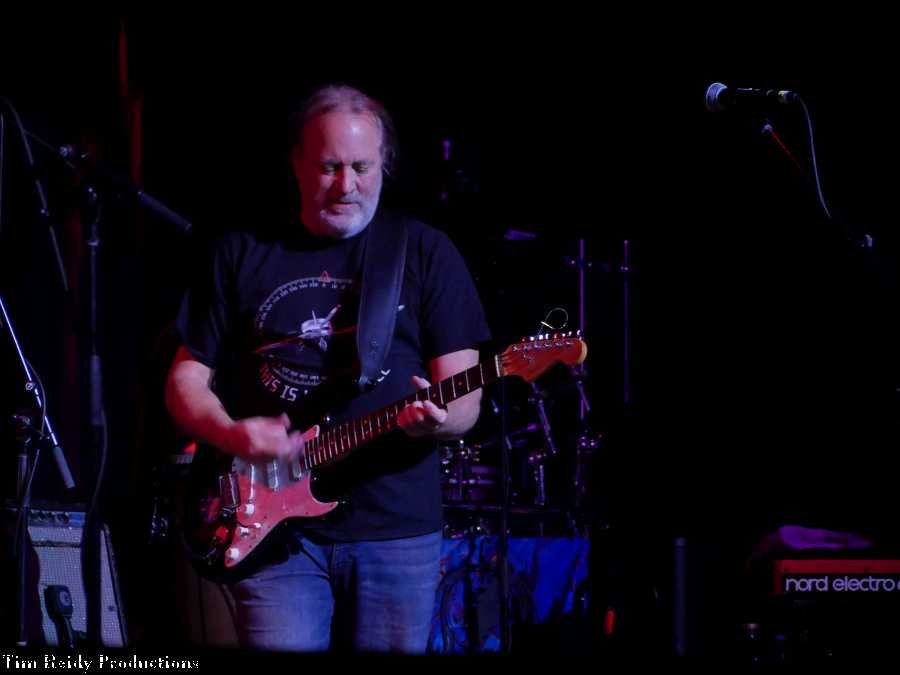
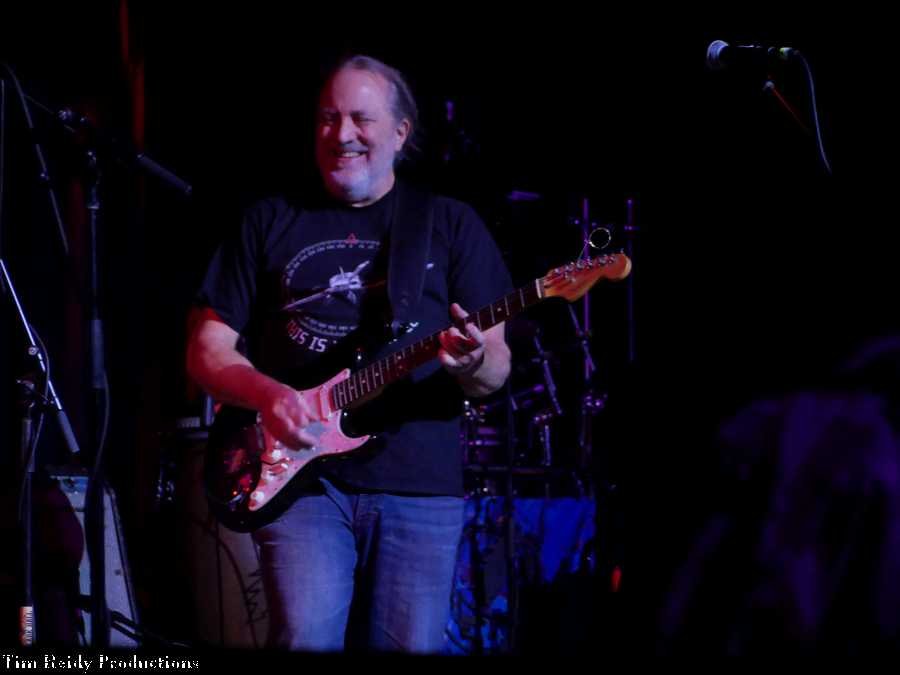
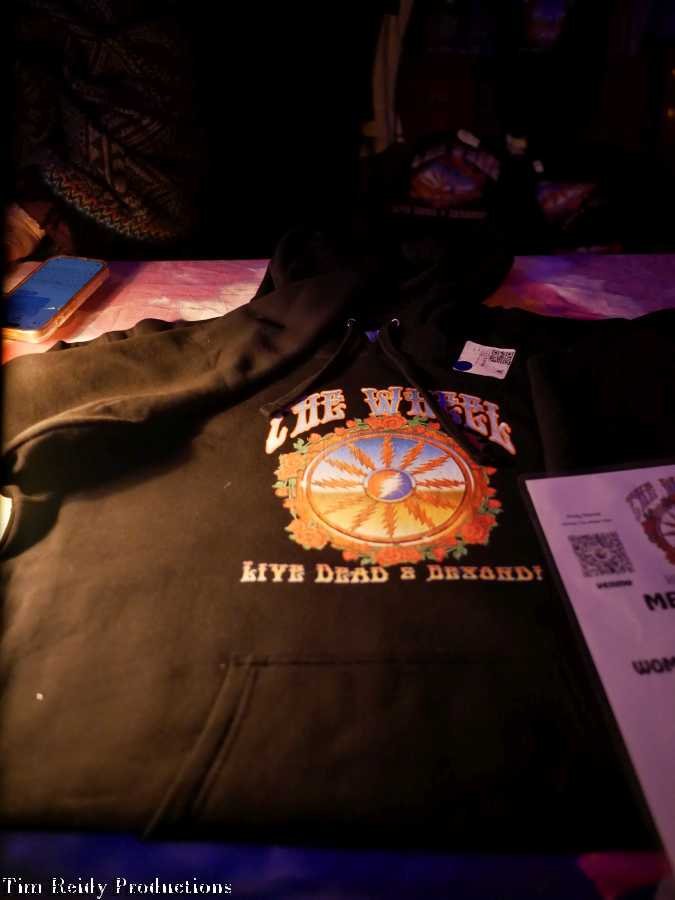
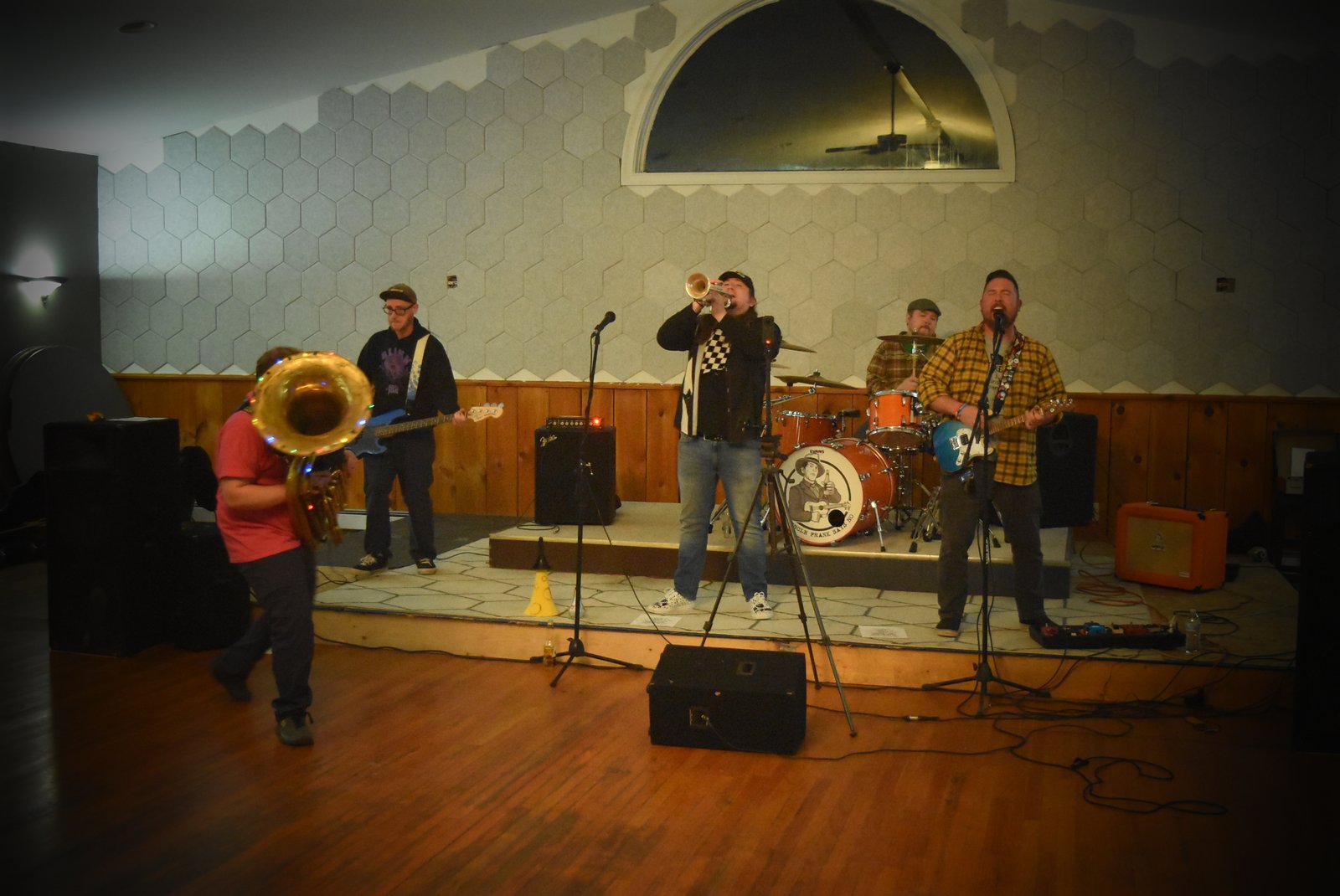
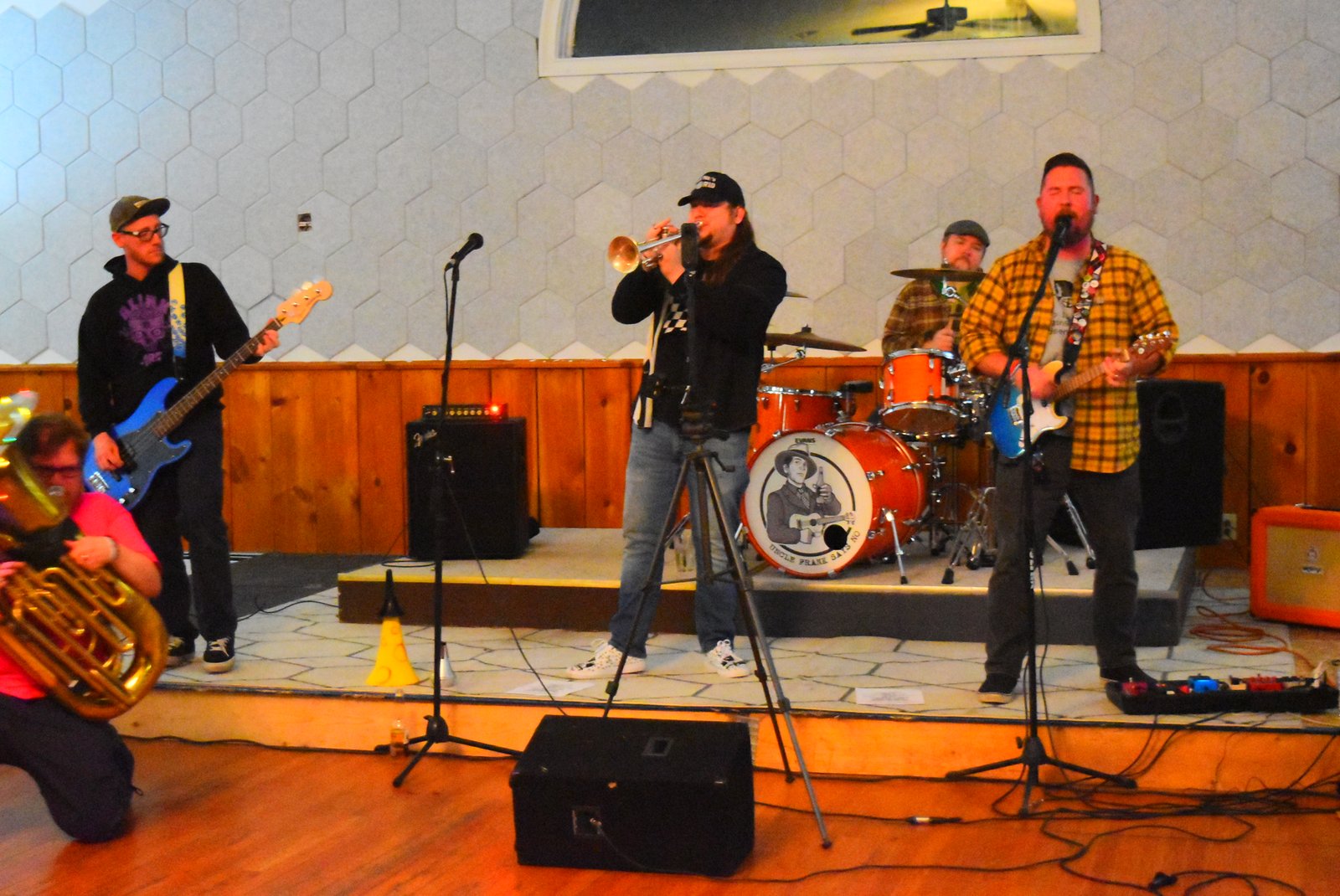
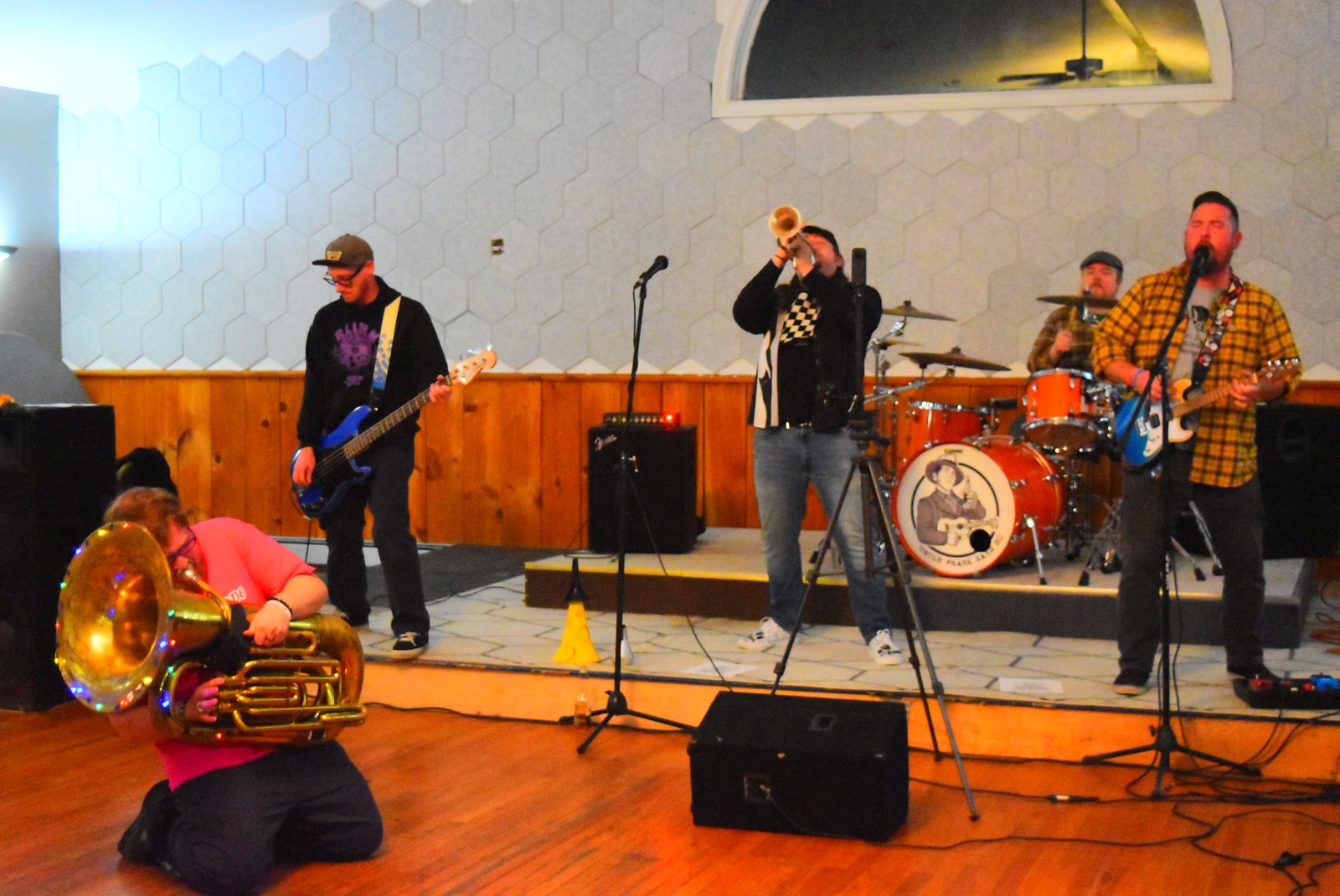
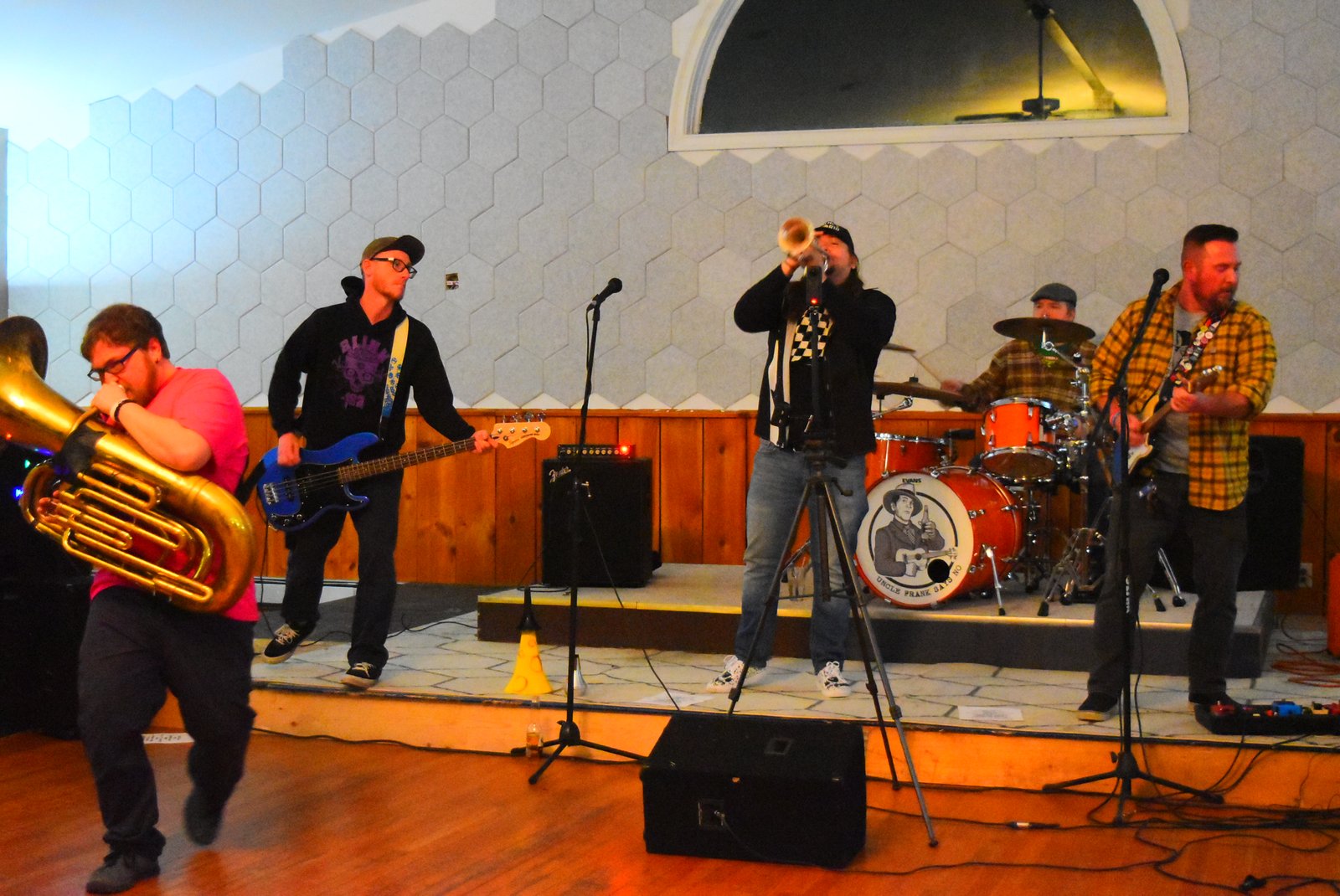
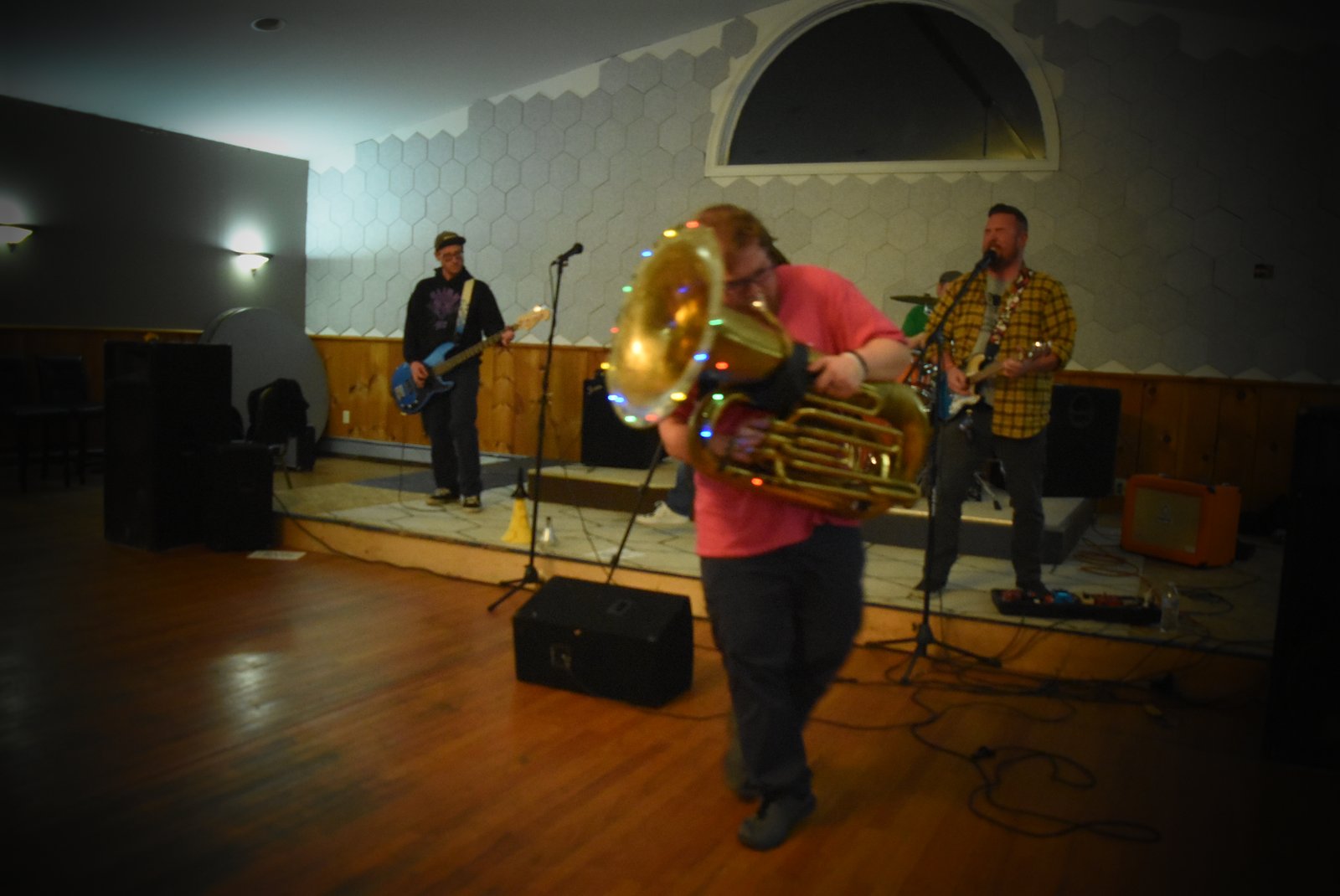
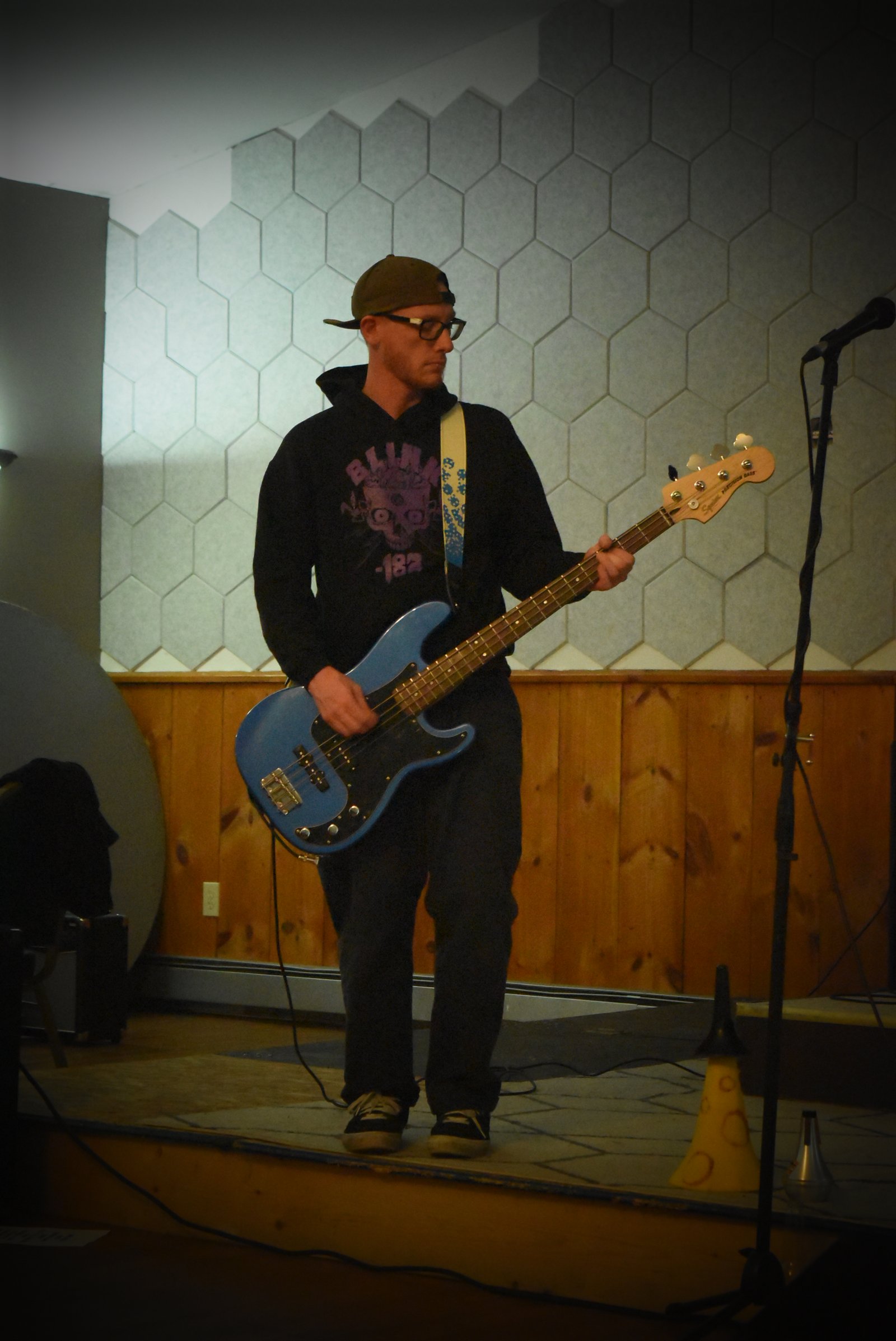
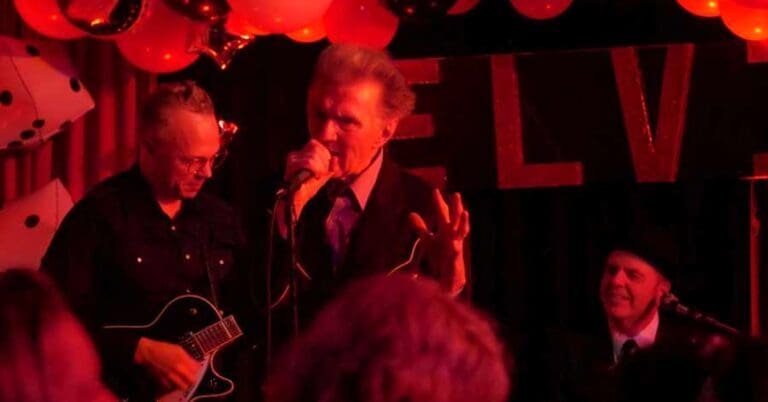
Elvissss …
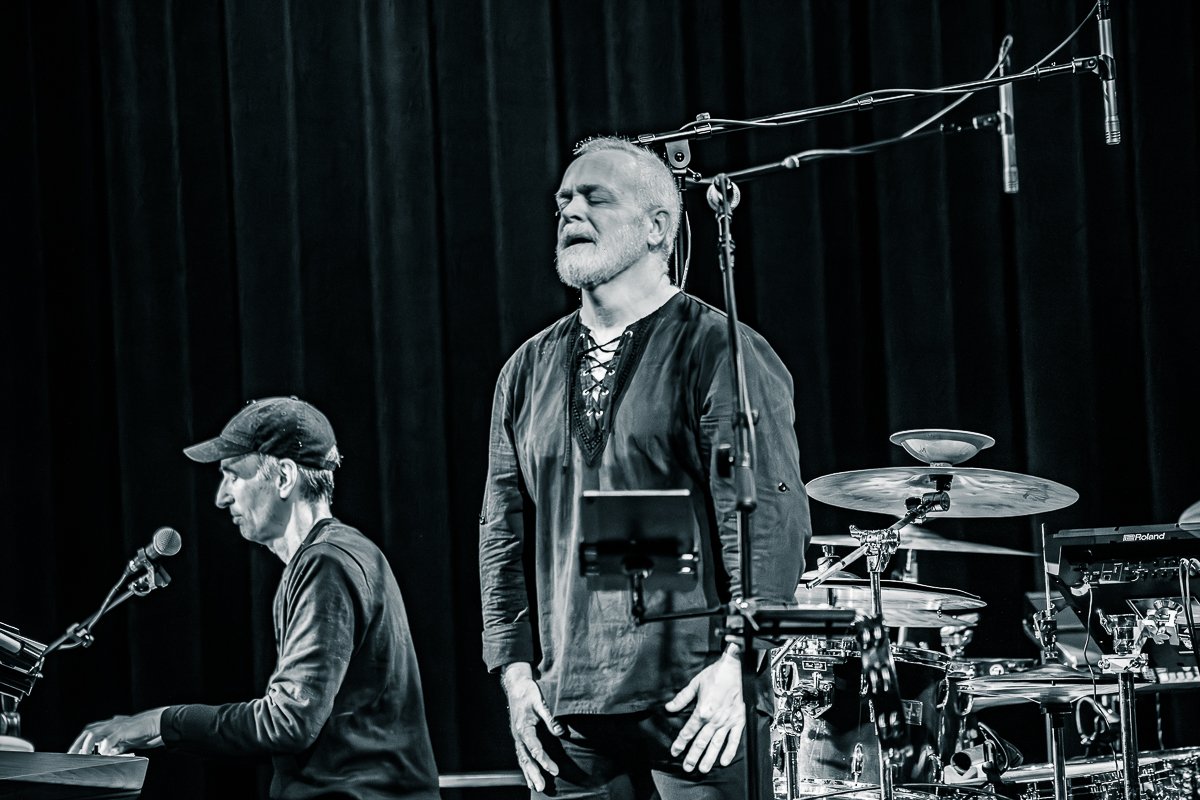
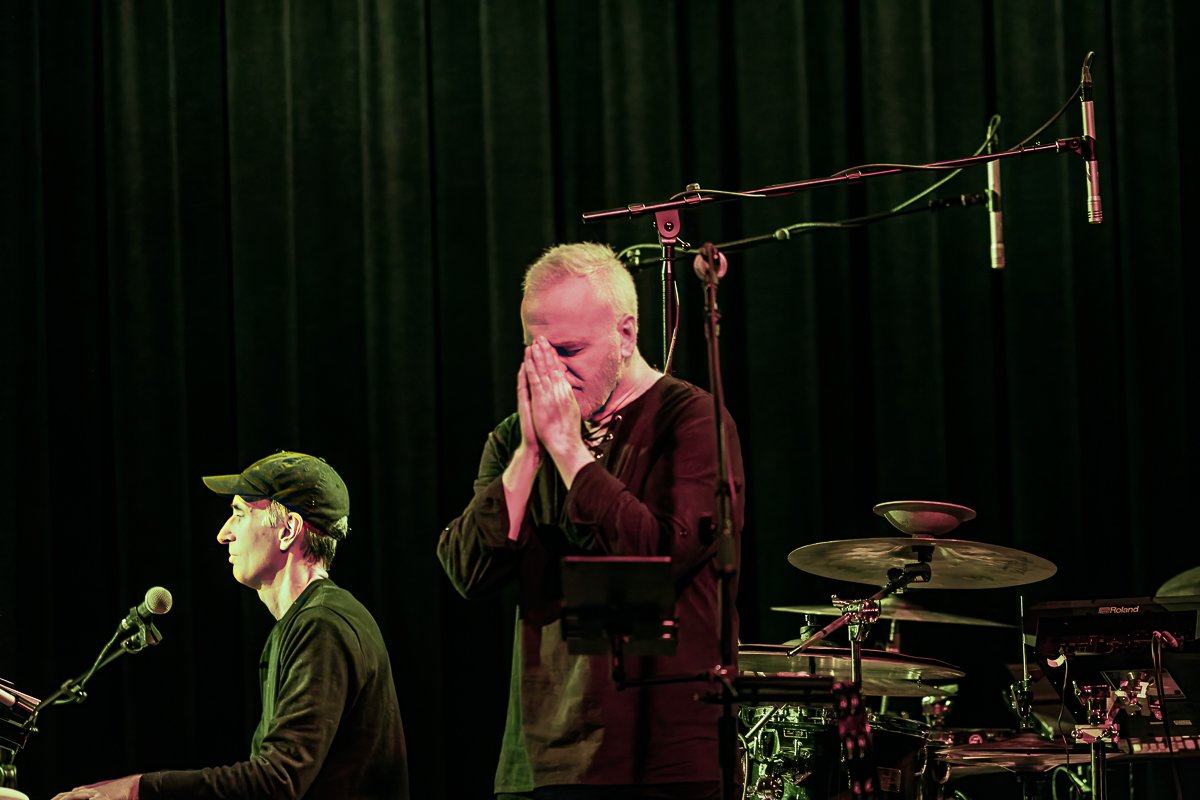
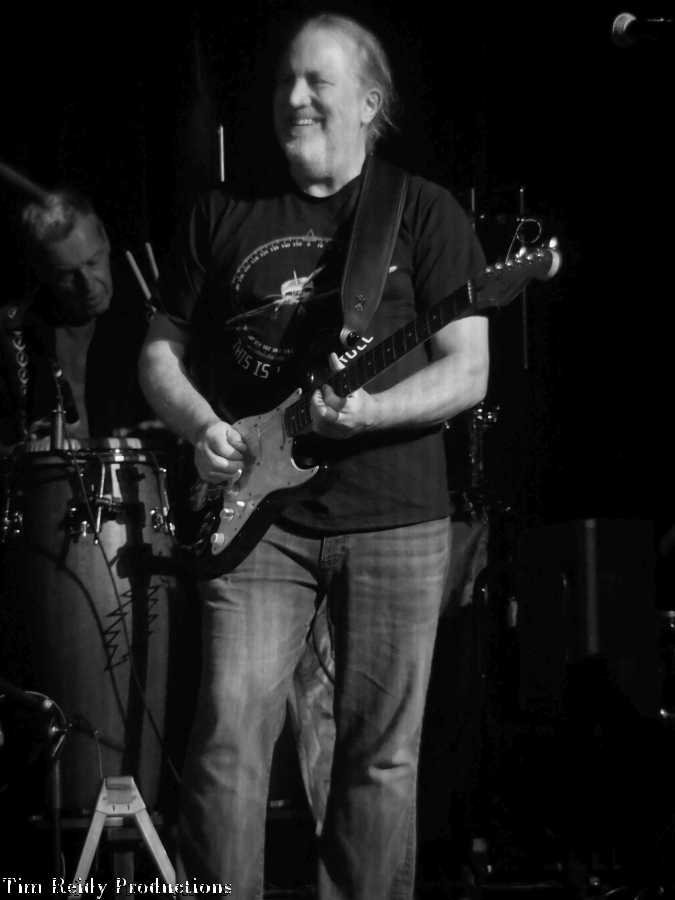
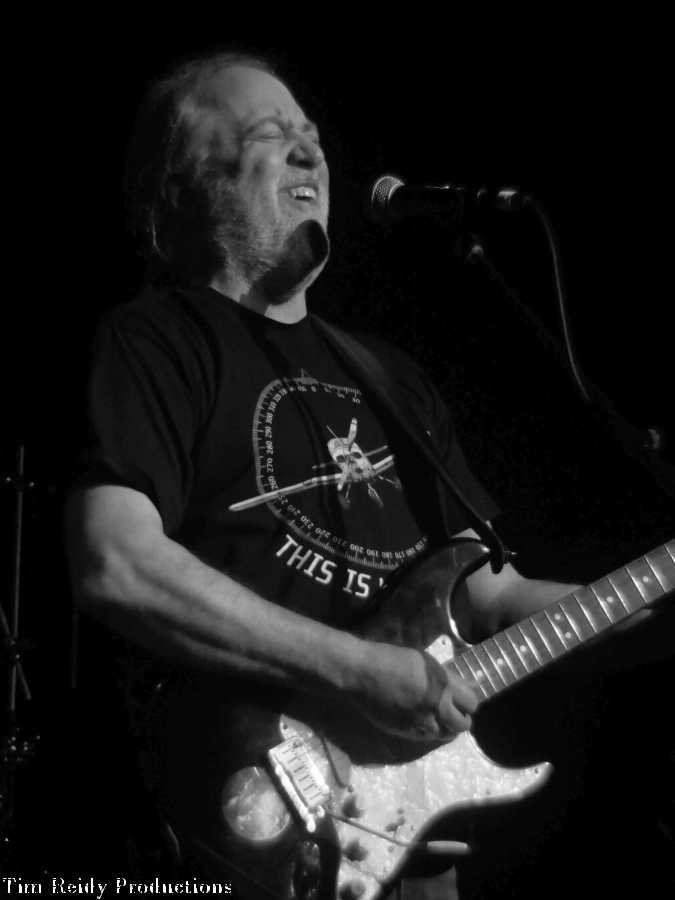
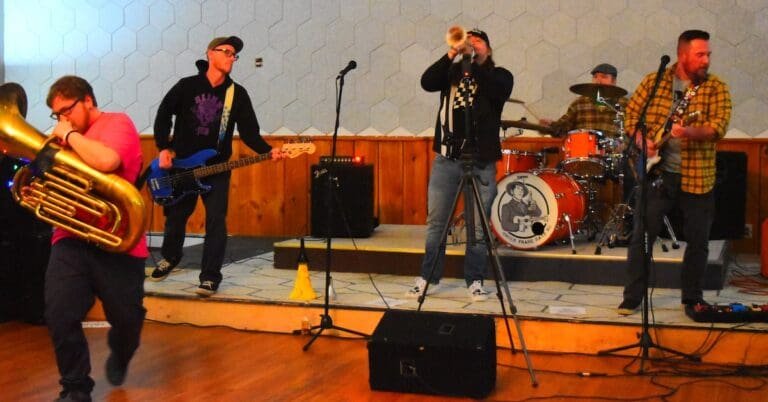
with Johnny Rabb and the Tichy Boys.
Photography by Timothy Reidy.
American Stars and Bar Bands – An Xperience Column – by Rob Skane.
Bar bands. Cover bands. Copy bands. Call them whatever you’d like to. Back in the day, bands like that would often bring us countless hours of hazy, crazy, half-in-the-bag joy. And as young, wannabe musicians, we were in AWE of those bands and those performers. Don’t lie – you know you were. They may have played all cover tunes, or maybe they sprinkled in some of their own tunes, too. We didn’t care, and it didn’t matter. The people in those bands knew how to play, sing, and perform. Probably because they were able to do it five nights a week. And if your band stunk, you didn’t get any work. Instead of blaming the “scene” – whatever that means – you worked hard to get better.
Back then, you either read music and learned the tunes that way, or you learned them by ear. Typically, it was a little bit of both. Even if you didn’t read music, you understood music. There was no tab or any of that stupidity; it was the real deal. You didn’t tell the dudes in your combo that this guitar chord “looks like a bear about to sneeze” or something painfully senseless like that. You had to commit to having some sort of a knowledge base and/or really good ears. Learning the songs of bands that are already on the radio is a great way to develop your ears, facility on your instrument, and songwriting skills. You kinda can see what works when you backwards engineer the arrangement of a great song. You can get a feel for harmonic structure and for melody, for example. Of course, you have to have a passion for it. That’s what those great bar bands had: a passion for the music and also a respect for the music, too. They listened to as much music as they played. We all should be listening to music – all kinds, all the time.
Almost every town had a great bar band or two who built their followings because they just flat out kicked ass every time they played. Every damn time. Three or four sets of blazing rocknroll performed with a passion for the tunes that were being played – all night long. People used to dance back then, too, like for almost every song. It was a whole thing. I’ll break it down for you, grab a seat. Dudes and dudettes in the same room. Great band playing great songs. You see a girl you might fancy, but it’s too loud to tell her that you’re a Scorpio with a passion for crossword puzzles, so instead you ask her to dance. Anyway, when you dance, you get flirty, maybe even a little hot n’ bothered, who knows? But, you get thirsty, and when you’re already in a bar, and you’re thirsty … you know the rest, I hope. These joints would be jammed with people who loved hanging out with one another and having a good time, all the time. Cigarette machines, yes. Food, no. You were there to get hammered, chase girls, and have your favorite bar band provide the soundtrack to your greatest conquests and most spectacular failures – sometimes in the same night.
Some fabled and incendiary bar bands you need to know about would include, but not be limited to:
The Scratch Band. This was G.E. Smith’s band before he joined Hall and Oates. Rumor had it they could go an entire week without repeating a song. There were the Skeletons, with Lou Whitney on bass; they were the pride of Springfield, Missouri. Obviously, the mighty NRBQ needs to be mentioned; I mean, they were only stupendous. I’m pretty sure they could have sold out a gig at the Black Hole of Calcutta on a Tuesday afternoon, if they were so inclined. And let’s not forget our own Johnny Rabb, who, along with Eddie Angel, tore the roof off of more places than the law should allow. Rabb has always had incredible bands and is not only a gentleman but a true legend.
This is how it was, kids. A bar on almost every corner, typically opposite a church – convenient, don’t you think? Bands were in it for real. They believed in the music, and it showed. 250 gigs a year, or more, for a lot of them. People loved it! I believe it was Saint Ray of Davies who once asked that musical question, “Where have all the good times gone?” These days, a lot of us are thinking that we’re making art and we’re not – the songs kinda stink. Forget the fact that a lot of us can’t sing or play, but that’s the least of it. The biggest crime is that we have ignored the groundwork laid out for us by great musicians who fell by the wayside of obscurity – and they shouldn’t have. Not to be cynical over here, but when I apply myself, I can be pretty damn good at it. So, stop fiddling about, Uncle Ernie, don’t tell me that you “know music” when you think secondary dominants involves a safe word and you don’t know a flat five from a flat tire. As they say in the biz, and by the biz – I mean the industry, “the truth hurts.” Go see a good bar band and get inspired because it ain’t no sin to be glad you’re alive.
Fun Life of an MRI – The Weird Side of the Internet – by Liam Sweeny.
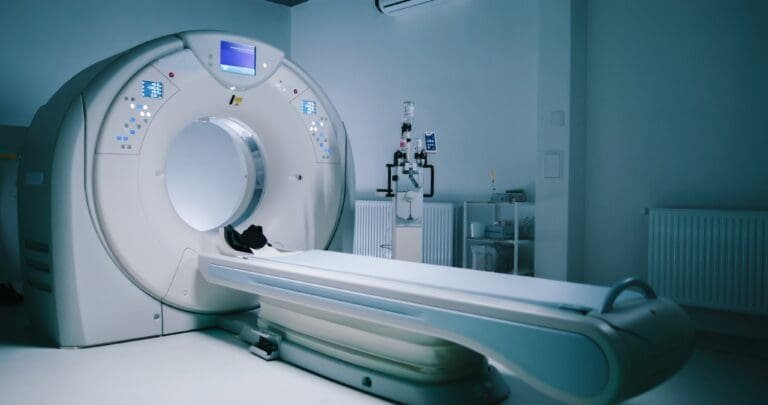
When one thinks of all the good fun that can be had, few think of getting an MRI. Massive machinery pumping out an unmistakable cascade of loud knocks and whirs. I was lucky that my only MRI was my foot, no, not inside. As big as I am, the referral for the inside might have gone to the zoo. That and the fact that I can only afford pet insurance.
But interesting things happen in MRI machines. In a way, MRIs are the taxicabs of medical imaging. For starters, someone has given birth in an MRI. Yes, obviously it was on purpose. Not like she dropped a kid off on the way to check out her rotator cuff. They wanted to see it as it happened live.
There’s actually a procedure called MRI Defecograpgy. Defec-.. Yup, exactly what it sounds like – pooping in an MRI. And this one happens all the time.
They’ve tested fear in the brain by putting people in there with snakes and tarantulas. That wouldn’t even work on me, love snakes and spiders. And they’ve gotten jazz players to play while in the machine.
But here’s the best one. A couple had sex in it. You may be guessing how, as an MRI isn’t exactly the honeymoon suite. Spooning, that’s how you have to do it. I’m not sure what science is going to do with that, but “MRI Porn” just became a category on the porn sites.
So I’m imagining the next time I need an MRI for something, I’m going to go through like housekeeping and CSI combined, blacklighting the platform, with a towel and some of that antibacterial, anti-viral stuff in a plastic spray bottle, bringing my own towel ‘cause the hospital paper sheets don’t absorb a thing.
Props to the guy that can keep going through the noise of an MRI. He was truly down to get down.
Amy-Lin Slezak – Thanks for Asking! – by Liam Sweeny.
RRX: Love is a big part of music. We’re talking first loves here. Lots of cool stories about first loves and the things we do for those loves. Can you (or, in the case of a band, one member) talk about your first love, especially if you did something cool to express that love? (No names needed.)
ALS: When I was sixteen I fell head over heels for a cowboy at one of the horse shows where we competed. I’ve been an equestrian since I was little. Horses play a huge role in my life, so meeting a boy who shared that passion was very attractive. We both really believed we were meant to be together. But sixteen is too young for forever. We broke up (actually, he dumped me and broke my heart), he moved far away, I went to college and you’d think that would be the end of that. Cute story to file away in the scrapbook, right? But we never got over each other. Never.
It went back and forth over the years. We were separated by hundreds of miles. We both dated other people. He even had a son and married someone else. But still there was this connection we couldn’t get away from. The first song I ever wrote was about him. I wrote it in college. It’s awful, but it’s about that connection that we both believed would eventually pull us back together. Like I said, I dated. I had a full social calendar in college and grad school! But when his marriage inevitably ended, we, at last, had the resources to physically get back together and try out a relationship as two adults.
That was it. We’ve been together for 26 years, married for 22 of them. He’s the love of my life. Those years of wondering and feeling torn apart were hard, but they were necessary. I was really lucky to have that time in college, dating, meeting people. My third release that dropped last summer, Known 3 yrs. Seen 24 hrs., is about one particular friend (sometimes more than a friend) who was a big part of that time in my life. For more details about the drama, check out that song! True story!
RRX: What was the very first reaction to your music, from the first person to ever hear so much as a practice jam or the demo of your first song
ALS: As I mentioned above, the first song I ever wrote was in college, about that longing to be with someone I couldn’t be with at the time. I wrote it at the piano in a practice room between translating and rehearsing opera arias and art songs. One day in a voice lesson we wrapped up early and I played it for my professor. She didn’t go crazy with praise, she just smiled and said, “I think you’re onto something here. Keep going.” It was a different approach to singing for me, and she said it was reminiscent of her Joni Mitchell albums. She thanked me for trusting her to listen. I don’t think people realize, sharing something you personally wrote with another person is terrifying. It’s worse than the naked in the cafeteria nightmare. Her encouragement to keep going gave me what I needed to keep trying.
I think that was my junior year of college? I wrote about five or six songs during that time. In addition to my professors, my very best friend from college cheered me on from the beginning. We would practice in adjacent rooms in a quiet little corner of the Music Department at Fredonia and every time I got an idea for a song I’d bang on the wall and call her over to listen. She’s been my biggest cheerleader. She’s the same friend who told me I had to release You Don’t Believe Her. Thirty years later and she’s still my sounding board, my go to for feedback on every project, nearly every step of the process. She probably knows my voice better than anyone else on earth, so I rely on her for so much!
One take away I’d like to give people here: if someone takes the chance on you, if someone shares something they wrote or created, please don’t ever knock it down. You don’t need to blow smoke up their ass or tell them it’s great if it’s not (in fact, that’s just as bad as tearing it down). Just be kind and encouraging. I’ve never heard of a single artist who struck gold on the first thing they wrote. So your encouragement and kindness could be the thing that sets another person on a great journey. Please do not take that responsibility lightly!
RRX: In the musical world, there are many supporting players. Recording engineers, sound techs, cover art designers. Who are three people that support the craft that you would like to shine a spotlight on?
ALS: When it comes to the industry associated people that support my craft, I’m really grateful to have a lot of wonderful people to lean on! I mentioned my team from Airgigs up above. Each of them contributes so much to this endeavor for me, but I have to shine a spotlight on my engineer. Matthew Kutoloski is my mixing and mastering engineer, but he’s also so much more! I call him my “emotional support engineer”. When I made the decision to record How Dare She I knew so little about what I was doing. Before I even had the tracks ready to send him for mixing, Matt took the time to talk me through setting up my equipment and the DAW. He’s been so patient on every project, teaching me so much.
His wife is a vocalist as well, and they are both active in the musical theatre world, so we have a lot in common! Our message threads were getting so long that we eventually had to start texting each other directly. Now, we check in regularly and chat even in between projects. I’ve been struggling with some issues with my voice and I’ve been able to lean on him for that as well. He’s not just my engineer, at this point he’s become a friend. If there’s anything more valuable than the knowledge and expertise he brings to my projects, it’s the friendship!
Speaking of friends, one of my closest friends from grad school also happens to be a musician and engineer as well. Everything I knew about recording before How Dare She, I learned from Jeff, and he’s still teaching me along with Matt. He’s always been a huge supporter of my music. Years ago when we met in Memphis, he helped me make a demo of one of my earliest songs. He played guitar for me when I couldn’t play well enough to communicate what I wanted a song to sound like. He’s always available to provide me with honest feedback about my writing, my projects, my voice, anything.
I haven’t mentioned this yet, but I took a long break from doing anything with my own music. In my 20’s I thought I’d head to Nashville or New York. I decided against that life and chose a family instead. But two years ago when I had the inspiration and opportunity to start creating music again, Jeff was right there, texting me, face timing, talking on the phone, helping me learn how to use a DAW, how to set up my interface, listening to my first (really bad) self recorded demos and helping me figure it all out.
None of this would have been possible without his support. He’s surprised me by sending me equipment! One day a package arrived from sweet water out of the blue. I called him and said, “Did you send me a new microphone??” All he said was “It appears I did.” And while I don’t always like the feedback and suggestions he gives me, I always appreciate it because I know it’s honest. It’s nice to have friends that always pump you up, and I have those, but every artist needs to have someone who will give them the harsh, raw, honest feedback they might not like hearing. I know I can always turn to Jeff for that!
I mentioned my best friend from undergrad above, so in the spirit of trying to acknowledge as many people as possible, my third choice to shine a spotlight on is Niki Kaos and the whole WAMM community she has created here in the capital district! I walked into my first WAMM Jam last summer feeling so insecure and out of place. Don’t get me wrong, as a singer I am very confident in my abilities. I consider myself to be a decent songwriter too. But when it comes to playing an instrument, especially in a group, my confidence isn’t so strong. The WAMM Jam Allstars have changed that. It’s a very special community offering support for fem identifying musicians. Being part of the first ever WAMM Jam festival in Troy last September was a huge thrill for me. I played an acoustic set as part of the festival, but the finale was our All Star set when eight of us women joined forces to play five songs to close the festival.
We had several rehearsals over the summer to prep, and that’s the first “band” experience I’ve had in a LONG time! I’ve been in operas, theatre productions and I solo, but the band scene was never something I got to do. I chose to play keys and I was really scared that I was the weakest link. The whole classically trained musician thing is sometimes a drag on my psyche! We can be extremely hard on ourselves. But every time I felt insecure, there were these seven other women in the room telling that voice to shut up! Since then, WAMM has had more jam sessions, we had a DIY merch workshop led by Shannon Tehya, and the events keep growing! All of this exists because of Niki’s vision. So I have to say thank you to Niki and the WAMM ladies for really building me up and bolstering me when I feel alone. They ground me to the in person world when I get tired of chasing algorithms and followers!
RRX: We let it out differently when we play music. The happy, sad, good and back; it can all be put out musically. Overall, do you feel better when you sing about the better times, or the worser times? Is there a difference you can describe?
ALS: Music is such an important part of our lives because of this! The amazing thing about music is that it gives emotional release to the performer and the listener, and that exchange of energy is why music is so powerful at helping us connect! I honestly love it all, the happy, the sad, the angry. . . I seem to really embrace singing about the angry!
I have a number of upbeat, raucous, funny songs that really get the crowd revved up. That’s always a great feeling. I love writing political parody songs and dropping a funny line. It’s very healing to collectively laugh (sometimes we have to laugh or we’ll cry). Last summer I performed one of my snarky, funny feminist songs (Mansplain) and when I dropped the line “You’re the man with all the answers only problem is, no one asked!” A man in the front nearly fell off his chair laughing; he didn’t see that coming! That was very rewarding. And those songs definitely provide an invigorating rush. It’s a high.
Sad songs are a different kind of release. It’s hard to say if one feels better than the other. In the best times we all need to let it out, but it seems these days its harder than ever to let go. The first time I sang You Don’t Believe Her in front of people was at an open mic at The Real McCoy back in October. I wasn’t ready for how hard it was going to be, and I say that as someone who has performed entire operas! Funny how you can get through a whole production one day, but a 4 minute song kicks your ass on another! Letting all that emotion out in front of people for the first time was so powerful I actually ended up feeling physically ill later. I don’t think people understand how much the emotions performers put into their work manifest physically.
But in the moment, sharing it with an audience and seeing them react to my lyrics in real time was incredibly satisfying. It’s always cathartic to open up on a big phrase and really let my voice fill the room. I have a really big voice and I’ve been trained to use my instrument. So yeah, I like to let it fly. But the best part of performing a song like You Don’t Believe Her being able to pull back from all that rage and bring the audience back in for a feeling of closer connection. The song really gets raging at the bridge, but the end is vulnerable and quiet. Without a doubt, if there’s anything more rewarding than thunderous applause, it’s when you finish a song so focused and so locked into the moment that the audience doesn’t want to move. There’s a collective pause, the tension is still hanging in the air, before everyone feels it’s ok to breath again. For me, that’s the best emotional release of all. That’s why I love writing and performing for people. I like taking that roller coaster ride together!
Photo provided.
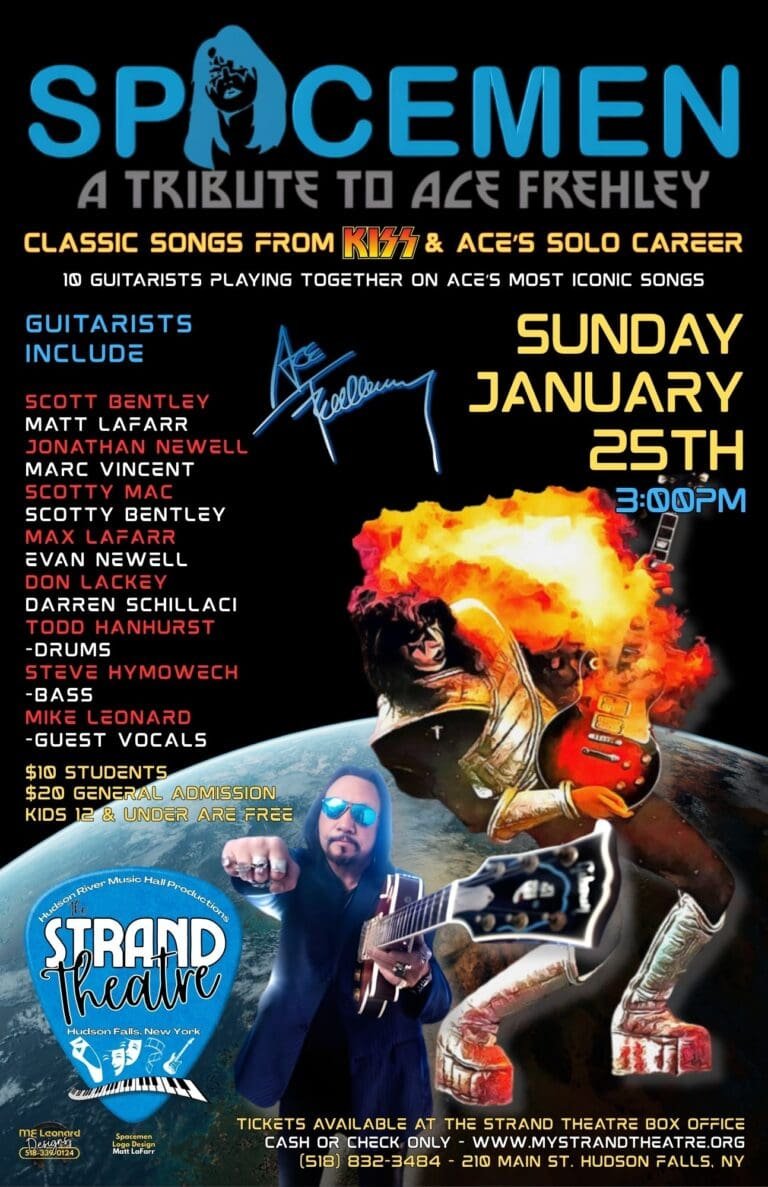
On Sunday Jan. 25, 2026 @ 3:00pm, join us at the Strand Theatre for a matinee concert The Spacemen – A Tribute to Ace Frehley!
This concert will have classic songs from KISS and Ace’s solo career, shared in different combinations by 10 guitarists from the North Country culminating with an Ace Orchestra: 10 guitarists playing together Ace’s most iconic songs!
The tribute includes guest vocalist Mike Leonard with guitarists Scott Bently, Matt LaFarr, Jonathan Newell, Marc Vincent, Scotty Mac, Scotty Bently, Max LaFarr, Evan Newell, Don Lackey, and Darren Schillaci. They are joined by Todd Hanhurst on drums and Steve Hymowech on bass.
$20/general admission, $10/students, kids 12 and under are free. Tickets are available at the Strand Box Office; cash or check only or online at Events.com. For more info and the ticketing link, please go to www.mystrandtheatre.org. Doors into the coffee shop, lobby and box office open at 1:30pm.
The Strand Theatre is located at 210 Main St, Hudson Falls, NY.
Please visit our website, Facebook or Instagram accounts for a list of upcoming events at the Strand!
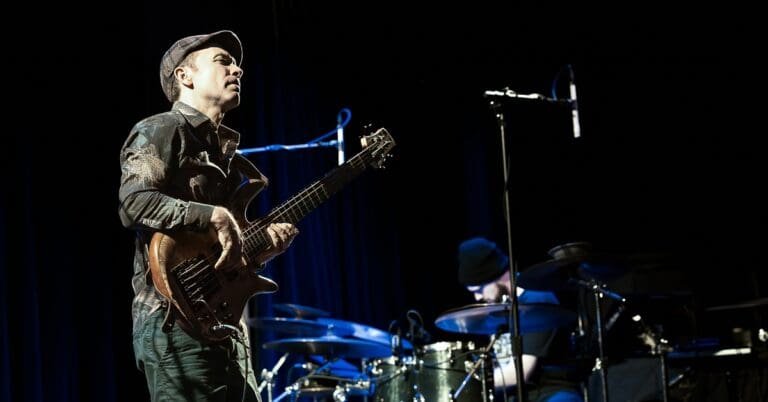
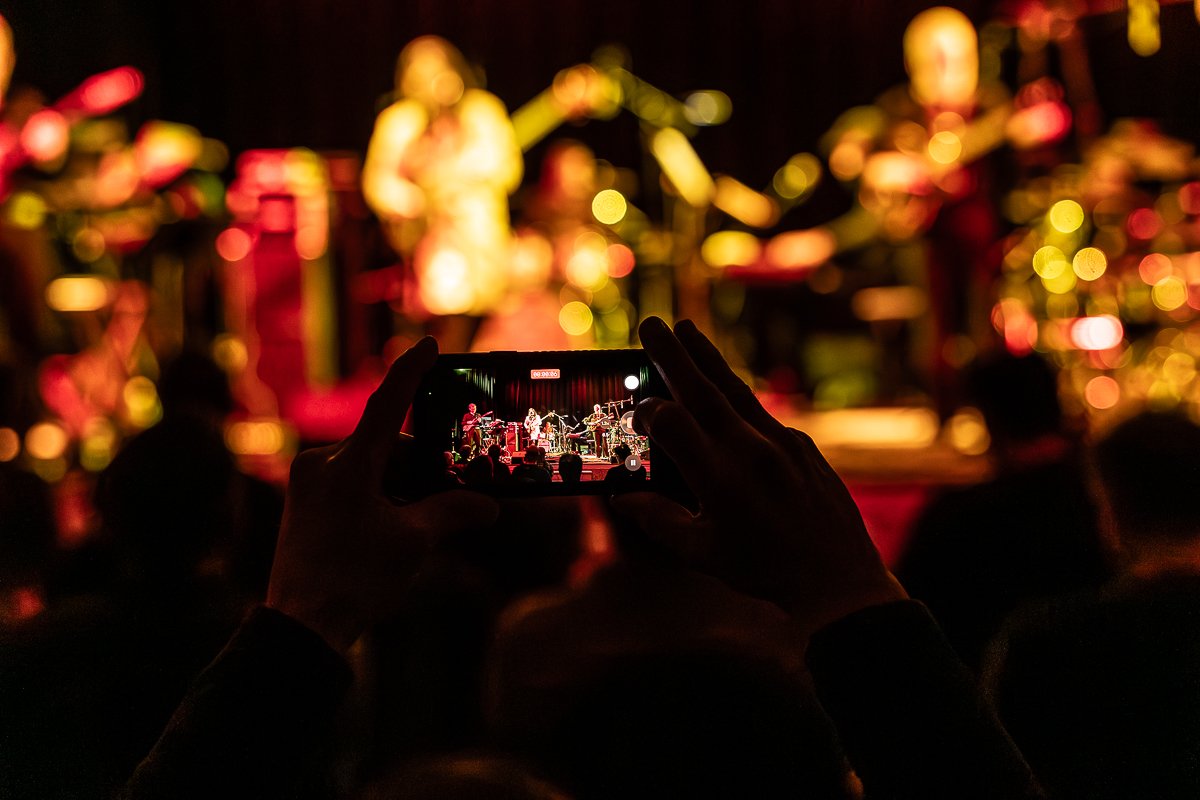
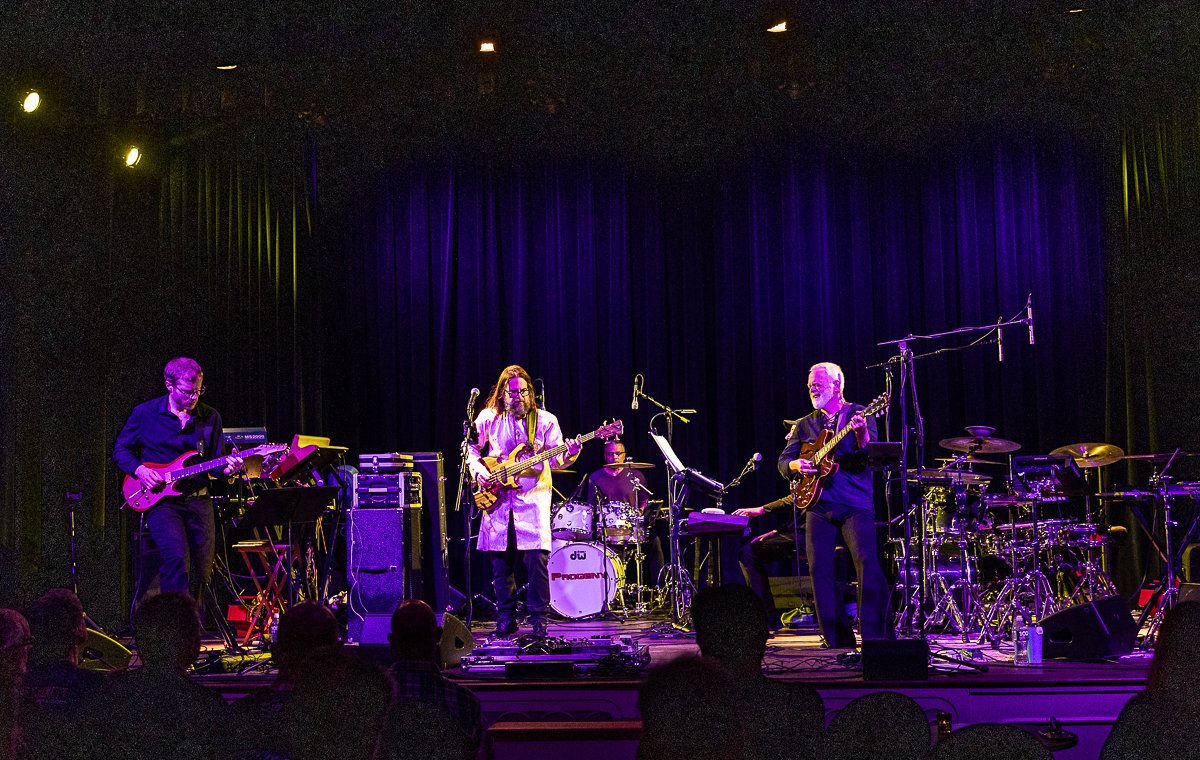
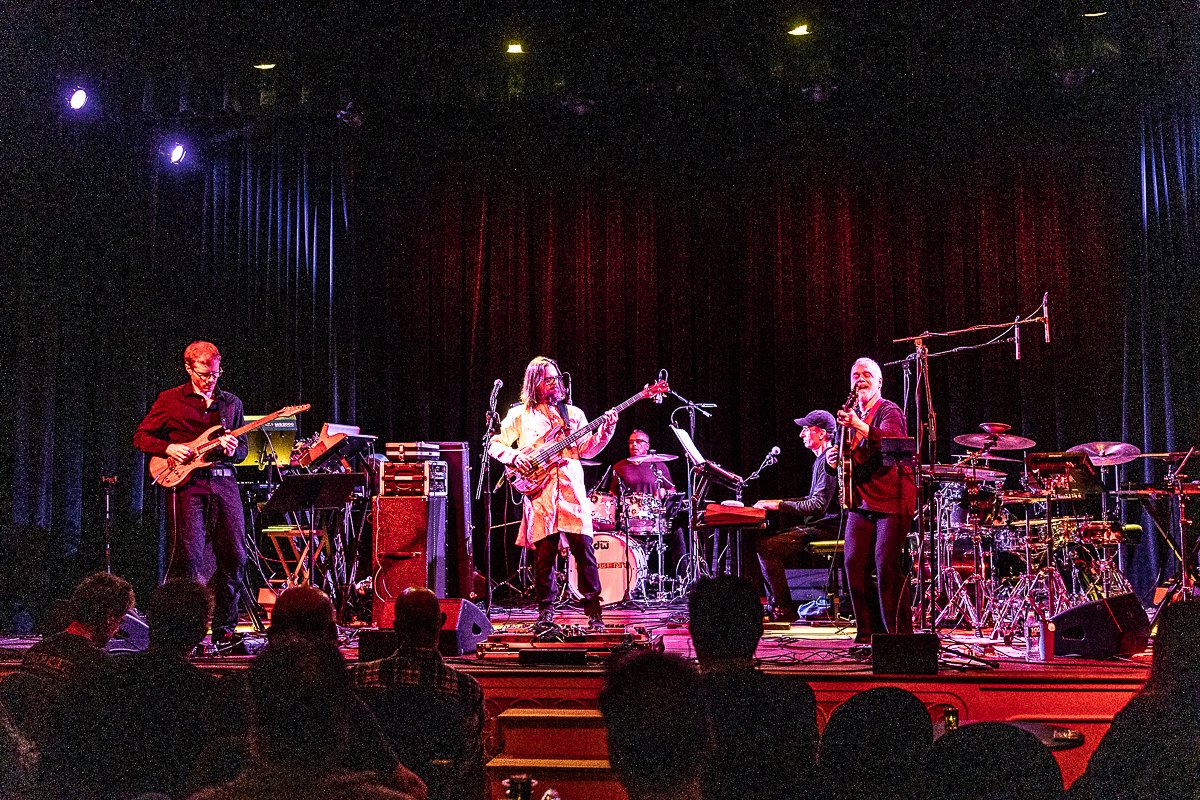
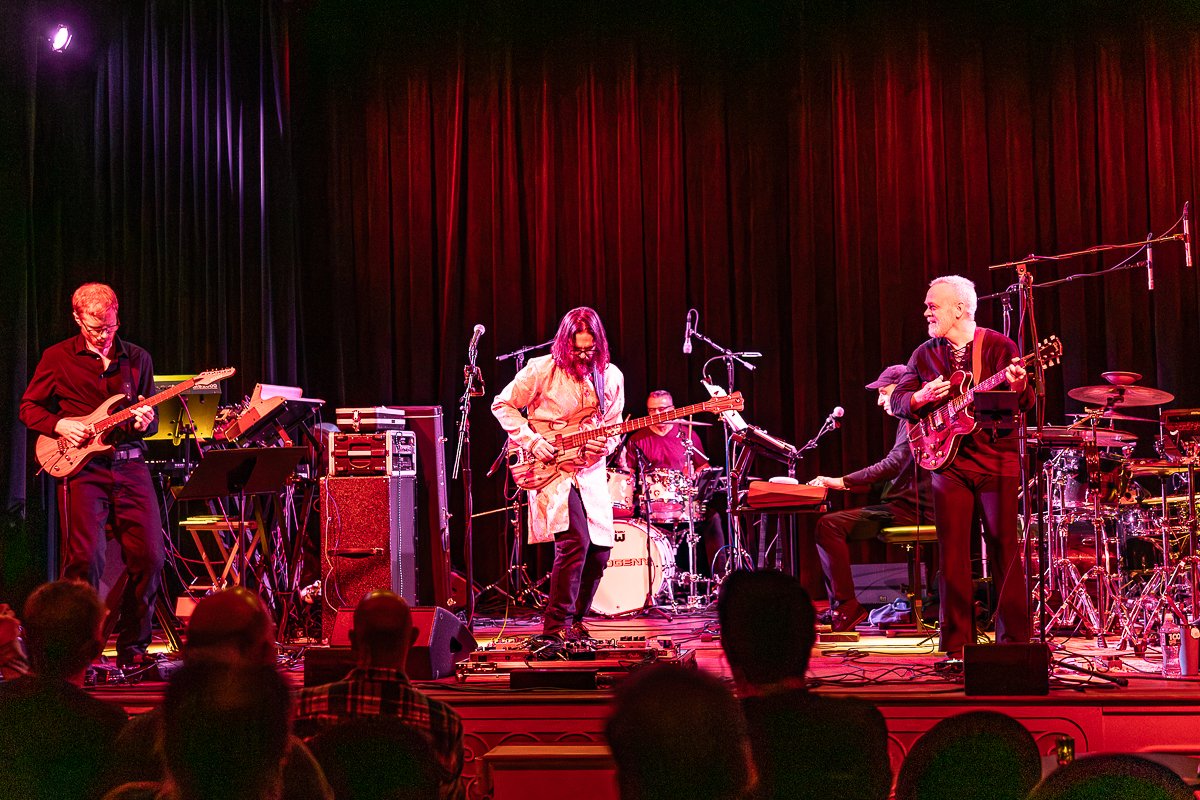
On a busy Saturday night in Glens Falls, New York, finding parking was a competitive sport. With a show at the Wood Theater, hockey at the arena, and a progressive rock concert at the beautiful Park Theater, the city was buzzing from every corner. For fans of adventurous music, however, the destination was clear.
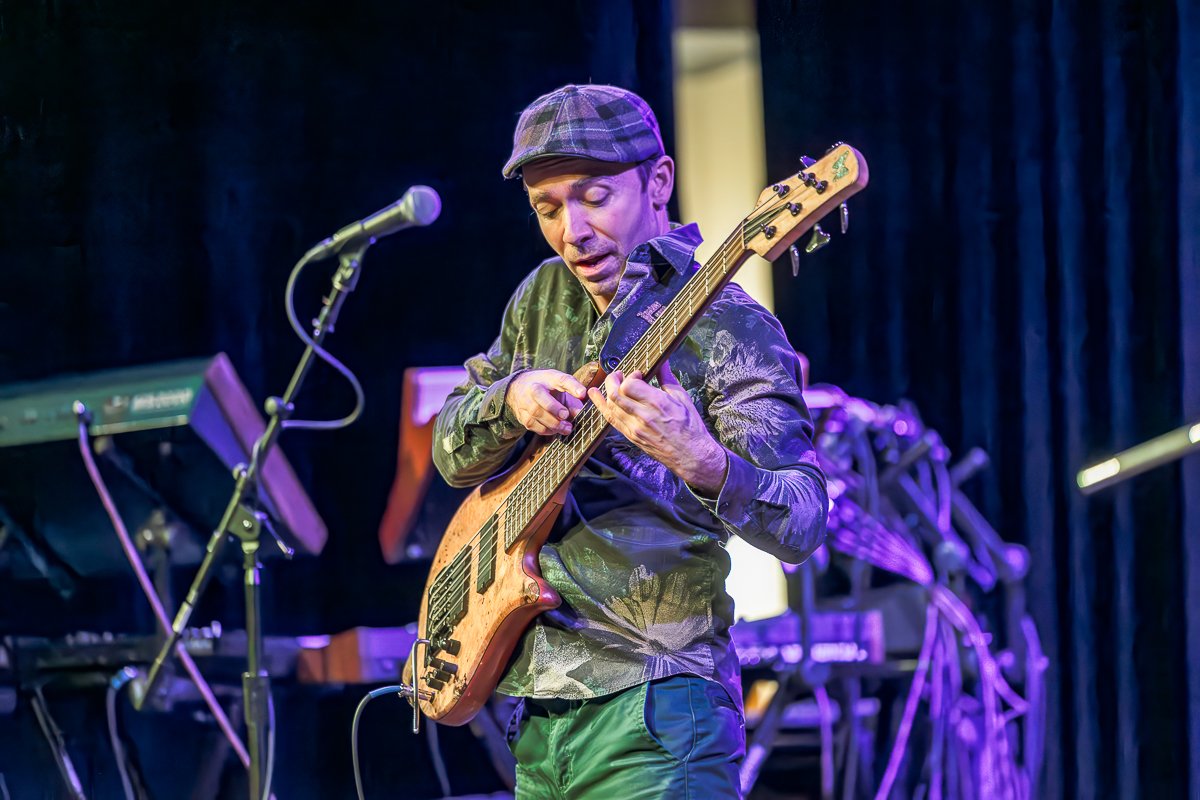
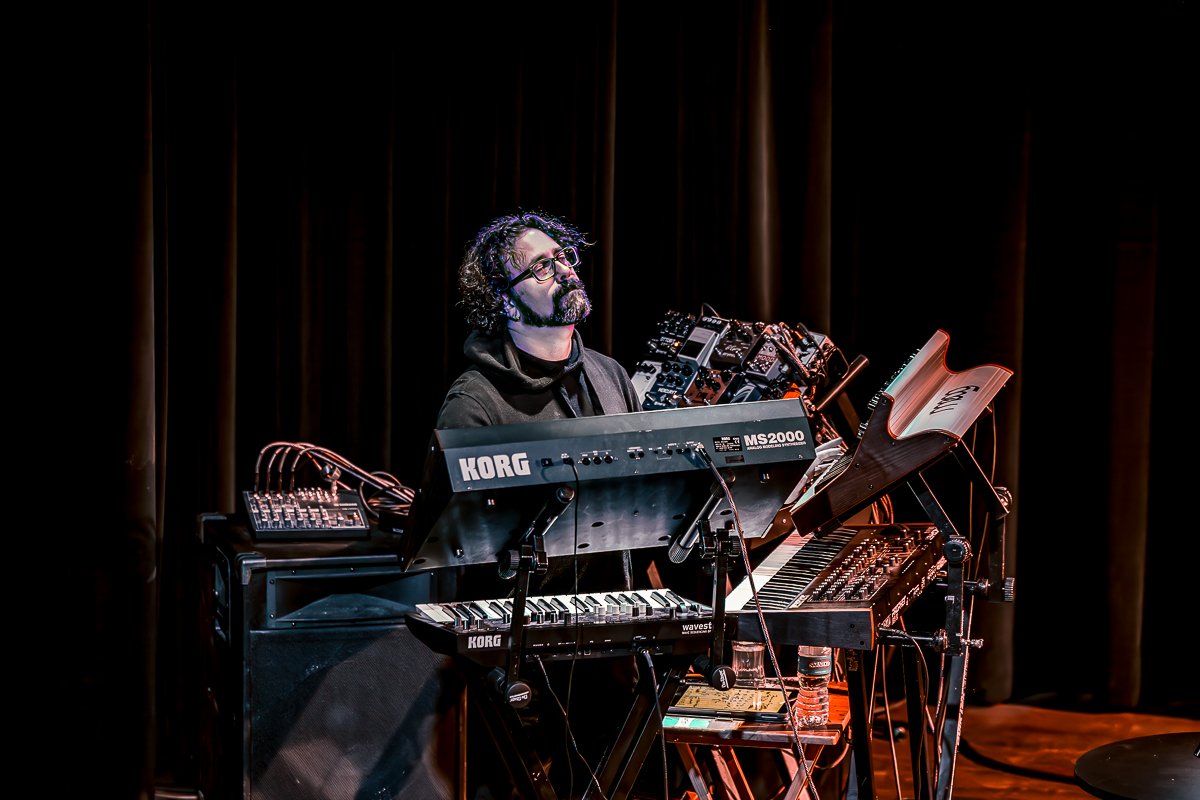
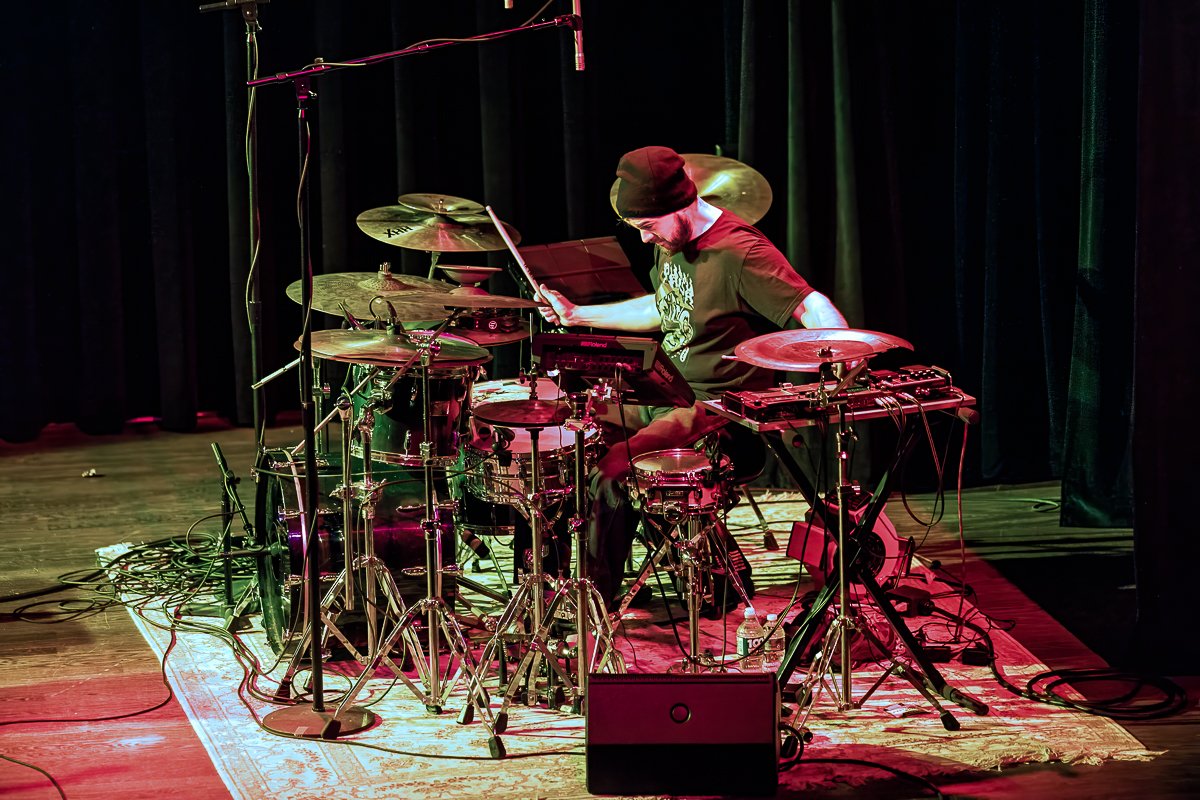
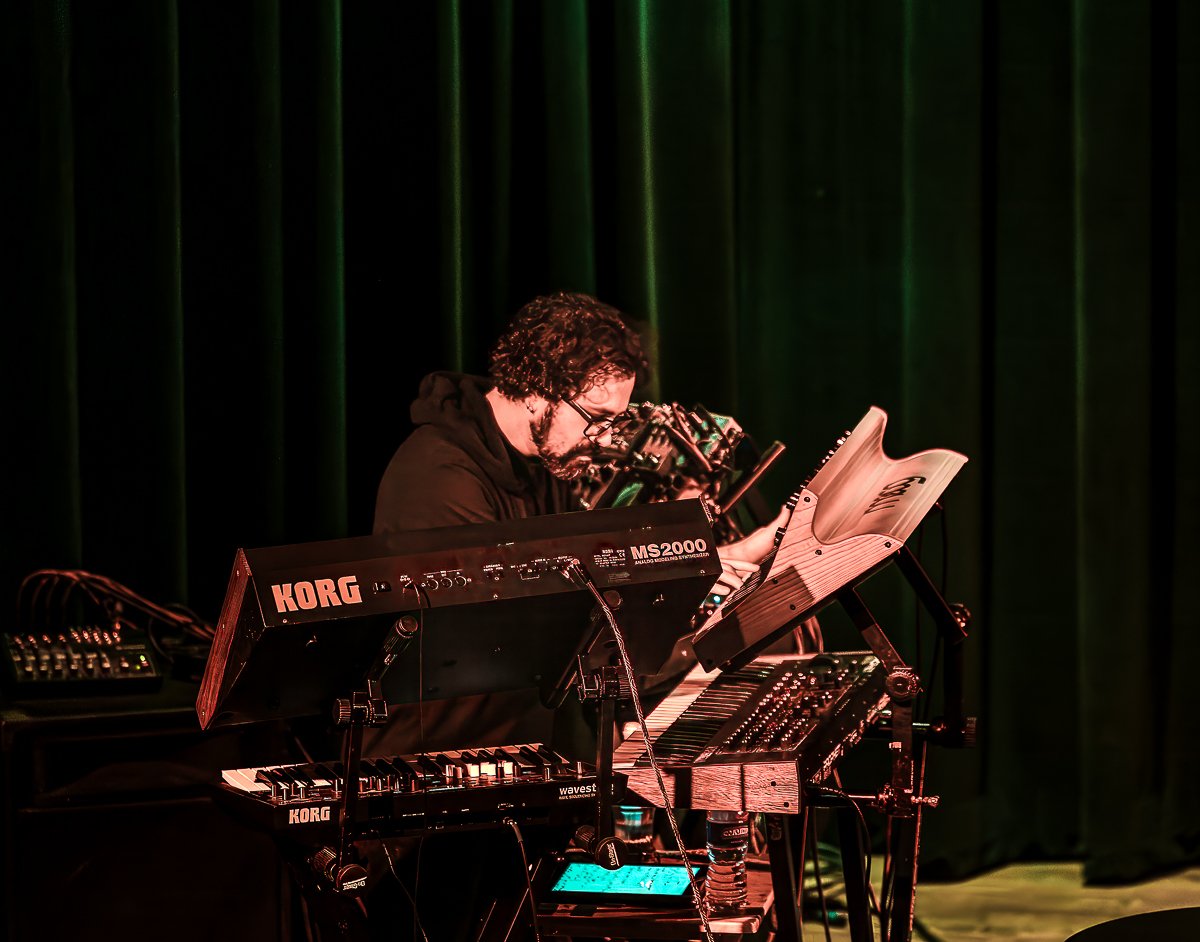
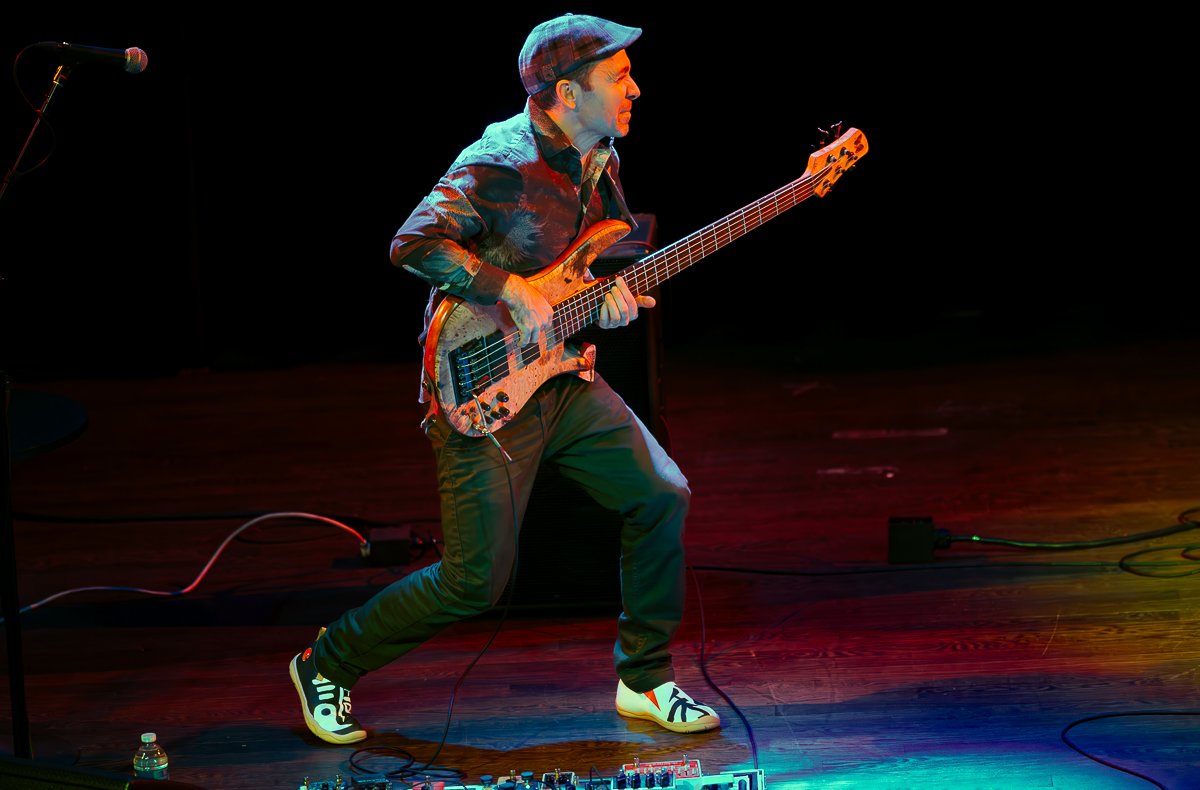
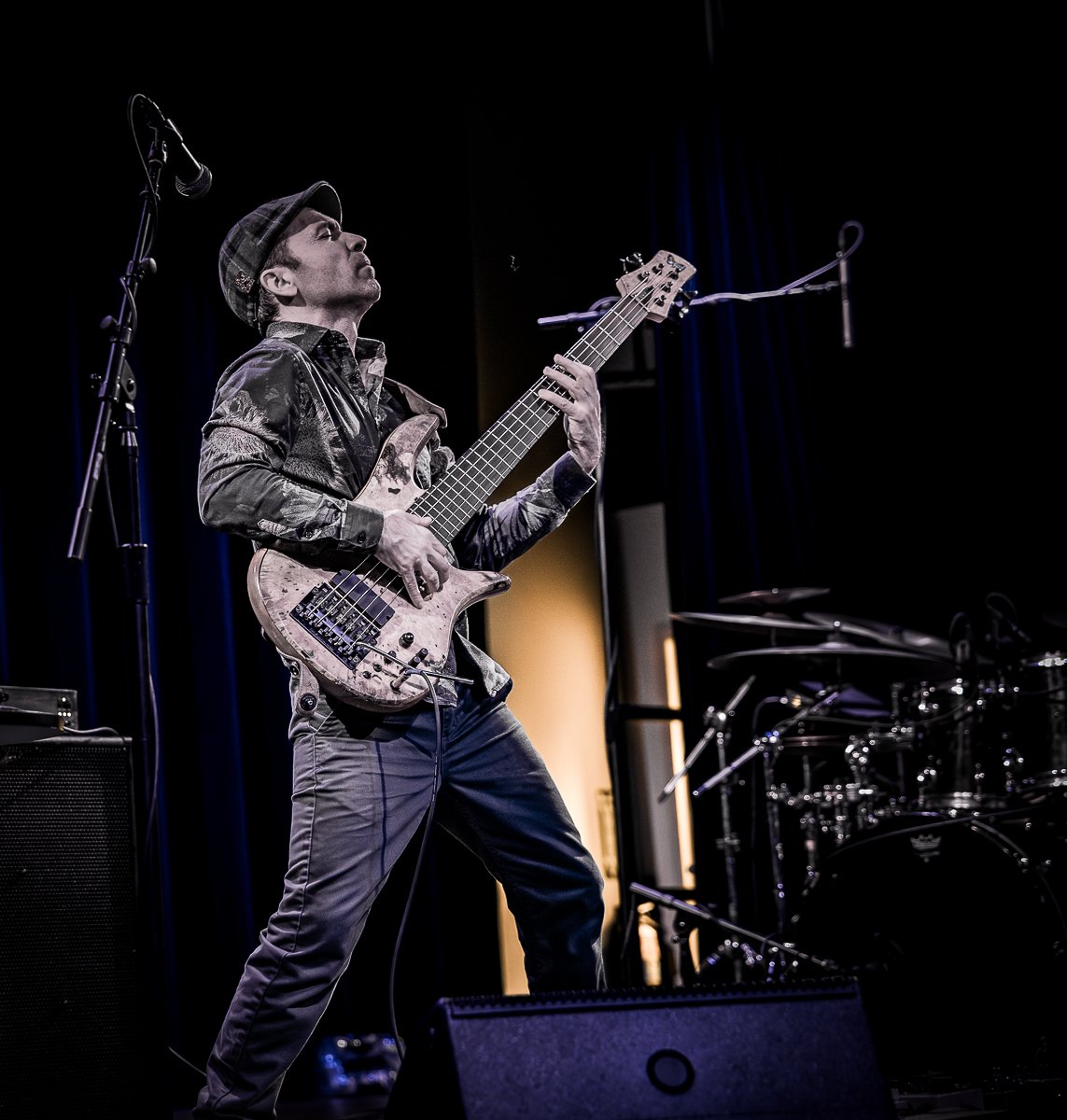
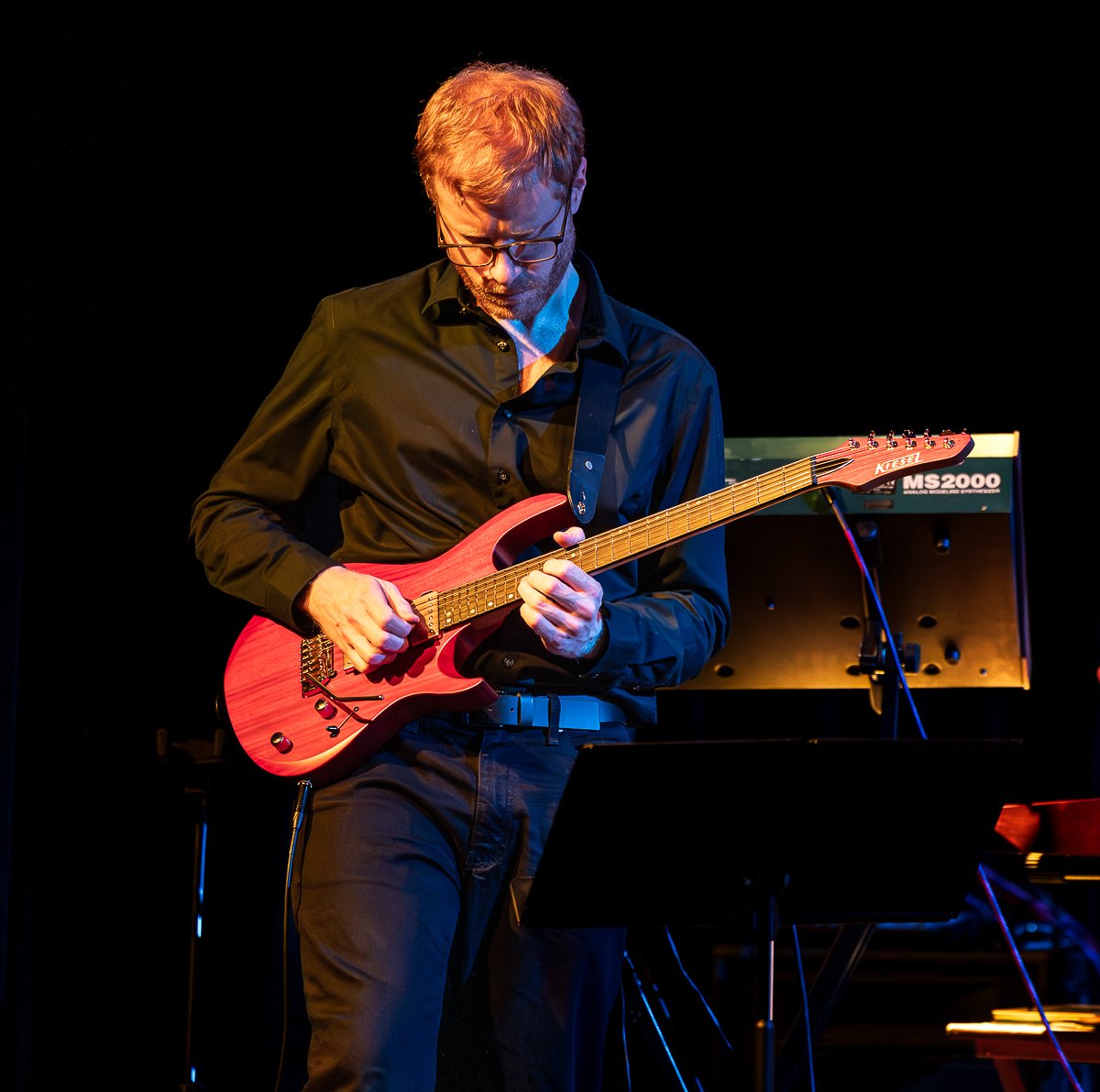
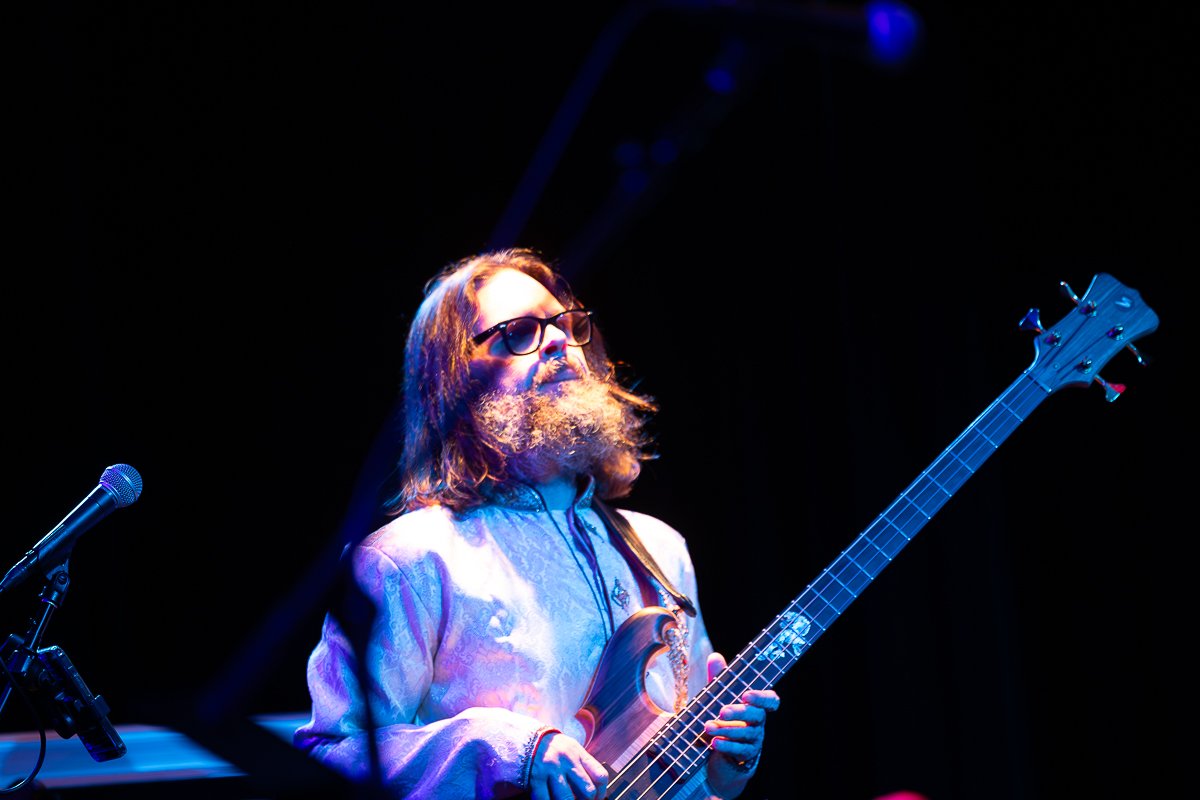
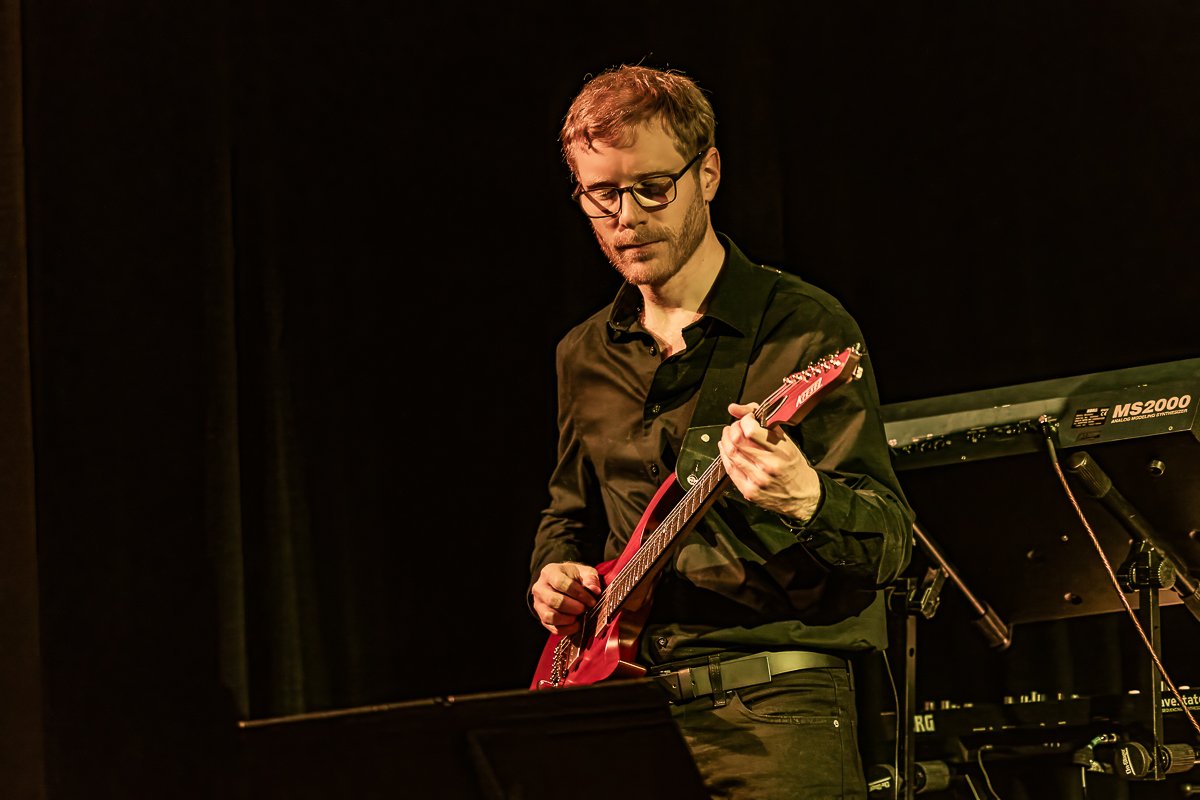
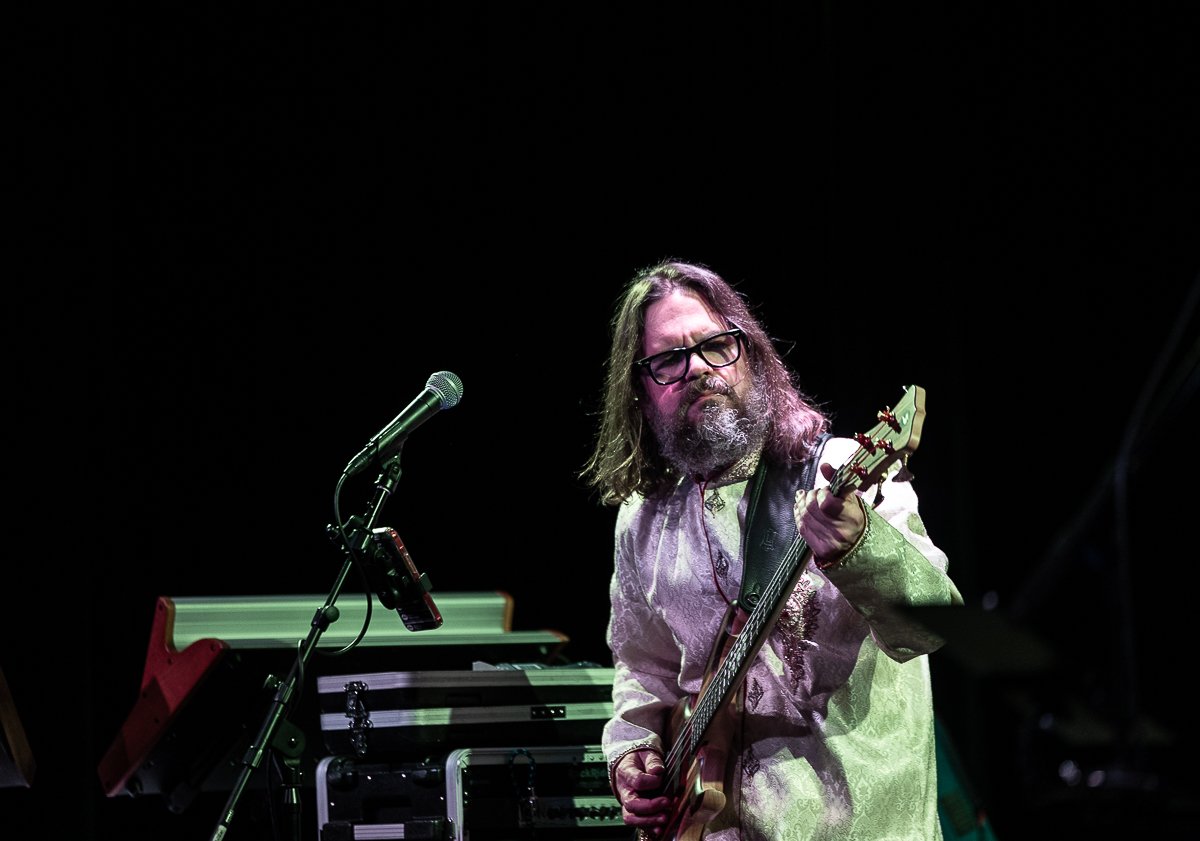
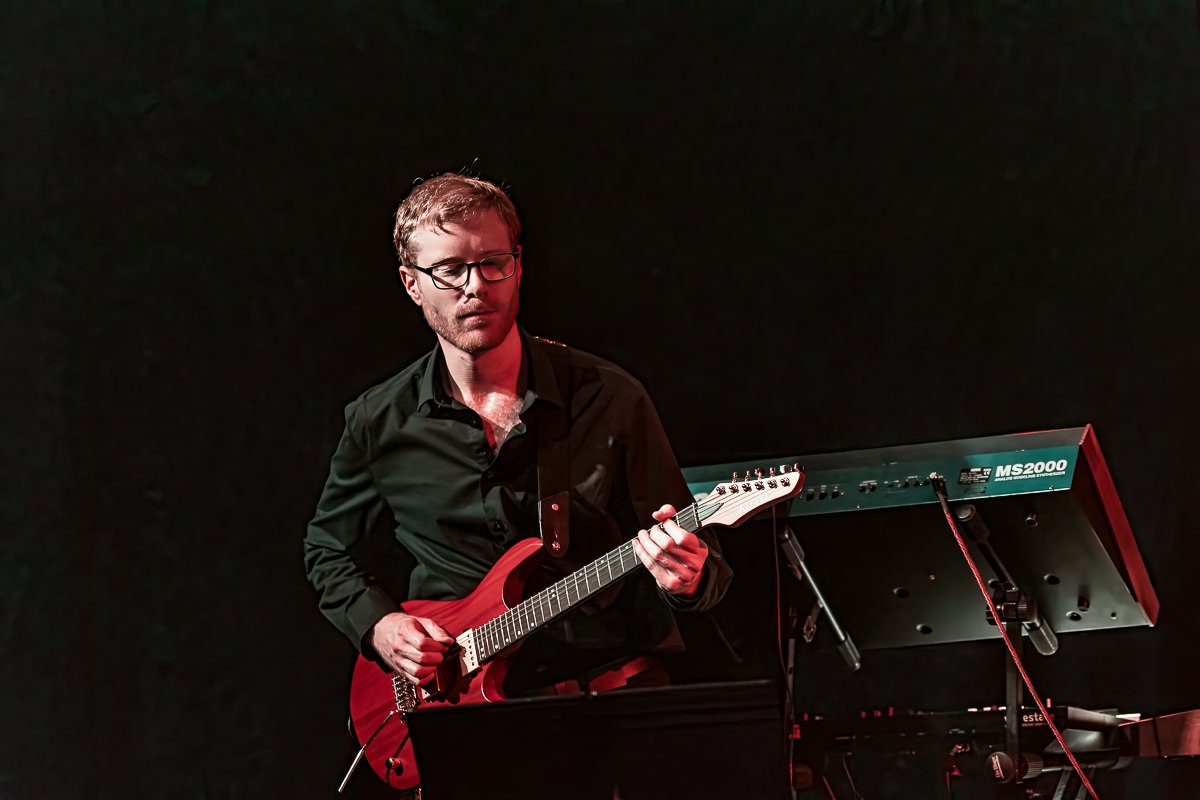
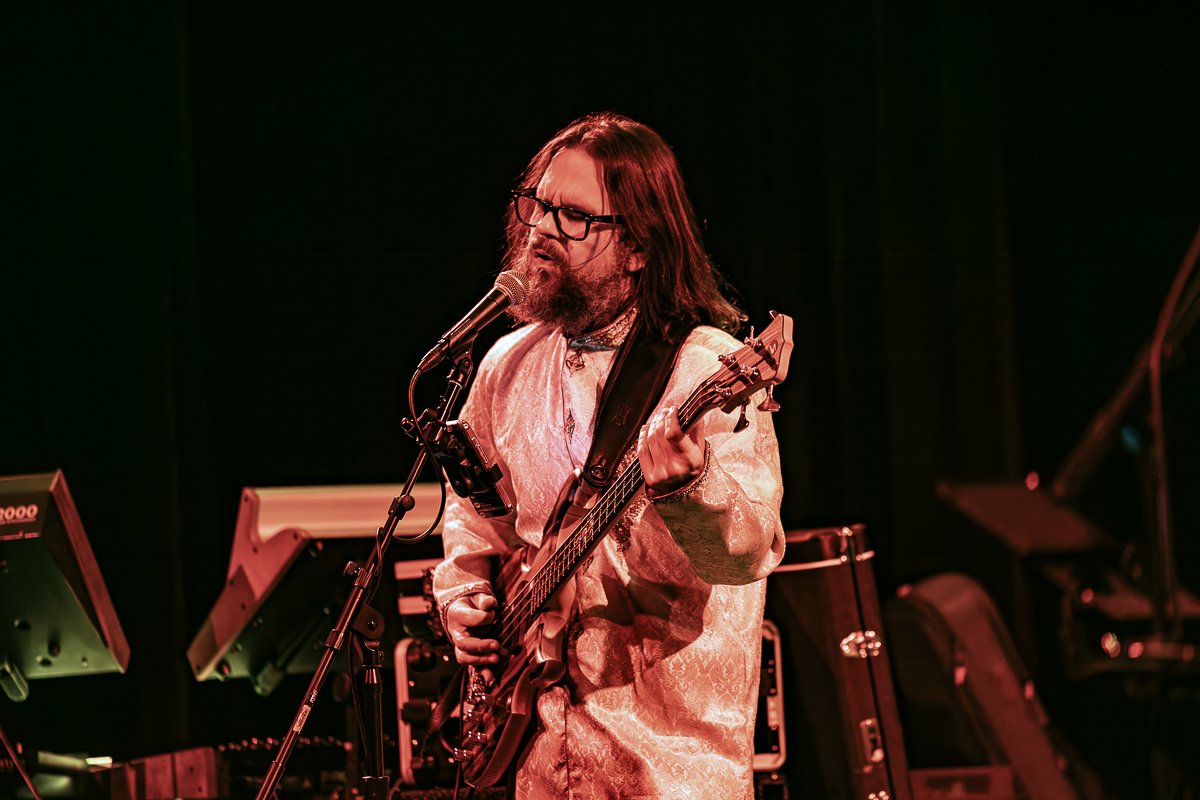
Bassist and composer John Ferrara (Consider the Source, Soloist) is thrilled to share his newest progressive jazz-rock venture, Mono Means One—a powerful instrumental trio that continues to floor audiences up and down the East Coast.
Mono Means One is:
Mono Means One blends progressive and psychedelic rock with jazz sensibilities, delivering moody textures, poignant melodies, and jaw-dropping musicianship. Their sound lives somewhere between Radiohead, The Mars Volta, and Medeski Martin & Wood, striking a rare balance between composition and improvisation.
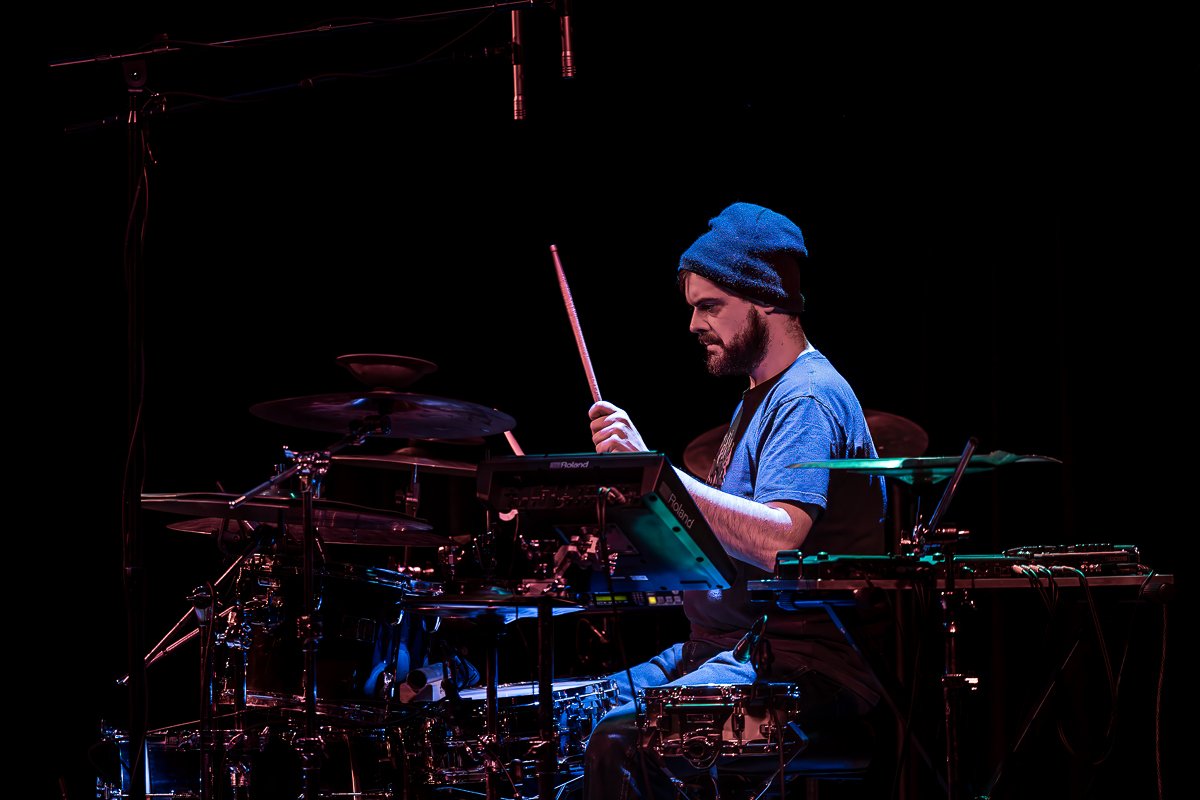
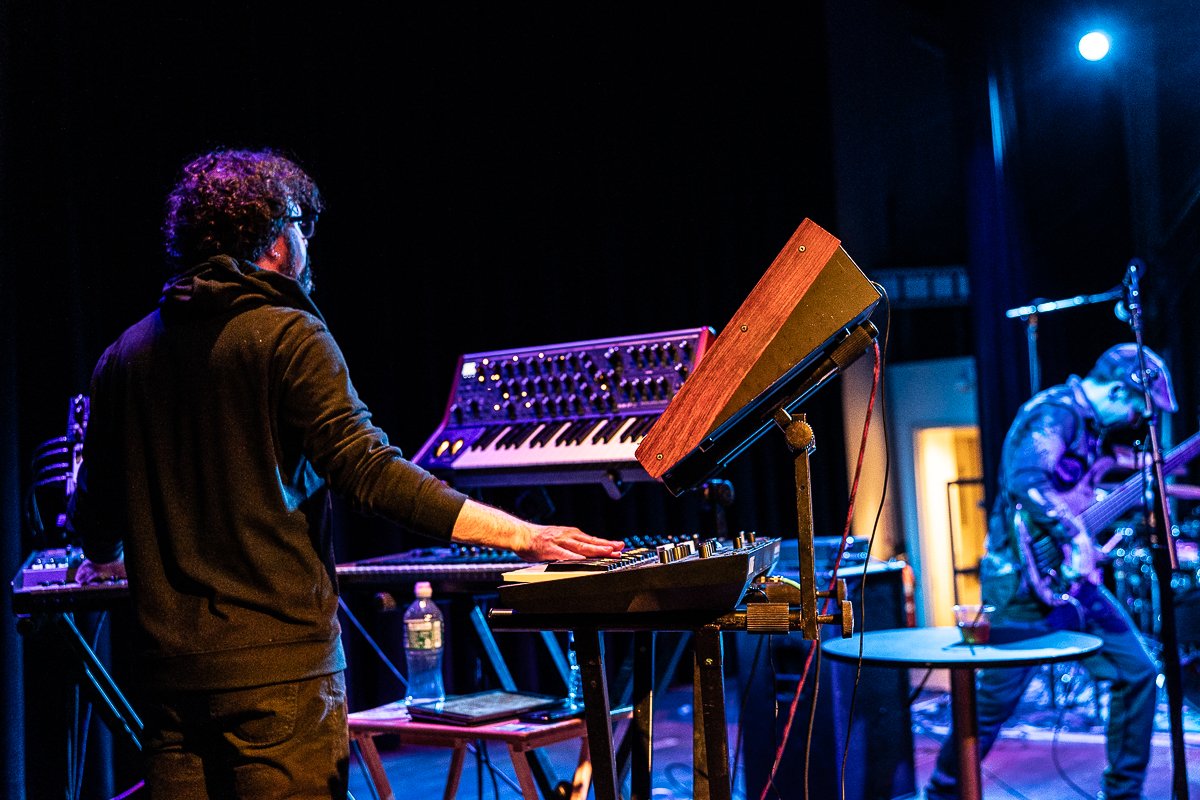
Their performances pull listeners to the edge of chaos before gently restoring them to a serene homeostasis—sometimes multiple times in a single set. Audiences often find themselves unsure whether to dance or simply stand in awe, captivated by Ferrara’s seamless integration of Taurus pedals and bass-tapping technique, Madore’s explosive and dynamic drumming, and Young’s mastery of keyboards and sonic manipulation. The result is a richly layered, immersive experience that leaves a lasting impression.
Photos:
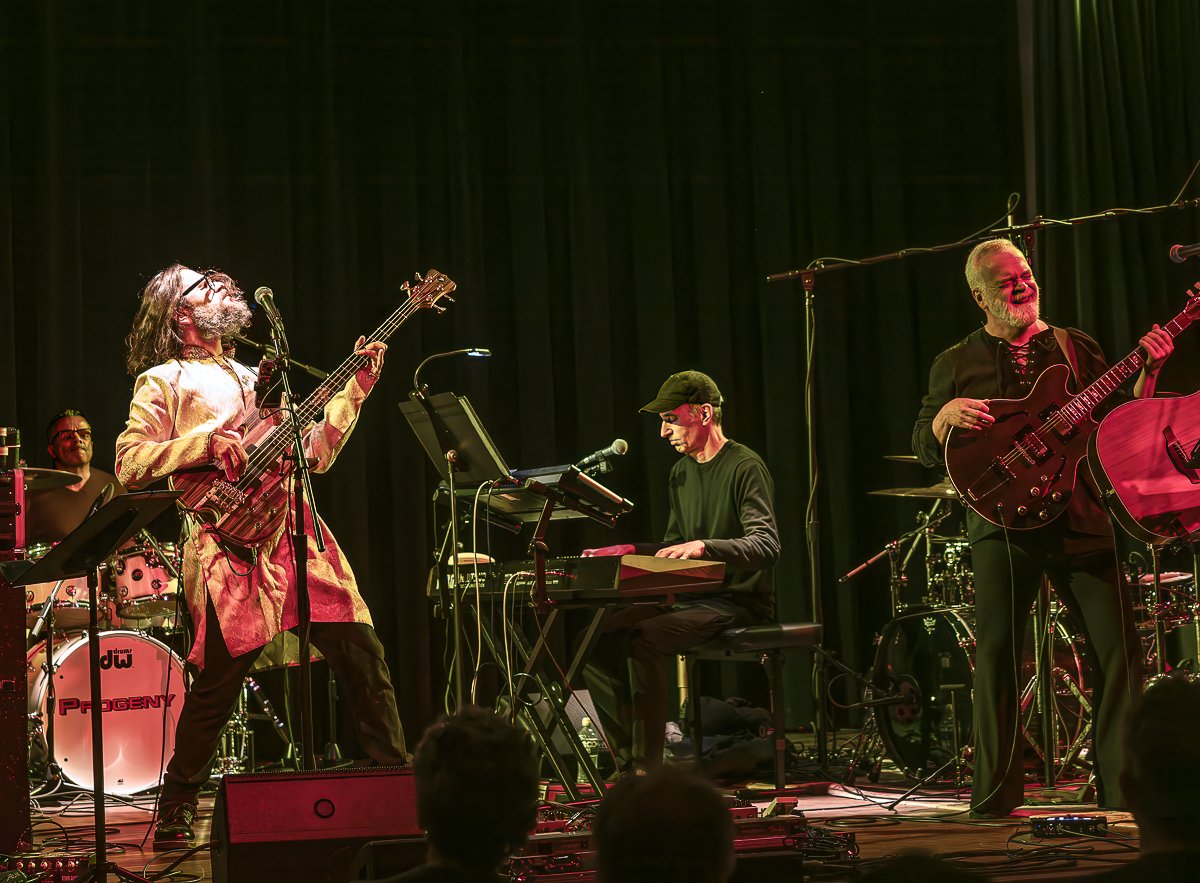
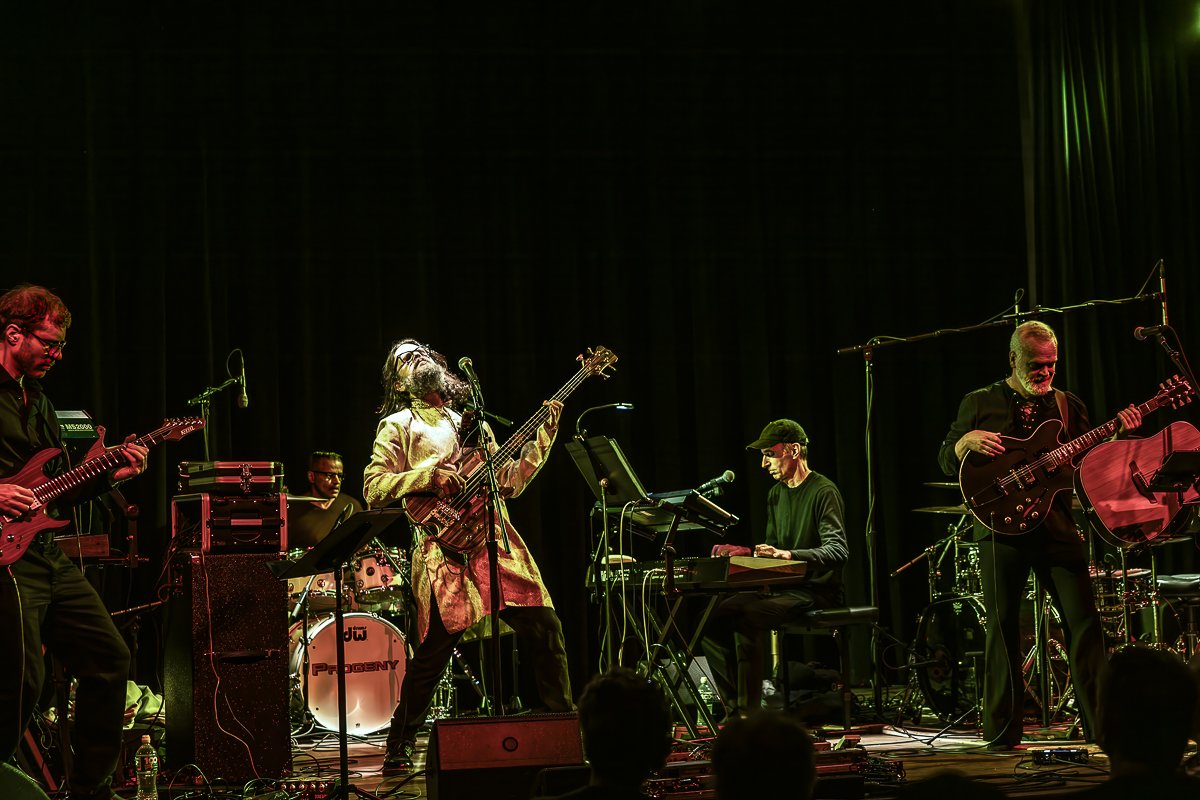
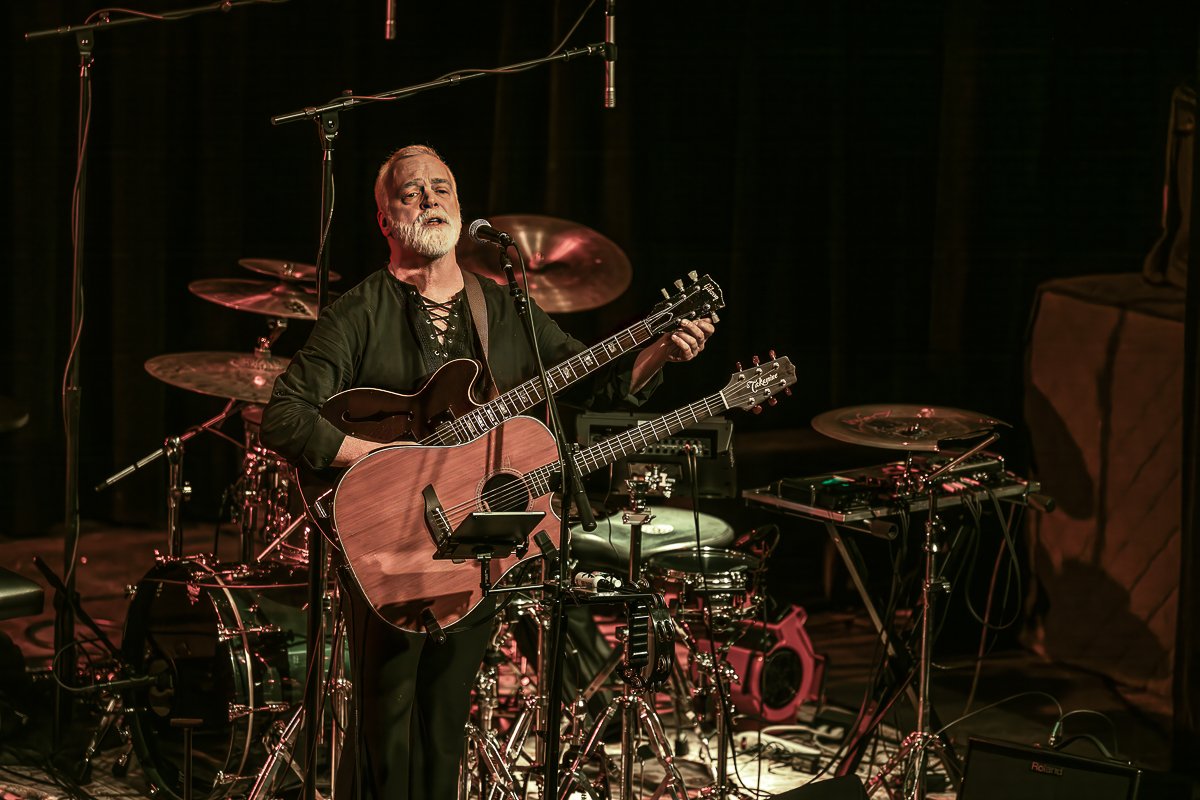
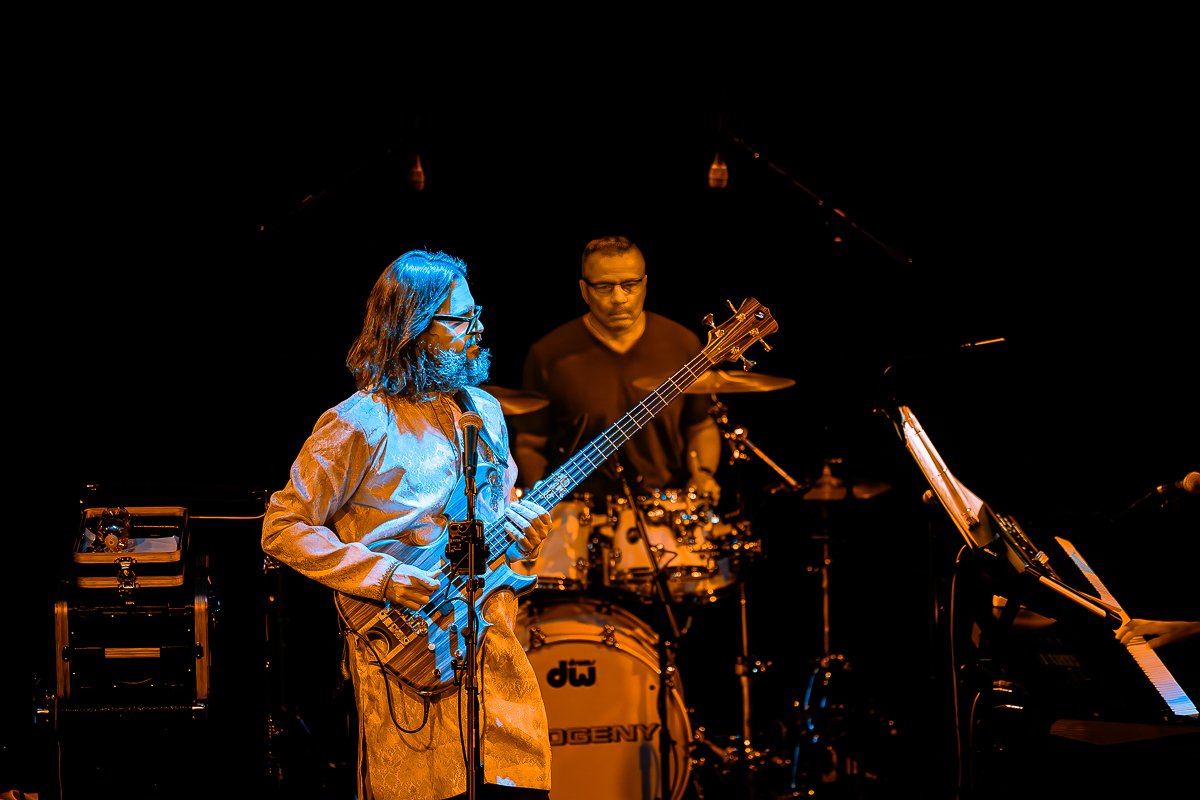
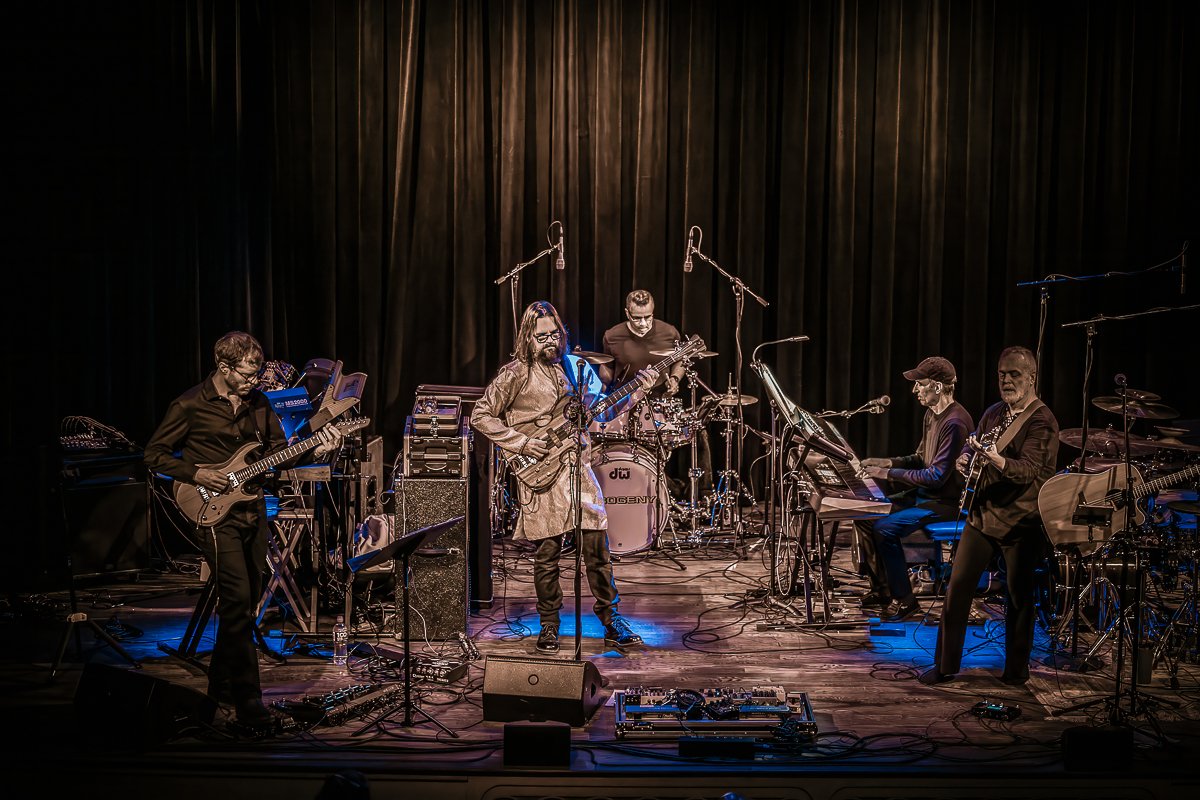
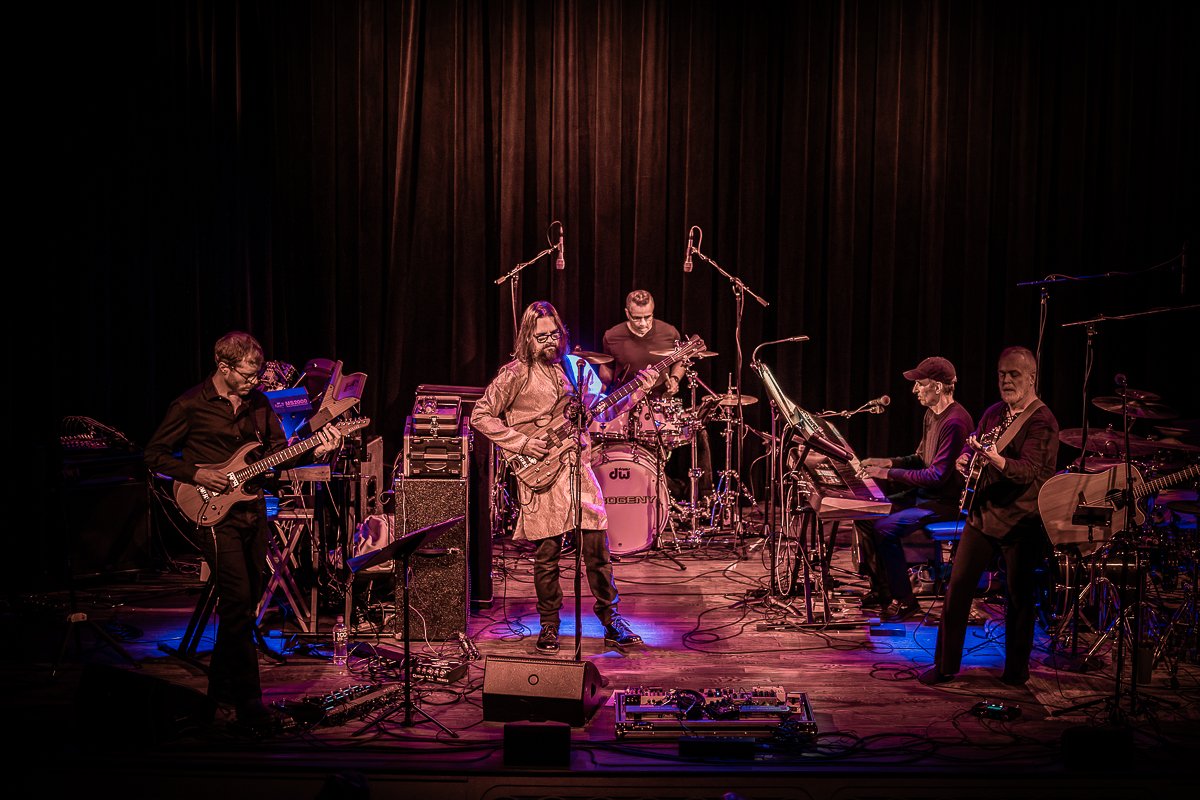
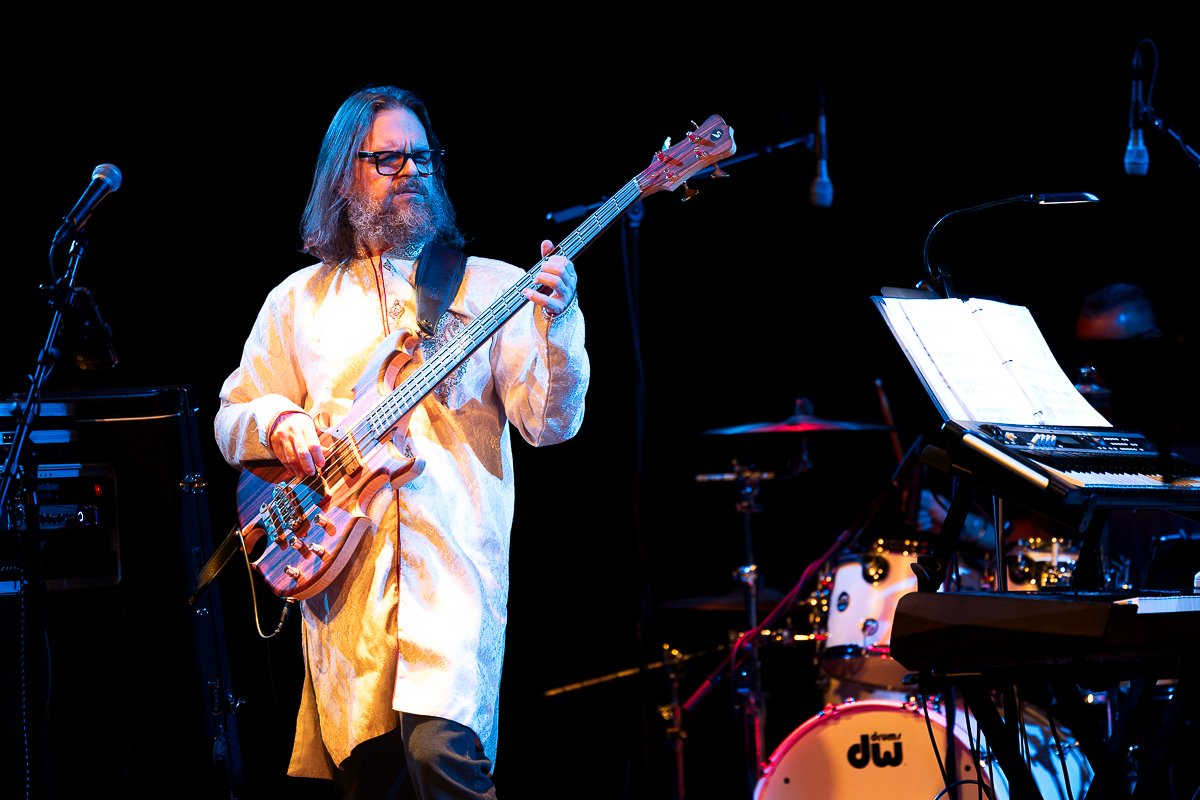
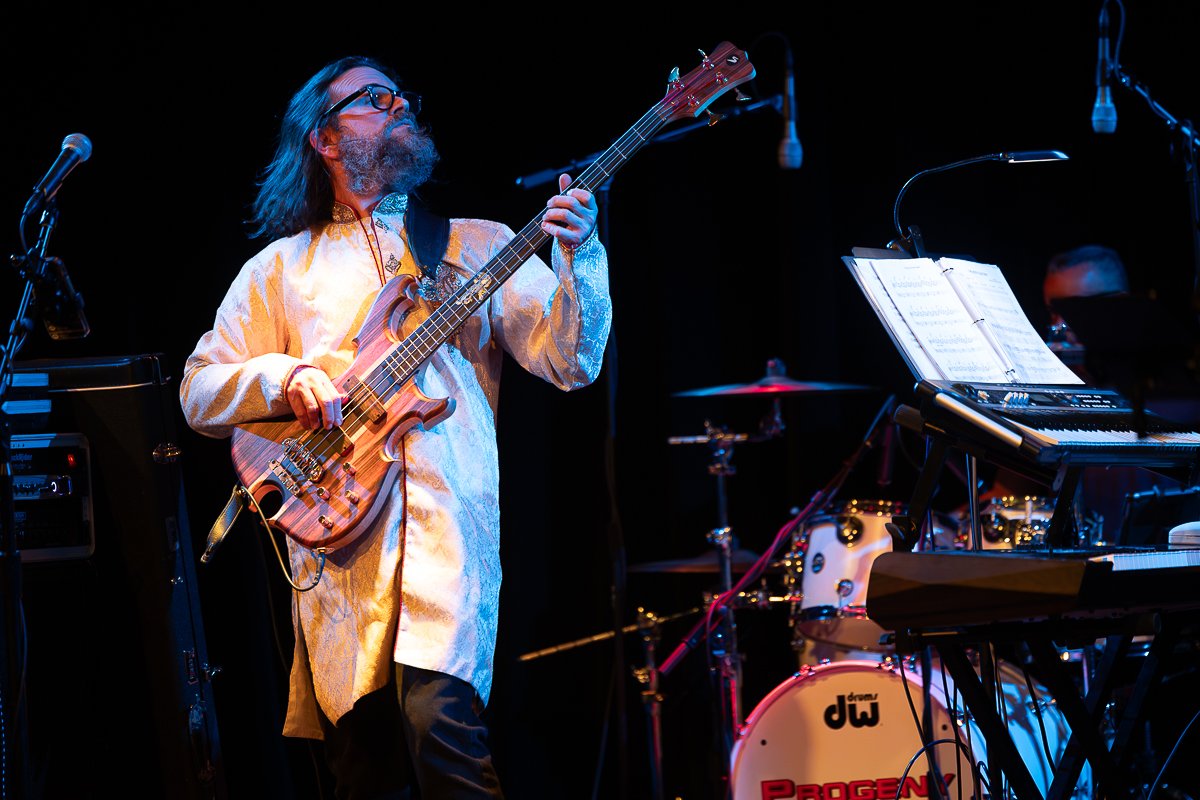
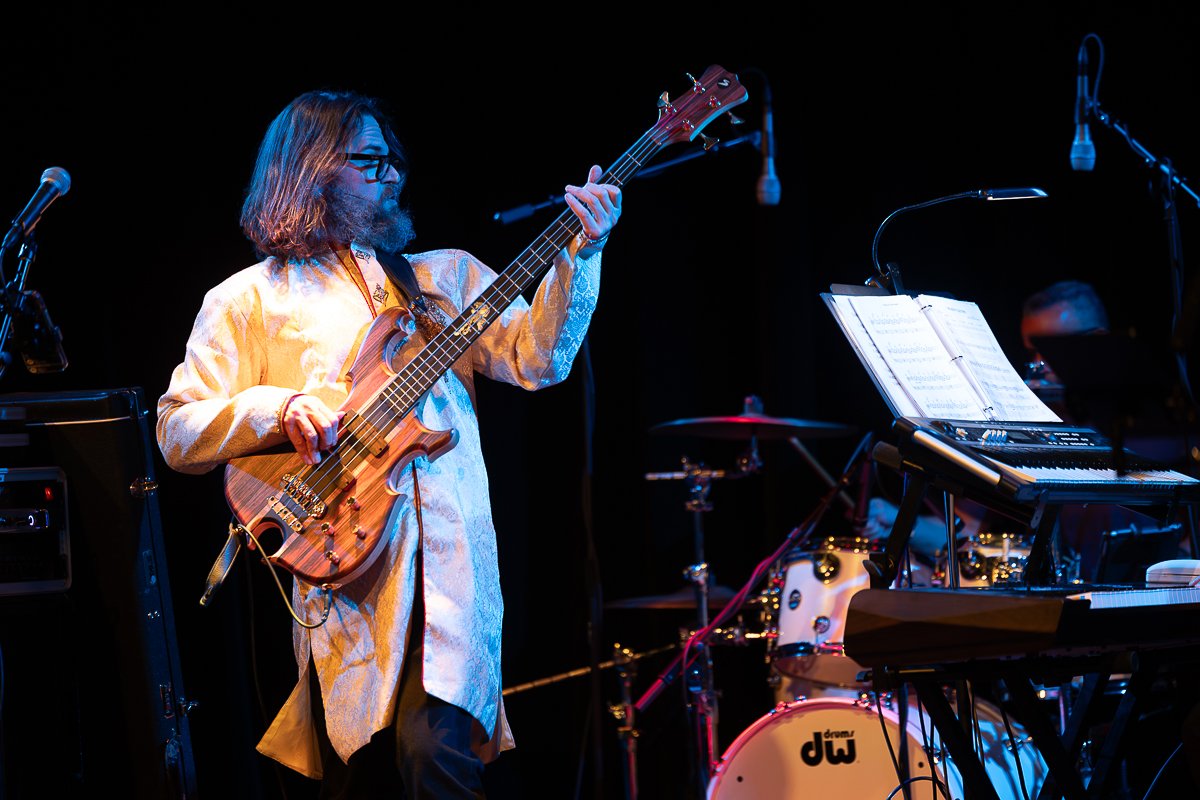
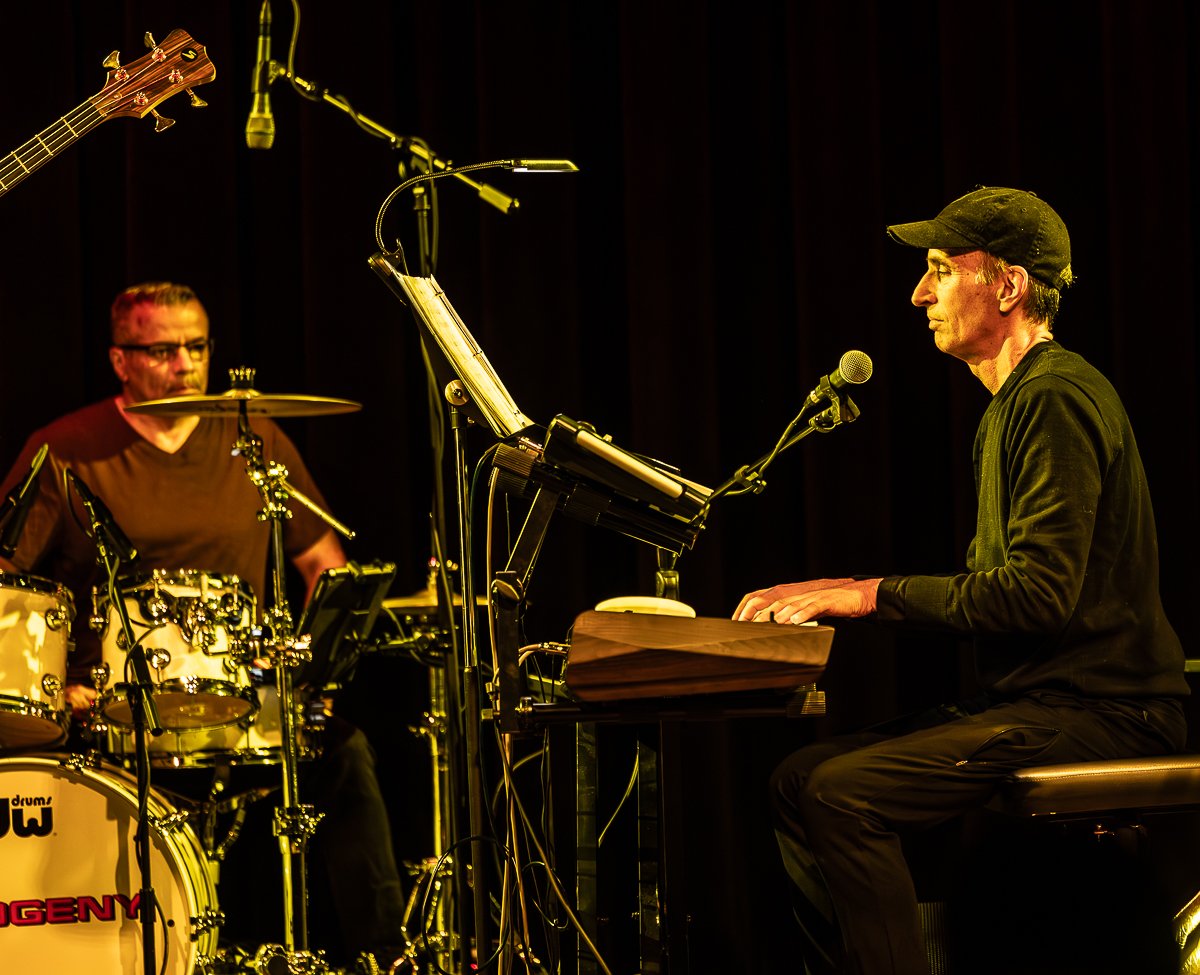
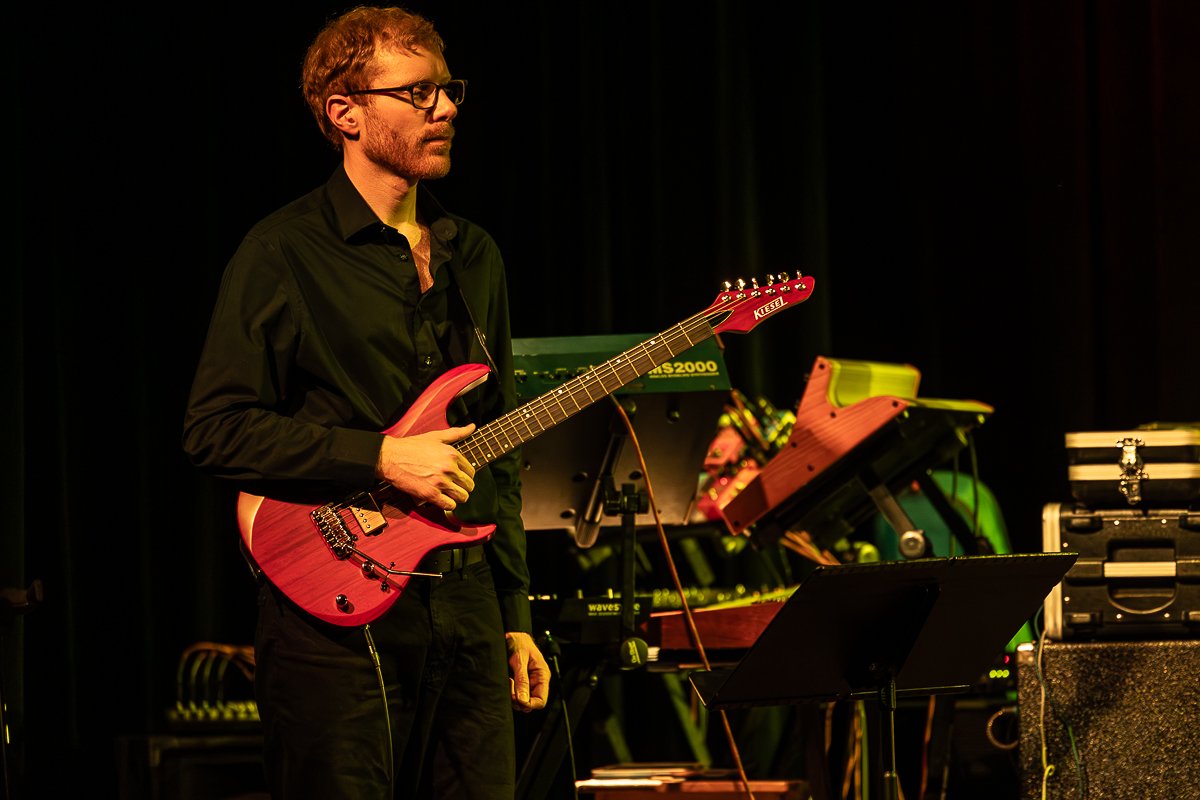
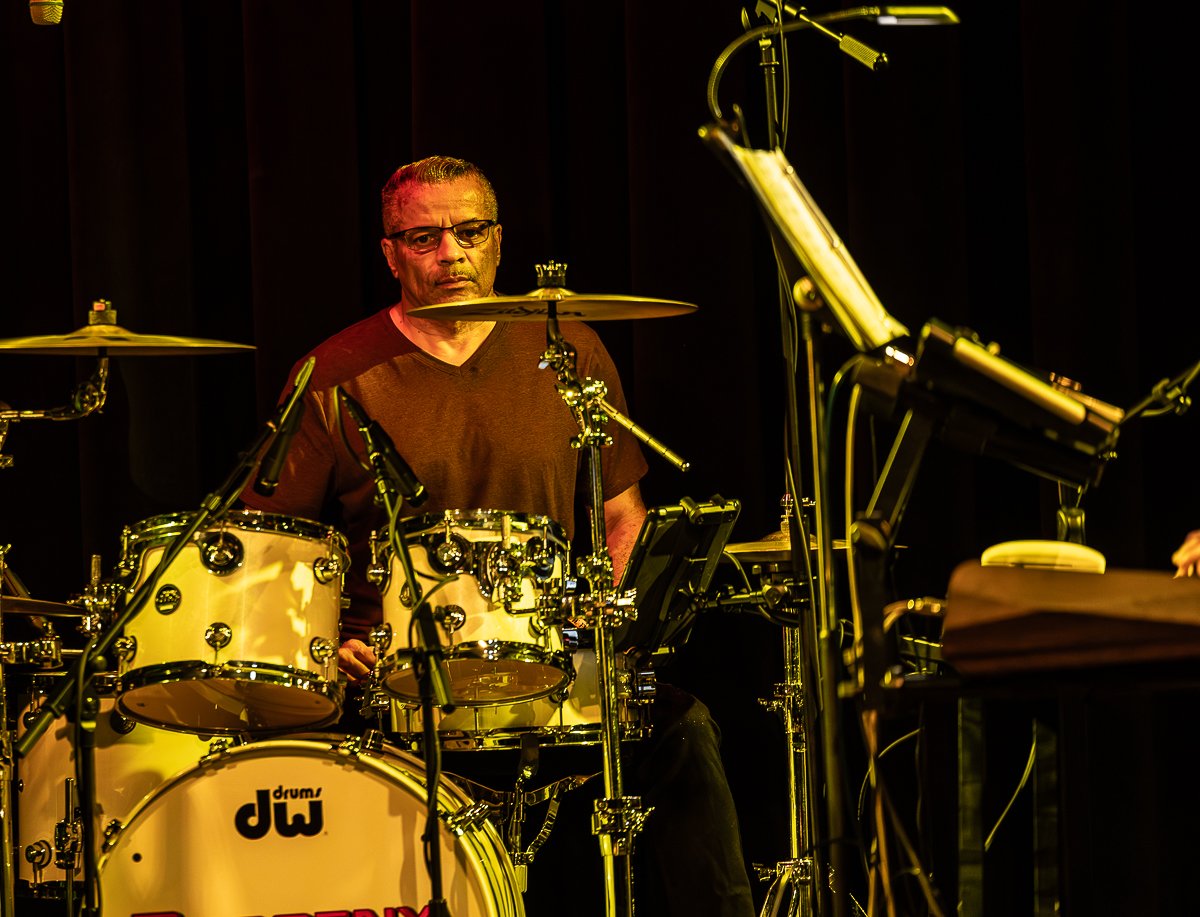
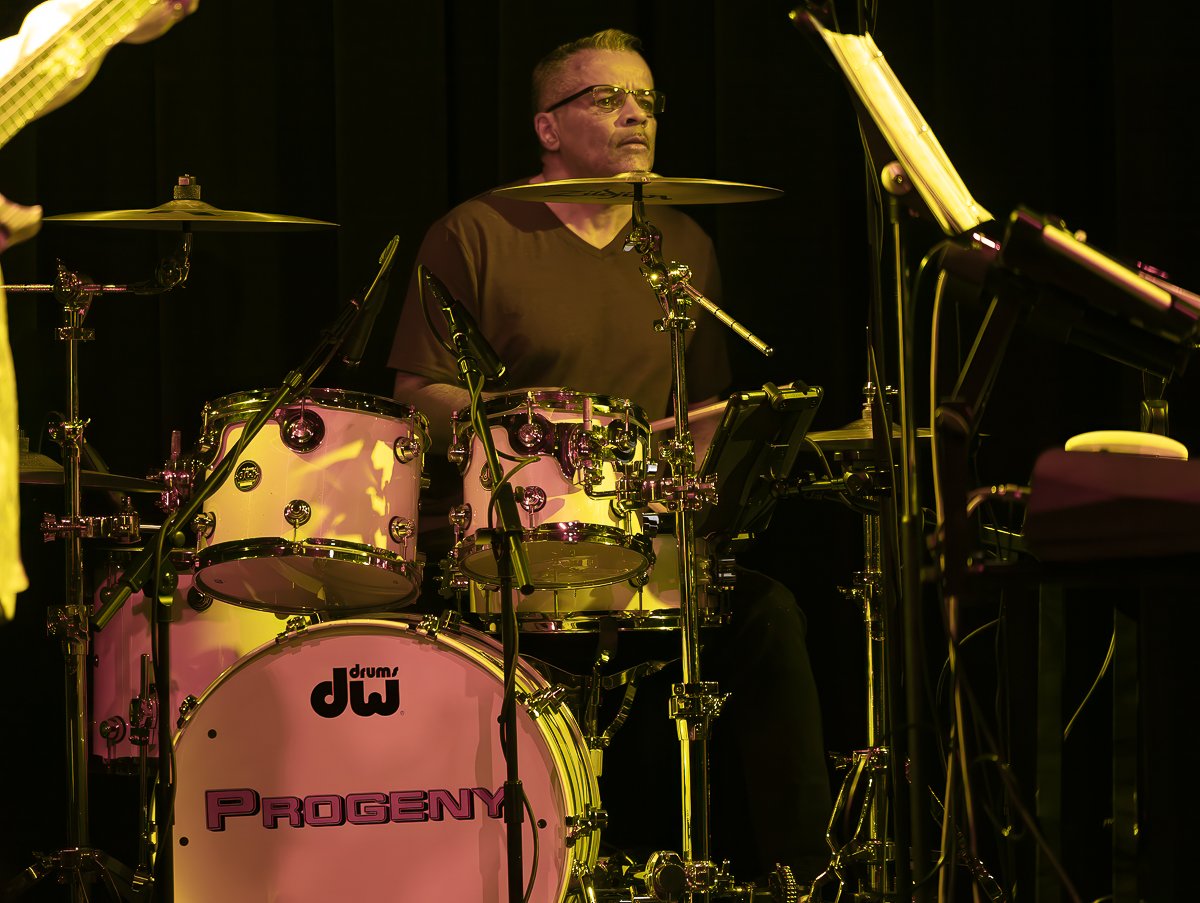
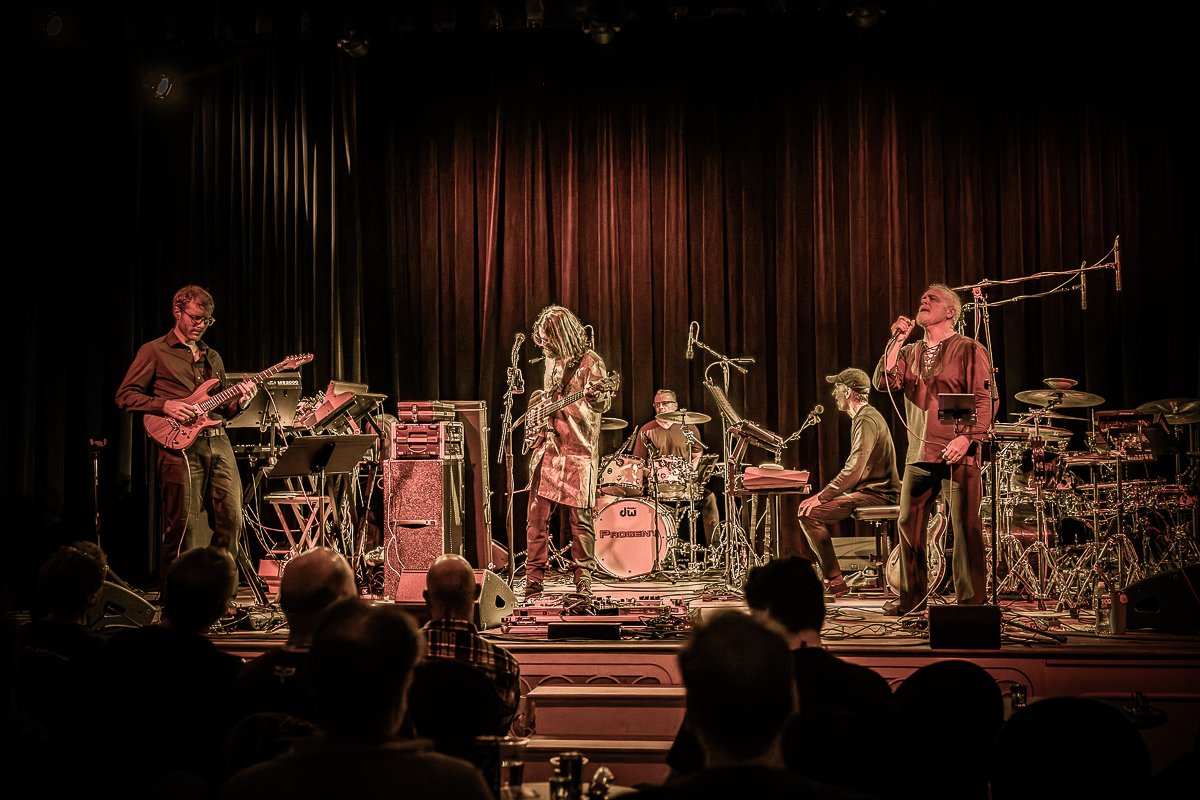
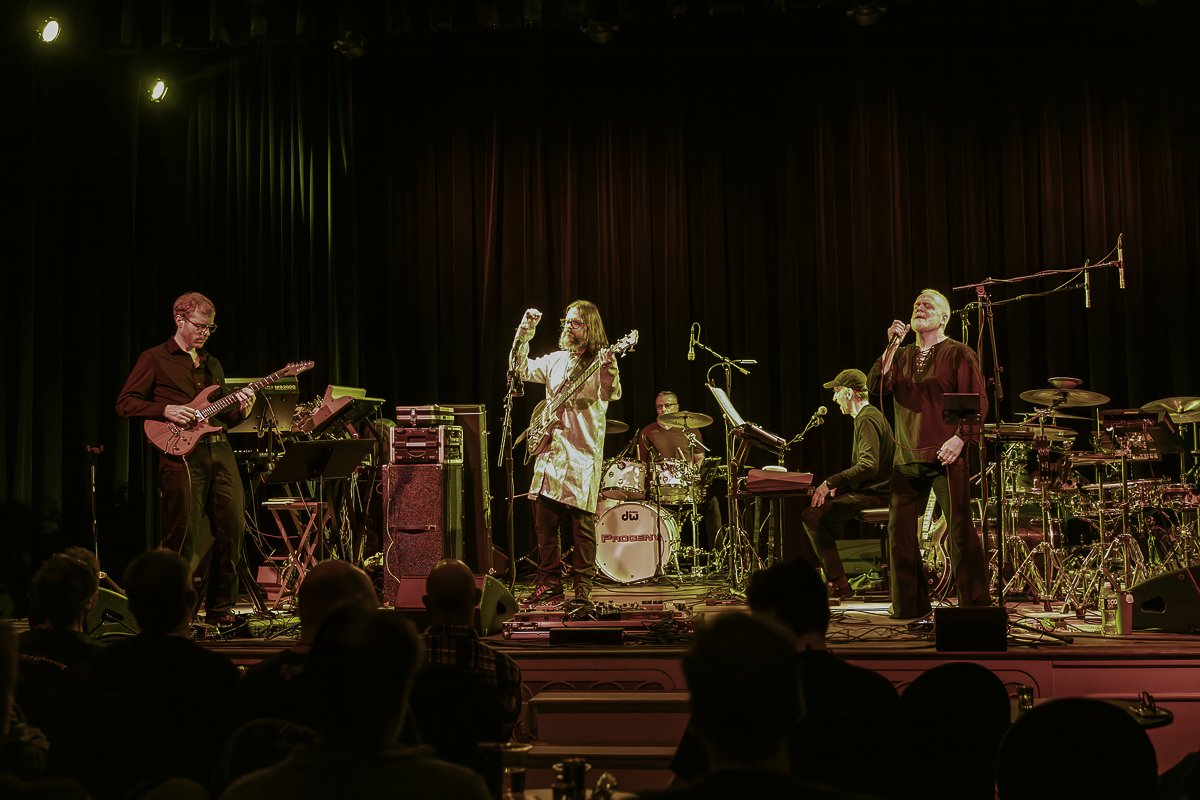
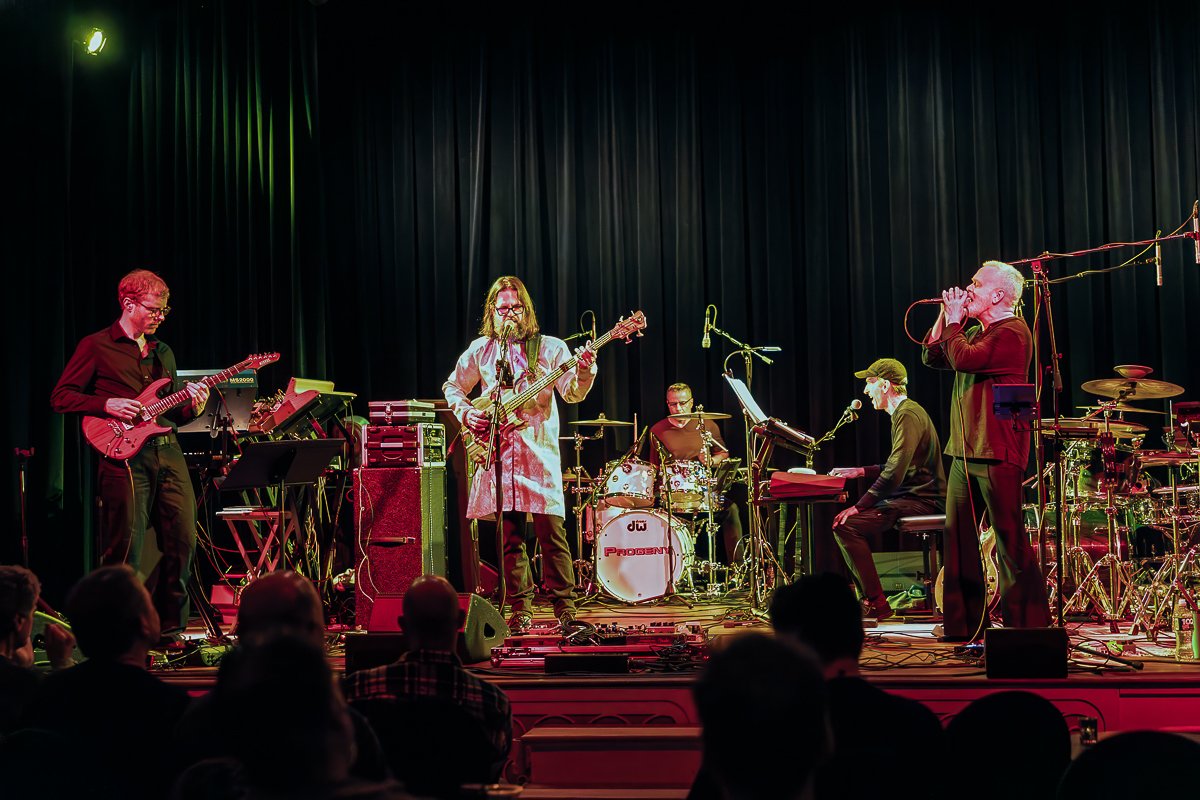
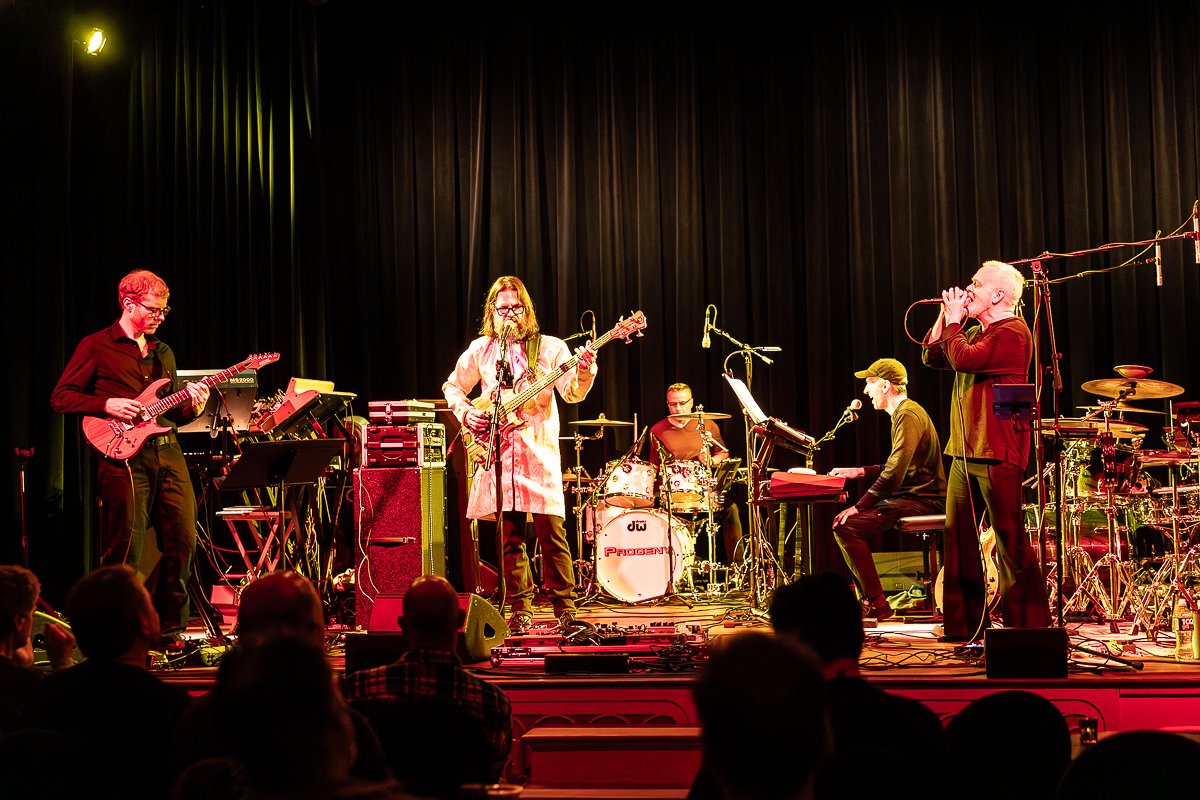
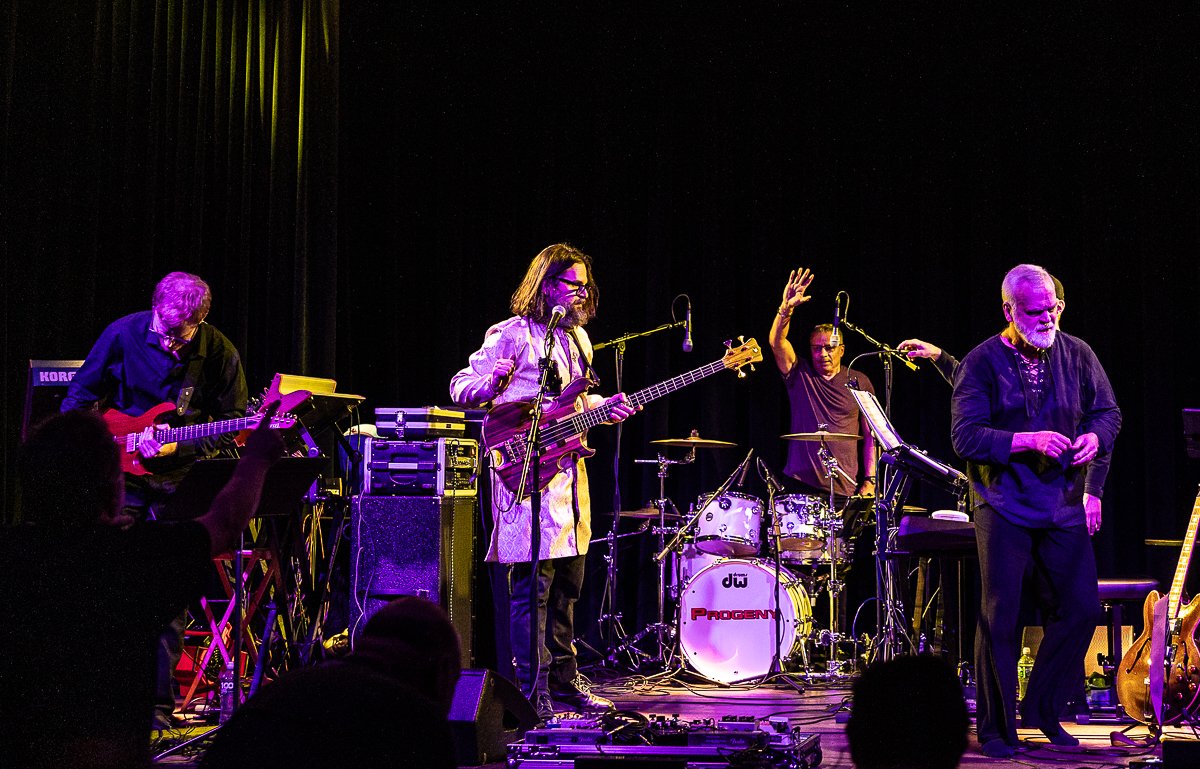
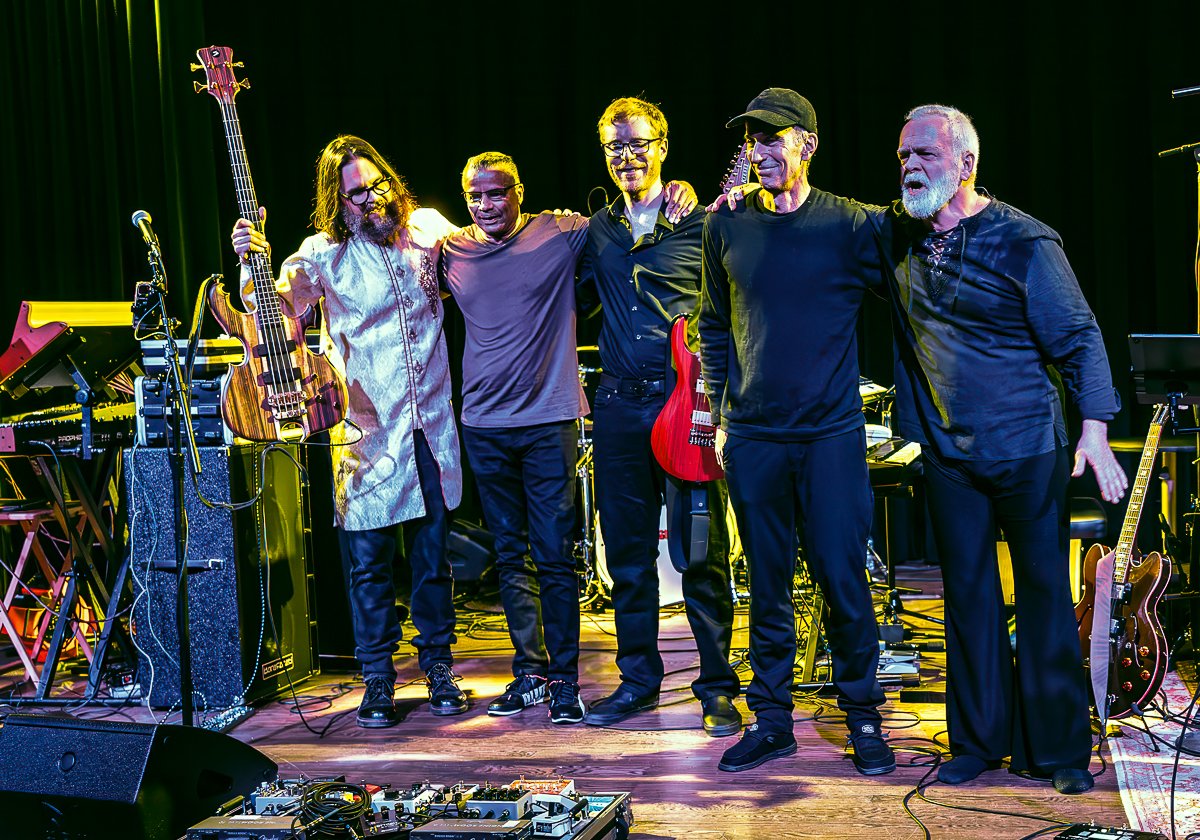
Opening the show was Progeny, a band dedicated to celebrating the artistry and legacy of progressive rock. Their set paid tribute to the timeless music of Emerson, Lake & Palmer, Yes, King Crimson, UK, and more—delivered with respect, precision, and passion.
Progeny lineup:
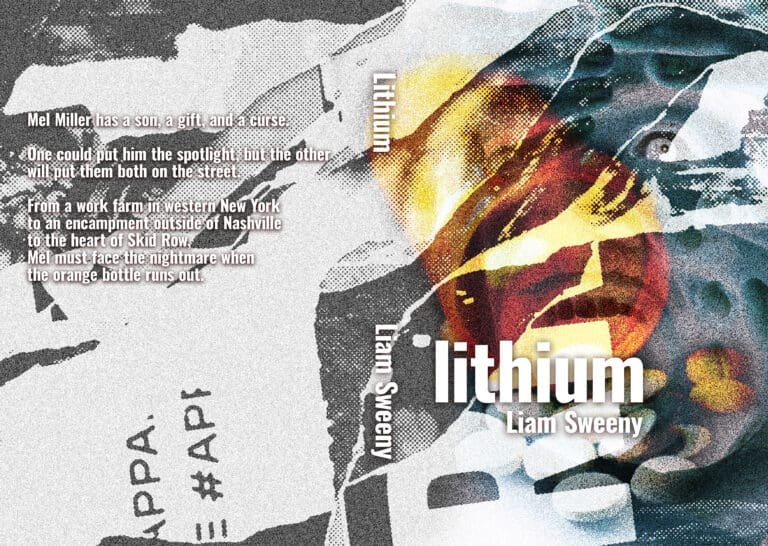
Lithium, Chptr 22 – Xperience Fiction – by Liam Sweeny.
Mel found himself in a small room connected to a corridor, both haunted by the wayward energy of the mad and delusional. The walls glistened with whitewash, but Mel knew what lay beneath that thin coat was the lives and work of prophets and shaman, cloaked in paperwork and diagnoses to hide truths that could bring the happy-go-lucky world to its knees. And now he was one of them. It was his turn to make his mark, to add a layer to the walls that would be so potent, so profound that they would have to call the cleaners to cancel his thought.
A bulbous, heavy woman read a magazine behind Plexiglas, three sets of concentric holes separating her from him, and he knew that nothing of value would get through those holes. Mel stood there in front of the window and felt the surge of flame from his soul glow orange to blue, sparks of white and red kicked up by his tempest. He launched it at her as if but for the briefest moment he could enlighten her heart and align it to his own.
She turned the page and blew a pink bubble without an upward glance. He stilled his mind, putting his focus between his eyes and formed a baby cosmos and watched it grow, galaxies passing between neurons, iron-rich, earth-killing asteroids coursing through arteries and leaving craters in capillaries. He fashioned a black hole in his stomach and swallowed interstellar gas. When it was done and he saw that it was good, he opened his mouth and let out a cry that spoke of all the life in his cosmos, one word.
“Hey.”
The woman behind the Plexiglas tore her eyes from the paper and rolled them. Another bubble. Another pop.
“You need something?”
“I need my son. I need my wife,” he said. “I need my brush.”
“Sir, the people who dropped you off can’t come in here. Only patients can come in here. And I have no idea where your brush is, but if I did, I couldn’t give it to you nohow.”
“With my brush, I could open up the walls. Anywhere you want to go, you can step out of your glass and walk there. A mountain. Paris. Third planet of the seventh sun in the Andromeda galaxy – anywhere.”
“Sir, I know this will be hard for you, but please sit down. The doctor will see you soon enough. Just watch TV or read a magazine.”
Mel grabbed a seat and tried to sit still, but he didn’t have it in him. What he did have was octane that he needed to burn off. He decided to walk the corridor down and back, his eyes on the Plexiglas, his mind on his jailer. Her eyes were back on her magazine. He wondered from what stock she came that she could see the bounty and mind magic that permeated the structure and have it all pass her by, she none the wiser. Who could sleep to a stereo at full crank playing experimental jazz? She could.
Mel’s mouth was dry, but he couldn’t ask for water. Water was control. Water was an admission of frailty. He had barely eaten in days, and had drunk from faucets outside, and then only ravenous gulps. His eyes burned. If he did get water, he might very well splash it in his eyes to extinguish them. It was control that they didn’t put a water fountain in the corridor. The soda machine was a diamond dealer to a pauper.
Mel ended his pacing where it began.
“Can I have water?”
She pointed to the corridor. “There’s a soda machine right there.”
“Is it free?”
“Nope.”
Mel turned his pockets inside out and realized that, in that room, for the first time, he hadn’t a cent to his name.
“Hold on, give me a minute. I’ll get you some water.”
Mel went back to the corridor, wishing he had a watch, or that there was a clock on the wall, the absence of which was even more control. Mel walked and ruminated on the fact that the room he was in was designed to make anyone on his side of the glass helpless. Unless, of course, they had money to grease the soda machine.
Mel guessed a minute and went back to the Plexiglas. She looked up at him.
“It’s been a minute. I gave you one. Will you give me water?”
“It’s going to be a minute.”
“It’s been a minute.”
She got up from her chair and set the magazine down. “If I get you water, will you be quiet?”
“Are there conditions for water?” Mel said. “What are the conditions for bread?”
“I don’t have to get you water, you know.”
“I don’t need a brush to beautify the walls.”
“I don’t respond very well to threats,” she said.
Mel placed his hands on the counter. “You don’t respond very well to anything.”
She sat back down and picked up her magazine. “It’s going to be a minute.”
Mel continued to pace the corridor, trying each of the three doors it contained. They were all locked, but he tried them each time he walked by them. If she wanted to treat him like he didn’t exist, he’d become a poltergeist. He’d try doors and tear apart the magazines and turn the TV to a static channel. And he started to, but as he was halfway through his haunt, a tall, thick man with plastic, clear-frame glasses and a stethoscope around his neck called out, “Melville Miller?”
Mel walked up to him like he was Jesus in a lab coat.
“Come on in, we’ll talk,” he said.
Mel walked into an examination room with a paper-lined clinic bed with four cuffs, top and bottom on each side. Mel knew they were restraints.
“I’m Doctor Weiss,” he said as he shut the door. “Let’s find out what’s going on with you today, get you feeling better.”
“Can I ask you a question?” Mel said.
“Sure.”
Mel hopped on the bed, pressed his palms into the paper.
“Can I get some water?”
***
The man staring back in the bathroom mirror was unrecognizable. Mel knew it was him, knew it on the same level that he knew it was early in the morning and that there was a hallway beyond the bedroom door. But he couldn’t recognize himself. He was above, below and beyond himself. The figure in the mirror was only the center point, an anchor around which his many forms orbited. He struggled to pull those forms together, which needed to happen for him to move.
There was a shit in the toilet that he couldn’t flush. It wasn’t too big, but he knew if he flushed it, it would go down the pipes and into the sewer, and eventually into the nearest river, where it would pollute that body and unleash a plague upon the people of L.A, He couldn’t do that, couldn’t be the bringer of death and pain to the people of Skid Row who always lived among death and pain.
It was five a.m.; Mel knew it in his bones. But he was groggy still from the boop last night. That’s what they called it in Albany the last time he was in the hospital and got one. The shot that makes the energy melt away. Last night they forced him to sit in a chair in front of the nurse’s station when he was first brought upstairs. They dispossessed him of his shoelaces and his belt, cuffed his arm and checked his heart every fifteen minutes. He knew it was fifteen minutes, because this world ran on fifteen minutes. Then the boop.
He woke up groggy, but the fire still burned in him. He had to keep moving. He had to keep dodging the void. And if he walked enough, if he paced enough, he could earn Andy’s freedom. He could earn Hope’s release. The void would give him what he wanted; it was the rules of creation.
Mel held it together enough to leave the bathroom for the bedroom. A lump in the bed next to him told him he had a cellmate. His cellmate came with a tribute; the dresser was piled high with clothes. Red clothes. Brilliant red clothes. Mel thanked him and said a blessing for him on behalf of the dimension he presided over right then. The void wouldn’t get his cellmate, and this would be a start of his prep to get his life back. Then he started trying on the shirts, marveling at each one, admiring the fit. His cellmate had to know he appreciated the gift.
“What the hell are you doing in my clothes, man?” He said with sleep and anger in his voice.
“I’m trying on your gifts,” Mel said. “I love them.”
“They’re my clothes. They’re not your gifts. Get ‘em off before I beat your ass.”
Mel took the shirt he had on off, folding it carefully to appease the gods displeased at his transgression.
“But I made you a blessing,” Mel said. “I’ll have to take it back now, and I haven’t had to do that yet.”
“Just shut the fuck up,” his cellmate said. “It’s too early.”
“Five o’clock is the best time,” Mel said. “Everything starts anew. No matter what you do the night before, once five o’clock rolls around, you get a fresh start, and the wall you painted on the day before gets whitewashed. You really need to try this morning with me. I can teach you so many things.”
His cellmate threw the blankets and got up, letting out a grunt as he opened the door and went for the hall. The light poured in, the light that was never extinguished, the light that had shone on madness and epiphany over the years and brought the tortured to reason. It burned Mel’s eyes that had only hours before felt heavy lids and REM.
A beautiful young woman came in, curly, flowing blond hair and black wireframe glasses. Large eyes, light in color, though he couldn’t make the color out in the shadow of the doorway.
“Mel, Bill said he’s unable to sleep. Are you having trouble sleeping? Do you need something?”
“I need breakfast,” Mel said. “I haven’t eaten in days.” Mel felt odd saying it, but it was mostly true. Soup was drink, not food.
“Breakfast isn’t until seven o’clock. Can you wait until then?”
“Can y’all talk about this outside the room? I’m tired.” Bill said as he found his bed, got in, and threw the blanket over him.
“How about we go out to the nurse’s station and talk.”
Mel followed her out into the hallway. Her nametag said Amanda. Mel tried to figure out the origin of the word Amanda so that he could talk to her spirit, but he couldn’t because he was, despite his inner flame, exhausted. The boop was no joke.
The nurse’s station was a chest-high version of the Pentagon with a side removed. It was that in look and in function, as the nurses were constantly in battle with the void and its sister, the chaos, which Mel had under control with sigils he’d long ago tattooed in his arm. There was no tattoo to subdue the void, for it was too vast. The only thing more plentiful than nurses and sphygmomanometers and stethoscopes was paperwork. Paperwork was the real war, and even at that hour, three nurses were engaged in combat.
Amanda held up his chart. “So you got a shot of haloperidol last night,” she said. “My, that should’ve kept you out till this afternoon.”
“I am tired, but I have things to do.”
“Okay, what things?”
“I have to save my son and my love,” Mel said. “I need to walk to do it.”
“You need to get better before you can do anything,” Amanda said. “Based on what I see, you go back out there now, you’ll just end up back here… if you’re lucky. Worse could happen.”
Amanda let him walk with her as she checked on the other rooms. She told him what the general schedule was and asked him about Andy and Hope. Mel tried to tell her, but he knew he wasn’t saying what he meant. She listened to him, though.
After rounds, she took him to the dining room and gave him a turkey sandwich that the staff had stashed away in a minifridge behind the counter.
“We give these to people who are hungry and really need something,” she said. “There’s pints of milk in the dining room fridge. We can’t give you sandwiches all the time, and you have to promise me that if you have this, you’ll go back in your room until seven, and you won’t talk to Bill or try on his clothes, okay?”
Mel tore into his sandwich. “Not talking is hard.”
“Try,” she said. “And the first step to getting better is admitting you have a problem, even a small one.”
***
There was something in the morning meds. In fact, there were many things in the morning meds, and Mel had no idea what any of them were. Amanda told him most of it was the meds he was taking before he went off, with a few extras. So it was in one of the extras that his wiring seized.
He was fine until lunch when he started to drift as he contemplated his mashed potatoes. He wanted to examine their molecular nature, and no sooner had he thought that than his head was heavy, and he nearly gave himself a gravy baptism. He woke up and turned his attention to the television, on which a meteorologist discussed a return of the spring temperatures. Mel tried to compare the average high in L.A. to what it might be in Albany, and he nearly passed out again.
As he got up and walked around, his attention was drawn to the paintings on the wall, and as his mind began to take off, it was grounded. He was filled with rage. He was scared. He asked the nurse on duty, not Amanda, what was shutting him down.
“You’re starting on so many meds right now,” she said. “It could be any of them.”
“I’ve been on the other meds before.” Mel wanted to say more, but his head felt heavy, and he didn’t want to hit the ground.
“Yes, but you’re starting them again,” she said. “When was the last time you started them?”
Mel thought about it and his mind spun out.
“I don’t know,” he said. “I can’t think.”
“Don’t worry, you’ll get used to it. It’ll just take time.” She checked his chart. “You have a meeting with Doctor Sellers at two o’clock, in a couple hours. He’s the psychiatrist. He can tell you more about your meds.”
“Okay.” Mel walked away, wanting to say more than “Okay,” but not being able to.
He spent his time walking up and down the corridors. They branched at right angles from the nurse’s station and were about a hundred yards long. Mel was guessing that, and it was draining to guess.
He went everywhere he was authorized to go, even taking a shower because he could, and because he hadn’t taken one since he dipped in the pond with Hope in Nashville. It was cold, and the pressure could’ve cleaned graffiti off concrete. When he was done, the clock above the nurse’s station read one forty-six.
There was a man waiting near Dr. Sellers’s door as Mel set upon the spot to wait himself. To call him a man was being generous; he likely had just graduated high school. He had a new growth mustache and jet-black hair, clean cut except for a long, braided tail jutting out from the bottom.
“What’s up, dude?” He said. “I’m Bill, but everyone calls me Critter.”
“My roommate’s name is Bill.”
“Then just call me Critter, Crit, whatever. Both work.”
Mel wanted to talk to him, tried to let him know of the void and the interdimensional portals painted over in every wall of the hospital, but every thought came at the cost of exhaustion.
“You going to see the doctor?” Mel finally spit out.
“Yeah. He’s a prick,” Critter said. “He’s not at all 420 friendly. I mean, I ain’t askin’ for any, but you even mention weed, or that you ever did it, automatically you’re a junkie. He’s even against coffee. Fucker brings a twenty-ounce cup in, says it’s decaf. The fuck it is. No one needs twenty ounces of decaf.”
“No they don’t.” Mel said, taking a deep breath to pass the wave as thoughts bubbled up.
“You came in last night, huh?” Critter said. Mel nodded.
“They gave you the Poke, didn’t they? The shot?”
“Yeah,” Mel said. “The Boop.”
“Never heard of the Boop. I can tell you ain’t from here. Gotta be New York.”
“Albany.”
“I spent time in Brooklyn.” The door opened and a very tidy, almost neurotically tidy man with a combover stepped in the doorway.
“Come on in, Bill,” he said. “And you,” he motioned to Mel. “Just go in the day room. We don’t want people hanging around this door. For safety.”
Mel walked into the day room thinking Critter was right. Fortunately, the room was empty. Mel found out that they were required to go to groups that occurred throughout the day. He didn’t have to because he was new. Or because he was, until that med kicked in, disruptive.
Mel fell asleep at a table and awoke to Dr. Sellers patting him on the shoulder. Mel followed the doc into the office, which was as tidy as he was. It was also bare of any decoration. Sellers started by asking the standard battery of questions. Did Mel feel like harming himself? Did he feel like harming others? Was he hearing voices? Mel could honestly answer no to all. Then he opened with, “So how do you feel today?”
“Can’t talk,” Mel said. “Can’t think.”
“According to the intake notes, you came in manic with delusions. Full psychotic break. We were able to get your records from Albany, and we are starting you on the same meds you were taking. Why did you stop taking them?”
“Couldn’t afford them.”
“Are you on Medicaid?”
“Yes-, but no,” he said. “Had a job before.”
“And you were on their insurance?”
“No, quit. Months ago.” Mel started to drift.
“Mel, I need you to pay attention,” Sellers said.
Mel got angry, frustration like a friction against his gears. “You did this… to me.”
“I’d say you did this to yourself.” Doctor Sellers flipped a page on his clipboard. “You’ve had bipolar for a long time, according to your records. And you had a manic episode in… 2006. And you went so long. So you stopped your meds and it came back.
“What are the odds that you take the steps to keep on your meds once you leave here?”
“I don’t know,” Mel said. “Homeless.”
“Yeah, that’s on here too. Do you have anyone at all that looks after you?”
Mel wanted to tell him that it was he that looked after his son, and Hope needed no one to take care of her. But they weren’t there and the thought of them threatened to drive him to dream right there in the chair.
“No,” he said.
“In that case,” Doctor Sellers said. “All we can do is patch and pray.”
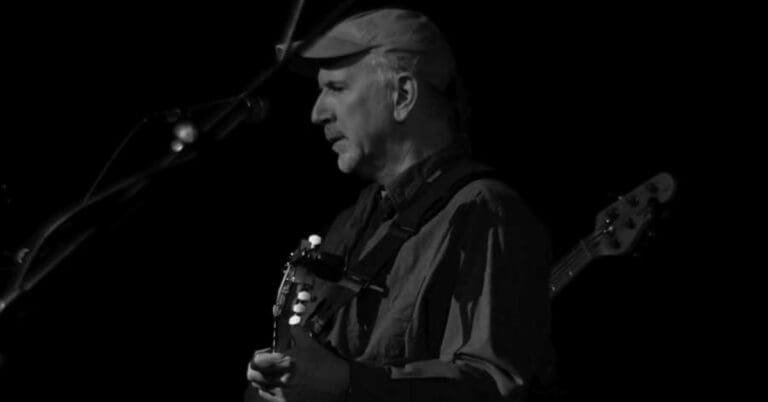

Frander – An Xperience Interview – by Liam Sweeny.
Folk isn’t solid. It’s as fluid as the waves that carry tradition across oceans and seas, to take root on the shores of a faraway land and bloom with the colors of the national flag. We spoke with Gabbi Dluzewski of the Swedish heavy folk band “Frandr.”
RRX: So I’m speaking with Gabbi Dluzewski of the Swedish band Frander, singer and Swedish Mandola player.
GD: Yes.
RRX: What does the word mean in Swedish.
GD: It’s an old Viking word, it’s not really used in Swedish common language anymore. And it means kindred and kin and friends and family, but also extended family. So I usually say that in one way, it’s more than family because we are all friends. As long as we are not enemies, we are friends. So it’s a very inclusive word. But still, it’s not only being friends. It’s like we have blood. We are human. We are human beings, and we are related. So that that is what it means. And it was a very used word because back in the days in Sweden, that was the word you used for allies and people you liked in general.
RRX: It’s apt that you use that word for the band because you are siblings, right?
GD: We started out as a as a pure family band. My little sister was in the band, my older brother and my wife. Our little sister, she left, but the rest of us are still in the band. So yes, it’s a family band.
RRX: Have you ever played with a band that wasn’t your family? Have you ever played in another band with other people?
GD: Of course. There are other people in this band as well, but yes, I have, but me and my brother, we have played in the same bands for twenty five years. So he has always been there.
RRX: When you’re growing up as siblings; I’m an only child, so I have no idea what it’s like for siblings. But I can imagine you all endeavor to do something great together. Did that start early, or was that something you guys grew up and you just happened to find that you all liked the same thing?
GD: We all like the same thing, but I think it’s a-, not a misunderstanding, but usually people think that because all siblings are playing music, that’s what we do when we meet each other and we are just happy and we play tunes and we are having fun. That’s not really the case with families playing music all the time. I think it can be very complicated to try to create music together. Speaking about music and doing music separately, that’s fine. And it’s a lot of fun, but it’s not like we are having a big family band and it’s like ‘yeah, that’s not working.’ We have always liked the same things, we have liked music and we have liked the similar type of music. And we have all played with my brother. I think it’s just started because I didn’t have a bass player in my band, so my parents told him to step up his game and play the bass in the band. So he had to. And then he has continued doing it.
RRX: You play folk or do you call it something else? Am I right on that? Is that is that what you guys focus on? Folk music or is it something else?
It depends on who you ask and where you are in the world. I think in reviews we have heard people or seen people calling it heavy folk, which I like. I like that brand heavy folk. And that’s something we have started using because people started calling us that.
GD: Here in Sweden, I think we are more like traditional. We end up in the genre of traditional Swedish music. We call it folk music over here. But folk music for you is Bob Dylan and Joan Baez and those people over here. Folk music is traditional music, and that’s where we end up. But I think nowadays we are a folk rock band and we aren’t very traditional anymore. I think that the genre lines, the borders are moving and we are moving.
RRX: From where you are folk means traditional. Is that like looking at Europe because you’ve toured Europe, you’ve toured the United States, you’ve toured everywhere. So touring Europe. You’re talking about Bob Dylan and Joan Baez and we have a big folk audience, a big folk music scene here. But like thinking about it being different over there. How would you describe the overall scene, aside from just the music, the pure music itself, but the actual crowds of fans, is the scene different for Europe than America or are they very similar?
GD: No, I think every place is different. But I also think that even within a country, every place is different. So it’s hard to say. Of course you have extremes. I mean, Japan, for example, is extremely different. So we did a big tour a couple of years ago. We did a world tour. We flew one circle around the world. We played forty shows in a row during two months. Then we started in Japan and played twelve shows in Japan. And of course, it was super beautiful. People were super kind we were very well treated and we loved it, but it was very, very different from what we were used to.
The even bigger difference was when we continued from Japan, we flew from Japan to Canada, and we had a six hour layover at Hawaii as we went to the beach. Then we continued to Canada. That was the big difference because Canada and North America is so different to Japan. The Japanese people were standing in line before the door opened, they were standing one hour in line to get their best seats. And when they were sitting listening during the show, they were quiet and they were watching. And the first shows,, I was like, ‘Holy shit, they hate us. They hate us. They don’t like what we are doing at all.’ And then after the show, they come up to us and they speak to us with first names. They give us gifts, and they were crying because they were so happy with the show. So it was it was so different. Coming to Canada, people were chatting and they were speaking to us and they were shouting things. So very different. So in that sense, yes. Very different.
But also within a country, places are different. And it depends so much on the vibe in the room. Over here, people are different than in North America. We have a different temper. I spoke with some friends in Poland. We have a project with a Polish band. They’re coming here tomorrow actually flying over from Poland, and they were asking, what’s the weather? And we were like, ‘you know, it’s dark.’ It’s kind of light for two hours during daytime. Uh, but now we have had clouds for a month. We haven’t seen the sun in a month. And it’s raining. It’s raining all the time. And of course, why am I saying this? Yes, because people are different depending on where you go. And it depends on so many other things. Over here we are in a certain way and like we can’t ignore the climate. The climate is definitely one reason why we are different here.
RRX: Do you have, um, something recorded at this point? I thought I had seen something that you guys had recorded. No, you had actually recorded two, Frandr and Frandr II.
GD: We have released two albums and an EP with the Polish project that we are doing. Just a month ago, we finished two new albums, so Frandr three and four.
RRX: What is it like in the studio when you have so many different instruments? I’m a blues dabbler, so, you know, my instruments in any band is going to be a drum set, an amp and a guitar and a bass, super basic. But you guys actually have a bigger spread of instruments. What’s it like in the studio coordinating all that, or is it the same as if you’re going to be up on stage?
GD: In a way it’s the same as being on stage, and in a way it’s not because it’s in the studio. So of course it’s different. I’m raised as a blues and rock guitar player and played rock bands my whole upbringing. I don’t think this is too different, actually. I think it’s the same. It’s the same way of handling a band and handling the music. Of course, it’s a bit different because like in a rock band, you have one melody instrument and that’s the singer. Here we have three melody instruments. We have the fiddle, we have the flute, and we have the singer. That means that you have to find a place for all those instruments. But that’s also what becomes interesting for us in there, because we have been working a lot; the easy way would be to just play the flute. You play the melody, fiddle, you play the second voice, I play the chords, bass. You play the bass notes like that’s the easy way. But it’s predictable.
And I think it becomes interesting when you start playing around with roles like if we want this or we want that this is the feeling we want in this song. We want it to sound like an electric guitar, like the riff should be so heavy. But who is the electric guitar in this band? Like, who is playing the riff? Is it me? Well, not necessarily. Maybe it’s the fiddle. Maybe the fiddle is the one playing really growly, growly fifths on the fiddle, for example. Or okay, we need a keyboard line here because I hear Rock band in my head all the time. So I need a keyboard line here. Okay. Flute. Give me something that sounds like a key so that becomes interesting to start. We’ll experiment with the different roles in the band.
RRX: Okay. Um, now, do you guys have any new songs or tours?
We have plenty of tours this spring. We have the US tour, US and Canada now in January and in March we are doing a Swedish run, and in April we are going to Norway for a show. Then in summer we have a bunch of tours. We are going back to Canada and the US and also festivals over here in Europe. And then in September we start releasing stuff. Also, we have an album coming out and we have singles coming out and we have many exciting things happening.

RadioRadioX & The Xperience Monthly
© 2018 - 2026 Imperial Broadcasting. Most Rights Reserved.