Sons of Eden – Interview – Thanks for Asking!
Written by Staff on May 30, 2025
Sons of Eden – Interview – Thanks for Asking! – by Liam Sweeny.
RRX: We all get a little support from those around us. And we also can be impressed by our fellow performers. Who do you admire in your community, and why?
SOE: We’ve had the privilege of sharing the stage with Seize Atlantis from Glens Falls several times now, whose unique sound and stage presence we’ve always admired. Additionally, they’re really friendly, supportive people, and we really enjoy their 2023 Ruins Rebuilt EP in particular. We also shared the stage with Peter Annello, who blew us away with a musically rich and mesmerizing performance. The cohesiveness of his large and musically diverse band was impressive and it’s only a matter of time before one of their songs is a hit. As a younger band, we can relate very easily to other groups around our age, and we found we had a lot in common with the metal band Guts from Troy. At a show we played with them, we found out we shared a lot of influences and similar experiences navigating being both a college student and band member, and their set that night was a masterclass in authentic crowd control and engagement. Finally, watching Flatwounds grow over the years from a local band to a regional touring act has been so inspiring and has shown us what’s possible for an Albany band through dedication to the music and the community. Their shows are some of the best and most energetic in the area, so catch them while you can before they’re selling out as a headlining national act.
RRX: A band is a business. A business of love, but you got to work for it. Let’s pretend, instead of a band, you all owned a business. What would it be, and why would it be good?
SOE: We’d open up a legal horse racing track in Vegas with a metal theme to it, and we’d call it “The Gallop.” Iron Maiden and Slayer riffs will be playing over the PA to hype the crowd up before each race, and the horses will bear the names of metal legends like “Dimebag,” “Ozzy,” and “Corpsegrinder.” We’ll run a racing track more badass than the Peaky Blinders could even imagine.
RRX: Cover art is cool. It shows listeners what the artist thinks the album is all about. Because music can be felt visually. If you had to give the public a visual image that you think they would see and just “get” your groove right away, what would it be?
SOE: Our image would be a painting of the three of us in a dimly lit basement surrounded by a messy array of gear. To each other, we’re more than bandmates – we have a close friendship bonded by our common passion for music, and we want the public to understand through our image that we genuinely enjoy and love what we do largely because we get to do it together. The backdrop being a messy basement is important too because it’s always been the set of our rehearsals, writing, recording, and once the amps are turned up and we kick in there’s nowhere else we’d rather be.
RRX: Artists, musicians, we immortalize. We set it in stone. Is there anyone who has passed that you feel you have immortalized in your work? If so, can you tell us a little about them?”
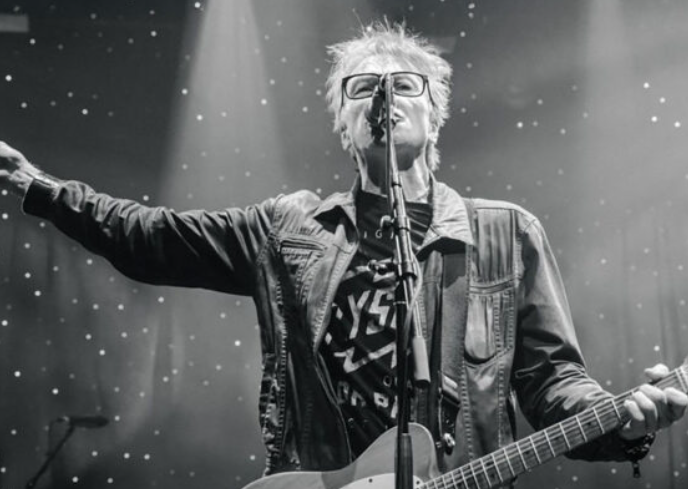
Eric: Rory Gallagher (Spirit, solo career) was an amazing lead guitar player and showman known for his work in a three-piece band, and he really re-defined the boundaries of that role which I fill in our band. I channel him a lot through legato techniques, which help to create unique and tasteful solos that he was a master of writing.
Jack: My uncle introduced me to Rush when I was 8, and from then on Neil Peart has been one of my biggest inspirations. His playing on the Moving Pictures live album opened up a whole new realm of what’s possible on drums for me, and watching his live videos is what made me want to have a big, complex kit.
Gabriel: Phil Lesh (Grateful Dead) isn’t talked about enough as one of the greatest bass players of all time, and on top of that he was a true musician through and through. Whether the bassline is in a thoughtfully composed studio track or is improvised live, it is the essential foundation that the rest of the band rides on and occupies the perfect amount of space to maintain the groove without overplaying. My composing is strongly influenced by his style of blending the melody and groove into the same bassline, and I love that he has the biggest smile on his face in almost every live video I’ve seen.
RRX: Stereotypes are a bitch. I mean, aside from the really bad ones, you have cultural stereotypes about everything, including music. Would do you think is the stereotype for the music you play, and how far are you away from it?
SOE: A common stereotype for hard rock and metal bands such as ourselves is that the aggressive, intense, heavy music the band writes is a reflection and expression of the member’s personalities. For us, this couldn’t be further from the truth – we all consider ourselves to be easy going, non-confrontational people, and the stereotype that metalheads are angry, ill-intentioned individuals doesn’t apply to us at all. I think it’s fair to call it a false stereotype that doesn’t consider the supportive, vulnerable, and humanitarian culture that exists in the metal community, particularly in the Albany scene.
RRX: Our style comes from the extension of our influences. It’s like an evolution. We’re influenced, and it inspires us to influence. What can you say about your influences, and what you feel you’ve done with their influence as a musician or band? Have you extended their work?
Eric: Dave Matthews and James Hetfield (Metallica) are two frontmen that can sing and play complex chord progressions so well you’d think it’s two different people, and both are influences on my vocals and guitar playing. To me, they’re proof that one doesn’t have to limit the other, and my hope is to play a role similar to them but with it create a sound that is unlike what’s been heard before.
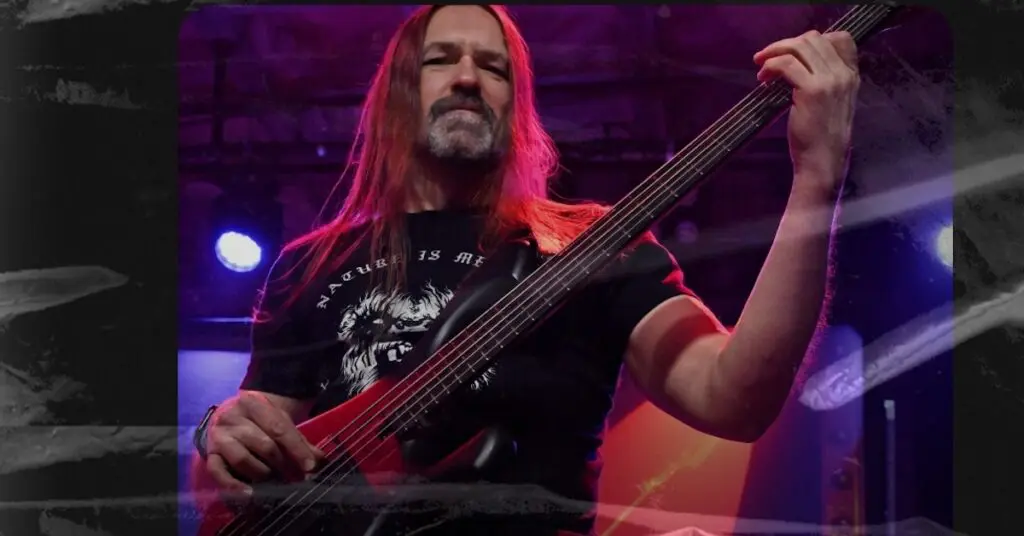
Gabriel: Pantera’s Rex Brown and his signature tones, grooves, and note choices are a big influence on my playing style in our band, and as such I incorporate a lot of power chords, slides, bends, and overdrive into my bass playing. Also, I admire his intensity in live performances and that he always seems to be having a ton of fun on stage, which I try to bring out in every show.
Jack: Dream Theater’s drummer Mike Portnoy has a style of playing complex chops and grooves while not overplaying, and in doing so he complements the band’s sound fully. I frequently study his playing and technique to be a more tasteful player myself beyond just a timekeeper, but a major difference maker in the band.

 RadioRadioX