Lost in Space: Carmine Gontz and the Icons Behind the Anthem
Written by Staff on June 27, 2025
Lost in Space: Carmine Gontz and the Icons Behind the Anthem – by Lori McKone.
How a rising rock visionary joined forces with legends like Rudy Sarzo and Matt Starr to create a sound that’s truly out of this world.
Carmine Gontz isn’t just a rising star; he’s an artist who knows who he is. At 18, he’s carved a sound that feels like a beautiful collision between cinematic rock and gothic storytelling. At its core, it’s emotionally raw and atmospherically rich. Think dark theatrical rock – with a pulse.
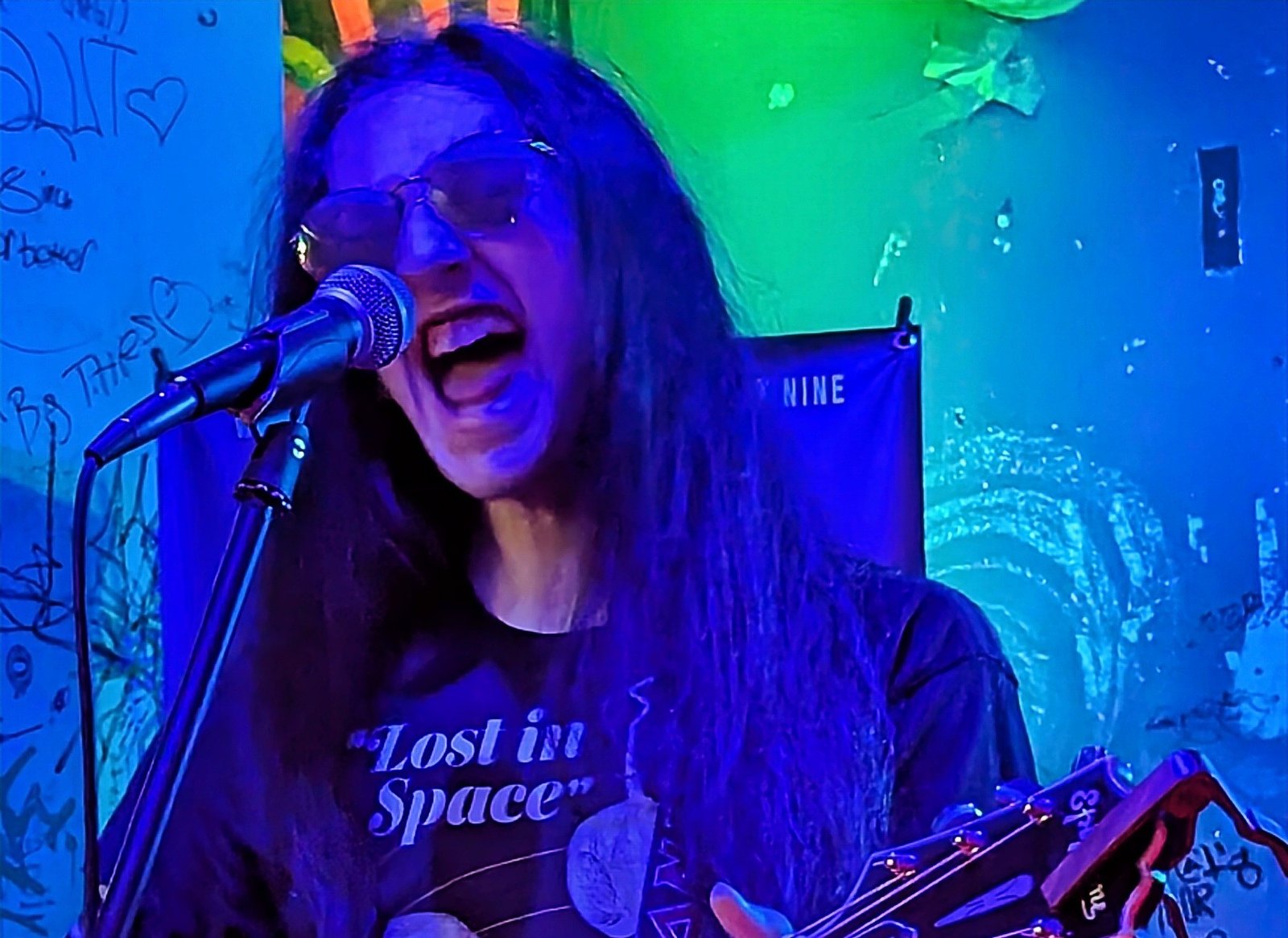
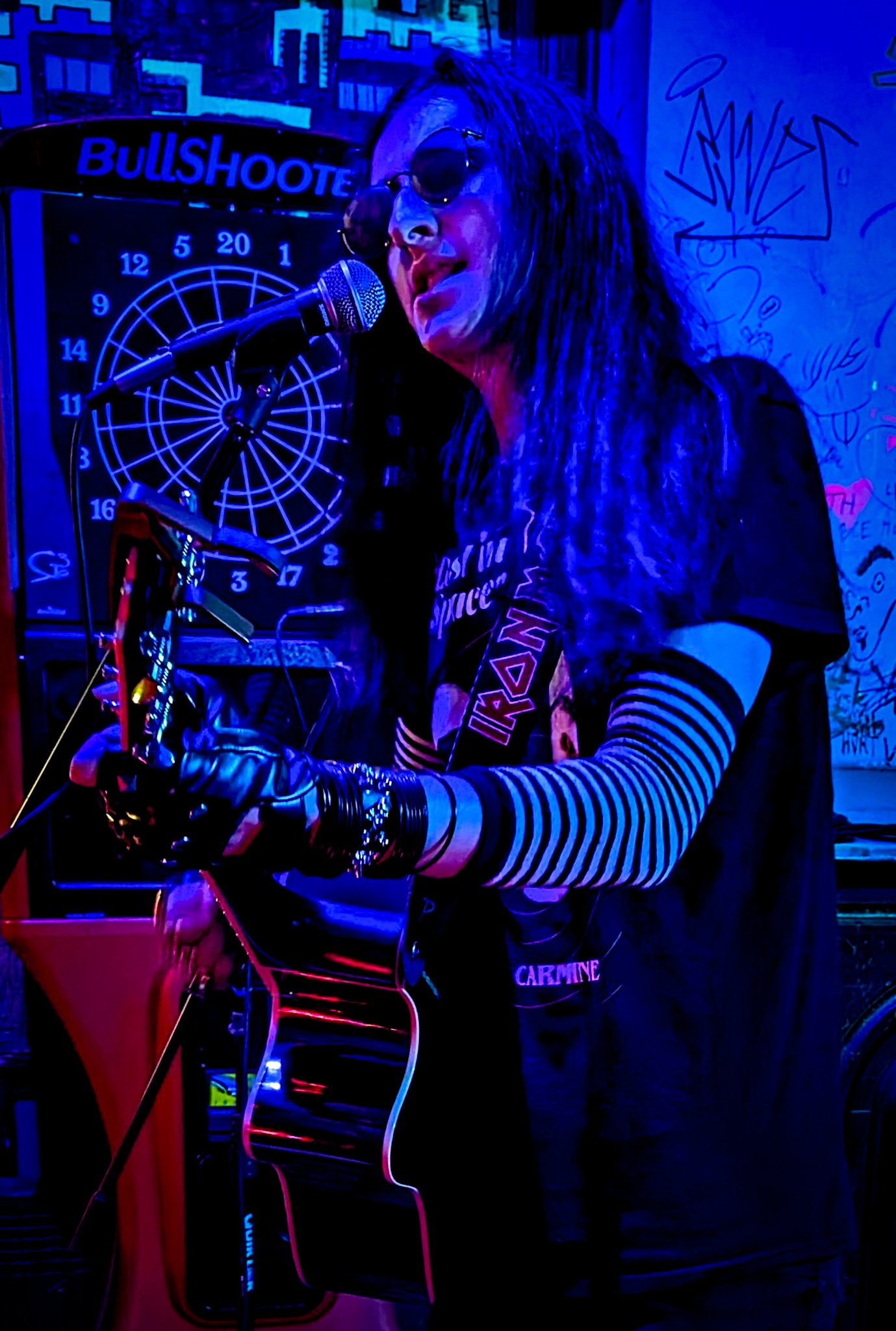
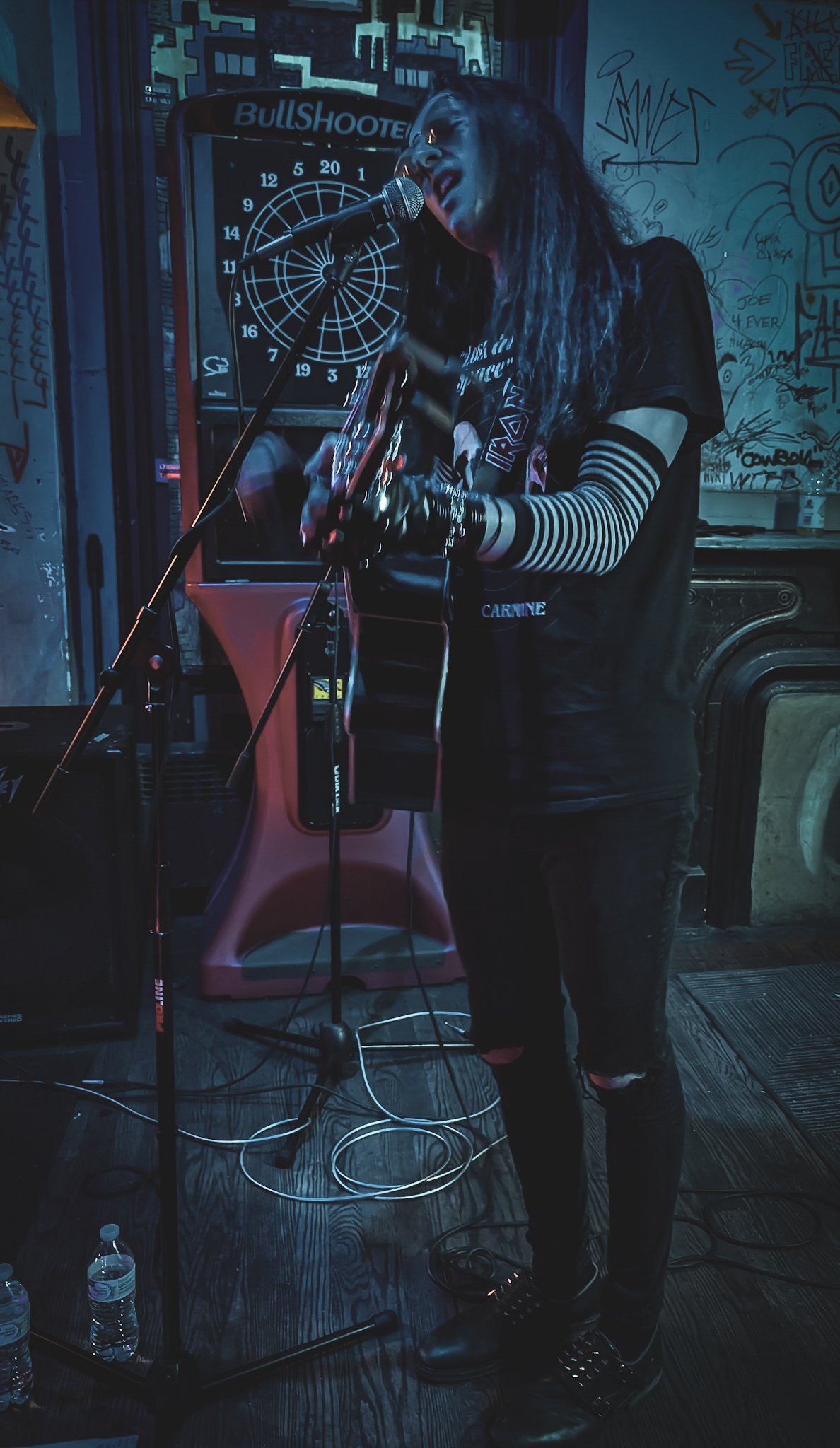
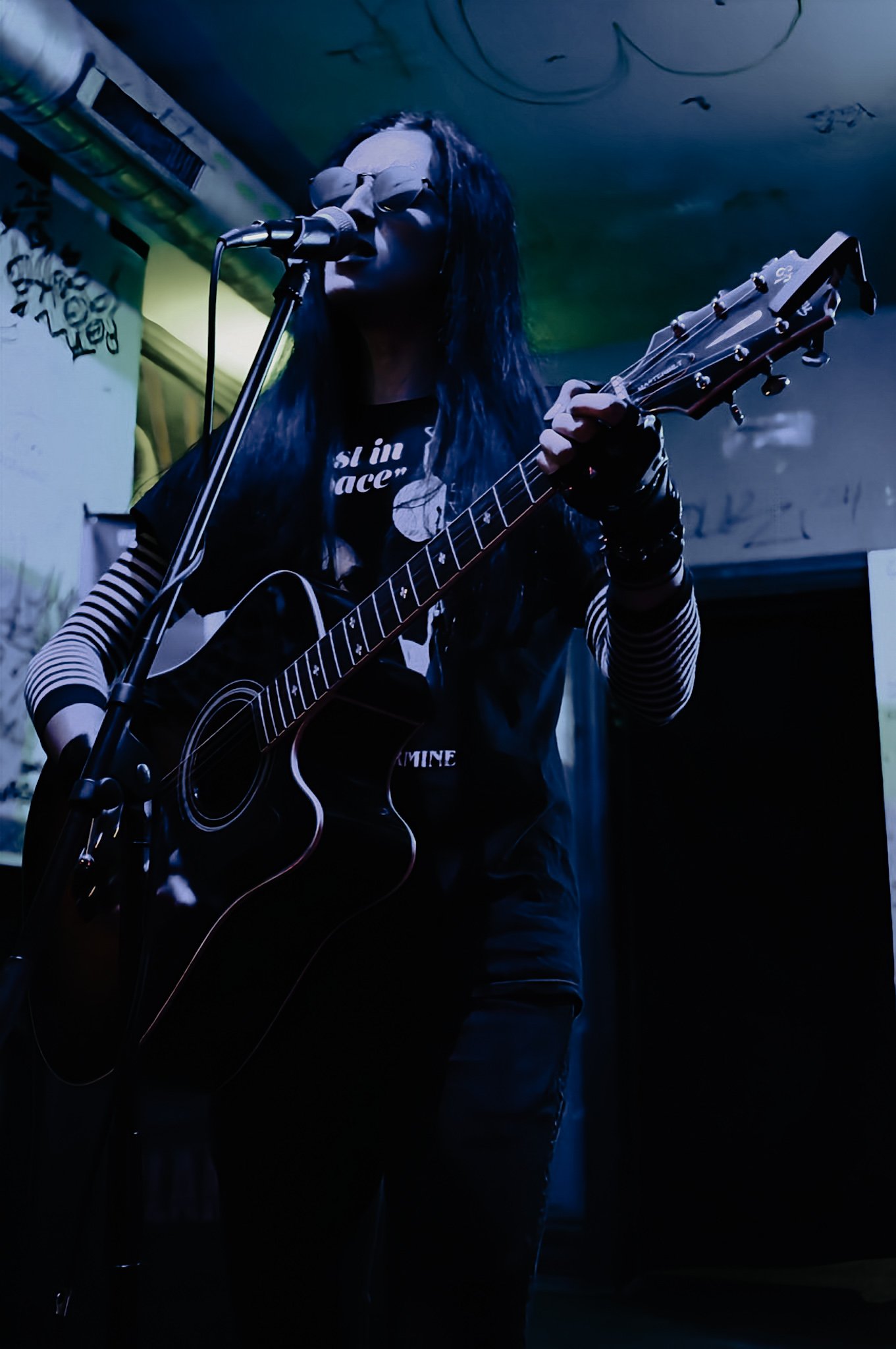
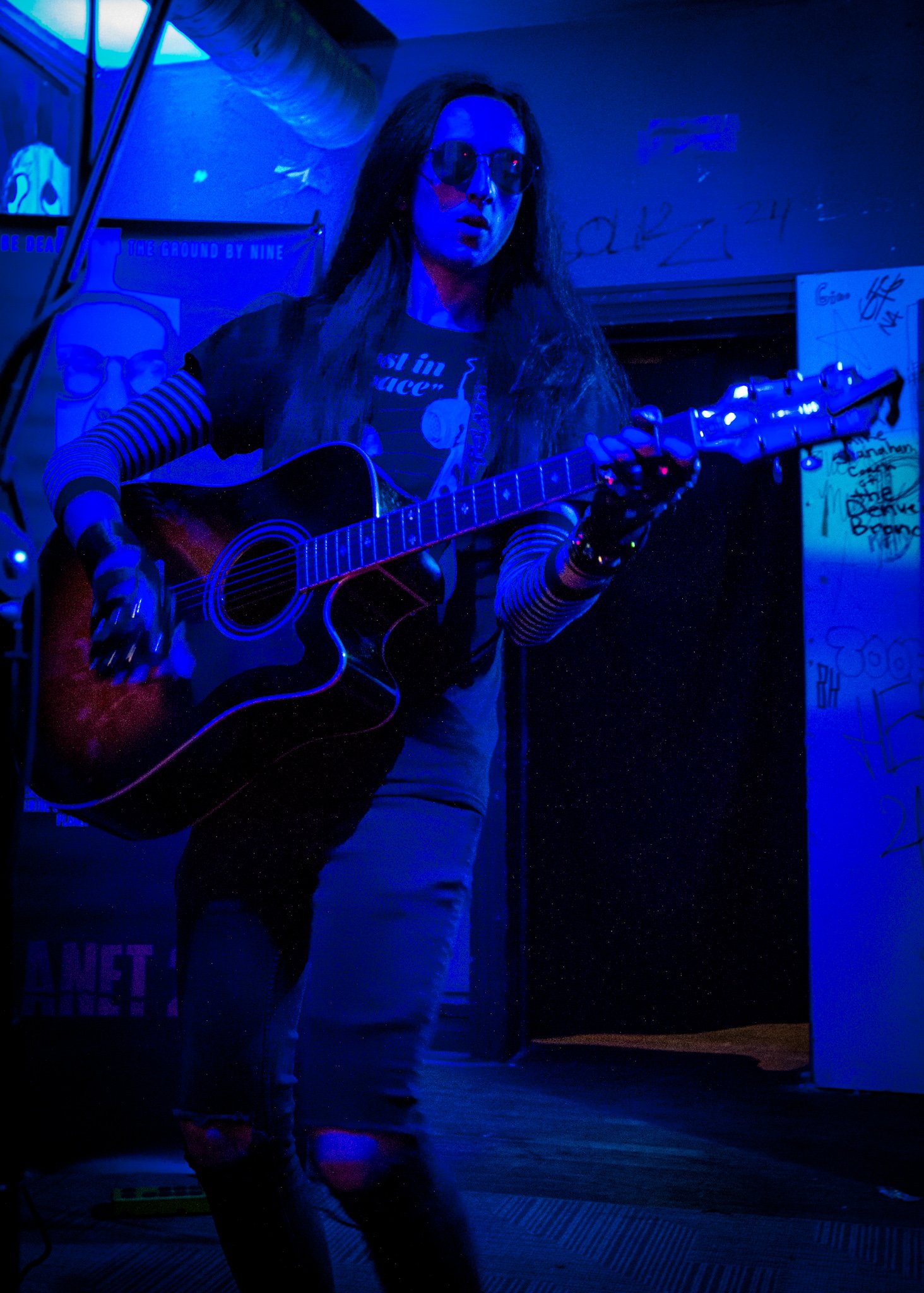
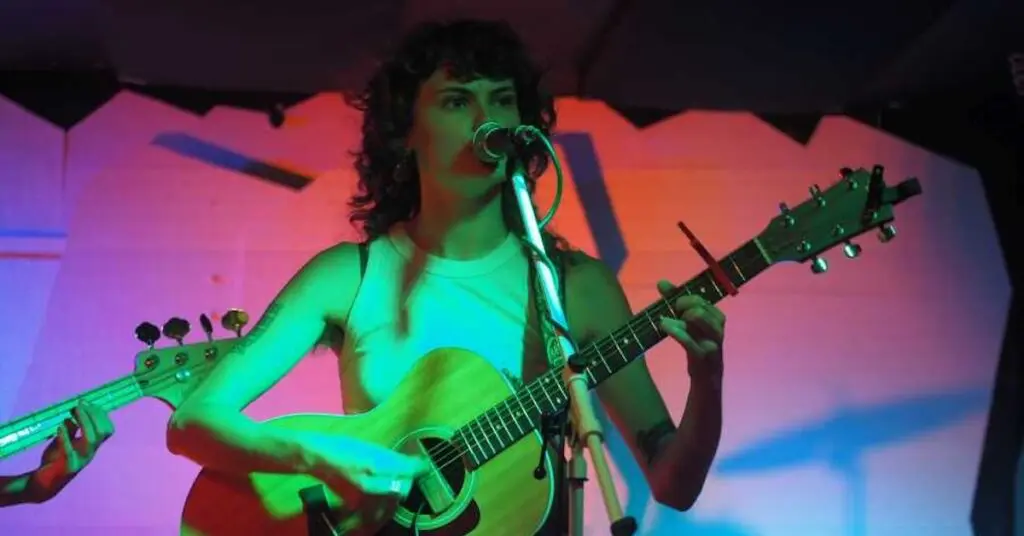
Seeing Carmine live in an intimate acoustic setting was revelatory. His remarkable musicianship, intuitive songwriting, and quiet confidence bridged the gap between artist and audience. Every note felt like a personal invitation into his world.
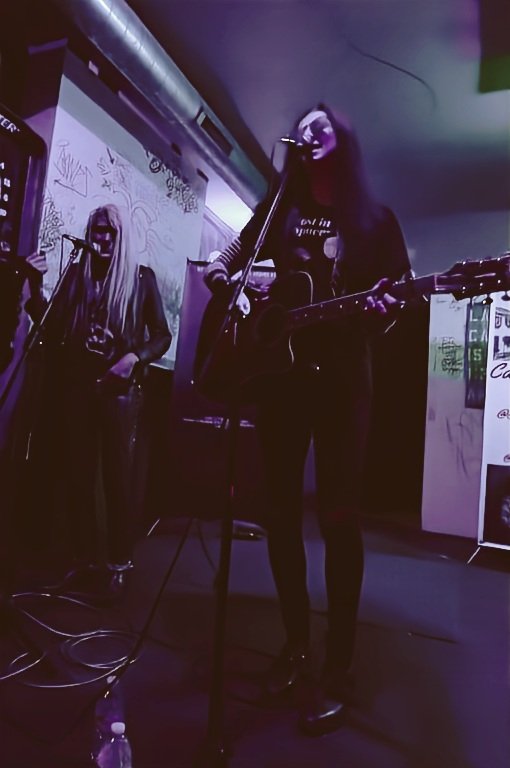
Opening for Wild Street at Remedy in Pittsburgh, Carmine didn’t need big lights or bold gestures. It was all about connection. He didn’t just perform Lost In Space – he made it our destination.
At first glance, Carmine might seem like your classic rock dreamer – goth aesthetics, gritty vocals –but his world is far more textured. His songs play like short films – layered, vivid, and lyrically raw. He’s built what many only imagine: a sonic landscape powered by persistence and stitched together with rock royalty.
Carmine’s earliest soundscapes were built around campfires. Echoes of the Grateful Dead and Bob Dylan dancing with the smoke that drifted through the trees; an earthy, nostalgic foundation that shaped his songwriting. Those roots evolved into something brooding, shaped by theatrical artists like Ghost and Wednesday 13. The result is a sound like a sonic short film – textured, vivid, and open to interpretation.
From early open mic nights to his first paying gig at 12 – a three-hour acoustic set at Big Bottom Brewery in Dillsburg, PA – his family was all in: filming, promoting, and fueling his early confidence. Launching his singing page at just 10 years old, he was unphased by negativity. Where others saw a platform, he saw a stage, and he owned it. That kind of spotlight confidence is rare, especially at such a young age. “I sometimes get negative comments, but I don’t really care. I just keep putting things out there and hopefully one day the right person sees it.”
That persistence paid off. He’s had support from artists who saw his potential long before the spotlight found him. Eric Jayk of Wild Street became an early champion, commenting on Carmine’s videos, sharing his music, and cheering him on when it mattered most. “Eric really believed in what I was doing from the beginning,” Carmine recalls. “He’s been a huge inspiration.”
Musically, the first wave of his work leaned into horror – the slasher-inspired Planet 25 was a fever dream steeped in cult-classic vibes and metaphors for emotional entrapment. “It’s my mini horror story, he says,” “but also a metaphor for feeling stuck in a nightmare you can’t wake up from.” Produced by Dan Malsch, the track felt like it had clawed its way out of a thriller. Cinematic, eerie, and razor-sharp.
But Lost In Space…that changed everything.
Lyrically and emotionally, Lost In Space echoes the themes of Planet 25—dark, obsessive, isolating—but it doesn’t stay locked to one genre. “To me, it’s a hard rock song,” he says, “but I also wanted it to be something anyone could connect with, no matter what kind of music they’re usually into.”
Carmine and Matt Starr first connected on Facebook, where a mutual appreciation quickly turned into something more. “He reached out and said, ‘I want to work with you,’” Carmine recalls. At the time, Carmine had been sitting on Lost In Space for about a year. “It’s my favorite song I’ve written,” he says. “I was eager to get into the studio with it.” He sent Starr a rough demo and another, more aggressive track, but Starr was drawn to the haunting atmosphere of Lost In Space. That choice would set the tone for one of Carmine’s most cinematic and emotionally resonant releases to date.
“Matt brought so many ideas and layers to the table,” Carmine says. “He helped me find the version of the song I didn’t know was there.” That trust became the catalyst, showing Carmine what his music could become with the right collaborators. Starr pushed him toward the edges of his emotional range.
That sonic vision expanded even further with the addition of two rock legends: bassist Rudy Sarzo (Quiet Riot, Ozzy Osbourne, Whitesnake) and drummer Mike Dupke (W.A.S.P., Dee Snider, John Mellencamp). Both recorded their parts remotely, but their presence is anything but distant. “When I heard Rudy’s bassline come in just over the piano intro, I was moved,” Carmine says. “It brought the song to life.” Dupke’s drumming added a pulse that grounded the track’s ethereal textures, giving Lost In Space both weight and lift.
So how does an 18-year-old rock artist from northeastern Pennsylvania pull off what most emerging musicians only dream of—collaborating with legends like Sarzo and Dupke? It didn’t happen by accident. His cinematic songwriting and bold aesthetic caught the attention of producer Matt Starr, who had worked with some of his favorite bands, including Ghost. After discovering Carmine’s music online, Starr reached out, and the two developed a friendship that eventually led to the production of Lost In Space.
Though their parts were recorded virtually, the connection was real. “I actually got Mike’s drum tracks before I went into the studio, so I heard them right away,” Carmine says. “It gave me a chance to use them as a reference—and honestly, he crushed it. He added all these little foil elements—tight, upbeat fills and fast accents—that gave the song a whole new energy. There’s this double chorus at the end where he throws in this rapid-fire drum pattern, and it totally inspired me to write a hidden riff that’s tucked into the mix. It’s subtle, but it’s got this little metal bite to it. That was all sparked by Mike.”
Carmine didn’t hear Rudy’s bass until he got in the studio – and the moment left a mark. “I had my headphones on, and it was just piano in the intro,” he says. “Then I hear this beautiful, sliding melodic bass line – it totally set the mood. It brought the whole thing to life.” That unexpected addition gave Lost In Space even more emotional depth and a bolder rock edge. “I wanted to add depth, something with real weight,” Carmine says. “Even if we weren’t deliberately on the same page, somehow… we were.”
Mike Dupke brought a thunderous presence to the track. From the moment his drums kick in, the background becomes alive, layered with dynamic fills Carmine never expected. “Some of those drum parts were so upbeat, so unexpected, but they totally rocked the song out,” he says. “He really gave it that extra push.” Working with legendary artists is one thing, Carmine adds, “but having them crush it on the track? That’s a whole different level. Just… awesome.”
“I talked to Rudy a few times on social media – he really loves the song,” Carmine says. “He told me he liked my writing style. I’ve been listening to Rudy since I was a kid, and Mike’s one of my favorite drummers. Having them on my song? Yeah, it was awesome.” “I never would have predicted that Rudy Sarzo and Mike Dupke would be playing on my track five years ago,” Carmine says.
Lost In Space was completed virtually over the course of a month. “Guitar riffs would be sent back and forth between Matt and me as he found ones he liked. It was cool having access to him all the time.” Carmine admits that while Matt preferred his low singing voice, he preferred the higher range, so they recorded both for the final single.
That same cinematic intensity carried into Lost In Space, a brooding rock track that dives even deeper into themes of love, obsession, and isolation. Written and demoed entirely by Carmine, the track began as a solitary vision—but in-studio, it transformed into something far bigger. Producer Matt Starr offered a simple but arresting note: “Sing like you’re coming out of a cave after a thousand years.” That suggestion cracked something open, unlocking layers of whispered vocals, spectral flourishes, and emotional gravity that became the song’s otherworldly hallmark tone.
Lost In Space didn’t just sound like a song, it felt like a transmission from the edge of loneliness. “Learning little production elements from Matt has been really educational,” Carmine says. “Even subtle things can change the energy of the track.” What emerged wasn’t just another single, it was a turning point, a crystallization of Carmine’s voice in its most atmospheric and honest form.
“I wrote all the chords for Lost In Space—that whole structure came from me,” Carmine explains. “It started out slower and stripped-back, but once I got in the studio with Matt, we began shaping it—tweaking the tempo, adding guitar riffs, layering vocals. A lot of it was about finding the right guitar tones and letting the track evolve.” Carmine didn’t have high-end gear, so he relied on what the studio had in-house. “They had some wicked cool tones,” he says. When his guitar’s electronics gave out on recording day, engineer Jack Daley fixed it on the spot. “Literally rewired it.” While Carmine laid the foundation—lyrics, structure, vision—he’s quick to credit the team: “These legends really brought depth to the song.”
Jack Daley isn’t just a producer; he’s a bass legend. “He put the perfect mix in my ears—just the right balance of bass, drums, everything—which let me focus and give my best performance.” Jack kept sessions sharp and grounded. “If I was even a little off tempo—especially when I’d start trying new riffs—he’d reel it back in,” he says. “Jack’s a master of rhythm, so having him help me stay on board with the guitar was huge.”
Matt Starr’s fingerprints are all over the subtle details of Lost In Space. “At the start, he helped me slow the tempo down and gave me this wild direction—‘sing like you’re coming out of a cave,’” Carmine recalls. That cue led to the whispered vocal textures woven throughout the track. In the studio, Matt offered up constant sparks: “What if you slide your pick down the guitar before this chorus?” Whether it was tweaking tone or experimenting with guitar phrasing, he was always pushing Carmine to explore new territory. “Besides wanting me to sing the whole song in my lower register,” he says with a laugh, “we were pretty much always on the same page.”
As the spotlight widens and the buzz surrounding Lost In Space grows, Carmine remains rooted in the authenticity behind the music. “I just want to make music that resonates – that people can feel they connect with when they struggle.”
The original demo was super stripped-down—just guitar, bass, some piano, and drums Carmine programmed himself. “I’ve always loved that ’80s synth vibe from Planet 25, and I knew I wanted to carry some of that into this track. The synth really gives it that spacey feel. Even just the key the song is in sets that mood.”
After eight years of playing, Carmine surprised even himself with the solo. “I wasn’t expecting to create a story like that, but I really enjoyed playing it – it starts with a slow, melodic feeling and builds into something faster and more expressive. “I’m still finding my voice as a lead guitarist,” he says. “But I want to land on something that feels like mine—and stick with it.” He adds, “I’ve always been more of a rhythm player. Lead guitar is still something I’m exploring.”
But ask him what he’s most proud of, and it’s not the big names or the growing numbers. It’s the messages from listeners. “When someone tells me a song helped them through something—that’s what makes it worth it,” he says. “I’ve never been too concerned about a label. I just continue to put myself out there.”
That grounding never left him. Over time, the nostalgic acoustic tones of his youth gave way to the theatrical grit of gothic rock and artists like Ghost and Wednesday 13. The fusion was natural: campfire stories turned cinematic—emotionally textured, visually vivid, lyrically open to interpretation. His songs feel like short films with distortion pedals.
While he’s dabbled in theater and explored genres from country to Post Malone covers, Carmine’s focus is set. His dream? Collaborate with Alice Cooper and one day open for TX2, another rising artist with an emotionally honest edge. “If my music were a person,” he says, “it’d be a little angry, a little misunderstood.”
He promotes tirelessly, reaches out to music publications himself, and smiles when talking about the $6 royalty from thousands of streams. “It’s not about the money,” he says. “I just want people to hear it. To connect. To feel seen.”
And when it comes to success, his view is clear. He doesn’t fixate on fame or image, but he’s candid about what matters. Success, he believes, should never eclipse community. Humility and connection aren’t just part of his ethos—they’re the foundation, and they’re non-negotiable.
You can find that world online: YouTube, Instagram, Facebook, and TicTok @carmine.musicofficial for original content, and @carminegontzmusic for a mix of originals and cover tracks.

Continue reading
 RadioRadioX