

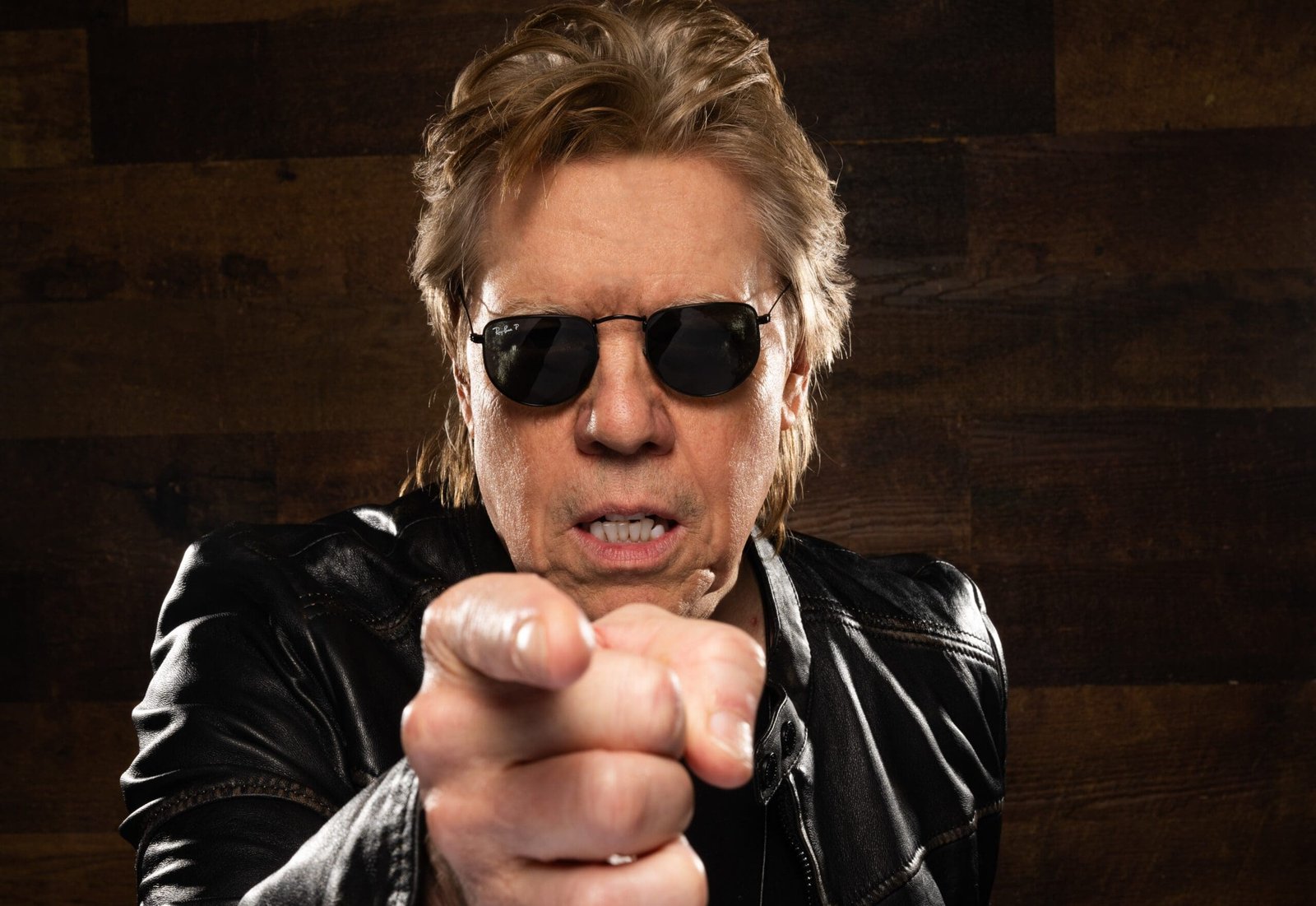
George Thorogood – An Xperience Interview – by Liam Sweeny.
It’s not every day that you meet your heroes. But if you are a music journalist … well, it’s still not every day, but you only need one. George Thorogood and the Destroyers have made their mark on blues, rock, and the public consciousness. George will be at the Palace Theatre on September 16th.
RRX: You’re coming to the Palace theatre here in Albany on the 16th for the “Baddest Tour on Earth.” Since you’ve been touring your whole life, what’s something in particular that you’re looking forward to now?
GT: Coming to the Palace Theatre has always been one of our favorites, Liam, not just in New York, but anywhere. We used to do it regularly in the ‘80s and ‘90s. It was always wonderful cause we’d go upstairs, and it was usually in the fair weather months. We’d open the windows, and it’d be about 40 or 50 kids in the street, and we’d open the windows and talk to them after the show, what they liked about it, what they didn’t like about it. And we did that almost every time. And then I think the last time we went, someone had nailed the window shut. But we haven’t been in that long time, and I was always wondering why we never went back there, cause that was one of our favorite rooms. Well, we’ll see what happens when we go back.
RRX: So I grew up listening to you. My dad had a record collection, from Mayall to Robert Johnson to B.B. to, of course, George Thorogood. You’ve not only played the blues, but you carved out an entire sound of blues rock. When did you go from just wanting to be in a band to really pursuing music?
GT: Well, I wanted to be in a band like anybody else when I was a kid. I saw the Stones on TV and I listened to Dylan, like everybody else. And, you know, that was a dream, and everybody had that in high school. Time came along, and I started fooling around with the guitar. I noticed I had a knack for playing that sort of blues. You mentioned Robert Johnson, John Lee Hooker, things like that, Elmore James. Well, I kinda had a feel for that right away. I got started late on the guitar. I went in that direction. And then after about a year, I said, ‘Man, I can only take this so far. I got to get an electric guitar and a bass player, and a drummer. I can’t pull this off alone.’
Also, another thing, too, Liam, is this. Rock bands sell out the Palace a lot more than solo blues acts. So there you have it.
RRX: I watched an interview that you did last year with Katie Daryl from AXS TV Home and Social. And it got mentioned that when you were starting out, you were kind of like Indiana Jones when it came to going after this very obscure music that you just wanted to unearth and show people. I immediately thought of, like, Alan Lomax going out there and recording the old blues, like doing that field work. Did you ever feel that – kind of like a spirit of Alan Lomax?
GT: No, I was looking for obscure records with obscure material. The material was already there. I had to just go find it.
RRX: How was that experience going and finding stuff? Were you getting farther away from the other musicians that you were close to? Because obviously, you’re doing that, maybe other musicians might have been just pursuing what they already knew?
GT: There’s nothing obscure anymore, Liam. The way the world is now, you can find out anything in 10 minutes on your telephone. Yeah, that’s true. That’s true. It wasn’t like that in 1970, 1971, and 1972. That kind of research was not available. So I had to send away for records to Chicago, to Chess Records, or we’d go to Philadelphia to warehouses where they had old obscure records that never sold. I had a place in Wilmington that ordered records for me that weren’t mainstream artists or records, such as Jimmy Reed. It was all a different process then. And now it’s not any fun because anybody can do it. OK, so that means the song’s not obscure. So what’s the point? And besides, just about all the obscure material’s been used up anyhow. By the time I got on the scene, John Hammond, the Butterfield Blues Band, the Stones, the Animals, they’d tapped into the research of blues material and recorded it. There wasn’t much left that hadn’t already been done. And that was kind of tough. And that’s what I was trying to do.
RRX: And you found it, you found stuff, so it was a successful search.
GT: Well, yeah, there were certain songs we wanted to do, and I wanted to record them. I said, look if J. Geils finds out about ‘Bourbon, Scotch and Beer’ before I do, they’re gonna record it and I’m gonna be done before I get started. If the Rolling Stones do ‘Ride on Josephine’ on their next live album, then that’s been covered. So I was in a bit of a hurry and in a bit of a panic to expose these tunes before anybody else did.
RRX: OK, that makes sense. Yeah, you don’t think of the competition back then, trying to find that stuff. So let me ask you another question. Fame kind of hit unexpectedly early on for you guys. You were with Rounder Records, and it was a small label at the time. And neither you nor they were ready for that initial blowing up when it comes to how many records to buy and stuff like that. What kind of effect do you think that had on you and the Destroyers going forward?
GT: It didn’t really have that much effect ‘cause we were too busy playing live all the time. I thought every record label is the same. I thought if you’re on a record label, you’re on a label, you got a deal, whether it’s Reprise, or Warner Brothers, or Columbia, or Excello, or whatever, you got a deal, and that’s what we had. I just thought, well, if the demand is bigger than the supply for our records around here, I said, just print some more up. Just like any other product. Like, if you go to the store, you go to the shelf, and they’re out of Doritos and Coca-Cola, they don’t close the store, they go order some more.
RRX: Did Rounder have the money to do that? Were they able to raise the money quickly, or was it a struggle for them to raise the money to meet the demand?
GT: Money is probably the big taboo word in the court of Rounder, OK? All right. I didn’t understand that they were like a documentary label. They would record someone obscure, someone unknown, and then move on. And I did not know this. I thought they were a label like any other label, you know, you made one record with them, you made two or three with them. But they didn’t do that, they’d find somebody, a street musician or whatever, record them, and then move on, just like a documentary film company does. I didn’t know that until we got rolling. And then they said, ‘Well, I’m with you now, I might as well do another record.’ And they went broke trying to reproduce our records. They didn’t have the money for it. And I didn’t know that their money went back into the company. It was like a non-profit organization. So it was a strange setup from the beginning.
RRX: You received the B.B. King Award in 2018, and congratulations first off. As I said, my dad was really into the blues, and he took me to see B.B. twice. And once, B.B. showed up with two broken legs – the hardest working man in the Blues. What was it like? What was the influence of a guy like BB King on you?
GT: Well, he was first and last a very great entertainer. He was up there with that tuxedo and the ruffled shirt. He was like a Frank Sinatra of the Blues or Dean Martin. That’s what I picked up from most people: Elvin Bishop, Marty Robbins, people like Chuck Berry. I picked up the entertainment flavor from them. I learned the guitar myself and selected my own material. So what I really got from a lot of these people was how to be an entertainer, and B.B. King was one of the best.

