

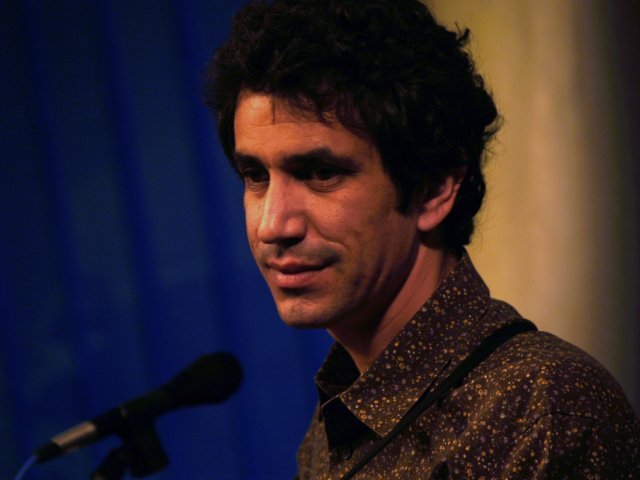
A.J. Croce – An Xperience Interview – by Liam Sweeny.
The problem with being the son of an internationally celebrated musician, tragically cut short before his time, is that you’ll face a lifetime of pressure to perform work that, in some cases, was literally made just for you.
A.J. Croce waited years, creating an impressive career of his own, before feeling he was ready to accept the responsibility of honoring his father’s work. Croce Plays Croce is coming to Universal Preservation Hall on Thursday, April 9th at 7:30 pm.
RRX: You’ve created an experience called Croce Plays Croce, and you’re gonna be at Universal Preservation Hall on April 9th. Can you let loose a teaser about this performance? What can people expect, and what might they be surprised by?
AJC: I grew up with my father’s record collection. I was a piano player first and foremost, but along the way picked up guitar and was inspired by that music. And while it wasn’t this vast collection, it was really deep, and I was able to get turned on, of course, to Ray Charles, who was kind of my gateway drug as a kid who couldn’t see all of the Fats Waller and Bessie Smith and Mississippi John Hurt and Skip James and all of this amazing stuff. Soul music like Solomon Burke and Otis Redding and Sam Cooke and rock and roll. Little Richard. And it was everything you could want. Chuck Berry and Bo Diddley and lots of great folk music and great country music, and it was great. My father’s career was really brief. It was 18 months of a professional music career, and before that, he played other people’s music. So I feel like it’s really important to share some of that, because it really informs the audience about what inspired him. But also where his influences came from and consequently where my influences came from.
RRX: Which of your father’s songs were the hardest to learn?
AJC: It is an interesting question. I think it was more about “hard,” emotionally. Musically, as a piano player who started before I could walk, the forms are pretty simple to play on piano. Especially, you know, growing up playing stride and really complicated pieces. It was relatively simple, I think, compared to that. When I switched over to guitar, all of a sudden it became a bigger challenge, you know, because what might be easy on piano for me is not on guitar. I think it’s that the keyboard and fretboard are different in that way. There was absolutely a learning curve. Being a piano player, finger-style guitar really just resonated. It made perfect sense to me. That’s how I started before picking up a flat pick or a thumb pick or anything like that. And so that was a great jumping-off point. I think that a song like “Time in a Bottle,” which was written for me, was emotionally challenging. There are a couple of songs that have very personal stories that I know and that are personal, that are about my family. And I think in those situations, it was just a little hard to approach because they were really personal. I think otherwise it’s pretty joyous. I think all of it is pretty joyous, and you can hear his influences on all the character songs; it all comes out of rock and roll and R&B from the ‘50s. “Don’t Mess Around with Jim” is like a Jimmy Reed song but with the lyrics of Leiber and Stoller. I think growing up on South Street before moving to the suburbs in Philadelphia really informed him musically because it was such a diverse community. You’d have opera in the Italian section, and Klezmer music, and you’d have rock and roll and R&B and jazz and gospel and all kinds of stuff. So, I think it was pretty clear where some of this stuff came from. “Rapid Roy,” you can hear Chuck Berry influence, but again – those character songs – you can hear that Leiber and Stoller influence, the storytelling, the characters. He just does something a little different with it, in that he personalizes it.
RRX: You were very young when your father passed, so a lot of your learning of him came from his music. But then you also learned a lot about him from your family, because they were probably filling you in on stuff that you would have never known because of how young you were. How was it different what you learned from family and what you learned about him through his music?
AJC: We learn all different ways, you know. It can be tactile, it can be something that we perceive; it can be any number of our senses that can lead the way in how we learn emotionally and philosophically as well. Now, with my dad, I think I was really lucky to have all of these home recordings. Before he ever played a little bar, he would practice. He would practice songs he was going to perform, and it could be an audience that he was going to play more blues stuff for, more country stuff for. He might slip one of his own songs into the set, but it might only be one, and the rest of it could be all over the map depending on what it was. So I had a lot of these. And then whenever friends came over, he was also recording. So I had this wonderful kind of library of him with friends, with fellow musicians, hearing his interaction about his ideas. I think he was recording it because certain friends were really funny, and he thought the conversations they would have would inspire a song. So he’s always looking for a way to tell a story. I was the beneficiary of one of the greatest gifts you could have if you’re not going to have the actual person in your life.
RRX: I think there are a lot of musicians starting out that actually fear success, and it holds them back, keeping them from taking a musical risk. How did you see this growing up? How did you feel about fear of success?
AJC: Letting the fear of success go. And when I say success, I mean in the way that I think the outside world thinks of success. To me, success is being able to do what I love for a living, whether I’m playing at a beautiful theatre or festival or playing a private party. I’ve done every kind of wedding and funeral you can imagine, and to me, that’s success, being able to do what I love. But from the more outside perspective, I think that once you let go of that fear of the notoriety and celebrity … you see there’s these opportunities that come along that you didn’t realise, or see in the same light. And so I think once I became comfortable with the idea that, yeah, part of what I’m doing, the whole point for most people is to be known. I think that it was always this idea of like, I don’t want to sell out as an artist. You never want to sell out, right? Which is why I didn’t ever play my dad’s music. I didn’t want to sell out. But then, when it came about for the right reasons, you know, and you’re playing a venue, whatever size, what are you trying to do? You know, you’re trying to sell out. Yeah, trying to sell out. So you really gotta decide how you feel about that stuff, because you can get in your own way a lot by worrying about things, instead of just enjoying the small triumphs that we have, you know, in this roller coaster of a life.

