Home Blog Page 540

Interview: Nicole Signore – By: Liam Sweeny

0

Everyday we live and breathe free air, eat gluten free hot dogs and get triple-pump sugary abandon at our local coffee shop. And we’re able to do this with nary a thought because of the unsung work of thousands of dedicated folk. And when we sit down to watch our favorite movie, we might be blissfully unaware that a different kind of unsung hero, buried in the credits, made it so.

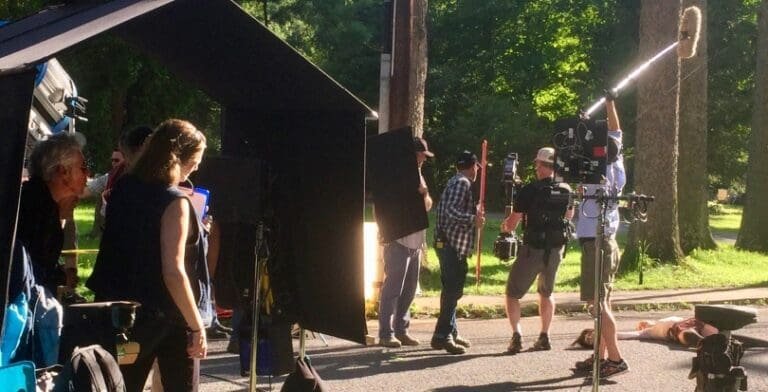
One such hero is the 518’s very own actress, photo and stunt double Nicole Signore. Here credit list is a mile long; I checked. With a ruler. She has supported some of your favorite actresses, and has graced the screen with some pretty heavy hitters on her own.

I sit with Nicole and we discuss tai chi, judo, and other cool words.

RRX: You have done a lot of stand-in work. I’m not sure my readers fully understand the nature of stand-in work. Correction: I don’t understand it, and I do read my articles, so I guess that counts. So what exactly is “stand-in” work? Is it the same as stunt work, or are is it something broader?

NS: I’ve worked in many ladders of the TV and Film Business most my life and really got serious about it since I’d say 2007 when I joined the unions.

Stand-in is something I’ve done a lot in addition to acting and modeling. To answer your question yes A stand-in is broader then a stunt double, however, a stand-in position can sometimes lead to a photo doubling or stunt doubling position on a set. There were a couple times I started off as a stand -in and was promoted to a stunt double contract.

In comparison a stand-in to a stunt double; a stunt double will take the risk of doing more dangerous actions for an actor like high falls, car chases, combat scenes and other special abilities where a stand-in is someone who may look like the actor or actress and is responsible for helping set up lighting and blocking the scenes. A stand-in is used as a type of model for the main actor so the main actor doesn’t need to be present on the set and can get ready and save production cost while the crew sets up and lights the scene with the stand in. Stand-ins, aka “second teamers,” are also used a lot more these days in video games and in the new reface AI software applications and to rehearse lines with the main actors, or in table reads as a replacement when the main actor are not available.

Sometimes, working as a stand-in, you are also asked to photo double an actor or actress and production will use parts of your body, hair or image from a distance, example: like driving a car from far away for an actor or using the back of your head, hair or any body parts.

The perfect example of a stand in or photo double would be in the movie ‘the Crow,‘ where a lot of the shots of the late Brandon Lee were picked up by his stand-in/photo double after the actor passed away.

RRX: Your passion is historical productions and period pieces. As you know, we just had “The Gilded Age” filmed here, and we’ve had “Age of Innocence” filmed here. This area welcomes that kind of project. Did the history and architecture drive you to this passion, or was there something else?

NS: I think over all I’m just a time travel, sci-fi, and history nerd, but I would say yes – the 518 history and historic architecture has contributed to my interest growing up in the 518. This area is rich in history – I do not think people even realize home much history is here. I’ve often thought about starting my own YouTube channel where I travel around New York talking about history and places to go and things to do to better educate people on that history “Nikki from NY” has a ring to it; what do you think??

But yes I love historic homes and architecture as well In fact, I just bought an 125 year-old Victorian multifamily in the Mohawk Valley and I love it! I love the attention to detail in the wood work and the shaker cabinetry, the wrap around porches and multiple balconies, the hard wood floors, tall ceilings and large windows. Real-estate investing is also another one of my aspirations. I have always loved the building style and quality of building materials of that time period. People really took pride in their work and the attention to detail and it’s very beautiful to photograph.

I think Over all, though, my love for history came from my late grandfather. He used to do a lot of research for the late historian Larry Hart when he was alive, and we would go to the library in Schenectady together and do research on microfiche and old newspaper articles we do that as grandfather and daughter bonding time. My grandfather owned a Tydol gas station over on Nott Terrence in Schenectady, and ironically, where his gas station used to be is now a museum.

My grandfather was very much in love with old cars too. I recently started a collection of old vintage Ford Mustangs to honor him and to use as picture cars in period films. So far, my little red 1983 fox body Mustang has been in about five films and my Shelby Mustang has been in a couple. In fact, I received my Screen Actors Guild card working as a team captain and precision car driver under Bill Young’s stunt driving team in the movie SALT filming here in Albany with Angelina Jolie on 787.

RRX: So two movies to illustrate many more. “Kill Your Darlings,” with Daniel Radcliffe, you played Page. And “Benedict Arnold: Hero Betrayed” with Martin Sheen, you played Jamima Warner. When you’re on set with actor with that kind of name recognition, is there more gravitas to what you are doing, or is it “a show like any other?”

NS : When I first met Daniel Radcliffe we were in the hair and makeup trailer together sitting next to each other he came up to me and was like “Hi, I’m Daniel” I was like “I know!” and he laughed. At first, it’s a little hard to not be star struck, but after a while you get used to it. They like it if you just treat them like anyone else and not fuss over them. I spoke to Daniel about a play I was doing at the time while being a theater student at Schenectady County Community College called ‘Loves Fire.’ I was performing in that show and also driving into NYC to shoot ‘ Kill your darlings.’ Daniel said “Oh, I’d love to go to the show where is it?” I said Schenectady, upstate NY and he was like “Oh I’d try to make it upstate, but I may not have time.” He was really cool. I know if he had time and he was closer he would have totally come to the show, that’s how cool of a guy he is.

There is a lot more security on set for you as an actress when you are working on a scene with celebrities. You feel a since of  importance, or if you are wearing a wardrobe, you always have a production assistant, hair and makeup,  or wardrobe person following you a round and spraying your close with cans of air making sure you are picture perfect. And then you wrap, you take the period clothes off and get sent on your way in your modern clothes and it’s a brain rush like “Oh I just leaped back to the future it’s 2022. Now you go back to your everyday life. It’s modern music and modern cars, modern phone, modern everything. I’d much rather spend my Sundays cruising around in vintage clothes and in my vintage cars pretending it’s 1989.

It is really cool when you are on a first name or nick name bases with actors though, or you can stay in touch with them on social media, grab a slice of pizza, grab a drink, do a yoga class, go roller skating with your down time on sets with them. They are people, just like us. As a stand-in you have lunch with them 21-30 days during production, then you go home and you see them at the academy awards on TV; it’s mind blowing, really. It really is. You see them out at a film festival or event and they remember you like oh “hey Nicole.” It’s a really cool feeling

RRX: To top everything else off, you’ve done a lot of stunt work, photo doubling, fight directing. You’ve “been” Juno Temple, Elizabeth Olsen, Mena Suvari, Chloe Sevigney, and countless others to the mid double digits. Can you run me through how you prep? Do you take into account their personal mannerisms, or is it all action?

NS: Yes, I do study their body language. Not so much for stand-in work, but for photo doubling and stunt work. For example, when I was stunt doubling Mena Suvari in the fish tank scene for ‘What Lies Below,’ which was shot in Lake George, I had to watch the monitor and rehearsals closely, in specific detail, how she would move her body and her legs and replicate my body exactly how she moved and get the timing of the movement of my body with hers. It’s like playing the drums or dancing; she screams in the scene and it’s ‘move my leg twice to this word or scream and move leg twice to that.’

I’ve had to have my hair cut or colored like them too to help make hair and makeup’s job easier. If I know I will be doubling one actress more then another I will prep by working out to similar work outs as them, maybe gain or lose a few pounds as well. I will watch interviews of them, because interviews are the best where they are naturally themselves, and not acting as another character in a movie, to see how naturally animated they are. I think I am naturally a chameleon anyway though, so if I hang out with anyone long enough I will start speaking like them and moving like them and acting like them naturally; it’s a strange quirk I have. Sometimes an actress will have an inch or two on me in height so I will stuff my sneakers with Dr. Scholl’s pads to give me the extra inch I needed to book the part during the aesthetic test audition, because they don’t like you to wear heels.

Really it all comes down to the actress and who she likes if she chooses you. If you double them a lot and they feel comfy around you and know you then you are in. It’s the professional bond you have from previous shoots. You are there to make their work and lives easier.
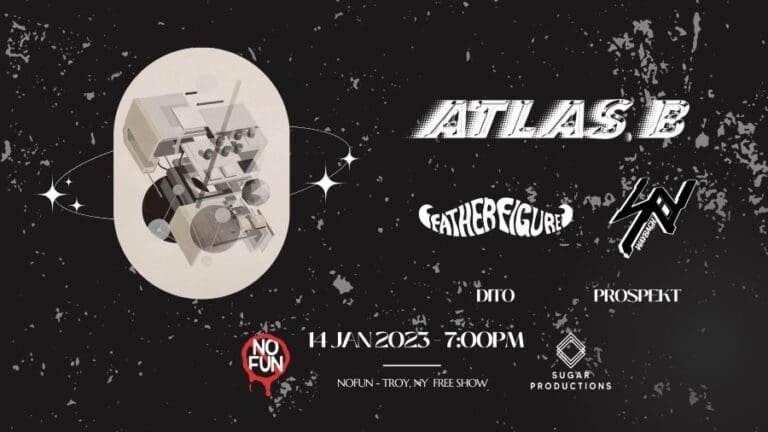
FREE EDM Show at NO FUN with Atlas.B, Father Figure, Waybach, Dito, and Prospekt Saturday 01/14/2023

0

This will be the 3rd EDM show put on by Atlas.B at No Fun in Downtown Troy. No Fun has been a great newer spot in the scene for all sorts of music acts and the buzz is growing.

Atlas.B combines electronic synth with elements of funk, soul and blues intertwined with sampling and live instrumentation. Now add the tempo of the beats and electronic bass and you can almost get an audio visual of what you will experience at an Atlas.B performance.

On January 14th Atlas.B will be joined by Waybach, Father Figure, Dito, and Prospekt for a FREE EDM show at No FUN starting at 7pm
Bring your dancing shoes, light sticks and let the BASS take you on a journey of the mind!

Interview: Leslie Barkman – by Liam Sweeny

0

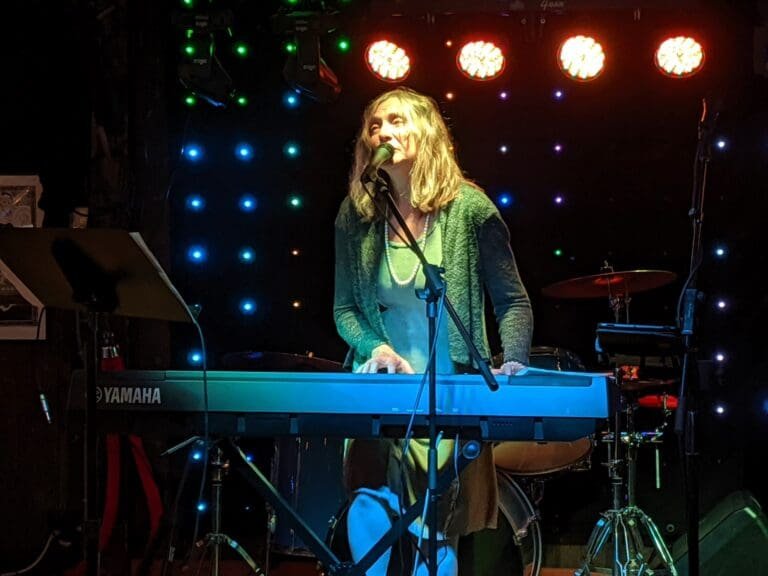
There’s something pure about a singer. The voice is the most root instrument, almost certainly the first instrument among the cave people. But a singer, especially one sitting behind a piano, brings us along on a journey down a river of club smoke and soft lights.

Leslie Barkman can sing. Really. She is exactly who you would expect in a posh clun playing on a Steinway, accompanies by hushed whispers and the crackle of ice. She has been a fixture in the Capital Region, and for good reason.

I sit with Leslie and we talk about the encore.

RRX: Bands have origin stories, usually about a chance occurence or a crazy jam session. But for every one who takes to a piano or a guitar, or picks up a microphone and sings, there’s a different origin story. Not when you first started playing, but the moment that told you you’d never stop playing. What was that moment for you?

LB: I don’t remember when I wasn’t singing. I’ve been told I sang on bar tops when I was three. My family sang and singing meant we were happy. We sang in the car and around my grandmother’s piano. My moment of bliss came when I was about seven  or eight sitting at that piano. I realized I could read the words of a song and I could find the notes and play them while I sang. Wow.

RRX: Singing feels effortless when you’re on the receiving end of it, but it can be tricky on the giving end. Even more so, it can present a challenge in songwriting. You have to come up with lyrics that not only express what’s in your heart, but they have to be in a melody that hooks. How do you go about putting great lyrics to great melodies?

LB: I mine my life experiences.  Things occur to me. I write them down. I look for alliteration, for rhyme, for theme, for phrase, for story. I run them with a chord pattern within a key I have been toying with. Then I dance or take a walk to find the right rhythm for the words. Some songs come easy, some I have worked on for years.

RRX: You’ve been in the area for a while. You have a style that can blend in with a lot of different musics, so that would lend itself to you being brought into a lot od musical events over the years. Can you think of any one event in particular, one event that should’ve been filmed but maybe wasn’t, somewhere everyone should have been?

LB: Anyone who wants to play should go to as many jams as possible. These are the events that are most memorable to me. I came to the area fifteen years ago after retirement from teaching and raising a family. My music during that time included church choir and community theater. I bought an electric piano and picked up where my ten year old self had left off. I dragged that piano to Pauly’s Hotel and the Fuller Roadhouse and I met jam masters Buck Malen and Jeremy Walz who shared their talent and advice with kindness and generosity. These places were my classrooms. Jams are the places where I met my own kind and those are the players on my cd’s. “When I Remember” is about Buck and Jeremy plays on my latest cd.

RRX: I’m listening to ‘My Upstairs Parlor’, which you released in June of 2022. I have a whole feel about this that makes me glad I do this. I love the blending of piano and organ. They’re so interconnected, especially across songs in a collection. I’d ask you which you prefer, but rather, which one do you go to when you’re feeling most creative?

LB: I am a piano player. My keyboard has an organ function which I use from time to time, but most of the organ work on “Upstairs Parlor” was done by Mike Kelley.

“Upstairs Parlor” was recorded in my home piece by piece by Will Kachidurian. We started with my piano and vocal with percussionist Bob Assini. Steve Kirsty sent in bass and saxophone from his home studio. Mike Kelley added organ and clavichord. Jeremy Walz, Joe Lowry, Scotty Mac and Todd Nelson came in to record guitar. John Dievendorf, Lester Figarsky and Will Kachidurian played bass. Al Kash brought in his drum kit. Terry Gordon played trumpet. Eric Kreplin played harmonica. I added back up vocals and Will put it all together.

RRX: You were nominated for the 2022 Listen Up awards, the inaugural award event for Radioradiox. This was a selection by your fans and listeners. Do you have any cool words of wisdoms for the fans who supported you? And can you think of any other band or performer to nominate for the next one?

LB: Thanks to Radioradiox and Xperience for recognizing local artists. There are many very talented people in the capital district working hard to bring you great music. Come hear us!

RRX: The floor is yours.

LB: Thank you to those of you who have enjoyed my music. It has been a joy to share it with you. I have upcoming solo gigs, gigs with my band Lou’s Blues and I will be singing with the Hammerhead Horns. Watch for postings on Facebook.


You can see Leslie on January 12th at Suga Foot’s Soul Kitchen, 165 Madison Ave, Albany solo, 6 to 8 pm. Also February 7th at The Lark Street Tavern, Albany, jazz trio 7 to 9pm, February 18th at the Rustic Barn Pub, Speigeltown, Lou’s Blues Band at 8pm, and March 18, full band Lou’s Blues at Lawrence St Tavern.

OBSERVATIONS AND RAMBLINGS FROM A CRANKY OLD GUY (January 2023) -By: Jeff Spaulding

0

Let’s talk about music, I have experience well beyond my years, or perhaps well before my years.

When you consider my years as a so called “air personality” (“woke” for “DJ”), up until the last 12 years as a News Guy, if it was a hit, OR a stiff, if I didn’t play it on air, I played it in clubs, at wedding receptions, bar/bat mitzvahs, or high school dances. I love most types of music, even in a retrospective way.

When I was a teenager and I was all Black Sabbath and Grand Funk, I couldn’t stand Michael Jackson and the other four guys. Who were these little punks trying to be pop stars? As I got older and listened again, my opinion changed. Same with all pre rock and roll music (before Elvis, Chuck, Richard etc.), I thought big bands blew, till I opened up my ears and found what I was missing. In the late 80’s and early 90’s, On air I showed my profound love for the New Kids on The Block, at a time where you’d hear one of their songs every half hour on the hour! Today, in retrospect, my opinion changed, my opinion remains, I still hate the little bastards.

One type of music that defines me, influences me, makes me who I am today, hardcore pure country music. Not the “poppy bubble country” you hear today. I’m talking beer drinking-spouse cheating-raising-hell-music, added by twin fiddles and a steel guitar.

Sounds aside, there’s more that makes a great country song, (1) lyrics that you could listen to and immediately identify, and (2) the way the singer sings, a not perfect tone, yes, a little twang, but the total sound that could make the listener believe that song was just for them

Ernest Tubb used to say he knew he had a bad voice, and a guy in a bar could prove to his girl he could sing better than Ernest Tubb, most times he would, most times he would score later that night too. On any Hank Williams song, just read the lyrics, I would bet that song is related to you, or someone you know.

That brings us to a six part mini series (as of this writing) presented by Showtime, on two people many still consider the Once and Forever King and Queen of Country Music, George and Tammy. If you don’t know the names, go watch Ken Burns Country Music Documentary on PBS, to realize I’m talking about George Jones and Tammy Wynette.

“George and Tammy” concentrates on the years they were together, both as a couple and as husband and wife. Their individual lives were train wrecks on their own, put them together, they made musical magic. There’s a reason for that, I think.

Both were extremely flawed. Both were previously married, both later married. George was an alcoholic and substance abuser, Tammy got into pills, there were fights, verbal, and physical.

If you don’t know how strong their love was, go find a few songs to get an idea of how big the bond was between them. The first from Tammy, “You’re Good Girl’s Gonna Go Bad,” “Stand by Your Man,” and “D-I-V-O-R-C-E. The next From George, “When The Grass Grows Over Me,” (written by Tammy’s Ex), “The Grand Tour”, and ”He Stopped Loving Her Today” is still called the greatest country song of all time. George was so hammered they had to cut and paste his spoken words after multiple attempts.

I present one more that the King and Queen recorded together after they parted, “Two Story House,” a song about young love, angry love, and broken love in less than three minutes…it sold millions and hit number one.

Back to “George and Tammy”, the mini-series, while it’s a “bio flick, it’s DARK and REAL. You will see abuse on both sides, you will see a Music City that Music City never wanted to be portrayed, probably still don’t. You also will not see a happy ending. But you WILL understand what country music is all about. Find it, watch it, and appreciate the acting AND singing talents of Michael Shannon and Jessica Chastain. Sipping a Jack Daniels while watching is optional.

Be hearing you

Interview: Joe Lansdale (Author and Champion Mojo Storyteller) -By: Liam Sweeny

0

There are writers’ writers, just like there are guitarists’ guitarists and pimps’ pimps. A writer’s writer is not, make no mistake, an affront to the reader, or solely focused on some void philosophical notion of craft. No, they are actually so beloved by their readers that other writers gather ‘round their campfire and want to walk away with a piece of what makes that writer who they are.

Joe Lansdale is a writers’ writer. A Texan, he can write something low-down and dirty to the point where you can taste the dust his characters are kicking up, but he can also plumb the depths and challenge you to think, and in some, or many cases, challenge you to fear.

I spoke with Joe and we talk mojo.

RRX: I fell in love with Hap and Leonard, which started out as a book series, and went on to TV via Sundance. Two lifelong friends, Hap a white guy with a laborer’s history and Leonard, a gay black Vietnam vet. Leonard breaks a lot of gay stereotypes. You wouldn’t want to meet him in a dark alley. How did Hap and Leonard come to be?

JL: Hap is about eighty percent me, and Leonard is a lot of folks, a couple of people I worked with, even to some extent myself. Also, a couple of good friends, at least at certain times in their lives. Leonard is gay simply because I knew people who were gay, and so I felt that should be represented more in books, and not just the goofy neighbor next door stereotype of films and TV.

Hap and Leonard have many of the same jobs I’ve had, and though I haven’t had shootouts and the adventures they’ve had, a lot of their backstory, views, situations, I borrowed from real life. My life and others I knew, stories I heard that may or may not be true. They came very naturally to me, more so than any characters I’ve ever written about.

RRX: Your work shows a passion for the comics, the old ones. Batman, Tarzan, Conan the Barbarian. Gets me to realizing that the people who created these, the original writers, are very unsung. More people know who created Hap and Leonard than know who created Batman. In your own work with comics, how do you honor these old writers?

JL: That’s a good point. Growing up I thought Bob Kane wrote all the Batman comics. That’s what you were led to believe, and later I learned of the considerable contributions of Bill Finger. Of course. Batman has been in many writer’s hands, me included, but in my case in books and animated films. I was a big fan of Gardner Fox.  He really turned them out, and he worked with a lot of comic characters. The echo of all that work still travels through the comics. That was a major influence on me, that’s for sure.

RRX: You’ve won 11 Bram Stoker Awards for horror, correct any err. And horror is big in our culture. It fills a need in us that a hungry lion used to feed our ancestors in the savannahs. But in writing, in the piles of publishers’ wish lists, how is horror ‘horror,’ and not just dark sci-fi or a psychological thriller? What makes it horror?

JL: I think I’ve won ten, and if you count Lifetime Achievement, I think you got a house for that too. It’s the old ‘I know horror when I see it’. When I was young it was about fear, but as time went on, to me it became a tool in the tool box along with others. I think I probably borrow a lot of horror mood for my Hap and Leonard novels, at least some, and the truth is if you have strict labels it’s really not much fun. I’ve run the gamut.

RRX: When I was a younger writer trying to build my chops, I heard “gotta read Lansdale!” I picked your book ‘The Bottoms,” a coming-of-age story about a killer of black prostitutes. I have ADHD, so I have a hard time finishing books that aren’t amazing. I finished “The Bottoms”. How does that book fit in with your collected works?

JL: Many readers cite it as my best. I certainly think it’s one of my best. I felt I could do that kind of book long before I did it, but when I wrote it won the Edgar, the Herodotus, and was nominated for others. Bill Paxon, Brent Hanley, and myself, we tried to get it filmed for years. Bill then died young, a botched operation, and that kind of went fallow for now. My favorite of my works is “Paradise Sky”. I wanted to write it for a long time, loved writing it, and feel good about it. Other favorites are “Edge of Dark Water”, The Thicket” and “Sunset and Sawdust”. “The Drive In” is my most original, and in some ways, one of my most influential, along with Hap and Leonard. Lots of writers cite those as catalyst to their own works.

RRX: I can mention a colorblind haberdasher, Imperial Japan, and a sentient smushed cigar butt, and I know you can write that into a story that will be very satisfying. I won’t ask how you do that, but I will say that a lot of writers trying to break in are afraid to shoot wild because they think agents and publishers won’t take a chance. What say you? 

JL: I say go for it if it feels natural to you. It is natural for me. I think comics made me think bold about stories, and pulp influence, and the best of those writers taught me about scene and color. A lot of fine writers like Raymond Chandler, Ray Bradbury, Richard Matheson, Robert Bloch, and others labeled as genre writers, though Chandler and Bradbury kind of had it both ways, were big influences. As were more accepted so-called literary writers like Flannery O’Connor, Carson McCullers, Ernest Hemingway, F. Scott Fitzgerald, John Steinbeck. Writers like Kerouac, to some extent, are influences. Film is a major influence. I could fill up pages talking about Henry Kuttner, Fredric Brown, C.L. Moore, Cyril Kornbluth…well, you get the idea. I also am heavily influenced by Mark Twain, Rudyard Kipling, Robert Louis Stevenson, Arthur Conan Doyle.  It goes on and on.

RRX: We all do what we do for a reason. I write ‘The End’ on a manuscript because it’s a free high. But really I write fiction because I love language and the craft of writing. And I also write because I want to blow a reader away like some writers have blown me away. What reason do you write, in the above sense?

JL: You named all my reasons. Being paid and making a living at it also inspires.

RRX: This is where you answer the question I didn’t ask. Comments? Remarks? Educate, enlighten, emote – the floor is yours.

JL: I’m only going to give the advice I often give. When you write, write like everyone is dead. Write for yourself. Later you can worry about others liking it.

Interview: Hudson Valley Film Commission -By: Liam Sweeny

0

Hollywood on the Hudson. This is a broad description, maybe even beyond the bounds of our delivery trucks, but we’re a big part of it around here. This area’s got something, something beyond pretty streets and shiny buildings. We have a passion here for creativity that has kept this paper in interviews for years.

The Hudson Valley Film Commission is a 501(c)3 organization, a clearinghouse for all things film in this region. And even a casual perusal of their storefront will give you an abject appreciation for what goes on to bring the clapboard to the word ‘action!’

I sit with Laurent Rejto of the commission, and we talk about clapboards. 

RRX: When I stroll through downtown Troy, I can picture a million stories that can be told from the third story windows of brownstones. I lived in the downtown when they were filming Age of Innocence. But it isn’t just a pretty street, is it? Can you talk about the things that have to be considered when looking for a place to shoot?

Wow, that’s a loaded question. Okay, let’s see. The bottom line, which I hate to say, is that I’ve been doing this for twenty-three years and I tend to be very practical, I’ve noticed over the decades that the bottom line tends to be the cost, and the associated costs. At the end of the day, the locations, as beautiful as they are, it all relies on the tax credit, and it all relies on the local permitting.

That’s it in a nutshell. We are always showing locations; that’s the first step we take whenever we work with a production, I would say ninety percent of the time, when we’re looking for the ultimate location, those practical issues come in. One thing we do have going for us, especially in the Hudson Valley Region, is a lot of trained professionals that a lot of places around the country don’t have.

RRX: Albany is a city incorporated in 1686, but settled from 1624. Two years from now would see a candle lit here for four hundred years. There are layers of history and architecture that has seen just about everything a growing nation had to throw at it. So period pieces are big here. But does Albany’s history ‘typecast’ it?

No. Again, I hate to be so matter-of-fact about it, but it always comes down at the end of the day to the aesthetic versus the value. We don’t necessarily work in Albany much, but we do send a lot of crew up to Albany, and because we’re so close, we tend to know about a lot of the projects going on up there.

It’s the same thing in the Hudson Valley; it’s the same thing throughout most of the areas in New York.. I just did a panel last week with New York Production Alliance where I spoke with five other film commissioners, and the industry has changed so much that the bottom line is really the tax credits and pleasing the corporations that own the streaming services. Things have changed drastically in the past twenty-three years where Albany and the Hudson Valley used to focus on independent films, now we are relying more and more on the streamers.

Everyone at the panel had a lot of great stories from great films that have filmed in the area and highlights, but at the end of the day, it’s becoming such a big business now that we’re in competition now with so many different states and countries; the tax credits really started because of Canada, and now people can go anywhere, they can go to South Africa, they’ll film in Europe, they’ll film in China, you name it. So we’re always competing for projects.

We just lost a big film, which actually happened in Poughkeepsie in the 1930s. It was The Boys in the Boat, which is based on the book about the Olympic team, the rowboating team. We found out that Poughkeepsie hadn’t changed that much, thought they were going to film here, but they’re filming in England.

I don’t mean to sound negative about it, because at the same time, we also get a lot of projects, as you know, The Gilded Age is such a huge feather in the cap for Troy and Schenectady and Albany. It’s not that we don’t do well, we have a huge share of HBO projects, The Undoing, Pretty Little Liars, I Know This Much is True, Sex Lives of College Girls, the list goes on. So we do quite well, but the bottom line is that we’re now relying on those big shows, because the industry has shifted away from smaller indies.

I do think that Albany still does quite well with the smaller indies. Mother’s Milk, and Paint, which is coming out. I think that was from Schenectady. There’s highlights, but in order to keep people employed year round, we really rely on the Amazon, the HBO, Hulu, and Netflix.

RRX: Our paper is in Albany, maybe in state politicians’ hands. So some might be reading it right now. What would you want to say to them about tax incentives, tax credits, that they could act upon that would help the local film industry?

There are two massive issues relating to the film industry in New York right now, and politicians need to focus on this. They need to keep the New York State Film Tax Credit in balance. They’ve gone over the budget; there’s a four-hundred- and twenty-million-dollar cap. They can’t go over that, That’s been going on, so the state really needs to keep an eye on the balance. Most businesses wouldn’t be allowed to go over budget. That creates issues down the road, and those issues make it harder to bring investors in to invest in New York State films.

New York State Film Tax Credit is the best way to incentivize film investors, but the investors have to be able to get their tax credits within a reasonable time. As because of the overspending, investors and productions now have to wait around four years, four-to-five years to get their tax credit back. It’s a huge issue, and we lose a lot of productions because of that. And that has to be resolved and better-managed.

The other thing that needs to be done is about the tax credit itself. The New York State Tax Credit is twenty-five percent for eligible “below-the-line” costs. Those are non-creative costs. That doesn’t include actor salaries; that doesn’t include director salaries, composer, writer, anything creative is not included. That all would be called “above-the-line.” So it’s twenty-five percent on below-the-line costs, which is the meat and potatoes; the crew. The people who work basically sixteen hours a day. The drivers, the grips, the gaffers, the people who are, even the laborers.

There’s something in New York State called the “film zone.” And the zone is twenty-five to thirty miles from Columbus Circle (Manhattan.) In November of 2016, the state agreed to give any production outside of the film zone and additional ten percent taz credit on below the line labor costs. That gave us additional tax credits, because it was very difficult to compete against films that were closer to New York City.

RRX: Is there anything they can do for above-the-line costs? Like actors’ salaries, directors’ salaries, etc?

I don’t think that’s something that’s ever going to happen in New York, but it’s certainly something that should be addressed, as we do lose a huge amount of films out to states that give tax credits for above the line. Georgia, places like New Jersey, Massachusetts. We’ve lost a lot of projects to states that give taz credits for above the line, but I actually, personally don’t believe in that. I like the conservative approach that New York has. The reason I don’t like that; I’ll give you an example. So I forget the year, but the movie “Joy” with Jennifer Lawrence – we were trying to get that for this area. And we lost it to Massachusetts because Massachusetts was going to subsidize her salary and other above-the-line salaries. Her salary alone was fifteen-million dollars. And that money doesn’t stay in the state, doesn’t really help economic development. So that’s the reason I don’t like it, and why I favor the conservative approach.

That being said, the additional ten percent on below the line labor, that needs to change. It needs to be across the board below-the-line. Just focusing it on labor complicates accounting, it complicates the audits, it complicates everything.

RRX: Has any celebrity come here and “wag the dog” to bring projects here?

The only person I know who’s done that repeatedly is Melissa Leo. She won the academy award for The Fighter. And she’s a local actor. And she’s worked or brought fourteen projects to the area. That’s huge. I can’t think of anybody else who has done that, which is a little disappointing, because we do have a huge amount of producers, directors, and actors in the area. Most of them don’t work on local projects, or at least they don’t star in local projects. We push that all the time, because there are a lot of local actors, every time a production reaches out, we try to let them know who’s in the area, hope that they’ll hire them, and that’s happened. Amanda Seyfried was in Things Heard and Seen, which was a Netflix production, and she’s in the region. There are actors who work on local films. Melissa’s the one who’s worked on the most. She brought the movie “Furlough,” with Whoopie Goldberg, Anna Paquin, Tessa Thompson. So she’s a great example of that.

RRX: Can you give us an example of what the film industry brings the average joe? Why should anyone care about tax credits?

The important thing here is that, because there’s so much money spent on film, and so much money comes into the area, you know, depending on the reports you read, they say that for every dollar spent in the film tax credit, a dollar seventy comes back, so it does spur the economy. And it’s not just direct spending. It’s also indirect spending. When you have actors who come to the area, or directors or producers, they buy houses in the area, or the buy other things. I’ll give you a perfect example; there was a movie in 2010, long time ago, but it was a movie called “Peace, Love, and Misunderstanding” and it was starring Jane Fonda and Jeffrey Dean Morgan. And Jeffrey Dean Morgan loved the area, because he rides a motorcycle and thought it was the best place he’d ever ridden a motorcycle. So he decided to buy a house here. He ended up buying a candy store that was going out of business in Rhinebeck. It’s called Samuel’s Sweets. And he bought it with Paul Rudd, so there’s two actors that ended up buying a candy store in Rhinebeck and now that candy store is thriving. So that’s what we call indirect spending. They also bought houses in the area. That’s indirect spending too. All of those things have to be taken into consideration when you consider the film business, all of the behind-the-scenes stuff that’s not related to production.

This is all spending from the business. And I’m not going to call it “the Arts.” For me, it’s like any other business. Everyone works very hard. I know most people like to glamorize it and everything, but I like to take the glamor out of it, because I’ve never seen glamor on a film production set.

RRX: Everybody that lives, well, most everybody, hears about a movie and they want to be an extra. They want to be an extra, and maybe get a chance to complain about the bar peanuts to Robert Duvall. But this a whole world in film, extras, speaking parts; even your car being on the street has some consideration. Can you tell people about the need for extras?

That’s kind of our wheelhouse. That’s where we really thrive, because we work closely with most of these big giant production companies. Pretty Little Liars and Pokerface, I don’t know if you know about Pokerface, the new Ryan Johnson project for Peacock. We worked with the casting agents and we convinced them to hire locals. Big thing is trying to convince these production companies to hire locals; we actually have something called 30 Reasons Why You Should Hire Local Crew. And then we have something called 20 Reasons Why You Should Hire Local Actors. We worked with Pokerface and they hired about twenty-five-hundred local actors for different projects.

That is, fundamentally, the best way to get into the business, because it’s the easiest way to get onto a set, and to see what it’s like, to experience whether or not it’s something in your wheelhouse and something that you like. Some people who show up for their first day as a background actor find it extremely boring. Because there’s a lot of standing around and waiting. Other people just love it, because you meet other like-minded people and at the end of the day, you get paid, and you’re part of a team.

The best thing about film production is that if it’s done the right way, every film production becomes its own family. That’s true of the background actors that become part of Pretty Little Liars or Pokerface or I Know This Much is True.  I Know This Much is True, I think they hired about four thousand extras.  And we did an open house for that one, three thousand people showed up.

It’s a great way to initiate yourself and learn about the business. We like to boast that there are thousands of extras and actors in the area, don’t ship them up from New York City, don’t ship them up from New Jersey or Massachusetts. When I go to a film setup, I have a habit of walking around and asking people where they’re from. It makes me nuts when they’re not hiring locals because we have a great diverse population.

RRX: HBO’s “The Gilded Age” is being films, parts in Troy and Cohoes. Can we use this as a case study of a bigger production in the region? What are the interesting things about the filming of this series that has so far gone unreported?

The Gilded Age is probably one of the best examples of one of those massive productions. First of all, because their budget is insane. They’ve hired thousands of local extras, and we did work with them, we worked with Grant Wilfley Casting to make sure that they hired locals. And we reached out to find all different types of people. They’d give us specifics and we’d spread the word with the hope that local people will apply and get hired. And I know for a fact that a lot of people, both from the Capital Region and the Hudson Valley kind of became regulars; a lot of them ended up traveling to Philadelphia when the show actually moved to Philadelphia. From a background actor standpoint, it was great.

The other great thing was that the pay on that was insanely good because of eighteen-hour days. And once you start doing eighteen-hour days, you’re getting double-time, even golden-time, which is triple pay. It’s a lot of work, and difficult, especially if it’s ninety degrees and you’re wearing a corset and really heavy clothing. I know in 2021 specifically, they were handing out ice packs. But you get paid extremely well.

What else was good about the Gilded Age was that the did make an effort to hire a local crew. So we have a lot of area crew members working on that as well, also working eighteen-hour days.

There’s all the related costs with the Gilded Age, I don’t know the specifics, but I’m sure everyone was given a nice location fee, the buildings that were rented, the squares and all the different places. They also repainted half the town. All of that spending, the craft, the building, construction supplies, catering, hotel rooms. Through the first three-quarters of the year, we have tabulated that over forty-three thousand hotel rooms have been used in the Hudson Valley.

‘22 Wrap Up: No Robots Allowed -By: Johnny Mystery

0

You gotta be somewhat ambitious to write up a rock and roll best of list in our brave new world. It’s not that there aren’t any good tunes out there. Just don’t look to top 40 radio. A.I. seems to be in charge of pop now, though from what I’ve heard not much intelligence is involved. Good rock and roll has gone underground, which just makes it cooler than the sterile droid pap that’s infecting the airwaves. Here’s some stuff I’ve found by some new bands and some people you know. They all put this music out in 2022. 

From Stockholm comes “Stupidity,” featuring guest guitar man Keith Streng from our friends, The Fleshtones. They stopped in Troy last month and played a killer set. It was their U.S. tour promoting their new album “Waking Up the Band.” Loud and energetic? You bet. Best thing from Sweden since Volvo. Get that record pronto!

“Kings Of Confusion” by The Coolies. Great single from a band featuring Hall of Famers, Kathy Valentine of The Go-Go’s, Clem Burke of Blondie, as well as members of The Muffs. It’s loaded with great vocals, guitar hooks and danceable rhythms. You’re gonna want more.

“Only The Strong Survive” by Bruce Springsteen. The Boss is embracing his R&B roots and you’ll be glad he did. It’s an entire collection of covers that he does justice to in his own way. Check out “Do I Love You,” The Walker Brothers- “The Sun Ain’t Gonna Shine Anymore.” He knocks it outta the park with “Night Shift” by Commodores.  The Stones did their blues tribute a few years back, so I hope this is a trend. When is Aerosmith going to stop being a lounge band in Las Vegas and make the R&B record I know they have in them?

The Fabulous Heydeys- “Cut From a Different Cloth”. Should I be so bold as to name this record of the year? I just did. Go find it and you decide. You’re welcome.

Mimi And the Miseries-“Stop Following Me Around”. Four young ladies from Bristol, England who play Farfisa driven, snotty garage and don’t really care about your feelings. You gotta love that. No pretentious stuff here.

Brian Ray-“On My Way To You”. I’ve been a fan of Brian for a while. This is his latest 45 and it’s just great. He is also a member of the duo, The Bayonets, as well as lead guitarist for Paul MacCartney’s touring band.  A busy cat.

Mickey Leigh’s “Mutated Music-Variants Of Vibe”. Great new album by Joey Ramones little brother. Check out “I Gotta Message for You.” Continuing the family traditions.

The Grip Weeds-“All Tomorrows Parties”. The Grip Weeds are back with a cover of a Velvet Underground classic. You can trust a band like them with a task like this. Nico would approve.

The Woggles- “Flesh Hammer”. Another great 45 by one of my favorite bands on the planet. You wanna see them live sometime. You can thank me later.

Midnight Oil- “Undercover”. One of the coolest bands from Australia with a singer who looks like he belongs in an apocalyptic movie. M.O is back and sounding better than ever.

All this music is out there waiting to be enjoyed and these artists deserve your support. Give it to them. Happy New Year and I’ll see you in 2023. Let’s hit the bins!!!!


No Fun Will Transform into No Pepper For The Week Leading Up To Valentine’s

0
Anyone who was a part of the local music scene in any capacity over the years has been to Valentine’s or has even maybe had a chance to play on the “No Pepper” stage themselves, myself included. I (Rob Smittix) was young in 1995 and 1996 (It was one or the other), I was still in high school but that didn’t stop me from going to Valentine’s to support my friend’s band Conehead Buddha. I remember this show because I have never been to a music club like this in my young life ever before.
Because I was young I didn’t know anyone but the band (Conehead Buddha) and I was early to the show. There were these really cool cats sitting at the bar (Upstairs at Valentine’s) and I remember they were listening to G Love and Special Sauce on the sound system. When they finished their drinks these cool cats I discovered were actually a band that would later become my all time favorite band, The Rustic Overtones. This is one reason why Valentine’s meant so much to me because they opened me up to music that changed my life.
The other reason Valentine’s means so much to me personally is because not only did my band play so many great shows there (both upstairs and downstairs) but my band’s (Smittix) very first show ever was on the No Pepper stage, I believe it was 2008. So Valentine’s meant something to me and I know the club meant so much to so many others as well. It was truly a sad day to see the old club torn down to make way for the little medical city that Albany Medical Center would eventually build on top of where it once stood.
This is why it’s such a great idea that Hey Greasy and Howard Glassman (Former Valentine’s Owner) had to bring back the spirit of Valentine’s at a newer club that is now making a lot of noise themselves, No Fun. For the week leading up to Valentine’s Day, No Fun in Troy will become No Pepper and will host a series of shows that will evoke the essence of what Valentine’s once was.
The Shows are as follows:
Wednesday Feb 8th: The Deadbeats  $10
Thursday Feb 9th: $3 Thursdays with J Krak   $3
Friday Feb 10th: The Figgs  $15
Saturday Feb 11th: Cover Show/Punk Dating Game $10
or a $25 pass will get you into all of the shows.
Get Tickets HERE.