Home Blog Page 645

Blue Hand Luke – The Long Note Goodbye

An abridged version of this article appeared in the June 2019 Issue of Xperience Monthly.

“Things always come in threes.” It has been a saying that my mother would tell me whenever any event, both good and bad, would occur. Although some may deem it a superstition, others might believe that saying to be true.

Within a month apart, our music community experienced three giant losses that left a huge hole in our hearts; the passing of bluegrass artist, Caroline “MotherJudge” Isachsen (March 9), the sudden passing of Nippertown co-founder, Greg Haymes (April 10), and the ending of local rock and roll cover band, Blue Hand Luke, on Saturday, March 16 at the Rustic Barn Pub.

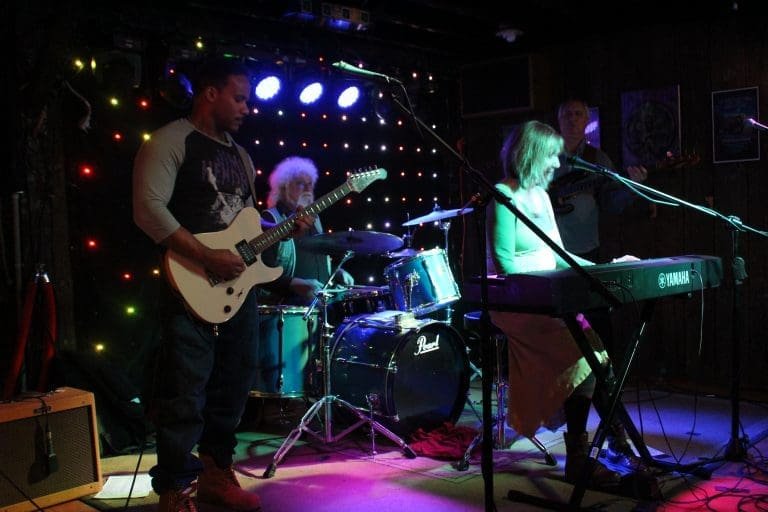
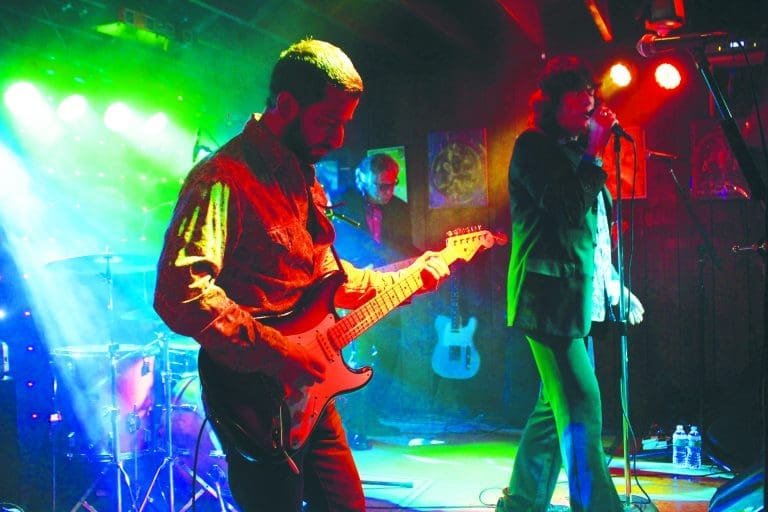
Blue Hand Luke on stage.
Blue Hand Luke on stage. Photo by Amy Modesti.

For over twenty-three years, Blue Hand Luke set the bar for being one of Capital Region’s rock and roll cover groups. No matter who was set to perform in the band’s lineup on any given evening, they always put on a stellar show. You could usually see Blue Hand Luke perform at events and venues as “Rockin’ On the River” (held at Ryan’s Wake Parking Lot), the Cooperstown Blues Express, “Power’s Park Summer Concert Series”, Nanola, Dango’s, and Rustic Barn Pub. Even composing an original song that one can hear sometimes during “On 6 With Vito” every Friday night, the group stuck to playing good ol’ rock and roll, blues, and country from bands as “The Rolling Stones”, “Led Zeppelin”, “Z.Z. Top”, “The Doors”, “J. Giles Band”, and many more that had you dancing all night.

Nine years ago, my friend, Charlie Morris, introduced my parents and I to Blue Hand Luke when he was a co-worker at Parkway Music. Charlie would encourage us to watch him perform in this band that he was involved with. My first time seeing Blue Hand Luke was at the 2010 “Rockin’ On the River” concert series, held inside Ryan Wake’s parking lot, and at the British Invasion Uncle Sam Jam held at Knickerbocker Park when they opened for Billy J. Kramer, Jerry Molland (Badfinger), and Terry Sylvester (The Hollies). Even though I wasn’t familiar with the songs that they performed back then (now I am familiar with their songs), they were a great band. They were a group I knew I wanted to see any chance I got.

From the days of bringing my parents to Rockin’ On the River to attend their shows, over time, I grew to enjoy this band and its evolving lineup. Every year, their band lineup changed. The first lineup I saw featured veteran musicians, Joe Mele (guitar), Tony Perrino (piano/vocals), Pete Vumbaco (drums), James “Jimmy” Cappello (bass), Luke McNamee (saxophone), Charlie Morris (guitar/vocals), and Tommy Love (vocals/harmonica). With old members leaving, new members would emerge into place. 2011’s lineup featured blues guitarist, Ike Izadian, in place of Mele. From 2012-2014, the band was a hybrid of both “Blue Hand Luke” and  the old lineup of “Sly Fox and The Hustlers” (featuring both Donna and Mark Tritico and current bassist, Dylan Storm), Their final lineup from 2015-2019 featured Matt Mirabile on guitar, along with Morris, Love, Cappello, Vumbaco, and McNamee (with occasional fill ins from Jason Maloney, Frank Daley, Josh Bloomfield, Gary “Sly” Fox, Jeremy Walz, Johnny Rabb, and Randy Staats). Each lineup brought in their own unique spin into their songs that they performed for their true fans.

In 2014 and 2015, I followed Blue Hand Luke more heavily. I met the other band members gradually at each gig that I attended with my friends and peers after their shows. Over time, I got to know these members who became my new friends. Eventually, they became my close friends. They treated me like I was in their “family”. Through attending their shows when I could, I also met other music fans and local musicians that became my close friends that I continue to spend time with periodically at various music shows and community events.

Listening to Blue Hand Luke expanded my musical knowledge greatly and I enjoyed hearing their songs that they had brought into their performance sets. Their songs had me dancing on my feet within the growing dance crowd at some of the most memorable gigs that I had attended within the 9 years. Their most memorable gigs, for me, was both the 2018 & this year’s St. Patrick’s Day concert, the “Farewell to Tommy Love” Halloween show at the Rustic Barn Pub (2015), the Italian Community Center gig featuring Johnny Rabb and Randy Staats in 2016, and their Rockin’ On The River shows in their varying lineups.

After twenty-three years, Luke McNamee made the announcement on Facebook a few days after the benefit event for Caroline MotherJudge that B.H.L. were going to be performing their final show at the Rustic Barn Pub during St. Patrick’s Day weekend. I was both surprised and sad to find out that they weren’t going to be performing anymore for whatever reason. I had grown to enjoy watching this group perform over the past nine years and they became my favorite cover group in the Capital Region. Blue Hand Luke always put on a great show in town, no matter who was taking control of the music. They were always entertaining, and I am thankful and grateful that I was able to attend their shows and become their friends that I have for life.

Blue Hand Luke
Photo by Amy Modesti.

Despite it being their final gig ever, I knew in my heart that this was a show that I didn’t want to miss at the Rustic Barn Pub. Their final show was one of their best, and memorable shows that I was able to witness and be a part of in Blue Hand Luke’s musical history. And with St. Patrick’s Day being held the next day, I was able to watch McNamee get dressed as his holiday alter-ego, “Paddy O’Sax”, as he walked through the Rustic Barn Pub door, and began playing some Irish tunes. At times, he walked around the dining area to greet his cousins that had arrived from Rhode Island to see him perform one last time and mingled in with the rest of the crowd playing music. As he ended his Paddy O’Sax set, he rose to the stage and the band began performing the start of their epic show.

Each member stepped up their game and delivered each song perfectly to the delight of their fans that didn’t want this night to end. From the sizzling guitar soloing on their rendition of “One Way Out” (The Allman Brothers) from Mirabile and Morris, the rocking rhythm section of Cappello and Vumbaco in “Dragging The Line” (Tommy James), Love jumping off stage to place himself within his sea of fans to belt out the lyrics of “You Can’t Always Get What You Want” (The Rolling Stones), to McNamee’s solo performance of “Cherry Pink (And Apple Blossom White)”, everybody did a great job keeping up the momentum and delivered a rousing two sets of music (and an encore) that night. The dance floor was crowded full of fans that were dancing or recording songs on their cell phones to remember this magical moment.

Once I heard their covers of “Miss You”, “Roadhouse Blues”, and “Tequila”, their show would end forever. Love, the showman that he is, knelt to his knees and motioned McNamee to take his turn to shine and play the saxophone to the opening of “Tequila” while singer, Brian Kane, randomly placed a small St. Patrick’s party hat on Love’s head for a brief second. As the music slowed down with each verse, McNamee ended his soloing and began to give his official final remarks about the band.

“I don’t know what to even say right now since we’ve come to the end of the show. We got no more. We’re done. This is the moment in time at night… We got to the Rustic Barn many, many times and we love you more…I love Speigletown right here with you guys. And you guys are putting Blue Hand Luke on the map for 23 or 24 years…We love you guys. Thank you very much for being with us for 24 years. We wouldn’t be standing on this stage without you guys. We love you very much.”

“It’s been a great ride,” continued McNamee and with the drop of his shamrock hat, he continued to perform the last verse of “Tequila” with the band until its very end.

Luke McNamee on tenor saxophone.
Luke McNamee on tenor sax. Photo by Amy Modesti.

Upon listening to his speech and watching the band perform the song’s final notes, it finally hit me that Blue Hand Luke was officially over. It was an end of a memorable era of local music that had come to a sudden close. I embraced my good music friend in a hug and began to tear up as she consoled me and reminded me that the band was loved and if I felt sad, that there were people in our community that loved me. I was sad when it was done. I even had tears in my eyes when I walked upon the stage at the end of their song and snapped a photo of the entire band together on stage one final time.

The fans, too, were sad that this night had to end and wanted them to return to perform an encore. The band came back on stage to perform a cover of “Dead Flowers” (The Rolling Stones), a song that they always started performing with to kick off their first set of their show. Although it was great to see them perform their encore, their departure was bittersweet, even though they had an amazing show and a great 23-24 year run as Blue Hand Luke.

Thank you to all the members of Blue Hand Luke, past, present, and their special guests, for performing great songs and always entertaining the Capital Region with your music for as long as you did. Thank you, Charlie, for introducing my parents and I to Blue Hand Luke. I am thankful to have watched this band perform for nine years! Thank you for always putting on great shows and for your kindness and friendship. This band certainly had a great ride and will be greatly missed by us all. It won’t be the same in our music scene without you and other “local legends” that we have lost recently that have contributed so much to the music scene. Thank you for everything. Love you Blue Hand Luke.
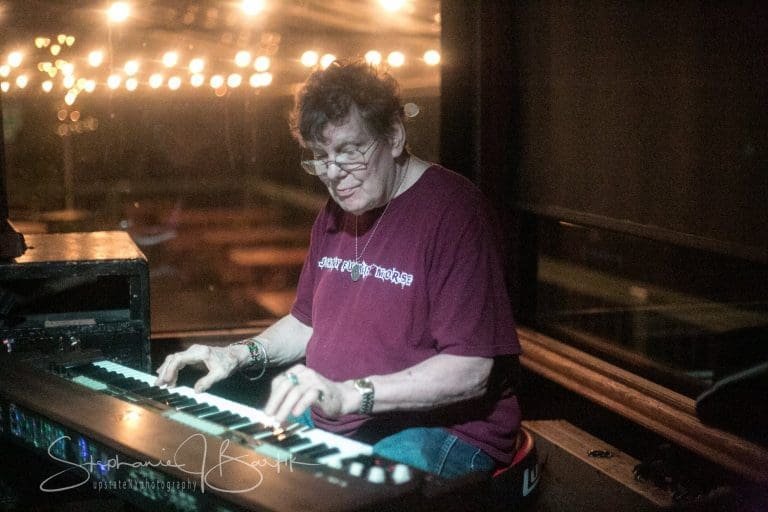
Himer T. Morgan – Fifty-One Years a Band Kat

0

Rock and roll, music in general, is a story about the big. Big sounds. Big personalities, big egos, big hair, you name it, but it’s got to be big. And we try to show you how big the Capital Region really is, in its diverse sound and in the people who’ve gone to do things that are truly… you know.

But there’s this other level of local music; a somewhat secret world behind the PA speakers, after you get to chat with the guitar player after the show when he (or she) is getting shots. It’s the world of practices, of solo gigs in remote outposts, in the marketplace of music where names float and sink with the levels of the Hudson River. Himer T. Morgan has had a dock on the shore of this world for just over half-a-century. Today you meet him.

Himer T. Morgan performing live. Photo by AJ Anesko,

RRX: You’ve been playing for fifty-one years, so you’ve seen the music scene in the Capital Region go through probably a few revolutions, or even evolutions. Was there any particular period you think had the most to offer?

HTM: Okay, between 1969 and 1980. The disco music scene really revolutionized the treble clef, from Farmer in the Dell to Earth, Wind and Fire . Along with that too was the social revolution, came out in music too, from integration. That period really blended different cultures and their musics.

RRX: You play a Hammond B3 frequently, and when you’re not, you’re pulling sounds out of a keyboard that come close to a Hammond. Any tips for a musician starting out that loves the Hammond sound, but doesn’t have Hammond money (or a way to lug one around)?

HTM: You can get drawbar simulators, like a Roland VK 7, which is something I have, or various Hammond Suzuki units. Add a Leslie (speaker) and you’re in the ballpark.. An alternative to that is a ‘chopped’ unit – a Hammond with the cabinet partially removed.

Also, there are spinet Hammonds like the L and M models that are a lot less expensive and smaller as well as lighter in weight.

RRX: You live for music; and more importantly for this question, you’ve lived from music for most of your life. A lot of people pick up a keyboard or a guitar and they see you play and they want that lifestyle. Based on your own experiences, what do they have in store for themselves?

HTM: A useful phrase might be “same circus, different clowns.” And I’m talking showbiz in general. We’re all pirates of a sort. Here’s just a quick example: I did two gigs in March; two. The last one, I drove 300 miles – six hours of driving.

So that’s forty-five dollars in tolls and gas, which is fine. So the gig pays a hundred bucks, and we end up with nine bucks in tips per kat, so, $109.

I asked for a beer. One beer. They charged me four bucks.

Now, some bandleaders would insist on “fringe benefits” for  his kats, as in  free beer and grub or a ‘half off’ program. But, as I said about pirates, some ‘captains’ are better at looking out for their crews.

So you have to make choices. Would I go there again? It’s part ‘do I feel insulted’ and part ‘can I afford a full-price dinner if I blow so much on tolls?’

Welcome to showbiz. Home of the casting couch and Hollywood dream days.

RRX: The “brass” on a musician’s uniform is usually a list of names, people they’ve played with that are known by all. You have a good bit of brass on your uniform. Who are some of the people you’ve come across in your travels? Any cool stories?

HTM: I’m actually writing a book about all of the local kats I’ve played with, and the national people, famous people. I’d have to go back to 1970 for that. I see people today that reach out, especially on Facebook. So really the memories of those people; a lot of times it’s still going on.

RRX: Everybody needs to start somewhere in music, and you have a reputation for taking new people under your wing. I’m proof of that. Some go on to the 9-to-5; others have continued further into music. Can you think of someone in the latter camp that you’re particularly proud of today?

Himer T. Morgan (center) in Fat and Bad.

HTM: I see it all as one big tent. I’m proud of the kats who died while still performing, everyone from Ernie Williams to the kats who gigged the Titanic.. My heroes. Lifetimes of performing artists at large… But people I’ve had more to do with, we’re talking Adam Graham (RIP), Pat Perkinson, Steve Aldi, Karen Sasso Carpenter… Pretty much.

RRX: You’ve been around in local music if you have a “Himer story.” You’ve obviously touched a lot of lives, famously and infamously. Does your reputation precede you? If so, what are the benefits? What are the drawbacks?

HTM: As far as I reputation preceding me, I’m probably covering that in the book I said I was working on, so there’s much more to that than I could fit into a single answer. But the benefits, and for this I’d say the benefits of doing what I do, is that I’ve gotten to do something over the years that I could tolerate instead of being stuck doing something I hated.

And as far as the drawbacks, it’s not easy keeping up with, say, a state worker going off their day job. There’s a balance of the pros and cons, and if you’re on the side you want to be on, you’re good. I feel like I’m good.

RRX: Here’s where you get to answer the (musical) question that I didn’t ask. What’s going on, or coming up? Who do you love out there? The floor is yours.

HTM: I’m digging Skipper and his kats. Musically, I am a bit of an Avant Garde, abstract listener for most musicians personally. I understand that and know that things take their course. I know there’s only so many gigs left  fir me  now, maybe two or three hundred. Only so many years to give each bandleader. Most work has been side-man bits. Ones I liked got more than a year from me. Ones I didn’t got less than one. I would like to perform again with Tony Lindsay, though.

Acoustic Trauma – Trauma is a State of Mind

0

When I was jamming out, my sound stage wishes and wah pedal dreams in tow, I’d heard of Acoustic Trauma. I’d never seen them, but I’d heard a bootleg tape, so I knew what they were laying down. That was in the late 90s, and Acoustic Trauma has been laying it long since I laid my guitar to rest.

With Patrick McNulty on bass, Jason Ellenbogen on drums, and Paul Nunzio Maceli on… well, a little bit of everything else, Acoustic Trauma has been blowing minds from the cradle to the cap and gown.

I sit with Paul to mull over the finer points of interstellar traffic law.

Paul Nunzio Maceli of Acoustic Trauma. Photo by Jessica Maceli.

RRX: You really push the envelope when it comes to an acoustic sound. In fact, I don’t think many people hearing you for the first time would have the word ‘acoustic’ as first choice – there’s so much more in the sound. When you started jamming out, maybe pre- ’97, did you see yourself as an acoustic set, or was that a crown given?

Paul: It’s actually an interesting story. To give you some background, my early influences included classic rock, mostly progressive rock and heavy metal.  In my teen years, I quit playing music to go to college for business, knowing that the only way I would ever get back into music was if I was to do something original that no one else was doing.  Fast-forward to my twenties, in the midst of trying to find a hobby better than my unhealthy barhopping, I was hanging out at my apartment with my Uncle Peter (bassist at the time of the funk rap band Shootyz Groove) showing off a 12-string acoustic guitar that I just purchased. I started banging away on it as if it was an electric guitar and he said to me “hey, you’re playing that thing like it’s an electric guitar! You’re not supposed to do that!” I asked “does it sound good?” and he said, “Yeah! It’s different!” So, that started the wheels moving in my head because in the 1990s, the only thing you heard from anyone with an acoustic guitar in their hand was an “unplugged” version of a rockin’ song or a sweet little folk tune that everyone already loved. No one was plugging an acoustic guitar into an amplifier and putting it through effect pedals and turning it up, let alone having the nerve to jump in front of a kick ass bass/drum rhythm section to blow people away. That sound was right up my alley!

That also happened to be around the same time that Eric Clapton had released the unplugged version of his energetic 70’s hit “Layla.” The electric version of “Layla” was one my favorite songs of all time and when I heard it all toned down and quiet, I wanted to puke into my shirt!  Especially after what I felt I had just discovered about the energy of the acoustic guitar. “No! You can’t do that! You don’t have to sit down and ruin that song!” I thought to myself. Of course, I didn’t worry about it because I thought it would be a stinker, but lo and behold: it was a hit! In addition, it had become a trend and EVERYONE began unplugging their songs! Now I was on a mission to defy the masses and alas, in 1996, I was back playing music again.  By 1998, I had incorporated the violin into the mix and then the mandolin. As of lately, I also whip out the MOOG Theremini (modeled after the MOOG Theremin) because it’s just so much fun! Plus it’s different. I mean, how many people do you see jamming on a Theremin on a rock and roll stage?

RRX: When I heard the instruments you all play, I would’ve expected an atmospheric kind of music, but that’s really not what you guys are laying down. Less a misty morning, more a tempest. Is that why you guys named yourselves Acoustic Trauma? Is it a cool name or a warning label?

Paul: Ha! It’s both! The name serves as a definitive pun because even though the lead instruments are acoustic, they are plugged into a powerful amplifier to keep up with the drums and electric bass guitar. It can get pretty loud and the term “acoustic trauma” describes damage done to the ear as a result of loud sounds.  I thought it was pretty smart.

RRX: I have a good sense of what you’re playing in your songs, instrument-wise, but it’s a sense – I could be way off. I think anyone just hearing you on the radio or on their laptop or phone might want to know, so would you mind giving us a sneak peak of your ingredients list? What instruments go into an ‘Acoustic Trauma’ jambalaya?

Paul: The Acoustic Trauma Jambalaya consists of a drum kit (always played by a rockin’ drummer), a driving but funky bass guitar, and depending on the song, I am proud to be the chef that decides whether a violin, acoustic guitar, mandolin, and/or MOOG Theremini is the lead meat of the song.  Sprinkle a little vocal expression over that and voila: the delicious power trio known as Acoustic Trauma!

RRX: AT has been on scene since ’97, so twenty-two years. So you’ve had a chance to see the local music scene evolve, and yourselves along with it. Have you all ever had to take a year or two off in all that time? Have you ever had a chance to be surprised by something happing to the 518 scene?

Acoustic Trauma brings the violin into the mix. Photo by Jessica Maceli.

Paul: There is so much talent in the area, as well as people who are warriors of promoting the arts. Like the X, for example. What you guys are doing to support the independent arts is what keeps a scene like this going. It’s humbling and I know that we appreciate it! That’s the surprise: there are always people who care about and cherish artistic creativity.  From venues to bars to special events to charities, there is a support for the local arts.

It has been an interesting journey throughout the years in the 518. When AT started, the big deal was making a CD and getting your songs played on the radio, even if it was just on the local half-hour show.  We had radio stations supporting local bands and that was really cool. They made us feel like rock stars. Then there was the regional television show Sounding Board, which showcased a different local band each week. That was before YouTube, so it came with the excitement of performing in a television studio, as well as seeing yourself on TV. That was a wonderful support vehicle. Plus, I watched it all the time just to check out the other bands. Of course, there was Metroland Magazine, Times Union, and other publications that would write bands up, their CDs and live shows. It was like having our own local Rolling Stone and Village Voice and everyone wanted to be written up in there. But then the internet came along and changed everything.  There are websites to show off music, photos and where we play out. We could get more exposure on YouTube and you can share whose videos on your social media, which is where most people are on these days. There is easy access to get music and information on a band now.

RRX: A long time ago, I heard about the Trauma House. Whispers, really, maybe legends when we kicked the bottom shelf stuff. You also have a live album from the Trauma House. So, the fire’s going, and the legend is yours to tell; what was, or is, the Trauma House?

Paul: The Trauma House is pretty much my house and Acoustic Trauma headquarters for practicing, writing, hanging and house parties, thus the name “The Trauma House.” At first I didn’t like the way the name rang but everyone seemed pretty comfortable calling it that after the first private party, so the name just stuck. We pretty much had our own live venue with full lights, fog, sound and people! Our friends and fans always came to those. It was wonderful! It became such an event, that we decided to record our live CD/DVD there.  As for the “legendary” stuff…I’m saving that for the book. As of current, we had a party in 2018 and I am happy to say that if things line up they way we want, there will more of them.

RRX: I love music, but my day job is storyteller, and I just realized that I rarely ask people about their lyrics. I just get wrapped up in their sound when I’m writing out these questions. But I’m digging your lyrics. What would you say influences the direction of your lyrics, or the theme of them?

Paul: I mostly write about things that piss me off. I try to disguise the lyrics with sarcasm, cryptic poetry and sometimes the macabre to have some real fun with everyone. The songs are sort of like little bible stories where there may be a lesson to be learned or a joke to be told. The topics and themes are all over the place, while my main artistic focus in Acoustic Trauma is with the music.

RRX: This is where you get to answer any question I didn’t ask. Who do you love out there? What do you have coming up? Do you have a recipe for actual jambalaya? The floor is yours.

Paul: Currently we have a many fun creative projects in the mid-works.  First, there’s the “new album.”  We have some new songs recorded from the Trauma House basement studio. Those simply need some production decisions on what to keep and what to not to keep, while we’re still coming up with new ideas all the time.  Second, we have several multi-track live recordings where we could easily release a live album consisting of extended-jam versions of our songs. We’ve turned our musical energies more into seeing what we can do “on the fly” live as opposed to just playing the songs as they are on the disc. Those have been a lot of fun and we are lucky to be able to pull it off. Lastly, we have incorporated a few cover tunes in the live set, mainly using the violin as the lead instrument as opposed to guitar. These include “Fire” (Jimi Hendrix), “YYZ” (Rush), “Jerry Was A Racecar Driver” (Primus) and “Ace of Spades” from Motorhead. Like seriously, who is playing Motorhead on the violin? Acoustic Trauma is, that’s who!

THIS FRIDAY JULY 26 2019 Dino BBQ TROY NIGHT OUT FREE SHOW WITH ACOUSTIC TRAUMA & THE COLLECTORS


Buzz Magazine, Pictrance, and Hypnosis, with Artist George Guarino

In the mid’80’s, BUZZ MAGAZINE graced the counters of local establishments, fostering the local arts/music scene alongside national acts. Musicians anticipated their photos and reviews, while nascent writers looked for bylines. Real George’s Back Room was the companion animal to Buzz, a widely viewed cable access show, on the same premise. Several episodes have recently found their way onto YouTube. The man behind the subcultural magic, George Guarino, eventually transitioned to another career path. A licensed hypnotist, he is particularly passionate about a self branded trance technique, called “Pictrance”, which incorporates art into the hypnotic process. I met with George recently at one of his office locations, to learn of the segue from the world of the sub cultural, to that of the seemingly mysterious subconscious.

RRX: You recently uploaded episodes of Real George’s Back Room onto YouTube. What inspired this?

GEORGE: People had been asking me about it for a long time, and part of my inspiration, was that you had made a comment, on one of my Facebook pages. You asked if I still had old Buzzes, talking about the old days. Other people had been wanting to see some episodes; it was the day or two, of that big snowstorm. I made an effort that day, to lock myself up, and put a few episodes online.

RRX: I think people are going to be really happy to see them!

GEORGE: Particularly the people that are in these bands; I did think of myself as documenting these times. I really felt like somehow we wanted to put Albany on the map, that there was something special happening here.

RRX: I’d say you did just that.

GEORGE: At least it’s documented. I really thought it was going to go further, but it has to do with the people and bands that were here.

George Guarino hanging pictures in Uncommon Ground.

RRX: What year did Real George’s Back Room take off?

GEORGE: I got a camcorder in the middle of ’81, then learned about the public access channels in Rensselaer, and Schenectady. I was interested in bands, and was in bands with my brothers. I really loved Fear of Strangers, I admired them. I really wanted to be a part of this in some way. So by videotaping them, I felt like I was helping in some way, that I could be part of their world. That was the genesis of the television show. It was really out of wanting to have a place within this focus of music, particularly original music, in the Albany area.

RRX: Where was it shown, what areas?

GEORGE: I would produce my show through Schenectady Public Access, then take it physically to the facility in Albany, then Rensselaer; basically those three areas.

RX: It was quite popular, I remember.

GEORGE: I liked that it was coming into people’s homes; cable had just started. ’81 was when MTV started, my show came about then as well. The interesting thing was, once people finally made videos for MTV, there wasn’t a lot of other places to play them. I would let people know that Albany has a place to play their videos, and if you watched the shows, you would see that I have videos that weren’t played in a lot of other places, plus the normal ones you would see, like Michael Jackson, which I didn’t put on my show.

RRX: How long did Real George’s Back Room run for?

GEORGE: The show was on from the end of ’81, to about ’95.

RRX: So Buzz Magazine came after Real George’s Back Room?

GEORGE: The first versions of it were just one piece of paper folded in half, that I mailed to publicize the t.v. show; this morphed into a few pieces of paper stapled together, like a booklet.  1985 is when I had the firsts news print.

RRX: So the original ones are probably collectible!

GEORGE: People contact me once in awhile; people who were in the bands. To them, it’s very valuable. Some have passed away, and there are people who have had kids. I want to get the shows out while people are still alive and care about it to some degree. I wish I had done it sooner, because people have passed away. The two that I think about are Billy Harrigan, from Operation Pluto, and The Dronez. Also Shaq, from The Outpatients. Some of the shows I have up now, one at The Chateau, have Shaq in them.

RRX: Real George’s Back Room was just a little before my time. The first video I ever saw on the show was “Stigmata”.

GEORGE:  Stigmata! Oh yes, Ministry! (Laughs)

RRX: I was amazed, it was when I realized there was a completely different world of music out there!

   GEORGE: In the beginning, there weren’t a lot of music videos, because MTV was the only place to play them. Network television didn’t. There was three channels, and public television. I would have shows weekly. The nice thing about cable, is you could have the same show run repeatedly. The thing I liked about cable, when it first came out, I was equal to NBC, CBS, and ABC. When you flipped through the cable box, I think in the Albany area, it was in a pretty low number, I think it was number two, or one, so you couldn’t miss it, you had to go through it; and some of the tapes I was showing were very subversive in a certain way, just sliding right in.

RRX: So, people were like what the heck is THIS?

GEORGE: What the heck is this, yeah! (laughs)

RRX: Catching a glimpse of that Ministry video, wow!

GEORGE: Yes, I loved it! On YouTube today, there’s so much out there, it’s on overload.  But back then you were equal to these other channels. Not that the production quality was equal to it, but the possibility of someone running across it, having to consider it a moment was right in your face.

RRX: So cable access was quite the creative outlet.

GEORGE: It took a lot of effort. I was interested in the production part of it, getting it on. My job was finding people to do the interviews.

RRX: Like Mike Eck! I saw him on one of the Youtube videos.

GEORGE: In the beginning, my brother Gene was great about doing interviews. We got to meet people like Martha from The Motels, George Thorogood, people we admired locally; Blotto, Fear of Strangers. There was a club in Renssalaer, Hulabaloo; We did a lot of things there, they seemed most inviting.

RRX: You also D.J.’d as well. How did this come about?

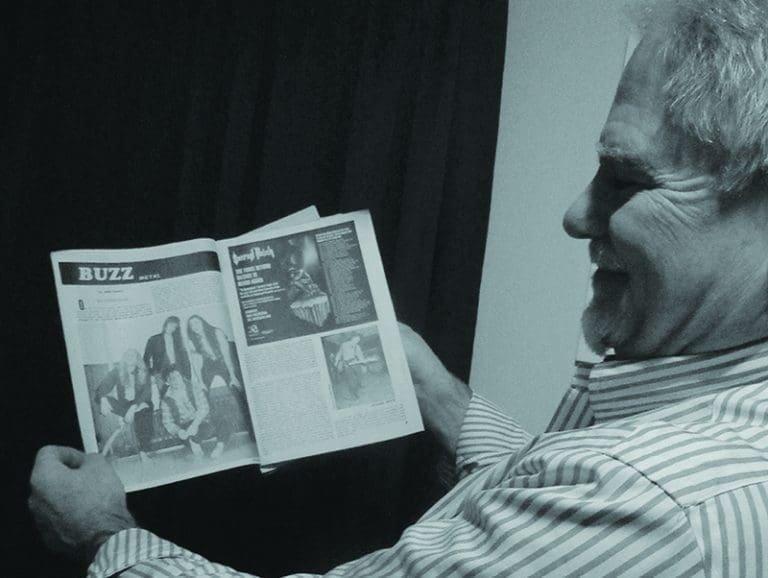
George with a copy of Buzz Magazine in his Clifton Park office.

GEORGE: WRPI in Troy was looking for local people to do spots after students went home. I did a show about local music. Someone from 288 Lark Street called WRPI, asking if anybody wanted to d.j. I wrote down the message and put it on the bulletin board. It was still there next week, so I took the note down. They wanted someone on Saturday. I went there on Friday, and John Hamilton from WQBK was spinning records. He showed me a little bit about how to do it. Saturday I did my thing, bringing records I had. I remember bringing my video stuff; I always thought of it being a multi-visual experience. Dave and Char, (Shortsleeve) were the managers then, and were very responsive. It was an incredible scene. That’s what made it seem like something could really happen in Albany; NYC had The Mud Club, The Kitchen, etc; this was our version up in Albany.

RRX: Is there any particularly memorable events or stories you remember?

GEORGE: For me, it was just saying “yes”, taking that note. The idea that this offer came in, nobody at RPI responded. Just learning to do it on the fly. It was an incredible scene! I remember the whole second floor being completely packed with people. You couldn’t get up or down the stairs! The whole thing was to be playing music; my strategy was to play two songs that people would recognize, then one they wouldn’t, something just off the wall, not too long, not too little, so you really can’t escape, ‘cos you can’t get down the stairs! (laughs.) Or by the time the song ended, you were just barely down the stairs.

RRX: What would you play, for example?

GEORGE: Dead Kennedy’s, something like that. Then maybe Spandau Ballet. You were supposed to get people to dance. You were also meeting people from bands. This would be their day to just kind of hang out. They didn’t make much money when bands played, mostly when d.j’s brought them. With 288 you needed that mix. They didn’t want just a dance club, but a place where people could perform, too. Live music would happen weekdays. Weekends, would be the d.j’s. Eventually they asked me to do Fridays, then Mondays. Then they wanted me to design something for Sunday. These people wanted to do “noise music”, cacophonous sounds made with metal sheets and barrels. It doesn’t encourage a dance crowd, but it was performance art. I came from an art background, and saw this whole thing as an art experience; it’s certainly not anything you’re going to make money with, but it’s an experience.

RRX: You d.j’d at QE2 after, as well.

GEORGE: Yeah, Dave and Char got QE2 off the ground in ’86, and that’s where the scene moved. I started doing Saturdays.

RRX: How did you segue from documenting sub cultural music to being a hypnotist?

GEORGE: After QE2, I was still doing Buzz. The t.v. show was fading. I was changing, in my life. I still enjoyed doing the magazine, but also, I was beholden to advertisers. Buzz Magazine went on until ’95. There was a person that lived near me, with a license plate that said “trance”. Then he changed it to “hypno”. I didn’t really know him, but just said “What’s this thing about hypno?” and he said “Bring over a pizza and some Pepsi, and I’ll tell you about it!”  So I brought up the Pepsi and pizza, and at a certain point, he said “Do you want to do a session?”Just like anybody who knows nothing about hypnosis, I was like well, I don’t want to be out of control; I don’t want to be hypnotized. But he was so nice about telling me about it. I just know that, as I’m on the couch, he talked to me, that’s all he was doing. I don’t remember a thing about the process, but I do know at the very end he said “You’re going to be a fantastic hypnotist, just like”… and rattled off a few names. From that point forward, I started talking about what hypnosis might be. I didn’t know you could even learn it. I went to a National Guild of Hypnotists convention, and there were the authors of these books I’d read, and for me, it was like seeing rock stars! There were doctors, and psychics; and you began to realize there was a lot going on in hypnosis that the general public doesn’t know about. I became certified through The NGH. It’s my passion, and I realize how integrated it is in the world, with life, communications, marketing, business; it’s part of our existence. I call it hypnosis, other people call it a billboard, or, commercial; it comes down to suggestion, causing people to move in a meaningful way.

RRX: Like, “Eat this new mushroom Swiss burger!”

GEORGE: They know how to connect it with feelings, people are always moved by feelings first, then you justify that with conscious level types of things. Feelings motivate us, they need to be satisfied,. Sometimes it butts up against things that we don’t want to be doing, and that’s where hypnotists can help somebody.

RRX: Like overeating…

GEORGE: Yeah, the obvious ones, like smoking, unnecessary fears, etc.; I want people to move forward.

RRX: So what is “Pictrance “?

GEORGE: My interest right now, is connecting people with images. Pictrance uses a picture beyond a focal point, going beyond the piece, toward what they wish to accomplish, bringing them back to where they were in the seat, before the picture; conditioning them into the picture; so that any time they see, remember, or just know that it exists in the world, they will continue  toward accomplishing goals. You’re using the picture as a focal point for this process. That’s Pictrance.

RRX: You use your pieces for the Pictrance process, correct?

George Guarino at Uncommon Grounds.

GEORGE: I went to school for photography; I have done painting, sculptural, drawing type of things. I collect images I take, abstract them. Some things are recognizable-trees, clouds, symbols, e.g., but for me, they’re abstracted. They’re set in motion, it’s a suggestion. I’m making these pieces with hypnosis in mind. My interest is focusing somebody’s attention toward the piece, allowing them to have a meaningful experience. That is what you do with hypnosis. When looking at a photograph, you try to decide “what was that?” With a painting you’re like, “Oh what is it trying to be?” Somebody’s putting color down on canvas. With photographs, we know it came from something. Internally, we’re always trying to make sense, asking, “What was that?” My job it to get them to the point where they just accept it. With hypnosis, when the person comes into the room, their analytical mind is trying to make meaning of what we’re doing. At a certain point, they just participate, go with the flow. Same thing with a picture, is to get them to the point of “it is what it is”, and then use suggestion to cause it to be helpful, or just enjoy it for what it is. With all my pictures, I don’t care whether you like it or not, I just want people to be inspired to want to consider them.

RRX: I remember a conversation several years back, when you were talking about hypnotizing artists; this is different than Pictrance, correct?

GEORGE: Yes, Pictrance is a particular process. I have worked with artists to spark creativity, to connect with how they want to make art pieces. There was a woman named Meghan Murphy- we met once a month in her apartment. I would hypnotize a group of people, and they would go off to make art pieces. Then she said “Why don’t you bring stuff to make art with?” So I brought some stuff there, and I would do the hypnosis with them as well.

RX: Oh, that must have been fun!

GEORGE: I did videotape these processes. some day I gotta pull those out. She moved, and lost interest. It was a great couple of years.

RRXthink It’s great George, you moved onto another phase with the art..


GEORGE: I love it! I think ultimately, of the pieces as hypnosis, or using them as hypnosis; they’re a focus point. But believe me, you don’t have to use my pieces for focus points. It’s just that my pieces were made for that purpose, I’m not doing it on purpose; it just happens.


George Guarino’s work can be viewed at the following locations:

Uncommon Grounds, 24 Clifton Country Rd.
Clifton Park 

PH Gallery,  455 Broadway, Troy
Through May 31st 

Uncommon Grounds, 1235 Western Ave., Albany
May 13/June14 

Hudson Underground, 124 Warren St., Hudson
Featuring the Hypnosis/Pictrance Process
June 15th

Xperience Live, and the Radioradiox Youtube Channel

0

On the first Thursday night of the month from six p.m. to 9 p.m., you can find me at Radioradiox Studios in Waterford for the Xperience Live show series. We’ve had bands from Bleak Little Duo, Let Go Daylight, CK and the Rising Tide to solo acts like Brittany Robichaud and Murali Coryell (okay, so Murali wasn’t strictly in the Xperience series, and he is a national act, but horseshoes and hand grenades…)

This Thursday, May 2nd, you can find Big Frank and the Bargain Bingers, with special guests The Bottom Feeders. Big Frank’s a great guy and supporter of the show, and wouldn’t it be a birthday gift to him if you showed? (I don’t know when his birthday is, but he has one.)

Yes, you can find me there. If you need a pep talk, or I owe you five bucks, you can go grab it the first Thursday. But I’m telling you this because I’m a hermit. If you know me, you know it’s true. I would order my groceries from Amazon if it wouldn’t cost me a piece of my soul. Yet I’m there every first Thursday. Because it is that good a time.

Xperience Live is a show; yes. Come in, pay five bucks, grab a seat, maybe a table if you’re lucky, and watch one of the most relaxed sets you’ll ever see, no matter who it is. Xperience Live is where singers and bands get to have fun and try stuff that they wouldn’t think of trying out at another gig. We all have fun, and if you’re a local musician that hasn’t stopped by the studio in Waterford, c’mon, seriously – we purposefully do it on Thursdays because it’s not a big gig night, as in get you’re playing butts over and get ready to talk shop.

Because of Xperience Live, and for a few other reasons, we’ve launched the RadioradioX Xperience Live YouTube Channel, which is where the videos in this blog are linking to. Support it, subscribe, show love.

The videos in this blog are just the beginning of what we want to do. We want Albany (and its environs) to be on people’s lips when they talk about the live music scene, just like Austin, Texas is. You want that too; come by on a first Thursday and let us prove it to you.

Here’s the link to the whole channel:

https://www.youtube.com/channel/UCY0KtHWhe-_wBHg_w_8nJzw

Special thanks to UpSt8MusicFanZone for the great job recording Brittany Robichaud and Let Go Daylight (and others you’re sure to see.)

UNCOVERED – OMG

0
If you’ve spent any time at all following the local music scene in recent years then you’ve undoubtedly heard of The Funk Evolution Entertainment Group. Owned and operated by Stephen “Rocco” Christman this musical conglomerate offers everything from its flagship 8 piece horn band Funk Evolution to a full on DJ service, an acoustic duo or trio, sound and lighting, and – new for this year – a 5 piece party band known as, “The OMG! Band”.
The OMG! Band was founded by Rocco in 2017 and initially performed under the name “EVO 2”. Rocco formed the band around lead vocalist and Berklee alumni Gianna Robustiano whom he had seen performing on social media. Rocco surrounded Gianna with a group of rock solid local musicians – Dave Teta on drums, Mike Lemme on guitar, Tim Fiato on keys, Joe Benevento on bass. The band performed extensively at local clubs and private events throughout 2017 and 2018 before deciding to re-brand itself under the current name.
The OMG! Band aims to present an image and perform material that will appeal to the 21-30 demographic, something that Rocco felt was missing from the local scene. The OMG! Band will be performing a packed schedule for 2019 bringing its’ catalog of hits from the past 3 decades mixed with current pop, rock, and country tunes to local venues such as Spare Time in Clifton Park, Firestone 151 in Schenectady, and Gaffney’s in Saratoga.
Keep up with The OMG! Band on Facebook or their website at www.theomgband.com.
Mike Shudt is a veteran of the local music scene and can currently be seen performing across the Capital Region as the bass player in The Refrigerators.

Live: Rocky Velvet and Surfer Joe at the Hangar

0

It was surf and rockabilly night at the Hangar on The Hudson on Friday, April 5. Music fans of the “It Came from Cropseyville” rockabilly group, Rocky Velvet, were wearing their Rocky Velvet t-shirts in preparation for their return to The Hangar stage. For this one-night only show, Surfer Joe, an Italian lead guitarist/ vocalist from Italy, opened for local favorites, Rocky Velvet.


Unlike previous local groups that open for the headlining act, Surfer Joe, featuring members Lorenzo “Surfer Joe” Valdambrini (lead guitar/vocals), and California musicians, Jonpaul Balak (bass, Venice, CA), and Chris Roberts (drums, North Hollywood, CA), opened for Rocky Velvet.  Out of all the events that I’ve attended at The Hangar on The Hudson, this was my first time to see a headlining act open for a local group.

“Surfer Joe” band (left-right) Lorenzo “Surfer Joe” Valdambrini (guitar/vocals), Chris Roberts (drums), and Jonpaul Balak (bass). Photo by Amy Modesti.

Surfer Joe, who was touring in the United States for the past few weeks, was funny, witty, and entertaining. For just a three-piece surf band, this group was extremely tight in their song arrangements, mainly instrumentals, that were performed in their set. I was in awe watching their bassist move and groove along to the rhythm of his bassline that was heard in each song. Balak was very animated on stage, along with Surfer Joe who brought out his guitar tremolo at times to get that surf sound that he was feeding out to his new fans.

Most of the instrumentals that Surfer Joe performed were from his current album, “Swell or Dwell”, that was for sale. Each song, Surfer Joe paid homage to other international and nationally known surf bands and artists that remained influential in the music that he wrote. Listening to his traditional surf song, “A Day on the Beach”, it had some brief hints of both Santo and Johnny’s “Sleepwalk” and the instrumental version of “Sleigh Bells” that one would hear during the holiday season. The opening riff of “Pipelines” paid homage to The Champs’, “Tequila”. “El Senor Surf”, the title song to his previous album, “El Senor Surf”, payed homage to “Wipeout”, with just the beat of the drumming by Roberts.

“This is surf music. You don’t get this with any other genres. You know, this is nice,” said Surfer Joe as he tested out a guitar riff that he played with his guitar tremolo. He asked Graham Tichy for his opinion on the tone that he had performed. Tichy liked the tone and Surfer Joe continued to perform some more music. The group later covered “Dark Eyes” a Russian love tune written by Eddie Bertrand in 1962 that he performed for the audience. He made his guitar sound like a bee buzzing along The Hangar during the song’s instrumental solo.

Surfer Joe is intrigued by culture, especially Japanese culture. Surfer Joe and Balak have toured Japan three times and the band will return to the country next year. Valdambrini dedicated his song, “Hiroshi No Subarashi Ramen”, to his Japanese musician friend that took him out to eat while he was on tour. The song was inspired by both The Ventures and his love of ramen noodles.

I was impressed by Surfer Joe and his band. When you think of surf music, one would normally think of “The Beach Boys”, “Santo and Johnny”, “The Ventures”, “Jan and Dean”, or even the local surf band, “Big Fez and the Surfmatics”. Surfer Joe and his band take surf music to a whole new level while keeping up with the traditional style of the genre from past surf bands. Their music had you captivated and dancing throughout their set.


“Rocky Velvet” (left-right): Jay Bird Gorleski (upright bass/vocals), Jeff Michael (drums/vocals), Ian Carlton (acoustic guitar/vocals), and Graham Tichy (lead guitar/vocals). Photo by Amy Modesti.

Rocky Velvet fans crept close to the stage to get into position to dance and listen to local rockabilly favorites, and headlining act, Rocky Velvet. The last time I heard my hometown band perform was at a summer concert held at the Brunswick Community Center possibly over 8 years ago during my college days. I remember my parents and I purchased their cd, “It Came from Cropseyville” after their show ended. Come to find out at the time, the drummer (now my friend), Jeff Michael, was from my hometown too, in Cropseyville!! Watching them perform at The Hangar on The Hudson after Surfer Joe’s set was a long time coming for me.

Rocky Velvet featuring Jay Bird Gorleski (upright bass/vocals), Ian Carlton (acoustic guitar/vocals), Jeff Michael (drums/vocals), Graham Tichy (guitar/vocals), and guest saxophonist/vocalist, Justin Birk, put on a fantastic show. They had the entire audience dancing to their cover tunes and their songs from their albums, “It Came from Cropseyville” and “Shuckin The Corn: The Great Lost Album”. From their set, I can see why my hometown band would be the headlining act of this epic show.

“It’s like riding a bike,” called out Carlton as he introduced Rocky Velvet, after performing “I’m Giving You A Come On” and “Mr. Big Wheel”. It’s been three years since the band performed together at The Hangar. Although Tichy admitted that they were just winging it from song to song, asking each other what song they were going to perform that they could remember, the band had a blast being a part of this show with Surfer Joe.

Twenty years later, Rocky Velvet released their second album, “Shuckin The Corn: The Great Lost Album” this year. This album features 17 cuts that were recorded from 2000-2001. The album was available for purchase at their show. Even Carlton gave a fan a free copy of the CD during their set. From the new album, the band performed their old classics, “Shuckin The Corn”, “King Kong” (with some monkey noises from the group), “Don’t Take My Picture Down”, and “Can’t Stop” (a song that they used for their sound check).

“It Came from Cropseyville” also made a resurgence. Towards the end of their set, the group relived the days of teenage angst in their instrumental tune that they first recorded for their album. Reliving more songs from their high school days, one by one, the fun continued to keep going as they performed more tunes from “It Came From Cropseyville” with, “One and Only”, “Move Around”, “I’m Seeing Blue All Night Long” (with great soloing from Tichy), “Hot Water”, “Justine”, among others.

Besides performing their originals, each band member was able to shine alone on their covers. Taking a break from singing, Michael rose to the occasion to sing a great cover of “Susie Q” (C.C.R.) before Gorleski sung solo on another song that the crowd encouraged him to sing. Burk later joined the band to perform two back to back songs, including standing out in his soloing in “Red Hot” (Billy Lee Riley), followed suit by Tichy’s covers of “ I Got A Rocket in My Pocket” (Jimmy Lloyd) and for the finale encore, a cover of “Surfin Bird-Bird is the Word” (The Trashmen).

It was certainly a blast from the past to watch Rocky Velvet, with all its original members, perform once again since their show at the Brunswick Community Center. It was a concert that you certainly didn’t want to miss out on this year. With great surf and rockabilly from two great acts, it was a fun, epic show with lots of great talent all around.

Leslie Barkman and Lou’s Blues – Profiles

0

Meet Leslie Barkman, one of Capital Region’s blues musicians. Since her move to the City of Albany eleven years ago, Barkman has created a name for herself in the regional blues scene. One can hear Barkman sing and play at any of the many area blues jams. Currently, Barkman performs as both solo artist and band leader in her group, Lou’s Blues.

Originally from Greenville, NY, Barkman is passionate about music. Although she says she can’t remember, there are stories about her dancing and singing on the bar, at 3, in many of the local Greenville taverns. She gained her love of piano from her grandmother, who played at house parties.” I played in bands, sang in chorus, and starred in musicals in school,” recalled Barkman. She wanted to learn to play in order to sing.

At the age of 10, Barkman played clarinet in her school’s band. When her band played for basketball games, she could play at basketball games but was forced to sit on the bleachers during the after- game dance. The principal pulled her off the dance floor many times. Nothing has changed since her high school days. Every time I’m at a concert or at a music jam, Barkman is still dancing along to live music that is being played by many of our musician friends. She doesn’t sit down. She is always dancing and moving along to great music, no matter what genre it is.

Underprepared for classical training, Barkman declined acceptance to several schools of music. She looked for other outlets for her creativity. She focused on a career teaching English and put her music on hold. It wasn’t until Barkman moved to Albany in her 50’s, bought a piano, and started going to open mikes and blues jams. She met jam master Buck Malen at Pauly’s Hotel. Malen instructed Barkman to park her piano on the lower level of the stage floor and try to keep up. She says, “I was terrible, but he let me play.”

At another blues jam held at the Fuller Roadhouse Grille, she met another mentor, guitarist, Jeremy Walz who still hosts the Capital Region Blues Network’s Sunday night jams. His blues jam allowed Barkman to connect and interact with other blues musicians. Through Walz’s mentorship, Barkman became a stronger musician, pianist, and a band leader.

Barkman is very thankful and fortunate to have met Malen and Walz, as well as the many other musicians who have shared their knowledge. As a result, her creative juices began to flow, and Barkman began to write and record her own music.

Barkman has produced two solo albums, ‘Lou’ and ‘Blue Lou’, and one album with Lou’s Blues, ‘Romanticizing’. Her songs are based on lifetime experiences; falling in love, falling out of love, and being human. Barkman tells stories with her music, both originals and covers. She tells her story through the lyrics that she sings and plays with ease. ‘Romanticizing’, her current album, was released in 2018 which features her band mates, Joe Lowry (guitar/vocals), Al Kash (drums), and Christopher Peck (bass). Barkman performs her music for fun. Her musical goals include more backyard jams at her Albany home and musical collaborations with other musicians.

“I love to jam. Music is very physical. I dance while I play. I love to be on stage,” exclaimed Barkman inside her kitchen at her Albany home. Barkman never stays still for too long. She rose from her chair to make us a pot of tea while in conversation. After making our tea, she charged up the stairs to her practice room where she began to perform an instrumental version of ‘Light My Fire’. I followed her upstairs and we talked about the process of creating a setlist of songs for the next gig.

Spending time with my friend, Leslie Barkman, was great. Not only is Barkman my friend, she is my mentor. I admire Barkman’s control of her piano and the way how she flows through the piano keys with ease. I have learned through her backyard jams and our morning sessions, that it is important to always follow your dreams and have fun enjoying your true passion, whether it is art, travel, construction, or politics. I am thankful for my time that I’ve spent with Barkman.

Be sure to like Lou’s Blues and Leslie Barkman Music on Facebook to see when Barkman and her band will be performing at a venue in the Capital Region.  https://www.reverbnation.com/lesliebarkman .

The Glenn Slingerland Situation – How the Weekend Ends.

0

Today, YouTube is a universe set in an oblong box with a play/pause button. You can listen to long forgotten music, laugh at someone’s wit (or misfortune,) pass the time with a famous stranger, and with millions of DIY videos, earn a Doctorate in the school of Hard Knocks.

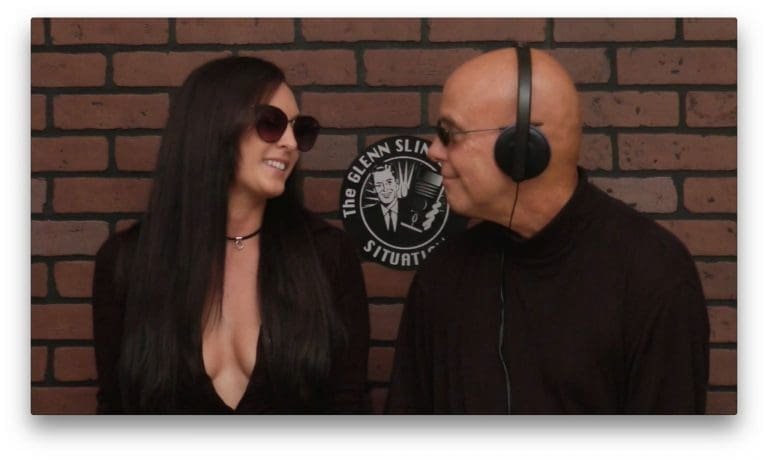
The Glenn Slingerland Situation, a half-hour, weekly show, has been bringing good tunes, glad tidings and a little quirk to Sunday nights for seventeen years – (and before that from 1987-2002 as a weekly Sunday Night radio show). They’ve been a diner off the information superhighway that serves a Capital Region cuisine, and the waitresses are stunning.

We sit down with Glenn Slingerland and talk about the menu.

The Glenn Slingerland Situation

RRX: Glenn, I’ll admit to being a newbie here when it comes to the Glenn Slingerland Situation, and I may not be alone. So can you shine a beacon of light out to the digital netherworld and reel us in? What is the Situation, and why do we need to be there?

GS: Well we’re your Sunday Night late night TV show! We adapted the radio show for television in 2002, and were on MY4 Albany WNYA through 2012, and have been on our global YouTube channel GSSTV since 2012.
Think of us as your pals who stop by to finish off the weekend with new music, and offbeat fun – and if you like spending a little time and winding down your weekend with us, well maybe you’ll want to do it again next week, and beyond. Remember, the weekend’s not over till we say so!

RRX: I always go into an interview by filling my head with my subject, whether it’s buying a CD or, in this case, watching a few episodes. But the Glenn Slingerland Situation’s been a TV show for seventeen years. If you could have me search your archives for a month and year, which one, and why?

GS: Well, as a weekly late night broadcast, we focus on being current, but we do make it convenient to catch up on our latest telecasts, over the last month or so, on our channel GSSTV.
Our Situation song videos are all in a rotation, the newest songs return more frequently as you might expect. Our older songs, return much less frequently, but they were all new when we first did them. New is good!

RRX: Music is a huge part of what you do on the GSS. Just in the most recent episodes, I’ve heard everything from blues to jazz to soft rock. What I don’t hear is anything I’ve ever heard before. What goes into your musical gris gris bag?

GS: Something we’ve always felt very strongly about, going all the way back to our radio days, is not categorizing music. We want people to try things without worrying about what box it fits into. In fact some our favorite stuff doesn’t fit neatly into any box! Therefore our format is simply – “The Situation!”. We featured Phantogram when they were brand new, and yet also feature legends like Jeff Beck, and a number of lesser known artists in between, and beyond!

RRX: Also, comedy. In fact, on my limited experience with GSS, my description would swing between music and comedy. But the comedy isn’t slapstick and fart jokes. Or maybe I haven’t seen enough. I see intelligent, even abstract humor. Is that an approach, or a happy accident?

GS: Well yes, we prefer to be a bit more laid back as part of the Sunday Night late night vibe, taking our viewers maybe, somewhere else…David Letterman, Steve Martin, and Firesign Theatre would be some of our favorite influences. And we’re very proud to have stand up comedian Aaron David Ward with us each week. Aaron has been with us for 12 years, and on The Situation, because he’s not in front of a live audience, he adjusts his stand up act to weekly comedic commentary, sort of like “Andy Rooney on acid!”

RRX: You have a cast. A small cast, as I see it now, but maybe a larger cast over time. Let’s do something fun; give everybody origin stories. They don’t have to be true. They can involve super powers; why not?

Katelyn's bubbly personality is a big hit in Troy
Katelyn’s bubbly personality is a big hit in Troy

GS: Well all our beautiful, talented Situation Stars are from a “planet much like our own” as am I. Katelyn Perkins is in the studio with me these days, as are Amity Santa Lucia and Ann Jennings. Casey Miller, who is currently on maternity leave, has been with us since 2010!
We’ve had a number of talented Situation Stars over the years, all of them with unique super powers of their own. For example, when the earth’s rotation started speeding up recently during the vernal equinox, Katelyn was able to use her amazing powers to slow the rotation down and get our planet back into balance. You see we’re not just a TV show, we’re your full service Situation!

RRX: Let’s go for a technical question. You’ve been a TV show for now, seventeen years, including the last seven on YouTube. This is even more noteworthy than just the pure accomplishment of it, because over the past years, YouTube broadcasting has revolutionized so much in our culture. What can you tell us that only a show like GSS would know from just time in the medium?

GS: Well, we’re not trying to be one hit wonders like those exploding cats, or 3 year olds who memorize the Magna Carta. But because we were established as a TV Show, we’ve kept our TV format the same. We do break our show into 3 easily digestible parts each week but really the breaks come exactly where they did on TV, so it still flows as if it’s on a broadcast television channel, and you may find it even more enjoyable, streamed to a large TV screen with a good sound system!

YouTube GSSTV is our home for now, but think of all the new, exciting channels and media platforms changing our entertainment landscape so rapidly.

Who knows what new channel The Situation may appear on next, perhaps even an interplanetary channel for viewers on other planets!

We’ve learned the value of staying the course and always being your companions each week with new music and offbeat fun. A good broadcast builds habit over time, we just want to continue to be your weekly broadcast pals.

RRX: This is where you get to answer the question we didn’t ask. Anything coming up? Anything, or anyone you have your eye on? The floor is yours.

GS: We enjoy having the Capital Region as our home base, and occasionally shoot elsewhere in the state including in New York City. We find that Albany, Schenectady, and Troy have some nice industrial backdrops that we find interesting and it seems to fit our vibe. In fact Albany’s warehouse district, and downtown Troy are among our favorites!

Occasionally we need a few “extras” so viewers can get in touch with us if interested, and find out more about our current exploits, on Twitter (@GSSituation) and Facebook (/Glenn Slingerland).

Even though it’s been 17 years – we feel like we’re just getting started, and if you let us, we’d like to be your weekly pals well into the 22nd century!

Blurrdvision: Rapping Down The Road To Recovery

0

“You may have seen him walking around Downtown Albany or perhaps even Troy. He’s the guy wearing headphones, singing aloud with a smile and a dance in his step. I met him riding the 522 CDTA express on my way to work last summer. It was a crowded morning bus and I see this guy writing in a notebook wearing earbuds and dancing in his seat like no one was watching. I could tell he was writing lyrics and my curiosity couldn’t help but ask “can I listen?”

He reached over, handed me an earbud to hold to my ear and proceeded to rhyme to the beat. We made our introductions and became friends almost immediately. Matthew Raymond is his name but he goes by the alias Blurrdvision, that’s his rap name.

These days the majority of popular Hip-Hop music does nothing for me. I don’t care to hear about the money you have, the drugs you are proud of doing or the women you disrespect. Don’t get me wrong there are many talented and enjoyable rappers still putting out great music all of the time but usually they are not found in the mainstream. Matt’s music seems to be the exception, rather than the rule. Sure his music speaks of violence and drugs but he is not glorifying the lifestyle; he is telling his story about how his childhood experiences, abuse, relationships and loss were triggers leading him down the dark path to drug addiction.

Matt dabbled in substances from inhalants to hallucinogens but his drugs of choice were opioid-based. When using heroin he did not use needles, he would snort it in the same manner that people do cocaine. The reason I point out his method of use is because sniffing heroin is not a safer way to consume the drug. I personally have nothing to compare it to but from what I understand, when someone does dope through a needle the sensation of being high comes on much faster. When inhaling the drug it takes longer to feel the effects thus resulting in the deadly mistake of taking more which creates a much higher risk of over-dosing. This is exactly what happened to Matt.

“My first near-fatal overdose. I was found after 12 hours, unconscious on my mother’s bathroom floor. My body had completely shut down, all the blood pooled to one side, causing Multiple Compartment Syndrome. When the paramedics arrived I was lifeless and needed to be paddle shocked three times, just to get my heart going enough to make it to Albany Med. I fell into a coma for six days, kept on life support with the debate of amputating my arm and leg. They cut and cleaned all of the dead tissue and flesh from my arm and leg. These things called “wound vacs” were hooked up to me to drain the fluid from my swollen arm and leg. My last rights were given and my family was called to the hospital. I was very septic, contracted MRSA and came down with pneumonia. Finally, I awoke from my coma. Spending a total of seven weeks in the hospital and taking nearly a year to walk again was a life-changing experience. I had multiple skin grafts, surgeries and now suffer from chronic nerve damage, but I am alive.” Matt got clean after this but even after surviving this trama he still relapsed a few years later. Matt says “I overdosed and nearly died six more times.”

The pivotal moment for Matt was when he had to explain to his son that he got into trouble due to a drug-related arrest. Matt told his son that he had to go away for a while and his boy’s response was “It’s okay Daddy, I forgive you and I still love you.” These words along with the disappointed look on his child’s face, hurt more than any wound that Matt has on his body, but in a sense it was exactly what he needed to hear and see. He immediately checked himself into rehab, this time he not only wanted it he was ready.

A Behavioral therapist from an Intensive outpatient program helped Matt step back and take a really hard look in the mirror, exposing Matt to himself. Matt lived for a few months in community residence and graduated to a supportive living facility. Everything was getting on track but because of a situation Matt needed a place to stay for a few weeks.

When you say it out loud it sounds like a terrible idea but I let a recovering drug addict who I met on the bus a few months ago stay at my house with my family; I even gave him a key. Why did I do this? Because I have faith in Matt and I believe in the path that he is on. Matt has proven himself to us and we are happy to have him in our lives.

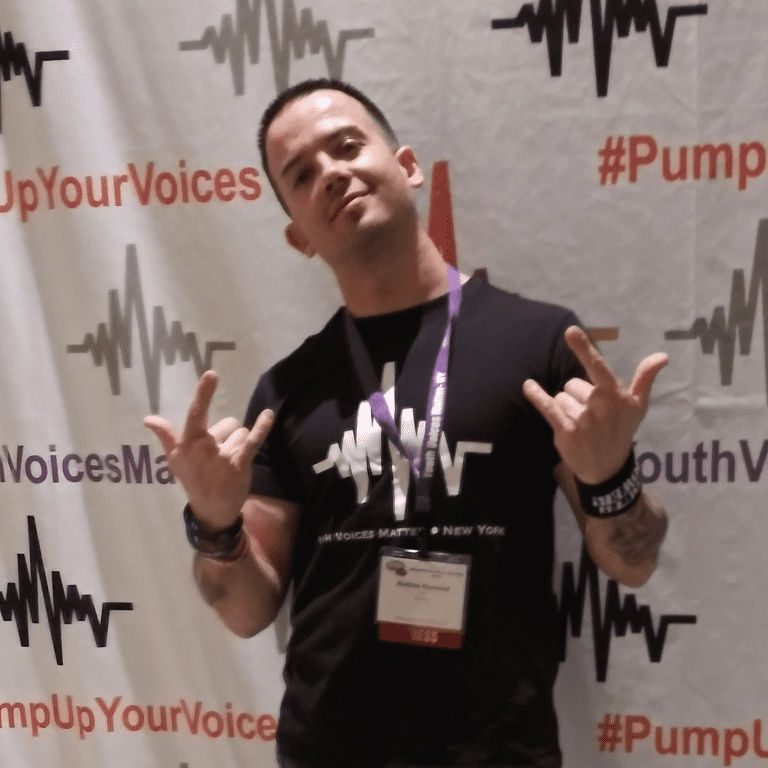
Matt now attends college classes focusing on a career where he can help prevent others from making the same mistakes that he has. He also volunteers for Friends of Recovery and has been given the title of Area Coordinator for Rensselaer County /Youth Voices Matter. A lot can happen in a year and Matt wears his recovery bracelets with pride. Most importantly he is making progress with getting his children back into his life. A message from Matt to those who are struggling with addiction, “It doesn’t matter where you come from, what you’ve been through, or how far you fall. Life is too precious and short to waste. Anyone can recover.”

On May 26th, Matt will officially be clean and sober for a year. This story is to be continued..