We love getting our monthly publication out there, and each month, we list all of the places where you can pick it up. We also provide a link to the digital edition. But, of course, we figure you may want a way to get all of the past digital editions. We aim to please. Below are links to all of our past editions, to be updated each month. Keep checking, as we will be giving a brief description of each issue.
All music tells a story. Whether the lyrics take you to the first time you fell in love, or a violin movement brings you a burst of sadness from deep down in your soul, few things beat music’s ability to take an experience and pass it around, letting every listener play around with it in their own version of the telephone game.
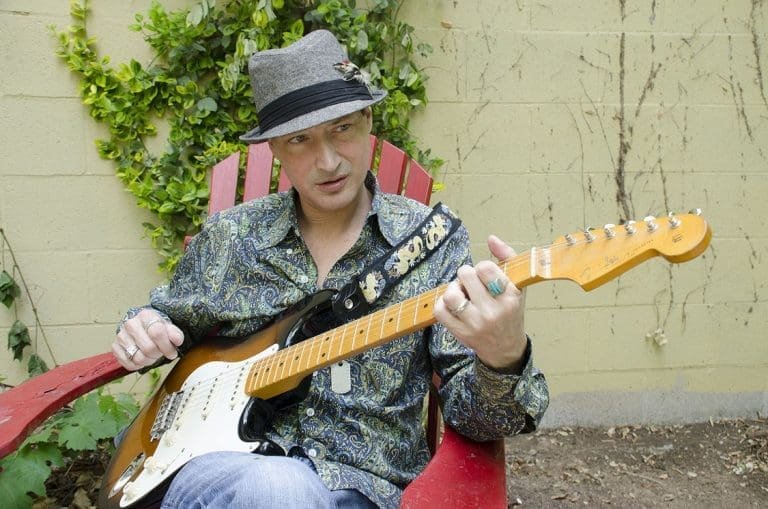
Will Foley, former rock frontman faces rocky road braced at the jagged twists and turns by trusty six-string showstoppers. That’s a story. But a story can’t truly exist without the teller, and Will Foley, the teller, is out there lighting candles and handing them out in the darkness.
I sit with Will and we talk about the cost of living and the price of life.
RRX: Your music is very close to the heart. The lyrics land on you and bring you closer to what’s going on in your life. That’s how I’m hearing them off of your self-titled album, anyway. Like a story spread out across the tracks. Can you talk a little about that story?
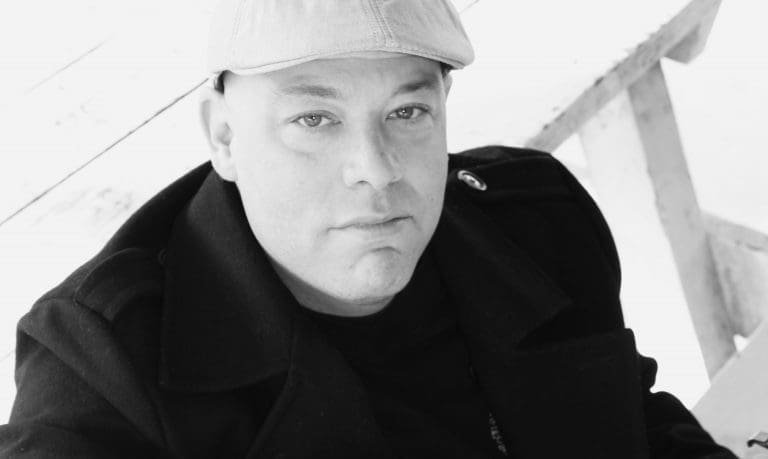
Will Foley. Photo by Heather Foley of Foley’s Creations.
WILL: First, Liam, thanks for giving me this opportunity to connect with you and your readers. I find it hard sometimes to convey my feelings. Music remedies that in many ways. My songs are autobiographical in one way or another. I look at recordings the way I do paintings. They are moments in time. They tell you a story, but you, the listener give it meaning, put it in your suitcase and travel with it. They are companions on the road of life.
I sing about what I know, live and experience. I like to convey the raw emotion and let that breathe. Let it sit on you like your favorite tee shirt or pair of jeans. When I write its coming through me. It’s a part of me, but it’s not me. I am not that gifted. The muse sends the vibe. I am just the conduit. I get a little closer to feeling comfortable in my skin. It takes practice. I am an infant, I am not that good at it, but I am getting better.
RRX: You’ve had some darker periods in your life where music was far away from even consideration. I can empathize with that myself and writing. Do you think that the ability to engage in music, art, writing – creativity in any form, really, is maybe a barometer showing how the rest of our life is at any given moment?
WILL: The ability to engage in any activity let alone a creative one can be a barometer for sure. Engagement is challenging enough these days with all of our distractions. We are constantly looking for the next shiny object.
For me when I am off or depressed or just melancholy it is hard to get started. The negative records start dropping. You can’t put a sentence together. Nothing sounds good, nothing makes sense, hard to focus. You’re frozen.
The creative juice doesn’t flow. It’s dammed. That can send you down a very dark road. All of a sudden you can’t seem to perform. The process becomes strained and forced. It’s very cyclical. As one thing goes so go the rest. Energy moves in the direction we focus it on.
It can affect you so much that it makes you do crazy things. Crazy things like sell all your gear and quit doing something you love, more than once. You see the world through a filter of failure and separateness. You have this wave of everyone else is better, more talented, taller. You drown in your own worthlessness.
When I get nervous I am the same way. I tend to disengage. I procrastinate and self sabotage. I try not to draw much attention to myself. I am definitely not comfortable in every spotlight. I am uncomfortable here. Might not be the barometer you’re looking for. My comfort level is a good example. When I get self -conscious, my comfort level drops. We can use any scale for a barometer. You have to have a true north that keeps you in the middle of the path and try not to get to close to either side of the bridge.
Steven Pressfield, in his book; the War of Art calls it resistance. That is all those forces that keep us from fulfilling our not only artistic duty but our mandated at birth duty to defeat it. I know resistance has been kicking my ass all over the area for years now. That is why the muse becomes such a spiritual focus of making music. She has definitely sprinkled me with the dust. I give her thanks.
RRX: In the nineties, you were the lead singer for FREAKNATION, which went huge, really had success in and out of the area. Given how rock was in the nineties, we’re talking about some ground-zero level experiences. Can you give us a story that was illustrative of the larger music scene at the time?
WILL: The nineties were a great time. Pre-internet and cellphones, at least while I was in FN. People weren’t watching you through a tiny screen they held up in front of you. They were there. They seemed to be more connected to the moment, just not always connected to you. If you wanted people to know who you were you went to them. You were out hanging and handing out flyers. You spread word about your band at the mall. There were record stores. No TV talent competitions.
Every scene owes something to the scene that came before. So many of the same talented people are still playing, promoting and writing in the press, voices on the radio, raising their fists. We all stand on the shoulders of giants. We all benefit from those that came before. It is our duty to pass the knowledge on. You can’t keep filling a cup when it’s overflowing, you have to pour some out to bring more in.
There are also the things that haven’t changed. You still have to practice. You
still have to call a club or venue multiple times before you get someone. After you send them an electronic kit now, that doesn’t get opened, you have to follow up with a real kit and get in front of them, anyway. So you still need good people skills. Manners still work. Old fashion work ethic.
Don’t get me wrong, you hear no more than most other jobs, outside a traditional corporate sales job. Now you have to spend, or at least it feels like, I spend to much time on social media. Most of the time not doing what I was on there to do. So promotion has changed. The DIY of the 80s-90s were a training ground for all of these musical entrepreneurs of the 2000s.
I see reflections of that scene today. We have a growing scene that is peppered with national acts and regional acts that call Albany home. We have periodicals like this one. We have local radio owned by local people now, that were on the radio then. I think the past can teach you. It can give you a roadmap. I do not think that we need to recreate it, because there is no way too.
I honestly cannot say for sure the scene was bigger then. When you are out there you have your friends that you share bills with. We did that. You have your friends you go see when you aren’t playing. If you play all the time like we did, you don’t get a full view of the scene because you are just a spoke in the wheel. You are happy to be a part of it. You have no idea how lucky you are to be a part of it though. You just hold on for the ride. I’d like to think that I added something and didn’t detract from it. I hope to leave it better than it was because that’s what are duty is; to make it better. It’s not ours to use.
At this point in my life, I am so busy I don’t get to go to as many shows as I would like to get to. Family and projects keep me busy, but I have been making a point to get out whenever possible. Before we close the nineties and I have a chance to share a story. Bogies which was on Ontario in Albany was a great place to hang. FN threw a CD release party second to none there for our album. During that run we were asked to play at a Blotto Tribute show. We were asked to perform, Metalhead, at this show. What a great night it was in celebration of a band that was truly on the tip of the new frontier back in the 80s. In the day when music video meant an entirely different thing. With us having lost Greg Hyames recently, I just wanted to share a cool memory of that time. Greg is rocking with all the greats now. He did stories and write ups of so many us, myself included. Keep rocking, Greg.
RRX: You’re very active in mental health, specifically suicide prevention. I know that being on the stage is as much acting as it is performing in the strictly musical sense. What has being on stage, putting on performances taught you about the nature of mental health, or the perception of it?
WILL: From the stage we do not see the hours of practice, crumpled pieces of paper, notebooks, or tears that go into writing and performing. We do not see mental illness. The performer is there. We take for granted the homework that is involved. We take for granted that everyone has the same structure as us. Their emotional body is ok.. You don’t see it. Unless, you witness someone having a psychotic episode, mental health don’t show visible scars. It’s an invisible illness, it don’t exist, yet here it is.
I am not surprised by the rate of suicide. I am saddened by it. You can see the loss of hope in so many. The comparison, keep up with everyone and look like everything world we fly around isn’t real. We keep trying to live up to something that isn’t are path and it is breaking us.
Most of what we learned were bad habits that never consisted of emotional regulation and coping strategies. Our parents learned from theirs and they had less of a clue than. I am just trying to learn how to take it one day at a time. I can’t worry about the future, but it is a practice to learn how to get better.
I started on my journey of recovery in ’13. Late 2012 I started to put a plan together to end my life. I was depressed and feeling like a burden. Lots of chaos was going on. I was getting ready to face a neck surgery that can sometimes render you unable to sing following. I felt like I let everyone that needed me down. Worst, I let myself down. I had lost the will to live. Even with all the gifts I possessed.
I went to therapy for awhile with a therapist that wasn’t interested. One day searching YouTube, I came across Wayne Dyer. He was a spiritual teacher, author, professor. One of his rules for life, don’t die with your music still inside you, came on and I feel to my knees in a heap of tears. I kept rewinding it. The help of my family also was beneficial. I also have some close friends.
It has been a road back. I started back out playing in 2015. It was rough at first. I had a few panic attacks before shows that forced me to cancel. A new occurrence for me since I have never had a day of stage fright, in my life, up until those few. I have gotten over that and it’s feeling like home again.
Let me leave you with this. Depression is the leading cause of most suicide attempts. Mental health is more important to take care of first. Without your mind you can’t function. Untreated and worse yet undiagnosed conditions pose a major threat.
I find so much value in community work. I am a volunteer for the American Foundation for Suicide Prevention. I sit on the board of the capital region NY chapter. I knew when I came out of the darkness, I would be called to do my part. If I can brighten one light and keep it shining than I accomplished the mission. I wa s in the studio following the death of Chris Cornell and recorded a version of I am the Highway, which is available on my website. His death shook my core. I was affected by his voice and was deeply saddened. I cried in the car. We lost another one. I am not naïve, we will not save everyone. Some don’t not want to be. That is sad enough. So we must save who we can. Before we lose another’s music.
RRX: A man named Brian Fitzgerald came into your life when you were pretty disconnected from music, and you two were able to be such a great benefit to each other, creating an album and going back out into the circuit. Can you tell us a little about the partnership?
WILL: I was Brian’s mailman. . He used to love and come out to talk about music. I gave him a copy of some of my stuff and, couple of days later he asked if I had time to stop for lunch. I said I would. He said he was writing songs for a therapy project he was working on and asked if I would want to write. I said yes.
I contributed two of my songs and we wrote a few to add to a batch he had. Justin Metz was a big hand in this project also. He produced, co-wrote, engineered and played guitar and bass. We had Brian Melick on percussion. The title of the album is Take the Time. We put it out under the name the Will of Fitz. Brian suffered from Parkinson’s Disease. He had good days and some really bad ones.
We would rehearse once a week and put a set together and played a few gigs. The big moment for the project was the 2102 Center for Disabilities Services Telethon on Fox. We played on TV and Brian knocked it out of the park. That was the highlight and we started writing again soon after, but due to my own crisis and his failing health the project ended abruptly.
I never had the chance to tell Brian how much that project meant to me at that time. He awakened a part of me that was painful to look at, but screaming to get out. He passed away a couple years ago. I gave him some music and asked him to write lyrics for something I was having a hard time writing. He came up with a catchy melody and lyrics. I have been working on that song for five years. It is called, Beautiful One. I will be recording that soon. I have demoed it a couple times. Rest in musical Peace my friend.
RRX: You’ve been through good times and bad times, and music has been an outlet on every wall you’ve had to bang your head on. Music is really that kind of “3 a.m. friend.” We have a lot of people who read this as music lovers, and as music players. What, if anything, about music connects both player and reader?
WILL: Music connects people. It is the universal language with almost no barrier. It helps us feel and articulate ideas and convey emotion. It is our input to the human condition. Lights us up, sets us off, breaks us apart.
I think the non-playing reader wants to know more about why and how an artist works, learns and shares. People connect to you at a different level when they read your lyrics or an interview like this. People listen to music and read for the same reason to color their life, lose themselves or maybe, find yourself.
RRX: Here’s where you get to answer any question I didn’t ask. Have a tale to tell? Anyone we should be looking out for? Anything you got – the floor is yours.
WILL: Thank you for taking your time to ask these questions. I can tell that a lot of energy went in to them. I appreciate it. I just want to leave you with a few thoughts and updates. I will be releasing a new EP at the end of 2019, entitled, YEARS. These are some new recordings. One song is just about finished a couple others are in various production stages. Couple others to track. I had a hard time making up my mind about what direction to go into. I over think and freak my self out of making a decision. That self worth, self sabotage battle I struggle with.
My good friend and former drummer of the hardcore band, Section 8, Timothy Patrick and I just started releasing a new podcast from the peer, non -professional side of mental health called, Above Ground Podcast. It is a weekly podcast. Drops on Wednesdays. I am slowing learning the production side. I hosted a radio show for a short time and never lost the yearning to behind the mic in that capacity. Podcasting gives me that chance. I find the more you create the more different things you want to create. Technology gives us so many tools and resources for our muses now.
I just want to leave you with a very large hug and thank you! Thank you to all of the awesome musicians, writers, poets, artists, press, radio, TV, restaurants and bars that I have had the blessing of sharing my art with. Thank you for allowing me the space in your universe. I truly appreciate it very much. In no way can I ever return what I receive from the experience you provide me with.
There are far to many names to thank musically alone. I played my first gig in the backyard of Dan Schleicher (Drummer , Let Go Daylight) when we were in a band together when we were both in high school in 1989. I was seventeen. I have played on very cool stages of some great clubs, but far from all of the ones I would like or have liked to back than.
Thank you for the lessons and the friendship; opportunity to perform with and share ideas, share stages and alcohol and coffee. Share the road, the drive and the ride. Thanks for listening. I am stoked about the future in my baseline midlevel excited neurotic way. I am starting to believe in myself a bit again. It has been a while since I strummed the strings of hope. I better tune it up. Thanks, Liam
If you don’t know her by name, you’ve seen her at local venues. You may have been accidentally slapped by her trademark, long flowing braids on a dance floor. Her pinata and sculpture pieces have been at various locations, or one of her hand-crafted magnets is on your fridge. She might have ushered you to a seat at The Egg in Albany.
I once featured Annine in a conservative setting, for a Valentines Day poetry reading. The owner of the establishment had asked me to “rattle the cages” of local people, with the premise that they “needed it.” Annine finished the evening with a piece called “Cupid is a Bastard,” featuring a cherubic pinata. Positioning Cupid over her knees, she invited the audience to spank the representation, amid taunts of “Bad Cupid! Bad Cupid!!” Soon Cupid’s butt crumbled and caved, offering a variety of goodies that were tossed to those brave enough to have stayed. I reconnected with ACE, in her Albany based studio.
RRX: Have you always had Albany roots?
ACE: Yes, even when I was in Southern California, it was nice, but the Northeast always called me back. This is the home area.
RRX: We are lucky to have you, Annine, I know you have traveled extensively.
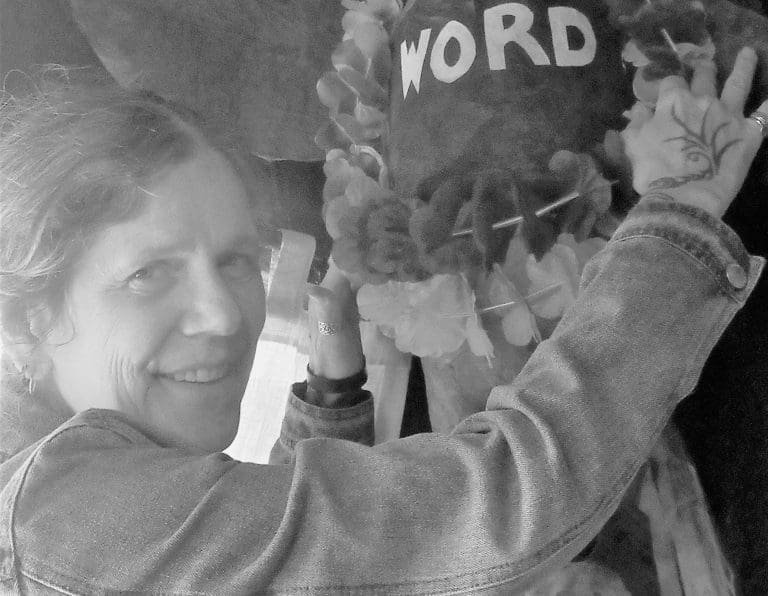
A.C. Everson. Photo by Debora Bump.
ACE: In the back of my mind, no matter where I was, I never moved away. If you want to do anything in the arts, any form- there are people in this area that are going to help make that happen. Supporting yourself in the arts is a whole different ballgame, that’s a struggle no matter where you are in the world. This particular area is See Morean amazingly supportive community. The amount of talent here is incredible!
RRX: What prompted “Breaking My Art?”
ACE: I had been writing poetry for years. In ‘94 I went to the Love Ball, at the Troy Arts Center, when it was on Second Ave., and was totally blown away! It was a wonderful night, with massive art installments and poetry. I so wanted to do that! I wasn’t able to go the next year, but Caroline Is was playing The Oxford Ale House, Valentine’s Day, and invited me to read. I read a poem called “Mr. Wrong Guy.” This was not a poetry venue whatsoever. But folks were really cool about it. This is what set the tenor for performing, just being unconventional.
RRX: So you had encouragement from one you respected and admired.
ACE: Yes, oh my God, Caroline was an incredible woman. Fuck Cancer!
RRX: How did the pinatas work into the mix?
ACE: It was a wonderful progression for someone like me. As a child I was always breaking things! I was already making pinatas, a paper mache process, and they just seemed to work together. I figured with my pinatas, and magnets they held, I could be on hundreds of refrigerators around the country, and in Europe, eventually. I would be in people’s lives, in some way. It was a way of spreading myself out.
RRX: Where have you performed outside the U.S.?
ACE: I did an impromptu street performance with a bronze cupid pinata underneath the Eros statue in Piccadilly Circus. My Brit friend was nervous about me doing it. We traveled with the pinata on buses; pinatas are not known in Europe. When I started the performance, people weren’t alarmed, but at the end, I smashed it, and everyone was like “Okay, let’s just ignore the crazy American.” My friend was standing way off, saying he would bail me out of jail. I was scooping up the little heart magnets, knives with little blood drops and question marks that read “This is Love?” Few people accepted them, (laughs) I kept telling them they were for their refrigerator.
RRX: Oh, it was that proper British mentality thing!
ACE: I love London, though. It’s a fun town! I did pinatas in Amsterdam, and Scotland, too. Pinatas take most of the space in my suitcase!
RRX: I heard that a pinata was destroyed a few months back, at The Low Beat. You have a piece there, don’t you? “Word Bird?” Is Word Bird okay?
ACE: I hadn’t heard about that! Where did you hear this?
RRX: Social media. A couple punk bands were there a few months or so back. There was talk the day after a gig, about a pinata being demolished. I assumed it was Word Bird.
ACE: Wow. I didn’t hear of that.
RRX: So I guess “Word Bird” partook in a punk rock moment?
ACE: (Laughs) Jeez, I don’t know! Well, let’s go check it out after, I guess!
RRX: Okay, we’ll do that. What local events stick out in your memory?
ACE: The Discard Avant Garde Recycled Fashion Show! It was fun to do. The first three, I didn’t use my own music, but incorporated the pinatas. The first one was a hat; I had ornaments hanging from my dress I had made. The second one was called “Road Kill,” and I had crafted a chair that was supposed to have been roadside. I made crosses from fabric taken off abandoned furniture and worked them onto the pinata. “Smoke That Cigarette,” was a woman smoking, in a short black, lounge dress. I dressed like a cigarette. Another time I did a mermaid. Eventually I started using my own music.
RRX: That’s right, you’ve worked with musicians as well! I remember “Cupid is a Bastard!” Great video!
ACE: That was with Albert Von Schaaf, Mitch Elrod, and Tony Perrino. We did a CD some time back.
RRX: Yes! Idi Annine, something.
ACE: (Laughs) Yes, Idi Annine and The Mommas was just a shits and grins bombshell kind of band; we made all kinds of a racket, way back, at keg parties, things like that. I always wanted to have that band, and it came together more seriously, years later. This was when I started using my own music for The Recycled Fashion Show.
RRX: Your work has been displayed in a variety of places, as well. I recall seeing some of them in the window of The Spectrum Theater overlooking Madison Ave., some years back.
ACE: There were a few of us that were doing Spectrum Theater windows, a small core group, it seemed. There was Sarge Blotto, Timothy Cahill, and myself. There were others, of course. I will always be grateful to Annette and to The Spectrum for that. In fact, a sculpture piece called “Spring Sprite” that was initially made for The Spectrum Theater window has a permanent home in the Delaware Ave. library.
RRX: What’s this about you and Bob Dylan?
ACE: The Bob Dylan Birthday Tribute! It started at the Union College Rathskeller; my good friend Dale Metzger started it as an annual tribute; they share the same birthday. The roster would fill up very quickly. Everybody showed up for it, The Jug Stompers, members of Blotto, Brian Thomas; we had to turn people away. Dale and I did original pieces; everyone else did covers. We did one piece I loved, called ”What, Bob?” It blames an inability to understand what he was saying on my hearing, not his singing. The pinata for it was a question mark; inside were envelopes with “ears”, and magnets that read “What, Bob?”
RRX: Well, he IS hard to understand.
ACE: Oh yes, he is. But I’m also hearing impaired, so I have a hard time understanding just about anybody!
RRX: Well, you’re not alone, when it comes to Bob! This event is still goin
ACE: It ran from 2000 to 2008, and was revived two years ago at The Low Beat.
RRX: Where and how can people see your work? There is a Facebook page for it, right?
ACE: Yes, it’s Breaking My Art, on Facebook
RRX: What about the amazing video, “Cupid is a Bastard”?
ACE: I have a YouTube channel! YouTube wouldn’t let me go with “A.C. Everson,” so I am listed there as Annine Everson. I have several different things on it, including music videos with Caroline Is, and other local talents and events.
RRX: That’s right, you are also a videographer. What a presence you are in the local community, Annine!
ACE: I am so blessed to be part of this community. How it evolved, was these amazing, incredible, supportive people in the arts, who are inclusive. You have to take the beginning steps yourself. I had the encouragement of Caroline inviting me up. Being able to be involved with the Recycled Fashion show, open-mic poetry readings, the Dylan Birthday Tribute, etc. If you have the desire, and willingness, there are people here who will help you follow your dreams. It is incredible.
Blues is unique in that it is a style of music brought about through a need to release the pain of the world; to stand up to it, and to quote poet Dylan Thomas, “rage against the dying of the light.” Like a folk medicine, it has spread, with subtle changes in each town and city it has reached, and today, the blues is international. So is our guest, Murali Coryell.
Surrounding by an envious area of musical talent since a young age, Murali Coryell has been playing the blues since he was twelve, and since a good harvest grows from fertile soil, he’s carried a blues bounty from coast to coast, and beyond.
I sit with Murali and we discuss proper etiquette at the crossroads.
RRX: I just bought your most recent album, Made in Texas. The first song, Herman Wright, is great, and it has a lot of nuance as it opens up. Also, it’s live, but it brought me to a question I seldom ask musicians; what went into selecting it as the first song? Or for matter, are there any rules of thumb for what song leads an album?
Murali Coryell.
MC: The decision to put the first song on an album I think is important. It generally sets a mood for the album, or sets up the next track. In this particular instance, my decision of what to put as track one was more or less chronological. Since it was recorded obviously when my dad was still alive, I wanted it to be the first thing that people heard before they heard my brand-new work recorded in Texas. Several people have commented that song could’ve been at the end of the CD as well; however, I wanted to end with Wichita Lineman and wanted to begin with Herman which was also the first track from my father’s first album, entitled Lady Coryell.
RRX: You grew up around people who most of us have on our wish lists of who we’d meet if we rubbed a lamp. Jimi Hendrix held you as a kid, you lived with Santana, had dinner probably more than once with Miles Davis. How do you keep perspective seeing the public worship of people you knew, or know intimately?
MC: You reference the very unique upbringing I had as a child and the kind of artists that I was surrounded with. I later realized not everybody was like them, however, I believe everybody is somebody. I have equal respect for everyone and it is a gift to have been around the great artists the closer you can get to them the closer you get to the music, to experience some of their personalities and to see them as human beings as well as musicians.
RRX: I love the blues, I mean, definitely the music. But also the blues family. Because I feel like the blues is both the cry and the comfort. And I’m really digging what you’re laying down in your music, because it feels so open and inviting. Considering how diverse the blues really is, how do you do your part to keep opening the tent?
MC: I have always viewed blues as a large umbrella under which so many other types of music exist. Just like with history, the further you go back studying the blues and the roots, the deeper is your foundation. The interesting thing about the blues, like music, you can’t see it but you know it when you feel it. Because I started listening to music in the 70s & 80s, I am influenced by everything I’ve heard, and of course going back and studying recordings from before I was born. I feel like writing songs is a unique contribution to the ongoing living blues that is a reflection of the everyday life of people as well as when I cover a song I definitely have to feel a connection emotionally to it in order to give it a proper amount of feeling. I feel that by mixing in enough diverse songs and styles it certainly brings in more people than would otherwise just consider themselves hardcore blues fans.
RRX: You graduated from SUNY New Paltz in 1992. So the Hudson Valley is no stranger. Now we’re trying pretty hard to turn Albany into East Austin as far as live music goes. What raw materials do you see in the Capital Region that you think would get us to being a musical ‘A’ city? What do we need more of?
MC: In My over thirty years of living in the Hudson Valley, I have seen music venues come and go. Just like being a working musician, it’s very hard to stay in business or to make money. I have noticed that some of the great music cities make an effort to reach out to celebrate the artists and musicians living in their area. I believe we have a wealth of talent in this area as well. It’s going to take a promoter or venue owner that is all about the music, and the region to make an attempt to establish a reputation as a musical destination. this will take time, but I believe it can be done if people work together from and for the community to make it happen.
RRX: Shortly after college, you started a band around here called The Ambassadors, which made a name for itself in the region. So of course we want to know all about it. And any crazy stories, don’t let modesty or dignity keep you from spilling them. What say?
MC: The Ambassador’s was the first band I was in when I started going to SUNY New Paltz. It was a tremendous experience as I was not completely confident in my abilities, yet my bandmates were also great friends were very encouraging and we experimented with writing, jamming and so forth. We eventually built up a pretty good following in the area and got a production deal with Bearsville Studios and made some quite interesting records that were never released commercially.
RRX: Blues is timeless. It’s defiance in the face of hardship, laughter at the shadows and the release of the burdened. But that’s what it means to me; it means all kinds of things to all kinds of people. With the sheer life you’ve led and continue to lead, what role do you see for the blues in people’s lives? What does it mean to you?
MC: Blues has a feeling; blues, it is life. People may not know it or realize it but sometime in their life they’re going to get the blues. It’s always there when you are ready for it and it is a comforting feeling to sing and play and listen to. The blues is a cathartic action which is highly emotionally beneficial to both the musician and the listener. Blues will continue to evolve as it keeps it’s spirit in the roots as well. With each generation of musicians and artists that embrace the blues they will continue to take it one step further.
RRX: People start out in music because they’re dreamers. Rockers want the mansions and the fast cars, and audiophiles want to be Jimi, or Clapton, maybe SRV. You’ve been around famous musicians your whole life. Are those dreams universal in a way? Or do you think they’re different depending on what side of the looking glass you’re on?
MC: Most everybody loves music. Most people start out wanting to be musicians are rock stars because they’ve seen somebody on TV or heard them on the radio. But in order to develop the art and the talent, it is a lifelong commitment and there are no guarantees. If somebody were to ask me if they should become a professional musician, my answer would be ‘if you have to ask me that then the answer is no.’ But music is in people’s hearts and souls and whether they do it professionally or not, everybody needs that outlet to express themselves. Everything looks glorious on stage, but people don’t know the amount of time, travel, work and effort that has gone into making it look easy. Finally, I will say that I know that dreams do come true because it’s happened for me that’s why I continue to dream for myself for my children and for the whole world.
There comes one day every month when the radio station smells like fresh ink, and plastic strip-wrapped bundles go out the door, carrying Xperience Monthly to, well, everywhere. We hope you find one in your travels, as they are a labor of love, from us, for the scene.
In the depths of our minds lie the figments of imagination that years, decades of popular culture has given form, and a select handful of people among us have been given the spark, and developed the skill to bring these figments an existence. They interpret, and they reveal. These people are visual artists, and of all the creative forms, their art is the most immediate.
Morgan Alyssa Rouche is one such artist. She has, through her work and her exposition, has built a fan base and opened a portal, picture by picture, into the landscape of her inner fantasy world.
I sit down with Morgan and we discuss trapping Bob Ross’s ghost in a portrait.
RRX: A lot of your work that I’ve seen really pushes on two themes, though not limited to them: comic book characters and creatures from classic horror. In your own style, you seem to retell these characters. How do you see the world of the ‘super’ as a creator rather than just a spectator? Do you think it’s a different relationship?
Werewolf, by Morgan Alyssa Rouche.
MAR: I have always drawn personal inspiration from things I used to escape throughout my life, comics being a big one. Growing up, I would get very frustrated with my own style artistically, I’m classically trained and have always tended to lean towards what’s considered a more classical style when creating, illustration fascinated me. I just couldn’t get my hands to do what comic artists could. I wasn’t fast and I certainly wasn’t linear. I received a full scholarship for fine art for college and was told repeatedly that my taste and subject matter choices didn’t match my style and if I were to ever want “to make it,” I’d need to focus on things outside my liking and keep a traditional path. Naturally, I didn’t take well to that and didn’t do phenomenal there. In 2004 I suffered a traumatic brain injury and didn’t touch a pencil or paint brush for years. Then one day I promised myself I would draw or paint every single day even if I didn’t want to until it came naturally again. Since I was doing it just for me, there were no rules and my style and subject matter could clash because no one but me would be judging it. So I looked for inspiration in what I thought was beautiful (nature and color) and what I immersed myself in my whole life to escape (villains and superheroes.)
RRX: You experiment with paints and inks, the medium in general, as much as you do with the subjects in your work. Do you have any mental rules for the medium or the process you use? Is it more dependent on the subject, or your frame of mind?
MAR: My only rule is to never follow rules. Art to me has always been an escape from reality and rules, it’s pretty much the only time you can be free of outside influence and restraints. It’s difficult to get to the point where you can trust yourself to truly express emotions without fearing the opinions of others; letting go of all that nonsense that’s been so drilled into our minds is the biggest hurdle in any artistic experiment and really in becoming an artist in itself in my opinion.
RRX: You sell a lot of your work at conventions, like the Saratoga Comicon. Cons in general have really come in out of the cold of gatherings, from being very obscure fandom to now, where they’re pretty much mainstream. What do you think has brought Cons into the sphere of pop culture?
MAR: modern Cons are very inclusive as far as popular culture goes. Starting out as something that attracted small groups of comic book and science fiction fans and creators, Cons have become much less pigeon-holed and grew to be much more diverse attracting fans of all different creative genres. I don’t think Conventions would be nearly as successful if any single fan, group of fans or creatives felt as if they couldn’t openly express their passion for their particular fandom without judgement. People often forget these days with the popularity of things like the MCU that it once wasn’t considered typical or mainstream to even be familiar with comic characters let alone idolize them, suddenly the convention scene has become “the cool kids table” in a sense.
RRX: We’re saturated in digital art these days. I’m not saying it’s a bad thing, really, it’s just another medium. Technically, you digitize your art every time you take a picture of it and show it on social media. But in terms of technique, what do you think may be lost on the pure digital artist? And what do they bring to the table themselves?
MAR: Oh boy, let me start by saying I admire digital artist’s mainly because I could never be one. I can’t imagine finishing a piece and not being absolutely and totally covered in the evidence of having created it. Those who see me often know I am almost always covered in paint and ink, (so much so I often have people ask me who made my clothes, receiving sideways looks when handing someone something with ink stained hands.) I’m so used to being fully immersed in my work I have to feel it, the consistency of my paints and inks right down to the texture of my canvas. I by no means work cleanly; you’d think a rainbow had been brutally slaughtered by the time I’m done working in a particular space. I see the appeal to some people working digitally and like all art and artists, I have nothing but respect for it just hasn’t and won’t ever be for me
RRX: You are well known by friends and fans alike for showing works in progress on social media. As a writer, I do it too, but it’s a plunge in the cold water. Is it that way for you? What’s the benefit of letting people see your process? Are there any drawbacks?
“Nosferatu” by Morgan Alyssa Rouche.
MAR: I started sharing my progress on social media mainly because of conversations with a couple of younger artists I met at Conventions early on. They had expressed frustrations with their own work throughout its various stages and I realized that all they really had to go on was my finished work. I didn’t think it was fair to them to only see something so final, my work evolves so much from conception to conclusion and almost always is unrecognizable every stage in between. I’ve always been an artist just for me. When I started sharing my art I realized pretty quickly other people, younger females in particular are watching closer than I ever thought they would, and the last thing I wanted was for them to be frustrated or discouraged by my work. Things aren’t always perfect and that’s ok. There is no right or wrong way to be an artist and contrary to popular belief not a single artist I’ve ever known sat down and instantly created something Beautiful without putting absolutely every last thing they could give into it… that’s super important and something I myself wish I learned way before I did.
RRX: Artists gotta’ get paid. I can’t write biscuits and you can’t paint your belly full. Pretty much everybody knows it isn’t easy to sell creative work. It’s hard for people to monetize the value of something that makes you happy, or sad, or reminds you of a lost love. So how do we convince people that ‘invaluable’ doesn’t mean ‘valueless’?
MAR: This is the absolute worst part of being a creative in my opinion. I could go on and on about my distaste for monetizing my art and actually when I started on this journey, I promised myself that if I ever felt like the need for more income interfered with my love of art I would take a step back and reevaluate. I never want to have to look at what I love to do and feel anything else but peace from it. It’s EXTREMELY difficult to make a living off of any art form independently, and honestly, having been to many different conventions I can tell you allot of them are over-saturated with digital reproduction vendors selling other people’s artwork for half (if not more than half) the price of an actual artist selling his or her original hand signed artwork. As a single mother of a son I can speak from experience that if I attend a festival or convention and I have 2 children both wanting artwork depicting 2 different characters, monetarily speaking, the digital reproduction guy selling two reproduced from the internet prints for $10 is a better deal for my pocket, but for my kids? I know by going to the table of an actual artist I’ll get so much more. More often than not my child will not only walk away with original hand signed work but with a new friend, tons of inspiration and confidence they will never be able to get from someone not directly connected to the work they are selling. That’s the difference, as creatives we aren’t only selling our work we’re selling ourselves with it and that’s a huge difference, people that take the time to figure that out often have no problem paying more because the payoff to them in the end is well worth it.
RRX: Here is where you can answer the question I didn’t ask. Who’s out there worth taking a look at? Anything on your calendar? The best formula for invisible ink? Anything you want, the floor is yours.
MAR: I can’t stress enough if you have a budding creative in your life bring them to SARATOGA COMIC CON come fall, it’s so full of amazing artists, writers and creators just waiting to inspire them the moment they walk through those doors.
Stephanie Levay has become a very recognizable artist in the Albany art-scene. She has displayed her artwork in shops in and around the Lark Street area for years. You may have even driven or walked by a mural or two that she has painted. I (Rob Smittix) have been waiting for the opportunity to speak with Stephanie about life and art and I finally had my chance.
Stephanie: I think in art and in most media forms the person becomes the thing that they’re doing. They forget that they’re human like everybody else too. There’s always that image. I’m sure Beyoncé can rip a good one, right? (Laughter) We all have to remember that we all have our stories, we all came from somewhere, we all went through something and we all are dealing with something.
RRX: Speaking of going through something, it wasn’t that long ago that you’ve gone through some trying times yourself.
Stephanie: Which chapter?
RRX: Well you know, being in-between places with kids. How did you this affect you as a person, a mother and an artist?
Stephanie: I’ve always lived very poorly, not only out of circumstance but by choice, I’ve never chased money. So unfortunately when the really bad stuff happens and money is crucial to have I don’t have it. I suffer more from it. I already had that mindset of sacrifice, I’ve dealt with this before and I’ve gone without before. I always make sure I have whatever I need for the kids. And if I’ve got worn out shoes then I’ve got the worn out shoes and they have the new ones or at least passed-along, found or somehow acquired.
It was harder on me, going through that than it was on the kids. My kids are very resilient, I’ve raised them to understand that life is sometimes very hard. And they have to face things bravely and to know they have me. I have to be stable for them… And always let them know that I am there for them, no matter what I can’t ever fail them. That’s the motivation I can’t fail them. So you go through it, you get through it and you just do it.
Being homeless in a shelter is degrading, it was a life that I knew existed and how people are treated. So I knew what I was about to head into but boy… when you’re actually in it, it’s disgusting how we treat the weaker of our people. There were so many fights I wanted start with staff about how people were being treated and I couldn’t… I had to stay silent because I was there too. And it was a retaliatory system going on, where if the staff doesn’t like you, you were screwed out of the resources that you are entitled to have and that you are promised to have there. They made everything really hard.
On the outside, getting around and not having an actual way to get around. And not being able to sit in my art, so to speak. At my desk and have my art supplies and my tools ready to make whatever my brain comes up with. Which is, I am a complete idea factory and everything is coming at me all the time. Three o’clock in the morning, I’ll think of something by 5 o’clock I’ve created something, when the kids wake up, they’re like what’s this? I’m like, I don’t know I just made it over-night, I was bored. And I didn’t have that and it drove me nuts. The kids had a playground and new friends, they were alright and they were a lot stronger about it than I was. I needed to kind of suck it in for myself and mirror it back. I am strong too okay, we’re going to get through this but when they were sleeping and I was awake, not around my art supplies, not being able to have everything I’ve built up for twenty years, not even my cats for comforting; that just ate me alive.
I did not let that stop me. I had four shows in December that I pulled off. I went to the storage units, picked out all of the paintings and got it all to the galleries. I got my kids back and forth from the shelter to the school. I never let that fail because I never want my kids to see, that just because you’re going through something, you drop what’s important. You know, you’ve got to keep going on. This is your dream, fight through all the stuff and you’ll finally get there. So a lot of determination, and a heck of a lot of stubbornness. I do that self-inflicted, I’ll say I’ve got a show and I’m coming out with a brand-new series. I’ll post it and that locks me in.
RRX: Yes it does, it’s a commitment.
Stephanie: I have to come through on it now and I make myself do that. These kids have seen me pull-off all of these shows since they were babies. I’ve had one strapped on the front, one strapped on the back baby carriers. Made up a tart package of paintings and went up and down the hills of Albany putting up all of the shows. They’ve been at the shows with me, they know what this life is about. They’re very respectful about that. I want them to see that I never failed at what is very important to me.
I’m coming up on some things. We’ve had our proud dances in the living room. Like when we did the art gallery and I was on the news for it and interviewed for it. My kids saw the interview and it’s the proudest moment I’ve ever had in my life was my oldest turning around and saying “Mom, I’m so proud of you, I’m so happy for you, this is what you’ve always wanted.” I’ve never felt that kind of pride before without this lingering doubt or this unsure feeling. But I’ve never felt so strong about something in all of my life, seeing my children be proud of me for something, I know that’s going to create a memory and an ethic in them when they go on to do what they want to do when they get older.
RRX: So you have two kids?
Stephanie: James is my oldest and William is five.
RRX: So I caught it on social media about one of your children writing a letter to a stranger and I thought it was the coolest story.
Stephanie: William wanted to give a letter to a stranger. It was really kind of late at night but he was determined. He was like we’re going to write a letter because it will make somebody feel good. It was like, you are special, you are important, we care about you, I love you and can we be friends? Or something. So we sat out on the porch and a guy came up, for a half-second I was kind of weary he because he was walking up kind of drunk. I’m like of course, great, yay Albany. William said that’s who the letter is for. I was like alright let’s do this and I walk down and said I’m sorry sir but my son has this letter and he would like to give it to you. He looks at us like we’re crazy. I’m looking at him telepathically like can you just oblige the four year old and take the letter?
RRX: Wow, he was only four when he did this.
Stephanie: Yeah, he was four. So the guy took it and he opened it up and of course William wrote it so it made no sense. I interpreted the letter for him and told him what it was supposed to say and this child-like joy came over this guy’s face. He looked at William and he’s like this is amazing. And William asked do you like it? And he said I love it, this means so much to me. And what really meant a lot to me was when he walked away he didn’t toss it aside or set it down somewhere, he folded it up so carefully and put it in his pocket, making sure it went in the pocket. Like he was going to keep it, like it did mean something.
RRX: It’s seems like the letter was meant for that guy.
Stephanie: My kids do a lot of stuff like that. Now he wants to send letters to everybody.
RRX: That’s a great attitude, your kids are amazing. Good job!
Stephanie: I always feel real proud when they execute that kindness, thoughtfulness and empathy for others. They both have total confidence, so I’m really happy that they have that. I didn’t have that when I was a kid. I went through years, a couple decades of not knowing really who I was and… Not so much not knowing who I was more like never being sure of who I was. I always knew who I was I just fought against what I knew wasn’t right. I knew how I was being treated wasn’t right but always told you’re creating more of a problem complaining about how you’re being mistreated than recognizing that I’m trying to fight against that. I was not encouraged in art, I was told to put it on the back-burner and that it was a waste of time and ridiculous. People don’t make careers out of that, it was treated as a hobby.
How I was raised had the opposite effect so I became very anti-capitalist. I saw a push for, you’re only as good as your productivity and I thought that was crazy because I had different needs, different abilities, learning disabilities and a lot of abuse that I went through as a child. That took so many years to recover from and I was not treated with any respect as somebody who needed to still deal with those things. I was expected to just push pass that and be at a level that I just wasn’t at yet. And the expectations of me were just not realistic according to what my actual abilities and skill levels were. I was more or less being told, no you go sit in the box, not the circle and I wanted to go run out to the trapezoid. (Laughter)
That took many years to get over too but I fought against it. I at least had validation when I did the research and discovered what my coping-mechanisms were. I could spot what my triggers were to correct these behaviors within myself.
RRX: As a songwriter, I take my pain and hardships and I write some of my best material that way, is it the same for you as an artist?
Stephanie: Yes, through art I have been able to pour so much of all of the things I felt into it. Most of my paintings have been feelings of past relationships, boyfriend, girlfriend, work, friendships or parental. It was always more of a movement of color and form rather than physical things. I’ve moved a little more into physical things. I’ve actually started to allow myself to make all of the things that my brain comes up with. I have at least ten different things that I do now and I love all of it. It allows me to do one process on a painting, let that dry, in the meantime I’m sculpting something, let that sit; go to a collage piece that I am working on from things that I’ve picked up off the streets… Because I’m a little crow, a magpie, I pick up the little shiny bits and I save them for years. Now it’s finally time for me to start actually doing something with it. The solo show that I have coming up at Alacrity is just going to have it all, paintings, sculpture, nature craft, miniature landscapes, collage-work, hair-pieces, you name it!
RRX: So you’ve gone over some of your struggles with us but I hear things are looking up.
Stephanie: Yes, I’m doing good, things are coming together. Finally… Jesus, I’ve been getting dragged through the mud for a while. Life has been hard and I was stubborn enough to say I am still doing this and now finally it’s paying off. I think I needed to take time to heal for myself. I’ve finally let my guard down and I’m allowing myself to feel happy and love myself again. Fight for myself again and that is allowing good things to happen around me. I am finally feeling loved again, so everything else is coming up roses around it. I fought through the funk. All that compost is yeilding some beautiful flowers right now. I’m really excited to see where this goes, all of it!
Stephanie has a couple of big projects coming in the near future that I have been sworn to secrecy about. However, the annoucements will be soon. In the meantime we encourage you to check out Stephanie Levay’s artshows. Friday June 7th 5-9pm at Alacrity Frame Workshop on Lark Street and June 8th for the Art on Lark celebration beginning at 11am.
“All that inspires at a roadside garage sale” with Bob Riley of Murderer’s Row
By Ralph Renna
Being born in the seventies was a special time so a minor recap is how we will start. For most of us it was the art and music that was being created. It left us some history to learn as we aged. A war, with corruption at the White House,so many people protesting, others embracing love and peace. Elvis died and the Beatles broke up. The 70’s where Rock was dead, disco was hot, and punk was born. The key players in Music, sports, movies, and television we’re all becoming the idols of tomorrow. Fire breathing demons spitting blood on their instruments filled the arenas and an unpredicted future of a transgender hero was plastered on our cereal box!
Into the 80’s history repeated itself and was a glimpse how foul our society would get in the 90’s. One Troy teenager he was taking notes, writing songs, and planning his own revolution. He also at a very young age started collecting everything and …..everything! Little did he know that someday, somewhere, someone would look up to him. They would hang his bands poster on their wall and look forward to that moment to meet him! Just like he did when wrestling came to his hometown, Waiting out back to get an autograph and picture.
Over the past 35 years Troy New York native and lifer Bob Riley has performed and sold records all over the world. Influenced thousands of us and led three or more generations of Troy hardcore music, with his bands Stigmata and Murderer’s Row. But he would never tell you that, he’ll ask how much money do you want for that hulk figure or AC/DC record?
RRX: Well we know that you’ve been around for a long time in the music scene, you’ve done many interviews. but this one is about Bob Riley ,we will get to the band stuff! Tell us about your early years as a child -music influences you life before joining your first band?
RILEY: I’ve always had a love of music as far back as I can remember. My mom had one of those 1 speaker cassette players like we usta have at school.The only tape she had was the Supremes.I used to have her play it over and over.Then I had one of those kid record players.I had those Peter Pan book and record sets.You’d listen to the record and follow along with the book.I remember my favorite was “There was an old woman who swallowed a fly perhaps she’ll die?!” then at the end the lyrics go “She swallowed a horse she died…of course!” LOL.After that my parents bought my brother Nicky and I a real stereo.It had an 8 track player in it also.My mom then gave me her Beatles records out of my grams attic.The original first 4 where its just rock and roll before all the trippy stuff.I actually still have an AC/DC powerage 8 track from back then and the headset that came with that stereo.There huge but sound mint!
RRX: On top of being a multi-genre music fan you are a collector,some would say an organized hoarder? Lets talk music preferences? And Hoarding or collecting?
RILEY:Man,I love all music.I love walking into a record shop or flea market and looking for vinyl.Being into all kinds of music is a curse and a blessing.The curse being there is always something Ill be interested in buying lol.I once found a Jackie Gleason 7 I’ve slowed down.Everything is available online today.Kinda takes the fun out of searching and discovering things on your own.It’s still way cooler finding stuff at garage sales.
RRX: Over thirty year making music for our new readers take us to through your band history first band to current?
RILEY:My first real band was Displace Aggression 1985.We played 2 shows in Albany.When that ended I was in a band called Final Terror.I only sang 1 show with them until going back to the guys from DA and forming Cranial Abuse 1987.That morphed into Stigmata because the music was becoming more heavy and less hardcore.Stigmata rears its ugly head now and again.I don’t think it will ever be over as long as theres interest in the band.I then started a band called Murderers Row in 2000.Its a mix of AC/DC meets Ramones meets Motorhead.We played our first show at the famous/infamous CBGB in NYC.We’ve put out 7 cds and we are still playing. I did a side project years ago with my buddy Darian guitarist from Merauder. It was called the Blackhand Syndicate. 4 songs exist and may see the light of day sooner or later.
RRX: You’ve sold many records and toured around the world ? Made a lot of friends stories memories? Still going still working and living in TROY?
RILEY: I’ve been extremely blessed with all I have been able to do and all that I have done.From touring Europe several times to playing with bands I’ve grown up admiring and actually befriending people from other bands I grew up listening to. I’ll play music as long as I have people who want to make music with me.It’s more than a hobby.It’s been my life now for most of my life.
I am still working and living in Troy. I was born here,I was raised here and they will bury me here.LOL
RRX: Murderer’s row back with a new lineup? Introduce them to us ?
RILEY Sik Nick lead guitar,Kris Nowhere bass,Joe Flaw guitar,Chris Lynch drums and of course I yell.
RRX: What are the plans for the band for 2019
RILEY: We are always working on new music but we would love to play some bigger shows out of town and we are definitely looking at trying to get over seas.
RRX: What are your top 5 records movies, beers,and toys of all time? 5 each?
RILEY Top 5 records is impossible but well,Ill try.AC/DC highway to hell,Rose Tattoo rock and roll outlaw,Motorhead any and all,Temptations any with David Ruffin,Cro-Mags the age of quarrel,Bad Brains roir album,Agnostic Front victim in pain. Movies- A Clockwork Orange,the Warriors,Mad Max the Road Warrior,Lords of Dogtown,Anything with Lon Chaney,Charlie Chaplin and pre 60’s Three Stooges.
Toys-1979 Alien,Shogun Godzilla,Shogun Rodan,Original Clash of the Titans Kraken,Misfits medicom Japanese figures of the band.
See Bob Riley and his band Murderer’s Row live June 22 at Chrome in Waterford for The Erotics CD release show
“Choosing your own Desitny “Stellar Young by Ralph Renna
Here today, gone tomorrow, is usually the case when a great band comes along. It’s very rare that a thriving local band in Albany New York really had a plan to begin with or can stand the test of time. In this case we have found a different band and yes with major plans. So you start a band ,first you develop a sound that you like and hope will appeal to the masses. The whole band moves in together and see if you can actually stand to be around each other. If you can, write music and become one, all the time. After all you are going to spend the rest of your lives together. So now everyone is talking about you, and your band is playing stages some only dream of, and it looks like there is a bright future ahead as hitting the road came sooner than you thought.
From a personal view and opinion is where this success story starts. Over the past 8 years Stellar Young have been riding a huge wave of momentum that has carried them into present day. The future cannot be predicted, but this is one band that has been choosing their own destiny, since day one, and have succeeded, every time, A big plan was set in place, followed through with, and was built through evolution, and dedication. Stellar Young’s John Glenn on vocals & keyboards, assures us some of it is evolution but most is planning.
RRX:The new record “And turned to ash” is a stretch musically, vocally, and sonically and we dig it! Tell all from writing to recording?
John: I love hearing that it’s a stretch musically and that people enjoy it. We came up with this concept of a trilogy of EP’s, each representing part of a life cycle (birth, life and death) and wanted it to be reflected in the tones, instrumentation, genre and loosely in the subject matter as well. We have been writing these EP’s in many sessions over a span of 4 years and it has pushed us to explore and stretch our sound. The first EP, “The Spark Caught”, which incorporated many electronic elements, we recorded entirely in Dave Parker’s apartment. The second EP, “Became A Flame”, which was more of the upbeat rock our fans have come to expect, was recorded using the upstairs of PSP as a live room and the rest in house by Dave in our old band apartment. The third EP, “And Turned To Ash” was recorded with Dan & Jimi from Dark Honey. We were seeking their outside ear to capture the organic tones and instrumentation we wanted for portraying the concept of the final installment. I enjoyed every minute of working with them.
RRX:Bands have to evolve, I get that. has Stellar Young reinvented their formula or just experimented on this release?
John: I love writing, it might be the part I enjoy the most. We spend a lot of time structuring and refining songs together, but it always feels like a natural progression, not formulaic. So I would call it an exploration. Even though it isn’t our typical upbeat anthemic rock, I think it still sounds like us. I would describe our taste in music as very eclectic, even if it isn’t always reflected in the songs we write. This trilogy concept, allowed us to push to incorporate sounds and styles we haven’t used before.
RRX:The new material seems to come from a darker place at least that is a nterpretation from a regular listener and fan of the band? True? False? Inspirations?
John: I think some of the material on this EP does come from a darker place. The loose concept for this installment was death in it’s many forms. The first track is about reminiscing and letting the past die. There’s a track about struggling to keep the music dream alive while working other jobs and coping with distractions and substances. The most personal track to me is “Struck”, which is inspired by when tragedies seem to happen elsewhere until it hits home. But there are also songs about perseverance and love. “Wait” is a track Erik wrote about discarding his many fears and taking the plunge with his now fiancé, Erin. I would say more than anything, it’s an album about maturity and aging, and includes the dark and the light.
RRX:The band is coming up on 10 years counting the beginning with The city never sleeps? Thoughts plans for the next few years?
John: It’s crazy to think we’ve spent four of those years working on these EP’s! We’re treading on some fresh ground at the moment. I know we plan on playing some shows to promote these EP’s. We also intend to press the three EP into a double LP vinyl. The whole concept of releasing it exclusively online was to help fund the cost of pressing this project into one cohesive idea. Each EP was written to transition seamlessly into one another. Even the final song of “And Turned To Ash” is written to transition into the first song of “The Spark Caught”.
RRX: While talking to a young musician recently, I asked who he was influenced by & he quickley replied “Stellar Young”. That blew my mind and made me proud! Thoughts feelings?
John: We struggle with taking compliments. Who is this musician? We will probably have to track them down and send them copious amounts of swag and merch. What an honor, man! I don’t know what else to say. But I am immediately reminded of all the artists I was inspired by when getting into songwriting. I think about all the early 2000’s post-punk bands and other artists, whose album art I had plastered on my walls growing up. These artists will never know how they influenced me but they will always hold a place in my memories.
RRX:What is on the plate for the next year writing,recording,touring? More reinvention?
John: Currently our plans are up in the air. If you are interested in following our plans and stories, follow us @stellaryoung or visit stellaryoung.com and sign up for our mailing list.
RRX:Its summertime where will the band be perforforming, big shows, tours fests?
John: We can’t disclose our next show yet. Let’s just say we’ll be playing a big free Albany show this summer.
RRX: Who are Stellar Youngs favorite local acts at this time
John: I was immediately smitten with Girl Blue when we played an acoustic show with her recently. Always got love for Dark Honey songs. Hasty Page, Becoming A Ghost, El Modernist, Good Fiction, The Parlor, and way too many others to name, those are just the first that pop into my head at the moment.
An abridged version of this article appeared in the June 2019 Issue of Xperience Monthly.
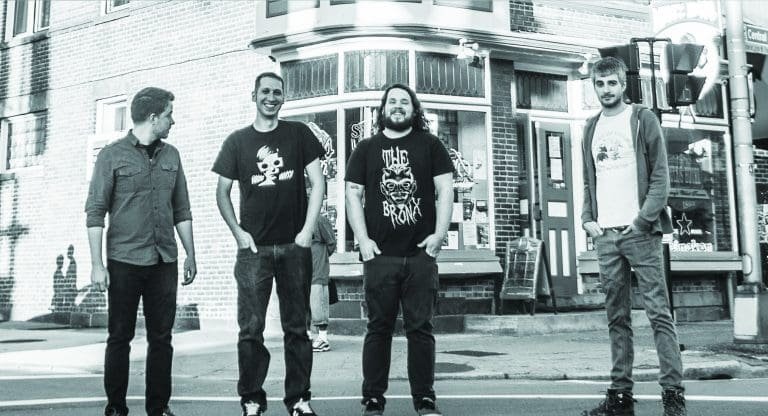
For a decade The Slaughterhouse Chorus has been a staple in the local music scene. The band has toured not only the Northeast but has ventured as far south as New Orleans and many places in between. Bandmates: Jay Bonafide (Guitar), Mark McKenna (Drums), Bob Watson (Bass) and Chris Jordan (Guitar/Lead Vocals) have just put together a brand-new EP entitled “In The Name of Progress” but they say it will be their final release. Wait… What?
RRX: Built4BBQ is the name of the recording and distribution group that your band established collectively producing at least 15 releases; including not only TSHC but also local artists Henry’s Rifle, Kimono Dragons, Charmboy, and The Savage Randys. With that being said, why is “In The Name of Progress” going to be TSHC’s last? And do you have plans for Built4BBQ to continue with other projects?
Chris: Basically, I guess we decided to end the band simply because we had run out of ideas for this band and have several ideas for other musical projects. So… “In the Name of Progress” is just us saying, this is the last record and we can move on to other projects. Originally, we were trying to write another full-length and we couldn’t come up with enough ideas, so we just recorded the five songs we had. Unrelated to Built4BBQ as a larger enterprise, we’re ending the band because that’s what we feel like doing and moving on to other things. As far the continuation of Built4BBQ, I don’t see why not. I don’t know if we’ve ever discussed this.
Mark: Can Built4BBQ end?
Jay: No, I think Built4BBQ is forever.
Bob: It passes down to the next generation.
Mark: I could see a renewal of energy toward other people’s projects.
Chris: So yeah, why not? “Built for BBQ” is the name of a Slaughterhouse Chorus song, but eventually it became a phrase that we used to describe any band that we thought was sweet. So as long as there’s sweet bands, they could potentially be bands that are Built4BBQ.
Jay: You too could be Built4BBQ!
Chris: U2 the band is NOT Built4BBQ. [band laughs]
Jay: U2 the band is the opposite of Built4BBQ. OK, next question…
The Slaughterhouse Chorus. Photo by Bryan Lasky
RRX: It is truly the end of an era for TSHC, I am sure the memories and stories will live on forever. What would you say have been the band’s fondest achievements?
Chris: Oh man… So, it’s the first one I can think of – it’s not our most significant but a cool one that we did – for Ghosts of Hardcore Past [annual cover show] we decided to play NOFX‘s “The Decline,” which for the uninitiated is an 18 minute and 44 second song – and we did it! And it was pretty good.
Mark: You learned the trombone and everything.
Chris: Yeah, I played the trombone. It was a pretty ambitious thing.
Bob: That was before me, but I was in the audience watching that. It was at upstairs Valentines, and I remember being upset because no one else in the crowd wanted to do a circle pit. But it was a great cover, you guys nailed it!
Chris: Well yeah, I think there’s the normal milestones bands should be proud of. We put out the full-length, which I guess still holds up okay. We’re about to put out this EP – it’s not a moment we’ve had yet, but a moment I anticipate having as one of our finer points. I don’t know, we’ve played a few shows for some unsuspecting crowds and they turned out to really enjoy it. We went on tours that were not commercially successful, but I think were really character-building experiences.
Jay: Really great times.
Mark: I mean, I honestly can’t even really think of a single crowning achievement. For me, it’s like blocks, you know what I mean? Like when the band first started, the initial excitement of playing at Valentines, meeting new people and making new friends, and kind of building this whole group of friends. I look back on that fondly, but it’s not a memory, those are still my friends.
Chris: That’s a good point. I think probably the crowning achievement of this band is that it’s probably built our entire social circle. Through this band, we’ve met people we still hang out with and will probably continue to hang out with until everyone has kids.
Jay: That’s the end of everything. [Band laughs]
RRX: Sorry to keep dwelling on the fact that THSC is wrapping it up this year but to be honest I didn’t know so I am in a bit of shock. Is there anything you would care to share about your experiences together over the years?
Mark: For some reason going to Kansas, like being in Kansas was like the weirdest…
Jay: I think that’s really the beauty of being in a band or just being alive. We meet Matt Hendershot from the End Men, I think at the Putnam Den in Saratoga at some weird, off-brand show we probably shouldn’t have been on to begin with, it didn’t make any sense… and we meet these wonderful people from Brooklyn and the next thing you know we’re eating dinner with their family in Kansas and it’s the greatest BBQ that’s ever existed. We’re sitting around a kitchen table, everything’s flat, there’s no mountains anywhere, it’s like you’re on the face of the moon or something. It’s pretty cool to have an experience like that.
Chris: To interject a dose of realism – everyone hated that tour while we were on it. [Band laughs] There were some good moments…
Jay: Oh, I didn’t hate it, man! I had a great time.
Mark: I did too.
Jay: I do remember I had to buck everyone up at a certain point. I mean it didn’t go well, it wasn’t a great tour.
Chris: There were never more than 15 people there. The drum kit kept moving around. The morale was kinda low at times… but we never ate better.
Jay: It was a great road trip, but a so-so kinda tour. And there was the one the year before with John [Henry’s Rifle].
Mark: The first tour with John was awesome. That was my first tour ever.
Chris: We got pulled over in Macon, Georgia. It was like “Super Troopers” but it wasn’t funny, and it sucked. They harassed us for a while and they brought us all out of the car and they made us feel bad but none of us broke. You could tell the one guy definitely just wanted to hit us or arrest us or whatever. We got out of it alive and we paid some fines. And then later we found out that the cop that harassed us got arrested himself for impersonating a lady on the internet to try to ruin his ex-girlfriend’s new relationship. So that’s a really fond memory for me – being harassed by Officer Willis of the Macon Police Department and then later finding out that the same individual is now in prison for 10 years.
Mark: He literally asked me if I fart weed. He was a real special guy. It’s funny how the hard times really turn into the best memories.
Chris: Any experience good or bad can turn into a great story, so embrace the bad times. Deal with Officer Willis.
Jay: I think that’s a good segue back to the record too. “Hambone” is just the recounting of one of these alternately good and bad experiences, where we were on our way to the Muddy Roots Festival in Tennessee to play, but at the Open Mic Tent, I think, with John from Henry’s Rifle.
Chris: I mean, we went down to see the show too.
Jay: Yeah, it was amazing, amazing music. It started beautifully. It’s a very long drive but we got down there and the beer was flowing and the food was cooking and the bands were playing and it was wonderful, but then the skies opened up and everything fell apart.
Mark: But we made it home!
Jay: I don’t think you get that, just working your 9 to 5 and not leaving town. We’re lucky to have that opportunity to get in the car and drive and make music as part of a grand adventure somewhere. So it’s cool that we’ve been able to do that over the years.
RRX: Without saying the name of the supermarket that took over the site of the church that is in ruin on your album cover, explain why this brilliant photo was chosen and if there are any obvious or hidden meanings behind this choice photograph.
“In the Name of Progress” – The Slaughterhouse Chorus’s latest album.
Chris: Yeah, so I just happened to have driven by St. Patrick’s Church in Watervliet during its demolition and I saw the state it was in as captured in that photograph. I called up my mom, who has a lot of nice cameras and is just a great amateur photographer, and I said hey, if you want to capture a really cool picture, you should go up to Watervliet. The steeple of the church is still up but the rest of the church is gone, and you could probably get some pretty dramatic shots. And she did, and we never really thought about it. But it was kinda right around that exact same time that those few blocks of New Scotland Avenue in Albany were demolished to make way… you know, Valentines and Quintessence; so at least to us, there were a lot of significant, historical or cultural, places that were being destroyed in the area. So when we came up with the whole concept of “In the Name of Progress” including artwork from Saratoga Winners burning down or Valentines being torn down, having the couple of photos my mom took of St. Patrick’s Church, and I mean for lack of a better word, it’s badass, look at it, it’s cool. We saw that and we were like, that’s the album cover photo for sure.
Jay: And I don’t know what the metaphor is but there’s some metaphor there…
Mark: In the name of progress we’re ending this band.
Chris: And that’s just it. In the name of progress we recorded these five songs in the first place. In the name of progress we’re ending this band to move on to other things. And then artistically, the photography, the unnamed grocery store tore that church down in the name of progress. Valentines was torn down in the name of progress. Saratoga Winners was burned down in the name of that guy making some more money, which I guess is sort of progress.
Jay: His own personal progress.
Chris: So it all ties together and has different meanings.
Jay: I think what’s cool about the photo on the cover and that whole situation is that wrecking ball couldn’t take that steeple down.
Chris: It’s a last stand almost.
Jay: You’ve gotta bring a bigger wrecking ball.
So The Slaughterhouse Chorus may be calling it quits but you will still have a handful of opportunities to see them perform live. The record release show will be held on May 31st at The Hollow 8pm, the sixth annual Built4BBQ Star Spangled Bonanza July 3rd at The Hangar on the Hudson and the Divine Vibes music festival at the Beer Diviner Brewery July 19-21. For more on The Slaughterhouse Chorus and to order music and merch visit them online at www.theslaughterhousechorus.com










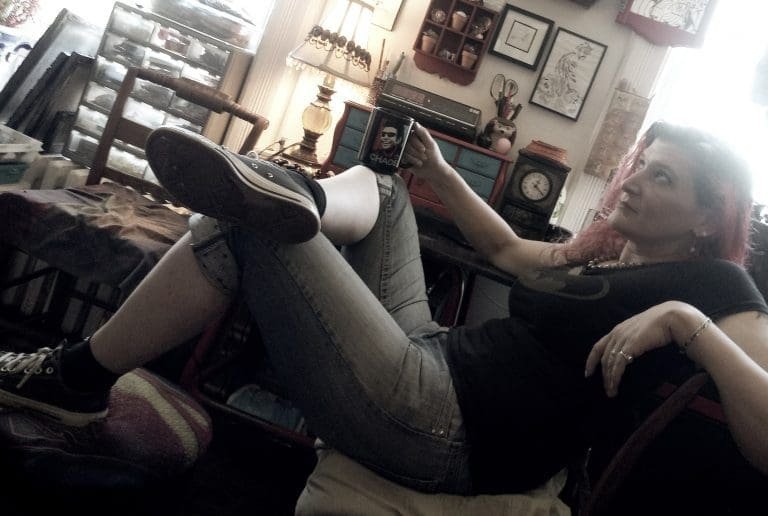
 Stephanie Levay has become a very recognizable artist in the Albany art-scene. She has displayed her artwork in shops in and around the Lark Street area for years. You may have even driven or walked by a mural or two that she has painted. I (Rob Smittix) have been waiting for the opportunity to speak with Stephanie about life and art and I finally had my chance.
 On the outside, getting around and not having an actual way to get around. And not being able to sit in my art, so to speak. At my desk and have my art supplies and my tools ready to make whatever my brain comes up with. Which is, I am a complete idea factory and everything is coming at me all the time. Three o’clock in the morning, I’ll think of something by 5 o’clock I’ve created something, when the kids wake up, they’re like what’s this? I’m like, I don’t know I just made it over-night, I was bored. And I didn’t have that and it drove me nuts. The kids had a playground and new friends, they were alright and they were a lot stronger about it than I was. I needed to kind of suck it in for myself and mirror it back. I am strong too okay, we’re going to get through this but when they were sleeping and I was awake, not around my art supplies, not being able to have everything I’ve built up for twenty years, not even my cats for comforting; that just ate me alive.
 I’m coming up on some things. We’ve had our proud dances in the living room. Like when we did the art gallery and I was on the news for it and interviewed for it. My kids saw the interview and it’s the proudest moment I’ve ever had in my life was my oldest turning around and saying “Mom, I’m so proud of you, I’m so happy for you, this is what you’ve always wanted.” I’ve never felt that kind of pride before without this lingering doubt or this unsure feeling. But I’ve never felt so strong about something in all of my life, seeing my children be proud of me for something, I know that’s going to create a memory and an ethic in them when they go on to do what they want to do when they get older.