Home Blog Page 203

Joe Louis Walker – An Xperience Interview

0
Joe Louis Walker

Joe Louis Walker – An Xperience Interview – by Neoptolemus.

JLW’s latest effort, “Cold Is the Night: Reimagined,” just dropped on March 26. This work completes an arc with his first album, “Cold Is the Night,” now a blues classic, released in 1986. Give one or both a listen, and you will hear why the man is a legend.

But better than that, go see him LIVE. You won’t be disappointed.

RRX: You started playing guitar at the age of eight. How did you get started in music? Was there a particular moment when you realized you wanted to be a musician?

JLW: At the school I went to, they had a few instruments you could check out, like you could a library book (if you showed some aptitude, that is). My first instrument was the violin; the guitar was always checked out. My first guitar was a cheap overseas import. I eventually took some rudimentary lessons at my mother’s insistence. My dad’s old friends would come over on weekends and play cards, have a couple drinks … and a couple of them played guitar and sang the songs they’d learned down south. That moved me and made me wanna play music … ANY kind of music. Just make some sounds like they did.

My dad played a lotta blues records … so that was my earliest blues education. And my mom played a lotta B.B. King, and that was ALWAYS part of my education. I heard my four older brothers’ and sisters’ records, so I got a serious, varied music education growing up.

RRX: Your latest album is “Cold Is the Night: Reimagined” (available from Bluesifyin Productions/Sledgehammer Blues [a label of Valley Entertainment]). This appears to be a fresh take on your first album, “Cold Is the Night,” released in 1986 (which is outstanding!). Can you tell us about it?

JLW: “Cold Is the Night” was my first studio album under my own name, with my backing band, The Bosstalkers, with Steve Griffith (drums), Henry Oden (bass), and Kevin Zuffi (keys).

I had quite a few songs saved up and that gave us a lot of variety to choose from (traditional blues, contemporary blues, soul blues, rockin’, etc.). The recently released single, “One Woman,” was a song I was able to transform by having a female singer, Eliza Neals, on the new release. That’s what I’d originally wanted to do, but we had budget restrictions at that time.

RRX: The film “A Complete Unknown” has put legendary guitarist Mike Bloomfield back in the public eye. Because of his skill, Bloomfield was Bob Dylan’s preferred choice for his band, and he played on “Highway 61 Revisited” and at the Newport Blues Festival where Dylan went electric. You had a long friendship with Mike. What was Mike like? Any poignant memories of Mike you’d care to share?

JLW: I always say Mike (as well as Taj Mahal) was true Americana, before the name became a category. In his prime, he could play ANYTHING, with ANYBODY. And a bit of that musical inquisitiveness was in me, also. He gave me tools to learn (lap steel, piano, slide guitar, alternate tunings, etc.) that gave me a bit more versatility than a lot of other players.

A fond memory was when Dottie (Mike’s mom) came to visit. Mike took her to my mother’s house, and we didn’t see them till late that night, at my gig at a funky club called Mr. Lee’s. They had a blast together!

RRX: Your faith seems to be an important part of your life and your music. It clearly has roots in gospel music, but there seems to be more to it than that. Can you describe the relationship?

JLW: I’m just a witness, holding my hand out to everyone.

RRX: You seem to know every great blues player that ever existed. Any plans for a Joe Louis Walker biography, with stories of the greats you have known and played with?

JLW: I was recently going down that path, but it just wasn’t the right fit at this time. Maybe in the future it’ll come together.

RRX: Do you have any personal favorite blues players?

JLW: It’s hard to pick one person out of the many that helped me navigate this journey because it’s about way more than just music. And people enter your life at different times, which can also have a major impact. But I’d have to say B.B. King and Mike Bloomfield … they put a roof over my head, fed me, put money in my pocket, gave me guitars. But mainly, they treated me like family. All of which I can never repay.

RRX: Your birthday (December 25, 1949) is on Christmas. Has that been a blessing or a curse?

JLW: Without a doubt, both!

RRX: Previously when we spoke, I asked you if you knew Albert Cummings, a local favorite bluesman. Have you met Albert? Did you know you both played with B.B. King?

JLW: I think I may have been at a festival with Albert, and may have met him. But now I’ve gotta put him on when I get through with this interview!


More from Neoptolemus…

Morgan Jay Coming to Troy Savings Hall Music Bank

0
Morgan Jay

Morgan Jay

The Goofy Guy Tour

Saturday, December 6th, 2025, 7:00 PM

Tickets: (518) 273-0038       For venue information:  www.troymusichall.org

TROY, NEW YORK:     The Troy Savings Bank Music Hall is excited to announce comedian Morgan Jay will join us on Saturday, December 6th!  Pre-sale for the show starts Wednesday, May 7th at 10am and tickets will go on-sale to the public on Friday, May 9th at 10am.  Learn more below about  Morgan Jay!

Morgan Jay is a musician and comedian based in LA who has made numerous TV appearances. His world class training and journey as a stand-up comedian has won him multiple awards and prestigious festival appearances. Most notably, he was a 2023 Just For Laughs New Face. He’s most recognized from his massive social media following across Tiktok and Instagram and has two comedy specials streaming on Youtube.


Tickets are on sale at 10 am, May 7th to Troy Savings Bank Music Hall Members.  Anyone can become a member and gain access to the pre-sale.  Single tickets go on sale the general public Friday, May 9th at 10am via phone, (518) 273-0038, in person, or online at  TroyMusicHall.org.  More information on the Troy Savings Bank Music Hall and upcoming programs is also available on the website at www.troymusichall.org.

Caffe Lena – Week at a Glance

0
Caffe Lena

Greetings – While we always keep the music fresh, and we have a staff and stage full of energized young people, you may agree that Caffe Lena feels like it lives outside the highly-charged, rapidly changing world of today.  One way we hang onto that precious quality is by sticking with some traditions that we hope you appreciate: an all-volunteer hospitality staff, shared tables, a respectful hush during the show, plenty of free events so everyone in our community can enjoy the Caffe. Each of these things keeps the place human and homey–an echo of the ’60s folk scene from which we sprang.

Members make this special way of doing business financially possible. Without members, ticket prices would skyrocket and the audience would be less diverse. Free events like Folk Club Kids and the Slow Jam would go away. Professional servers would urge you to order more drinks throughout the show and people would start talking over the music. If you are not a member of Caffe Lena, please consider signing up now during our May Membership Drive. This year’s goal is 65 for 65–sixty-five new members to celebrate sixty-five years of Caffe Lena. There are special incentives this month, with the best one being a chance to win the Golden Ticket–an upgrade to Impresario membership, which entitles you to free shows for a full year!

Please help us preserve this unique and wonderful place by becoming a new member, upgrading your existing membership, or returning to the fold if your membership has lapsed. Any of these actions will enter you in the drawing for the Golden Ticket and help the Caffe stay the Caffe.

See you at the show,
Sarah

…2..3..4

0
...2..3..4

…2..3..4 by Chris Busone.

When I was a young upstart, starting up, as a native of Green Island, Troy was “The City” to me and my friends. When we uttered such anticipatory phrases as “Let’s go to the City tonight,” we weren’t talking about Detroit, Philadelphia, Kathmandu, or even New York City. We were talking about Troy, New York.

But until we reached our eighteenth birthdays, we were forced to wait impatiently for Father Time’s chronological swatch to get us to that magic number, eighteen, which was (in the late ‘70s/early ‘80s) the legal drinking age. Yes, it was a crazy time when the governmental “powers that be” deigned that the age of eighteen constituted not only someone who could serve, fight, and in far too many cases, die for their country, but could also be trusted with the heavy responsibility of half priced domestic drafts and two-for-one well-drinks on Tuesdays.

But the consumption of alcohol, while a big frothy check in the plus column, was not the main motivation for our antsy attitude with the Gregorian calendar. We wanted entre to the clubs in Troy where we could see and, in most cases, stand uncomfortably close to, the players that we had been hearing about and trying to emulate since we picked up our respective instruments. Predictively, we jumped the gun, got some fake IDs, and started hitting the clubs at sixteen (while simultaneously looking twelve). Most would allow us in, provided we didn’t drink and kept out of trouble. This meant at sixteen we got to see, in Troy, amazing talents like Joe Mele, Charlie Smith, The Rockin’ Dakotas with Johnny Rabb and holy crap Emerald City!

Those nights were, and remain, some of the most musically rewarding of my life. And it was the vibrant Troy scene at the time that I have to thank for that. I’ve made no secret of my affection for my home city. My latest record (shameless self-promotion alert!) is, in point of fact, a tribute to my beloved city of Troy. And to this day, it still freaks me out a little to think that most of those artists I saw back then became my friends in later life. So, when I wanted to write about Troy’s scene over the years, I decided that my individual memories, while nostalgic and cockle-warming to me, may be better served by the addition of some recollections from those early influences I first encountered in Troy.

This is new territory for me. Rather than cracking open my head and letting the contents spill onto the keyboard of my Mac in whatever haphazard fashion they choose, I was now going to do actual leg-work and research like an honest-to-goodness writer. Q & A sessions. Meticulously gleaning through notes for precious tidbits that shine a light and tantalize the imagination of the reader. Rewrites! Deadlines! Extra! Extra!

I was exhausted by the mere thought of it. But I soldiered on.

Two names immediately popped into my head as ideal resources for this inaugural journalistic sojourn: the aforementioned guitar god and my treasured friend, Joe Mele and one of the most entertaining, generous and gracious humans I’ve met throughout these many years, owner of the River Street Beat Shop and recent Listen Up Hero award recipient, Jimmy Barrett.

I spoke with Jimmy first. I love spending time with Jimmy Barrett. His exuberance for music, the people who make it, the places it’s made, and hell, for life in general, is infectious and always welcome.

He led off in his patented self-deprecating manner. “I’m not a great musician like you, Chris,” he said. “But I played a lot of those clubs in town in the ’60s. We played the Riviera Lounge on River Street, on the site of the old city hall. It was an amazing place. Real class. All the big bands played there. I was in a band that tried to get in there for months. Once we did, we were so bad that they told us they would never book us again. So, we changed our name and tried to get another gig there. And it worked….hahahaha!”

Jimmy also told me of a club on the strip that, for whatever architectural reason, erected their stage behind the bar and only four feet below the ceiling. Consequently, they hired a band comprised of persons of shorter stature as their house band, because no one else could fit on the stage. “It was wild!” Jimmy remembered.

Joe Mele regaled me with many great memories and pinpointed the exact starting point of when the scene broke wide open.

“It was ’64-’65, and we were playing at this bar, Paul’s, on River Street. It was upstairs. We stopped into the Riviera Lounge, and there was this band playing called the In-Sects. They spelled just like that with the dash in the middle. And when they got done, we talked, told them we were players, and by the end of the night, they asked us if we wanted to join the band and come back to Brooklyn with them. It was that quick. So, we did that for the summer and played the Jersey Shore. After that, I went to London for a while. When I came back, Art Hilton said he wanted to open a music store in Downtown Troy and asked me to help. Music stores only sold sheet music back then, but Art had an idea to sell instruments … guitars, amps … All of a sudden, there were four or five music stores downtown – Hilton’s, George’s, Drome Sound, Romeo’s – all doing it. And everybody wanted to be in a band. The stores were packed.”

Joe went on to say that, with all these players looking for a place to play, the existing bars started booking bands. As the scene grew, actual clubs began to pop up, specifically designed for live music. “Then it just exploded,” Joe recalled. “We were playing everywhere. Six nights a week, 10 pm-3 am. And the places were packed every night. And it just kept growing. Every six months, there’d be more clubs, more bands. The strip was happening. Oh, ya man, it was a scene.”

When I asked Jimmy and Joe about the bands at the center of this Trojan explosion in the early years, the same names kept popping up; Mother Flag & Country, Back Bay Brew, Merlin’s Minstrels, The Knickerbockers, and Bobby Dick & The Sundowners who, along with Jimi Hendrix, went on tour with the Monkeys.

I got so much great stuff from Jimmy and Joe about those early years, I could go on for pages and pages. But I’d like to slip in a few of my own memories if I may.

The first clubs in Troy that would let us in to soak up the musical inspiration were the Tele Tavern and Petar’s. So, after being exuberant audience members in these places, it was a real thrill when we got to play them a few years later. There we were on the same stages where we had watched, transfixed on our heroes. And now we played as other young people stared in wide-eyed wonder at us in the same way. Life can be some full-circle sh*t sometimes.

We loved the downtown scene, but when we turned up Morrison Ave and climbed the hill that led to the Ilium Apartment Complex and traveled deep into its back parking lot, there stood Dudley Do-Rights. To us, a monolith of music in Troy. There I saw amazing bands like 805, New York Flyers, Talas (my personal favs … still love the power trio), Eros, Teaser, The Jimmy Carter Show, and acts like Rob Zombie, Root Boy Slim, David Sanchez, Billion Dollar Babies, and Lita Ford. So, when we actually took that stage and trod that well-worn, hallowed rock & roll ground, we were convinced that the goal had been reached and stardom was there for the taking, a mere arm’s length away. These were amazing years for a young musician in this area.

I understand that it may seem to some that the local scene isn’t what it used to be, and that may be true. But what is? Politics? Civility? The price of … well … everything?

Joe Mele tells me, as far as the club scene is concerned, that the turning point came due to three instances of causation. “First disco hit in the late ‘70s,” Joe explained. “Then in the ‘80s, there was the drinking age change from 18 to 21. But the really big thing was cable TV. Nobody ever talks about that, but people went from three channels to a thousand, and they never had to leave their chair. They just stopped going out. That was huge, man.” I’ve learned to believe Joe Mele when he tells me these types of things because, even if I’m wary at first, inevitably it turns out he was right. But let me build on that last point.

MTV. Up to that point, the only way to see a live band with lights and sound and sweaty, long-haired musicians was at a concert or in a club. But once MTV was available in everyone’s home, through cable TV (Ya OK, Joe was right again), you could see national acts playing live with full stage shows all day and all night. It was hard to compete with that for a bar band. There was no doubting that a change was looming.

There is nothing permanent except change. And, while the scene has undoubtedly changed, it had to. Change is the law of life. But make no mistake, years from now there will absolutely be people looking back on these days, the here and now we currently occupy, and they will recall them fondly as “the good ol’ days.”

So, while it’s great to look back and reminisce, let’s not forget to enjoy the now. Let’s remember to save today in our bank of memories, because some pain in the ass who’s writing an article for a magazine may call you someday 20 years from now and ask you what the scene was like in 2025. And you’ll want to tell this nuisance that we lived it to the fullest, got all we could from our time, and kept getting up on those stages and counting it off..2..3..4.


More from Chris Busone…

Albany Pro Musica @ The Egg (Hart Theatre), 4/26/2025

0

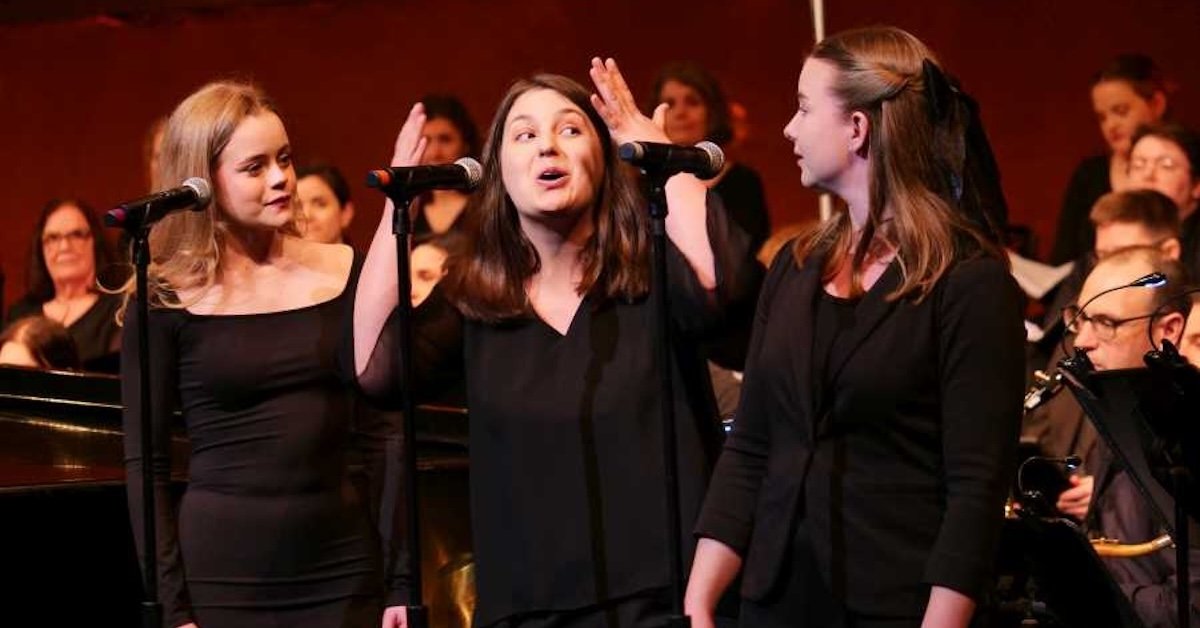
Albany Pro Musica and the Pro Musica Pops presented showtunes arranged for chorus, small ensembles, and soloists at The Egg on April 26 to close out its season. Broadway talent Jamari Johnson Williams was a featured performer.

Photography by Timothy Reidy.

[modula id=”63044″]

More from The Egg …

Ryder Cooley – Xperience History

0
Ryder Cooley

Ryder Cooley – Xperience History – by Liam Sweeny.

Originally Published July 2021.

Art is subjective. Music too. And we’re passionate in our opinions. Music and art can be pleasant, designed to take us to our bliss. Other music and art can challenge us, make us question what we know, even broaden our conception of what art and music are.

Ryder Cooley is an artist and musician. Her band, Dust Bowl Fairies, is an eclectic fusion, and Ryder’s work is esoteric and packed with meaning. She will challenge you, and reveal an art that is more expansive than you’d imagined.

I sit with Ryder and we discussed Jurassic Park. All of them.

RRX: When I first became hip to you, admittedly recently, I saw Hazel, your disembodied goat’s head. Though maybe I shouldn’t say “yours” because it seems Hazel might belong to the world. Giving a soul, if you will, to Hazel, was it always there, or did it come about through a creative act?

RC: Oh yes, Hazel has a soul, we all do, don’t we?  I’m going to go out on a limb and say that I think the crux of this question is about death. Being pre-disposed to morbidities, I have given death quite a bit of thought (and observation) and I have come to the conclusion that energy leaves the body in death, and is released into the world. Though I cannot take any credit for the existence of Hazel’s soul, I do think that our collaboration has helped preserve her energy and wisdom by providing her spirit with the opportunity to act as a guide, a spirit guide.

I’m not a big fan of ownership or the “P word” (property/language of capitalism), so I would say that Hazel first and foremost belongs to herself, and then she belongs to the spirit world. It’s an honor to be the steward of the mortal remains of Hazel, which is infused with her residual energy. I try to invoke Hazel’s spirit at performances, and after a decade of performing together, I think of Hazel as an extension of myself. I refer to Hazel as “she” since I’m the mortal body for Hazel in her afterlife. Hazel is an integral part of my identity and I’m one of those confusing changeling creatures who can’t quite fit into any conventional identity. I’m plural (non-binary if you will) and a faerie, yet drawn to the feminine, which is why I use the pronoun ‘she’ for myself, and for Hazel.

RRX: You have a band called Dust Bowl Fairies, which is described as, “dark carnival music.” I’m imagining that, with your work with animals and taxidermy, it’s quite an atmosphere, engrossing, probably. Does the band set a mood as part of a larger performance, or is the music in the lead and backed up by the performance?

RC: Dust Bowl Faeries can be quite expansive and theatrical when given the opportunity. We like to perform with projections and costumes and aerials and extra sensory elements that will transport our beloved guests to other realms. However, woe is us, here we are in a compartmentalized culture where independent music is squeezed into venues that can’t support anything beyond the music itself, and let’s be real, these days venues can make a heck of a lot more money hosting weddings than music shows! Weddings are putting musicians out of business here in the NY Hudson Valley, with the exception of wedding bands, of course. Perhaps someday Dust Bowl Faeries will hit the jackpot and be able to present music in true faerie-tale form, but until then, I would say that the music leads.  I do create solo performances which are a departure from standard music shows, so I would say my solo work is more conceptual and performance driven.

RRX: It looks like there’s a lot on the Dust Bowl Fairies plate. All the way through the summer throughout the Capital Region and the Hudson Valley. With an air of extinction and the show and set you put on, is it cathartic in anyway to be getting back out there right now to perform for people?

RC: It is cathartic to be performing live again, that’s the perfect adjective, thanks for the handout Liam! I’m not much of a cyborg, nor are the other members of the band.  Embodied, energetic exchanges with live audiences really drives our music.  I worked pretty hard to keep Dust Bowl Faeries active during the pandemic with virtual shows, videos and a new album called The Plague Garden.  Lisa M. Thomas made an incredible video with us last summer called Candy Store, which really brought the band together again after months of social distancing. But all of this is to say that yes, we are thrilled to be playing live again and we hope that anyone who is ready to brave the world of social engagement will join us for a live performance!

RRX: I mentioned extinction, because I read that it’s a favored concept for you. And I say concept, because your art attempts to symbolically and metaphysically resuscitate extinct animals. And with DNA samples and cloning advances, do you think we need metaphoric resuscitation only until science and conservation catch up?

RC: Extinction is not exactly a favorite subject for me since I am an animal advocate and I deeply care about species diversity, so ultimately, I don’t want animals to go extinct, especially not as a direct result of human destructiveness. I do have many songs and performances about extinction and endangered species, which I’ve created in an effort to shed light upon the tragedy of these losses, and as a reminder/wake-up call for all of us to live more sustainably. I don’t think that we can bring back that which we have destroyed, be it via science, DNA cloning, whatever. My song “Ibex” on The Plague Garden album addresses this. We may be able to re-create a facsimile, but the process of doing so is in itself destructive since it involves animal experimentation. Playing god is dangerous, it opens up the floodgates for ongoing destructiveness by suggesting that everything is reversible and that conservation is futile.

RRX: Taxidermy has always been on the edge of what is taboo in society. You can have a collection of figurines, but a collection of squirrels and people give you a side-eye. But what you do with taxidermy I think transcends collecting. Where did you first start with taxidermy? Do you find the animals, or have you done it yourself?

RC: I like to collect things like bones and feathers, and sometimes I find dead things and take them home to study or draw. If you open my freezer you will find a bunch of frozen bird wings and such, which I save for rituals and sometimes for art projects, but when it comes to taxidermy I consider my “collection” to be more like a rescue. Killing animals and stuffing them is not anything I would do. Cutting their heads off and hanging them on the wall like trophies is horrid, and bad luck. That’s why I rescue the animals and give them a comfortable home after they are discarded. I don’t display animals on the wall. The taxidermy creatures in my home are part of the family, I try to make them comfortable, resting them on cushions and chairs, I honor their spirits. I don’t buy taxidermy, they come to me. I don’t support killing animals for any reason, animals are my friends. I don’t eat my friends or stuff their mortal remains, or decapitate them and hang their heads on the wall. I cherish my friends, all of them, the taxidermy friends and the living friends, the animal friends and the human friends.

RRX: I share your passion for animals. I volunteered at a farm sanctuary when I was fourteen. And it’s so hard to get people to understand that animals can feel the same pain humans do. Makes it harder to eat a steak. But you don’t preach to people. How is your art a message, and how is it a statement?

RC: It’s always a relief to meet other animal advocates and empaths!  The only way I was able to dive in and start making music was to come to it myself, without anyone telling me what to do, how to play an instrument, how to read notes on a page, how to write a song, etc. I guess that’s the way I think people might understand animal consciousness, through stories and songs, pictures and colors, melodies and lyrics, anything that communicates on a more subconscious and visceral level. I like to make work that lures people in, like a really good mystery novel that’s full of intrigue. I want to hypnotize people with my work and speak to the senses, not just the intellect.  Just think, what a terrible world we would live in if there were no animals left, just people. What if we ate them all, destroyed them all, and there were only simulations of animals? That’s not a world I want to live in. The suffering of animals due to experimentation and exploitation is such a nightmare, which is why a lot of my work has a haunting feeling. Thank you for asking this very poignant question.

RRX: This is where you answer the question I didn’t ask. Best color to dye your teeth? Glitter bombs or silly string? Educate, enlighten, emote – the floor is yours.

It’s time to get witchy, go out into the woods, forage some wild herbs, make some tinctures and teas, find your wishing wells and cast your spells, we need magic right now. It’s up to each and every one of us to find that magic and share it with others, and take care of each other, respect each other, embrace diversity, which includes animals and plants and all the creatures and everything. Celebrate individuality, it’s what makes the world interesting and beautiful. And, if you are having trouble doing any of that, come to a Dust Bowl Faeries show, we will cast a spell for you.

Candy Store Video: https://youtu.be/jELSbCqfWxY


More from Liam Sweeny…

Dan Dinsmore, An Xperience Interview

0
Dan Dinsmore

Dan Dinsmore, An Xperience Interview – by OP Callaghan.

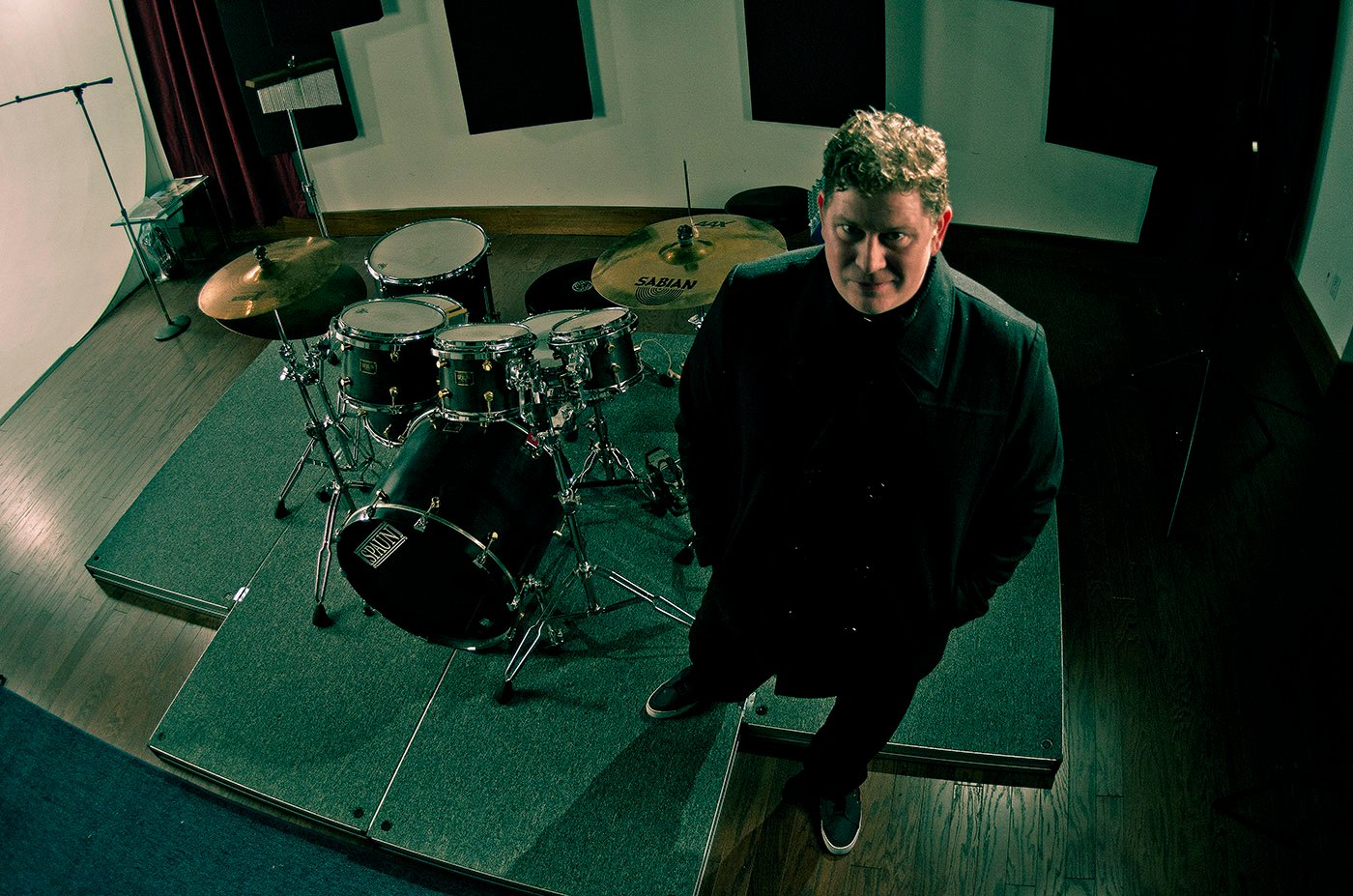
Dan Dinsmore has all the chops and power in the world on drums. He also honors the groove first and foremost. He is one of the best on the planet!”
– Chris Wyse, bassist of Owl, the Cult, and Hollywood Vampires
Dan Dinsmore is a monster. This guy hits hard, hits clean, and works the kit like a prizefighter. His drumming with Owl and the Clay People is reminiscent of the one-and-only John Bonham. Songs like “The Pusher,” “Lake Ego,” and “Children Of The Grave” (from Owl) are incredibly tight, clean, and super heavy. Dan’s work with the Clay People, particularly “Victoria Queen” and “The Drugs (Are Not Working),” is exceptional. He’s got a big swing and loads of talent. But Dan is more than a drummer. His work at his own Overit Media has been a springboard for artists from the Capital Region and beyond. Dan is a creative force, a nurturer of talent, a creator of dreams, and a promoter of all things artistic. Eric Braymer of the Clay People and Jupiter Queen sums it up nicely: “I have to say that Dan is one of the best there is. He gets you with that snare drum and pulls you in with his persistent, heavy playing. His timing is perfect, and he plays with great feeling and passion. One of my favorite things about playing with Dan is his ability to provide constant feedback, which keeps you on your toes and inspires you to play better.”
We’re lucky to have him on these pages, so please welcome Dan Dinsmore!

RRX: How did you get started playing drums?

DD: I was 12 when my father passed away. It was a heavy, confusing time. I had been really into baseball and roller skating, but after seeing the Cars live in Glens Falls, NY, something clicked. I needed an outlet—something that was mine. Music became that lifeline. I started banging on anything I could find—trash cans, chairs, couch cushions—and built makeshift drum kits, before finally convincing my mom to get me a cheap set. From that moment, I was all in. I played for hours every day, nonstop. Eventually, I formed my first band and started playing block parties. That raw hunger hasn’t gone away.

RRX: Do you play any other instruments?

DD: I mess around with guitar and bass, but what I really love is producing. Creating and shaping a sound from the ground up is magic to me.

RRX: Do you come from a musical family?

DD: Funny enough, we recently traced our family history and discovered a long lineage of drummers dating back to the 1700s. Music definitely runs in the blood—lots of professional musicians in the family tree.

RRX: Have you taken lessons or are you self-taught?

DD: I did take lessons early on from a guy who ran The Drummers Workshop in Rotterdam. Mike Gerardi. It was a vibrant hub for drummers to learn, connect, and immerse themselves in their craft.

He was more than a teacher—he was a mentor and a kind of therapist during a tough time in my life. Those lessons shaped me more than he probably ever knew.
The only other real teacher I ever spent a lot of time with was my brother-in-law Lou Verutto. Lou was a father figure and an unbelievable drummer. He inspired me and turned me on to so many diverse styles. He had a major impact on my life and drumming.

RRX: Who were some of your first influences?

DD: John Bonham, Buddy Rich, Tommy Lee, James Gadson and Ed Greene. I was deep into early Jackson 5, Stevie Wonder, Fleetwood Mac, ELO, Boz Scaggs—basically a lot of Motown and classic rock. Soon after that, turned to more hard rock / metal: influenced by Neil Peart Stephen Perkins, Matt Chamberlain, and so on. That blend helped me build a style rooted in groove and feel.

RRX: I definitely hear Bonham in your playing. Who influences you now?

DD: So many—Danny Carey, Steve Jordan, Simon Phillips, Steve Gadd (always),Carter Beauford, and of course, still Bonham. A special shoutout to Josh Eppard. I wasn’t a huge Coheed & Cambria fan at first, but after working with him at Overit Studios, I became one. His feel, his emotion—he plays with his whole being. That guy is incredible. There’s a sea of great players out there, but it’s the ones who make you feel something that really stick with you.

RRX: Josh is a great player. Tell me about your first kit.

DD: A silver Reuther 5-piece that was total junk—but man, I’d do anything to have that kit back. It was where it all began.

RRX: I bet! What are you playing now?

DD: My studio go-to is a ‘67 Ludwig 4-piece with a Black Beauty snare—just an unreal sound. For touring, I rotate between a Pearl Masters kit, DWs, and a Pork Pie set. They each have their own vibe and energy.

RRX: Beautiful. Tell me about your first band and first gig.

DD: My first band was DBK—Dinsmore, Bedford, Kitzman—back in early high school. We thought we were Yes or something. Our first gig was a block party in the neighborhood. I was 13 or 14. One cool memory—Bryan Thomas, now known as Buggy Jive, joined us on keys. He played “Foreplay/Long Time” by Boston, and it blew our minds. We had him loop it over and over. He was insanely talented back then and still is—kind of a Prince-meets-Joni-Mitchell vibe. If you’re into deep songwriting and funk-rock genius, check him out.

RRX: I love Bryan (Buggy). Tell me about some of the other bands/artists you’ve played with.

DD: East Wall was the first real band—touring, making records, seeing some success. After that, I started 3lb Universe, a powerhouse of talent from upstate NY. Then came the Clay People. We signed with a label out of Chicago, then Universal Mercury. We toured hard, dropped albums, and still keep it going today.
Another big part of my life is Owl, the band I play in with my lifelong friend Chris Wyse. We’ve been playing together since we were 14, and that bond has only grown. We’re always recording, always creating. I’ve also recorded with acts like Ironweed, Dead Rabbits, Idols Never Die, and dozens of others in the studio. I just love being in the room when the magic happens.

RRX: Owl is great. I love your playing with that band, and I had to sneak in to see East Wall as an underage punk! Do you have a favorite gig?

DD: I can’t pick one. The Clay People and Owl have given me so many great moments—and we’re still writing new chapters.

RRX: Any gig horror stories?

DD: One crazy tour I was on with the Clay People, we had a gig in Detroit. We pulled up to the club, and it was not in the best part of town. We started loading our gear out, and when we came out for our second trip, our trailers and van were just gone. Everything we had was stolen, and we had to hitch a ride with another band on the tour to get to the next gig. All our gear, clothing, and everything was just gone. We made it through the tour, but that was insane. I also remember, with my first real touring band East Wall, we were like 15 or 16 years old playing clubs and bars. Somehow, the police got word of an underage bunch of kids playing in bars, and they arrested us right on stage. Right there and then, I knew I had chosen the right path.

RRX: That wasn’t me! Tell me about Overit.

DD: Overit started in 1993 as a creative side hustle—something to support myself between tours. I loved design, storytelling, and tech, so I built a company around that passion. Today, Overit is a 50-person creative agency based in Albany, NY. We help brands tell their stories in unique, bold ways that actually connect with people. We are also building innovation with technologies, and we will always strive to bring creative and innovative solutions to help brands, artists, and companies achieve their goals.
We also built Overit Studios—an amazing recording space inside a converted church. I wanted a world-class room for drums and live recording, something versatile and sonically killer. That dream became a reality. Now we get to work with top artists and clients from all over. It’s been a wild ride, and I’m so proud of what we’ve built.

RRX: And what an amazing place to have here in the Capital District. Thank you for everything that you do, and thanks for being with us today. Anything else you’d like to add?

DD: Never stop chasing the sound in your head. Music is healing. It’s purpose. Whether you’re playing for a crowd of thousands or just jamming in your basement—do it with heart.

RRX: Thanks, Dan. We’re lucky to have you!


More from OP Callaghan…

Miss Paula and the Twangbusters Residency – Ale House

0
Miss Paula and the Twangbusters
Miss Paula and the Twangbusters kicked off a last Tuesday residency at The Ale House on River Street in Troy 0n April 29th. Photography by Timothy Reidy.
4/29

Dave Gutter, An Xperience Interview

0
Dave Gutter

Dave Gutter, An Xperience Interview – by Rob Smittix.

Dave Gutter is a Grammy Award Winner. solo artist and member of Rustic Overtones and Paranoid Social Club.

RRX: How’s life in general?

DG: In general, it’s great. I got married during the pandemic, low-key and didn’t tell anybody. And then I noticed today … I was trying to put my Linktree up because I’m trying to be internet savvy with this record and get some people to hear it. So I’m trying to put my Linktree up on my Facebook, and I accidentally delete that I’m engaged, which we’re now married, but I’ve never changed it on Facebook. So I hit the thing, and then all of a sudden it looked like my wife and I are broken up.

RRX: Oh, Jeez.

DG: I just updated it to married, so in the last hour, I’ve got like 2000 messages of congratulations for getting married today. So it’s a big day for me!

RRX: Yes, it is. Congratulations, because if it’s not on Facebook, it’s not official.

DG: I know I forgot to tell Zuckerberg about that whole s***.

RRX: So the last time I talked to you, you didn’t have your title of Grammy Award-Winning Dave Gutter, but now you got it, so congratulations on that, by the way.

DG: Thank you very much, Rob.

RRX: I thought it was the coolest that you brought your daughter with you as your date to the award ceremony. That was dope!

DG: The coolest part was that it stems from when she was like 5 years old and we were just at home watching the Grammys because it was on during dinner. And she was just like … they make music just like you Papa, someday when you get nominated for a Grammy, will you bring me? And I was like, of course, I’ll bring you, thinking it would never ever happen. The day that I found out, my now-famous-on-the-internet wife said, I know you gotta bring Connie, I understand. I was like, wow. She said, I remember sitting there with you and you told her you’d bring her, so it was kind of a cool moment. Also, there’s a lot that my family sacrifices for me to be a musician, so anytime that I can amend what I bring to the table … anytime something like that comes up where my family and I can celebrate together and we can be part of this together, I try to do it.

RRX: Yeah, that’s the best. And having a supportive family when you’re in the music business and making a living off of it is certainly … you’ve got to have the right people in your corner for that.

DG: That’s actually like a thing that I haven’t talked about with my new album, that I guess we can kind of start off getting into it. If you listen from front to back, especially the very ending, a song called “Gold Records,” it’s basically an apology to my family for dedicating my life to something that … I mean, it’s real, but it’s the closest thing to not real that there is. It’s the pipe dream aspect of it, the obsession, the expectations, the letdowns, and the rollercoaster ride of finances. It’s like the record’s kind of me taking accountability a little bit for that, by saying the music industry is trying to kill me. It’s kind of bizarre, and it’s something that we take for granted, but the way that people will sacrifice themselves, the desperate environment that is being created by the business of music.
We see the business of music more than we think, as just a listener. If I was not a musician or anything and not involved in this, it would affect me every day because … I was watching “A Complete Unknown” last night, the story of Bob Dylan, and it doesn’t always work the way that you think it does. You don’t just walk into a room and the famous guy there is like … you know what, kid? “You’re the next” … and “Here you go, here’s the keys to the castle.” I’m the poster child for that not being the case. You’re a little disillusioned throughout it all because you would think when you were a kid that if you spent three months writing songs with David Bowie, making music with David Bowie’s producer, you win a Grammy, you work with Naughty by Nature and you signed all these major deals with all these major players … Clive Davis and Simon Cowell, you know? You’re there, and nothing is promised. I know a lot of people in the music industry, like our heroes, people who are much more significant than I am, who have done crazy things, they’ve lent an incredible contribution to music, and they’re just scraping by. Even though we see them on a jumbotron, we see them in a tour bus, they have nice clothes, they have these big guitar rigs, and everything. If they break their leg tomorrow, they can’t pay for it, and they’re f***ed. You know what I mean?

RRX: I do.

DG: Myself and many others who are just in my close friend circle … a lot of us have Grammys, and the ones that I’m thinking of right now, we live in apartments. So there’s this side of it that everyone’s too proud to show and too proud not to put that foot forward. They’re afraid that they’ll look like they’re failing. For some reason failure, and whether your music’s good or not, somehow matters. I don’t know how, but at least on social media, if you’re not doing well in the eyes of whoever, it can kind of be like a detriment to your brand. I’m trying with this album to bring those things to light. I think the conversation has already been started, and that was part of the reason why I thought this was a good time to put out an album like this. At one point in this record process, which has been over the last two years, I tried to start a health insurance company for musicians with some people that I knew.

RRX: It is necessary.

DG: Can’t pat me on the back. I didn’t do it. It was too hard. It was like $3 million, and by the time I get $3 million, people who already have $3 million will know about my idea and just blow me out of the water.

RRX: Yeah, but you were thinking in the right direction.

DG: I mean … it’s very self-serving too because I feel it. I’m a 50-year-old musician. I’ve made music since I was 8 years old, and to me … think of anything else that you trained for; even as an actor or another entertainment industry job, I mean, you would have work of some sort. You would be in commercials, or you would do a TV series, or you’d be an extra, or you’d be a stand-in, or you’d do something. But it would be more of a career, you know? If I was a plumber this whole time, damn. You know how good I would be at plumbing and how successful I would be as a plumber? But that’s not what music is like, it’s not practical. It’s all subjective. So, therefore, the closest thing you have to sports is these stupid things you have, like the Grammys.

RRX: You’ve got to keep up with the illusion of the whole thing. But then, if it’s not paying the bills, then you gotta get yourself a real job, and that can be a humbling experience

DG: You can just eat dirt for nutrients. You can actually eat dirt. I fed my daughter dirt for years. You don’t have to get a day job, just stick to it. When you hit like 48 or so, you’ll get a Grammy, you’ll have a gold record or something.

RRX: (Laughs) Of yeah of course!

DG: Oh, I wanted to shout out that there’s a whole bunch of people that helped me with the record, but Evan Smith from the band Bleachers co-produced and played on the record, and he’s super huge. He played with Father John Misty, St. Vincent, Tame Impala, Diana Ross, Taylor Swift … he worked on the new Sabrina Carpenter record, and he’s a super powerhouse producer and musician.

RRX: You could definitely tell by the final product, that’s for sure.
Dave Gutter’s “The Music Industry is Trying to Kill Me” will be released on June 9th on all platforms!


More from Rob Smittix…

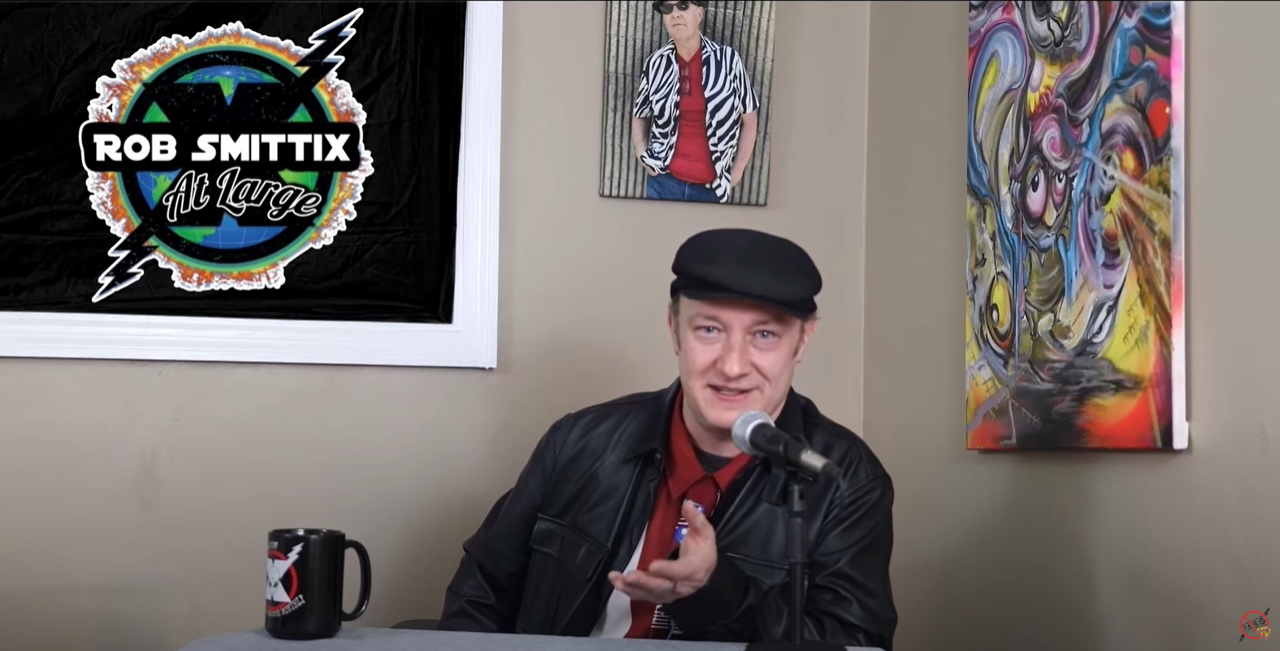
Rob Smittix at Large (Episode One) Watch HERE!

0

Rob Smittix at Large has premiered and by clicking the video below you can watch the madness for yourself!

This pilot episode had guests Peggy of Troy and Niki Kaos!

SUBSCRIBE TO OUR YOUTUBE CHANNEL HERE!